The 40-year-old chef, originally from Carlisle, won the BBC One cooking show’s final, which saw the remaining three chefs cook up a three-course meal in a bid to impress the judges.
Baty, who lives in Whitefield, Greater Manchester, with his wife and children, said: “This means everything to me, it’s the best feeling I’ve ever had. It’s absolutely incredible, I’m over the moon.
“If I’ve learned anything through this competition it’s cooking food you believe in and cooking from the heart can take you a long way. Hopefully this journey is just the beginning.”
Advertisement
The series 18 finale saw Baty compete against runners-up Luke Emmess and Mark O’Brien to become the champion of the series.
He dedicated his final menu to members of his family, and it was described by judge Marcus Wareing as an “absolute knockout three-course menu”.
Baty presented the judges with a starter inspired by his mother, which was a take on a prawn cocktail, hailed by judge Monica Galetti as a “delicate yet gutsy dish”.
She added: “What a great way to start this menu. Brilliant job, your mum would be proud.”
Advertisement
Baty then presented his main course, which was dedicated to his father, who died while he was at university, which he said caused him to feel lost and questioning his ability as a chef.
He made a chicken breast roulade wrapped in a chicken and truffle mousse with king oyster mushroom, set puree and tarragon mayonnaise, served with a side of fries and a madeira sauce.
The dish was described by judge Matt Tebbutt as “an absolute winner”, and was followed up by a dessert dedicated to Baty’s partner’s family.
He served a twist on the Brandy Alexander cocktail made up of layers of milk chocolate and dulce de leche cremeux, topped with a brandy snap, brandy-poached pears and a ginger and brandy sauce.
Advertisement
Baty said his time on MasterChef: The Professionals was an “amazing adventure”, adding: “I’ve taken so much more from the competition than I thought.
“It’s changed me as a person, it’s changed me as a chef. Now that I’m standing here holding this trophy it’s given me a whole new road to travel on and I’m going to go all the way down it.”
It was TV host and chef Tebbutt’s final time on MasterChef after he revealed earlier this month that he was “only ever doing one series”.
The 52-year-old replaced the former face of the show, Gregg Wallace, who was sacked after a series of misconduct allegations relating to his time on the amateur series, MasterChef.
Advertisement
MasterChef: The Professionals is available to watch on BBC iPlayer.
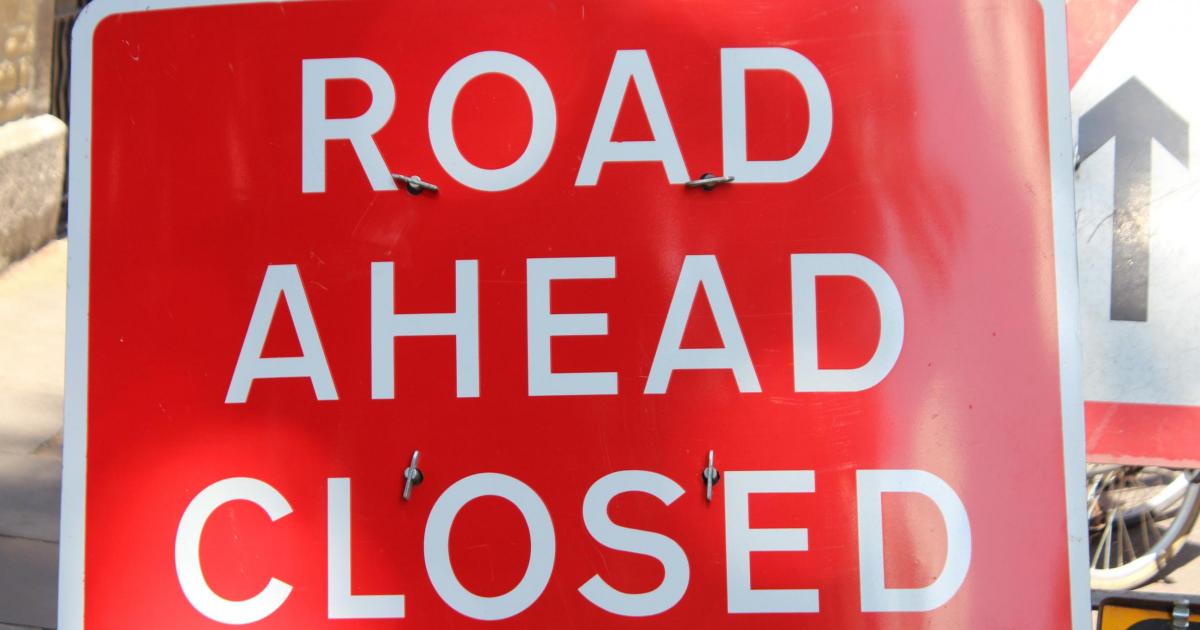
Mickeleate, close to its junction with North Street, has been temporarily closed by City of York Council.
Recommended reading:
Confirming this in a statement, a spokesperson said: “This morning our teams were inspecting Micklegate as part of our routine highways maintenance and discovered a void under the road.
“We’ve had to temporarily close the bottom of Micklegate to vehicles while we investigate, before the issue is fixed.
Advertisement
“Thanks for everyone’s patience while we urgently investigate.”
Pedestrians and cyclists will still be able to use the road, City of York Council has confirmed (Image: City of York Council)
Businesses along the road, the council said, will open as usual tomorrow, with pavements open to pedestrians and mobility aid users.
Cyclists will also be able to use the route, following signed diversions set up today.
There are mixed emotions ahead as a huge Emmerdale favourite heads off for a new life.
Tracy Shankley (Amy Walsh) gears up to whisk daughter Frankie away for a fresh start when an opportunity presents itself.
Actress Amy Walsh has left the soap to head off and have a baby, which means Tracy has to disappear, at least for a bit. And there comes the fresh start.
Lately, Tracy has been behaving hecking suspiciously in having weird and secretive phone calls – ditching her post in the shop to take a call with a friend, and completely ignoring Nicola King (Nicola Wheeler) in the pub while furiously typing on her phone. There’s something afoot.
Advertisement
Vanessa Woodfield (Michelle Hardwick) gets wind of this impending change and confronts Tracy when she learns that she plans to move house.
Tracy is looking for a fresh start (Picture: ITV)
After the year she’s had, it’s no wonder Tracy wants a fresh start. Husband Nate seemed to disappear of the face of the Earth in 2024 when he took up a job in Shetland and cut contact.
That’s a lot for anyone to process in the space of a year or so.
Tracy has had to navigate life a single, grieving mum who for a time was even estranged from daughter Frankie’s family and any kind of support. So now things are coming back around and she’s focusing back on herself. Good for her, sad for us.
Amy has now given birth to her little girl (Picture: Shutterstock/Amy Walsh/Instagram)
She’s packing up her and Frankie’s lives and heading out of the village, but with everything going on with Cain Dingle (Jeff Hordley), it looks like he might miss his granddaughter’s farewell. Will cancer-suffering Cain be dealt yet another blow by missing their final goodbye?
Don’t miss a Soaps scoop! Add us as a Preferred Source
As a loyal Metro Soaps reader, we want to make sure you never miss our articles when searching for stories. We have all the latest soaps news, spoilers, videos, and interviews, with a vibrant community of highly engaged readers.
Click the button below and tick Metro.co.uk to ensure you see stories from us first in Google Search.
The adorable picture she shared on her Instagram is of the little baby’s feet. In the caption, Amy announced to her followers that her daughter was actually born last week.
Advertisement
She wrote: ‘This time last week I was heading into established labour.
‘We’ve been in the most magical bubble ever since.’
After an encouraging first half, Michael O’Neill’s men ran out of steam and Sandro Tonali and Moise Kean scored to book their place in a play-off final next Tuesday
It was a disappointing night for Northern Ireland in Bergamo as two second half goals killed off their chances of reaching the World Cup.
Advertisement
After an encouraging first half, Michael O’Neill’s men ran out of steam and Sandro Tonali and Moise Kean scored to book their place in a play-off final next Tuesday.
Here is how the Nothern Ireland players rated in Bergamo:
Pierce Charles 7 – Made a series of fine saves but was powerless to keep out Tonali’s hammer blow.
Trai Hume 8 – A rugged and clever performance from the Northern Ireland captain on the night.
Advertisement
Paddy McNair 7 – As assured as always, using his experience to rally his younger colleagues throughout.
Ruairi McConville 6 – Big night for the 20-year-old and he mostly stood his ground, only to get done for the second goal.
Terry Devlin 5 – Had a tough time up against Dimarco. Will have better nights in a Northern Ireland shirt.
Shea Charles 7 – Played some tidy stuff when he could, dug in with a lot of heart when he couldn’t.
Advertisement
Ethan Galbraith 6 – His normally reliable radar was off, coughing up possession a little too easily at times.
Justin Devenney 6 – Did the hard yards all night and used his left foot to effect when the situation allowed.
Brodie Spencer 6 – Safe and secure as he mostly shut down the left side of the pitch.
Isaac Price 4 – Struggled to get into the game. Did little with whatever ball came his way.
Advertisement
Jamie Donley 6- A thankless task as he hared around trying to unsettle the Italian defence with limited service.
Subs: Paul Smyth 6 (68) for Devlin, Jamie Reid 6 (79) for Spencer, Josh Magennis 6 (79) for Donley,
G Donnarumma 7, R Calafiori 7, N Bastoni 6 (F Gatti 7, 63), G Mancini 7, F Dimarco 7, S Tonali 7, M Locatelli 7, N Barella 7, M Politano 6 (M Palestra 6, 83), M Retegui 5 P Esposito 7, M Kean 8 (Raspadori 6, 88)
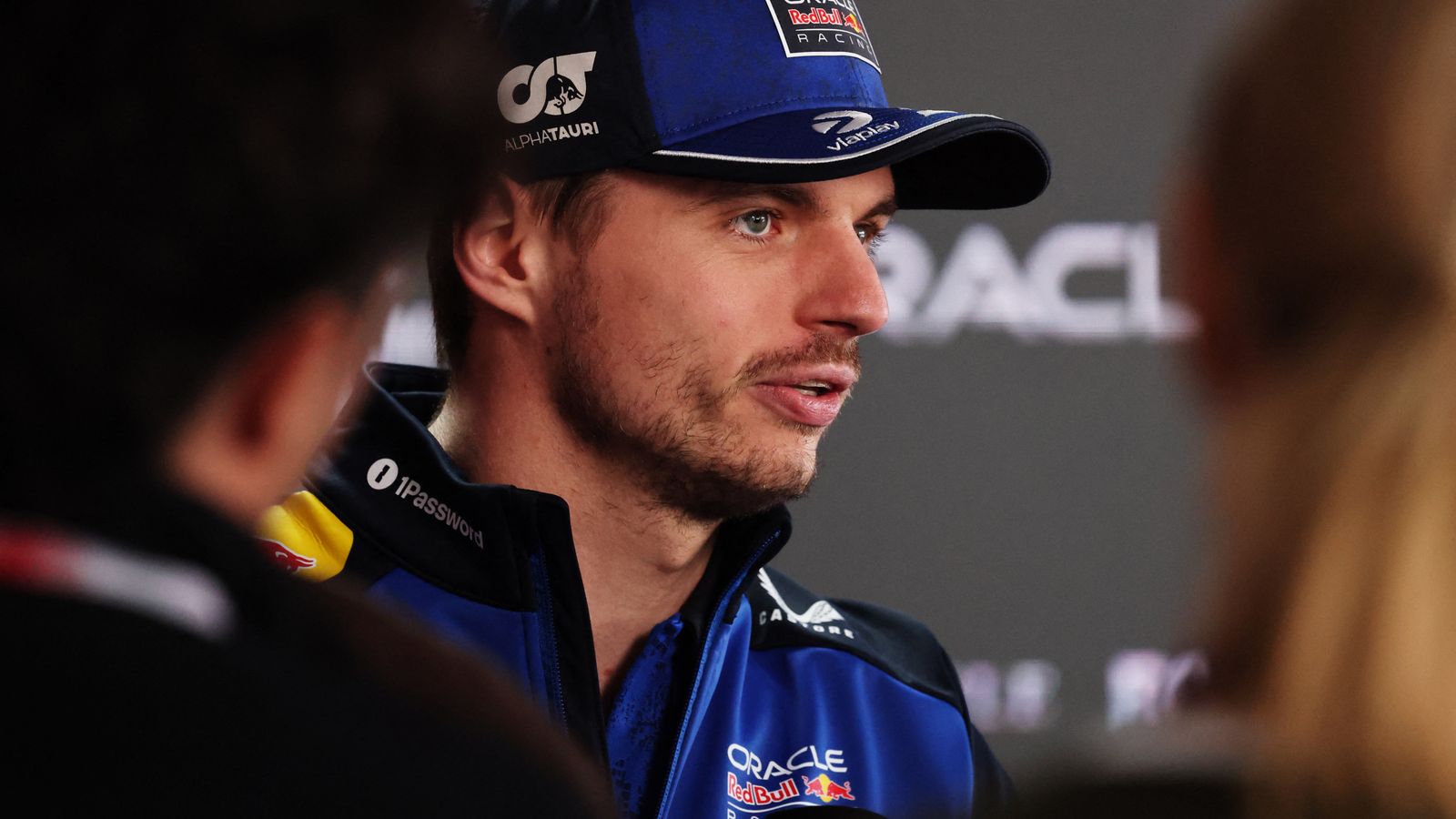
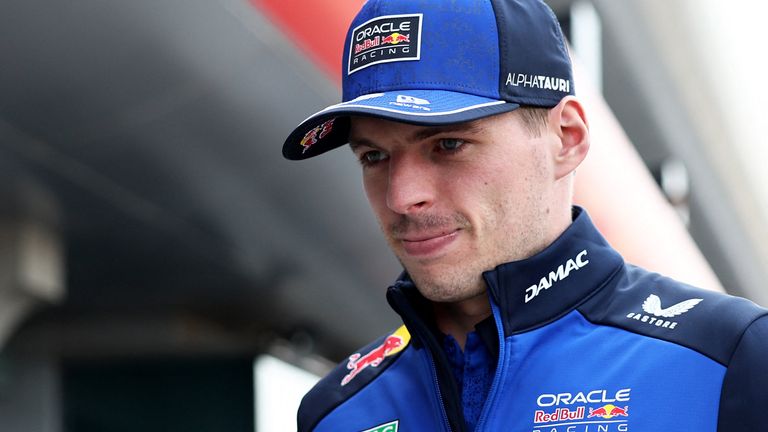
Former Formula 1 champion Max Verstappen kicked a reporter out of a press conference ahead of Sunday’s Japanese Grand Prix.
The Red Bull driver, 28, refused to speak to journalists at the media session until The Guardian’s Giles Richards left the room.
Verstappen said: “One second, I’m not speaking before he’s leaving.”
The four-time world champion’s refusal dates back to a question he was asked following the 2025 F1 season finale in Abu Dhabi.
Advertisement
Back then, Mr Richards had asked the Dutchman about a collision with Mercedes driver George Russell at the Spanish Grand Prix on 1 June last year.
Gulf F1 races cancelled
Advertisement
The collision led to a 10-second penalty that knocked Verstappen down five places, costing him points.
Hitting back at the question at the time, Verstappen said: “You forget all the other stuff that happened in my season.
“The only thing you mention is Barcelona. I knew that [question] would come. You’re giving me a stupid grin now.
“I don’t know. Yeah, it’s part of racing at the end. You live and learn. The championship is one of 24 rounds. I’ve also had a lot of early Christmas presents given to me in the second half, so you can also question that.”
Advertisement
Image: Verstappen is a four-time world champion. Pic: Reuters
In Suzuka, Japan, on Thursday, after Verstappen asked him to leave, Mr Richards replied “seriously?”.
Verstappen replied: “Yeah.”
Mr Richards then asked: “Because of the question last year?”
Verstappen then answered “yeah”, before Mr Richards walked towards the driver’s table to collect his dictaphone.
Mr Richards then said: “It’s because of the question I asked you in Abu Dhabi?”
Advertisement
After a further exchange, Mr Richards asked: “You’re really, really upset about it?”
Verstappen said: “Get out, get out! Now we can start.”
What the reporter said about ‘smiling’ Verstappen
Writing about the exchange in The Guardian, Mr Richards said: “In the course of a brief 30-second exchange, he told me to ‘get out’, twice. I have never been asked to leave a press conference.”
He added: “Marching orders received, I duly departed. Verstappen had been smiling throughout the exchange. The day carried on; there are far more serious issues in the world than an F1 driver being cross with you.”
Colleagues were “universally shocked” by the incident, he added.
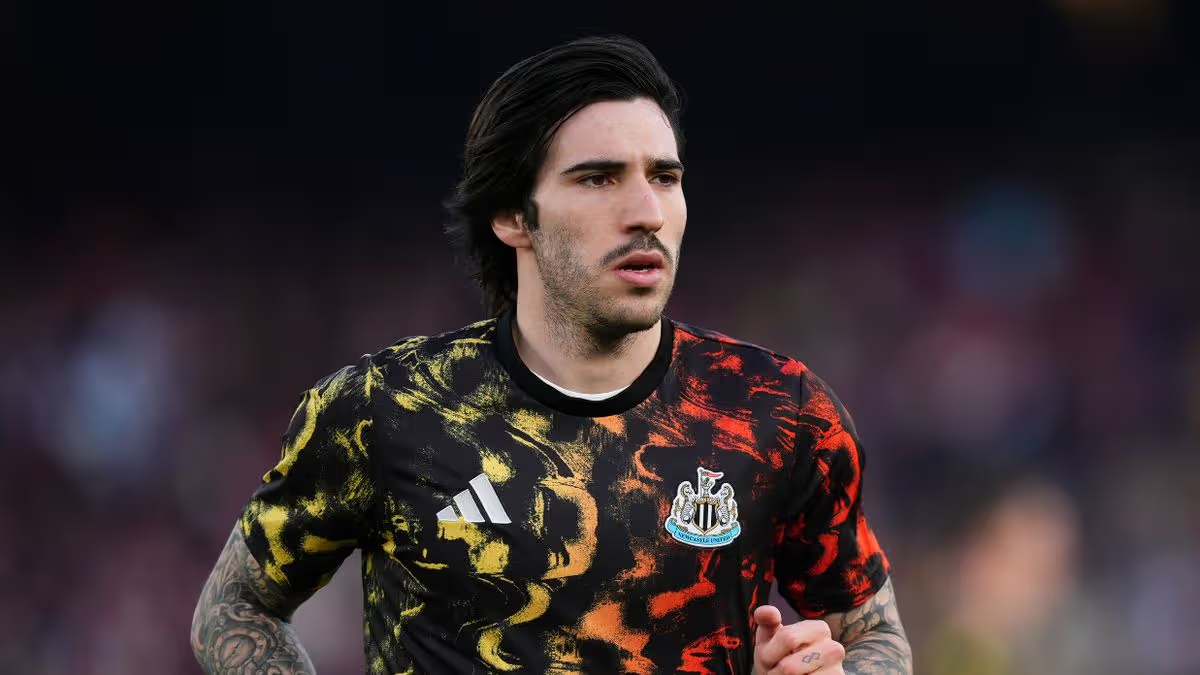
Recent reports have suggested that Sandro Tonali would be expected to leave Newcastle United if they failed to qualify for European football
Newcastle United’s rivals may have been put on alert after an update on Sandro Tonali, with reports suggesting the Italian could be allowed to leave Tyneside if the club fail to qualify for Europe. However, those claims have now been dismissed by Chronicle Live, who report that club officials insist any suggestion of such an agreement is ‘totally untrue.’
Advertisement
Tonali’s future has been the subject of speculation ahead of the summer, with reports linking him with moves to Manchester United and Arsenal. Fresh claims suggest United are preparing a bid, though Tonali remains under contract until 2028, meaning Newcastle are in a strong position to demand whatever fee they like.
It’s understood, however, that Tonali has no release clauses or agreements in his current deal with the club. Comments from his agent, Giuseppe Riso about his client’s prospects fuelled speculation.
Earlier this month, Riso said: “Tthat was the goal from the moment he went to England – to try to make him a star player.
Advertisement
“I think he’s the Italian footballer with one of the highest values in the world.
“If he shines at the World Cup, will Man City or Arsenal be hot on his heels? I don’t know, but it’s very likely.
“Everyone is waiting for the World Cup; then a thousand scenarios will unfold, but it all kicks off after the World Cup.”
Meanwhile, Newcastle boss Eddie Howe shot the rumour down last week, saying: “The person that matters the most is Sandro. All I’ve ever seen from him is someone who is totally committed.
“Very selfless at times, he’s here for the team, not for himself. Forget the noise around him, he’s just fully committed.”
Elsewhere, Tonali’s teammate Bruno Guimaraes has also attracted interest from United, with Howe describing claims that the Brazilian is in ‘advanced talks’ with the club as ‘disrespectful.’
England and Nike have launched the new home, away and goalkeeper kits to be worn at this summer’s FIFA World Cup. You can get free delivery on all orders with the code: ENGFREEDEL
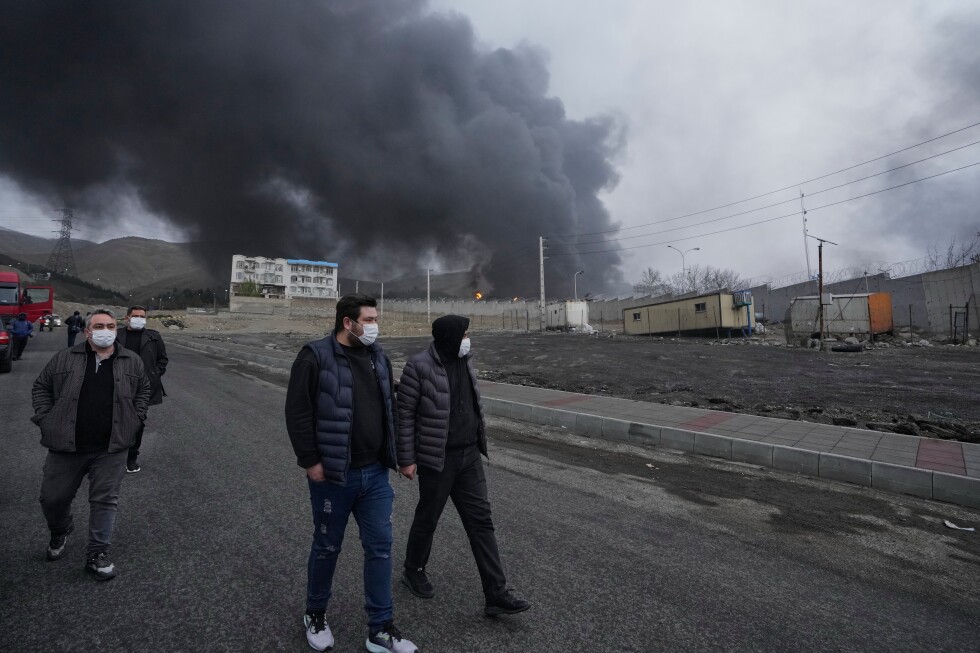
Oil depots spewing black smoke. Debris sinking in the Persian Gulf. Missiles pounding military sites.
The Iran war has unleashed a toxic mix of chemicals, heavy metals and other pollutants that threaten everything from agriculture to drinking water to people’s health — and will leave behind environmental damage and health risks that could persist for decades, experts said.
“All the burning of oil and gas fields in the coastal areas, all the ships that are there, the oil tankers that are being burned or (sunk) — all of these mean pollution,” said Kaveh Madani, an Iranian scientist and director of the United Nations University Institute for Water, Environment and Health. “For someone like me who has fought for sustainability and protection of the environment in that region, this is like going many years backward.”
Documenting the damage has proved daunting, with a full accounting impossible for now, said Doug Weir, director of the Conflict and Environment Observatory, a U.K.-based nonprofit that monitors environmental harms from armed conflicts.
Advertisement
First responders inspect the remains of a residential building hit in an overnight strike during the U.S.-Israeli military campaign in Tabriz, Iran, March 24, 2026. (AP Photo/Matin Hashemi, File)
Advertisement
First responders inspect the remains of a residential building hit in an overnight strike during the U.S.-Israeli military campaign in Tabriz, Iran, March 24, 2026. (AP Photo/Matin Hashemi, File)
Advertisement
Advertisement
Advertisement
Advertisement
The group uses remote satellite sensing and open-source intelligence to identify damage and score environmental risks to people, ecosystems and agricultural land. So far, it has recorded more than 400 environmentally concerning incidents related to the war, though much is still unknown due to delays in satellite imagery and an internet blackout in Iran, Weir said.
Attacks on oil- and gas-related sites create some of the worst environmental risks because of impacts to air quality and soil and water pollution, as well as health threats to people. Harder to quantify are risks from bombed military sites, some of which are deeply buried and some near populated areas, adding to “huge uncertainties” around potential impacts, Weir said.
The air pollution unleashed could lead to many health problems
Advertisement
Plumes of smoke and fire rise after debris from an intercepted Iranian drone struck an oil facility, according to authorities, in Fujairah, United Arab Emirates, March 14, 2026. (AP Photo/Altaf Qadri, File)
Plumes of smoke and fire rise after debris from an intercepted Iranian drone struck an oil facility, according to authorities, in Fujairah, United Arab Emirates, March 14, 2026. (AP Photo/Altaf Qadri, File)
Advertisement
Advertisement
Advertisement
Perhaps the most enduring images of the war are of darkened skies from oil infrastructure set ablaze by airstrikes, including two weeks ago when black rain fell near Tehran, Iran’s capital.
Soot, ash and toxic chemicals from strikes on fuel depots and a refinery combined with water droplets in the atmosphere and fell back to Earth as an oily, acidic rain that prompted warnings to stay indoors. Microscopic soot raises risks of lung and heart problems, while toxic chemicals pose long-term cancer risks and heavy metals from the fallout could contaminate soil and water supplies, experts said.
Debris and contamination from missiles, as well as potential strikes on manufacturing facilities and other infrastructure also could unleash harmful pollution throughout the region, experts said.
Advertisement
“If you hit an ammonia-producing plant for fertilizer or for food production … those release chemicals that are absolutely toxic and harmful if they spread,” said Mohammed Mahmoud, head of Middle East Climate and Water Policy with the United Nations University Institute of Water, Environment and Health and founder of the Climate and Water Initiative.
Intensive fossil fuel emissions also are spiking levels of greenhouse gases that cause climate change, experts said. The carbon accounting platform Greenly estimated that the U.S. military alone released almost 2 billion metric tons of greenhouse gases in just the first six days of the war, meaning the actual amount generated by the fighting is certainly much higher, when accounting for Israeli and Iranian emissions and damage to infrastructure.
That is a significant amount in such a short time, as in an entire year around 50 billion metric tons of greenhouse gases are released around the entire world, according to the National Oceanic and Atmospheric Administration.
Global oil shortages also are causing some countries to resume or increase their use of coal, which creates more air pollution that hurts people, and more greenhouse gas emissions.
Advertisement
Continued access to clean water is a big concern
Countries in the arid Persian Gulf region rely on hundreds of desalination plants for drinking water, raising health and security risks if plants are damaged or water is polluted, experts say.
Iran has said a U.S airstrike damaged one of its desalination plants, while neighboring Bahrain accused Iran of damaging one of its plants. Experts fear more could be targeted the longer the war goes on.
People in the region “struggle with having access to clean drinking water, even at peace times,” said Madani, the Iranian scientist and U.N. official. “Any damage to water infrastructure can have long-lasting impacts.”
Weir worries that pollution, including oil, from sunken ships and other sources could clog desalination plants or that they could be knocked offline by attacks on power plants.
Advertisement
Experts say pollution also could damage fisheries and important ecosystems. Though some contaminants will be dispersed and diluted by water that moves through the gulf, heavy metals and toxic chemicals still could settle in sediment.
“It’s an enclosed basin, quite shallow,” Weir said. “There are sensitive habitats there, coral reefs, seagrass meadows, sensitive species which could be impacted.”
Nuclear risks are largely unknown
Advertisement
An Israeli soldier stands next to a fragment of a missile fired from Iran and intercepted by Israeli air defense system embedded in an open field in the Israeli-controlled Golan Heights, March 19, 2026. (AP Photo/Ohad Zwigenberg, File)
An Israeli soldier stands next to a fragment of a missile fired from Iran and intercepted by Israeli air defense system embedded in an open field in the Israeli-controlled Golan Heights, March 19, 2026. (AP Photo/Ohad Zwigenberg, File)
Advertisement
Advertisement
Advertisement
The U.N. nuclear watchdog has not had access to Iranian nuclear sites, including facilities targeted in June by the United States and Israel, meaning their status is largely unknown.
Possible attacks on large and small nuclear sites throughout the region is “another thing to worry about,” because of immediate and long-term health and environmental impacts, said Madani. Exposure can cause skin damage and radiation sickness, while long-term risks include cancer, heart disease and genetic damage.
U.S. and Israeli officials have said one of the war’s aims is to destroy Iran’s ability to produce nuclear weapons.
Advertisement
After Israel and the U.S. this month bombed an Iranian uranium enrichment installation, Iran retaliated by firing missiles at two Israeli towns, including one with a nuclear research center. Israel said the facility wasn’t damaged.
“We are hearing that there is no major radiation or change in the level of pollutants so that makes us hopeful that nothing has gone wrong,” Madani said. “But the risk is always there.”
Addressing environmental damage could take decades
Advertisement
A thick plume of smoke rises from an oil storage facility hit by a U.S.-Israeli strike in Tehran, Iran, March 8, 2026. (AP Photo/Vahid Salemi, File)
A thick plume of smoke rises from an oil storage facility hit by a U.S.-Israeli strike in Tehran, Iran, March 8, 2026. (AP Photo/Vahid Salemi, File)
Advertisement
Advertisement
Advertisement
After the war, as Iran and other countries rebuild, environmental damage could be a low priority, experts said.
The focus will be on energy and water infrastructure, manufacturing plants and food production facilities, Mahmoud said. Some pollution, especially to the gulf or other waterways, “I doubt will be addressed soon, and in some cases, not at all.”
Weir said environmental damage isn’t addressed properly after most conflicts because it’s expensive and “humanitarian needs come first,” even if environmental risks are high.
Advertisement
In densely populated Tehran, for example, a huge number of strikes have hit not just oil infrastructure, but also buildings and residential areas, generating harmful contamination from pulverized building materials. People are being exposed to dust and chemicals, which may continue for a long time after the war eventually ends and rebuilding begins.
___
The Associated Press’ climate and environmental coverage receives financial support from multiple private foundations. AP is solely responsible for all content. Find AP’s standards for working with philanthropies, a list of supporters and funded coverage areas at AP.org.
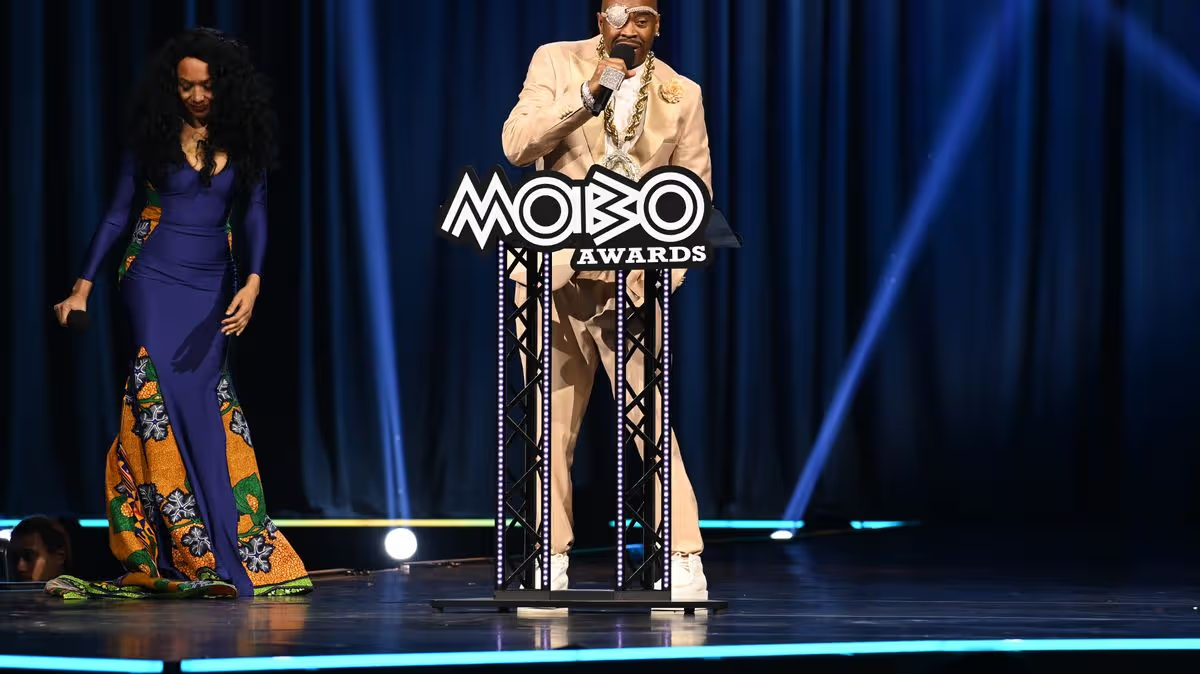
MOBO founder Kanya King CBE took to the stage to present the award to the British-American rapper and producer, saying Slick Rick redefined what it means to tell stories through music. Past winners of the converted award include Nile Rodgers, Michael Jackson and Lionel Richie.
The MOBOs founder said: “Thank you all for being here to celebrate this milestone MOBO. I feel so blessed to be standing here introducing the new honour. Ricky Walters, better known as Slick Rick.
Get MEN Premium now for just £1 HERE – or get involved in our WhatsApp group by clicking HERE. And don’t miss out on our brilliant selection of newsletters HERE.
“He redefined what it meant to tell stories through music. But what makes his story more powerful is not only what he created but what he overcame.”
Advertisement
She added: “True greatness finds a way. From the very beginning he brought a star swagger unlike anything we’ve heard before.”
Slick Rick himself took to the stage to accept the award. He said: “I don’t say much, but I’ve said enough to be here. I’ve never needed a lot of words, only the right ones. There were moments people didn’t understand, but I just kept going. Every step brought me to this moment.”
He continued: “I’ve always believed if you stay honest and true, the world will meet you there. And tonight it has. This is victory. Quiet, steady, undeniably timeless. Thank you.”
The 61-year-old rapper went on to shout out his mum and dad, Jamaicans, and his wife among other names. He also gave a shout-out to his hometown London.
Hosted by comedian Eddie Kadi and rapper Eve, the awards ceremony is playing host to a huge array of stars. These include Manchester’s own Aitch, alongside others such as Flo, Myles Smith, Tiwa Savage, Shenseea, and Slick Rick and Estelle.
Music festivals and big events using council owned sites could have a drug testing facility
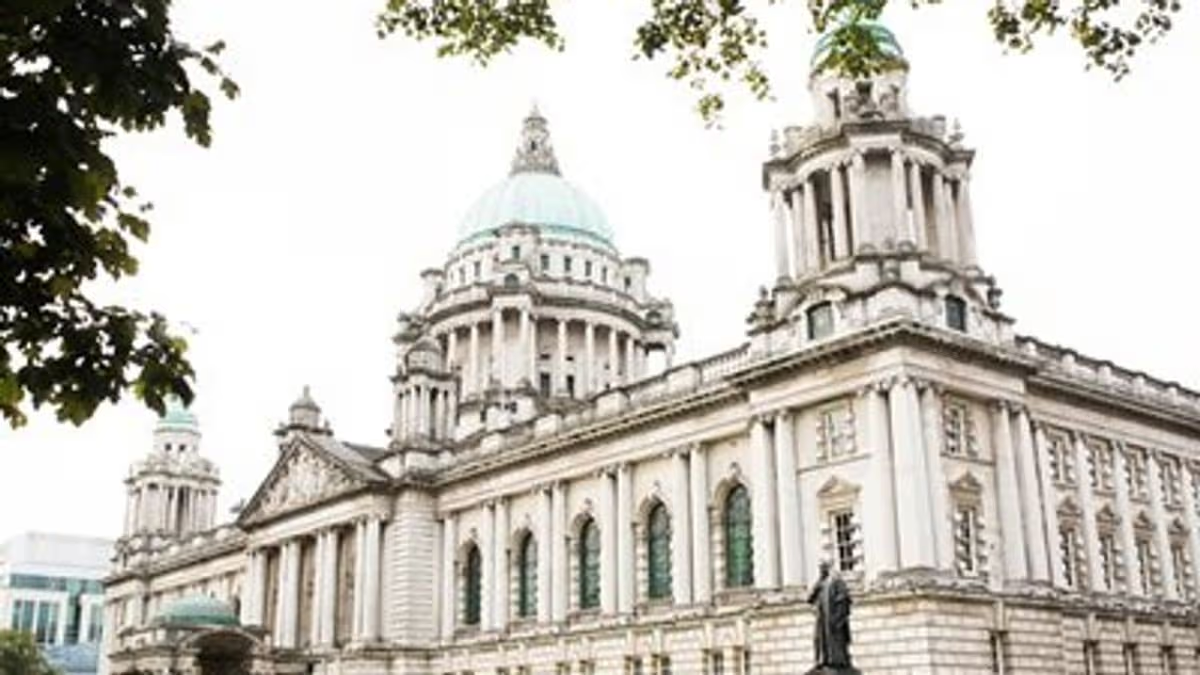
A pilot for drug and pill testing facilities at major events in Belfast is to be considered.
Advertisement
A motion by Alliance and the Greens has passed the first hurdle at Belfast City Council this week, and will go to committee level for officials potentially to create a feasibility study.
The motion asks that any music festivals and large-scale events using council owned sites will have drug testing and harm reduction facilities in place.
It was tabled at the City Hall Standards and Business Committee meeting this week, by Alliance Councillor Micky Murray, and seconded by Green Councillor Brian Smyth.
The motion calls on public bodies including Public Health Agency and Belfast Trust, alongside those in the community and voluntary sector, to explore the feasibility of a pilot. It also requests an internal report on the potential role of the council in supporting and facilitating a service, with particular reference to legal and regulatory considerations.
The motion states: “This council supports harm reduction approaches to drug use, particularly in the context of festivals and nightlife events. It acknowledges the rising public concerns around drug-related harm, and notes that traditional approaches focused solely on enforcement have not eliminated the presence or use of illicit substances at major events.”
The motion will go to the People and Communities Committee in April for a decision.
Advertisement
Councillor Murray said: “Belfast is a vibrant, growing city with a thriving events and nightlife scene that we should be proud of. However, we cannot ignore the very real and increasing risks associated with drug-related harm at large gatherings.
“This motion is rooted in a simple principle, saving lives. Evidence from other regions shows that harm reduction approaches, including drug checking services, can play a crucial role in preventing overdoses and reducing the risk of serious harm.
“While enforcement remains important, it has not eliminated the presence of illicit substances at major events. In conjunction, we need a more balanced, public health-led response.”
He said: “Drug testing services provide individuals with information about what they are taking, helping them make safer decisions. Crucially, these services also allow health authorities to identify dangerous or contaminated substances quickly and issue public warnings.
Advertisement
“This is about taking a pragmatic, evidence-based approach to public safety. By working collaboratively with health professionals, community organisations, and event organisers, Belfast can take a leadership role in protecting people and reducing preventable harm.
“I look forward to progressing this conversation and ensuring that Belfast remains a safe and welcoming city for everyone.”
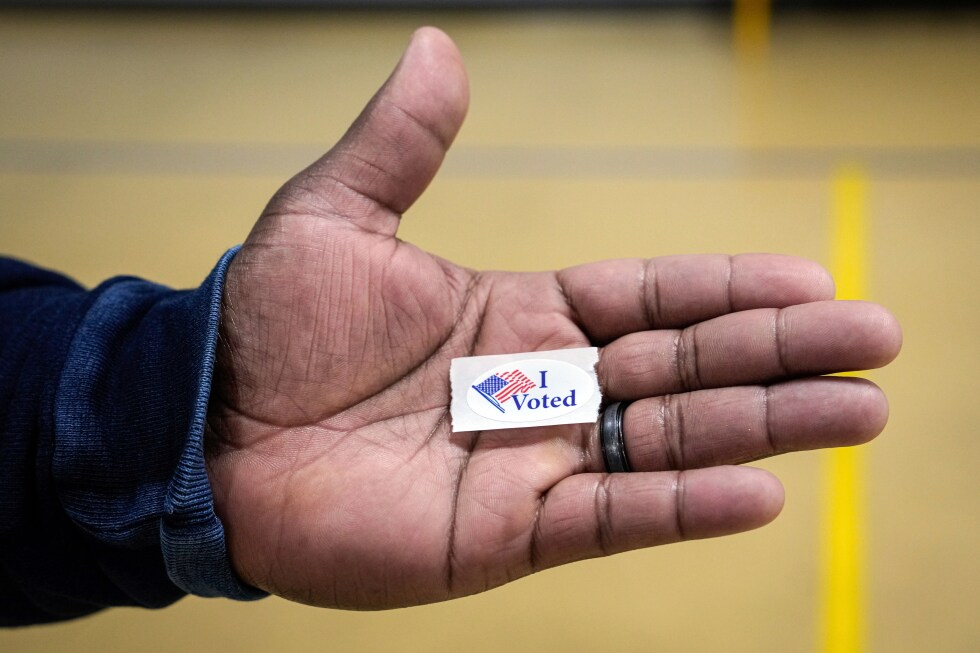
RALEIGH, N.C. (AP) — North Carolina’s photo voter identification law was upheld on Thursday, as a federal judge set aside arguments by civil rights groups that Republicans enacted the requirement with discriminatory intent against Black and Latino voters.
The decision by U.S. District Judge Loretta Biggs is a huge legal victory for Republican legislative leaders who passed the law in late 2018 — weeks after voters approved a constitutional amendment backing the idea.
North Carolina state Senate leader Phil Berger said in a news release that with Biggs’ decision, “we can put to rest any doubt that our state’s Voter I.D. law is constitutional.”
Biggs had presided in spring 2024 over a non-jury trial in a lawsuit filed by the state NAACP, which argued that the ID requirement violated the U.S. Constitution and the federal Voting Rights Act. At trial, the NAACP alleged Republican legislators passed the voter ID law to entrench their political power by discouraging people historically aligned with Democrats from voting.
Advertisement
But lawyers for the state and Republican lawmakers defending the law argued that Republicans wouldn’t have passed one of the most permissive ID laws if they wanted to entrench themselves in state politics. They argued that the law is race-neutral and contains many more categories of qualifying ID than was allowed under a previously approved 2013 voter ID law that was struck down years ago.
The lawyers also said the General Assembly had legitimate state interests in building voter confidence in elections and preventing voter fraud. Still, nationwide voter identity fraud is rare.
State NAACP President Deborah Dicks Maxwell called the latest ruling in the case “deeply disappointing and ignores the real and documented barriers” that voter ID laws have on certain voters. No decision has been made on whether to appeal.
Even with the federal litigation, the 2018 voter ID law has been carried out since the 2023 municipal elections, after the state Supreme Court upheld the law in a separate lawsuit. Those elections have included the March 3 primary — nearly all of its results were certified on Wednesday.
Advertisement
In her 134-page order, Biggs, who was nominated to the court by President Barack Obama, said evidence in the trial record did suggest the burden to obtain IDs fell more on Black and Hispanic voters. As a result, a disparate number of racial minority voters would be among thousands who will not possess the required ID on Election Day, and “for many their vote will not count when the election is certified.”
Biggs said the state’s history of race discrimination and voter suppression warrants finding that the law was enacted with discriminatory intent. But she wrote that court rulings since the lawsuit was filed — including one from a federal appeals court panel in the case — requires “this Court to assign less weight to the historical background” and “almost impenetrable deference to the presumption” that lawmakers approved it in good faith.
Biggs had previously issued in 2019 a preliminary injunction blocking enforcement of the 2018 law, saying it was tainted because the 2013 voter ID law was struck down on similar grounds of racial bias.
But the 4th U.S. Circuit Court of Appeals reversed her decision, writing that she had put too much emphasis on the past conduct of the General Assembly when evaluating the 2018 law.
Advertisement
So based on the “preliminary injunction record, the limited evidence presented at trial, and the arguments of counsel,” the court “concludes that it is compelled by controlling case law” to side with the state and legislative leaders, Biggs wrote Thursday.
North Carolina’s voter ID law offers free ID cars at the Division of Motor Vehicles and at county election offices statewide. People lacking photo ID at the polls should have their votes count if they fill out an exception form or bring in their ID to election officials before the final tallies.
In the separate state court lawsuit, the 2018 law was struck down initially. But when the state Supreme Court flipped from a Democratic to a Republican majority, the justices agreed to revisit the matter and proceeded to uphold photo ID.
Thirty-six states have laws requesting or requiring identification at the polls, 23 of which seek photo ID, according to the National Conference of State Legislatures.
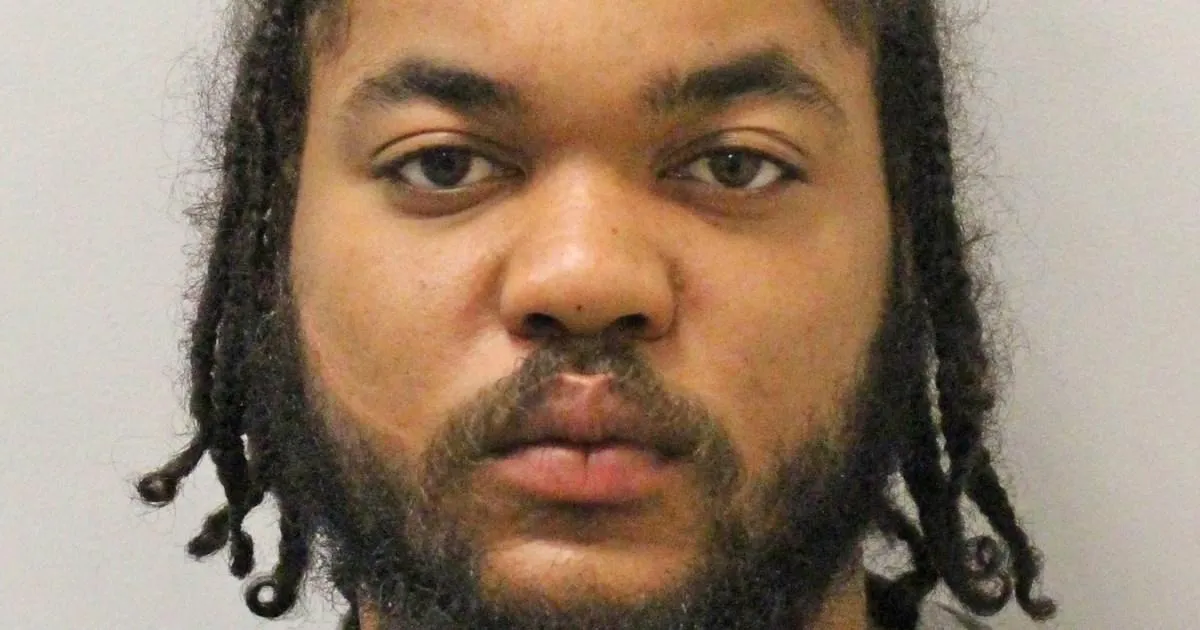
Jason Furtado was one of a group of five men who killed two people they mistook for rival gang members in Archway (Picture: Metropolitan Police/PA Wire)
A gang member serving a life sentence for murdering two young men after mistaking them for rivals has had his sentence increased for battering a taxi driver in a separate attack.
He was jailed for at least 34 years at the end of a long-running trial at the Old Bailey.
But the killer was back in court on Thursday after pleading guilty to GBH with intent in relation to an attack on an Uber driver three months before the murders.
Advertisement
District judge Emma Deacon KC gave Furtado a consecutive three-year sentence for the attack at Wood Green Crown Court.
She told Furtado: ‘This was an explosive piece of violence from you against Mr Edwards without any proportion to the reality – which was that you were challenged by a taxi driver for banging on his windscreen.’
Furtado, who had been among a group of people inhaling nitrous oxide, had lashed out at Mr Edwards after he dropped off a passenger outside a club in Islington, north London, in March 2023 at around 3.30am.
The judge said Furtado ‘threw a gas canister at him and you hit him over the head with it’.
Advertisement
Mr Edwards fell to the ground but Furtado hit him multiple times, including to the head, and ‘stamped on his head at least twice’.
He then rolled from the pavement to the road.
Mr Edwards was then run over by a car driven by Furtado’s girlfriend Charlotte Sibley, the court heard.
Forensic officers in Elthorne Road, Islington, after the double murder (Picture: PA)
Furtado was jailed for at least 34 years (Picture: Metropolitan Police/PA Wire)
Latest London news
To get the latest news from the capital, visit Metro’s London news hub.
Advertisement
Furtado had pleaded guilty to causing grievous bodily harm (GBH) with intent while Sibley, 28, of Hackney, east London, had pleaded guilty to a charge of careless driving.
Prosecutor Martyn Bowyer said: ‘Mr Edwards remembers nothing until he woke up in hospital.’
Sibley was fined £750 and disqualified from driving for six months by the judge who said it was nothing short of “miraculous that he did not sustain injuries as a result of your driving”.
Advertisement
Sibley, who was three months pregnant at the time, later told police that a fight between some men had broken out and she was in a ‘frightened and confused state’ when she fled and drove over Mr Edwards’s leg.
The judge described Sibley’s driving as ‘utterly irresponsible’, involving an ‘unsafe manoeuvre’ and that the fight had stopped by the time she decided to drive away.
The judge told Sibley: ‘You had run over him. You must have felt something. You had driven over someone’s body.
‘In driving away, you were thinking of yourself.’
Advertisement
Sibley was also ordered to pay a statutory surcharge.
The prosecution said no evidence was being brought regarding an attempted murder charge against Furtado while not guilty verdicts were recorded in relation to allegations of assisting an offender and dangerous driving against Sibley.

















































You must be logged in to post a comment Login