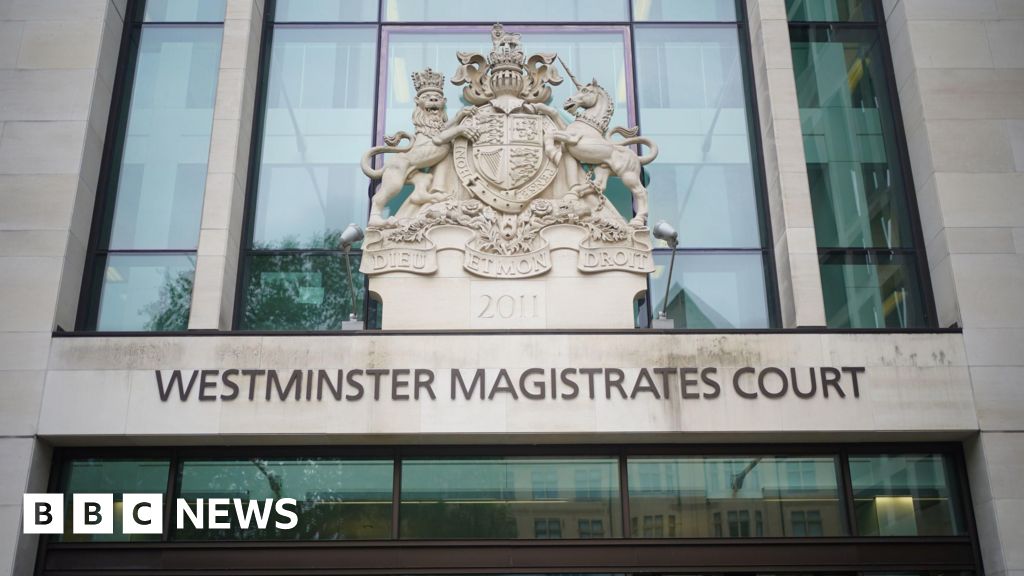
She was also charged with publishing or distributing written material, and using words that were threatening, abusive or insulting intending thereby to stir up racial hatred or having regard to all the circumstances was reckless as to whether racial hatred would be stirred up, in breach of the Public Order Act 1986.
The Bafta red carpet was full of Strictly Come Dancing stars this year – even if the winners’ room will not be (Picture: Getty)
The stars of Strictly Come Dancing were out in force to celebrate this year’s TV Baftas – despite not being nominated.
In a shocking turn of events, the glitzy BBC dance show was not recognised in any categories this time around.
This comes after Karen Carney and Carlos Gu’s triumph in the 2025 series, which also marked Tess Daly and Claudia Winkleman’s final one as hosts, with an announcement of their replacements thought to be imminent.
Instead, The Graham Norton Show, Last One Laughing, Would I Lie To You?, and Michael McIntyre’s Big Show were nominated for the entertainment TV Bafta, shutting Strictly out entirely.
Advertisement
Still, its professionals and former contestants donned their finest attire to walk the red carpet this weekend, without the added pressure of potentially having to make a speech.
Dianne Buswell was solo on the carpet, having welcomed her first child, Bowie, with real-life partner Joe Sugg just weeks ago.
Strictly pro Dianne Buswell beamed as she made her first red carpet appearance since giving birth just weeks ago (Picture: Alan Chapman/Dave Benett/Getty Images)
Katya Jones walked with best pal Aimee Fuller, both in dramatic red numbers (Picture: Kate Green/Bafta/Getty Images for Bafta)
Actor Lewis Cope was one of the favourites last series on Strictly (Picture: Zak Hussein/Variety via Getty Images)
The flame-haired pro – who has been confirmed to return to the line-up in 2026 – looked gorgeous in a strapless black gown, with her vibrant locks styled in an up do.
She was joined by Katya Jones in a dramatic, deep red gown. The Russian choreographer was reportedly saved by Strictly bosses from the mass cull of professionals, which left Nadiya Bychkova, Karen Hauer, Gorka Marquez, Luba Mushtuck, and Michelle Tsiakkas ‘devastated’ when their contracts were not renewed.
Meanwhile, contestant Lewis Cope, who wowed everyone with his skills last season, walked the carpet with his girlfriend.
Advertisement
Noticeably absent was ex-host Tess, who has made her fair share of headlines this weekend after announcing she and Vernon Kay are divorcing after nearly 23 years of marriage.
Claudia, on the other hand, jetted back from the Scottish Highlands, where she’s been filming for season 2 of The Celebrity Traitors, which stars Miranda Hart, Maya Jama, James Blunt, Richard E Grant, and more.
Dame Mary Berry looked adorable in pink as she celebrated receiving the highest Bafta honour (Picture: John Phillips/Bafta/Getty Images for Bafta)
Owen Cooper looked cool as ever following a huge year of major award wins (Picture: Alan Chapman/Dave Benett/Getty Images)
He posed with his Adolescence family, Stephen Graham and wife Hannah Walters (Picture: Kate Green/Bafta/Getty Images for Bafta)
Back in Bafta land, Bake Off queen Dame Mary Berry looked delightful in a pastel pink ensemble with matching ballet pumps and a pear necklace.
The 91-year-old has been honoured with this year’s Bafta fellowship, the highest accolade that can be bestowed on a person to recognise their exceptional contributions.
Speaking to Roman Kemp on the red carpet, Dame Mary said sweetly: ‘You hear about actors and directors getting it, so as a cook, I feel very honoured. I’m immensely honoured to join those wonderful people who already won it; it’s amazing.’
Advertisement
Other major names stepping out for one of the most prestigious nights in British television included the cast of Adolescence, which looks set to wrap up its headline-making year in glittering style, having been nominated in 11 categories, including for best limited drama.
The Netflix series propelled schoolboy Owen Cooper to unprecedented overnight stardom in 2025, thanks to his portrayal of 13-year-old Jamie Miller, who is arrested for the murder of a female classmate.
Diving into incel culture and sparking important conversations about online safety and manosphere culture – even in parliament – the four-parter completely rocked the TV landscape, both with moving performances from Cooper and co-stars Stephen Graham, Ashley Walters, and Erin Doherty, and by shooting each ep in one continuous take.
‘Twas a big night for baby bumps, with pregnant TV presenter Laura Whitmore posing alongside husband Iain Stirling (Picture: Alan Chapman/Dave Benett/Getty Images)
Scarlett Moffatt is also expecting her second child (Picture: Kate Green/Bafta/Getty Images for Bafta)
Vogue Williams and Spencer Matthews recently announced their family was growing following a miscarriage last year (Picture: Alan Chapman/Dave Benett/Getty Images)
This afternoon, Owen posed proudly at the Baftas in a super cool jacket, with co-creator Stephen and his wife, Hannah, having pretty much taken him under their wing in the last 12 months.
Tonight was also a big one for baby bumps, as plenty made an appearance.
Advertisement
Vogue Williams debuted hers, having confirmed she and Spencer Matthews are expecting their fourth child.
It’s been a tough year for the spouses, with Spencer telling Metro ahead of the London Marathon that they’d experienced ‘complications’, including a miscarriage.
Stronger than ever, they posed arm-in-arm at tonight’s bash, Spencer looking dapper in a black tux and Vogue wearing a contrasting white lace number, oozing elegance.
Scarlett Moffatt is also pregnant, expecting her second baby with Scott Dobinson, to whom she got engaged in 2023.
Advertisement
Danny and Dani Dyer were the ultimate dad-daughter duo (Picture: Alan Chapman/Dave Benett/Getty Images)
Rachel Duffy opted for a demure blue ensemble – the total opposite of her Traitors cloak (Picture: Alan Chapman/Dave Benett/Getty Images)
Speaking of Traitors, Celeb Traitors winner Alan Carr beamed alongside his TV pal Amanda Holden (Picture: Alan Chapman/Dave Benett/Getty Images)
Frankie Bridge wins the award for the quirkiest neckline (Picture: Alan Chapman/Dave Benett/Getty Images)
The ex-Gogglebox star cradled her growing belly proudly, surely hoping for a calmer night at the Baftas than she had at the I’m A Celebrity South Africa final.
Rounding off the pregnancies we had TV presenter Laura Whitmore, who arrived with Love Island commentator husband Iain Stirling.
Other celebrities in attendance this year included Danny and Dani Dyer, Rick Astley, Alan Carr, Amanda Holden, Louis Theroux, and Aimee Lou Wood.
From across the pond came Severance star Adam Scott, while Steven Knight took a night off from working on the next James Bond movie to celebrate his nominated show A Thousand Blows.
Speaking ahead of the ceremony, Bafta chief executive Jane Millichip praised a ‘particularly strong year’ for television, expressing how ‘excited’ she was to hand out trophies to the winners.
Advertisement
‘This is the last awards of the season for Bafta, and it pretty much closes the awards season itself, so it always feels really celebratory,’ she said following the Film Awards.
What It Feels Like For A Girl lead star Ellis Howard has been recognised in the memorable moment category (Picture: Alan Chapman/Dave Benett/Getty Images)
Adam Scott of Severance made the trip from across the pond (Picture: Alan Chapman/Dave Benett/Getty Images)
Recent Saturday Night Live UK host Aimee Lou Wood posed with fellow The White Lotus star Jason Isaacs (Picture: Alan Chapman/Dave Benett/Getty Images)
Steven Knight was in high spirits, with his show A Thousand Blows nominated this year (Picture: Alan Chapman/Dave Benett/Getty Images)
Greg Davies hosts this year’s ceremony, taking over from Alan Cumming (Picture: Scott Garfitt/Bafta via Getty Images)
She lauded recent television shows for their ‘really stand-out water cooler moments, adding: ‘Whether it’s comedy, entertainment, or drama: Adolescence, Celebrity Traitors, Amandaland, Last One Laughing.
‘They are all really powerful shows in their own right, and I think it’s an amazing platform for British talent.
‘(The awards are) not only recognising great work and excellence but also shine a light on that talent. Hopefully, it will inspire the talents of the future.’
Taskmaster comedian Greg Davies hosts this year’s broadcast, succeeding Alan Cumming.
Advertisement
Watch the TV Baftas 2026 on the BBC from 7pm.
Bafta TV nominations 2026
Actor in a Comedy
Jim Howick in Here We Go
Jon Pointing in Big Boys
Advertisement
Lenny Rush in Am I Being Unreasonable?
Mawaan Rizwan in Juice
Oliver Savell in Changing Ends
Steve Coogan in How Are You? It’s Alan (Partridge)
Advertisement
Actress in a Comedy
Diane Morgan in Mandy
Jennifer Saunders in Amandaland
Katherine Parkinson in Here We Go
Lucy Punch in Amandaland
Advertisement
Philippa Dunne in Amandaland
Rosie Joes in Pushers
Children’s: Non-scripted
A Real Bug’s Life
BooSnoo!
Advertisement
Deadly 60 Saving Sharks
World War Me: Sky Kids Investigates
Children’s: Scripted
Crongton
Horrible Science
Advertisement
Shaun the Sheep
The Wonderfully Weird World of Gumball
Current Affairs
Breaking Ranks: Inside Israel’s War (Exposure)
The Covid Contracts: Follow the Money
Advertisement
Gaza: Doctors Under Attack
Undercover in the Police (Panorama)
Daytime
The Chase
Lorraine
Advertisement
Richard Osman’s House of Games
Scam Interceptors
Drama Series
A Thousand Blows
Blue Lights
Advertisement
Code of Silence
This City Is Ours
Entertainment
The Graham Norton Show
Last One Laughing
Advertisement
Michael McIntyre’s Big Show
Would I Lie To You
Entertainment Performance
Amanda Holden and Alan Carr in Amanda & Alan’s Spanish Job
Bob Mortimer in Last One Laughing
Advertisement
Claudia Winkleman in Celebrity Traitors
Lee Mack in The 1% Club
Rob Beckett and Romesh Ranganathan in Rob & Romesh Vs
Romesh Ranganathan in Romesh: Can’t Knock the Hustle
Advertisement
Factual Entertainment
The Assembly
Go Back Where You Came From
Knife Edge: Chasing Michelin Stars
Race Across The World
Advertisement
Factual Series
Bibaa & Nicole: Murder in the Park
Educating Yorkshire
See No Evil
The Undercover Police Scandal: Love and Lies Exposed
Advertisement
International
The Bear
The Diplomat
Pluribus
Severance
Advertisement
The Studio
The White Lotus
Leading Actor
Colin Firth in Lockerbie: A Search for Truth
Ellis Howard in What it Feels Like for a Girl
Advertisement
James Nelson-Joyce in This City is Ours
Matt Smith in The Death of Bunny Munro
Stephen Graham in Adolescence
Taron Egerton in Smoke
Advertisement
Leading Actress
Aimee Lou Wood in Film Club
Erin Doherty in A Thousand Blows
Jodie Whittaker in Toxic Town
Narges Rashidi in Prisoner 951
Advertisement
Sheridan Smith in I Fought The Law
Sian Brooke in Blue Lights
Limited Drama
Adolescence
I Fought The Law
Advertisement
Trespasses
What It Feels Like For A Girl
Live Event Coverage
Holocaust Memorial Day 2025 on BBC One
Last Night of The Proms: Finale on BBC One
Advertisement
VE Day 80: A Celebration to Remember on BBC One
News Coverage
BBC Newsnight: Grooming Survivors Speak
Channel 4 News: Israel-Iran: The Twelve Day War
Sky News: Gaza: Fight For Survival
Advertisement
Reality
The Celebrity Traitors
The Jury: Murder Trial
Squid Game: The Challenge
Virgin Island
Advertisement
Scripted Comedy
Amandaland
Big Boys
How Are You? It’s Alan (Partridge)
Things You Should Have Done
Advertisement
Short Form
Donkey
Hustle and Run
Rocket Fuel
Zoners
Advertisement
Single Documentary
Grenfell: Uncovered
Louis Theroux: The Settlers
One Day in Southport
Unforgotten: The Bradford City Fire
Advertisement
Soap
Casualty
Coronation Street
EastEnders
Specialist Factual
Belsen: What They Found
Advertisement
Simon Schama: The Road to Auschwitz
Surviving Black Hawk Down
Vietnam: The War That Changed America
Sports Coverage
The 2025 Ryder Cup
Advertisement
The FA Cup Final
UEFA Women’s Euro 2025
Wimbledon 2025
Supporting Actor
Ashley Walters in Adolescence
Advertisement
Fehinti Balogun in Down Cemetery Road
Joshua McGuire in The Gold
Owen Cooper in Adolescence
Paddy Considine in MobLand
Advertisement
Rafael Mathe in The Death of Bunny Munro
Supporting Actress
Aimee Lou Wood in The White Lotus
Christine Tremarco in Adolescence
Chyna McQueen in Get Millie Black
Advertisement
Emilia Jones in Task
Erin Doherty in Adolescence
P&O Cruises Memorable Moment Award
Jamie snaps at the Psychologist in Adolescence
I didn’t make it, did I? in Big Boys
Advertisement
The police are warned of an ambush to plot to silence a key witness in Blue Lights
Alan Carr wins The Celebrity Traitors
Bob Mortimer and Richard Ayoade’s speed date in Last One Laughing
Byron leaves for Brighton to start Uni, where she introduces herself as Paris in What It Feels Like For A Girl
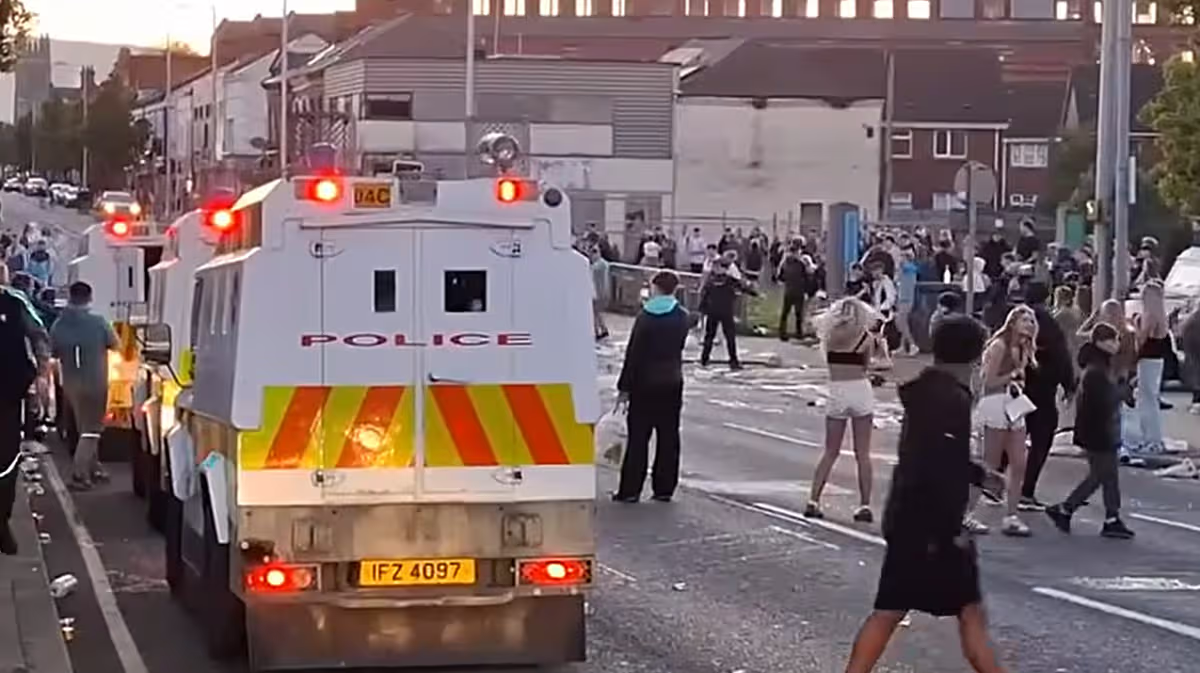
Two fast food restaurants in the Connswater area closed due to large groups of young people gathering, with a window in one restaurant being smashed.
Advertisement
Police said their enquiries are ongoing and they will continue to engage with local representatives to help prevent further instances of anti-social behaviour.
PSNI Chief Inspector Robinson said: “A number of reports were received around the parade, which largely passed off peacefully, of anti-social behaviour and altercations.
“Two fast food restaurants in the Connswater area had to close after large groups of young people gathered in the area, engaged in disorderly behaviour and smashed one of the windows.
“Officers attended and dispersed the crowds, and remained in the area for a time to ensure calm.”
Advertisement
Chief Inspector Robinson continued: “Enquiries are ongoing into individual reports of criminal damage and assault, while additional evidence was gathered at the scene which will now be reviewed by our Public Order Evidence Team.
“There will be consequences, by way of proactive arrests, for those identified as being involved in offences.
“We will continue to engage with local representatives and the wider community in order to help prevent further instances of this behaviour.
Advertisement
“We would particularly ask parents and guardians to speak to their children so they know where they are, and to play their part in ensuring that they do not become involved in such reckless behaviour that could lead to someone getting hurt.”
Anyone who has information, or who can help identify those responsible, is asked to contact police on 101 quoting reference number 1119 10/05/26.
The disorder follows ongoing incidents of young people travelling to the area in recent weeks for arranged fights and anti-social behaviour. Many of these incidents have been centred around the derelict Connswater Shopping Centre.
Advertisement
Speaking to Belfast Live, local DUP councillor Ruth Brooks said: “The trouble involving a small minority at CS Lewis Square should not take away from what was otherwise a successful and well-supported East Belfast Protestant Boys parade.
“There have been ongoing issues with detached youth who travel to East Belfast for the purposes of stirring up trouble and disorder. This is becoming an increasing challenge and has caused issues for residents, youth workers, local communities and, tonight, for parade organisers and those attending responsibly.
“The overwhelming majority of those attending tonight’s parade came to enjoy the occasion responsibly and support a long-standing cultural event within the community.”
Last month, four young people were detained by police at the former Connswater Shopping Centre for anti-social behaviour and criminal damage after entering the derelict site.
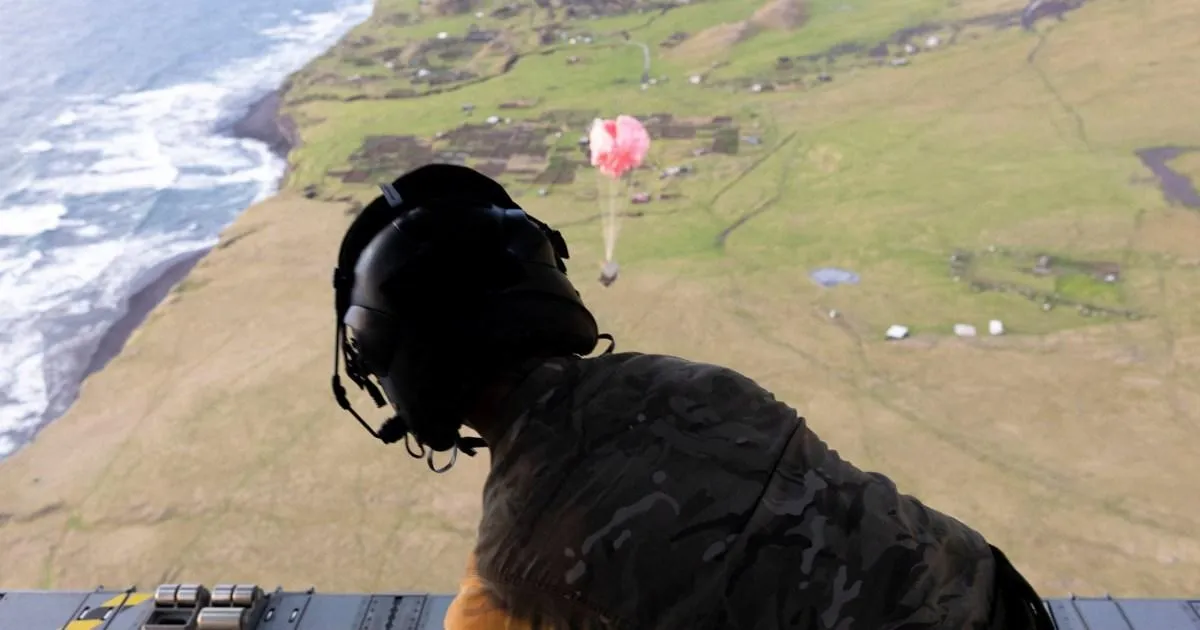
Emergency teams have been parachuted into the British overseas territory of Tristan da Cunha in St Helena (Picture: Reuters)
Paratroopers responded to a suspected hantavirus case at a golf course covered in rocks on an island in St Helena.
Army personnel descended on Tristan da Cunha, where a British national thought to have caught the disease had disembarked the MV Hondius cruise ship.
A team including six paratroopers, an RAF consultant and an army nurse parachuted onto the island, which has a population of 221 and is normally accessible only by boat.
They made the vital trip thanks to an RAF A400M transport aircraft which flew a 7,000-mile journey from RAF Brize Norton in Oxfordshire to Ascension Island before heading onto Tristan da Cunha.
Advertisement
It was supported by an RAF voyager for the 56-hour haul.
Six paratroopers, an RAF consultant and an army nurse dropped down onto the island, which is home to just 221 (Picture: 2026 MoD Crown Copyright)
Sign up for all of the latest stories
Start your day informed with Metro’s News Updates newsletter or get Breaking Newsalerts the moment it happens.
Brigadier Ed Cartwright, the commander of the 16 Air Assault Brigade, said: ‘I think the soldiers will have had a great time, but it’s pretty risky.
Advertisement
‘Parachuting has some inherent dangers. The winds were reasonably high.
‘The parachuters – I’ve spoken to them – they described it to me as a ‘pretty tasty jump’.’
The parachutists had to make a ‘difficult descent down through the cloud and then on to the drop zone, which was a golf course covered in rocks’, he explained.
He added that further medical support had been sent over to ensure the team could return safely.
Advertisement
The Ministry of Defence confirmed this was the first time humanitarian support had been delivered by parachute.
Armed forces dropping a medical kit onto the island to help deal with the suspected case (Picture: MoD)
Foreign Secretary Yvette Cooper said: ‘We will continue to work closely with international authorities and the Tristan da Cunha administration, keeping those affected informed and ensuring the right support is in place in the UK and across the Overseas Territories.’
It comes as the UKHSA said the 22 British passengers on the MV Hondius would be repatriated to the UK and be held at an isolation facility at Arrowe Park Hospital on the Wirral, Merseyside.
They are expected to be kept at the former Covid quarantine centre for up to 72 hours.
None of the passengers who disembarked the vessel in Tenerife showed symptoms of the virus, Spanish authorities said.
Advertisement
Two confirmed British cases are currently in hospitals in South Africa and the Netherlands.
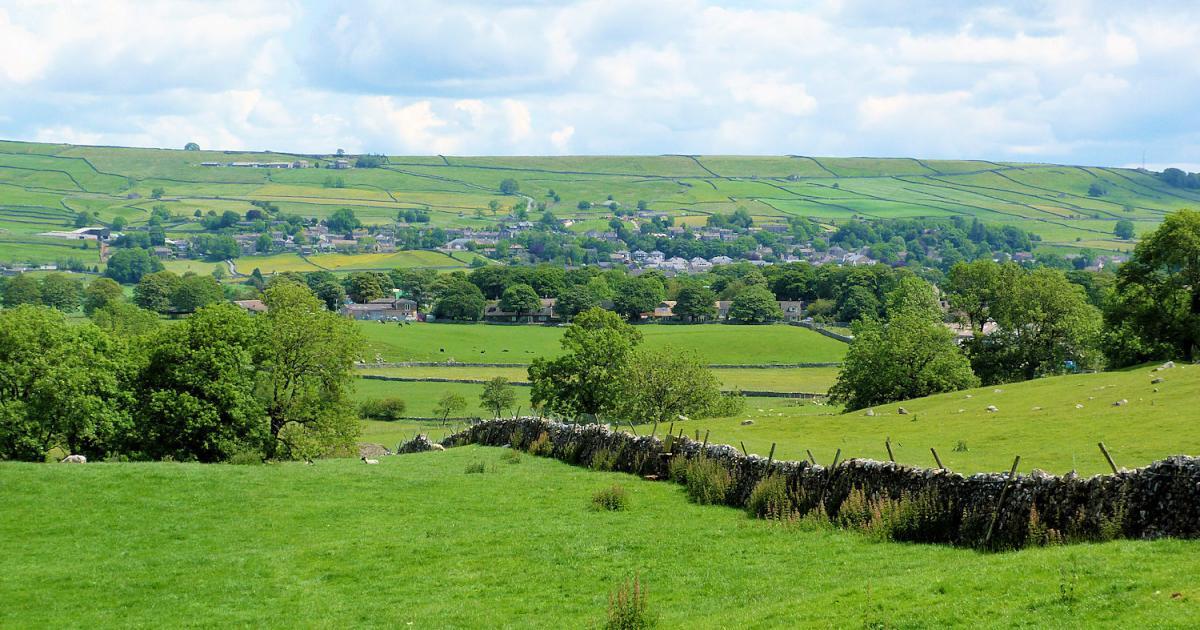
Grassington in North Yorkshire has spent more than five years as Darrowby, the fictional market town at the centre of Channel 5’s popular drama All Creatures Great and Small.
The real-life location has become one of the most recognisable backdrops on British television, thanks to its stone buildings, cobbled streets and historic market square.
Filming for All Creatures Great and Small (Image: CHANNEL 5)
The Channel 5 series, based on the memoirs of Yorkshire vet James Herriot, returned to screens in 2020 as a reboot of the classic 1970s and 1980s programme.
Since then, it has run for six seasons and become Channel 5’s most successful drama to date.
Advertisement
Greg Barnett, Channel 5’s commissioning editor, said: “All Creatures Great and Small is a jewel in 5’s drama crown and continues to delight viewers year after year.
“Its warmth, humour and heart, set against the beauty of Yorkshire, have made it a firm audience favourite.’
Production on series seven began earlier this year, with filming getting underway in Grassington from March 25, while film crews have also been spotted in Pateley Bridge and Ripley, both near Harrogate.
Advertisement
Earlier this month, the Yorkshire Dales National Park Authority shared news of filming in a social media post, noting how the village was once again transformed into Darrowby under rare sunny skies.
The show brings the 1930s and 1940s back to life in Grassington, giving shopfronts and businesses a period makeover with vintage props, signage and set dressing.
The Devonshire Arms pub is rebranded as The Drovers Arms, a central gathering spot in the fictional town of Darrowby.
Grassington (Image: NORTHERN ECHO)
The Stripey Badger bookshop becomes Endelby’s Grocers, and a home in the village is used as Skeldale House, the surgery and residence of Herriot and his colleagues.
Advertisement
Staff at the Devonshire Arms said: “In July 2019, we were approached by a location scout named Alex asking if we would be interested in the pub’s frontage being used for a new TV show later in the year.
“We thought that seemed like fun, so we said yes.
“Little did we know that this would be the beginning of a huge adventure.
Advertisement
“The Devonshire has been used in All Creatures Great and Small on Channel 5 since the show premiered in 2020.
“Being able to watch the whole process, how the buildings are dressed, what is ‘real’ and what is a prop was fascinating.
“We have photos from every stage, from different seasons.”
All Creatures Great and Small has introduced the Yorkshire Dales to viewers around the world.
Advertisement
It has drawn tourists to Grassington, keen to explore the real-life Darrowby for themselves.
Visitors regularly arrive with location maps in hand, keen to see the pub, grocer and Skeldale House as seen on TV.
The cast of All Creatures Great and Small (Image: CHANNEL 5)
The series has boosted trade for local businesses, with increased demand for overnight stays, cafes and shops.
While filming does bring some disruption, including temporary road closures and alterations to shopfronts, residents have largely embraced Grassington’s onscreen identity and the pride it brings.
Advertisement
Channel 5 has confirmed that series seven of All Creatures Great and Small, its most successful drama series to date, has begun filming this spring in the Yorkshire Dales.
Based on the memoirs of Yorkshire vet James Herriot, the series has charmed audiences since its 2020 debut, airing six annual seasons to date.
Filming began on March 25 in Grassington, North Yorkshire, which doubles as the fictional town of Darrowby with its period shop fronts and cobbled streets.
Channel 5 and Masterpiece have renewed the series for both a seventh and eighth season, underlining the show’s continued popularity.
Advertisement
Production crews also filmed scenes in Bradford city centre in March, transforming part of the city into 1940s London with vintage vehicles and period detail.
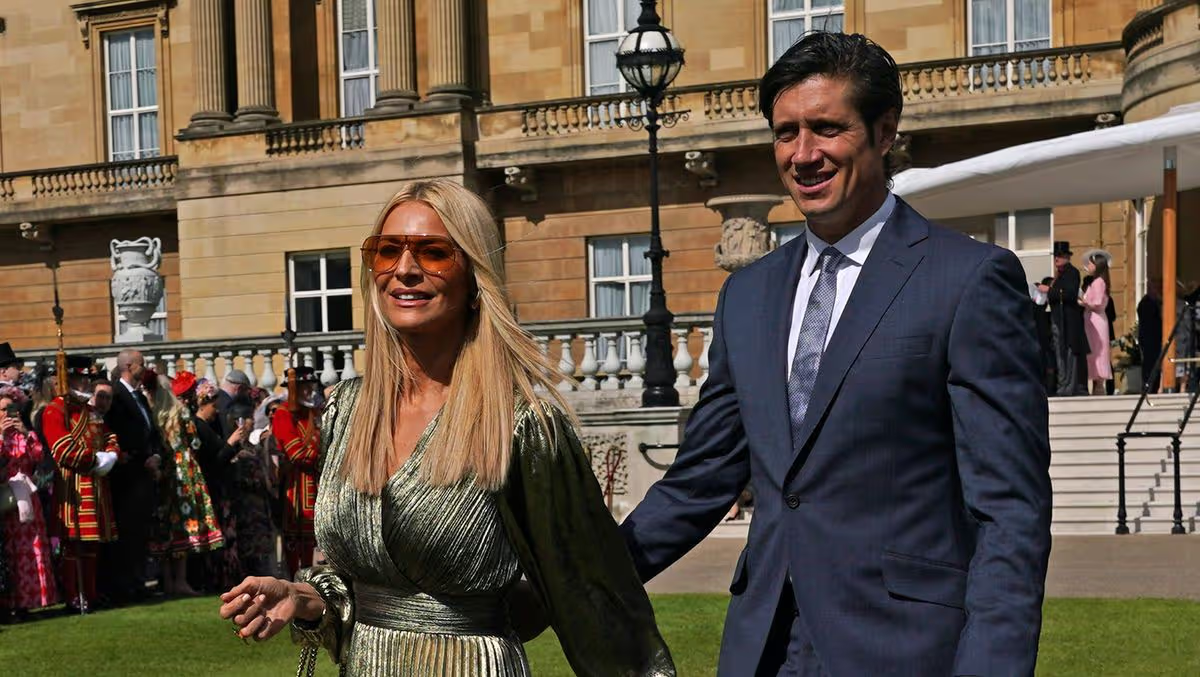
Tess Daly and Vernon Kay announced they had separated after 23 years of marriage on Friday.
15:22, 10 May 2026Updated 15:23, 10 May 2026
The reason behind TV presenters Tess Daly and Vernon Kay‘s shock split has been revealed by a friend. In a statement that stunned the entertainment world, the couple announced their “amicable” divorce after 23 years of marriage.
However, that joint statement released on social media didn’t unveil the root cause of the break up. A friend of the couple has now confirmed that there was no dramatic fall-out but, instead, the pair had slowly drifted apart since getting married.
They claimed that Tess, 57, and Vernon, 52, were at different stages of their life and that, although the five-year age gap seemed unimportant when they tied the knot in 2003, it appeared to have “widened” over recent years, reports the Mirror.
Advertisement
The close friend claimed that the couple didn’t have a lot in common anymore and that they have “aged differently”, according to the Daily Mail.
They said: “Tess needs to find a rich, older man with a yacht, while Vernon is still a big kid. He loves going out and having a good time, he loves to have a drink and a laugh.”
Vernon and Tess’ interests are said to be very different. He enjoys his time at gigs and watching American football while she prefers to relax on ‘girls weekends’.
It is understood that Vernon has been to see Oasis five times on their reunion tour but not once with Tess. She is now reportedly ready to be ‘selfish’ after leaving Strictly Come Dancing.
The source said: “They are totally different people now. They used to have so much in common but things have changed. They have changed. They have aged differently.
“Tess needs to find a rich, older man with a yacht, while Vernon is still a big kid. He loves going out and having a good time, he loves to have a drink and a laugh.
“He loves the ’90s disco nights that he puts on. He loves football, American football and Oasis. Tess isn’t interested in any of that.”
Advertisement
BBC Radio 2 DJ Vernon has spent a lot of time socialising without his Tess in recent times. He attended the Brit Awards with Noel Gallagher and enjoys his 90s DJing nights.
Previously, Vernon had betrayed Tess’ trust when he became embroiled in a sexting scandal with former Page 3 girl Rhian Sugden. However, the couple have denied that any other parties were involved in the break up. Instead, the pair have celebrated their marriage and their two daughters, Phoebe, 21, and Amber, 16 – even toasting their split with a glass of champagne.
A source close to the couple told our sister title the Mirror: “After they released the statement, Vernon and Tess took a moment to toast each other and their futures. They only want the best for each other and their family.
“There has been no big fallout, more a gradual growing apart and wanting different things. They have vowed to stay friends and to keep things classy when it comes to the split and any future interviews they give. They only want the best for each other.”
Their carefully curated joint statement read: “After much consideration, and with a deep sense of care and respect for one another, we have made the decision to separate amicably.
Advertisement
“This has not been an easy choice, but it comes from a place of mutual understanding and a shared desire for what is best for both of us. We remain great friends and most importantly, fully committed to our roles as loving and supportive parents, which will always be our priority.
“There are no other parties involved in this decision. We kindly ask for privacy during this time as we navigate this transition together. We will not be making any further public comments. Tess and Vernon.”
Get more Daily Record exclusives by signing up for free to Google’s preferred sources. Click HERE.
The Gunners are looking to consolidate their place at the top of the tree and take full advantage of Manchester City dropping points at Everton as the title race took another twist. City have since beaten Brentford 3-0 to close the gap to two points and the goal difference to just one.
The Hammers, meanwhile, are fighting for their lives in the relegation battle, and they currently occupy the final spot in the drop zone after Tottenham’s win at Aston Villa last weekend. Coming away from a meeting with the league leaders with anything will be a huge boost in their battle to avoid the drop.
Nuno Espirito Santo’s men are scrapping to stay in the league and will be hoping that Leeds United do them a favour when Spurs make the trip to north London on Monday.
Date, kick-off time and venue
Advertisement
West Ham vs Arsenal is scheduled for a 4.30pm BST kick-off today, Sunday, May 10, 2026.
The match will take place at the London Stadium.
Where to watch West Ham vs Arsenal
TV channel: In the UK, the game will be televised live on Sky Sports Main Event, with coverage starting at 4pm.
Advertisement
Live stream: Sky Sports subscribers can also catch the contest live online via the Sky Go app.
West Ham vs Arsenal team news
West Ham XI: Hermansen, Wan-Bissaka, Mavropanos, Disasi, Todibo, Diouf, Fernandes, Soucek, Bowen, Summerville, Taty
Substitutes: Areola, Walker-Peters, Scarles, Kilman, Potts, Magassa, Kante, Pablo, Wilson
Advertisement
Arsenal XI: Raya, White, Saliba, Gabriel, Calafiori, Rice, Lewis-Skelly, Eze, Trossard, Saka, Gyokeres.
The Gunners showed that they could handle the pressure against Fulham and then against Atletico Madrid in the Champions League semi-finals.
Advertisement
They were handed a further boost on Monday when Everton held Man City to a 3-3 draw, and now it is down to the north Londoners to make Pep Guardiola’s men pay.
Viktor Gyokeres has hit form at the perfect time, and goals now no longer seem a problem for Arteta’s side.
But the Hammers have home advantage, and are fighting for their lives.
This could be a tricky test for the league leaders.
Counter-terrorism officers have arrested two people in connection with an alleged arson attack at a former synagogue in Tower Hamlets
Eliana Nunes News Reporter and Kirstie McCrum
15:10, 10 May 2026
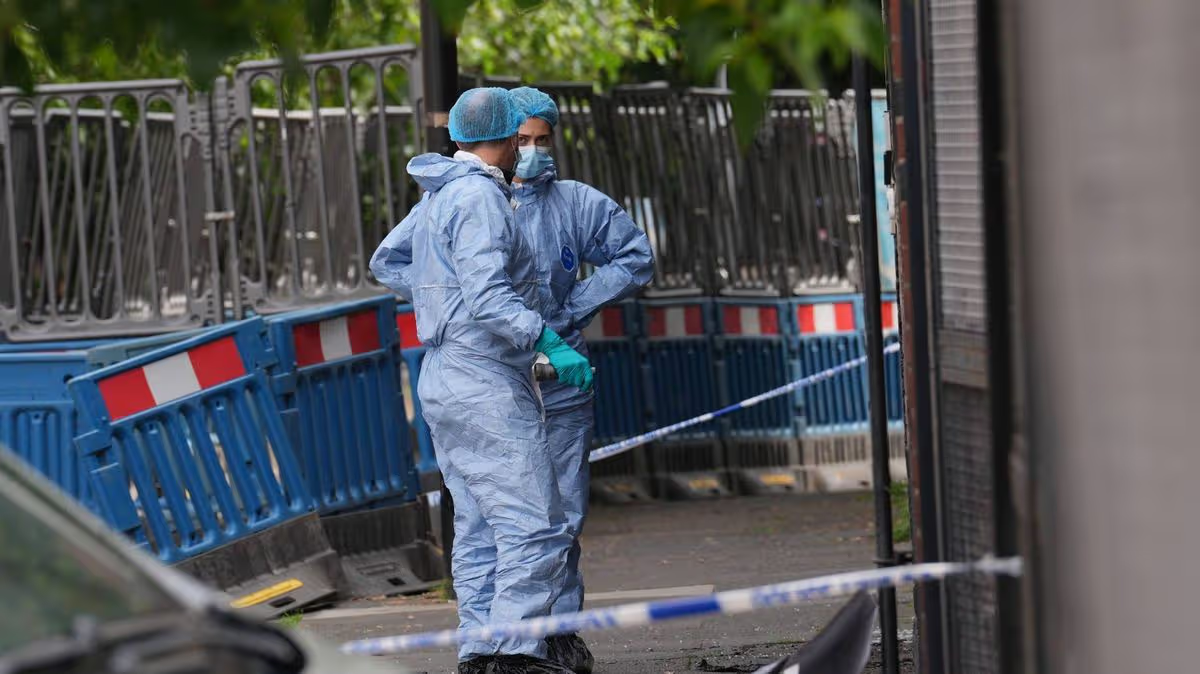
Counter-terrorism detectives investigating a suspected arson attack at a former synagogue in east London have arrested two people.
A 45-year-old man and a 52-year-old woman were apprehended on Sunday (May 10) on suspicion of conspiracy to commit arson and remain in police custody. Officers were alerted at approximately 5.15am on May 5 by the London Fire Brigade following reports of a blaze at a former synagogue in Nelson Street, Tower Hamlets, reports the Mirror.
Advertisement
“CCTV enquiries indicated that the fire was started intentionally at around 05:10hrs,” the Metropolitan Police said. “Given the nature and location of the incident, the investigation has been led by Counter Terrorism Policing [CTP] London.”
Commander Helen Flanagan, Head of CTP London, said: “Today’s arrests are a significant step in our investigation into this attack and our enquiries are ongoing.”
“Our aim continues to arrest and charge all those responsible for the arson attacks and other incidents targeted at Jewish, Israeli and Iranian sites in recent weeks. We will not tolerate these hateful attacks on communities.
Advertisement
“While counter-terrorism officers continue to work closely with Metropolitan Police colleagues to provide protective security advice and support to various organisations, community venues and businesses, everyone can play their part to keep themselves and their communities safe.”
She encouraged anyone with worries about suspicious activity to contact police.
Detective Superintendent Oliver Richter, responsible for policing across Hackney and Tower Hamlets, stated: “This attack happened at a synagogue in the process of being sold to a local Somali Muslim organisation, and I know that those of all faiths in the local area have felt targeted and together condemn this horrendous act.”
He continued: “I want to reiterate that no hate crime, no matter who it is against, will be tolerated. It is completely unacceptable and has no place here.”
Advertisement
The Metropolitan Police confirmed that in the wake of the alleged assault on Hatzola Ambulance in March, alongside several other incidents, 33 individuals have been detained as part of various CTP inquiries.
Among them, eight have been charged with offences, including a 17-year-old boy who has pleaded guilty to arson following an attack on Kenton United Synagogue in Shaftsbury Avenue, Harrow, on April 18.
Ensure our latest stories always appear at the top of your Google Search by making us a Preferred Source. Click here to activate or add us as your Preferred Source in your Google search settings.
Today, we look at a surpirsise move from Labour MP Catherine West. She’s called for cabinet ministers to challenge Keir Starmer’s leadership – threatening to do so herself if they don’t.
Laura and Paddy are joined by Henry to discuss she is, why she’s doing it, and how dangerous it could be for the prime minister.
They also look ahead to next week as the prime minister prepares to make a speech tomorrow, and what we could hear at the state opening of UK Parliament by King Charles on Wednesday.
Advertisement
You can now listen to Newscast on a smart speaker. If you want to listen, just say “Ask BBC Sounds to play Newscast”. It works on most smart speakers.
You can join our Newscast online community here: https://bbc.in/newscastdiscord
Get in touch with Newscast by emailing newscast@bbc.co.uk or send us a WhatsApp on +44 0330 123 9480.
New episodes released every day. If you’re in the UK, for more News and Current Affairs podcasts from the BBC, listen on BBC Sounds: https://bbc.in/4guXgXd
Advertisement
Newscast brings you daily analysis of the latest political news stories from the BBC. The presenters were Laura Kuenssberg and Paddy O’Connell. It was made by Chris Flynn and Chloe Scannapieco. The social producer was Joe Wilkinson. The technical producer was James Piper. The assistant editor is Chris Gray. The senior news editor is Sam Bonham.
It is a huge game for both ends of the Premier League table on Sunday at the London Stadium as West Ham host Arsenal.
The Gunners are top of the table with three games to play and the fate of the title in their own hands, but cannot afford to slip up.
Manchester City are just two points behind and will be ready to pounce if Arsenal offer them the opportunity to do so.
West Ham will be in no mood to give their London rivals a boost, though, as they have a relegation battle on their hands.
Advertisement
The Hammers are a point adrift of safety and would love to pile the pressure on Tottenham by leapfrogging them with a win over Arsenal.
Spurs play on Monday night when they host Leeds and will be under far less strain in that fixture if West Ham are still below them.
Metro’s LIVE matchday blog will bring you all the build-up, confirmed team news and starting XIs, goal updates and minute-by-minute coverage
Advertisement
Live Feed
What happened in the reverse fixture?
The sides met on October 4 at the Emirates with Declan Rice and Bukayo Saka scoring the goals in a 2-0 win for the home side.
Advertisement
A huge game for both teams
Advertisement
West Ham have three games to save their Premier League skin. They go into this match 18th and one point adrift of Tottenham and safety. Their poor goal difference means only a win would see them leapfrog Spurs.
Arsenal have an entirely different kind of challenge. Two points clear of Manchester City at the top of the table. Win and they are just two games from the title.
Advertisement
West Ham vs Arsenal TV channel
Sky Sports will be showing the action live on their Main Event and Premier League channels.
Streaming is available on Now TV if you don’t have a Sky Sports subscription.
Advertisement
West Ham vs Arsenal kick-off time
Advertisement
The game gets underway at 4.30pm on Sunday.
It comes after a trio of 2pm kick-offs as Burnley host Aston Villa, Crystal Palace play Everton and Nottingham Forest take on Newcastle.
Advertisement
Good afternoon!
Welcome to our live coverage of the crunch game at the London Stadium between West Ham and Arsenal.
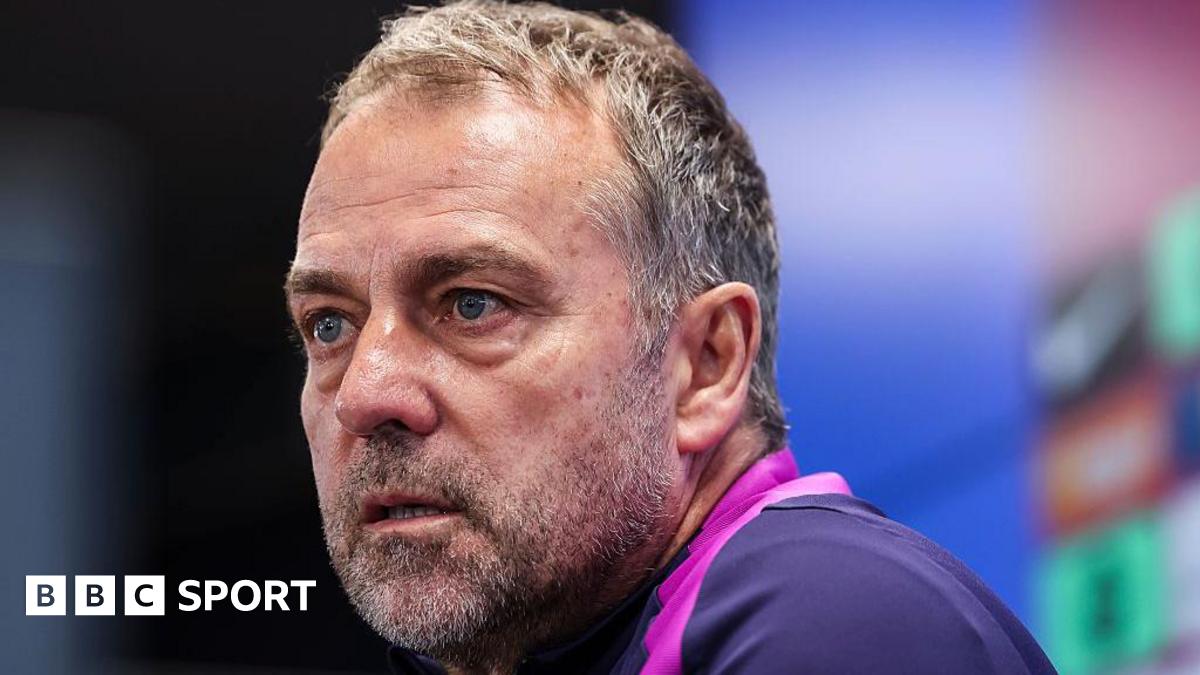
Manager Hansi Flick will take charge of Barcelona in Sunday’s El Clasico against Real Madrid despite the death of his father.
Tributes will be paid at the Nou Camp, with a minute’s silence before kick-off (20:00 BST) and players wearing black armbands during the game.
Announcing the death on Sunday afternoon, Barcelona said: “FC Barcelona and the entire blaugrana family wish to send all our love to Hansi Flick after the passing of his father.
“We share in your sorrow and our thoughts are with you and your family during this difficult time.”
Advertisement
Flick, 61, can deliver back-to-back La Liga titles for Barcelona with a win or draw against Real.
The former Bayern Munich and Germany manager has won four trophies with Barcelona since replacing Xavi in May 2024.
Their fierce rivals from Madrid said in a statement: “Real Madrid, its president and its directors deeply regret the death of the father of Hansi Flick.
“Real Madrid wants to express its condolences and affection to their families and all their loved ones. Rest in peace.”
















































You must be logged in to post a comment Login