

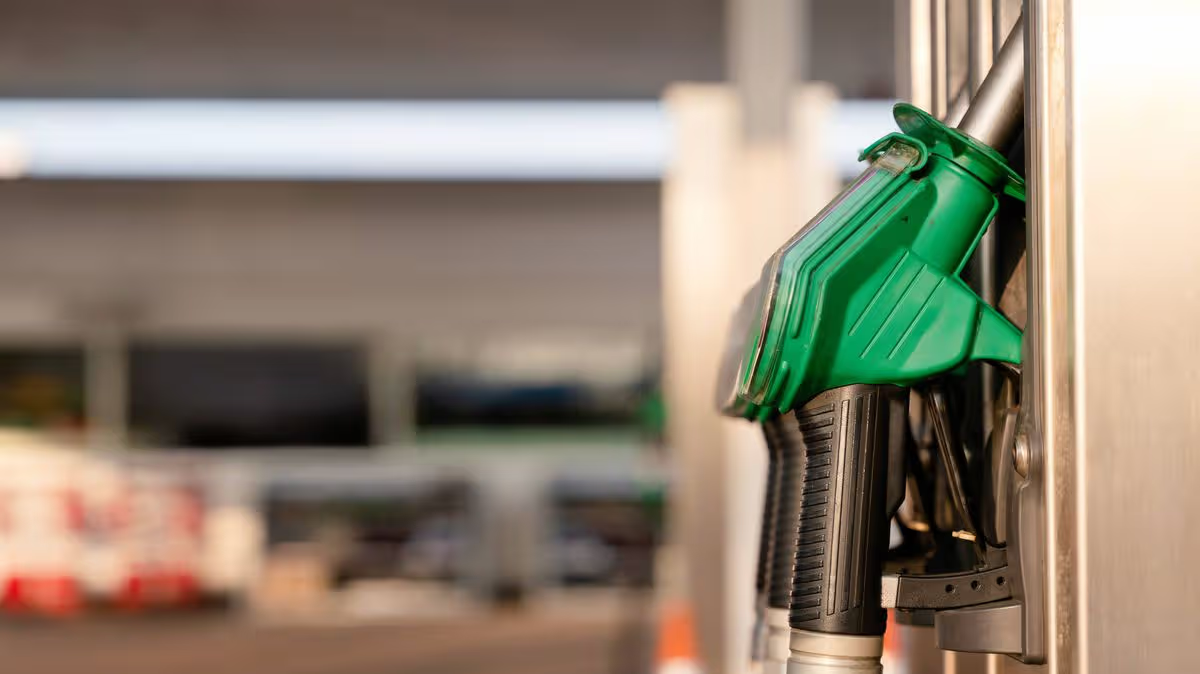
The public are facing potential restrictions if the Iran war and the blockage of the Strait of Hormuz cause severe supply shortages
There are fears that fuel rationing could become a reality in the UK if escalating tensions in the Middle East continue to squeeze global oil supplies, with ministers now openly acknowledging the risk as prices surge.
A Labour Treasury minister this week stopped short of ruling out the possibility, as tensions surrounding Iran and disruption at the Strait of Hormuz begin to ripple through global energy markets. The impact is already being felt in the UK, with fuel prices climbing sharply and some forecourts reporting shortages.
Government contingency plans held by the Department for Energy Security & Net Zero under its National Emergency Plan for Fuel outline precisely how rationing would operate in reality if introduced and which groups would receive initial priority.
Forecourt prices have risen sharply of late, with the RAC confirming the average price of unleaded petrol now stands at 141.5p and diesel at 160.3p, both representing 18-month peaks for fuel.
The National Emergency Plan for Fuel establishes who receives priority access to fuel, reports the Express. It states that emergency services and ‘critical service vehicles’ would receive first priority ahead of all other motorists.
Subsequently, utilities including gas and electricity providers and water companies would gain next priority, followed by public transport, including buses and diesel trains. For our free daily briefing on the biggest issues facing the nation sign up to the Wales Matters newsletter here.
Commercial vehicles would follow, including lorries transporting food to and from supermarkets, and health-related deliveries. Finally, ordinary motorists could be subjected to limits on the quantity of petrol they can purchase at once, and may also encounter reduced operating hours at petrol stations.
The document elaborates: “The majority of potential fuel supply disruptions can be addressed by measures to help industry maintain fuel supply; these would be deployed by DESNZ in co-ordination with industry and other government departments.
“However, the government does have emergency powers under the Energy Act 1976, which it can use to control supply and demand of petroleum products. It should be noted that use of these emergency powers is reserved for the most severe of disruptions.
“These measures would only be activated in the event of a severe national fuel supply shortage.”
When questioned if the Government was preparing to implement such plans, Dan Tomlinson informed Times Radio: “At the moment, it is too early to tell what the impact of this crisis will be in the coming months.
“What we have seen in the last two weeks is that there has been sharp increase in the cost of oil used to heat people’s homes, and the Government has stepped in and said we’re going to provide £50 million of support for people across the UK who are reliant on heating oil.”
When asked again whether the Government was formulating contingency plans to ration petrol, Mr Tomlinson stated: “We will monitor the situation, and we’ll monitor it carefully.”
Louisa James, political correspondent for ITV’s Good Morning Britain, warned on Tuesday morning: “There are experts warning that a severe shortage of oil and gas is now just weeks away. As you would expect the government has emergency plans in place which will be activated in the event of a severe disruption.
“These are published online and they include measures such as petrol rationing, prioritising fuel for emergency services and public transport. There’s also talk of a temporary 50mph speed limit to reduce demand for fuel.
“A government source reassured us that the UK has ‘a diverse and resilient’ supply of fuel, that petrol stations are well stocked, and that imports are arriving.”
















































You must be logged in to post a comment Login