I READ The Press’ excellent article from Emma Clayton about sandwiches with great interest.
I am now quite ancient, originally from the East End of London, and when I first came to York many years ago went in to a popular cafe in the city and ordered a bacon sandwich, only to be astounded when it arrived at my table.
A large flaccid very soft flat bread roll containing four shrivelled pieces of dubious-looking bacon!
Advertisement
I took it over to the servery and spoke (very politely) to the lady serving there and said that I had ordered a ‘sandwich’ not a bread roll.
She looked at me quizzically and said it was a ‘sandwich’, bacon and a bread bun!
I am very careful these days to specify my desires when ordering any sort of ‘sandwich’
anywhere.
Advertisement
Phill Thomas,
Brecksfields,
Skelton
Read more:
Advertisement
Why this is the wrong move and a waste of money
IN trying to justify the latest ATTRO (Anti Terror Traffic Regulation Order) officials say they are seeking to reduce vehicle attacks.
It is not vehicles that attack us. It is certain people who get into those vehicles that are the problem. People who support an ideology that is completely alien to British values and Western civilisation.
Those people can just as easily kill with a backpack full of explosives, firearms and knives as they can by driving vehicles into pedestrians.
Advertisement
The money being spent on futile traffic restrictions would be far better expended on tackling the root cause of the problem and dealing with those that seek to destroy our society.
Matthew Laverack,
Lord Mayors Walk,
York
Advertisement
—
Can you help and donate to flood appeal?
DEVASTATING flash floods struck Nepal at the end of August, affecting around 65,000 people, including more than 22,000 children.
Many people remain missing, and communities are facing an uncertain future after homes, livelihoods and vital infrastructure were swept away.
Advertisement
Entire villages in the flood’s path have been largely destroyed.
In response, international disaster relief charity ShelterBox has launched an urgent appeal to help families who have lost everything and are now in desperate need of safe shelter and essential household items.
In disasters such as this, ShelterBox works closely with local partners, including Rotary members, to understand people’s needs in Nepal and help ensure support reaches those most affected.
Together, we are preparing to provide emergency items including blankets, sleeping mats, pillows and tarpaulins, helping families protect themselves from the elements as they begin the difficult task of rebuilding their lives.
Advertisement
ShelterBox has a long history of responding to disasters in Nepal, including the 2015 earthquake, as well as major flooding across South Asia. That experience is helping us prepare to support families affected by these latest floods.
Every donation, no matter the size, can help provide urgently needed support. I would urge your readers to consider donating to the appeal or sharing information about it. At a time when many families have lost loved ones, their homes and any sense of certainty about the future, public support can make a real difference.
To find out more or donate, visit shelterbox.org
Alice Jefferson
Advertisement
Head of Emergency Response and Preparedness
ShelterBox
—
What do you think?
Advertisement
Feel strongly about an issue? Write us a letter. Please write no more than 250 words and you must provide your full name, address and mobile number. Send your views by email to: letters@thepress.co.uk
Write a comment
Join the debate and leave a comment in our comments section below this article – we may use your comments for a follow up article.
Two key Nigel Farage aides have stepped down pending a probe into an ‘illegal’ donation sting.
James Orr and Dan Jukes are standing aside from their jobs as head of policy and assistant to the leader while allegations are looked into.
The furore is threatening to overshadow Reform’s annual conference taking place in Birmingham, where Mr Farage is hoping to revive the party’s fortunes amid flagging polls.
A report broadcast by Channel 4 News claimed Reform took funding from a US firm for three polls it commissioned earlier this year costing £32,500.
Advertisement
Senior Reform figures including leader Nigel Farage are said to have discussed a £500,000 donation from a US businessman through his son, who lives in the UK
The purported donors were in fact undercover reporters from investigative group Verbatim posing as an American financier and his UK-based son.
Senior officials including Mr Farage are also said to have discussed a £500,000 donation from the fake businessman through his son.
Advertisement
A Reform spokesman said: ‘Reform UK has launched an investigation following the broadcast of a Channel 4 News programme.
‘Both individuals involved have stepped down from their respective positions pending the outcome of the investigation.
‘The party believes it is important that the investigation is allowed to proceed independently and without prejudice. No further comment will be made while the investigation is ongoing.’
Reform UK chairman Lee Anderson told Sky News there was ‘no chance’ of them returning to the party.
Advertisement
However, deputy leader Richard Tice refused to rule out a comeback, telling BBC Radio 4’s Today programme: ‘Let’s wait and see what the investigation says.’
Farage and his senior aide Dan Jukes were filmed meeting a US businessman and his son, who lives in the UK, and discussing donations. The men were both undercover members of Verbatim, a group of investigative journalists
Foreign political donations are banned in the UK. The donation was never made.
The Lib Dems have written to the Metropolitan Police and Electoral Commission about the issue.
Advertisement
Labour has also reported the allegations to the police, and the Greens have called for a probe.
In a letter to the Met Police, Lib Dem Cabinet Office spokesman Lisa Smart wrote: ‘The breach raises alarming questions about whether there has been a wider complacency toward foreign interference by the individuals involved.’
Mr Anderson told Sky News of Mr Jukes and Mr Orr: ‘They’ve stepped down. They was told, you know, they had to step down, they have stepped down, and that’s got to be the right thing to do on the day, the first day of our conference.
‘Let’s remember, we’ve got 5,000 members coming through the door today to listen to what we’ve got to say about our first 100 days in government and how we’re going to change the course of this country.
Advertisement
‘So it’s right to get rid of this distraction straight away. The pair concerned have gone, and the investigation starts today. It’s as simple as that.’
He added: ‘There’s no chance of them coming back. They’ve stepped aside.
‘You know, we’re a serious party, you know, and sometimes in politics, you have to make tough decisions, harsh decisions.’
Mr Farage is expected to give the first of his two conference speeches on Friday afternoon, in which he will promise to declare a ‘national emergency’ on his first day in government, introducing a flood of legislation and doing ‘anything and everything’ to deliver his party’s policies.
Advertisement
He will say: ‘Within days of winning the general election, we will introduce dozens of Bills and force Parliament to sit all through summer for seven days a week to pass them.
‘Britain is in serious trouble. We don’t have time to wait around to fix it.’
The two-day conference in Birmingham is expected to hear from other senior Reform figures setting out their own pledges for their first 100 days in office, as well as an address from Jordan Bardella, leader of the French National Rally.
Mr Farage is expected to announce that any frontbenchers who fail to deliver on their pledges ‘will be sacked’.
Advertisement
He is also due to make his own promise to focus on reducing the cost of living and lead on efforts to end small boat crossings in the Channel.
Originating across the Atlanic, this popular breakfast side dish is made from finely shredded, grated or diced potatoes, fried in a pan or on a griddle until they are golden brown and crispy on the outside.
The term ‘hashed brown potatoes’ first appeared in American cookbooks in the 1880s to describe chopped and fried boiled potatoes, later evolving into the grated patty popular in diners. They were introduced here much later via fast-food chains
Now they are popular in the UK, I thought I’d give them a go.
Cooking could either be oven bake – which I did – or air fryer. Some can be deep-fried.
Advertisement
*Iceland Hash Browns, 800g, £2.00
This was an appetising golden colour, which was a good start. A bit greasy on the outside, inside it was fairly solid in consistency – I could see a few small chunks of potato and onion. Strangely, it had a slightly cheesy taste – cheese is not among the ingredients. I tried another to make sure and again it tasted cheesy. I didn’t like them at all and they left an unpleasant taste in my mouth.
Pros: appearance.
Cons: taste, price.
Advertisement
Mark: 1/5
*M&S Food Hash Browns, 750g, £3.50
Neatly shaped, this one was a darker brown in colour and thicker than the others. With a lovely crisp exterior, it was finely mashed and had a soft consistency. I liked the mild potato/onion flavour. I enjoyed it. The bag was, however, a lot more expensive than the others.
Pros: consistency, taste.
Advertisement
Cons: price.
Mark: 4/5
*Morrisons Hash Browns, 750g, £1.75
An appetising brown colour, this one were a little thinner than the others and didn’t crisp up too well on top. Inside it were finely mashed, with a nice soft consistency. The taste, though, wasn’t great – it was very potatoey and reminded me of oven chips. They are a reasonable price, but that’s where it ends.
Advertisement
Pros: consistency, price.
Cons: taste.
Mark: 2/5
Hash browns are a breakfast staple in the USA
Morrisons Hash Browns
Hash Browns from M&S Food (Image: Newsquest)
Hash Browns from Iceland
Tesco Hash Browns
*Tesco Hash Browns, 750g, £1.75
Advertisement
A good colour and neat shape, with visible pieces of potato and onion in the mix. The outer coating crisped up nicely, and the inside was suitably soft and well-mashed. I loved the taste – they were nicely seasoned and reminded me of the potato and onion rissoles my mum used to make. They are a budget-friendly price too – I’d definitely buy these again.
Pros: appearance, consistency, taste, price.
Cons: none.
Mark: 5/5
Advertisement
*Four Seasons Hash Browns, Aldi, 750g, £1.75
This one had a neat triangular shape and cooked to a crisp golden brown on top. It contained a few chunks of potato within the mix, giving me something to get my teeth into, and I could pick out the taste of onion. I liked it, and the affordable price.
Pros: appearance, taste, price.
Cons: none.
Advertisement
Mark: 4/5
*Harvest Basket Hash Browns, Lidl, 750g, £1.75
A decent size and triangular shape, this was an unappetising yellow in colour and didn’t brown on cooking. Sadly, there was barely any flavour other than potato, and salt – it was far too salty for me. Three of these make up 20 per cent of your recommended daily salt intake, which was far higher than any of the others.
Pros: none.
Advertisement
Cons: taste.
Marks: 1/5
Four Seasons by Aldi
Harvest Basket from Lidl
Asda Hash Browns
Sainsbury’s Hash Browns (Image: Newsquest)
*Crispy Hash Browns by Asda, 800g, £2.25
A bit like Harvest Basket, this were a pale yellow colour. It crisped up on the outside, but didn’t go brown. Things didn’t improve as I bit into it – it was soft verging on soggy in the middle, like mashed potato. I did not pick up any onion taste at all. A bit more expensive, but it’s a bigger bag.
Advertisement
Pros: none.
Cons: appearance, consistency, taste.
Mark: 1/5
*Sainsbury’s Hash Browns, 1.2kg £3.10
Advertisement
A neat shape, this one baked to a light brown colour. It crisped up nicely on the outside, while the inside was soft, with shredded potato and onion combining for a lovely flavour. I enjoyed it. This was more expensive, but it was a bigger bag.
A decapitated body, cracked skulls and charred limbs strewn everywhere: WHO were the 37 young men dumped in a pit beneath a prestigious Oxford college? New podcast from The Crime Desk lays bare the sinister secrets of the St Brice’s Day massacre
A new podcast from The Crime Desk forensically unpacks historic crimes, working to solve the unanswered questions that still linger over them centuries later.
Hosted by historian Rebecca Rideal and Time Team archaeologist Professor Raksha Dave, Buried Evidence will take you inside the lives of victims of the most barbaric crimes whose names have been mostly forgotten by time.
In the first episode, available on YouTube and wherever you get your podcasts, Rideal and Dave dissect the St Brice’s Day massacre and its connections to a sinister archaeological discovery.
In January 2008, a routine dig at St John’s College, Oxford, carried out so new student accommodation could be built, uncovered a horrifying scene.
Advertisement
The bodies of 37 men and boys, aged between 12 and 45, dumped in a ditch over a thousand years ago. As Professor Dave explained, it quickly became obvious to archaeologists at the scene that this was no ordinary burial site.
‘Normally, when we look at burials, they are kind of uniform,’ she said.
In January 2008, a routine dig at St John’s College, Oxford, carried out so new student accommodation could be built, uncovered a horrifying scene
Advertisement
The bodies of 37 men and boys, dumped in a ditch over a thousand years ago. As Professor Dave explained (L), it quickly became obvious that this was no ordinary burial site
‘People are laid to rest really nicely. They’re either put in certain positions or prone, straight on their backs. But this was a higgledy piggledy mess.
‘We had a decapitation, skulls and arms everywhere. I mean, you name it, it was a mess… it’s what we would call a deviant burial. Things were not quite right, and it looked as though these men were literally just tipped in there like rubbish.’
Archaeologists were struck by another detail. Many of the men’s wounds were to the back, suggesting they were running from something when they were killed.
Advertisement
Some of the bones had also been burned. It was the fire, more than anything else, that would eventually point investigators towards a single night in Oxford’s history.
Documented in the Anglo-Saxon Chronicle, on 13 November 1002, King Ethelred the Unready ordered the deaths of all Danish people in his realm, having been warned they were plotting to kill him and seize his throne.
Townspeople turned on the Danes living among them, hunting them through the streets and killing them where they stood. The event became known as the St Brice’s Day massacre, because the king’s order fell on the saint’s feast day.
In Oxford, a group of Danes broke into St Frideswide’s church and barricaded themselves inside, believing sanctuary would save them. It did not. Unable to force them out, the mob set fire to the roof and burned the building down with them inside.
Advertisement
Many of the men’s wounds were to the back, suggesting they were running from something when they were killed
Although matching the bodies to the massacre seems plausible, some details don’t quite fit the historical record
Although matching the bodies to the massacre seems plausible, some details don’t quite fit the historical record, as Dave explained.
‘Oxford was very much a wild west town in the early medieval period,’ she said.
Advertisement
‘There were groups of mercenaries living there… if we actually look at who’s buried there, there are no women or children, not a single one.
‘It could have just been an act of mob violence. All the injuries are to the back, so they’re obviously being chased.’
The bones themselves also hint that these men were soldiers, not Danish townsfolk rounded up on the orders of a fearful king.
Dave added: ‘When they actually did more analysis on the bones in a lab later, they discovered older wounds.
Advertisement
‘If you break something, you actually see where the bone mended itself. It’s almost like an extra bone growth on top of it… they found a lot of these trauma wounds where the bone had been reworked.
‘So from that evidence, it’s highly likely that these were trained, professional soldiers… the bones were also very robust, compared to the Anglo Saxon population. So, they appear to have been big beefcake fighters with huge muscles.’
Whatever happened at Oxford, the pattern did not end there. In Dorset, a second mass grave was discovered a year later. Radiocarbon dating placed it in the same period as the St John’s College massacre, and these men, too, were likely Scandinavian soldiers or mercenaries.
Two mass graves, hundreds of miles apart, both filled with slaughtered Nordic men from the same narrow window of history.
Advertisement
Listen to Buried Evidence in full to hear Rideal and Dave’s verdict on what really happened. Subscribe to The Crime Desk to access new episodes one week early.
Cambridge City Council approved the Market Square plans but details of the gates must still be provided before they are installed
Plans to reimagine Cambridge’s Market Square could include nine-foot tall security gates branded “fundamentally tragic” by traders. Cambridge City Council approved the refurbishment at a planning meeting on Wednesday (September 2), but further details of the gates must be submitted before they are approved.
Advertisement
A design and access statement by Cartwright Pickard said the gates were part of plans to tackle antisocial behaviour alongside better lighting, CCTV, and an extension of market opening hours. Plans submitted in November 2025 show the proposed four gates, which would be locked every evening, with a height of 2.751m or around nine feet.
Council planning officers told the meeting they weren’t convinced the gates would be in the right place, as they block the north-south main route. They proposed the condition that no gates will be installed until further details are submitted and approved.
Zoe Harding, a market trader, called the gating of civic spaces “fundamentally tragic” and expressed concerns the current design could “destroy” the market. She sent councillors an alternative plan which would create and maintain “desire lines” and remove “the need for the gates”.
Councillor Tim Bick said he supported the wider scheme as a compromise, but would prefer all the stalls be removable to create open space in the market at night.
Advertisement
The Lib Dem councillor said: “Partly because of the effect of empty stalls in the evenings when the market is closed, the square is then prone to much antisocial behaviour by the provision of multiple concealed areas.
“I have instead assurances on antisocial behaviour that additional deterrence will come from better lighting, more natural surveillance through the design through better CCTV, from the gating of new fixed stalls and regular security visits.
“We can’t simply address those uncertainties and concerns by never adapting the market square or refurbishing it while the infrastructure falls further behind modern standards and the growth in the footfall that we see. Especially when we have the chance of significant investment that many city centres would look on with envy.”
Advertisement
The plans include a number of removable stalls at the Guildhall side to allow for events to be held but there will be a number of fixed stalls, including where the gates are proposed.
Cllr Dave Baigent raised concerns the plans could harm the heritage of the city’s market. The Your Party councillor said: “It will no longer be a street market, there will be sheds all over – that is a real matter of heritage. People will look back I’m sure in 20 years time and go, ‘where’s the market gone?’ because this is the beginning of an erosion of our city’s heritage.”
Cllr Robert Dryden said: “Our policy is it should be public open space and not obstructed by anything – if it’s got locked gates it’s not open public space any more.” The Labour councillor said he would not be voting to approve the plans because of the reasons for refusal given by officers.
The council approved the refurbishment plans but under the condition that no security gates are to be installed until details about their location, design, and colour have been submitted and approved.
The 81-year-old pensioner was killed in a deadly attack by an ostrich on his daughter’s exotic-animal farm — after making one crucial mistake he had been warned against.
Fred W Parker from Winlock, Washington, USA, was killed by the aggressive bird and found dead inside the ostrich’s cage on the farm in Park Road. His daughter, Linda Carter, said she could not comprehend why her father went into the bird’s pen in the first place, as they usually fed the ostrich by throwing food over the fence.
The Chronicle reported Linda as saying: “We knew that he (the ostrich) was aggressive, but we never dreamed that he would take anyone’s life.”
The incident occurred on June 27, 1999, and Linda had shared at the time that she had ‘no intention’ of culling the ostrich because of her father’s death.
Fred’s daughter said: “I have no intention right now of destroying my ostrich because of my father’s death. The ostrich was protecting his domain. It’s just like any wild animal. You don’t go in a bear’s pen, you don’t go in an ostrich’s pen.”
Advertisement
The pensioner’s family shared that he had heart trouble, and in a cruel irony, Fred was afraid of ostriches.
The octogenarian was found dead by his daughter on a Sunday night inside a male ostrich called King Tut’s pen on Linda’s exotic-animal farm. Linda had reportedly been at a loss to explain why her father had decided to make the fatal decision.
Fred lived on his daughter’s farm in a recreational vehicle, and had been alone when he was feeding the deadly flightless bird. He had been left in charge of feeding the ostriches, emus, potbellied pigs and llamas that weekend, however, according to his daughter Linda, the task didn’t involve entering King Tut’s pen.
Advertisement
According to The Seattle Times, Linda explained: “He knew to throw the food over the fence.” Chief Criminal Deputy Joe Doench shared that the case has been referred to the Lewis County prosecutor.
Coroner Terry Wilson shed some light on the circumstances surrounding Fred’s death, sharing that the pensioner’s neck had been broken, and as per him, the 81-year-old’s bad heart probably contributed to his demise.
Coroner Terry suspected it wasn’t a peck that killed Fred, sharing: “It wasn’t a peck. This was footwork.” While Fred’s daughter Linda decisively said that she had no plans to kill the bird, Chief Criminal Deputy Joe explained that it was ostrich mating season, a period known for male ostriches becoming aggressive.
This wasn’t the first time King Tut had shown signs of aggression, as the previous year in 1998, the deadly bird had kicked Linda 10.5 feet.
Fred’s daughter shared she had been raising ostriches for over two years when the fatal incident occurred, and the world’s largest and heaviest bird had been extremely profitable for her, with ostrich meat selling for $9 a pound.
In July that same year, Lewis County Prosecutor Jeremy Randolph ruled that King Tut the ostrich would not face the death penalty and no action would be taken against the bird, or Fred’s daughter Linda.
This owed to the fact that Linda had already instructed her father that he could throw the ostrich’s food over the fence, which clearly meant that Fred hadn’t needed to enter the pen to feed King Tut and the two female ostriches.
Advertisement
According to The Spokesman-Review, Lewis County Prosecutor Jeremy said: “As far as we could see, what more could a person do?”
The prosecutor also said that the male bird had been aggressive due to it being ostrich mating season, and shared that King Tut was considered livestock and was thus protected as the bird was in its pen. The prosecutor added: “It was just doing what ostriches do at this time of year when there’s a man in their pen.”
Fred’s daughter Linda on the other hand, said she would be building a new and more secure pen for her ostriches, with railroad ties secured by a padlock. Linda aimed to have King Tut in the new pen by September that same year.
After it was decided that no action would be taken against the deadly bird, Linda said: “I’m very, very pleased. I’m glad I defended my bird. Losing my father is a very big loss, and I didn’t want to lose my bird, too.”
A car crashed into a wall along a Cambridgeshire city road. Cambridgeshire Police were called to a crash along Star Road in Peterborough in the early hours of Monday (August 31).
Advertisement
A driver crashed a car into a wall. A police spokesperson said: “We were called at about 1.10am on Monday with reports a car had crashed into a wall in Star Road, Peterborough.
“The driver of the car, a silver Mercedes, was uninjured and no arrests were made.”
Ssve yourself hundreds with refurbished Apple products from Very this term. (Picture: Metro/Very)
Metro journalists select and curate the products that feature on our site. If you make a purchase via links on this page we will earn commission – learn more
If you’re heading to university for the first time, or back for another term, make sure you’ve ticked off your checklist ahead of your first seminar.
Some courses will require a laptop, while for others having a slimline iPad can be a great way to tackle creative projects and take notes without taking up much room, and a decent pair of headphones can also help when you’re trying to get through those late-night library sessions.
Advertisement
You’re going to loose these at least once this term, so why not buy them refurbished! (Picture: Metro/Very)
If it’s your first time owning a MacBook and you’re not quite sure where to start, this Buying Guide has all the info you need on processing speeds, storage capabilities and battery life.
For example, if you’re looking to spend less than £700, the MacBook Neo (A18 Pro, 2026) 13-inch might be your best bet. It has a sleek design, comes in four colours, and is just 1.27cm thin.
It’s considerably cheaper than a standard MacBook Air, which can cost well over £1,000, so it’s more accessible, but can easily handle everyday student tasks like web browsing, writing essays, and streaming lectures.
SHowever, if you need an iPad or don’t have the budget to splurge on a MacBook, the iPad (A16, 2025), 11-inch is a great alternative.
Should we admit to how many times we’ve had the screen replaced on our iPad? (Picture: Metro/Very)
You can find it in two options: one with 128GB and the other with 256GB of storage, so there’s plenty of space for taking lecture notes, working on group projects, or putting presentations together.
It has 10 hours of battery life, which will see you through lectures and library revision sessions, and better still, it can handle multitasking thanks to its Split View Feature.
Advertisement
Ask Metro
Use AI to go deeper into the stories you care about – powered by Metro and trusted publications.
If your phone is in dire need of an upgrade, Very’s selection of iPhones is pretty impressive, and you can currently save up to £100 on the iPhone 17 Pro and iPhone 17 Pro Max. It’s a welcome saving for what can be a very expensive time of year.
Advertisement
Bag yourself a refurbished iPhone Pro Max for less than you think. (Picture: Metro/Very)
Last but not least, if you’re living with noisy flatmates or simply need a bit of peace and quiet to get work done, consider adding Apple’s AirPods 4 to your back-to-uni basket.
Perfect for drowning out the noise, calling home to catch up with mum and dad, or listening to a podcast on your commute to lectures, they pair easily with other Apple products, and you don’t need to worry about tangled cables.
All in all, Very’s one-stop shop for all things Apple has everything you need to ensure you’re ready to lock in to a new term at uni, and take the hassle out of it.
The ITIA said Kyrgios had agreed to attend a treatment programme approved by the ITIA, which has lowered Kyrgios’ suspension from three months to one month.
As a result, Kyrgios’ suspension is already over, as the ITIA said his provisional ban began on 4 August 2026 and ended on 3 September 2026.
Advertisement
The ITIA said Kyrgios’ explanatation that he had used cocaine “socially during a night out” was “consistent with the level of cocaine found in his sample”.
As a result, the ITIA accepted his use of cocaine was outside of competition and subject to a lighter penalty.
After his provisional suspension was announced last month, Kyrgios said he had made “a huge mistake”.
He wrote on Instagram: “I wanted you to hear this from me first. I recently failed a drug test in Mallorca after testing positive for cocaine.
Advertisement
“I made a huge mistake and I take full responsibility for it. I’m sorry to my fans, my family, my sponsors and everyone close to me. Above all, I’m sorry to the kids who follow me.
“I know the example this sets and I’m deeply disappointed in myself.”
His first-round loss to fellow Australian Adam Walton in Majorca was his last competitive singles outing and one of only four singles matches he has played this season.
Kyrgios’ career has been blighted by knee and wrist problems since his run to the Wimbledon showpiece in 2022 and his ranking has slipped to 919 in the world.
Advertisement
He said he would not make “excuses” for the positive test but cited the toll of his physical issues.
“My body hasn’t been able to do what my mind expects it do, and coming to terms with being near the end of my career has been harder than I ever imagined,” he said.
“At times I’ve felt hopeless and alone. However, the good news is that this has given me a wake-up call.”
Kyrgios added he would be taking a 28-day break from social media to focus on “getting myself right”, concluding: “I’m sorry, I’ll come back better.”
Advertisement
Britain’s Dan Evans was banned for a year for taking cocaine out of competition in 2017 but the rules changed in 2021, with the penalties reduced.
A deadlocked jury returns on Friday for the seventh day of deliberations in the Lindsay Clancy trial, a day after the jury’s foreperson told the judge a single juror won’t follow the court’s instructions about reasonable doubt.
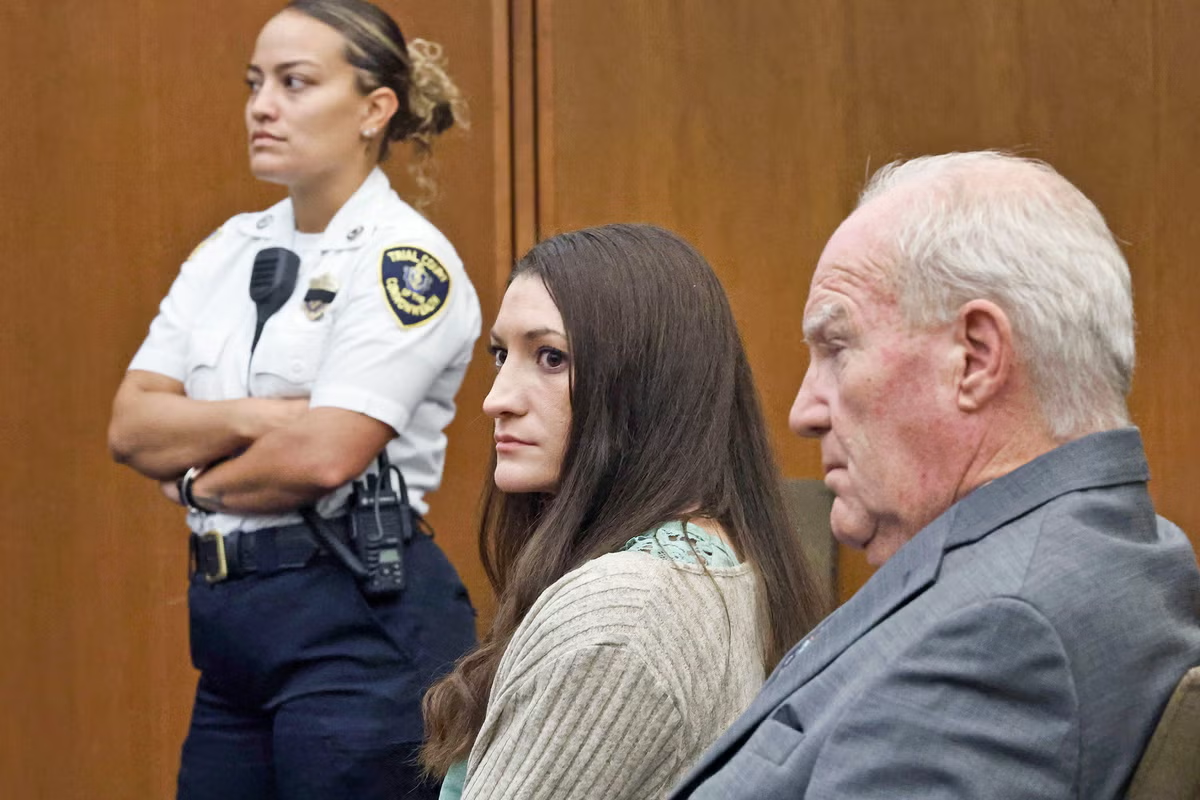
The extraordinary disclosure made Thursday in the form of a note delivered to the judge offered the clearest glimpse yet of what may be keeping jurors from reaching a verdict on whether the Massachusetts mother is criminally responsible for killing her three children.
The jury has twice told Judge William Sullivan that it is unable to agree on a verdict.
On Thursday, Sullivan brought in each juror individually and questioned them in private. The judge then reread his instructions on reasonable doubt before sending them back to continue deliberating.
Advertisement
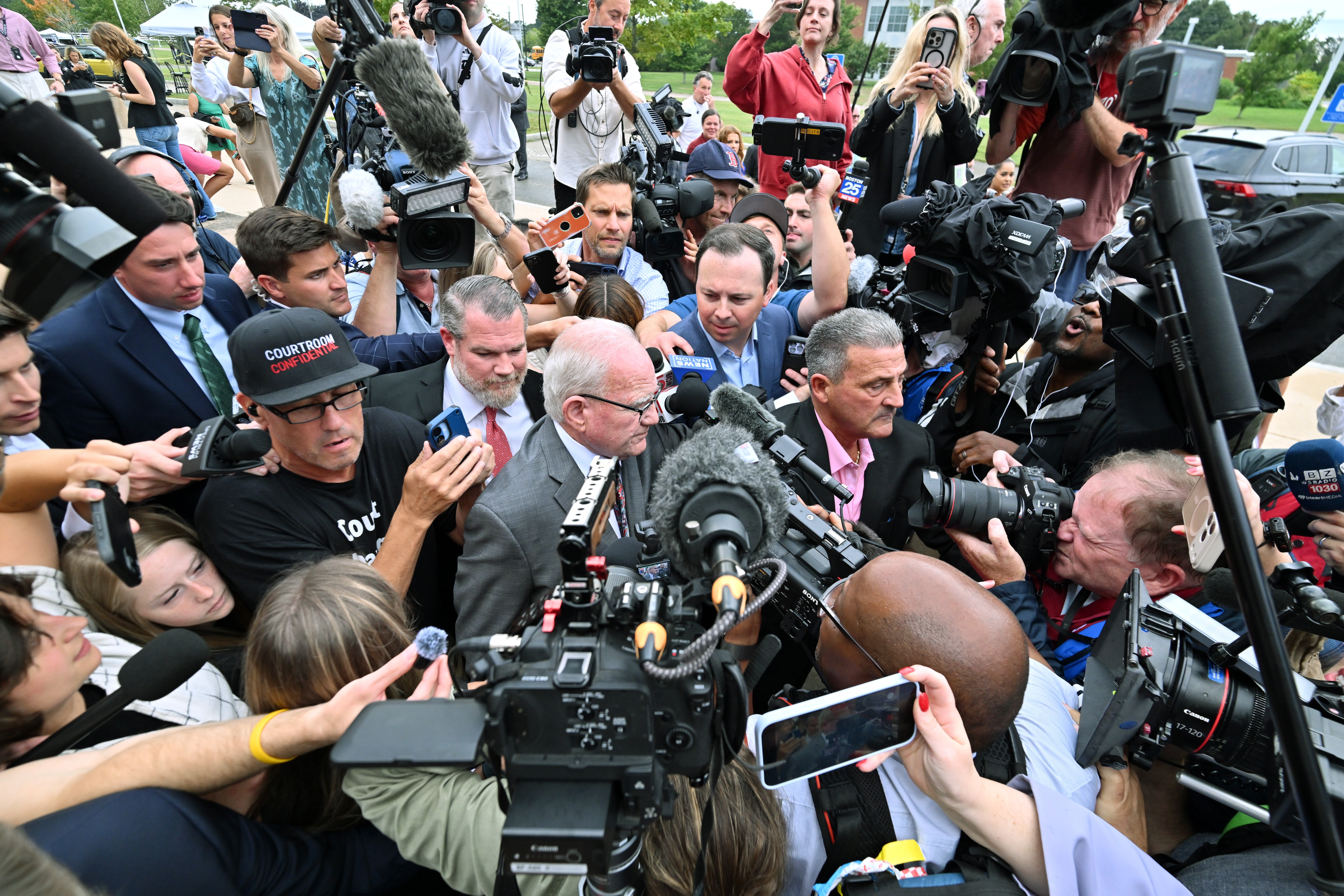
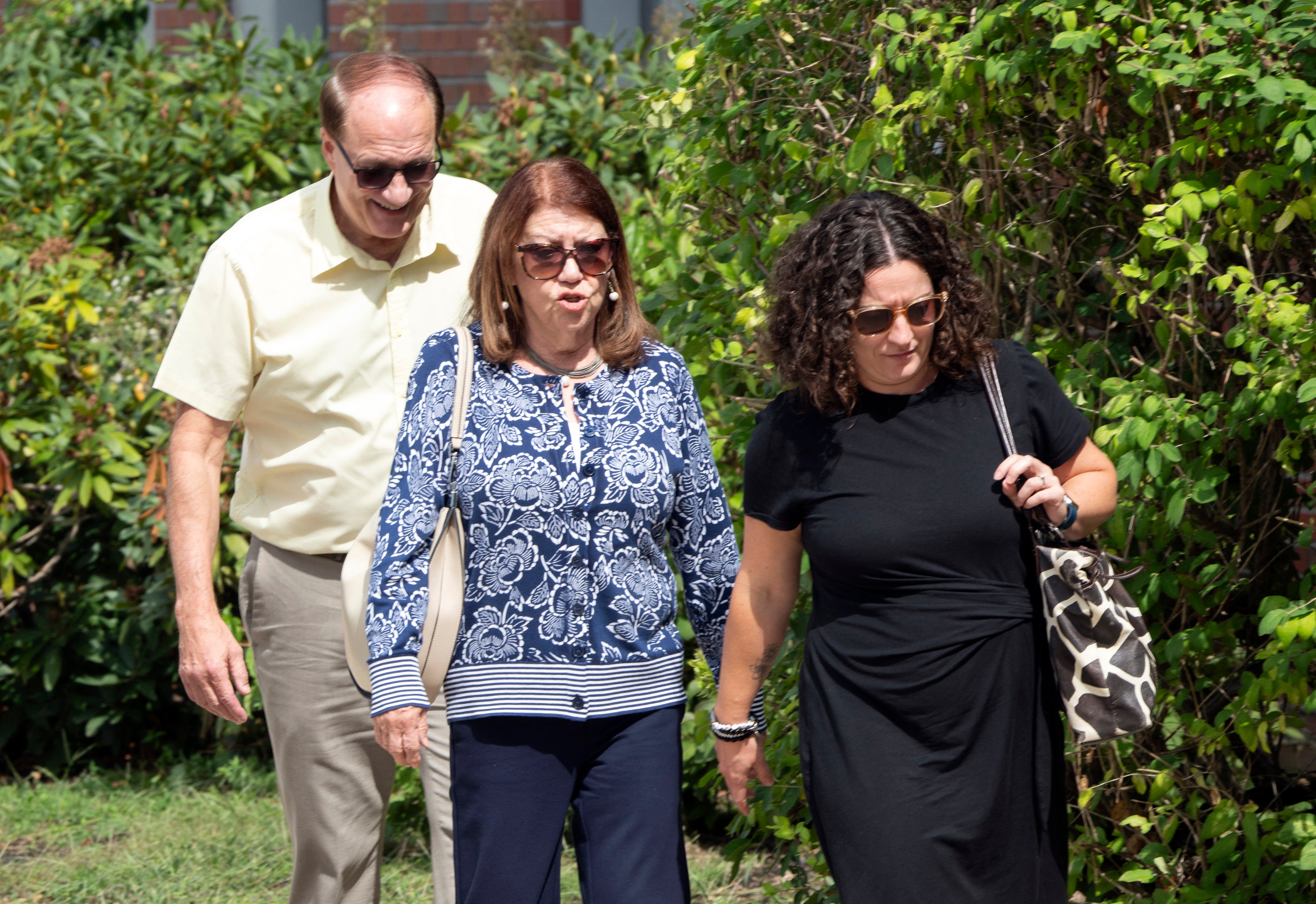
Kevin Reddington, lawyer for Lindsay Clancy, center, is surrounded by reporters as he leaves Plymouth Superior Court where the jury will return in the morning to continue deliberating in the murder trial of Lindsay Clancy for the 2023 killing of her three children, Thursday, Sept. 3, 2026., in Plymouth, Mass. (AP Photo/Josh Reynolds ) (Copyright The Associated Press 2026. All Rights)
Over 21 days of testimony, the jury heard from dozens of witnesses, including doctors, first responders, relatives and even Clancy’s former husband.
If convicted, Clancy’s sentence could be as severe as life in prison. If found not guilty, she may be released or remain confined in a mental health facility. If the jury is unable to reach a verdict, the judge could declare a mistrial.
As the jury continues to deliberate. here are key moments from the trial:
Judge declined to remove a juror
Before sending the deadlocked jury home Thursday, Judge William Sullivan declined a defense request to remove one of the jurors following heated discussions from both sides.
Advertisement
Earlier, the jury’s foreperson sent the judge a note saying a single juror won’t follow the court’s instructions about reasonable doubt.
Details of the jury room conflict weren’t revealed and only briefly discussed in open court, but it raised the possibility that a single holdout was standing in the way of a verdict.
Clancy’s attorney Kevin Reddington said the juror should have been dismissed from the case. Sullivan said removing a deliberating juror is a sensitive undertaking.
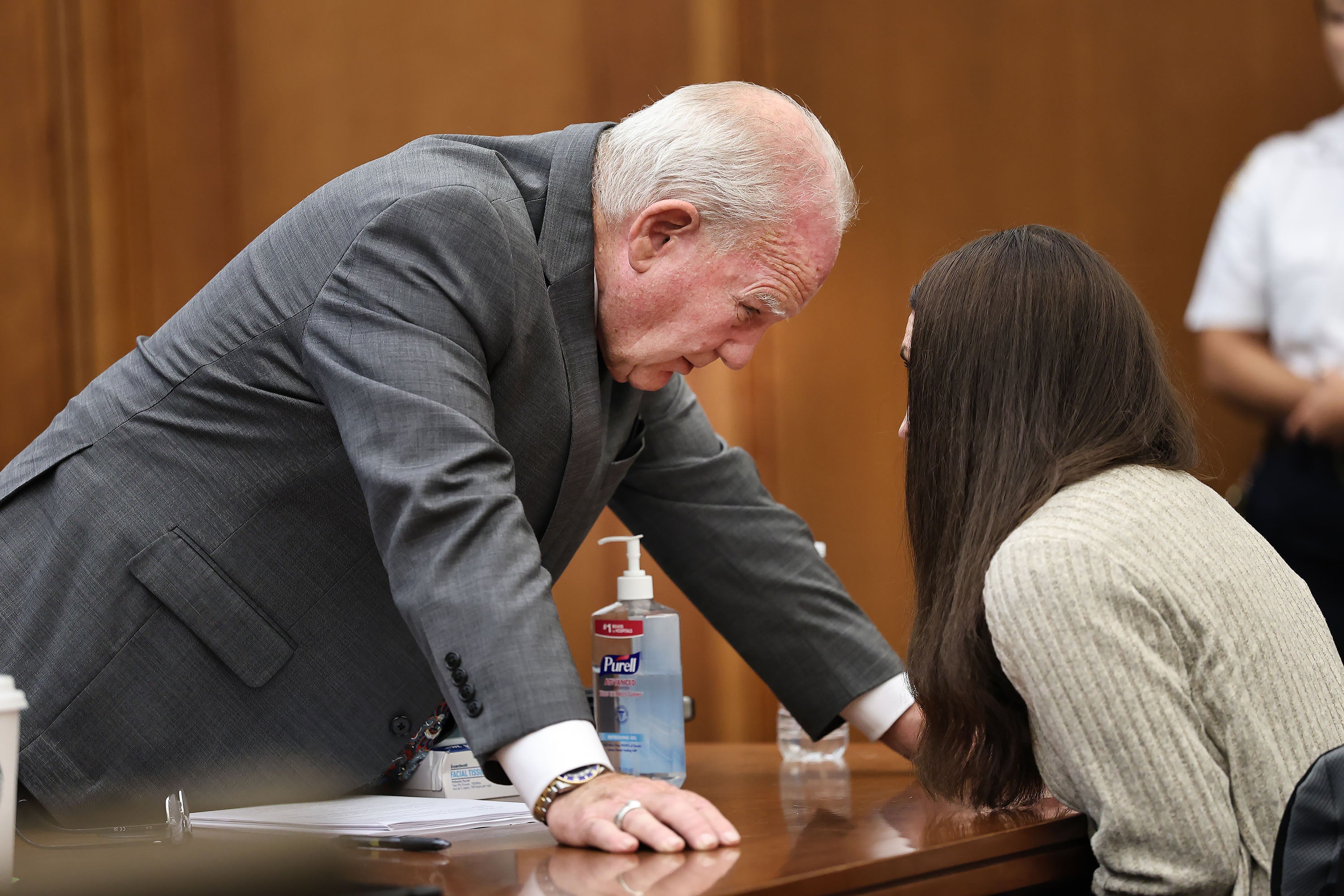
Defense attorney Kevin Reddington talks with Lindsay Clancy after a jury question during her trial in Plymouth, Mass., on Thursday, Sept. 3, 2026. (Greg Derr/The Patriot Ledger via AP, Pool) (USA Today 2026)
The judge questioned each juror individually in private, then reread his instructions about reasonable doubt in court.
Reddington said afterward outside the courthouse that the juror would be questioned again by the judge Friday.
Advertisement
Prosecutor Jennifer Sprague said in court that she believed Sullivan’s instruction was appropriate and no further action was necessary.
Jurors have struggled to agree on a verdict
Jurors have sent notes to the judge at least three times since they began deliberating Aug. 27.
On Tuesday, the fourth day of deliberations, jurors sent a note in the morning saying they could not unanimously agree.
Advertisement
The note did not elaborate, and there were no clues as to whether a majority of jurors were leaning toward a conviction or acquittal. It also did not provide any insight into the tone of deliberations or whether they had been cordial or acrimonious.
(AFP/Getty)
Sullivan asked jurors to keep deliberating.
On Wednesday they sent the court another short note saying they were still at an impasse. Sullivan again told them to keep trying.
Clancy’s former husband made anguished 911 call
Clancy’s former husband, Patrick Clancy, was first to take the stand.
Advertisement
In emotional testimony, he described the day he found his wife after she tried to kill herself.
Lindsay Clancy had sent him out to get takeout food and medication for their daughter, which prosecutors argue was an excuse to get him out of the house.
He came home to find the house unusually silent, before finding blood throughout the main bedroom and a window open.
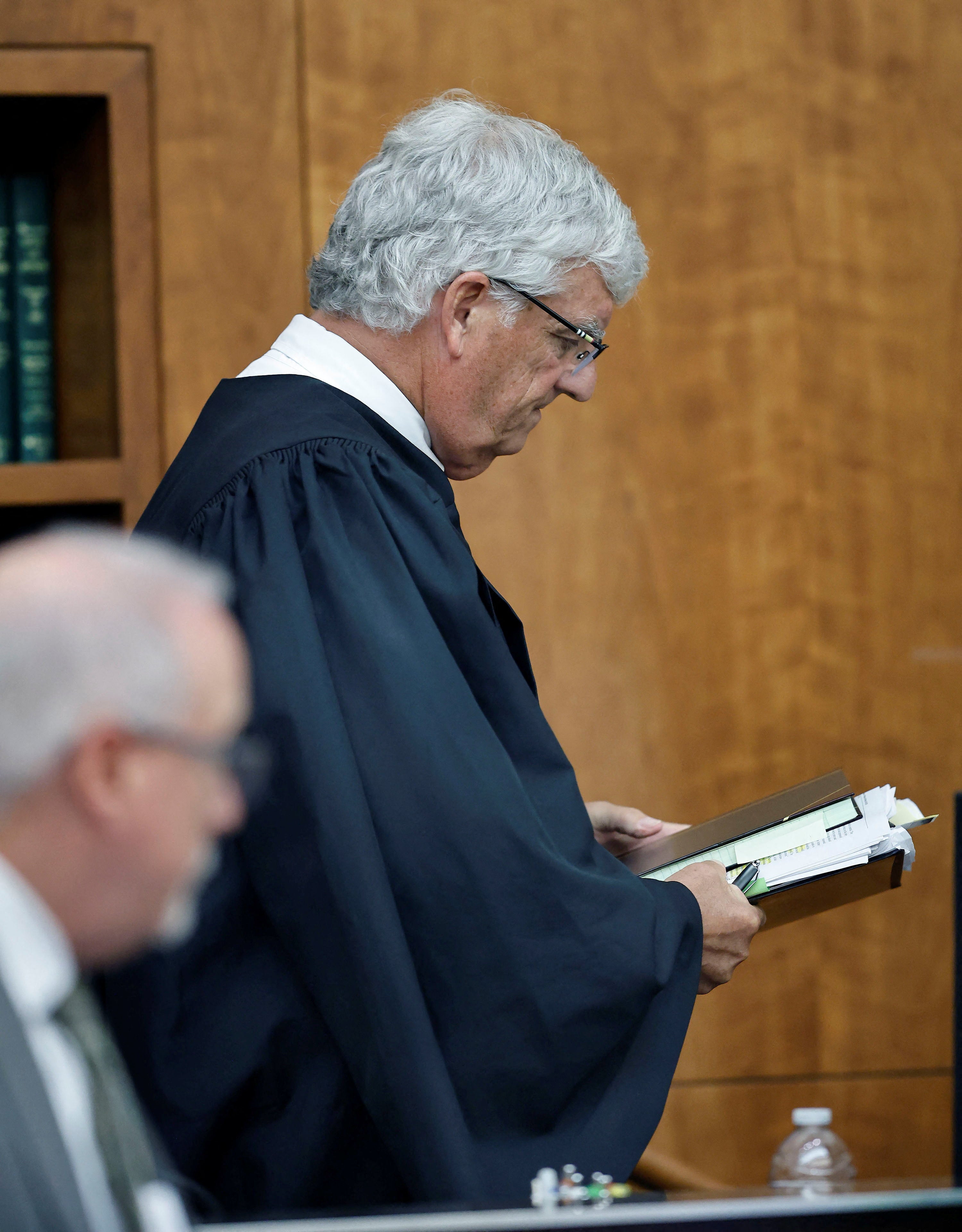
Judge Sullivan leaves the bench during deliberations in the triple murder trial of Lindsay Clancy, the Duxbury mother in Plymouth Superior Court, in Plymouth, Massachusetts, U.S., September 3, 2026. Greg Derr/The Patriot Ledger/Pool via REUTERS (Reuters)
Jurors listened to the 911 call Patrick Clancy made after finding his wife outside in the snow. Clancy can be heard speaking with his wife, then tells the dispatcher he’s going to check on the children.
Moments later, he howls and cries after finding his children in the basement. The confused dispatcher repeatedly asks what happened.
Advertisement
“She killed the kids!” he yells.
Everyone knew Clancy was struggling
Clancy’s mother, mother-in-law, sister, friends and co-workers testified that Clancy struggled with her mental health after giving birth to Callan, the youngest of her three children.
Clancy’s mother-in-law, Susan Clancy, said she and her former daughter-in-law were close. Both worked as labor and delivery nurses. She described Lindsay as a wonderful mother.
Advertisement
But Susan Clancy testified that Lindsay had become anxious, paranoid and suicidal, and that the psychiatric care she was getting wasn’t helping.
“She felt unwell. She had insomnia. She was losing her appetite. She was very anxious and sad,” Susan Clancy said. “She was begging for help.”
Lindsay Clancy’s mother, Paula Musgrove, testified that her daughter was scared of sleeping alone, became paranoid and believed the medications she was taking “were destroying her mind.”
“Mom, will you please come up and stay with me for a bit? I’m really sick. Something is wrong,” Clancy wrote in an October 2022 text message that Paula Musgrove read in court. “I had horrible insomnia all night, and I just don’t know how I am going to get through the day. … It’s just really scary, and I don’t want to be alone.”
Advertisement
The defense questioned the quality of Clancy’s medical care
Clancy saw several doctors about her declining mental health, and eventually checked herself in to a psychiatric hospital.
Her lawyer, Kevin Reddington, argued that she was misdiagnosed and overmedicated.
Kevin Reddington reacts to an issue with the jury next to Lindsay Clancy during deliberations in the triple murder trial of Lindsay Clancy, in Plymouth Superior Court, in Plymouth, Massachusetts, U.S., September 3, 2026. Greg Derr/The Patriot Ledger/Pool via REUTERS (Reuters)
As he cross-examined one of her psychiatrists, Dr. Jennifer Tufts, Reddington questioned her expertise, prescribing decisions and use of 25-minute video appointments with limited time for talk therapy.
At one point, Reddington implied that Tufts was a box-checking “robot.”
Advertisement
“What did you do? You had a woman who was telling you she felt hopeless,” he asked as they discussed an appointment about two months before the killings.
“I told her that this was something we could address, that there was hope, that there are treatments, that there are different types of programs,” Tufts said, “so she knew that she still had options and a reason to hope.”
Clancy said she heard a voice telling her to kill
Paul Zeizel, a clinical and forensic psychologist who visited Lindsay Clancy in the hospital after she killed the children, testified that he overheard her saying that a disembodied male voice had told her she had no choice but to kill her children and then herself. Zeizel said he believed Clancy wasn’t responsible for her actions because of her deep mental illness.
Advertisement
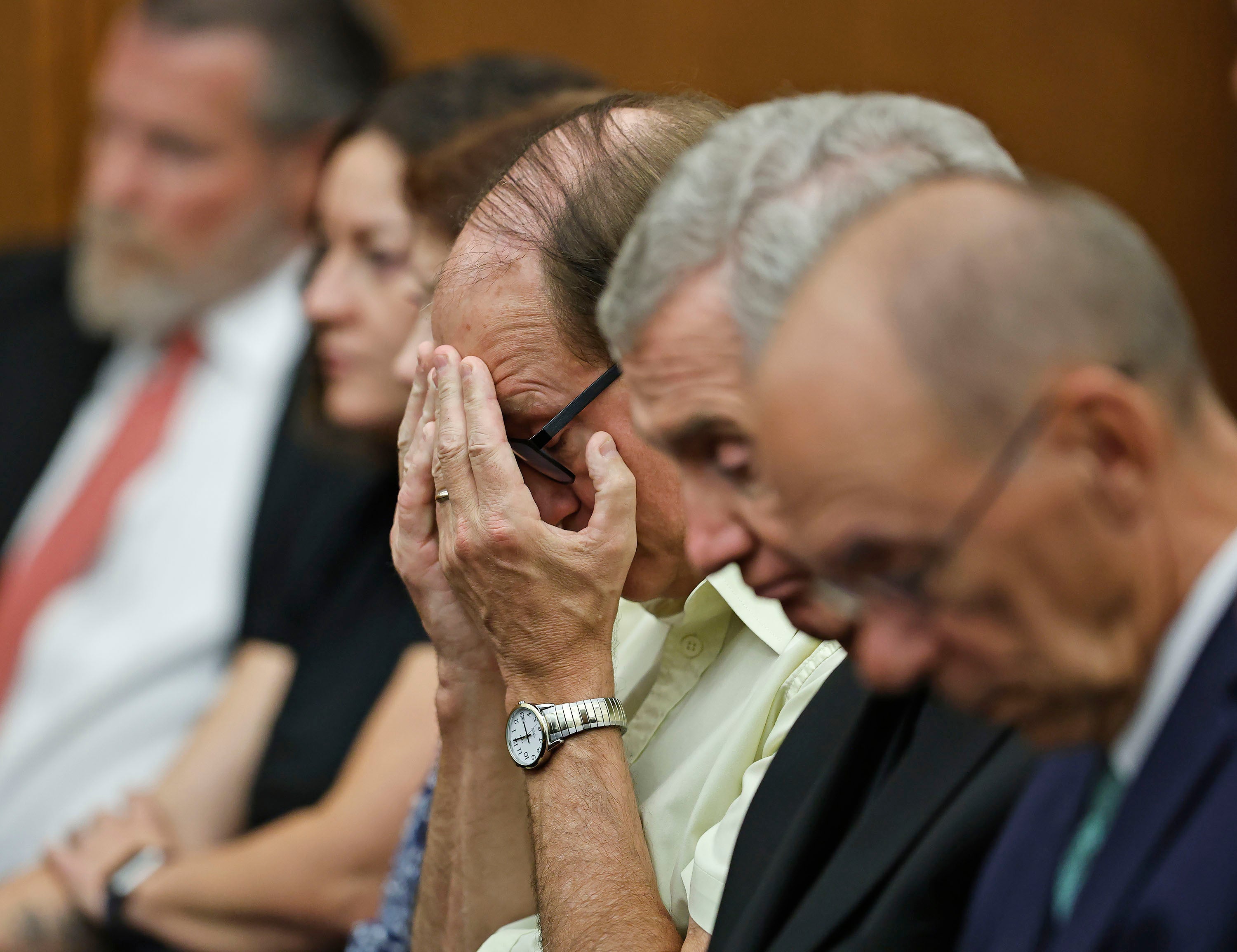
Mike Musgrove reacts to jury question during the Lindsay Clancy trial in Plymouth, Mass., on Thursday, Sept. 3, 2026. (Greg Derr/The Patriot Ledger via AP, Pool) (AP)
Prosecutors called a rebuttal witness, forensic psychologist Kirk Heilbrun, who said he didn’t believe Clancy had hallucinated voices.
“One of the things that she said when I asked about what happened, is that in the course of strangling each child, she said, ‘Go to God, baby. Go to God,’” he said. “That was part of her expectation that she and the children would be together in heaven with God.”
Dr. Gregory Saathoff, a senior psychiatrist for the FBI’s Behavioral Analysis Unit, testified for prosecutors that Clancy “had the capacity to know right from wrong.”
The lawyers got the last word
After testimony was complete, each side got about an hour to make their closing argument to the jury.
Advertisement
Reddington showed the jury a photograph of the Clancy family, looking happy, and a second one of Lindsay Clancy in the hospital.
“How does this turn into this?” Reddington asked. “How? Because of the damn medicine and the lousy medical care that she got.”
Prosecutor Jennifer Sprague said criticizing the mental health system was “a distraction.” She said Clancy chose to kill her children because doing so would make it easier to kill herself.
“She was depressed. She was exhausted. She was done. She didn’t want to try anymore. She felt damaged,” Sprague said. “But those kids, those kids were her protective factor. Those kids were keeping her from ending her misery.”
Aerial imagery of a restored wetland in England “shows what climate resilience could look like across the UK”, a leading conservation charity has said.
From above, the Holnicote Estate in Somerset (pictured) appears lush and green, in stark contrast to the parched landscape around it.
According to the National Trust, that’s because ecologists at the estate have reconnected rivers, restored wetlands and reintroduced beavers in a bid to retain water. At the end of what is expected to be the hottest summer on record in the UK, the approach appears to have worked.
Advertisement
“For generations, as a nation we’ve drained wetlands, straightened rivers and moved water off the land as quickly as possible – here we’ve reversed that approach and the results are remarkable,” said Ben Eardley, project manager at the National Trust, which runs the estate.
The UK has lost around 90% of its wetlands over the last century. Restoring them could help it to become more climate resilient, the trust argues.
“Evidence shows that nature-based solutions can reduce flood risk, improve water quality, increase biodiversity and build resilience to drought,” said Eardley. “Nature shouldn’t be viewed as a cost of climate adaptation. It should be seen as one of our greatest allies.”

























































You must be logged in to post a comment Login