
Connect with us
DAPA Banner
DAPA Coin
DAPA
COIN PAYMENT ASSET
PRIVACY · BLOCKDAG · HOMOMORPHIC ENCRYPTION · RUST
ElGamal Encrypted MINE DAPA
🚫 GENESIS SOLD OUT
DAPAPAY COMING

NewsBeat

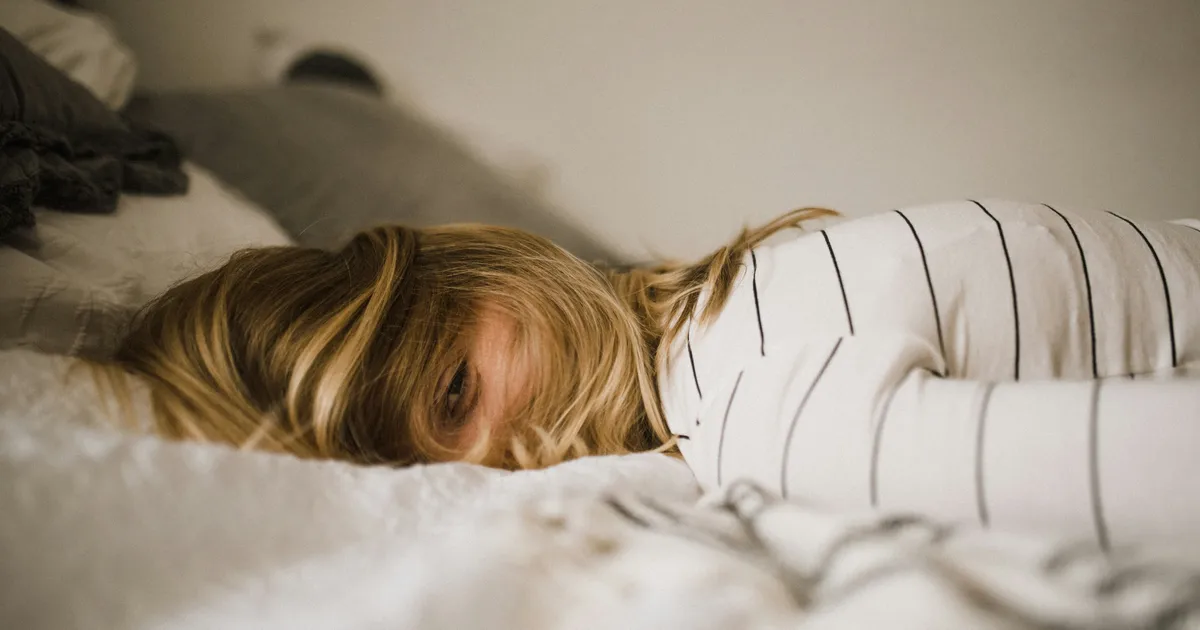
Why Is Modern Life So Exhausting?

Published

on

Why Is Modern Life So Exhausting?

It never stops, does it? The endless train chugs on, carriage by unwelcome carriage – work-bills-sleep, gym-plans-texts.

It’s not even that these things are bad, on their own. I love my friends! I feel great after a workout! And even though I’m not the best texter, I enjoy a great call… in theory.

But when those responsibilities bundle up, their relentlessness exhausts me. I feel overwhelmed, and then frustrated that I can’t even manage simple tasks. I hate the demands, then myself, then the pressure I self-impose; a text notification can ruin my evening when I know I don’t have it in me to reply.

If you’ve ever felt similarly (and I wouldn’t have said all that unless science told me you probably do), researchers might have worked out why.

Advertisement

A new paper, published in the journal Behavioural Sciences, calls this response to modern life an “evolutionary mismatch”.

Why is modern life so overwhelming?

In this research, Singaporean social scientists looked at a variety of previous studies exploring modern life and our responses to it.

This conceptual review suggested that stress, constant comparison – especially via social media – and loneliness place demands on our brains that we are not evolutionarily adapted to meet.

Advertisement

While humans spent much of our history in small, tight-knit groups, with familiar signals and dependable dangers, this study argues that increasing inequality and digital life can overwhelm our once-highly attuned responses.

Competition was central to the research, with the researchers suggesting our current lifestyles make us more susceptible to feeling judged or “behind”.

Study co-author, senior lecturer Dr Jose Yong, said: “Competition is not new, but modern life can make it feel constant.

“An evolutionary perspective may help explain why people respond so strongly to comparison and the fear of falling behind, even when those signals come from strangers or screens rather than a small social group.”

Advertisement

All this may add up to a comprehensive “evolutionary mismatch”.

This study was not conclusive, instead providing an apparently unifying evolutionary framework by which to view existing data.

But Dr Yong said the theory could mean that “we need to design interventions that work with rather than against our evolved human nature”.

If we can’t change our biology, how can we handle an “evolutionary mismatch”?

Advertisement

One option is to stop blaming yourself for broader problems.

Study author, environmental psychologist Sarah Chan, said: “Stress, loneliness and anxiety are often treated as personal or lifestyle problems.

“But they may also reflect a mismatch between the environments people live in and the conditions our minds and bodies evolved to navigate. That means we should think not only about individual resilience, but also about how cities and communities are designed.”

Nor did the research suggest that modern life is unfixable, or that returning to some imagined past is the answer here.

Advertisement

For instance, the study found that city design and community, not density, affect how crowded the people who live there feel.

Understanding exactly where those “mismatches” appear, they suggested, might help policymakers, researchers, and even designers work out how to keep us all in better sync with the world around us.

Source link

Advertisement
Continue Reading
Click to comment

You must be logged in to post a comment Login

Leave a Reply

NewsBeat

Brit exposed to Ebola in DR Congo monitored at London hospital

Published

on

Daily Record

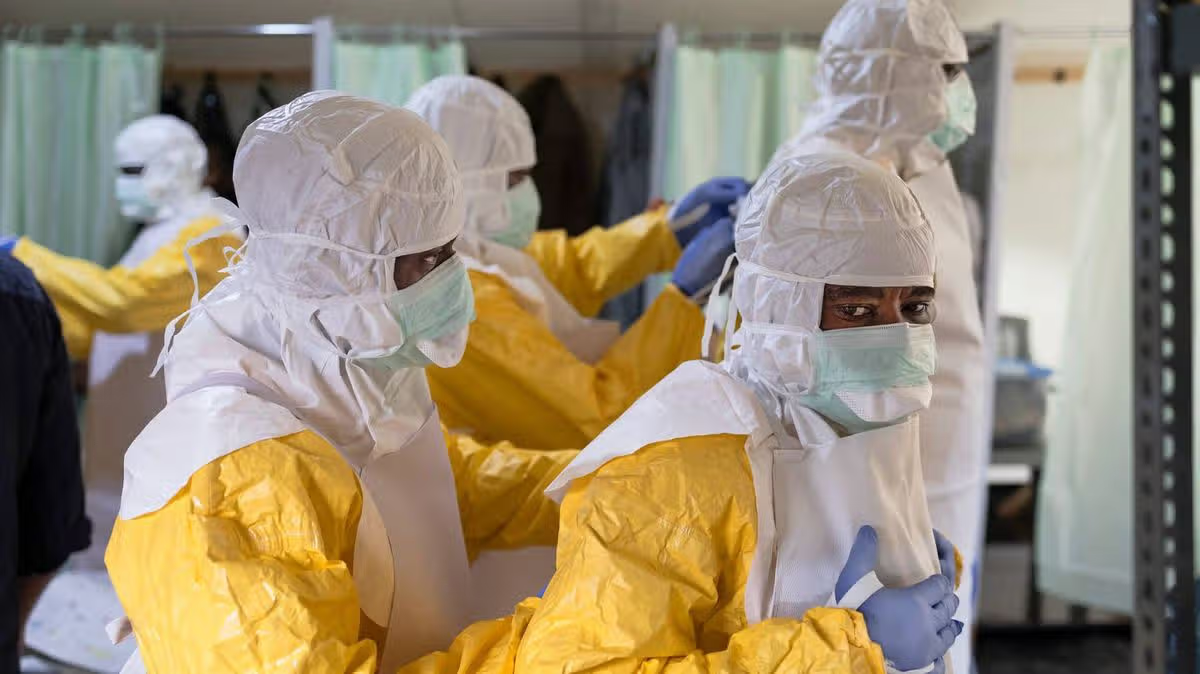
A British humanitarian worker is being monitored in isolation at a London hospital after being exposed to Ebola in the Democratic Republic of Congo

A suspected Ebola case is being monitored at a London hospital after a person was “exposed” to the disease in the Democratic Republic of Congo, raising concerns the deadly virus could have reached British shores.

Advertisement

The UK Health Security Agency confirmed that a British humanitarian worker came into contact with Ebola while carrying out aid work in the African nation on behalf of a humanitarian organisation.

As a precautionary measure, the male patient was airlifted from the country aboard a specially chartered flight. He is currently being “monitored and assessed” by specialist medical staff at a London hospital, and is not displaying any symptoms at this stage.

The agency stated: “The individual is not currently displaying any symptoms and remains well, but as a precautionary measure they have been evacuated on a flight chartered solely for the evacuation.

“They are now being assessed and monitored in isolation by infectious disease specialists at a London hospital. The incubation period of Ebola ranges from two to 21 days and the individual will be closely monitored and required to isolate throughout this period.”, reports the Daily Star.

Authorities have stressed there are no confirmed cases of Ebola on British soil and that the risk to the wider public remains low. Richard Pebody, director of epidemic and emerging infections at the UKHSA, said: “This individual has been transferred out of an abundance of caution, and we’re pleased they remain well.”

Britain’s most recent Ebola case occurred in 2015 when three healthcare workers contracted the virus after returning from Africa.

Those infected must self-isolate for between two and 21 days, which covers the disease’s incubation window.

Advertisement

The current Ebola outbreak in DR Congo has persisted for several weeks, with authorities warning it’s advancing “substantially faster” than previous epidemics. According to the nation’s health ministry, 930 fatalities have been recorded following 2,344 reported cases as of last Saturday.

Beyond DR Congo’s borders, 20 confirmed cases have resulted in two deaths – one occurring in Uganda and another in France. On Monday, the Democratic Republic’s Ministry of Health reported progress: “Patient care and support capacities are consolidating, with 22 new recoveries recorded in 24 hours.”

The World Health Organisation (WHO) has cautioned that dangers from this uncommon Ebola variant remain “very high”, with transmission linked to multiple contributing factors.

While Uganda appears to have contained the deadly Bundibugyo strain, the fatal virus continues spreading throughout neighbouring DR Congo, where widespread turmoil persists due to clashes between government forces and insurgent factions.

WHO states: “The risk in the Democratic Republic of the Congo remains assessed as very high due to ongoing transmission and the continued expansion of the outbreak into new health zones, increasing the potential for further national and regional spread.”

Numerous factors are fuelling the ongoing transmission of the Bundibugyo strain, but WHO officials have identified the regional conflict as the primary driver behind the crisis.

The health organisation reports that populations are being compelled to repeatedly relocate to escape violence, while disruptions to food and clean water availability have all played a role in accelerating transmission.

Advertisement

A WHO report stated: “The outbreak continues in a complex humanitarian and conflict-affected environment, characterized by highly mobile and often displaced populations, many of whom have limited access to basic services, including food, clean water, shelter, health care and protection.”

Source link

Continue Reading

NewsBeat

‘Bungled’ bin policy could prove costly to ratepayers, warns recycling campaign

Published

on

Belfast Live

“Our message is simple, seek a second opinion, keep the glass out, and do not go backwards, because it will be a costly mistake.”

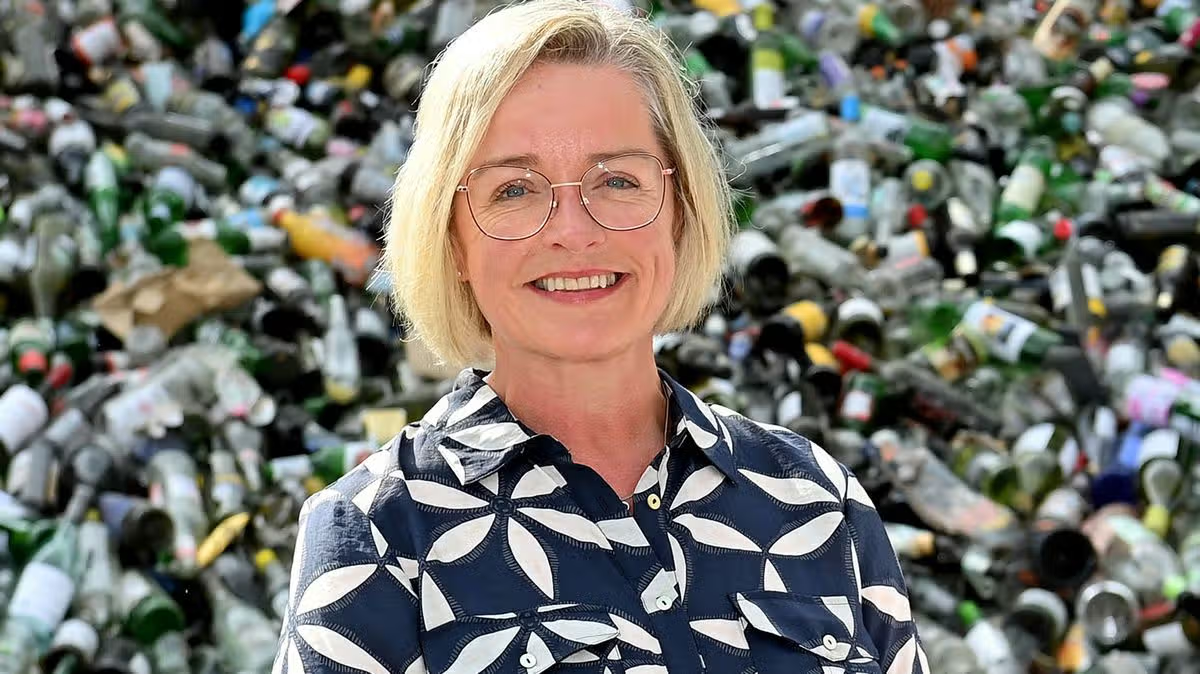
A Northern Ireland recycling campaigner has blasted a “bungled” council bin decision, saying it’ll “cost ratepayers’ millions”.

Keep Recycling Local (KRL) is now calling on Lisburn and Castlereagh City to rethink its “backwards” decision to include glass with paper.

The Local Democracy Reporting Service can now reveal, through a Freedom of Information (FoI) request, that the council has no timeframe to roll out its new bins and a Stormont department confirms the local authority has not applied for funding on new kerbside collection models.

READ MORE: Campaign for £300m Strangford Lough bridge being considered by Minister

Advertisement

READ MORE: Lisburn councillor secures Facebook to protect family from ‘vile and nasty’ attacks

KRL’s Nicola Carruthers spoke to the LDRS, saying: “There are serious financial as well as environmental implications when glass is collected with other materials.

“For over 25 years, Lisburn and Castlereagh have been collecting glass the right way, separate to other materials, so this announcement is a major step backwards for the council.

“Daera is soon to announce its waste and recycling policies, and its widely believed they will be advocating a ‘glass out’ model which Lisburn and Castlereagh currently has.

Advertisement

“It is a fact, recognised across the world and throughout the waste sector by industry experts and governments, that when glass is collected with paper and card it breaks leaving shards of glass lodged with other materials.

“For Northern Ireland, this means the glass cannot be used or recycled locally and must be shipped overseas for processing all at the ratepayers’ expense.”

In May, the council made a U-turn decision on its new kerbside collections.

The long-awaited new bin policy will also see ‘kerbie’ boxes come to an end in Castlereagh and be replaced by wheelie bins to harmonise the whole district. However, the local authority will keep the public shut out of its decision-making, with council minutes stating the “full business case will never become available” and only “redacted reports” will be provided.

Ms Carruthers added: “When collected properly, glass has a perfect closed-loop recycling life-cycle as it can be recycled infinitely.

“Up until now, keeping glass separate across the council area has enabled 2,200 tonnes a year of high-quality glass to be reprocessed directly back into glass bottles in Northern Ireland. Any report that advocates the mixing of materials needs to be properly assessed, and councillors should get a second opinion from industry experts before committing millions of pounds of ratepayers’ money so foolishly.

Advertisement

“Moreover, Daera is offering to cover up to 50% of council’s costs for keeping the glass out so council ratepayers will have to foot the entire bill for moving to glass in only to then have to pay for the glass to be removed again in the near future, only without support from Daera at this stage.

“This bungled decision could well cost local ratepayers millions unnecessarily.

“We would encourage the council to rethink its approach and consider keeping the glass separate, as is happening across the UK and like the various systems already operating successfully in other council areas elsewhere in Northern Ireland, including Ards and North Down, Belfast, and Antrim and Newtownabbey.

“Our message is simple: seek a second opinion, keep the glass out, and do not go backwards, because it will be a costly mistake.”

Advertisement

Recent local authority waste statistics show recycling rates have plateaued at around 50%, highlighting the need for change to meet statutory targets of 70% recycling by 2030.

A Daera report on a 2024 consultation ‘Rethinking Our Resources’ on new recycling guidance for all 11 councils has been on the desk of the Executive for many months, awaiting sign-off.

It is understood that Daera will advocate for greater separation at the household collection stage.

Advertisement

A Daera spokesperson said: “Since the 2013 an amendment removed a previous provision which treated commingled collection as an acceptable form of separation,

“Whilst Daera has responsibility for the development of waste management legislation and policy, local councils have statutory responsibility for the collection and disposal of municipal waste and a duty to comply with relevant legislation.

“Daera has made up to £23 million available to councils through the Household Waste Recycling Collaborative Change Programme (HWRCCP) to support the transformation of kerbside recycling systems and Household Recycling Centre infrastructure and services.

“Under the programme, councils may be eligible for capital grant funding of up to 50% of total project costs.

Advertisement

“Applications can be submitted in line with programme calls, and all proposals are assessed against established criteria, including the expected quality of recyclate streams.

Lisburn and Castlereagh City Council has not applied to the HWRCCP for funding to implement a kerbside co-mingled collection system.”

In a FoI to the LDRS, the council has refused to provide any costs associated with the recycling decision-making or the roll-out of the new bins, citing “commercial sensitivities”.

Advertisement

However, it has alluded to the potential for its new kerbside collection to adapt to future demands, but has no date in place to deliver bins to local homes.

The council FoI reads: “The council believes there will be both positive environmental and financial impacts as a result of the new waste collection model.

“The new model has been developed to improve recycling rates, provide a harmonised and resilient kerbside waste collection service, and ensure the council is prepared to adapt in future. The council has considered a range of collection systems and has selected the model that meets the needs of its residents and is flexible to meet future demands if required.

“There are no current delivery dates for bins and vehicles associated with this project.”

Advertisement

It adds: “The council engaged an independent consultancy company to carry out modelling on a variety of kerbside waste collection models for its consideration. The new kerbside waste collection model will be delivered in-house, ensuring a consistent, resilient and adaptive service to all households.

“The council also completed appropriate consultation and assessment processes, including equality screening and a rural needs impact assessment, to help inform decision-making.”

For all the latest news, visit the Belfast Live homepage here and sign up to our daily newsletter here.

Source link

Advertisement
Continue Reading

NewsBeat

Lawyer for the Tate brothers insists Donald Trump’s help ‘not necessary’

Published

on

Lawyer for the Tate brothers insists Donald Trump’s help ‘not necessary’

Andrew Tate, 39, was charged with seven further counts of rape, three counts of arranging or facilitating trafficking for sexual exploitation, three counts of assault occasioning actual bodily harm and 19 additional charges for offences relating to indecent images of a child and extreme pornography.

Source link

Continue Reading

NewsBeat

Lara Trump, 43, reveals her grueling fitness routine and diet after her bulging biceps sparked AI rumors

Published

on

Lara Trump, 43, divulged her diet and exercise routine during a July 21 appearance on The Riley Gaines show

Lara Trump, 43, recently set the internet ablaze after she showed off her jacked arms and ripped abs – and now, she’s revealed the secret behind her toned figure.

Lara divulged her diet and exercise routine during a July 21 appearance on The Riley Gaines show.

Host Gaines revealed that one of the most-asked questions she got ahead of her interview with the mom-of-two was about how she has achieved her enviable physique.

‘I do a little bit of everything,’ Lara professed, as she shared that she was ‘so happy’ that more and more people were becoming interested in health and fitness.

Advertisement

She praised the Make America Healthy Again (MAHA) movement for inspiring the new attentiveness towards wellness, and the push away from using pharmaceuticals to feel good.

‘My entire life, I’ve always worked out, I’ve always prioritized that for myself, even if it’s 45 minutes or 30 minutes,’ Lara explained.

‘Sometimes [that] is all I get, sometimes very early in the morning, I try to take it.’

She shared that not only has working out been physically good for her, but also mentally. 

Advertisement

Lara Trump, 43, divulged her diet and exercise routine during a July 21 appearance on The Riley Gaines show

'My entire life, I've always worked out, I've always prioritized that for myself, even if it's 45 minutes or 30 minutes,' Lara explained

‘My entire life, I’ve always worked out, I’ve always prioritized that for myself, even if it’s 45 minutes or 30 minutes,’ Lara explained 

‘I’m also into Pilates whenever my schedule allows, but I try to do a little bit of everything, and I think that keeping your body guessing is always the key,’ she said.

Advertisement

‘I do a little bit of everything. I train for triathlons, I try to stay kind of ready in case something comes along, so I do a lot of biking,’ Lara revealed to former University of Kentucky swimmer Gaines.

‘I do less running than I used to, but I love to go for a run if I can. I try to get weightlifting in, I love CrossFit.’

Lara urged viewers to switch up their workout routines so that they don’t get too used to one particular kind of exercise.

Most days, she said she wakes up at 5am to workout, but she admitted that there have been times where she’s had to squeeze in a gym session at 3:45am, before getting on a flight.

Advertisement

‘My goal is to get it in first thing in the morning, and then I don’t have to think about it the rest of the day,’ Lara said.

The Fox News talk show host also divulged more about her daily diet, telling Gaines that sometimes it can be hard to stick to eating healthy due to all the travel that she does for work.

‘You have a very hard time when you’re traveling and on the road to maintain some quality of eating, but I really try to prioritize protein,’ Lara said.

Her interview with Gaines comes just weeks after fans were left so stunned by her bulging biceps after she shared a snap showing them off on Instagram

Her interview with Gaines comes just weeks after fans were left so stunned by her bulging biceps after she shared a snap showing them off on Instagram 

Advertisement
During the interview, she even touched on some of her favorite wellness habits, sharing that she and her husband, Eric Trump, are big fans of going in the sauna and cold plunging. They're seen in January 2025

During the interview, she even touched on some of her favorite wellness habits, sharing that she and her husband, Eric Trump, are big fans of going in the sauna and cold plunging. They’re seen in January 2025 

‘I’m not traditionally a breakfast person, but I kind of force myself in the morning to eat egg whites, eggs, something like that, with high protein.’

‘Sometimes it’s a protein shake, because I feel like that, at least, starts me off right,’ she added.

The wellness fanatic stressed how much protein can fill you up.

Advertisement

‘It’s great for your body, the more protein you have and the more muscle you build, the more calories you burn just existing,’ she said.

‘I want to urge everybody out there, get the protein in, lift some weights, because that’s what’s really going to change your body.’ 

During the interview, she even touched on some of her favorite wellness habits, sharing that she and her husband, Eric Trump, are big fans of going in the sauna and cold plunging.

She said that she enjoys the mental aspect of the cold plunge the most.

Advertisement

‘If I can force myself to stay in cold water despite my body screaming at me to get out, I could probably force myself to do a lot of uncomfortable things,’ Lara said.

‘People don’t realize that the benefit of these things goes far beyond the physical.’

Join the discussion

What do you think is the key to staying fit?

Advertisement
Most days, she said she wakes up at 5am to workout, but she admitted that there have been times where she's had to squeeze it in a gym session at 3:45am, before getting on a flight

Most days, she said she wakes up at 5am to workout, but she admitted that there have been times where she’s had to squeeze it in a gym session at 3:45am, before getting on a flight 

The Fox News talk show host (seen in March) also divulged more about her daily diet, telling Gaines that sometimes it can be hard to stick to eat healthy due to all the travel that she does for work

The Fox News talk show host (seen in March) also divulged more about her daily diet, telling Gaines that sometimes it can be hard to stick to eat healthy due to all the travel that she does for work 

Her interview with Gaines comes just weeks after fans were left so stunned by her bulging biceps after she shared a snap showing them off on Instagram.

Back in June, she posted a photo on Instagram modeling her clothing line, Lara Trump Collection, which left her toned arms and ripped abdominals in full view.

Advertisement

Her followers were so impressed by her arms that some even wondered if it was AI-generated.

‘Are those guns legal in America?’ one user joked, while another simply wrote: ‘Insane muscles.’

Someone else typed: ‘Is your body real or AI generated?’

Lara launched her fitness apparel brand, Lara Trump Collection, in November 2024.

Advertisement

Inspiration for the brand, she said, came from a desire to show that women ‘could do anything the guys could do.’ 

Source link

Advertisement
Continue Reading

NewsBeat

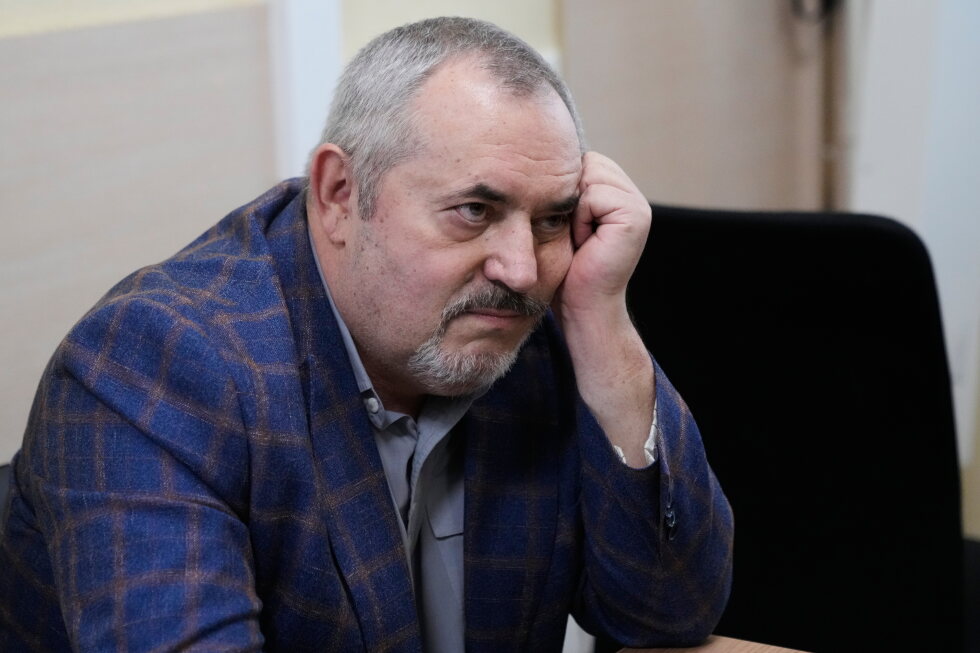
A Putin critic is convicted on charges that stop him from campaigning for parliament

Published

on

A Putin critic is convicted on charges that stop him from campaigning for parliament

MOSCOW (AP) — Boris Nadezhdin, who criticized Moscow’s military action in Ukraine and tried to challenge President Vladimir Putin in the 2024 election, was convicted Friday of displaying “extremist symbols” — an action that will keep him out of this year’s parliamentary race.

The verdict underlined the determination by authorities to stamp out any remaining sign of dissent ahead of September’s vote as the fuel crisis caused by Ukrainian strikes on oil facilities across Russia threatened to erode public support for the Kremlin.

The charges against Nadezhdin, 63, were based on a 2023 online video in which he briefly showed a picture of the late opposition leader Alexei Navalny, who at that time was serving a 19-year prison sentence on charges of extremism that were widely seen as politically motivated. Navalny later died in an Arctic penal colony on Feb. 16, 2024.

Nadezhdin rejected the case against him as absurd and argued authorities were trying to keep him from campaigning in September’s parliamentary vote. The court in Dolgoprudny, a town on Moscow’s northern outskirts where he lives, convicted him and ordered him to pay a fine of 1,000 rubles (about $13).

Advertisement

The Kremlin’s main United Russia party is seeking to preserve its dominance in the lower house of parliament in a race against so-called “systemic” opposition, including the Communist Party and a couple of other parties that vote in sync with the Kremlin on key issues. The campaign comes amid signs of growing public fatigue as fuel shortages and economic pain from the Ukraine conflict increase, an environment that reduces the tolerance by the authorities for even token opposition.

Nadezhdin’s run for parliament triggers a quick response

In January 2024, Nadezhdin collected thousands of signatures in his run for president as he openly called for a halt to the fighting in Ukraine. But he was kept off the March 2024 ballot after Russia’s Supreme Court ruled that more than 9,000 signatures submitted by his campaign were invalid — enough to disqualify him. Putin faced only token opposition in the election and easily won a fifth term.

A veteran politician, Nadezhdin worked in the government in the 1990s when he was an adviser to Sergei Kiriyenko, now a top Putin aide. He also served as a lawmaker and more recently became a member of a municipal council, one of the few remaining liberal voices on Russia’s political scene.

Advertisement

Last month, Nadezhdin declared his bid to run for the lower house of parliament, the State Duma, but the Justice Ministry quickly branded him a “foreign agent” — a designation that carries strong pejorative connotations and brings additional government scrutiny. It also bars him from holding public office, but he was still able to wage his symbolic campaign for a parliament seat until Friday’s verdict.

Another blow came Monday, when police detained Nadezhdin for a few hours before making the charges that were punishable by a fine or a 15-day jail term. He said he was considering going abroad but was barred from leaving Russia.

He told the court that he was too sick to serve any prison time, saying he “will just die” behind bars. “The real goal of what’s going on here is to shut my mouth and prevent me from running for the State Duma,” he said.

Nadezhdin complained of feeling sick at Friday’s hearing, which was interrupted to let an ambulance team check his condition.

After the Kremlin sent troops into Ukraine in February 2022, authorities ramped up their crackdown on dissent and free speech, relentlessly targeting rights organizations, independent media, members of civil society organizations, LGBTQ+ activists and some religious groups. Hundreds of people have been jailed and thousands of others have fled the country.

Another Putin critic is arrested

Also on Friday, Ilya Remeslo, a pro-Kremlin activist and blogger who has become a Putin critic, was arrested in St. Petersburg on charges of spreading false information about the Russian military — an accusation widely used against those who oppose the government’s policies.

Advertisement

Remeslo was escorted to Moscow, where a court ordered him to remain in jail for two months pending an official investigation, according to his lawyer, Sergei Badamshin.

The charges against Remeslo were based on his criticism of the military action in Ukraine and calls for Putin’s resignation that he made in March. Soon after, he was placed in a psychiatric clinic and spent a month there in what he cast as a punishment for his remarks.

Advertisement

Source link

Continue Reading

NewsBeat

when chest symptoms need urgent attention

Published

on

when chest symptoms need urgent attention

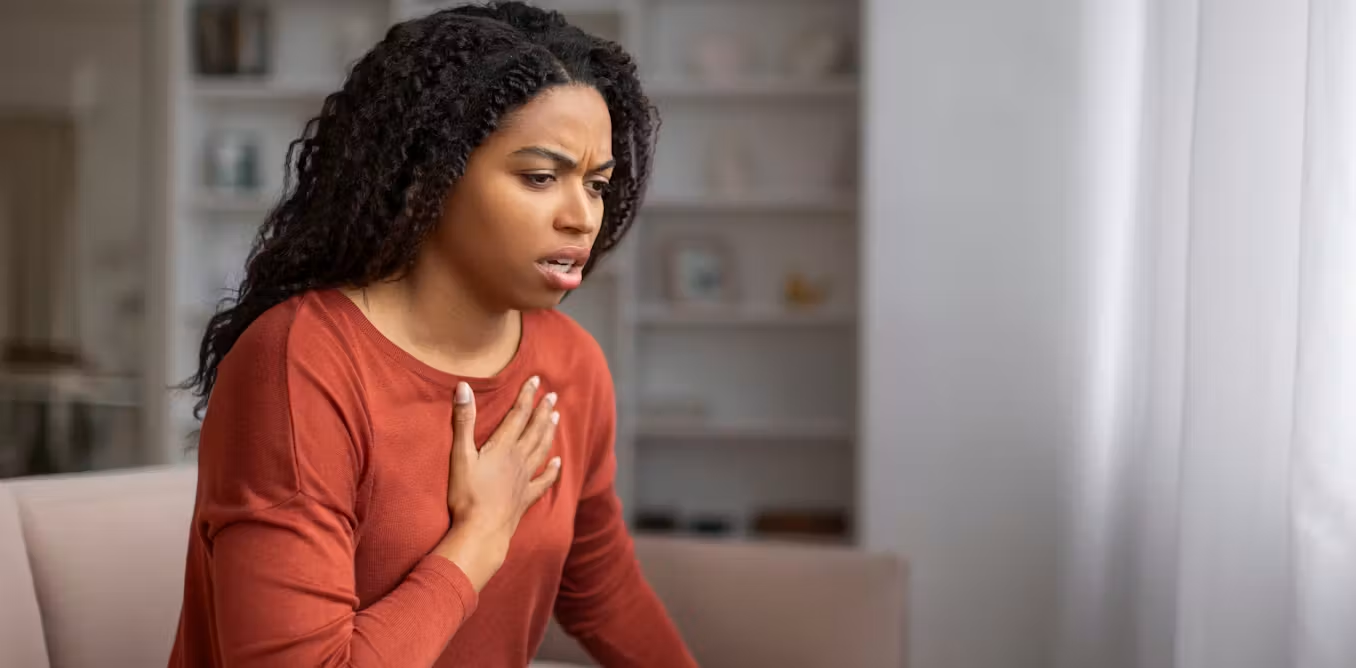
A racing heart can be frightening at any age. Palpitations are common during perimenopause and may occur alongside hot flushes, anxiety and disturbed sleep. In many cases, they do not indicate a serious heart problem, but they should not automatically be attributed to hormonal changes.

Palpitations can occur for many reasons, including stress, anaemia, thyroid disorders, abnormal heart rhythms and long COVID. A racing or irregular heartbeat can also accompany a heart attack or another serious condition, including Takotsubo syndrome, also known as “broken heart syndrome”.

New, persistent or worsening palpitations should be assessed by a healthcare professional. Palpitations that do not go away or occur with chest pain, shortness of breath, feeling faint or fainting require urgent medical help.

Perimenopause and cardiovascular health

Perimenopause is the transitional phase before menopause, when ovarian hormone levels fluctuate and periods become less predictable. Menopause is reached after 12 consecutive months without a menstrual period.

Advertisement

Oestrogen influences several aspects of cardiovascular health, including blood-vessel function, cholesterol and the body’s response to stress hormones. During the menopause transition, some women develop higher blood pressure, less favourable cholesterol levels and more fat around the abdomen. Insulin resistance may also increase, making the body less effective at controlling blood sugar. These metabolic changes may contribute to longer-term cardiovascular risk.

Age, genetics, existing health conditions and lifestyle also influence heart health, so these changes cannot all be attributed to hormones. Even so, research suggests that some cardiovascular risk factors can begin to worsen during perimenopause. The American Heart Association identifies the menopause transition as an important opportunity to check blood pressure, cholesterol and blood sugar and address risks early.

Broken heart syndrome

Takotsubo syndrome causes a sudden, usually temporary change in the way part of the heart muscle contracts. It most often affects the left ventricle, the heart’s main pumping chamber.

Advertisement

The condition was first described in Japan in 1990. It was named after a traditional Japanese octopus trap because, during an episode, the left ventricle can temporarily balloon into a shape resembling the trap.

Takotsubo syndrome may be triggered by intense emotional stress, such as bereavement or shocking news. It can also follow physical stress, including severe illness, surgery or injury, although some people develop the condition without an obvious trigger.

Its precise cause remains uncertain. A sudden surge of stress hormones, including adrenaline, appears to play a central role. These hormones may temporarily affect heart-muscle cells, small blood vessels and the nervous signals controlling the heart. Researchers have examined several possible biological mechanisms, while experimental studies have shown how very high adrenaline levels can produce the characteristic pattern of heart dysfunction.

Takotsubo is rare and predominantly affects postmenopausal women, but it can also occur before menopause. Around 90% of diagnosed patients are women, and studies report an average age at diagnosis of between 67 and 70.

Advertisement

Palpitations can be one of its symptoms, particularly when they occur alongside chest pain, breathlessness, dizziness or fainting. Because these symptoms can also indicate a heart attack, they should not be dismissed as an expected part of perimenopause.

The predominance of Takotsubo among older women has led researchers to investigate whether lower oestrogen levels make the heart more vulnerable to stress hormones. Oestrogen may influence blood-vessel function and the cardiovascular response to stress, but a direct causal link between falling oestrogen and Takotsubo has not been established.

Takotsubo is estimated to account for around 1–3% of people presenting with suspected acute coronary syndrome, a group of emergencies that includes heart attacks. The proportion rises to approximately 5–6% among female patients presenting with suspected acute coronary syndrome. These figures apply to patients already being assessed for a possible cardiac emergency, rather than to perimenopausal or postmenopausal women generally.

Why it can look like a heart attack

One of the greatest challenges in diagnosing broken heart syndrome is that its symptoms closely resemble those of a heart attack. Both can cause sudden chest pain, shortness of breath, sweating, nausea, dizziness, palpitations and extreme fatigue. The symptoms can be severe and life-threatening, making immediate medical evaluation essential.

Advertisement

A heart attack usually occurs when blood flow through a coronary artery is interrupted, often because the artery has become blocked. This can permanently damage the heart muscle if treatment is delayed.

In Takotsubo syndrome, the pattern of heart-muscle dysfunction is usually not explained by a blockage in a single coronary artery. However, coronary artery disease can occur alongside Takotsubo, so doctors cannot diagnose the condition simply by finding that the arteries are unobstructed.

Doctors may use an ECG, blood tests and an echocardiogram, an ultrasound scan showing how the heart is pumping. A coronary angiogram can identify narrowed or blocked arteries. Cardiac magnetic resonance imaging, or MRI, provides detailed images of the heart muscle and can help distinguish Takotsubo from other conditions, including inflammation of the heart muscle.

Because Takotsubo and a heart attack can look almost identical at first, suspected cases are initially managed as a possible heart attack.

Advertisement

Heart function often improves within days or weeks, and many patients recover well. However, the acute episode can cause heart failure, blood clots, stroke, shock or cardiac arrest. Research suggests that some patients experience persistent symptoms or less complete long-term recovery than was previously recognised.

When to seek medical help

In the UK, call 999 for sudden chest pain or discomfort that does not go away, feels tight or squeezing, spreads to the arms, neck, jaw, stomach or back, or occurs with sweating, nausea, light-headedness or breathlessness.

Call 999 for severe difficulty breathing or if someone collapses and does not respond normally. Do not drive yourself to hospital.

Palpitations are common during perimenopause and often have causes other than a serious heart problem. However, new, persistent or worsening episodes should be assessed by a healthcare professional.

Advertisement

Call 999 if palpitations do not go away or occur with chest pain, shortness of breath, feeling faint or fainting. A heart attack and Takotsubo syndrome cannot be distinguished from symptoms alone.

Source link

Advertisement
Continue Reading

NewsBeat

BBC game show contestant exposes behind-the-scenes rule

Published

on

Wales Online

A contestant on The Finish Line shared a health and safety rule after their experience on the show.

A competitor on BBC quiz programme The Finish Line has revealed the behind-the-scenes reality of appearing on the show, including a health and safety rule.

Advertisement

The game show made its debut in 2023, with Roman Kemp and Sarah Greene serving as co-hosts.

A contestant from an episode filmed in March 2025 took to Reddit to reveal rules and behind-the-scenes show secrets.

The Finish Life features five participants battling through four rounds, with one final player remaining at the end to compete for a £5,000 prize.

Competitors cross the finish line to stay in contention while tackling rapid-fire questions and facing off in categories such as Pictures and Missing Letters, all while standing on moving podiums that travel along racetrack lanes, reports the Mirror.

Advertisement

Opening up about their experience on the show, a former contestant shared: “All presenters/crew on TFL were absolutely amazing and so lovely.”

When one person remarked that standing on the podium “looks so goofy and fun”, he responded: “It does feel very goofy – you can gesture and a lot do in celebration as they reach the Finish Line and progress to the next round. I was too ‘locked in’ and focused on the questions to think about gesturing.

“I recall a guy from the series I was on who was pretty far behind from the others and was flapping his arms about like an idiot whilst riding, as if to say ‘ref, what’s going on?’ Thankfully, he was eliminated fairly early on.”

Advertisement

Opening up about his experience, he went on: “I was up against a seasoned quiz viewer, a trainee solicitor, a pub quiz host and writer and a Chase champion… I was never gonna win. Lovely bunch, though and a load of fun!”

He added in another answer: “I unfortunately did not win – out in the first round, the pressure just got to me! I forgot the name of a right angle.”

Revealing what the studio was like and a health and safety rule, he also shared: “All coloured lights, glassy surfaces etc. There are fairly wide gaps in between each podium that you can’t see on this reason – for health and safety reasons, all contestants had to wear flats, no heels!”

Advertisement

The programme, which is presently broadcasting on weekdays with repeat episodes, was initially announced in 2023, with production taking place in Belfast.

The Finish Line is now set to return, with applications currently open for the new series.

The BBC teased: “Ready to win big? Can you quiz fast and not come last? Prove it!

“Beat the track and take home £5000! Join Roman Kemp and Sarah Greene on the exciting new series of The Finish Line!

Advertisement

“Think you could win the ultimate Quiz Race? Don’t miss your chance!”

The Finish Line is available to watch on BBC iPlayer.

Source link

Advertisement
Continue Reading

NewsBeat

Decathlon unveils Aldi style Middle Aisle with huge savings

Published

on

Decathlon unveils Aldi style Middle Aisle with huge savings

The sports retailer has launched a dedicated Middle Aisle in stores, online and on its app, packed with discounted school essentials including school shoes, trainers, backpacks and water bottles, with prices locked until August 30.

The move is designed to offer shoppers the kind of limited-time bargains usually associated with Aldi and Lidl, while helping families prepare for the new school year without overspending.

The first collection focuses on back-to-school essentials, with prices reduced across some of Decathlon’s most popular products.

Advertisement

Among the standout deals are:

  • Kids’ School Shoes reduced from £14.99 to £9.99
  • Kids’ Playventure Yard Shoes cut from £19.99 to £14.99
  • Adidas Kids’ Advantage Trainers down from £25 to £18.99
  • Quechua 0.8L Water Bottle reduced from £5.99 to £3.99
  • Adidas 27.5L Backpack cut from £24.99 to £15.99

The retailer said every product has been tested to the same standards as its premium ranges, meaning shoppers don’t have to compromise on quality to get a lower price.

According to recent research, 45% of shoppers now say price is the biggest factor when buying, with more families actively looking for bargains and affordable alternatives.

Ross Farrington, Commercial Director for Decathlon UK and Ireland, said: “We know that keeping kids active shouldn’t come at a premium, especially with the financial pressures families are already facing around Back to School.

“Our Middle Aisle aims to lower the price of school essentials while maintaining our same high standards for quality and safety.

Advertisement

“The introduction of the Middle Aisle shows our commitment to making sport accessible for all, giving more people the opportunity to buy great sports products and discover the benefits of an active lifestyle.”


Recommended reading


The back-to-school promotion runs until August 30, after which the Middle Aisle will be refreshed with a new range of seasonal offers.

Future promotions are expected to focus on Back to Sport, winter commuting, Black Friday and Christmas, with fresh products replacing the current line-up throughout the year.

Advertisement

Shoppers can find the offers in Decathlon stores across the UK and Ireland, online and through the retailer’s app.

Source link

Advertisement
Continue Reading

NewsBeat

Hot weather leaves train tracks damaged in Cambridgeshire

Published

on

Cambridgeshire Live

Train timetables are set to be changed as a result of the effects of the hot weather

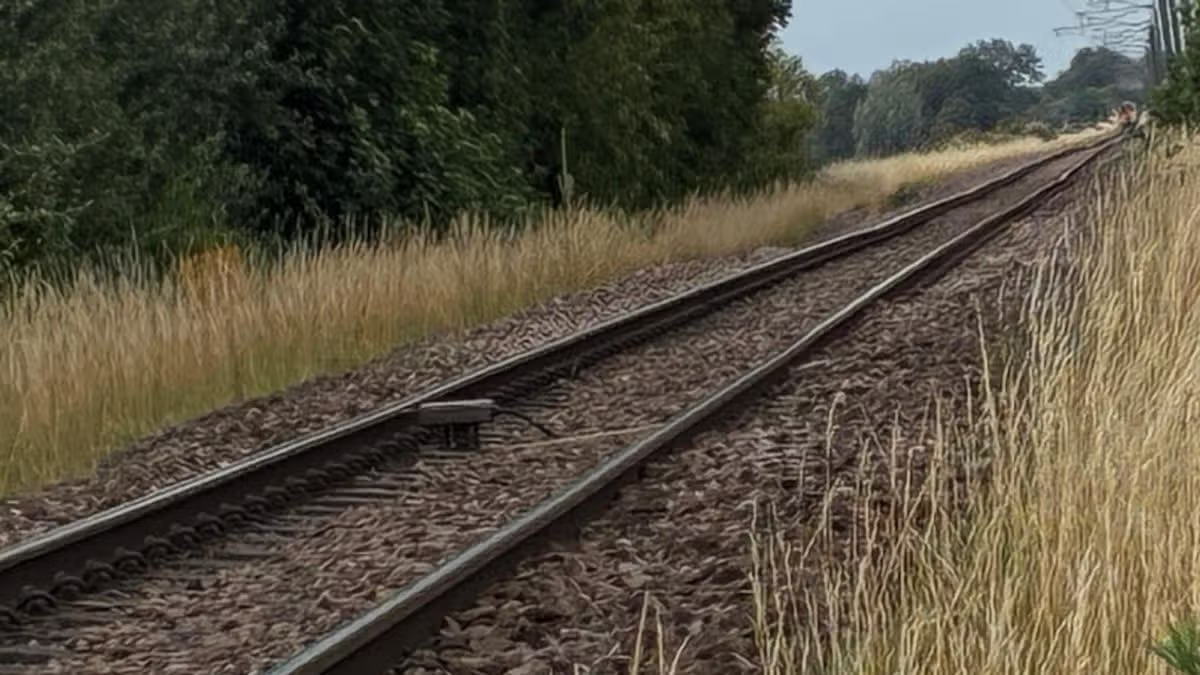
The excessive hot weather has resulted in damage to train tracks through Cambridge. Network Rail is making timetable changes to trains between Cambridge and King’s Lynn from Monday, August 3.

Advertisement

This is due to the track being affected by hot weather and no rainfall. Joe Kennedy, Infrastructure Director for Network Rail Anglia, said: “We’re taking action to keep running the best possible service despite the significant challenges we’re again facing this summer with our peat and clay soils.

“Our teams across Anglia will continue to work hard to minimise the impact on passengers, but we’re really sorry for the disruption caused by the service changes. Thank you to everyone for bearing with us.”

The peat and clay that sits under long stretches of the railway in Anglia has dried out and shrunk. This has caused the track to drop in places and become uneven.

In response to the damaged track, Network Rail will apply speed restrictions. These restrictions will need to be in place until the ground restrictions have recovered.

Advertisement

Speed restrictions applied to Great Northern services between Ely and King’s Lynn from August 3 mean that trains will arrive at King’s Lynn four minutes later than normal and depart four minutes earlier.

One train in each direction will be withdrawn or amended on weekdays, and there will be additional changes at the weekend. Some trains will also need to run with fewer carriages as the speed restrictions affect how trains and drivers can be planned across the route.

Jenny Saunders, customer service director for Great Northern, said: “We know many passengers will feel disappointed by further timetable changes after the challenges experienced on this route in recent weeks.

“I am sincerely sorry for the impact this will have on your journey, we do not take that inconvenience lightly. These necessary speed restrictions mean we need to make temporary changes to the timetable between King’s Lynn and Cambridge from August 3.

Advertisement

“While we regret having to make these changes, they are necessary to help prevent delays building up throughout the day and to provide a more reliable service. Our teams will continue working closely with Network Rail to minimise the impact and return to the normal timetable as soon as conditions allow.

“Online journey planners and our website have been updated with the revised train times, and passengers are encouraged to check before they travel as services will operate differently from the usual timetable.”

Network Rail Anglia will be closely monitoring track conditions across the region, with further speed restrictions potentially being needed in the coming weeks to keep services running. Network Rail’s extra late engineering works will take place as planned to help improve track conditions.

Source link

Advertisement
Continue Reading

NewsBeat

Suspected Ebola case is being monitored at a London hospital after ‘exposure in the Democratic Republic of the Congo’

Published

on

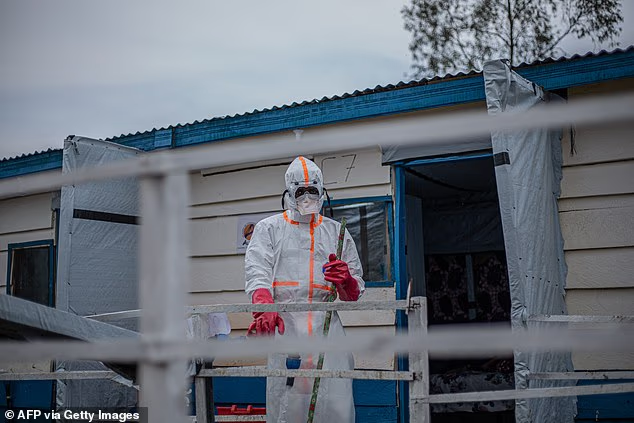
A hygienist is pictured cleaning and disinfecting at an Ebola Treatment Centre this week in DR Congo

Advertisement

A suspected Ebola case is being monitored at a London hospital after a humanitarian worker was ‘exposed’ to the disease in DR Congo, the UK Health Security Agency said. 

The British resident had been working in the African nation as part of a humanitarian organisation when he is feared to have contracted the disease. 

He was evacuated on a chartered flight as a precautionary measure, the agency said, and is now being ‘monitored and assessed’ at a hospital by specialists in the capital. 

The worker is not currently displaying symptoms and ‘remains well’. 

Advertisement

There has not been a single case of Ebola recorded in Britain since 2015 when three health workers returned from Africa with the disease, according to reports. 

Richard Pebody, Director, Epidemic & Emerging Infections at UKHSA, said: ‘The risk to the general public remains low. 

‘This individual has been transferred out of an abundance of caution, and we’re pleased they remain well.’ 

The incubation period of Ebola ranges from two to 21 days and the individual will be required to isolate for this period. 

Advertisement

A hygienist is pictured cleaning and disinfecting at an Ebola Treatment Centre this week in DR Congo

DR Congo has been grappling with an Ebola outbreak for weeks which is spreading ‘substantially faster’ than those which have come before. 

The disease has so far claimed 930 lives, the country’s health ministry said, after 2,344 cases were reported last Saturday. 

Advertisement

The outbreak was first declared in an eastern region of the country on May 15, and has since become the fastest-growing Ebola epidemic on record. 

There have reportedly so far been 20 confirmed cases outside of DR Congo causing two deaths, one in Uganda and the other in France. 

The Democratic Republic’s Ministry of Health said on Monday: ‘Patient care and support capacities are consolidating, with 22 new recoveries recorded in 24 hours.’ 

Only last month it was feared that a patient at a Scottish hospital had contracted the deadly disease. 

Advertisement

Part of the Queen Elizabeth University Hospital in Glasgow was sealed off in late June when a person presented at its Acute Receiving Unit.  

The patient had reportedly arrived back in the city after visiting an Ebola-affected country, and sought medical attention after they developed worrying symptoms. The person, however, ultimate tested negative for the disease.

Ebola s transmitted through direct contact with blood or bodily fluids of symptomatic individuals or contaminated objects. 

The outbreak in Congo was caused by the Bundibugyo virus, an unfamiliar disease which killed an estimated 30 per cent of the people it infected during two previews outbreaks in 2007 and 2012. 

Advertisement

There is currently no vaccine to combat the strain which is spreading across DR Congo, though scientists at the University of Oxford are working on a jab. 

They are currently working to assess how safe their vaccine is and volunteers are being recruited for a trial which is slated to begin within weeks. 

Dr Katrina Pollock, chief investigator of the trial, told the BBC: ‘We’re doing phase one (early stage) trials of new vaccines all of the time, precisely to be ready for exactly this kind of outbreak.’

The Bundibugyo strain is not new, but it is rare. It was first recorded in 2007 and takes its name from the area of western Uganda, where it was first spotted.

Advertisement

It arose for a second time in the DRC in 2012. But both outbreaks were limited in size – with just over 200 cases and around 66 deaths.

The virus is thought to spread through direct contact with the blood or bodily fluids of a person who is sick or has died from Ebola, or through contact with contaminated surfaces.

Patients can carry the virus for up to 21 days before symptoms begin, which is when experts believe they become infectious.

Advertisement

Advertisement

Source link

Continue Reading

Trending

Copyright © 2025