




Locals say they have changed their habits and routines to cope with the hot, dry summer
Residents of Britain’s driest village say they are having to adopt a ‘Mediterranean-lifestyle’ to cope with the summer’s heatwave. Histon, north of Cambridge, has seen just 196.4.mm of rain fall since January 1 making it the driest place in the UK according to the Met Office.
The reading, taken on July 19, is less than half the amount that fell in the same period two years ago. Not a single drop of rain has been recorded in the village – population 4,580 -since June 26, with just 0.4mm recorded at a local monitoring station.
Out walking her dog, local resident Jo Catterick, 62, said life has ‘slowed down’. The culture in the village has turned more Mediterranean as a result of the hot and dry weather – with locals staying inside during the day and choosing only to go out in the evening. Gardeners in the area are also filling their gardens with more Mediterranean plants as the weather gets hotter.
Jo said: “I’m living like a middle aged Greek woman – where you see them close the shutters at 11 o’clock and get all their jobs done first thing in the morning. They live their lives more in the evening, which I think people are doing much more now, it’s much less busy in the day.”
Lifelong resident Julie Dunn, 62, says the duck pond on the village green is at the ‘lowest level’ she has ever seen – while she’s using bath water to keep her plants alive. A hosepipe ban has been in force in the village since July 9, along with the rest of the Cambridge Water region.
Julie said: “It’s a very beautiful area, and it’s very pretty, but it doesn’t look at it’s best – it’s just brown and burnt. The dry weather means I’m having to water and be very careful – we have a bucket in the shower, and we save all our grey water, and we use that for the garden.
“We always put a bucket in when we have a shower to get the excess – washing up water, we always put in the water butt to try and avoid filling our watering cans from the hose. I think we’re all going to have to look at different plants and things for our gardens – it’s going to change how peoples’ gardens look, they’re not going to cope with the degrees of heat that we’re getting and the lack of water.”
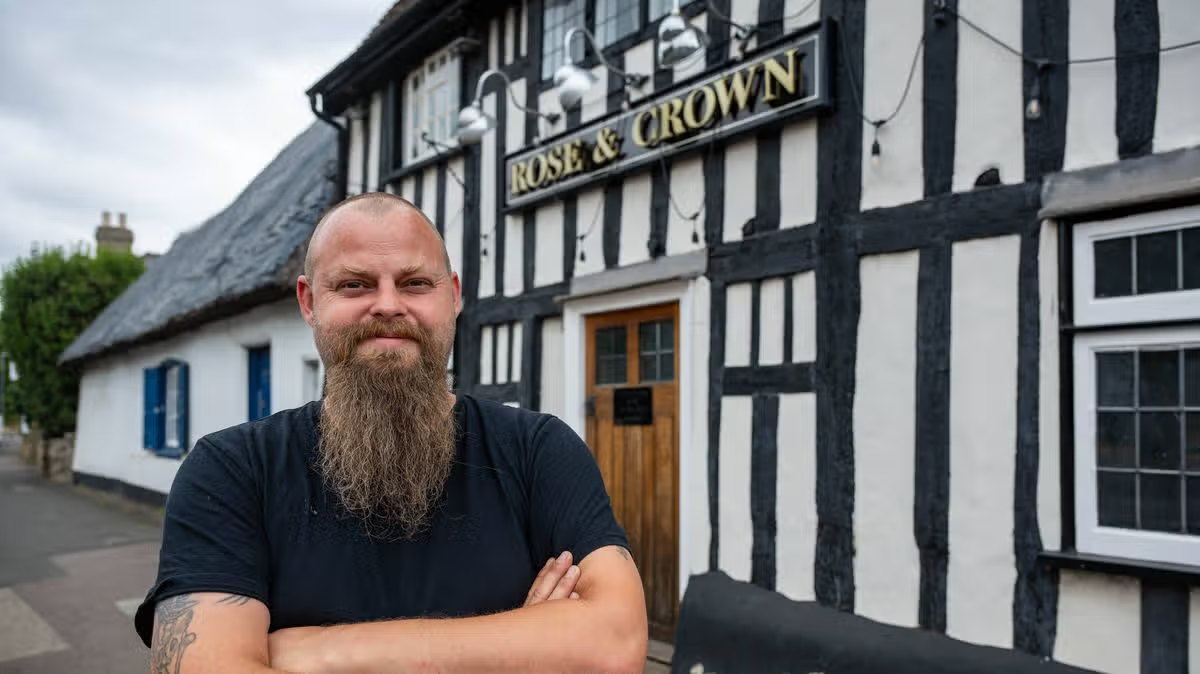
Landlord of the Rose and Crown pub Steven Snudden, 39, says the dry weather has helped him sell more beer – but left his garden in tatters. He said: “People are just as thirsty for beer, so that helps me, I guess. Customer-wise, we’ve been just as busy, if not busier recently.
“My garden was growing lovely, but it got trashed in a few days because of people walking on it. Not being able to water the lawns has had quite an impact for the pub. It’s brown with patches of mud.”
Four miles away, the Cambridge University Botanic Garden is feeling the impact of the area’s low water levels. Their own rainfall reading, 209.5 mm, would put them at the second-lowest level nationwide if included amongst the Met Office’s data.
The facility’s head of horticulture Sally Petitt, 57, said the facility was looking to grow plants more adapted for warmer climates. She said: “We’re actually focussing some of our expeditions and plant-collecting trips on countries that have climates similar to that which we’re forecast to have in the future.
“We’ve always traditionally grown Mediterranean plants well because of our low rainfall and our local conditions, and well-drained soils, so it’s expanding those kind of collections, and thinking of those as being the norm, rather than the exception.”
She added: “We’re thinking about installing more rainwater harvesting, we have some on our glasshouses, but not anywhere near sufficient probably for future use. We’re trying to adapt, but it’s quite hard to know exactly what the climate will do.
“If you say ‘let’s focus on Mediterranean plants and we get very wet winters as they’re predicting, they may not thrive in those wet winters, although they’ll be very happy in hot, dry summers. It’s quite a challenge to know where to play it, but we are definitely thinking about what we grow in the future.”
Back in Histon, the National Institute of Agricultural Botany, which measured the village’s low rainfall, said the dry weather was providing a real-life test for its research. NIAB head of communications Ros Lloyd said: “Across UK agriculture, prolonged dry conditions can reduce crop yields, place pressure on water resources, affect livestock feed availability and increase the financial uncertainty faced by farmers.
“As weather patterns become more unpredictable, understanding how to maintain productive and profitable farming systems under these conditions is becoming increasingly important. At Niab, drought tolerance and the impact of climate change on crop production are key areas of our work.”
Ms Lloyd continued: “The extreme conditions experienced this season offer a real-world backdrop in which to study how different crop varieties respond to water stress, identify traits associated with resilience, and develop strategies that can help farmers adapt to a changing climate.
“As periods of drought are expected to become more frequent and more intense in many parts of the UK, research of this kind is increasingly important. By understanding how crops perform under these challenging conditions, we can help support the development of more resilient farming systems and safeguard future food production.”






















































You must be logged in to post a comment Login