NewsBeat
Wild monkeys don’t abandon their infants. Why did baby Punch’s mother?

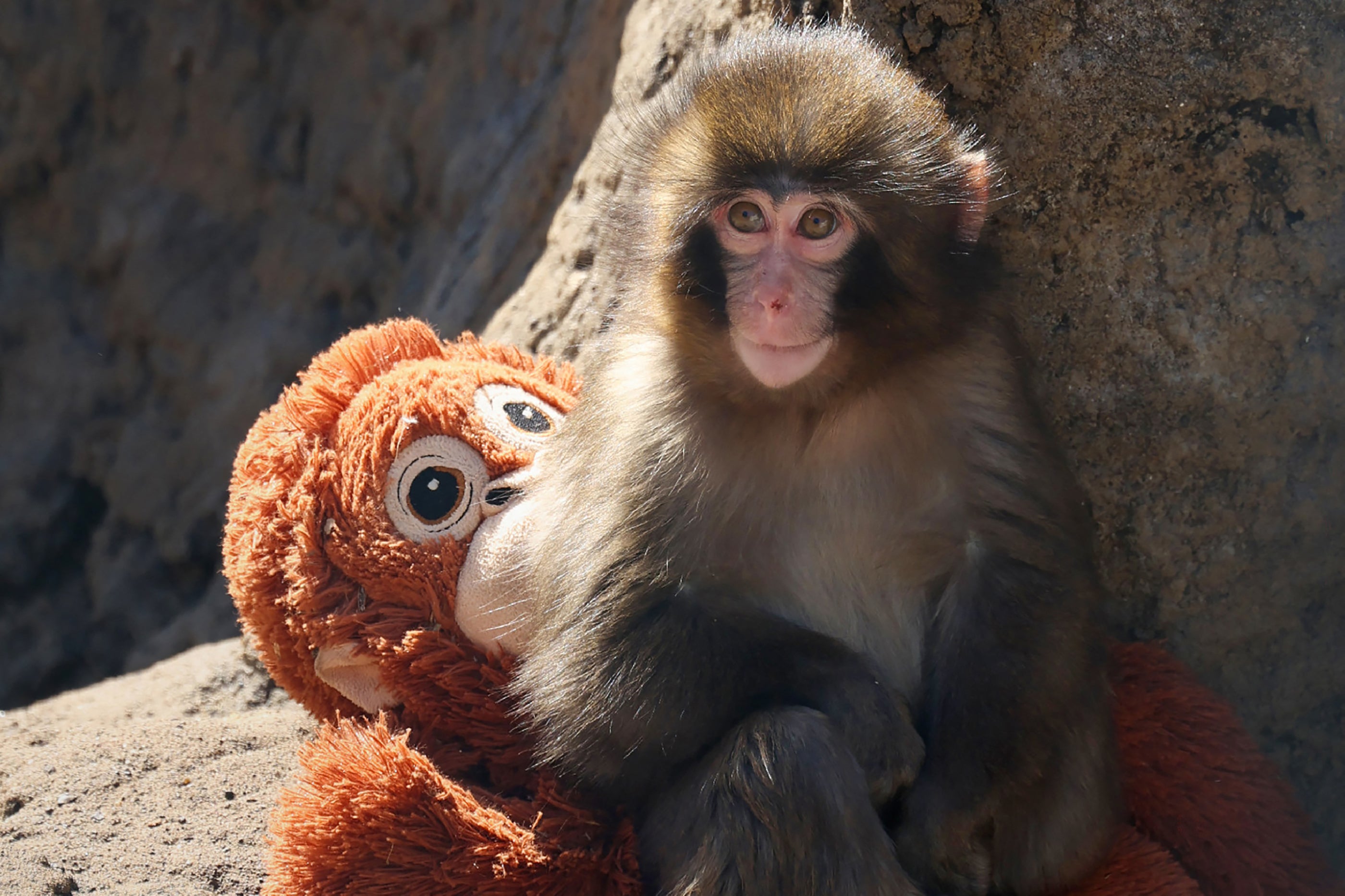
Little Punch, a seven-month-old Japanese macaque living in the Ichikawa City Zoo in Japan, has captured hearts on the internet.
Abandoned by his mother in the first few days of his life and raised by the keepers at the zoo, he has had some trouble integrating into the group of around 60 Japanese macaques.
The keepers gave him a stuffed orangutan, which he carries with him — grooming its plushy fur the way monkeys usually care for one another.
Some monkeys in the group were pushing Punch away, dragging him and reacting negatively to him.
The internet is demanding to know why. And why would his mother abandon him?
As primate researchers who have spent thousands of hours scientifically observing Japanese monkeys like Punch, we wanted to provide a bit of Japanese monkey-world context.

Wild monkey mothers don’t abandon infants
Japanese macaques or snow monkeys — Macaca fuscata to scientists — are a highly social and intelligent species.
In the wild, these monkeys do not abandon their infants.
We won’t say it has never happened, but it would be an extreme behaviour if it occurred. We have also not seen it in more than 25 years of studying Japanese monkeys at the Awajishima Monkey Center on Awaji Island, Japan, where the monkeys live in free-ranging groups.
Quite the contrary, we have observed mothers caring for their infants and providing extra care for infants with physical disabilities that prevent them from clinging to their mother, and for injured or ill infants.
We have witnessed macaque mothers at Awajishima hold their disabled infants up to nurse and walk on three limbs, using an arm to support the baby, sometimes carrying them for years longer than a mother usually would.

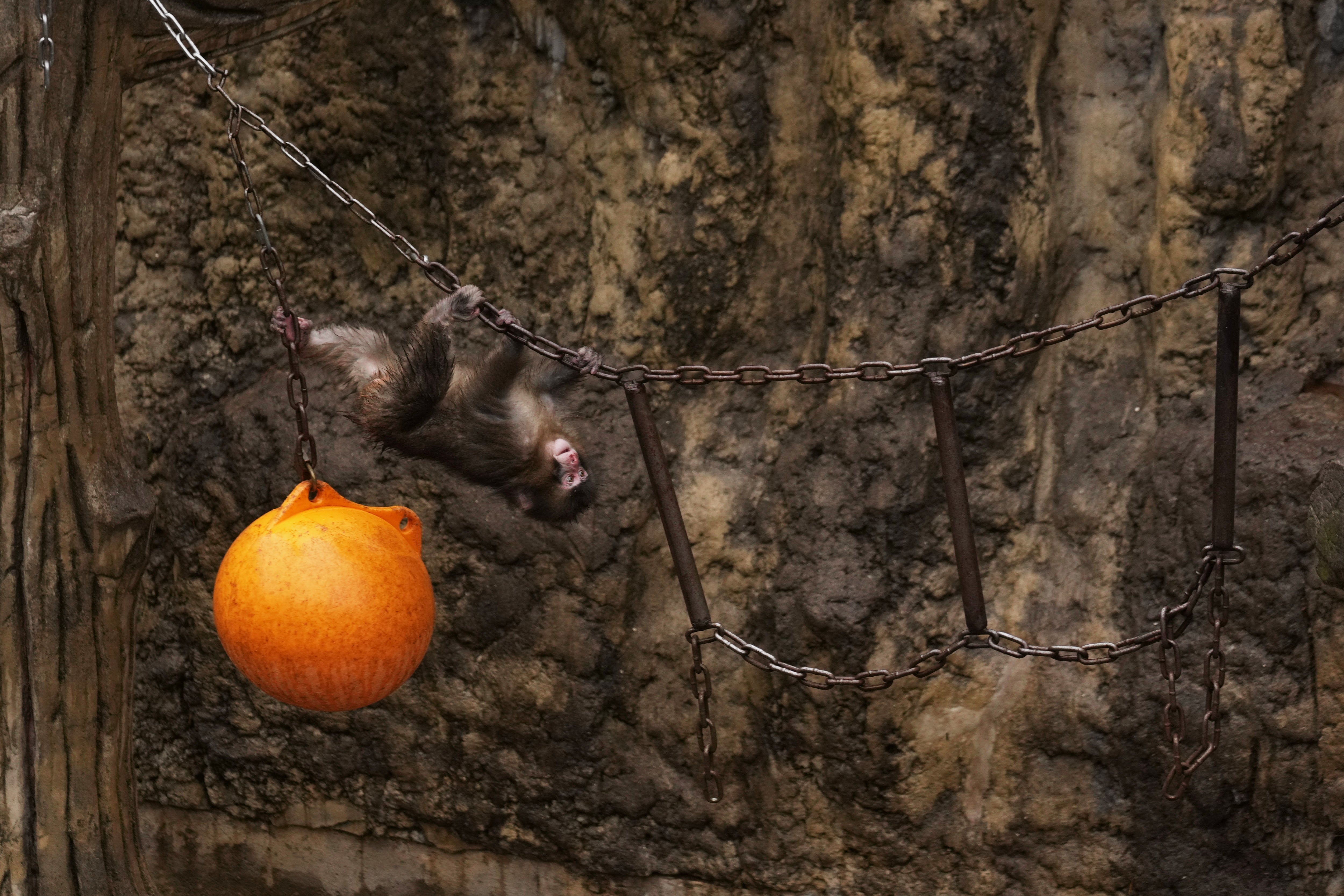
If an infant dies in the wild, a mother will often carry the body for days, presumably a reflection of her deep attachment.
This also makes sense from an evolutionary perspective because, in rare cases, an unresponsive infant may regain consciousness.
To be a Japanese mother monkey is to be a dedicated mother.
Dedicated, sometimes bewildered, mothers
This is not to say that every wild Japanese monkey mother is immediately good at it. We have seen bewildered monkey mothers holding their infants upside down or becoming distracted while their infants wander into trouble.
Sarah E. Turner is an Associate Professor in Geography, Planning and Environment, Concordia University. Brogan M. Stewart is a PhD Candidate in Environmental Science, Concordia University.
Megan M. Joyce is a PhD Student in the Department of Geography, Planning and Environment, Concordia University.
Mikaela Gerwing is a Wildlife Conservation Biologist and PhD Student, Concordia University.
This article was originally published by The Conversation and is republished under a Creative Commons licence. Read the original article.About the authors
We have seen them looking at the new squirming creature they have birthed with expressions of mystified dismay that would be recognizable to any human mother at one time or another.
But in a wild group, those first-time mothers have relatives to help them and to learn from. They usually stay in the same group for their whole lives, and they have a dominance rank order that they pass down to their offspring.
Male Japanese monkeys are usually not directly involved with infants. As the infants get older, though, and gain more independence, the males help out too by socializing with them.
Abandonment in captivity
Punch’s mother either lacked the skills to look after her infant, was stressed by captivity and its associated conditions, or both. We don’t know her full story; she may have been raised by humans herself or experienced other difficulties.
Infant abandonment does happen sometimes in captivity — 7.7 per cent of cases according to one study — primarily in first-time or low-ranking mothers. Human caretakers do their best to raise infants, but it causes challenges.
Adoption can happen in captivity too. But the environment is different in a zoo: groups are not necessarily composed of female relatives the way a wild group would be; the males can’t leave as they would in the wild. Also some zoo monkeys are raised by humans or come from the entertainment industry.


These monkeys may “speak” a different social language. Punch wasn’t able to learn how to “speak Japanese macaque” from his human caregivers.
A behaviourally flexible species
The good news for Punch (and his devoted human followers) is that Japanese macaques are behaviourally flexible and can learn from the monkeys around them, and he is already learning to communicate with other monkeys and to find a place in his group.
In the wild, infant Japanese monkeys will nurse for up to two years. When they are orphaned, they can survive at Punch’s age — especially if they are adopted, or even just befriended, by others.
When Punch was approaching another monkey to play, he may have been inadvertently sending signals such as, “I’m afraid of you,” or “I’m dominant over you.”
The more time Punch spends in his group, the more he will learn how the other monkeys interact. He will learn what behaviours are okay, socially. For Punch, this is the best outcome. Monkeys should not be kept as pets — they are wild animals and need to be part of the rich and stimulating social world of other monkeys.
Punch is part of an intelligent, social and behaviourally flexible species that relies on learning social cues from their mothers and relatives. Punch will likely integrate into his new social circumstances.
Research on wild and free-ranging Japanese macaques helps us understand Punch’s story and demonstrates the importance of research on animal welfare in zoos, on wildlife behaviour and in conservation science.