Connect with us
DAPA Banner

NewsBeat

Will the world fill the climate leadership void left by the US?

Published

on

Will the world fill the climate leadership void left by the US?

The Trump administration pulled the rug out from underneath US federal climate policy in February, when the Environmental Protection Agency (EPA) overturned the landmark 2009 “endangerment finding”. Now, the official policy of the US government holds that greenhouse gases do not pose a risk to human health.

The move has opened a new frontier for Donald Trump to govern without being constrained by evidence or in a manner that represents the majority of Americans, who support pro-climate policies. It also follows a year in which the US president and his allies have hollowed out American climate leadership.

Since taking office, Trump and his allies have rolled back clean air standards for almost anything with a tailpipe or smokestack. In January 2026, they even instructed the EPA to stop estimating the value of lives saved in the agency’s cost-benefit analyses for new pollution rules. This could lead to looser controls on pollutants from industrial sites across the country.

As US climate leadership recedes into the rearview mirror, one question remains: will any nation – and China in particular – rush in to fill the gap? I wish there were a simple answer. But enthusiasm for climate leadership is backsliding, and not just from the US government.

Advertisement
The dome of the US Capitol building seen behind the smokestacks of the Capitol power plant in Washington.
Jim Lo Scalzo / EPA

Even as renewable energy installation continues worldwide, there are some signs of retreat. Across the world, companies are quietly shedding their net-zero targets. US car manufacturers Ford and General Motors also recently wrote off more than US$25 billion (£18.5 billion) of investment in electric vehicles because consumer demand has failed to match their forecasts.

It is no coincidence that this breakdown in the global climate consensus comes at a time when tensions are rising worldwide. The global order is reeling over Trump’s war in Iran and sabre-rattling over Greenland. Meanwhile, Russia’s full-scale invasion of Ukraine has dragged into its fifth year without any clear prospect of peace.

Climate collaboration requires a belief that everyone is pitching in. When global institutions and norms look weak, national leaders worry about being the last honest participant in a deal that everyone else has abandoned. This is as true for countries as for human beings: nobody wants to feel like they’ve been duped.

However, there are some signs of hope. Demand for clean energy isn’t going away overnight. Renewable energy is often cheaper than fossil power, even without subsidies. A July 2025 report by the International Renewable Energy Agency found that nine in ten new renewable projects are on track to generate cheaper power than fossil fuel alternatives.

Advertisement

Just as important is the fact that citizens around the world continue to suffer from the effects of breathing polluted air, which the World Health Organization estimates causes 7 million deaths worldwide each year.

Even as climate concern falters, some of the world’s most populous cities, such as New Delhi in India, are under growing pressure to protect their residents’ health. They are likely to continue reducing their use of fossil fuels to heat homes, generate electricity and move people around.

A group of people walk down a street in New Delhi that is engulfed in smog.
A thick blanket of smog engulfs New Delhi in April 2022.
Arrush Chopra / Shutterstock

Meanwhile, China is on a glide path to fill part of the void opened by America’s climate retreat. It already dominates certain clean energy technologies, holding a near-monopoly on battery, solar panel and fuel cell production. Chinese companies now manufacture more electric vehicles than every other nation combined.

Cementing its position as the new global climate leader would also earn China diplomatic “soft power,” especially among developing nations where Beijing can offer clean energy infrastructure plus the loans to finance it.

But, at the same time, China has shown a steady unwillingness to back strong political leadership on climate action. China’s leaders are bullish on renewable energy when it serves their economic interests. However, they are broadly resistant to the sort of strong international pressures that could stabilise global temperature rise.

Advertisement

It wasn’t until 2025 that China promised to actually reduce its emissions. And its recent commitments, which include a pledge to reduce greenhouse gas emissions by as much as 10% below peak levels by 2035, fall well short of what analysts say will be necessary to keep global warming below 1.5°C.


À lire aussi :
When China makes a climate pledge, the world should listen


With US credibility rapidly eroding, the 21st century seems poised to slide deeper into a style of governance that is characterised less by rigorous analysis than by the whims of its leaders.

The silver lining is that demagoguery has a shelf life. Trump’s approval rating has fallen to second-term lows, with polls showing him at -17 points. The demand for clean air, cheap energy and competent governance doesn’t go away because one administration decides to ignore it.

Advertisement

One day Trump will eventually fade from the political landscape. Climate change will not.

Source link

Advertisement
Continue Reading
Click to comment

You must be logged in to post a comment Login

Leave a Reply

NewsBeat

Scarborough hospital still requires improvement says the CQC

Published

on

Scarborough hospital still requires improvement says the CQC

​The Care Quality Commission (CQC) has improved the rating from requires improvement to good for medical care and has re-rated urgent and emergency care as requires improvement at Scarborough Hospital, which is run by the York and Scarborough Teaching Hospital NHS Foundation Trust.

​The NHS Trust welcomed the findings of the CQC’s assessment, which followed an inspection that was carried out in October, and highlighted improvements in care, particularly within medical care services.

​The CQC said it was “disappointing that issues we highlighted at the previous inspection still hadn’t been addressed and new breaches were found”.

Advertisement

​Inspectors said they found continued breaches of regulations in relation to staffing, good management, and complaints.

​Dr Karen Stone, medical director atYork and Scarborough Teaching Hospital NHS Foundation Trust, said: “We welcome the CQC’s report and are pleased it recognises the improvements we’ve made, particularly in our medical care services. It’s reassuring that inspectors saw the compassionate, person-centred care our colleagues provide every day.

​“The report also clearly sets out where we must continue to improve. We acknowledge the pressures our teams are working under, particularly within urgent and emergency care, where access, patient flow and ambulance handover performance must improve, and in medical care, where some patients have experienced delays in accessing specialist support.”

​In its inspection of urgent and emergency services, the CQC re-rated the ‘safe, effective, responsive and well-led’ categories as requiring improvement. Caring dropped from good to requires improvement.

Advertisement

​Inspectors found continued breaches of regulations in relation to medical staff training, access to services and consent, and the CQC also identified new breaches in relation to infection prevention and control, and assessing people’s needs.

​Karen Knapton, CQC deputy director of operations in the north, said: “In urgent and emergency care, it was concerning that people couldn’t always access care, support and treatment when they needed it. At the time of the inspection, the number of people admitted, transferred or discharged within four hours of arrival was 62 per cent, which was worse than the England average.

​“Additionally, ambulance handovers weren’t consistently carried out within the required timeframes due to high demand. Although hospital staff were working hard to try and see people in a timely way, only 40 per cent were handed over to the hospital within 15 minutes, compared with the national average of 65 per cent. The delay to people receiving appropriate care could put them at risk and put other people in the community at risk who required an ambulance.”

​Ms Knapton said: “However, in both departments, people told us that staff treated them with kindness, empathy and compassion. Across all wards, staff interactions with people and those close to them were consistently warm and respectful.

Advertisement

​“We have told the trust where it needs to make the necessary improvements and will continue to monitor both services to ensure people stay safe while this happens.”

​Commenting on the findings, the York and Scarborough NHS Trust’s medical director, Dr Stone, said: “We continue to take action across all areas highlighted, including strengthening training compliance, workforce capacity, infection prevention and control, medicines and environmental safety, and how we monitor and support patients while they are waiting.

​“I would like to thank all of our teams for their professionalism, kindness and dedication. We will continue building on the progress made and work closely with the CQC and our partners to provide safe, high-quality care for our communities.”

Advertisement

Source link

Continue Reading

NewsBeat

UK passport price increase April 2026: Adult, children and pensioners fees

Published

on

Wales Online

Adult passports will cost over £100 for the first time as the Home Office confirms an 8% price increase from 8 April

Passport costs across all categories will rise substantially from next month following confirmation of proposed plans by the Home Office.

The Home Office has put forward an 8 per cent increase in UK passport prices, which could see an adult paying over £100 for the first time. The price of children’s and pensioners’ passports will also rise, with the changes scheduled to take effect from Wednesday, 8 April.

Advertisement

The Home Office stated it will “move towards a system that meets its costs through those who use it, reducing reliance on funding from general taxation”. The fee increases are subject to Parliamentary approval.

In a statement, the Home Office said: “The new fees will help the Home Office to continue to move towards a system that meets its costs through those who use it, reducing reliance on funding from general taxation.

“The Government does not make any profit from the cost of passport applications. The fees contribute to the cost of processing passport applications, consular support overseas, including for lost or stolen passports, and the cost of processing British citizens at UK borders,” reports the Mirror.

How much is an adult passport?

From 8 April, the cost of a UK adult passport, for standard online applications, could be set to increase from £94.50 to £102. Meanwhile, postal passport applications could increase from £107 to £115.50 for adults.

How much is a passport for children?

The standard charge for a child’s passport through online applications could rise from £61.50 to £66.50, whilst postal applications could increase from £74 to £80 for children.

How much is a pensioner’s passport?

A standard, 32-page concessionary passport is available free of charge for those who were born on or before 2 September 1929 and at the time of their application, hold any British nationality.

The government said: “Customers who naturalised or registered as British nationals will still qualify regardless when they naturalised or registered.”

Advertisement

Whilst the passport itself is free, there may be some delivery charges to return the passport or to send any supporting documents.

Will next-day services increase?

Whilst it’s always advisable to apply for a new or replacement passport as early as possible, a next-day premium service is available in the UK. However, the new charges from 8 April could see this increase from £222 to £239.50.

How much will overseas UK passports cost?

Those applying overseas for a UK passport online can expect an increase from £108 to £116.50 for adults and from £70 to £75.50 for children. Meanwhile, overseas paper applications will rise from £120.50 to £130 for adults and from £82.50 to £89 for children.

Advertisement

The previous occasion UK passport prices increased was on 10 April 2025, when they rose by approximately 7 per cent. An adult passport jumped from £88.50 to £94.50, whilst a child’s online application increased from £57.50 to £61.50. Prior to 2025, price rises occurred in April 2024 and February 2023. The 2023 increase was notably the first hike in five years.

The government has urged anyone requiring a new passport to apply well ahead of time, as the renewal process can take up to three weeks in the UK, or even longer during busy travel periods. For further details or to apply for a new or replacement UK passport, visit the government website.

Source link

Advertisement
Continue Reading

NewsBeat

Magnetic fluid injected into the heart could stop strokes before they start

Published

on

Magnetic fluid injected into the heart could stop strokes before they start

Millions of people have a heart rhythm disorder called atrial fibrillation, which causes the heart’s upper chambers or atria to beat chaotically rather than in a smooth, coordinated rhythm. For many, the symptoms can be mild with palpitations, fatigue or breathlessness, but the greatest danger is something far more serious – a stroke.

Tucked inside the heart is a tiny pouch called the left atrial appendage. When the heart beats erratically, blood can pool and sit still in this pouch instead of flowing normally – and still blood tends to clot. If one of those clots breaks free and travels to the brain, it can block bloodflow and cause a stroke. Atrial fibrillation makes you about five times more likely to have a stroke. The question for researchers, then, has been whether that pouch could simply be taken out of the equation.

Researchers recently revealed one possible answer – a new technique, so far tested only in animals, in which a magnetically guided liquid is injected into the heart, hardening to permanently seal the pouch from the inside. Early tests in rats and pigs suggest that this method could one day lower the risk of stroke in people with atrial fibrillation.

Current treatments are effective but imperfect. Today, most patients are prescribed blood-thinning drugs, such as anticoagulants. These drugs reduce the ability of blood to clot and significantly lower the risk of having a stroke.

Advertisement

However, anticoagulants come with trade-offs. They increase bleeding risk, which can be dangerous for some patients – particularly older adults or those with other medical conditions such as stomach ulcers, hypertension, liver or kidney disease and cancer. Some people cannot tolerate them or must stop treatment because of bleeding complications.

Another option is a procedure called left atrial appendage occlusion, in which doctors implant a small device to plug the appendage. The most widely known devices are delivered using a catheter and expand like a small metal umbrella to seal the opening.

Atrial fibrillation makes you five times more likely to have a stroke.
PeopleImages/Shutterstock.com

These devices can be effective, but they are not perfect. Because the appendage varies widely in shape and size between patients, rigid implants may not always create a complete seal. Sometimes a little blood can leak around the edges, and small clots can form on the surface of the device. The parts that hold the device in place can also damage the heart tissue.

The newly reported approach takes a radically different path. Instead of inserting a rigid implant, researchers inject a magnetically responsive liquid, sometimes called a magnetofluid, directly into the left atrial appendage through a catheter.

Advertisement

Once inside the cavity, an external magnetic field helps guide and hold the fluid in place, so it fills the entire appendage, even against the force of circulating blood. Within minutes, the liquid reacts with water in the blood and transforms into a soft “magnetogel” that seals off the cavity.

Because the material begins as a liquid, it can adapt precisely to the highly irregular shape of each patient’s left atrial appendage. In theory, this allows it to create a more complete seal than conventional rigid devices. The gel also appears capable of integrating with the heart’s inner lining, forming a smooth surface that may reduce the chance of a clot forming.

Encouraging early results

So far, the technique has only been tested in animals. Researchers first evaluated the concept in rats and then progressed to experiments in pigs, an important milestone in cardiovascular research.

In the pig study, the magnetogel remained stable inside the appendage for 10 months with no evidence of a clot or leakage. The heart’s inner lining grew over the surface of the gel, creating a continuous, apparently healthy layer.

Advertisement

When compared with conventional metal occlusion devices in pigs, the magnetogel produced a smoother lining and avoided the tissue damage associated with anchoring barbs. Equally important, the researchers did not observe harmful biological effects in the animals.

Pigs are widely used in cardiovascular research because their hearts closely resemble human hearts, being similar in size, structure and function. Showing that the magnetofluid works safely in a pig heart therefore provides a valuable proof-of-concept. But it does not yet guarantee that the technology will be safe or effective in people.

Muddy pigs on a farm.
Of all mammals, pigs’ hearts most closely resemble human’s hearts.
Angela Buser/Shutterstock.com

Despite the promising results, the technique remains firmly in the experimental stage. Before human trials can begin, researchers must demonstrate long-term safety, refine how the material is delivered and ensure it behaves predictably in larger animal studies.

There are also some practical problems to fix. For example, the magnetic material can affect MRI heart scans, making parts of the heart harder to see. Problems like this need to be solved before it can be used in patients. Also, medical devices have to go through a lot of testing, so it will probably take many years before it can be used in real treatments.

If the technology ultimately proves safe and effective in humans, it could offer a new way to protect people with atrial fibrillation from stroke. A catheter-delivered liquid seal might provide an alternative for patients who cannot tolerate anticoagulant drugs and could overcome some of the limitations of existing occlusion devices.

Advertisement

Given that atrial fibrillation affects tens of millions of people worldwide, even modest improvements in stroke prevention could have a substantial impact on global health.

For now, the magnetic gel remains a laboratory innovation rather than a clinical therapy. But it highlights how advances in materials science and biomedical engineering are opening new possibilities for tackling one of cardiology’s most persistent challenges.

Source link

Advertisement
Continue Reading

NewsBeat

Denmark sent explosives to blow up Greenland runways amid Trump invasion threat | World News

Published

on

Denmark sent explosives to blow up Greenland runways amid Trump invasion threat | World News

Denmark sent soldiers and explosives to Greenland in January so that it could blow up runways in the event of a US invasion, the country’s public broadcaster has said. 

Landing strips in Nuuk and Kangerlussuaq could have been targeted to prevent US military aircraft from landing soldiers and equipment if President Trump had followed through on threats to invade, DR reported.

Military aircraft also transported blood from Denmark to help treat the wounded in case of battle.

Image:
A Royal Danish Air Force plane carrying soldiers lands at Nuuk airport Greenland in January. Pics: Reuters

The emergency moves were allegedly made in the immediate aftermath of the US capture of Venezuela’s President Maduro, which demonstrated Mr Trump’s willingness to use US military might.

Advertisement

Mr Trump has long advocated for the mineral-rich island of Greenland – a self-governing Danish territory – to become part of the United States.

In the past, he has refused to rule out using military force to take the territory.

A Danish F-35. Pic: Reuters
Image:
A Danish F-35. Pic: Reuters

Denmark doubles down

The new report, based upon the testimonies of 12 main sources at the top of Denmark’s government and military, appears to show Copenhagen’s willingness to use force to raise the cost of any US action.

Denmark is said to have sought confidential talks with European allies after the re-election of Mr Trump in 2025 to shore up support against any annexation attempt.

Advertisement
Military bases in Greenland
Image:
Military bases in Greenland

A French official is quoted as saying that Denmark had decided to “play the game”.

Danish and European allies formed plans to send soldiers and military hardware to Greenland later in 2026, to show the US how seriously Europe took the defence of the island.

However, sources who spoke to DR claimed that US military action in Venezuela on 3 January of this year changed everything.

France's President Macron answered pleas for aid from Denmark's Prime Minister Frederiksen. Pic: Reuters
Image:
France’s President Macron answered pleas for aid from Denmark’s Prime Minister Frederiksen. Pic: Reuters

In the days after that military action, the US president repeated that the US “needs Greenland for national security,” going on to say he was “very serious” about it.

A more rapid European response now began, with an advance command of Danish, French, German, Norwegian and Swedish soldiers flying to the territory.

Danish military forces participate in an exercise with hundreds of troops from several European NATO members in Greenland. Pic: AP
Image:
Danish military forces participate in an exercise with hundreds of troops from several European NATO members in Greenland. Pic: AP

A larger, well publicised and announced, main force followed, as well as Danish fighter jets and a French naval vessel.

The deployment was presented as part of Danish-led joint military exercises called Operation Arctic Endurance, but the real reason was to prepare for and deter a possible US invasion, DR claims.

Advertisement
Danish warships participate in a military exercises in the Artic. Pic: AP
Image:
Danish warships participate in a military exercises in the Artic. Pic: AP

Denmark hoped that having soldiers with as many different flags on their arms as possible would deter US action.

Read more from Sky News:
Iran war set to drive up household bills

EU loan for Ukraine war effort blocked

Advertisement

Sky’s Yalda Hakim unpacking in January what happened in Davos

Instead of just confronting Danish troops, Washington would have had to commit to major hostile action against multiple fellow NATO allies.

While it’s not clear if forces from other European countries would have fought against the US, Danish soldiers were reportedly given live ammunition and permission to engage.

Advertisement

The public nature of Operation Arctic Endurance and intense diplomacy by European leaders, including by the British prime minister, appeared to have worked.

Speaking in Davos at the World Economic Forum on 21 January, Mr Trump said the US “won’t use force” to take Greenland, though he reiterated that the US was “unstoppable”.

Denmark is due to head to the polls on 24 March after the country’s Prime Minister Mette Frederiksen called snap elections.

Opinion polls suggest Ms Frederiksen has received a much-needed popularity boost over her handling of the Greenland-US crisis, after public dissatisfaction over rising living costs and welfare pressures.

Advertisement

Source link

Continue Reading

NewsBeat

John Lithgow Considered Quitting Harry Potter TV Series Over JK Rowling Backlash

Published

on

John Lithgow Considered Quitting Harry Potter TV Series Over JK Rowling Backlash

John Lithgow has claimed that he contemplated pulling out of the upcoming TV adaptation of Harry Potter after he began facing backlash over his involvement in the series.

Around a year ago, it was confirmed that Lithgow would play Hogwarts headmaster Albus Dumbledore in an upcoming TV show based on JK Rowling’s popular children’s novels, with one season dedicated to each of the books.

Immediately after this was announced, he and his new co-stars began facing criticism for accepting a role in the project, on which Rowling also serves as an executive producer.

Rowling has become a divisive figure in the last few years due to her commentary about issues relating to transgender people.

Advertisement

This includes repeatedly and deliberately misgendering trans public figures, and donating tens of thousands of pounds to the campaign group which raised the initial legal challenge that led to the UK Supreme Court’s ruling last year that the legal definition of a woman should include only those who were assigned female at birth.

During a new interview with The New York Times, Lithgow reiterated that he and Rowling have differing views on the trans community, and accepted the offer to play Dumbledore as he believes the Harry Potter stories are “clearly on the side of the angels, against intolerance and bigotry”.

In light of the social media reaction to his casting, Lithgow told the US outlet that he considered quitting the series altogether, but decided to stay.

Earlier in the piece, he also said that he hoped his past work in queer-adjacent work like the films Garp, Jimpa and Love Is Strange should show his allyship to the LGBTQ+ community.

Advertisement

Shortly after his casting was announced last year, Lithgow admitted he was “absolutely not” expecting the backlash he received for accepting the role of Dumbledore.

“I wonder how JK Rowling has absorbed it,” he said at the time. “I suppose at a certain point I’ll meet her and I’m curious to talk to her.”

More recently, the two-time Oscar nominee said of the controversy: “I take the subject and the issue extremely seriously.

“JK Rowling has created this amazing canon for young people, young kids’ literature that has jumped into the consciousness of society. Young and old people love Harry Potter and the Harry Potter stories. It’s so much about acceptance. It’s about good versus evil. It’s about kindness versus cruelty. It’s deeply felt.”

Advertisement

He added that, because of this, he found Rowling expressing “such views” on transgender people both “ironic and somewhat inexplicable”.

In his New York Times interview, Lithgow expressed that he has still not met Rowling, but predicted that he would be asked about her in “every interview I will ever do for the rest of my life”.

Source link

Advertisement
Continue Reading

NewsBeat

York Handmade Brick pivotal role in Manchester Circle Square

Published

on

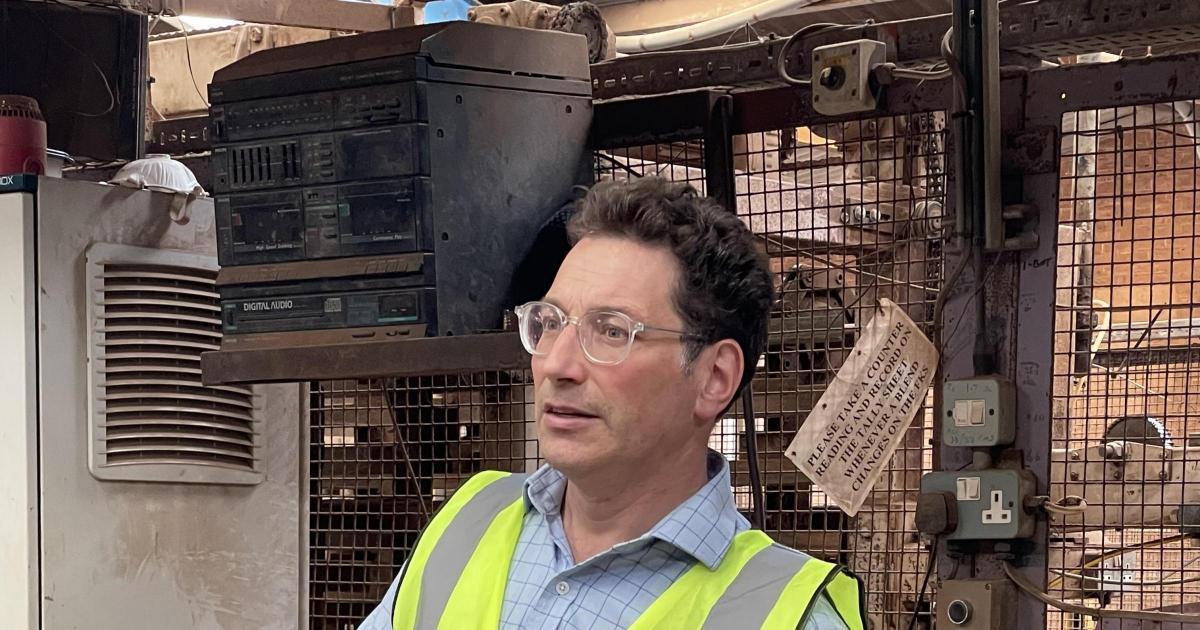
York Handmade Brick pivotal role in Manchester Circle Square

As The Press reprted in December, 4D Capital Partners LLP (“4D”) announced the acquisition of York Handmade Brick Company, which is based at Alne, near Easingwold, the multiple award-winning manufacturer of bespoke and premium handmade bricks.


Recommended reading:


As The Press previously reported, the firm won the Sustainability category in the prestigious 2025 Brick Awards for its brickwork at York Racecourse.

Advertisement

York Handmade’s winning entry featured work at the new Bustardthorpe Stand and Roberto Pavilion at York Racecourse.

Now 3 Circle Square, in the heart of Manchester’s innovation district, has been named the best new building in the annual Manchester Chamber of Commerce awards.

York Handmade supplied 385,000 specially manufactured bricks for 3 Circle Square in one of the most significant contracts in its 37-year history.

The contract was worth £580,000 and was a resounding endorsement of York Handmade’s decision to invest £1.5m in brand-new machinery.

Advertisement

3 Circle Square, which was master-minded by leading Manchester-based developer Bruntwood, is a stand-alone brick-built building, close to Oxford Road.

Designed by Bridge Architects of Manchester, it offers flexible office space and bespoke programmes of business support, helping creative, digital and technology businesses to form, scale and grow. It was completed last year.

Russell Bridge of Bridge Architects said: “The brick choice for 3 Circle Square was critical to the facade design’s success, which incorporated both standard and long format bricks.

“York Handmade’s Thirkleby Blend was selected to achieve the desired detailing. The regular brick faces facilitated a consistent appearance in relation to deep opening reveals, mortar jointing, soldier course and arch detailing, and the formation of perforated brick ventilation panels.

Advertisement

“Aesthetically the red multi-toned brick complements the wider site context, while the distressed water struck texture adds character and visual interest when viewed up close.”

Guy Armitage, the managing director of York Handmade, said: “We are absolutely delighted that 3 Circle Square has won such a prestigious award. It is a magnificent building and are so proud to have played a part in its success.

“This was a massive project for us, especially in the context of these challenging economic times. It has been a tremendous boost for our factory and a great honour to contribute to a pioneering and innovative development which has redefined Manchester’s cityscape for the 21st century.

“Significantly, the non-standard bricks we supplied are for 3 Circle Square are Water Struck Thirkleby Blend, part of our Viking range and a stunning example of what we are able to manufacture with our new plant, commissioned in 2023.”

Advertisement

Source link

Continue Reading

NewsBeat

Borrowing extra on mortgage for renovations

Published

on

Couple renovating their home using money from equity release lifetime mortgage

2. Releasing equity for home improvements

If you’re a UK homeowner aged over 55 and exploring ways to fund home improvements, you could also consider a lifetime mortgage – the most widely used form of equity release. It’s still a mortgage secured against your home, but it works differently from traditional borrowing, allowing you to release a portion of your property’s value as tax-free cash.

With a lifetime mortgage, you can choose whether or not to make monthly repayments. In this case, interest will roll up over time and is added to the loan, meaning the total amount owed increases over time. The full balance is typically repaid when the last homeowner passes away or moves into long-term care and is usually achieved through the sale of the property.

Interest roll-up means unpaid interest is added to your loan, and future interest is then calculated on this higher amount. This is known as compound interest.

Advertisement

The Equity Release Council, the industry body that sets consumer-protection standards for equity release products, requires all providers who follow its rules to allow customers to make voluntary partial repayments each year without incurring early repayment charges. The exact amount you can repay is set by your mortgage lender.

It is important to know that by releasing equity from your home today, you will reduce the value of your estate. If you qualify for means-tested benefits, then releasing equity could also affect your current entitlement.

Thinking about funding your renovations with equity release? The Telegraph Media Group Equity Release Service, provided by Royal London Equity Release Advisers, could help.

  • Use their free calculator to see how much tax-free cash you could release.
  • Request a free guide by post or email.
  • Speak to their Information Team and book a no-obligation appointment with a qualified adviser.

Equity release is a significant financial decision, and it’s a requirement to get professional advice so you can understand how it works, whether it suits your circumstances, and what it could mean over the long term.

The Information Team at Royal London Equity Release Advisers will be able to answer any general questions you may have but can’t give advice. Instead, they will help to book a no-obligation advice appointment with an adviser to speak with someone about your specific needs and circumstances.

Advertisement

Source link

Continue Reading

NewsBeat

Marathon’s most important new update has some truly bizarre restrictions

Published

on

Marathon's most important new update has some truly bizarre restrictions
Gear up for the archive (Bungie)

Bungie has announced Marathon’s raid-like Cryo Archive will only be playable at specific times, as it details the level requirements.

Live service game Marathon officially launched earlier this month but developer Bungie has held back several modes, as players acclimatise to the extraction shooter.

One of these is ranked play, but the other, more exciting, mode is the Cryo Archive. This was pitched as Marathon’s equivalent to Destiny style raids, which add puzzle-solving elements into the scramble for loot.

Bungie kicked off its rollout of the Cryo Archive earlier this week, tasking players with collectively taking down 500 million UESC robots, in a similar manner to Helldivers 2, to gain access. Now, with that stage completed, the Cryo Archive has officially opened for business… sort of.

Advertisement

As outlined in a blog post from Bungie, there are some very odd caveats. The biggest is that the Cryo Archive, which opens from today (March 20) at 5pm GMT, will only be playable on weekends.

Incredibly, though, they haven’t bothered to say when access to the mode will end, so it’s currently unclear when the ‘weekend’ is over, from the game’s point of view.

Expert, exclusive gaming analysis

Sign up to the GameCentral newsletter for a unique take on the week in gaming, alongside the latest reviews and more. Delivered to your inbox every Saturday morning.

Advertisement

This same logic is being applied to the ranked mode, which will go live from Saturday, March 21 at 5pm GMT. Although for some reason it does have a confirmed end time, at Tuesday March 24 at 5pm GMT.

Bungie has described ranked play as being in ‘beta’, but for the foreseeable future at least, it will also only run on weekends, with each weekend taking place on a different planet-side zone.

For this weekend, ranked play will take place in the beginner area Perimeter. There will be two queue options with different matchmaking pools – Low Stakes and High Stakes – but for the first weekend, only Low Stakes will be available ‘to give people a chance to start climbing the ladder and prepare for High Stakes’.

Advertisement

It’s unclear why Bungie is restricting access to these modes to weekends, but it means if you haven’t already met the entry requirements, or don’t have time to spare this weekend, you’ll likely have to wait until the following weekend to give it a shot.

What are the entry requirements for Marathon’s Cryo Archive and ranked play?

To access the Cryo Archive, players will need a minimum Runner level of 25, all six factions unlocked (with liason contracts completed), and a minimum loadout value of 5,000 credits. The latter is the value of your equipped gear, and not the credits you have stored up.

If you meet these requirements, you’ll be able to obtain a one-time Cryo Archive Sponsored Kit from the Armory. This contains blue tier gear and is designed so you can run through the Cryo Archive without having to risk your favourite weapons on the first attempt.

Advertisement

It’s also worth noting you can’t play Cryo Archive solo, so you’ll need to either team up with friends, or be matched with random players online in the solo queue, in order to participate.

For those looking to try out ranked play this weekend, the only prerequisite is that you’re level 25.

As for what you can expect in the Cryo Archive, Bungie describes it as a ‘labyrinthian layout’ with six interconnected wings and a central hub, with frozen Vaults that contain ‘powerful loot and dark secrets’.

Screenshot from Cryo Archive in Marathon
A weekend Marathon (Bungie)

Email gamecentral@metro.co.uk, leave a comment below, follow us on Twitter.

To submit Inbox letters and Reader’s Features more easily, without the need to send an email, just use our Submit Stuff page here.

Advertisement

For more stories like this, check our Gaming page.

Advertisement
Advertisement

Source link

Continue Reading

NewsBeat

Gogglebox’s Amy Tapper shows off eight-stone weight loss after using Mounjaro

Published

on

Gogglebox’s Amy Tapper shows off eight-stone weight loss after using Mounjaro

Tapper, who has gradually worked up to a 15mg weekly dose, first celebrated reaching the six-stone mark in April last year, posting a tearful video of herself cheering on the scales. “Wow wow wow – six stone down! I cannot believe it,” she wrote. “Here’s to the next stone and more.”

Source link

Continue Reading

NewsBeat

Landmark trial against Meta highlights mental health risks for children

Published

on

Landmark trial against Meta highlights mental health risks for children

SANTA FE, N.M. (AP) — A daunting stream of testimony and evidence has been presented in a New Mexico case that explores what social media conglomerate Meta knew about the effects of its platforms on children.

State prosecutors allege Meta failed to disclose the risks that its platforms pose for children, including mental health problems and sexual exploitation. Meta’s attorneys have said the company has built-in protections for teenagers and weeds out harmful content but acknowledged some dangerous content gets past its safety nets.

The trial is approaching its seventh week. Jurors aren’t deliberating yet. But if they find that Meta — which owns Instagram, Facebook and WhatsApp — violated New Mexico’s consumer protection laws, prosecutors say sanctions could add up to billions of dollars. Meta, however, says it would seek a different calculation.

The trial that started Feb. 9. is one of the first in a torrent of lawsuits against Meta and comes as school districts and legislators want more restrictions on the use of smartphones in classrooms.

Advertisement

A slated second phase of the trial, possibly in May before a judge with no jury, would determine whether Meta created a public nuisance with its social media platforms and should pay for public programs to fix matters.

Here’s what to know about the possible outcomes of the trial:

A reckoning in courts for social media platforms

Meta is confronting three counts of violating the New Mexico Unfair Trade Practices Act that protects consumers from deceptive or predatory business practices.

After closing arguments, jurors will weigh whether Meta knowingly misrepresented the risks on its platforms — by omission or active concealment at the least.

Advertisement

The case could sidestep or challenge immunity provisions that protect tech companies from liability for material posted on their social media platforms under Section 230, a 30-year-old provision of the U.S. Communications Decency Act, as well as a First Amendment shield.

In California, a jury already is sequestered in deliberations on whether social media companies should be liable for harms caused to children using their platforms, in one of three bellwether court cases that could set the course for thousands of similar lawsuits.

New Mexico’s case is built on a different foundation — including a state undercover investigation where agents created social media accounts posing as children to document sexual solicitations and the response from Meta.

The lawsuit, filed in 2023 by New Mexico Attorney General Raúl Torrez, also says the dangers of addiction to social media haven’t been fully disclosed or addressed by Meta. Meta hasn’t agreed that social media addiction exists, but executives acknowledge “problematic use” and say they want people to feel good about the time they spend on Meta’s platforms.

Advertisement

Among thousands of pages of documents, the New Mexico trial examines a raft of internal Meta documents and communications. Jurors also heard testimony from Meta executives, platform engineers, whistleblowers who left the company, psychiatric experts and tech-safety consultants.

The jury also may be influenced by testimony from local public school educators who have struggled with disruptions linked to social media, including the exchange of violent and sexually explicit images, along with sextortion schemes targeting children in New Mexico.

Questions of unconscionable and willful conduct

The two additional counts of consumer protection violations allege that Meta engaged in “unconscionable” trade practices that were grossly unfair.

In opening statements, prosecution attorney Donald Migliori emphasized accusations that Meta targeted social media engagement with children in an unconscionable way as a source of long-term profit while knowing children were at risk of sexual exploitation on social media. Meta disputes that argument by highlighting platform safety features and content filters for teenagers, who are seen by Meta as trendsetters with limited purchasing power to satisfy advertisers.

Advertisement

The jury would decide whether the conduct was “willful” and merits civil penalties of up to $5,000 per violation, and may help calculate the number of violations.

Torrez says those penalties could add up, given the number of people in New Mexico using Meta’s platforms. Meta, however, has asked to cap those sanctions at one penalty per misleading statement or fair-trade violation — and not the number of social media views or users.

Nuisance allegations to be decided by judge

State District Judge Bryan Biedscheid is overseeing both phases of the trial. He would decide nuisance allegations as the case advances — and whether the company is on the hook financially to repair damage.

Prosecutors have accused Meta of carelessly creating a marketplace and “breeding ground” for predators who target children for sexual exploitation. They allege Meta’s platforms also undermine the mental health of teenagers in a variety of ways — from sleep deprivation and depression to self-harm.

Advertisement

Attorneys for Meta accuse prosecutors of cherry-picking evidence as well as shoddy investigative work that may have made matters worse.

At trial, Meta executives described robust systems for detecting child sexual abuse material on its platforms and notifying law enforcement — but said the company also cautions users that its enforcement isn’t flawless.

“We believe it’s important to disclose the risks, but to do so in a consistent and rigorous way,” Instagram head Adam Mosseri said, describing a philosophy that extends to blog posts, service agreements and more.

In a video deposition played at trial, Meta CEO Mark Zuckerberg said that “safety is extremely important for the service and having it be something that people trust and want to use over time.” He said Meta in 2017 stopped linking business performance goals directly to the extended amount of time users spend on its platforms.

Advertisement

Torrez says he will request court-ordered relief to make Meta change the way it does business and remedy the harm to children from social media.

“We’re going to have meaningful investments in targeted strategic programming around how you use the internet and how you use social media in ways that are responsible and healthy,” he said on the opening day of the trial.

Advertisement

Source link

Continue Reading

Trending

Copyright © 2025