NewsBeat
Women’s Prize winner Rachel Clarke slams ‘empty and vacuous’ books that use AI: ‘How does that constitute art?’

Women’s Prize for Non-Fiction winner Rachel Clarke has said that the idea of literature written by artificial intelligence is the “emptiest, most vacuous, object imaginable” – and warned that the challenge lies in distinguishing which works have used it.
Author and NHS doctor Clarke, who is delivering the annual State of the Nation Lecture at Cambridge Literary Festival, won the Women’s Prize last year for The Story of a Heart – the story of how one child received a heart transplant from another. Her memoir about working in the NHS at the start of the COVID-19 pandemic, Breathtaking, was adapted into a drama for ITV in 2024.
Fears about the use of AI in the literary world are on the rise. Mia Ballad’s novel Shy Girl was recently pulled by publisher Hachette over accusations that it was written with artificial intelligence, while over the last few years, Amazon has been flooded with hundreds of AI-written books, ranging from fantasy fiction to self-help.
Speaking to The Independent ahead of her lecture at the Cambridge Literary Festival, Clarke said that the concern around AI is “much deeper than just ‘will this take my job?’” – and that she doesn’t think readers would ever choose to read an AI-generated book over one written by a real author.

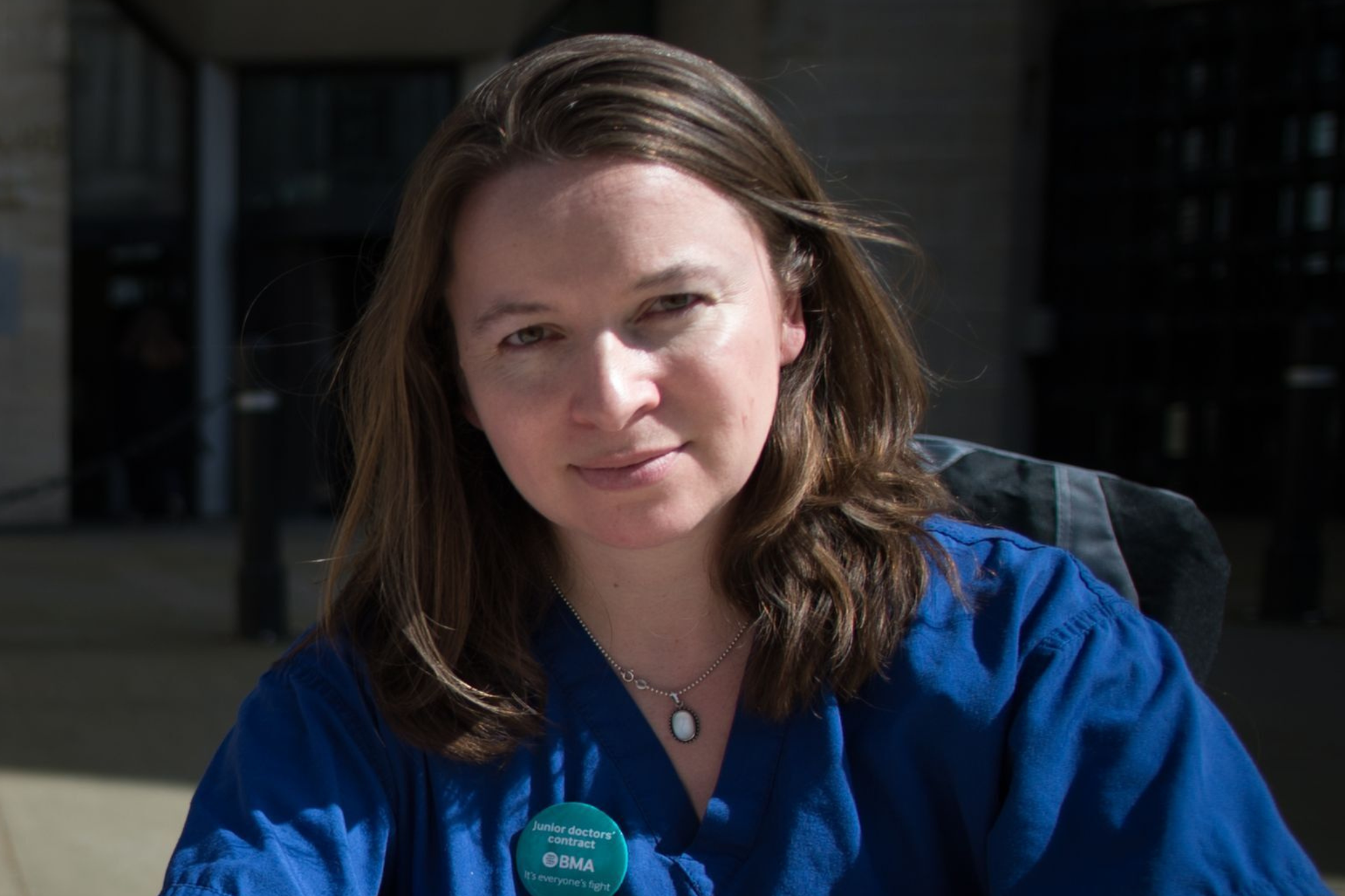
“I think it’s about trust and authenticity and what really matters to each of us as individual human beings,” she said.
“And I think with works of art, whether literary or painting or whatever the form might be, we have a bond of trust with the artist. We believe that we are experiencing something that they have created themselves that is built on the edifice of their life.”
She added that what makes a painting by Vincent Van Gough significant is that it’s related to “his life and everything he’s suffered and endured”.
“If you strip away all of that, suddenly all you’re experiencing is the product of a very clever algorithm. How does that even constitute art at all? It’s not creative, it doesn’t stem from everything this human has experienced.
“It’s nothing. It’s just a crisp packet that doesn’t even contain any crisps. It’s the emptiest, most vacuous object imaginable – and I can’t imagine there is anybody who really wants to read a book written by a computer, even if they are unable to distinguish that book.”
Last year, a Cambridge University study found that almost half of UK novelists feared AI would displace their work – and in March, the UK Society of Authors even launched a logo to identify books written by humans instead of AI.
While the use of AI within the literary sector is on the rise, Clarke said that reading a book is “entering into a relationship with an author” and without that, she’s “not even sure I know what the point of reading is”.
“I suspect that most people feel exactly the same,” she said. “The challenge is how do we now distinguish the authentic works from the AI-generated works, particularly if we have authors who are perfectly willing to lie and say that they’ve written something when it just stems from AI. I don’t have the answer to that question but I hope that some of the very clever Silicon Valley minds are focusing on that problem.”
In Clarke’s State of the Nation Lecture on Saturday (25 April), the author will argue that there’s a crisis of care in this country, and as a nation we have become “kindwashed”, with institutions preaching performative kindness.
“Kindness and empathy are qualities that are fundamentally human and what make us the remarkable species we are,” she said. “They’re under assault from all manner of different directions – from the corporate realm that tends to judge value in terms of productivity.
“The political realm – big political narratives that are dominating the headlines at the moment are about conflict, domination, Iran, Ukraine, Lebanon, Gaza. There’s also a fundamental devaluing of care, treating it as though it’s a soft, weak, feeble, optional extra rather than something profoundly important to how we live – Elon Musk loves to trash empathy as though it’s synonymous with weakness.”
Musk said last year that empathy towards undocumented immigrants was destroying society, telling podcaster Joe Rogan: “The fundamental weakness of Western civilisation is empathy.”
The NHS doctor is urging people not to “flinch away” from other people’s suffering, adding that while it’s hard to keep on caring, “the alternative is deeply corrosive to our sense of self”.
“We need to tell stories, not only about the power of care but also what an absence of care really looks like,” she said. “Life is tough for everybody at the moment – we don’t really want to consider more of other people’s suffering but actually we need to do that. We need to discipline ourselves not to give up and not to stop caring because once we do that, our indifferent makes us part of the problem.”
Rachel Clarke is giving the State of the Nation Lecture at Cambridge Literary Festival on Saturday 25 April.
You must be logged in to post a comment Login