The St Richard Gwyn Catholic High School upgrade is expected to be completed by the end of next year, with the old one completely demolished by December 2028
The Vale of Glamorgan Council has begun work to redevelop St Richard Gwyn Catholic High School – the last of Barry’s four comprehensive schools to undergo such an upgrade. The £67.5m project will see old buildings replaced. Work on the new school is expected to be completed by the end of next year, with the old one completely demolished by December 2028.
Advertisement
Back in 2020, two new school buildings were built at Pencoedtre High and Whitmore High, while Ysgol Gymraeg Bro Morgannwg has been significantly extended.
St Richard Gwyn will now be improved with work by contractor Morgan Sindall. For the biggest stories in Wales first sign up to our daily newsletter here.
The design for the school, which has 1,100+ pupils, includes quiet outdoor spaces filled with greenery, a cycle shelter and repair station to encourage pupils and staff not travel by car.
There will also be provision for children with Additional Learning Needs (ALNs), a 3G sports pitch and Multiuse Games Area which will be available to the school and wider community.
Advertisement
The school hall will feature a full sound system and lighting for performances, while the canteen will get a new snack bar added on offering light meals and drinks.
Vale of Glamorgan Council said sustainability is a key feature of the new buildings, which use eco-friendly materials and energy-efficient systems, maximising solar energy to reduce the reliance on fossil fuels.
This is in line with the council’s Project Zero commitment to become carbon neutral by 2030.
A green roof made of vegetation will help drainage and provide other ecological benefits, the council said.
Advertisement
Meanwhile, work on Ysgol Llyn Derw, a second site for Ysgol y Deri, in Cosmeston between Sully and Penarth continues. Ysgol y Deri, which shares its main site with St Cyres in Penarth, caters for pupils with special educational needs. Ysgol Llyn Derw is expected to be completed by the summer, the council confirmed.
Get daily breaking news updates on your phone by joining our WhatsApp community here. We occasionally treat members to special offers, promotions and ads from us and our partners. See our Privacy Notice
Nikos Mallios was handed a four-year prison sentence for health and safety breaches which led to the deaths of two British teens
The father of a schoolgirl who died in a Greek parasailing tragedy today (March 27) welcomed the “first steps to justice” after the boat operator was jailed.
Advertisement
Tony Hayes called it a “positive step in the right direction” after watersports boss Nikos Mallios, 57, was convicted of failings that led to the death of his daughter Jessica, 15, and Mikey Connelly, 13, the Mirror reported.
The pair died in October 2020 after Mallios took them out to sea in his speedboat despite an incoming storm. A three-member panel at the Misdemeanour Court of Rhodes was told the rope tethering them to Mr Mallios’ speedboat “detached”.
Get MEN Premium now for just £1 HERE – or get involved in our WhatsApp group by clicking HERE. And don’t miss out on our brilliant selection of newsletters HERE.
The boat pursued the parasail before it drifted into the water where eyewitnesses hoped they may be able to rescue the teens from the sea. But a “gust of wind” caught it and sent Jessica, Mikey and James crashing into rocks near Lindos, Rhodes.
Advertisement
Mallios was found guilty today of breaching health and safety laws over the tragedy and sentenced to four years in prison. He was temporarily released after indicating he would appeal.
In October he will face two more serious charges – manslaughter by serial negligence and grievous bodily harm by serial negligence – when he appears at a higher court in Kos.
But Tony, 43, welcomed the first conviction, saying: “It’s the first step on the journey to justice. Its a positive step in the right direction, one that Jess and Mikey will look down on and be proud.
Advertisement
“I am happy that a long sentence was given. However, the fight will continue and the next step is to take this to the higher court and make that sentence even longer.
“But doesn’t take away the loss. It doesn’t change the fact that Jess is not here. It doesn’t change the fact that Mikey is not here. It doesn’t change the fact that our lives have been ruined.
“We still have some distance to go. Even though the outcome moves us forward, it still doesn’t take away the emptiness that remains from the loss.”
Mallios took the stand as he finally issued an apology for the tragedy, saying: “I want to say sorry to the families.” But he denied any wrongdoing and tried to justify breaking rules forbidding triple-seat parasailing and taking kids under 14.
Advertisement
He also denied breaching guidelines by operating in bad weather and going outside of a designated watersports area.
But today the Greek justice system dismissed his denials and handed him a “significant sentence”. Tony, from Corby, Northants, said: “I look at [Mallios] and I don’t think he went out of his way to do this. He has had his life devastated as well.
“However he continues to defend some of his actions that day. I understand he feels bad and guilty but, for me, the apology would mean more if he just admitted he made a mistake. If he admitted he did something wrong.”
Advertisement
Tony went to the Greek island in 2020 with his wife Kayleigh, 39, for his father-in-law Phil’s surprise 65th birthday. The couple were on holiday with Kayleigh’s brother Phillip Connelly and wife Sharon – parents of James and Mikey. In the days before the accident, Jessica, Mikey and James played games and watched bands in the hotel.
On October 28 they booked on Mr Mallios’ boat in Lardos Bay after seeing the rides on a board in the hotel. The family said goodbye at 12.30pm on the beach outside the hotel, but never saw them again.
Rhodes Courthouse heard the rope “detached” and Mr Mallios began pursuing the parasail as “black clouds and dark skies” blew in. An eyewitnesses on the boat – who had been taken up in the air just moments earlier – said she was “relieved” when the parasail carrying the three teens started “drifting down and landed in the water”.
Advertisement
But she broke down in tears as she told the court that a “gust of wind caught the parasail”. She told the court: “We were speeding towards the children, for about two or three minutes. It had started drifting down and it landed in the water. We were relieved and thought we would be able to pull them aboard. But then a gust of wind caught the parasail and dragged it back up.”
Jessica, Mikey and James eventually crashed into the rocks at Cape Ginas, around 5km from where they left the shore. The British holidaymaker also gave evidence to say they were told they could go on an excursion but “we had to go immediately”.
She told the court: “They said we could go but we had to go immediately because a storm was coming and if we wanted to go then we had to go right now.” Other witnesses claimed they were in the water when a “terrible” storm blew in and caused the water to become “pretty choppy”.
Another witness told how his three children – aged just 12, nine, and seven – had been taken on a parasailing trip in the days leading up to the tragedy. He said he had repeatedly been told “it was the close of the season and storm was coming”. He told the court: “So if we wanted to do any watersports you needed to do it soon because it was about to close.”
Despite being at the centre of a criminal probe, Mallios was free to continue operating from the same spot where he picked up Jessica, Mikey and James. In 2022 the Mirror revealed he was taking boatload after boatload of thrillseekers out to sea on 75 Euro jaunts.
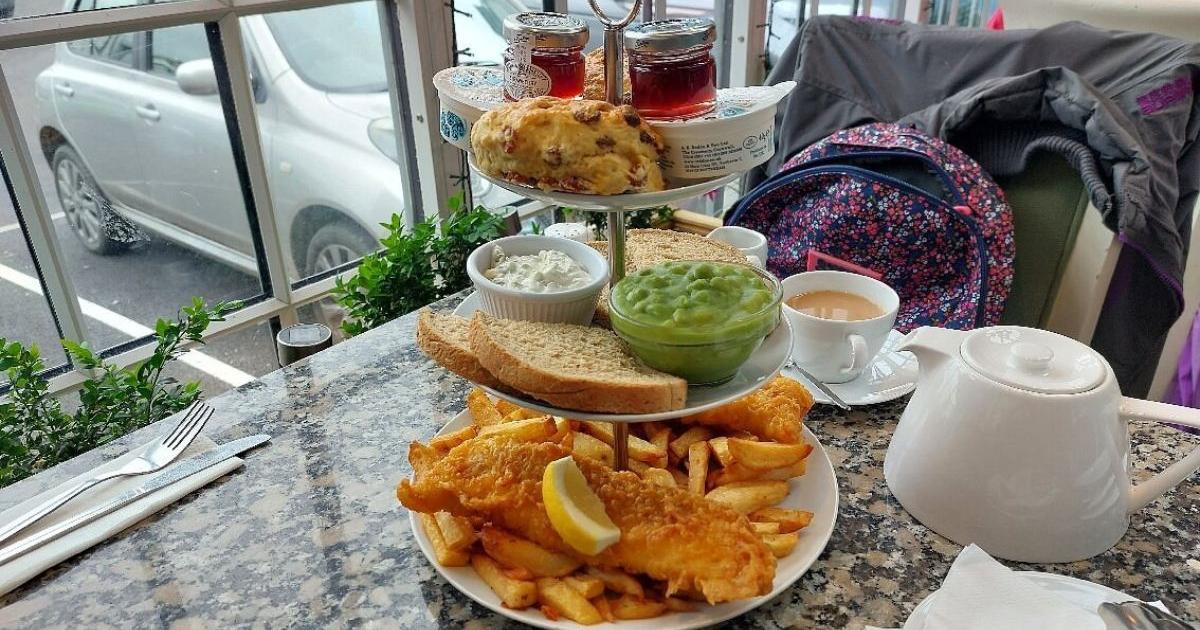
Hetty and Betty located in Whitby has mastered the craft of a British tradition “with a twist” – a fish and chips afternoon tea of course.
The foodie spot on Baxtergate has been delighting customers since 1928, which is said to make it Whitby’s “oldest” fish and chips-serving restaurant, according to its website.
It describes itself as the “perfect place” to enjoy your morning latte with breakfast or a “superb” lunch, light bites, cakes and sweet treats.
Whitby restaurant’s afternoon tea ‘with a twist’ you ‘don’t want to miss’
But what really makes Hetty and Betty stand out from the crowd is its popular fish and chips afternoon teas served in its dog-friendly restaurant.
It reveals: “Indulge in the best of British tradition with a twist here at Hetty & Betty.
Advertisement
“With a menu that blends the elegance of afternoon tea with the iconic flavours of Whitby.
“Our signature dish, the fish and chips afternoon tea is a one-of-a-kind experience you won’t want to miss.”
Local travel and food expert The Yorkshireman recently visited Hetty and Betty for a special coastal-themed afternoon tea and hailed it an “incredible creation” that “puts a spin on the Northern classic mealtime.”
Advertisement
In a video on social media, he shared: “Consisting of three tiers of fish and chip goodness, guests can tuck into a massive portion of fish and chips with mushy peas and bread, finished with the most delicious scones.
“All of course, presented on a huge cake stand.
“It’s easy to see why this is so popular here, we found the portions to be absolutely huge with massive pieces of cod served up with delicious chips, making it not only a great spot for a classic chippy tea, but one with a twist.
“The afternoon tea includes tea and coffee too.”
Advertisement
The Yorkshireman added: “They are also well known for their scones but its definitely a challenge saving room.
“If you can’t finish, you can of course take it home for later, but either way this was an amazing treat to enjoy in beautiful Whitby.”
Other customers seem equally impressed, with someone in a recent Tripadvisor review saying: “Just found it by chance, excellent service by a young lad and lady, very clean and spacious inside.
Advertisement
“We had the afternoon tea fish and chips for 2, mushy peas and bread and butter, a pot of tea, and a big cup of filter coffee, the fish was lovely and white and crispy batter, it only cost £25 altogether.
“Very good value for money, its hard to find somewhere decent these days, at a reasonable price. Thankyou.”
Another wrote: “Excellent stop for their Fish and Chip afternoon tea and it didn’t disappoint – there was so much we had to take the scones, jam and cream home for later!”
Meanwhile, this guest commented: “We were on holiday from Cornwall and came for the famous ‘Fish & Chip Afternoon Tea’ Wow, it was amazing!!
Advertisement
Hetty and Betty also offers traditional afternoon teas (Image: Tripadvisor)
“Lovely friendly staff, great atmosphere and our little dog Mollie was welcomed too.
“Highly recommended. Thanks Guys x.”
The fish and chips afternoon tea at Hetty and Betty costs £25 per person.
However, if you fancy something a little more traditional, there is always the usual afternoon teas, which include homemade scones and a glass of fizz.
Advertisement
The restaurant can accommodate dietary requirements such as gluten free or vegan, with pre-booking and 24 hours’ notice.
But that’s not all, as Hetty and Betty is often recognised for supporting local businesses.
As its website details: “We support local Whitby businesses throughout our menu.
“Our delicious fresh fish is MSC certified and delivered to us daily by local Whitby suppliers.
Advertisement
“Our potatoes are grown and delivered to us from Scarborough.
“Our bar is stocked with Whitby Brewery beers and Whitby Gins.
“In 2024 we were awarded the Yorkshire Mark for our championing of Yorkshire producers and businesses.”
Will you be heading to this restaurant for a unique fish and chips afternoon tea anytime soon? Let us know in the comments below if you have already been.
James Trafford: He looked assured on his England debut and displayed a calmness on the ball. One very good punch when a dangerous Uruguay cross came into the area. 6
Tino Livramento: He was given a chance to show what he can do at right-back after his last appearance came on the opposite side of defence. Reece James is the England number one but Livramento is a very good understudy. 6
Fikayo Tomori: The AC Milan centre-back was not tested too much but showed good recovery pace when he needed to and worked well with Harry Maguire. 6
Harry Maguire: Stepped into midfield with the ball whenever he could. One good pass to Noni Madueke in the first half. He took the armband in the second half and showed his experience at international level. A real chance to make a late charge for the World Cup squad. 7
Advertisement
Djed Spence: Provided width on the England left but not much else to do. One Uruguay counter-attack came down his side after he had pushed up the pitch. 5
Jordan Henderson: A tidy performance and not asked too many questions. Marshalled the midfield and gave instructions to the lesser experienced members of the team. 6
James Garner: The Everton man can be very happy with his first England display. A match that did not have the intensity of a competitive game but Garner did what he needed to do. He was asked to take set-pieces which is a compliment. 6
Phil Foden: A lot of effort but in a match lacking quality, he was not able to show his best. Hit with a really heavy challenge by Ronald Araujo and then replaced by Cole Palmer in the second half. Not the performance he needed to force himself into the World Cup squad. 5
Advertisement
Noni Madueke: The Arsenal winger had a nice interchange with striker Dominic Solanke and always looked positive on the ball as he tried to take on his full-back but was withdrawn after 38 minutes with an injury after a heavy challenge. 5
Marcus Rashford: Came central to receive the ball a lot as Spence provided the width on the England left. One excellent run in the first half with the ball where he carried it nearly the length of the pitch as he showed his pace. He was the one England player who looked like he could make something happen every time he got the ball. 7
Dominic Solanke: A flash of quality as he nutmegged a Uruguay midfielder before having a shot blocked on an England counter-attack early on. Good play with Madueke and shot saved in a bright first half. Replaced by Dominic Calvert-Lewin. 6
Starting on April 1 at 9pm, National Highways Limited will impose closures on the A1M.
The restrictions are scheduled to remain in place until April 13 at 7am.
Specific lane changes will occur from Junction 61 to Junction 63, with the road working hours from Tuesday to Friday and Sunday evenings from 8pm to 6am, including bank holidays.
Advertisement
These closures are part of barrier renewal works, necessitating overnight lane closures and speed restrictions.
In addition to the A1M, the A1M will also experience closures.
From March 27 at 8pm until April 1 at 7am, drivers should expect lane restrictions in both directions.
Like the A1M, this closure is part of barrier renewal efforts and will follow a similar work schedule, focusing on Monday, Tuesday, Friday and Sunday evenings.
Advertisement
Moreover, Durham Road in the vicinity of the A167 and Chilton By-pass will be closed from March 28 to March 29.
The restrictions are set to last all the time during these dates.
Road users should note that daily access will be impacted as construction work continues.
On April 5, another expected disruption arises due to the Easter Egg Run event, prompting rolling road closures across multiple streets including prestigious routes such as South Road, High Street, and various junctions of the A167 and A1M in the Durham area.
Advertisement
The closures will operate all day, as the event anticipates around 1,000 participants.
From April 1 until June 30, St Marks Court in Durham will undergo carriageway resurfacing works.
During this period, that section will be closed from Monday to Sunday between 9am and 3pm.
Further, Spencer Street in the Coundon Grange area will also see closures from April 1 to June 30.
Advertisement
Similar to other ongoing work, closures will occur daily from 9am to 3pm for resurfacing tasks.
In addition to roadworks, several immediate closures are being enforced by Northumbrian Water Limited.
On March 30, Greenlands in South Moor is set to close for drainage installation work and will remain closed until June 26.
Residents should also prepare for road closures on Coronation Terrace (Back) in Helmington Row from March 31 to April 4 for boundary box works.
Advertisement
These closures are critical for infrastructure repair, and the restrictions are set to last throughout each day until work is completed.
There’s also a planned closure on Lees Street (Side) in Stanley for sewer cleansing and CCTV survey works on March 31, which will last all day.
Following this, Northumbrian Water Limited will implement additional closures on Durham Road (Back) in Esh Winning on the same date for root removal.
Furthermore, a significant repair operation is scheduled on Hutton Terrace from April 7 to April 13.
Advertisement
Servicing and resurfacing construction will lead to a complete closure during that time, making it essential for residents to seek out alternate routes.
The authorities encourage residents to stay updated on ongoing repairs and road events through the Durham County Council website.
NEW YORK (AP) — A man accused of planning to firebomb the home of a prominent Palestinian activist has been arrested following a weekslong undercover operation led by the New York City Police Department, officials said Friday.
The target of the plot was Nerdeen Kiswani, who frequently leads protests in New York against Israel and the war in Gaza through the organization Within Our Lifetime.
Kiswani, 31, said law enforcement officials informed her late Thursday that they had disrupted “a threat on my life that was about to take place.”
Federal authorities said they arrested Alexander Heifler on Thursday at his home in Hoboken, New Jersey, as he was assembling Molotov cocktails that he planned to throw at Kiswani’s home. For weeks, he had discussed the plot with an undercover NYPD detective who had infiltrated a group chat used by Heifler, according to a police department spokesperson.
Advertisement
An official who was briefed on the investigation said Heifler, 26, identified as a member of the JDL 613 Brotherhood, a New Jersey-based group founded in 2024 that describes its membership as “Jewish warriors” fighting back against rising antisemitism.
A website for the group says they are inspired by the original Jewish Defense League, a group linked to numerous bombings and attempted assassinations of Arab American political activists in the 1970s and 1980s.
Heifler planned to flee to Israel following the attack, according to the official, who requested anonymity because they were not authorized to discuss the details of an ongoing investigation.
An email inquiry sent to the JDL 613 was not returned.
Advertisement
Kiswani, who lives in Brooklyn with her infant son and husband, said the plot would not deter her continued activism.
“I feel very blessed that they were able to thwart this, but it’s something that is a constant possibility for people who speak up on behalf of Palestine,” she said.
Heifler was charged in a criminal complaint with separate counts of making and possessing destructive devices, which each carry a maximum penalty of 10 years in prison. A message left with his attorney was not returned. He made an initial appearance in New Jersey federal court on Friday afternoon.
“Let me be clear: We will not tolerate violent extremism in our city,” New York City Mayor Zohran Mamdani said in a statement. “No one should face violence for their political beliefs or their advocacy. I am relieved that Nerdeen is safe.”
Advertisement
According to a court filing written by an FBI agent, Heifler spoke on a video call in February with a group that included an undercover detective about his interest in training for “self-defense” and wanting space where he could throw Molotov cocktails.
The next day, he met with the undercover detective in person and discussed his plan to use them against Kiswani and flee the country, according to the complaint. “We have (Kiswani’s) address,” Heifler allegedly told the undercover. “So it’s like that, that would be easier if you’d be more comfortable with that.”
Heifler and the undercover detective drove to Kiswani’s residence on March 4 to “conduct surveillance” and discussed making a dozen Molotov cocktails to throw at her home and two cars parked outside, the complaint said.
On Thursday, the undercover detective met Heifler at his Hoboken residence, where Heifler had assembled components to make the Molotov cocktails, including a large bottle of Everclear, a highly flammable alcohol, the complaint said. Law enforcement officers then executed a search warrant at the residence and recovered the eight Molotov cocktails, the complaint said.
Advertisement
Kiswani co-founded the group Within Our Lifetime, which frequently organizes protests against Israel that draw hundreds of participants and often end in arrests. The group’s calls to “abolish Zionism” and support for “all forms of struggle,” including violence, has drawn fierce criticism. Kiswani denies that her criticism of Israel amounts to antisemitism.
Kiswani has been a frequent target of online vitriol. Earlier this year, U.S. Rep. Randy Fine, a Florida Republican, sparked backlash after writing in a social media post that “the choice between dogs and Muslims is not a difficult one.” The post was a response to a message Kiswani shared about dog owners, which she said was a light joke.
“That hate against Palestinians has been bolstered by public officials, by Zionist organizations, who are never held accountable,” she said. “This is the inevitable result of that.”
The operation was carried out by the Racially and Ethnically Motivated Extremism unit within the NYPD’s counterterrorism bureau, a police spokesperson said.
Advertisement
“This is exactly how our intelligence and counterterrorism operation is designed to work — a sophisticated apparatus built to detect danger early and prevent violence before it reaches our streets,” Police Commissioner Jessica Tisch said.
___
This story has been corrected to reflect that the defendant’s first name is Alexander, not Andrew.
Around 30 percent of the new homes would be affordable housing
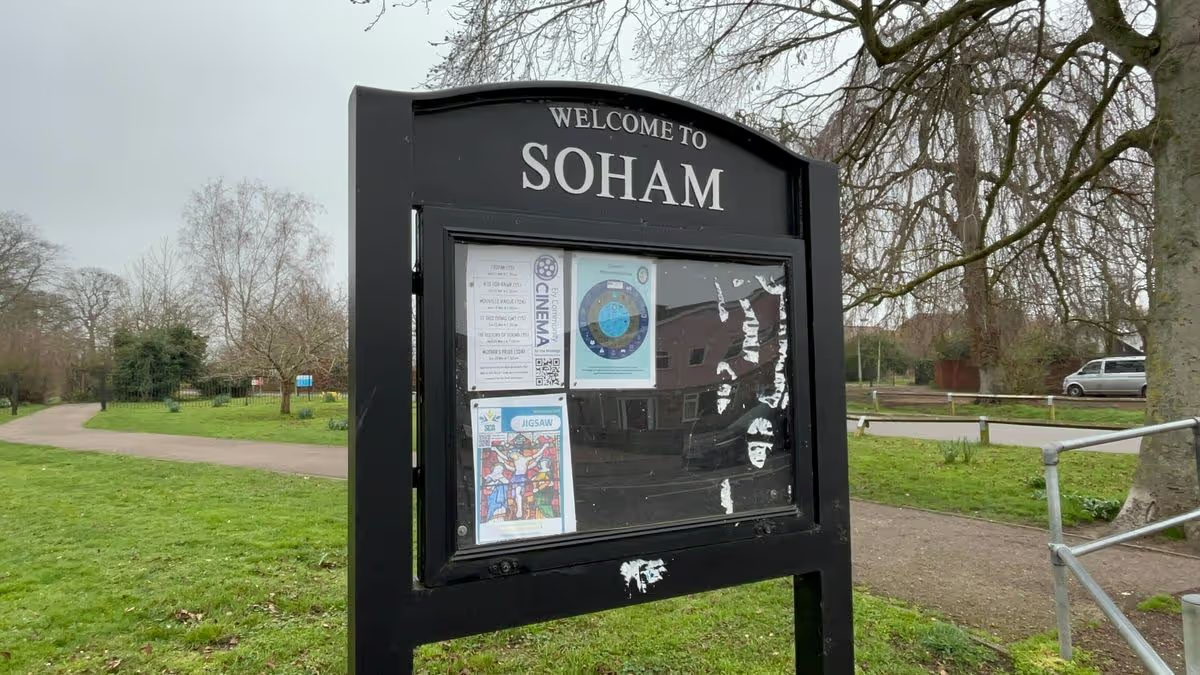
Over 200 new homes could be built in a Cambridgeshire town. Paul Day and Winnie Day want to build up to 234 homes on land to the south of Brook Street in Soham.
Advertisement
Out of the homes, 30 percent will be affordable. There are also proposals for a new footbridge, parking, new roads, a public open space, landscaping and other associated works.
The site extends to around 16 hectares. It’s situated between Brook Street and Soham Lode. The applicants said this development will play an “important role in mediating between the existing built-up edge of the town and the open landscape beyond”.
The plans added: “The settlement pattern surrounding the site is mixed in age and form, and the design of the new neighbourhood needs to respond to this grain, creating a logical and well-integrated extension to Soham.”
The housing is proposed to not be on flood risk land. However, a detailed pre-application has been undertaken with the Environment Agency to “better inform” about the flood risk.
Advertisement
Despite being a scoping opinion planning application, some concerns have been raised by companies. Cadent Gas said the homes “may affect different public rights of way”.
It requested that the application must “clearly identify all individual public rights of way which are affected”, and asked it include a rights of way mitigation strategy. The applicants said a detailed transport assessment will be submitted with the next application.
After “lengthy pre-application discussions” with Cambridgeshire County Council, the assessment will be considered to ensure that “all junction capacity and traffic movements” have been considered.
A friend of the gang-rape victim who died by euthanasia turned up at the Spanish hospital an hour before her death, hoping to convince her to live.
Warning: This article contains distressing content.
Noelia Castillo Ramos, 25, died by euthanasia in the Barcelona care facility where she lived on Thursday evening.
She was raped on two occasions, once by her ex-boyfriend and the second time by three boys in 2022, after which she jumped from the fifth-floor window of an apartment building in an attempt to end her own life.
Advertisement
The fall left her paralysed from the waist down, and she was suffering severe, chronic and incapacitating pain with no possibility of improvement, according to her medical records.
Noelia requested euthanasia in 2024, but her father blocked the procedure, taking the case all the way to the European Court of Human Rights, where it was rejected earlier this month.
Image: A group of people protested at the entrance of the care facility where Noelia was euthanised. Pic: Europa Press/AP
The euthanasia was scheduled for 5pm on Thursday. An hour before, Carla Rodriguez, who said she was Noelia’s best friend, arrived at the residential care hospital in Barcelona and asked to see Noelia, hoping to change her mind.
Advertisement
A cordon had been set up to prevent dozens of people who came to protest Noelia’s euthanasia from accessing the facility and disrupting the procedure. Security personnel also denied her friend access.
“I wanted to try to convince her to change her mind,” Ms Rodriguez tearfully told Spanish outlet Okdiario.
Ms Rodriguez said she and Noelia grew up together and used to be classmates at a local school. They lost touch “when Noelia was transferred to a different care facility”.
She learned about Noelia’s decision to die in the news and hoped to convince her friend to live by telling her about the “wave of affection and solidarity” on social media, where many commented on Noelia’s case.
“Noelia has been through so much,” Ms Rodriguez said, breaking down in tears. She left a handwritten letter for Noelia’s mother, asking to see her friend and offering support.
Advertisement
‘I want to die alone’
Noelia had told Spanish TV programme Y Ahora Sonsoles in her only interview that she wanted to be alone at the moment of her death.
“I’ve told them that family can come to say goodbye, but not when they’re about to give me the injection,” she said.
She also voiced her wish to “die looking pretty, I want to die beautiful”, adding that she would wear her prettiest dress and put on some makeup.
Advertisement
Image: Several people were seen praying outside the care home where Noelia died. Pic: Europa Press/AP
Noelia intended to have four photos with her for her death: one of her painting a portrait of her mother, one of her childhood puppy, another from her first day of school and a fourth from her childhood, which she said reflected “happy” moments in her life.
“I want to go now in peace and stop suffering, period,” she said as she explained that she had been “very clear” about her wish to die from the beginning
While her mother, Yolanda “Yoli” Ramos, told the Spanish broadcaster earlier this week that she hoped her daughter would change her mind, she promised to be by her side “until the very end”.
Noelia had been in psychiatric treatment since she was 13, when her parents separated. She was eventually diagnosed with obsessive-compulsive disorder (OCD) and borderline personality disorder (BPD).
Her father witnessed her attempt to take her own life in October 2022, but Noelia said she didn’t “feel sorry for him anymore” after he launched a legal challenge to stop her euthanasia.
Advertisement
Noelia’s father fought euthanasia for two years
Her euthanasia request was initially granted by a specialised expert committee in Catalonia in July 2024, with the procedure scheduled for 2 August 2024, but her father has blocked it ever since.
Legalised euthanasia and assisted suicide in Spain
In 2021, Spain became the fourth European Union country to legalise euthanasia and assisted suicide for people with incurable or severely debilitating conditions.
Advertisement
The law was passed despite years of strong opposition from Catholic and conservative groups in the country.
However, an opinion poll in 2019 found 90% of Spaniards were in favour of decriminalisation.
To qualify, patients must first make two requests in writing – 15 days apart – followed by consultations with medical professionals not previously involved in their care.
If approved, those wanting to end their lives must then submit another request to a regional committee of experts who then make a final decision.
Advertisement
Under the law, medical workers can refuse to participate on grounds of belief.
Geronimo Castillo, supported by the ultra-conservative advocacy group Abogados Cristianos or Christian Lawyers, argued that Noelia’s mental illness impaired her ability to decide to end her life.
During a nearly two-year-long legal battle, he took the case through Spain’s courts until the highest tribunal rejected his argument in February. Mr Castillo appealed to the European Court of Human Rights, where his request for interim measures to stop Noelia’s euthanasia was rejected on 10 March, according to newspaper El Pais.
Advertisement
Image: Two women pray at the entrance of the Sant Camil hospital ahead of Noelia’s euthanasia. Pic: AP
As a last-ditch effort, his legal team on Wednesday asked an investigating court looking into Noelia’s medical-legal team to introduce “urgent precautionary measures” to stop her euthanasia, but a judge rejected the request due to a lack of jurisdiction.
Members of the Christian Lawyers advocacy group were among those who protested Noelia’s euthanasia outside the facility.
Anyone feeling emotionally distressed or suicidal can call Samaritans for help on 116 123 or email jo@samaritans.org in the UK.
Alternatively, you can call Mind’s support line on 0300 102 1234, or NHS on 111.
In the US, call the Samaritans branch in your area or 1 (800) 273-TALK.
The event will be held at The Story on April 2 from 6pm to 7pm and will focus on records of births, deaths, and marriages and their role in local and national history.
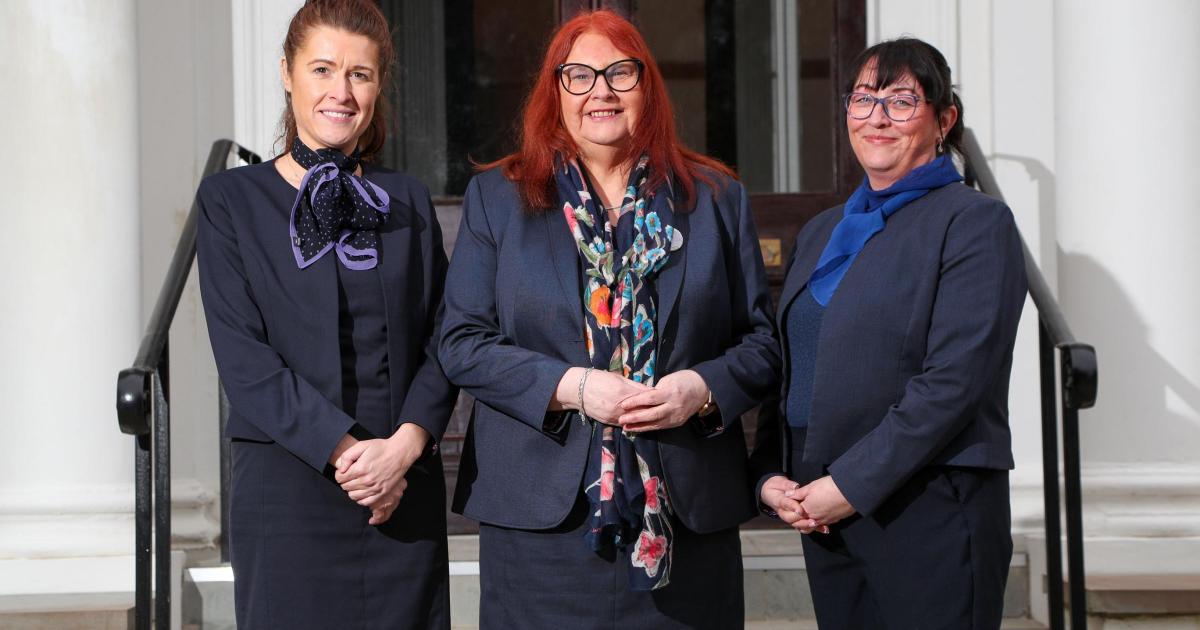
Anne Robson, superintendent registrar with more than 40 years of experience, will deliver the talk alongside ceremony coordination team leader Wendy Addison-Smyth.
Carolyn Ball, county archivist and manager at The Story, said: “With more than 40 years’ experience working as one of our registrars, Anne has seen people through some of the biggest changes of their lives, whether that be marrying the love of their life and celebrating the arrival of their children, or registering the loss of a loved one.
Advertisement
“Together, Anne and Wendy will be able to share some fascinating stories from the history of our registration documents.
“They’ll also have both original historic and modern registers on display for visitors to explore, making for an educational and enlightening evening.”
The talk will cover the origins of registration in 1837.
It will also highlight the role of registrars in capturing important life events and notable stories.
Advertisement
It will also include references to events such as the birth of former England football manager Sir Bobby Robson and the deaths of Mary Ann Cotton’s victims.
A selection of original registers will be on display during the evening.
Tickets cost £5 and include refreshments.
They are available to book through www.thestorydurham.org/whats-on.
The Scarlets were far better than the 36-19 scoreline in Dublin would suggest
21:47, 27 Mar 2026
Advertisement
The Scarlets gave a good account of themselves against a strong Leinster side, going down 36-19 to the defending champions in Dublin.
The Irish province were rusty for much of the evening, but the final scoreline perhaps didn’t reflect just how many problems the Scarlets caused the home side in the first-half. Coming away from Ireland empty-handed seemed cruel on Nigel Davies’ side, with a bonus point agonisingly out of reach.
Having billed this one as an international Test in the week, the early exchanges suggested that Leinster’s international stars might win at a canter.
However, the Scarlets pack took umbrage to that – with captain Fletcher Anderson narrowly denied an opening try as they took the fight to the home side.
Advertisement
As the Irish province’s discipline faltered, the Scarlets were on top. However, it appeared they would have little to show for it.
Yet, towards the end of the first quarter, they finally got their reward.
On a penalty advantage, Johnny Williams somehow put delicately grubbered through for centre partner Joe Roberts to score.
It was a double-whammy for the Scarlets, with Leinster finally receiving a yellow card in the process – with Brian Deeny sent to the sin-bin.
Advertisement
With confidence growing, the Scarlets started to push the envelope – throwing offloads and keeping the ball alive.
In the end, they probably pushed the pace a little too much – with try-scorer Roberts yellow-carded for a deliberate knock-on.
The Scarlets continued to shoot themselves in the foot, with Jarrod Taylor joining Roberts on the sideline after a daft yellow card for some cynical play at the breakdown.
With it now 15 against 13, Leinster took advantage immediately – with Garry Ringrose crossing.
Advertisement
With the Irish province having been played back into the match thanks to Scarlets’ indiscipline, the defending champions didn’t need a second invitation to move ahead.
Their next clearcut chance resulted in a second score – with wing Joshua Kenny diving over to hand Leinster the lead at the break.
All the effort of the first-half was wiped out within five minutes of the restart.
A relentless attacking set saw Tommy O’Brien cross out wide, before the wing went over for a second moments later after a lost Scarlets lineout.
Advertisement
The west Walians continued to plug away though, with a Leinster knock-on curtailing one particular attack..
While that ended with a scrum instead of a penalty, the Scarlets still capitalised. Fletcher Anderson carried well from the base, before the ball was spread out to Tom Rogers on the wing to score.
The comeback was short-lived, though. Max Deegan was deemed to have been held-up in the on-field decision, but the TMO overturned the call to award Leinster their fifth try.
The Scarlets continued to play – with Archie Hughes’ snipe finished off by second-row Max Douglas.
Advertisement
Leinster would score again, with Kenny grabbing his second out wide.
Centre Williams looked set to seal a four-try bonus point after a delightful offload by Anderson, but he was dragged down just short.
Here’s how the Scarlets players rated…
15. Blair Murray – 7
Advertisement
Always a running threat from deep. When the Scarlets pushed the pace, he looked electric. One particular carry in the second-half showed just elusive he can be.
Lovely long pass for the Scarlets’ second try.
14. Tom Rogers – 7
Dealt with a kick behind well early on, before winning a jackal penalty after Leinster tried to run it from deep. Try was a walk-in, but deserved.
Advertisement
One of his last acts, hobbling off after an hour.
13. Joe Roberts – 8
Scarlets used him as an option on the right wing for kick-passes early on and got some good change out of it. Deserved his early try. A willing and varied carrier.
Sin-binned for a deliberate knock-on as Leinster countered – a bit unlucky on that front, as Garry Ringrose looked to be offside in the build-up to the turnover. Even with the card, maybe the pick of the Scarlets’ backs.
Advertisement
12. Johnny Williams – 7
Nice chop tackle for Rogers’ jackal penalty. Crucial to the Scarlets’ early efforts with his distribution skills. Delightful kick for the Scarlets’ first. Offloads started to flow freely as the confidence grew.
Influence probably waned as Leinster took hold. Unlucky not to score at the end.
11. Ellis Mee – 6
Advertisement
Some strong takes in the air and some good touches. Replaced after 36 minutes.
10. Joe Hawkins – 7
Pulled the strings nicely when the Scarlets were on top, with his kicking finding space out wide. Decent outing at fly-half, given he hasn’t started there in two-and-a-half months.
9. Dane Blacker – 6
Advertisement
Few loose kicks and nervy moments. But, on the whole, got his forwards causing problems around the fringes with sharp delivery.
1. Kemsley Mathias – 7
Strong carrying performance from the loosehead. Got through a similar number of tackles. Scrum, by and large, was solid enough as he went over an hour.
2. Harry Thomas – 6
Advertisement
If you thought the young hooker would be overawed against this Leinster team in his second league start, you never heard him speak after Wales U20s toppled England last year.
Cares little for favourites tags and plays like it. However, while he’s a fearless young talent, the lineout did falter at times.
3. Henry Thomas – 6
Brought into the starting side at late notice. Scrum held up well until it was driven off its own feed just before half-time. But solid enough.
Advertisement
4. Sam Lousi – 7
Quietly effective throughout. Loved it early on when the Scarlets pushed the offload button. Denied a jackal turnover late on with an odd officiating call.
5. Max Douglas – 8
Good early hit to force a turnover in his own 22. Some strong hits and carries. Probably a bit too ambitious going for a strip on Dan Sheehan – with the hooker wriggling free to set up Tommy O’Brien’s score.
Advertisement
Deserved his score.
6. Jarrod Taylor – 7
A daft yellow that signalled the end of the Scarlets’ early dominance. Frustrating as he was pretty good beyond that silly moment, getting through a fair bit of work.
7. Dan Davis – 7
Advertisement
Big breakdown turnover in the Leinster 22. Industrious shift both sides of the ball.
8. Fletcher Anderson – 9
Just a relentless carrier. Makes three metres where most would make one. Then does it again and again. Over 20 carries on the night and double figures for tackles too.
Unreal interception on his own line when Leinster looked likely to score. Denied a try by the finest of margins.
Advertisement
Just playing a different game at times. Even in a losing cause, he was probably the best player on the pitch.
You wouldn’t be surprised to learn he was driving the team bus in Dublin as well.
Replacements:
16. George Roberts – 5
Advertisement
The Dragons hooker – having joined on loan this week – was denied a try soon after coming on, being held up over the line. Blotted his copybook by taking out Jamison Gibson-Park in the air after his lineout was picked off.
Improved as he went on, as you’d expect after being parachuted in.
17. Sam O’Connor – 5
Scrum coughed up a free-kick following his introduction.
Advertisement
18. Harri O’Connor – 5
Came into the squad at very late notice – hence the number ’39’ on his back. Held up the scrum long enough for the Scarlets to score their second.
19. Jake Ball – N/A
On for the final few minutes. No real chance to make an impression.
Advertisement
20. Tristan Davies – 6
On for the final 10 minutes. Got involved nicely in that time.
21. Archie Hughes – 6
Delivery was a little stilted at times. But eye for the gap created Douglas’ score.
Advertisement
22. Ioan Jones – 5
Brought on for Rogers. Little opportunity to do much.
23. Macs Page – 5
Brushed off early in the second-half at the start of the set that resulted in Leinster’s third try. Few opportunities with ball in hand.
The crash happened at around 2pm local time in the same town in which Woods lives.
21:20, 27 Mar 2026Updated 21:27, 27 Mar 2026
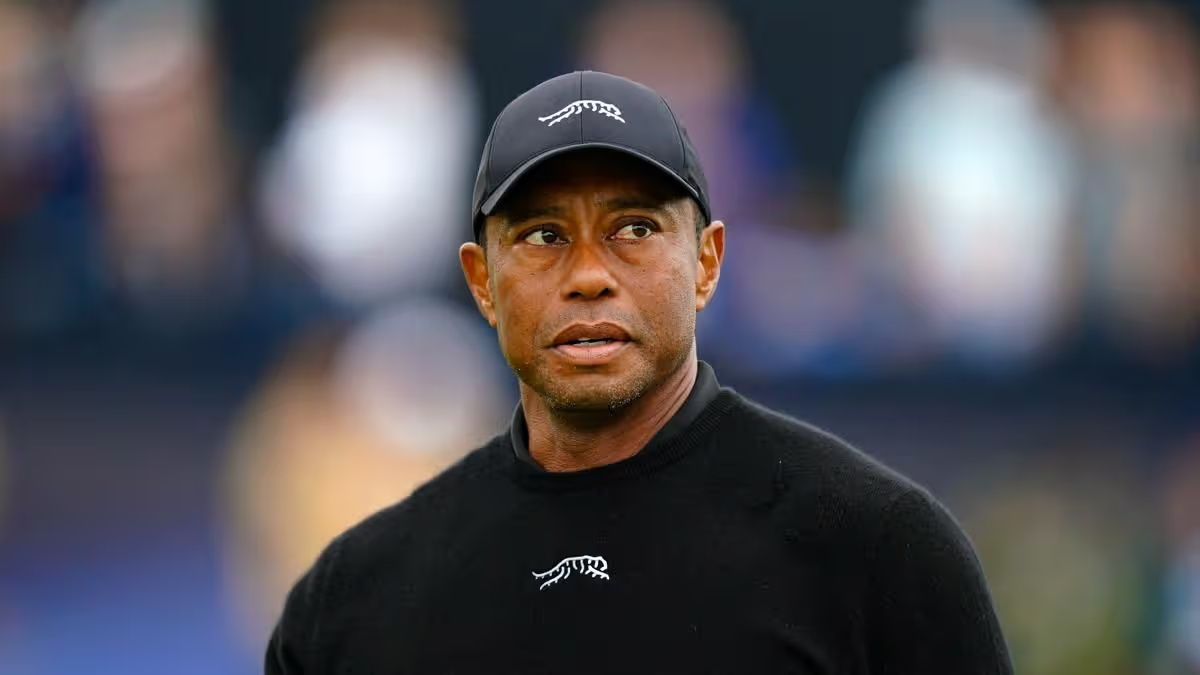
Tiger Woods has been charged with driving under the influence, property damage and refusal to submit to a lawful test after being involved in a car crash in Florida, Sheriff John Budensiek from the Martin County Sheriff’s Office has said.
The crash happened at around 2pm local time in the same town in which Woods lives. The golf star will remain in custody for at least eight hours from his arrest.
Sheriff John Budensiek of the Martin County Sheriff’s Office in Florida said: “He was cooperative, but he did not want to incriminate himself.”
Advertisement
The 50-year-old crawled out of the passenger door of his vehicle after his car landed on the driver’s side. Woods emerged from the incident without injury and had been trying to overtake ‘at a high rate of speed’.
Woods was taken to the Martin County jail after appearing ‘impaired’. He refused a urine test, with officials on the scene believing he was under the effects of ‘some type of medication or drug’.
The Sheriff believes it is fortunate that no vehicle had been travelling in the opposite direct at the time. “Had there been someone moving in the opposite direction, we would not be having a conversation saying there was no injuries,” he said. “This could’ve been a lot worse.”
Advertisement
Hours before the crash, it had been reported that Woods had officially put himself forward for the 46th US Senior Open in July. Though a USGA spokesperson said that the golf icon “will not make a decision about playing until a later date”
They added that the 50-year-old had entered the championship “simply to ensure eligibility”.
Woods is in the midst of a comeback, having not played on the PGA Tour since July 2024. Earlier in March, he did not rule out the possibility of attending the Masters.
“It [the body] doesn’t recover like it did when it was 24, 25. It doesn’t mean I’m not trying [to return]. I’ve been trying for a while. I’ve had a couple bad injuries here over the past years that I’ve had to fight through and it’s taken some time.
Advertisement
“I keep trying. I want to play. I love the tournament. I’ve loved being there since I was 19 years old. It’s meant a lot to me and my family over the years. I’m going to be there either way with The Loop that’s going up there, as well as the Champions Dinner.”
“I don’t know, we’ll see how it goes,” he added. “I’ll be practising, playing at home this week and keep trying to make progress.”
US president Donald Trump called Woods as a “very close friend of mine” when asked about the incident. “I feel so badly,” he said. “He’s got some difficulty. There was an accident, and that’s all I know.“Very close friend of mine. He’s an amazing person. Amazing man. But, some difficulty. I don’t want to talk about it.”
Get more Daily Record exclusives by signing up for free to Google’s preferred sources. Click HERE.














































You must be logged in to post a comment Login