Connect with us
DAPA Banner

NewsBeat

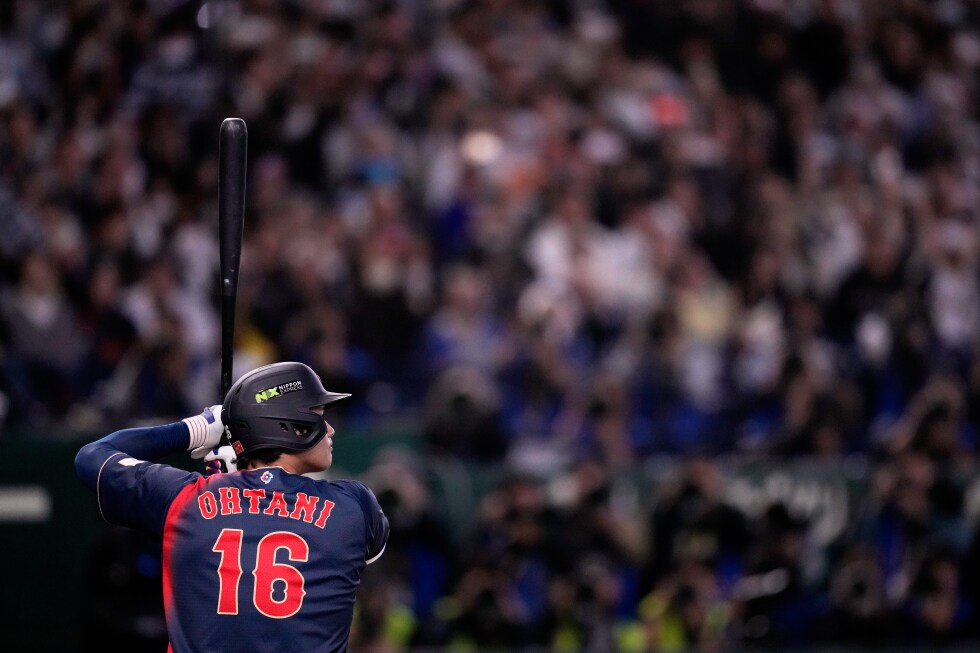
Ohtani hits a grand slam at the World Baseball Classic after putting on a show in BP

Published

on

Ohtani hits a grand slam at the World Baseball Classic after putting on a show in BP

TOKYO (AP) — This is the Shohei Ohtani effect.

Ohtani put on a giant show in batting practice hours before he hit a grand slam in the second inning — in the first he doubled on the first pitch of the game but didn’t score — as Japan hammered Taiwan 13-0 in Pool C at the World Baseball Classic.

It was Japan’s first game of four in pool play.

Ohtani drew major Western star power to Japan for the game, with actor Timothée Chalamet and pop singer Bad Bunny in the stands.

Advertisement

Ohtani spoke to the crowd after the game.

“I knew it was going to leave the park right away after I hit it,” Ohtani said of his grand slam. “It’s important to score first.”

Bowing and tipping his cap, Ohtani thanked the fans.

“It was a good game and we got off to a good start, so I think it was all because of your support,” he said to rising applause as he spoke in Japanese. “I think the battles will continue, but if the fans and the team can come together and cheer it will encourage us. So please support us.”

Advertisement

Starting and winning pitcher Yoshinobu Yamamoto also, of course, credited Ohtani in a post-game press conference away from the field.

“This was our first game of the tournament and to score the first run is always difficult,” he said. “But Shohei hit a huge home run to give us the momentum. So I tip my cap to him.”

An early show in BP

Ohtani’s batting practice thrilled many who had traveled from afar to see him.

Lia Chan and her husband How and other family members flew in from Singapore — about a seven-hour flight to Tokyo — just to watch Ohtani play in the World Baseball Classic.

Advertisement

“And baseball is not even popular in Singapore,” said Lia, who was seated a few rows behind home plate. “We know about baseball, we watch it, but when Ohtani came along it’s just gone out of proportions.”

Lia, her husband and other Singaporeans in their group were among some 40,000 in the stadium oohing-and-aahing on Friday, and this was only for batting practice hours before the second Pool C game.

Ohtani knows about drama.

He kept the crowd waiting for perhaps 30 minutes as other Japanese players practiced and hundreds of reporters with cameras, phones and tripods milled around in a penned-off area on the field.

Advertisement

Finally, Ohtani emerged from the dugout and waited his turn around the batting cage, hugged a few players, made small talk, and greeted some fans in an area for sponsors.

Fans in the stands stood to get a better look. But they were asked to sit down by attendants holding signs in Japanese and English that read: “Please watch from your seats.”

Ohtani took about 25 swings, hit about 10 balls out of the park and another few against the outfield wall.

When batting practice ended, he jogged out to thank the batting practice pitcher, bowed slightly, and gathered a few loose balls and tossed them into the hopper. Then with a bat in each hand, he trotted off the field to prepare for the game against Taiwan.

Advertisement

“Who does things like that?” Lia said. “He’s in another league.”

___

AP MLB: https://apnews.com/hub/mlb

Advertisement

Source link

Continue Reading
Click to comment

You must be logged in to post a comment Login

Leave a Reply

NewsBeat

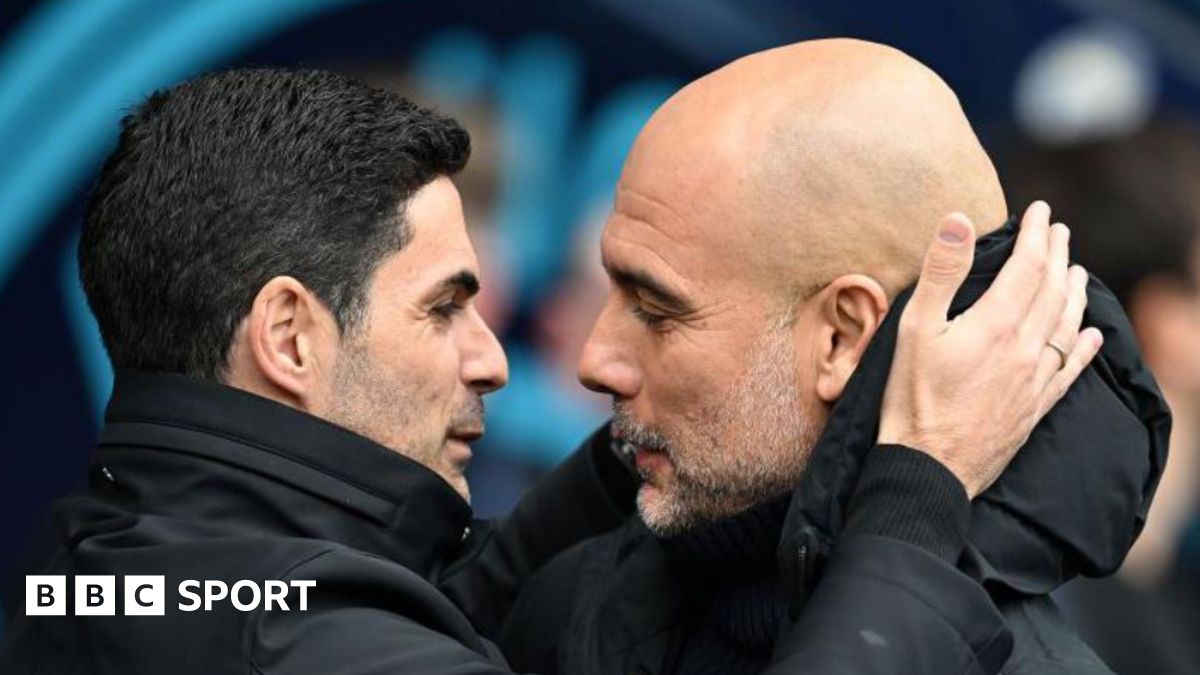
Man City vs Arsenal: The evolution of Pep Guardiola and Mikel Arteta – both as managers and friends

Published

on

BBC Sport Guillem Balague column graphic

While Arsenal learned to compete at the highest level, Guardiola continued to evolve.

That tension – between adapting and remaining faithful to an idea – defines the 55-year-old’s career.

“He starts incorporating new concepts,” said Segura. “Above all defensive transition, that’s where he evolves enormously.

“Arteta incorporated more physical profiles than Pep. Pep seeks more technical players… Arteta looks for strength, speed, power.”

Advertisement

But there are still plenty of points of convergence.

“Both have looked for pieces to improve the offensive transition,” added Segura. “City with [Erling] Haaland… Arteta with [Viktor] Gyokeres.”

There is an element where the comparison becomes most revealing. In elite football, what defines coaches is how they respond to difficulty.

Arteta is in that moment now. He has built a team capable of competing with the best. But the final step – winning consistently at the very top – is where he wants to get to.

Advertisement

When results do not follow, the temptation is always the same; change and react to external pressure. Arteta has not abandoned those ideas. He has doubled down. He has asked more of his players, pushed harder but within the same framework.

In elite sport, losing is considered part of the process. The next step is evolving and trying again with the same effort, or more.

Guardiola has lived that cycle repeatedly. After setbacks, after criticism, he has returned to his principles and expanded them.

Former Burnley, Everton and Nottingham Forest boss Sean Dyche has witnessed that resilience up close.

Advertisement

“In difficult times, Pep didn’t panic,” he said. “He adjusted, but he stayed true to what he believes.

“I think it’s brilliant management from Pep, and Arteta… they have tried to win a certain way, but they have also evolved to play in ways that we knew before.”

There is another layer to the challenge Arteta faces, one created, in part, by Guardiola himself.

“The biggest shift in football now is that winning isn’t enough anymore,” added Dyche. “People ask how you win.”

Advertisement

Guardiola changed expectations.

So now Arsenal, despite their development, are judged on results of course, but also on perception.

Source link

Advertisement
Continue Reading

NewsBeat

Trump optimistic about Iran war as Lebanon truce takes effect

Published

on

Trump optimistic about Iran war as Lebanon truce takes effect

BEIRUT (AP) — A 10-day truce appeared to be holding in Lebanon early Friday, promising a pause in fighting between Israel and the Hezbollah militant group and possibly clearing one major obstacle to a deal between Iran and the United States and Israel to end weeks of devastating war.

But it remained unclear whether Israel would completely stop strikes on Hezbollah, and whether the militant group would recognize a deal it did not play a role in negotiating and which will leave Israeli troops occupying a stretch of southern Lebanon.

Barrages of gunshots rang out across Beirut as residents fired into the air just after midnight to celebrate the beginning of the truce, and displaced families began moving toward southern Lebanon and Beirut’s southern suburbs despite warnings by officials not to attempt to return to their homes until it became clear whether the ceasefire would hold.

U.S. President Donald Trump heralded the deal a “historic day for Lebanon,” even as he expressed confidence that the war with Iran would soon end in a Las Vegas speech.

Advertisement

“I will say the war in Iran is going along swimmingly,” Trump said. “It should be ending pretty soon.”

An end to Israel’s war with Hezbollah was a key demand of Iranian negotiators, who previously accused Israel of breaking the current ceasefire deal with strikes on Lebanon. Israel said that deal did not cover Lebanon.

Pakistan’s army chief met Thursday with Iran’s parliament speaker as part of international efforts to press for an extension of the ceasefire.

While oil prices fell on hopes of a deal, the head of the International Energy Agency warned that energy shocks could get worse if the Strait of Hormuz doesn’t reopen soon. Iran closed the crucial waterway, through which a fifth of the world’s oil normally passes, shortly after the war began. Europe has “maybe six weeks or so” of jet fuel left and broader economic consequences will grow the longer the strait is closed, IEA Executive Director Fatih Birol told The Associated Press on Thursday.

Advertisement

The leaders of France and the U.K. will gather dozens of countries — but not the United States — on Friday to push forward plans to reopen the strait.

The fighting has killed at least 3,000 people in Iran, more than 2,100 in Lebanon, 23 in Israel and more than a dozen in Gulf Arab states. Thirteen U.S. service members have also been killed.

Israel says it will keep troops in Lebanon

Earlier, Israeli Prime Minister Benjamin Netanyahu said he agreed to the ceasefire “to advance” peace efforts with Lebanon, but he said Israeli troops would not withdraw.

Israeli forces have engaged in fierce battles with Hezbollah in the border area as they pushed into southern Lebanon to create what officials have called a “security zone.” Netanyahu, in his video address, said it will extend 10 kilometers (6 miles) into Lebanon.

“That is where we are, and we are not leaving,” he said.

Hezbollah has said that Lebanese people have “the right to resist” Israeli occupation of their land and that their actions “will be determined based on how developments unfold.”

Advertisement

The U.S. State Department said that according to the agreement, Israel reserves the right to defend itself “at any time, against planned, imminent or ongoing attacks.” But otherwise, Israel “will not carry out any offensive military operations against Lebanese targets, including civilian, military, and other state targets.”

Trump announced the agreement as a ceasefire between Israel and Lebanon, but a Hezbollah official said the ceasefire was a result of negotiations between the U.S. and Iran. The official spoke on condition of anonymity because he was not authorized to speak publicly.

Israel and Hezbollah have fought several wars and have been fighting on and off since the day after the start of the Gaza war. Israel and Lebanon reached a deal to end that war in November 2024, but Israel has kept up near-daily strikes in what it says is an effort to prevent the Iran-backed militant group from regrouping. That escalated into another invasion after Hezbollah again began firing missiles at Israel in response to its war on Iran.

Flurry of diplomacy led up to Lebanon ceasefire

The agreement came after a meeting between Israel’s and Lebanon’s ambassadors in Washington and a flurry of subsequent phone calls from Trump and Secretary of State Marco Rubio, according to a White House official.

Advertisement

They were the first direct diplomatic talks between the two countries in decades. Hezbollah had opposed direct talks between Lebanon and Israel.

Trump spoke Wednesday evening with Netanyahu, who agreed to a ceasefire with certain terms, according to the official, who was not authorized to comment publicly and spoke on condition of anonymity.

Rubio then called Lebanon’s president, Joseph Aoun, who got on board. Trump then spoke with Aoun, and again with Netanyahu.

The State Department worked with both governments to formulate a memorandum of understanding for the truce.

Advertisement

Pakistan army chief meets with Iranian parliament speaker

Pakistan’s army chief met Thursday with Iran’s parliament speaker as part of efforts to press for an extension to a ceasefire that has paused almost seven weeks of war between Israel, the U.S. and Iran.

Even as the U.S. blockade on Iranian ports and renewed Iranian threats strained the ceasefire, regional officials reported progress, telling AP the United States and Iran had an “in-principle agreement” to extend it to allow for more diplomacy. They spoke on condition of anonymity to discuss sensitive negotiations.

Mediators are pushing for a compromise on three main sticking points: Iran’s nuclear program, the Strait of Hormuz and compensation for wartime damages, according to a regional official involved in the mediation efforts.

Trump suggested the ceasefire could be extended.

Advertisement

“If we’re close to a deal, would I extend?” Trump said in an exchange with reporters. “Yeah, I would do that.”

___

Lidman reported from Tel Aviv, Israel. AP journalists Matthew Lee and Ben Finley in Washington, Samy Magdy in Cairo and Munir Ahmed in Islamabad contributed to this report.

Advertisement

Source link

Continue Reading

NewsBeat

WWE Hall of Fame 2026: UK start time, where to watch and who are the inductees

Published

on

WWE Hall of Fame 2026: UK start time, where to watch and who are the inductees
Wrestlemania is finally here! (Picture: Andrew Timms/WWE via Getty Images)

WrestleMania week is here, and it’s almost time for the 2026 WWE Hall of Fame induction ceremony.

Metro is already on the ground in Las Vegas with fans looking forward to seeing the likes of Oba Femi, CM Punk, Cody Rhodes, Rhea Ripley and more in action, but there are a couple more stops before the Showcase of the Immortals lands in Sin City.

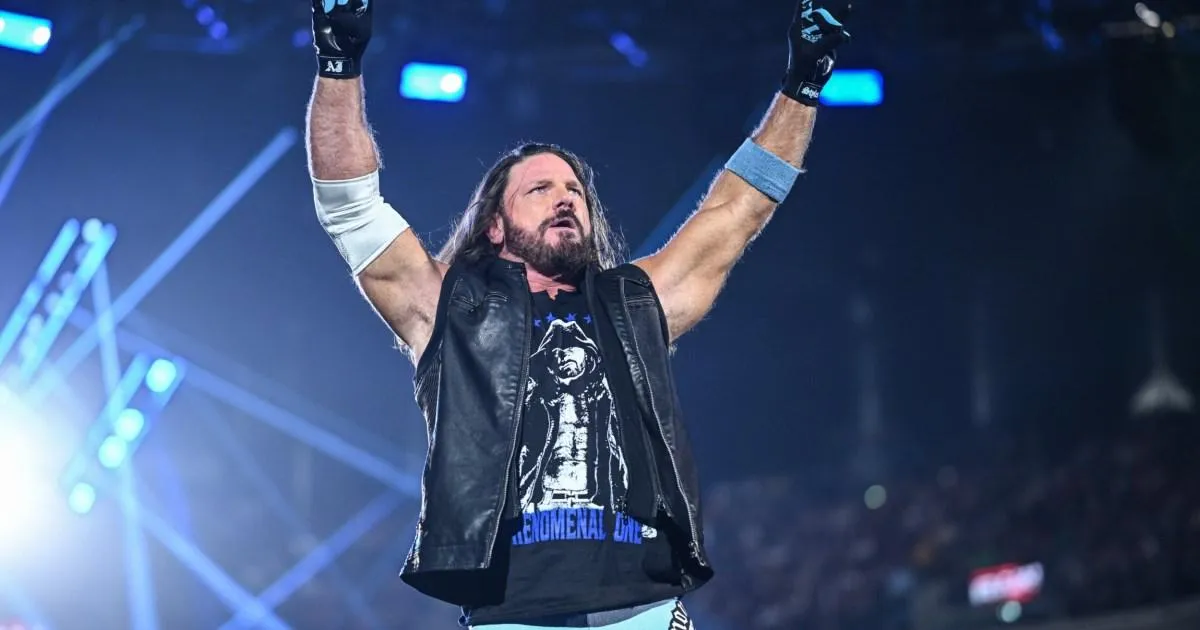
Every year, the company honours legends of the past to truly kick off the festivities, and this year’s class looks to be a special one with the likes of Stephanie McMahon and AJ Styles getting recognised.

Although it used to be a standalone event a couple of nights before, more recently, the ceremony has been held after SmackDown, and this is set to continue.

Advertisement

We’re still waiting to find out exactly who will induct each legend, but The Undertaker appears set to honour McMahon, while John Cena is hosting WrestleMania 42 and would be a perfect fit for Styles.

Here’s everything you need to know.

NEW HAVEN, CONNECTICUT- NOVEMBER 18: The Undertaker walks to the ring during Monday Night RAW at the New Haven Civic Center on November 18, 1996 in New Haven, Connecticut. (Photo by WWE/WWE via Getty Images)
You’ll have to be up at the crack of dawn to watch the show live (Picture: WWE/WWE via Getty Images)

When is WWE Hall of Fame 2026?

The 2026 WWE Hall of Fame ceremony airs Saturday morning, April 18 at 5am for fans in the UK.

Once again, the event will be held after SmackDown, but it won’t be returning to Fontainebleau Las Vegas.

This time, it’s being moved to Dolby Live at Park MGM, which is just across the road from where SmackDown will take place at the T-Mobile Arena.

Advertisement

Where can you watch WWE Hall of Fame 2026?

Fans in the UK can tune into the 2026 Hall of Fame induction ceremony either live or on demand for free via YouTube. Simply click the link here.

PHILADELPHIA, PENNSYLVANIA - APRIL 07: Stephanie McMahon in the ring during Night Two of WrestleMania 40 at Lincoln Financial Field on April 7, 2024 in Philadelphia, Pennsylvania. (Photo by WWE/Getty Images)
The show won’t be shown on Netflix(Picture: WWE/Getty Images)

Why isn’t the WWE Hall of Fame 2026 on Netflix?

Since January 2025, Netflix has been the official home of WWE in the UK, but there have been some exceptions for certain shows.

Some broadcasts, like Saturday Night’s Main Event and Lucha Libre AAA shows, have been streamed on YouTube, as they fall outside of the Netflix deal.

The Hall of Fame falls under that arrangement too, meaning international fans will be able to stream for free on the platform.

CORNWALL, CANADA - MAY 2: Ax and Smash pose for portrait at Civic Complex on May 2, 1989 in Cornwall, Canada. (Photo by WWE/WWE via Getty Images)
Ax and Smash are being inducted (Picture: WWE/WWE via Getty Images)

WWE Hall of Fame class of 2026 inductees

  • Stephanie McMahon
  • AJ Styles
  • Demolition (Ax and Smash)
  • Dennis Rodman (Celebrity wing)
  • Sid (Sid Justice/Sid Vicious/Psycho Sid) (Legacy inductee)
  • Bad News Brown (Legacy inductee)
  • Immortal Moment: Hulk Hogan vs. Andre The Giant from WrestleMania III
TORONTO, CANADA - JANUARY 26: AJ Styles addresses the crowd during Monday Night RAW at Scotiabank Arena on January 26, 2026 in Toronto, Canada. (Photo by Michael Marques/WWE via Getty Images)
What’s the deal with AJ Styles? (Picture: Michael Marques/WWE via Getty Images)

When did AJ Styles retire from WWE?

AJ Styles retired from WWE after losing to GUNTHER at the Royal Rumble in January.

The Phenomenal One has since confirmed his in-ring career is officially over, and he has no plans to wrestle again besides a potential tag match with his son in the distant future.

Advertisement

He made it clear over the last couple of years that he was winding down, telling Metro before WrestleMania 40 in 2024 that his body was essentially begging him to quit.

‘I don’t want to do it anymore. And it’s not because – of course I want to wrestle,’ he admitted at the time. ‘But my body, it’s like, “Please stop. Please stop.” I think this would be a good place to end my career, in the WWE.’

Styles kept going a little longer than that, but eventually decided to end his career at the Rumble, the same premium live event where he made his WWE debut in January 2016.

Now, he’s helping the company behind the scenes as a talent scout of sorts, helping identify and prepare the next generation of stars to keep the business strong.

Advertisement

Got a story?

If you’ve got a celebrity story, video or pictures get in touch with the Metro.co.uk entertainment team by emailing us celebtips@metro.co.uk, calling 020 3615 2145 or by visiting our Submit Stuff page – we’d love to hear from you.

Advertisement

Source link

Continue Reading

NewsBeat

Teenagers appear in court accused of stabbing murder of boy, 16

Published

on

Cambridgeshire Live

Baye Bireme Fall died from a single stab wound, a post-mortem found

Two teenagers have appeared in court charged with the murder of a 16-year-old boy who was stabbed to death. Baye Bireme Fall was attacked near the Orton Centre shopping centre in Peterborough on Sunday, April 12, Cambridgeshire Police said.

A post-mortem examination found that he died from a single stab wound, the force said. Two teenagers were charged with his murder. They appeared before Huntingdon Magistrates’ Court in separate hearings on Thursday, April 16.

A 15-year-old boy, who cannot be identified for legal reasons, spoke only to confirm his name, date of birth, and address. No details about the case were opened and there was no application for bail.

Advertisement

The boy was not asked to enter a plea. He was remanded into youth detention accommodation until an appearance before Cambridge Crown Court on Friday, April 17.

The boy’s parents sat in the well of the court, close to the secure dock. His mother said “love you” as her son was led away by three security officers.

The second defendant, 18-year-old Emidas Krutkevicius, appeared before Huntingdon Magistrates’ Court separately later in the day. Krutkevicius, of Garton End Road, Peterborough, spoke only to confirm his personal details.

He was not asked to enter a plea. He has been remanded in custody until an appearance before Cambridge Crown Court on Friday.

Advertisement

Cambridgeshire Police said officers were called just before 7pm on Sunday. Baye died in hospital just before 9.30pm that evening.

Baye’s family said in a tribute released through police earlier this week that he was “an amazing boy and son whose heart is pure and kind towards other people”.

Source link

Advertisement
Continue Reading

NewsBeat

Stormont urged to address ‘catastrophe’ in hospital emergency departments

Published

on

Belfast Live

In 2025, some 1,032 excess deaths were associated with waits of 12 or more hours in EDs while awaiting admission.

Stormont has been urged to address the “catastrophe” unfolding in Northern Ireland’s hospital emergency departments (EDs).

A report by the Royal College of Emergency Medicine (RCEM) stated that, in 2025, some 1,032 excess deaths were associated with waits of 12 or more hours in EDs while awaiting admission.

Advertisement

The body’s State of Emergency Medicine in Northern Ireland report found that, while the overall death figure for 2025 is slightly lower than in 2024 (1,122) and 2023 (1,063), the estimated mortality figure has more than doubled over five years.

READ MORE: The number of accidental deaths and hospital admissions
in a single year in Northern Ireland
READ MORE: ‘I’ve survived two open heart surgeries and a stroke at just 24 years old’

In 2020, the estimated mortality figure was less than half of what it was in 2025 – at 461. A decade ago, in 2016, there were 60 excess deaths attributed to long waits.

The report also contends that overcrowding and long waits in EDs are not the result of an increase in demand, and that the numbers attending departments has “barely changed”, while the number of long waits, and deaths, have “skyrocketed”.

Advertisement

It found that in 2025, one in 12 (8.3%) patients waited 24 hours or longer, while a RCEM survey conducted in December 2025 found that one ED recorded a wait time of over 124 hours – more than three days.

The report makes a number of recommendations for the Northern Ireland Executive.

These include ending corridor care and mortality associated with long waits in ED by the end of the decade, adopting a “whole-system approach to ending ED overcrowding”, with responsibility for performance spread across the entire patient pathway.

The recommendations also include ensuring accountability for ending overcrowding and to implement measures to make excess deaths associated with long waits in ED to be treated with the same seriousness as deaths in other medical specialties.

Advertisement

Dr Michael Perry, Northern Ireland vice president for the Royal College of Emergency Medicine, urged that the situation is treated like the “catastrophe in need of redress that it is”.

“Behind these numbers are stories of families ripped apart by avoidable deaths which have happened because successive governments have failed to grab the ED crisis by the horns,” he said.

“We must not let the slight reduction on the previous year give us false assurance that the problem is being fixed. Such a glacial pace of progress is not good enough.

“Our health service has the highest rates of long waits in EDs, and deaths per capita resulting from them, of any UK nation. That statement should shock our policymakers to the core.

Advertisement

“Politicians and system leaders need to treat this like the catastrophe in need of redress that it is.”

Dr Perry said it is a “fixable problem”.

“While, sadly, we cannot help the loved ones who have already experienced a bereavement at the hands of a broken system, we know what measures can prevent future heartbreak,” he said.

“Our report contains the answers. Accountability, a whole-system approach to patient flow and targets to ending corridor care and deaths associated with long waits will make the difference.

Advertisement

“We look forward to hearing from policymakers eager to put these measures in place.”

A Department of Health spokesperson said: “The minister and department acknowledge the continued pressures on our emergency departments.

“This is a complex problem with no quick fix but the only medium to long term solution is to reduce demand and manage demand differently.

“That means reducing the number of people coming through ED doors, as well as getting people out of hospital as soon as they are fit for discharge to free up beds.

Advertisement

“Our reset plan is attempting, over the next three years, to refocus our work towards earlier support and intervention, prevention, providing neighbourhood-based care and encouraging people to take more responsibility for their own health on a routine basis.

“We are also looking at how we can care for our frail elderly patients better by providing more care closer to home and preventing avoidable admissions to hospital.

“However, we recognise that this will take time to have an impact and it is not helped by the very challenging financial position.

“In the interim, we will continue to manage the quality of care we are able to provide to the best effect ensuring the needs of our patients and staff remain our priority.

Advertisement

“The minister has discussed patient flow and hospital discharge issues with HSC chief executives, and all agreed the need to increase community capacity was the most important single change that is required.

“This is consistent with the reset plan towards a neighbourhood model of delivery.”

Want to see more of the stories you love from Belfast Live? Making us your preferred source on Google means you’ll get more of our exclusives, top stories and must-read content straight away. To add Belfast Live as a preferred source, simply click here.

Source link

Advertisement
Continue Reading

NewsBeat

Lostock resident applies to remove tree preservation order

Published

on

Lostock resident applies to remove tree preservation order

The tree in question is location outside 26 Lostock Junction Lane, Lostock.

It is Mrs Beaumont, who lives at number 26, who applied to have the preservation order repealed.

A preservation order prevents a tree being chopped down, uprooted, felled, or in any way altered without specific, written council permission.

Permission has been sought in this case because the tree is located on a public footpath and is causing a ‘physical obstruction’.

Advertisement

The pavement has been reduced to a width of around 90cm due to encroachment from the tree, from a starting width of 2.2m.

The oak outside of 26 Lostock Junction Lane (Image: Google Maps)

The application notes that the UK standard for a minimum pavement width is between 1.5m and 2m, meaning the path is now under that.

This is causing a ‘substantial obstruction and trip hazard’ for anyone walking on the ‘narrow passage’, according to the application.

The tree is not only a hazard for pedestrians, according to Mrs Beaumont, but hazardous to drivers as well.

Advertisement

This is because the oak blocks the Beaumonts’ view as they they pull out of their driveway, making it difficult to see if traffic is coming towards them.

The application form also notes that the tree is of ‘low quality and value in the landscape’, with some parts in ‘advanced decay’.

Bolton Council‘s planning department will now decide on whether the tree preservation order will be upheld or whether the tree can be chopped down.

Advertisement

Source link

Continue Reading

NewsBeat

York – attempt at sparking a fire found at Derwenthorpe pond

Published

on

York - attempt at sparking a fire found at Derwenthorpe pond

As a subscriber, you are shown 80% less display advertising when reading our
articles.

Those ads you do see are predominantly from local businesses promoting local
services
.

These adverts enable local businesses to get in front of their target audience – the local
community
.

It is important that we continue to promote these adverts as our local businesses need
as much support as possible during these challenging times.

Advertisement

Source link

Advertisement
Continue Reading

NewsBeat

Supermarket oven chips compared: Aldi, Morrisons, Lidl

Published

on

Supermarket oven chips compared: Aldi, Morrisons, Lidl

HOW would we manage without frozen chips? Easy, quick and convenient, they are a staple freezer item in most homes. Simply pop them on a baking tray, stick them in the oven, and, 20-or-so minutes later, your tea is ready.

The market is thriving, with supermarkets now competing with big brands like McCain, which pioneered what became known as oven chips in Canada, and introduced them to the UK in 1979.

By the 1990s and early 2000s oven chips became increasingly popular, leading to a significant drop in chip pan fires and offering a healthier option with roughly half the fat of deep-fried chips.

They can be teamed up with almost anything, from a basic bowl of chips with tomato sauce, to British favourite fish and chips, chicken and chips and pie and chips. And, of course, with bread and butter for a chip sandwich. Most varieties can also be grilled or air-fried.

Advertisement

I tried eight varieties of chips from leading supermarkets. I oven-cooked them. Here’s what I thought.

*Four Seasons (Aldi) Straight Cut Chips,1.5kg, £1.65

These were quite small in length compared with some others, but had a decent potato taste. They crisped up nicely on the outside – not too crisp, just enough – to an appetising colour and were soft and fluffy inside. Good price, if you like them.

Pros: taste and texture.

Advertisement

Cons: chips were quite small.

Mark: 3/5

*Hearty Food Co. (Tesco) Straight Cut Chips, 1.5g. £1.65

Hearty Food Company oven chips from Tesco.jpeg (Image: Supplied)

Like Morrisons and Sainsbury’s, there were a lot of quite small chips in this bag, among the chips of acceptable size, Cooked to a good colour. The outside was nice and lightly crisps, the inside fluffy. They had a good, fairy natural potato taste. Quite nice, but let down by the size issue. Good price, if you like them.

Advertisement

Pros: good appearance, natural potato taste.

Cons: a lot of small chips.

Mark: 3/5

*Morrisons Savers Straight Cut Chips, 1.5kg, £1.65

Advertisement

Like Tesco and Sainsbury’s, there were a lot of small chips mixed within this bag. The chips crisped up well, with a decent colour, and the texture inside was light, but they tasted very bland, rather floury. Good price, if you like them.

Pros: crisped up well, good texture.

Cons: floury taste.

Mark: 2/5

Advertisement

*M&S Food Straight Cut Chips, 1.5kg, £2.50

The front of the bag says these are made using only British potatoes, which is a plus point.

When cooked these had an appetising golden colour, lightly crisp surface and a light, fluffy inside. They had a mild, very natural potato flavour which I liked.

Pros: very pleasant, light and fluffy.

Advertisement

Cons: more expensive.

Mark: 4/5

*Straight Cut Chips by Asda, 1.5kg, £2.67 (these seemed expensive and when I checked online they are now £2.20).

Quite long chips – the longest of the selection. They didn’t crisp up much on heating and had a dry texture. Though they were correctly cooked, they tasted as though they needed longer in the oven – they were floppy and rather cardboardy.

Advertisement

Pros: more chip for your money.

Cons: dry, with a cardboardy taste. Cost more than the others.

Mark: 2/5

*Iceland Straight Cut Chips, 1.25kg, £2.00

Advertisement

Winner – these oven chips from Iceland (Image: Supplied)

These were a good-sized chip. Prior to cooking they were the lightest in appearance and looked very unappetising, but they crisped up well, and had a good colour. The potato was light and fluffy. In taste these were the most similar to chip shop chips. I enjoyed them very much..

Pros: good appearance and taste.

Cons: none.

Mark: 5/5

Advertisement

*Sainsbury’s Stamford Street Chips, 1.5kg, £1.65

Like Morrisons and Tesco, this bag contained quite a lot of small chips among the mix. Having said that, the texture was light and fluffy, and they had a good potato taste.

Pros: texture and taste.

Cons: a lot of small chips in the bag.

Advertisement

Mark: 3/5

*Harvest Basket Straight Cut Chips (Lidl), 1.5kg. £1.65

These were thicker than most, a good size and a nice light golden colour. They had a light consistency and pleasing potato flavour. Not bad at all. Good value.

Pros: size, colour, good taste; good value.

Advertisement

Cons: none.

Mark: 4/5

Source link

Advertisement
Continue Reading

NewsBeat

How Iran cryptocurrency demands explain a key role of money throughout history

Published

on

How Iran cryptocurrency demands explain a key role of money throughout history

When Iran began demanding payment in exchange for safe transit through the Strait of Hormuz, it offered the option to pay in cryptocurrency. Likewise, the shadowy network of tankers that have smuggled Russian oil to world markets since the full-scale invasion of Ukraine in 2022 have often been paid this way.

Illicit actors the world over have increasingly turned to cryptocurrency as a way to conduct business while avoiding the risk of US sanctions. In so doing, countries like Russia and Iran are drawing on a characteristic of money that has been around since at least the bronze age: its ability to facilitate trade between strangers and across political boundaries.

In my book Shell Money (2024), which investigates some of the world’s earliest forms of money, I show how similar dynamics have been at play throughout history.

Advertisement

Cryptocurrency has been Iran’s preferred payment method for safe transit through the Strait of Hormuz.
Somkanae Sawatdinak/Shutterstock

Modern currencies like the US dollar and euro are backed by confidence in the financial institutions of nation states – in a similar way to the first metal coins of antiquity, which were issued by Greek city states in order to collect taxes and pay soldiers.

In prehistory, however, there are many examples of monetary systems that developed without state support, such as bronze ingots.

The bronze age (roughly 3300BC to 1200BC) was a time of long-distance voyaging and interregional connectivity. Against this backdrop, having a shared medium of exchange was critical for maintaining trade connections.

Bronze tools were made from copper and tin, which were only available in a few locations in the ancient world. In northern Europe, copper came from sources such as Wales, the Alps, Austria, Sardinia and Iberia, while tin largely came from Cornwall and Devon. This meant that all the copper used in Scandinavia, for example, had to be acquired through long-distance trade.

Advertisement

Much of this trade was dominated by bronze ingots – rings, bars or axe-heads – that were highly standardised in weight and form across regions. This meant that each ingot was interchangeable – a critical characteristic of money. Bronze objects were also broken down into sizes consistent with market-based trade.

The bronze age need for money

Travel during the bronze age would not have been easy. Long-distance journeys would have been dangerous and could take months to complete.

A travelling merchant would have no way to know if the traders they dealt with on one journey would still be around on the return trip. The reciprocity you could depend on in your home community would no longer hold – exchanges needed to be transactional.

Against this backdrop, bronze became standardised into a medium of exchange. By carrying bronze ingots, a traveller could conduct business across the world, confident that wherever they went their money would be accepted.

Advertisement

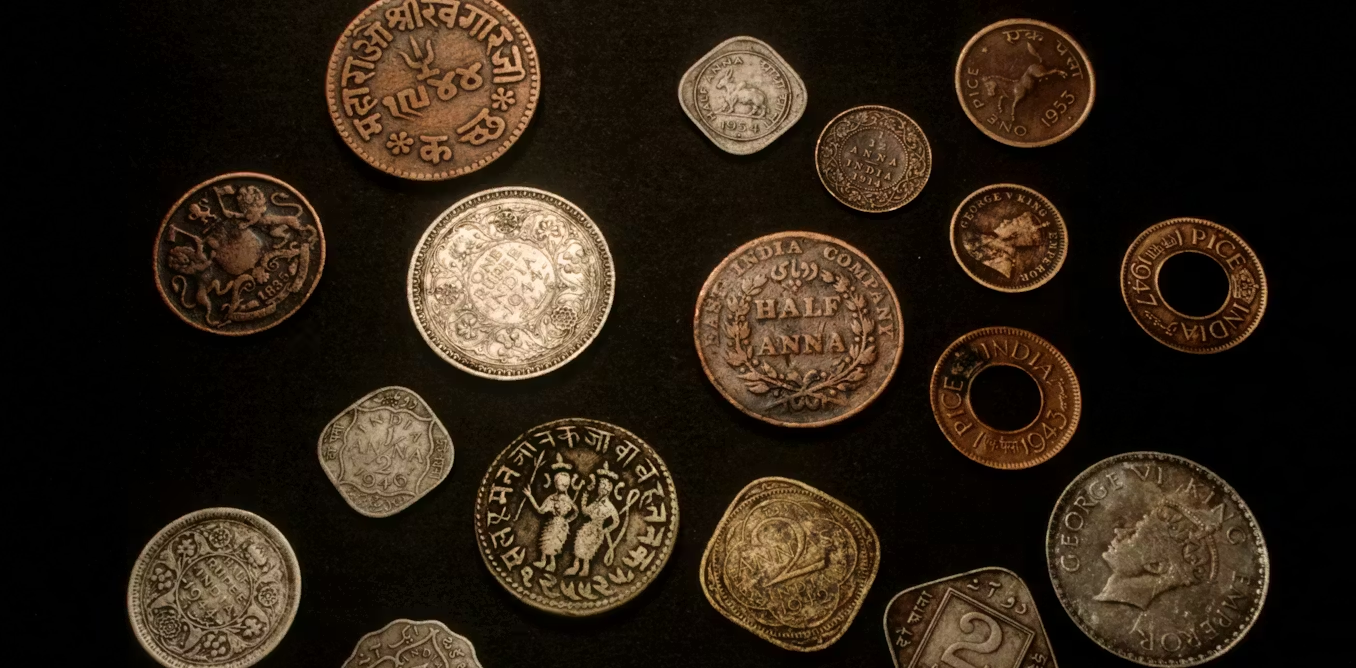
In other parts of the ancient world, shells and shell beads were accepted as money. The Chinese symbol (bèi) originated as a pictograph of the cowrie shell and is now used in hundreds of finance-related Chinese characters, including those for buy, sell, wealth and profit. Cowrie shells were traded to China from the Indian Ocean and used as money during the Zhou dynasty.

In North America, small shell beads were used as money and circulated throughout the interior of the continent, thousands of miles from the oceans where they were collected and produced. These examples show that trade money was not restricted to metals but could develop from anything that was desirable and scarce.

The US dollar diminished

The dominance of government-issued “fiat currencies” (meaning they are not backed by physical commodities such as gold) depends on the trust, liquidity and institutional backing they provide.

International trade is currently dominated by the US dollar. However, as we move into an increasingly multipolar world – with competing centres of gravity in North America, Europe and China – we can expect to see the dollar’s role diminish.

Advertisement

Indeed, there is some evidence that this has already happened. The dollar’s role as the world’s reserve currency (meaning it is held in large quantities by other governments and central banks to stabilise their economies) has declined from around 70% in the late 1990s to less than 60% today. This trend is likely to continue amid signs of increased US isolationism, strains in North Atlantic cooperation, and the rising economic position of China.

Political fragmentation, however, hardly means the end for international trade. History is rife with periods, from the bronze age on, when political fragmentation coexisted with bustling trade economies. And for those seeking to avoid state control in future, this may mean a growing shift in the type of money that is used.

Video: Bloomberg Television.

New forms of money

There are many differences between cryptocurrency in the modern world and the commodity money of prehistory. Cryptocurrency is still rarely used or accepted in daily transactions, is highly volatile and, as with modern fiat currencies, does not have “use value” in the same way as bronze ingots or even shell beads.

Advertisement

Nonetheless, both are forms of “bottom-up” (non-state controlled) money that exist outside of the oversight of any single government or large financial actor.

This lack of state control is exactly what drives sanctioned states such as Iran and Russia to request payments in crypto. As US financial leverage weakens, crypto payments become harder to block and sanction, potentially reshaping how future conflicts are financed.

Cryptocurrency may be well positioned for this environment, continuing to provide one of money’s oldest functions: the ability to conduct business with strangers.

This article references a book included for editorial reasons with a link to bookshop.org. If you click on this link and go on to buy something from bookshop.org, The Conversation UK may earn a commission.

Advertisement

Source link

Continue Reading

NewsBeat

Chelsea FC’s recruitment strategy under the microscope

Published

on

Chelsea FC’s recruitment strategy under the microscope

PSG were far better than Chelsea in their 8-2 last-16 aggregate win but also vastly more experienced. Chelsea’s second-leg XI had played 137 Champions League matches between them, PSG’s 545. That has to have counted for something. Sunderland and Brentford can attest. Granit Xhaka, 33, and Jordan Henderson, 35, respectively, have added football IQ, not just leadership, to their new teams.

Source link

Continue Reading

Trending

Copyright © 2025