Connect with us

NewsBeat

Yorkshire Wildlife Trust explains feeding stations removal

Published

on

Yorkshire Wildlife Trust explains feeding stations removal

WITH the warmer and sunnier weather has come the beautiful sound of birdsong, slowly growing into a chorus from the stalwart solos of those few birds who have kept us company over the winter.

Glancing out of the window of a morning, you might spot a blackbird foraging its way through the undergrowth, a robin singing its heart out on a fence, and – in the next few weeks – chiffchaffs and swifts making a return to our shores.

It may seem contradictory as a result that visitors to Yorkshire Wildlife Trust’s reserves in recent months may have noticed the number of artificial bird feeders on-site decreasing. Historically there have been bird feeders present on a number of our nature reserves – Adel Dam, Potteric Carr and North Cave Wetlands to name a few.

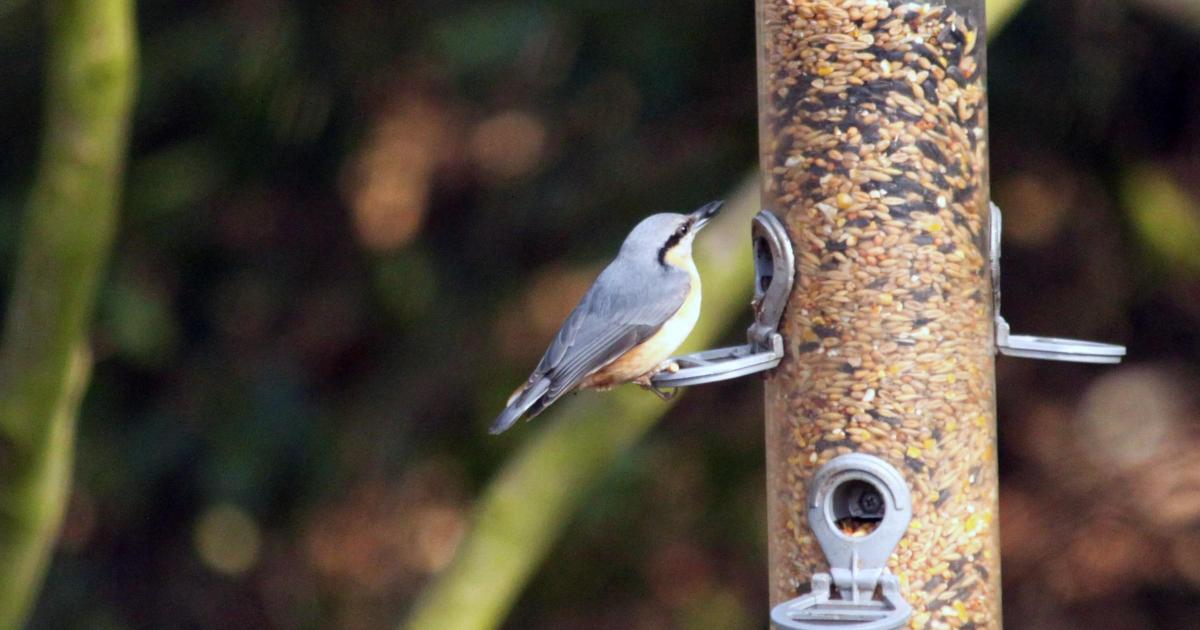
The Trust is very aware that these bird feeders are popular with visitors because of the more guaranteed opportunity to spot some of our reserves’ more enthusiastic and colourful birds like goldfinches, great tits and nuthatches, and because of the greater ease they offer for keen wildlife photographers.

Advertisement

Our decision to remove bird feeders from our sites has been made for a number of reasons. We want to encourage natural behaviours and food sources in our wild spaces, and research has shown that having feeders can boost some populations to the detriment of others.

Common species like great tits and blue tits use feeders, but rare and declining species like willow tit, which still has a stronghold here in Yorkshire, do not. Having feeders means we get more great tits and blue tits on our reserves, and these out compete the rarer species like willow tits that really rely on reserves to survive.

Blue tit on feeder. Photo – Gillian Day

In addition, feeding stations have been shown to be a factor in the spread of avian infectious diseases in the UK, such as trichomonosis, salmonellosis, avian pox and papillomatosis.

Where there are strong conservation reasons to keep feeding birds on reserves we will do so – for example, where there are colonies of rarer tree sparrows that do use bird feeders and need support. However, as a general rule we will be removing all feeding stations on our reserves. We would ask visitors to respect this and not bring food onto nature reserves themselves.

Advertisement

Bird feeding at home

Yorkshire Wildlife Trust is not asking you to stop feeding birds in your own garden! Our gardens are a vital space for our garden wildlife to find food and shelter over the winter months, and we will still make high quality bird food and feeders available in our Nature Discovery Centres.

We know that watching birds at home is a great joy to many of us, and an important way to connect with nature.

However, we would encourage you to follow some good practice guidelines. Most important is hygiene; feeders should be cleaned weekly, or at least between ‘top-ups’. You should use an animal-safe disinfectant and scrub them clean – make your life easier here by using good quality feeders that can be easily taken apart and put back together again!

Advertisement

It is also worth periodically moving where your feeders are situated. This stops the build up of debris and droppings in one place and makes it harder for predators to target a single spot. Research has shown that flat feeders such as tables and window feeders have a much higher risk of spreading disease, so we would suggest not using this type of feeder. If you do, again it is vital you keep it clean.

Clean drinking water is one of the most valuable things you can provide wildlife in your garden, but again this should be changed daily with the bowl cleaned regularly. It is also worth considering only feeding in late autumn and winter when natural food supplies are lower; in spring and summer, especially when feeding chicks, natural food sources are better.

If you’re looking for more wildlife-friendly gardening tips, please check out our ‘Wildlife Gardening Hub’ webpage; it’s filled with toolkits, guides and more, as well as information on how to apply for our wildlife gardening award.

As we leap into a welcome spring, please continue to enjoy visiting Yorkshire’s wild spaces and keeping an eye out for some of our loveliest and brightest avian friends; whether you’re rambling your way along one of our many miles of reserves paths, or tucked up at home watching the world go by through your living room window.

Advertisement

Source link

Continue Reading
Click to comment

Leave a Reply

Your email address will not be published. Required fields are marked *

NewsBeat

Inside Sarah Everard killer’s grim prison life alongside inmate Ian Huntley

Published

on

Daily Record

More than five years after the murder of Sarah Everard by former police officer Wayne Couzens, the disgraced killer remains locked inside a high-security jail alongside notorious inmates.

He was once seen as a trusted member of society, but that trust was shattered when he abused his authority and coerced Sarah Everard into his vehicle — and she was never seen alive again.

Advertisement

On the evening of March 3, 2021, former Metropolitan Police officer Wayne Couzens exploited his position to detain the young woman, handcuffing her under the guise of his official powers.

The crime shocked the nation and sparked widespread protests after 33-year-old Sarah was sexually assaulted and murdered. Prior to joining the police, Couzens had already faced allegations of a sexual offence involving a child.

After abducting Sarah in south London, Couzens drove her to Kent, where he killed her and later burned her remains before dumping them in woodland. His actions deprived her grieving family of the chance to see her one last time.

The case brought the issue of violence against women into sharp focus. Yet more than five years on, many believe progress has been limited. A report published last year warned that too many offenders are avoiding justice because of serious failures in how crimes are recorded.

Advertisement

Lady Elish Angiolini, who led the inquiry launched after Sarah’s murder, found that many sexual predators are still slipping through the system and that preventive measures often amount to little more than promises.

Now 53, Couzens is serving a whole-life sentence at HMP Frankland in County Durham — a high-security prison sometimes nicknamed “Monster Mansion.” The Mirror says reports about life inside the prison frequently attract public anger and scrutiny.

Recently, fellow inmate Ian Huntley was attacked at the prison and left seriously injured. It was the third assault on him during his 24 years behind bars. Before the incident, Huntley had reportedly become increasingly paranoid that other prisoners were trying to poison him. After the attack, which took place shortly after 9 a.m. on a Thursday, he was found lying in a pool of blood. Authorities have not officially confirmed the identity of the suspected attacker, though triple killer Anthony Russell has been named in reports.

Advertisement

Huntley, who worked as a cleaner on A Wing, had reportedly stopped eating prison meals because he believed other inmates were targeting him. Instead, he relied on food and sweets from the prison shop, which caused him to gain weight. He is serving life sentences for the murders of 10-year-olds Holly Wells and Jessica Chapman, who disappeared after leaving a family barbecue in Soham, Cambridgeshire, in August 2002.

Former inmate Ricky Killeen, who previously served five years at Frankland for a machete attack, said Couzens will likely spend the rest of his life constantly on guard — particularly because he was once a police officer. According to Killeen, former officers can become prime targets in high-security prisons, where violence can be severe.

Inside such prisons, inmates have reportedly used makeshift weapons fashioned from everyday objects, including broken electronics and shattered ceramic fixtures. In one particularly brutal attack, a prisoner suffered severe burns after boiling liquid mixed with melted butter was thrown at him — a form of assault known among inmates as “swilling,” intended to cause maximum injury.

Advertisement

Because of the notoriety of his crime and his former role in law enforcement, Couzens is considered at high risk from other prisoners. Sources have suggested that his profile makes it impossible for him to live on a standard wing. Instead, he is expected to remain segregated or housed in a small unit for vulnerable prisoners, separated from the general population.

Clinical psychologist Dr Tracy King said managing high-profile offenders has always been difficult, and the strain on the prison system makes it even more challenging. In cases like Couzens or Huntley, she explained, the individuals are more than just inmates — their crimes carry strong public emotion, increasing the risk of hostility from other prisoners and requiring stricter supervision and separation. Staffing shortages, she noted, can make maintaining that level of oversight harder.

King also said Couzens’ former role as a police officer adds another layer of complexity. When someone who once represented authority commits such a crime, it can feel like a deep betrayal to the public and even to those working within similar institutions. For prison staff, this can create a difficult balance between their duty to protect prisoners and the emotional weight of managing someone whose actions shocked the country. Social media and rapid digital communication, she added, can intensify public scrutiny and pressure on those overseeing such cases.

Advertisement

In 2022, it emerged that Couzens had been allowed to buy an Xbox 360 after good behaviour but complained when he learned that violent, adult-rated games would not be permitted. According to reports at the time, he had hoped to play shooting games such as Call of Duty and Gears of War but was limited to less violent titles instead.

That same year, reports also suggested Couzens had struck up a disturbing friendship with David Fuller, a convicted murderer and serial necrophile known as the “Morgue Monster.” The two were said to have bonded while housed on the same wing at Frankland and reportedly discussed shared connections to Kent. Fuller had been convicted of murdering Wendy Knell and Caroline Pierce in Tunbridge Wells in 1987 and was later linked to further crimes through advances in DNA technology.

In April 2024, reports claimed Couzens filed a complaint after prison officials blocked a birthday gift sent by his mother. The parcel, which reportedly contained a book and clothing, was refused under rules that prevent inmates from receiving packages sent directly from home. In his grievance to the Prisons and Probation Ombudsman, he allegedly argued that the restrictions had not been clearly explained and even requested compensation for the cost of the items.

Dr King said such complaints are not unusual among prisoners. When someone loses their freedom, she explained, relatively small details — such as access to entertainment or receiving parcels — can become disproportionately important because they are among the few aspects of their environment they can try to control. In some cases, personality traits such as entitlement and limited empathy can mean a person focuses on their own frustrations rather than the harm they caused.

Last June, it was reported that Couzens was taken to an NHS hospital for a lumbar procedure, a spinal operation estimated to cost around £7,000. Transporting him under heavy security reportedly added roughly £10,000 more. The move drew criticism from Luke Akehurst, MP for North Durham, who questioned whether the murderer had effectively jumped the queue ahead of other patients waiting for treatment.

According to reports, Couzens spent three days in hospital before returning to the prison’s healthcare unit. Sources said the operation was not considered an emergency but was carried out to relieve his back pain. Due to the risk posed to him rather than by him, the transfer involved a bulletproof Category A prison van, multiple officers and armed police guarding him at the hospital.

In August 2023, it also emerged that the house Couzens had shared with his wife and children in Deal, Kent, had been put back on the market after failing to sell earlier in the year. The three-bedroom property was relisted with a reduced asking price after initially attracting no buyers.

Marking the fifth anniversary of Sarah Everard’s murder on March 3, Gemma Sherrington, chief executive of Refuge, said the case continues to highlight serious concerns about trust in policing among women and girls. She said that while there have been promises of reform and some policy changes, more meaningful action is still needed to prevent similar crimes.

Sherrington noted that the inquiry into the case found several key recommendations had not yet been fully implemented, including proposals to prevent individuals with prior sexual offence records from serving as police officers. Refuge has long argued for major improvements in vetting and accountability within policing, warning that stronger safeguards are needed to ensure positions of authority cannot be abused in the future.

Advertisement

Get more Daily Record exclusives by signing up for free to Google’s preferred sources. Click HERE

Source link

Continue Reading

NewsBeat

The economist trying to save the planet with his own crystal ball

Published

on

The economist trying to save the planet with his own crystal ball

Farmer’s proposed super-simulator would be driven by these complex models. “We would put people, firms, banks and governments inside a computer and find ways of representing interactions within the market”, he continues. “For example, how households will buy goods from certain firms. We’ll then simulate all this stuff and make it as realistic as possible with the available data. Then we’ll run the model day by day, month by month, quarter by quarter.”

Source link

Continue Reading

NewsBeat

Greggs plans to open 120 new bakeries in the UK this year

Published

on

Greggs plans to open 120 new bakeries in the UK this year

The high street bakery chain well known for its sausage rolls and steak bakes also reported a slowdown in sales growth over the start of the new year.

Nevertheless, the retail business, which employs more than 33,000 people, stressed that it has been “resilient” in the face of a “challenging market”.

Over the past year, Greggs has come under pressure from cautious shoppers impacted by the rising cost-of-living, higher tax and labour costs, and the growing use of weight-loss treatments.

Advertisement

However, boss Roisin Currie indicated that some of these challenges could ease over the current year.

She said: “Looking into 2026, easing inflationary pressures should provide some support to consumer spending and demand for convenient food-on-the-go continues to underpin the market.”

On Tuesday, Greggs reported that statutory pre-tax profits fell by 17.9% to £167.4 million for the year to December 27, compared with a year earlier.

It said the drop in profits was partly linked to the tough market backdrop and a “spell of particularly hot weather” which knocked high street footfall.

Advertisement

It also told shareholders that total sales grew by 6.8% to £2.15 billion over the year, with like-for-like growth also buoyed by its continued store opening programme.

Greggs said it had 121 net store openings in 2025, expanding its shop estate to 2,739 locations by the end of the year.

It is targeting around 120 further openings this year as it highlighted ambitions to grow to “significantly more than 3,000 UK shops over longer term”.

Sales growth was also supported by the expansion of its delivery business and an increase in evening trade.

Advertisement

More recently, like-for-like sales across its managed shops grew by 1.6% over the first nine weeks of 2026, with total sales up 6.3% on the back of store openings.

Source link

Advertisement
Continue Reading

NewsBeat

Sarah Everard’s family praised on fifth anniversary of death

Published

on

Sarah Everard's family praised on fifth anniversary of death

Ms Everard, 33, who grew up in York, was raped and killed by then serving Metropolitan Police officer Wayne Couzens. Couzens tricked her into thinking she could be arrested for breaking Covid lockdown rules as she walked home from a friend’s house in south London on March 3, 2021.

Ms Everard was a student at Fulford School before moving to London where she worked as a marketing executive.

In a statement issued by the force, Metropolitan Police commissioner Sir Mark Rowley said Ms Everard “should still be here”.

“What happened to her was a profound betrayal: of her, of her family and loved ones, and of every person who places their trust in policing,” Sir Mark said.

Advertisement

He said the fact that Ms Everard was killed by a serving police officer was “as devastating today as it was in 2021”. “It was an unthinkable abuse of power and a total violation of the values that the Met, and policing stands for.

“On the day I heard what he had done, I felt devastated for the immense harm his actions caused to the trust that underpins our relationship with the communities we serve.

“What he did shook policing to its core. It made decent, dedicated officers and staff across the country furious that one of our own could commit such a monstrous crime.

“We will always be deeply sorry: for the unimaginable harm done to Sarah, for the trauma endured by her family – who have shown extraordinary dignity in the face of unbearable grief – and for the profound damage inflicted on the trust Londoners should be able to place in their police service.”

Advertisement

Recommended reading:


Couzens was given a whole-life jail term at the end of his Old Bailey trial in September 2021, and the powerful victim impact statement made by Ms Everard’s mother led to the unmasking of another predator hiding in the ranks of the Met.

One of the victims of David Carrick was moved to come forward and make a report to the police, which eventually led to his conviction as a serial rapist.

The cases led to two damning reviews – one a report by Baroness Louise Casey in March 2023 that found the Met was institutionally racist, misogynist and homophobic.

Advertisement

Then an inquiry by Dame Elish Angiolini in February 2024 concluded that the Met and two other police forces could and should have stopped Couzens being a police officer.

Metropolitan Police commissioner Sir Mark Rowley (Image: James Manning/PA Wire)

Sir Mark spearheaded efforts to clean up the Met, with 1,500 officers and staff having been sacked, resigned or retired in the past three years.

But in September last year he warned “toxic or corrupt networks or cliques” that might be resistant to change remained in the force.

It followed undercover reporting at Charing Cross police station by Panorama that led to accusations of excessive use of force and offensive discriminatory comments.

Advertisement

We must continue to repair ‘damage inflicted on the trust of women and girls in policing’, says Met commissioner

Sir Mark said Ms Everard’s death “brought into sharp focus the need for a national reset in how policing, and society more widely, prioritises tackling violence against women and girls, as starkly illustrated by the Angiolini Review”.

“With the painful reality that far too many remain victim‑survivors and still do not feel safe, this anniversary is more than symbolic,” he added. “It is a reminder of our duty to the millions of women and girls who move through London every day with a right to feel protected, not fearful; respected, not dismissed; believed, not doubted.

“We know we have not always lived up to that responsibility and must continue to repair the damage inflicted on the trust of women and girls in policing.

“I don’t just see this as an operational priority – it is also a moral one, and one I am fiercely committed to.”

Advertisement

Jess Phillips, minister for safeguarding and violence against women and girls, said: “Five years on from Sarah Everard’s tragic murder, my thoughts today are with her family and all those who loved her.

“I will do everything I can to ensure women and girls can live free from fear and harm – something Sarah was so cruelly denied.”

Source link

Advertisement
Continue Reading

NewsBeat

Alan Cumming apologises for ‘all the pain Black people have felt’ after Baftas slur

Published

on

Alan Cumming apologises for ‘all the pain Black people have felt’ after Baftas slur
Alan Cumming has criticised the Baftas and BBC a week on from the awards ceremony (Pictures: Getty)

Alan Cumming has apologised for the ‘trauma triggering s***show’ sparked by the Baftas.

Last Sunday night, the annual British film awards ceremony was overshadowed by an incident in which Tourette’s campaigner John Davidson experienced a series of tics, one of which included yelling out a racial slur at Sinners stars’ Michael B. Jordan and Delroy Lindo whilst they were on stage presenting an award.

Despite a two-hour delay of the broadcast, the BBC still aired the moment in its coverage, before taking the awards down from iPlayer following significant backlash.

Addressing the outbursts during the event, host Alan said that Davidson had ‘no control’ over the outbursts. He explained: ‘You may have noticed some strong language in the background. This can be part of how Tourette’s syndrome shows up for some people, as the film explores that experience. Thanks for your understanding and helping create a respectful space for everyone.’

Advertisement

However, a week on he’s now shared a lengthy statement on social media addressing what unfolded.

‘It’s now a week since I hosted the BAFTAs,’ the 61-year-old Scottish actor began.

LONDON, ENGLAND - FEBRUARY 22: Host Alan Cumming speaks on stage during the EE BAFTA Film Awards 2026 at The Royal Festival Hall on February 22, 2026 in London, England. (Photo by Stuart Wilson/BAFTA/Getty Images for BAFTA)
He said the racial slur controversy caused a ‘trauma triggering s***show’ (Picture: Stuart Wilson/ Bafta/ Getty Images for Bafta)

‘What should have been an evening celebrating creativity as well as diversity and inclusion turned into a trauma triggering s***show.

‘I’m so sorry for all the pain Black people have felt at hearing that word echoed round the world. I’m so sorry the Tourettes community has been reminded of the lack of understanding and tolerance that abounds regarding their condition.’

‘The only possible good that could come of this is a reminder that words matter, that rushing to judgment about things of which we are not fully cognisant is folly, that all trauma must be recognised and honoured.’

Advertisement

Concluding his statement, Alan alluded to mistakes made by Bafta and the BBC.

‘We were all let down by decisions made to both broadcast slurs and censor free speech,’ he wrote, before offering his congratulations to ‘all the artists whose work was overshadowed by the night’s events’.

Soon after the event, Delroy said he and Jordan ‘did what we had to do’ while presenting, but he wished ‘someone from BAFTA spoke to us afterward’.

LONDON, ENGLAND - FEBRUARY 22: Michael B. Jordan and Delroy Lindo present the Special Visual Effects Award on stage during the EE BAFTA Film Awards 2026 at The Royal Festival Hall on February 22, 2026 in London, England. (Photo by Stuart Wilson/BAFTA/Getty Images for BAFTA)
Michael B. Jordan and Delroy Lindo were on stage when Tourette’s campaigner John Davidson yelled out the N-word (Picture: Stuart Wilson/ Bafta/ Getty Images for Bafta)

The day after the awards, John issued an apology saying he was ‘deeply mortified if anyone considers my involuntary tics to be intentional or to carry any meaning.’

In an interview with Variety, he also explained that he had an ‘expectation’ the BBC would blur out his comments, also questioning why he’d been sat close by a microphone too.

Advertisement

‘I had an expectation that the BBC would physically control the sound at the awards on Sunday. I was so far from the stage. From the lack of response from the early presenters to my tics, and with no one turning around to look at me, I assumed, like everyone else, that I could not be heard on the stage,’ he said.

‘The only time I became aware that my tic had reached the stage was when Delroy and Michael B. Jordan appeared to look up from their role as presenters, and soon after that I decided to leave the auditorium.’

Reflecting on his tics being broadcast, he explained that StudioCanal and Bafta had confirmed that ‘any swearing would be edited out of the broadcast’. ‘I have made four documentaries with the BBC in the past, and feel that they should have been aware of what to expect from Tourette’s and worked harder to prevent anything that I said — which, after all, was some 40 rows back from the stage — from being included in the broadcast.

LONDON, ENGLAND - FEBRUARY 22: John Davidson attends the 2026 EE BAFTA Film Awards at The Royal Festival Hall on February 22, 2026 in London, England. (Photo by Aurore Marechal/BAFTA/Getty Images for BAFTA)
The day after the awards John said he was ‘deeply mortified’ (Picture: Aurore Marechal/ Bafta/ Getty Images for Bafta)

‘As I reflect on the auditorium, I remember there was a microphone just in front of me, and with hindsight I have to question whether this was wise, so close to where I was seated, knowing I would tic.’

Last week Bafta also issued an ‘unreserved apology’ for the ‘very offensive language that carries incomparable trauma and pain for so many’.

Advertisement

‘We take full responsibility for putting our guests in a very difficult situation and we apologise to all. We will learn from this and keep inclusion at the core of all we do, maintaining our belief in film and storytelling as a critical conduit for compassion and empathy,’ it said.

Meanwhile the BBC has also apologised, while its Executive Complaints Unit will now complete a ‘fast-tracked investigation’ into the incident.

Got a story?

If you’ve got a celebrity story, video or pictures get in touch with the Metro.co.uk entertainment team by emailing us celebtips@metro.co.uk, calling 020 3615 2145 or by visiting our Submit Stuff page – we’d love to hear from you.

Advertisement
Advertisement

Source link

Continue Reading

NewsBeat

Councillors back calls to save Whitby’s ‘vital’ Cliff Lift

Published

on

Councillors back calls to save Whitby’s ‘vital’ Cliff Lift

​A motion calling on North Yorkshire Council bosses to urgently reconsider their plan to permanently shut Whitby’s historic Cliff Lift in the interest of residents and visitors has been passed unanimously.

​At a packed meeting on Monday (March 2) dozens of residents gathered at Whitby Pavilion and told councillors that the landmark lift “is not a luxury, it’s a necessity”.

​​​The lift on Whitby’s North Terrace, which opened in 1931, has been out of service since 2022 due to corrosion and water ingress, with “worst-case” repair costs estimated at £5.5 million.

​The cost of the options to decommission the lift ranges from £199,000 to £538,000.

Advertisement

​Cllr David Chance, who used to work at the Cliff Lift in 1964, said: “It was always damp in the tunnel.

​“I think the £5 million figure has been plucked out of the air to justify inaction. I think that was the aim of Scarborough Borough Council to kick it down the road.

Scarborough And Whitby Area Committee 02.03.26. Courtesy Numminen/Ldrs

​“I’m absolutely convinced that it should be repaired.”

​Speaking at the meeting, a local resident said that the council’s replacement bus service – the future of which is uncertain – was not adequate for elderly people and those with disabilities and asked: “How is it right to deny many people with disabilities access to our beautiful Blue Flag beach?”

Advertisement

Chris Bourne, the council’s head of harbours and coastal infrastructure, said the council was not denying disabled people access to the beach and that slipways and ramps could also be used.

​Cllr Rich Maw said “we cannot row back on accessibility options”.

​He added: “NYC has accrued capital in reserves, and we should send a message to the executive that it has to commit to restoring the lift.”

Whitby Cliff Lift. Google Maps

​Councillors also highlighted the importance of maintaining the lift in a town where tourism is of major economic importance and which “benefits the rest of the county”.

Advertisement

​Cllr Janet Jefferson said: “We have to preserve our economy and employment.”

​Former chairman of the British Resorts Association, Cllr David Jeffels, said: “We need to look at the wider picture.

​“I think a case can be made for making the Cliff Lift a heritage feature, where everyone can go, not just disabled people and the elderly. In Scarborough, we lost the cliff lift on the North Bay, and it’s still sorely missed decades later.”

​A motion was passed recognising the importance of the historic heritage asset for Whitby and “requesting that the executive looks again at the Cliff Lift with a view to repairing and reopening it”.

Advertisement

​The motion added that there was a “lack of information to support robust decision-making” and an up-to-date survey with robust costings and a business plan should be completed to “ensure the valuable asset remains as a going concern for residents and visitors of Whitby”.

​North Yorkshire Council’s executive committee is set to make a decision on the Cliff Lift’s future at a meeting on March 17.

Source link

Advertisement
Continue Reading

NewsBeat

Minnesota prosecutor investigates federal immigration officers

Published

on

Minnesota prosecutor investigates federal immigration officers

A Minnesota prosecutor announced an investigation Monday that may lead to charges against federal officers, including Border Patrol official Greg Bovino, for misconduct during an immigration enforcement crackdown.

Hennepin County Attorney Mary Moriarty said in a news conference that her office is already looking into 17 cases, including one where Bovino threw a smoke canister at protesters on Jan. 21. Another on Jan. 7 involved federal officers making an arrest outside a high school and deploying chemical irritants while students and staff were in the area.

“Make no mistake, we are not afraid of the legal fight, and we are committed to doing this correctly,” Moriarty said. “Operation Metro Surge caused immeasurable harm to our community.”

The Department of Homeland Security, which oversees immigration enforcement, responded in a statement Monday night that such enforcement is a federal responsibility and states cannot prosecute federal officers.

Advertisement

“What these States are trying to do is unlawful, and they know it,” the statement said. “Federal officials acting in the course of their duties are immune from liability under state law.”

The statement added that local officials should instead consider how their actions have endangered federal law enforcement officers.

A message to Bovino seeking his response was not immediately returned.

Bovino, who emerged as a key figure in the Trump administration’s immigration enforcement operations, is known for bringing aggressive tactics to crackdowns in Minneapolis-St. Paul, Chicago and Los Angeles. In Chicago, federal officers frequently deployed chemical irritants as crowd control measures in residential neighborhoods, and a judge ordered Bovino to wear a body camera and appear in court daily to answer questions about the crackdown. That order was overturned before his first mandated appearance.

Advertisement

Officers at times took a forceful approach to corralling protesters in Minneapolis-St. Paul and detained numerous people blowing whistles and recording arrests.

Bovino was eventually removed from his leading role in the Minnesota effort after federal officers fatally shot 37-year-old mother Renee Good and 37-year-old nurse Alex Pretti on different days in January, leading to nationwide demonstrations and criticisms of DHS use-of-force policies.

Moriarty’s office has set up an online portal where photos, videos and eyewitness accounts from any point during Operation Metro Surge can be uploaded.

The Trump administration has defended federal officers, but Moriarty is making clear that her office is “collecting evidence about all sorts of possible crimes,” said Rachel Moran, a professor of criminal law and policing at University of St. Thomas School of Law in Minneapolis.

Advertisement

In cases where officers unjustifiably used chemical weapons, threw people to the ground or smashed car windows, Moran said as examples, prosecutors may be investigating assault or property damage.

“These would be situations where the state has to determine: Is there evidence that agents acted unlawfully and outside the scope of their authorized duties?” Moran said. “I think agents did illegal things here. I watched it.”

Though federal officers conducted immigration enforcement throughout the Twin Cities, Moriarty’s investigation will only focus on incidents in Hennepin county, which includes Minneapolis and many of its suburbs.

Her office is also investigating the deaths of Good and Pretti, and she is “confident” they will be able to pursue charges. She said Monday that her office is prepared to sue the federal government to get the evidence she has requested for the investigations if she does not hear from them by Tuesday.

Advertisement

“The question is, should we charge in federal court? Do we expect the federal government to obstruct us? I would say they’re already doing that,” Moriarty said.

The Department of Justice opened a civil rights inquiry into Pretti’s death, but said it saw no reason for a civil rights investigation of Good’s death. The Federal Bureau of Investigations barred state investigators from accessing evidence in her case.

The DOJ and FBI did not immediately return requests for comment.

While Moriarty addressed the challenges her office would face in bringing charges against federal agents, she said they are committed to transparency and accountability.

Advertisement

Mark Osler, who served as director of the criminal division for a year under Moriarty in 2023 and 2024, said regardless of whether there are charges, he thinks the public can look forward to more clarity.

“One of the most important roles that prosecution has … is truth-telling, is to bring to the surface what actually happened at a given time,” said Osler, who is currently a law professor at University of St. Thomas. “We’ll all know more than just what we saw in those initial videos by the time she’s done. I’m confident of that.”

___

Raza reported from Sioux Falls, South Dakota, and Fingerhut reported from Des Moines, Iowa.

Advertisement

Source link

Advertisement
Continue Reading

NewsBeat

Donald Trump attacks Keir Starmer and claims UK is ‘not recognisable country’

Published

on

Daily Record

Trump claimed the US now is now more allied to other European nations.

Donald Trump has launched yet another attack on Keir Starmer, and claimed the UK is “not such a recognisable country” anymore.

Advertisement

The US President suggested his relationship with the PM had changed, and other European nations were now stronger allies. Speaking with The Sun, Mr Trump also repeated his baseless attacks on the London Mayor, Sadiq Khan, reports the Mirror.

Discussing the PM, he said: “He has not been helpful. I never thought I’d see that. I never thought I’d see that from the UK. We love the UK. This was the most solid relationship of all. And now we have very strong relationships with other countries in Europe..

“It’s also not such a recognisable country. I mean, you look at what happened over the last period of time and it’s very different. London is a very different place, with a terrible Mayor. You have a terrible Mayor there, some terrible people. But it’s a very different place.”

Speaking just days after Labour slumped to third in Gorton and Denton, Mr Trump wished the PM “luck” in turning things around. Suggesting the PM “has got his own difficulties”, he continued: “The people of the UK, who I have a great relationship with, who I love, are sorry to hear it also… I don’t get it. But you know what? I just… I wish him a lot of luck.”

Advertisement

Get more Daily Record exclusives by signing up for free to Google’s preferred sources. Click HERE

Source link

Continue Reading

NewsBeat

Here we go again…can markets take the latest turmoil in their stride?

Published

on

Here we go again...can markets take the latest turmoil in their stride?

There have been other very sharp declines in stock market prices, but most of them have taken longer to shed their valuation. In 2002 the DJIA shed 27%, with FTSE easing by 23%. These losses were due largely to the ‘fall out’ from ‘9/11’ terrorist attacks in September of the previous year. Then came the banking crises of 2008/9. The DJIA lost 18.2% of its value between 6th and 10th October 2008. It hit a market low of 6,469.95 on March 6, 2009, having lost over 54% of its value since the 9th October, a 2007 high. The FTSE also experienced a torrid time, shedding 18.2% in value in 2008.

Source link

Continue Reading

NewsBeat

Could solar panels help strengthen global food security? – Positive News

Published

on

Could solar panels help strengthen global food security? - Positive News

Food security worries are the perennial objection to large-scale solar projects, with critics claiming they gobble up farmland that might otherwise be used for agriculture. However, new work by Canadian researchers backs the growing consensus that the opposite is true: solar can boost harvests rather than hinder them.

A team led by Prof Joshua Pearce from Ontario’s Western University found that agrivoltaic systems – where crops grow beneath solar arrays – create a shady microclimate which shields plants from heatwaves, hail and other weather extremes. The setup also improves soil health and fuels nutrient recycling.

Interestingly, Pearce’s team found the microclimate is even more favourable when the panels are not in use, meaning even decommissioned solar farms could still provide a windfall for farmers.

Modelling suggests passive agri-cultural shading from unpowered panels could lift crop yields to the tune of $580bn (£435bn) worldwide.

Advertisement

“Decommissioned or unpowered arrays should not be dismissed as obsolete but rather reconsidered as durable agronomic assets,” wrote Pearce. “These systems can continue to support soil conservation, reduce crop heat stress and sustain livestock grazing even beyond their energy-producing lifespans.”

Main image: Lisa Miri 

Be part of the solution

At Positive News, we’re not chasing clicks or profits for media moguls – we’re here to serve you and have a positive social impact. We can’t do this unless enough people like you choose to support our journalism.

Advertisement

Give once from just £1, or join 1,800+ others who contribute an average of £3 or more per month. Together, we can build a healthier form of media – one that focuses on solutions, progress and possibilities, and empowers people to create positive change.

Support Positive News

Source link

Advertisement
Continue Reading

Trending

Copyright © 2025