The headline figures from a recent YouGov poll of Scots’ voting intentions were bad enough for Labour – but further analysis suggests deeper problems for the party.
12:00, 01 Feb 2026
Advertisement
It’s difficult to name just one blunder by the UK Government to explain Scottish Labour’s dismal polling numbers. But the winter fuel payment fiasco would top many people’s lists.
Many older voters were dismayed at the way the policy was announced – and the eventual U-turn came too late to stop other parties from capitalising from the public disquiet.
Labour’s popularity in Scotland has dropped sharply since Keir Starmer’s election in 2024. There’s no getting away from it. But it’s the youngest voters who appear most disillusioned with the party – not the oldest.
The headline figures from a recent YouGov poll of Scots’ voting intentions were bad enough for Labour, but further analysis suggests deeper problems for the party.
Advertisement
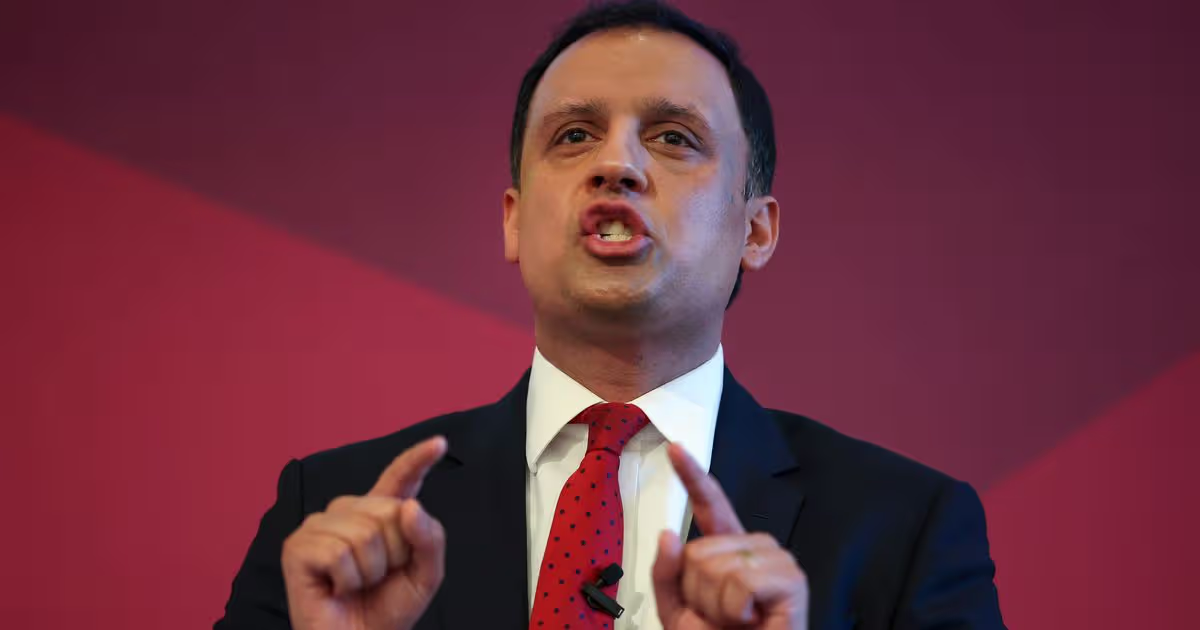
More than 60 per cent of younger voters – those aged from 16 – 24 – plan to back the SNP or Greens. That’s a problem for Anas Sarwar, who still insists he can replace John Swinney as the next First Minister.
The poll suggests just 12 per cent of voters aged 16-24 will vote for Labour in the constituencies, while only nine per cent plan to back them on the list vote.
In comparison, 35 per cent of the same age group support the SNP in the constituencies and a further 31 per cent back the Scottish Greens.
Intriguingly, support for Reform among younger Scots is just 12 per cent in constituencies but jumps to 21 per cent on the list. Given the vote slippage seen at council by-elections, it’s likely this number includes a sizeable chunk of former Labour voters.
So why are young Scots turning their back on Labour?
The SNP and Greens would point to popular policies like free bus passes for those under the age of 22, a plan supported by both parties. Young Scots are least likely to have a car. The bus pass they use on a near-daily basis is a visible reminder of government in action.
Those parties would also point to the unpopularity of Keir Starmer, which cuts across all age groups in multiple polls.
Advertisement
The Prime Minister faced fierce criticism for the UK Government’s response to the Israel-Hamas war, which saw tens of thousands killed in Palestine.
Anyone who saw one of the regular pro-Palestine marches in any Scottish city would have noticed the high percentage of protesters in their teens or 20s. This was an issue that galvanised young voters.
Independence is another factor. Support for ending the Union is highest among younger voters.
Advertisement
Many Scots who voted Yes in 2014 no longer support the SNP – but it’s of little benefit to Labour, with just three per cent saying they’ll vote for Sarwar in the constituencies.
To sign up to the Daily Record Politics newsletter, click here
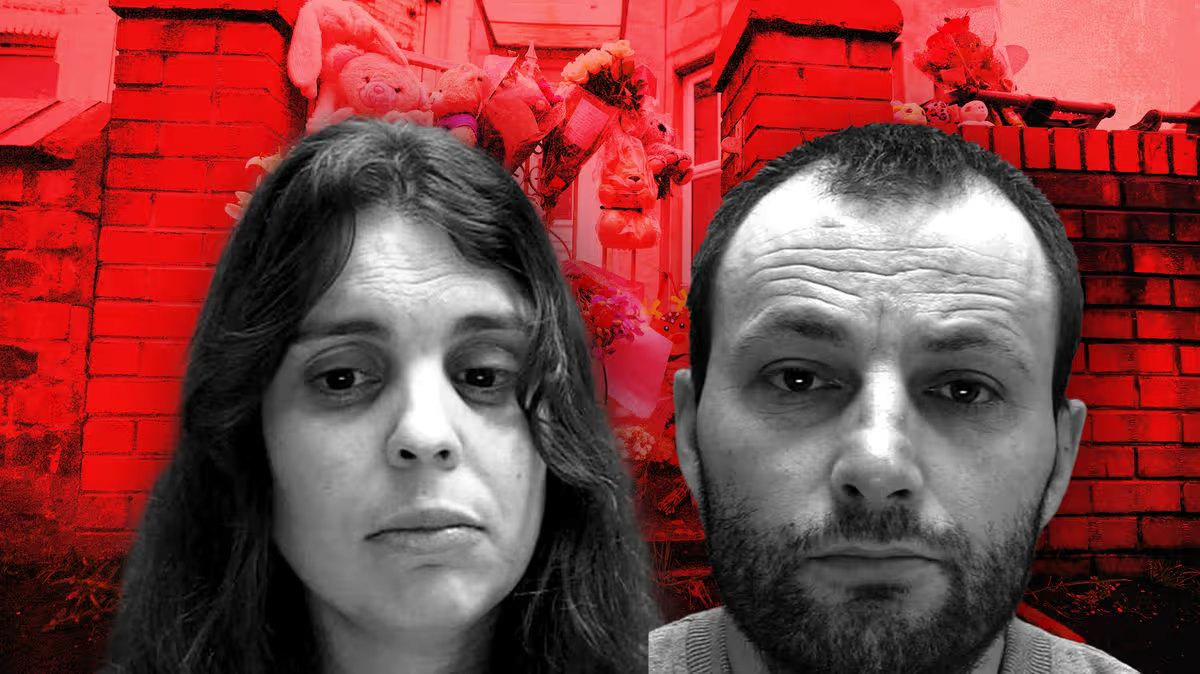
Miguel Pirjani was only 13 weeks old when he was murdered by his own parents, but, due to their silence, we will likely never know exactly what happened to him
Adam Everett Crown Court Reporter
22:36, 24 Mar 2026
“In this career, there are jobs that stay with you for a lifetime”, Detective Inspector Holly Chance says in a small conference room tucked beside the entrance to Merseyside Police’s Rose Hill headquarters. “There are certain jobs that remain with you, and this is definitely one.
“This has been the most distressing case that I’ve ever dealt with. Due to the vulnerability of Miguel, the age of him and the significant trauma that he faced at just 13 weeks old, it’s been highly distressing, not just for myself, but for my colleagues and other professionals.
“It’s something that I will never understand, as a parent, how anyone could inflict such harm on their own flesh and blood. Miguel was 13 weeks old. He was a newborn, and he should have just felt love from his parents. But, instead, he was inflicted with pain and trauma. It’s unbearable to think about.”
Advertisement
At just shy of three months old, Miguel Pirjani was at an age where he might have started babbling and cooing, maybe even laughing and giggling, certainly becoming more curious of the world around him. But, horrifically, this was a world which, at such a tender stage in his young life, he had come to know as cruel and violent, neglected of the love of his own parents who, instead, had beaten him and broken his tiny bones.
It is, frankly, unthinkable that anyone could do such a thing to any child, let alone their own flesh and blood while at their most tender and in as vulnerable a state as is possible. Perhaps it is a small mercy that, due to Miguel’s mum and dad Nivalda Santos and Klevi Pirjani never having had the courage to tell the true story of what happened to him, instead seeking to protect their own and one another’s backs, that we will never know exactly what horrors they subjected their infant son to.
But the mind can attempt to fill in the blanks when confronted with the stark facts of what doctors discovered when he was rushed from the couple’s home on Percy Road in Wirral, to Alder Hey Children’s Hospital one lunchtime in November 2024. DI Chance, who led the force’s investigation into Miguel’s murder, says: “At that time, he displayed no visible features that he was injured.
Advertisement
“It was only when he got to the hospital a short time later, when they did the scan, it soon became apparent that, in fact, he had this horrific skull fracture and it was non-accidental. That’s when the case took a turn.
“He had 39 fractures to his ribs, collarbone, leg, arm, and they were dated two to three weeks prior to his death, all at various stages of healing. Then there were subsequently two further fractures, which were caused within 48 hours prior to him falling ill.”
All of this demonstrated a clear, repeated pattern of abuse that had persisted throughout Miguel’s tragically short time on this Earth. And yet, all that has been hinted at was Nivalda’s patchy, plainly incomplete account during her and Klevi’s trial at Liverpool Crown Court, alleging that Klevi had “got angry and lost control” two days after their baby had first been discharged from hospital following his birth, thereafter “banging him on the bed” and kicking him, as well as apparently headbutting him in the early hours before his collapse and a 999 call in which he referred to his son as “it”.
Advertisement
DI Chance recalled of the mother’s evidence from the witness box: “There was a point when Nivalda gave evidence where she did state that she did witness Klevi assault Miguel. But that was in the early hours of the 24th of November, whereas medical experts say that the injury caused, which stopped him breathing or going into cardiac arrest, was done within hours of the call to 999. That is the only explanation that we’ve had, but it doesn’t account for the multiple fractures that have been caused.
“To this day, I’ve not seen any remorse shown by the parents. We’ve seen the injuries, we’ve read about the injuries, but we’re still not clear what went on behind closed doors, who inflicted which injury. No remorse has been shown and [there has been] no explanation, which is difficult.
“As a mum myself, I could not imagine anybody hurting my child. Only Nivalda knows the answer to why she never asked for help or never prevented it from happening.”
The only real hint of any regret shown at any stage came in the form of Nivalda’s words as she was permitted to hold Miguel’s hand while he drew his final breaths after five days in hospital, telling him “I should have protected you”. While this was a relationship in which Klevi’s violent and controlling nature appeared to loom large, such sentiments were far too little, far too late.
Both mother and father were unanimously convicted of their son’s murder by a jury and were yesterday handed life sentences with minimum terms of 15 years and three months and 19 years behind bars respectively. If there is any shred of humanity left within them, the punishment of having what they did remaining on their consciences for the rest of their days should weigh far heavier.
Sentencing, High Court judge Mr Justice Baker told them: “Miguel was 13-and-a-half weeks old when he died, born on the 27th of August 2024. You, Nivalda Santos Pirjani and Klevi Pirjani, were his parents, and you killed him by what must have been an act of appalling violence, intending him to suffer really serious harm. It is possible that you intended to kill him to be rid of him, but I am not sure that was your intention, since you made a prompt 999 call for an ambulance.
“I am sure that the fatal trauma Miguel suffered involved a heavy blow or series of blows to the right side of his head with violent oscillation of his head, pivoting on his neck. Precisely how that was inflicted, I cannot say. Whether there was a single blow to the head, or several blows, I cannot say. Whether Miguel’s head was battered onto a hard, unyielding surface or some hard, blunt object was battered onto the side of his head, I cannot say.
Advertisement
“I cannot even say, for sure, which of you did that to Miguel. I think it more probable that it was you, Klevi, because, as Miguel was passing away in hospital Nivalda said to him, ‘I should have protected you’, and I think that may have been her genuine sentiment.
“I cannot say precisely when and how Miguel was fatally battered, shortly before that 999 call, or even be sure about which of you fatally battered him, because only you two know. You have chosen not to tell anyone, and I can only make findings of fact if I am sure of them from the evidence.
“Therefore, what exactly happened to Miguel that morning remains the guilty secret of a warped relationship in which you came first for each other to an unnatural degree. The interests of Team Klevi Nivalda… you put before those of Miguel, with the most severe consequence possible.
Advertisement
“His death was a battered baby death at both of your hands, since the jury was sure that, whichever of you delivered the violence, it was violence encouraged, intentionally, by the other of you, both of you intending Miguel to suffer at least grievous bodily harm. The fatal assault on the 24th of November 2024 was not a one off incident that came out of the blue for whichever of you did not commit the violence.
“I consider there to be no mitigation available to you, Klevi. There is nothing in your personal circumstances or the circumstances of your offending under count four to lessen the seriousness of that offence in your case.
“I acknowledge the difficult start you had in your own life, with a childhood in Albania affected by armed conflict and the death of your father and young sister in quick succession. However, I do not consider that offers any reason to reduce what would otherwise be the proper sentence for what you did to Miguel in your early 30s, in your settled adult life in Liverpool.
“In your case, Nivalda, there is mitigation. You were of previous good character. You were suffering from post natal depression, and you were isolated and somewhat vulnerable, estranged from your own family.
Advertisement
“I do not accept the further claim made on your behalf, or the evidence that you gave, that you were yourself the victim of domestic abuse by Klevi of violence and controlling behaviour. I am sure you were lying to the jury about that. The only victim here was poor Miguel.
“Finally, you have shown a measure of remorse through your parting words to Miguel and through some of what you said to the jury from the witness box. That remorse is rendered a little shallow by your determination, nonetheless, to fight your trial which extended, I am sure, to significant elements of invention to try to limit your criminal liability.”
Kenton Allen, chairman of the RTS Programme Awards, said: “Tonight’s winners are a powerful reminder that British television remains one of this country’s greatest creative and economic success stories — bold in ambition, world-class in craft, and fearless in the stories it chooses to tell.
Starbucks said they were disappointed by City of York Council’s refusal of its retrospective application for an illuminated totem sign outside its site in A64 Malton Road, Stockton-on-the-Forest.
A spokesperson for the US coffee chain said they would continue to work constructively to address issues raised by council planning officials.
It comes after officials ruled the sign, which bears the company’s green and white branding and logo, was too large and dominant.
RECOMMENDED READING:
Advertisement
They added it would be lit up in a rural area close to important nature conservation sites in the green belt.
Starbucks’ application sought to regularise the sign installed outside the drive-thru building by the A64.
The coffee shop is based in the former home of the Four Alls Inn pub and plans to convert the building into a Starbucks were approved last year.
Council officials said the sign would result in unnecessary clutter and it was not in keeping with the surrounding area.
Advertisement
They added it was subject to stricter lighting rules due to being close to the Kingsmoor Plantation and Sandmoor Wood.
The company would be able to appeal the decision if it wanted to challenge the ruling.
The Starbucks drive-thru in the A64 Malton Road, Stockton-on-the-Forest, York. Picture is from Starbucks/York Council’s planning portal
Starbucks did not say whether or not it had plans to do so when asked by the Local Democracy Reporting Service (LDRS).
They told LDRS: “We note the council’s decision to refuse our planning appeal application for a totem sign at the Starbucks drive-thru in Malton Road, Stockton-on-the-Forest.
Advertisement
“While we are disappointed, we respect the process and will continue to work constructively with the council and other stakeholders to address the concerns raised.
“Our aim remains to deliver a site that benefits our customers and the wider community.”
Sunderland’s Health and Wellbeing Board has backed the Sunderland Healthy Weight Strategy 2026-2031, a plan that was developed in partnership with the NHS, education providers, the voluntary and community sector, workplaces, and the Sunderland Good Food Partnership.
It aims to address unhealthy weight, one of the city’s most pressing health challenges.
Councillor Kelly Chequer, Sunderland City Council’s cabinet member for health, wellbeing and safer communities, said: “The strategy recognises that achieving and sustaining healthy weight requires healthy places and reflects our commitment to working with partners across the city to ensure that the environment in Sunderland makes it as easy as possible for residents to live healthy lives.
Advertisement
“Embedding these principles will help us achieve our shared vision of improved health and reduced health inequalities for all.”
The strategy focuses on creating supportive environments that enable healthier choices and more active lifestyles.
It takes a whole-system approach, targeting the social, economic, and environmental factors that affect health.
Priorities include giving children the best start in life with improved early years nutrition and breastfeeding support, creating healthier city environments through planning and transport, enabling healthy communities through greater access to physical activity and nutritious food, and strengthening system-wide leadership.
Advertisement
Currently, one in three children in Sunderland starts school overweight or obese – a figure that rises to one in two by Year 6.
Children in the most deprived areas are twice as likely to be affected.
Read more:
The strategy aims to address these inequalities by making long-term changes to transport, housing, and the local food environment.
Advertisement
Such changes are intended to support healthier lifestyles, reduce health disparities, and improve outcomes across the population.
The Healthy Weight Strategy will be considered for approval by Sunderland City Council’s cabinet on Thursday, March 26.
An expert gardener shares the correct grass cutting heights you need to follow in spring for a healthier, moss-free lawn that stays green all season
Maintaining a stunning, thriving lawn starts with correct mowing techniques, and perfecting this practice can genuinely transform your outdoor space. Plenty of people relish the contentment that accompanies a well-maintained lawn and the pride it brings.
Advertisement
Conversely, others find the physical exertion demanding or consider it monotonous. Yet, whatever your perspective on the task, consistent mowing remains essential for sustaining a lush and vigorous lawn.
When executed properly, it improves the lawn’s thickness, which assists in preventing moss and weed invasion whilst encouraging lusher, greener growth.
Gardening specialist Geoff Hodge visited the Richard Jackson Garden website to explain why lawn mowing matters and the precise cutting height to follow.
He highlighted that grass begins its vigorous growth phase in March, meaning lawns require “regular, correct mowing” from that point forward, with height being an “important factor”.
But what does regularly actually mean? Simply put, it’s whenever the grass reaches a cuttable length.
Geoff recommended: “Ideally, you should simply ‘tip’ the grass at each mow, and certainly not remove more than one-third of its height at any cut.”
During spring, this could mean mowing twice weekly. If you stored the mower away last autumn, the initial cut should use the highest blade setting, gradually lowering it to your standard cutting height over subsequent mows.
Advertisement
The gardening expert cautioned that cutting too short initially risks stressing and weakening the grass.
Geoff noted that numerous homeowners cut their lawns excessively short, scalping the turf, or mow too sporadically – both practices “weaken it”, which “allows weeds and moss to establish”.
He explained: “Here’s the heights you need for an emerald-green, healthy and moss-free outdoor living carpet. For normal lawns that take a lot of wear and tear, the height should be around four to 5cm.
“For bowling green lawns of fine-leaved grasses this should be about two to 2.5cm. For lawns growing in shaded areas, mow even higher – around 7.5cm.”
Advertisement
A thriving lawn can withstand the odd close trim, but repeatedly cutting too short will compromise the grass and promote lawn disease, weeds, and moss.
During the growing period, from March through to October, it’s advisable to mow your lawn at least weekly.
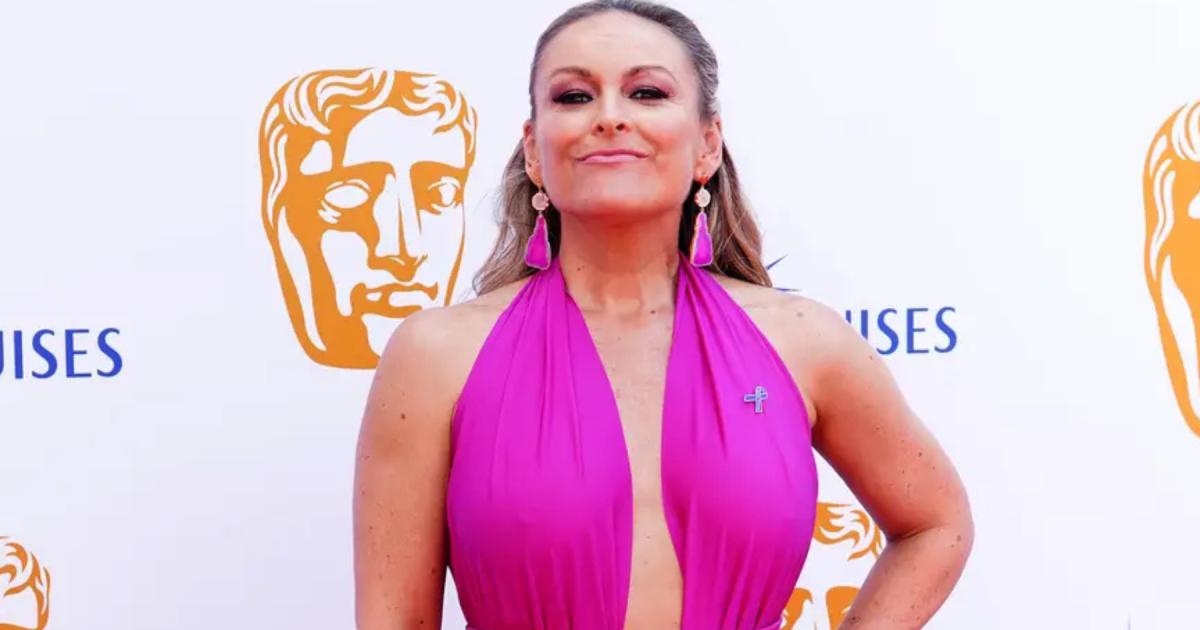
The Australian rose to fame as a relationship coach on the reality show and had treatment for colon cancer in 2023.
However, a routine scan months later found “small nodules” in her lungs, which then spread to parts of her brain, causing “blinding headaches and numbness” down the right side of her body.
In an emotional Instagram post in March, she shared that cancer was found in the left side of her brain and doctors have told her “there is nothing further they can do”.
Advertisement
She said at the time: “Over the past two years, while filming Mafs, I underwent 16 rounds of chemotherapy and was later told I was eligible for a ground-breaking clinical trial specific to my gene type, due to start in March 2026. Once again, my optimism soared that I might beat this thing.
“Over Christmas, however, I began experiencing blinding headaches and numbness down my right side.
“After many tests I was told the cancer had spread to the left side of my brain and, despite subsequent radiotherapy sessions, my oncology team have now told me there is nothing further they can do.
“Hearing those words changes everything.
“My light is starting to fade — and quickly. But I am still here, still fighting, and surrounded by the most incredible love.”
Advertisement
A statement shared by her husband Gareth, on Instagram read: “Melanie Jane Brisbane-Schilling passed away peacefully today, surrounded by love.
“In her final moments, when I thought cancer had taken away her ability to speak, she ushered me closer and whispered a message for Maddie and me that will sustain me for the rest of my life.
“It took all of her remaining strength, and that gesture summed up our wee Melsie perfectly. Even then, her only thought was for Maddie and me.”
Married at First Sight fans pay tribute to Mel Schilling
MAFS fans and contestants shared their condolences in the comments section of the Instagram post with one fan saying: “This is so sad.
“I’m so terribly sorry for your loss and sending lots of love to you all. ❤️😢”
Advertisement
A former contestant on MAFS Australia, Nicolas Jovanovic, said: “😮 Rest in peace Mel! ❤️”
Recommended reading:
Fellow relationship coach Natalie Russell said: “Oh my goodness- so heartbreaking- sending so much love and prayers to you all ❤️🙏🏽xx”.
Former MAFS UK star Hannah Norburn said: “Oh my heart breaks for all your family. What a gorgeous incredible woman you are.
SAN JUAN, Puerto Rico (AP) — As U.S. President Donald Trump pushes for change in Cuba’s leadership, speculation is mounting about who, if anyone, might replace Cuban President Miguel Díaz-Canel.
As Raúl Castro’s handpicked largely figurehead successor in 2018, Díaz-Canel has been the only leader without the last name Castro to govern since the 1959 revolution. He still has two years left in his term —- but some experts and a growing number of Cubans doubt he’ll make it.
Two Castro cousins have come into focus as potential replacements, experts said.
Oscar Pérez-Oliva Fraga — Raúl Castro’s 55-year-old great nephew — has shot to power since emerging from obscurity several years ago. He became minister of Cuba’s influential Ministry of Foreign Trade and Investment in May 2024 and was appointed the island’s deputy prime minister in October.
Advertisement
By contrast, Raúl Guillermo Rodríguez Castro — Raúl Castro’s grandson — has never occupied a government post, having served as his grandfather’s bodyguard and later as head of Cuba’s equivalent of the U.S. Secret Service. He has long been known as “Raulito,” or “Little Raúl” and is new to the spotlight cast on high-ranking government officials.
But he made news last month when he secretly met on the sidelines of a Caribbean Community summit in St. Kitts with U.S. Secretary of State Marco Rubio. At the time, Rubio refused to say who he was speaking to in the Cuban government.
“The role Raulito is playing right now is the connection between Raúl Castro and whoever is on the U.S. side,” said Sebastián Arcos, interim director of the Cuban Research Institute at Florida International University. “He enjoys the absolute trust of Raúl Castro.”
But, Arcos and other experts argue, even should someone with the Castro pedigree take the presidency, little is likely to change.
Advertisement
“Party leadership doesn’t mean anything in Cuba,” Arcos said. “The party is just a hollow façade. The real power resides in the military, under Raúl Castro.”
The 94-year-old remains at the helm as general, appears at key events and is considered the most powerful person in Cuba, a country subject to more than six decades of absolute rule, first by revolutionary leader Fidel Castro, and then for the past decade, his younger brother Raúl.
And that is unlikely to change.
“The most significant thing that we have to consider for the last 30 years in Cuba is the absolute reluctance of this regime to implement serious structural economic reforms,” Arcos said. “Asking them for political reforms would be too much.”
Advertisement
One Castro cousin is described as a technocrat
Pérez-Oliva studied electrical engineering before becoming director general of an import company and then business director within Cuba’s Mariel Special Development Zone. That’s all the Cuban government has officially shared on Pérez-Oliva.
Online, there are barely traces of him; he doesn’t even have a Wikipedia page. His X account is private and inscribed with this sentiment: “Committed to the Revolution and to the ideas of FIDEL.”
Pérez-Oliva until only recently became a public figure, traveling with Cuban Foreign Minister Bruno Rodríguez to Russia and Vietnam earlier this year. He also made a public appearance in early February, when a massive blackout hit Cuba’s western region. While other high-ranking officials solely blamed the U.S. energy blockade, Pérez-Oliva acknowledged otherwise.
“We don’t want to justify ourselves with the blockade; there are a number of internal deficiencies,” he said in a TV interview with state media.
Advertisement
A key achievement came in December, when Pérez-Oliva was named a deputy within Cuba’s National Assembly Popular Power — a requirement for any Cuban president.
Carlos M. Rodríguez Arechavaleta, a Cuba expert and professor at the Iberoamerican University in Mexico City, said Pérez-Oliva has the profile of a technocrat with commercial negotiation skills. “This could be a more ideological figure … a more technocratic, potentially reformist-oriented official,” he said.
Arcos said he believes that Díaz-Canel could “very well be replaced” by Pérez-Oliva.
“This man looks more proper, more polished. He has been through more important positions,” Arcos said. “This is a family business.”
Advertisement
Known as Raulito, this cousin was a fixture on Cuba’s party scene
Rodríguez Castro is the son of Raúl Castro’s oldest daughter, and his father is Luis Alberto Rodríguez López-Calleja — one of Cuba’s most powerful figures who ran GAESA, the military’s long-standing business wing, before his unexpected death in July 2022.
In his youth, Rodríguez Castro became a fixture at Cuba’s music and party scenes. During his public appearances, people would poke each other with an elbow and whisper, ‘That’s El Cangrejo’ — a nickname that means “The Crab,” because he was born with an extra finger.
He went to military school and became Raúl Castro’s bodyguard, accompanying him on trips abroad. Rodríguez Castro was later promoted to head of the Cuban equivalent of the U.S. Secret Service, but with a mission to spy on the country’s leadership, Arcos said.
Then, on March 13, experts noted that Rodríguez Castro was present at a government meeting with Díaz-Canel, when he announced that Cuba had held talks with the U.S. government. He also was present at the news conference that followed.
Advertisement
It was a rare public appearance tied to government business — and drew some public scrutiny from ordinary Cubans.
“The Crab doesn’t have a position there, so I don’t know why he was there,” said 20-year-old Maday Beltrán Acosta. “People posted a lot of comments about it.”
Beltrán Acosta said she also is bothered by Rodríguez Castro’s social media posts because they feature “abundant food.”
“The people are suffering while he enjoys life,” she said.
Advertisement
But Arcos said he doesn’t believe Rodríguez Castro could be Cuba’s next president, at least in public, because his name would reflect a continuation of the island’s current leadership, not a change as demanded by Trump and Rubio.
“He cannot be the transitional figure,” Arcos said, “because his last name disqualifies him.”
“Not up for negotiation”
While speculation remains rampant over whether Cuba might have a new president before Díaz-Canel’s term expires, experts note he is an unpopular leader.
He ordered a crackdown following the July 2021 anti-government protests that stemmed from food shortages, the largest of their kind in decades.
“The living conditions of the population are on the verge of a humanitarian crisis,” said Rodríguez Arechavaleta. “The social situation is already unsustainable.”
Arcos added: “He’s a man with a pot belly in a country where everybody is trying to find (something) to eat.”
“The Cuban political system is not up for negotiation, nor is the president, nor the position of any official in Cuba, subject to negotiation with the United States or with the government of any other country,” Fernández de Cossío told reporters.
Arcos, the Cuban expert, said he cannot imagine Raúl Castro relinquishing power but believes Díaz-Canel could be replaced, referring to him as “a gray apparatchik” within the party when he was appointed president.
He noted that Castro’s eventual death “would be the kind of shock that would crack the regime.”
“No one really knows who’s coming up to replace him,” Arcos said. “For the first time ever in Cuba, you have the possibility of several people struggling for power.”
Advertisement
___
Associated Press reporter Milexsy Durán in Havana contributed.
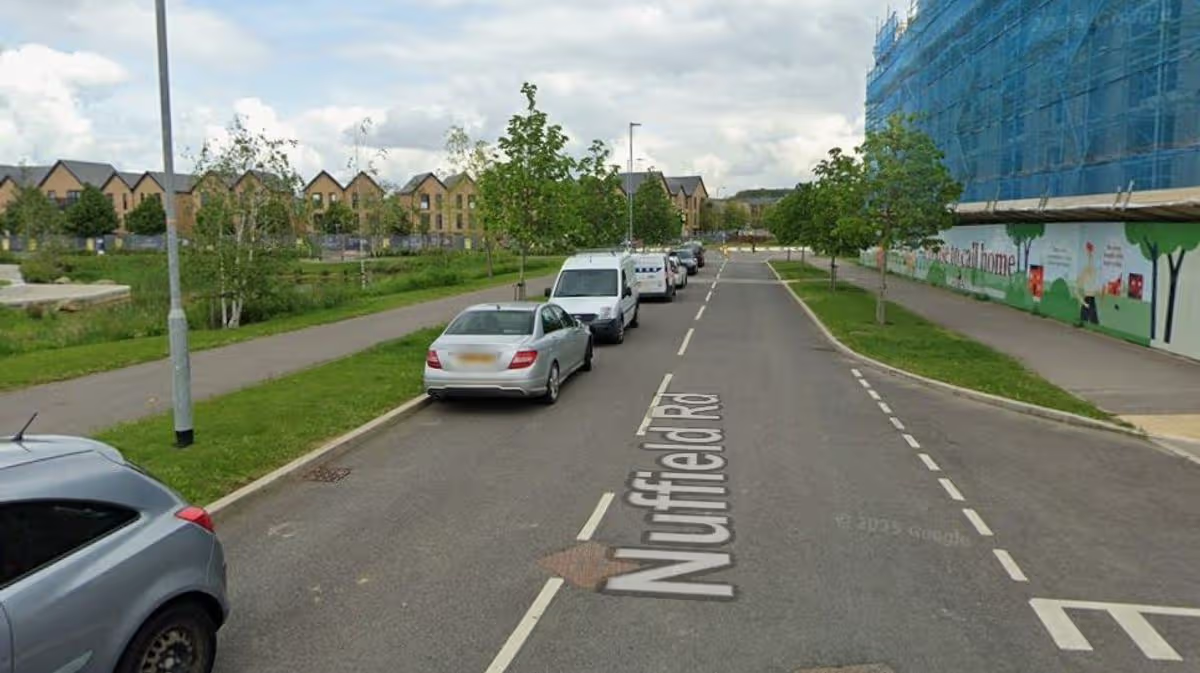
Emergency services were called to a “sudden death” in a Cambridgeshire town. Cambridgeshire Police were called to Nuffield Road, St Neots, at around 10.30am on Monday (March 23).
A police spokesperson confirmed it was for a “sudden death”. The spokesperson said: “We were at the scene of a sudden death. It is not being treated as suspicious.”
The East of England Ambulance Service has been contacted for further information.
The Clarence Gardens Hotel at Blenheim Terrace in Scarborough is set to build an extension for a swimming pool and jacuzzi, and will convert part of its basement into a sauna and gym.
Located in the town’s conservation area at Queens Parade, the “delightful boutique retreat combines timeless charm with modern comforts,” the hotel’s website boasts.
The hotel is part of the “Signature Collection by Best Western” of the global BWH Hotels group.
Advertisement
Yorkshire Hospitality Ltd’s plan for the 26-room hotel was given the green light by council planners after the scheme was amended.
A single-storey extension with a roof lantern will be constructed at the rear of the hotel and will host the swimming pool and large jacuzzi facility, which aim to enhance the facilities offered to hotel guests, ensuring the building remains “competitive and attractive in the local hospitality market”.
The conversion of the hotel’s basement flat will provide space for a gym, changing facilities, and a sauna for the hotel’s residents.
While the layout of the hotel will be amended, the property will maintain all 26 bedrooms.
Advertisement
Planning officers said they had no concerns about drainage from the site and noted that there would be no changes to the parking arrangements of the hotel.
“There is not expected to be an increase in vehicle movements as a result of the development,” according to a planning report.
The report notes: “Blenheim Terrace and North Marine Road form part of the area’s wide principal streets, lined with imposing Victorian and Georgian terraces orientated to take advantage of extensive views over the North Sea.
“The locality is characterised by early to mid Victorian architecture, mainly of four storeys.”
Advertisement
Officers said the development would not result in harm to the distinctive tourism character of the area and that by providing additional facilities, it “could be argued to contribute towards providing tourism facilities with less seasonal emphasis”.
The planning application was approved by North Yorkshire Council, subject to conditions.
The DWP is set to complete the final stage of moving claimants from two legacy benefits onto Universal Credit by March 31, 2026.
Linda Howard Money and Consumer Writer
03:00, 25 Mar 2026
Two long-standing benefits administered by the Department for Work and Pensions (DWP) will cease on March 31 as the UK Government finalises the last phase of transitioning claimants from older ‘legacy’ benefits to Universal Credit.
Income Support and income-based Jobseeker’s Allowance (JSA) are being phased out as part of the ongoing ‘Managed Migration’ programme, which aims to transition individuals from older benefits to the newer Universal Credit system.
Advertisement
The DWP has already sent out over 1.8 million Migration Notices to claimants who need to switch benefits as the programme nears its conclusion. It is anticipated that most people affected by these changes will have completed their move to Universal Credit by the end of March 2026.
Under the managed migration process, claimants who receive a Migration Notice are required to apply for Universal Credit within a specified deadline. Those who fail to submit a claim in time could see their existing benefits terminated.
The transition of people receiving Income Support and income-based JSA is nearly complete, according to the DWP. These two benefits will officially terminate at the end of March as the government continues its broader reform of the welfare system, reports the Daily Record.
However, ministers have agreed to a brief extension for some cases involving Employment and Support Allowance (ESA). The Department states that many ESA claims are more complex and require additional support to ensure people transition safely to Universal Credit.
Advertisement
Universal Credit is progressively replacing six legacy benefits, including Income Support, income-based Jobseeker’s Allowance, income-related Employment and Support Allowance, Housing Benefit, Child Tax Credit and Working Tax Credit.
The UK Government says that the new system aims to simplify the benefits system by consolidating several payments into a single monthly payment.
The managed migration process has been ongoing for several years and involves directly contacting claimants when it is their turn to transition onto Universal Credit. The DWP sends letters outlining the necessary actions people need to take and offers support for those who require assistance with the application process.
Officials emphasise that ensuring claimants safely transition to the new system remains a priority as the programme approaches completion.
Advertisement
Claimants uncertain about whether they will need to switch to Universal Credit can verify their circumstances through official guidance or on GOV.UK or wait to receive a Migration Notice from the DWP.
The UK Government has stated its commitment to finalising the migration programme in the upcoming months as the last legacy benefits are phased out.
Claimants who receive a Migration Notice from the DWP must apply for Universal Credit by the deadline specified in the letter. If they fail to make a claim in time, their existing benefit payments could cease.















































You must be logged in to post a comment Login