

Politics
Adrian Hilton: The decline and fall of the Oxford Union

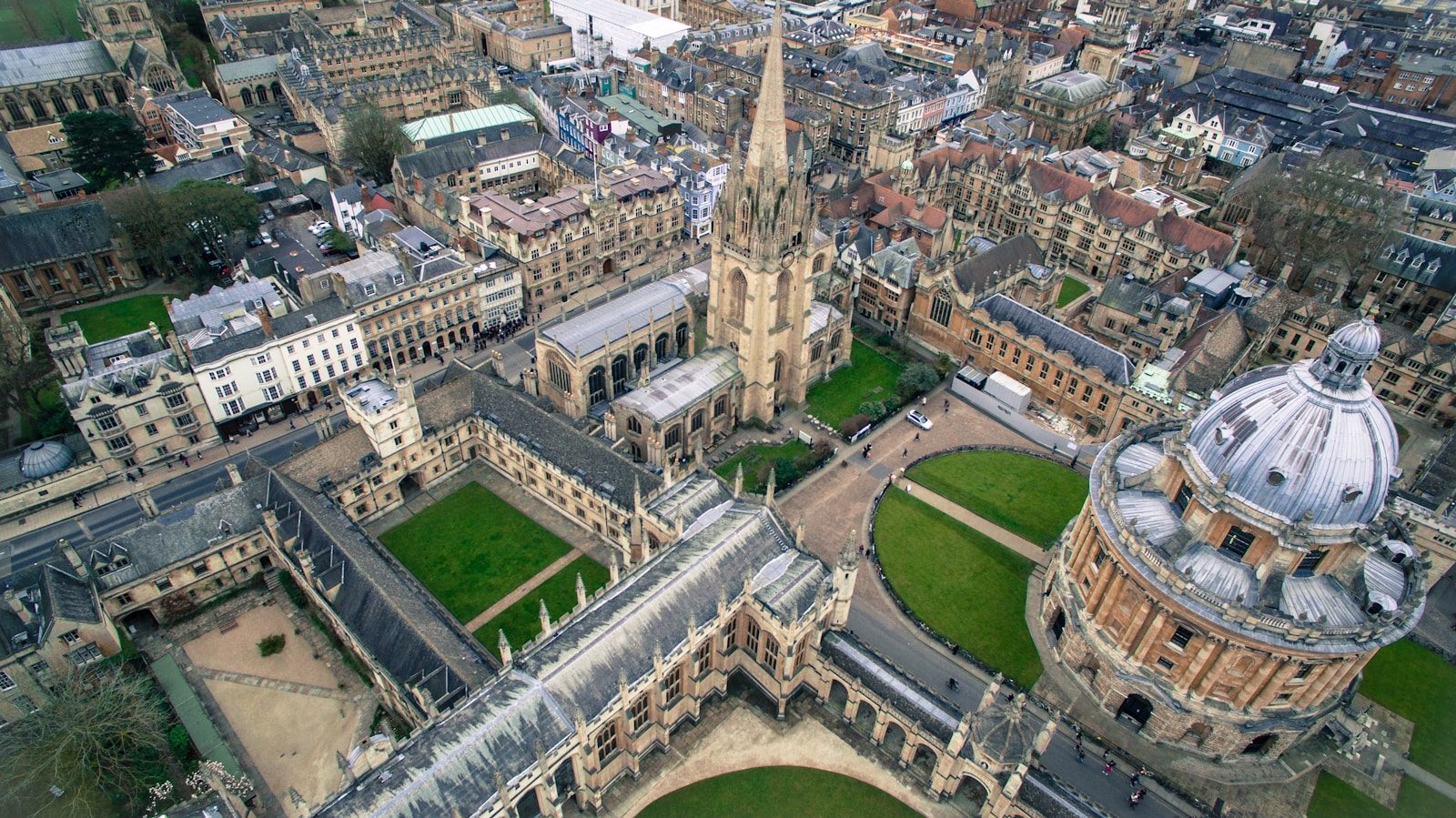
Adrian Hilton is a conservative academic, theologian and educationalist.
‘If you want to run for the Union – and it’s not a bad thing to do – make your reputation outside first’, Charles Ryder was advised in Brideshead Revisited as he was about to go up to Oxford.
It wasn’t bad guidance from his cousin Jasper, but the reputational sphere was restricted to improving oratorical technique at the Canning or Chatham clubs, with the exhortation of discipline to ‘begin by speaking on the paper’. For the disimpassioned, it was rather prosaic guidance.
For those more inclined to the Sebastian Flyte school of reputation-making, you could walk up and down Catte Steet in dove-grey flannels and a crêpe-de-chine scarf supping Cointreau with an old bear named Aloysius. Or editing the Isis while dreaming of a rowing blue and sauntering nightly around the Bodleian dressed like something out of Gilbert & Sullivan. Or joining the O.U.D.S and giving such a mesmerising Hamlet or Faustus that the high-table toasts would hail you as the heir to Gielgud. But for a certain type of student, the presidency of the Oxford Union is the zenith of realisation; the chamber where love dies and the political bonds of callow reputation are forged by bluster and zest. Here are planted the seeds of life’s harvest while they learn the art of secular ritual and taste the ecstasy of oratorical victory. By shaking hands with the great and the good, you were almost anointed to become one – a bishop, captain or cabinet minister, at least, if not one day prime minister.
And many have indeed joined the ranks of the elite, right from the society’s inception. The first to become an MP was Digby Wrangham who was president in 1826 and entered Parliament just five years later in 1831. Others so destined include Thomas Acland, William Ewart Gladstone, Herbert Henry Asquith, George Curzon, and Quintin Hogg. More recent years have yielded Michael Foot, Edward Heath, Anthony Crosland, Tony Benn, Michael Heseltine, William Hague, and, of course, Boris Johnson and Michael Gove. The undisputed and disputable heirs to two centuries of intellectual enlightenment and political tiffs.
The first Jewish president was elected in 1910 (Leonard Stein); the first Asian in 1934 (Dosabhai Framji Karaka); the first black president in 1942 (James Cameron Tudor), and it didn’t take long after women were permitted to become full members in 1963 for the first female president to be elected (Geraldine Jones in 1968). And feminine stares of disdain proved just as deadly as any man’s guile: they presided with the same clear eyes and toiling lungs.
As each university intake became progressively diverse, reflecting the increasing pluralism in society, so junior officers became more ethnically and racially diverse. Over the past year alone, the society has had its first Arab president (Ebrahim Osman-Mowafy), two Pakistani presidents (Israr Kahn and Moosa Harraj), and, mirroring the rise of Kemi Badenoch to lead the Conservative Party, its first black female president (Nigerian, Anita Okunde). Recently ousted president-elect George Abaraonye was also of Nigerian descent, and the newly elected president-elect, Arwa Elrayess, is a Palestinian Arab. She is presently promoting a myth claiming to be the ‘first Palestinian’ ever elected president, which is only true if she ignores the Palestinian Jew (Gershon Hirsch) elected in 1941.
The thing about racial/ethnic/cultural diversity is that the term-card of each president tends to reflect something of their social concerns and political priorities, if not sectarianism. They know it all, and they like to keep people small. Thus, when an Arab president inclines to the proposition ‘This house believes Israel is an apartheid state responsible for genocide’, and vacates the chair in order to speak himself in favour of the motion, it follows that the environment becomes distinctly hostile to those who argue against, if not a scene of desolation for Jews more generally. They seem to have become the undesirables.
There are geo-political contextual variables for such debates, of course. But some of the speakers in this one were deemed not only to have sailed close to the lauding of Hamas as worthy of emulation, but to have crossed the line with their glorification of terrorism and incitement to racial hatred. One of the speakers, Susan Abulhawa, is currently suing the society on the grounds that the standing committee was advised to edit the video of her speech to conform to the statutory requirements relating to the promotion of terrorism and racial/religious hatred; a censorship which she considers not only an infringement of copyright and breach of contract, but defamatory and discriminatory.
Over the past decade, an erstwhile liberal debating society has become more overtly hostile to members who hold certain political-philosophical views. When Jews hear a speaker addressing Zionists, saying: “You don’t know how to live in the world without dominating others. You have crossed all lines and nurtured the most vile of human impulses,” the animosity, if not hatred, oppresses souls. You could have a philosophical debate about the meaning of ‘Zionism’ in this context, but the vehemence of enmity precludes it. There is a kind of ‘cleansing’ going on, if not an ‘occupation’ being instituted, which often manifests itself with threats and intimidation of both invited speakers and those who dare to speak on the floor. Recent debates have not only been distinctly anti-Israel, anti-American and anti-capitalist in flavour, but increasingly focused on multiculturalism, pro-Islam, the Global South, international courts, the Ottoman Empire, Kashmir, the Arab Spring, Khamenei’s Iran, Modi’s India, and so on. It has become a foreign ground, unrecognisable from even a decade ago.
This focus is exacerbated by the post-graduate international intakes of some colleges and associated institutions. The Saïd Business School, for example, is proudly diverse and global, and (uniquely) currently offers free life membership of the Oxford Union to all their Masters and DPhil students. That is at least 550 memberships (and around £120,000, discounted in a ‘bulk membership’ deal) every year, as against the dozen or so undergraduates who might join from each of the colleges. This institutional ‘entryism’ has a distorting effect not only on the election of officers and motions for debate, but also on the culture of the society. The financial dependence also inclines to the tolerance of domineering postgrads. It is also worth noting that Saïd’s bloc-funding accounts for around 30 per cent of annual OUS membership income, making it difficult to sustain the assertion that the university and society are completely separate.
This is a deal that perhaps the Saïd Business School should urgently reconsider.
Following the Israel debate presided over by Mowafy, numerous complaints were raised and formal investigations initiated by those who faced his reproaches. In a damning report, he was found to have harassed, bullied and victimised people; caused significant offence and distress; abused the rules of debate; exposed the society to serious legal jeopardy; risked criminal liability for standing committee members; disparaged and fostered hostility against the society’s legal counsel by referring to him as a ‘Zionist’; was persistently obstructive, hostile and disruptive in meetings, and otherwise engaged in conduct liable to bring the society into disrepute. So serious has been his chronic campaign of disruption, manipulation and intimidation that the OUS corporately deemed it necessary to recommend the most severe disciplinary sanction: permanent expulsion from membership. His presidency was authority without dignity. The alarming thing is that the subsequent election of two others who agreed with him to the Standing Committee resulted in the withdrawal of the complaint before it could be heard by the Senior Disciplinary Committee.
As if that weren’t enough, Anita Okunde hosted a Hamas-lauding speaker and whipped up a tribal chant of ‘Free Palestine’. She, too, received a motion of no confidence in her leadership for bullying and dictatorial behaviour, which she casually brushed off with her sex: “Sadly, this is not the first time I or others have faced misogyny, threats, or discriminatory behaviour during my time at the Union,” she said.
Other pro-Palestine meetings have ended with chants of ‘From the river to the sea, Palestine will be free’, with all its genocidal connotations. Anyone who expresses concern about this is isolated and harassed. If you get on the wrong side of some, they take it out of you in debilitating procedural ways. At the time of writing, there are active disciplinary cases against the president, librarian, treasurer, secretary, ex-treasurer, librarian-elect, deputy returning officer, and three members of the standing committee. These have been brought by a president-elect, two ex-presidents, the ex-librarian, ex-treasurer, and three other members of the standing committee. There are also corporate complaints against a member of the standing committee for disseminating inciteful pamphlets; against another for intimidation and blackmail; and another for ‘weaponising’ the society’s noticeboard and unauthorised recording of proceedings. Ferrets in a sack would have more dignity than this internecine litany of retaliatory disorder.
It is important, however, not to aquatint the Oxford Union of centuries past in some arcadian Brideshead of mild, elegant, gentlemen-scholars, where life kept pace with punting in the autumn mists and opinions were articulated with a mild sacerdotal authority. The society has been riven with division, beset with infighting and endured existential schisms since the 19th century. Indeed, the foundation of the United Debating Society in 1823 lasted only until 1825, when the only solution to irreconcilable differences was dissolution and re-foundation as the Oxford Union Society, with the malcontents expelled. And again in 1833, the exasperation of established Conservatives with the insurgent Liberal standing committee led to the Tory ‘Ramblers’ splitting off and forming a separate society, which in turn led to their expulsion en masse for setting up a rival society to God’s, as immortalised in the poem Uniomachia (‘Battle at the Union’). In 1847, the OUS set up its (extant) trust deed after a faction tried to sell off assets to aid victims of the Irish potato famine (and to this day, there remains a prohibition on OUS funds being donated to charity).
If the present political rot runs deep, the financial corrosion runs deeper. The society is currently facing bankruptcy as its junior officers do what all ‘here-today, gone tomorrow’ (aspiring) politicians do: carry on regardless, because tomorrow will somehow take care of itself. It is forecast to make almost a £400,000 loss in the year 2025/26, and has less than £800,000 in reserve. Today’s presidents can spend £5,000 on Bollinger, £1,800 on peacocks, and £750 on an ice sculpture, leaving tomorrow’s presidents to worry about austerity. But the problem is not so much the riotous exuberance of OUS young bloods as the dereliction of duty of the grown-ups in the Oxford Literary and Debating Union Trust (OLDUT), which owns the Grade II* listed buildings and is the charitable arm of the society (or, rather, the OUS is OLDUT’s legal delegate for its fiduciary obligations). It was established in 1975 following another bankruptcy scare. There was a fear that in order to pay its debts, the society would sell off some of its buildings to the university or a private developer. A group of former officers raised enough money to bail out the OUS and buy the buildings in the name of a charitable organisation with the stated aim of ‘The Advancement of Education with the University of Oxford by the provision of debates and the maintenance of Library and Reading Room facilities’. OLDUT therefore provides the OUS with access to its ‘non-commercial rooms’ (libraries and debating chamber) for free, and allows access to its ‘commercial rooms’ (bar, snooker room, and a couple of others) for a nominal fee. Incredibly, even the bar is currently operating at a loss.
OLDUT has a vested interest in the governance, functioning and flourishing of the OUS because it is only able to meet its charitable educational objectives by supporting it. The OUS is an unincorporated association: it has no legal personality and is owned equally by its 140,000+ global members but led by Oxonians in statu pupillari. This symbiosis initially had substantial buy-in from significant ex-presidents, including Sir Jeremy Lever and Michael (Lord) Heseltine, who remains patron of the charity. In 2019, following another scandal where a blind black student was violently ejected from the chamber, which led to a national outpouring of condemnation of the society for brutality and racism, another body was set up to oversee the decisions of the bursar. He supervises all elements of the running of the society; students being deemed too inexperienced, unreliable, and impermanent to hold the full-time staff to account. This body, called the Audit Committee, has seen numerous resignations recently, most notably that of its founding chair, Miles Young, Warden of New College.
Over the past five years there have been three bursars and two acting bursars. OLDUT paid a five-figure sum for a headhunting firm to find suitable candidates for the bursar vacancy in 2021 and again in 2023, both of whom resigned after less than two years citing the society as ‘ungovernable’. Five trustees have also resigned over the past two years, and there is currently no bursar at all. The past five years have also seen three senior librarians and three senior treasurers, most attributing their departures to a hostile working environment and a culture of utter thanklessness.
The scale and rate of turnover of those who are supposed to keep the society running has been profoundly destabilising. They are like the permanent civil service to the ‘here today, gone tomorrow’ student officers, and without them it is hard to see anything but a path of chaos and increasing irrelevance. At the turn of the millennium, some 40-50 per cent of undergraduates were members; today it is just 10-15 per cent. This decay has a sympathetic background in the degradation of the Union buildings, with leaking roofs, unstable chimney stacks, precarious load-bearing joists, and plaster crumbling from ceilings. The repairs and renovations, which are urgent, have an estimated cost of £4-5million. It’s not impossible the buildings might need to close altogether for health and safety reasons.
And ‘health and safety’ is but one of the governance tensions – or accountability obfuscations – in urgent need of reform. All the statutory regulatory requirements are presently in the hands of bright but inexperienced students who circulate every eight weeks, giving zero continuity and scant need of responsibility. The priorities, specialisms and competencies of one cohort will not be the same as those of the next. It is therefore possible, if not highly probable, that the students, while being responsible as tenants for the care and upkeep of the building, may know nothing at all about the necessary standards and expectations. Any why should they bother acquiring the knowledge if they won’t be there in eight weeks? Yet ultimate liability for safety resides with the adults of OLDUT.
It is the same with employment issues, where students have a veto on hiring and firing. They are also in charge of data protection, financial accounting, licensing compliance, ensuring conformity to equality and discrimination legislation, and the appointment of society trustees. In practice these are overseen by the bursar, but he is accountable to the student standing committee (who can fire him). Essentially, the students can be ignorant, indolent, reckless or all three, but it is the trustees of OLDUT who will be fined or go to prison, and their reluctance to intervene is bordering on apathy and negligence. Without liability insurance, it is small wonder some are showing signs of severe stress or simply resigning.
With successive scandals, lawsuits, looming bankruptcy, terrorism investigations and breaches of charity law, the society has become a byword of iniquity from Christ Church to Somerville: students possessed with vaulting ambition, their lives governed by moral-political imperatives garlanded with the conceit of personal infallibility. They seem to dream more of their future entry in Debrett’s than care for the stewardship of ‘the most prestigious debating society in the world’.
If losses continue to mount, the Oxford Union may not have long left as a ‘going concern’, but if it does go bankrupt all would not be lost. Indeed, history would simply repeat itself, with OLDUT nominating a new body to take over the debating society and library functions in exactly the same way that OUS rose in 1825 from the ashes of the United Debating Society. That assumes, of course, that the toxic fallout from OUS self-destruction doesn’t bring OLDUT to the edge of bankruptcy by crippling its fundraising capacity and impeding urgent building renovations.
If this Jacobean tragedy is to end, the incestuous strife and internecine inquisitions need to cease.
There is an urgent need for reform of the governance structure, and here there is an ember of sanity just about glowing in the form of the Concerned Alumni of the Oxford Union. That body has the knowledge, expertise and dedication to wrest the society from those agents of destruction who view it as an institutional relic ripe for repurposing to their political ends. George Abaraonye takes the view that “some institutions are too broken, too oppressive to be reformed. Like cancers of our society, they must and they should be taken down by any means necessary”. His infiltration might have failed, but others are intent on blasting the foundations if the superstructure doesn’t crumble first. Blind to their own malignancy, those who are hostile to the history and traditions of the society and its foundational charitable objects cannot possibly lead it. The task of OLDUT is to intervene when such radicals emerge whose concern with debate and freedom of speech ceases when their agenda is challenged or their creed derided. At the very least, students who aspire to governance must begin to take on statutory responsibilities in order that the laws of trusteeship can hold them personally to account. If, then, they seek to repurpose the prestige of the society by subverting its integrity and fund-raising capacity, they would be accountable not only to internal disciplinary bodies, but to the courts, with all the judicial gravity, legal liability, and potentially life-long consequences that would entail.
If these reforms are much delayed, it will be 1825 all over again.

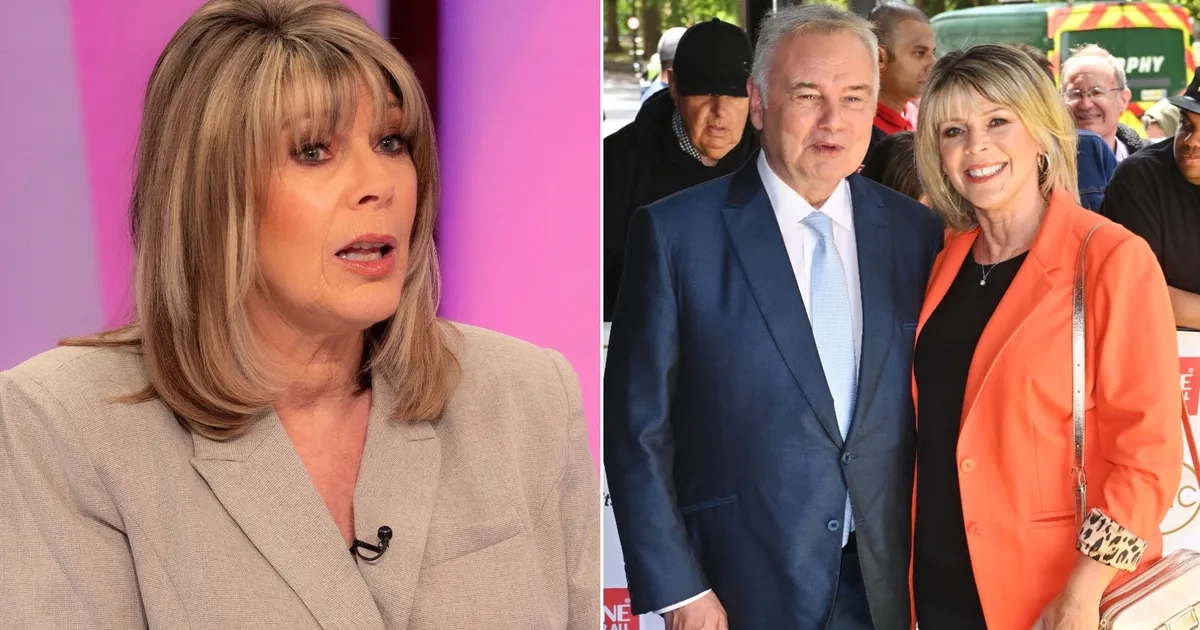
Ruth Langsford has reflected on her split from ex-husband Eamonn Holmes in a candid new interview.
The two TV personalities had been together for 27 years, and married for 14, when a spokesperson announced in 2024 that the “marriage is over” and the pair were “in the process of divorcing”.
In the years since, Ruth has remained mostly tight-lipped about the break-up, but has spoken about it more candidly to the Daily Mail’s Weekend magazine.
Ruth began by saying that she and Eamonn had a “very happy marriage”, continuing: “Of course you question yourself, ‘did I miss something, was I not aware, was I too busy?’. But there’s no point playing the blame game.”
The Loose Women anchor admitted: “I just didn’t think I’d find myself here, and I wasn’t strong at the start. I was broken. Broken heart. Broken dreams.
“We all have an image of how we think our life and future is going to be. This wasn’t mine. I was devastated. We had gone from being a couple, traversing the usual ups and downs of a marriage, to an abrupt end. It was a huge shock.”
In the end, Ruth said she had to “give myself a good talking to” in order to stop herself “catastrophising”.
She recalled: “I was literally asking, ‘What’s going to become of me?’, like some sad, lonely woman in a Jane Austen novel.
“But then age and experience told me, ‘Ruth, you’re not going to die from this. I mean you are going to die, one day, but you’re not going to die from divorce’.”
Ruth initially took two months off her role on Loose Women in the wake of her divorce announcement, making only fleeting references to the split on the panel show in the period that followed.
Eamonn – who has since been linked with relationship counselor Katie Alexander – told viewers during his GB News show the day after the announcement was made: “I would like to thank you for your support for Ruth and I over the last few days as to the news of our separation.
“Your support for both of us is very much appreciated.”
Ruth and Eamonn share one son, Jack, who was born in 2002. Eamonn also has three grown-up children from his previous marriage to his first wife.
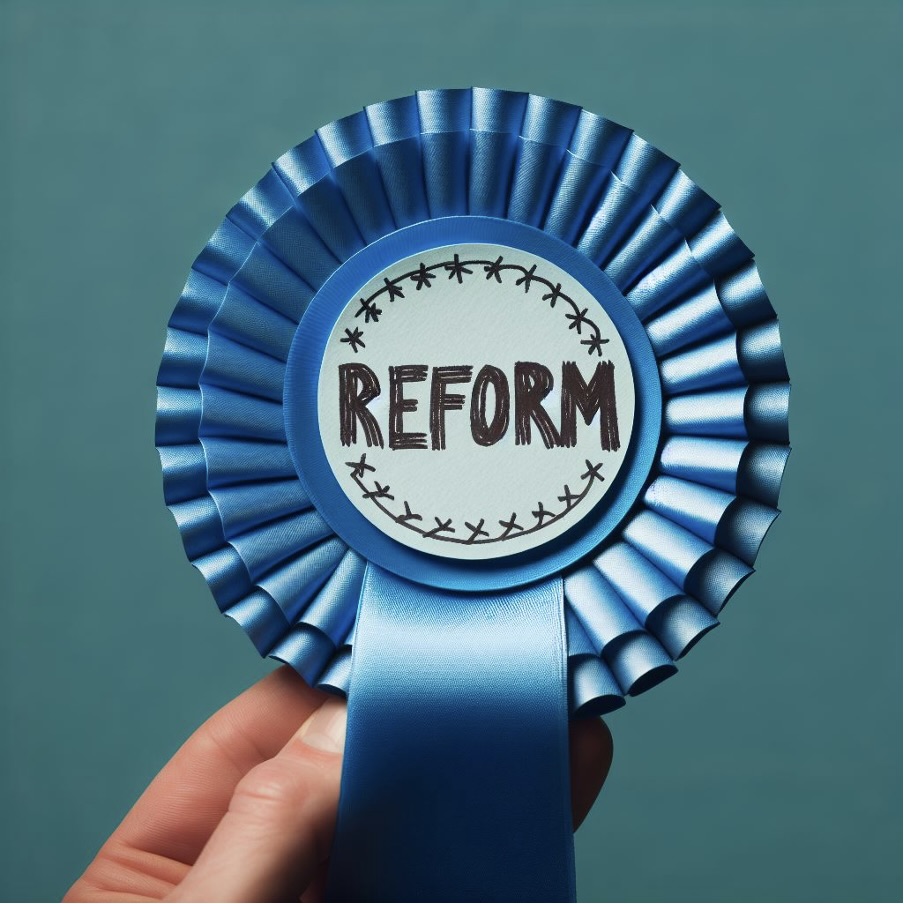
Toby Berry is a Young Conservative and student in South London.
There is a curious phenomenon which many of us are bound to have seen at some point: the idea that a name can shape destiny. We are most familiar with this applied to individuals, a sailor called Mr Shipman, a prelate called Cardinal Sin, but it is worth wondering if it can be considered more broadly.
The three traditionally largest parties in Britain, the Liberals (or as they have been for some years, the Liberal Democrats), the Conservatives, and Labour, have names describing their worldview; they derive their names from their respective ideologies. Generally, to join the Liberals is to be a liberal, to join Labour is to be a union-style socialist, and to join the Conservatives is to be of a conservative disposition.
Each may lose its way, adopt newer, broader ideological taglines – liberal conservatism, the New Left, or ‘Orange Book’ liberalism – but, fundamentally, each holds to its name. In return, its name gives them a deep history to appeal to, to demonstrate to the public the approximate way they will govern, even without considering specific policy.
Other parties define themselves by other terms, more by what they oppose or seek than by what ideological ideation they hold. Their names still give a very clear indication of their priorities, and the phenomenon is observable even beyond overtly single-issue parties like the Abolish the Welsh Assembly Party: the Scottish National Party is recognisably the party of Scottish regionalism, the Greens are fundamentally environmentalists, UKIP was the party of Euroscepticism.
One party, a fixture of modern British politics, has been left unmentioned thus far. What does this mean for Reform UK?
Its name and its message are commensurate with each other. It diagnoses Britain as having a broken political system – Robert Jenrick justified his defection by criticising Kemi Badenoch for not sufficiently recognising this idea. It seeks to reform the British political system in its own image. Reform, fundamentally, seeks to reform that which it considers broken.
What Reform believes on this level is clear, but what does this mean for their future?
If Reform wins, they will try to enact sweeping reforms. There are two broad possibilities: they will either succeed both in implementation and outcome, or they will fail to work, or indeed to implement them at all.
Let us work backwards and consider first the possibility of failure. The verdict of the public here would be stinging, and probably fatal. Reform would have won a desperate electorate, people viewing the party as their last hope. A party which is called Reform and which fails to reform is utterly redundant. Voters do not gift infinite patience to a movement defining itself in one way and carrying itself in another; the current Labour government, and the Conservative government before it, tell us that much.
If Reform succeeds, and our institutions are restored, borders secured, and bureaucracy slimmed, what is there to justify their continued existence? If Britain is no longer broken, what else is there to reform?
One possibility is an absurdity, inventing new causes to reform in the model of perpetual revolution. Another, conserving what they would have built, is sustainable. In this hypothetical, when Britain is fixed, it must be defended. Restored institutions must be protected from any future manifestations of Blair-era constitutional vandalism, norms embedded, and the new political settlement insulated.
This is conservatism.
Reform have already been called recycled Tories by some, given that now four of seven of their MPs sat as Conservatives, with potentially more to come. At the point at which they cease to reform, they really do become the Conservative Party. The point at which Reform defines itself not around change, but inheritance and the defence of the true, the good, and the beautiful, is the point at which it defines itself with the instincts of conservatism.
They could retain their name, or they could come out into the open as a Conservative Party, or they could synchronise and become one with whatever remains of the party of Disraeli, Churchill, and Thatcher. In any case, would Britain not have reverted to its natural state?
This says nothing to diminish the responsibility of the Conservative Party to fight for its survival. Its future must be secured on its own terms, not conceded by default. As I was recently reminded by a very experienced hand in politics, while the relationship of the Conservatives with Labour or the Liberals is business, our standing with Reform is existential. They seek to destroy the party, to annihilate it. Yet, in doing so, they may be moving closer to that which they want to end; a party which succeeds in reforming Britain will, sooner or later, face the task of conserving what it has built. Its future may look rather more like its past than it currently imagines.
The post Restore: Rupert Lowe’s vanity project? appeared first on spiked.
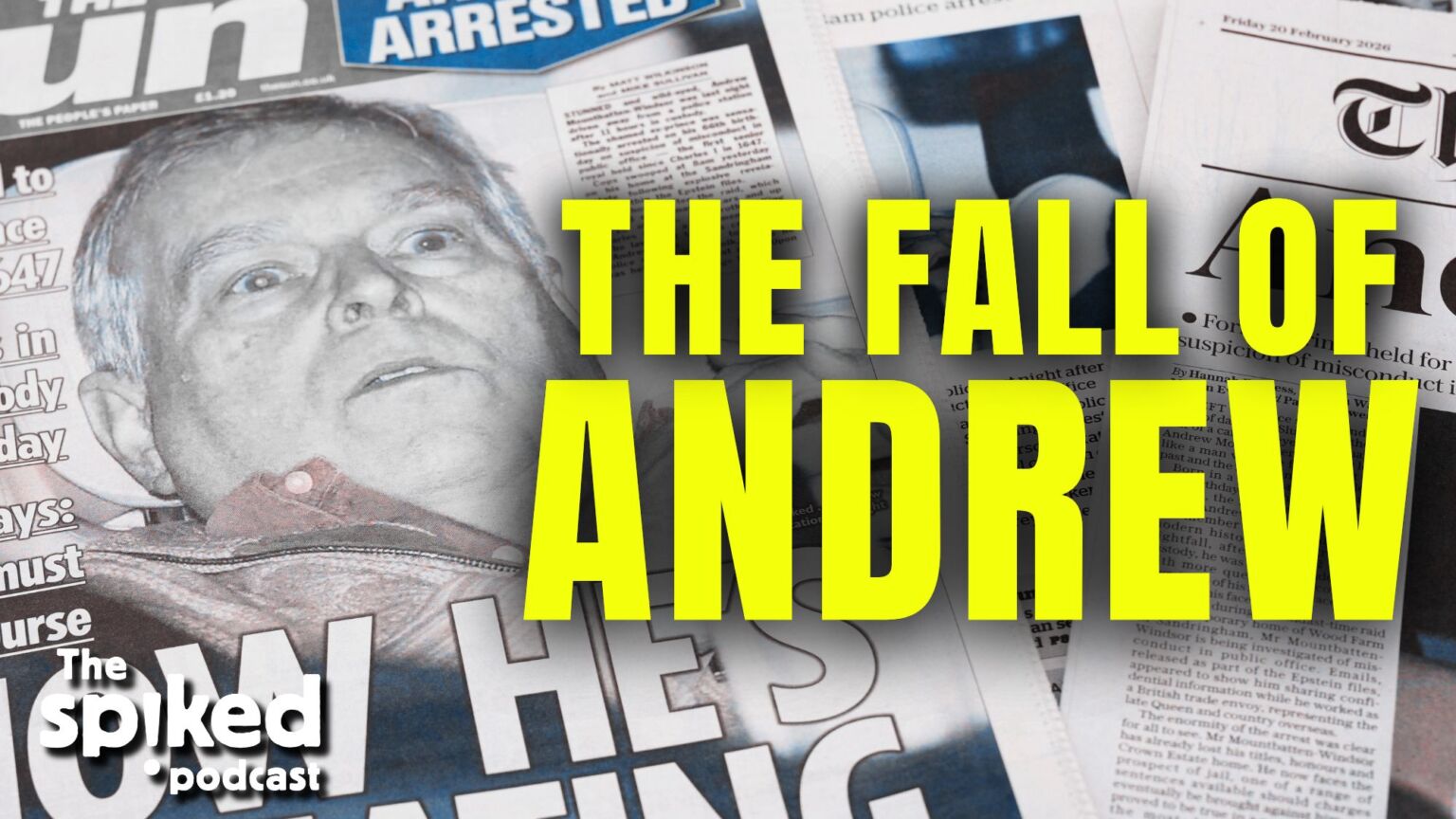
The post Andrew, Epstein and our feckless elites appeared first on spiked.

On 25 February, the European Legal Support Center (ELSC) is launching a publicly searchable database.
Otherwise known as ‘Britain’s Index of Repression,’ it catalogues instances where UK institutions and craven bodies have used the law. More specifically, it shows how Israel-adjacent groups are using legal means to stifle Palestine solidarity.
Unsurprisingly, a quick search for UK Lawyers for Israel brings back 128 results. It seems that what the Canary has known all along is becoming public knowledge.
The nefarious lobbyists at UK Lawyers for Israel have and remain to be actively involved in repressing British civil liberties. Only, they’re batting for the wrong team — by which we mean a hostile, foreign state.
In their own words, plucked from their website, the UK Lawyers for Israel, describes it’s remit as follows:
We use the law to counter attempts to undermine, attack and delegitimise Israel, Israeli organisations, Israelis, and supporters of Israel.
‘Unregulated law firm’
ELSC have long advocated for those facing persecution for expressing solidarity with Palestinians, arguing that legal interventions by Israel-aligned lobby groups have led to:
institutional action against Palestine solidarity in schools, workplaces, universities and beyond.
The database is a work in progress and it is possible that there have been other depraved interventions that aren’t yet in the database. The items that are searchable, as the ELSC points out, is just what they are able to verify at present — suggesting that pro-Israel interventions are possible much higher.
Their post in full reads:
This is why ELSC, alongside the Public Interest Law Centre, filed a formal complaint with the Solicitors Regulation Authority (SRA) against the Director of UK Lawyers for Israel.
Our complaint sets out serious breaches of professional standards, including the use of Strategic Lawsuits Against Public Participation (SLAPPs) designed to intimidate and silence Palestine Solidarity.
We further call on the SRA to investigate whether UK Lawyers for Israel is operating as an unregulated law firm and to bring it under formal regulatory oversight.
Lawfare must not be used to silence Palestine solidarity.
Stating that the new index represents the legal centre’s ‘push back’ on repression on behalf of a genocidal state, they added that:
Anti-Palestinian repression in Britain is not accidental. It is structural and systemic.
Our new report shows how repression works to depoliticise solidarity, forcing the movement onto the defensive, draining resources, and fracturing collective power.
The goal is bigger still: to erase Palestinian history and struggle from public consciousness.
Referring to the report being released on the 25th, they finished:
We will expose the architecture of repression, from universities to workplaces, cultural institutions to public space.
We are making this resource public so the movement can understand it, challenge it, and make it undeniable.
The ELSC will livestream the launch and invites those who want a first look to register their interest on their website.
Repression at Kings College London
The Canary wrote earlier this month about a mass walkout at Kings College London (KCL), protesting Usama Ghanem’s indefinite suspension. Ghanem is an Egyptian student at KCL who has had his student visa revoked. To make matters worse, he now faces deportation to Egypt, putting his life at risk.
We wrote:
Organisers say Usama’s case is part of a broader crackdown targeting pro-Palestine staff and students, including disciplinary action and intimidation. At KCL, more than twenty students – primarily students of colour – have faced disciplinary procedures linked to Palestine activism. However, far-right and Zionist groups have repeatedly targeted demonstrators on campus.
A KCL staff member talked about the broader context of Usama’s suspension. They noted that the college:
“escalated disciplinary action against pro-Palestine students, closed down hard-won fora on divestment and the reconstruction of Gaza’s education system, rejected all divestment demands, and unilaterally introduced new protest restrictions.
At the same time, it has failed to challenge Zionist and fascist groups like Stop the Hate and Betar, allowing them to intimidate and assault staff and students with impunity.”
Eyes open
British society is no longer blind to the fact that our freedom of speech faces institutional attack. Those same institutions answer to Keir Starmer who, as we’ve reported before, has chosen Israel at every turn.
Even the far-right have long expresses concerns that free speech is being curtailed. But no to call out blatant attacks on universal civil liberty and the unspoken institutional veto against anyone opposing the murder of innocent men, women and children in Gaza.
As British citizens, we need to ask ourselves ‘why are some people more outraged about limits on hateful speech than about our ability to object to mass murder’?
Once the ELSC releases its Index of Repression, those in power are no longer able to deny this reality. The layers of secrecy keeping people misinformed and beguiled by political trickery have been stripped back.
Feature image via Barold/the Canary
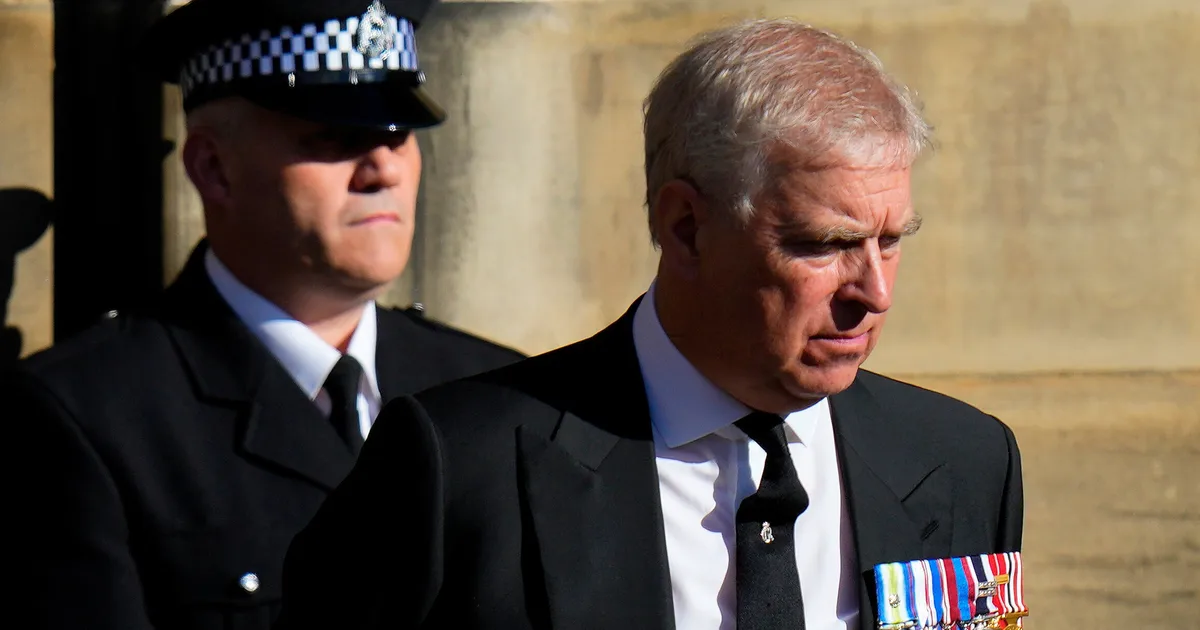
Calls for Andrew Mountbatten-Windsor to be removed from the line of succession are growing following the former prince’s arrest.
The former Duke of York was held in custody for 11 hours on Thursday, on his 66th birthday, before being released under investigation.
Andrew has always denied any allegations of wrongdoing.
He was detained on suspicion of misconduct in public office while his homes in were searched by police.
It’s understood that the search in his Norfolk home on the Sandringham estate has concluded while officers continued to look through his Royal Lodge home in Windsor, Berkshire, on Friday.
The shocking turn of events comes after three million documents related to the dead paedophile Jeffrey Epstein were released by the US Department of Justice.
Several UK forces have since started to look into various claims, including the possibility that Andrew sent confidential information to Epstein in his capacity as Britain’s trade envoy.
The documents suggest the former prince may have forwarded government reports from his visits to Vietnam, Singapore and China to the disgraced financier.
Thames Valley Police also said in February that it was assessing a separate allegation that a second woman was sent to the UK by Epstein for a sexual encounter with Andrew in 2010.
The woman, who is not British, was in her 20s at the time.
Yesterday’s arrest was not in relation to allegations of any sexual offences.
Andrew stepped down from his royal duties in 2019 after a car crash Newsnight interview about his friendship with Epstein.
When further allegations about their association emerged in October, King Charles stripped Andrew of his titles – including his status as prince.
However, Andrew remains eighth in line to the throne, behind Prince William and his children, and Prince Harry and his children.
Legislation via an act of parliament would be needed to remove him from the line of succession, and MPs would have to debate the topic.
These latest claims, alongside the arrest, have triggered calls for more extreme action.
A YouGov poll has found 82% of the public think Andrew should be removed, while 6% disagreed and 12% said they were not sure.
Lib Dem leader Ed Davey said the monarchy must work to make sure Andrew can “never become king”.
He said: “The most important thing right now is that the police be allowed to get on with their job, acting without fear or favour.
“But clearly this is an issue that parliament is going to have to consider when the time is right, naturally the Monarchy will want to make sure he can never become King.”
Meanwhile the Green Party leader Zack Polanski has called for a full statutory inquiry.
“I think its pretty awful, I think there are lots of questions to be asked,” he said. “We obviously need to wait for the legal process to make its way, but I would say we really need a full statutory inquiry.”
He argued that “when necessary” people should be “removed” from their positions – adding that he did not believe Britain should have a monarchy.
Meanwhile, shortly before Andrew’s arrest, prime minister Keir Starmer told BBC Breakfast that “nobody is above the law” when asked about the allegations against the former prince.
The King already appeared to distance the royal family from his disgraced brother on Thursday in a statement.
He wrote: “I have learned with the deepest concern the news about Andrew Mountbatten-Windsor and suspicion of misconduct in public office.
“What now follows is the full, fair and proper process by which this issue is investigated in the appropriate manner and by the appropriate authorities. In this, as I have said before, they have our full and wholehearted support and co-operation.
“Let me state clearly: the law must take its course.
“As this process continues, it would not be right for me to comment further on this matter. Meanwhile, my family and I will continue in our duty and service to you all.”
In a statement on Thursday evening, the police said: “Thames Valley Police is able to provide an update in relation to an investigation into the offence of misconduct in public office.
“On Thursday we arrested a man in his sixties from Norfolk on suspicion of misconduct in public office.
“The arrested man has now been released under investigation.
“We can also confirm that our searches in Norfolk have now concluded.”

For decades, victims have been suffering the consequences of degrading behaviour.
Revenge porn, deep fakes and more recently, images produced by X’s AI bot Grok, have put people onto a public stage in an incredibly vulnerable way that they did not ask for.
The rise in misogyny, in a world where many boys today think that feminism has gone far enough, coupled with developments in AI that enable people to remove a person’s clothes or to generate tailored porn, is terrifying.
It’s clear that we need new strict guardrails in place, which is what the government is attempting to do.
Keir Starmer announced this week that tech companies must remove “revenge porn” and deepfake nudes within a 48-hour window or their whole platform could be blocked and they could be fined millions.
This is welcome news. For years, victims have pleaded for these images and videos to come down, begging the police, the website owners and anyone who will listen to remove content that they did not consent to sharing, and then fighting for justice against their perpetrators.
These pleas have often fallen on deaf ears with victims feeling totally powerless against the internet, which never forgets you.
“This is not a ‘job done’ solution; we need to go further”
Action, not words, is what we need to see here. The huge positive here is that the government is shifting the shame by putting pressure on tech giants and companies to act and to protect victims over profits.
It is good to see that this is finally being taken seriously and that it is not just targeting social media sites, but a range of tech platforms.
But the most important thing is that they follow up with something robust enough to make change happen at a systems level.
It’s hard to know if the regulator Ofcom has the level of resources to manage the massive rise in generated content and all the new platforms and apps appearing.
They have a mammoth task ahead of them to be able to capture and control every single piece of content that lands. This is not a ‘job done’ solution; we need to go further and stop this content from being created and shared at all.
48 hours makes a good headline – but it is a huge amount of time for victims to suffer. It takes just seconds to screenshot and share an image.
How long would Keir Starmer want a compromising video or nude photo of himself online? I suspect 48 seconds would be too long.
Tech companies have put profit before harm since their inception, and it’s been the survivors and campaigners who’ve been pushing for years for accountability. In many ways, it’s about time we got proactive.
But what’s crucial is that we don’t accept this as a radical solution.
We should see this as an initial stepping stone, because I think we can all agree that victims deserve more than this.

Entries in the comments…
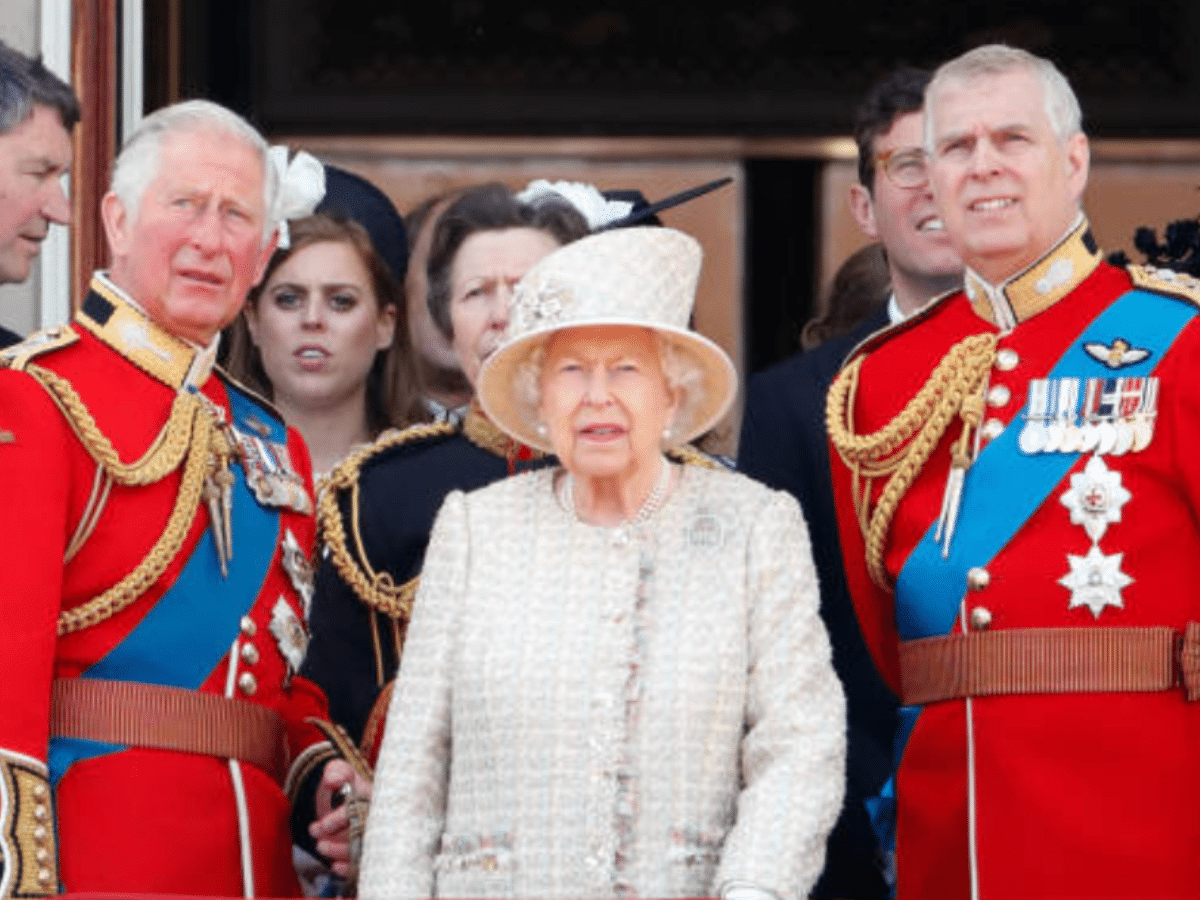
Andrew Mountbatten-Windsor’s arrest following the revelations in the Epstein files is invariably a gigantic embarrassment for the parasitic royal family. And, calls are growing for answers over the royal family’s support of Andrew over the years.
Historian Tessa Dunlop slammed the Royal Family’s choice to refrain from offering any apology to the British public in the Mirror. Dunlop pointed out that the privileged family could have paid attention to the disgraced prince’s apparent abuse of power.
Confronting Andrew’s ‘weaponised‘ use of his Royal privilege to shut down the allegations towards him, she exposed the lack of humility and accountability being shown by his silver-spoon family.
A point which was similarly made on Question Time to Fiona Bruce. No surprises, Bruce attempted to deflect the point:
Lady with purple scarf, “We watched the Queen, bless her, we did adore her”
“But she tried to bail Andrew out and pay off the Epstein trafficked victim, Virginia Giuffre”
“I think it’s all been way to slow”
“They royal family are trying to do the minimum”
“And plaster over… pic.twitter.com/3sFIZPOudi
— Farrukh (@implausibleblog) February 20, 2026
Epstein files show we must ‘hold powerful men to account’
In an opinion piece for the Mirror, Dunlop welcomed the ‘unprecedented move’ to arrest the former prince. She reminded us once again of the sex-pest’s relationship with paedophile Jeffrey Epstein and the victims who will be paying close attention. However, highlighting the shameful response by the Royal’s to continually use their privilege to protect the former prince, she underscored the message sent to victims everywhere that elites are not held to the same legal standards as everybody else.
So while reports confirm that in an unprecedented move, the former prince was arrested this morning on suspicion of misconduct in a public office, let’s not fool ourselves that Andrew is no longer royal. It was precisely because of his privileged position the former Prince was ‘anointed’ trade envoy in the first place – a sop to the late Queen from the Blair Administration in 2001 after a difficult royal decade.
Challenging the royals to show the same courage as the victims of powerful men, Dunlop added:
For far too long Andrew has been able to weaponise his royal privilege to push back against his accuser and to protect himself from legal scrutiny. Today he remains in police custody on potential charges of misconduct in a public office, but so many questions remain unanswered.
We still don’t know where the money came from that paid off Virginia Giuffre in 2022, when she accused Andrew of sexual assault under New York’s Child Victim’s Act, or how much the royal family knew about Andrew’s activities with Epstein more broadly. The latter’s female accusers have done so much to move this story forward and hold powerful men to account, surely it is time that our royal family also stepped up to the plate?
She concluded:
The late Queen protected her son Andrew, the institution of monarchy batted away questions concerning the Duke of York’s alleged misconduct since 2011 and Buckingham Palace was the address from which Andrew platformed his lies on the BBC in 2019.
Beyond what happens to their ‘ex-royal’ brother, surely the least the Royal Family can do is apologise for consistently turning a blind eye to former Duke of York’s extensive abuse of power.
Sympathy for powerful men
Narinder Kaur’s post on X highlights that there is no shortage of examples of influential figures expressing sympathy for powerful men facing allegations. They often focus more on the personal discomfort or “tragedy” of the accused than on the seriousness of the claims.
What many of these reactions tend to share is a striking disregard for victims. There has been a consistent failure, whether deliberate or not, to centre the experiences and suffering of those who may have been harmed through this shady web of the elite.
Trump on Prince Andrew’s arrest –
“I think it’s a shame… very sad… bad for the royal family.”
Not a word about the victims. Not a word about accountability. pic.twitter.com/h8xmWj3Ttd
— Narinder Kaur (@narindertweets) February 19, 2026
Psychotherapist Lucy Beresford argued on Sky News that seeing a powerful man face the full force of the law – just like any ordinary citizen – can have a profoundly positive impact on victims everywhere. It reinforces the idea that justice applies equally, regardless of status or privilege:
‘Powerful moment, almost a sense of karma that you could see someone who had so much power, has now been treated like the rest of us.’
Psychotherapist @LucyBeresford talks to @MattBarbet & @LeahBoleto about how Epstein’s victims might be feeling. pic.twitter.com/THOl7eAEeP
— Sky News (@SkyNews) February 20, 2026
Empathy for harm caused, not for the ‘fall from grace’
Dunlop’s intervention strengthens the point that victims will once again suffer as a result of the royal family’s continued avoidance tactics. In turn, they refuse to fully address the allegations against Andrew, and those against his close pal, convicted paedophile Epstein. As a result, victims are left feeling diminished and abandoned by justice.
We wrote yesterday:
Mountbatten-Windsor is currently in police custody amid searches of multiple properties as part of the criminal inquiry. The Epstein files have raised serious concerns about the scale of this sinister web of elitist men. This has prompted widespread demands for full transparency and accountability for sexual abuse against women and girls.
However, this pattern underscores how far more precedence is given to economic interests and institutional power over justice for victims and accountability for abusive men.
Undoubtedly, the Royal Family feel discomfort around this issue. But that discomfort pales in comparison to the serious trauma experienced by victims of sexual abuse. Shamefully, the monarchy deepens that trauma by showing palpable disinterest in the harm powerful men cause.
Another reminder that they will never be on our side.
For more on the Epstein Files, please read:
Featured image via the Canary

Now that we’re into the second month of 2026, have you found that your hopeful ’new year, new me’ energy has started to wane a little? Same.
In fact, I’ll be honest, there are often days where I struggle to get out of bed at all. I’m not quite depressed, I don’t think, but I do feel warmer and safer there.
Apparently, my ‘bed rotting’ habit is not uncommon at this time of year.
Dr Ritz Birah, a psychologist and sleep expert at Panda London, suggests many of us tend to languish a little more than usual in February.
“Mid-February is one of the busiest periods in my clinic. The initial motivation of the New Year has worn off, the days are still short, and many people arrive feeling flat, depleted and quietly ashamed that they ‘just want to stay in bed’,” she says.
“With constant rain, heavy grey skies and weeks of low light, it’s no surprise that the temptation to bed rot feels stronger than ever.”
The term ‘bed rotting’ typically refers to spending extended time in bed while awake, resting without a clear agenda. It might involve lying under the duvet, daydreaming, reading, listening to music or simply being still.
Crucially, it’s not about sleeping all day, nor is it inherently about avoidance or depression (though those can overlap).
At its healthiest, bed rotting is a form of deliberate rest, a pause from external demands and constant stimulation.
Bed rotting can actually be good for you, if done properly
Dr Birah notes that in a culture that glorifies productivity and early-year momentum, spending extra time in bed can be framed as “indulgent or lazy”.
“But psychologically speaking, that couldn’t be further from the truth,” she adds.
“In fact, when done intentionally and healthily, bed rotting at this time of year can be restorative, protective and surprisingly beneficial for both mental health and sleep.”
Wanting to rest while it is cold, grey and wet outside is your nervous system’s response to the environment around you, she suggests.
“Importantly, this desire to slow down can actually be part of a natural seasonal recalibration,” she adds.
“Just as nature appears dormant before new growth, humans often need a quieter phase to restore. We are, in many ways, regaining energy ready for spring.”
This makes perfect sense.
Of course, it can be harmful, too. We know that lying in bed, endlessly scrolling on our phones isn’t healthy. You’re not restoring your nervous system from an endless stream of bad news and sensory input, you’re just adding to it from a comfier spot.
So, if you’re going to bed rot, there are some things to keep in mind.
How to bed rot in a healthy way
If you’re looking to enjoy some bed-based rest, Dr Birah recommends the following tips:
Set gentle boundaries: Decide in advance how long you’ll rest (for example, an hour) so it feels intentional rather than endless.
Ditch or limit the phone: If possible, keep your phone out of reach or set a timer. Choose low-stimulation alternatives like books, podcasts or music.
Make it cosy, not chaotic: Fresh bedding, soft lighting and warmth help signal safety and relaxation to the nervous system.
Stay lightly connected to the day: Open the curtains for natural light and get up at a consistent time to protect your circadian rhythm, even if it’s grey outside.
Check in with yourself: Ask yourself if you feel more restored afterwards. If not, adjust. Rest should replenish, not drain.
Balance rest with gentle movement: A short walk in daylight, even in drizzle, or a light stretch later in the day can complement bed-rotting and support better sleep at night.
Help and support:
- Mind, open Monday to Friday, 9am-6pm on 0300 123 3393.
- Samaritans offers a listening service which is open 24 hours a day, on 116 123 (UK and ROI – this number is FREE to call and will not appear on your phone bill).
- CALM (the Campaign Against Living Miserably) offer a helpline open 5pm-midnight, 365 days a year, on 0800 58 58 58, and a webchat service.
- The Mix is a free support service for people under 25. Call 0808 808 4994 or email help@themix.org.uk
- Rethink Mental Illness offers practical help through its advice line which can be reached on 0808 801 0525 (Monday to Friday 10am-4pm). More info can be found on rethink.org.

Crypto Feels Macro Shock as US Economy Falters and Iran Conflict Risk Grows

Russell Westbrook’s Wife Gets Angry Fan’s Email Wishing Them A Horrible Death

Tesco is clamping down on customers who commit ‘despicable’ act outside stores

Smart energy pays enters the US market, targeting scalable financial infrastructure

Why Israel is blocking foreign journalists from entering

Software stocks enter bear market on AI disruption fear with ServiceNow plunging 10%

Rentabilise une range bien chiant en trading #bitcoin #crypto #volume #pourtoi

Money, Money, Money || Gacha Nox #gachaclub #gachatrend #gachalife #shorts #gachameme #gacha

Why No Financial Help from Vivian? | Neena Gupta | Shubhankar Mishra
-

 Video4 days ago
Bitcoin: We’re Entering The Most Dangerous Phase
-

 Tech6 days ago
Luxman Enters Its Second Century with the D-100 SACD Player and L-100 Integrated Amplifier
-

 Crypto World3 days ago
Can XRP Price Successfully Register a 33% Breakout Past $2?
-

 Sports4 days ago
GB's semi-final hopes hang by thread after loss to Switzerland
-

 Video14 hours ago
XRP News: XRP Just Entered a New Phase (Almost Nobody Noticed)
-
 Tech4 days ago
The Music Industry Enters Its Less-Is-More Era
-

 Business3 days ago
Infosys Limited (INFY) Discusses Tech Transitions and the Unique Aspects of the AI Era Transcript
-

 Video3 days ago
Financial Statement Analysis | Complete Chapter Revision in 10 Minutes | Class 12 Board exam 2026
-

 Entertainment2 days ago
Kunal Nayyar’s Secret Acts Of Kindness Sparks Online Discussion
-

 Tech2 days ago
Retro Rover: LT6502 Laptop Packs 8-Bit Power On The Go
-

 Crypto World7 days ago
Bhutan’s Bitcoin sales enter third straight week with $6.7M BTC offload
-
 Sports1 day ago
Clearing the boundary, crossing into history: J&K end 67-year wait, enter maiden Ranji Trophy final | Cricket News
-

 Entertainment2 days ago
Dolores Catania Blasts Rob Rausch For Turning On ‘Housewives’ On ‘Traitors’
-

 Business2 days ago
Tesla avoids California suspension after ending ‘autopilot’ marketing
-
 NewsBeat5 days ago
The strange Cambridgeshire cemetery that forbade church rectors from entering
-

 Crypto World2 days ago
WLFI Crypto Surges Toward $0.12 as Whale Buys $2.75M Before Trump-Linked Forum
-
 NewsBeat5 days ago
Man dies after entering floodwater during police pursuit
-
 Crypto World18 hours ago
83% of Altcoins Enter Bear Trend as Liquidity Crunch Tightens Grip on Crypto Market
-

 NewsBeat6 days ago
UK construction company enters administration, records show
-

 Crypto World7 days ago
BlackRock Enters DeFi Via UniSwap, Bitcoin Stages Modest Recovery