

Politics
Alignment with EU law is easier said than done

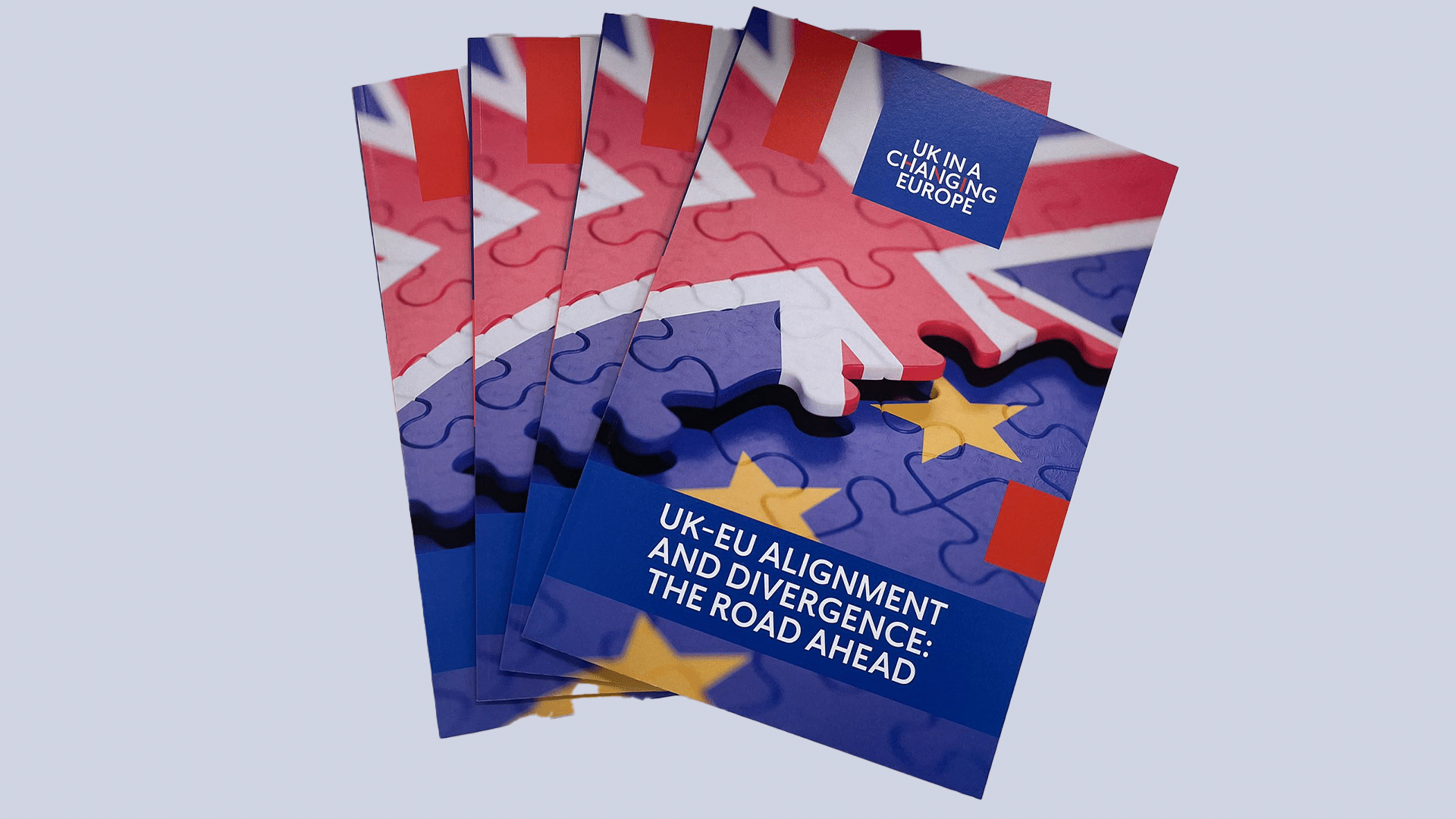
Joël Reland outlines the key trends in UK-EU regulatory alignment and divergence over the last five years, as exlpored in our new report ‘UK-EU alignment and divergence: the road ahead‘.
After finalising the Trade and Cooperation Agreement on Christmas Eve 2020, Prime Minister Boris Johnson celebrated having “taken back control of every jot and tittle of our regulation”, promising to “set our own standards, to innovate in the way that we want”. Fast forward to early 2026, and Prime Minister Keir Starmer now argues that “if it’s in our national interest to have even closer alignment with the single market, then we should consider that.”
How to make sense of such a shift, from regulatory freedom to cleaving closer to the EU’s rulebook? Our new report seeks to answer that question by charting the UK’s regulatory journey over the past five years. It shows that – with the notable exceptions of financial services and AI – the UK has struggled to makes use of its “Brexit freedoms” to regulate differently.
On tech, early plans to radically reform data protection rules (GDPR) were dropped, while the UK has developed new rules on digital markets and online safety which greatly resemble EU acts introduced a couple of years earlier. On environmental, product and labour standards, EU-era legislation has barely been reformed, even though rules on habitats protections, vacuum power levels and working hours were major targets for Brexiters.
What explains this lack of divergence? Much is down to economics. Though the UK might be able to create ‘nimbler’ regulation than the EU, this nevertheless imposes new administrative costs on businesses which serve both Great Britain and the EU and/or Northern Ireland (which remains aligned to most EU goods law) – as they will need to conform with different rulebooks depending on which market they are dealing with.
Then there is the politics. Voters demonstrate little appetite for lower labour, social or environmental protections. The revealed preference of successive governments has been to strengthen regulation in those areas when given the chance – for instance banning single-use vapes, setting a 2030 phase-out date for petrol and diesel cars, and introducing stronger rights for trade unions and zero-hour contract workers. It has taken Brexit it to show us how European our regulatory instincts are.
But, while the UK has done little to diverge from the EU, the same is not true in reverse. The first von der Leyen Commission was a very active legislator – establishing swathes of new laws (in particular on climate, environmental and product standards) which were not replicated in Great Britain. The result of this ‘passive divergence’ is the gradual emergence of new technical barriers to GB-EU and GB-NI trade due to do differences in their respective rulebooks.
This is the backdrop against which the current government is now seeking greater ‘alignment’ with the EU – i.e. replicating EU rules in UK law in order to reduce trade barriers. As the Chancellor recently put it, “economic gravity is reality, and almost half of our trade is the EU”, promising to look at “what sectors we could have alignment in”, beyond the handful of agreements already in train (on ‘SPS’, electricity and carbon pricing).
But this alignment journey looks far from plain sailing. The report considers the challenges which Labour will face in delivering on its ambitions.
A first set are institutional. Despite the government giving itself new powers to voluntarily align with EU product regulations – in order to minimise new passive divergence – ministers are yet to use them, as Whitehall seems to lack the capacity to unilaterally replicate all but a miniscule proportion of relevant EU legislation.
Meanwhile, dynamic alignment (negotiated agreements where the UK is formally subject to EU law as it evolves) requires the UK to regularly transpose EU law onto its statute book. We are yet to see how the government plans to manage that process (a bill is forthcoming shortly), but the experience of Norway shows that this can be both practically challenging and politically controversial.
Then there are democratic issues. Under dynamic alignment, the UK will be subject to EU law over which it has no voting rights – so how will the government try and maximise its notional ‘decision-shaping’ powers to influence EU legislative processes?
It seems likely that government will try to implement as much alignment as possible via secondary legislation – to expedite processes and minimise parliamentary oversight. This means MPs will have very little power to scrutinise EU legislation being adopted, or to influence where the government chooses to align, especially as there is no longer a dedicated EU committee in the Commons. Post-Brexit control of lawmaking is being centralised not in Parliament, but in the hands of the executive.
The devolved governments, too, have little ability to shape Westminster’s decisions on alignment, even though much of it falls into their areas of competence (such as environment and agriculture). For the time being, they have made little fuss about this, mainly because they are in favour of closer EU alignment, but this could change should they feel systematically excluded from decision-making, or if there is political capital to be made from pushing Westminster to go further and faster.
Which brings us, finally, to the question of whether Labour will be successful in delivering further alignment with the EU, beyond the set of negotiations currently in train. The chief problem is that the EU will not allow the UK to continuously ‘cherry pick’ further privileged access to its single market unless it is willing to accept conditions like free movement of people and EU budget payments. Even then, the Commission might be reluctant to enter talks if it fears the next UK Prime Minister will rip up whatever is agreed.
If one clear conclusion can be drawn, it is that the UK’s relationship with the EU is far from settled – and nor is it likely to be any time soon. It took Switzerland half a century to reach the model of relationship which is today looked upon with such envy by many in the Labour Party. And, as Ulf Sverdrup and Nick Sitter write in their chapter on Norway’s EU relationship, ‘alignment with the EU is a continuous, demanding process of adaptation that requires constant political attention and administrative capacity’.
Ironically, Brexit means the UK has to spend more time thinking about EU regulation now than it did as a member state.
By Joël Reland, Senior Researcher, UK in a Changing Europe.

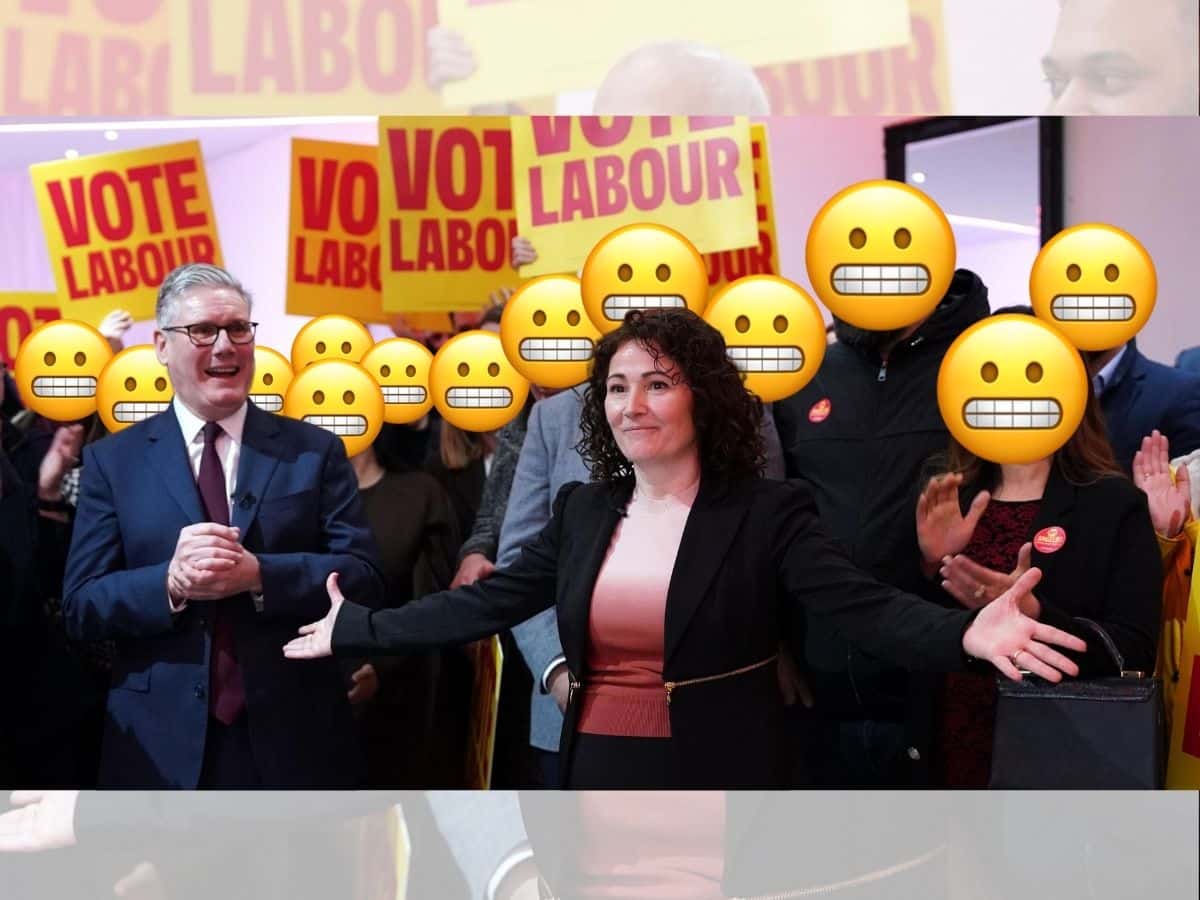
According to Labour, the Greens never stood a chance in the Gorton & Denton by-election. What’s strange is Labour are now saying voters are switching from the Greens to Labour, suggesting they did actually abandon the incumbent Labour Party at some point, but have now switched back?
We’re unsure what Labour have done to convince people they can win besides shouting ‘ONLY WE CAN WIN‘, but apparently that is happening.
Unless, of course, this is all staged:
this feels so fucking staged lmao https://t.co/x0BEfcquwo
— Nat ✨ FREE 🇵🇸 (@loopzoooop) February 24, 2026
“So fucking staged”
Let’s do a detailed breakdown of the above video, shall we?
What seems to be happening is Labour candidate Angeliki Stogia is speaking with a resident on their doorstep. The camera person is standing behind some bushes for some reason, with their focus trained on the resident’s window. In said window there’s a flyer for the Green Party, and the video ends with the resident replacing it with a Labour flyer.
The problem is not everything adds up:
- For whatever reason, the audio isn’t aligned with the footage. You can tell this because Stogia walks away from the house while the resident is still speaking.
- The fact that the camera person is stood behind a bush suggests they were recording the scene without the resident’s knowledge.
- The camera person is focused on the window while Stogia was still speaking to the resident, suggesting they somehow knew what was going to happen with the flyer.
How did they know that the man would immediately replace the Green Party flyer with the Labour once? Unclear. But the simplest explanation is ‘it was staged – they faked that shit‘.
Others had similar suspicions:
I, for one, believe that this is completely authentic, and not at all staged.
Yes, this newly-converted Labour supporter doesn’t appear on camera, but that’s probably just down to shyness, and not because he’s a Labour councillor pretending to be a member of the public. https://t.co/6IcO6iJf4S
— Plutôt la Barbie (@plutotlabarbie) February 23, 2026
Labour’s entire campaign in Gorton and Denton is not “look at what great things we have done”, but instead “don’t vote for the scary Greens”.
— Robespierre (YouTube) 📢 (@MaxFRobespierre) February 24, 2026
If Labour have faked it, it’s another sign Labour are once again copying a Reform MP. As Emily Apple wrote for the Canary in 2019 on then-Conservative Lee Anderson:
Lee Anderson is running in the Tory/Labour marginal seat of Ashfield, in the East Midlands. Labour narrowly won the seat in 2017 by just over 400 votes. But Anderson’s dirty tactics should provide yet another reason why no one in Ashfield should vote for him.
She added:
Michael Crick from Mail Plus caught Anderson redhanded “setting up the apparently spontaneous doorstop encounter beforehand”. The reason Crick could do this? Anderson had seemingly forgotten he was wearing a radio mic!
Absolute scenes as @MichaelLCrick catches a candidate in the act of setting up a “friendly voter” on the doorstep. (Video credit @MailPlus_) pic.twitter.com/azdtVk20eA
— Dino Sofos (@dinosofos) November 25, 2019
TLDW
For a full 4 hour breakdown of the 10 second clip, be sure to check back in tomorrow.
If you want a TLDW on that – yeah – we also think Labour staged it.
Featured image via The Canary

After Rupert Lowe’s splashy launch of Restore Britain, the ex-Reform MP claims to now have north of 80,000 members. Some Reform HQ insiders are twitchy about Lowe peeling off chunks of the grassroot voters. One source admits Lowe is “extremely well connected” and, with serious donor cash, could snatch low single digits in the polls.…
4 min read
It may not be a huge vote-winner, but a safer prison estate benefits society as a whole.
The realities of prisoner ill health are shocking. You are much more likely to die young in prison: the average age of death in custody is 56, compared to 81 in the general population. Prisoners also experience a wide range of serious long-term conditions, including higher rates of infectious disease, respiratory disease, and cardiovascular disease than the wider public. Substance use is widespread, as is gambling. Poor mental health is common.
Some groups face distinct health risks. Women have particular needs, including higher rates of self-harm and gender-specific gaps in care, and there have been reports that babies have died in prison after their mothers gave birth without medical assistance. All people face health risks as they age, and older prisoners – defined as those aged 50 and above, reflecting evidence that health problems appear around ten years earlier in prison – are no exception. Young people in custody also have disproportionately high health needs, often rooted in childhood adversity and abuse.
Part of the explanation is that people in prison often face complex needs before entering custody, shaped by deep-rooted societal inequalities. Just as deprivation, disadvantage and trauma drive crime, they also take a heavy toll on public health. Prisons inherit poor health and face significant challenges from the outset.
Another reason for prisoner ill health lies within the estate itself. Life in prison is brutal, and deteriorating facilities – HMP Wandsworth being a prime example – with cramped and dirty cells, failing sewage systems and rodent infestations compound existing problems. Overcrowding and staff shortages, a matter of considerable political attention under this Labour government, make it even more difficult to manage prisoners’ health and safety.
Healthcare in custody depends on a functioning prison regime, yet services are poorly equipped to meet prisoners’ needs. Public spending cuts under austerity, falling standards, and fragmented, siloed services mean the system is not working as effectively as it could. Continuity of care is crucial, but evidence shows post-release healthcare is often poor, with many people losing contact with treatment once in the community, perpetuating poor health.
‘Why should I care?’, some might ask. Prisoners, whatever their background or crime, are often seen as worthy of only punitive treatment, and investing in improving their conditions may not be, on the face of it, a vote-winning topic.
First and foremost, healthcare is a human right – and that includes prisoners. Even if your view is that prison should be punitive, not rehabilitative, its purpose is to restrict the liberty of those convicted of crimes, not to harm their health or deprive them of necessary care. Prisoners deserve and are entitled to medical treatment, and ensuring they receive it is the right thing to do.
Second, aside from questions of human rights, investment in prisoners carries public health dividends, shaping outcomes long after release. As isolated as they are, prisons are not sealed off from society. People enter custody from the community and return to it when their sentence ends. The burden of our collective healthcare falls on us all, so a healthier prisoner population is in society’s interest.
It can also help reduce reoffending. As the Chief Medical Officer for England, Professor Chris Whitty, has highlighted, offending and reoffending after release are closely linked to health. Access to good health services can support engagement with rehabilitation, delivering positive social and economic benefits in the long run. Less offending means less demand for costly prison places, freeing up public resources for more effective use elsewhere.
Crime, poverty and health are inextricably linked, and breaking this cycle benefits not only prisoners but society as a whole, including the taxpayer. If the government is serious about improving the health of people in prison – and realising the wider benefits this entails – action is needed, including greater investment in the deteriorating prison estate, support for prevention measures to address illness as early as possible, and improved coordination and integration across health services.
It is time to consign the appalling state of health in prisons to history, where it belongs.
Jake Shepherd is a senior researcher at the Social Market Foundation
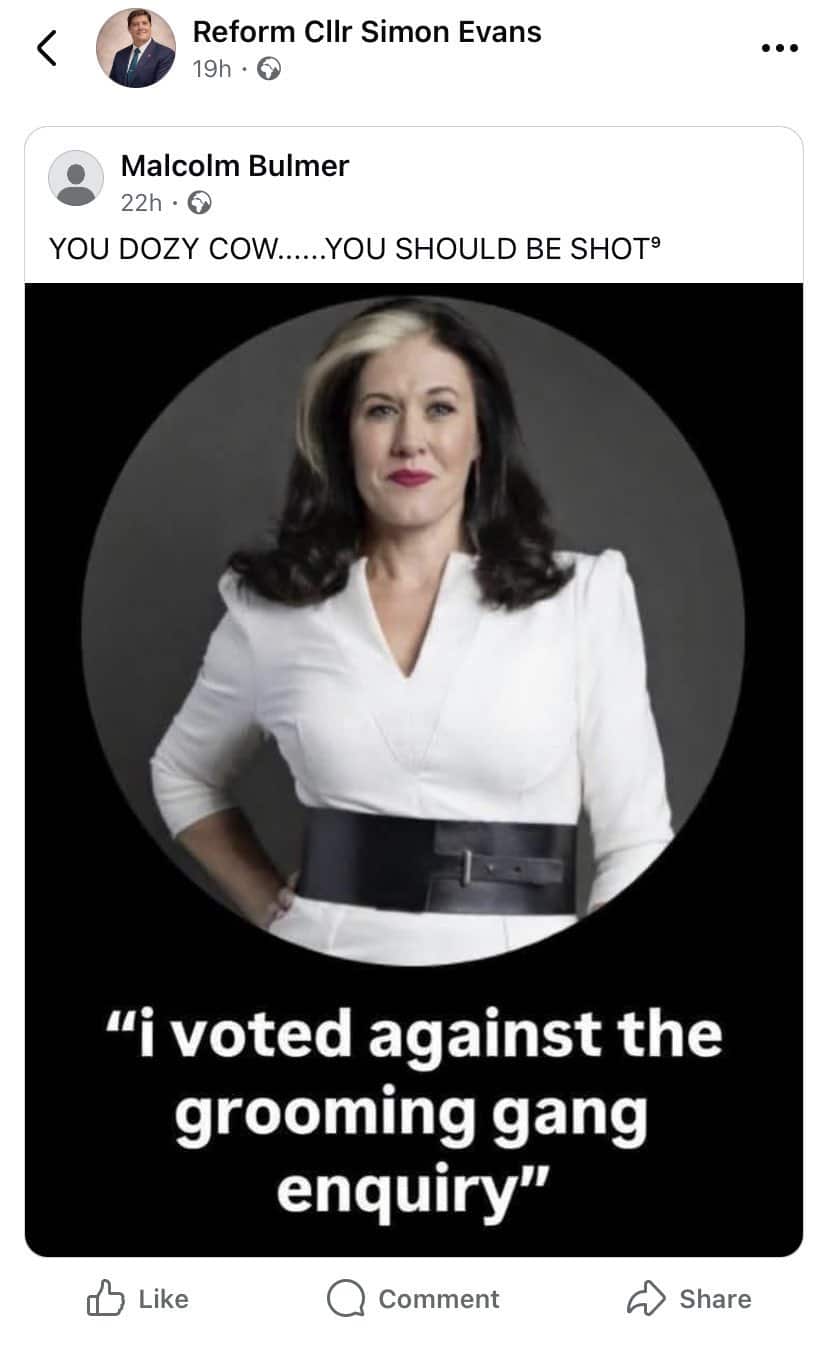
We cover Reform UK a lot here at the Canary, and little would surprise us at this point. Saying that, politicians openly calling for MPs to be shot is a step up from what we’ve seen before:

Grim
Natalie Fleet responded to the post as follows:
Posts like this are so common I don’t bat an eyelid.
But they remind me why my husband & kids *begged* me not to stand.
I felt huge responsibility; last lab gov helped me, I wanted to help others.
But…we should be able to fight for our areas w/o death threats as standard. https://t.co/rygygMqikY
— Natalie Fleet MP (@NatalieFleetMP) February 24, 2026
Regardless of political differences, Facebook dipshits shouldn’t be calling for MPs to be shot. We watched a man gun down Jo Cox on the street in 2016, and it would be grim to see a repeat of that. There is a real risk that could happen, though, with politicians themselves riling up voters like this.
One outlet phrased the incident like this:
Reform UK deputy leader reshared social media post calling for Labour MP to be shothttps://t.co/kfsRAauS1E
— Reform Party UK Exposed 🇬🇧 (@reformexposed) February 24, 2026
Let’s be real, though; if you share a post calling for someone to be shot, then you are calling for that person to be shot.
Councillor Simon Evans has now responded with the following:

If Evans is telling the truth, what he’s saying is: ‘I’m a fucking idiot who will just share things without reading them or checking that they’re true‘.
In other words, whether he’s telling the truth or not, he’s clearly incompetent.
The account Reform Party UK Exposed said the following:
Reform UK’s Deputy Leader in Lancashire Simon Evans… has made a “sorry, not sorry if I caused offence” apology for reposting a post on Facebook calling for Natalie Fleet MP to be shot.
It’s not good enough. He let comments be posted, he had it there for a full day. She is a grooming and rape survivor.
A sincere apology would be resigning.
They added:
This comment and this reply were still live this morning. He only took action when we posted.
His excuse is ‘I didn’t notice the text’.
Not good enough, this man is responsible for a £1.2bn Lancashire budget and he is claiming he didn’t notice what he was posting to Facebook.
Ridiculous.
Violence
This is all happening at the same time that a Reform MP talked up the possibility of a civil war, and Nigel Farage threatened to bring ICE-style policing to the UK.
A new footage has been released, and it looks like the ICE agent Jonathan Ross was the agitator and called her a bitch after he shot her.
Renee Nicole Good engaged calmly and told him “I’m not mad to you, dude.” pic.twitter.com/Ozhjnn7MPx
— Mukhtar (@I_amMukhtar) January 9, 2026
Reform really are a gruesome lot.
Featured image via X

First made popular in the 1850s by playwright Henrik Ibsen in his poem On The Heights, the term “frilustsliv” (pronounced free-lufts-liv) roughly translates to “open-air living”.
The term is necessarily broad. Per the BBC, it can include everything from taking a lunchtime walk to going camping on the weekend – the point is not to stick to a prescriptive number of minutes or steps a day, but to change your entire attitude to nature.
It is also, the Guardian writes, a “year-long commitment”. That could mean frosty winter walks, heading to a forest to look at emerging daffodils, or listening to birdsong in your local park, no matter the weather.
It does not always require rigorous physical activity, which was what drew me to it after a foot injury that made my previous running routine redundant. Gazing at a lake or eating by a campfire counts, too.
Since trying my hardest to adopt the practice, I’ve felt happier, healthier, and calmer – a combination some studies say is almost inevitable after embracing the great outdoors.
Why is ‘frilustsliv’ so good for us?
A frilustsliv lifestyle seems structurally easier in Norway, where a combination of high forest cover, a nature-friendly work culture, a right to roam, and plenty of outdoor volunteer groups has led to a remarkably outdoorsy population.
But even in the rainy UK, I’ve found ways to spend more time outside (not least because I feel put to shame by snow-stomping Scandinavians).
With a reduced ability to jog, I’ve spent more time wandering mindfully through my local wilderness. A 2022 student study found that 30 minutes of present walking improved participants’ sleep and mood.
Listening to birdsong appears to make walks healthier, too, which I missed with my previous, more transactional and stat-based relationship to nature.
And learning to love wildlife no matter the weather – even in a year of endless storms – has had its benefits, too. Taking a lunchtime walk in winter is especially important for keeping your vitamin D stores high and boosting your mood.
Often, frilustsliv involves physical activity, which is great for everything from our hearts to bones and brains. It can sometimes include other people, and we know that companionship is key to longevity (we might push ourselves harder in group exercise settings, too).
But even if all you do is sit outdoors, some research says that can still go a long way. Exposure to nature can help to keep us calm, improve our sleep, and boost focus.
No wonder I’ve felt less stressed and more able to stay consistently active since giving frilustsliv a go.
How can I incorporate “frilustsliv” into my life?
A 2019 paper found that spending at least 120 minutes a week in nature seems to be good for our mental and physical wellbeing.
Happily, it doesn’t seem to matter whether you do it in big chunks or little pieces – “weekend warriors” may benefit just as much as “movement snackers”.
There are no set rules for how to do this, aside from “get outside if you can”.
But some expert suggestions, if you’re unsure where to start, include:
- Walking on your lunch break or on your commute to work.
- Taking a stroll around the block (or a local park) when you have free time.
- Incorporating nature into your routine, i.e., through morning Tai Chi.
- Meditating or staying mindful in nature.
- Volunteering to care for wildlife or getting involved in an outdoor group.
- Eating some meals outdoors.
- Growing or harvesting food.

Mitchell Foyle-York-York is a freelance writer and works for the Roger Scruton Legacy Foundation.
In his first speech after defecting to become a Reform MP, given alongside Nigel Farage in a room jammed with bustling journalists, Robert Jenrick struck a consistent chord: vanity. Jenrick not only spoke of the need to “unite the right” but that he was the figure by which the right could be united.
His speech implied that a Tory Party without Jenrick lacked any serious right-of-centre coherence, and that his defection would be the final nail in the coffin for the Tories, paving the way for Reform to scoop up the right-of-centre vote. But don’t just take it from me. It was revealed in a leaked document that Jenrick’s own team had assured him that he would arrive on the Reform scene as “the new sheriff in town”. But has this proven to be the case? Is Jenrick really as influential and as popular as he likes to think?
There is still a long way to go until the next general election, but the (early) indicators are not good for Jenrick. In a YouGov poll, published the day after Jenrick’s defection was announced, it was recorded that Jenrick’s popularity rating sat at just 11 per cent, with 41 per cent of people polled saying they had an “unfavourable” view.
The same YouGov poll shows a somewhat similar trend among Tory and Reform voters (the people Jenrick was claiming to “unite”), with 39 per cent of Tory and 22 per cent of Reform voters having an “unfavourable” view of Jenrick. Furthermore, recent general election polling indicates either no gain or a small loss for Reform in national polls. As I have said, there is a long way to go, but all recent polling data suggests that Sherriff Jenrick is more Milky Bar Kid than John Wayne.
Jenrick’s opinion of himself and his political prospects may be a delusion, but delusions come from somewhere. How, even after losing the last Tory leadership election, has Jenrick been able to convince himself that he is one of the political heavyweights of our age? A clue lies in David Scullion’s review of Jenrick’s leadership campaign, published in The Critic in November 2024. In interviews with Jenrick’s own campaign team, Scullion reports that Jenrick’s spin-doctors had developed an “obsession with tweets… Everything had to go viral.” Herein lies the cause of Jenrick’s delusions: the internet.
If you were to look at Robert Jenrick’s X account, especially from the time of his leadership campaign, you might be forgiven for thinking that Jenrick was/is a very popular figure. After all, he gets plenty of ‘likes’ and ‘reposts’. The problem, however, is that the internet is not real life. Once you subtract bots and non-UK residents out of those social media engagements, what remains is barely enough engaged floating-voters to win you a seat on the local council, let alone a leadership contest!
The reality is that most people who engage feverishly with such online political content are usually ideologues with strange, niche, and sometimes even extreme, interests. They rarely reflect a significant chunk of the electorate, let alone the majority of it. Jenrick – as well as his team – appear to have been trapped inside an internet echo chamber… and it is clearly having some very damaging effects on his popularity and prospects.
The obsession with tweets, and the self-delusions the social media can cause, is certainly not limited to Jenrick. As many of us who have worked in small-c conservative politics know all too well, there is an increasing and worrying obsession with pleasing internet mobs. The internet and social media are certainly growing and important influences in modern politics, but its instant self-gratification and illusions of popularity does not warrant that we take leave of our senses and responsibilities.
Obsessions with silly pranks and videos for retweets, catering communications to a niche online crowd, or posting misleading clickbait to drive up engagement and traffic to Crowdfunders, can become a giant obstacle to undertaking serious, meaningful work that invokes the kind of change we want to see in politics.
Robert Jenrick’s defection, and how it went down with the public, offers a broader lesson for conservatives. Namely, that we should not go running to the enticing siren call of the political echo chambers of the internet right. Jenrick appears, as things stand, to have made himself unpopular by becoming so obsessed with catering to online audiences. But worse than unpopularity, he has also abandoned his own principles and conscience.
Once very much a figure on the left of the Tory Party, he now appears to simply go along with every frenzied fad of the populist right, who (by no coincidence) have a strong online presence. Many other politicians, commentators, and organisations on the right have followed a similar pattern. If this trend continues, if this prioritisation of social media clout over principle and serious work cements itself as the norm on the right, conservatives will find themselves in a very dark place indeed. We do not have to follow Robert Jenrick up the online garden path. Let us pave our own way that is grounded in dignity, principle, and a connection to reality.
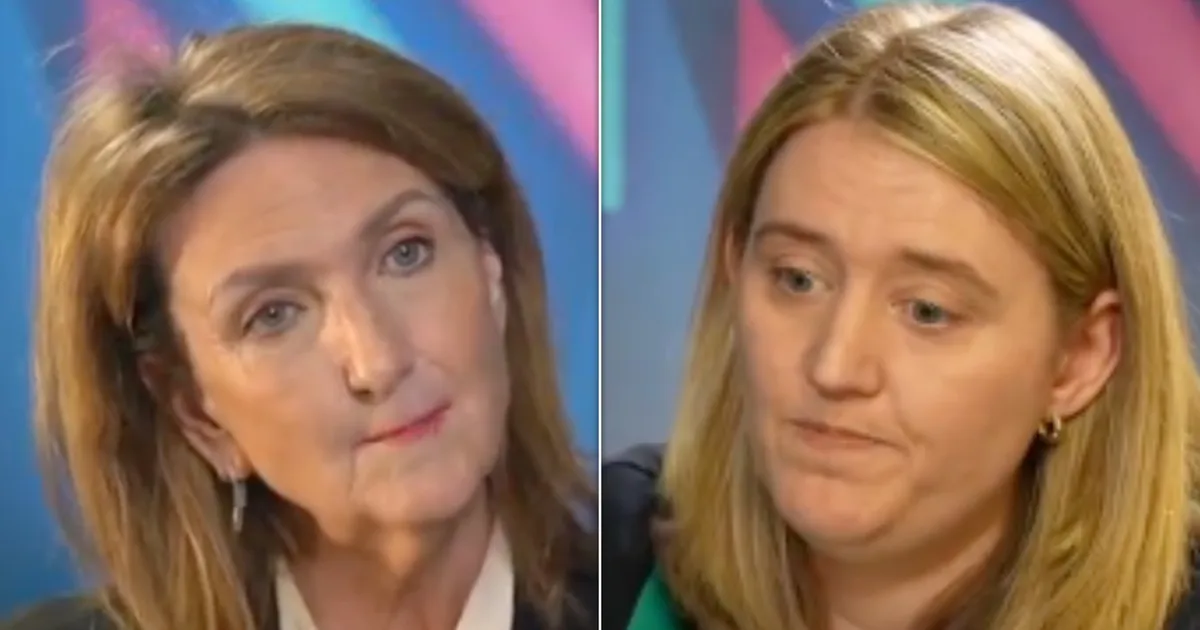
Victoria Derbyshire tore into the school standards minister over the government’s “outrageous” approach to student loan repayments.
Chancellor Rachel Reeves froze the salary threshold at which graduates start to repay what they owe, meaning more of them are hit with charges earlier.
Interviewing education minister Georgia Gould on BBC Newsnight, Derbyshire said the changes are “outrageous”.
Gould replied: “This is a system that we’ve inherited.”
But the presenter cut in: “No no no, you didn’t inherit the freezing of the repayment threshold. You did that in the last Budget. That was a choice!”
“It’s not a perfect system, we really acknowledge that,” Gould replied. “We face huge pressures as a government, as I was talking about, the investments we’re making in supporting some of the vulnerable children that are really critically important, we have to make tough choices, because we inherited some difficult systems.”
“So it’s alright to change the terms of their loan unilaterally without consultation, without pre-warning because graduates are paying for other vulnerable groups?” Derbyshire asked.
Gould said the repayment system would be kept under review, noting: “I completely acknowledge that this is a group who have not been the focus of investment over years.”
She said that’s why the government was investing in housebuilding, private renters and childcare.
Derbyshire replied: “The interest charged on student loans is based on the RPI measure of inflation.
“As you know, the government doesn’t even use RPI [Retail Price Index] because you think it overrates inflation. Why is it not good enough, but good enough for students and graduates?”
“I acknowledge it’s not a perfect system,” the minister replied. “But we are in a time when there are so many challenges for our public services, we don’t have the resources to invest in absolutely everything. We have to make choices.”
Derbyshire said: “But you talk about fairness – that’s not fair is it? As a government, you don’t even use RPI.”
Watch the full exchange below:
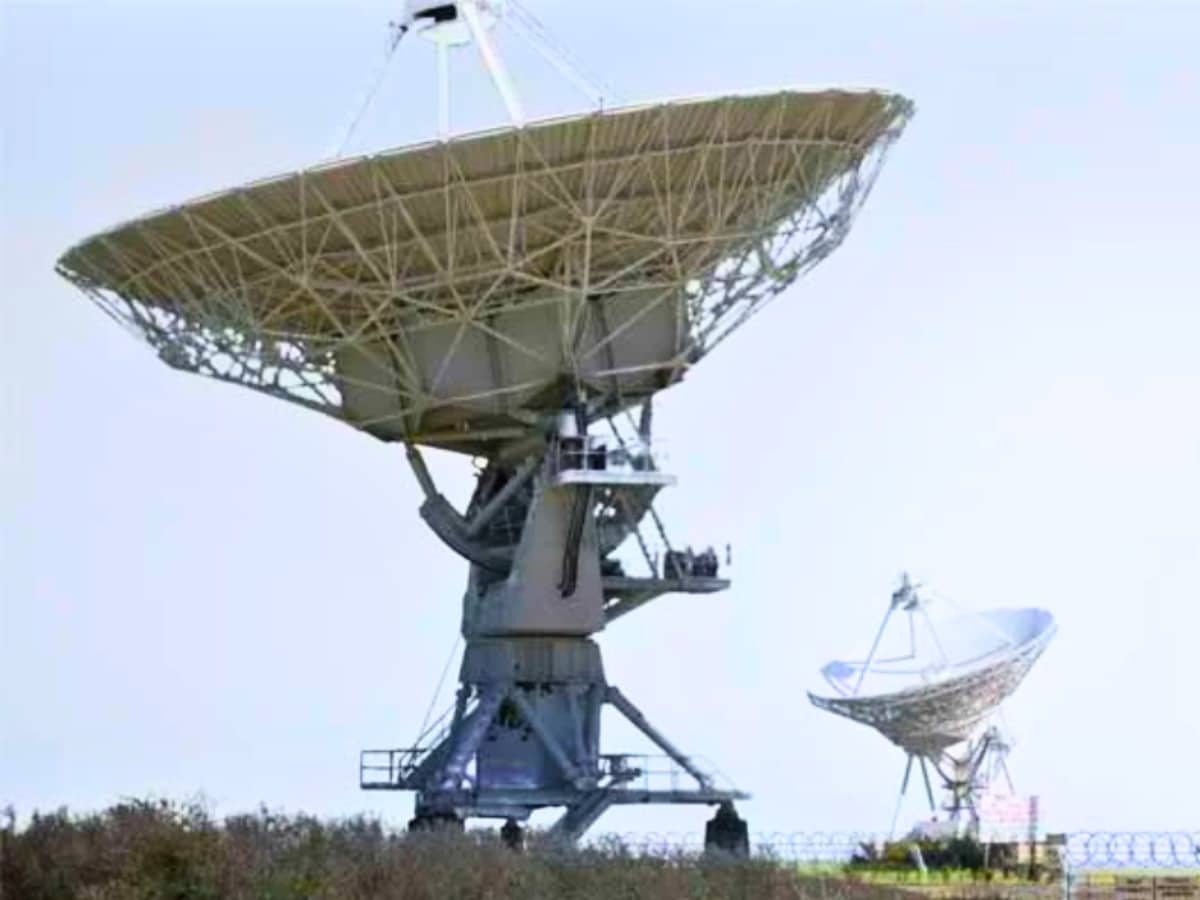
Campaigners from PARC Against DARC are accusing the Ministry of Defence of a series of potential moves to split out planning elements required for the DARC radar proposal without including them in the main planning application. They say legal precedents show this practice may be unlawful.
A PARC Against DARC spokesperson said:
We haven’t come across a single person who doesn’t think the whole story behind the RDF aircraft tracker relocation proposal that’s just been tabled, the inexplicably high-security landing cable station, the unanimously unpopular £60m Newgale bypass road and required power cable upgrades for miles just stinks to high heaven.
After 37 Senedd and Westminster politicians have come out against DARC, a petition of 18,000 signatures and public demonstrations that have gone viral online, the MOD seems to be looking for any way it can to ‘salami slice’ the massively unpopular DARC plans and try to ram them through planning against the local community’s will. We think that this would be both unlawful and wrong.
Follow the DARC Money
The spokesperson continued:
DARC admits to funding the new RDF aircraft tracker in the application. The MOD’s environmental screening document states clearly that relocating the RDF has been part of DARC’s plans, and the only reason it gives as to why it was excluded from them was because DARC were assured that its relocation would be completed prior to DARC’s construction.
It even goes as far as clearly implying DARC is paying off who it needs to to expedite the relocation of the RDF, using distracting language to hide these realities behind the operational separation between the two projects.
It just leaves you with the question: why does it appear as if money has been changing hands in order for this aircraft tracker to be done and dusted at all costs before DARC is potentially started, if not for the reason that the application is blatantly linked to DARC, and yet unjustifiably is not being considered part and parcel of it?
We strongly question whether the MOD’s attempts to escape reality would stand up in court, and we are disgusted with PCC for issuing a screening opinion that throws the Pembrokeshire people it’s meant to stand up for completely under the bus.
The MOD’s screening request for the upgraded aircraft tracker includes no environmental assessment for radiofrequency radiation impacts to local people and livestock, which means it fails to consider the cumulative impact of what would be that plus DARC’s radiation.
Considering we’ve found over 4,000 studies showing the type of radiation DARC would emit is linked with health impacts including cancer, and that the MOD has ignored nine whole freedom of information requests from us, the fact the MOD refuses to release a scrap of meaningful data on DARC’s huge potential radiation risks for our community leaves people here furious and disgusted.
All they can ever keep trotting out in response is the widely-criticised regulator ICNIRP and a tiny department of the WHO that’s completely riddled with telecoms and military lobbyists.
Suspicious ‘high-security’ undersea cable leads directly to DARC site
It gets even worse though, say campaigners:
There’s a strong public perception that the sea cable landing station they’re now building metres away from the gates of Cawdor Barracks, despite being said to be civilian, would actually be likely to supply DARC with data from overseas as well.
There’s an identical one proposed near Roch using the other one of the two new sea cables coming, but unlike that one, the Brawdy station features razor wire, security guards with on-site parking and CCTV cameras.
The MOD won’t explain why it could possibly need any of this, but if you consider that Brawdy was involved in the SOSUS programme which literally covered up the fact that the British military was concealing that its sea cables were for civilian use when in fact they were tracking submarines, you can see why locals are sceptical.
If they’re right, none of this was ever going to be included in DARC’s potential upcoming planning application, making that application seem less consequential than it would really be.
Newgale bypass with DARC links
The Newgale bypass road has recently suffered another 18 month delay due to a public consultation response that almost unanimously rejected the entire proposal. According to PARC Against DARC, nearly everyone they’ve spoken to believes that the road:
had to have been connected to DARC, because it was so implausible that they could construct and operate such a large-scale military site using tiny backroads that would cause traffic bottlenecks from all sides. This was not factored into DARC’s scoping report either.
Silence surrounds DARC Pylons
Campaigners add that on top of that, documented talks between the MOD and PCNPA show that the MOD has so far failed to include in any publicised planning materials what could be extensive pylon-based or underground network power upgrades it admits could be required for DARC:
It just seems to us like the MOD is dripping with the kind of perceptions of corrupt practice in the local community that the DARC fiasco has become so well-known for in the St Davids peninsula.
The MOD, from the start and throughout, has proven itself to be a government ministry that seems to do nothing but railroad communities, flouting both strongly held public opinion and potentially the law to get what it wants.
DARC opposition set to be ‘hot topic’ at the ballot box
With the Senedd election just ten weeks away and with two of the main contenders in Plaid Cymru and the Wales Green Party both having come out very firmly against DARC as party policy, campaigners say:
Labour locally risks destroying its voter base even further if they fail to recognise the huge levels of local opposition to the proposals and change course.
They add:
The Labour governments on both sides of the border that are presiding over DARC have been an utter shambles, and FM Eluned Morgan and MP Henry Tufnell have been as silent as the grave on DARC since day one.
With a move to proportional representation, voting for 16-18s and an increase from 60 to 96 MSs in the upcoming Senedd elections, it’s looking ever more likely that Labour will be completely wiped out and a progressive ‘Anti-DARC’ government will form the next administration in Wales, so we believe Labour has everything to lose on this key election issue if they fail to about turn.
Featured image (artist’s impression) via PARC Against DARC
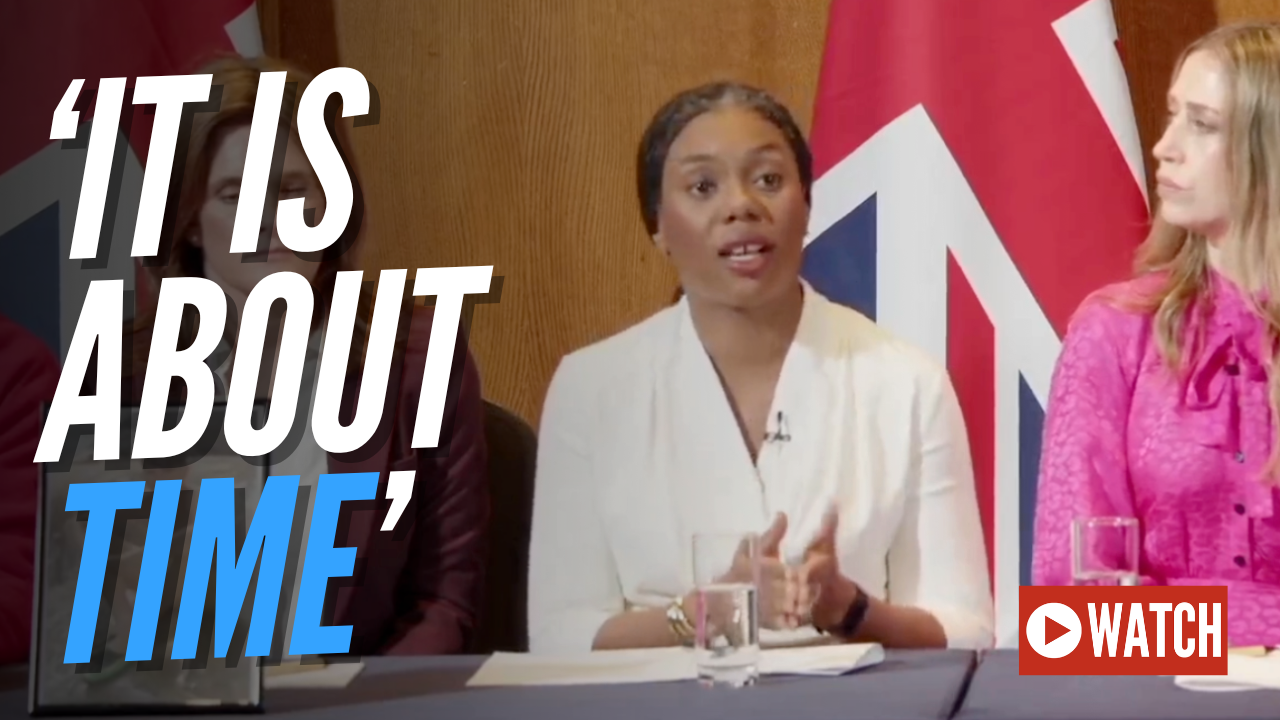
WATCH: Badenoch Calls for Social Media Ban for Under-16s
There’s one surefire way to know if your belief system is a bad one: it endangers life. If your ideology imperils other people, on the foul grounds that your virtue counts for more than their safety, then it is a morally unfit one. We can now say this, beyond a shadow of a doubt, about wokeness. It prizes its own preening credo more highly than it does the life and limb of everyday citizens. Just consider the grim case of Valdo Calocane.
The media call him ‘the Nottingham killer’. On 13 June 2023 he committed a crime so dreadful that Nottingham still reels from it. In the feverish grip of psychosis, he knifed to death the 19-year-old students, Barnaby Webber and Grace O’Malley-Kumar, and 65-year-old school janitor Ian Coates. He severely injured three others, too. He was later found guilty of manslaughter on grounds of diminished responsibility and sentenced to indefinite confinement in a high-security hospital.
If you thought this case couldn’t get any worse, brace yourself. Yesterday we discovered a new and terrible truth: Calocane was once freed by mental-health workers because they feared being thought of as racist if they detained him. Convinced there were ‘too many young black men in custody’, they let him out, whereupon he committed more offences, eventually including the savage destruction of three precious lives. Clearly the inner virtue of these overlords of public health is more sacred than the welfare of the masses.
The details are chilling. They came out on the first day of a public inquiry exploring the ‘events, acts and omissions’ that led to Calocane being on the streets, free to kill. The inquiry was told that, in 2020, Calocane experienced the first pangs of psychosis. He became violent. Then a student at Nottingham University, he was found ‘repeatedly kicking and punching’ a fellow student’s dorm door. He was hauled off for an assessment and found to be psychotic.
Yet he was set free. One of the doctors was ‘leaning towards’ sectioning him. But a team of mental-health professionals had other ideas. In the words of the Guardian, they ‘considered research evidence that examined the over-representation of young black men in detention’, and they decided it would be better to treat Calocane in the community. The Mail nails it: they ‘feared [that] detaining him would be racist’, so they let loose on to the streets of Nottingham this dangerous, psychotic individual.
Now we know: the dispiriting woke creed of race obsession carries more moral weight than the security of ordinary people. Sacralising the performative virtue of ‘anti-racist’ officials is more important in 21st-century Britain than ensuring the safety of working men and women. To release into the community a known sufferer from violent psychosis, out of a terror of being thought of as racist, is to elevate the ideological needs of ruling-class narcissists over the most fundamental liberty of the people – the freedom to be safe.
Predictably, Mr Calocane swiftly committed more crimes. He booted in a neighbour’s door, which made her so frightened she leapt from a first-floor window and damaged her spine. He was briefly sectioned after that, then let out again. He committed more offences, and then in 2023 he carried out his apocalyptic slaughter of innocents in Nottingham. Last year a review by the Care Quality Commission found that a ‘series of errors and misjudgements’ by health officials led to the catastrophic mishandling of Calocane and ‘the risk he presented to the public’. Now we discover that the baleful creed of wokeness played a role in this reckless endangerment of the people of Nottingham in the service of the ideology of the elites.
There is no question: wokeness poses a dire threat to public safety. Officialdom’s debilitating dread of being thought of as ‘racist’ is particularly poisonous. The safety of Britons is frequently sacrificed at the altar of this elite terror of being tarred as unwoke. Consider the rape-gang scandal, when cops, councillors and politicians looked the other way as thousands of working-class girls were raped by gangs disproportionately made up of Muslim men. The reason for their deadly nonchalance in the face of such working-class suffering? They feared being thought of as ‘Islamophobic’ if they investigated the gangs too vigorously.
Or consider the 2017 Manchester Arena atrocity. The inquiry into that act of Islamist barbarism heard that a security guard had failed to approach the young man who was mumbling to himself and carrying an outsized backpack – the killer, Salman Abedi – because he feared being viewed as racist. The guard said he had a ‘bad feeling’ about this young man who was ‘fidgety and sweating’. But he held back because he was ‘scared of being… branded a racist’. He feared he would ‘have got into trouble’ if he was wrong about this nervous-looking non-white man. What a perfect and terrifying snapshot of how morally incapacitating the neo-Stalinist culture of race grievance can be, where a man dreads acting against a suspected suicide bomber in case HR should haul him for a reprimand and some racial re-education.
The gender wing of wokeness is lethal, too. Consider the placing of rapists in women’s jails, some of whom went on to sexually assault inmates. The dignity of womankind burnt as an offering to the sexist post-truth mantra of ‘Transwomen are women’. Meanwhile, in the US the woke insanity of ‘Defund the Police’, popularised by Black Lives Matter, led to a spike in crimes and even homicides in areas where cops were stood down. Michael Shellenberger, in his book San Fransicko, calls it ‘pathological altruism’, where ‘woke’ cities adopt policies that lead to more anti-social behaviour, more crime and more sorrow for working people.
We need answers on Nottingham. Death came to that city in 2023 – was it aided by the ideologues who stink up the corridors of power in modern Britain? Any ideology that prioritises virtuous posturing over public dignity must be urgently dismantled.

MGK: Mega Cap Selloff Presents Attractive Buying Opportunity, AI Bubble Fear Is Temporary

Labour accused of staging by-election video

Maple Leafs’ Matthews, Joshua expected to play vs. Lightning


-

 Video5 days ago
XRP News: XRP Just Entered a New Phase (Almost Nobody Noticed)
-

 Fashion4 days ago
Weekend Open Thread: Boden – Corporette.com
-

 Politics2 days ago
Baftas 2026: Awards Nominations, Presenters And Performers
-

 Sports22 hours ago
Women’s college basketball rankings: Iowa reenters top 10, Auriemma makes history
-

 Business7 days ago
Infosys Limited (INFY) Discusses Tech Transitions and the Unique Aspects of the AI Era Transcript
-

 Entertainment6 days ago
Kunal Nayyar’s Secret Acts Of Kindness Sparks Online Discussion
-

 Politics23 hours ago
Nick Reiner Enters Plea In Deaths Of Parents Rob And Michele
-

 Tech6 days ago
Retro Rover: LT6502 Laptop Packs 8-Bit Power On The Go
-
 Sports6 days ago
Clearing the boundary, crossing into history: J&K end 67-year wait, enter maiden Ranji Trophy final | Cricket News
-

 Business2 days ago
Mattel’s American Girl brand turns 40, dolls enter a new era
-

 Crypto World10 hours ago
XRP price enters “dead zone” as Binance leverage hits lows
-

 Business2 days ago
Law enforcement kills armed man seeking to enter Trump’s Mar-a-Lago resort, officials say
-

 Entertainment6 days ago
Dolores Catania Blasts Rob Rausch For Turning On ‘Housewives’ On ‘Traitors’
-

 Business6 days ago
Tesla avoids California suspension after ending ‘autopilot’ marketing
-
 NewsBeat1 day ago
‘Hourly’ method from gastroenterologist ‘helps reduce air travel bloating’
-

 Tech2 days ago
Anthropic-Backed Group Enters NY-12 AI PAC Fight
-

 NewsBeat2 days ago
Armed man killed after entering secure perimeter of Mar-a-Lago, Secret Service says
-

 Politics2 days ago
Maine has a long track record of electing moderates. Enter Graham Platner.
-

 Crypto World6 days ago
WLFI Crypto Surges Toward $0.12 as Whale Buys $2.75M Before Trump-Linked Forum
-

 Crypto World5 days ago
83% of Altcoins Enter Bear Trend as Liquidity Crunch Tightens Grip on Crypto Market