
Politics
BBC Expert Explains Why Trumps Hormuz Help Plea Is Pointless

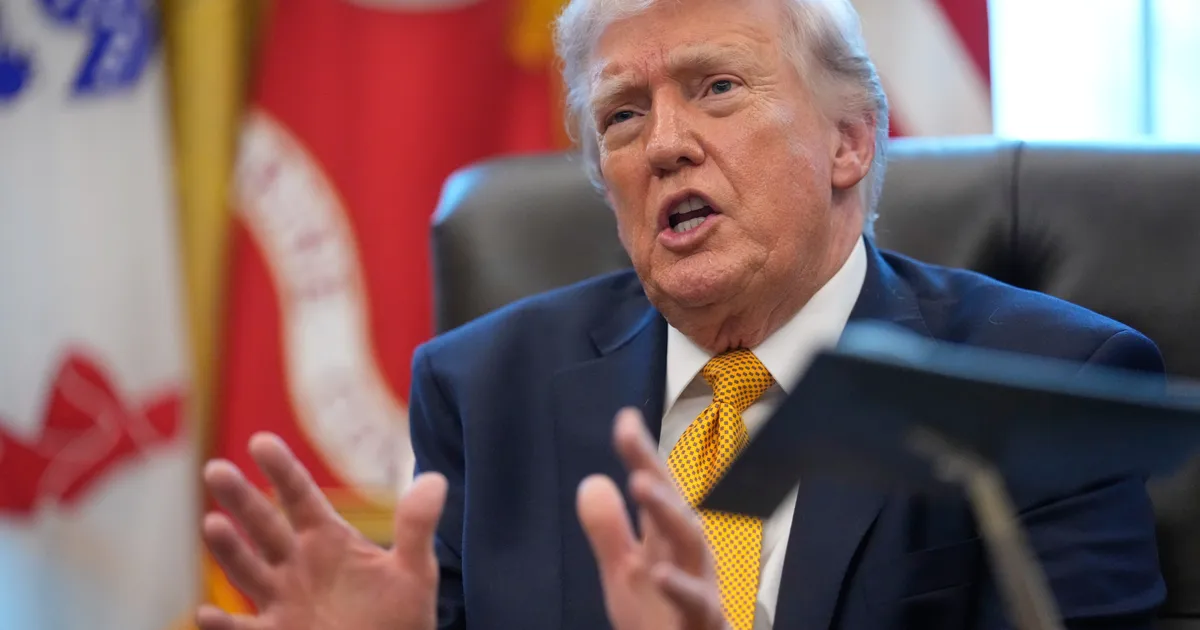
A BBC foreign affairs expert has delivered a reality check to Donald Trump over his call for other countries to send warships to help open up the Strait of Hormuz.
Frank Gardner, the corporation’s security correspondent, said “no amount of navies” will help to release the “chokehold” Iran has on the vital waterway.
Around one-fifth of the global oil supply passes through the Strait, meaning its effective closure is having a devastating effect on the world economy.
Trump has repeatedly called on countries from around the world – including the UK – to send ships to ward off Iranian drone and missile attacks on tankers.
But speaking on Radio 4′s Today programme, Gardner said that would effectively be a waste of time, even if America’s allies wanted to help.
He said: “Nobody’s particularly keen on this, in fact they’re kind of annoyed about it because this was a war of choice that Israel and the United States chose to do. It’s not one that was backed either by Gulf states in this part of the world, nor by America’s Nato partners.
“There’s a kind of collective heavy sigh ‘OK, clearly you didn’t plan for this, it’s got unintended consequences that maybe you should have thought of when you started this, now you’re asking us to help clear up the mess’ and people are not particularly keen to put their navies in harm’s way.”
Garner added: “Iran has really got a chokehold on the Strait of Hormuz at the moment, and that’s only going to stop by negotiation. No amount of navies are going to stop that.
“The real problem is simply that Iran controls the coast between the north of the gulf and the Strait of Hormuz and they can attack whatever shipping they want, unless they agree not to.”

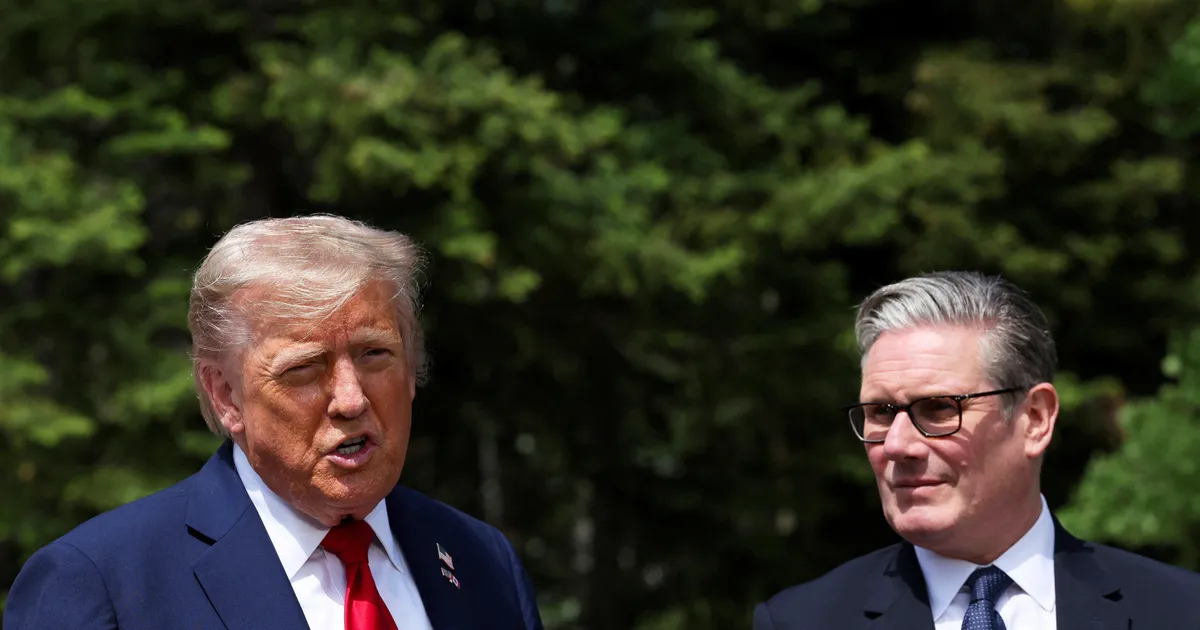
Downing Street has rejected Donald Trump’s latest claims about the UK’s involvement in the Iran war.
The US president said Keir Starmer had initially rejected his request for the Royal Navy to send two aircraft carriers to the region.
Trump said the prime minister later changed his mind, but he rebuffed him.
He said: “We requested two aircraft carriers which they had. And he didn’t want to do it.
“Then right after the war essentially ended, meaning they were obliterated, he said, ‘I would like to send the aircraft carriers’.
“I said, ‘I don’t need them after the war was ended and won. I need them before the war’.”
However, HuffPost UK has been told that the US has not made any request for aircraft carriers, and that the UK has not offered to send any to the region.
The row is yet more evidence of the breakdown in relations between the PM and the president.
Starmer has so far resisted Trump’s call for the UK and other countries to send warships to help re-open the Strait of Hormuz to allow oil tankers to once again travel safely through the area.
Speaking on Monday, the PM said: “We’re working with all of our allies, including our European partners, to bring together a viable collective plan that can restore freedom of navigation in the region as quickly as possible and ease the economic impacts.”
A Downing Street spokesman insisted relations between Starmer and Trump were good.
He said: “I’m not going to give a running commentary on everything the president says. As the pensions secretary said yesterday, underneath these comments there’s an enduring close relationship between the United Kingdom and the US.
“The prime minister and president speak regularly and have a good relationship. That doesn’t mean we have to agree with the US on everything or support every action they take.”
Politics
James Mahone: The British growth covenant – how you turn fiscal discipline into national renewal

James Mahone is a Conservative Party member, and Founder of the Horizon Centre for Public Innovation.
The Sound Money Act was the focus of my previous article, which outlined a blueprint as to how the British government can reduce the risk premium on government debt while reclaiming sovereignty from volatile bond markets.
Critics rightly noted that simply passing a law does not generate prosperity. They went on to ask a deeper question: discipline to what end? They were right to ask. This article answers that question and sets out that counterpart. Fiscal restraint must be combined with a credible framework for economic growth. This framework is named the British Growth Covenant.
The Covenant is not a blanket spending programme or a form of state intervention driven by political incentives rather than economic efficiency. Instead, it is the framework to translate the fiscal credibility obtained from the Sound Money Act into long-term national investment. It will be translated automatically, productively, and transparently. The Sound Money Act and British Growth Covenant work together. The result will be discipline that earns trust — and trust that funds renewal.
If markets view Britain’s public finances as sustainable, there will be a reduction in the risk premium. This means that paying existing debt will be cheaper. There will also be cheaper long-term borrowing costs. A consistent blunder by successive governments has been to allow savings to become absorbed in day-to-day consumption rather than invested in Britain’s productive capacity. The British Growth Covenant will correct this issue.
A Growth Dividend Lock will be at the heart of the Covenant. This will ensure that each year an independent organisation such as the OBR will look at yields on gilts and calculate savings due to reductions in interest payable on gilts. This will be measured against a rolling baseline. From these savings a fixed percentage would be transferred automatically into a ring-fenced UK Sovereign Growth Fund. This is important for three reasons:
First, this becomes self-funding. Investment does not need to be derived from higher taxes or looser borrowing.
Second, savings will not become absorbed into consumption. Rather, these savings become locked into capital formation.
Third, it is visible. These sound money principles would become a generator of tangible national renewal.
The mechanism is also fail-safe. This is a crucial point. If in any given year the growth dividend does not materialise for any reason, credibility is not gambled. Transfers pause automatically. There could be unforeseen circumstances such as domestic shocks or global rate movements. If this were to happen then the fiscal anchor is preserved.
Britain has not lacked ambition but has lacked credible capital allocation. There has been investment but weak scrutiny, politicised project selection, and no exit discipline. The Growth Covenant therefore separates strategy from selection.
Government sets the national priorities. Project selection would sit with a UK Strategic Investment Board. The Board would be independent and assigned by cross-party parliamentary scrutiny. They would serve fixed, non-renewable terms. Parliament via statutory instrument would set the strategic mandate. This ensures democratic direction without political micromanagement. The sole task here is to allocate Growth Fund capital. This capital would be allocated according to a published National Return on Investment framework. Projects would be assessed against four criteria: Productivity and output per hour; Strategic resilience (energy, infrastructure, supply chains); Regional economic rebalancing; Long-term fiscal return through tax base expansion, driven by an increase in economic activity and job creation.
Ministers would not pick projects. Rather, they would be accountable for the system within which projects are chosen. This is how the Golden Investment Rule becomes operational rather than rhetorical.
As stated at the start of this article, the Covenant is not a blanket spending programme, it is not a blank cheque. It is a sequenced programme. Projects that are economy-wide in impact and fast to deploy must have priority in early years. Things such as digital infrastructure, core science funding, or energy grid capacity. This lays the foundations to build momentum. More capital-intensive transformation would be supported in later phases. Frontier research institutions that anchor private-sector ecosystems, modern transit links, next-generation energy, all come to mind. Credibility compounds since early delivery reinforces confidence in later ambition. Thus, sequencing matters.
Regarding prosperity, building physical infrastructure is not enough. The Growth Covenant recognises this and therefore develops a local workforce alongside construction projects. There will be initiatives such as apprenticeships and technical training to train and upskill people in the community. This would be paired with every major investment programme. Economic growth must not simply benefit a few but provide widespread benefits to society. Otherwise, it weakens political support.
The Growth Covenant helps government enable markets, not replace them. It does this by crowding in capital and taking on risks that markets find difficult to price. This could be early-stage research, or planning, for example. Private investment can scale through co-investment structures, regulated asset base models, and long-duration investment vehicles suited to pension funds and insurers. This happens once the foundations have been laid via the Growth Covenant. The goal is to turn every pound of public credibility into multiple pounds of productive private investment.
The Growth Covenant is also designed to prevent delays or avoid being taken over by special interests. Funded projects would face a mid-term performance review which would be mandatory, with termination required if benchmarks are not met. The Covenant would expire after ten years at the programme level unless Parliament voted to renew it. This would be based on results which are independently verified. This becomes a results-driven intervention which is disciplined. This is not a permanent expansion of the state.
Credibility must be visible. The Covenant would be accompanied by a public digital dashboard showing debt-interest savings, transfers into the Growth Fund, projects approved, private capital leveraged and estimated fiscal returns. Citizens would be able to see, clearly and continuously, whether discipline is being honoured and growth delivered.
The Sound Money Act and the British Growth Covenant together form a new social contract for the 21st century. To markets, Britain offers discipline while earning cheaper capital in return. To its people, Britain offers not austerity, but ambition: a decade of national rebuilding funded by the credibility we choose to restore. This is the bargain: restraint where necessary, investment where it matters, and transparency at every stage.
First, we secure our finances. Then, we build our future.

Lush and Migrant’s Rights Network have launched a nationwide campaign on Monday 16 March 2026 to help to highlight and challenge the racism being used to divide our communities. This new initiative runs across 101 of Lush’s stores until Monday 30 March. And highlights how politicians and media outlets blame migrant workers for the sick failings of the state.
The campaign uses stunningly bold graphics created by migrant-led studio Migrants in Culture to transform store fronts into active sites of resistance. These graphics aim to expose how anti-migrant rhetoric distracts and scapegoats from issues that the white male-led government has created. At a time when our NHS is crumbling around our ears, wealth inequality is at an all-time extreme and people struggle to just survive, Lush is hoping to show the UK just where the real blame lies. With the rich, the powerful and the fucking elite.

Lush — challenging the fear
At a time when racism is being weaponised by incredibly weak white people as a shortcut to power, this campaign cannot come at a better time. Rats such as Tommy Robinson are prowling the streets and GBNews is poisoning the population’s minds. But Lush has found a way to speak to people. By stoking fear, leaders are avoiding all accountability for decades of underinvestment in social housing and public infrastructure. They would rather the public turn their gaze on the terrified immigrant fleeing war and riot in the streets than realise our biggest threat to a fairer world is those pointing the fucking finger.
MRN is a UK charity that advocates for the rights of all migrants by bridging the gap between grassroots organising and political policy change. This stunning organisation campaigns against the hostile environment which turns doctors and teachers into border guards. It focuses on empowering migrant-led leadership to dismantle the structures that cause harm to marginalised groups.
Fizza Qureshi, chief executive officer of MRN says:
“Across the UK, people are being encouraged to blame migrants for problems caused by political choices. This campaign challenges these lies. Racism harms all of us — it weakens our communities, undermines our rights and distracts from the real issues we face.”
Funding the fight for change
During the campaign, Lush is selling a Hand of Friendship bath bomb for £6.50 to raise funds for the cause. The company donates 75% of the sale price, minus tax, to MRN to support grassroots migrant-led organisations. These groups fight hard for transformational change rather than just providing temporary aid.

Stores are also distributing a free, abridged version of the Words Matter publication to help customers resist racist rhetoric. The campaign comes as 92% of people believe the way we talk about immigration has changed for the worse. This disgusting statistic highlights the urgent need to change the conversation around migration and human rights. And where better to do that than on one of the best smelling shops on the high street?
This fucking beautiful stance is familiar territory for Lush, which has a long history of disruptive activism. In 2018 the company launched its SpyCops campaign to highlight the undercover policing scandal where officers infiltrated and, in some cases, even had children, within activist groups. Lush’s #SOSSumatra campaign also raised over £125,000 to buy 50 hectares of palm oil plantation land to restore the native rainforest.
Confronting the real enemy
Andrew Butler, campaigns manager at Lush says:
“We believe that all people should enjoy freedom of movement across the world. This is a core part of who we are and what we stand for as a business. We are proud to partner with Migrants’ Rights Network to directly challenge the anti-immigration narratives.”
Look outside of your window. At a time when our streets are filled with rubbish, roads are fucked and older people can’t afford to eat, surely it’s time to wake the fuck up? Political choices have driven down living standards for decades. Meanwhile, war and climate breakdown continues to displace millions of people globally. This campaign serves as a reminder that migrants are not the threat to our society, but racism and inequality are. When communities stand together against these manufactured divisions, they become powerful enough to demand real change.
So, tell me. Who is the real threat to our society? The cocaine-soaked Tommy Robinson and his Israeli backers? Or the immigrant nurse who ran across half a world, fleeing terror, to help heal our sick within the NHS? Is it Nigel Farage and his legion of misogynistic pricks? Or the little girl and her family who crossed the sea in a tiny boat, just to try to feel safe again?
And will we continue to let scapegoating distract us from the real causes of our problems, or will we stand up and fight together against the real fucking enemy?
The rich and the powerful.
Featured image via author

The Unbound the Greyhound coalition is staging a rally at the Scottish parliament on Wednesday 18 March. Nine animal welfare organisations are working together to ban greyhound racing in Scotland.
And the rally comes ahead of the Stage 3 vote for the Greyhound Racing (Offences) (Scotland) Bill. In Wales, the Prohibition of Greyhound Racing (Wales) Bill is due to have its final vote on 17 March.
The groups will gather at 10.30-11.30am and will be joined by greyhounds rescued from the racing industry. Mark Ruskell MSP, who brought the Bill, will also be there, along with supportive members of the public, MSPs and organisations.
Coalition member group OneKind points to the industry’s own data. It recorded 2,751 deaths and 26,522 injuries in the UK between 2018-2023. OneKind suggests that greyhound racing is rife with mistreatment and bad practice. This ranges from “dank, dirty kennels” to the use of performance enhancing drugs, including cocaine. The charity claims the root of the problems is that:
These dogs aren’t valued as sentient beings, but rather are regarded as commodities to make trainers money.
Head of campaigns and media for OneKind, Eve Massie Bishop, speaking on behalf of the Unbound the Greyhound coalition, says:
For nearly three years, the Unbound the Greyhound coalition has worked tirelessly, alongside tens of thousands of compassionate members of the public, to shine a light on the suffering these gentle dogs have endured in the racing industry and to push for an end to this cruel and archaic industry in Scotland.
Our message has always been clear: greyhounds are not commodities to be exploited for financial gain. They are sensitive, affectionate, and gentle dogs who deserve to be safe and loved in homes where they are truly cared for. We are grateful to Mark Ruskell MSP for his unwavering commitment to ending greyhound racing in Scotland.
Our rally at Holyrood, joined by supporters from across Scotland and greyhounds rescued from the racing industry, will show the strength of public support behind this Bill. Scotland now has the chance to put this dying industry out of its misery. We hope every MSP will seize this opportunity and vote in favour of the Bill.
The Unbound the Greyhound coalition includes OneKind, GREY2K USA Worldwide, Say No To Greyhound Racing in Scotland, Scotland Against Greyhound Exploitation (SAGE), the League Against Cruel Sports, Hope Rescue, Edinburgh Dog and Cat Home, All-Party Parliamentary Dog Advisory Welfare Group (APDAWG) and Animal Concern.
Featured image via the Canary

Dua Lipa has called out the media for the way it’s reporting on the Epstein Files and completely disregarding the feelings of the victims.
The singer was interviewing the author Roxanne Gay on her podcast Service 95 Book Club. The Women’s Day episode specifically covered misogyny in society and the media. This included many topics, but especially how victims are talked about and treated.
The conversation inevitably turned to the Epstein files and the way his victims were being treated.
The way that the crimes have been reported, and the language that’s been used, has been doing such a disservice to all the victims.
I keep thinking about all the stories that talk about the underage girls and the sex parties, rather than writing about the victims that were children who were trafficked
She continued:
It’s putting everything under some kind of veil to protect — I don’t know who, the reader — or trying to mask what is happening.
It’s so interesting how the media takes and twists things, even in the darkest hour
Epstein’s victims erased for a good story
This is something The Canary has covered extensively. Our journalist Maddison Wheeldon called out how the media circus around the January release of the files erased the experiences of victims and survivors.
Writing about how the Wheeldon wrote thousands of documents had to be removed by the Department of Justice after they compromised the identities of the victims, Wheeldon said:
The mainstream media circus around the release of the files is conveniently diminishing both the horror and scrutiny of these atrocious crimes, as well as the accountability of the powerful figures responsible for them.
One thing is clear. The release of the Epstein files was certainly not to protect the victims and survivors of Epstein’s depraved network. The women and girls who bore the brunt of these atrocities have been sidelined even in the official reveal of their experiences.
Victims later claimed that the DoJ’s Pam Bondi intentionally un-redacted their names to intimidate them into silence.
Focus needs to be brought back to the victims
Meanwhile, journalist Vannessa Viljoen highlighted how racialised Epstein’s trafficking was. She wrote:
Rabid media coverage of the Epstein files has breathlessly focused on political gossip at the expense of centring victims and survivors. As such, public discussion of elite sexual abuse often gravitates towards spectacle: powerful men, hidden networks and institutional failure. Of course, coverage from mainstream media is complicit in upholding power structures that decide who counts as a victim – and who doesn’t.
Instead, the newly released Epstein files point to an uncomfortable reality. It has been noted from FBI interview records and grand jury testimony that Epstein’s “preference was short, little, white girls.” Crucially, Epstein’s operation did not rely on chance or opportunism. Instead, Epstein paid girls to recruit other minors and enforced his preferences through discipline and reward. When recruiters failed to comply, the system reprimanded them. In practice, race did not sit in the background. Rather, it structured how the trafficking itself operated.
All throughout this, we’ve seen the focus around ‘scandals’ involving Peter Mandelson, Andrew Mountbatten and Donald Trump. But there’s been very little focus on the actual victims who have had to live with the abuse they endured for the rest of their lives.
It must be absolutely heartbreaking to see your most feared memories play out on the worlds stage, and the focus once again being on the powerful men who used their power over your body.
It’s time the media took a long, hard look at itself, stopped seeing pound signs and thought about the real victims.
Featured image via the Canary
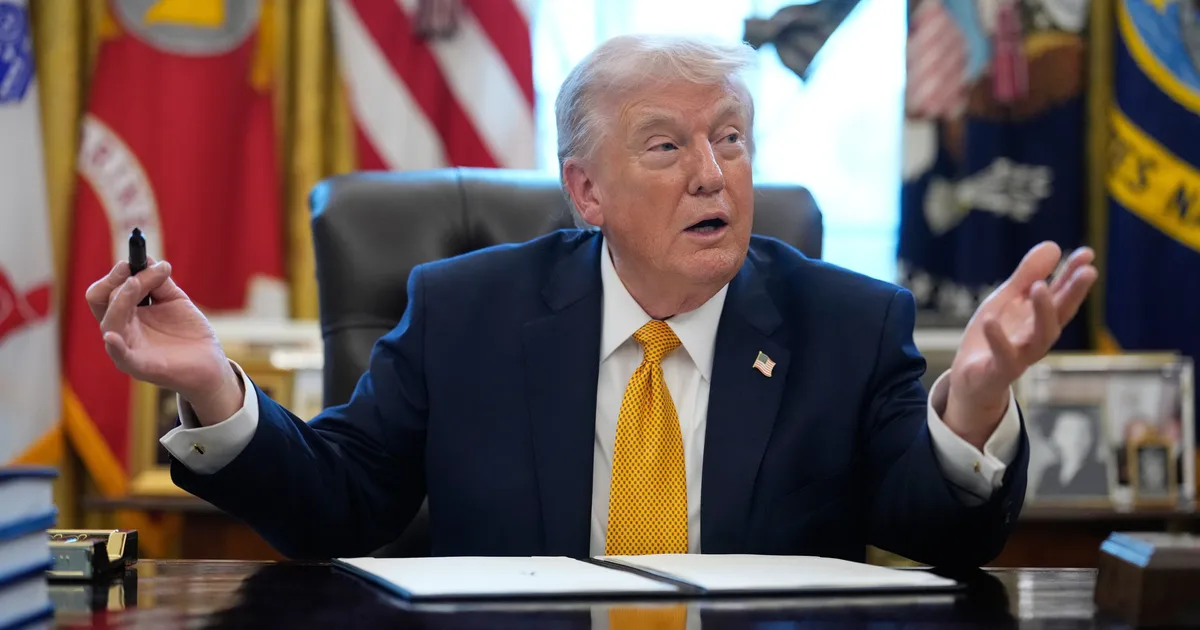
Donald Trump claimed twice on Monday that he had spoken directly to one of his presidential predecessors who had expressed approval for his bombing of Iran.
The only trouble is representatives for all four of the living former presidents said they had not spoken to Trump about the war in the Middle East.
An aide for George W Bush said he has not “been in touch” with Trump.
A spokesperson for Bill Clinton said the current president was not referring to him in the anecdote.
An aide for Barack Obama said he has had “no recent conversations” with Trump while an insider close to Joe Biden said the current president was not talking about him either, according to NBC News.
On Monday, Trump told Kennedy Centre board members: “I’ve spoken to a certain president – who I like, actually.
“A past president, former president, he said: ‘I wish I did it. I wish I did.’
“But they didn’t do it. I’m doing it. Yeah?”
He made the same claim later in the day, telling the media from the Oval Office: “I spoke to one of the former presidents who I actually like.”
He added: “I actually speak to some. And he said, ‘I wish I did what you did.’”
Trump did not tell the media exactly who he was referring to, only saying it was not Bush.
“I spoke to one of the former presidents who I actually like. I actually speak to some. And he said, ‘I wish I did what you did,’” the president claimed.
Trump continued: “I don’t want to say because a member of a party, a member of a party, they have Trump derangement syndrome, but it’s somebody that happens to like me, and I like that person, who’s a smart person, but that person said, ‘I wish I did it.’
“OK, but I don’t want to get into who. I don’t want to get him into trouble. You know it’s interesting. And maybe he’d be proud.
“And I could even ask him that: ‘Would you like me to reveal your name?’”
Trump’s decision to bomb Iran at the end of February has been widely criticised for being unlawful and poorly planned.
International allies have also refused Trump’s call for them to send warships to the region.
UK prime minister Keir Starmer insisted on Monday that Britain “will not be drawn into the wider war”.
Politics
Sarah Michelle Gellar Says Buffy Reboot Was Staked By Executive Who Didn’t Think The Show Was ‘For Him’

After Sarah Michelle Gellar revealed over the weekend that the planned Buffy The Vampire Slayer reboot was no longer going ahead, the actor has now shared her take on why the series didn’t get picked up.
Directed by Chloé Zhao – who was Oscar-nominated this year for Hamnet – the revival would have brought viewers back to Sunnydale, introducing a new slayer played by Ryan Kiera Armstrong, as well as featuring Sarah’s Buffy in more of a mentoring role.
Sarah Michelle told People magazine in an interview published on Monday that she blames the cancellation on one unnamed executive.
“We had an executive on our show who was not only not a fan of the original, but was proud to constantly remind us that he had never seen the entirety of the series and how it wasn’t for him,” she claimed.
“So, that tells you the uphill battle that we had been fighting since day one, when your executive is literally proud to tell you that he didn’t watch it.”

Getty Images via Getty Images
The Cruel Intentions star also insisted that she felt the Buffy reboot not being picked up for a full series was not due to the quality of the show, declaring that the script’s “dialogue flew off the tongue.
She also praised the “duality” of having a younger slayer, who was the same age Buffy was when the first show started, alongside the original grown-up character.
“I’d like to use this moment also to say that Ryan Kiera Armstrong is a superstar,” she added. “I’m gutted that no one will see her as a slayer.”
Sarah Michelle announced the “disappointing” news on her Instagram over the weekend, explaining that the streaming service Disney+ had chosen not to pick up the pilot.
“I want to thank Chloé Zhao because I never thought I would find myself back in Buffy’s stylish, yet affordable boots,” she said. “And thanks to Chloe, I was reminded how much I love her and how much she means not only to me, but to all of you. And this doesn’t change any of that.”
Buffy The Vampire Slayer originally ran for seven series between 1997 and 2003.
The series followed Buffy and her friends as they navigated the trials and tribulations of high school and college, while also fighting vampires, demons and other supernatural creatures.
ICYMI…

Some good news: in the UK, cancer death rates have reached their lowest-ever levels on record, Cancer UK reported. They’re down 29% from their 1989 peak.
Cervical cancer is an especially notable example. There’s been a 75% decrease in death rates in the last 50 years, thanks in part to the HSV vaccine.
Reacting to that news, Dr Jiri Kubes, radiation oncologist and medical director at the Proton Therapy Centre, said, “Overall cancer survival has improved significantly over recent decades, which is extremely encouraging.
“However, we are also seeing concerning increases in certain cancers, and in some cases these are appearing more frequently in younger adults.”
1) Bowel cancer
Recent research found that 45% of bowel cancer cases are in under-65s. England has experienced a 3.6% yearly rise in early-onset bowel cancer, the highest in Europe.
Some scientists have noticed that younger people’s bowels might be more “stiff” than older people’s, which could increase their risk.
Dr Kubes added that envirionmental and lifestyle changes might have a role to play, too.
“Modern diets that are high in processed foods and low in fibre can influence gut health and long-term inflammation, which may increase cancer risk,” he said.
“At the same time, many people are spending more time sitting and less time being physically active than previous generations.”
2) Pancreatic cancer
In the UK, pancreatic cancer rates have risen by 20% since the ’90s. We’re projected to see 5% more cases between 2023-2025 and 2038-2040.
It’s still relatively rare, however – it’s the 10th most common cancer in the UK, and accounts for 3% of all new cancer cases.
“Symptoms often appear late, which makes early diagnosis challenging,” Dr Kubes explained.
“That is why awareness of persistent symptoms such as unexplained weight loss, abdominal pain or ongoing digestive problems is so important.”
Pancreatic cancer can also make the whites of your eyes or your skin turn yellow (jaundice).
3) Liver cancer
Since the early ’90s, liver cancer incidence has increased by a remarkable 180% in the UK. This is slightly higher for men than it is for women.
Rates are expected to rise by 6% between 2023-2025 and 2038-2040.
Liver cancer is strongly linked to deprivation: rates among women are 78% higher in the most deprived areas than the least deprived ones, and for men, it’s 89%.
Dr Kubes added, “Conditions such as obesity, diabetes and fatty liver disease have become more common, and these can significantly increase the risk of certain cancers.”
Still, cancer treatment has progressed overall
None of this is to say cancer outcomes have not improved – they have.
“Earlier diagnosis, more precise radiotherapy techniques and improved systemic treatments are helping many more patients live longer,” Dr Kubes said.
“But prevention and early detection remain some of the most powerful tools we have to reduce cancer risk in the future.”
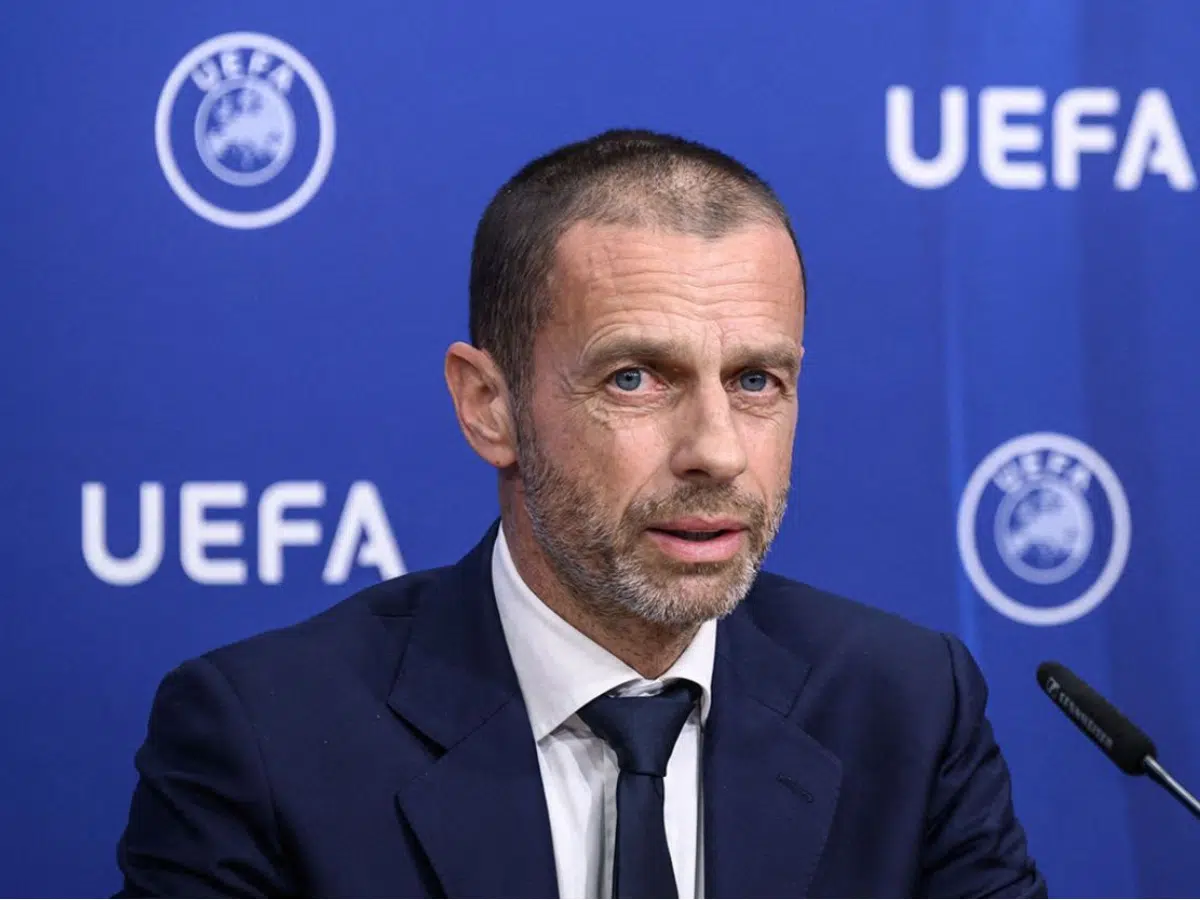
UEFA is facing mounting political pressure in Switzerland following a parliamentary move that could threaten its tax privileges after failing to impose any sanctions on Israel.
The French newspaper L’Équipe revealed that a group of left-wing members of parliament in the Swiss canton of Vaud submitted a draft resolution questioning whether the conditions for UEFA’s tax exemption are still met.
If the draft resolution passes, UEFA will be summoned to justify why it hasn’t sanctioned Israel, especially since the Swiss federal government has previously linked tax privileges for international sports federations to their role in promoting peace through sport.
The initiators of the proposal believe UEFA is no longer fulfilling its role, which could open the door to a review of its tax status in Switzerland, where its headquarters are located.
According to internal estimates within UEFA, canceling the tax exemption could cost the organisation about €30 million annually (£26 million). Tax authorities may also demand clarification on how its annual revenues, estimated at about €5 billion (£4 billion), are distributed.
The cantonal parliament is scheduled to debate the draft resolution on 24 March. A close vote is expected in the 150-member assembly, where left-wing parties hold only 64 seats, leaving the outcome uncertain.
UEFA’s president must call for a vote
This pressure comes at a time of escalating international campaign led by the campaign group, Game Over Israel, which wants global sports organisations to boycott Israel, similarly to what happened with Russia after its invasion of Ukraine.
Former Manchester United player, Eric Cantona, reignited the debate when he highlighted the disparity in treatment of both countries at a solidarity event in London last year.
According to sources within UEFA, communications and pressure from federations, sponsors and sports media have continued unabated in recent months, indicating how prominent this issue has become within European football.
Any decision to suspend Israel’s participation in European competitions requires a vote within UEFA’s 21-member executive committee, including its president, Aleksander Čeferin, who is the only person authorised to call for such a vote.
Internal sources indicate a number of committee members are inclined to support a ban. However, Čeferin —known for his meticulous calculations — only calls for a vote when he is certain of a clear majority.
The Israeli Football Association, on the other hand, categorically denied the existence of any upcoming vote to suspend its membership, describing the circulating reports as “fake news” and affirming its commitment to all FIFA and UEFA regulations.
Mounting pressure
But the pressure is no longer solely political or moral; it has also extended to the financial sphere. Several European federations have incurred significant losses during matches played by their national teams against Israel due to the stringent security measures and low attendance.
For example, the 2024 France-Israel match at the 80,000 capacity Stade de France attracted only about 16,000 spectators. Security costs for the Europa League match between VfB Stuttgart and Maccabi Tel Aviv last December were estimated at about €10 million (£9 million).
As pressure mounts from parliaments, players and national federations, European football appears to be facing a new political test that could determine not only Israel’s participation in continental tournaments but also the boundaries of the relationship between sport and politics in Europe.
Featured image via the Canary

Champions League: PSG remain cautious ahead of second leg against Chelsea – Sports

App Store fees drop in China & Beijing immediately asks for more

Would more North Sea drilling lower UK energy bills? Our analysis says no

Smart energy pays enters the US market, targeting scalable financial infrastructure

Why Israel is blocking foreign journalists from entering

Bitcoin: We’re Entering The Most Dangerous Phase

Private Credit: The Next Risk in the Financial System

IF YOU OWN XRP YOU NEED TO KNOW THIS NOW! (Good, Bad and UGLY!) In 48 Hours We Find Out!

3 ways rich people invest in times of market uncertainty! #finance #money #war #invest #economy
-
 Tech6 days ago
A 1,300-Pound NASA Spacecraft To Re-Enter Earth’s Atmosphere
-
 Crypto World3 days ago
HYPE Token Enters Net Deflation as HyperCore Buybacks Outpace Staking Rewards
-

 Business7 days ago
ExxonMobil seeks to move corporate registration from New Jersey to Texas
-

 Fashion4 days ago
Weekend Open Thread: Addict Lip Glow
-

 Tech7 days ago
ChatGPT will now generate interactive visuals to help you with math and science concepts
-
Sports3 days ago
Why Duke and Michigan Are Dead Even Entering Selection Sunday
-

 NewsBeat6 days ago
Residents reaction as Shildon murder probe enters second day
-

 Business2 days ago
Search for Savannah Guthrie’s Mother Enters Seventh Week with No Arrests
-

 Business6 days ago
Search Enters Sixth Week With New Leads in Tucson Abduction Case
-

 Business3 days ago
US Airports Launch Donation Drives for Unpaid TSA Workers as Partial Government Shutdown Enters Fifth Week
-

 Sports6 days ago
PWHL, Senators discussing plan to keep Charge in Ottawa
-
Crypto World3 days ago
Coinbase and Bybit in Investment Talks: Could Bybit Finally Enter the US Crypto Market?
-

 NewsBeat6 days ago
I Entered The Manosphere. Nothing Could Prepare Me For What I Found.
-

 Business3 days ago
Country star Brantley Gilbert enters growing non-alcoholic beer market
-

 Business1 day ago
Australian shares drop as Iran war enters third week
-

 Sports4 days ago
College Basketball Best Bets: Conference Tournament Semifinal Picks
-

 Crypto World1 day ago
Crypto Lender BlockFills Enters Chapter 11 with Up to $500M in Liabilities
-
 Crypto World7 days ago
Will Chainlink price reclaim $10 amid volatility squeeze?
-

 Tech7 days ago
Clarity as strategy
-

 Politics6 days ago
Trump Says Middle East Is ‘Very Lucky’ That He’s President


You must be logged in to post a comment Login