

Politics
Bridgerton Season 4: 11 Behind-The-Scenes Facts About How The Show Was Made

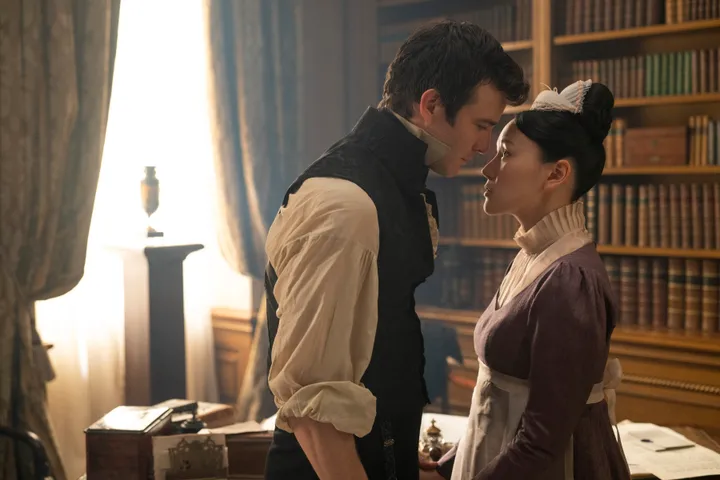

Bridgerton is back for a new run of episodes with more dramatic romances, extravagant costumes and even bigger wigs.
The second half of season four follows bohemian Benedict Bridgerton as he continues his search for the mysterious Lady in Silver, after meeting her at a masquerade ball, not realising she’s actually Sophie Baek, who a maid he has also fallen for.
As the love story between Benedict and Sophie – played by Luke Thompson and Yerin Ha – unfolds, the pair must overcome a societal divide in order to be together.
With season four proving just as popular with Netflix users as ever, we’re going behind the scenes to find out how the team brought Julia Quinn’s books to life – and how the actors made those steamy love scenes look so realistic…
Yerin Ha initially had doubts about playing Sophie in Bridgerton as she was worried her British accent wasn’t up to scratch
Australian actor Yerin Ha has admitted she was surprised to land the role of Sophie because she thought her attempts at a British accent were “terrible.”
Speaking to InStyle, she said that even after she landed a chemistry read with Luke Thompson over Zoom, she still thought there was no way she’d get the role.
“I just assumed that he probably had a day full of auditions, and he must be tired,” she recalled. “So I didn’t want to waste his time. I didn’t even really have chit-chat. I just got straight into the scene.”

Fortunately, Luke didn’t share her feelings about the Zoom call, and remembers their chemistry read very differently.
“I just remember feeling, despite the artifice of an audition, the Zoom delay, and shaky internet connection, that we were actually talking to each other,” he explained.
The Bridgerton writing team changed Sophie’s original surname to reflect Yerin Ha’s background
In Julia Quinn’s Bridgerton book series, Sophie’s surname is Beckett. In the show, they switch it to Baek to honour Yerin’s own background.
Yerin revealed that the showrunner Jess Brownell asked the actor if there were any Korean names that start with B, so there was still a connection to the character from the books, with the actor offering up Baek, feeling it was a seamless swap.
“I was just super appreciative of her changing the last name so that it fits with my identity and my culture and how I look,” Yerin told Elle.
“For some people, it might feel like a small thing, but for a production of that size to mold a character to me really empowered me.”
Sophie’s costumes in Bridgerton were also inspired by Yerin Ha’s South Korean heritage
The costume designer added some Korean influences to Sophie’s outfits in a special shout-out to the actor’s heritage.
“Her necklace is based on an Asian necklace that’s amethyst, which is the stone of Korea. That’s a little tiny Easter egg to her history that her mother gave her,” costumer John Glaser told The Kit.
Yerin added to Refinery29: “The fact that the costume department even thought about that and nailed the details, it just goes to show how much thought goes into everything, from the set to the costumes.”

Benedict Bridgerton’s glow-up for season 4 was a subtle one
In the past, when a Bridgerton brother becomes the main focal point of a series, they usually get a glow-up and a new wardrobe to make them more leading-man-ready.
For Benedict, this transformation was more subtle than those of his brothers – although there were some subtle shifts.
Costume designer John Glaser told The Kit that Benedict’s wardrobe was inspired by 1980s New Romantics, making use of sheer fabrics and frilled collars.
“This season we’ve taken the men and we Gucci’d them up,” he joked.
In an interview with Vogue, Glaser explained that his wardrobe was also inspired by Joseph Fiennes in Shakespeare In Love.
“Because we’ve gone forward in time a little bit in the show, the men’s silhouette has become softer and a little more open,” the Emmy winner explained. “And Benedict specifically, we’ve pushed him into the future a bit so that he’s not as restricted as the other men on the show.”

Araminta’s look in Bridgerton season 4 was also inspired by someone from modern times
Sophie’s “evil” stepmother Araminta Gun (played by Katie Leung), does something no woman has ever done before in all four seasons of the period drama.
“As far as women in Bridgerton, she’s our first character to wear black,” Glaser told The Kit.
The decision to dress Araminta in black was not because she was supposed to come across as evil, though. Instead, her dark attire represents the fact she’s a widow, who feels separated from the rest of society.
“Her shape and silhouette aren’t Regency – it’s a little 1820 mixed with 1970,” Glaser told Vogue. “We gave her as much texture and subtle sparkle as possible – it’s like this reflective shield that she’s wearing, it’s her armour.
“She has a stronger silhouette than other characters and we never see her skin.”
Showrunner Jess Brownell compared Araminta to Anna Wintour, telling Vogue: “Anna, when you see her walking down the street, you know right away who she is. You’re not afraid of her, but you’re going to respect her. You see her coming and you better be ready. She’s a strong person.”

The kite scene was the first that Luke Thompson and Yerin Ha filmed together
While their masquerade ball meeting was what set the ball rolling for their characters, this was not the first time that Yerin and Luke were on set together.
In fact, episode three’s kite-flying sequence was the first scene the duo filmed together, something they have admitted to feeling relieved about, because it allowed them to let their walls down and relax into the characters.
“The weather was beautiful. I was wearing Daphne’s borrowed dress. I felt really beautiful. I felt like Cinderella,” Yerin told Town & Country.
“That’s really where Benedict and Sophie’s relationship blossoms,” she also told Tudum. “It’s a parallel between Luke and me, because that’s where our friendship started to blossom as co-stars. I have a nostalgic, sentimental attachment to that place now.”

The costumes at Bridgerton’s first masquerade ball were supposed to look ‘mismatched’
The scene of Benedict and Sophie’s first meeting was an elaborate feast for the eyes, with Bridgerton’s resident costume designer creating more than 172 costumes for the scene.
Costumer John Glaser has opened up how they put together the looks for the masquerade, telling Town & Country: “We actually thought the people from the town would come to the ball, so it would be a mixed match of everything, which is what we tried to do.
“We just thought of each person that would come, what they would make up at home. It’s not a Halloween party, but at a Halloween party, everybody has made their clothes or borrowed clothes. It’s just a mismatch stuff. And we wanted it to be exotic.”

As for the wigs, the team made 160 in total for the scene, with the most elaborate one being worn by Queen Charlotte.
Her elaborate design featured “a heart-shaped outer cage crafted from hair and adorned with silver leaf, and inside sits a replica of the nuptial crown that George gifted her – also made from hair”.
This was a nod to the queen’s late husband, and the Bridgerton prequel Queen Charlotte which followed the couple in their younger years.
The set of the Bridgerton masquerade ball was inspired by one literary classic in particular
It wasn’t just the costumes that the team put immense detail into for the ball scene.
The production designer, Alison Gartshore, themed the masquerade set around William Shakespeare’s A Midsummer Night’s Dream, adding lots of drapes to the dream-like setting alongside white florals.
Gartshore explained to Town & Country that the flowers were meant to feel like “the servants had gone out into the estate and just got whatever they could find – ivy, twigs, birds’ nests, the odd horn here and there, and they really kind of woven these garlands together from their own land”.
“All the florals had to be white because we wanted to look sort of moonlight flavour to it,” she continued. “It ended up looking really quite magical.”
Bridgerton’s racy staircase scene was much less sexy to film in real life than it appeared on screen…
Bridgerton is known for its sex scenes, and season four was no different.
In the first half of the season, Benedict and Sophie have in an intimate moment in a stairwell – in what served as a metaphor for the class divide between them.
This may have looked steamy on screen, but the atmosphere on set was apparently a lot less sexy.
“What we actually did is we both got ill. But different scenes. We kept falling ill!” Luke told E! News.
Yerin added: “We were very mentally a little bit weak, a little bit nervous, my immune system was down…”

…And, for that matter, so was Bridgerton season 4’s infamous bathtub scene
Benedict and Sophie’s bathtub sequence was one of the most anticipated moments of Bridgerton season four.
Luke and Yerin have admitted that the scene was an especially slippery one to film – namely because production kept putting oil in the water.
“We were like two seals, because they kept pouring in this thing to make it milky, but I think it had oil in it,” Luke explained to Refinery29.
Yerin also revealed that, at just 5’2”, the long bathtub prop presented its own issues, with Luke joking: “She kept floating down the river. We had to sort of brace a little bit.”
It wasn’t just oil and the depth of the bathtub that caused issues for the actors, though.
“I put baby powder all on me because I was told it would help dry my skin to put the intimacy wear on with my tape,” Yerin recalled to Capital Breakfast.
“And then, basically, the next day, after the bathtub, I got hives all over my body, and I got folliculitis, so I needed steroid cream!”
Bridgerton fans can visit Benedict’s cottage in person
Sophie and Benedict take refuge in Benedict’s sizeable countryside estate, imaginatively named My Cottage.
In real life, the scene where the couple has breakfast together was shot at Loseley Park. The Grade I listed manor was built in the 1560s and is closely linked to the Tudor family.
You can visit this 1,400 acre Surrey estate in person as it’s open to the public. You can even stay in one of the cottages on the estate – although sadly, it does not include a Bridgerton brother.
All four seasons of Bridgerton are now streaming on Netflix.


Bahrainis have been filmed cheering “like it’s New Year’s fireworks” as a new barrage of Iranian missiles hit a US base in Bahrain:
The footage brings to mind scenes from the June 2025 ’12-day war’ in which Palestinians cheered as they watched Iranian missiles slam into their oppressor’s military facilities.
The small island in the Persian Gulf, which was a British protectorate (also read: colony) in the 19th century, has a majority Shia population and a Sunni king. In 2011, Bahrain saw a popular uprising violently crushed by an army from Saudi Arabia and its allies, which remain stationed (also read as occupying) on the island.
Iran’s strikes on the US and Israel are in retaliation for the axis’s unprovoked attacks on Iran, which murdered hundreds on 28 February 2026, including at least 85 schoolgirls and their teachers.
Featured image via the Canary
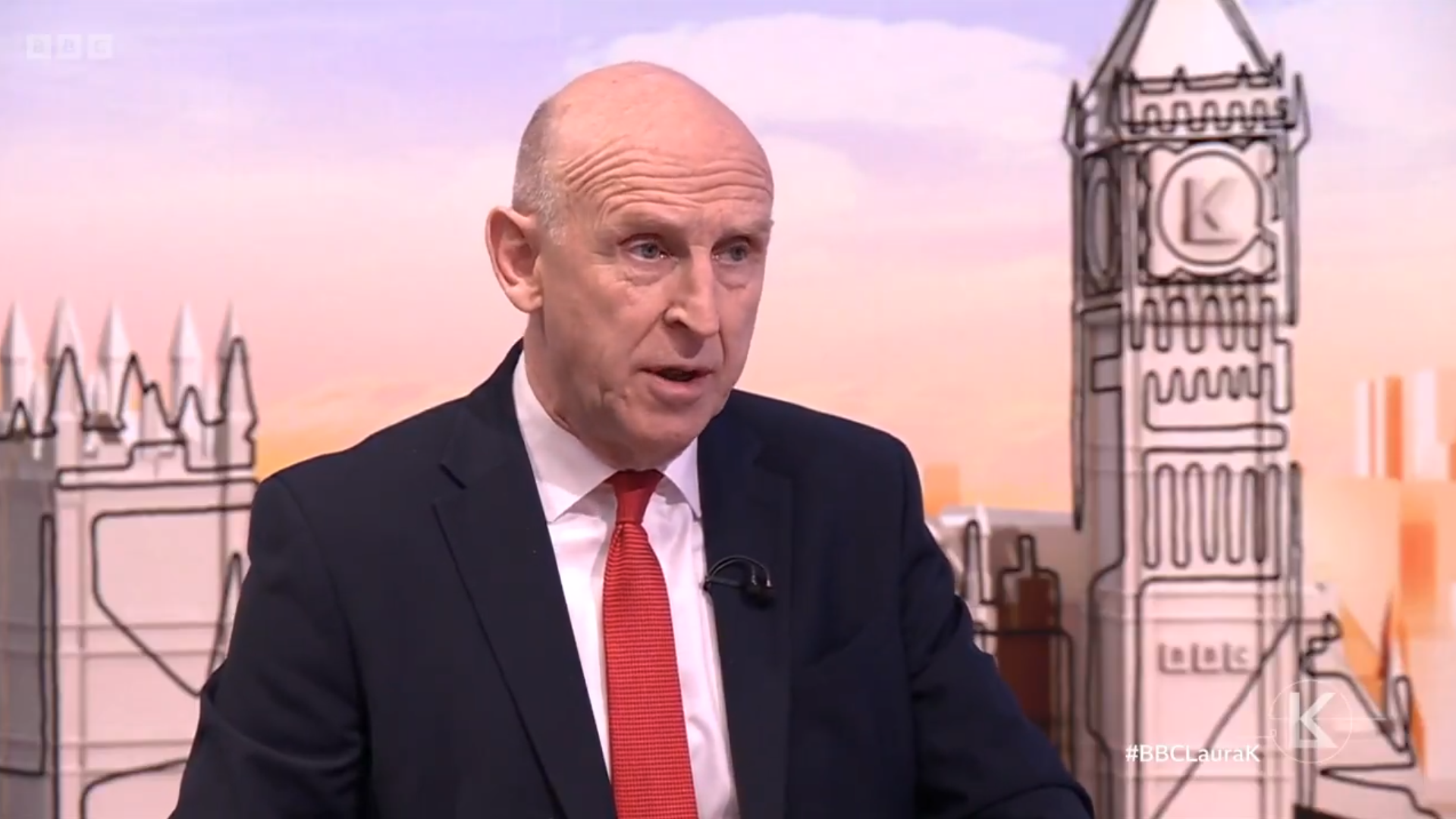
“Britain played no part in the strikes on Iran”
Defence Secretary John Healey says “it is for the US” to explain whether its strikes on Iran are within international law#BBCLauraKhttps://t.co/CkTHGctZ4k pic.twitter.com/1aIAJAiPZe
— BBC Politics (@BBCPolitics) March 1, 2026
John Healey Refuses Six Times to Say if UK Backs Strikes on Iran
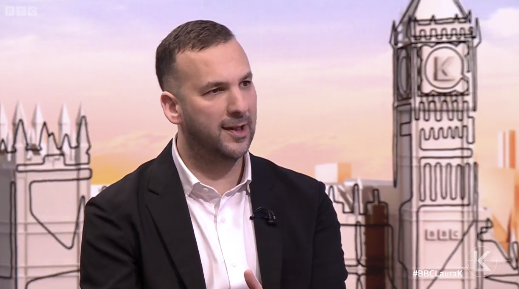
Zack Polanski Defends Iranian Regime: It Was Already at the Negotiating Table
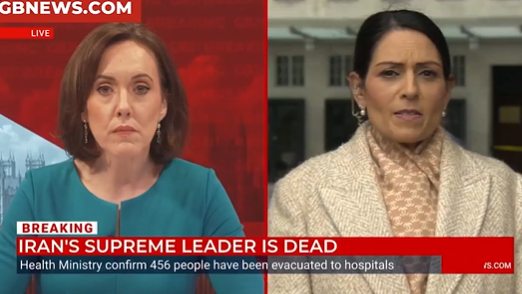
Priti Patel: Once Again Feeble Starmer Sits on the Fence
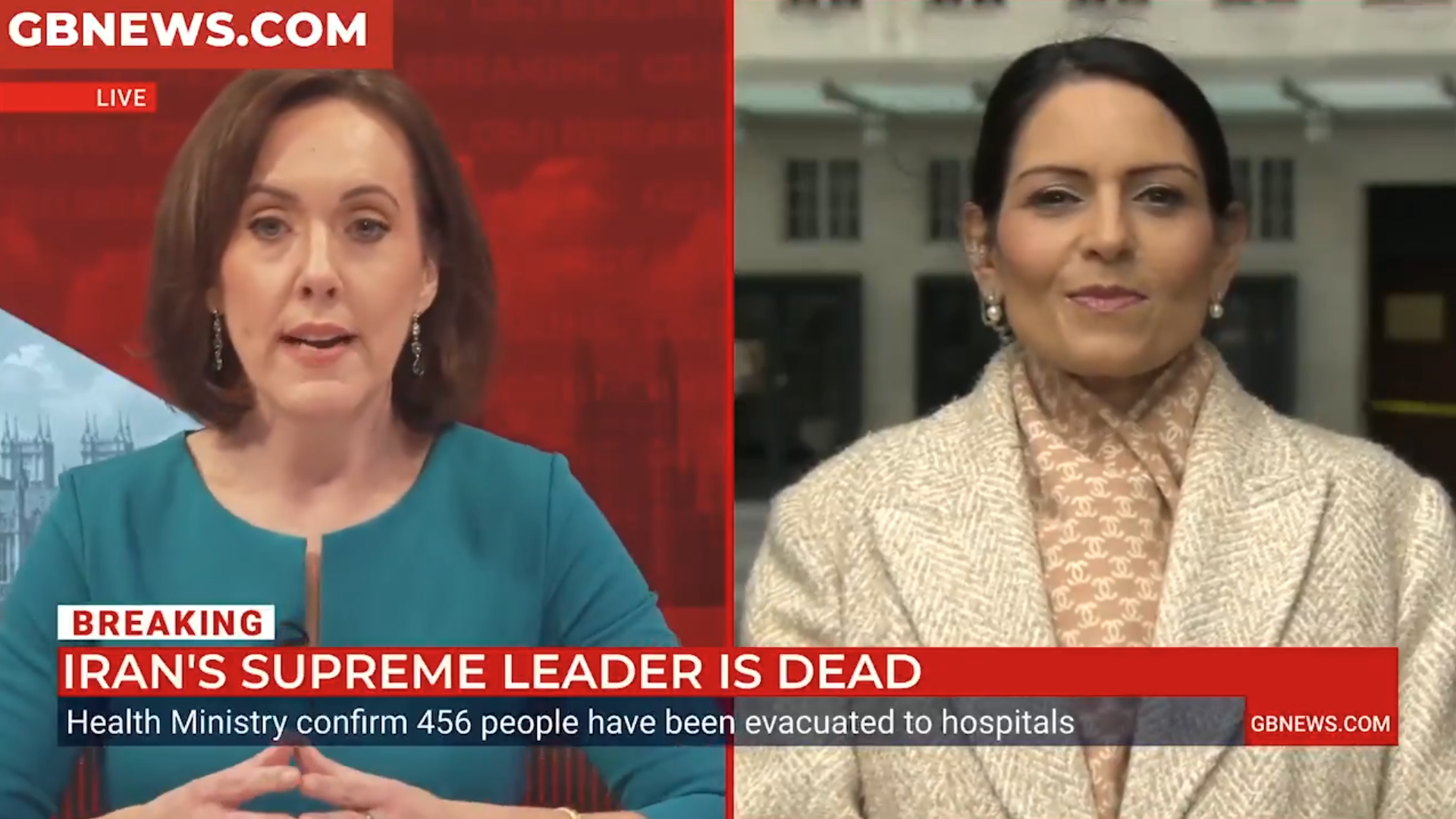
‘Keir Starmer’s statement yesterday was utterly feeble.’
Shadow Foreign Secretary Dame Priti Patel has accused the government of ‘sitting on the fence’ regarding the US-Israel strikes on Iran, calling for a more ‘robust’ stance. pic.twitter.com/EF1Ev3IlKP
— GB News (@GBNEWS) March 1, 2026
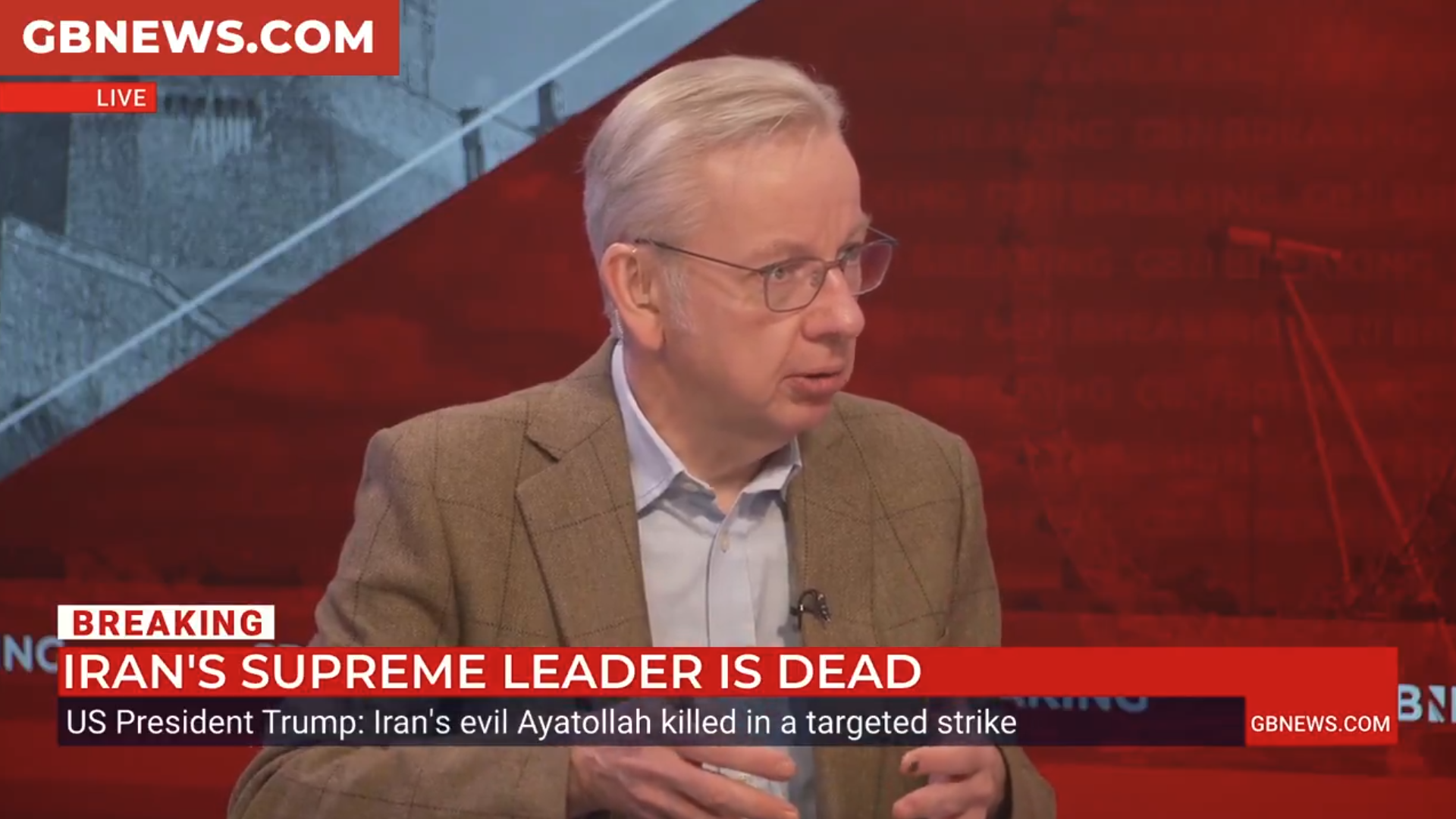
‘Keir Starmer is crippled because he is hock to international law.’
Editor of The Spectator Michael Gove weighs in on the Prime Minister’s response to the Iranian crisis, adding ‘he doesn’t know which way to jump’. pic.twitter.com/TAclEjh3SQ
— GB News (@GBNEWS) March 1, 2026
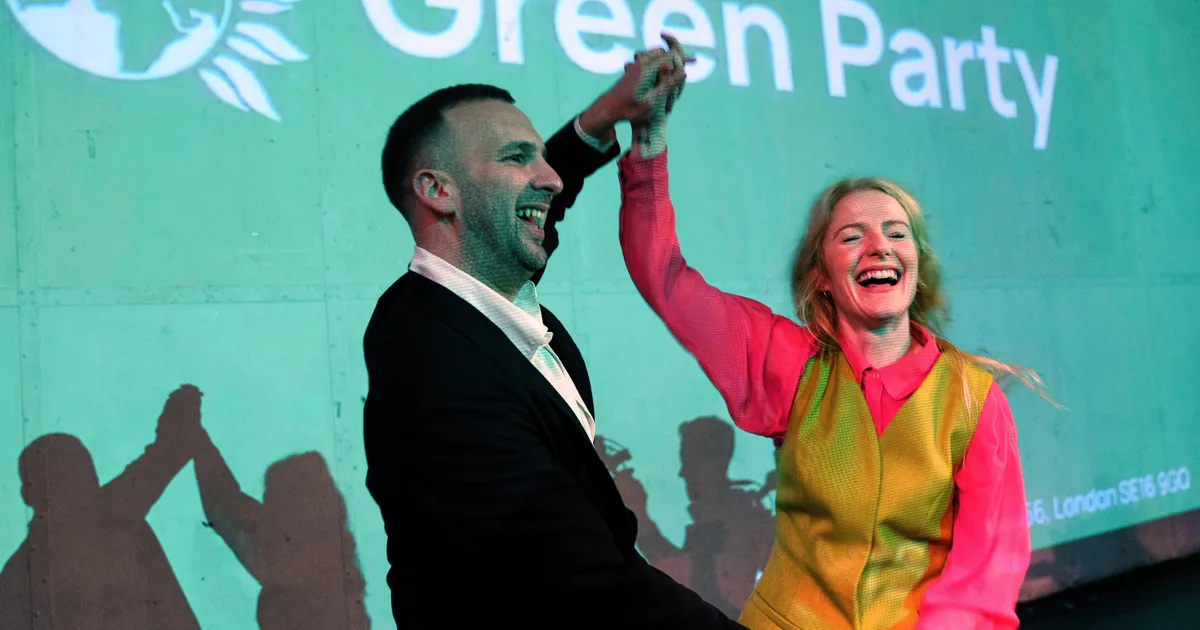
The Green Party’s membership has surged past 200,000 in the wake of their historic victory in the Gorton and Denton by-election.
Party bosses revealed the number of people joining has tripled from 68,000 last September, when Zack Polanski was elected leader.
Polanksi said the party’s latest milestone “is a political turning point”.
“Over 200,000 people have now joined a movement that refuses to accept managed decline, climate delay, or timid politics.
“Across the country, communities are choosing hope over fear and courage over compromise. The victory in Gorton and Denton shows what’s possible when we organise, when we speak clearly and when we stand unapologetically for climate justice, social justice and economic transformation.”
He added: “Let me be absolutely clear: Greens are not here to be disappointed by Labour, but to replace them.
“We will not wait politely for change; we are building it. This membership surge proves that the future of progressive politics belongs to the Greens.”
The Times reported in December that internal data showed Labour’s membership had fallen below 250,000.
Reform UK are currently Britain’s biggest political party, with a membership approaching 300,000.
Qualified plumber Hannah Spencer won Thursday’s by-election with a majority of nearly 4,500.
Reform UK came second, with Labour – which had held the seat with a majority of nearly 13,5000 – came third.
Politics
Politics Home | John Healey Warns UK Bases at Risk Of ‘Indiscriminate’ Strikes After Ayatollah Death

2 min read
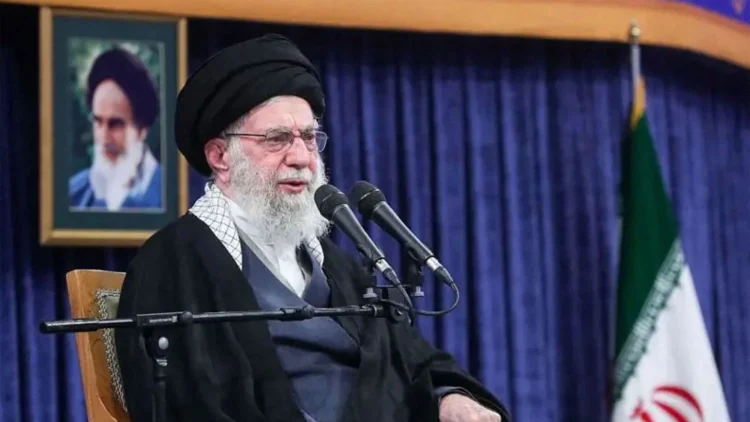
Iran’s Supreme Leader Ayatollah Ali Khamenei has been killed in a coordinated United States and Israeli military offensive.
Defence Secretary John Healey warned that Iran was “lashing out in an increasingly indiscriminate and widespread way” with retaliatory strikes that had endangered British forces and allies in the region.
The 86-year-old Ayatollah, who had ruled Iran since 1989, died on Saturday when precision missiles and aircraft struck his fortified Tehran compound as part of the joint assault targeting more than 500 military and strategic sites across the country.
U.S. President Donald Trump publicly announced the leader’s death, describing Khamenei as “one of the most evil people in history” and branding the operation as a decisive blow against what he called a “source of terror”, vowing that strikes would continue until U.S. objectives were met.
The Islamic Revolutionary Guard Corps (IRGC) vowed to “take a different and tough step of revenge” after promising to conduct “the most devastating offensive” in Iranian history.
Iran has retaliated with ballistic missile and drone attacks on U.S. military positions in the Gulf and infrastructure in allied states, while air-defence systems have been activated across the region. Explosions have been detected over Dubai, Doha, Bahrain, Iraq and Israel.
Healey said that “few people will mourn” Khamenei’s death, describing the Iranian regime as “a source of evil” responsible for internal repression and the export of terror, including threats to the UK.
Speaking to the BBC’s Laura Kussenberg, Healey said Britain is “on top of what’s necessary to keep [the public] safe, to reinforce regional stability, to prevent further escalation”. He refused to say if Britain could join the US-Israeli offensive.
Prime Minister Keir Starmer reaffirmed that Britain was not involved in the U.S.-Israeli strikes, condemning Iran’s retaliatory attacks he urged Tehran to “refrain from indiscriminate military strikes” and to return to diplomatic negotiations.
Starmer also spoke with President Trump on Saturday, discussing the unfolding crisis and clarifying the UK position on defensive operations in the Middle East. Both agreed that Iran must never be able to develop a nuclear weapon, reiterated the need to work closely amongst allies and partners to improve regional security.
British aircraft have been deployed for protective missions, but the Prime Minister reaffirmed that the UK was not a party to the offensive that killed Khamenei, emphasising international law and the need to avoid wider conflict.
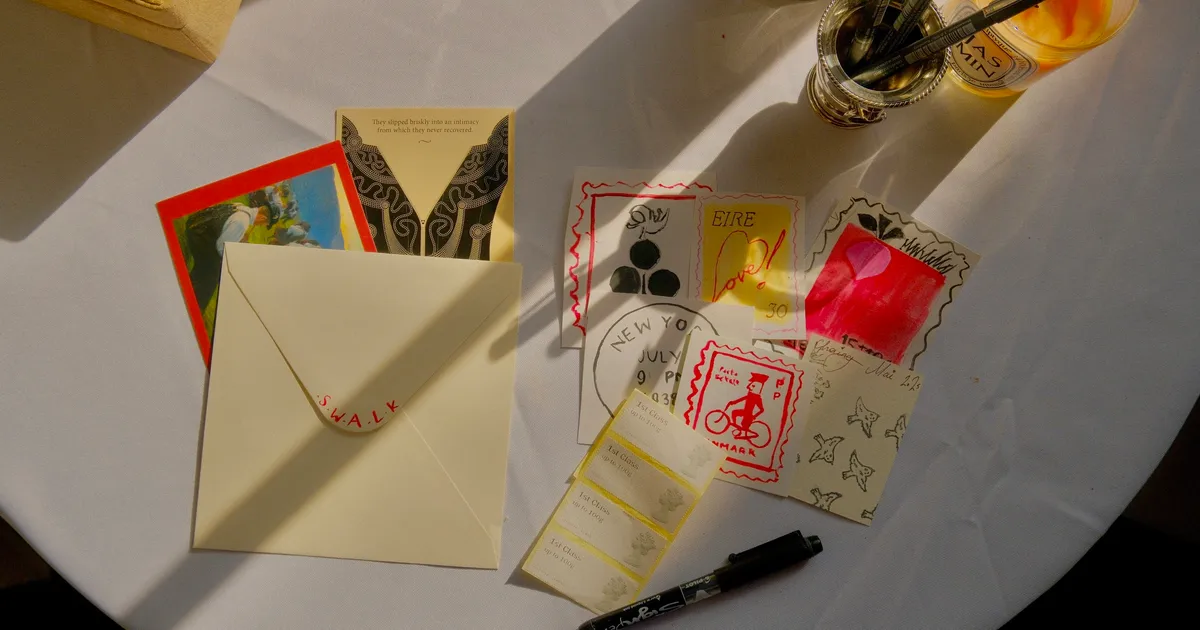
It is 2026. Artificial intelligence can write your dissertation, generate your face, and compose a symphony in the style of Beethoven if Beethoven had grown up on SoundCloud. The metaverse exists. (Nobody’s in it, but it exists.)
And Gen Z – digital natives, chronically online, the generation that essentially grew up inside a WiFi router – has decided that its preferred form of communication is to write something on paper, lick an envelope, and hand it to a stranger in a red van.
The stamp. The address. The three-week wait. The prayer.
Welcome to the most unexpected cultural trend of the decade: Gen Z has gone postal. The data is, frankly, deranged. Pinterest – which correctly predicted 88% of its 2026 trends and has half a billion monthly users, so we can’t just dismiss this as vibes – has reported searches for “penpal letters” up 35%, “handwritten letters” up 45%, and most importantly, “cute stamps” up a deeply unhinged 105%.
A quarter of Gen Z and millennial users say they are actively rediscovering letter-writing. One hundred and five percent more people are excited about stamps. Those tiny adhesive squares your granny hoards in a biscuit tin next to a broken calculator and some elastic bands.
So what’s going on? Why has a generation with AirDrop, WhatsApp, Snapchat, BeReal, iMessage, Instagram DMs, Signal, Telegram, and the ability to send a 47-second voice note whilst walking to Pret decided that actually, what they really want is to use the postal system?
A few reasons, it turns out. None of them are as simple as “they’re quirky.”
“I’d been doom-scrolling for about four hours,” says one 22-year-old graphic designer from London I spoke to. “I realised I hadn’t actually said anything to anyone. I’d consumed about four thousand opinions and contributed nothing. I felt like a ghost.”
She dug out a notebook, wrote three pages to her university friend in Edinburgh, and posted it on her lunch break. “It took her eleven days to write back. Eleven days where I just… didn’t know? And not-knowing felt weirdly healthy. Like I’d sent something into the world and let it go.”
Eleven days of not knowing. In an era where you can see exactly when someone has read your message, watch the three dots appear and disappear for twenty-two minutes, and infer the entire emotional state of another human being from the speed of their reply, the concept of simply not knowing whether someone got your letter is practically radical.
It is the anti-read-receipt. The anti-notification. The anti-everything.
And people find it a relief.
Here is what a letter categorically cannot do. It cannot be screenshotted and dropped into a group chat. It cannot be ratio’d. It cannot go viral. It cannot be fed into an algorithm that decides who sees it and when. Yes, someone could theoretically photograph it and upload it – but the very act would feel like a breach of the intimacy the letter assumes.
It arrives in one place, for one person, and exists entirely outside the attention economy’s jurisdiction. In an era where a private thought posted at the wrong moment can resurface years later to end a career, there is something quietly radical about a form of communication that leaves no searchable trace, no timestamp, and absolutely no engagement metrics.
“Everything I do online is data,” says a 24-year-old postgraduate student in Durham. “My letter isn’t data. It’s just a letter. Nobody’s going to serve me an ad based on what I wrote to my mate about his break-up. That feels like the bare minimum, but apparently it isn’t.”
He’s not wrong. For a generation whose digital behaviour was monetised since they were in nappies, the concept of communication that nobody is profiting from is, apparently, deeply appealing.
It also helps that the economics of being young in Britain right now are, for want of a better word, catastrophic. Under-30s in the UK now spend more than 30% of their income on rent – more than any other age group – while average rents have climbed £1,616 in a single year. Sixty percent of 18-24 year olds say the pressure to succeed has left them unable to cope. Nearly half report feeling financially insecure.
When you can’t control your rent, your job prospects, or the general direction of civilisation, you can control whether you lick a stamp. A stamp costs £1.35. A piece of paper costs virtually nothing.
And the letter, once sent, belongs entirely to you and the person who receives it, a sealed object travelling through the physical world at its own unhurried pace, indifferent to the algorithm and immune to the ratio.
This is not nostalgia. These are people in their early twenties. They do not remember a world before smartphones. They are not longing for a simpler time they once lived through. They are making a deliberate, rational choice to opt out of a system that has consistently promised connection and delivered anxiety instead.
The metaverse, it turns out, promised a world without limits and produced a space that nobody actually wanted to spend time in. Social media promised community and delivered comparison. The smartphone promised freedom and became, for a significant portion of its users, a documented source of psychological harm.
So they’re writing letters. They’re also buying vinyl, joining running clubs in record numbers, and cooking elaborate meals on a Tuesday evening for absolutely no reason except that it takes an hour and requires both hands and therefore cannot be done while also watching a million 15 second videos. It is all the same impulse: find something that demands your full presence and returns something tangible. Find something that is yours.
Before we get too misty-eyed, it is worth asking whether this is accessible to everyone. Nice stationery costs money. The Pinterest aesthetic, wax seals, vintage stamps, handmade paper, presumably a single artisan candle burning in the background – is not free.
The young person working two jobs with an hour commute each way is not, in all likelihood, sitting down with a fountain pen and a fresh pot of Earl Grey. The trend skews, as these things tend to lean toward people who can afford to be intentional about their consumption.
Fair criticism. But a stamp is £1.35 and paper is practically free, and the impulse behind it, wanting something slow, private, and entirely your own – is not a luxury. It belongs to anyone tired enough to want out of the performance, even briefly. And tiredness, right now, is extremely democratically distributed.
As one cultural commentator put it recently: ”The girls are going analog in 2026.” It reads like a joke. It is, in fact, a data point – and one that says rather a lot about what it feels like to be young right now.
The algorithm can have the rest. The letter is mine.

Good News for Ripple (XRP) Users: Important Integration

Inglewood Mayor Says City’s Prepared For World Cup, We’ve Had Taylor Swift Concerts!

Bahrain citizens cheer as Iranian missiles strike US base


-

 Sports6 days ago
Women’s college basketball rankings: Iowa reenters top 10, Auriemma makes history
-

 Fashion2 days ago
Weekend Open Thread: Iris Top
-

 Politics6 days ago
Nick Reiner Enters Plea In Deaths Of Parents Rob And Michele
-

 Business5 days ago
True Citrus debuts functional drink mix collection
-

 Politics2 days ago
ITV enters Gaza with IDF amid ongoing genocide
-
Sports1 day ago
The Vikings Need a Duck
-

 Crypto World5 days ago
XRP price enters “dead zone” as Binance leverage hits lows
-

 Tech7 hours ago
Unihertz’s Titan 2 Elite Arrives Just as Physical Keyboards Refuse to Fade Away
-

 Business7 days ago
Mattel’s American Girl brand turns 40, dolls enter a new era
-

 Tech5 days ago
Unsurprisingly, Apple's board gets what it wants in 2026 shareholder meeting
-
 NewsBeat18 hours ago
Dubai flights cancelled as Brit told airspace closed ’10 minutes after boarding’
-

 Business7 days ago
Law enforcement kills armed man seeking to enter Trump’s Mar-a-Lago resort, officials say
-

 NewsBeat3 days ago
Cuba says its forces have killed four on US-registered speedboat | World News
-
 NewsBeat23 hours ago
The empty pub on busy Cambridge road that has been boarded up for years
-
 NewsBeat4 days ago
Manchester Central Mosque issues statement as it imposes new measures ‘with immediate effect’ after armed men enter
-
 NewsBeat6 days ago
‘Hourly’ method from gastroenterologist ‘helps reduce air travel bloating’
-

 Tech7 days ago
Anthropic-Backed Group Enters NY-12 AI PAC Fight
-

 NewsBeat14 hours ago
Abusive parents will now be treated like sex offenders and placed on a ‘child cruelty register’ | News UK
-

 NewsBeat7 days ago
Armed man killed after entering secure perimeter of Mar-a-Lago, Secret Service says
-

 Politics7 days ago
Maine has a long track record of electing moderates. Enter Graham Platner.