Politics
Cannes Film Festival: Why Are There Standing Ovations And Why People Clap For So Long?

According to The Guardian, the applause following Pillion’s screening at last year’s Cannes Film Festival “lasted several minutes, with the inevitable awkwardness of seeming dutiful”.
The Alexander Skarsgård film is the norm, not the exception.
In 2024, Francis Ford Coppola’s Megalopolis reportedly got seven callous-inducing minutes of standing ovation. Guillermo Del Toro’s Pan’s Labyrinth managed to elicit a record-breaking 22 mins in 2006.
And Joachim Trier’s 2025 follow-up to The Worst Person In The World rivalled that, with the ovation for his latest film clocking in at almost 20 minutes.
GQ has said in the past that, when it comes to applause at Cannes, “anything five minutes or less is a tepid – or worse – appraisal”.
But how did this palm prison get built, and what is its purpose?

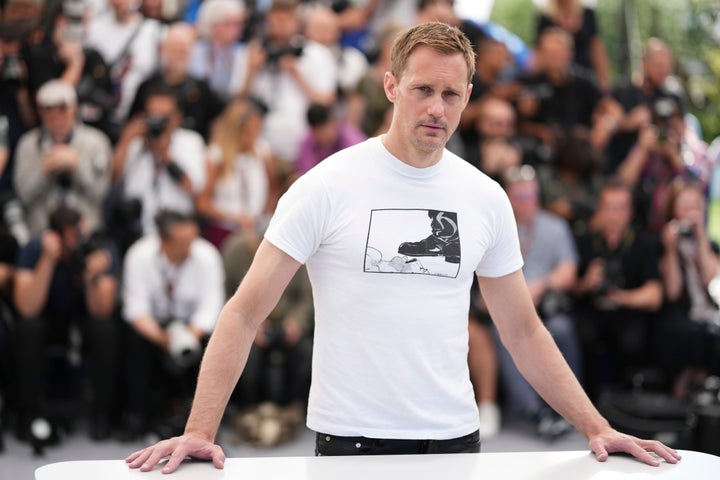
Cannes’ standing ovations are part of an exhausting-sounding hierarchy
According to The Atlantic (who, like The Guardian, call the custom “awkward”), clapping at Cannes is part of the spectacle.
At the French festival in particular, the length and enthusiasm of the clapping is seen as a sign of who thinks which film will be the next “hit”.
But the “pageantry” of standing ovations is fallible at best and unfairly, performatively biased at worst – for what it’s worth, Megalopolis was both critically panned and a box office flop.
Speaking to The Atlantic, professor Scott Page, who’s studied clapping as a form of social behaviour, said: “There is a real asymmetry to who has influence”.
You might be more inclined to partake in a quarter-hour of palm-smashing if someone you really respect and admire is doing so beside you, he suggested.
He added that “if you’re not sure” about a film, and “you think the other people [around you] are smarter than you, then you are going to stand… I imagine Cannes to be a place [where if I ask myself,] ‘How confident am I, sitting near movie stars and directors?’”
The answer, he says, is likely to be “not very”.
Also, I can’t imagine the panic of being the first person to stop applauding, say, a Del Toro film in front of the man himself – peer pressure and etiquette pile up.
The applause length is a marketing tool, too
Speaking to Screen Daily, Barry Hertz, film editor and critic for Canadian national newspaper The Globe and Mail, says that the length of applause a film got at Cannes can sometimes be seen as an interim star rating system until its release.
“Instead of a film getting four stars, it got a ’10-minute standing ovation,’” he says.
But though an anonymous film PR told the publication that “nobody is taking it seriously,” Kent Sanderson, president of indie film distributor Bleecker Street, doesn’t think Cannes’ applause sessions are going anywhere fast.
“It’s a self-perpetuating machine between the festival, the trades and the audiences,” they commented.
The more the Cannes audience claps, the more it’s noted that they clap, the more expected long clapping sessions become; so, it becomes both a sign of disdain and proof of not being “in on” the festival’s culture not to do so.
I’d call it a vicious cycle, but it’s literally already a shoulder-aching, barbed, endless round…
You must be logged in to post a comment Login