
Politics
Chappell Roan drops talent agency with Epstein connections


In a move many public figures would do well to learn from, musician Chappell Roan has cut ties with her talent agency after flirty emails unearthed between its founder Casey Wasserman and Jeffrey Epstein’s partner-in-crime Ghislaine Maxwell.
UK PM Keir Starmer backed Peter Mandelson despite his ties to a paedophile. Roan, instead, ended her working relationship and demands better from those working with her. Starmer and others would do well to take heed of how it should be done.
Chappell Roan announces she’s leaving Wasserman agency amid founder-CEO’s ties to the disgraced Jeffrey Epstein:
“This decision reflects my belief that meaningful change in our industry requires accountability and leadership that earns trust.” pic.twitter.com/nmYujTA3by
— Buzzing Pop (@BuzzingPop) February 10, 2026
Chappell Roan: ‘accountability and leadership that earns trust.’
According to the Guardian, flirtatious emails were revealed between Wasserman and Ghislaine Maxwell which preceded Roan’s public announcement. In as a shining example of how a principled person responds to apparent ties with a network linked to child abuse, Roan’s full statement reads:
As of today, I am no longer represented by Wasserman, the talent agency led by Casey Wasserman.
I hold my teams to the highest standards and have a duty to protect them as well. No artist, agent or employee should ever be expected to defend or overlook actions that conflict so deeply with our own moral values.
I have deep respect and appreciation for the agents and staff who work tirelessly for their artists and I refuse to passively stand by. Artists deserve representation that aligns with their values and supports their safety and dignity. This decision reflects my belief that meaningful change in our industry requires accountability and leadership that earns trust.
Roan’s refusal to “overlook actions that conflict so deeply” with her team’s values highlights the real problem with Starmer – and men like him. He appointed “Petie” Mandelson as UK Ambassador to the US despite knowing about his friendly ties to a convicted paedophile.
Our own Skwawkbox wrote last week:
Keir Starmer has admitted knowing all about his disgraced senior adviser Peter Mandelson’s continuing close ties to serial child-rapist Jeffrey Epstein.
Before he appointed him to be ambassador to the US.
It was already a matter of record that Starmer knew when he told MPs last September that he had full confidence in Mandelson. Mandelson was removed as ambassador shortly afterward — but kept on the government payroll. That month’s Epstein file release underscored Mandelson’s infatuation with Epstein, but their ties had been on record long before.
The contrast couldn’t be clearer: some powerful people follow principle, while many powerful men and their cronies just ignore it.
Bro’s stick together
The Canary’s Alice Charles also wrote about how corporate media is ignoring the blatant “broligarchy” revealed in the Epstein files. Charles wrote:
While being mentioned in the Epstein Files is not an indication of wrongdoing, it certainly begs the question of why anyone would go to an Epstein function more than once. What were they getting in return? Was a relationship with Epstein really worth risking everything? For example, if Google co-founder Sergey Brin has used his own search engine, he would have found Epstein’s widely reported conviction for child sex offences.
The files story is one of systemic failure and draws attention to the inability of law enforcement agencies around the world to deal with criminals when they are wealthy and influential. But Epstein was no “kingpin”, merely a cog in a global wheel of male patriarchal supremacy – one that must be dismantled finally and completely.
Roan has never been one to shy away from speaking truth to power. Speaking up for Palestine, she has been known to call out the “engine of celebrity endorsement” that US political leaders rely on:
Chappell Roan is donating proceeds to Palestine and told the Whitehouse to fuck off when they tried to pink-wash her
She’s extremely political and this quote is cherry picked out of context
She’s criticizing the engine of celebrity endorsement and asking us to engage directly https://t.co/vCDtLnE9fo pic.twitter.com/RZOMUfYm3A
— Ben Silver 🫐🍓 (@thisisbensilver) September 22, 2024
Respect for principle not power
This announcement from Chappell Roan exposes the complete lack of principle and integrity among many powerful men. As a result, it exposes a widespread failure across the West to clearly distinguish right from wrong.
It also highlights that those who hold true to their principles are far more likely to make responsible decisions. Something we haven’t seen enough of from the Western elite so far.
For more on the Epstein files, please read our article on how the media circus around Epstein is erasing the experiences of victims and survivors.
Featured image via the Canary

We hope you love the products we recommend! All of them were independently selected by our editors. Just so you know, HuffPost UK may collect a share of sales or other compensation from the links on this page if you decide to shop from them. Oh, and FYI — prices are accurate and items in stock as of time of publication.

It’s no secret sex education in schools was completely inadequate. While we have to give the UK government props for making efforts to change that in recent years, anyone over the age of 25 will know that the information we were taught about our bodies – especially for those with vulvas – barely scratched the surface of everything you need to know when entering adult life.
Inevitably, this meant we were taught the bare necessities when it came to periods – that is, the science behind the menstrual cycle and that the only options for controlling your flow are pads and tampons.
Obviously, period education is still not good enough, because one in seven (14%) girls in the UK didn’t know what to do when they start their periods, and over a quarter (26%) still don’t to this day.
The narrative dictating that periods should be private, and any material that comes into contact with your menstrual blood needs to be disposed of as if it’s toxic waste is incredibly harmful and entrenches shame in us from a young age.
It also goes without saying that presenting pads and tampons as the only option for period care is extremely costly, so much so that 11% of women in the UK struggled to afford period products in 2025, and 36% wear pads and tampons for longer than they should.
Well, we have news for you: the world has moved on from disposable period wear. Not only do we now have a much more comprehensive understanding of the plethora of ways people experience periods, but with that has come a whole new range of products that don’t involve having to run to Boots once a month.
Enter: period pants. Or, pants and swimwear created from super absorbent fabric.
What are the benefits of period pants?
If you’ve never used them before, period pants might sound a little intimidating. And understandably so, they go against everything we’ve been told about how you should treat periods.
Plus, they can seem like a big investment to splash out on all at once. It’s true that they’re more expensive than ‘regular’ period care up front, but we’d argue that they’re much more cost-effective over time because they can be reworn over and over.
They also have a ton of other benefits, including being:
- Time-effective: You can wear the same pair of undies all day, so you don’t have to keep nipping to the loo to check for leaks every four to six hours.
- Body-safe: Period pants remove the risk of wearing a pad or tampon for longer than is recommended.
- Comfortable: There’s nothing worse than feeling like your tampon is slipping out, there’s a string showing, or your pad is moving out of place. Period pants come in a range of colours, shapes, and sizes, so you can find a pair that you’ll forget you’re wearing and that goes with your outfit.
- Easy to wash: All you have to do is chuck them in the washing machine.
- Planet-friendly: Because you’re not disposing of plastic pads, period pants are much better for the planet.
- Customisable: Just like regular pads and tampons, period pants come in a range of absorbencies, so there’s always an option that matches your flow.
What to look for when buying period pants
Having tested a wide selection of period pants, I can safely say there are good and bad ones. For some reason, the sizing is often extremely off – which I find with underwear in general, but especially period pants.
I’m between a UK size 10 and size 12, and many a time I’ve ended up having to go up to a size 14 in period pants – and it’s not (just) because I’m crazy bloated during my period. There are a few brands that claim to make ‘one size fits all’ pants, which I’m wary of, although there are a few that manage to do it successfully.
Just as when you’re buying any kind of underwear, you’ll want to look out for a few key things when shopping for period pants, such as:
- Sizing: As mentioned, I find period pants can come up small. Size up to be on the safe side.
- ‘Nude’: Period pants are still relatively new to the market and I’m yet to find a brand that has a diverse range of ‘skin’ tones. Challenging any period pant brand founders reading this to do better!
- No silver: In 2023, Which? found that some brands used silver to prevent odours in their period pants. However, the compound has been found to disturb the vaginal microbiome, so look out for brands that don’t include silver (I’ve only included these in my round-up below).
How I tested period pants

As a staunch tampon and pad hater, I can’t stand having to remember to put period care in every bag I leave the house with. Not to mention having to think about being near a toilet at every second of the day, whether you’re at a festival, on a night out, at work, or on the beach.
While I’ve tested out a whole range of period care, including cups, disks, and sponges, period pants are (in my opinion) the best, not least because they’re as close as I can get to free-bleeding without the risk of staining all my clothes.
Over the last year I’ve been testing all kinds of period pants and swimwear in a range of styles from lots of different brands, to find the best ones.
Here’s a glimpse into what’s in my current period pant rotation.

This cute green set from Puma’s collab with Modibodi is not only super-absorbent in the bottoms department, but is also flattering thanks to the plunge neck bikini top. Want a little more coverage? Try the matching shorts for a change.

Don’t let your period hold you back from swimming as your chosen form of cardio: this swimsuit can hold up to two pads’ worth of blood, so you’ll feel plenty protected.

Talk to your kids about periods! Learning how to put a tampon in before doing sport doesn’t have to be a staple of early periods – instead, this two-tone swimsuit is ideal for your teen’s next dip.

Admittedly, some period pants can feel nappy-ish, but not these ones! The lacey edges give them the feel of a regular pair of undies, and they’re true to size, which is another issue I’ve run into when testing different brands.

Finally, you can wear white on your period! Gone are the days of asking someone to check for stains, because this thong is great for the last few days of your period. Unlike other period thongs, it doesn’t dig into your hips, and it’s also not bulky. What a win.

WUKA
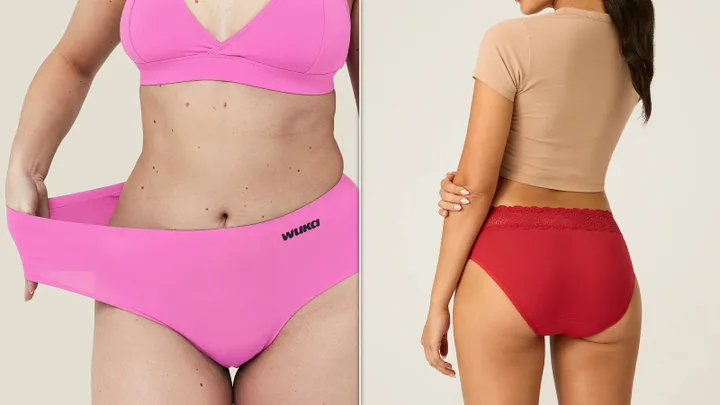
We all bloat on our periods, so I love that these pink pants are ultra-stretchy and can fit up to four sizes. They’re also seamless, in case you’re the kind of person who likes wearing tight clothes on the blob (yeah… can’t relate).

Modibodi
You know those annoying days where you’re spotting at the start or end of your period? No, just me? Yeah well, these pants are made for those days. They don’t only look like a regular pair of pants, they feel like them too. I have them in black, but I’d love to try this limited edition fiery red version.
Final verdict
If you’re looking for period pants that looks nice (in case you feel like showing your underwear to anyone while you’re on the menses), Modibodi is the brand for you. It even has a ‘sensual’ category!
My overall favourite pair of undies, though, is the Boux Avenue option – they’re comfortable, don’t dig in, and they hold a surprising amount of blood.
How to wash period pants
This sounds more horrific than it actually is, trust me. Once you’re done wearing your pants, this is how to wash them:
- Give them a rinse with cold water so they don’t smell. You can do this in the sink, shower, or bath. Your call!
- When you’re ready to wash them, pop them in the washing machine on a delicate wash, or under 30 degrees.
- Lay them out flat to air dry, and adjust the internal gusset (if there is one) once you’re ready to put them away.

Keir Starmer has been urged not to send King Charles to the US for a state visit after Donald Trump’s “bullying”.
The monarch will head stateside at the end of April for a pre-planned trip despite the president’s repeated attacks on the UK.
Hours before the state visit was confirmed, Trump slammed his allies, telling the UK to “go get your own oil” from the Strait of Hormuz after Britain refused to join the Iran war.
He’s previously called British aircraft carriers “toys” and accused the UK of seeking to “join wars after we’ve already won”.
There are some hopes that the King will be able to repair the strained relationship by appealing to Trump’s enthusiasm for the Royal Family.
But speaking on BBC Newsnight on Tuesday, broadcaster David Dimbleby claimed: “It’s a very bad political moment to send him the present of the King, with all the panoply that involves.
“A state banquet? While he’s bombing the hell out of Iran and people are dying all over the Middle East?”
Dimbleby added: “It would have been appropriate to say to the King through the usual channels, look, this is probably not quite the right moment for the King to come here. Let’s postpone it.
“Trump says the war’s over, but we know it’s not over, let’s postpone it until things quieten down.”
He said Trump is a “narcissist” who has been “bullying” Britain, having downplayed the UK’s role in Afghanistan earlier this year, too.
“The King is head of the armed forces and I think a rebuke of some kind is necessary,” Dimbleby said.
He added: “I think it’s a misuse of the King, who has to do what he is told by the government, but I think it’s giving Trump more than he deserves.”
He also claimed that the UK’s relationship with the US is “not one of mutual affection” but a deal between two countries.
But former national security adviser, Peter Ricketts, told Times Radio that it could be a “good thing” for the international relationship.
Ricketts said: “Well, the King is an enormous professional who spent all his life on difficult missions. And my goodness, this will be a difficult mission. And he does have a tremendous patch with people. Trump seems to like him.
“So whether it was not a good idea to plan this visit at all, it’s going ahead now. And yes, I think in being there with Trump in the same room, with all his experience and advice and the and the affection that Trump seems to have for the Royal Family.
“I mean, actually, that can only be a good thing. Although, you know, I do think it’s very hard luck on the King to have to undertake this very perilous mission right now, hopefully with the war, no, not actually a hot war, but with relations very rocky at the political level.
“It’s perhaps a moment for some, some quiet royal diplomacy.”
Subscribe to Commons People, the podcast that makes politics easy. Every week, Kevin Schofield and Kate Nicholson unpack the week’s biggest stories to keep you informed. Join us for straightforward analysis of what’s going on at Westminster.
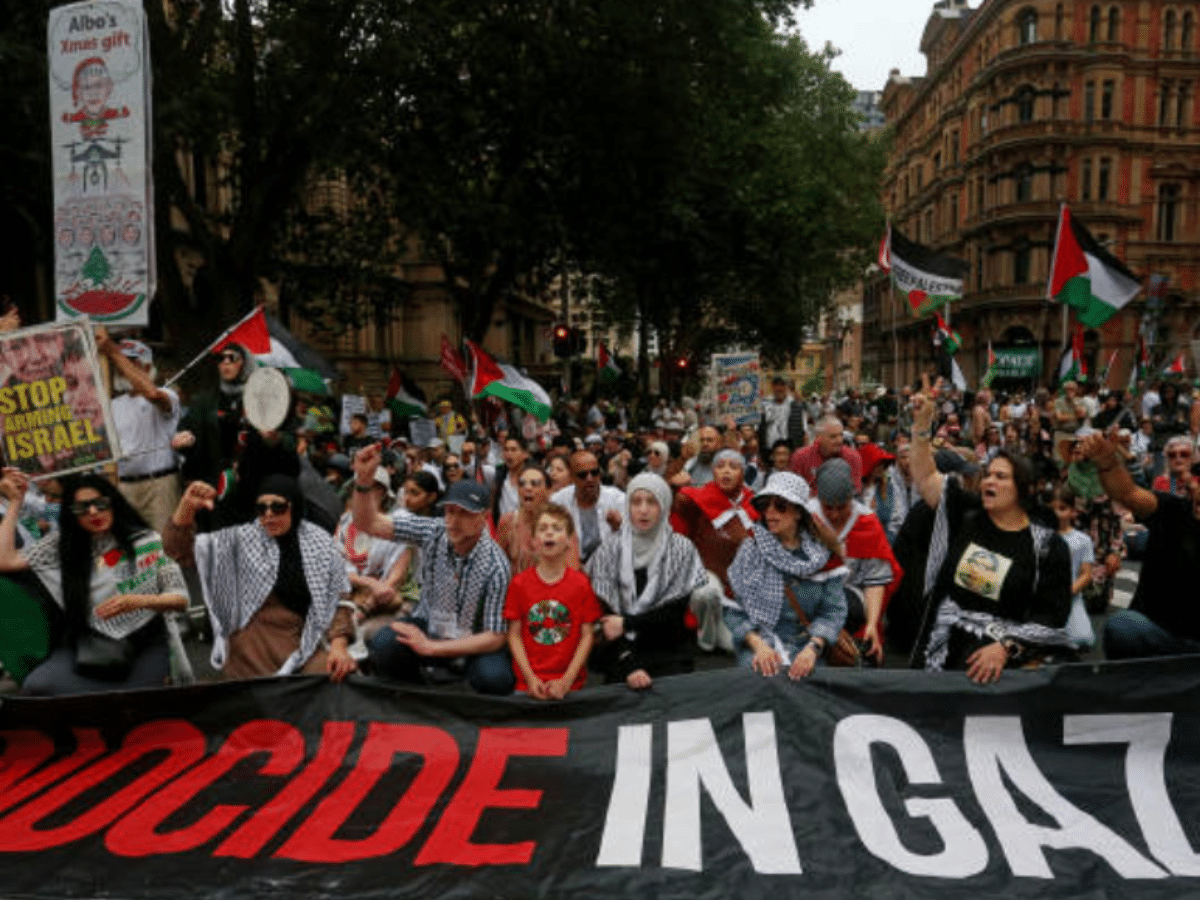
Chris Nineham and Ben Jamal, two well-known protest organisers, were convicted in the UK for defying police restrictions. Their convictions stem from a planned protest in London last January against the UK’s complicity in the genocide in Gaza.
The conviction follows charges brought under the Public Order Act, finding the organisers guilty on two counts.
Chris Nineham, 62, is the vice-chair of the Stop the War Coalition and Ben Jamal, 61, is chair of the Palestinian Solidarity Campaign. The protest route to the BBC had been approved in advance at the end of November. Nevertheless, late restrictions were imposed by the police due to potential disruption to a local synagogue.
Yet again, this ruling is likely a sharp blow to pro-Palestinian advocacy groups as it exposes the systemic threats to the rights of protest in the UK.
🚨NEW: pic.twitter.com/FsMNrlDvBN
— Canary (@TheCanaryUK) April 1, 2026
Pro-Palestine censorship
This case has drawn major criticism from the public, with heightened concerns amongst pro-Palestinian activists that the pro-Israeli interests are superseding our right to protest in the UK.
Since October 7, 2023, the UK has seen more than 20 national protests against the genocide on Gaza whilst calling for the UK government to end its long-standing and unqualified support for Israel. Typically, protests tend to proceed as marches through central London, yet the police enforced restrictions often require a static rally instead.
These restrictions have undoubtedly chilled protesters, undermining their right to demonstrate and blocking their efforts to challenge the BBC’s biased coverage of Israel’s latest barbaric war on Palestinians. A ‘war’ which the International Court of Justice (ICJ) have ruled amounts to a plausible genocide.
When the prosecution called him to testify, Metropolitan Police Commander Adam Slonecki, who managed the operation, acknowledged that a protest outside the BBC would be “legitimate” because it is a “public institution”. Yet he also explained that concerns about potential disruption to a local synagogue led the Met to impose restrictions on the protest, even after it had already been approved.
Middle East Eye reported:
the Metropolitan Police altered the route following objections from pro-Israel groups, the chief rabbi, Ephraim Mirvis, and several MPs.
The charges relate to a speech made by Jamal towards a crowd of protestors. Subsequently, a march towards the BBC followed which seemingly overwhelmed police officers. The judge presiding over the case declared his speech, which referred to protest leaders planning to try to walk towards the BBC in resistance to the clear censorship at play, as “incitement”.
Summers KC: Anti-protest laws are “Unlawful”
Once again, the police and government officials manipulate and weaponise righteous anger while presenting punitive, authoritarian policies as “fair”. This repressive dichotomy only serves the interests of the status quo and the most powerful in society, while weakening the collective power of ordinary people.
District Judge Daniel Sternberg delivered the judgement following a 3-day trial, saying:
The court emphasised that protest rights while fundamental, are not absolute and do not permit breaching lawfully imposed restrictions.
Needless to say, this judgment only heightens threats to our right to protest, as it clearly empowers the police to impose restrictions that directly neuter the impact of demonstrations.
Middle East Eye reported:
Kevin Dent KC, representing the British government, showed the court a video of a speech made in January 2025 in which Jamal told a crowd that he and other protest leaders planned to attempt to walk towards the BBC’s headquarters to protest the corporation’s reporting of the genocide in Gaza as an example of “incitement”.
Defence Barrister Mark Summers lambasted the case as “unlawful”, referring to a prior Court of Appeal ruling this legislation unlawful as it grants the police “unlimited powers” in restricting protests.
The ruling referred to came in 2025 which found in favour of Human Rights organisation Liberty, with the government losing its appeal. Liberty inform:
then-Home Secretary Suella Braverman did not have the power to create a new law that lowered the threshold of when the police can impose conditions on protests from anything that caused ‘serious disruption’ to anything that was deemed as causing ‘more than minor’ disruption.
Summers also suggested that, as opposed to protesters breaking the police line, the “clusterfuck” was due to chaotic and reactive policing. Pointing to operational confusion, poor communication and the clear inability to manage large numbers, Summers laid the blame at the feet of the Met Police.
Nonetheless, despite referring to this highly relevant appeal and correlating factors at play in this case, Sternberg found against the protest organisers.
Funny that.
Outside court, @johnmcdonnellMP reacts to the news that @STWuk Chris Nineham and @PSCupdates Ben Jamal have been found guilty of trumped up charges around a pro-Palestine protest last year. The law is an ass. pic.twitter.com/lsmnAKjZZ6
— Canary (@TheCanaryUK) April 1, 2026
The government are working to make protest powerless
It is clear that the government are refusing to back down in its attempts to intimidate and bully British citizens into no longer standing by our Palestinian comrades. Heavily funded by the Israel Lobby, Starmer’s government have long ignored and diminished rising islamophobia, whilst unduly declaring anti-Zionist positions as antisemitic.
Jamal and Nineham plan to appeal this judgement, and rightfully so, as this precedent can only be an omen for advocates across the country.
After all, whether you are pro-Palestinian or not, the ability to protest is a fundamental pillar stone of a functioning democracy. It is the way in which ordinary people speak truth to those in power.
When police powers restrict the ability to protest, they don’t just enforce the law – they silence dissent, weaken collective voices, and threaten the very heart of democratic freedom.
Therefore, defending the right to protest is defending our power to demand justice, at home and in Palestine.
Featured image via the Canary

Lakenheath Alliance for Peace (LAP) has handed in a letter at RAF Lakenheath in Suffolk. The letter, to the UK and US base commanders, highlights war crimes supported by RAF Lakenheath and RAF Mildenhall. It details their disregard of International Law and concerns about UK control of the bases. Although the US Air Force uses the bases, they’re British sovereign territory and the UK is legally liable.
This will be the sixth letter LAP has handed in to base commanders. It signals the start of a six day International Peace Camp at RAF Lakenheath’s main gates. LAP has received no reply to any of its previous letters.
Well over 100 fighter jets and bombers have deployed from RAF Lakenheath for the attack on Iran. RAF Mildenhall has also had active involvement in the illegal war of aggression by providing refuelling for bombers deploying to the Middle East. Israeli fighter jets have been recorded flying in and out of Mildenhall.
Attacks on civilian infrastructure such as desalination plants in Iran and hospitals in Gaza are war crimes. As is the bombing of an Iranian elementary girls school, killing at least 175 children and teachers.
Nukes at RAF Lakenheath
LAP believes US nuclear B61-12 bombs have already arrived at RAF Lakenheath. The UK government has kept this secret. Norwich based Lesley Grahame said:
Mass destruction is plain wrong, wherever and whoever the perpetrator. When it comes from your neighbourhood, it is for us to stand up and say no, or become a complicit target. Our refusal of consent is active, non-violent and necessary.
The deployment of newly developed nuclear weapons with advanced capabilities is not compatible with the UK’s Nuclear Non-Proliferation Treaty (NPT) obligations and is a breach of Article 1 which states:
Each nuclear-weapon State Party to the Treaty undertakes not to transfer to any recipient whatsoever nuclear weapons or other nuclear explosive devices or control over such weapons or explosive devices directly, or indirectly.
USAF fighter / bombers including F-35As, F-15Es and F-22s have been deployed from ‘RAF’ Lakenheath for the attack on Iran along with numerous C-17s. Although they are USAF planes, the fact that they are using UK territory makes it an act of aggression by the UK against Iran.
The Military Aviation YouTube channel filmed and published three Israeli F-35I arriving at RAF Mildenhall on 16 February and then departing for Israel on 18 February. The Israeli media had reported the delivery of the new aircraft on 20 January. Israel has used the F-35I in attacks against Gaza, Yemen and Iran.
LAP is calling on the base commanders to take immediate steps to bring all illegal activities at these bases to an end and to return any nuclear bombs that may already be at RAF Lakenheath to the US. Members of the public are welcome to join in with activities at the Lakenheath International Peace Camp from 1-6 April.
Read the full text of the letter here.
Featured image via YouTube / Military Aviation Channel
!function(n){if(!window.cnx){window.cnx={},window.cnx.cmd=[];var t=n.createElement(‘iframe’);t.display=’none’,t.onload=function(){var n=t.contentWindow.document,c=n.createElement(‘script’);c.src=”//cd.connatix.com/connatix.player.js”,c.setAttribute(‘async’,’1′),c.setAttribute(‘type’,’text/javascript’),n.body.appendChild(c)},n.head.appendChild(t)}}(document);(new Image()).src=”https://capi.connatix.com/tr/si?token=19654b65-409c-4b38-90db-80cbdea02cf4″;cnx.cmd.push(function(){cnx({“playerId”:”19654b65-409c-4b38-90db-80cbdea02cf4″,”mediaId”:”39064297-650b-4978-a136-660dcfb95066″}).render(“69cd44b1e4b0a891ea42dd9d”);});

The Green Party conference passed a motion opposing energy nationalisation with just 0.2% of members voting for that. If progressives want the Greens to succeed they need to show up and do their part. Obviously some people are working hard but they could get a better long-term deal on that if they engaged with democratic process.
Idolisation is not enough
It’s not enough to leave it to Zack Polanski to solve issues. The idolisation of figureheads, however much what they say resonates, is a lacklustre approach to politics.
There’s a lesson from history here. Former UK prime minister Clement Attlee initially opposed some of the nationalisations of his 1945 government. It was a 1944 Labour conference and “conscious mass participation” from members of the public that solidified and advanced the changes.
At its conference, the Greens watered down previous commitments to energy nationalisation. Now the party has voted to bring only the energy infrastructure (grid and distribution) into public ownership.
The motion essentially stated that competition is a better mechanism for energy providers.
Politics and identity
You can have a political dimension without that becoming you’re entire identity. In fact, it’s quite critical that you do given politics is what determines the cost of essentials, the legislation you live under, and the freedoms you have.
The Green Party have over 215,000 members yet only a handful of them are choosing what could become government policy one day.
The fourth industrial revolution, if approached with public equity, will bring similar questions of identity. No longer will people identify with the job they had.
Worth it
With such potential on the cards, it’s crucial that people do their part. Movements that rely only on figureheads rarely make actual change, even if it’s bringing back and improving policies older generations already enjoyed (free tuition fees, public ownership of essentials, affordable housing, etc).
If you’re a progressive, make your voice heard.
Featured image via the Canary

We hope you love the products we recommend! All of them were independently selected by our editors. Just so you know, HuffPost UK may collect a share of sales or other compensation from the links on this page if you decide to shop from them. Oh, and FYI — prices are accurate and items in stock as of time of publication.

LELO/ Smile Makers Collection
Look, not every lover gets oral sex right. And we need to be better at admitting that, because around eight in 10 women can’t orgasm from penetration alone – so clit stimulation is a big deal. Period.
If you’re sick of asking your partner to move up, a little down, go faster, but a bit softer, it could be time to let these clit suction vibrators step in.
Because trust us, they’ll get the job done. Unlike ‘regular’ vibrating sex toys, these clit vibrators are designed to stimulate the feeling of sensational oral sex.
Using suction technology – or sound waves, in some cases – they create a vacuum around your vulva to bring extra blood flow, and increase sensitivity in your clitoris.
What to look for in a clit suction vibrator
Sex toys aren’t exactly cheap, so there are a few crucial things to consider when splashing out on something that will be in bed with you for the next five or so years.
If you’re totally new to this kind of toy, it might be best to go for something simple (with fewer settings) like the ROMP X Lovehoney Switch. But if you don’t want to be worrying about the battery running out mid-sesh, look for toys that are rechargeable.
More seasoned toy users might also want a toy that has a ton of settings to play with – like the Womanizer Enhance, which uses suction and vibration stimulation – or a waterproof toy that can be used in the shower.
Whether you’re looking for a sex toy to bring in as a third with your partner, or something to spice up a solo night in, these are the best clit suction vibrators to shop now.

Not sure if an oral sex toy is for you? Don’t worry, the ROMP X Lovehoney Switch is a budget-friendly option for beginners thanks to having just six intensity levels to choose from.

Anything that ends with the suffix ‘et’ is always adorable, so of course the same goes for this teeny Womanizer X Lovehoney Starlet vibe, which is small enough to fit in your handbag.

Next time your lover asks you your favourite kind of flowers, you’ll know what to say. Because trust us, this toy didn’t blow up on social media for no reason. Come find us when it’s the favourite toy in your collection.

Two words: guaranteed orgasms. I’m sure we don’t need to say more, but just in case you need a little extra convincing, this sex toy is basically two in one – vibrator and clit suction toy. If 100% of testers can have an orgasm the first time they use it, you will too.

Let’s get one thing straight: making the most of your pleasure isn’t ‘indulging’. It’s what life is all about. Now we’ve got that gripe at the name of this toy out of the way, can we have a moment for the dual stimulation design? We see a blended orgasm in your future, and it is bright.

Truly, is there anything better than a sex toy that requires literally zero effort to come? This might look like an odd shape, but once you’ve rested the suction end against your C-spot, and the other vibrating end against your vagina and leave it there to get off hands-free, nothing else in the world matters. Yeah… it’s my go-to toy for a reason.

You know the saying ‘bang for your buck’? Well, that applies to this toy. It might cost a pretty penny, but that’s for good reason. Life is all about self reflection, and LELO has gone back and tweaked its best-selling toy not one, two, but three times now to get to this perfect, wide-mouthed, non-numbing glory of a little fucker. You really get what you pay for.

There’s a reason most of the greatest poetry in the world is about romantic love. And I’m going to make the bold guess that it’s because of great head. This vibe will turn you into a sonnet writer in just one use, thanks to the fact it has three mouth sizes to change between for the perfect fit to your clit, and the sweet shape that fits exactly in the palm of your hand. Gorgina.

Ariana Grande had one thing right when she sang ‘thank you, Next’. She must have been talking about this brand new toy, right? This is a rabbit vibrator Samantha Jones could have only dreamed of. As well as a vibrating shaft, it’s loaded with 14 modes of Pleasure Air Technology that warm you up to an orgasm – and down.

Mint tea may have benefits for our digestive system, while passionflower tea can help us sleep.
And there’s some evidence to suggest that rooibos tea, a South African variety made from the fermented leaves of the Aspalathus linearis shrub, can help with everything from reducing inflammation to controlling blood sugar and boosting our gut health.
Green rooibos is made from the same leaves, but they’re unfermented.
Here are some of the potential health benefits of the caffeine-free tea:
1) It’s brimming with antioxidants
Green rooibos tea is the only source of aspalathin (which helps to maintain cell health), and it’s high in other antioxidants, like quercetin (potentially anti-inflammatory, anti-histamine, and immune-boosting), too.
Antioxidants help to protect our DNA from harmful free radicals. They may also assist in protecting against chronic illness, heart disease, and cancer.
A 2023 review found that drinking rooibos tea seemed to be linked to higher antioxidant levels in our bodies.
2) It could be good for our gut health
According to a 2024 paper, green rooibos tea appears to help to keep our guts moving.
It could also help the integrity of a single-cell gut layer, which helps us to absorb nutrients and keeps toxins and disease out.
3) It could help to manage inflammation
Inflammation isn’t always a bad thing. We need it to build muscle and recover from some illnesses.
But when inflammation becomes chronic and happens when the body doesn’t need it, it can lead to “inflammaging”. That can “contribute to conditions such as heart disease, type 2 diabetes, dementia, and frailty,” GP Dr Suzanne Wylie previously told HuffPost UK.
A 2021 paper said that rooibos tea might help to limit the growth of angiotensin converting enzymes (ACEs), linked to inflammation and high blood pressure.
4) It may help to manage blood sugar
Remember the rooibos tea-specific aspalathin we mentioned earlier? A 2023 paper suggested that it could help to explain why rooibos tea seemed to help control blood sugar levels in both healthy and at-risk individuals.
Still, more research is needed to work out how, why, and to what extent that’s true.
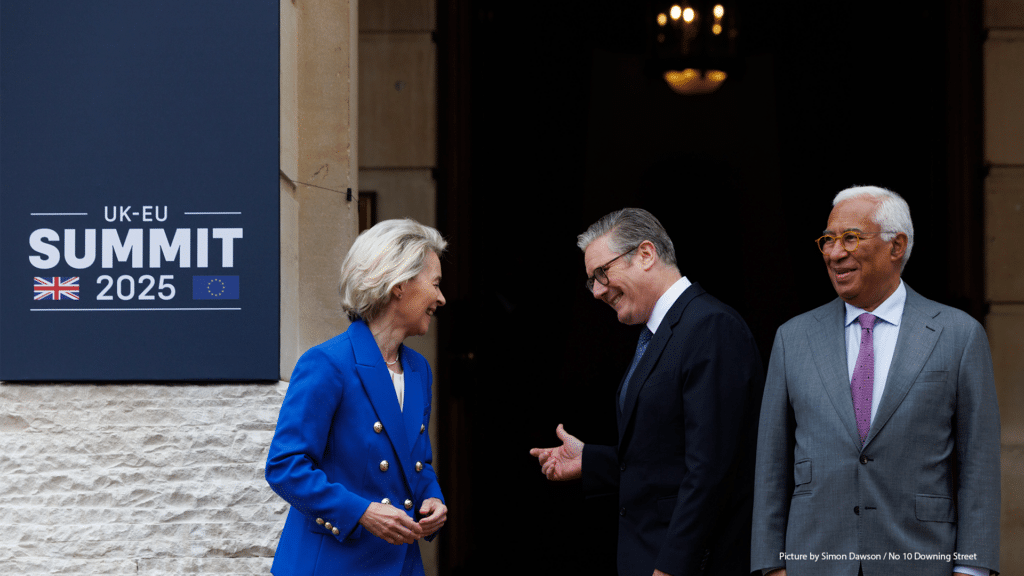
Jannike Wachowiak offers some insight into the EU’s perspective on UK-EU relations.
Brits spend an inordinate amount of time discussing what they want from the EU. They spend far less, however, pondering what the EU and its member states might want from them. This is perhaps understandable. Brexit has been a central fault line in British politics and has divided our political parties for more than a decade. Consequently, from the Malthouse Compromise to more recent calls for a customs union, the intended audience is often domestic. That said, this is hardly a recipe for a successful negotiation between the two sides.
So, where does the EU stand on all this? Perhaps the first thing to note is that the UK no longer features prominently on the EU’s list of priorities. European leaders simply don’t spend much time thinking about relations with the UK. The war in Ukraine, relations with the US and China, and the competitiveness of the single market have long replaced Brexit at the top of the council’s agenda.
A window of opportunity opened when Labour came to power in July 2024. There was genuine curiosity about the promised reset. However, European leaders quickly grew impatient over the perceived lack of clarity and drive from London. As ever, they felt the ball was in the UK’s court. That it was up to London to decide what it wanted and communicate this. This view still holds. As the commission’s chief spokesperson put it as recently as February, the forthcoming summit (presumably in July 2026) would be “the occasion to discuss with UK what, exactly they, have in mind, and how they propose to go about it.”
Partly, this is due to a sense that it should not be the EU’s responsibility to fix what the UK broke; partly, the EU’s institutions still remember past attempts at closer cooperation being rebuffed by the UK. Most significantly, the EU remains wary of offering a ‘privileged’ relationship to the UK which could then unravel established relationships with other third countries, such as Norway or Switzerland.
None of which is to say that the EU is not interested in closer relations with the UK. There is a recognition that times have changed since the TCA negotiations of 2020, and that the UK is an important partner in a more dangerous world. The commission’s 2024-29 political guidelines make it clear that the EU wants to strengthen relations ‘on issues of shared interest, such as energy, security, resilience and people-to-people contacts’.
The UK government might be well advised to focus on these areas. While talks are already underway on UK participation in the EU’s electricity market and youth mobility, cooperation on security and resilience remains, at present, underexplored. However, as in the case of the failed Safe negotiations, there is no guarantee of success even in areas of mutual interest. Nevertheless, both sides appreciate the need for cooperation. Importantly, the EU recently decided to leave the door ajar for UK companies to benefit from the €90bn loan for Ukraine.
Conspicuously absent from the Commission’s list of ‘shared interests’ is trade. More than five years into the application of the Trade and Cooperation Agreement, its most recent assessment maintains that it is a ‘very good’ agreement for the EU. This indicates a high threshold for reviewing the economic elements of the deal. What is more, the British Prime Minister’s expressed interest in exploring alignment in certain areas of the single market comes up against the EU’s red lines: no cherry-picking, and the need to maintain the balance of rights and obligations in agreements with other third countries. While the EU’s willingness to negotiate agreements on food and drinks and electricity shows some flexibility, it is unlikely that this will extend to further areas of the single market unless there is a wider discussion around freedom of movement and significant cohesion payments.
An additional difficulty is that the EU is currently discussing ‘Made in EU’ targets which might shut out certain British products and technologies from European supply chains. It will be up to member states (and the European Parliament) to define whether ‘Made in EU’ extends to trusted partners outside the single market.
While excluding the UK would be bad news for Europe’s resilience, there is no unified EU view. Some, like Germany, advocate more permissive conditions for a partner which they deem strategically important (‘Made with Europe’ rather than ‘Made in Europe’).However, others, like France, are pushing back – wanting to favour their own industries – or are simply less concerned by how a third country like the UK may be impacted.
All of which means the UK must invest time and resources in understanding the evolving priorities in Brussels and in member states. London needs to consider what contribution the UK can usefully make to strengthening Europe’s resilience and security. This would also make it easier to test British proposals in other areas, in dialogue with the EU and member states, ultimately increasing their chances of success.
By Jannike Wachowiak, Research Associate, UK in a Changing Europe.
This piece was originally published by the Fabian Society in their report Pressing reset: our relationship with Europe.

Protests across at least 10 cities have highlighted the harms of ‘touristification’.
Particularly through its reliance on aviation, the tourism industry is driving displacement, deepening housing crises and fueling climate breakdown worldwide.
Demonstrations were seen in Barcelona, Palma and San Sebastián (Spain), Belfast (Northern Ireland), Lisbon (Portugal), Malolos (Philippines), Marseille and Paris (France), Mexico City (Mexico) and Vienna (Austria).
Worldwide action
From marches and performances to blockades and direct actions, communities resisted the transformation of neighbourhoods into ‘playgrounds for the rich’.
Across the world, long-term residents are being priced out. Urban and coastal areas are also reshaped for tourists and multinational companies.
International tourism relies heavily on air travel, one of the fastest-growing sources of carbon emissions. Backed by cheap flights and expanding air routes, this model privatises public land, drives up rents and undermines local economies, pushing communities into increasingly precarious conditions.
Protesters stressed that touristification and aviation are intertwined crises, driven by a system that prioritises profit over people and the planet.
World Cup of dispossession
In Mexico, protesters denounced the impacts of large-scale events like the FIFA World Cup. They called it the “World Cup of dispossession”, promoting local displacement, private interests and megaprojects instead of human rights, such as housing, water and dignified work.
In Barcelona, Palma, San Sebastián, Belfast and Vienna, demonstrators called for an end to the expansion of short-term tourist accommodation. This includes listings on platforms like AirBnB, which they argue drive up housing costs and accelerate gentrification.
In Marseille, protests highlighted the social and environmental impacts of overtourism.
In Malolos, fisherfolk and community members opposed the construction of the new Manila International Airport, which is driving displacement and the loss of livelihoods.
‘Fewer planes, more homes’ was a slogan seen in Paris and in Lisbon, where protesters formed a red line to oppose the conversion of a city-centre building into a hotel.
Drawing a red line
Inês Teles, spokesperson for the global network Stay Grounded, said:
We need to draw a red line. We must stop airport expansion, reduce air traffic, limit short-term tourist accommodation and make housing a right, not a commodity. We are united in the fight for affordable, accessible housing for all and against the forces that profit from our homes, displace people and destroy our planet. Our communities and the planet are not for sale.
These actions took place during the Housing Action Days (23–29 March), a global week of mobilisation with over 150 actions in 96 cities, demanding housing justice on a liveable planet.
Featured image via Stay Grounded

WATCH THIS BITCOIN UPDATE OR GET REKT THIS WEEKEND…

Very lemony lemon cake
Related Digital finalizes $16B financing for Oracle data center

Smart energy pays enters the US market, targeting scalable financial infrastructure

Why Israel is blocking foreign journalists from entering

Bitcoin: We’re Entering The Most Dangerous Phase
WATCH THIS BITCOIN UPDATE OR GET REKT THIS WEEKEND…

Janine fell into a financial crisis because of the breakup#shortvideo #shorts #foryou #comedy

Top 3 Best Cars under $10,000 #shorts #credit #money #finance #credit #carbuyingtips #carbuying
-

 News Videos7 days ago
Parliament publishes latest register of MPs’ financial interests
-

 Business6 days ago
Instagram, YouTube Found Responsible for Teen’s Mental Health Struggle in Historic Ruling
-
 Tech6 days ago
Intercom’s new post-trained Fin Apex 1.0 beats GPT-5.4 and Claude Sonnet 4.6 at customer service resolutions
-

 NewsBeat5 days ago
The Story hosts event on Durham’s historic registers
-

 Sports5 days ago
Sweet Sixteen Game Thread: Tide vs Michigan
-
Entertainment2 days ago
Fans slam 'heartbreaking' Barbie Dream Fest convention debacle with 'cardboard cutout' experience
-
 Entertainment4 days ago
Lana Del Rey Celebrates Her Husband’s 51st Birthday In New Post
-
Crypto World1 day ago
Dems press CFTC, ethics board on prediction-market insider trades
-

 Sports1 day ago
Tallest college basketball player ever, standing at 7-foot-9, entering transfer portal
-

 Tech3 days ago
The Pixel 10a doesn’t have a camera bump, and it’s great
-

 Entertainment7 days ago
HBO’s Harry Potter Series Will Definitely Fail For One Big Reason, And It’s Not J.K. Rowling Or Snape
-

 Crypto World2 days ago
U.S. rule change may open trillions in 401(k) funds to crypto
-

 Tech1 day ago
How to back up your iPhone & iPad to your Mac before something goes wrong
-

 Fashion6 days ago
En Vogue in Brown Leather and Tailored Neutrals by Atelier Savoir, Styled by J Bolin
-

 Politics2 days ago
Should Trump Be Scared Strait?
-

 Tech1 day ago
EE TV is using AI to help you find something to watch
-

 Fashion6 days ago
What Are Your Favorite T-Shirts for the Weekend?
-

 Fashion5 days ago
Weekly News Update, 3.27.26 – Corporette.com
-

 Fashion4 days ago
Amazon Sundays: Soft Spring Layers
-

 Tech3 days ago
Elon Musk’s last co-founder reportedly leaves xAI
You must be logged in to post a comment Login