Politics
Chumisa Dornford-May Interview: Olivier Nominee Talks Into The Woods Role

If at any point you’ve been to the theatre in London’s West End over the last year, the chances are you’ve encountered rising star Chumisa Dornford-May’s voice, perhaps without even realising it.
Over the last 12 months, Chumisa has appeared in no fewer than three distinct West End shows, each completely different from the one before it.
This time a year ago, she was wrapping up a stint in the inaugural London production of Natasha, Pierre & The Great Comet Of 1812, later earning the first of what promises to be many Olivier nominations for her work in the title role.
Just months later, she landed a main role in the National Theatre’s Here We Are, notably the final show (not to mention one of the strangest) that the legendary theatre composer Stephen Sondheim worked on in his lifetime, treading the boards alongside industry greats like Jane Krakowski, Tracie Bennett and Jesse Tyler Ferguson.
After that, she landed her biggest and most exciting role to date, in another Sondheim musical (and, arguably, his best), Into The Woods, in which she can currently be seen in action as Cinderella at London’s Bridge Theatre.
Not bad going, really, considering Chumisa only graduated from theatre school in 2023.

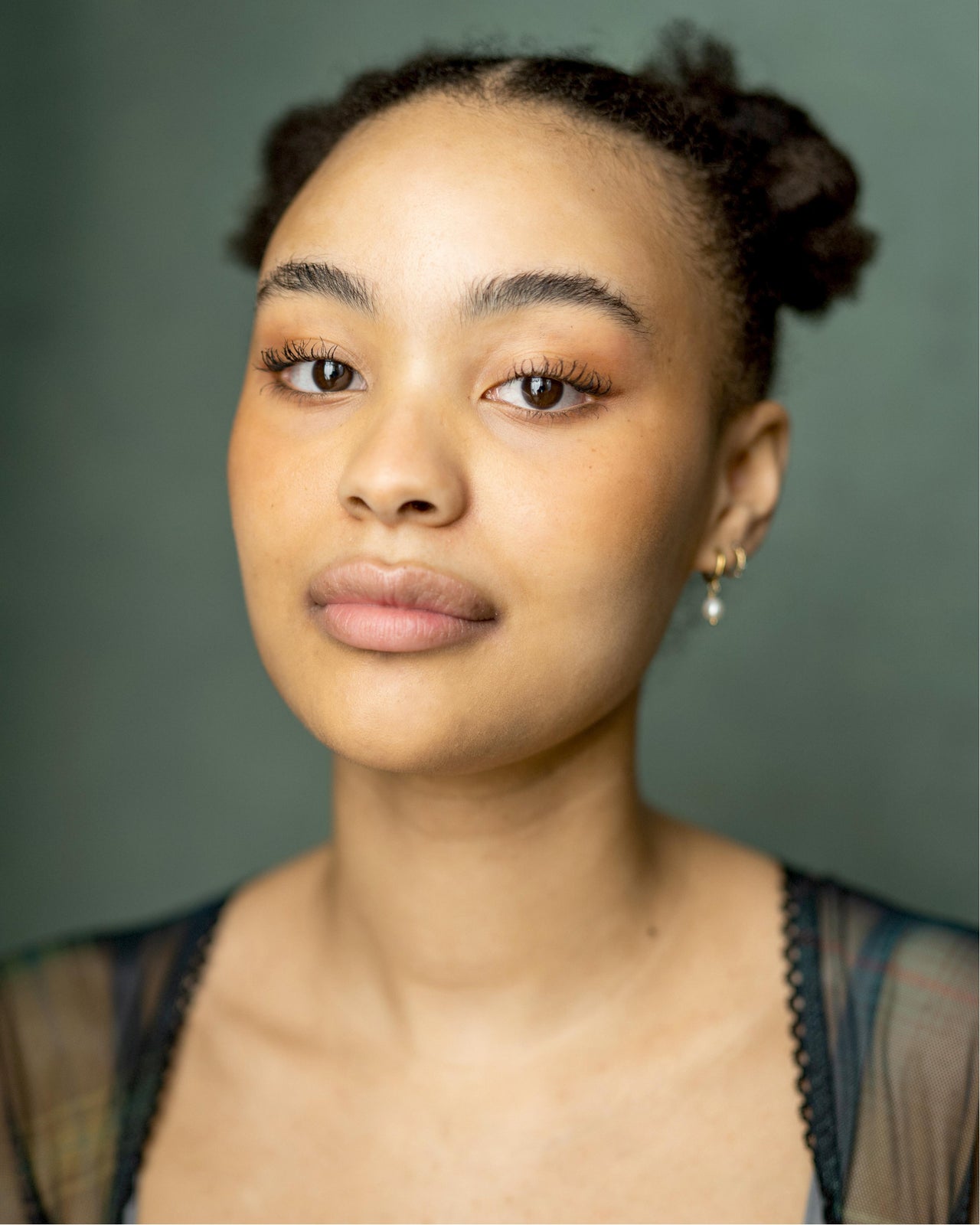
“It’s nothing I ever expected,” the Olivier nominee tells HuffPost UK of her whirlwind year.
“Every time I get a call and it’s a ‘yes’ it’s a bit of a shock. It is a little bit of a fear of mine that people are going to get sick of me soon – and that three shows in one year is too many! But yeah, I have not stopped auditioning, because the contracts that I’ve gotten are very short, so I’m just always, always in the audition room.”
Of her work ethic, she admits: “I’m probably very neurotic, so I’m a bit like a hamster on a wheel, in terms of having something on the go and having focus.
“I’m constantly stressed about being able to support myself independently. I’m not someone who loves to go to their parents to ask for money, so if I can, I’m asking my agents to submit me – even after I’ve got a ‘yes’ – for anything that they see that comes up.”
Her attitude, she says, is “let’s keep going”, because “I genuinely just love being able to pay my rent and it be through the thing that I love to do”.
By the time Chumisa landed her breakthrough role in Natasha, Pierre…, she’d already played Wednesday Addams at the London Palladium and served as an alternate for Christine in Phantom Of The Opera.
However, it was her work in the musical Dave Malloy’s twisted War & Peace adaptation that pushed her further into the spotlight, resulting in her Olivier nomination for playing Natasha Rostova.

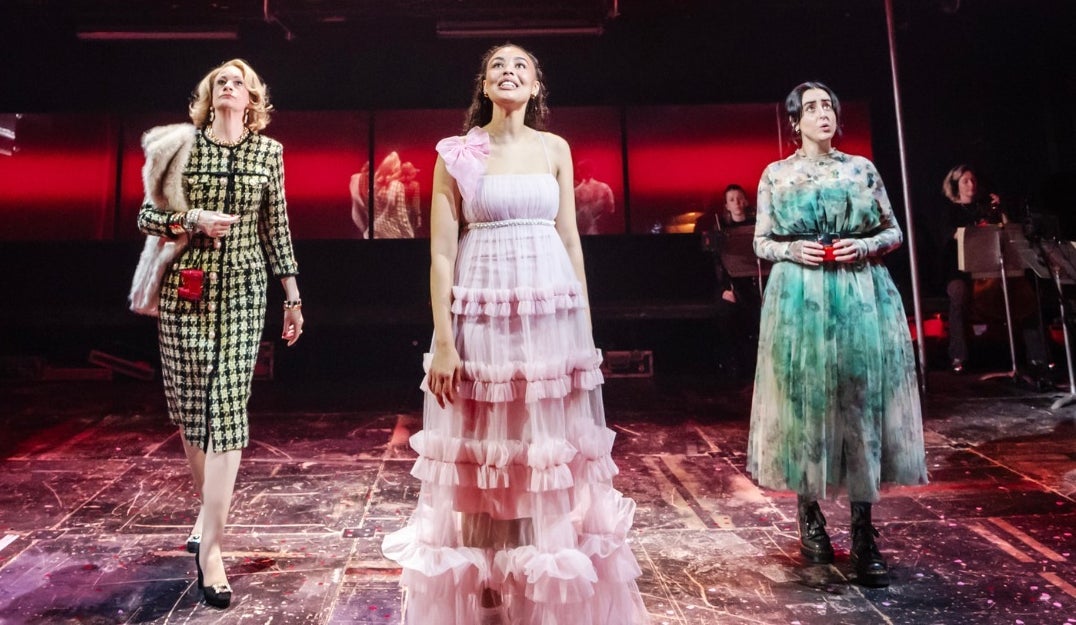
The accolade was not something Chumisa took lightly, particularly as it was for such a “niche” show. “If you don’t know War & Peace, then you don’t have that ‘in’,” she points out. “And I don’t know a lot of young people who have read War & Peace.” When the nomination came in, then, it was “pretty intense and very unexpected” for a variety of reasons.
“It was the first time that I had led a show in that way,” she says. “And for a lot of it, I was just balls to the wall. I didn’t know what I was doing – and still don’t really know what I’m doing!
“For me, it’s just always a relief that people like it. So, when I found out I’d been nominated, I was just like, ‘oh my god – what a relief that they didn’t think my performance was bad!’.”
Natasha, Pierre… wound up scoring six Olivier nominations this year, something Chumisa discovered in – where else? – the audition room for the show she’s currently appearing in, thanks to an impromptu FaceTime from her co-star Maimuna Memon.
“I opened it and she was like this,” Chumisa recalls, mimicking speechless, open-mouthed shock. “And I had to just hang up. So for the whole audition, I was like, ‘I wonder what Muna was going to tell me? I’ve got no idea’.
“And then, I walked out and she was like, ‘babe, look at your phone, go on Instagram’.”

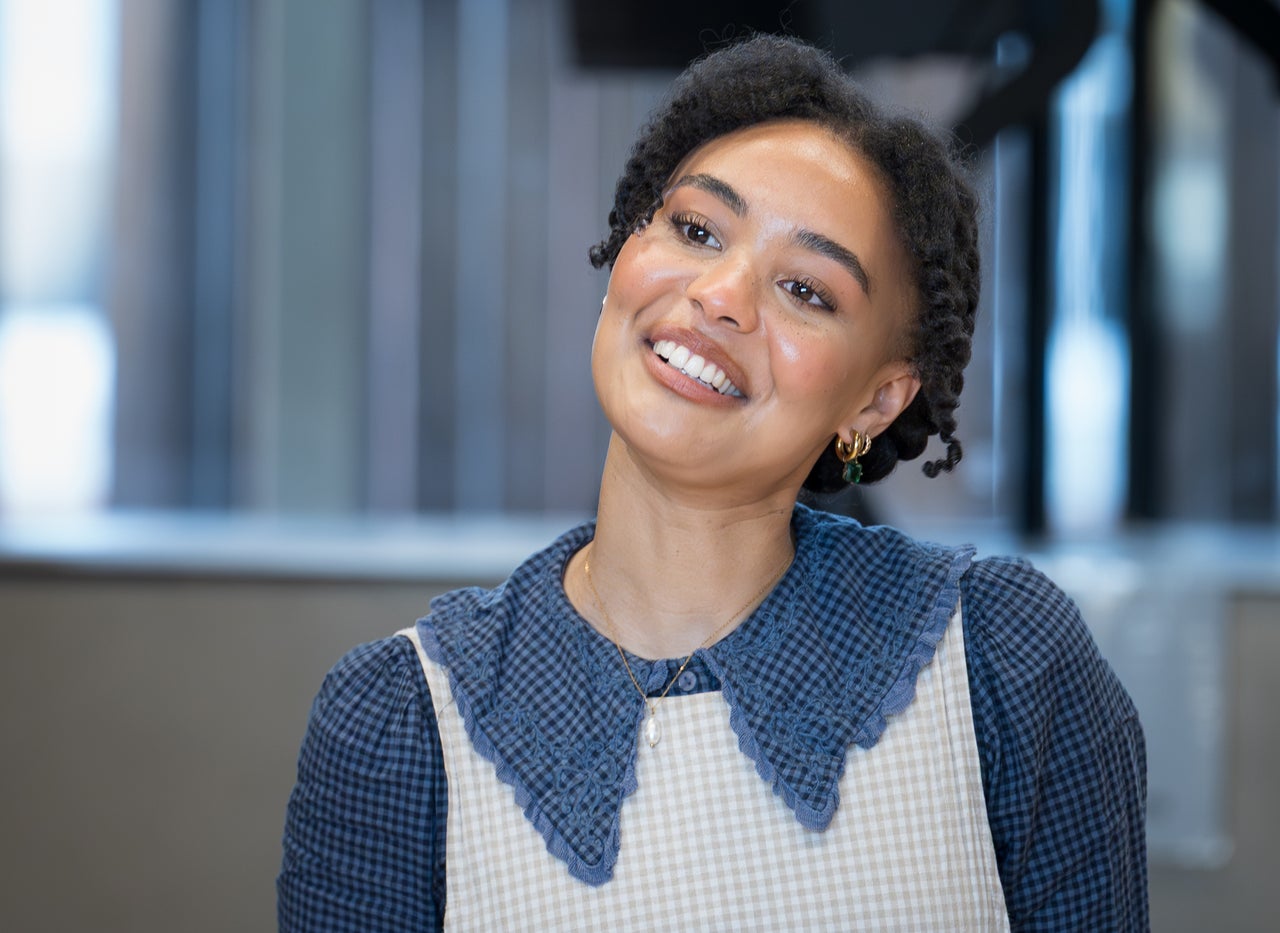
When she finally found out that she’d landed the nomination, Chumisa recalls “falling to the ground outside Tesco Express” in the middle of Tottenham Court Road, in busy central London. “I was like, ‘what do I do now?’. I’ve got a hair appointment!” she quips.
In fact, while she’s currently receiving praise for her work as Cinderella in Into The Woods, this wasn’t the original role she was trying out for.
Chumisa explains: “I’d been brought in for Red Riding Hood initially. I had begged to be seen for Cinderella, but they were like, ‘no, we want to see you for Little Red’.”
So, she set about preparing for her Little Red audition “to the best of my ability”, even if she knew deep down that the role was not one she felt she could play.
“I was really uptight about it, I really wanted to do a good job – and my phone rang halfway through I Know Things Now,” she says of that fateful audition. “
“That was awful – awful because it’s so embarrassing, but also awful because I was like, ‘god I have to go back to the start of this and I know in my soul that I’m not Little Red!’” she adds with a playful shriek.
“After that audition – the one when my phone rang – they called my agent and said, ‘does she happen to know the Cinderella material?’. And I was like, ’I think I’ve heard it once or twice in my life…’”

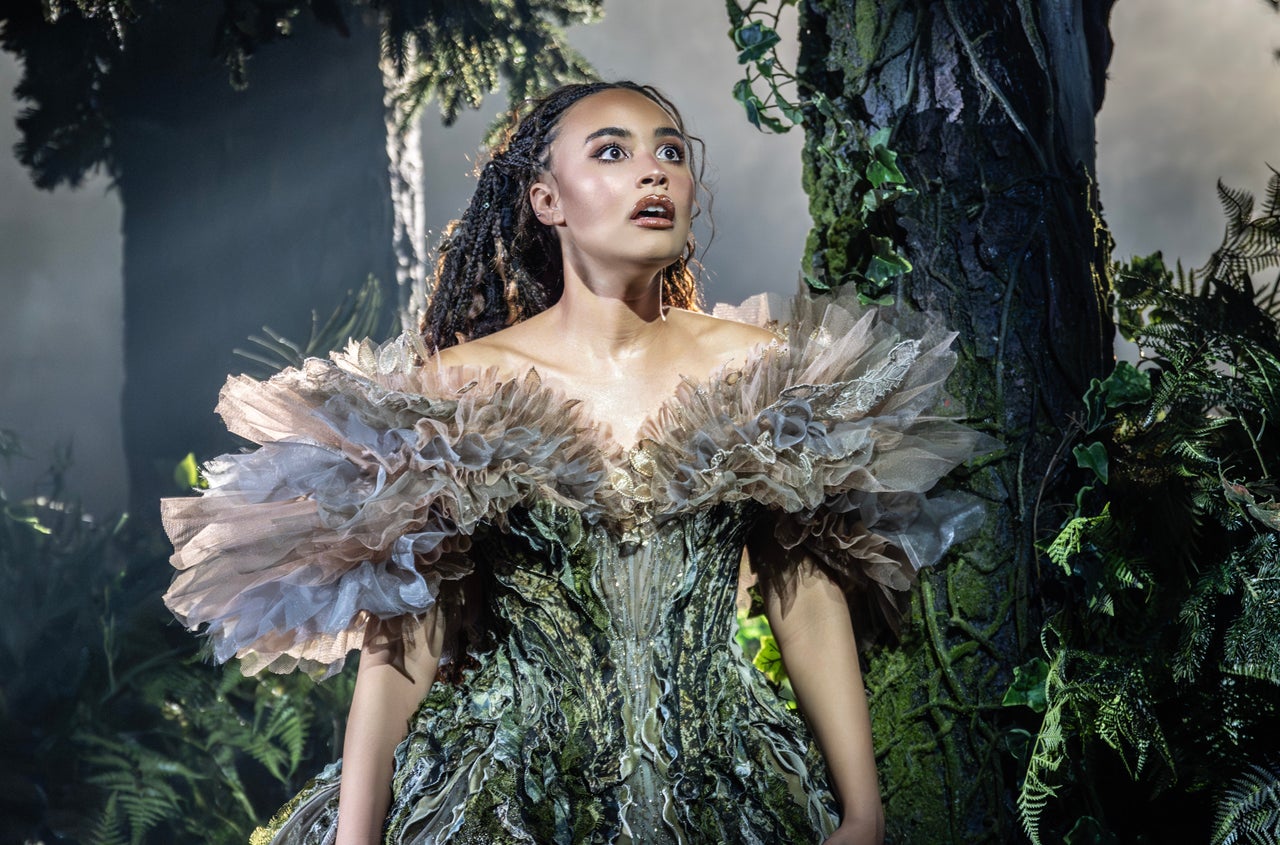
Sondheim’s Into The Woods takes inspiration from the Brothers Grimm tales we all grew up on – but these aren’t the fairytales your granny used to tell you.
In this version of the stories, Red Riding Hood’s ordeal gives her a taste for blood, resulting in her stomping around in wolfskins, supposed Prince Charmings find themselves unable to restrict themselves to just one princess and Jack’s multiple trips up beanstalks lead to a lot more bloodshed than you might remember from previous retellings.
Then, there’s Chumisa’s Cinderella, a character in a constant state of ambivalence, torn between the abusive household she grew up in and an uncertain future with a man she’s just met, which the people around her insist is what she should be aspiring to.
It’s this side of the character that appealed most to the young performer, as it made Cinderella more relatable to herself and other women of her generation.
“She is mad!” Chumisa says of her character. “She’s full of fervour and personality, and she’s imperfect, and she’s anxious, and I don’t know if we do see that in the kind of fairytale versions of her.
“What sets Cinderella apart in her Into The Woods version is that she is just someone that you would meet. She’s a friend that you would catch up with at the pub, or someone that would call you and be like, ‘oh my god, I’ve got this problem, can you please help me?’. I don’t know if the other Cinderellas [from other adaptations of the original fairytale] are actual people that you would experience in life.
“I just adore her so fully, if I’m honest. It makes me emotional – I don’t know why. I just feel like I know her. She’s in every one of my friends. She’s brave, and she’s silly, and she’s funny, and she’s neurotic.”
One of Into The Woods’ most iconic scenes sees Cinderella hashing out her problems in the fast-paced musical soliloquy On The Steps Of The Palace. This number ends with her deliberately leaving that iconic glass slipper behind as a test for her Prince, giving a bit of agency to a character who has so often been criticised for lacking in that area.
“On The Steps is a joy every night,” Chumisa beams. “I think singing that is the closest that I am to myself, on stage, that I’ve ever been. I’m really, really like Cinderella in that moment, I’m so indecisive and so neurotic, so I do really feel connected to her.”

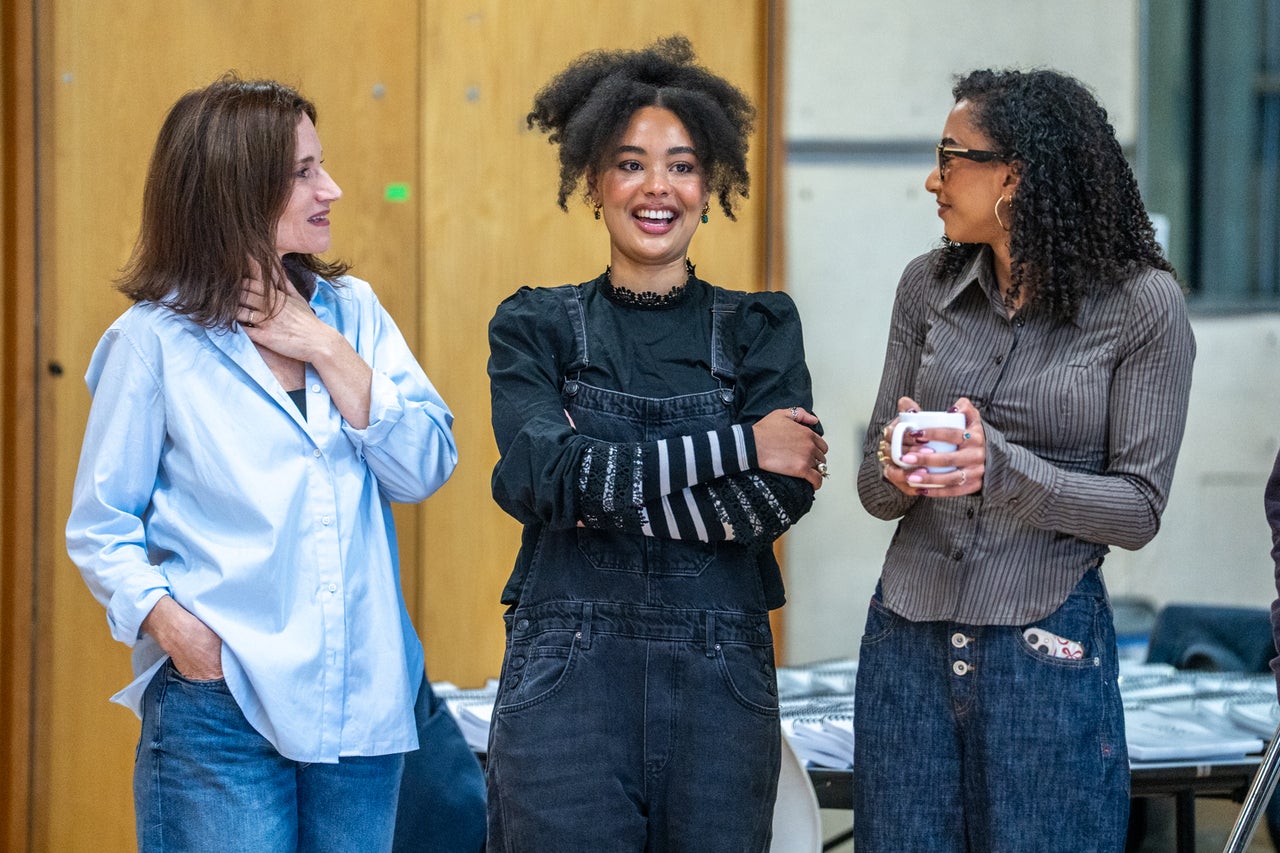
This year marks 40 years since Into The Woods’ original debut on Broadway, and there’ve been countless revivals and reimaginings in the decades since, including a 2013 film, in which Chumisa’s character was portrayed by Anna Kendrick, alongside the likes of James Corden, Emily Blunt and Meryl Streep.
Act one of the stage show reintroduces audiences to the classic fairytale characters we already know and lays out how their stories are interwoven, while the second half takes us beyond “happily ever after” to a slightly messier version of their reality.
It’s this embracing of life’s grey areas that Chumisa believes is why the show has endured over the years and still remains so popular.
“Life isn’t black and white all the time. Into The Woods is essentially, for me, accepting that grey,” she explains. “And trying to just let one another exist in the grey, and accepting people for being multi-faceted.”
She points out: “Into The Woods is about people, and the choices that they make, and the troubles we have with each other, and how we treat each other – the struggles that we will have until the Earth blows up.”
“There are so many takeaways, especially in this day and age,” she observes.
For young women, she says, there’s something to be learned from Cinderella, who wrestles between the financial security offered by the Prince, and the realisation “maybe I want something a bit more”.
“Women in general, young women, all my friends can really learn that as a modern lesson,” Chumisa says. “Of exploring both sides, and seeing where you fit on a scale.”
Another key message for modern audiences, she continues, is about “the way that he raise kids” and how the ways “we treat them when they are small affects how they behave and think and view themselves and the world as they age”.
“It’s so essential to remember that they listen and they see you and they hear you saying what you do,” she concludes, referencing the show’s iconic closing number.
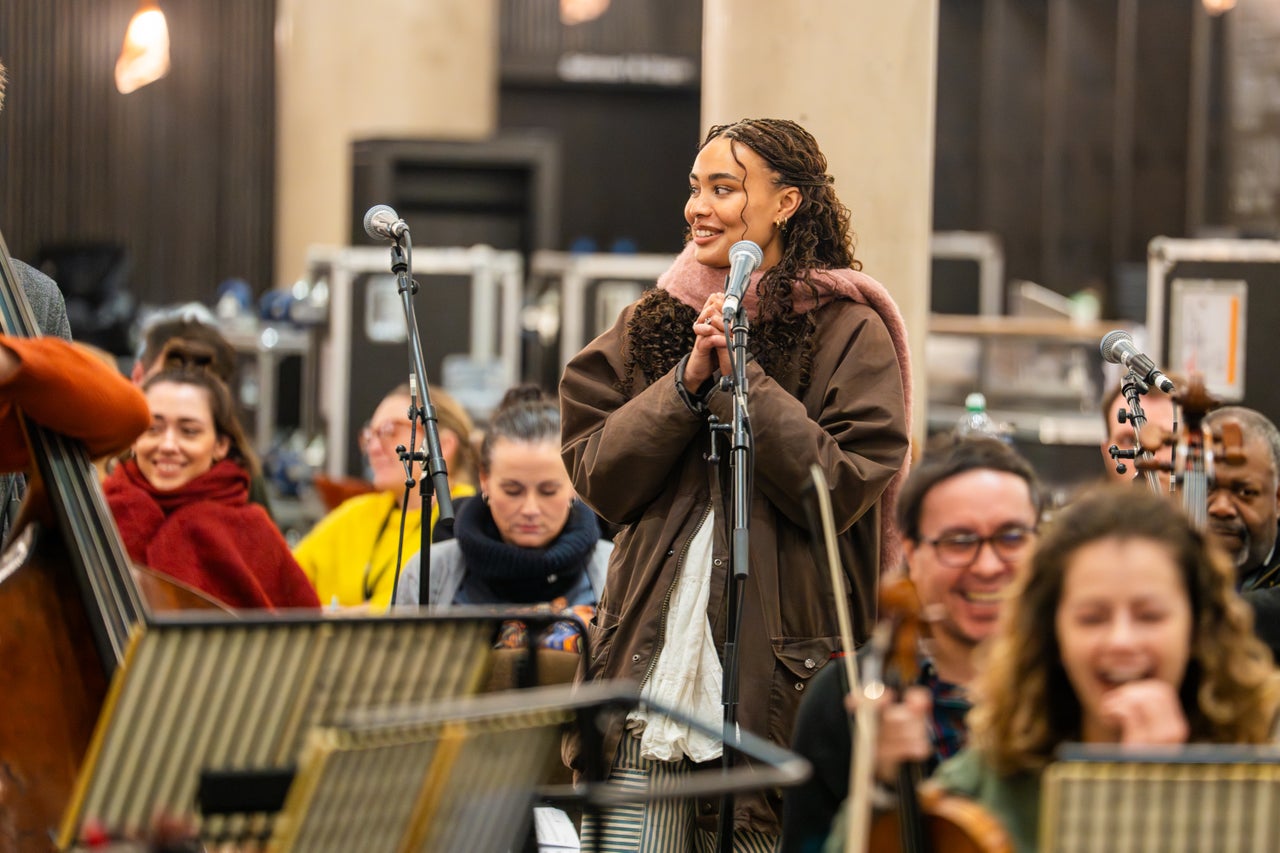
Taking on a second Sondheim show in the space of a year, especially one as iconic and beloved as Into The Woods, is something Chumisa concedes has been somewhat “overwhelming”.
“It’s so important to so many people and that’s a lot of pressure,” she explains, especially as someone so early on in her performing career. Indeed, even after an Olivier nomination and a tidal wave of glowing reviews singing her praise, she admits she’s “still kind of feeling like, ‘I don’t know when I’m going to be found out’ or someone’s going to be like, ‘actually she’s really bad’”.
Thankfully, she’s also been able to take that pressure around Into The Woods’ legacy, and turn into something “exciting”.
“Instead of trying to ignore all the women who have come before me – I adore women, and I want to bring them with me,” Chumisa enthuses. “That doesn’t mean copying things that they’ve done, but rather embracing the fact that I’m carrying on the legacy that they have in playing this role, and enjoying that rather than feeling any kind of pressure about comparison – even though that is there and people do [compare].
“I think it’s such a joy, I really do! Getting to sing them and maybe present a different version or idea of what it could mean is really special. It’s an honour, really,” she adds.


Alan Chapman/Dave Benett/Getty
A career in theatre was pretty much an inevitability for Chumisa, who was born and raised in South Africa by her mother, opera performer Pauline Malefane, and father, theatre director Mark Dornford-May.
“I grew up in a rehearsal room, essentially,” she says, recalling how she was raised in a “big theatre family” where she was exposed to “The Magic Flute, Carmen and all these amazing operas” from a young age.
The idea of performing in musical theatre, though, was something that was only really introduced to Chumisa when she moved to the UK as a teenager as a teenager to study for her A Levels.
“I never wanted to have singing be a focus in my career – I really just wanted to be an actress,” she says. “It was only when I went to Chester that I found musical theatre and kind of combined the two disciplines that I loved.”
Musical theatre, she found, was a way of bonding with her new classmates, and before long she landed her first role in a school production of Rent, playing Mimi.
Until then, her “whole singing background” had been “doing ABRSM material and different arias”, so discovering Rent’s rock opera soundtrack for the first time was eye-opening.
“I don’t know how to do that, I don’t know how to make that specific noise with my voice’,” she remembers thinking to herself. “And it absolutely changed everything.”
Despite their own background, Chumisa claims that her parents “really didn’t want me to do this”.
“The more I am in this career, the more I understand why,” she confesses. “It’s so unpredictable and you’re so unstable financially. They really wanted me to go and get a degree in English and do something else.”
A string of West End performances and an Olivier later, they’re “pretty proud” but even more “relieved” at how things have turned out for their daughter, who says that watching her mother navigate the opera industry has helped her on her career path.

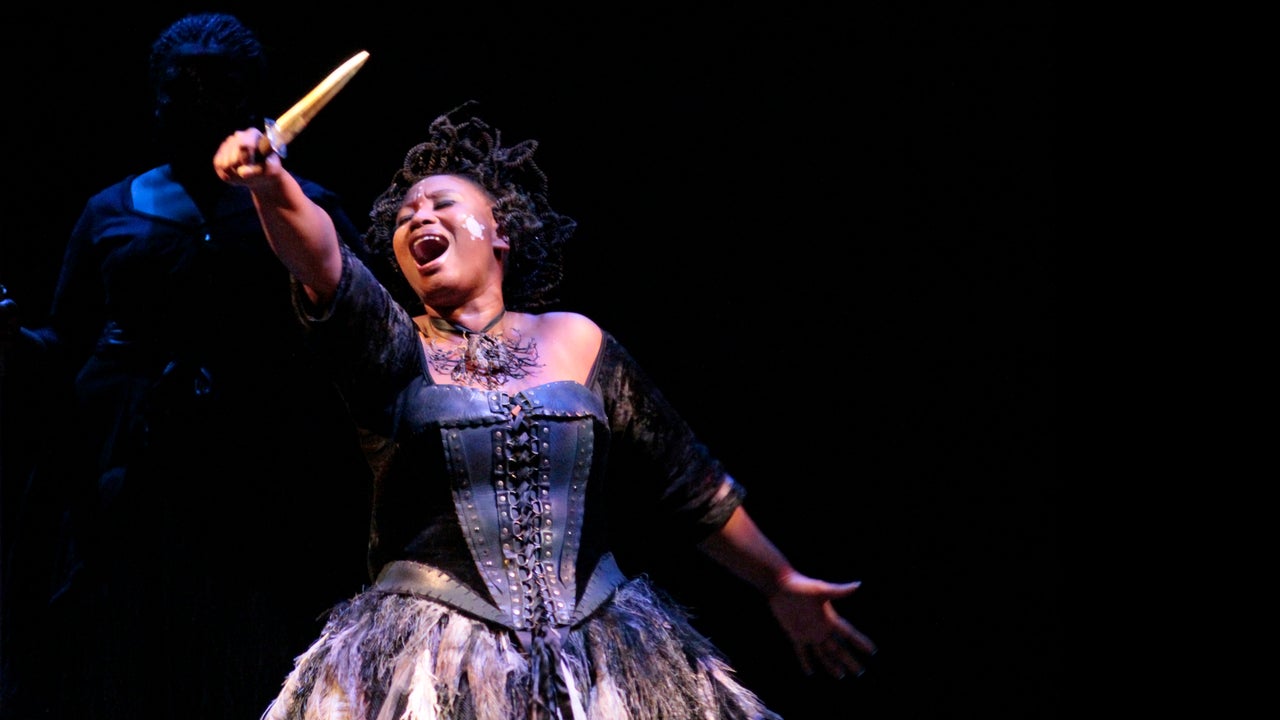
Lawrence K. Ho via Los Angeles Times via Getty
She explains: “My mum is Black, and she is an amazing opera singer and actress. I think seeing her kind of bombard herself into roles that were never intended for her to be in, kind of shoving herself in and being like, ‘I can do it’, has really affected how I view going into things and inhabiting spaces where maybe someone like me wouldn’t have been welcomed before.”
Fortunately, Chumisa has found that, for the most part, the British scene is “a lot more accepting” than other areas of the entertainment industry, and “brave” in taking risks on performers from a variety of backgrounds, “whether that be how you grew up or different racial backgrounds or a different gender identity”.
This embracing of diversity is evident in Into The Woods, which showcases performers with a variety of different ages, racial backgrounds, gender identities and abilities – something which Chumisa highlights says is crucial to the show’s ethos.

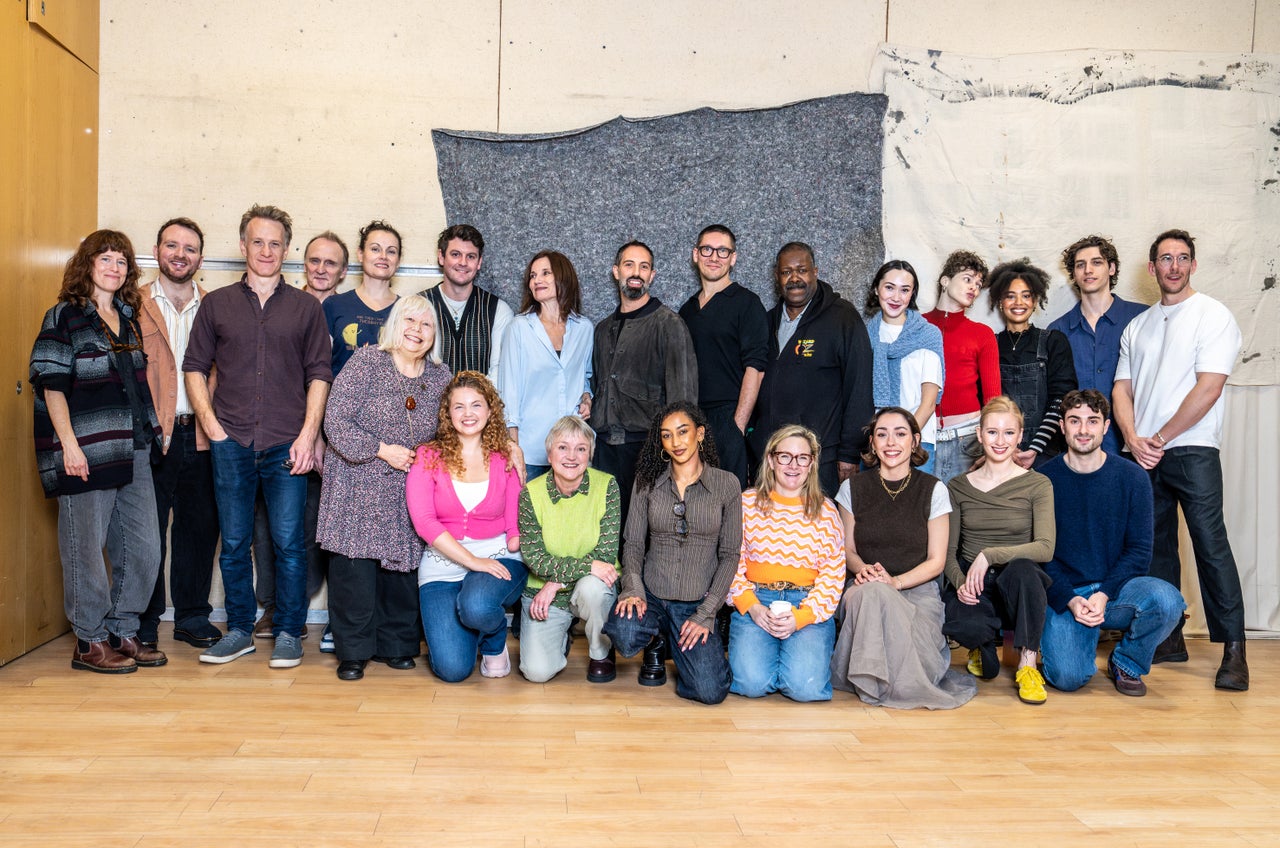
“We’re representing a village,” she points out. “And within a village there are a number of different communities, genders, sexualities, ages.
“It’s so fascinating when we see it represented on stage because we think, ‘oh my god, how could this 70-year-old man have a conversation with this 15-year-old girl and it be like they’re interested in each other and kind and gentle with one another?’. But it happens literally every day!
“When you’re in the Co-Op, you are around people who are so entirely different to you – and you end up talking about, like, Flora or something…”
As for what’s next, Chumisa acknowledges that last year’s Olivier nomination has “calmed me down a bit, for sure” when it comes to seeking out roles.
“But yeah, I mean, if I did get a job that was for a year, I think I’d like to calm down and maybe not be in an audition room for a while,” she acknowledges. “I think they’ve seen enough of me. Everyone is like, ‘please leave us alone!’.”
Into The Woods is playing at London’s Bridge Theatre until 30 May 2026.
You must be logged in to post a comment Login