

Politics
Cost of living crisis compared to Shell mega profits



Campaigners from Fossil Free London staged a protest outside a supermarket in Hackney on Sunday 24 May, to draw attention to the rising cost of living in contrast with fossil fuel corporations’ soaring profits.
The stunt involved two trolleys. One, pushed by a campaigner dressed as an oil executive, was filled with sacks of money. The other was filled with placards shaped like common food items. Each placard displayed the item’s current cost and the amount it has risen by. For example: “Orange juice, £1.79, up 130%”. Behind them, a banner read: “Shell profits. We pay the price”.
The protest comes as Shell’s first quarter profits jumped 115%. This is whilst UK food prices are set to rise by 50% since the start of the cost of living crisis, driven by climate and energy shocks.
Robin Wells from Fossil Free London said:
Big Oil are vultures. They prey and profit from crisis, war, and human suffering. And they pilfer from and collapse the earth systems the give us life.
For as long as the fossil fuel industry persists, humanity’s very existence is threatened, and life is all the more miserable. Because whilst Shell continues to profit, we’re all paying the price. And the cost is only getting bigger.
Stu from Fuel Poverty Action said:
It is unconscionable that so many of us are going without because we can’t afford the basic energy we need for heating, eating and lighting.
Meanwhile, shareholders are laughing all the way to the bank, and the government is letting them get away with it. £500 of our energy bill already goes to profits, and that’s set to rise if politicians do nothing.
That’s why Fuel Poverty Action is calling on the government to Make Green Fair campaign, clamp down on energy company profiteering, and bring down our bills by passing the benefits of cheap-to-produce renewable energy back to us.
Featured image via Fossil Free London
By The Canary


Keir Starmer is “reflecting on political realities” after Andy Burnham’s victory in Makerfield, according to a cabinet minister.
The soon-to-be-former Greater Manchester mayor is expected to challenge the prime minister’s leadership in the coming days after winning the north-west by-election.
It’s widely believed Burnham has the backing from more than enough Labour MPs to trigger a leadership contest against Starmer.
The Observer reported that the PM intends to set out a timetable for his departure on Monday, recognising that his time in office has run out.
The report comes after Starmer insisted on Friday: “If there is a contest, then yes I will run, I will stand, and I’ve said repeatedly I’m not going to walk away from that.”
Asked for his take on the beleaguered prime minister’s future, business and trade secretary Peter Kyle told Sky News: “All I know for a fact is that he has been engaging in conversations with a wide, wide range of people, including myself, and that he is, as well as working really hard over this weekend, I think he is making time to reflect on the political realities, challenges and opportunities that he finds himself in.”
Asked whether Starmer should quit, Kyle said he had a “very frank conversation with the prime minister about all these issues” on Friday, where the prime minister was “thoughtful” and calm.
“He led the conversation,” the cabinet minister said.
“Repeatedly, the prime minister asked about the country. Not once in that conversation, which was a lengthy conversation, did he ever ask about self-interest; it was always about the country. And I think that is the tone of the conversation I had with him.
“It was frank, and I think that is the mindset that the prime minister is in as he goes into this weekend, through which he has been working very hard as prime minister, as he always does, but also trying to make time to reflect on the political challenges at the moment.”
Kyle added: “My role is in putting the country first, is to uphold the authority of this government, to make sure that we can govern through a moment of political challenge, and that we are 100% focused on delivering.”
Asked about the reports that Starmer intends to resign on Monday, he said: “I have nothing to believe they are true. I’m seeing a lot of speculation out there.
“The only thing I can say with fact is that the prime minister is hard at work, as he is every day, he is one of the most hardworking people I have ever come across.”
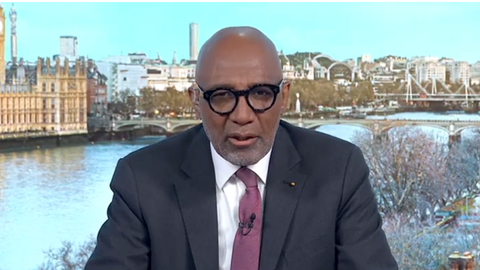
“Does that mean you don’t know if he plans to resign or he does not plan to resign?” presenter Trevor Phillips asked.
He said both he and Starmer are “focusing on the job”.
Asked if he would vote for Starmer in a potential leadership contest, Kyle said: “I’m just not going to engage in what the days ahead look like.”
Challengers need the support of at least 81 fellow Labour MPs to successfully trigger a leadership race.
The incumbent leader does not need any nominations to be put on the ticket.
Listen to Commons People, the podcast that makes politics easy. Every week, Kevin Schofield and Kate Nicholson unpack the week’s biggest stories to keep you informed. Join us for straightforward analysis of what’s going on at Westminster.

We’ve written before at HuffPost UK about the sleep rules a neurologist follows for healthy ageing.
And now, that same expert – Dr Matthew Walker, Neuroscientist and Professor of Neuroscience and Bioengineering at the University of Texas at Dallas – has shared the evening routine mistakes he’d never make.
Speaking to HuffPost UK, he said: “The mistake most people make at night is assuming sleep is like a light switch – flick it off and you’re out.
“Sleep is far more like landing a plane. It takes time to gradually descend onto the runway of good sleep,” he continued.
He added, “A few things that keep the plane circling” are:
1) Going to bed too hot
“Our body has to drop its core temperature by about one degree Celsius to fall asleep and stay asleep, which is why a cool bedroom – around 18°C – beats a warm one,” the expert said.
Interestingly, though, “A hot bath [or shower] an hour before bed works by a delightful paradox: it brings blood to the surface, and you offload heat afterward, dropping your core temperature.”
2) Having a boozy “nightcap”
“Alcohol is a sedative, and sedation is not sleep. It fragments your night and blocks dream sleep, so you wake feeling unrestored even after a ‘full’ night” of kip, he explained.
Alcohol can also worsen sleep apnoea, which makes you tired in the daytime. Some experts recommend we stop drinking alcohol three to four house before bed.
3) Having caffeine too late in the day
“Caffeine has a half-life of around five to six hours, meaning a quarter of that 2pm coffee is still circulating at bedtime,” Dr Walker continued.
Researchers think that drinking coffee between 7 and 8am might help us access more of its benefits.
4) Bright lights and using your phone less than an hour before bedtime
“Evening light tells your brain it’s still daytime and suppresses melatonin. Dim the house [and] treat the last hour [of your day] as a wind-down,” the neuroscientist advised.
Putting your phone away an hour before bedtime has previously been suggested as good sleep hygiene by multiple other experts.
5) Lying in bed awake, frustrated
“If you can’t sleep after about twenty-five minutes, get up and do something quiet and dim until sleepiness returns,” Dr Walker said.
“Your brain is brilliant at forming associations, and you don’t want it learning that bed is the place where you lie awake. Said another way, you’d never sit at the dinner table waiting to get hungry. So why would you lie in bed waiting to get sleepy?”
We’ve written before about how staying in bed for too long is the worst thing you can do after waking up at 3am.
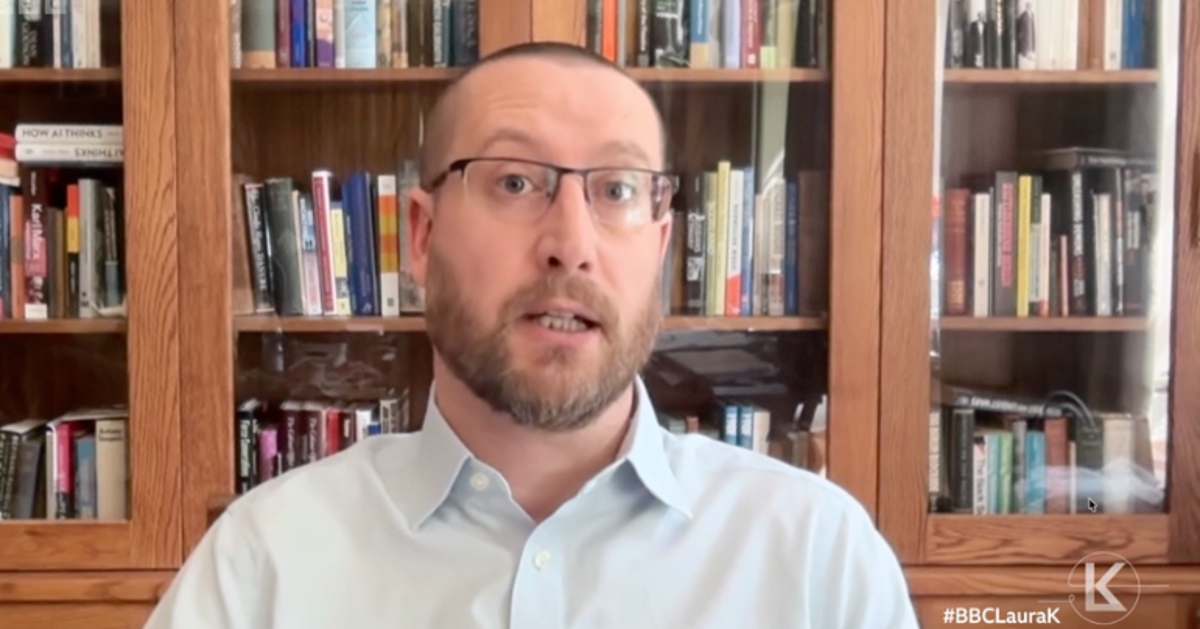
A leadership battle within Labour will “cost” the country, according to a bleak warning from the UK’s former top civil servant.
Reports have suggested Keir Starmer will announce his decision to resign on Monday, following Andy Burnham’s win in the Makerfield by-election.
The soon-to-be-former Greater Manchester mayor was already expected to challenge the prime minister’s leadership as soon as he is sworn into the Commons.
Burnham is said to be hoping for a “coronation”, meaning Starmer would effectively hand the keys of No.10 straight to him without first triggering a messy leadership race within Labour.
But the PM insisted only on Friday that he would not walk away from government and would fight in any leadership contest triggered.
Simon Case, who was the cabinet secretary until December 2024 and now sits in the House of Lords, told the BBC that there is a price to this ongoing speculation.
He told Sunday with Laura Kuenssberg: “Uncertainty is a big challenge and a big problem for government.
“If Keir Starmer is left in place, but without any authority, it’s impossible to effectively carry out the business of government.
“Equally, if we have a leadership contest that then goes on for some time, you continue that level of uncertainty.”
“Uncertainty isn’t free,” he said. “It actually costs us money. You can see already that the markets are responding, the amount of money we’re paying for the enormous levels of debt that this country has are going up with every moment of uncertainty.
“And equally, uncertainty costs us opportunity. All the time politicians are having conversations among themselves about who should be leader and prime minster, time goes by where issues of real concern to people up and down the country – the health service and education – all that time is lost.”
He added: “We’re now in a real bind. Neither option is a good one at the moment.”
If Burnham does replace Starmer, he will be the UK’s seventh prime minister in a decade.
Asked about how this upheaval impacts the country’s reputation, Case said: “I’m afraid it generates a pretty high degree of eye rolling amongst our allies.
“For decades, the UK was seen as a dependable, solid citizen on the world stage that people could do business with our prime ministers.”
He continued: “Changes of direction, new policies, new people, that costs us influence on the world stage, that costs us in our alliances.”
Case also urged Burnham to “do his homework” before toppling Starmer.
“You cannot duck the big decisions. Coming in and thinking you can govern simply by being a better communicator, or somehow vibe-coding to borrow a phrase from the AI-world, that you can somehow make it up as you go along… you cannot through these big challenges.”
Listen to Commons People, the podcast that makes politics easy. Every week, Kevin Schofield and Kate Nicholson unpack the week’s biggest stories to keep you informed. Join us for straightforward analysis of what’s going on at Westminster.

Microfeminism describes small but intentional ways women push back against deep-seated gender expectations and biases: a teacher calling the dad on a kid’s emergency contact form when both parents are listed. Asking “Men’s team or women’s team?” when someone brings up a game they just watched.
It’s dismantling the patriarchy, but in bite-sized ways. Financial coach and author Tori Dunlap is a big fan of these little acts of feminism, so last month, she asked her 2 million followers to tell her “the most unhinged way that you practice micro feminism in your life”.
She didn’t want cutesy, soft-pedalling answers, she told people on TikTok and Instagram. “I’m not talking about ‘assuming the doctor is a woman,’ give me insane ones thx,” Dunlap wrote.
Women in the comments did not disappoint. Some of our favourite responses from the prompt include:
-
“I give men unsolicited tips at the gym.”
-
“I change the voice on my Alexa to a male voice so that my kids don’t think they can speak to a woman and expect an instantaneous reply.”
-
“I recently told an angry man, ‘maybe we can chat when you’re feeling less emotional’ and it was worth years of therapy.”
-
“Stop moving out of the way for men in public. A lot of them will barge into you because they EXPECT you to make yourself small for them. Stop doing that.”
-
“Calling male work superiors ‘girl’ after they refer to me as ‘bro.’”
Dunlap, the author of Financial Feminist: Overcome the Patriarchy’s Bullsh*t to Master Your Money and Build a Life You Love, told HuffPost her favourite responses tended to be ones where the women came first in heteronormative relationships.
“I loved the women who said they put their name first on their wedding invite or on the deed of their shared home,” she said.
Running a feminist financial education company, Dunlap often talks about ways women can incorporate these values into their everyday life: paying off debts, building savings, leaving abusive relationships. Asking this particular question on Instagram and TikTok seemed like a natural fit for her brand.
“We actually originally posted this video in May 2025, and it received about 30 million views, and when we reposted it again this year, we saw a similar crazy amount of comments,” she said.
“I think people love the post so much firstly because it’s petty and inspirational at the same time, but also because people love reading all the comments,” she added. “It’s like a little rallying cry.”

Susan J. Douglas, a cultural critic and professor of communication and media at University of Michigan, said microfeminism echoes the phrase “the personal is political” – a foundational rallying cry of the women’s movement in the late 1960s.
“Through seemingly minor performative acts – gestures, funny remarks and actions – these women are insisting on equitable treatment and on challenging very outdated stereotypes,” she said.
Though it may not be systemic or large-scale political activism, the way a woman moves in her personal life, especially in male-dominated spaces, can absolutely shift everyday gender norms.
“The video and the comments exemplify what Gloria Steinem advocated as ‘everyday rebellions,’” Douglas said, referring to the small, routine and personal acts of defiance against patriarchal norms and systemic sexism that Steinem argued anyone could perform in their daily lives.
Darcy Lockman, a journalist-turned-psychologist and the author of All the Rage: Mothers, Fathers, and the Myth of Equal Partnership, also appreciated the video when she saw it. Women turning the tables on society’s and their own assumptions is a huge deal, she said.
“When shifts like that happen, the world opens up,” Lockman told HuffPost. “It takes lots of micros to make a macro change.”
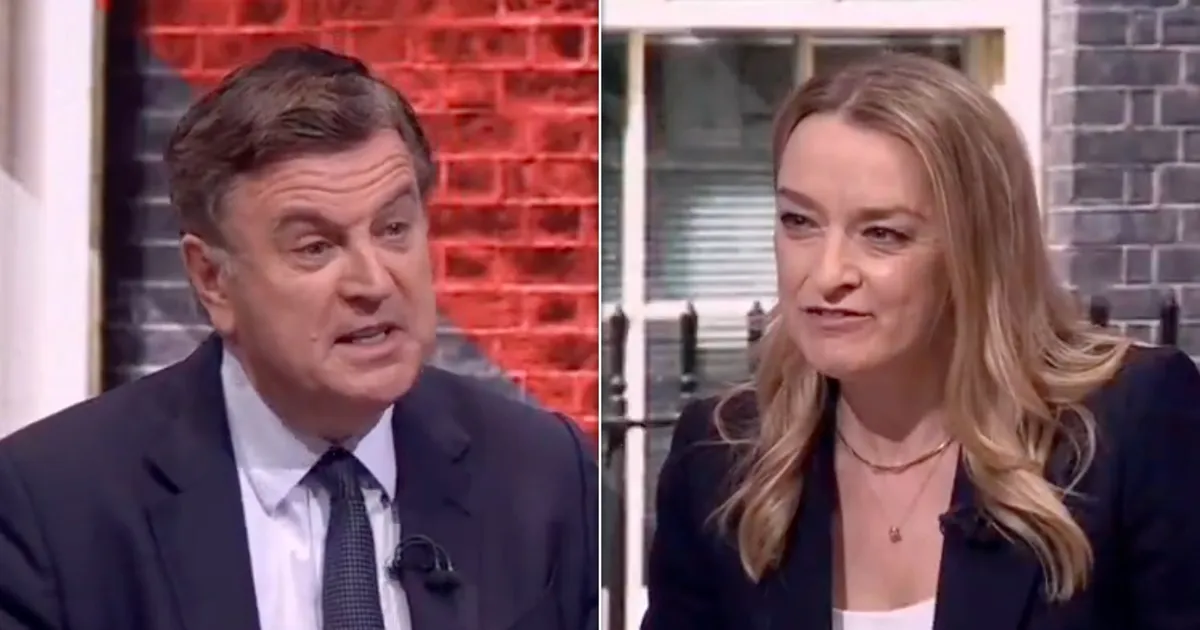
Laura Kuenssberg put a top Conservative under the microscope on Sunday with a brutal reminder of just how poorly the party did in the Makerfield by-election.
Labour’s Andy Burnham secured the north-west seat on Thursday with 54.8% of the vote while Reform UK’s Rob Kenyon came in second, with 34.5%.
The rising far-right group Restore Britain secured 6.8%, equal to 3,111 votes while the Conservatives’ Michael Winstanley came in fourth with just 997 votes – 2.2% of the vote share.
That means the official opposition lost their £500 deposit, as they secured less than 5% of the vote.
On her BBC show, Sunday with Laura Kuenssberg, the presenter asked shadow chancellor Mel Stride to defend the shocking performance.
But the Conservative MP deflected by talking about the Aberdeen South by-election result, where the Tories took a seat from the SNP last Thursday.
“First win in a by-election in Scotland since 1967,” he said. “It shows what good, clear, policy offering can deliver.”
He continued: “In Makerfield, that has been a Labour stronghold for about 100, 120, years. I think the big story was actually the weakness of Reform in the face of that challenge…”
“But in 2019, you got 34% of the vote in Makerfield,” Kuenssberg reminded him. “This time you got 2%.
“In those kinds of parts of the country, that suggests you’ve gone way back.
“A leader like Boris Johnson had a hope in those in kind of constituencies.
“Under Kemi Badenoch, it doesn’t seem like you do.”
He replied: “In 2019, we swept away a number of red wall seats and that was not one of them. That has been historically Labour and solidly Labour for a very long time.”
“So it’s OK that you got 997 voters, then?” Kuenssberg said.
But Stride replied by once again referring to Reform UK’s performance, insisting they were coming down in the polls.
“They’re not surging [in popularity] the way they were last year, but you don’t look competitive yet,” she replied.
Nigel Farage’s party has long tried to position itself as the real opposition to the government by displacing the Conservatives.
But Reform UK struggled to compete against Burnham in Makerfield, making it the third straight by-election loss for the party after separate contests in Gorton and Denton, and Caerphilly.
Listen to Commons People, the podcast that makes politics easy. Every week, Kevin Schofield and Kate Nicholson unpack the week’s biggest stories to keep you informed. Join us for straightforward analysis of what’s going on at Westminster.

The return of warm weather means the return of open-toed shoes, drawing attention to just how your feet look after a long fall and winter.
Beyond pumice stones and at-home foot peel masks, some people choose to focus on the aesthetics of another part of their feet: their toes. Specifically, their toe hair.
The amount of hair on your toes depends on a variety of factors. In rare cases, your toe hair can even offer a peek into your health.
Below, doctors share what you should know about the hair on your toes and how to safely remove it if you choose.
Having hair on your toes is perfectly normal, and just how much you have often depends on genetic factors.
Hair on toes is normal – it’s neither “good” or “bad,” said Dr. Natasha Bhuyan, the vice president of in-office care and national medical director at Amazon One Medical.
“It really just indicates your genetics, your hormones, factors that you often can’t influence,” she said. The amount of hair you have on your toes may also vary depending on your ethnic background.
What “normal” toe hair looks like for one person can look completely different for someone else.
“Everyone’s normal is different, but hair on toes is normal,” said Dr. Michael Richardson, a family medicine doctor in Boston. “Just because you have hair on your toes doesn’t mean that’s abnormal.”

Westend61 via Getty Images
Blood flow issues can cause a loss of toe hair
“Toe hair is not going to be the first sign if something is going wrong,” Richardson said, “but if you’re noticing that it’s less than normal for you, that could be signs of something damaging that area.”
Loss of toe hair could be from contact damage, which can happen if there’s lot of friction against shoes. “I’ll see that in runners, for example,” said Richardson.
“There are instances where the hair on your toes could change because of other factors, like if you’re taking a medication that influences hair growth … steroids can sometimes cause hair growth,” Bhuyan said.
Changes in blood flow can also affect the amount of hair on your toes, which is a concern.
“If there’s decrease in the vasculature, so any damage to the blood vessels – we’ll see this with peripheral artery disease – where the blood is just not circulating as well, the tissue isn’t as healthy and can’t grow hair,” Richardson said.
In the place of hair, the toes will have a smooth, shiny look, Richardson said.
You may also notice issues related to poor circulation, like cold feet or pain when walking, Bhuyan added. This tends to be more common in older adults and smokers.
“But more often than not, toe hair is going to be normal. If you don’t know where to go, it’s always a good idea to talk to your doctor,” Richardson added.
If you do want to remove the hair, keep a few things in mind
If you want to remove the hair on your toes, it’s perfectly safe to do so, as long as you follow the right methodology.
“I would say the safest method to remove hair when it’s sparse … just tweezing it is the best,” said Bhuyan, before adding that the tweezers should be cleaned before doing so.
“Some people will do things like shaving. I think if you do the typical shave with warm water, use a gel, that’s fine, just to minimise ingrown hairs,” Bhuyan noted.
You can also try hair removal creams, but if you do that, do a small patch test first, “because some people can have reactions to hair creams on their skin,” she said. If you want a long-term solution, you could also do laser hair removal or electrolysis.
In the end, it’s OK to remove the hair on your toes; it doesn’t serve a health purpose, Bhuyan said.
Politics
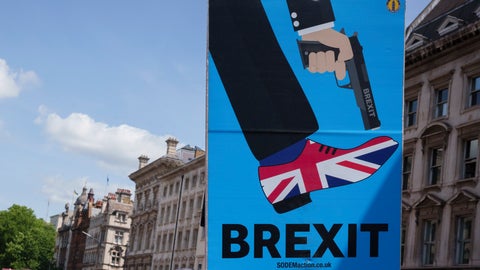
Two-Thirds Of Brits Believe Brexit Has Made Every Issue They Care About Worse, Survey Finds
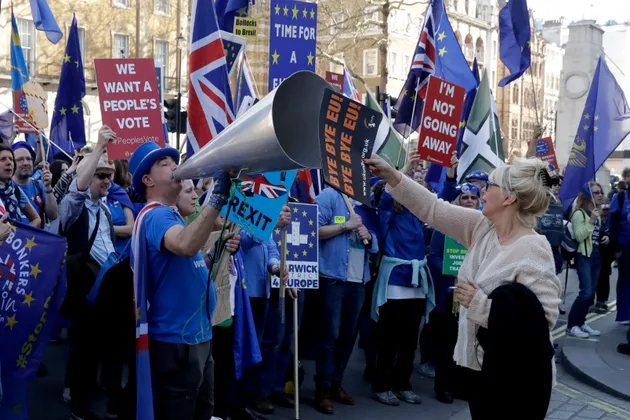
 A supporter of Britain’s departure from the European Union, at right, holds a placard up in front of supporters of remaining in the EU, including Stop Brexit Man, Steve Bray, with his foghorn, outside Parliament in London, Wednesday, Feb. 27, 2019.
Two-thirds of Brits think Brexit has made every single issue they care about worse, a new survey has found.
A poll from YouGov and Mandate Research for the European Council on Foreign Relations (ECFR) has revealed that 66% of the general public think leaving the EU was “negative” for the UK.
They believe leaving the bloc has made issues such as the cost of living,economic growth, opportunities for young people, trade and managing illegal immigration harder.
Three-quarters (75%) of Brits now want a closer relationship with the EU, according to the poll, including 49% of Reform UK voters.
A further 63% of Brits, including a large proportion of Reform UK and 2016 ‘Leave’ voters, would now accept return of freedom of movement in return for a closer trading relationship with the EU.
Even opposition to UK involvement in a European army has decreased, with 43% of respondents supporting the idea.
Almost two-thirds (63%) want the government to focus on improving relations with the EU over links with the US.
Only 66% of Leave voters say they would vote to stay out of the EU in any new referendum.
It’s been almost exactly a decade on from the 2016 referendum on the UK’s membership in the EU.
Hundreds also marched through London on Saturday calling to rejoin the EU.
The survey comes as Andy Burnham is expected to challenge Keir Starmer’s leadership in the coming days after winning the Makerfield by-election.
He said last September that he wanted to see the UK back in the EU within his lifetime, but he has since pledged not to “re-run” Brexit arguments.
Co-founder and director of the European Council on Foreign Relations, Mark Leonard, said Brits are realising Brexit has “undermined” the UK’s ability to respond to other pressing issues.
He said: “Ten years ago, Brexit was the insurgent vehicle for a nation rejecting the status quo.
“However, a decade on, Brits realise their hopes for a better life outside the EU are going unfulfilled and that Brexit is undermining the UK’s ability to manage the issues voters care about most.
“This data shows that the vast majority of citizens is open to a closer relationship.
“Rather than refighting the battles of 2016 the government must push or a new relationship with Europe that speaks directly to the everyday concerns of citizens on cost of living, migration and security.
“Rather than talking about red lines we should have a green light to a debate about how Europe can help rebuild the UK and its global influence for the 2030s and 2040s.”
Listen to Commons People, the podcast that makes politics easy. Every week, Kevin Schofield and Kate Nicholson unpack the week’s biggest stories to keep you informed. Join us for straightforward analysis of what’s going on at Westminster.
Related…


Starmer is reportedly considering resigning on Monday (Alamy)
3 min read
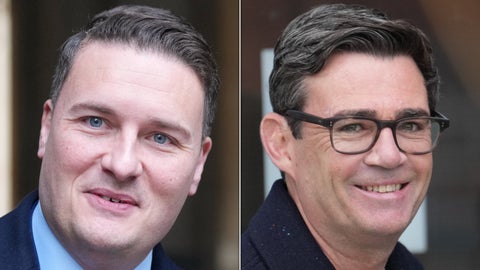
A cabinet minister has admitted that Keir Starmer is taking time to think through “the political realities” facing him amid a growing expectation that he will agree to resign.
Business Secretary Peter Kyle said he had a “thoughtful conversation” with the Prime Minister on Friday in which Starmer asked for his view on what his next steps should be.
Speaking on Sunday with Laura Kuenssberg this morning, Kyle also said that he was not going to be “delusional” about the situation Starmer is in, admitting that he did not know “full fact” what the next few days would bring.
Kyle said that the conversation he had had with the PM on Friday was “very thoughtful” and “professional”: “[Starmer] led through a conversation about the challenges our country faces, about the political issues which are unfolding at the moment, and asked my views.”
The cabinet minister did not deny that Starmer could agree to stand down.
Asked by Kuenssberg if it was still the case that Starmer would fight any leadership challenge, as he insisted on Friday, Kyle said the PM was “fighting for our country”.
“He’s also making time this weekend to try and reflect on the political challenges that he faces, our country faces, our party faces.
Asked again if the PM would fight a leadership challenge, Kyle said: “These are decisions for Keir to make, and that’s why I said that he is taking the time, as well as dealing with all the issues that a Prime Minister deals with over a weekend, a very busy weekend, he’s also taking the time to think through what the political realities are today compared to last week, the week before.”
The Observer has reported that Starmer will announce a resignation plan on Monday amid growing pressure from Labour MPs.
The PM has repeatedly insisted he would fight any challenge against his leadership.
However, Andy Burnham’s landslide victory in the Makerfield by-election on Thursday has put greater pressure on Starmer’s position, with large numbers of Labour MPs pushing for Burnham to take over.
Sky News reported this morning that Foreign Secretary Yvette Cooper had told Starmer to stand down. Several cabinet ministers, including former Labour leader Ed Miliband, are also reported to have encouraged Starmer to set out a resignation timetable.
Former minister Jess Phillips told Kuenssberg that it felt like “we have come to the end of the road”.
However, while some in Labour would like to see Burnham become leader unchallenged, PoliticsHome reported on Friday that there are some who remain loyal to Starmer who would put forward their own candidate and trigger a leadership contest if that PM did not stand.
Burnham, who must resign as Manchester mayor now that he is an MP, will arrive in Westminster on Monday and is expected to meet with Labour MPs as part of his push for No 10.
Former defence secretary and Labour peer Lord Hutton told Kuenssberg that it would be important for Starmer’s successor to have a proper plan in place, warning that “personality politics will get you to the end of the day but not to the end of a five-year government.”
Hutton said that Burnham needed to “map out” clearly how he would tackle the issues facing the country, as “the challenges would be the same”.
He also admitted that it would be “a challenge” for Burnham to replace Starmer without going to the polls for a general election.

4 min read
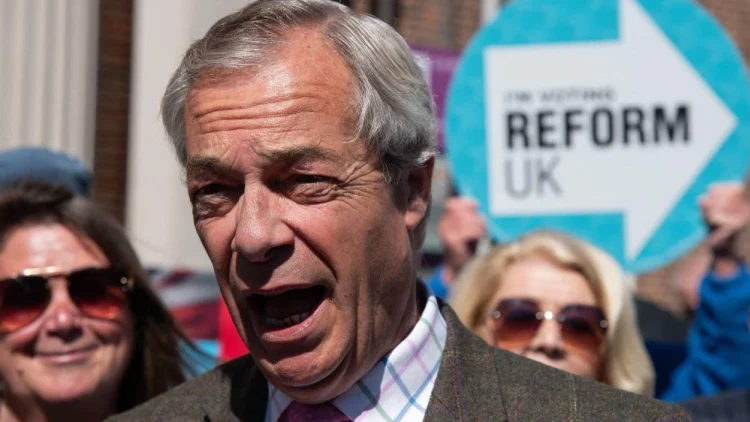
Reform UK is now grappling with the challenges of multi-party politics.
Governments rarely increase their vote share in by-elections. Turnout is usually well below that of a general election, and the stakes are lower. The Makerfield by-election was by all metrics unusual. Commentators speak of voters ‘sending a message’ to an incumbent government through the by-election ballot box. In Makerfield, the message they wished to send seems to be that they were happy to have Andy Burnham not only as their representative, but to effect change in the country’s leadership.
In local elections held in the Makerfield area just a few weeks ago, Reform had won half of the votes cast, and the seat would be high on any target list for the party at a general election (Makerfield is 29th on a list of the most marginal seats where Reform was in second place in 2024). But on Thursday, the party managed only a small increase on its 2024 share – a disappointing result when Reform’s national polling has doubled in the intervening period.
Reform was quick to suggest that the Burnham campaign had capitalised precisely on the ‘anti-Starmer’ sentiment that it had mobilised effectively in the local elections. Polling from Convergent Opinion for Persuasion UK suggests that Reform retained most of its 2024 voters and also won over around 1 in 10 2024 Labour voters.
But it faced two issues that resulted in its performance being below expectations.
Firstly, for the first time, Reform faced a significant challenge on its ‘right’. The newly formed Restore Britain, led by ex-Reform MP Rupert Lowe and whose key policy is the deportation of immigrants, contested its first election outside of Lowe’s home turf in Great Yarmouth.
It was able to secure almost 7 per cent of the vote, drawn almost exclusively from those who had previously voted for Reform. Not sufficient in this instance to cast them as ‘spoilers’, the combined Reform plus Restore vote would still be 10 percentage points short of that won by Labour, but a sign that it could cause problems for Reform where the margins are tighter.
That they [Tory voters] might be willing to vote for Labour in some circumstances is an important yet overlooked factor in an evolving party system
A second – and possibly more important – factor for the prospects of Reform at a general election is that it was unable to gobble up the Conservative vote in its entirety.
Polling suggests around half of the 2024 Conservative vote went to Reform on Thursday, but a small group of Conservative voters were willing to vote for Labour. Data from the British Election Study immediately after the 2024 election showed that around 15 per cent of those who had voted Tory would ‘vote against’ Reform. That they might be willing to vote for Labour in some circumstances is an important yet overlooked factor in an evolving party system.
Analyses of contests at all levels since 2024 have highlighted a ‘block’ structure to voting: Labour, the Liberal Democrats and the Green Party forming a ‘left’ block, and the Conservatives and Reform on the ‘right’.
Those in the ‘left’ block, veterans of tactical voting campaigns, have been comfortable moving between these parties to deny Reform high-profile victories in key by-elections such as Caerphilly and Gorton & Denton. This was again evident in Makerfield, with both the Lib Dem and Green shares of the vote collapsing and costing the parties their deposit.
However, for the time being, the ‘right’ block remains less willing to consolidate around a single party.
And key to the shape of future contests is what happens to the remaining Conservative vote – if it continues to fragment along multiple lines, the smaller fragments (those willing to vote Labour, Lib Dem, Green or simply stay home) will be crucial in shaping the competition between ‘blocks’.
Critically, Reform now faces precisely the same sort of dilemma the Conservatives and Labour have wrestled with in a multi-party system: how to hold on to voters on one flank without losing them on the other. Perhaps an even more thorny problem for a party unable to lean into a unifying position on economic issues.
Often, the significance of a by-election for the direction of politics is only obvious with hindsight. Chesham & Amersham on a similar June day in 2021, revealed key trends in anti-Conservative voting that proved critical to the 2024 election.
While the significance of Makerfield may not need the benefit of hindsight, the lesson to be learned may be that in multi-party politics, there are no easy answers for any political party with ambitions to form a majority government.
Paula Surridge is deputy director at UK in a Changing Europe


Demands are growing for a political reckoning over ticket scams at the World Cup — and beyond.
The National Independent Venue Association and Fan Alliance, organizations representing and advocating for entertainment venues and artists respectively, sent a joint letter to Congress on Thursday, calling on lawmakers to ban speculative and ghost tickets, cases where resellers flog tickets they don’t actually have.
The letter — addressed to Speaker Mike Johnson, Senate Majority Leader John Thune, House Democratic Leader Hakeem Jeffries and Senate Democratic Leader Chuck Schumer — includes nearly two dozen accounts of fans who say they were scammed out of thousands of dollars trying to get tickets to the World Cup, which began last week. The groups are also asking fans to share their own stories with elected officials via the Fix the Tix Fan Action Center that launched last week.
“Every one of these stories erodes the public’s faith that consumers should and will be protected from fraud,” NIVA Executive Director Stephen Parker and Fan Alliance founder Donald Cohen wrote. “We urge Congress to work with us to prevent fraud like this in the future and finally enact ticket resale consumer protections that will protect Americans and ensure affordability.”
The letter flagged fans like Dacy Gillespie, who bought World Cup tickets for her sons on Christmas, only to learn on match day — months later — that the seller couldn’t deliver them. And Skylie Shore, who Parker and Cohen said spent well over $6,000 on tickets to the Scotland-Haiti match on June 13, but was forced to wait outside the stadium because she couldn’t access them as fans marched in on gameday.
“These examples reveal a consistent pattern: consumer deception, speculative ticket sales, and broken-hearted American families at the hands of resale ticketing companies like StubHub,” Parker and Cohen wrote.
In a statement, StubHub spokesperson Jack Sterne said that the platform does not allow speculative ticket sales, and blamed FIFA for users’ difficulty in accessing their tickets.
“We understand that attending the World Cup represents a significant investment in time and money, and we take our responsibility to every fan who books through our platform seriously,” Sterne said in a statement. “Many of the issues fans are facing trace back to the event organizer’s technology infrastructure, newly announced transfer restrictions, and a new app that was launched just a month ago.”
In response, FIFA said in a statement that the organization “can guarantee the validity and delivery of tickets purchased through its official platforms” and that FIFA.com/tickets “is the official ticket sales channel” for the tournament.
NIVA and Fan Alliance are urging congressional leadership to place universal price-gouging limits on ticket resale, enact stringent fines on perpetrators and a violation-reporting mechanism for ticket scams, and require secondary ticketing platforms to produce data on ticket fulfillment and consumer complaints.
The groups are not the only ones monitoring for evidence of shady ticket practices. Missouri Attorney General Catherine Hanaway issued a consumer guidance in advance of the tournament, urging match-goers to beware of fraud and promising to hold offenders accountable. And the FBI in May put out a public service announcement, warning fans against purchasing tickets on copycat websites modeled on FIFA’s.
“With the World Cup coming to Kansas City, excitement is high and, unfortunately, so is the potential for fraud,” Hanaway said in her statement. “Missourians should be able to enjoy this once-in-a-generation event without fear of being deceived. My office will hold accountable anyone who seeks to exploit our families, and we stand ready to assist anyone who encounters suspicious activity.”

Signal’s Meredith Whittaker says AI chatbots ‘are not your friends’ and calls Copilot agents a backdoor

@Cole.mp4x #shorts #success #motivation #business #ofm #money #viral #millionaire

The Latest: Vance and Iranian negotiators are in Switzerland for talks


-

 Business7 days ago
No Jackpot Winner as $257 Million Prize Rolls Over to $269 Million Monday Draw
-

 Fashion2 days ago
Weekend Open Thread: Miami – Corporette.com
-
 Crypto World7 days ago
Zimbabwe Requires Crypto Businesses to Register Annually Under New FIU Regulations
-
 Business1 day ago
Wall Street Week Ahead: Investors see Micron earnings as pulse check of AI rally momentum
-
 Entertainment7 days ago
Matt Damon’s Viral Sci-Fi Thriller Has Taken Over HBO Max
-

 Crypto World1 day ago
HIVE shares jump as $220M AI deal speeds Bitcoin mining pivot
-

 Tech7 days ago
As AI companies race to go public, who else is along for the ride?
-

 Business7 days ago
Anthropic staff to meet White House officials next week, Axios reports
-
 Crypto World7 days ago
Bitcoin could crash to $48,000, if this historical pattern is triggered
-
 NewsBeat7 days ago
what doctors are seeing in ebike crashes
-
 NewsBeat7 days ago
Warning of disruption as Cardiff Crossrail works to start
-
 NewsBeat7 days ago
Tributes to former deputy head teacher at Cambridge school among death and funeral notices
-
 Entertainment7 days ago
Kate Middleton Glare Goes Viral After Kids Booed At Royal Event
-

 Politics7 days ago
“Israel’s” ban on ICRC visits ruled illegal, but Knesset moves to stop them permanently
-

 Crypto World7 days ago
XRP ETFs Outperform As Bitcoin And Ethereum Funds Extend Outflow Trend
-

 News Videos7 days ago
Financial Accounting | Last Day Revision Strategy and Booster | CMA Inter – June 2026
-

 Tech7 days ago
Over 400 Arch Linux packages compromised to push rootkit, infostealer
-

 Business7 days ago
Invesco Quality Income Fund Q1 2026 Commentary
-

 NewsBeat7 days ago
Singer Oliver Tree dies aged 32 in helicopter crash in Brazil
-

 Sports7 days ago
Dick Advocaat’s Curacao scores first-ever World Cup goal against Germany
You must be logged in to post a comment Login