Connect with us
DAPA Banner
DAPA Coin
DAPA
COIN PAYMENT ASSET
PRIVACY · BLOCKDAG · HOMOMORPHIC ENCRYPTION · RUST
ElGamal Encrypted MINE DAPA
🚫 GENESIS SOLD OUT
DAPAPAY COMING

Politics

Could Labour be about to ban X?

Published

on

Could Labour be about to ban X?

Lisa Nandy announced last week that she is leaving X. That’s right, the UK culture secretary is leaving one of the biggest communications spaces there is – one that directly and indirectly shapes the culture she is meant to be engaged with.

She has justified her departure – and that of the Department for Culture, Media and Sport (DCMS), too – on the grounds that the platform is now rife with ‘misinformation’, and that it ‘isn’t healthy for our democracy’.

Nandy’s gripes against X are hardly unusual among our political and media class. Other senior Labour figures have also launched broadsides against X recently. London mayor Sadiq Khan has repeatedly attacked X for spreading ‘misinformation’ about the state of London, welcomed an Ofcom investigation into sexualised images on the platform and accused X owner Elon Musk of misunderstanding free speech. And just this weekend, Labour deputy leader Lucy Powell described X as ‘toxic’ and called for the introduction of so-called purdah rules on the platform during elections.

Advertisement

Indeed, there may come a day when the government moves to ban X outright. I don’t mean more regulation, or another Ofcom code of practice. I mean a straight-up ban. Should that happen, it would put Britain in the same category of state censorship as North Korea, China, Russia, Turkmenistan, Myanmar, Venezuela and Iran.

NGOs have backed Labour in its anti-X crusade. Amnesty International has claimed that if Nandy genuinely believes X is unhealthy for our democracy, she ‘should take more decisive action – not just leave the platform’. It is effectively calling for new legislation to force X into line. Funny, that, coming from a charity whose entire purpose is supposedly to defend people’s freedoms – including freedom of speech.

Advertisement

Enjoying spiked?

Why not make an instant, one-off donation?

We are funded by you. Thank you!

Advertisement


Please wait…

Advertisement
Advertisement

Keir Starmer’s government even suggested earlier this year that it would not rule out ending its use of X if the platform did not act on concerns about its AI chatbot generating non-consensual sexualised images of users. This was a genuine issue, and one the platform did act swiftly on, but it was difficult to avoid the conclusion that the UK government has it in for X – that, as Musk once put it, it wants ‘any excuse for censorship’.

Why does the political establishment hate X so much? The simple answer is because it is much freer than its rivals. It allows people to express dissenting or heterodox views in a way that other platforms don’t. There is no filter.

Advertisement

Pre-Musk X, then known as Twitter, was much more restrictive. Certain views, even news stories, were suppressed if they didn’t accord with the dominant consensus. Some users were kicked off the platform, or ‘shadow banned’, for their opinions on everything from gender identity to the origins of Covid.

But back then, nobody in government called the suppression of alternative views ‘unhealthy’ for our democracy. None of those currently attacking X accused Twitter, despite its censorial behaviour, of failing to foster meaningful debate. That all tells us something – namely, that the current attacks on X are not really about misinformation or democracy. They are fuelled, rather, by the Labour government’s loss of control over the debate. In short, Labour feels as if it is losing its grip on the public conversation, and X is where that grip has slipped furthest.

There is another reason for Labour’s hatred in particular. X is the platform that brought the grooming-gangs scandal back into the open in early 2025, doing great damage to Keir Starmer’s government. Musk effectively forced the political and media establishment to finally reckon with the horrors visited on thousands of young, vulnerable girls over the course of decades – while the social workers, the police and others looked away. He dragged a scandal back into the spotlight that many would have preferred to stay hidden.

Advertisement

Labour and the political class are not just at war with Elon Musk and X. They are also effectively waging a war on free speech. Days after her announcement, Lisa Nandy’s DCMS published a green paper proposing a ‘prominence regime’. This will legally require platforms like X to push content from ‘trusted sources’, like the BBC and other legacy media outlets, at the expense of other journalistic sources and independent media.

This is bigger than Elon, or Nandy’s huffy exit from X. We have a Labour government stating plainly that it intends to intervene directly in the content people consume. Its war on X heralds an assault on people’s freedom of speech and of thought.

Ada Akpala is a spiked intern.

Advertisement

Source link

Advertisement
Continue Reading
Click to comment

You must be logged in to post a comment Login

Leave a Reply

Politics

Wings Over Scotland | Your Call Is Important To Us

Published

on

We’ve had TWO emails from the Crown Office already this week, neither of which says anything except “Please hold”.

We’ve added them to our “in due course” collection, also featuring Police Scotland.

We’re sure that the answers, whenever they eventually arrive, are going to be absolute bangers. Everyone’s certainly taking the time to have a really good hard think about it. We continue to wait with bated breath, while also pursuing other avenues of justice.

Advertisement

Source link

Continue Reading

Politics

The House Opinion Article | Space is the sovereignty we can’t afford to ignore

Published

on

Space is the sovereignty we can't afford to ignore


3 min read

Our military chiefs have warned that Russia is already stalking British satellites.

Advertisement

The UK space sector is currently worth around £18.6bn to the economy, supporting more than 55,000 jobs directly. It continues to grow, innovate, and punch well above its weight on the global stage.

But we mustn’t undervalue space, not just for innovation, but in a defence context. As Paul Tedman, the outgoing Commander of UK Space Command, has put it: “Space literally fuels our way of life and underpins our way of war.”

In the opening hours of a conflict, as our adversaries continue to upgrade their anti-satellite technology, a Russian or Chinese attack on NATO’s satellites could be catastrophic. By knocking out our systems in orbit, troops could be paralysed before they reach the battlefield, ships left drifting, planes grounded instantly.

Space is no longer a benign backdrop to events on Earth. It is a contested domain that rivals are already attempting to control. We’ve watched the steady rise of close-approach manoeuvres and so-called “inspection” satellites designed to shadow, nudge, or disable another spacecraft. Heads of the military have warned publicly that Russia is stalking British satellites, and that UK assets face jamming attempts weekly.

Advertisement

That is precisely why the government’s decision to bring the Borealis space domain awareness system into service, six months ahead of schedule, matters. Built on a £65m contract and tracking objects from debris to adversary satellites in real time, it is an example of what sovereign investment in space can deliver. It will not be the last capability we need.

We already have a world-leading space capability and industrial base. The government has committed to a next-generation MilSatCom constellation: our Skynet programme will remain the hardened geostationary capability that has been the backbone of our Armed Forces for decades. Skynet 6A – designed, built and tested end-to-end in the UK – will provide secure, global communications for our forces later this decade, and already supports operations for NATO partners and allied governments across the world. Sovereign UK capability is not a niche offering; it is the backbone of allied communications.

We have already seen the risks of relying on systems we do not control. In Ukraine, satellite communications provided by a private foreign company became core battlefield infrastructure, used for drone operations and command and control. The consequences have been grave, and there have been instances where access was limited in key areas, with real effects on ground-based operations. When capability sits with a foreign provider, even an ally, access can never be fully guaranteed.

Advertisement

The global space economy is expected to be worth around $1 trillion by 2030. The UK has long sought to increase its share. To get there, we need to back where Britain already leads. We are not going to outspend the United States or China, but we do not need to. The UK is already a world leader in military satellite communications, space services, and the research and development driving the next generation of space technologies.

Too often in the past, Britain has failed to support its own capabilities. Investing in space means backing thousands of secure, skilled jobs in hubs like Stevenage, rather than chasing speculative promises that can be turned off as quickly as they are turned on. Get it right, and we create economic growth and train the next generation of engineers here at home. Get it wrong, and the industries that will define our future move elsewhere.

The choice is clear: back British capability, invest in our sovereign strength, and build the future here. Across the UK, from established hubs like Stevenage to our growing supply chains, the foundation is already there.


Advertisement

Kevin Bonavia is Labour MP for Stevenage

Source link

Continue Reading

Politics

Nirav Shah, governor primary runner-up, jumps into race to replace Platner

Published

on

Nirav Shah, governor primary runner-up, jumps into race to replace Platner

Nirav Shah, the former Maine Center for Disease Control and Prevention director who recently lost in the Democratic primary for governor, officially threw his name into the race to succeed Graham Platner on Thursday morning.

Like many other Democrats who are jumping in officially following Platner’s exit Wednesday evening, Shah was essentially already in the race. On Tuesday, he was doing interviews and calling for debates and an open process.

But Thursday’s comments, which were posted to social media, cemented his status as a candidate.

“Establishment politicians have failed us,” Shah said on X. “To defeat Susan Collins, we need an outsider who is not afraid to take on the broken system she has spent decades upholding.”

Advertisement

Before running for governor, Shah led Maine through the Covid-19 pandemic, something that has given him an incredibly high name ID statewide. He’s branded himself as a progressive, but he also has distance from Platner, who did not endorse Shah as one of his ranked-choice candidates in the gubernatorial primary.

“I’m proud to have dedicated my career to public service, and to have delivered for Mainers in our darkest times,” Shah said in his post. “Now, in this unprecedented moment, I’m ready to unite our party and fight for you once again.”

Source link

Advertisement
Continue Reading

Politics

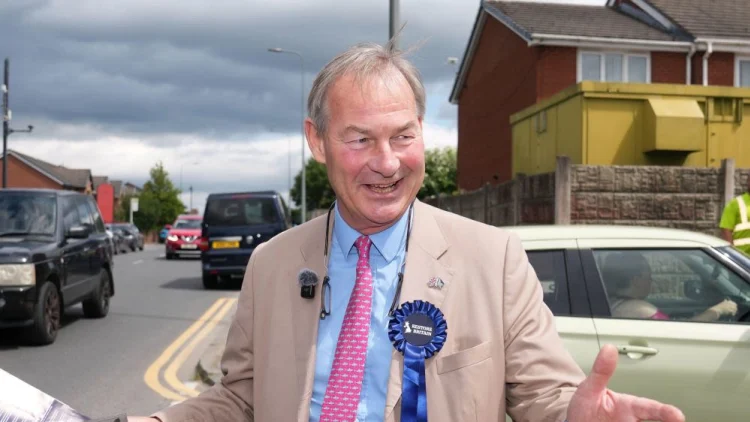
Politics Home | Rupert Lowe Criticised For Describing Dunblane School Massacre As “One Murder”

Published

on

Rupert Lowe Criticised For Describing Dunblane School Massacre As 'One Murder'


3 min read

Rupert Lowe has sparked anger after referring to the Dunblane school massacre as “one murder”.

Advertisement

The leader of Restore Britain made the remark during an appearance on the Joe Rogan Experience podcast.  

His comments have been described as “insulting” and “despicable” by local politicians.

In March 1996, 16 children, aged five and six, and their teacher Gwen Mayor were shot dead by Thomas Hamilton in the gym hall of Dunblane Primary School, in what is still the deadliest mass shooting ever in the UK. A further 15 children and three adults were wounded, and Hamilton turned the gun on himself.  

The MP for Great Yarmouth made the comment when speaking on legislation to ban handguns that was introduced following the massacre.

Advertisement

He said: “They don’t want the public to have guns, and they are doing their very best to damage the shooters who perfectly and legitimately like to go and shoot clay pigeons, who like to go and shoot game, who like to go and hunt.

“Effectively, they are trying to make that very difficult through the licensing laws for guns.

“As you probably know, they banned handguns in the late 90s because there was a murder up in Dunblane.”

Advertisement

Joe Rogan asked: “One murder?”

Lowe replied: “One murder.”

He added: “My father used to shoot pistols for Oxford University, he’s dead now, bless him, but he had all his pistols taken away, the pistols he used to shoot with at Oxford University. I mean, we now have a society that needs radical change.”

Conservative MSP Stephen Kerr has described Lowe’s comments as “genuinely shocking” and that “to reduce that atrocity to ‘one murder’ is deeply insulting”.

Advertisement

Posting on X, he said his children’s school, which was “about 15 minutes from Dunblane”, was locked down that day.  

“They’ll never forget being kept in the gym hall until everyone learned the gunman was dead. They’ll never forget the teachers trying to hold themselves together while reassuring frightened children,” he said.

Kerr added: “It wasn’t a single murder. It was a mass murder. In a primary school.  

“Almost as disturbing was the tone – one of disbelief, even mockery, that anyone could respond by tightening gun laws.  

Advertisement

“This wasn’t some obscure historical event. It happened in 1996, when Lowe was 38 years old. He should have known what happened on that terrifying day in Dunblane.  

“For anyone who remembers that day, hearing it dismissed so casually is genuinely shocking.”

The SNP depute leader and MSP for Dunblane, Keith Brown, described Lowe’s comments as “beyond despicable”.

He added: “Despite these hideous remarks from Rupert Lowe, the Snowdrop Campaign that followed that terrible day ensured a ban on the private ownership of most handguns – that is the proud legacy of the bereaved families and the local community.  

Advertisement

“Their courage and determination in the aftermath of the attack is something we should never betray and our community will never let the likes of Rupert Lowe do exactly that.”

The Snowdrop Petition calling for tighter gun laws that followed the massacre was signed more than 750,000 times, and along with the Cullen Inquiry, led to the ban on private ownership of higher-calibre handguns in 1997. The ban was then extended to .22 handguns later that year.


This article originally appeared on Holyrood

Advertisement

Source link

Advertisement
Continue Reading

Politics

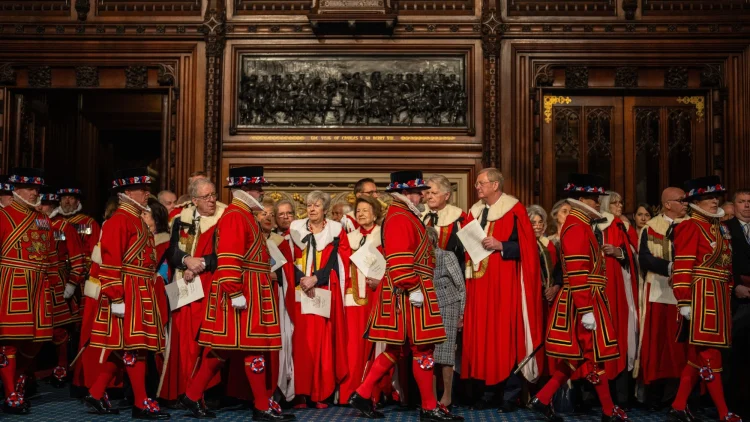
The House | Burnham’s on his way to No.10. Could I be on my way out of the House of Lords?

Published

on

Burnham’s on his way to No.10. Could I be on my way out of the House of Lords?


4 min read

“Scandalous”. This was the word used by Keir Starmer’s successor to describe the House of Lords just a few short weeks ago when referring to the fact that “half” of the UK’s legislature is unelected.’

Advertisement

I agree with him. It is scandalous, especially when the actual number is more than half. We have 650 Members of the House of Commons, chosen by voters, but at the time of writing, we have 791 Members of the House of Lords, many of whom reach the Lords through systems of patronage and personal networks. A world most people will never be privy to.

To be fair to the outgoing Prime Minister, he did at least attempt to reduce the number of hereditary peers – all male, all born with the opportunity to make laws that affect us all.

Eighty-Five lost their seats. Twenty-nine promptly regained them. A third returned. The system regenerates itself faster than anyone is willing to reform it.

It is no secret that I want to see the House of Lords abolished and replaced with a democratic second chamber. But it is also no secret how the incoming Prime Minister feels either.

Back in 2001, he said the case for Lords reform was “urgent”. If it was urgent twenty-five years ago, then surely it is overdue today. His recent comments on the Makerfield by-election campaign trail reinforced that urgency when he said that reform “cannot be delayed any longer” and that the Lords is the first place to look when “cutting the cost of politics”. He has long supported a Senate of the Nations and Regions, which is a model that would finally give Wales, Scotland, Northern Ireland and the English regions a meaningful voice.

Advertisement

As a woman representing Wales – one of very few Welsh voices in the Lords – this is music to my ears. How can a legislature dominated by a handful of London and South-East England postcodes genuinely represent communities hundreds of miles away, whose lives and experiences many peers have never known the likes of?

So, given that we seem to see eye to eye on this, I thought I would set out how I think he can best go about it.

In the 2024 manifesto, the Labour Party committed to consult on proposals to replace the House of Lords with an alternative second Chamber, seeking the input of the British public on how politics can best serve them. The argument I hear time and again is that such reform is impossible – too big of a beast, too complex, and too much resistance from within the Lords itself.

Advertisement

But that simply isn’t true.

The Salisbury Convention is a constitutional convention that means that the House of Lords should not block legislation that implements a clear manifesto commitment. While the convention is not legally binding, it has mostly been respected for over 80 years and provides a strong foundation for delivering what voters were promised.

And if the Lords did attempt to obstruct it, the Parliament Acts provide a statutory route to ensure the elected House prevails. A Bill passed by the Commons in two successive sessions – with at least a year between its first and final passage – can be sent for Royal Assent without the Lords’ consent. Reform may be a bit of a bumpy ride, but it is not impossible, and it certainly shouldn’t be a reason for us to shy away from transforming the institutions that underpin our very lives to better serve the people of these nations.

Given the current UK Government’s sluggish approach to their 2024 manifesto commitment, I recently introduced a Private Member’s Bill to establish a framework for consulting stakeholders on replacing the Lords with a democratic second chamber. This is exactly what the Labour Party promised in its manifesto, so I thought I would give them a helpful nudge.

Advertisement

Some may think – when people are struggling with the cost of living and public services in need of support – why would this be the next Prime Minister’s priority? But as the ‘King of the North’ said himself, the “constitutional stuff” and the wiring of the country is part of the problem. For that reason, I sincerely hope he may be bolder still. After all, nothing says ‘man of the people’ quite like dismantling an ancient institution that was designed by and for the elite.

I would be delighted to work with anyone who shares this vision. So, Andy, my door is open – as I hope yours will be too.

Source link

Continue Reading

Politics

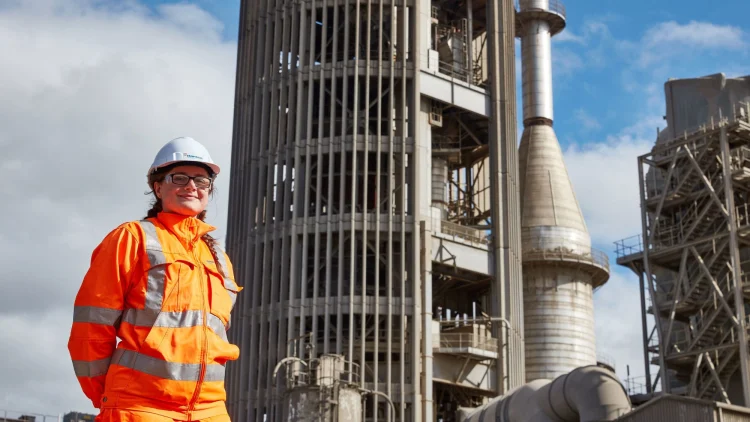
Politics Home Article | Manchesterism and industry: reversing deindustrialisation?

Published

on

Manchesterism and industry: reversing deindustrialisation?

Robert McIlveen, Senior Director, Communications and Public Affairs

As UK cement and concrete plants close and sales fall for a fourth consecutive year, Robert McIlveen, Senior Director, Communications and Public Affairs, Mineral Products Association, explores what Andy Burnham’s reindustrialisation drive must do to halt the decline of Britain’s foundational industries before it can build new ones

Advertisement
“…a concrete plan to reindustrialise the birthplace of the industrial revolution, bringing high-value employment to all parts of Greater Manchester.” – Andy Burnham launching his plan for Greater Manchester’s economy in January 2026

As the trade body for mineral products, we always welcome a concrete plan, cementing our place, in aggregate. There is always mortar do (say it out loud). But that’s usually where the political attention paid to the materials that build everything usually ends – a turn of phrase.

Andy Burnham’s emerging vision for Britain has included a very welcome focus on re-industrialisation.  A big part of that needs to be stopping the drift to deindustruialisation we are experiencing right now. UK industry has faced a tough few years and getting policy right in this area could save thousands of good jobs that exist now, as well as help grow those of the future.

New industrial strategy?

Burnham’s victory speech the morning after the Makerfield by-election referred to “a new drive of reindustrialisation across the North of England and indeed the rest of the country” before highlighting procurement as an area where Government can make a difference. 

Advertisement

This could be a welcome evolution from the existing Industrial Strategy, which paid scant attention to preventing the decline of existing industries on which that growth rests. In our sector, cement and concrete were ultimately included in the list of foundational materials, but are still facing serious threats to competitiveness that are not being tackled at the pace or with the seriousness they need. Other parts of the sector were ignored entirely – including the aggregates that go into asphalt for roads, ballast for rail and are combined with cement to make the concrete that forms the houses, workplaces and infrastructure we all need.

“For too long, UK public procurement policy has been based on chasing cut-price deals around the world, rather than helping our own British-based suppliers become more stable and competitive.” – Burnham’s speech on 29 June

The public sector represents about 40 per cent of the market for mineral products, so procurement is a powerful lever to pull. Making sure that local and national government are not undermining jobs in the UK to save fractions on cost is an obvious place to start, from an absurd recent story of a Scottish council buying Angolan granite after rejecting a quarry a few miles away, to tackling the uneven playing field on carbon costs that is driving a surge in cement imports.

A fresh start?

Advertisement

But before we get to long-term growth, we need short-term survival – the first rule of growth is not to shrink. Sales in our sector have fallen for four consecutive years, with no sign of improvement this year. This has a real impact on jobs, as plants are mothballed. Among MPA members we have seen closures of concrete batching plants – where cement and aggregates are mixed into the back of a concrete mixer truck before being delivered to local sites. These are down from nearly 900 pre-pandemic to just over 700 today.

To be clear, these are not old-fashioned jobs that we have evolved past as the economy becomes ever more high-tech. To build the gigafactories, data centres, and the infrastructure for defence, energy and water that we clearly need, we need secure, domestic, sovereign supply of essential materials.

There are things Burnham could announce that would help. An updated set of national guidelines for essential minerals – the last guidance for local authorities expired in 2020 – and requiring major projects to declare their material needs would help bolster confidence to invest. Making sure the new Carbon Border Adjustment Mechanism is watertight – and in particular, doesn’t offer plants that don’t declare their emissions a generously low default option – can help secure the UK’s cement capacity from fast-rising imports from countries with no carbon price and weak regulation. None of these would cost any money.

High value jobs

Advertisement

High-value jobs already in the economy are under threat from the UK’s lack of competitiveness. This is particularly acute in energy intensive industries such as cement and lime, where the UK’s much higher industrial energy costs are driving production to lower-cost competitors overseas. But it is also true throughout the sector, where investment drives jobs and confidence to invest is low.  

There are 89,000 jobs in our whole sector, largely concentrated outside the Southeast of England, ranging from quarry workers to concrete pre-casters and cement technicians to truck drivers delivering ready-mixed concrete, crushed rock, mortar or any number of products. The sector provides above-average wages and has productivity 35% above the national average, generating £75,000 per job. These are good jobs, providing essential materials for the whole economy; they should be supported through tough times.

Talk of reindustrialisation needs to not just be starry-eyed about growth in new sectors. The first rule should be to halt deindustrialisation in key sectors that everything else relies on, securing jobs and the UK’s sovereign capacity in essential materials. A real success for Manchesterism would see new industries springing up all over the country, on the literal foundations of our existing essential industries.

Source link

Continue Reading

Politics

Sadik Al-Hassan MP: ‘Why the upcoming Health Bill must close the regulatory gap’

Published

on

MDU logo

A decade after the Brexit vote, new arrangements for the regulation of medical devices are finally taking shape. Medical devices, including diagnostic and digital health technologies, are essential to the delivery of modern healthcare, and are relied upon by millions of people across the UK every day.

Products are, necessarily, highly regulated and undergo close scrutiny once in use. The future regime will offer a blended approach, maintaining CE recognition alongside the consideration of approvals from other, trusted jurisdictions such as the US, Canada, and Australia.

A key component will also be a bespoke route to the UK market, and one which could help make our country an attractive destination for innovative technologies, such as those currently being considered by the National Commission into the regulation of AI in healthcare. Yet, for any of these pathways to function effectively, we must address the fundamental legal omission at the heart of our domestic regulator.

To make this new era successful, protect the supply of life-saving and life-enhancing technologies to NHS patients, and offer global manufacturers long-term confidence in the UK, it is important that the MHRA now has the necessary powers to approve products in its own name. We cannot rely on a patchwork of international workarounds without giving our sovereign regulator the baseline legal authority to make independent product determinations.

Advertisement

The upcoming Health Bill, announced in the king’s speech, provides the perfect legislative vehicle to fix this problem. The bill will be slim, and the government will be anxious that it passes quickly, such that the abolition of NHS England can be completed by next April. However, the government has not steered away from addressing tricky issues in this legislation, such as those around data sharing to create a unified single patient record.

Whilst those data-sharing clauses may prove contentious during parliamentary scrutiny, using the legislation to give our regulator the powers most people believe it already has, would not. The bill presents an immediate opportunity to secure supply continuity, elevate patient safety, and restore global industry confidence in the UK.

This vital correction could be achieved smoothly through a short, completely uncontroversial amendment. We must seize this moment to build a resilient, modern regulatory framework that protects British patients and accelerates NHS innovation.

Advertisement

Source link

Continue Reading

Politics

Politics Home Article | A more active nation is within reach if we focus where it matters most

Published

on

A more active nation is within reach if we focus where it matters most

Simon Hayes, CEO

Britain cannot afford the cost of inactivity. Every day we delay helping the least active people to move more, we pay for it through rising NHS demand, lower productivity and widening inequality

Advertisement

A more active nation is not just healthier; it is more productive, resilient, happier and wealthier. In a period of constrained public finances, physical activity is not a luxury – but a strategic necessity. Every £1 invested in community sport and physical activity generates more than £4 in social value through improved health, wellbeing, productivity and stronger communities.

It sounds simple enough: just get inactive people moving and unlock incredible social and economic benefits.

But an inactive adult or child is usually the result of a range of complex, interconnected factors such as income, location, ability and access. As a result, simple, ‘one size fits all’ approached will not work.

If you live in a lower-income area with high social need, the places and spaces that many wealthier communities enjoy – large parks, safe walking or cycling routes, local leisure facilities and a range of community sports clubs – are much less likely to be available to you.

Advertisement

This is why, since 2020, Sport England has pioneered the development of Place-based partnerships all over the country. We have established over 90 of these in the most deprived communities, where people are the least active. Alongside our partners in each place and supported by critical funding from the National Lottery we have delivered bespoke solutions to tackling inactivity with outstanding results.

A great example is in Penzance and St Austell in Cornwall, where local residents and community organisations identified active play as a way to help more people move and connect with one another. Together they developed the Beat the Street programme, transforming everyday walking and cycling into a community-wide game rather than a formal intervention. In under a month, more than 3,200 adults took part, 40 per cent of whom had previously been inactive. That’s 1,280 people becoming more active, helping to prevent illness, improve mental wellbeing and strengthen connections across the community.

We have seen similar success through more traditional sports-based approaches. In Birmingham, community partners have worked with local clubs and organisations to create more inclusive opportunities for people to take part in activities such as football, cricket and netball, helping residents who previously faced barriers to participation to become active and stay active. Together, initiatives like these contribute to the £123 billion of social value generated by physical activity each year.

Advertisement

We are proud of what we have achieved in recent times, but since 2020, the context in which we operate has shifted profoundly. The pandemic exposed the underlying inequalities in who gets to be active; the changing cost of living entrenched them. Global instability has driven multiple economic shockwaves, which means some people have less money to spend on sport and activity than ever.

Sport England is working on the next phase of our long-term strategy in response to this: a plan to accelerate impact by laser-focusing our efforts where they can make the greatest difference.

We will focus on the people and places where inactivity is highest and where the benefits of being active are most transformational. We’ll prioritise children from low-income families who are missing out on the joy of sport and the chance to building lifelong healthy habits. We’ll focus on supporting older adults, particularly those with long-term health conditions, to stay active. And we will continue to invest in the places facing the greatest social and economic challenges.

At the same time, we will strengthen the foundations of the community sport sector itself. Across the country, the organisations, volunteers and facilities that enable community sport are under growing pressure. Volunteer numbers are declining, infrastructure is ageing and many facilities no longer meet the needs of modern communities. If we want to expand participation, we must first ensure the system supporting it – from modern, accessible facilities, to seamless digital services that help people find, join and stay involved in sport – is fit for the future.

Advertisement

None of this can be achieved by Sport England, or by the sporting sector alone. Lasting change depends on building connections: between the government, local authorities, health services, schools, community organisations and the private sector We will continue to develop the partnerships and create the conditions for that to happen, at every level: local, regional, and national.

The consequences of inactivity are visible everywhere: in our NHS, in our communities and in the unequal life chances of too many people. But the opportunity is everywhere too.

Sport and physical activity are amongst the most powerful, underused forces we have to improve our nation’s health, wealth and happiness. We know what works. We know where the need is greatest. The question now isn’t whether we can build a more active nation.  It’s whether we have the determination to do so.

Source link

Continue Reading

Politics

The insanity of Britain’s air-con ban

Published

on

The insanity of Britain’s air-con ban

The post The insanity of Britain’s air-con ban appeared first on spiked.

Source link

Continue Reading

Politics

Cry Jude for England, Harry and St George!

Published

on

Cry Jude for England, Harry and St George!

I was standing (alright, swaying) in the garden of my local pub after 4am on Monday, as the first light of day appeared in north-east London and the final whistle finally blew in Mexico City. Bliss it was in that dawn to be awake, as Wordsworth would surely have said.

Not for the first time, England’s 3-2 victory over Mexico did feel like a new football dawn. Even if that dawn turns out to be yet another false one, at least we have already enjoyed more light in this World Cup than during the dark ages under Gareth Southgate.

Two years ago, when the European Championships coincided with the UK General Election, I wrote an article on spiked entitled ‘Gareth Southgate is the Keir Starmer of football’. Like the Labour leader in the election campaign, I suggested, the England coach approached the Euros as ‘a risk-averse, safety-first bore, obsessed with not losing at all costs, who believes being daring is too dangerous and probably equates “flair” with a distress signal’.

Advertisement

The difference was, I pointed out, that Southgate’s England would have to face tougher opponents than the pathetic Tory Party. So ‘whatever his obvious shortcomings’, cautious Starmer would end the election in Downing Street. By contrast, cautious Southgate looked like ‘ending the Euros with nothing – except that this darling of the establishment will probably still get a knighthood’. And lo, it came to pass as Mystic Mick foretold…

Thankfully, Thomas Tuchel, the German who replaced ‘Keir’ Southgate as England boss, is not the Andy Burnham of football. If he were, his team would likely be the same but even worse than his predecessor’s.

Advertisement

Enjoying spiked?

Why not make an instant, one-off donation?

We are funded by you. Thank you!

Advertisement


Please wait…

Advertisement
Advertisement

True, there were still traces of unimaginative English football in the games against Ghana and Panama. But in the last-16 match against Mexico, we watched an England team we have waited years to see playing away in a major tournament. A team that was defending for their lives yet also going for the kill, with a manager who was not praying for a penalty shoot-out.

The result was a triumph against the odds – over the altitude, the crowd, the VAR-imposed red card and penalty, and England’s own self-destruct gene. Where Southgate’s England turned into a damp squib in successive tournaments, most infamously versus Italy at Wembley in Euro 2020, this England came through a footballing ordeal of fire in Mexico’s Azteca cauldron. And they won it with 10 men.

Advertisement

On Monday morning, that did feel like a new dawn for those of us old enough to remember a long line of over-hyped England teams failing at the first serious hurdle on foreign soil: versus Argentina in 1986 and 1998, Brazil in 2002, Portugal in 2006 and France in 2022. The England fans over there have, for some reason, adopted Oasis’s ‘Wonderwall’ as an anthem this time around, which at least makes a change from repeatedly having to look back in anger.

Although Tuchel does seem to have picked up the English habit of getting his excuses in early, such as blaming the Mexican weather before kick-off, our adopted ‘Tommy Tucker’ is already easily the humiliated Germany’s most significant contribution to this World Cup. (What the Germans call Schadenfreude – taking pleasure in the misfortune of others – is a proper football tradition, whatever the Nu Socca nerds might claim.)

Tuchel got considerable stick when he admitted he had not necessarily picked the best players for his squad, but rather those that would fit his team plan. He shares that utilitarian attitude with the legendary England manager Sir Alf Ramsey. Ramsey of course silenced his critics by winning the World Cup for the first and only time in our history in 1966. We hard-bitten football cynics still seriously doubt whether Tuchel will do the same, but…

Advertisement

So, how far can England go now? We have two genuinely world-class players. Captain Harry Kane seems a better goal-scorer than ever; Jude Bellingham is an unstoppable monster when he feels in the mood. Between them, they have scored 10 of England’s 11 goals in the tournament to date.

At the other end, England’s problems in defence have been much-discussed. It is not just the lack of right-backs in the squad, but of leaders. Jordan Pickford in goal did rise to the crosses and the occasion versus Mexico – let’s hope he continues to command.

I backed England to win in Mexico, and I do think we should beat Norway, if only our Premier League defenders can hobble the super-monstrous Erling Haaland of Manchester City, a striker for the ages who has scored 62 goals in 54 games for Norway. Then it could well be a semi-final showdown with Lionel Messi’s Argentina, the stuff that football dreams and nightmares are made of, with the flashy favourites France waiting in the final.

Advertisement

We live in faint hope, knowing full well that it’s the hope that kills you. But anyway, whatever happens between now and a week on Sunday, we have already had a joyous World Cup.

Not because it has had those who know nothing about football screeching in the pubs, nor because, as those snobbish media pundits claim, it has briefly united our diverse communities divided by politics, blah blah. But because it has given us football fans some old-fashioned, one-eyed patriotic pride.

England will never be loved like the ‘cuddly’ Tartan Army or the rowing Vikings of Norway. Our players will never be crowned as international treasures like Messi, who the FIFA suits seem determined to see lift the World Cup in his last tournament. (Let’s hope we can reduce him to Ronaldo-style retirement tears next week.) But if nobody likes us, we genuinely don’t care.

Advertisement

Saturday night, 10pm. To update Shakespeare’s Henry V: Once more unto the breach, dear friends, once more. Cry Jude for England, Harry, and St George!

Mick Hume is a spiked columnist.

Advertisement

Source link

Continue Reading

Trending

Copyright © 2025