Politics
Cow’s Milk And Low Iron In Toddlers: What Doctors Want You To Know

This week you might have seen a heartbreaking story being shared, in which a leading medical expert warned that three toddler deaths in the past two years in Australia had been linked to excessive cow’s milk consumption.
The young children had developed infections, but also had extreme iron deficiency anaemia, where a lack of iron in the body leads to a reduced number of red blood cells – the condition had been linked to them drinking too much cow’s milk.
Dr Sally Campbell, a haematologist at Queensland Children’s Hospital (QCH) told ABC: “They were drinking more than one litre of cow’s milk per day. This resulted in them developing extreme iron deficiency anaemia and, sadly, dying.
“They had a virus or something else that tipped them over the edge, but the cause of their severe iron deficiency anaemia was from excess cow’s milk.”
She added that a virus can be “life-threatening when you’ve got a chronic anaemic state” as “the ability of your body to cope, when you have a quarter of the amount of red blood cells that you should have, deteriorates”.
Similar cases have occurred in the UK, too. Reports suggest Anaya Khaanan, who was almost two, died after developing severe anaemia caused by a predominantly milk-based diet.
It’s certainly an issue doctors are seeing – albeit a rare one.
Dr Arindam Das, a paediatrician verified on the healthcare review platform Doctify, told HuffPost UK he recently helped a toddler with a significant nutritional complication associated with excessive milk consumption.
The child experienced swelling, rather than the more typical symptoms like tiredness or pallor that are usually associated with anaemia. Dr Das said they had “severe iron deficiency anaemia together with a low blood albumin level in the context of excessive milk consumption”.
“This is a recognised but relatively unusual complication,” he added.
What parents need to know
It’s understandable that you might have been left worried about how much milk your child is consuming, and whether they’re getting the right nutrients more broadly, but Dr Asiya Maula, private GP at The Health Suite, said “parents should not conclude that cow’s milk itself is dangerous”.
The issue is when cow’s milk is drunk in excess, replacing meals and crucial nutrients.
“From the age of one, it is a valuable source of protein, calcium and vitamin A,” Dr Maula told HuffPost UK. “The concern is when a toddler drinks so much that it repeatedly replaces meals and iron-rich foods.
“Cow’s milk contains very little iron and is extremely filling. A child who fills up on milk may have little appetite left for foods such as meat, fish, eggs, beans, lentils, green vegetables and fortified cereals.
“Over time, that can leave them short of the iron needed to produce healthy red blood cells.”
A Perth-based study of 10,000 women and their babies found that, by age three, more than 56% of children had low iron, with almost 20% having very low iron and 2.6% suffering with severe iron deficiency anaemia.
In the UK, severe cases are uncommon, Dr Das said, but they can be “significant”.
How much cow’s milk should babies and toddlers drink?
Babies under 12 months should not have cow’s milk as their main drink, said Dr Maula.
“Breast milk or suitable infant formula should remain their main milk source, although cow’s milk can be used in cooking from around six months,” she explained.
“From the age of one, NHS advice is to offer around 350ml of milk a day, or roughly two portions of dairy foods such as yoghurt and cheese.
“If a toddler is routinely drinking well over 500ml of cow’s milk a day, particularly instead of meals, it is worth discussing this with a health visitor, GP or dietitian,” added the GP.

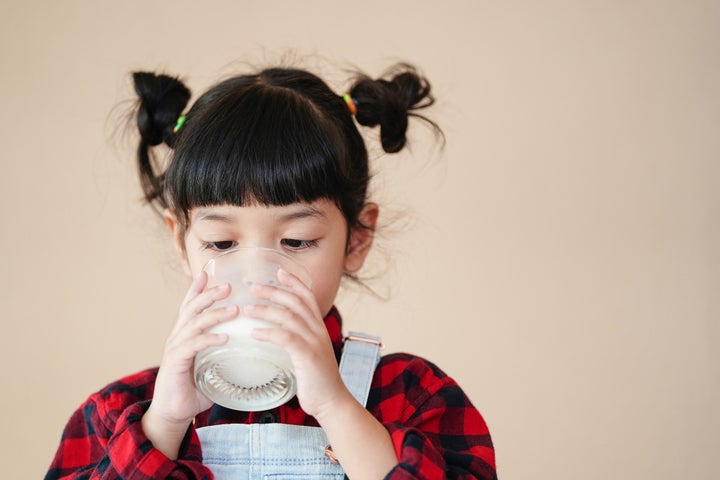
Narisara Nami via Getty Images
What are the signs of iron deficiency in young children?
Iron deficiency can, initially, be quite subtle. “Parents might notice their child becoming unusually pale, tired, irritable or lacking in energy,” said Dr Das.
“They may have a poorer appetite or be less interested in their usual activities.”
When anaemia becomes more significant, it can start to cause breathlessness, a fast heartbeat, difficulties with concentrating, poor growth or unusual cravings for non-food substances, he added.
And, in the case of the toddler he recently treated, “although it is much less common, new unexplained swelling around the eyes, feet or abdomen should always prompt medical assessment, rather than simply being assumed to be dietary”.
As iron supports normal immune function, severe iron deficiency anaemia can leave a child less resilient when illness strikes. Dr Maula notes recurrent infections have many possible causes and do not automatically mean iron deficiency – but it’s certainly worth getting checked out.
My child drinks a lot of milk. What should I do?
First of all, don’t panic – and there’s no need to suddenly eliminate cow’s milk either, the doctors stressed.
“For most children over one, milk is a healthy and useful part of their diet,” said Dr Das. “If a toddler is drinking excessive amounts, I would gradually reduce this and offer milk at defined times, such as with meals, rather than allowing them to continually fill up on it.”
If your child is thirsty between meals, water is the best drink to offer them. Dr Maula also advised moving away from using baby bottles, where age-appropriate.
Offer plenty of iron-rich foods throughout the week. The NHS lists red meat, beans (ie. chickpeas and kidney beans), nuts, dried fruit, fortified cereals and soy bean flour as being good sources of iron.
Dr Maula recommended combining plant-based sources such as beans, lentils or fortified cereals with vitamin C-rich foods, which help the body absorb iron.
She warned against offering iron supplements without medical advice, as too much can be harmful, and added: “If there are symptoms, feeding concerns or a very restricted diet, speak to a GP, who can arrange a blood test if appropriate.”
Urgent help should be sought if a child is unusually drowsy, very breathless, collapses, has blue or grey lips or appears acutely unwell.
Dr Das concluded: “The message I would give parents is: milk is good, but more milk is not necessarily better. It should complement a varied diet, not replace it.”
You must be logged in to post a comment Login