
Politics
Critics Mock Trump’s Super-Triggered Meltdown Over Bad Bunny

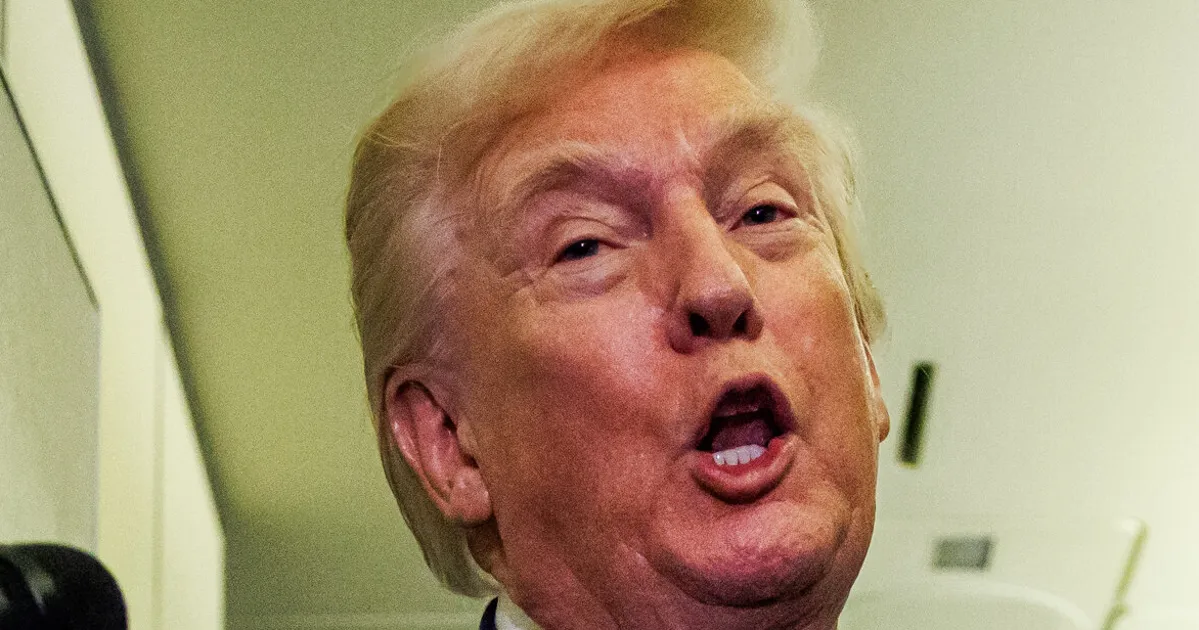
“Nobody understands a word this guy is saying,” Trump griped on his Truth Social website about Bad Bunny’s performance, which ― like his award-winning music ― was almost entirely in Spanish. Trump also complained that the performance was “an affront to the Greatness of America” and “a ‘slap in the face’ to our Country.”
Bad Bunny’s performance wasn’t overtly political. Other than one sequence of dancing and singing atop mock electrical poles – which many took to be a reference to Puerto Rico still battling power outages nearly a decade after Hurricane Maria – the closest the show came to politics was a message on the video screen at Levi’s Stadium that said: “The only thing more powerful than hate is love.”
It was a callback to his speech at the Grammy Awards in which Bad Bunny said “ICE out” as he slammed Trump’s immigration crackdown while appealing for unity and love. However, he also shouted “God bless America” and extended that sentiment to all the nations of the hemisphere as he name-checked each one.
“There is nothing inspirational about this mess of a Halftime Show and watch, it will get great reviews from the Fake News Media, because they haven’t got a clue of what is going on in the REAL WORLD,” he wrote.

Politics
What does the UN Declaration on the slave trade mean for Western legitimacy and the Global South?
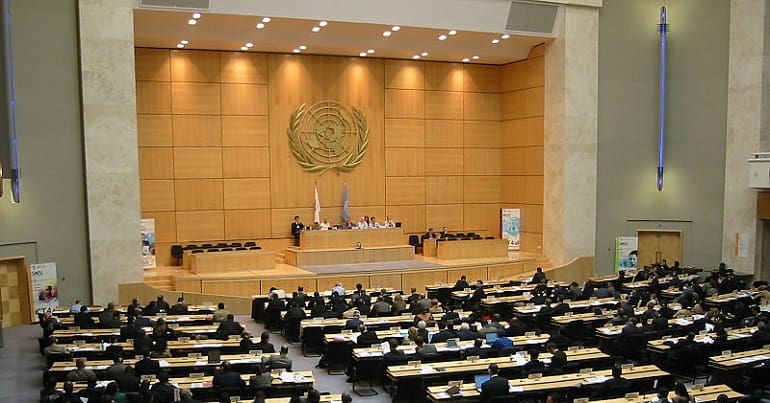
On 25 March 2026, the United Nations (UN) General Assembly voted to recognise the Transatlantic Slave Trade as the ‘gravest crime against humanity’. It was a move that many hoped would increase legitimacy for reparations and justice for the descendants and the countries affected by the trafficking of 12 to 17 million African people to the Americas between 1502 and 1888.
The resolution follows over three years of campaigning – particularly by Ghana, which brought the resolution forward – and has been supported by 123 countries. It calls for discussions around reparations, compensation and systemic reforms.
UN secretary general António Guterres said:
The Transatlantic Slave Trade was a crime against humanity that struck at the core of personhood, broke up families and devastated communities… I welcome the steps countries are taking to apologise for their role in the evil of slavery and to join an honest dialogue about its lasting consequences…
Controversy
The UN declaration has unsurprisingly sparked opposition around the world, particularly from former colonial powers in Western Europe and the United States, which took part in and benefitted from the Transatlantic Slave Trade.
Only three countries – the United States, Israel and Argentina – voted against the declaration. 52 other countries, most of them from the EU and Britain, abstained from the vote.
The U.S. Ambassador to the UN Economic and Social Council Dan Negrea argued:
The United States strongly objects to this cynical usage of historical wrongs as a leverage point in an attempt to reallocate modern resources to people and nations who are distantly related to the historical victims.
Negrea’s position deliberately ignores and downplays the longstanding impact that the slave trade has had on international relations, as well as the impoverishment, economic and political inequality that plagues many Black communities today.
Others argued that if reparations are being demanded of Western nations, then the same should be demanded of African states and societies that partook in selling Africans to Europeans:
Britain should not pay reparations.
We abstained from voting against paying reparations for the transatlantic slave trade in yet another egregious example of this Labour Government’s desperate attempt to curry favour.
The transatlantic slave trade was a deplorable and horrific… pic.twitter.com/yYCYunWzOM
— Ben Obese-Jecty MP (@BenObeseJecty) March 26, 2026
Within a class context, there is an argument for this. But such arguments are often made in order to deflect from Western/European accountability.
There are families across West Africa that profited from the slave trade, who probably should face their own accountability. But this will likely come after the process of decolonisation in these African societies is fully complete and the power of slave-trading families’ descendants and Western-backed puppet leaders is broken.
This would require Africa to be fully liberated from the Western sphere, which is economically and politically against the interests of the West.
The reality of British slavery
In the UK, the leader of the Conservative Party, Kemi Badenoch, argued that the UK should have voted against the resolution and described the UK position as an act of ‘cowardice’.
Russia, China and Iran vote with others to demand trillions in reparations from UK taxpayers…and the Labour government abstain!
Britain led the fight to end slavery.
Why didn’t Starmer’s representative vote against this? Ignorance…or cowardice?
We shouldn’t be paying for a… https://t.co/nWlzBxhb5w
— Kemi Badenoch (@KemiBadenoch) March 26, 2026
Her position reflects UK’s mainstream position on slavery, which overemphasises the country’s role in ending the slave trade rather than its role in perpetuating and expanding it.
This obscures the horrific reality of the UK’s role in the Transatlantic Slave Trade and its historical and economic impact, which continues to affect former British colonies today, particularly in the Caribbean.
In the 18th century, Britain was shipping more Africans than any other Western power. Plantations in the British Caribbean had become the most heavily enslaved societies on Earth at the time, resulting in the demographic transformation of huge portions of the Caribbean. To put this into perspective, between 1640 and 1807, Britain trafficked 3.4 million Africans across the Atlantic Ocean, representing the second-highest amount, just behind Portugal/Brazil.
Slavery was an important part of the British economy. Profits from plantations boosted capital accumulation, which helped to expand industrial production and accelerate the Industrial Revolution. Wealth generated from the slave trade was invested in businesses, banks, ports, institutions and entire communities. It was transformative on a scale very few understand.
The significance of the UN resolution
Many people believe that the UN resolution is part of a growing political trend that is calling for reparations and justice for countries and communities affected by the slave trade.
A few years ago, the Netherlands apologised for its role in slavery, which I reported on as part of a wider trend among European states to reposition their relations with formally colonised countries. As power slowly shifts to the Global South, the pressure and incentives to name and label slavery as a crime against humanity will grow.
Cynically, an argument could be made that the UN resolution is more about preserving the declining influence and legitimacy of the liberal world order. Countries that are products of the slave trade (particularly those in South America, the Caribbean and West Africa) increasingly choose to build deeper relations with China, India and Russia – powerful countries without the historical baggage and legacy of Western European barbarism and exploitation.
But Western countries still want to control the narrative around accountability. Ultimately, they also want to control the terms of any reparations, because they know that acknowledgment could easily spiral into calls to seize the very economic foundations that their modern economies have been built on.
Can the UN make any meaningful difference?
The question I have is whether this declaration will make any long-term meaningful difference that is tangible to African diaspora communities.
I am not alone in this. Professor Kehinde Andrews, a long-time opponent and critic of the UN, views the resolution as a distraction. He has reiterated his position that Western liberal institutions, like the UN, remain arms of imperialism that act in a more covert and ‘friendly’ way:
‘You left your mind in Africa if you think the UN is recognising slavery as a “crime against humanity’ in 2026′. New @makeitplainorg pod where I warn about the dangers of reparations when it comes from CARICOM, ADOS and big companies. Watch https://t.co/i9Y9W4qO5m pic.twitter.com/cWyelke4Eb
— Kehinde Andrews (@kehinde_andrews) March 28, 2026
Another issue is the fact that the UN does not have any power to enforce reparations or reparatory justice. The fact is that many former slave-trading nations – such as the US, France and the UK – sit on the security council of the UN and wield substantial influence over it. This includes veto powers that will always limit the extent to which the UN could act on issues like this.
However, supporters of the resolution argue that the UN still matters. The fact that the resolution has 123 countries supporting it, representing the majority of the world, serves as a compass for the direction the world is going in, particularly in terms of the the Global South’s relationship to the West.
This relationship is likely to become more tense with time. Countries have indicated their desire to correct historical crimes upon which Western countries have built themselves on. It is possible that this won’t end with the Transatlantic Slave Trade. Western crimes of colonialism and genocide could eventually follow.
Legitimacy in crisis
For Western countries, legitimacy is key to not being left behind. But an inability to face accountability and transform their relationship with the Global South could eventually put liberal institutions like the UN in crisis, if Global South countries start building their own international institutions.
From the West’s support of Israel’s genocide in Gaza to its inability to condemn US imperialism against Venezuela, Cuba and Iran, Western legitimacy is already in crisis. Combined with the inability of Western countries to accept the UN declaration of the Transatlantic Slave Trade as the gravest crime against humanity, this sends a message that, from 1502 to 2026, the West is still the same and unwilling to change and evolve.
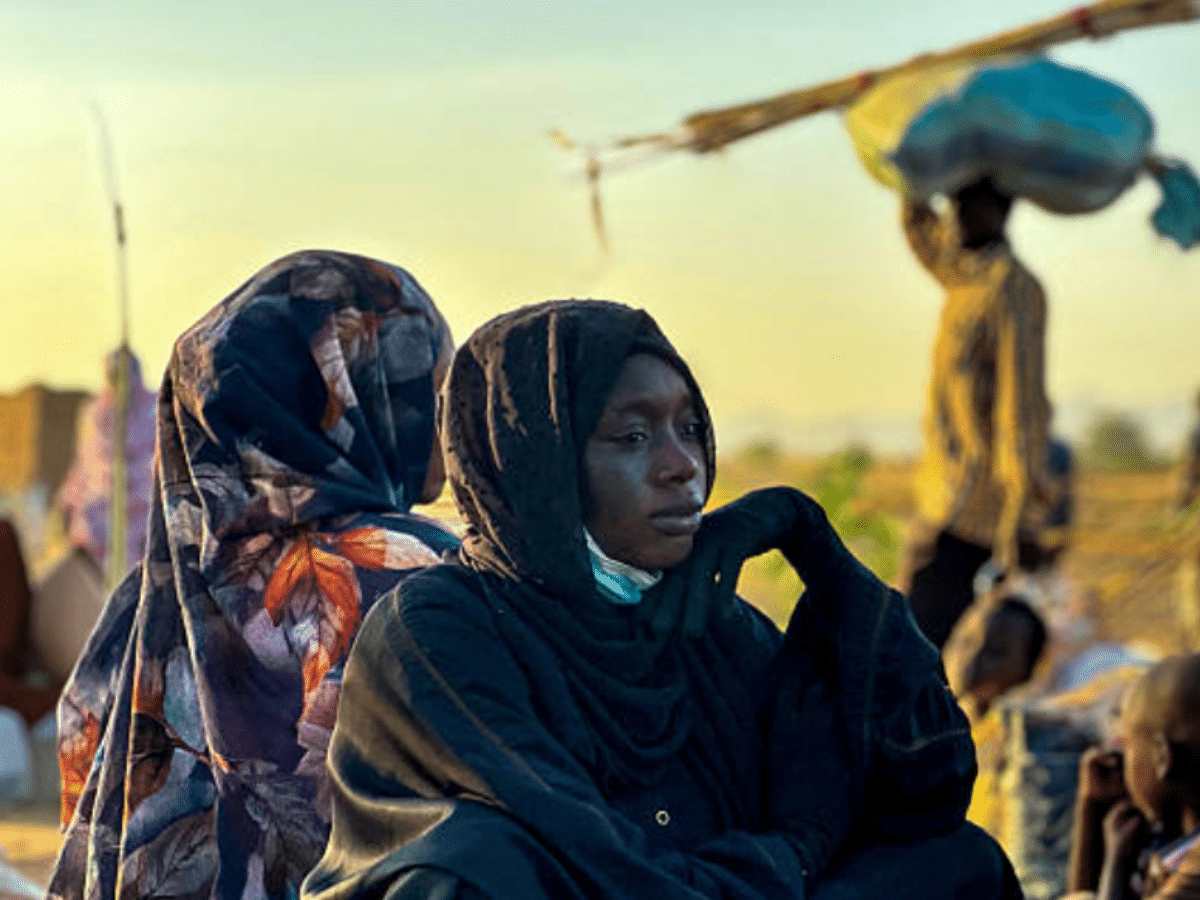
The UK downgraded and sidelined its own atrocity monitoring protocols with regard to Sudan. This helped compound what is now clearly an active genocide. That genocide is largely being carried out by a militia backed the UK’s Gulf ally and arms trade customer UAE.
The damning assessment comes from a 25 March Guardian investigation. Journalists documented the fall of the southern city of El Fasher to the UAE-backed Rapid Support Forces (RSF). The story explains in shocking detail the heroism and horror of 27 October.
Local defence forces and military members struggled in vain to hold off RSF and help civilians escape. The death toll of the city’s fall may be as high as 70,000.
The war between Sudanese government forces and RSF has been raging since 2023. So far millions have been displaced and up to 150,000 killed. Several Gulf states, Egypt, Israel, UK, US and many other local and global powers are pursuing their own colonial interests in Sudan.
UK abandoned Sudan
The report found:
The UK seemingly abandoned El Fasher: reports predicting genocide apparently discarded; intelligence apparatus that should have prompted intervention were not updated throughout the 561-day siege.
As fighting had intensified, the UK removed Darfur’s original genocide – when 300,000 were slaughtered by the RSF’s Arab predecessors – from its list of recognised mass atrocities.
The authors warned this wasn’t just a matter of generalised humanitarian failure. The UK – and US – were key players in the eventual massacre:
To frame El Fasher within the timeworn narrative of collective international failure avoids the darker truth.
Decisions were taken that ensured help never came. Both the US and UK suppressed or sidelined warnings that would have helped avoid the slaughter.
And they said that when it comes to it, the British government will have few excuses:
Central to the UK’s approach was the Joint Analysis of Conflict and Stability (Jacs), conceived to assess whether genocide was likely and, if so, intervene suitably.
The UK’s own intelligence, sources confirm, said the RSF wanted to “eliminate” the city’s non-Arab population.
However:
…no attempt was made to update Jacs throughout the 18-month siege. The most recent Jacs assessment for Sudan is dated 2019: four years before the current war began.
Cold indifference?
The UK even approached a group of US-based experts whose innovative use of satellite and open source intelligence has revealed a range of atrocities.
The Guardian report states:
The UK mission to the UN security council asked Nathaniel Raymond, executive director of the Yale Humanitarian Research Lab, what could be done.
Raymond advocated urgently deploying a UN monitoring force around El Fasher. “If we don’t, these people will die. I begged them.”
Despite this advice, “nothing happened”.
The US proved just as unwilling to help:
The US similarly seemed in no rush to help. Requests for “kinetic intervention” to protect El Fasher were rejected.
The US state department blocked intelligence assessments relating to El Fasher that would have triggered an intervention to prevent genocide.
Exactly why is unclear, but UK MPs were briefed as early as 2023. And a secret Cabinet Office briefing was even held to discuss the matter. At one point the UK even removed Darfur – an affected region of Sudan – from a watchlist:
…when the Islamic State’s targeting of Iraq’s Yazidi minority was added to the UK’s official list in August 2023, Darfur was removed.
“It silently – inexplicably – removed the Darfur genocide,” stated the briefing.
The Guardian explained:
It wasn’t the first sign Darfur had been deprioritised. As fighting spread across the region in 2023, a parliamentary report warned of genocide. Submitted to Downing Street it received no formal response. “We were indignant, outraged,” said one of the authors.
This is despite the UK effectively being in charge of Sudan issues and civilian protection at the UN’s highest body:
Yet the UK was El Fasher’s great hope. Not only Sudan’s penholder at the UN security council, it had international responsibility for civilian protection.
UK-UAE relations
The UAE is a major customer for UK arms. British military gear has been seen in the hands of RSF. UK relations with UAE seem to have shaped the British response to the Sudan Genocide.
The Guardian reported:
Weeks before the siege began, the UK’s then Africa minister, Andrew Mitchell, met the president of Chad and discreetly urged him to stop the UAE smuggling weapons into neighbouring Darfur.
Mitchell confirmed that even then – March 2024 – he possessed “incontrovertible proof” that the Emiratis were arming the RSF.
Adding:
Yet his government, likewise the current, seemingly chose not to act. “It was quickly clear the Starmer government did not want to piss off the Emiratis,” said a US source.
The UK is culpable for the genocide in Sudan, every bit as much as it is for the one in Gaza. This is true now, but also historically. The British ruled Sudan by force until independence in 1956. A young Winston Churchill even bragged (at book length) about fighting there in the 1890s. The people of Sudan, whose heroic agency is so apparent in the Guardian report, remain trapped at the point where global and local powers fight like vultures over land and resources which do not belong to them.
Featured image via the Canary
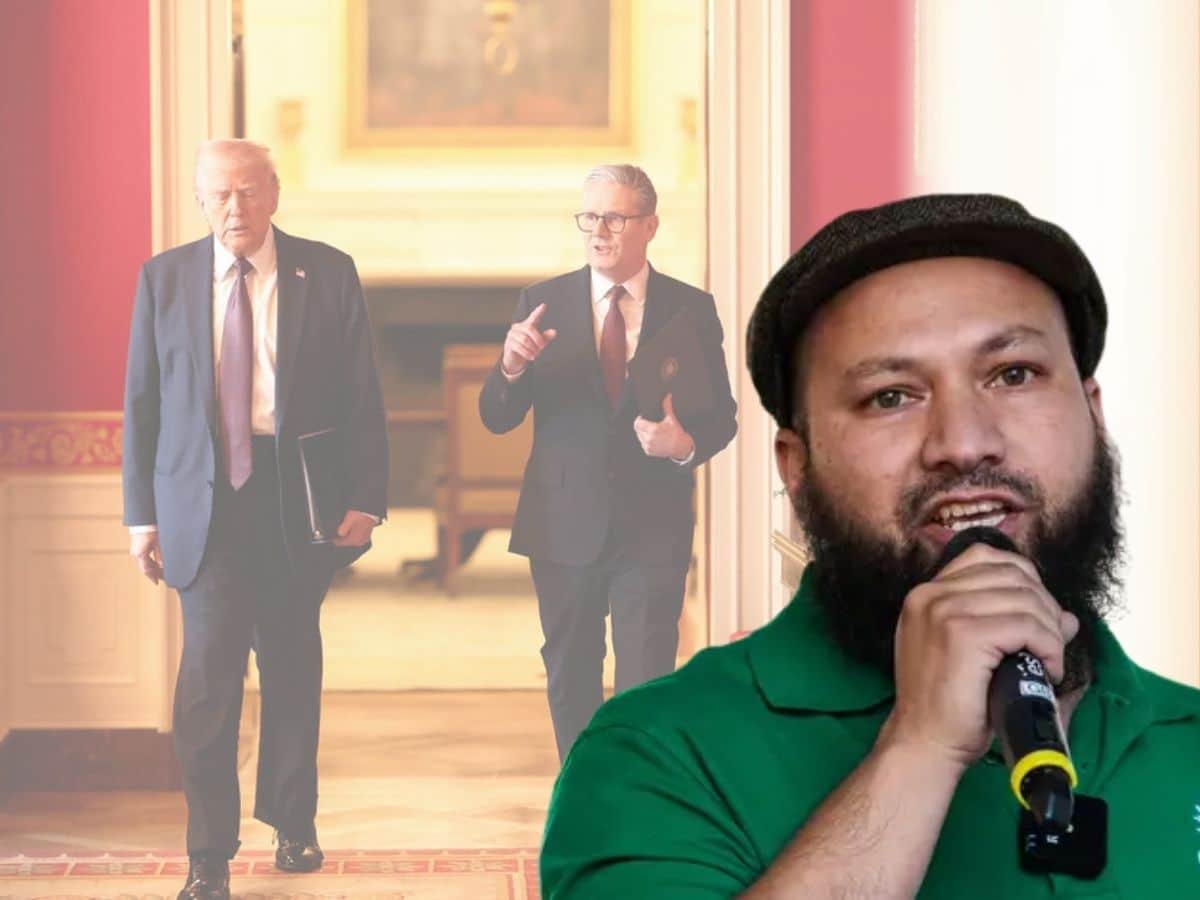
Green Party deputy leader Mothin Ali has responded to an attack from Keir Starmer:
NEW: Green deputy leader @MothinAli responds to @Keir_Starmer‘s claim the Greens would leave UK “weak & exposed” bc of @ZackPolanski‘s anti-Nato stance.
Ali says UK’s “long-term interests lie in reducing dependence on Trump’s US” but Starmer is “too weak to stand up to Trump”. pic.twitter.com/0W5lYeOYrg
— Rivkah Brown (@rivkahbrown) March 30, 2026
It comes as president Donald Trump suggested that NATO is dead.
Mothin Ali calls out Starmer
Ali was responding to the following from Starmer:
Then you’ve got Polanski
He thinks that with a war on two fronts, now is the time to give up our NATO membership.
“A war on two fronts”, Starmer says.
Would you believe Starmer also bragged about not dragging us into the US and Israel’s war on Iran?
UK PM Keir Starmer responds to Trump’s attacks:
“A lot of what he says is designed to pressure me to change my mind and get dragged into this war but I’m not going to do so. I’m the British Prime Minster, and I act in the British national security interest” pic.twitter.com/0G4PzUwESN
— Republicans against Trump (@RpsAgainstTrump) March 28, 2026
So which is it: are we at war or not?
Spoiler alert, we’re absolutely involved in the war:
Keir Starmer is taking Britain into an illegal war AGAINST the wishes of the majority of British people
And putting us in danger
Starmer is a disgrace https://t.co/MxBEGqhoqr
— Stop The Bollocks with Mirabel (@MirabelTweets1) March 20, 2026
Mothin Ali also called this out:
Spineless Starmer is back!
A little pressure and a bit of name calling from Trump and he backs down, taking us into another illegal war the public clearly don’t support!
Starmer needs to resign now before he ruins this country any further! https://t.co/9FrDYzCTmI— Mothin Ali (@MothinAli) March 21, 2026
As we reported on 28 March, NATO is a US protection racket. This is a problem, because Donald Trump is saying things like this:
But I think a tremendous mistake was when NATO just wasn’t there. They just weren’t there.
It’s going to make a lot of money for the United States, because we spend hundreds of billions of dollars a year on NATO – hundreds protecting them. And we would have always been there for them. But now, based on their actions, I guess we don’t have to be, do we?
And let’s not forget that Trump was also talking about invading NATO member Greenland.
Starmer can bang on about NATO protecting us as much as he likes, but the reality is that the US is a menace, and sucking up to them no longer works.
Talk
Back to Starmer’s speech, he continued:
Now is the time to start negotiating with Putin over our nuclear deterrent
Is Starmer suggesting that negotiating with other world leaders is bad?
As opposed to what – just blowing up negotiators, as the US and Israel are prone to do?
Absolute bombshell. Press Secretary Karoline Leavitt casually confesses on live TV that the Trump administration assassinated previous Iranian leaders just because they strung the US along in negotiations. Washington is openly operating like a global mafia cartel. pic.twitter.com/leCEsRkli7
— Furkan Gözükara (@FurkanGozukara) March 30, 2026
BREAKING: 🇮🇱 🇶🇦
Israel bombed the Palestinian group negotiating headquarters in Doha, Qatar
Multiple explosions were reported, some say as many as 10 bombs were used pic.twitter.com/euBo05pfCO
— ADAM (@AdameMedia) September 9, 2025
Is this the mythical ‘sensible’ politics we’ve heard so much about?
Starmer’s speech finished as follows:
We’d be left so weak and so exposed if any of those individuals were in government.
It’s really important that we stick to our principles – stick to our value – and show the leadership that’s needed in a time like this.
Which values are we sticking to: the values of fighting two wars at once, or the values of not being dragged into any wars at all?
Values
‘Values’ and ‘principles’ are a good way of understanding why Starmer hates the Green Party. Specifically, his issue is that they actually seem to have values and principles (although they do need to sort out their stance on Zionism).
This is quite unlike Starmer himself, who has never announced a policy he hasn’t u-turned on.
Featured image via Downing Street (Flickr)
Speaking at a panel event hosted by the Demos think-tank, Liberal Democrat MP Max Wilkinson said that “social media…is making sure that you can have your voice heard in a really easy way that you couldn’t in the past”.
He went on to argue that this is a “massive problem”, because it allows members of the public to highlight problems with mass migration. For Wilkinson, the issue isn’t the impact that mass migration is having on our public finances, or the healthcare system, or our communities. It’s that people can now freely express and debate their concerns.
This approach is frighteningly common in our politics. Far too often, politicians have tried to make difficult problems go away by encouraging people not to talk about them. In some quarters, there seems to be a genuine belief that real-world problems are conjured into being when people talk about them, and that problems can be made to disappear if only people would just keep their concerns to themselves.
But that isn’t how the truth works. If something is true, then it remains true regardless of whether people are able to acknowledge it or not. In fact, failure to acknowledge the truth almost always makes problems worse.
That’s exactly what happened with the rape and grooming gangs, which operated with impunity across dozens of towns and cities for decades. Institutions like the police, local councils, and care homes refused to properly acknowledge or investigate the horrific abuse perpetrated by these gangs. In many cases, this is because they were unwilling to face difficult truths about the role that ethnicity, religion, and culture played in motivating these crimes.
The result is that thousands of children across the country were abused, trafficked, and raped. Failure to acknowledge the truth, and a desire to prevent other people from doing so, allowed people to get away with the some of the very worst crimes committed in this country in living memory.
And I fear that it’s exactly what’s happening with the Government’s approach to the twin threats of Islamist extremism and separatism. Last month, the Home Office published its so-called ‘social cohesion white paper’, which promised to address concerns about migration, culture, and extremism.
The report acknowledged that “for many living in the UK, the changes brought about by…migration have been too much, too quickly, and have put huge pressure on services and housing”. It also acknowledged the existence of “communities in the UK living segregated or parallel lives”.
Clearly, this is all true. As Kemi said last month in her speech on British integration, “for too long, Britain has been complacent about our culture and too tolerant of those weaponising identity politics for their own gain”.
Yet instead of confronting difficult realities about culture and religion, the report instead blamed the internet, and underplayed the role of Islamist extremism in particular, despite the fact that it represents by far the most serious extremist threat to our country.
The paper could have recommended a lower overall level of immigration, and a more selective migration system. It could have recommended curbing the pernicious family visa system, which so often results in chain migration from cultures with very different norms to our own. It could have recommended enforcing our country’s norms, or reforming our approach to Islamist terror networks.
Instead, the paper’s headline recommendation was the adoption of a “non-statutory definition of anti-Muslim hostility”, a rebranding of the Government’s plans for an Islamophobia definition.
As Nick Timothy and Claire Coutinho highlighted in their campaign against the definition, this guidance will make it harder for institutions like the civil service to have frank conversations about subjects like extremism, female genital mutilation, and the grooming gangs. If public officials fear being perceived as ‘anti-Muslim’, how can they be expected to carry out their jobs without fear or favour, and to acknowledge difficult truths?
And worse, the Government now plans to appoint a “Special Representative on anti-Muslim hostility’, meaning that they will employ a paid-up advocate for their new definition. It will be their job to spend all day, every day, condemning people, policies, or views that they consider to be ‘anti-Muslim’.
Under those conditions, how can we possibly have open, public conversations about the real threat posed by Islamist extremism, or separatism amongst certain groups? Once again, when confronted with difficult truths, this Government’s approach is to prevent people from acknowledging those truths, in the vain hope that suppressing discussion will alter reality.
Trying to solve a problem by encouraging people not to talk about it has never worked, and it never will. This cowardly approach must not form the basis for our approach to Islamist separatism and extremism. The stakes are far too high; we must not let the Government bury their heads in the sand, or force other people to do so.

Flames flickering against a backdrop of stained-glass windows. Ash and devastation afterwards. I make a point of avoiding comparisons with 1930s Germany, as they are frequently overused and often unfounded, but it’s impossible to ignore the echoes here. Four burned-out ambulances – with miraculously no human injuries – is no Kristallnacht. But where do we think the suspects got their inspiration?
The optics of last week’s attack in Golders Green were well thought out. It was supposed to chill the blood of British Jews – and it has. But so should the entire nation be on edge, unsettled by this violent, physical show of hate.
Hatzola is a volunteer-led ambulance service, a Jewish charity that works alongside the NHS and other emergency services, helping anyone in need in their local areas. Its very purpose is the preservation of life. What kind of person can find any kind of justification for torching vehicles that can save lives? An anti-Semite, that’s who. The ugliness of Jew hatred knows no bounds. This disease is now endemic in the UK.
It has been just six months since the murderous Heaton Park synagogue attack in Manchester. So this is life now for the Jewish community of Britain: violence and destruction at regular intervals, increasingly heightened security around Jewish buildings and areas, and a constant feeling of unease.
Can we all agree this is madness? How can it be that, as a child here, it almost never crossed my mind not to be openly and fearlessly Jewish, and yet I now wait in trepidation for the day one of my young children returns home from school or an outing, asking me to explain Jew hatred?
In just the past few weeks, a branch of Gail’s bakery in Archway was vandalised because it was founded by an Israeli Jew (who is no longer involved in the business), and then the incident was belittled in the Guardian. A report into campus anti-Semitism revealed that one in five students would refuse to live with a Jewish peer. An inquiry had to be launched into anti-Semitism in schools. Meanwhile, down in Margate, an art exhibition titled ‘Drawings Against Genocide’ depicts Israelis and Israel Defence Forces soldiers as demons, murderers and baby-eaters. Artist Matthew Collings claims the work is not anti-Semitic, merely ‘anti-Zionist’. Thank goodness he cleared that up!
This is what we’re up against. Anti-Semitism has had a rebrand and, honestly, activists have done a fantastic PR job. Say whatever you like about the Jews and carry out as many petty acts of anti-Semitism as you please – as long as you take care to use today’s euphemisms of ‘anti-Zionism’ or ‘Israel criticism’, you’ll get away with it.
Despite all of this, I still believe that the vast majority of Britons are not anti-Semites, and that growing numbers are sickened by what they see. Unfortunately, too many of our non-Jewish neighbours are looking away when they should be staring into the flames, as we are forced to do.
The Jewish community does not have the privilege of looking away. While I can shield myself from terrifying video footage of anti-Semitic murder and destruction, I cannot avoid reckoning with the daily reality of life for Jews in Britain today.
This week, Jews celebrate the festival of Passover, when we recall how Moses led us to freedom from slavery in Egypt. It is one of our most important festivals. It celebrates the privilege of not just freedom itself, but also the ability to live freely as Jews. It is a message that has always resonated strongly with me. But this year I find myself asking: when does living with unease become living in fear? In the past, I always believed myself to be truly free, as a person, as a Jew. Today, I’m not so sure.
Defense Secretary Pete Hegseth did not dismiss the possibility of deploying ground troops in Iran when questioned about the joint military operation between the US and Israel there.
Speaking at a Tuesday press briefing, Hegseth appeared guarded on whether President Donald Trump may order “boots on the ground” in Iran, but stressed that “the upcoming days will be decisive” as far as the conflict is concerned.
“We’re not going to foreclose any option,” he said. “You can’t fight and win a war if you tell your adversary what you are willing to do or what you are not willing to do, to include boots on the ground. Our adversary right now thinks there are 15 different ways we could come at them with boots on the ground. And guess what? There are.”
He added, “So if we needed to, we could execute those options on behalf of the president of the United States and this department. Or maybe we don’t have to use them at all. Maybe negotiations work, or maybe there’s a different approach.”
Hegseth’s comments came in response to a question from the Daily Wire’s White House correspondent Mary Margaret Olohan, who asked about President Donald Trump’s messaging on the war to Americans who “love” and “strongly believe in him,” but have reservations about the prospect of U.S. ground troops in Iran.
The defense secretary also said he doesn’t understand why Trump’s MAGA base “wouldn’t have faith in his ability to execute on this,” adding: “Look at his track record of pursuing peace through strength, America First outcomes.”
Recent polls have shown that the majority of Americans disapprove of the U.S. military operation in Iran ― dubbed Operation Epic Fury ― with their opinions divided starkly along party lines. A survey published last week by The Associated Press and the NORC Center for Public Affairs Research found just 12% of respondents strongly or somewhat favored deploying U.S. troops on the ground to fight Iran.
To date, at least 13 US service members have been killed in Iran’s counterattacks.
Fox News host Johnny “Joey” Jones, who is Hegseth’s former colleague, urged both Trump and Hegseth to “get the hell out of” Iran as quickly as possible, while pointing to the limited “tolerance” most Americans have for foreign conflicts.
“If you send our men and women into that country to kill our bad guys, to spill their blood because they deserve it, I don’t have to agree with you on it,” he said on Fox’s “Big Weekend Show” Sunday. “Just please do this: Don’t nation-build. Don’t win hearts and minds. Don’t spread democracy. Spill the blood of the evil that deserve to die without our hands tied and without a PR campaign and get the hell out of there. That’s all we have tolerance for.”
Subscribe to the Commons People podcast
The HuffPost UK politics team take a look at the week in Westminster and the repercussions of the motions and personality clashes. Listen on Apple Podcasts, Spotify, Audioboom, Google Podcasts, Deezer and more.
Earlier this week in a virtual meeting of the G7, Chancellor Rachel Reeves and Energy Secretary Ed Miliband used it as a moment to encourage allies to follow in the UK’s footsteps and focus on decarbonising energy supplies. This is while our allies have been pushing for the release of more strategic oil reserves.
It is a bold pitch given that Britain’s energy strategy has been slammed by both the Organisation for Economic Cooperation and Development (OECD) and International Monetary Fund (IMF), warning that the UK is especially exposed to higher oil and gas prices and most at risk in the G7 of an energy shock. Why they would take lessons from that is anyone’s question.
Quite different noises are coming out of this government to others, with Sir Keir Starmer urging the public at the start of this week to “act as normal” as he insisted fuel supplies were secure. Meanwhile the European Commission is urging EU capitals to encourage measures to curb oil and gas demand, including pushing people to work from home, drive and fly less.
Despite the evidence in front of them, drilling and new licences in the North Sea remain off the table for Labour.
Plans to use resources at Jackdaw gasfield off Aberdeen – which could be supplying gas for a million homes as early as October and will produce emissions eight times lower than liquefied natural gas (LNG) imports that are only set to rise – and Rosebank – the UK’s biggest undeveloped oil and gasfield off Shetland which is believed to contain up to 300 million barrels of oil – that were previously approved are still awaiting final decision, without the green light.
As we continue to import natural gas from Norway, who themselves are making new discoveries, we choose to ignore our own resources in the same basin and even impose a moratorium on further exploration and exploitation – meaning higher costs, with a loss to British jobs and missed tax revenue, ignoring the value of physical security of supply.
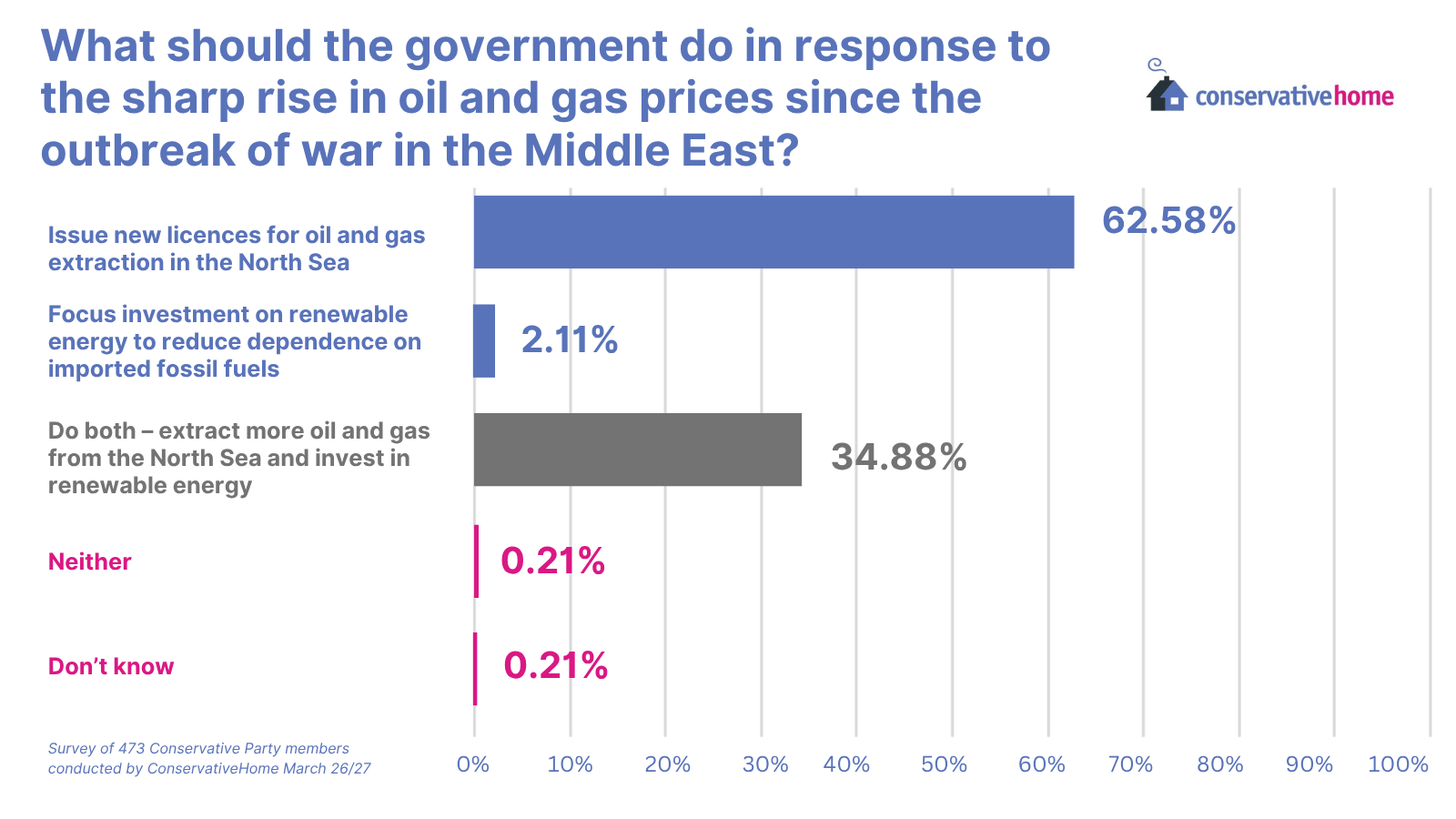
Perhaps unsurprisingly, according to our latest ConHome members survey, most people support issuing new licenses for oil and gas extraction in the North Sea at 62.58 per cent. Just 2.11 per cent thought to only focus investment on renewable energy to reduce fossil fuel dependency, with the second most popular choice being to pair the two – investment in renewables and North Sea exploration – coming in at 34.88 per cent.
These Tory members are not alone. Recent polling shows even amongst Green voters, more support drilling in the North Sea (38 per cent) than opposite it (33 per cent). When it comes to Labour too, the majority of their voters back drilling in the North Sea by more than two to one.
Overall when it comes to drilling for oil in the North Sea, Britons are supportive by 57 per cent to 15 per cent against, so Tory members in our survey are slightly above the average in this case. But it should be obvious to the government, as it is to the general public, that the North Sea still has resources to exploit that could help to strengthen Britain’s energy security. The thing is that Miliband, and hence Labour’s, net-zero ideology gets in the way.
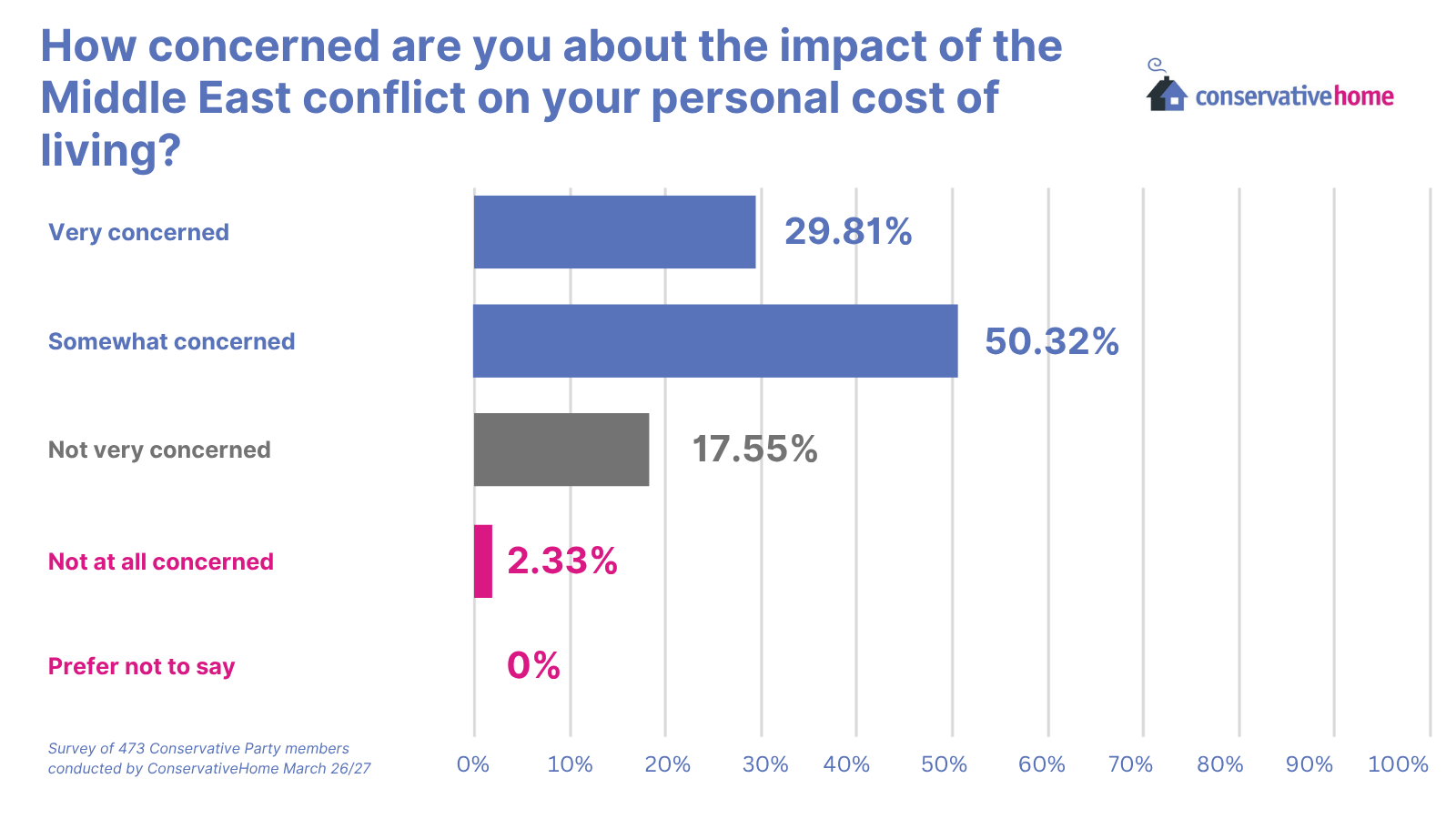
All of this has a real world effect. Half of our survey respondents said they are somewhat concerned about the impact of war in the Middle East on their personal cost of living, with almost 30 per cent saying they are very concerned.
The cost of living is a central issue for voters. If anyone wants to stands a shot at forming a future government then an actual plan will be needed to deal with it, and looking at energy costs will be key.
The post Our Survey: Majority support North Sea oil and gas exploration amid war in Middle East appeared first on Conservative Home.
We hope you love the products we recommend! All of them were independently selected by our editors. Just so you know, HuffPost UK may collect a share of sales or other compensation from the links on this page if you decide to shop from them. Oh, and FYI — prices are accurate and items in stock as of time of publication.
Forget everything you think you know about chocolate. We’re not mad at it as it is, but Lovehoney has a new release that proves we should all be expecting a lot more from our choccy treats.
While the most pleasure you’ve got from a chocolate egg thus far might have been giving in to that moreish flavour, this Easter Lovehoney has a new love egg out, and it’s not (exactly) what you think.

Not just a delicious treat to snack on (in fact, Lovehoney advises only eating half per day), this egg is packed with the natural aphrodisiac Liboost to please your downstairs, too.
Made from Damiana extract, Liboost supposedly improves blood flow to your pleasure spots, whose effects you’ll be grateful for by the time you get to the ‘surprise’ portion.
Spoiler alert: it’s a bullet vibrator, loaded with three vibration speeds and seven patterns. Thanks to its hard plastic exterior, the tiny toy packs quite a punch and is the exact size you’d want from a toy to slip between you and a partner during sex. (Warning: you’ll need to remember to buy a AAA battery as it’s not included, boo.)
Considering the weather is not yet aware of the fact it’s spring (rude), we expect you’ll be spending more time than expected indoors over the next few weeks. But if the weather isn’t heating up outside, at least you can generate some in bed because, let us tell you: the combination of the chocolate and vibrator is spicy AF.
So much so that one reviewer said this “is most definitely THE egg to buy this Easter”.
But, if there’s one thing we’ve learned from the cinema we’ve seen lately (Wuthering Heights and Pillion, looking at you), it’s that things can always get spicier.
So of course, Lovehoney has also created an Easter sex toy collection, too. Packed inside an egg-shaped container, this includes a rabbit (for obvious reasons), penis stroker, vibrating cock ring, fluffy butt plug, and tickler.
Finally, a way to celebrate Easter if you’re not into chocolate!

All we’ll say is: this is the sign you’ve been looking for to plan a date night for the long weekend – get cracking.
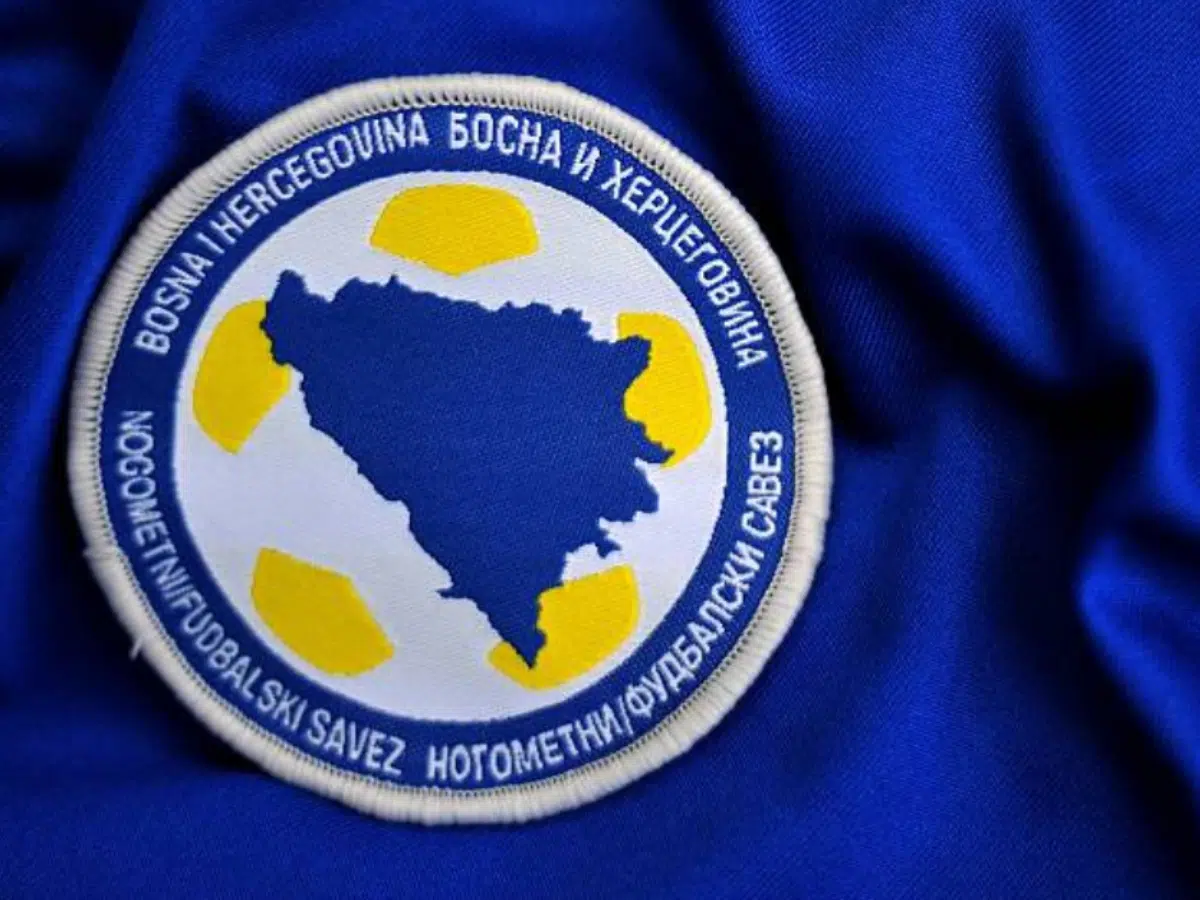
In an incident that has sparked considerable controversy before one of the most sensitive World Cup playoff matches, the Bosnia and Herzegovina national team found itself at the center of a “spying suspicion” after a mysterious individual was spotted filming their training session from a restricted area. This prompted the coaching staff to intervene immediately and raise questions about the motives behind the incident.
These developments come just before their highly anticipated match against Italy in the European playoff for the 2026 World Cup. The match is pivotal for both teams in the race to secure a place in the tournament, especially for Italy, who are striving to avoid missing the World Cup for the third consecutive time. This adds a competitive dimension and extra pressure to the encounter, both on and off the pitch.
Bosnia and Herzegovina spying scandal
Bosnian security detaining an Italian soldier for filming Edin Dzeko and his team-mates during a closed session, according to SportSports.ba.
The man stayed beyond the 15 minutes open to media, then was caught recording on his phone after the gates were shut. He is an Italian Eufor soldier based at Butmir, next to the national team’s training centre.
The source added that the coaching staff acted swiftly upon discovering the incident, removing the individual from the training area amidst heightened security within the camp.
The matter didn’t remain local, quickly reaching European media. Cadena SER radio confirmed that the Bosnian Football Federation had filed an official complaint with the EUFOR mission, a move reflecting the seriousness with which the incident was being treated.
Meanwhile, Goal.com, citing defense sources, reported that the individual in question is an Italian soldier serving with EUFOR deployed in the country, while also confirming that there is no evidence of his involvement in any organized espionage activity.
AS newspaper indicated that the filming continued for several minutes before being discovered, which increased suspicions within the Bosnian camp, especially with the upcoming match.
Featured image via the Canary
Trump’s illegal war against Iran is gripping Asia. Major disruptions to oil and gas and the resulting fuel shortages are acutely felt by India’s economy. This is especially true in terms of energy security and supply.
Asia feels the sting
The impact of what is unambiguously regarded as a ‘war of choice’ has reverberated beyond the Middle East. Since initial strikes on Iran were launched in late February, vessels have not been able to pass freely through the Strait of Hormuz. This crucial waterway has global significance for Asia, serving as the gateway for 20% of global Liquified Natural Gas (LNG) and 25% of seaborne oil.
India, Pakistan and Bangladesh have invoked emergency measures and sought alternative suppliers. Meanwhile, China has secured its energy needs by stockpiling reserves. It has also maintained access to Iranian and Russian oil despite US sanctions. Some of these, get this, have been paused to relieve the global energy market.
Evan Feigenbaum, vice president for studies at the Carnegie Endowment for International Peace, said in an interview that while China is unhappy about the situation in the Middle East, given its interest in regional stability, China was not unique in having these concerns. Moreover, the evolving situation is of deep importance for Asia.
He added that other Asian countries, like Japan, Taiwan, South Korea, Vietnam, Thailand, Pakistan, and Bangladesh, are even more vulnerable to energy market, supply chain disruptions. The US has also complicated energy security for countries like India through tariffs and sanctions, he said.
Feigenbaum said:
If you look at China’s neighbors, for example, Japan is even more dependent than China is on Middle East oil and gas. Taiwan is quite dependent, but without Japan’s level of reserves. Korea’s been playing around with price caps, and has less than two weeks of reserve. Vietnam is rationing jet fuel. They’re talking about work from home. Thailand has petrol controls. Pakistan and Bangladesh are closing schools
West is complacent so far
Eric Nutall told Bloomberg that we are facing the worst energy crisis of our lifetime. He forecasts that the oil disruption from war with Iran is projected to be worse than during the COVID pandemic, as the Strait of Hormuz remains closed, affecting the continent of Asia’s energy strategies significantly.
West has really yet to feel the true impact. When you read stories about product hoarding, you read about operators of gas stations being shot dead because they ran out of product in India and was unable to fill up cars. You hear about fishing boats in the East not being able to fill up because the economics of going out and fishing just don’t make any sense. We see the world through a western lens and yet this is a global crisis.
Coal to the rescue
Since no coal goes through the Strait of Hormuz, Asian countries, as reported by Financial Times are:
opening the tap on coal generation to help offset rising gas prices and supply risk.
Reports suggest that Japan will allow more coal-fired plants in capacity auctions. Meanwhile, South Korea is considering moving away from coal power, a move which could reshape energy usage patterns in Asia altogether.
India’s prime minister Modi said that adequate coal stocks were available amid rising summer demand in Parliament last week.
He added that:
Another major challenge of the war is that the summer season is beginning in India. In the coming days, with rising temperatures, the demand for electricity will increase. Currently, adequate coal stocks are available at all power plants across the country.
Modi is far from an innocent bystander. He is a member of the US-Israel alliance. Despite his proximity to Netanyahu, India has remained a ‘fence sitter.’ Furthermore, Modi refrains from openly condemning either side.
Still, the imperial boomerang unleashed by Trump’s latest war is felt beyond the Middle East, reaching even the world’s fastest-growing major economy—India—and emerging markets in Southeast Asia. It’s a scorched-earth policy by alternative means.
Featured image via the Canary

What does the UN Declaration on the slave trade mean for Western legitimacy and the Global South?
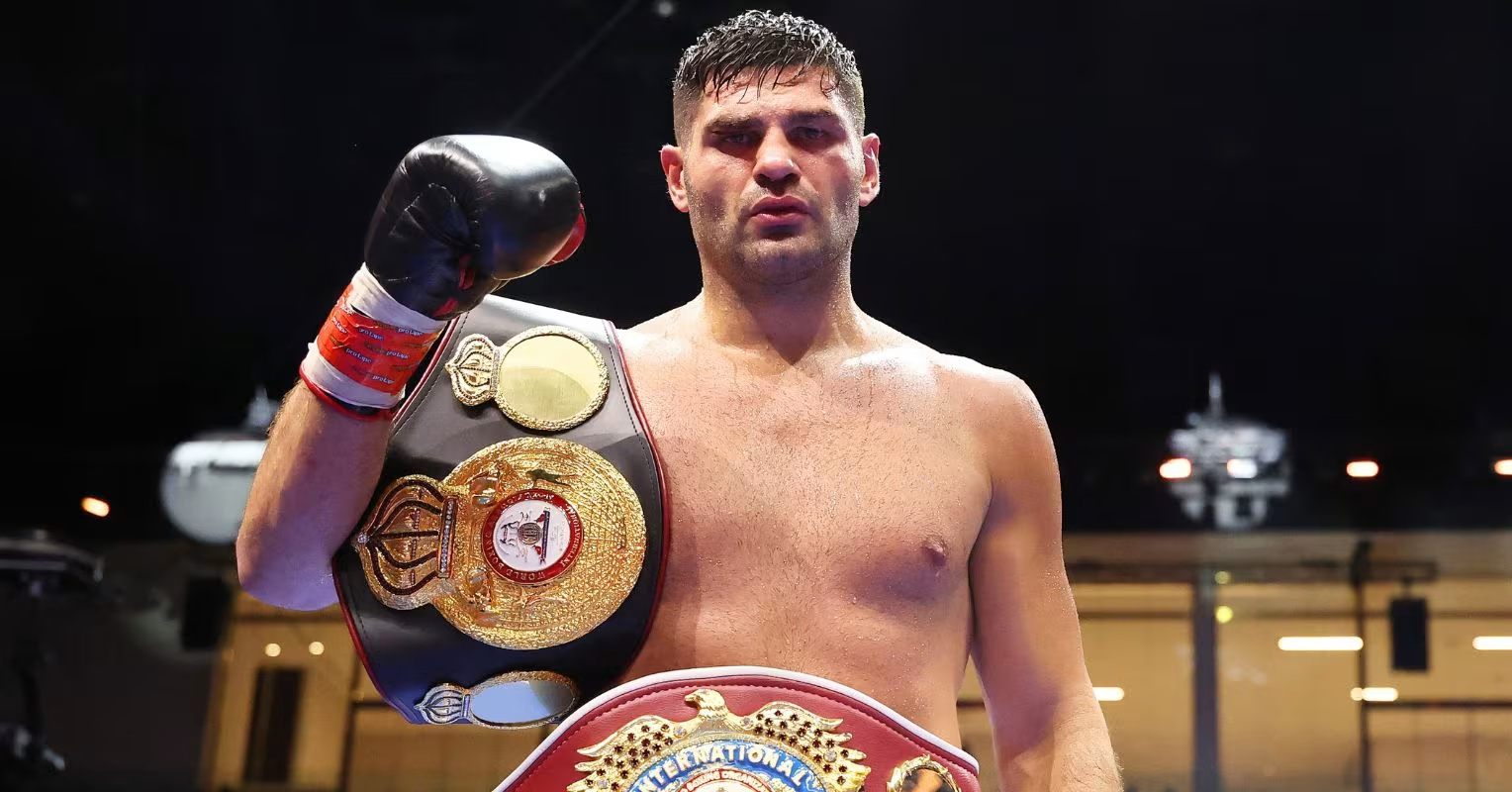
Filip Hrgovic ‘guaranteed’ fight with top heavyweight if he beats Dave Allen: “We have a contract”

How to Integrate AI APIs Into Existing Software Applications: A Developer’s Guide


-

 News Videos6 days ago
Parliament publishes latest register of MPs’ financial interests
-
 Tech6 days ago
Intercom’s new post-trained Fin Apex 1.0 beats GPT-5.4 and Claude Sonnet 4.6 at customer service resolutions
-

 NewsBeat4 days ago
The Story hosts event on Durham’s historic registers
-

 Business6 days ago
Instagram, YouTube Found Responsible for Teen’s Mental Health Struggle in Historic Ruling
-

 Sports4 days ago
Sweet Sixteen Game Thread: Tide vs Michigan
-
 NewsBeat7 days ago
Tesco is selling new Cadbury Dairy Milk bar and people can’t wait to try it
-
 Entertainment3 days ago
Lana Del Rey Celebrates Her Husband’s 51st Birthday In New Post
-
Entertainment2 days ago
Fans slam 'heartbreaking' Barbie Dream Fest convention debacle with 'cardboard cutout' experience
-
Crypto World21 hours ago
Dems press CFTC, ethics board on prediction-market insider trades
-

 Sports16 hours ago
Tallest college basketball player ever, standing at 7-foot-9, entering transfer portal
-
 Fashion7 days ago
How to Style Spring Like WeWoreWhat: Easy Outfit Ideas for 2026
-

 Entertainment6 days ago
HBO’s Harry Potter Series Will Definitely Fail For One Big Reason, And It’s Not J.K. Rowling Or Snape
-

 Tech2 days ago
The Pixel 10a doesn’t have a camera bump, and it’s great
-

 Fashion6 days ago
En Vogue in Brown Leather and Tailored Neutrals by Atelier Savoir, Styled by J Bolin
-

 Crypto World1 day ago
U.S. rule change may open trillions in 401(k) funds to crypto
-

 Fashion6 days ago
What Are Your Favorite T-Shirts for the Weekend?
-

 Fashion5 days ago
Weekly News Update, 3.27.26 – Corporette.com
-

 Sports1 day ago
Women’s hockey camp eyes fitness boost, tactics ahead of WC 2026 campaign | Other Sports News
-
 Sports6 days ago
Lewis Hall hopes to miss another summer of village cricket due to World Cup call
-

 Tech3 days ago
Elon Musk’s last co-founder reportedly leaves xAI
You must be logged in to post a comment Login