Connect with us
DAPA Banner

Politics

David Rose: Are those working on an Islamophobia definition too close to the subject?

Published

on

David Rose: Are those working on an Islamophobia definition too close to the subject?

David Rose is Policy and Research Director of the Free Speech Union.

 The Free Speech Union has long been concerned that the Government’s plan to issue an official definition of Islamophobia – or ‘anti-Muslim hostility’, as leaks suggest it has been re-named – will, if adopted, gravely threaten freedom of expression.

Announcing her appointment of a five person “Working Group” tasked to produce it in February last year, the then-Communities Secretary Angela Rayner insisted it would be non-statutory, and hence “compatible” with free speech rights. Our Director, Lord Young, disagreed, arguing it would lead to self-censorship and the restriction of lawful discourse by both private and public bodies. He also pointed out that discrimination and hate crimes against Muslims are already sanctioned by the civil and criminal law. Any definition would thus either be pointless, or it would threaten freedom of speech.

Such a definition is a longstanding demand made by Islamist organisations with which successive UK governments have had a policy of non-engagement, such as the Muslim Council of Britain (MCB) and Muslim Engagement and Development (MEND), thanks to the extremist views expressed by some of their leaders, such as support for Hamas and other militant groups.

Advertisement

However, as I point out in Anti-Free Speech Hostility: The Islamist Links of the Government’s Working Group on Islamophobia, an investigative FSU briefing published today, it turns out that all the Working Group members have had close links to Islamist individuals or organisations, including the Group’s Chair, the former Tory attorney-general Dominic Grieve KC.

In a letter to Angela Rayner in June, Young raised a further, worrisome issue: that although Rayner claimed that the Group had been chosen to reflect  “a wide range of perspectives”, four of its members had already expressed strong support for an earlier definition, that issued by the All Party Parliamentary Group on British Muslims in 2018. Its somewhat indigestible text  – that Islamophobia is “rooted in racism and a type of racism that targets expressions of  or perceived Muslimness” – was widely condemned by liberal and feminist Muslims, who said it would be weaponised by authoritarians to prevent both criticism of Islam and the highlighting of issues such as the disproportionately Muslim heritage of members of child sex grooming gangs. No one on Rayner’s Group shares that view.

Grieve, the only member of the Group who is not a Muslim, wrote a supportive Foreword to the APPG’s 2018 report. In coming to favour an official definition, he appears to have changed his views to a significant extent, although he denies this.

Yet until 2013, Grieve made a series of strong statements about Muslims’ religious and political attitudes, claiming, for example, that Muslims were trying to change society in ways that were inimical to pluralist democracy. He argued then that what he termed “political correctness” and “identity politics” arising from multiculturalism posed a serious threat to free speech and civil society. He told me he regarded his past and present views as consistent, saying the linking thread was his desire to reduce Muslims’ alienation from public life. Nevertheless, it is a matter of record that he said nothing supportive of an official  definition until 2017, when he chaired a “citizens’ commission” on British Muslims in 2017.

Advertisement

Its report, The Missing Muslims, thanked the then-head of the MCB as a key adviser, while its consultative “Muslim leadership group” included further MCB and MEND luminaries – including Sahar al-Faifi, MEND’s organiser in Wales, who had blamed the London Bridge terrorist attack that killed 11 people on “pro-Zionists, pro-war individuals such as Robert Rosenkranz, Lord Ashcroft and Lord Kalms the owner of Dixons”. She had also tweeted support for Hamas.

The other Working Group members also have questionable links. Asha Affi, billed by Rayner as an “independent consultant”, stood as a council candidate for the far-left, Islamist-aligned Respect Party in 2010. For the previous five years, Respect’s highest-profile figure had been an MP for the borough where Affi stood — its sometime leader George Galloway, Saddam Hussein’s erstwhile admirer and  an outspoken defender of the Iranian and former Syrian regimes. He had also praised the Hezbollah terrorist group, saying in 2009 he wanted to “glorify” because it was “right to fight Zionist terror”.

Group member Akeela Ahmed has long suggested that discourse must be regulated by the state to protect Muslims from harm. In 2018, as Young noted in his letter to Rayner, Ahmed told the APPG that the Islamophobia definition it was then considering must have “legal power”, so that it could be “implemented by the Government and the police”.

Meanwhile Ahmed has for years worked closely with Miqdaad Versi,  the head of the MCB’s media monitoring unit, trying to block “Islamophobic” journalism. Last year she set up a new body that aims to engage with government, the British Muslim Network. Working with her was its then and current co-Chair, Qari Asim, a Sunni imam who was sacked by the last Tory government for attempting to restrict free speech after supporting protests against the film Our Lady of Heaven, which takes a Shia perspective on Islam. He has also cultivated relationships with Pakistani imams who support the death penalty for blasphemy and venerate the killer of the liberal former Punjab governor Salman Taseer, and arranged speaking tours for them in England.

Advertisement

Ahmed is also chief executive of the British Muslim Trust, a newly-established organisation that last July was awarded government grants worth £2.65 million by Rayner’s department – to assist victims of Islamophobia. This followed a campaign against the previous recipient of such funding, Tell MAMA, which was founded and led by Fiyaz Mughal, a fierce critic of Islamists. The campaign embraced critical articles in the left-wing Byline Times by Akeela’s husband Nafeez, and speeches in the Lords by another Working Group member, Baroness Shaista Gohir, who claimed – without adducing evidence – that Tory governments had “used” Tell MAMA to monitor extremists, not support victims of hate crime.

As for Gohir, in 2014 she posted tweets supportive of Hamas, and her son, who ran her parliamentary office until last year, claimed Israel fabricated evidence of the Hamas massacre of 7th October 2023. She too supported the APPG definition, and authored a report saying that to discuss the Muslim heritage of child sex grooming gangs is Islamophobic.

The last Group member, Javed Khan, runs Equi, a think tank that published a report last year arguing that “misinformation’” about Muslims should be combatted by the state.

In September 2025, together with Humza Yousaf, Scotland’s former first minister, Khan was one of two keynote speakers at the launch of the UK branch of an international organisation based in Turkey, the Muslim Impact Forum (MIF), which has close ties to the  Islamist regime of Recep Tayyip Erdogan. At the time Khan spoke, the MIF’s website had for months been featuring an interview with Asim Qureshi, the Policy Director of CAGE, the terrorist prisoners’ support group, who once described Mohammed Emwazi, the ISIS executioner better known as “jihadi John”, as a “beautiful young man”. In his MIF interview, Qureshi said he hoped to build support for destroying the “evil” state of Israel once and for all, since it “should not be allowed to exist”.

Advertisement

Meanwhile, Labour continues to haemorrhage support to the electoral umbrella group known as The Muslim Vote, whose leaders include key figures from the MCB and MEND. The Government is running scared: a TMV rival slashed Wes Streeting’s once huge majority in 2024 to barely 500, and as he noted in his published texts to Peter Mandelson, it is likely that Labour will lose both its seats in his east London borough, Ilford. Meanwhile in Gorton and Denton, TMV is backing the Green candidate, and its influence may prove decisive.

The cause of free speech faces a daunting battle.

Source link

Advertisement
Continue Reading
Click to comment

You must be logged in to post a comment Login

Leave a Reply

Politics

Trump blusters through another interview on Iran

Published

on

Trump blusters through another interview on Iran

US president Donald Trump has appeared to confirm – presumably unintentionally – that Israel has been targeting and killing Iranian figures who are, or could be, discussing potential peace deals with the US.

Trump claimed that the US is talking to a ‘most respected’ Iranian leader, but said that he couldn’t name him because “I don’t want him to be killed”. And as if further confirmation was needed, he slipped and said:

They’ve wiped out – we’ve wiped out – we’ve wiped out everybody.

Of course, Iran denies even having any such conversations and says it will continue the war the US and Israel started until its own war aims are achieved. So Trump may well be making up his claim – but the Freudian slip of his excuse for not naming a name still speaks volumes.

Featured image via the Canary

Advertisement

Source link

Continue Reading

Politics

Politics Home Article | Nuclear project academy goes national

Published

on

Politics Home Article | Nuclear project academy goes national

The Nuclear Decommissioning Authority (NDA) is launching a UK‑wide training programme to support project professionals across the nuclear sector.

The Nuclear Decommissioning Authority (NDA) is rolling out a UK-wide training programme to support project professionals in the nuclear industry.

The One NDA Project Academy is an expansion of a programme initially launched at Sellafield in 2016.

Advertisement

It will support employees at the NDA’s 17 sites in England, Scotland and Wales.

The news comes as the University of Cumbria was confirmed as the academy’s operator, continuing a relationship that began when the initiative started 10 years ago.

Previously known as the Project Academy for Sellafield, it has helped more than 7,000 people advance their careers through the academy’s programmes.

Primarily for Sellafield Ltd employees, the academy also took leaners from large and small businesses in Cumbria.

Advertisement

It offers more than 60 courses across a range of disciples, including:

  • project management
  • quality
  • health and safety
  • risk
  • stakeholder management
  • project controls

From short courses to degree programmes, all are designed to meet the evolving demands of infrastructure delivery.

Jacq Longrigg, NDA group people development director, said:

“The project academy has pioneered a fresh approach to professional development in programme and project delivery, setting new standards for the UK skills agenda.

Advertisement

Now, the academy will move onto the next phase and provide development opportunities for all our project and programme community across the NDA group.

We’re proud to invest in our people, our communities, and in the successful delivery of our mission.”

Under its new contract the University of Cumbria will lead the academy for 6 years, with the option to extend for a further 3.

Kate Dixon, director of the Institute of Engineering at University of Cumbria, said:

Advertisement

“We are delighted to continue our collaboration with Sellafield Ltd and the NDA Group.

The academy has become an important part of our identity, benefiting thousands of people and many businesses across the region. Its success has inspired similar programmes with BAE Systems, the BBC, and the NHS — and it all began at Sellafield.”

Andy Sharples, project director for Sellafield Ltd, said:

“I’ve seen first-hand the impact of the Project Academy has had on people, who are now helping us to deliver infrastructure projects at one of the UK’s most complex sites.

Advertisement

We’re excited to help create a sustainable pipeline of talent to support not only Sellafield, but any infrastructure programme in the UK.”

Source link

Continue Reading

Politics

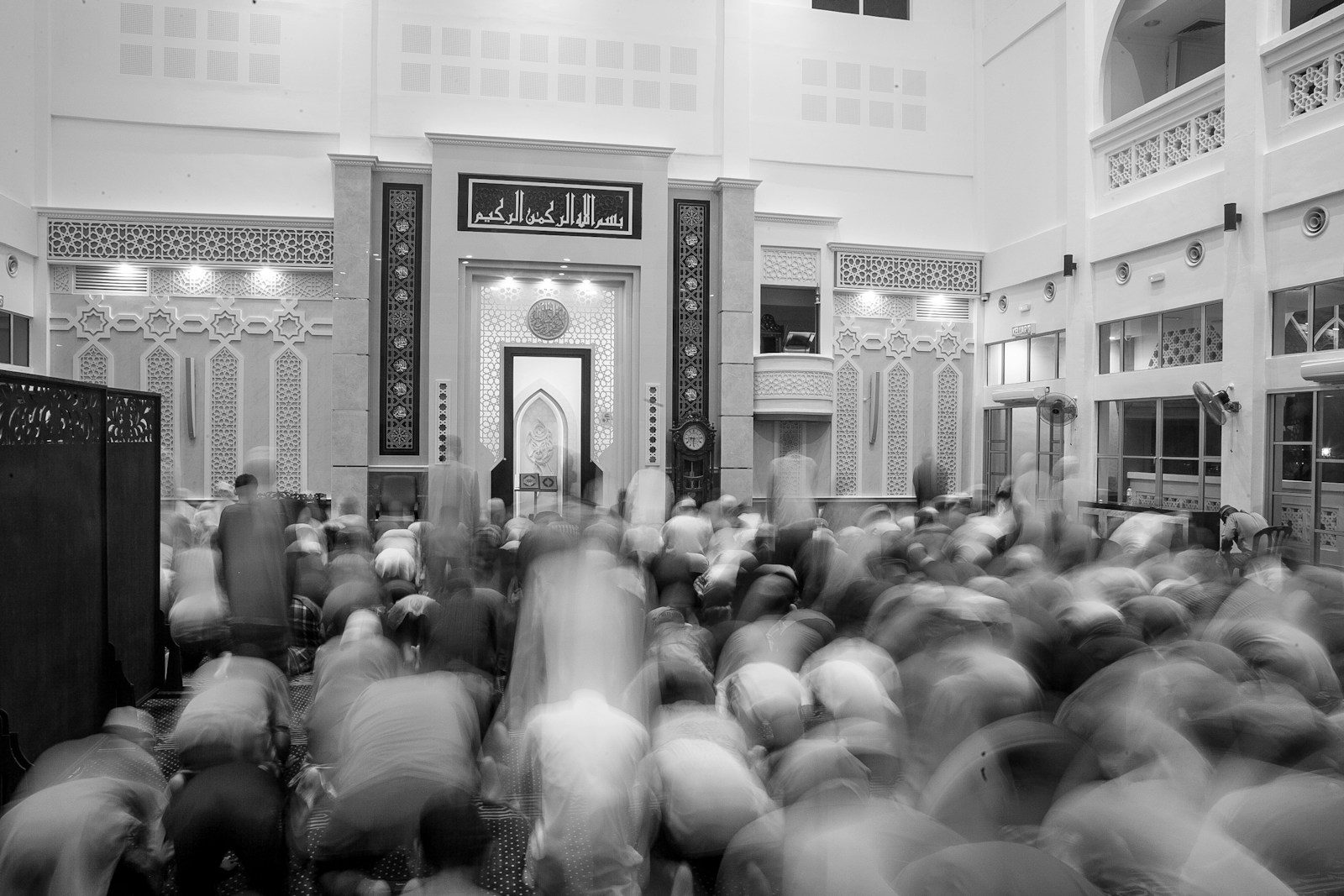
Manchester mosque attack not designated a hate crime

Published

on

Manchester mosque attack not designated a hate crime

Greater Manchester Police are refusing to class repeated white supremacist attacks on Manchester mosques as hate crimes.

The Muslim Social Justice Initiative (MSJI) said that the attackers had desecrated Qurans and caused £30,000 in damage to Stockport’s Elaf mosque. The thugs had also attempted to rig a boiler to explode. MSJI also noted that police keep refusing to classify attacks on mosques in the area as racially motivated, despite four other attacks on the same mosque in the past year:

The Elaf mosque is not the only one to be targeted. In February 2026 a man armed with an axe, knife and hammer entered Manchester Central Mosque. Mosque officials said that the attack was part of a:

notable rise in threats and hostility over recent years [and an] increase in Islamophobic incidents.

The BBC, along with local press, did report the attack on its news website, but the BBC’s national coverage was limited to a single online article. This is a stark contrast to the attention given to an arson attack on ambulances belonging to a Jewish charity.

Advertisement

Source link

Continue Reading

Politics

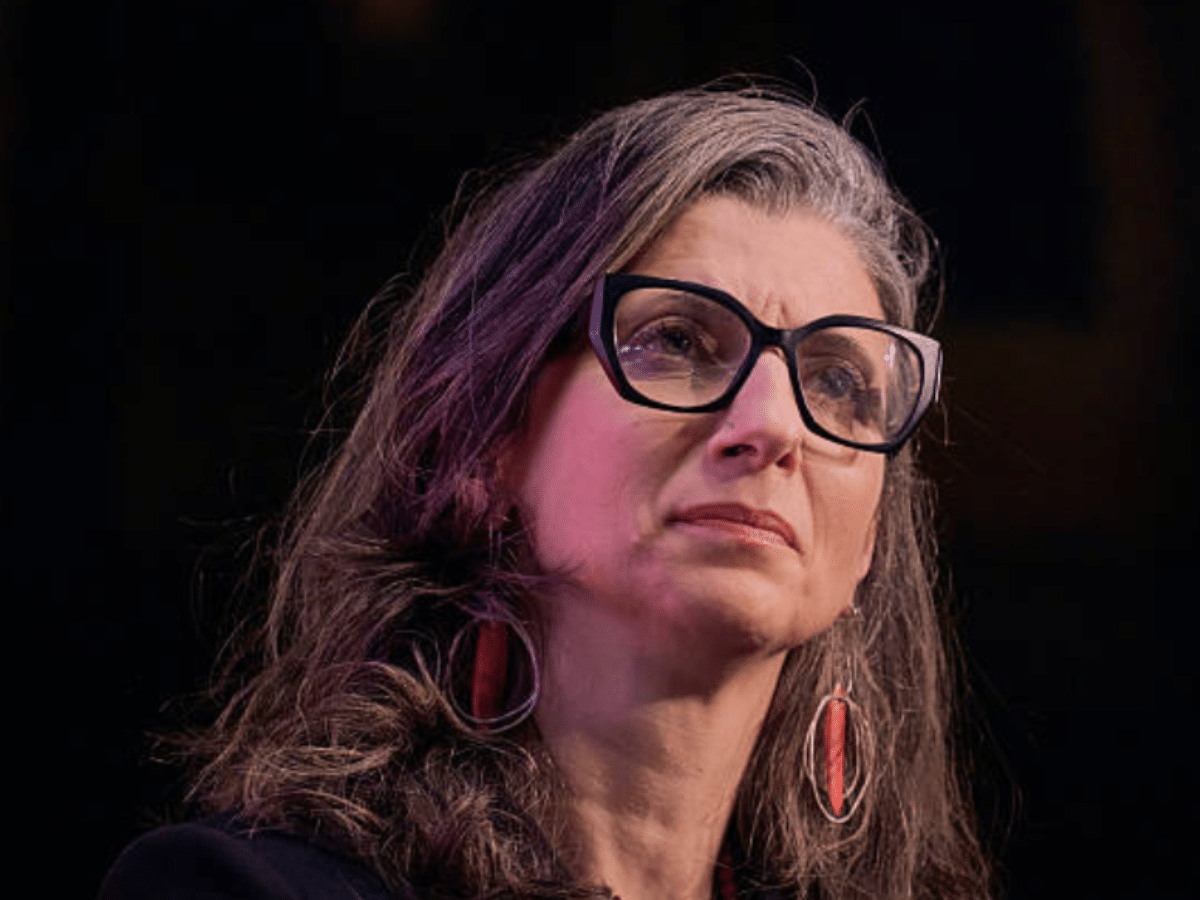
Francesca Albanese report finds torture is standard Israeli policy

Published

on

Francesca Albanese report finds torture is standard Israeli policy

Israeli torture of Palestinians is a core state policy, a new United Nations (UN) report led by Francesca Albanese warns. The UN Special Rapporteur on Palestine found that various forms of torture have become tools of the genocide. And she warned that the practice extends far beyond prison walls:

Albanese said:

Since the onset of the genocide, the Israeli prison system has degenerated into a laboratory of calculated cruelty.

What once operated in the shadows is now practiced openly: a regime of organised humiliation, pain and degradation, sanctioned at the highest political levels.

Advertisement

Albanese named Israel’s far-right security minister Itamar Ben-Gvir, among others, as having:

institutionalised torture, collective punishment and manifestly dehumanising conditions of detention.

Those responsible, she said:

 must face investigation and justice, including before the International Criminal Court.

The report said that in the aftermath of 7 October, torture became an “integral” component of:

the domination of and punishment inflicted on men, women and children, both through custodial abuse and through a relentless campaign of forced displacement, mass killings, deprivation and destruction of all means of life to inflict long-term collective pain and suffering.

Francesca Albanese centres settler colonialism

Settler-colonialism is central to Albanese’s analysis. And torture is a core tactic in the Israeli process of land theft and violent displacement. She accused Israel of carrying out:

Advertisement

A continuous, territorially pervasive regime of psychological terror…designed to break bodies, deprive a people of their dignity and force them from their land.

And Albanese said there was nothing random about Israel’s use of torture:

This is not incidental violence. It is the architecture of settler-colonialism, built on a foundation of dehumanization and maintained by a policy of cruelty and collective torture.

The Canary has reported on Israeli torture of Palestinian detainees, doctors, activists and children. One far-right pundit even called for the torture of climate and Palestine solidarity activist Greta Thunberg. You can read our reporting on the issue here.

A group of Israeli soldiers raped a Palestinian prisoner in one of the most high-profile recent cases. Footage of the rape was leaked, leading to a trial. Shockingly – and despite video evidence – all of the accused were acquitted on 12 March:

Israel enjoys impunity in its violence, whether in the jails or abroad in military assaults on Iran and Lebanon. At the heart is Zionist ideology is a chilling indifference to the pain of the occupied and any who oppose Israel’s expansionist plans. And Israel’s allies, the UK included, are clearly content to support Israel despite its use of torture as a state policy.

Featured image via the Canary

Advertisement

Source link

Advertisement
Continue Reading

Politics

Has Britain already fallen?, with Melanie Phillips

Published

on

Has Britain already fallen?, with Melanie Phillips

The post Has Britain already fallen?, with Melanie Phillips appeared first on spiked.

Source link

Continue Reading

Politics

People With Poor Mental Health Are Five Times Lonelier

Published

on

People With Poor Mental Health Are Five Times Lonelier

According to the World Health Organisation, about 16% of people worldwide are facing social isolation and loneliness. In 2024, 22% of UK adults said they felt lonely at least some of the time.

But that loneliness is not shared equally. Younger generations seem to be lonelier than older ones, while almost half of people in poverty say they feel lonely compared to 15% of high earners.

And new data from the Belonging Forum’s 2026 Belonging Barometer has found that “people reporting poor mental health are five times more likely to feel lonely” than those with good mental health.

Advertisement

What did the research find?

The survey, conducted with Opinium, involved 10,000 UK adults.

It’s part of the Belonging Barometer, which the Belonging Forum says is designed to look at “how connected people feel to others, their communities, and their sense of purpose”.

  • Roughly one in five people with poor mental (21%) or physical health (20%) say they have no close friends,
  • Only 27% of those with poor mental health say the things they do in life are worthwhile, compared to 85% in good mental health,
  • Only 33% of people with poor mental health said they feel a strong sense of belonging to their neighbourhood, compared to 65% in good mental health,
  • Nearly two-thirds (64%) of people with poor mental health reported high anxiety yesterday, vs 29% of those in good mental health,
  • Though 76% of those with good mental health say they are satisfied with their friendships, this falls to 52% among those reporting poor mental health,
  • Two in five people with poor mental health report feeling lonely often or always, compared to 3% of people in good mental health.

That means about 2.9 million people in the UK with poor mental health say they feel lonely often or always – “roughly the population of Greater Manchester”.

“Health and belonging are closely connected”

Advertisement

Kim Samuel, founder and chief architect of the Belonging Forum, said: “Health and belonging are closely connected. When people struggle with their physical or mental health, they are much more likely to experience loneliness, weaker friendships, and higher levels of anxiety.”

He added, “These findings show that belonging is not only about community or identity. It is also about wellbeing. When people are unwell or facing barriers in their daily lives, it becomes harder to build and maintain the relationships that help us be connected and supported.

“A society where people cannot participate fully in social life is a society where belonging becomes harder to sustain.”

Advertisement

Source link

Continue Reading

Politics

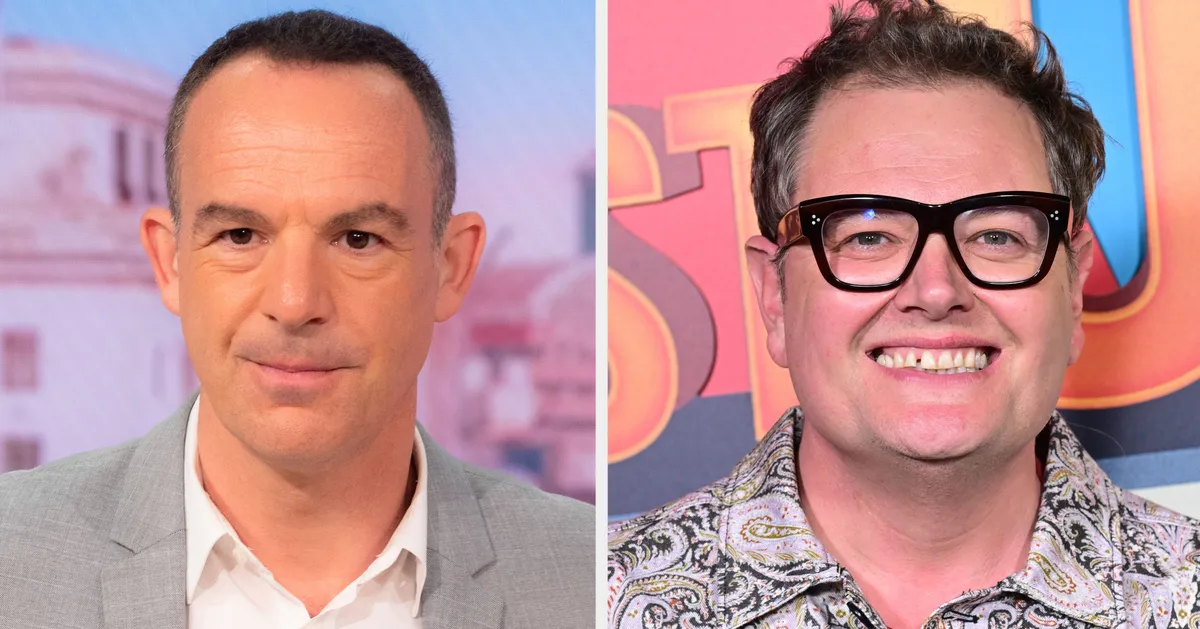
Martin Lewis Reacts To Alan Carr’s Last One Laughing Joke About Him

Published

on

Martin Lewis Reacts To Alan Carr's Last One Laughing Joke About Him

Martin Lewis has managed to one-up Alan Carr, following the former Chatty Man host’s joke about him on the comedy series Last One Laughing.

The money-saving expert recently became a surprising subject of conversation on the star-studded reality show, in which a line-up of comics must try and outlast their competitors by not laughing for as long as possible.

One challenge saw the group being tasked with sharing their “best life advice”, with Alan offering up: “It’s not who you know, it’s who you blow.”

“Do you know who told me that?” the Celebrity Traitors winner then quipped to his castmates. “Martin Lewis. The money-saving person.”

Advertisement

“That’s a hell of a money-saving tip, isn’t it?” Romesh Rangathan responded, to which Alan joked: “I know! I only popped in for a mortgage!”

Posting on social media on Monday, Martin confirmed that he had seen Alan’s joke, before issuing a cheeky reply of his own.

“Many people asking me did I see what Alan Carr said about me on Last One Laughing. I have indeed, I love the show. And I did indeed tell him that,” he joked. “It’s what made me the man I am today!”

He added: “For those who don’t know what this is about. Don’t worry. It’s an inside joke (quite literally in some respects) for those who watch it.”

Advertisement

Many people asking me did I see what Alan Carr said about me on Last One Laughing. I have indeed, I love the show. And I did indeed tell him that, its what made me the man I am today!

— Martin Lewis (@MartinSLewis) March 23, 2026

For those who don’t know what this is about. Don’t worry. Its an inside joke (quite literally in some respects) for those who watch it.

— Martin Lewis (@MartinSLewis) March 23, 2026

LOL: Last One Laughing UK is now onto its second season on Amazon Prime Video, with Jimmy Carr and Roisin Conaty back on hosting duties in the new batch of episodes.

The current line-up also includes Diane Morgan, Maisie Adams, Mel Giedroyc and, for the second time, Bob Mortimer, who is currently up for two TV Baftas off the back of his work on the first run.

Advertisement

Completing the cast this time around are David Mitchell, Amy Gledhill, Gbemisola Ikumelo and Sam Campbell.

Source link

Advertisement
Continue Reading

Politics

UK To Review Free Childcare: A Quick Rundown For Parents

Published

on

UK To Review Free Childcare: A Quick Rundown For Parents

Education secretary Bridget Phillipson has revealed she’s reviewing the free childcare eligibility thresholds impacting parents in England.

Under the current system, working parents are entitled to 30 hours of free childcare a week (for 38 weeks a year) after their child turns nine months old, up until they start school.

However if both parents earn less than £195 per week, or one parent earns more than £100,000 per year, this support isn’t available.

Phillipson told The Times: “We are going to continue to look at eligibility through the childcare review that we’re undertaking, and it does need to be simpler for parents.”

Advertisement

How does the current threshold work?

There is a lower and higher threshold, which means thousands of parents aren’t able to access support.

People who are aged 21 or over need to be earning more than £195.36 per week to be eligible for the free childcare offering. This drops to £160 per week for 18-20 year-olds and £120.80 per week for under-18s or apprentices.

Coram Family and Childcare’s latest annual Childcare Survey found families who are not eligible for the free hours – because they are not in work, do not earn enough or do not meet other criteria – have to pay an average of £189 per week for a part-time nursery place for a child under two.

Advertisement

It warned there is a risk that disadvantaged children are being priced out of accessing the same early years education as those in working families.

Lydia Hodges, from Coram, said the government’s childcare expansion is a “welcome support” for working families, but added there’s a “stark divide” between those eligible for support, and those who are not.

She said: “The focus on children being ‘school ready’ is gathering pace, but we have to ask a question about how much more difficult this will be to achieve for disadvantaged children in England, when they will now get only a third of the government-funded early education that children with working parents get, by the time they start school.”

There is also a higher threshold where one parent earning over £100,000 means couples aren’t able to access 30 free hours to pay for childcare either.

Advertisement

This means two parents could hypothetically earn £99,999 and receive 30 hours of free childcare a week; while another couple could have one person earning £101,000 and the other earning £5,000, and they would lose out.

As a result, parents have refused pay rises and bonuses, The Times reported, as the free childcare offering is better value.

All parents are able to access 15 free hours of childcare when their child turns three years old, regardless of income.

When will the changes be made?

Advertisement

We know both the lower and higher thresholds are under review between now and the next general election, which will be August 2029 at the latest.

Any changes that will be made are not imminent and form part of the government’s early years strategy.

Ultimately, Phillipson is keen to make the free childcare offering “more straightforward” for parents and the childcare sector, while also “getting the best possible outcomes from the money that’s being invested”.

HuffPost UK has contacted the government about when the outcome of the review is likely to be shared and will update the piece when we hear back.

Advertisement

Source link

Continue Reading

Politics

Sprinting vs. Relaxation: New 2026 Study Reveals Best Exercise For Panic Attack Prevention

Published

on

Sprinting vs. Relaxation: New 2026 Study Reveals Best Exercise For Panic Attack Prevention

Multiple studies have found that exercise may help to alleviate symptoms of anxiety.

And a new paper, published in Frontiers in Psychiatry, found that a 12-week brief intermittent exercise (BIE) program “was feasible and more effective” than relaxation training in reducing panic symptom severity and panic attack frequency, with effects sustained for at least 24 weeks among participants.

In this research, sprinting (the BIE in question) was used as a kind of exposure therapy known as interoceptive exposure.

What is interoceptive exposure?

Advertisement

Exposure therapy involves confronting people with things they’re worried about in a controlled, professional-guided session.

Interoceptive exposure, originally used as a treatment for panic disorder in cognitive-behavioural treatment (CBT), involves repeated exposure to uncomfortable physical sensations in a safe environment “for the purposes of reducing negative emotion (typically anxiety) associated with the sensations”.

It can involve holding your breath, spinning in a chair while shaking your head, or running on the spot. This study used sprinting intervals.

Why did sprinting seem to help with anxiety and panic attacks in this study?

Advertisement

The research involved 72 adults with panic disorders. They were split into two groups and given either relaxation training, which involved progressive muscular relaxation, or BIE for 12 weeks.

In this case, BIE took the form of walking interspersed with 30-second sprints.

Researchers looked at the Panic Agoraphobia Scale (PAS) of participants at six, 12, and 24 weeks during and after the program. They also took into account how many panic attacks the people in the study had experienced in those periods.

Though both the relaxation and BIE groups improved over time, the BIE group saw lower scores on average by the end of the tracking period.

Advertisement

They had fewer panic attacks and lower PAS scores. This stayed true even at the 24-week mark, 12 weeks after the programs ended, when both scores for each group had begun to pick up again.

That’s not to say that sprinting should be used during a panic attack; interoceptive exposure, which is supervised by a professional, is designed to slowly build a tolerance to uncomfortable sensations people may feel during periods of anxiety over time.

As study author Richard William Muotri explained: “I think the main lesson is that you don’t have to be afraid of your own body.

“Many people try to just relax when they feel panic, but this study shows that facing the physical feelings through exercise is actually a more powerful way to feel better.”

Advertisement

Source link

Continue Reading

Politics

Oliver Dean: Releasing LEO data would stop the rise of ‘Mickey-Mouse’ degrees

Published

on

Oliver Dean: Releasing LEO data would stop the rise of ‘Mickey-Mouse’ degrees

Oliver Dean is a political commentator with Young Voices UK. He studies History and Politics at the London School of Economics and Political Science (LSE) where he is the President of the LSE Hayek Society

There was once a time wherein a university education was the best investment a young person could make. That time has since passed. Tuition fees have soared, graduate debt has ballooned to an average of £53,000, and courses that offer neither serious career prospects nor meaningful wage returns continue to attract thousands of applicants annually. This could be fixed if the government released the necessary data to transform higher education – yet it refuses to do it.

University used to be a rite of passage.

One would leave home, perhaps freckle-faced and optimistic about their life chances, and have their ideas and opinions challenged by world-renowned professors. They would emerge from university, equipped with the skills and ideas needed for a career. Yet this is no longer the case. Graduates now become ensnared in a student debt trap, trying to put a dent in the balance which just keeps rising. Indeed, higher education has stopped being about intellectual transformation and started being about financial survival.

Advertisement

Such a shift is worrying for the state of tertiary education in Britain, yet there is a way in which the government can begin fixing such an issue. However, since 2015, they have refused to do it.

The government holds a centralised database of Longitudinal Education Outcome (LEO) data. Simply put, it is a breakdown of what graduates actually earn, by university, by course and by year, grounded in tax receipt data. It is exactly the information a would-be student needs before committing to a £50,000 decision. And yet it remains locked away, accessible only to a handful of approved researchers. Everyone else is left to piece together a picture from a patchwork of university brochures and a select through higher education-focused websites.

The consequences of keeping such information under lock and key are predictable. Without reliable data, students make choices based on university marketing and vibes rather than market reality. The explosion of so-called “Mickey Mouse degrees,” courses that leave graduates worse off financially than had they never enrolled, is not an accident. More than 27,000 young people have been funnelled into qualifications that don’t deliver since 2022. And in return, they have been gifted a lifetime of debt and little in the way of career prospects.

Some will argue that the data is already available and, technically, this is true. But scattering figures across dozens of competing websites, presented in incompatible formats, is not the same as making information available. It is bureaucratic cover for the status quo. If the government genuinely believed in informed choice, it would provide a single, accessible platform where students, parents and teachers could compare outcomes clearly and honestly. In the current system, the only groups that benefit are the universities that are pulling the wool over students’ eyes.

Advertisement

By publishing the data, universities that do not offer value for money would face accountability. Students would punish them by going elsewhere, or opting not to go to university whatsoever – instead focusing on building real-world skills in an apprenticeship or full-time employment. The degrees and institutions which provide real value would be allowed to thrive, and those that don’t would be phased out. This would not only ease the strain on British universities, but it would prevent the rise of credential inflation and save thousands of young people from becoming entangled in a lifetime of debt.

The government spends billions subsidising student loans it knows will never be repaid. The least it can do is give students the information to make better decisions in the first place. Releasing the LEO data won’t solve the higher education crisis overnight. But it would be the first honest thing done about it in years, and could be the first major step to fixing the higher education crisis.

Source link

Advertisement
Continue Reading

Trending

Copyright © 2025