

Politics
Davina McCall Claims She Was Turned Down For ITV’s Big Brother Reboot

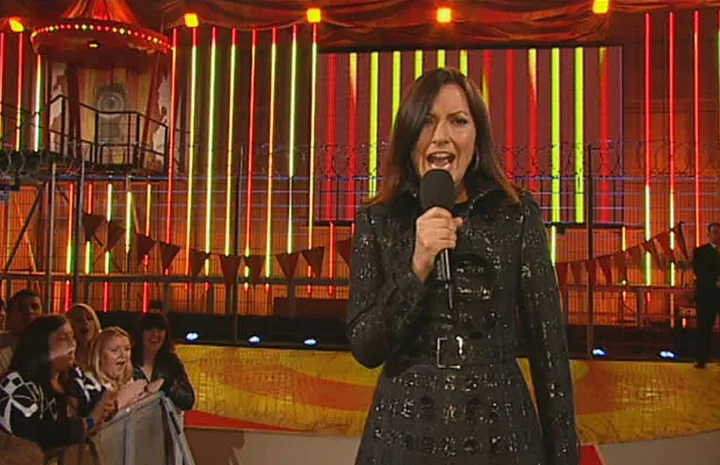
Davina McCall has claimed she offered her services as a presenter when Big Brother was first rebooted by ITV, but to no avail.
The British presenter is probably best known for fronting Big Brother during its original 11-year run on Channel 4, after which it aired on Channel 5 with Brian Dowling and Emma Willis taking over as its hosts, when Davina made the choice not to return.
More recently, the long-running reality show was revived by ITV, where AJ Odudu and Will Best are its current co-hosts.
However, during an interview on the podcast Business Growth Secrets, Davina confessed she’d initially approached ITV bosses about reprising her role as host.
“I’ve got a secret to tell you actually,” she recalled. “When they started Big Brother on ITV, I put myself forward to present it. And they went with new presenters.”

Even then, she claimed she’d told them: “Look, can I please just be pre-titles, and just go ‘fancy another one?’. But they didn’t want me to do that, and I was like, ‘fuck’.”
HuffPost UK has contacted ITV for comment.
During an appearance on The Chris Moyles Show back in 2023, Davina opened up about why she wasn’t back to present the Big Brother revival.

Vianney Le Caer/Shutterstock for Big Brother
“I think they wanted to go fresh. New start, fresh start, younger,” she claimed. “I do understand and I think it’s quite a good idea.
“Of course I would have done it, I’m being really honest now. But in retrospect, I don’t think it would have been the right fit for me.
“It’s nostalgic for me. It’s come a long way since I hosted it and I am a different person.”
AJ Odudu and Will Best will be back to present a third season of Big Brother in its ITV era later this year.


We hope you love the products we recommend! All of them were independently selected by our editors. Just so you know, HuffPost UK may collect a share of sales or other compensation from the links on this page if you decide to shop from them. Oh, and FYI — prices are accurate and items in stock as of time of publication.
Every now and again, I have to try things I don’t want to as a shopping writer. I might not want to, but I do it anyway in the name of good journalism; so you don’t have to.
This particular occasion wasn’t one of them. Without giving you TMI, there is a certain time of month where my craving for anything with even a sprinkling of sugar becomes almost unbearable.
Praise the lord, that coincided with M&S releasing its new sweet dips this month, and I made it my business to try them.

Honey Jane Wyatt/HuffPost
You’ll remember its viral strawberries and cream sando from last year; this year it’s made a comeback in the form of a pistachio, chocolate, and strawberries and cream sandwich.
Personally, that sounds like a bit much. But even better than that, I think, is the fact the brand has now released two new dips to make all your picky bits dreams come true.
And yep, they’re also as sweet and delicious as a girl could dream for.
One of said life-fulfilling moments is a strawberry and cream fruity dip, while the other is a velvety chocolate and pistachio number.


You might be wondering what on earth you’re supposed to dip into them. Well, worry not, dear friend, because M&S has that covered on the literal packaging, too: shortbread, or strawberries.
And dear lord, are both of them delicious. Overall, the strawberry dip is more likely to be a crowd pleaser, because it tastes exactly like light and zingy strawberry jam loaded on top of a cream scone. Mmmmm.
It was also equally as good with the shortbread as it was the strawberries, which was surprising considering that’s basically strawberry squared.
Meanwhile, the texture of the chocolate dip was wholly delightful, however it didn’t taste much of pistachio.
I’m not complaining (because what’s not to love about pure chocolate?!) and it wouldn’t put me off trying it again, but I imagine people who are expecting a full on Dubai chocolate experience might be a tad disappointed.
All in all, though, I’d rate the strawberry one a solid 4.5/5, and the chocolate one a 4/5, and I know I’ll be picking these up on the way to picnics all summer long.
spiked is funded by readers like you. Only 0.1% of regular readers currently support us. If just 1% did, we could grow our team and step up the fight for free speech and democracy.
Become a spiked supporter and enjoy unlimited, ad-free access, bonus content and exclusive events – while helping to keep independent journalism alive.

!function(n){if(!window.cnx){window.cnx={},window.cnx.cmd=[];var t=n.createElement(‘iframe’);t.display=’none’,t.onload=function(){var n=t.contentWindow.document,c=n.createElement(‘script’);c.src=”//cd.connatix.com/connatix.player.js”,c.setAttribute(‘async’,’1′),c.setAttribute(‘type’,’text/javascript’),n.body.appendChild(c)},n.head.appendChild(t)}}(document);(new Image()).src=”https://capi.connatix.com/tr/si?token=19654b65-409c-4b38-90db-80cbdea02cf4″;cnx.cmd.push(function(){cnx({“playerId”:”19654b65-409c-4b38-90db-80cbdea02cf4″,”mediaId”:”c01ff73e-2208-461f-aa16-f255d84ef8b6″}).render(“6a43ea85e4b0f259890fee28”);});
Politics
The House | Greens To Target “Unease About Gentrification” Under Burnham In Manchester Mayoral Race
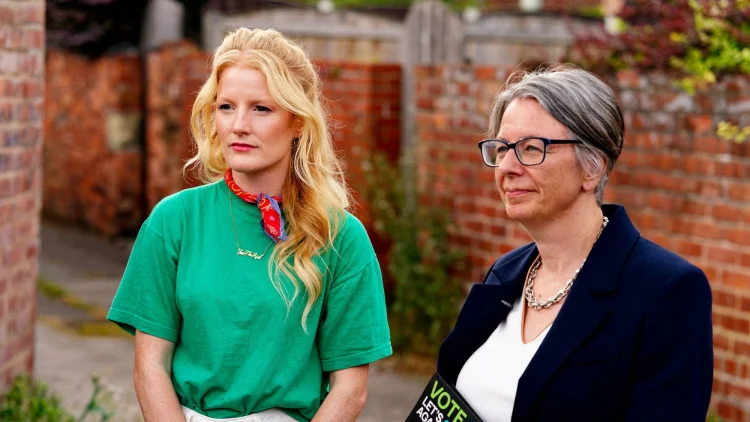

Councillor Geraldine Coggins, the Green Party’s candidate for the Greater Manchester mayoral race, with recently elected Green MP Hannah Spencer (Alamy)

3 min read
Exclusive: The Green Party remains confident it can move ahead of Labour in the Greater Manchester mayoral race and plans to target local unease about gentrification under Andy Burnham, according to senior insiders.
The election of Burnham as Labour MP for Makerfield in June triggered a by-election in the Greater Manchester Combined Authority, with polling day set for 30 July.
Labour has sought to portray the election next month as a two-horse race between itself, with candidate Bev Craig, the Manchester city council leader, and Reform UK’s Sian Astley, a newly elected local councillor. The Greens are running Geraldine Coggins, a councillor in Altrincham.
The government put into effect a change of electoral system from first-past-the-post to the supplementary vote, a preferential system under which voters will cast a first and second choice. Labour sources believe this will boost their chances of holding onto the mayoralty.
While optimism around the by-election has grown within Labour since Burnham’s upcoming coronation as leader and prime minister became clear, the Greens are still hopeful that the “Burnham bounce” is surmountable.
Senior Green insiders say the first week of the campaign has been overshadowed by the noise around Burnham’s ascent to Downing Street, but insist their party’s ground campaign is strong and support for Labour is “soft”.
The party led by Zack Polanski, who originally hails from Salford, believe there is “a lot of unease” among voters about the policies Labour has enacted in Greater Manchester, including “gentrification” and “the role of developers in pricing people out of the areas they want to be in”.
The Greens will emphasise their offers locally on affordable housing, rent controls and a policy of no more money to developers without guarantees of affordable housing targets.
Green figures also suspect that while Burnham is a better communicator than Keir Starmer, the former mayor may not be as radical in government as some on the left hoped. The party will be highlighting demands such as dropping the fiscal rules, public ownership rather than increased control and a concrete commitment to electoral reform nationally.
The Greens will be aiming for first-preference voters primarily, and senior insiders point out that YouGov polling from February showed Labour voters being more willing to tactically vote Green than the other way around.
Earleir this month, the Greens’ former leader, Caroline Lucas, told The House mag that her party would “throw everything” at the Manchester mayoral election after deciding not to run a full-throttle campaign in Makerfield.
She compared the election next month to the by-election in Gorton and Denton in February, where Green candidate Hannah Spencer won 40 per cent of the vote to unseat Labour.
However, Labour sources counter that Burnham has changed the national picture since then and that the likelihood of the Greens repeating their success in Gorton and Denton is low, given they will not be able to target a particular demographic among voters across the combined authority in the way they did so effectively to secure Spencer’s win.
They also point out that Spencer finished fifth in the mayoral contest two years ago, and add that the Green vote share in the wards making up the whole combined authority in the recent local elections showed them placing significantly behind Labour and Reform, as it was concentrated in select areas.
“They’re trying to talk themselves into the race, but there’s no evidence for it,” a Labour source told PoliticsHome.
The Greater Manchester Combined Authority covers 27 parliamentary seats, making the scale of the by-election unprecedented in British politics.
The Conservative candidate is Trafford councillor Phil Eckersley, the Liberal Democrats are running Manchester councillor Richard Kilpatrick, and Restore Britain has grooming gangs campaigner Marlon West as its candidate.
spiked is funded by readers like you. Only 0.1% of regular readers currently support us. If just 1% did, we could grow our team and step up the fight for free speech and democracy.
Become a spiked supporter and enjoy unlimited, ad-free access, bonus content and exclusive events – while helping to keep independent journalism alive.
The post Islam, the left and the West appeared first on spiked.
Thomas Griffin is the Global Ambassador for the Conservative Policy Forum and the Zurich Representative for Conservatives Abroad.
My last piece argued that Britain’s growth problem is not a shortage of capital, talent or innovation.
It is a failure to build the conditions around the places where those things already exist. The sharpest reply was a fair one: what does a booming Cambridge do for Burnley?
I am a Kent man who went to universities in the Midlands, whose family originates from London but settled in the South West, and who spent enough time in northern rugby league dressing rooms to be affectionately informed that I was still very much a southerner. It did not help that I played fullback rather than prop. But the question deserves a serious answer.
Britain’s productivity problem is, at heart, a regional one. In 2023, London produced almost 29 per cent more per hour worked than the UK average and the South East nearly 8 per cent more. Every other region fell below the line. Yet the gap is not destiny. Between 2019 and 2023, the North West grew its productivity faster than any other region and made the largest single contribution to national growth, while London’s output per hour actually fell. Something is working outside the South East. It is worth understanding what, and then doing far more of it.
If Britain’s growth model simply means concentrating ever more wealth in London, Oxford and Cambridge, then the criticism is justified. That would not be a national strategy; it would be a golden triangle strategy. But that is not what a clusters-first approach means, nor does it reflect where many of Britain’s strongest existing and emerging economic clusters are actually found. I cannot cover every region in this article but the examples below demonstrate the wider point: much of Britain’s unrealised potential lies outside the golden triangle of Oxford, Cambridge and London.
The Humber
Start on the estuary that most resembles the Dutch original. Siemens Gamesa’s blade factory at Hull’s Alexandra Dock, built with Associated British Ports and since expanded for a further £186 million, is the largest offshore wind manufacturing facility in the UK. The telling detail is local: of the thousand-plus jobs it created, around 98 per cent went to people living within thirty miles. Ørsted opened its Grimsby East Coast Hub as what it described as the ‘world’s largest offshore wind operations and maintenance centre.’
This is not an artificial cluster conjured by Whitehall. It already exists. What holds it back is the one thing no firm can build for itself: the shared infrastructure beneath the cluster, the grid capacity, the port connections, the timetable for joining the network. Build those, and the rest follows. Withhold them, and the next factory is built somewhere else entirely.
Lancashire
The question is not how to turn Burnley into Cambridge. It is how to allow Burnley to become more fully itself. Lancashire is already one of Britain’s most important aerospace regions, and Burnley is already an aerospace town.
The task is not to invent an industry. It is to remove the barriers that prevent an existing strength from expanding. Safran has made aircraft nacelles in Burnley for more than seventy years, employs around 700 people, and its UK arm turned over £185 million last year, up more than 15 per cent; its site is the global centre of excellence for sheet metal fabrication across the entire Safran group. Burnley sits inside the largest aerospace cluster in the UK, the heart of the only place in the country that can design, build and test a combat aircraft, anchored by BAE Systems and Rolls-Royce.
Yet the barriers in Burnley are mundane. Industrial premises are ageing. Supplier parks are hard to expand. Skills pipelines lag demand. Plus, Burnley sits outside the enterprise-zone designations that support the main BAE sites. The challenge is not discovering these capabilities. It is allowing them to grow.
Sheffield
Sheffield offers perhaps the clearest evidence that enabling institutions can attract growth rather than merely follow it. The Advanced Manufacturing Research Centre began in 2001 as a modest collaboration between the University of Sheffield and Boeing on reclaimed coalfield land. It now has more than 120 industrial partners, from Boeing and Rolls-Royce to McLaren and Airbus, and has drawn over £260 million of private investment into South Yorkshire.
The anchor mattered: Boeing chose Sheffield for its first European factory, and McLaren brought carbon-fibre chassis production back to Britain there, because the cluster was already in place. Its newest project, the £29.5 million COMPASS centre, was the first announcement of the South Yorkshire Investment Zone. The constraint now is scaling from world-class research into volume production, which needs durable planning and grid certainty rather than another research grant.
The South West
Not every cluster faces the same problem. In Cornwall, Spaceport Cornwall at Newquay, the UK’s first licensed spaceport, is now linked to the National Drone Hub at Predannack, the first civil-aviation-accredited drone test site in the country, with more than 8,000 square kilometres of segregated airspace off the Lizard run in partnership with the Royal Navy. Here the binding constraint is not land or grid. It is regulation: the airspace access, certification and operating permissions that move more slowly than the technology they govern. This is a nascent example, but it makes the point that enabling conditions are not always concrete and steel.
The Coventry Warning
There is a lesson in the other direction too. The proposed Coventry gigafactory won planning permission in 2022, yet years later still lacks an occupier. Britishvolt had a site and a vision – and failed. Planning permission alone is not enough. Rotterdam did not approve a project and hope. From the 1988 designation of its mainport onward, it provided transport, energy, land and decades of unbroken political commitment together, as a system. Half-built conditions attract nobody. Britain has become very good at announcing strategies and surprisingly poor at completing them.
One ask, a statutory right to grow
The instinct in Whitehall, and Labour’s instinct in particular, is to disperse: to spread money by formula so that no place reaches the critical mass that compounds, to fund chosen programmes rather than build foundations every firm can use, and to confuse the announcement with the delivery. The building blocks mostly exist already in freeports, investment zones and enterprise zones: tax reliefs, capital allowances, site preparation and planning tools.
But the package is incomplete, especially where grid connection and strategic planning remain outside the entitlement. The problem is not only what is offered, but how it is handed out: through time-limited Whitehall bidding rounds, with reliefs that expire on fixed dates. A town like Burnley cannot win a beauty contest against better-resourced bidders. It can, though, meet an objective test, because it already has a major industrial anchor.
So the ask is a single one, and the design matters. Replace the bidding round with a statutory right that a place qualifies for by passing objective, published tests rather than by winning a Whitehall contest. Two tests do the work.
First, proven private investment in the sector over the past decade, which is the market’s own verdict on where a cluster really exists and cannot be faked by a speculative bid. Second, genuine supply-chain density, a concentration of connected firms rather than a lone factory, which is what actually generates compounding growth.
A place that passes both gains guaranteed priority treatment in the grid connections process and the strategic planning status to clear its one binding constraint. This is not the state overriding the market. The connection queue is already publicly governed and already shifting from first-come-first-served towards a “first-ready-and-needed” model. The flaw is that Whitehall currently defines that “need” almost entirely around clean-power targets, as though regional industrial growth and the tax revenues it funds were not themselves strategic national priorities.
A statutory entitlement need not mean thin gruel spread everywhere. The tests reward existing concentration, so the policy deepens strong places rather than shuffling activity between weak ones, and grid priority is physically finite, so it cannot be handed to everywhere at once. The rule concentrates by design. Write the qualifying tests into primary legislation, so the right is fixed in law rather than left to Treasury discretion or a quango that can be captured and quietly turned against growth, and a town like Burnley stops re-auditioning every few years for the conditions it has already earned.
Let our strongest regional clusters become stronger still. The golden triangle does not exhaust our economic potential; most of it, it turns out, lies somewhere else entirely. This is not regional policy as charity; it is essential to national growth policy, because Britain can no longer afford to spread decline evenly.

A government minister has criticised plans to cancel road building projects to pay for a funding boost for defence.
Keir Starmer announced that an extra £1.5 billion had been found for the Defence Investment Plan (DIP).
Energy and transport projects will be axed in order to fund the extra spending, which will see the defence budget increase to £80bn a year by 2029.
That decision has angered Hamish Falconer, the minister for the Middle East and North Africa, who is seen as a loyalist within the Starmer government.
The Lincoln MP said: “I am disappointed by the uncertainty today about the A46 Newark Bypass widening scheme.
“I support further funding for the DIP, but the A46 upgrade programme is well-advanced, long-awaited, excellent value for money and of strategic importance to both Lincoln and the region.
“Following the Labour Party leadership contest, I will be seeking an urgent meeting with the incoming prime minister, incoming chancellor and incoming secretary of state for transport to discuss this decision and explore whether there is a credible route forward for this vital project.
“I will continue to make the strongest possible case for the investment that both Lincoln and the wider region need and deserve.”
Overall, Starmer said the DIP will provide an extra £15 billion for defence by the end of the decade.
That is £1.5bn more than the amount John Healey was promised, prompting him to resign as defence secretary earlier this month.
But it is still well short of the £28bn that defence chiefs say is needed to meet the needs of Britain’s armed forces.
Starmer has been under pressure to explain how the UK will increase defence spending amid growing international threats, particularly from Russia.
The general secretary of TSSA union, Maryam Eslamdoust, also warned about the consequences of cutting transport projects to fund defence.
She said: “It is because of decisions like this that Keir Starmer’s premiership came to an end.
“At a time when Britain is crying out for investment in our economy, infrastructure and communities, it is alarming that the prime minister appears willing to abandon much-needed transport and road projects in order to arm Britain to the teeth.
“Instead of backing the domestic investment that will drive growth, create jobs, and improve living standards, taxpayers’ money is being diverted away from Britain’s priorities.
“The prime minister must not use his final days in office to quietly shelve vital infrastructure improvements and must urgently clarify exactly what this extra defence spending will mean for transport and other essential public services.”
Healey weighed in on the new defence investment plan too, saying on X that he “welcomes the extra funding” from the Treasury.
But he noted the DIP must also help grow British industry with new jobs, and “provide the British leadership alies are looking for”.
He added: “The world has changed. Threats have increased. Demands on defence have risen. The PM has made important new UK commitments. So we must now do more.”
“Today is the next downpayment for defence. It builds on the record defence investment Labour in government has already made. But Britain will still be spending just 2.7% of GDP in 2030, the date when Nato has warned we could face a Russian attack,” he said.
“European security is at stake. The PM has said today that 3% must be the number 1 priority for the next spending review. We need a target date for 3% and a clear, credible funding plan to meet our Nato commitment for 3.5% on defence by 2035.”
Listen to Commons People, the podcast that makes politics easy. Every week, Kevin Schofield and Kate Nicholson unpack the week’s biggest stories to keep you informed. Join us for straightforward analysis of what’s going on at Westminster.

Meta’s messaging app WhatsApp is about to introduce usernames, which will allow users to connect without needing each other’s numbers.
The company has said this is “a major privacy feature”, describing sharing your number with someone as a “big step”.
It’ll work for group conversations and one-on-one chats alike.
And Meta added that you’ll probably want to reserve your username sometime soon.
How will WhatsApp’s username system work?
You’ll still need a phone number to sign up to WhatsApp. But when usernames are introduced in your area, you’ll no longer have to give that number to somebody in order for them to reach you on the platform.
Instead, you can give them your username. This isn’t the same as your social media handle, though, Meta said.
That’s partly because no other suggestions will appear when someone types in a username.
Like your number, they’ll have to get every character of your unique username correct in order to reach you on WhatsApp. Your name won’t auto-fill in a list of suggestions if they almost get it right, as can happen on a site like Instagram.
“For most people, choosing a WhatsApp username should be something unique that only people you want to contact you will know. If you need help picking one, we have a username generator to make one work just for you,” the information page reads.
If you’ve enabled your username and you choose to message someone, your number won’t appear in the chat, as it does currently.
Names will be limited to 35 characters. They can’t be made up only of numbers or contain “restricted words or phrases”.
Some usernames are already reserved for businesses, governments, or public figures.
How can I reserve a WhatsApp username?
If you’re a business or public-facing creator or organisation, you’ll be able to reserve your Facebook or Instagram username for WhatsApp.
- Tap the three dots in your WhatsApp profile > settings
- Tap the area around your profile photo
- Select ‘create username’
- Tap ‘use Instagram username’ or ‘use Facebook username’
- Follow the prompts to add your accounts to the same Accounts Centre.
Reserving a username isn’t currently possible on WhatsApp Web.
To reserve a username on your personal phone, you’ll need the latest version of the app. The option to reserve usernames should roll out this week.
You can do this by taking the following steps:
- Tap the three dots in your WhatsApp profile > settings
- Tap your profile photo
- Select reserve username > create username
- Enter the username you want
- Select save > done.
“If you are reserving a username, your username will become active when the feature launches in your region. You will receive a notification when your username is ready to use,” Meta added.
When will WhatsApp usernames come out in the UK?
“Usernames on WhatsApp are rolling out gradually over the next few months and might not be available to you yet,” Meta said.
You’ll be notified when your username is activated.
The company has told people to “make sure you have the latest version of WhatsApp downloaded and keep an eye on your app”.

Zoe Ball has announced she’s making a return to the airwaves after stepping down from her BBC Radio 2 show last year.
In December 2025, Zoe announced she was leaving her Saturday afternoon slot on Radio 2, which she took up after leaving the station’s flagship breakfast show so she could spend more time with her family.
“Spending Saturday lunchtimes with the Radio 2 gang has been an absolute hoot,” she said at the time, saying she’ll miss “the listeners, the stories, and of course my weekly giggles with Romesh [Ranganathan] and Rylan [Clark]”.
Zoe added that she was “over the moon for the fabulous Emma [Willis] to take the reins” describing her successor as “pure sunshine”, while the BBC added that Zoe would “continue to host specials” on Radio 2, “as she has done throughout 2025”.
However, on Tuesday, it was revealed that Zoe would be picking up a new weekday afternoon show on Greatest Hits Radio, which is already the home of her former Radio 2 colleagues Simon Mayo and Ken Bruce.
“There’s something truly special about radio – the relationship you build with listeners, the energy, the music and the moments of joy and laughter you share together,” she enthused.
“I’ve missed it and this felt like the right time to begin a new chapter with Greatest Hits Radio.”
Zoe’s latest venture has been announced just weeks after she made no secret of her disappointment at not landing the role as one of Strictly Come Dancing’s new hosts.
Speaking on her podcast Dig It, she said: “I didn’t get it. But it’s OK! I have worked through the seven stages of grief and rejection over the last couple of days.
“I didn’t get it, but I tell you what, if who I think has got it, we’re in safe hands and our new hosts are going to be fabulous.”
Shortly afterwards, it was revealed that Emma Willis would be taking over at the helm of Strictly alongside professional dancer Johannes Radebe and comedian Josh Widdicombe.

Supreme Court rulings live: Justices agree to hear challenge to assault rifle bans after upholding birthright citizenship

Chinese exile once linked to Trump strategist gets 30-year sentence in $1 billion fraud

I Tried The New M&S Sweet Dips, And My Life Will Never Be The Same Again


-
 Sports7 days ago
Two goals and an assist by sheer aura: Cristiano Ronaldo just entered the World Cup chat
-

 Fashion4 days ago
Weekend Open Thread: Staud – Corporette.com
-

 Politics4 days ago
The House | Manchesterism won’t survive the painful trade-offs unless it gets citizens on board
-

 Politics5 days ago
Potential 2028er World Cup attendee leaderboard
-

 Business4 days ago
Asia stock markets slide as tech shares slump
-

 News Videos2 days ago
MAJOR BITCOIN & MARKET UPDATE!!!! (MUST WATCH ASAP!!!)
-

 Crypto World14 hours ago
Strategy authorizes up to $1.25B in Bitcoin sales under new capital plan
-

 Tech5 days ago
A Look At A Gaggle Of Transputer Boards
-

 Crypto World6 days ago
Securitize Wraps Roubini's SEC-Registered ETF as Dubai VARA Digital Security
-
Crypto World7 days ago
Bitcoin (BTC) Dips Below $62K, Ethereum (ETH) Plunges 6% Daily: Market Watch
-
 Crypto World5 days ago
Dell (DELL) Shares Tumble Over 5% Following Analyst Downgrade to Hold
-

 Crypto World3 days ago
Coinbase, Circle Deepen Crypto Stock Losses Despite Resilient S&P 500
-
Business7 days ago
Entergy settles forward sale agreements, raises $672 million in cash proceeds
-

 Crypto World3 days ago
Kraken's xStocks Opens Bending Spoons IPO Registration to EEA Retail
-

 Sports4 days ago
FIH Pro League: India defeat Pakistan 7-1, register biggest win of campaign | Other Sports News
-

 Crypto World5 days ago
Bitcoin Sparks $600M Hourly Liquidations With $65,000 Set To Become Resistance
-

 Tech3 days ago
Bluekit phishing kit adopts browser-in-the-middle for login theft
-

 Tech3 days ago
Russian hackers now target Signal backup recovery keys
-
 Crypto World4 days ago
Hyperliquid Named on Singapore MAS Investor Alert Register
-

 Crypto World4 days ago
RTX holders must register wallets before token distribution begins
You must be logged in to post a comment Login