

Politics
Democrats see the stars aligning in Iowa

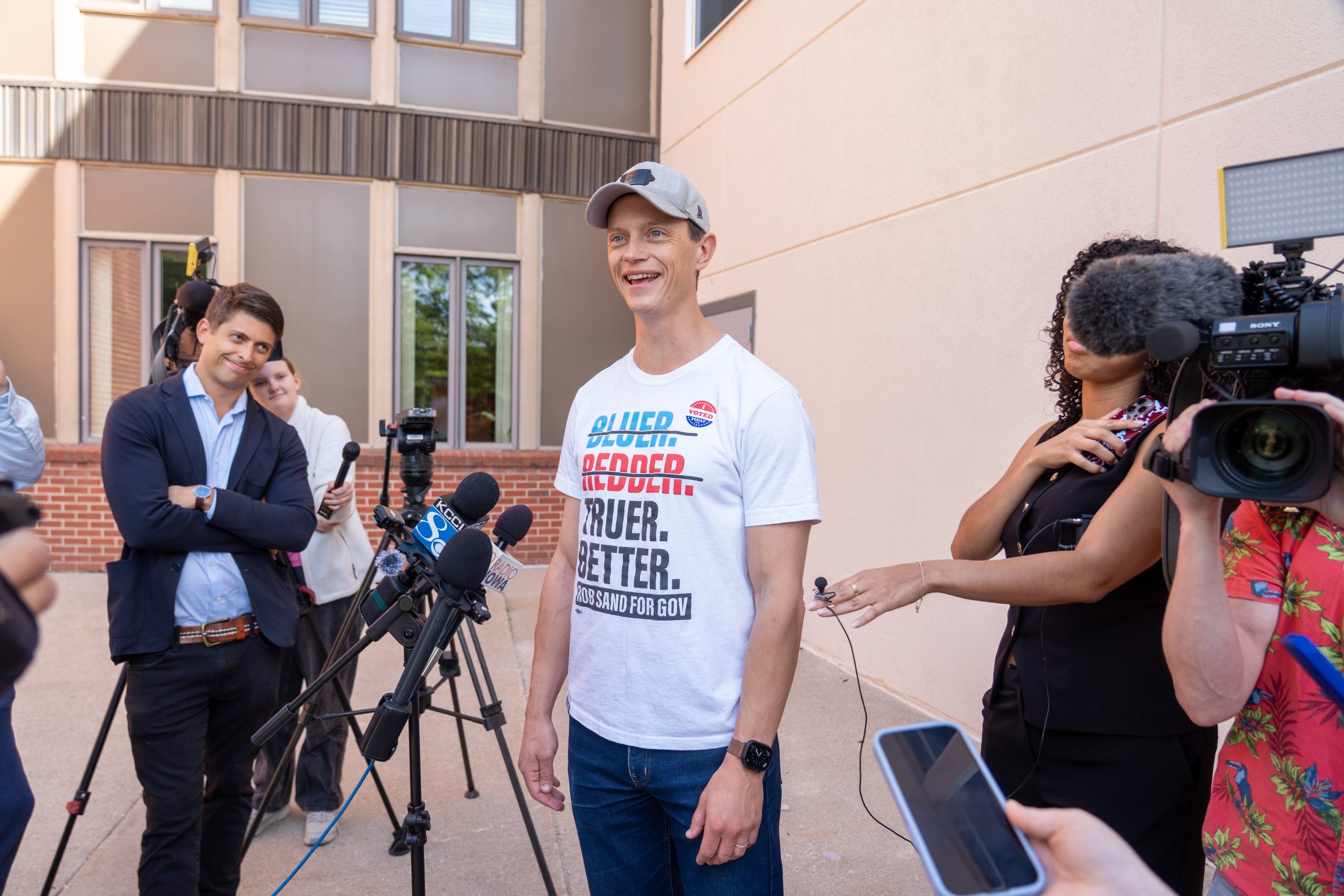

For Iowa Democrats, a decade-long drought may finally be coming to an end.
The economic turmoil of the past year-and-a-half has been felt acutely in Iowa, where the agriculture-heavy economy has been jolted by tariffs. Medicaid cuts in last year’s One Big Beautiful Bill Act are ransacking rural health facilities, Democrats say, and several clinics in the state have closed. And the Iran war has spiked prices for fertilizer and diesel — critical supplies for the farm state.
That’s all creating a dynamic that Democrats feel will propel voters their way in the midterms, giving them a shot at their first major statewide wins since the Obama era. And they’re confident that their candidates atop the ticket — a slate that was officially nominated in Tuesday’s primaries — will help carry Democrats in down ballot races.
“You go into these rural communities, the word that I hear the most is ‘betrayal,’” Josh Turek, the Democratic nominee for U.S. Senate, told POLITICO in an interview late Tuesday night after winning his primary. “We’re leading the nation in farm foreclosures. Farm suicide rates skyrocketing. And so the Trump signs and Trump flags are coming down, because they say we’ve been betrayed.”
Even some Republicans are sounding the alarm.
“The reality is, if voters do not trust Republican elected officials and candidates with the future of the economy, they’re not going to vote for them this November,” said Drew Klein, an Iowa-based regional vice president of Americans for Prosperity. “That is what is going to decide the election in November.”
Democrats see economic issues providing an opening across rural America. The Democratic Congressional Campaign Committee recently commissioned polling they say shows economic dissatisfaction among rural voters, according to a memo shared first with POLITICO.
Both the Senate and governor’s seats are open in Iowa at the same time for the first time since 1968, and Democrats think they have a slate of nominees who could meet the moment.
“We’re excited about it, and this is probably the first time in a long, long time when I can say that,” said Patty Judge, a Democrat who served as Iowa agriculture secretary and was Democrats’ last lieutenant governor before her ticket lost in 2010.
Iowa Democrats and DCCC are seriously targeting three of the state’s four House seats as well — seats they swept in the last wave election, in 2018.
Turek, a Paralympic gold medalist, cruised to victory Tuesday in the primary for U.S. Senate, a victory for national Democrats who backed his campaign and will be eager to support him in November. He’ll run statewide with Rob Sand, the current state auditor and rising star within the party, who ran unopposed in the gubernatorial primary.
But winning in Iowa will still be difficult and require Democrats to overcome a party brand that has become toxic in most rural corners of the country. No Democrat in the state has been elected governor since 2006, to the U.S. Senate since 2008 and to the U.S House since 2020. The last time the state went blue at the presidential level was 2012.
Republicans admit the environment isn’t great — but argue that Democrats will still fall short given how far right the state has shifted in the Trump era.
“I think it’s a huge hill to climb for Dems,” said David Kochel, a longtime Republican strategist who has done extensive work in the state. “Yes, a lot of things are breaking towards them, but we’re talking about a state where Trump won by 13.”
“Democrats turned their backs on Iowa years ago, and their candidates prove they still haven’t learned a thing,” said National Republican Congressional Committee spokesperson Emily Tuttle. “Iowans want representatives who will fight for them, not lecture them or look down on them. That’s why Republicans are positioned to win across Iowa this November.”
Democrats’ optimism starts atop the ticket: Sand will take on Republican Zach Lahn, who won his primary with less than 40 percent of the vote over Trump-endorsed Rep. Randy Feenstra (R-Iowa).
Sand — an avid hunter who is the only statewide-elected Democratic official — has gained popularity in conservative Iowa for his independent, fiscally moderate streak. “They know him and trust him,” said Emma O’Brien, deputy campaign director for Sand. “He has bucked the Democratic Party and told them he disagrees where he has disagreed, and has given props to the other party when they do the right thing.”
Democrats are banking on Iowans being ready for a change after a decade of leadership from Republican Gov. Kim Reynolds. According to data from Morning Consult, she’s been the country’s most unpopular governor for two years running; 49 percent of Iowans disapproved of Reynolds’ performance as of February 2026.
“She’s had control of the legislature that whole time, and it is just inarguable that people’s lives are not better,” said Sue Dvorsky, a former Iowa Democratic Party chair. “Our health care is worse, our water is worse, the schools are in trouble. Every dimension that I think a family or a community uses to measure its health is down.”
A spokesperson for Reynolds did not respond to a request for comment.
In the Senate race, Turek will face off against GOP Rep. Ashley Hinson, a race that early polls show in a statistical deadlock. Democrats have their sights on Republican Reps. Mariannette Miller-Meeks in the 1st District and Zach Nunn in the 3rd District — and even think Hinson’s open seat in the 2nd District could be in play.
“Instead of standing up for Iowans, [Republicans] have put themselves, special interests, and their party bosses first,” said DCCC spokesperson Katie Smith. “Iowa families are desperate for change and after years of broken promises and failures, are ready to reject these creatures of the swamp.”
The string of strong candidates atop the ballot will help carry candidates in state legislature and local races, Democrats say.
“It feels different,” Sarah Trone Garriott, the Democratic challenger to Nunn who was elected to the state Senate in 2022 and 2024, told POLITICO on Tuesday, before winning her primary. “I have been one of the only [Democrats] to win in those years, and that felt pretty lonely. But this feels really good.”
Iowa Democrats have seen recent flashes of hope. In 2025, Democrats won four of six special elections for the state legislature, breaking Republicans’ supermajority in the state Senate.
Democrats draw a straight line between the changes to Medicaid in last year’s reconciliation bill and rural health clinic closures. In Iowa’s 1st District, a medical center ended its labor and delivery services, citing issues with government funding; in the 3rd District, clinics closed explicitly because of “expected Medicaid cuts.”
Farmers — a traditionally Republican leaning coalition — voted heavily for Trump. “[Trump] is not very good for farmers, but farmers have been pretty good to him,” said Tom Miller, a Democrat who served for 40 years as Iowa’s attorney general.
But Iowa farmers have been heavily impacted by Trump’s tariffs and trade wars — not to mention the spike in fuel and fertilizer costs.
Last fall, some farmers told former state Rep. Christina Bohannan — the Democratic nominee in the 1st District, where she will face Miller-Meeks for the third consecutive cycle — that they waited to buy fertilizer until spring because of high costs caused by tariffs. “Then we went to war with Iran, and the fertilizer prices spiked even more,” Bohannan said. “So our farmers are really struggling.”
Aaron Heley Lehman, president of the Iowa Farmers Union and a fifth-generation farmer, warned that rural voters should not be automatically counted on by any party. “People are feeling a lot of pain right now and not seeing a lot of action to match rhetoric,” Lehman said. “The degree of hurt that Iowa farmers are feeling is pretty wide.”

These are the people whose job it was to stop the leadership of the SNP from stealing almost £700,000 of “ringfenced” fundraiser money from independence supporters, and who utterly failed at that job.

It was also their job to stop Peter Murrell stealing the best part of £500,000 from the SNP, in a separate but related crime, and they failed at that one too.
A small handful of them (marked with red asterisks) tried their best to do their duties, and were blocked primarily by one powerful woman – Nicola Sturgeon – and a room full of cowards, weaklings and bullies, listed above.
This video is a horrifying watch.
But the most shocking part comes about 12 minutes in. Allison Graham, a member of the SNP’s Finance and Audit Committee (FAC) as well as its National Executive Committee (NEC) relates how at an NEC meeting on 20 March 2021 she read out a statement from herself and two other FAC members.

Though the statement was quite diplomatically phrased considering the seriousness of the issues, the response to it from the online meeting was a sustained personal attack on Allison Graham from Cllr Ian Cockburn, then the co-leader of the SNP group on Highland Council and who’d completed a law degree just three years earlier.

Despite therefore presumably knowing that he and the other NEC members were legally liable for the SNP’s finances, Cockburn laid into Allison Graham to the extent that she physically bowed her head in front of her PC screen, and then the rest of the committee – including Nicola Sturgeon – joined the pile-on, with both anger and mockery.

Most of those doing so were women, but alert readers will have also spotted the eternally poisonous Glasgow councillor Graham Campbell – part of Sturgeon’s inner circle and seen on the far right of the pic below – going so far as to say that a member of the party’s Finance & Audit Committee shouldn’t even have been allowed to read out a statement expressing the FAC’s concerns about the party finances at a meeting of its National Executive Committee.

(In other words, that the FAC literally should have been prevented from doing its job of warning the NEC about a massive seven-figure gap in the SNP’s accounts.)
This was entirely in character for Campbell, who at around the same time was demanding that anyone having any dealings (even retweets on Twitter) with Wings Over Scotland – which was also trying to warn SNP members and indy supporters that their money had been stolen – should be expelled from the party.

Ian Cockburn and Christina Cannon, incidentally, are still on the SNP NEC today.

Allison Graham had read out the statement from the FAC members in the hope that it would be recorded as part of the minutes of the meeting.

But the NEC had stopped properly recording minutes of its meetings in November 2020 – by a remarkable coincidence, the exact same month that Douglas Chapman had been elected as Treasurer specifically on a platform of greater financial transparency, and recruited Allison Graham, Cynthia Guthrie and Frank Ross to help him in that aim – and started providing party members with only “Outcome Of Business” notes.

This is all ordinary party members were told about the 20 March meeting:

And even NEC members got only this:

It’s important to emphasise once again that at this stage concerns were only about the missing fundraiser money, not Peter Murrell’s personal embezzlement from the party.
The SNP’s accounts for 2020 wouldn’t be published until months after the FAC members resigned, and by the end of 2019 Murrell had only pilfered around £210,000 – a small fraction of the amount of the discrepancy the FAC had noticed.


But all attempts to solve the problem had been frustrated not just by Murrell – who had obvious motivations to keep the finances away from prying eyes – but by the aggressive hostility of the NEC, the very body that was supposed to hold him accountable, driven by the attitude of the party leader.

And as Cynthia Guthrie ruefully notes, that was the real problem.

Nicola Sturgeon’s involvement in the coverup of the dodgy finances goes far beyond mere ignorance, far beyond even a wildly reckless lack of curiosity. She actively, brutally crushed any attempt to warn those responsible for the SNP’s finances of any alarming issues about them.
The FAC members told all of this to Operation Branchform police. And yet still nobody has been held accountable for this misappropriation of hundreds of thousands of pounds solicited from donors on a false premise, and which the SNP now admits had already been spent on something else long before the FAC members resigned and long before the majority of Peter Murrell’s embezzlement.
Alex Kerr, who was on that 2020 NEC, is now an MSP and SNP National Secretary.

Kirsten Oswald, the Business Convener who shut down every attempt by the FAC to raise the issue with the NEC, is now an MSP and a government minister.


(Hilariously, the SNP issued a statement yesterday that Oswald had been committed to transparently updating party members about what had happened at NEC meetings.

Let’s just remind ourselves what Oswald told members about a meeting where half the party’s Finance Committee had resigned because they had extremely grave concerns about the party’s finances and the Chief Executive’s refusal to provide them with even the most basic information required to do their job.)
Alison Thewliss, who was on the 2020 NEC, is now an MSP.

Ian Cockburn, who instigated the pile-on against Allison Graham – the only time he ever spoke at an NEC meeting, Allison told Wings earlier today – has now resigned from Highland Council but is still on the SNP NEC.

Christina Cannon, who also joined the pile-on, is still on the NEC and is an SNP councillor in Glasgow.

Graham Campbell, who thought it was outrageous that the Finance & Audit Committee was even allowed to report to the NEC on the party’s finances, is a councillor in the same ward as Christina Cannon, and chairs the SNP’s BAME Network.


Farah Farzana, who also joined in the pile-on and is also a former chair of the SNP BAME Network, describes herself as a “social injustice activist” [sic] and is currently Equalities And Human Rights Officer at Falkirk Council. She was the Scottish Parliament’s “ambassador” for World Hijab Day, and remains active in the SNP.


Heather Anderson, who also joined the pile-on, became an SNP MSP last month, giving her oath in “Dundonian Scots”. She previously founded Scottish Human Services, a charitable trust focused on “inclusion”.


Laura Brennan-Whitefield, who also joined the pile-on, is an SNP councillor. When seeking to be elected to the NEC in 2018, she expressed her wish to “influence Party policy in a progressive way”.


Stacy Bradley, who also joined the pile-on, stepped down as an SNP office-bearer in 2024 in order to concentrate on a new career as a trainee criminal defence solicitor, which might come in handy in the future.


Emma Hendrie, who also joined in the pile-on, campaigned actively in the SNP’s “Young Scots for Independence” wing, also known as the Twitler Youth, for the decriminalisation of sex work. (She’s the brunette on the right of the pic below.)
When seeking re-election to the NEC in 2020, she said “Constructive criticism is always welcome”, which we’re sure will come as comforting news to Allison Graham. Hendrie to have subsequently vanished from public view.


Findlay MacGregor, who also joined in the pile-on, is the brother of SNP MSP Fulton MacGregor. He was re-elected to the NEC in 2021 after all the pro-accountability “rebels” elected in 2020 were pushed out. This 2019 campaign pic is almost all we know about him.

All of the people above, and all the other members of the 2020 SNP NEC who didn’t resign, are complicit – either actively, as in the cases of those we’ve just listed, or passively in the cases of others – in the cover-up of the theft of the fundraiser money (and also in the cover-up of Peter Murrell’s embezzlement).
All failed in their duty to the party as NEC members, and in their legal fiduciary duties. All of them bear responsibility for the subsequent calamities that befell the SNP, because none of them asked the questions it was their job to ask, and instead attacked those who did.


But what the testimony of the FAC members this week really demonstrates is that everyone who didn’t resign from the NEC in 2021 was involved in a crime for which nobody has yet been held to account, and that it is now even more astonishing that the Crown Office decided not to even try to prosecute anyone for it, and refuses to offer any sort of explanation for why.

Crown Agent John Logue’s comments tell us nothing. WHY were the police and Crown Office not able to establish fraud, as the money had demonstrably been spent, and not on what it was raised for? And HOW were they able to establish there’d been no fraud, as at the point when the focus of the investigation switched from the fundraiser fraud to Murrell’s embezzlement they hadn’t questioned anyone in the SNP leadership? Like a magpie distracted by a shiny object, they simply dropped all the twigs they were carrying and went after their new prize.
The SNP was the victim of a crime, but also the perpetrator of one, and until the latter is addressed we’re all just being told to Wheesht For Nicola.

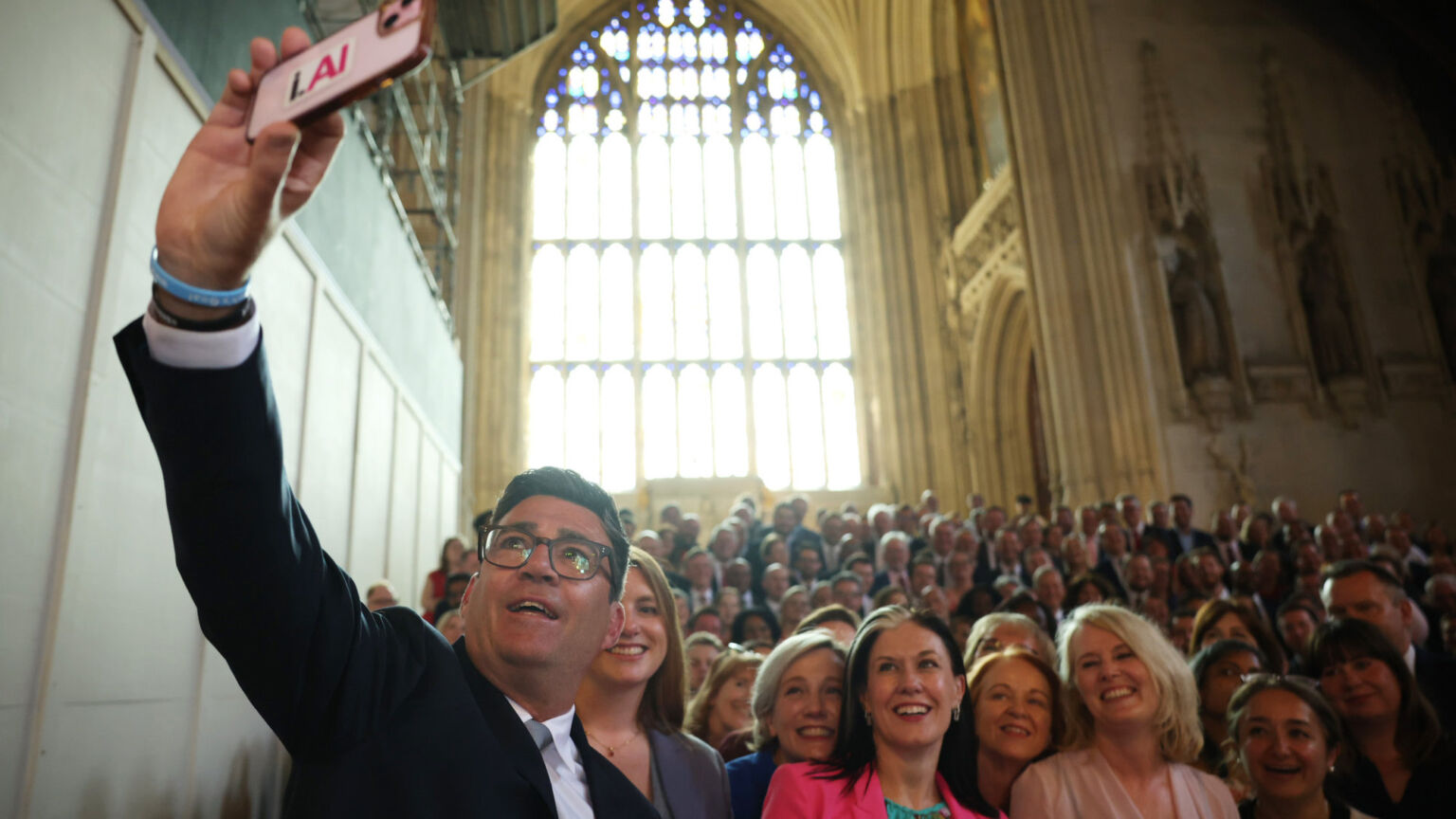
For obvious reasons, and despite a hailstorm of speculation, we have yet to see any solid policy changes guaranteed from Andy Burnham’s team, and pundits are still in the personality-assessment stage of the recruiting process. Happily, this is where I feel most able to contribute.
I suppose I might be in a bubble, but I have yet to see anyone outside of the Parliamentary Labour Party suggest that once the clouds of glory have dissipated over Euston Station, the UK’s next prime minister will be anything other than a tremendous disappointment.
Actually, that’s not quite correct. Some people expect so little that disappointment would be impossible, but you get my drift.
This might be to underestimate the threat that Burnham represents. If he does institute radical changes to the tax code, make Britain an even more hostile environment for the ambitious, wealthy, aspirational or merely talented and hardworking, and double down on all the worst parts of the past two years (Net Zero in particular), then he could do far more damage than is evoked by mere disappointment.
In the meantime, it’s useful to settle on a reliable mental model for what is going on right now. We need a decent analogy for the regicide and coronation that we are witnessing.
Here, I offer up half a dozen analogies prêt-à-porter – parables that I have not seen overused just yet, should you want to impress colleagues or, if WFH, the dog.
Perhaps most popular is Burnham as ‘the King over the Water’, a reference to the exiled Stuart claimants to the English throne. It works even if the water is the Manchester Shipping Canal. It certainly harnesses the sturdy romantic conviction of the Jacobites and the British myth of the great lost cause.
More prosaic perhaps, but still convincing, is Burnham as the bottle of Limoncello at the back of the cabinet – the one you finally resort to when everything else that anyone actually brought to the party has long ago been drunk, but you don’t want to admit defeat.
You can never go wrong quoting or gesturing towards Shakespeare when you are discussing back-stabbing conspirators or legitimacy crises. The Hollow Crown sequence in Richard II offers a pretty striking parallel, with Burnham as Henry Bolingbroke (emphasis on the last syllable) aka Henry V. Casting Keir Starmer as Richard II offers some tantalising echoes and rhymes of 14th-century title-tattle intended to delegitimise his rule. But you do need to grasp quite a bit of subtle and tangled dynastical backstory to make this work in general conversation and are likely to lose the attention of the rabble if you’re not careful.
Kemi Badenoch seems to have been more tempted by the dorsal knives of the Roman assassination, the Caesarean ‘Et tu, Brute?’ scenario, when discussing Starmer’s ousting during yesterday’s PMQs. Yet no matter how hard Labour MPs have tried to, portraying Starmer as ‘the noblest man that ever lived in the tide of times’, or even since 2024, is a stretch. He hath not, by my reckoning, bestrode this narrow world like a colossus, or even given the impression that he could step over a garden hose without breaking his stride.
Besides, Burnham is neither convincingly Mark Antony nor Octavian / Augustus in this case. It could be worth toying with out loud, perhaps, but not backing it too hard.
Another point of bardic reference when you hear the name Andy Burnham might be the homophonic Birnam Wood from Macbeth. The witches prophesise that Macbeth will not be overthrown until Birnam Wood moves towards his castle in Dunsinane, and that he cannot be harmed by a man born of a woman. He mistakes this ominous warning for a ‘nothing-to-worry-about old son’ all clear.
Whether Andy is ‘of woman born’ or was untimely ripp’d – another Caesarean reference – from his mother’s womb, history or at least Wikipedia does not relate. But his stealthy approach to No10 this past month or two has been less like Birnam Wood advancing on Dunsinane, than the game old campaigners Jonesy, Godfrey, Walker et al stumbling down a gentle slope, barely obscured by a few optimistic sprigs at the end of every episode of Dad’s Army. Which does chime all too convincingly.
Starmer, though, cannot be meaningfully compared with the bloodthirsty would-be tyrant that Macbeth became, any more than he can be with Caesar. I do not mean this, let me emphasise, as a compliment. I think more than a few Labour supporters would have liked to see him dial up the ‘in blood stepped so far’ calculation a little more when the going got rough. But rather than turn the multitudinous seas incarnadine, Starmer’s anaemic style has, if anything, turned more than a few red types Green. He strikes most people as so profoundly bloodless that he could barely stain a pocket handkerchief, let alone Neptune’s ocean.
Besides, Starmer did not seize No10 in a bloody coup. No one was murdered in their beds. Starmer has always been much more ‘Is this a procedure I see before me?’ kind of guy. Nor is his missus the classic Lady Macbeth figure that Carrie Johnson was persuasively portrayed as.
Staying with archaic references, the Second Coming is always promising, and the word ‘Messianic’ has certainly been thrown around lately – even more often than at a Russell Brand gig.
Again, it’s worth probing the thickness of that ice to see if it will bear weight. The first thing one has to ask is who was the First Coming in terms of Labour prime ministers? Clement Attlee? No one before colour TV has a chance of landing now (Shakespeare is mythical and thus exempt). Harold Wilson is perhaps more appealing, a northern man with the common touch and a prophet of economic growth, who called a snap election in the year that England won the World Cup, which I would certainly welcome, on both fronts.
That is certainly a better fit for Burnham than the only other possible candidate that the Labour faithful would like to see reincarnated – namely, Tony Blair. Putting aside the footling administrative wrinkle, that Blair is not actually dead yet, his presidential style, sinister charisma and vote-winning panache would surely be welcome after the leadership of a barely animated root vegetable. But Blair has blood on his hands. And easy as it is for those of us on the other side to forget, many Labourites despaired of Starmer because he wasn’t left-wing enough. The real trouble with this analogy is that it is too close to the facts to allow a little poetry to bloom. There is no spark, no room for a creative leap.
So in the end, I am going to suddenly abandon the learned and pretentious and offer instead an analogy much more in keeping with Burnham’s own man-of-the-people style. This is like the sort of changeover that any football fan has seen on myriad occasions when their team is two-nil down away – when their star striker has failed to live up to his billing, and they bring on some knackered, old war horse, in a desperate attempt to turn things around. Chelsea, say, in the 1990-91 season, taking off Kerry Dixon and bringing on Kevin Wilson. But everyone will have their own version.
It’s not a perfect fit. For one thing, we’ve barely passed the first hydration break, let alone half-time of Labour’s term in office. But at least this one has a certain democratic appeal.
Simon Evans is a spiked columnist and stand-up comedian. Tickets for his tour, Staring at the Sun, are on sale here.
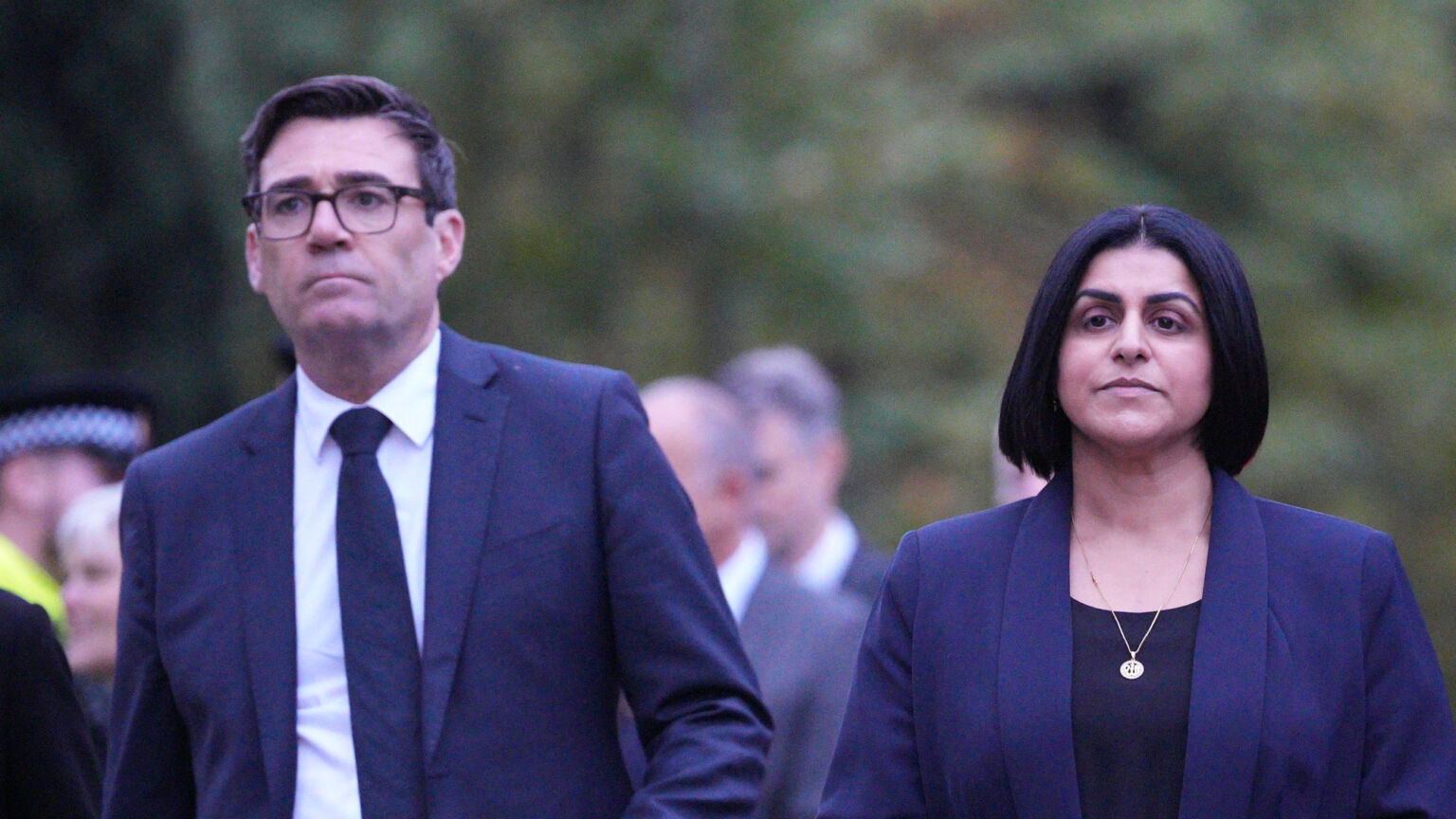
The Makerfield by-election was seen as one of the most consequential in modern British history and, with reports that Andy Burnham intends to scrap planned reforms to Indefinite Leave to Remain (ILR), it is hard to argue otherwise.
The result last Thursday will not only give the UK a new prime minister, but could also mean up to 2.15million migrants who arrived between 2021 and the election of Keir Starmer – known as the ‘Boriswave’ – will soon be awarded permanent settlement, putting them on a pathway to British citizenship. A politician with a mandate of just under 25,000 votes is taking our country down a path that will have profound social, fiscal and democratic consequences.
Last year, home secretary Shabana Mahmood introduced modest proposals that would require care workers and their dependents who arrived during Johnson’s term to wait up to 15 years before obtaining ILR, with the baseline for other migrants increasing from five to 10 years. It was a long-overdue recognition that the last Conservative government’s immigration policies had led to an unprecedented spike in low-wage and low-skill migration.
Standing in a Red Wall seat, Burnham softly indicated that he supported the general gist of Mahmood’s plan. He also u-turned on his prior support for migrants to have immediate access to public funds on arrival, and said net migration needed to continue falling.
For an individual vying for the top job, this made perfect sense. Polling by More in Common found that 52 per cent of voters think the main reason immigrants come to the UK is to take advantage of welfare and the NHS. The vast majority of the British public do not support giving welfare to migrants.
But Burnham is no longer courting the support of ordinary Brits. The views and opinions of his Makerfield constituents were forgotten as soon as he entered the Avanti West Coast first-class lounge. His only guiding principle now is keeping the parliamentary Labour Party on side.
As soon as Mahmood’s proposals were first announced, an avalanche of criticism poured down from Labour backbenchers. The main line of attack was that these changes were ‘unfair’ after Britain had ‘promised’ migrants settlement after five years.
Quite when such a ‘promise’ was made by the British government is a mystery. It is also perverse for British politicians to hold a pledge made to foreign nationals as inviolable, while treating the repeated pledges made to the British electorate that mass migration will be brought to an end, and that public debt will be brought under control, as expendable.
As for the matter of fairness, is it really fair to expect overstretched taxpayers to stump up for yet more welfare spending? According to Mahmood, abandoning her reforms could cost up to £10 billion over the lifetimes of just this cohort of care workers and their dependants. And care workers are just one part of the Boriswave. Reform UK estimates that the lifetime cost of all those granted ILR between 2026 and 2030 could amount to £154 billion.
Indeed, some senior Labour figures, including Emily Thornberry, have all but acknowledged that Boriswave migrants obtaining settlement is going to cost a pretty penny, but that we should proceed down this path because to do otherwise would push them into destitution. Saying the quiet part out loud, Thornberry claimed in March this year that over half of migrant children are living in relative poverty. The only remedy, it seems, would be to award their low-earning parents the right to stay in Britain permanently so that they can then claim benefits.
Ironically, granting permanent settlement would actually negate the very justification that was used for the Boriswave in the first place – namely, that the care sector would collapse without vast numbers of migrants. After all, once an individual receives ILR, they have the right to work in whichever sector they wish or even to not work at all. No longer are they required to do the jobs that Britons supposedly don’t want to do. Instead, low-skilled foreign nationals would be free to compete for jobs at the lower end of the labour market, in sectors where there are no shortages. This would be an unmitigated disaster for the roughly one million young people in Britain not in education, employment or training, who would then find it even harder to enter the workplace.
It is hard to overstate how long the damage of Burnham’s embrace of the Boriswave would last. Even before the next General Election, hundreds of thousands of ‘Burnham-Settlers’ could have moved on to obtain British citizenship, putting them beyond the reach of even Reform’s proposal to scrap ILR. At which point, given the cost to the exchequer, we may start to see proposals to denaturalise large numbers of British citizens.
Andy Burnham, before even assuming office, may very well have sowed the seeds of his own downfall. He was elected by traditional Labour voters still hoping there was a politician on their side. For him to suddenly turn into a co-conspirator of Boris Johnson would put him on the path to electoral damnation.
Rob Bates is the research director at the Centre for Migration Control.


(Avico Ltd / Alamy)

4 min read
As greyhound racing reaches its 100-year anniversary, the government must follow Wales and Scotland’s lead and commit to banning the practice in England.
This year marks a milestone for animal protection across the UK.
Within the space of a week, both the Welsh and Scottish Parliaments passed legislation to introduce a ban on greyhound racing in their respective nations.
This year also marks the 100-year anniversary of greyhound racing, with the first race in Manchester in July 1926. After a century of the practice, this anniversary must be more than a milestone. It marks a moment to recognise the harm caused, confront the failures of the industry, and acknowledge that public opinion has moved on.
England now faces a clear choice: follow suit or risk becoming an outlier – undermining our credibility on animal protection and damaging our reputation as a global leader.
Concerns around animal protection continue to overshadow the greyhound racing industry. The life of most racing dogs is marked by isolation and misery. Typically confined to unclean kennels, dogs face little social interaction, rough handling, and untreated wounds.
The industry’s own data reflects this crisis. More than 31,000 greyhounds were injured between 2017 and 2024, with thousands more put down – often because the costs of treatment have outweighed the value placed on their lives.
Data also shows that over 600 dogs have fallen during races this year – more than four every day. It has also identified more than 2,000 dogs who have raced since January but have not been seen in over a month, nor reported as adopted or retired. With the industry’s horrific track record, I am deeply concerned about the fate of these dogs.
These figures are all the more worrying given they sit alongside concerns about the effectiveness of the industry’s self-regulation. Statistics from the Greyhound Board of Great Britain (GBGB) show over 100 breaches of their own rules since the start of last year, which reports indicate amount to over 200 potential criminal offences. This includes serious cases of dangerous neglect and failures to protect dogs from injury and death, alongside broader issues such as substance misuse and integrity violations.
Yet none of these cases appear to have been referred to the police. Instead, reports suggest that the industry handles these cases internally, issuing only weak, ineffective sanctions.
As a nation of animal lovers, this isn’t something we can continue to ignore.
Those in favour of the sport argue that it is a ‘cornerstone’ of working-class life and a contributor to jobs and economic growth. But these claims simply don’t stand up to scrutiny.
Public attitudes are shifting. Interest in the sport is in decline, with the vast majority disengaged. Public petitions have demonstrated clear public backing for change and a growing expectation that Government action will follow. Working class culture evolves over time and simply because racing was traditionally seen as a working-class pastime – that in itself is not reason enough to defend it and the mistreatment of the dogs that are involved.
The economic case for the sport is equally weak. While the industry cites a £55m annual contribution to our economy, independent evidence shows that the sector sustains a limited number of low-wage roles without delivering meaningful long-term economic value. This is not a serious growth industry, but rather a sector seeking to be shielded from its own loss of public support.
As a gambling product, greyhound racing is inseparable from gambling harm – with real costs for both society and the public purse.
The impacts of gambling-related harm are widespread and devastating, reaching into families and communities across the country and placing additional strain on already stretched public services.
We cannot allow industry narratives to obscure this reality.
As greyhound racing approaches 100-year anniversary, I urge the government to use this moment to reconsider its position and bring forward legislation to ban greyhound racing in England, aligning with the direction of travel in Scotland and Wales.
Doing so would place animal protection firmly at the heart of policymaking, properly reflect the values of a nation of animal lovers, and help deliver on this Labour government’s commitment to reduce gambling harms.
Neil Duncan-Jordan is the Labour MP for Poole
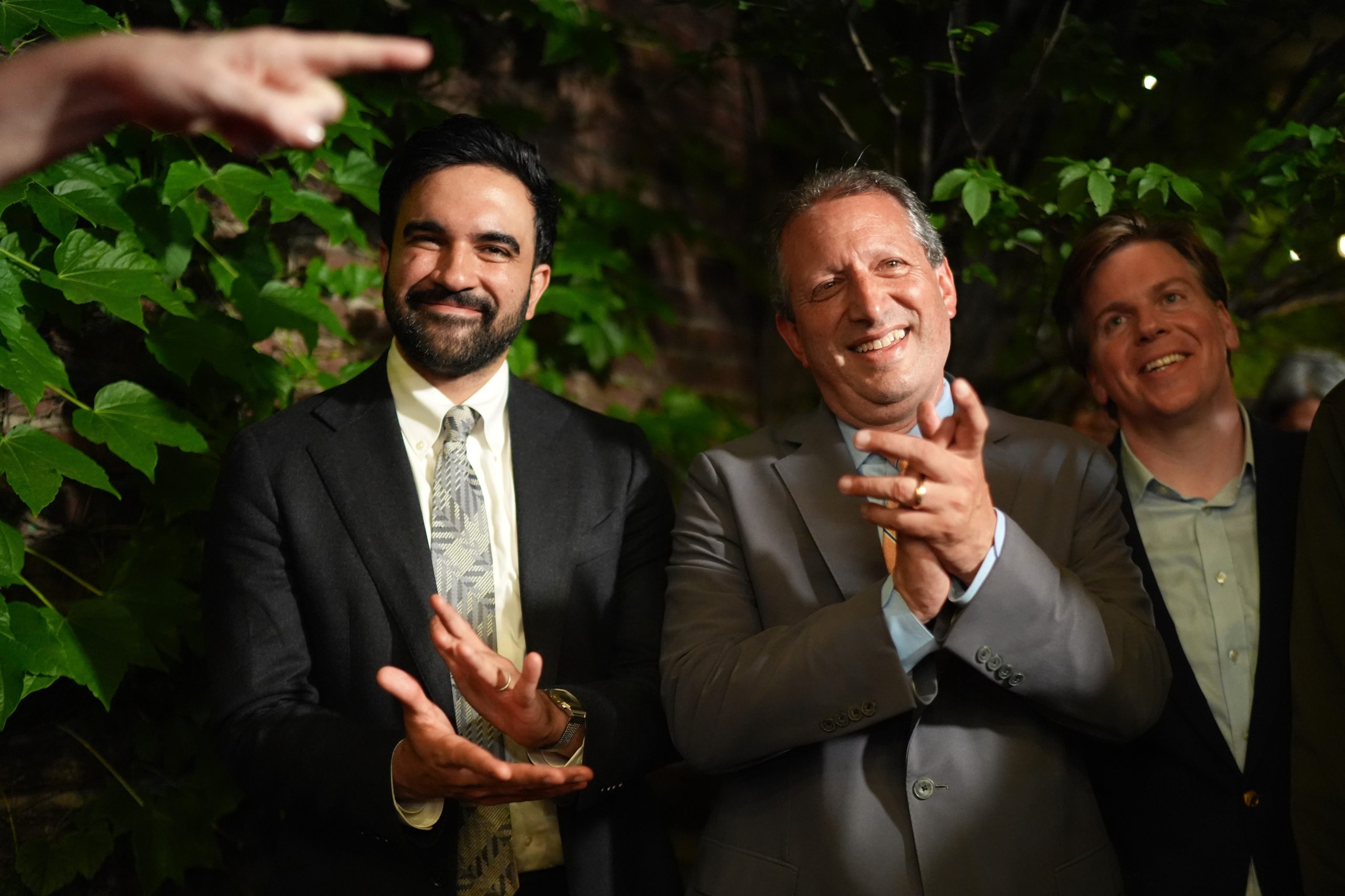

Moderate Democrats are sounding the alarm after massive losses in New York’s primaries. They fear they’re on the verge of losing the party’s ideological civil war — and hurting its electoral chances.
Leftist candidates swept a trio of deep-blue House seats in New York City, a seismic victory that toppled two incumbents, including the powerful chair of the Congressional Hispanic Caucus. And after a string of progressive battleground wins in earlier primaries, moderates are making it very clear that the left’s winning streak is potentially just starting.
The far left is eyeing even bigger targets in key battleground primaries that will determine control of Congress as well as governorships in crucial swing states. Most immediately, moderates fear that a progressive primary sweep could imperil the party’s hopes of beating Republicans this fall.
They also have a more fundamental fear: that progressives are becoming more mainstream as they keep winning — reshaping the Democratic Party.
“Centrist Democrats, normie Democrats, need to realize we’re the insurgents, and they’re the new establishment,” said Liam Kerr, a co-founder of the moderate-aligned WelcomePAC. “It’s a long term structural problem more than it is any one particular win.”
Progressives have romped through Democrats’ spring primaries, notching a series of wins across both safe and competitive districts and upending House and Senate Democrats’ battleplans. Left flank candidates Randy Villegas and Matt Dunlap trounced the Democratic Congressional Campaign Committee’s preferred picks in a pair of battlegrounds in California and Maine. And populist insurgent Graham Platner pushed out Senate Minority Leader Chuck Schumer’s handpicked recruit in Maine, Gov. Janet Mills, before voting even began — only to see his poll numbers slip amidst a series of personal scandals.
With New York in the rearview, upcoming races in Colorado, Michigan and Wisconsin will test whether the insurgent left can continue its hot streak.
“It’s happening in New York, it’s happening in Michigan. I think we’re seeing it happen across the country now, that folks are sick and tired of being sick and tired,” said Michigan Democratic Senate candidate Abdul El-Sayed, who is backed by Sen. Bernie Sanders (I-Vt.) and locked in a bitter three-way primary. “So, certainly we’re going to harness that.”
First up will be Colorado, where Democratic Socialist Melat Kiros is mounting a strong challenge against longtime Democratic incumbent Diana DeGette in a safe seat. In the state’s battleground 8th District, the more progressive-aligned Manny Rutinel is facing establishment-backed Shannon Bird. Whoever wins will face freshman GOP Rep. Gabe Evans.
Even if those progressive candidates end up falling short, establishment Democrats are worried that President Donald Trump and the GOP will be able to successfully tie their more centrist nominees to the most-fringe members of the party, forcing them to respond to progressives’ most controversial comments and positions — like defunding the police or getting rid of prisons entirely.
“These races might have some impact on 2026 if Republicans weaponize the craziest ideas of these candidates against mainstream Democrats running in blue districts,” said Matt Bennett, a co-founder of the moderate think tank Third Way.
The Blue Dogs, Democrats’ House centrist coalition and campaign allies, are worried as well.
Blue Dog Action’s Phil Gardner said it’s imperative that moderate Democrats in swing districts address Republican attacks head-on and put distance between themselves and the left flank of their party.
“The reason they do that is because it works,” Gardner said of GOP efforts to tie moderates to progressives. “Candidates running in these competitive seats should not rely on just anti-Trump sentiment or the Democratic brand, because you’re basically putting your destiny in the hands of forces far outside your control.”
Some on the left are growing frustrated as the establishment increasingly makes them pariahs.
“Having party leaders not make the newest and most exciting members of the party feel like they belong is counterproductive for a party that wants to keep growing,” said progressive strategist Rebecca Katz, whose firm Fight Agency works with El-Sayed and Platner, among others.
Still, establishment Democrats are rushing to shore up primary victories in key battlegrounds. In Michigan, where El-Sayed is leading in new polls, establishment Democrats have begun spending millions of dollars in recent weeks to boost Rep. Haley Stevens and stave off his rise. Reinforcements are also flowing in for El-Sayed.
And in Wisconsin, another key perennial battleground state with major down-ticket races, establishment panic about democratic socialist state Rep. Francesca Hong’s momentum in the crowded gubernatorial primary has led some in the party to start coalescing around moderate Lt. Gov. Sara Rodriguez. One Democrat dropped out and endorsed Rodriguez to try to consolidate the center-left vote.
“True leadership means stepping aside and making sure that we coalesce around someone who can win in November,” Democrat Missy Hughes said during a press conference shortly after she suspended her campaign on Monday.
Hong, in an interview Wednesday, said that the centrist lane is no longer the path to victory.
“I agree, we should coalesce around a leader that can win in November. And I think that I’m that leader,” Hong told POLITICO. “The strategy of running moderates — we’ve lost the House, the Senate and the executive office. … Using the old playbook and looking at the results, I would hope that the course correction is to run some different plays.”But Republicans are salivating over Hong’s prior hardline stances and comments, including previous calls to defund the police. She has sought to alleviate concern about that issue: “there’s no way I’m going to cut public safety, I want to deliver it,” she said in a recent video.
While the left’s wins in safe seats are top of mind, there have been a string of victories for centrists in a number of other Democratic primaries in the most important battlegrounds. The Democratic establishment’s pick prevailed in the New York battleground seat to take on GOP Rep. Mike Lawler on Tuesday, and moderate Rebecca Bennett won the primary to take on GOP Rep. Tom Kean Jr. in a top New Jersey battleground. Some battleground wins for moderates came even as GOP groups meddled to try and boost left-leaning candidates in Texas and Nebraska.
In Senate races, moderate candidates like former Gov. Roy Cooper (D-N.C.) cleared the field with no real challenger. And Texas’ James Talarico and Iowa’s Josh Turek were able to best their more-progressive challengers.
“In most of the flippable seats, you still do have electable Democrats, either winning the primaries, or there was just never really a primary to begin with, and people sort of coalesced,” Gardner said.
Schumer told reporters on Wednesday that every wing of the Democratic Party — not just progressives — was on the rise.
“You’re seeing centrist energy in Virginia, Iowa, and New Jersey, progressive energy in New York City,” Schumer said. “We’re going to harness it all to win in November. Because all Democrats are united in the mission of taking back the Senate and defeating Trump.”
Some progressives were also quick to call for unity after their wins Tuesday, and vowed to help their moderate counterparts this fall.
“I’m going to go help some frontliners win their races,” former New York City Comptroller Brad Lander, who defeated Rep. Dan Goldman by more than 30 points, told reporters on Wednesday. “I hope some moderates will come help Randy Villegas and other progressives win theirs.”
But the prospect of the left picking off a battleground seat in November has major implications for the party’s direction.
“We love the statistic that [progressives have] never flipped any seats. We love to say, ‘look at the polling,” said Kerr, the co-founder of the centrist WelcomePAC. “But we haven’t been scared enough. We’ve been high on our own supply of data while they’ve been organizing.”
And outside of this year’s midterms, there’s a broader fight to come in 2028, where an open presidential primary will shape the party for years to come.
“It is vital that Democrats do not mistake the radicalism of a very small electorate in very blue places with the desire of the larger Democratic Party to move sharply to the left,” Bennett said. “Those things are not the same, and Democrats running for president must resist the urge to believe what they see on social media and the siren song of the DSA and the activist left.”

Credit: Kennan Constance, Unsplash

Some anti-gambling campaigners would have policymakers believe concerns about the gambling black market are exaggerated. They are wrong
The regulated betting and gaming sector takes gambling harm seriously and recognises its responsibility to protect consumers. Millions of adults enjoy betting safely each month, but we know gambling can cause harm for a small number of individuals and families. NHS figures estimate that 0.7 per cent of adults experience problem gambling, and every one of those cases is a cause for concern. That is why our members continue to invest heavily in safer gambling tools, technology and interventions designed to reduce risk and support those who need help.
But if we are serious about protecting consumers, we must also be serious about confronting the growing threat posed by the criminal gangs operating the illegal gambling market.
Recent claims have suggested concerns about illegal gambling are overstated because unlicensed operators account for less than 10 per cent of the market. Even if that figure is accepted, it should alarm everyone involved in this debate.
Britain is home to 22.5 million adults who place a bet each month. If anything close to one in ten pounds staked is taking place with illegal operators, that is not a reassuringly small figure. It represents a major consumer protection failure, exposing hundreds of thousands of consumers to criminal operators who offer none of the protections available in the regulated market.
That is not a marginal issue. It is one of the most significant consumer protection challenges facing the sector today.
Independent analysis by H2GC forecasts that stakes with illegal operators could almost double from £17bn in 2025 to more than £33bn by 2028. On that trajectory, almost one in every five pounds staked online could be placed with an unlicensed operator within three years.
That should concern anyone who genuinely cares about reducing gambling-related harm. Because every customer who moves from a regulated operator to a criminal one loses the protections, safeguards and interventions designed to keep them safe.
Too often, discussions about gambling policy focus solely on restrictions placed on licensed operators, without considering where customers go if they become frustrated with the regulated market. History shows that consumers do not stop gambling because of increased regulation, product restrictions or outright bans. Many seek alternatives.
When they do, illegal operators are waiting.
Unlike licensed betting and gaming businesses, black market operators are not accountable to the Gambling Commission. They do not have to conduct safer gambling interventions. They do not participate in self-exclusion schemes such as GAMSTOP. They do not face the same requirements around age verification, customer protection or anti-money laundering checks. They pay no UK tax, contribute nothing to British sport and have no obligation to support research, prevention or treatment programmes.
Most importantly, they offer customers no meaningful protection when things go wrong.
That distinction matters. Customers who use licensed operators know games are independently tested, funds are protected and winnings are paid fairly, protections that simply cannot be guaranteed in the illegal market.
The debate should never be framed as a choice between regulation and no regulation. The real question is whether policies strengthen the regulated market or inadvertently drive consumers towards illegal alternatives.
Well-designed regulation is essential. But regulation must also be proportionate, evidence-led and focused on achieving its intended outcomes. It should be reviewed regularly, with policymakers and regulators willing to adapt when evidence shows change is needed.
The impact of regulation must always be assessed in the round. Policymakers should consider the cumulative effect of multiple interventions rather than drawing conclusions from individual measures in isolation.
When customers remain within the regulated sector, they are protected by a framework of safeguards that has become increasingly robust in recent years. Standards have risen significantly, and operators continue to work closely with regulators, government and charities to improve protections further.
The danger comes when policies create incentives for customers to seek out operators who simply ignore British law altogether.
Every customer lost to the black market is a customer lost to protection.
This challenge requires a coordinated response. The Government’s Illegal Gambling Taskforce is a welcome step forward, but it must be matched by practical action.
The Betting and Gaming Council has proposed a five-point plan to tackle illegal gambling, including stronger action against illegal advertising, faster disruption of unlicensed websites, tighter controls on payment providers facilitating unlawful transactions, greater accountability for businesses that enable illegal operators, and tougher enforcement against those targeting British consumers.
This is not about protecting the interests of licensed operators. It is about protecting consumers.
There will always be those who oppose gambling in all its forms. But policymakers should be wary of arguments that minimise the risks posed by criminal operators or dismiss concerns about consumer migration to the black market.
There is a fundamental difference between a regulated British business operating under licence and an illegal offshore operator operating outside the law.
One is accountable. The other is not.
One is required to protect customers. The other has no such obligation.
One contributes to society through jobs, tax revenues and support for sport. The other simply extracts money from British consumers while avoiding responsibility.
That is why the debate about illegal gambling matters.
Whether the black market accounts for five per cent, nine per cent or more today is not the point. The real question is whether policymakers are willing to act before it grows larger still.
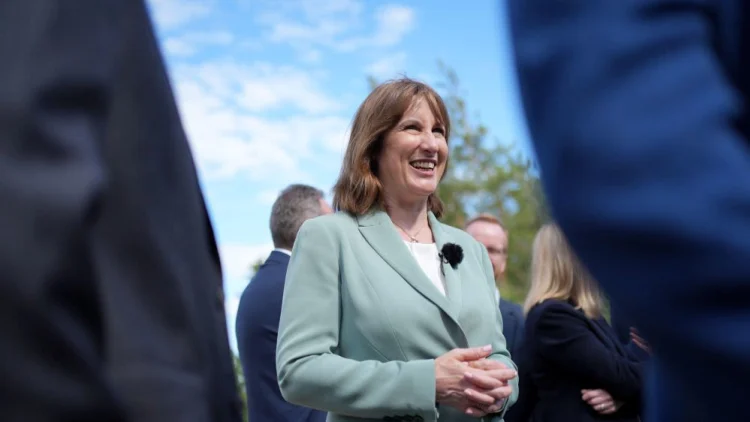

Rachel Reeves is expected to lose her role under Andy Burnham’s premiership (Alamy)
2 min read
Chancellor Rachel Reeves has confirmed her support for Andy Burnham to become the next prime minister as speculation over the future cabinet heats up.
Speaking to the BBC on Thursday morning, Reeves said: “I’m supporting Andy to be prime minister.”
Keir Starmer announced on Monday that he would resign as PM this summer, triggering the process to replace him as leader, which could conclude as early as next month.
It comes after reports that Reeves will lose her job as Chancellor under the former Manchester mayor and instead be handed a more junior role.
Reeves, who has been in the role since Labour won the general election in July 2024, had hoped to stay in No 11, but The Times reported that Burnham’s allies had concluded a personnel change was needed to show a shift in direction.
Sky News reported earlier this week that Reeves’ aides had been calling Britain’s top businesses asking them to lobby Burnham to keep her as Chancellor.
On Thursday, Reeves said she had known Burnham for “more than a decade and a half” but was “not going to pre-empt his decisions” about top jobs.
Burnham was sworn in as the MP of Makerfield on Monday after winning a landslide by-election victory. It is looking increasingly likely that he will become PM next month. His likeliest contender former health secretary We Streeting on Monday announced his support for Burnham.
The Chief Secretary to the Prime Minister Darren Jones has also said he will not be standing in a leadership contest for Labour leader, after sparking suspicion among colleagues that he was quietly sounding out support for a future leadership bid of his own.



The Government’s Animal Sentience Committee warns the sale of glue traps is putting people “at significant risk of breaking the law”: a sales ban will protect both animals and the public
In recent years, British governments have passed laws to limit or prohibit the use of rodent glue traps. But given that these traps are still widely available through major online marketplaces like Amazon and eBay, and in hundreds of hardware stores in England, it’s understandable that most people don’t know that using these traps could lead to a criminal conviction. The problem is a fragmented patchwork of legislation that is putting both animals and the public at risk.
We’re urging action from the UK Government to get the public, retailers and animals out of this sticky situation.
What are glue traps?
Glue traps are flat cardboard or plastic boards coated with a strong adhesive. Food is added as bait and when animals run across the board they become stuck. Trapped animals may struggle for hours, sustaining severe injuries such as torn skin, broken bones, and can even chew through or tear off their limbs while trying to escape.
While these traps are designed to catch insects or rodents, they are indiscriminate. Animal rescue organisations report cases of robins, bats, hedgehogs and even cats being caught and killed.1
What are the current laws?
In Wales, the use of glue traps has been illegal since October 2023, but sale to the public remains legal. In England, the Glue Traps (Offences) Act 2022 made it an offence to set a glue trap without a licence (only issued to professional pest controllers in limited circumstances), but our research has shown that they are still widely available for public purchase.2 In Scotland, the Wildlife Management and Muirburn (Scotland) Act 2024 went further by banning the use, supply and possession of glue traps.
The Internal Market Act 2020 prevented devolved governments from enacting sales bans unless a specific exclusion was permitted by the UK Government. In February 2026, the UK Government passed the exclusion regulation requested by the Scottish Government. This contributed to a delay of nearly two years between legislation being passed and the ban taking effect on 1st July 2026.
Why aren’t the laws working?
Professional pest controllers appear to have moved away from using glue traps, and most national DIY and hardware chains have ceased selling them. But our research suggests that hundreds of independent shops in England are selling these traps for as little as £1.99, promising ‘safe’, ‘effective’ and ‘non-toxic’ control of unwanted rodents. Major online marketplaces such as Amazon also still list them, sometimes rebranded as insect traps and with misleading claims such as ‘harmless to both humans and pets’.3
In March 2026, the Animal Sentience Committee published a report noting the clear evidence that glue traps capable of trapping rodents remain on sale at retailers and online in England, and warned that “the continued sale of glue traps has the effect of placing people at significant risk of breaking the law”.4 Products rebranded as insect traps often lack any guidance on how to humanely kill a trapped rodent, leading to additional suffering for trapped animals. Some shops contacted by Humane World for Animals’ mystery shopper suggested putting trapped animals, still alive, in the bin, or flushing them down the toilet. These would be offences under the Animal Welfare Act 2006.
Enforcement is also a problem, with evidence indicating that some police forces have received no specific training on the new law and no guidance on handling reports.5 A combination of widespread availability and lack of enforcement means that Britain has bans on cruel glue traps on paper, but not in practice.
What comes next?
On 1st July, Scotland’s new comprehensive ban on the sale, use and possession of glue traps will come into effect. This will be the strongest restriction on glue traps in the UK, and is extremely welcome. But for NatureScot and Police Scotland to prevent glue trap use they must overcome significant enforcement challenges, including preventing the use of traps purchased in England or online.
There is a simpler solution.
If British governments accept that glue traps are cruel enough to justify criminal restrictions on their use, then continuing to allow public sale makes no sense. The simplest and most effective next step is for England and Wales to also ban their sale, online and offline. A full ban on use and sale would give much-needed clarity to the public and retailers and make enforcement achievable.
Without this, the law will remain muddled, animals will continue to suffer needlessly, and the public will remain at risk of buying products that they cannot legally use, and facing criminal convictions if caught. If we are serious about ending the cruelty of glue traps, a piecemeal approach can no longer be an option. The UK Government and the Senedd must follow Holyrood’s lead and ban the sale of glue traps.
References
- https://www.bbc.co.uk/news/articles/c0m4exrp0k9o
- https://www.humaneworld.org/en/news/undercover-shopping-reveals-widespread-high-street-sale-cruel-rodent-glue-traps-despite-being
- https://www.amazon.co.uk/s?k=mice+trap&crid=ZKSIPJV796RP&sprefix=mice+trap%2Caps%2C127&ref=nb_sb_noss_1
- https://www.gov.uk/government/publications/animal-sentience-committee-glue-traps-offences-act-2022/animal-sentience-committee-views-on-animals-as-sentient-beings-in-relation-to-the-glue-traps-offences-act-2022
- https://bpca.org.uk/News/met-police-caught-unprepared-on-glue-trap-act-2022/278534
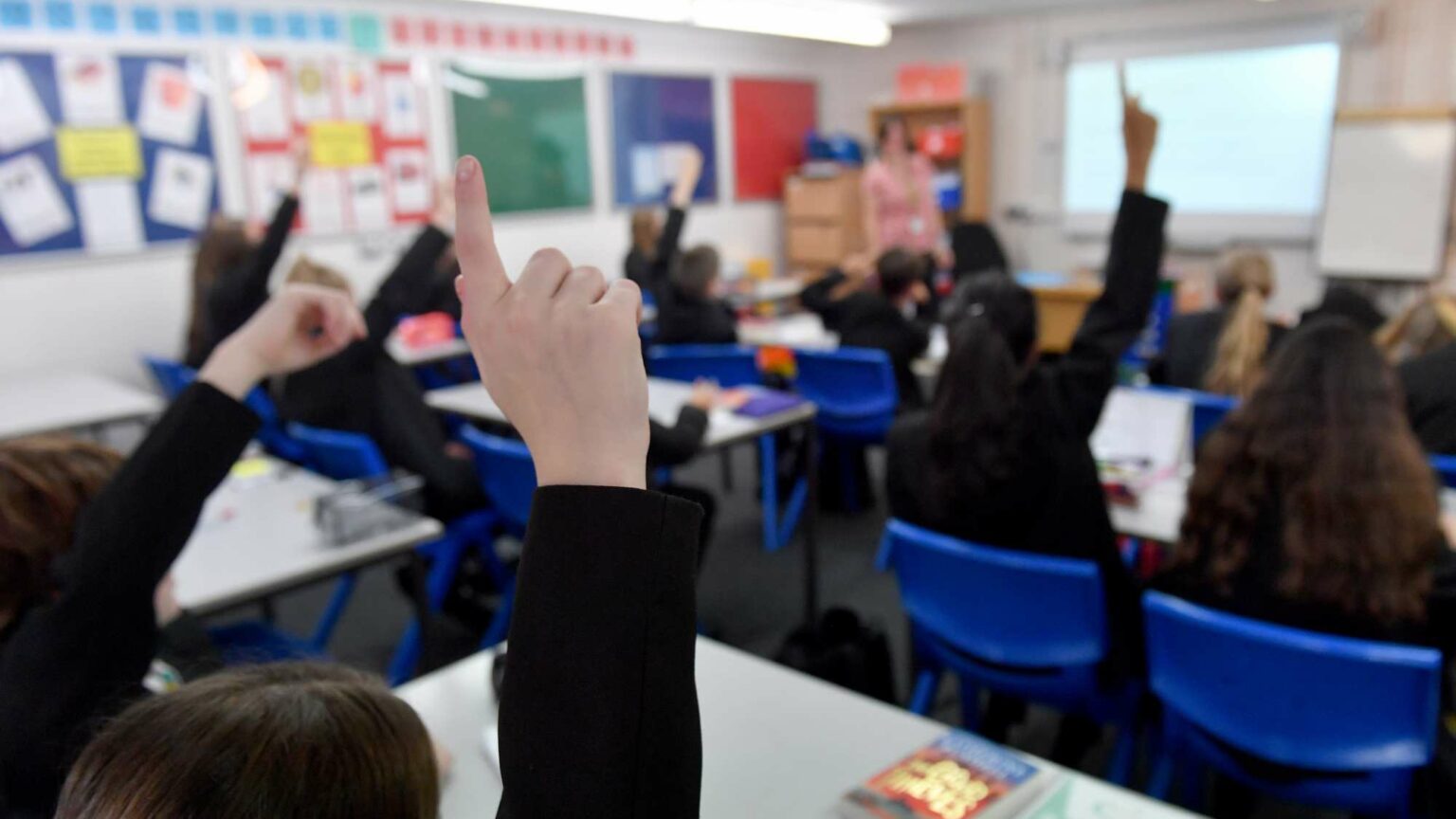
In May, it emerged that a group of Sheffield schools had devised a set of ‘anti-racism’ lesson plans. Among other things, they encouraged teachers to educate children as young as seven to believe that white people are privileged because of the colour of their skin. They were also to inculcate the belief that while black people can be racially prejudiced, because they lack cultural power, they can’t be racist.
The existence of such racial-identitarian dogma in Sheffield is not a surprise. Like most local councils in the UK, Sheffield City Council is facing some enormous challenges. Housing is in short supply and the city itself is in debt for tens of millions of pounds. But over and over again, one challenge is apparently more urgent and pervasive than the rest: racism.
Take Sheffield council’s decision in 2020 to establish a Race Equality Commission to assess ‘the nature, extent, causes and impacts of racism and race inequality within the city’. Its chair, Kevin Hylton, a professor emeritus at Leeds Beckett University, handpicked 24 Sheffielders as race commissioners. ‘The diversity of this group was exceptional in terms of gender and ethnicity’, Hylton said. This was one way of describing the appointments. Only three of the 24 commissioners were white (two women, one man). In other words, 88 per cent of the commissioners were drawn from minorities who make up approximately just 20 per cent of Sheffield’s population. Talk about ‘exceptional’.
In 2022, the commission delivered its report and concluded that Sheffield was indeed racist. Not just slightly racist, but super racist. The council heard testimonies from people accusing every one of the city’s institutions – from education to crime and justice to business – of all types of discrimination: ‘institutional, structural, microaggression, direct, indirect, conscious and unconscious bias’. One expert witness even testified to the existence of invisible racism. ‘Yes, racism is there’, he said. ‘It’s just very hard to prove it, but you know for yourself because there’s a lot of unfairness.’
‘Racism and racial disparities remain significant’, Hylton wrote in the report’s foreword. He then called for ‘positive measures and improvements in organisations and among its citizenry’. Improvements among the citizenry? Like ‘anti-racism’ training in Sheffield schools, for instance.
Indeed, this anti-racist fanaticism has been injected into the education system. As we’ve seen in Sheffield, education programmes seeking to embed ‘racial literacy’ and ‘anti-racism’ into every institution have become the prisms through which teachers are encouraged to interpret children, classrooms and achievement. The logic is as crude as it is revealing: racial disparities are treated as proof of racism, and the remedy is to send teachers into classrooms to lecture small children about white privilege.
Of course, Sheffield is hardly an aberration. It is a local manifestation of a national obsession. The belief that schools must be ground zero for decolonisation efforts is widespread. Teachers must examine their own unconscious biases to create what are called ‘more equitable and inclusive learning spaces’. Advocates of this strategy promise that non-white students will be empowered by the acknowledgement of the structural barriers to their success.
The anti-racist training seen in some Sheffield schools is not mandatory in British schools. But it might as well be. The Department for Education allows schools to implement it, provided they adhere to guidelines on political impartiality. These guidelines, outlined in the Education Act 1996 and expanded upon in 2022, require that teaching does not promote partisan political views and that balanced views are presented on politically contentious issues. In practice, however, these guidelines are often vague and inconsistently applied. In the case of race and identity, they are often ignored by educators who insist ‘anti-racism’ is beyond politics altogether.
Far from being inclusive, anti-racism training often divides children into crude racial categories – oppressors or victims – and replaces the idea of individual moral character with collective racial identity. This is because it is informed by critical race theory (CRT), which claims race is a social construct invented by white people to preserve their privilege and supremacy. The result is that white children, regardless of their economic or social situation, are ‘privileged by virtue of being white’.
At the same time, non-white children are encouraged to see themselves as victims of a system rigged against them. The classroom becomes a battleground of racial grievance. While white-skinned people are the problem, everyone else is morally pure – unless, of course, you are East Asian and doing well. In that case, you become ‘white-adjacent’, a term used in social-justice discourse to describe non-white groups that align with white people enough to benefit from their privileges.
Despite CRT’s promise of liberation from power structures, its only real purpose is chaining young people to perpetual victimhood. Yet its proponents cannot see this. They do not worry about its miasma of contradictions: that race does not exist, but it also explains the meaning of life; that race is a social construct with no biological basis, yet everything must be seen through a racial lens; that race is supposedly meaningless, though white children must constantly reflect on their whiteness so as not to let it overtake them.
To point all of this out invites outrage from the usual suspects. When then equalities minister Kemi Badenoch addressed parliament in 2020 to argue that teaching white students about inherited guilt was unacceptable, she came under fire from teachers. This is because many believe that, without anti-racist training, their white students will grow up to become the next generation of oppressors.
All of this leaves us to wonder: if anti-racist educators truly believe that race is a social construct, why do they not simply deconstruct it? Why not teach children that race is morally meaningless, and that they should judge one another as individuals? Until we as a society stop telling people that the organising principle of their lives is race, I’m afraid any hope of actual ‘progress’ will remain a fantasy.
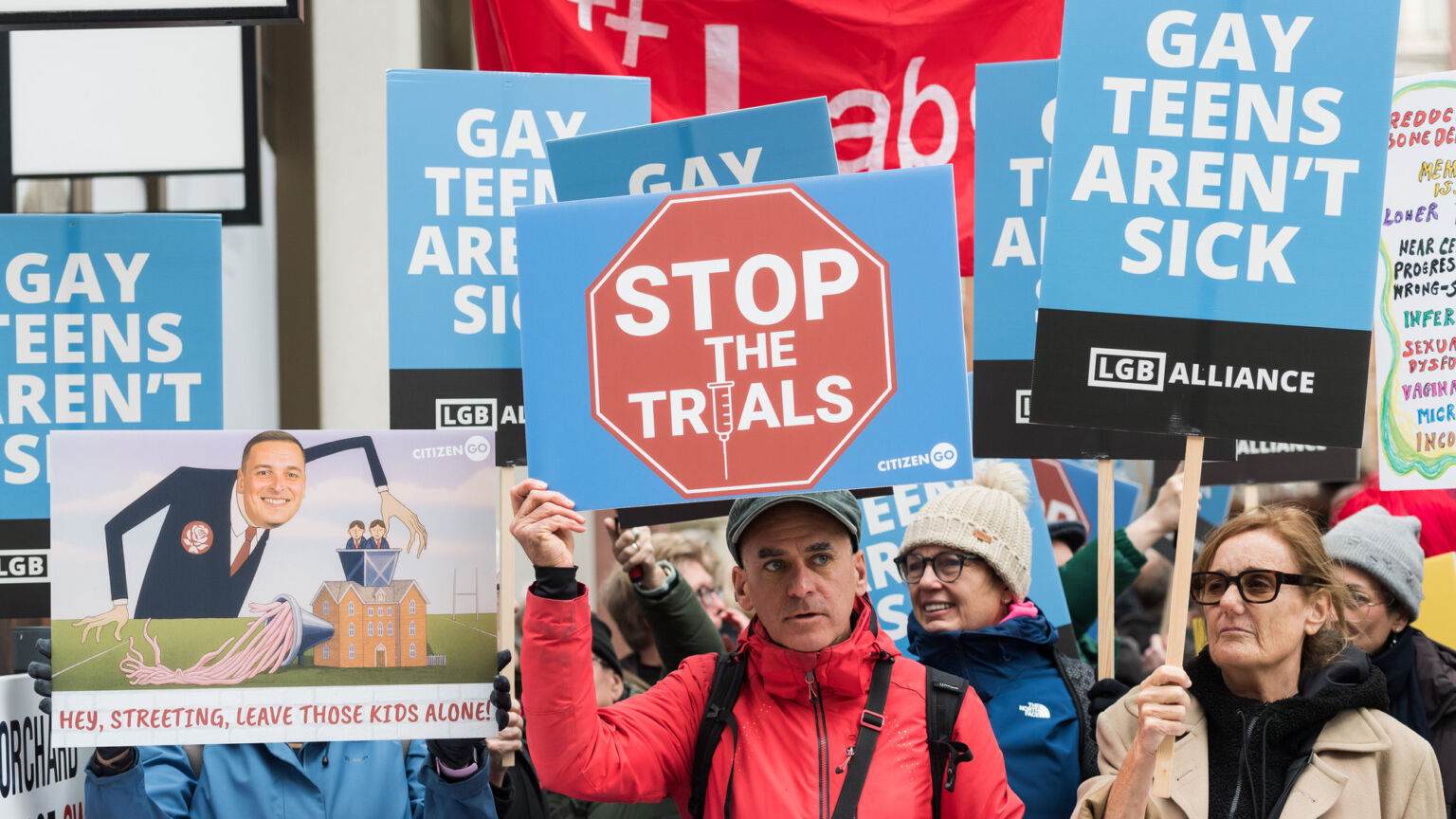
On Tuesday, 283 MPs voted to proceed with a medical experiment that seeks to recruit some of the most vulnerable children in Britain, including those in care. They did so despite being repeatedly warned that injecting healthy children with puberty blockers could damage bone density, impair cognitive ability and lead to infertility.
Despite the best efforts of the Conservatives – who forced parliament to hold the vote – and campaigners such as detransitioner Keira Bell, the NHS-backed Pathways Trial will almost certainly now go ahead. This in itself is astonishing, considering that it was paused in February after the Medicines and Healthcare products Regulatory Agency raised concerns about the potential harm to the more than 200 children – some as young as 10 – who will be subjected to the trial. It is also pointless, given that NHS trusts continue to hold unpublished data that could answer many of the questions the trial is supposed to answer.
Conservative MP Caroline Johnson, a former consultant paediatrician, opened the debate. She asked Labour’s beleaguered and slightly confused-looking new health minister, James Murray, whether he ‘is aware of new evidence allowing clinicians to work out confidently which children will persist with the trans identity at 11 and which will not?’. She continued: ‘We need to think about the risk involved in the treatment, and whether it is worth the benefits that they will purportedly receive’.
Johnson drew attention to other serious concerns. Among them is the fact that 12-year-olds enrolled in the trial will be asked to complete questionnaires about whether they have engaged in oral sex during the previous year, ostensibly to assess their understanding of the impact that puberty blockers may have on future sexual function. They will also be paid for filling out the questionnaires. Murray opted not to address this point.
Throughout the debate, Murray hid behind the ermine-fringed authority of Baroness Hilary Cass, the paediatrician who recommended a trial as part of her review of gender-identity services for children, published in 2024. He solemnly informed the chamber that he had ‘struggled with the profound challenges this subject raises’. Yet when Conservative MP Rebecca Paul reminded him of the doubts he had professed about the trial only the day before the vote, his struggle appeared to be with remaining in the chamber, which he promptly left.
The authority on which ministers continue to rely has itself become increasingly controversial. Earlier this week, Cass defended the trial in an interview with the BBC, warning that 11-year-old girls are presenting to clinics having already taken testosterone, a claim repeated by Murray. One might have expected such a revelation to prompt calls for police action against those supplying these hormones to children. Instead, Cass argued that this was evidence that these children should be enrolled in a trial of puberty blockers. As Johnson explained to her colleagues in the House of Commons, ‘we would not give children cocaine on the basis that they wanted it and would get it illegally otherwise’.
Cass’s task of reviewing gender-identity services for children in the UK was an unenviable one. She stepped into no man’s land in search of evidence, with a target on her back and shots coming from all sides. But when the smoke cleared and the Cass Review landed, it was clear to anyone with eyes that the war was somewhat one-sided. She concluded that, ‘the evidence base underpinning medical and surgical interventions in this clinical area is remarkably weak’, and found ‘insufficient and / or inconsistent evidence’ regarding the effects of puberty suppression on psychological wellbeing, cognitive development and bone health.
To anyone whose brain has been spared the rot of trans ideology, this was no more surprising than discovering that Ozempic harms anorexic children. But it took someone of Cass’s stature to force the government to confront reality. Even those of us whose expectations of officialdom are calibrated somewhere between ‘low’ and ‘abysmal’ assumed no ethics board would approve a trial of puberty blockers. For her pains, Cass became public enemy No1 to trans activists, inside and outside parliament.
It is hard to escape the feeling that the paediatrician has been knobbled. Panicked by the prospect of children buying hormones online, she has backed a poorly designed and potentially dangerous experiment. Even trans-cheerleading rag PinkNews is supporting Cass on Pathways.
There is nothing more depressing than the politics of defeat, of managed decline. Giving distressed children puberty blockers because they might otherwise buy hormones from dodgy providers online is no different from giving girls who are being sexually exploited the pill to prevent pregnancy. What is happening is a crime, and yet, just as with the vulnerable children exploited by rape gangs, it is one the state is prepared to accommodate if the alternative is confronting its own prejudice.
The proper response to children obtaining powerful drugs illegally is not to provide those drugs under official supervision. It is to stop the people supplying them, protect the children involved and enforce the law. That ministers now present a clinical trial as the only realistic alternative is an admission not of compassion, but of failure.
Jo Bartosch is co-author of Pornocracy. Order it here.

MiCA Rules Force Binance EU Service Restrictions

Broos Hits Back at Critics as South Africa Reach Historic Knockout Stage

Our readers love the Beats Studio Pro, and they are now even more affordable


-

 Fashion6 days ago
Weekend Open Thread: Miami – Corporette.com
-

 Entertainment5 days ago
Renter of Home in Anne Heche Crash Denies Settlement With Son
-
 Sports2 days ago
Two goals and an assist by sheer aura: Cristiano Ronaldo just entered the World Cup chat
-

 Tech3 days ago
Microsoft accidentally kills epic Outlook email threads
-

 Business5 days ago
Soccer-U.S. defends Iran World Cup travel restrictions, says discussions ongoing
-

 Politics5 days ago
Andy Burnham and the meaning of Makerfield
-
Crypto World1 day ago
Bitcoin (BTC) Dips Below $62K, Ethereum (ETH) Plunges 6% Daily: Market Watch
-

 Politics7 days ago
BBC Reporter Discusses Cross Party Criticism Of Trumps Iran Deal
-

 Crypto World1 day ago
Securitize Wraps Roubini's SEC-Registered ETF as Dubai VARA Digital Security
-
Business2 days ago
Entergy settles forward sale agreements, raises $672 million in cash proceeds
-

 NewsBeat6 days ago
Keir Starmer Allies Question His Chances For No 10
-
 Business5 days ago
Wall Street Week Ahead: Investors see Micron earnings as pulse check of AI rally momentum
-

 Tech7 days ago
AWS enters the context layer race with a graph that learns from agents, not manual curation
-
 Crypto World5 days ago
Can Charles Hoskinson Really Rescue Cardano?
-

 Crypto World5 days ago
HIVE shares jump as $220M AI deal speeds Bitcoin mining pivot
-

 Crypto World5 days ago
Jake Chervinsky accuses CME of protecting derivatives monopoly
-
 Entertainment5 days ago
Jose Alvarado Wants Taylor Swift at More Knicks Games
-
 Tech4 days ago
Signal’s Meredith Whittaker says AI chatbots ‘are not your friends’ and calls Copilot agents a backdoor
-

 Tech3 days ago
Nearly 7,000 fake Amazon domains registered ahead of Prime Day 2026, researchers warn
-

 Sports7 days ago
FIFA World Cup 2026: Canada beat 9-men Qatar 6-0 to register first ever win | FIFA World Cup 2026
You must be logged in to post a comment Login