
Politics
Department of Investigation eyes NYPD disability pensions



HELP! I’VE FALLEN AND I CAN GET UP: A report from the New York City Department of Investigation confirmed today what many political watchers have long suspected — that the city’s police pension system is ripe for abuse.
The Police Pension Fund doles out retirement payments to all NYPD officers and, in fiscal year 2025, paid $935 million to officers who qualified for accident disability retirement — meaning they were injured on the job and unable to perform their duties.
While DOI Commissioner Nadia Shihata said injured officers should be fairly compensated, her office found the pension system assigns this distinction — which boosts pension payments by 50% and allows officers to receive 75% of their average pay — without considering an officer’s specific job duties.
“No New Yorker wants to stand in the way of NYPD officers rightfully receiving accident benefits when they suffer injuries on the job and are unable to work,” Shihata said in a statement. “But the [Police Pension Fund’s] current administration of these benefits is vulnerable to misuse and does not employ standards consistent with those used in similar law enforcement retirement systems, such as the system for state police.”
Instead, the board has a single standard: whether an applicant can perform the general duties of a police officer, like subduing a suspect or operating a firearm — a threshold that makes less sense for officers with desk or administrative jobs.
The report specifically cited the case of former Chief of Department John Chell, who was awarded a $295,919 annual pension while serving as the NYPD’s highest-ranking uniformed officer under former Mayor Eric Adams. The huge sum came, in part, because of an ankle injury sustained in 2024. Chell was among several top Adams-era police officials who received lucrative payouts using this criteria, which the DOI report argued contributed to mistrust in the system and the belief that higher-ranking officers had an easier time securing disability pay. (The report did not make any assumptions about whether Chell would have been granted his pension under stricter criteria.)
DOI contends this standard incentivizes more people to claim a disability, citing a 2015 report that found 21% of NYPD employees retire on accident disability compared to 6% within the state system for police and firefighters, which has a more narrow criteria for awarding disability pay. Shihata even suggested that the pension board’s broad standard might not be legal, since courts have found, in the case of the state police pension rules, that job duty means what an officer actually does in practice.
Despite that, the board rejected a DOI recommendation to change the standard.
Notably, DOI pointed out in its report that two of the people on the medical board making the determinations are appointed by city agencies controlled by the mayor — which means Mayor Zohran Mamdani could push to overrule the board’s leadership.
City Hall did not respond to a question about whether he would do so.
The NYPD declined to comment, while the pension board did not respond. Chell could not be reached.
The pension system does include a safeguard to maximize city resources. The board is authorized to re-examine officers receiving disability pensions who aren’t yet of retirement age to see if their condition would allow them to work a different city job, even if it’s not in the NYPD. If they’re deemed able, then they’re primarily compensated with their pension money until they reach retirement age.
So is the pension system using this provision to examine the $100 million worth of annual pension payments doled out to NYPD officers who are under the retirement age, which the board is required by law to do?
In short, no.
Since 2019, the board has only reevaluated one pensioner, per the DOI report. And that person was found unable to do any other city work.
The report found examples indicating the board could be doing a more thorough job. DOI provided findings that suggest four officers under the retirement age are receiving disability pensions while engaging in activities like lifting weights, performing home renovations, playing competitive sports, doing pushups, instructing workout classes and, in one case, performing “complicated dance routines exhibiting a full range of arm motion.”
DOI recommended the board require officers receiving disability payments who are not yet of retirement age to periodically certify they still have a disability. The board rejected this recommendation, but agreed to create an online portal to gain input from the public on pensioners who may be healthy enough to work. It also agreed to reevaluate the four retirees flagged by DOI. — Joe Anuta
From the Capitol

META’S DAY IN COURT: New York’s top court opened its fall session this afternoon with a case that could have massive implications for the legal liability of social media companies and AI users.
Website owners are typically immune from liability for content created by third parties. But the families of the 2022 mass shooting in Buffalo are arguing that social media companies shouldn’t dodge responsibility for radicalizing Payton Gendron, the 18-year-old who drove across the state with the goal of killing Black people.
The state Court of Appeals is now deciding whether these families can proceed with a lawsuit against companies such as Meta, Google, Discord, Reddit, Amazon and 4Chan.
Gendron’s diaries and confessions show he was motivated by white supremacist material he encountered while addicted to social media. The families contend these companies are liable because they intentionally designed an addictive algorithm that destroyed his mental health while proactively steering him to pro-violence content.
“The social media companies had a role in causing the crime,” attorney Jennifer Bennett argued. “Heavy social media usage goes hand-in-hand with mass shootings.”
Meta attorney Eric Shumsky said the entire argument boiled down to an attempt to sue over the actual content the shooter saw, a type of claim his company is protected against.
“If the addiction were to cooking tutorials or cat videos or anything else, it would be an absolutely incoherent theory of liability,” Shumsky said.
Judges on the seven-person court panel acknowledged the possibility of significant repercussions no matter how they rule.
“Let’s say I can’t function, I can’t work anymore, because of my addiction to social media,” Judge Michael Garcia said while questioning the plaintiffs about how far reaching lawsuits might be under their theory. “It’s addictive, I can’t deal with people, I stay home, I can’t work.”
“That is a viable claim,” Bennett said. “The evidence is very strong that the social media companies made a product to have this effect.”
While questioning Meta, Chief Judge Rowan Wilson raised the possibility of troubling precedents if the court supports the idea of widespread immunity for app creators.
“I use AI to, let’s say, ‘design me an app to create the most harm possible to teenagers,’” Wilson said. “It’s my intent to create an app that selects content designed to destroy the mental health of teenagers … Am I liable?” — Bill Mahoney
EYES ON AI: Gov. Kathy Hochul chided the federal government today for not doing enough to address concerns about the existential threats artificial intelligence potentially poses.
“Understandably, Americans are concerned, as am I,” Hochul told reporters after an event Tuesday in Manhattan. “We have an obligation to ensure that technological progress does not come at our own peril. So while Washington refuses to act, here in New York, we’re stepping up.”
Hochul pointed to the landmark RAISE Act, which goes into effect in January, and a one-year data center moratorium, which she issued in July, as evidence that New York is acting aggressively. Her administration earlier today rolled out a framework for communities that want to host a data center to minimize detrimental effects on the area.
The governor added that she’ll find “additional actions that we can take at the state level to lead the way in the absence of leadership from Washington” — though she did not specify what that looks like.
While some in Washington are eager to implement restrictions to slow down AI, President Donald Trump has tried to shut down those efforts, calling the AI dooming a “HOAX.”
Hochul said she hasn’t had conversations with legislators in recent days regarding AI. — Madison Fernandez
FROM CITY HALL

TO ENFORCE OR NOT TO ENFORCE — THAT’S THE QUESTION: Mamdani wouldn’t commit today to ordering the NYPD to step up enforcement of traffic violations in New York City — because he’s focused on “behavioral change,” not punishment.
The NYPD’s rate of issuing tickets to drivers who speed, blow through red lights, block bike lanes or otherwise break traffic laws remains far below pre-pandemic levels. And transit advocates, including left-leaning allies of Mamdani, say the police department must get back to issuing more violations, arguing that it’s critical to keeping city streets safe.
This afternoon, though, Mamdani declined repeatedly to say whether he will deliver such marching orders to the NYPD and suggested enforcement isn’t a key priority for him.
“Our goal here is not going to be measured in terms of the number of tickets that are issued or the violations, but rather behavioral change, and the NYPD is a partner in delivering that change,” Mamdani said, speaking at a press conference in Brooklyn held to unveil his new street safety plan, which contains ambitious proposals but is light on many implementation details.
How does the city change behaviors without stepping up enforcement, though? In response to that question, Mamdani suggested the answer could lie in developing more protected bus and bike lanes and otherwise redesigning streets to make them safer for pedestrians.
At the same time, Mamdani said he’s committed to “a continued partnership with the PD to use those tools of ticketing when any violation is present.”
“We’re going to be taking a hard look at how best we can change behavior that we’re seeing in violation of street safety laws, and then utilize that. That includes the PD,” he said.
The mayor’s comments came after Streetsblog reported the NYPD has shifted its traffic violation strategy to prioritize enforcement against scofflaws on e-bikes and other micromobility vehicles. That shift comes in spite of the fact that car drivers account for the vast majority of crashes and traffic deaths in the city, data shows. — Chris Sommerfeldt
FOILED ATTEMPT: The Manhattan Institute, a conservative think tank, is suing the Mamdani administration over its handling of Freedom of Information Law requests.
The think tank has been seeking records related to meetings between foreign dignitaries and Ana María Archila, commissioner of the Mayor’s Office of International Affairs. Archila has faced criticism for attempting to meet with an Iranian diplomat amid that country’s war with the U.S.
While the Adams administration provided tailored estimates for FOIL requests (but by no means fulfilled them in a timely manner), the institute found Mamdani’s City Hall team began giving out blanket six-month timetables for fulfilling requests.
“City Hall has turned FOIL into a six-month waiting room for everyone,” Manhattan Institute City Policy Analyst Santiago Vidal Calvo and General Counsel Cameron Macdonald wrote in explaining their suit, which was filed in Manhattan Supreme Court. “That is why we are suing.”
The city did not immediately respond to a request for comment about the lawsuit. — Joe Anuta
SCREENS IN SCHOOLS: The New York City public school system banned unfettered access to YouTube on school-issued devices for the current school year, the Department of Education revealed Tuesday.
The ban — which went into effect last week, ahead of the first day of school — comes amid calls from City Council members to limit the use of YouTube, personal devices and AI in the classroom.
“We heard everyone loud and clear,” DOE official Scott Strickland said at a Council hearing today. “As of Wednesday night at 5 p.m., we filtered YouTube out of all student devices. They shouldn’t be able to access it either on a Chromebook or an iPad both at school and at home.”
Council member Shekar Krishnan, who chairs the Council’s Oversight and Investigations Committee and was co-leading Tuesday’s hearing, said he was “very glad to hear” of the YouTube ban.
Educational videos embedded into Google Classroom for specific lessons will be exempt from the ban.
Earlier this month, Mamdani announced a year-long AI moratorium for students in grades 2-K through eighth grade. Hochul and lawmakers in Albany also rolled out a full-day “bell-to-bell” restriction on cellphone use during the school day last school year.
Ahead of this afternoon’s hearing, Krishnan and Council member Eric Dinowitz, who chairs the Education Committee, held a rally railing against screen-heavy classroom instruction and calling, among other things, for a YouTube ban.
“We will not let the greed of big technology companies get in the way of our children’s future and their education,” Krishnan said at the rally. — Molly Reinmann
IN OTHER NEWS
— DECLASSIFIED DOCS: Trump said he’d consider releasing classified documents related to 9/11 after victims’ families pleaded for clarity on Saudi Arabia’s involvement. (NY Post)
— TIED UP: Long Island Democratic House candidate Christopher Gallant acknowledged he posed in bondage gear for an ad campaign over a decade ago. (The New York Times)
— ICE ARRESTS: Police in the Westchester village of Port Chester have turned over more people with no criminal record to ICE than other local law enforcement agencies, despite assertions the police department would not cooperate with ICE. (NY Focus)
Missed this morning’s New York Playbook? We forgive you. Read it here.

Politics
Politics Home | UK Reprimanded Over Social Media Laws By US Diplomats At Confidential Embassy Summit


2 min read
Exclusive: British officials were hauled into a private meeting at the US embassy on Monday and dressed down over the Online Safety Act, along with their plans to ban under-16s from social media and prioritise public broadcasters’ prominence online.
According to sources familiar with the discussions, representatives from the Department for Culture, Media and Sport (DCMS) and Foreign, Commonwealth and Development Office (FCDO) along with other high-ranking government officials were called in to hear the Deputy Chief of Mission’s concerns that the social media ban would discriminate against US tech companies.
The US is understood to believe there have been failures in the Australian social media ban, with officials highlighting small drops in usage by Under 16s. They argue that more parental controls rather than a widespread ban would work better.
Following a consultation, the U-16 ban was announced in June this year, after Australia introduced the world’s first outright ban on social media for under-16s in December 2025. Labour MP Emily Darlington, one of those who campaigned for the ban, told PoliticsHome: “The first duty of the government is to protect its citizens. Digital security is national security. It would be great to work with our allies on this, but if the UK has to, it will proceed alone”.
While the meeting was presented as non-adversarial, PoliticsHome understands the US intended to use it to raise a litany of criticisms across a number of ministerial portfolios. The US feels the way in which the Online Safety Act’s levy on revenues from big tech firms is taken from a proportion of their global revenue rather than reflecting their UK size is unfair.
American officials are also believed to have repeated their warnings around the UK’s ‘trusted media’ reforms, which would see the BBC, ITV and others prioritised on social media algorithms, question how media brands were being placed in the ‘trusted’ camp and raised concerns that the changes to the algorithm could inadvertently affect US citizens.
The US Embassy declined to comment. A DCMS source described the meeting as “routine engagement” and said the department would “continue to work closely to ensure policies are understood and to identify shared priorities”.
The intervention comes amid heightened tensions in the ‘special relationship’ after it was revealed that the US secretly flew out a diplomat accused of possessing child abuse images from the UK to face justice in the US.
Politics
The House | UK Reprimanded Over Social Media Laws By US Diplomats At Confidential Embassy Summit
2 min read
Exclusive: British officials were hauled into a private meeting at the US embassy on Monday and dressed down over the Online Safety Act, along with their plans to ban under-16s from social media and prioritise public broadcasters’ prominence online.
According to sources familiar with the discussions, representatives from the Department for Culture, Media and Sport (DCMS) and Foreign, Commonwealth and Development Office (FCDO) along with other high-ranking government officials were called in to hear the Deputy Chief of Mission’s concerns that the social media ban would discriminate against US tech companies.
The US is understood to believe there have been failures in the Australian social media ban, with officials highlighting small drops in usage by Under 16s. They argue that more parental controls rather than a widespread ban would work better.
Following a consultation, the U-16 ban was announced in June this year, after Australia introduced the world’s first outright ban on social media for under-16s in December 2025. Labour MP Emily Darlington, one of those who campaigned for the ban, told PoliticsHome: “The first duty of the government is to protect its citizens. Digital security is national security. It would be great to work with our allies on this, but if the UK has to, it will proceed alone”.
While the meeting was presented as non-adversarial, PoliticsHome understands the US intended to use it to raise a litany of criticisms across a number of ministerial portfolios. The US feels the way in which the Online Safety Act’s levy on revenues from big tech firms is taken from a proportion of their global revenue rather than reflecting their UK size is unfair.
American officials are also believed to have repeated their warnings around the UK’s ‘trusted media’ reforms, which would see the BBC, ITV and others prioritised on social media algorithms, question how media brands were being placed in the ‘trusted’ camp and raised concerns that the changes to the algorithm could inadvertently affect US citizens.
The US Embassy declined to comment. A DCMS source described the meeting as “routine engagement” and said the department would “continue to work closely to ensure policies are understood and to identify shared priorities”.
The intervention comes amid heightened tensions in the ‘special relationship’ after it was revealed that the US secretly flew out a diplomat accused of possessing child abuse images from the UK to face justice in the US.
Politics
Politics Home | Labour MPs Refuse To Back Tory Wandsworth Council Against Government Funding Cuts
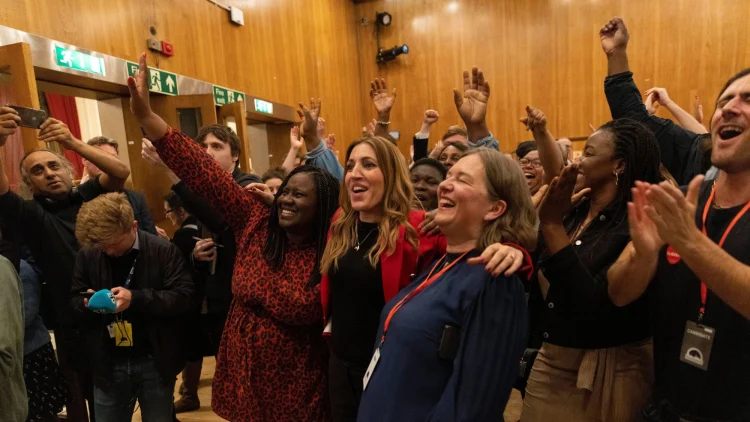
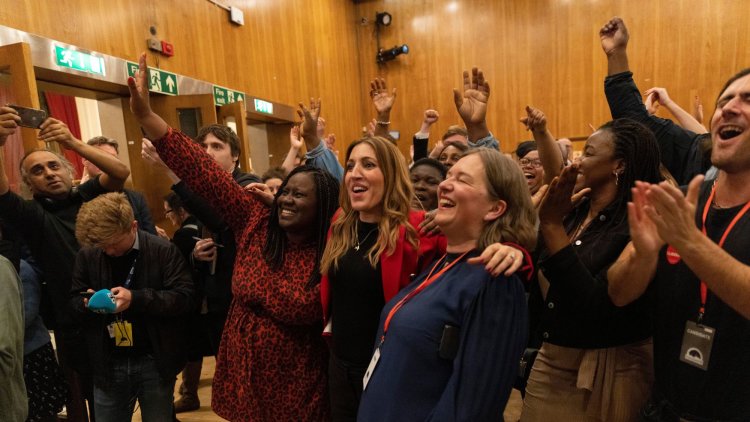
Marsha De Cordova, Rosena Allin-Khan, and Fleur Anderson are the Labour MPs representing the constituencies in the London Borough of Wandsworth (Alamy)

3 min read
Wandsworth’s three Labour MPs have refused to back the Conservative-run council’s formal challenge against the government’s cuts to local authority funding, as the borough faces a record rise in council tax.
PoliticsHome previously revealed that the south-west London borough was planning the country’s biggest ever tax rise. The council is expected to announce a rise of at least 160 per cent, with multiple figures – including higher figures – currently under consideration, according to multiple sources.
Wandsworth, which is Conservative-run after Labour lost control in May, currently has one of the lowest council tax rates in the country, with residents paying around 0.1 per cent of the value of the property they live in per year.
However, recent reforms to how central government distributes funding to local authorities have decreased the grant funding available to some London councils, including Wandsworth. Wandsworth Council funding is projected to fall by around 40 per cent.
The Labour government has said its reforms to local government funding prioritise parts of the country with higher deprivation so that the system is “truly based on need”. However, affected councils in the capital say the changes will exacerbate existing cost pressures and force them into significant tax rises.
Wandsworth Council recently worked with the Conservative Party to launch a formal appeal against cuts to local government funding, with Wandsworth Conservatives telling PoliticsHome that the new settlement “unfairly punishes Wandsworth residents”.
Westminster and the Royal Borough of Kensington and Chelsea are also set to follow Wandsworth in formally appealing the cuts.
Tory councillor and leader of Wandsworth Council Robert Morritt wrote to the Labour MPs representing constituencies in the borough of Wandsworth to ask whether they would support the council’s appeal to the Labour government.
Tooting MP Rosena Allin-Khan, Putney MP Fleur Anderson and Battersea MP Marsha de Cordova sent back a letter refusing to offer their support.
In the letter, seen by PoliticsHome, the MPs wrote that while they “continue to express our concerns about local authority funding challenges”, they “cannot support a narrative that seeks to rewrite the recent financial history of Wandsworth Council or shift responsibility for damaging choices that are being made by the current Conservative administration”.
“When Labour left office in May 2026, Wandsworth Council was in a strong financial position,” they wrote.
“The Council had some of the highest reserves in London and no external debt. Labour maintained balanced budgets, delivered Britain’s lowest council tax and carefully managed public finances, while continuing to invest in local services and communities.
“Residents are entitled to ask why a council that inherited such a strong financial position has already made cuts in services, and why they are being threatened with a council tax rise of 160 per cent and decisions to cut further services.”
The MPs also said they were concerned by the “increasingly political nature of council communications”.
A spokesperson for Putney Conservative Association said: “It is deeply disappointing that Wandsworth’s three Labour MPs will not support the Council’s challenge to the government’s 40 per cent cut to Wandsworth’s funding.
“Putney MP Fleur Anderson and Tooting MP Rosena Allin-Khan both voted for the government’s Local Government Finance Report that implemented the new funding settlement, while Battersea MP Marsha de Cordova had no vote recorded.
“For them to refuse even to acknowledge the consequences of the settlement for residents, let alone support residents, is extremely disappointing. Whatever their party, our MPs should be putting Wandsworth residents first and joining us in fighting for a fairer deal.”
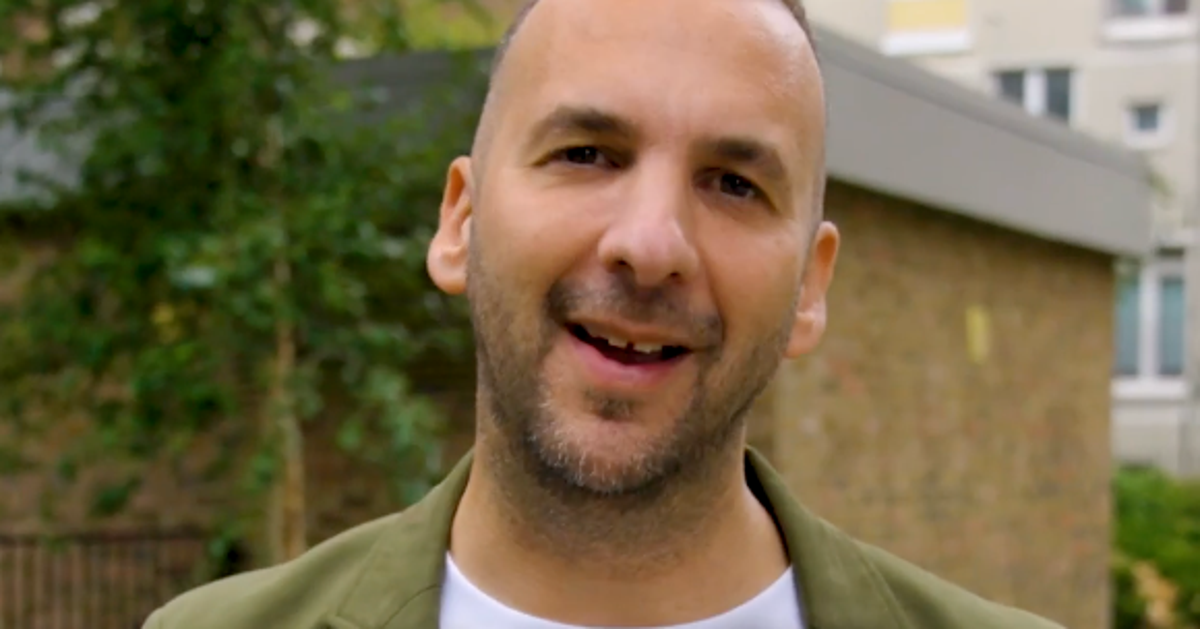
The Greens have defended a by-election campaign video in which Zack Polanski speaks in Urdu after a cabinet member said it made him feel “uncomfortable”.
In a post on social media, the party leader introduced himself and encouraged voters to back him in Holborn and St Pancras on October 8.
But business secretary Jonathan Reynolds said all voters should be able to understand what candidates say.
He told Times Radio that his views “have hardened” on the need for campaign literature to be in English.
“I think it’s very important, when you think about cohesion, to make sure that everyone can participate in an election,” he said.
Tory shadow communities secretary Katie Lam went even further by describing Polanski’s video as “poisonous” and should be banned.
She said: “Attempting to appeal to group-based grievances by campaigning in foreign languages is poisonous.
“We must ban this practice for good. Politics in our country should be conducted in the language of public life.”
But a Green Party spokesman defended the video, telling HuffPost UK: “The Greens believe that democracy doesn’t discriminate by languages spoken. Many people are bilingual.
“Holborn and St Pancras is a true reflection of the diversity of London and of our country and we choose to embrace and celebrate that.
“If we want to speak to people who speak Urdu, it makes sense to speak to them in Urdu. We’re proud to reach voters in as many languages as possible”
Listen to Commons People, the podcast that makes politics easy. Every week, Kevin Schofield and Kate Nicholson unpack the week’s biggest stories to keep you informed. Join us for straightforward analysis of what’s going on at Westminster.

Hacks star Megan Stalter definitely made a big impression on this year’s Emmy Awards red carpet with her larger-than-life look.
The actor and comedian, who is currently appearing in Oh Mary! On Broadway, was pictured arriving at Monday night’s ceremony dressed as the awards statuette itself.
Megan covered herself head-to-toe in gold paint for the occasion, completing her ensemble with a gold crop top and shorts, painted gold wings and an oversized golden atom, mimicking the iconic Emmys trophy.
She was seen striking a pose on the red carpet with her Hacks co-star Paul W. Downs, rolling her prop around the red carpet and holding it above her head.
“I went as Paul’s Emmy – as he deserves,” she joked to Variety on the red carpet. “And my own – as I deserve!”
When asked about the inspiration behind her look, Megan joked to NBC: “I just got off a plane and we threw something together real fast.”
Megan, of course, has a history of wearing bold outfits on the red carpet.
Perhaps most notably, she and Paul parodied Timothee Chalamet and Kylie Jenner’s orange matching red carpet looks at the Critics Choice Awards earlier this year.
At last year’s Emmys, meanwhile, she went against the formal dress code by wearing blue jeans, a white T-shirt and a black bag emblazoned with the message: “Ceasefire!”
In April, Megan opened up to Marie Claire about why she likes to make bold statements on the red carpet.
“Every red carpet appearance or anything that I get to do in front of people, I want to have fun and make the most of it because it’s my dream,” she explained. “We worked really hard to get here, and now I want to enjoy it.”
Megan was nominated for an Emmy Award for Outstanding Supporting Actress In A Comedy at this year’s Emmys, for her role as hapless assistant Kayla in the fifth and last series of Hacks.
Kate O’Flynn ultimately won the award for her role as Patricia in Widow’s Bay.
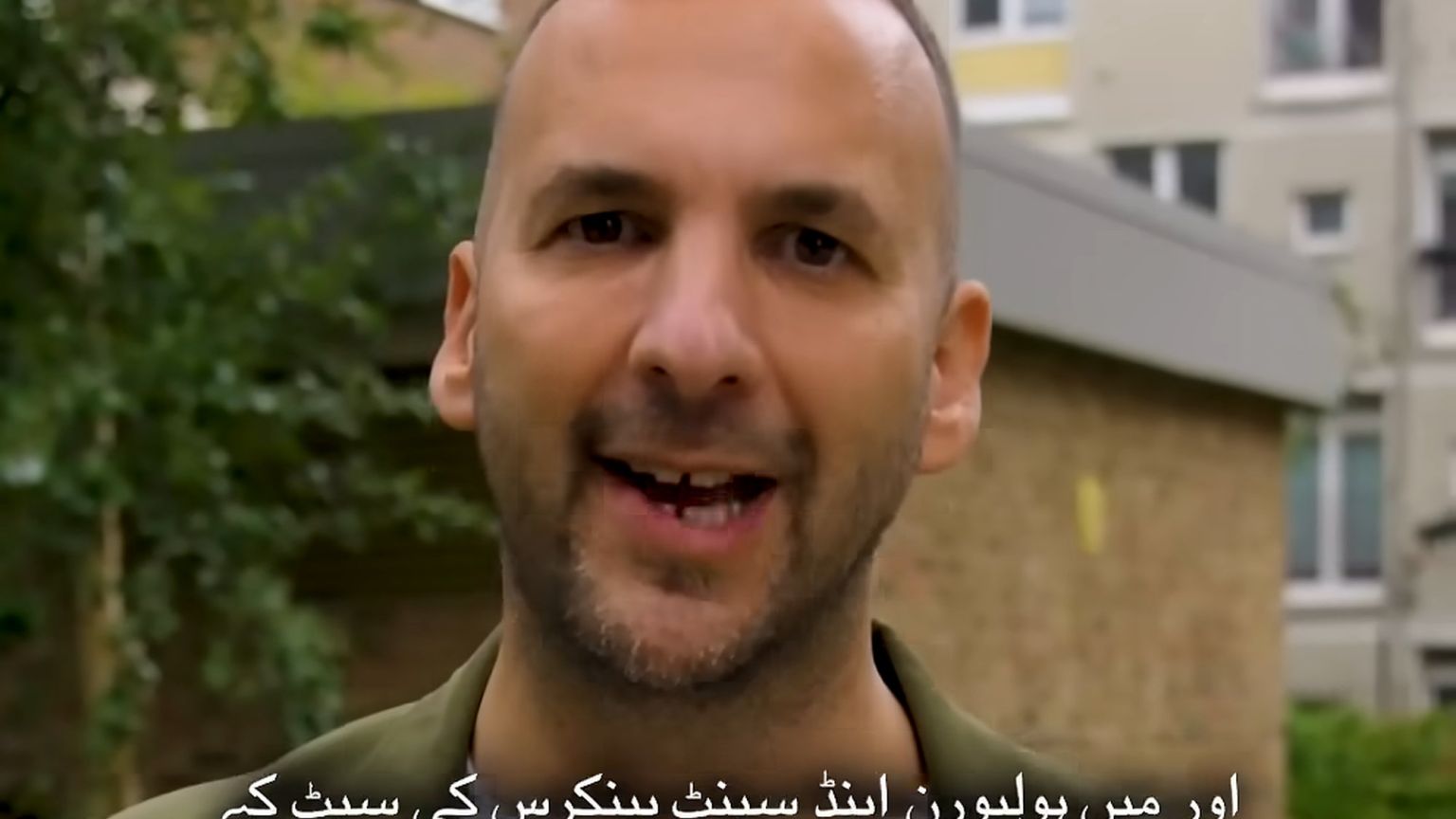
They say you campaign in poetry and govern in prose. On current form, the Green Party of England and Wales seems intent on campaigning in Urdu and governing in Lahore.
What else could explain Green leader Zack Polanski’s decision to make a video in Pakistan’s official language? He’s barely been his party’s candidate for Holborn and St Pancras five minutes and already he’s decided to dust off Google Translate and take to social media.
Truly, Zack is a man of many talents. In his latest viral video, the all-singing, all-dancing, bap-boosting eco-bore makes his pitch to the voters of this Central London seat, left vacant by the resignation of Keir Starmer, in some very (and I’m no expert) ropey Urdu.
What’s he saying? I’ve no idea. But nor will almost all of his would-be constituents. The most commonly spoken ‘main languages’ – other than English – in hyper-diverse Camden are French, Bengali and Spanish. According to the council, ‘Other South Asian’ languages are the main language of 575 people in the entire borough. In other words, only a tiny handful of them would be incapable of understanding Zack if he had simply spoken in English.
The Greens have rightly been hauled over the coals for their willingness to campaign along sectarian lines, to ride Britain’s crisis of integration to inner-city electoral success. At the Gorton and Denton by-election, Hannah Spencer tried her hand at Urdu, too. Whole videos in Urdu were released painting Reform as ‘Islamophobes’ and Labour as in the pocket of India’s Narendra Modi.
It made for a dispiriting spectacle, all but making a virtue out of the fact that some of Spencer’s now constituents are so poorly integrated they can’t speak solid English, all while ruthlessly exploiting ethno-religious divides.
But at least that made a rank kind of sense. Gorton and Denton, unlike Holborn and St Pancras, has a sizeable Pakistani-origin population (both, incidentally, have significant numbers of Bangladeshis). It’s hard to work out whether Zack is merely ignorant of those he seeks to represent or trying to rage-bait us into talking about him.
Whatever the reasoning here, the Greens’ Urdu electioneering reminds us of the Balkanisation of British politics wrought by mass migration, multiculturalism and outdated, lax election rules that allow Commonwealth citizens to vote so long as they are legally resident in the UK. They needn’t be British citizens nor speak the language nor have been here for any particular length of time. And yet they have the same vote as anyone else.
This has only incentivised political parties to engage in pork-barrel identity politics whenever an election rolls around: campaigning in foreign languages, leaning into tribal grievances, and even – in some cases – exploiting ‘kinship’ networks to ‘harvest’ votes. What should be an exercise in universalism, in appealing to voters as voters, has been reduced to an ethnic headcount.
The Greens are just more shameless and online about it all. Where before Labour would push leaflets through letterboxes claiming the Conservatives don’t care about Kashmir, or Tory London mayoral hopefuls would fear-monger about Sadiq Khan betraying Sikhs, now Polanski et al are funnelling purposefully divisive content into the TikTok-Instagram-WhatsApp-group pipeline.
Like so much the Greens do, these Urdu election videos are as sinister as they are cringe. Beneath the ‘Live, Laugh, Love’ exterior lurks a grim new sectarianism.
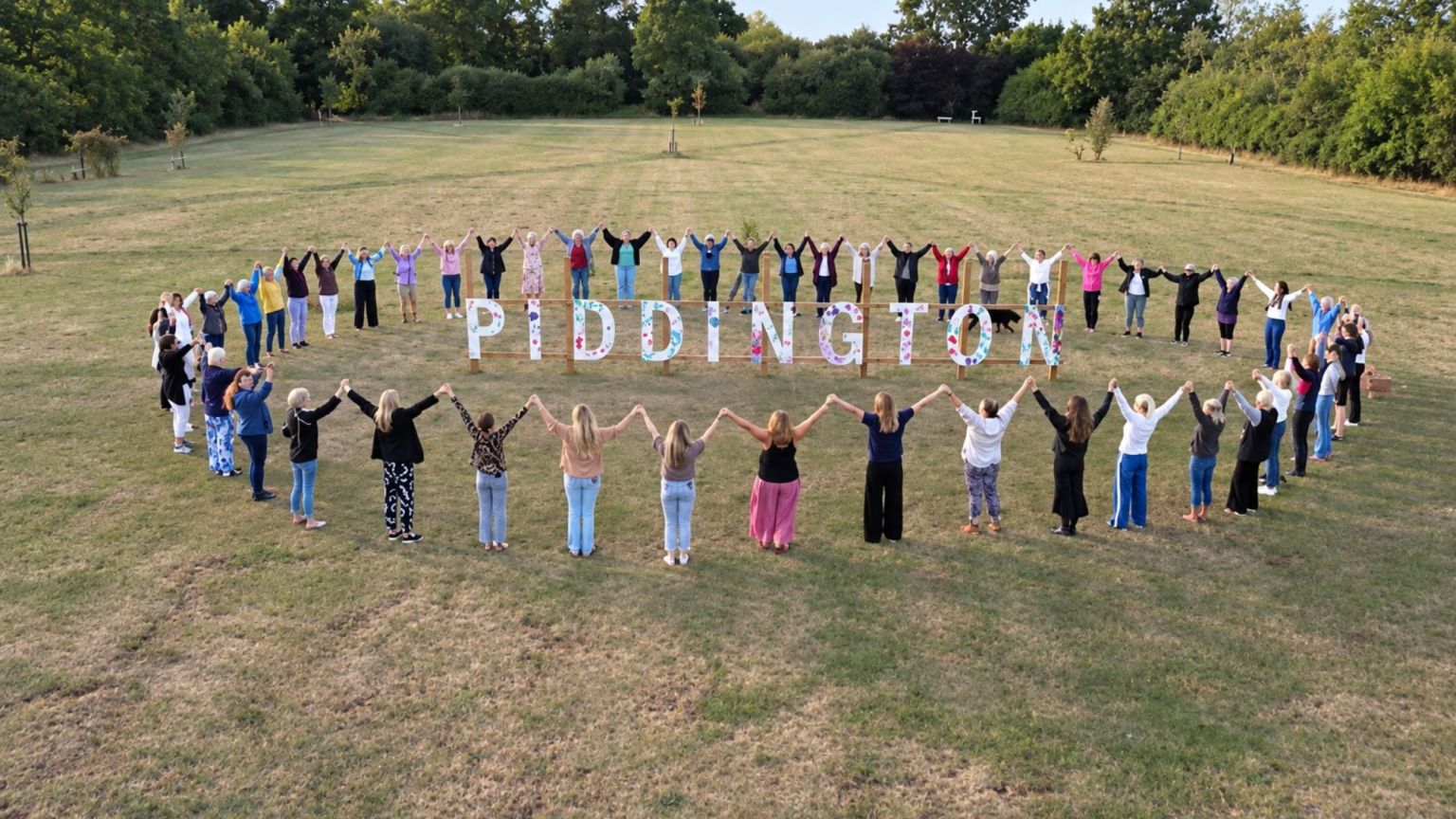
Over the past few months, the quiet Oxfordshire village of Piddington, population just 350, has become the unlikely flashpoint of Britain’s immigration crisis. Locals are so furious about plans to turn the nearby Bicester Garrison into accommodation for asylum seekers that they will today hold a non-binding referendum on whether to secede from the UK.
If the proposals to house around 1,250 asylum seekers there go ahead, the population of Piddington will be artificially inflated by a staggering 400 per cent. As pointed out by parish chairman Tim McNally, this is the proportional equivalent of adding 32million people to London overnight. Piddington’s residents will be outnumbered by nearly four to one. As if that weren’t bad enough, a recent Home Office document suggests that the true capacity of the local barracks may actually be 3,500. If these were fully utilised, migrants would then outnumber locals by a staggering 10 to one.
Worse still, Piddington’s women will be outnumbered by a significantly larger margin. Based on the lower capacity estimate of the Bicester Garrison, females would account for roughly eight per cent (about one in 12 people) of the total population, and around three per cent (about one in 29 people) under the higher capacity figures. In no other area of the UK can such a dramatic gender split be found.
Understandably, this impending shift has caused great anxiety among female residents. Last week campaign group Women of Piddington published an open letter addressed to the UK’s female MPs, warning that ‘Life as we know it will be destroyed’.
‘As fellow women, you will understand the serious risks this will expose us to. Our safety, our security and our freedoms will be under threat… We will not feel safe walking our streets. We are already living in fear.’
It should go without saying that belonging to a particular ethnic group does not inherently make one more likely to commit a violent sexual crime. Yet when men are arriving in droves from countries that the government advises women not to travel to, problems are inevitable. These men are unlikely to gain a moral software update the moment they reach the Kent coastline. Placing thousands of such men together on the outskirts of a tiny English village only compounds the insanity.
Former Conservative minister Edwina Currie said the quiet part out loud last month, when she suggested that, ‘The obvious thing that 1,200 young men are going to need… is a brothel’. While we can only hope her remark was a throwaway joke, it speaks to the grotesque logic underlying the current crisis. Indeed, as far as the government and the Home Office are concerned, the state’s primary duty is to provide for the ‘needs’ of primarily male illegal migrants. The interests of British citizens – and women in particular – are barely an afterthought, if they even are thought of at all.
It is parliament’s ‘duty to act’, the Women of Piddington state in their open letter. ‘There are no safeguards in place. You will be complicit. You will be to blame’, it says. ‘We are issuing an urgent call for you to stand up for the Women of Piddington.’
There is little room for evasion here. The British government can either take the concerns of women seriously or it can continue hiding behind platitudes about ‘vulnerable’ asylum seekers needing our protection. Continued silence on the threat the migration crisis poses to women is an unforgivable act of cowardice.

The next few years could see the online world transform dramatically for young people.
Changes are already trickling through. Smartphones have now been banned in schools in England, while the UK government is considering how it will implement next year’s social media ban for under-16s.
Meanwhile, the Crime and Policing Bill 2025 aims to ultimately make ‘nudification’ tools – which can digitally undress people using artificial intelligence (AI) – illegal.
‘Cyber cop’ Susan McLean is one of the experts who is watching the UK’s movements in this space with great interest. A former Victoria police officer of 27 years, who now advises governments, schools and families on online child safety, she knows her stuff about modern technology and the impact it can have on kids today. (Through her work in schools alone, she speaks to roughly 250,000 children about the topic every year.)
In an interview with HuffPost UK to mark her new book, Growing Up Digital, which landed in UK bookstores this month, McLean shared one of her biggest areas of concern as far as children and tech are concerned: the rise in ‘sextortion’ (or sexual extortion) cases among boys.
Earlier this year, the Internet Watch Foundation (IWF) warned child sextortion cases in the UK have soared by 72% in the space of a year. Criminals are tricking young people into sending nude or sexual images of themselves which are then used to blackmail them. In 97% of cases, the victims are boys.
“Probably the biggest risk to an adolescent male is sextortion and sexual blackmail – that is hideous,” said McLean, who described how organised criminal gangs sit in call centres, work a script, “and are very good at what they do”.

Rebecca Nelson via Getty Images
The online safety specialist recalled being on holiday in Europe a couple of weeks ago and seeing her phone screen flash up – an unknown Australian number was calling.
“I answered it and it was a 17-year-old boy in tears,” she said. “I’d spoken at his school, and he was now being sextorted online. He remembered my talk and he remembered I said I would be helpful if he needed me – and he decided to ring me.”
The expert noted she asked him to include another adult in their discussion while she advised on what to do next.
“That’s the thing,” she continued, discussing how the boy called her instead of someone close to him, “we know there’s underreporting of this crime, there’s shame attached to it, most kids will pay two amounts of money before they tell an adult and certainly we know that young men have taken their own lives.”
The mental health repercussions attached to this crime can be great. Studies have flagged a “statistically significant relationship” between experience with sextortion and suicidality.
McLean described how someone diagnosed with poor mental health might see a progression over a period of time, which would ultimately lead to them seeking help. But with sextortion, “what I’ve seen far too often, is that they have gone from a 100% mentally well young person into someone in psychological crisis in a matter of hours”.
She continued: “They will have been told [by criminals] that their life is over, they will have been told that they’ll never recover from this, they will have been told that they will be ruined – and, in the moment, kids believe that.”
Advice for parents when it comes to sextortion
McLean is keen for parents to educate themselves on the current technology kids are using, so they can then educate their kids about it.
She also highlights the importance of keeping the channels of communication open as soon as children are using devices. “I always say: talk early, talk often. The minute your child has a device, you need a conversation,” she advised.
These conversations should always be age-appropriate, of course. You’re not going to talk to a four-year-old about sextortion.
But you could start by having conversations around taking photos. If your child wants to send a photo to Grandma, for instance, you can discuss why they should always take a photo with their clothes on. And why it’s important to ask a parent first, before sending a photo to someone on a phone or computer – and why we only ever send photos to trusted grown-ups.
As children reach their tweens, the expert suggested the key message should be along the lines of: “Nothing is so bad that you can’t come and tell me about it. I don’t care what you’ve done, I don’t care what has happened … If something is bothering you, worrying you, you’re being threatened online, you’ve seen something that is not right, please come and tell me about it and we’ll work it through together.”
She added: “We know that a parent’s first response when they’re told something will often dictate to that young person whether they’re going to disclose more.”
Her sentiment echoes that of Australian coroner Audrey Jamieson who, back in 2022, said a shift in the way young people are taught about online safety could prevent suicide among sextortion victims.
Following the suicide of Rohan Cosgriff, who was 17 and had been the victim of a sextortion scam, she said: “The fact remains that with all the education in the world, and no matter how many times the message ‘don’t send intimate images’ is repeated, young people will continue to do these things.
“The conversation must turn to: should you find yourself in this situation, it is going to be OK.”
McLean suggested that parents might be distressed, upset or even angry by what their tween or teen tells them – however these emotions need to be kept under wraps. Her advice is to “remain calm, and say: ‘OK, tell me what’s happened and let’s work through it.’ All of these things can be worked through and your child will be OK”.
If your child is a victim of sextortion – whether it’s because they sent a nude photo or criminals manipulated their image or video using AI – the Internet Watch Foundation (IWF) urges parents not to blame their child, and not to pay or engage further with those who are asking for money.
“Don’t delete the images, videos or messages if you still have them,” said the IWF. “Contact the police. You can make a report online here. It’s important that law enforcement is aware of what’s happening.”
Images, videos or links can also be reported using the Report Remove tool. The IWF can then see if they can get it taken down.
Regardless of whether you’re parenting boys, girls, primary-school aged kids or older teens, McLean urges parents to be “an active participant” in their child’s online world. You’d walk the dog with them, or take them to sport, she notes, so she advises having that same active participation when children are online.
“You need to play games with them, you need to be aware of what they’re doing, who they’re doing it with,” said McLean. “[Parents] should regularly check their devices – what apps and platforms are they using it? Who are they talking to?”
She ended: “It’s not invading their privacy, it’s parenting.”

Lily Allen has responded to her ex-husband David Harbour’s recent take on her hit album West End Girl.
The British singer has previously described her latest release – which came out in October 2025 – as a work of “autofiction”, inspired by “what went on” towards the end of her marriage to the Stranger Things actor, albeit with some artistic licence applied.
Earlier this year, David broke his silence on his ex-wife’s album in a June interview with Variety.
“It is the privilege of every artist to use their experience to create art,” he responded when asked about West End Girl.”
“And so, I respect her for doing that,” the Black Widow actor continued, although he also stated: “I don’t think I could say it’s all true.”
“Stories are complex,” he noted. “And that’s why I say I respect her creation of art to channel her experience. [But] it wasn’t my experience.”
During a new interview with The Cut published on Monday, Lily responded to her ex’s comments about her candid songwriting.
When asked if she had “any reaction to his reaction to your art”, Lily admitted: “I think that was a generous thing for him to say.”
She also highlighted the critical acclaim he recently received for his drama, DTF St. Louis, for which he recently won an Emmy.
“He’s having a real moment of success as well, right?” she pointed out. “He’s been nominated for an Emmy, and it’s great.”
“We’re all doing our own thing, and we’re all doing what we’re supposed to do. If there’s one thing I know about David Harbour, it’s that he’s an excellent actor,” she added.

Lily and David were married for four years before splitting in December 2024.
Due to Lily’s candid songwriting, West End Girl generated lots of debate and online speculation about exactly what inspired it – which the Brit Award winner has insisted is something she doesn’t mind.
“If I feel really strongly about something, then great, because I will use it for my art and I will write about it. The rest of it is noise,” she said when asked about the fan response.
However, some of the rumours which came from her songwriting did frustrate the singer.
“People really filled in the blanks of the phone call at the beginning of the album, and that is interesting to me,” she stated, maintaining she “left it blank for a reason”.
She continued: “Also a lot of people have incorrectly interpreted the lyric ‘Why are we here talking about vasectomies’. I’m not going to explain to you what it actually means or why I added it in there. But it’s truly a fucked-up lyric.”
Lily is currently touring the US with her West End Girl tour.
Earlier in the run, the show sparked some debate online, due to the fact that Lily’s performance clocked in at under an hour, and only included songs from West End Girl, with no audience interaction.
“I am essentially acting out a past version of myself. And I’m really committed to telling that story. Like, I don’t talk to the audience. The show is very much behind a fourth wall,” she told The Cut of her current show.
However, it should be noted that fans generally received the show well, with HuffPost UK declaring the tour to be “an ambitious high-point in Lily’s 20-year career”.

4 min read
Local authorities have the knowledge and expertise to manage falling pupil numbers, but government backing will be crucial to help limit the disruption of school closures for families and staff.
What does a major capital city with no children look like? It’s a question policymakers in London are reckoning with.
The figures are stark. Reception pupil numbers have fallen in the capital since 2016, while Year 7 numbers have been declining since 2019. Around 90 schools have closed or merged in London over the last five years – and the decline shows no sign of slowing.
The birthrate is falling faster here than anywhere else in the country. London was also the only English region to see its population decline last year, according to recent Office for National Statistics figures. Outside the Covid pandemic, it was the first time London’s population had declined since the 1980s.
People’s decisions to leave or not have children in the capital are varied, but London’s affordability crisis is well known. On average, rent takes up around half of a worker’s income, while the housing ladder can feel impenetrable for first-time buyers. Coupled with soaring everyday costs, it’s no wonder many feel they cannot put down roots here.
Fewer children mean fewer pupils. For state schools, which are funded by government on a per-pupil basis, this can ultimately mean closures.
It’s easy to get lost in the numbers. But falling pupil numbers and school closures affect children, parents, staff and entire communities. I’ve seen how disorientating closures can be, leaving children and families feeling displaced and staff facing redundancy.
I’ve also seen the dedication of borough and school colleagues across London in supporting families and staff through these challenging experiences.
Local authorities have proved resourceful in using their existing powers to respond to falling pupil numbers.
For schools facing closure, mergers are often a solution and, with the right support, can help children integrate fully into their new school.
When St Mary’s CofE Primary School closed in Hackney last year, many pupils transferred to nearby St Matthias CofE Primary School. Before enrolling, St Mary’s children attended playtimes, lunchtimes and “meet the teacher” sessions at St Matthias, allowing friendships to form naturally. This phased transition was crucial to helping pupils and families adjust.
Falling pupil numbers have also left schools with empty classrooms and buildings. Boroughs are finding new uses for this space. In Hammersmith and Fulham, the council leased spare space to private and community organisations, generating more than £100,000 a year for one host school.
Rising demand for special educational needs and disabilities (SEND) provision means surplus space can also create opportunities. In Bexley, 122 new SEND places across nine local schools have been created, saving an estimated £8m by reducing reliance on costly out-of-area placements.
In Croydon, spare capacity now supports a unit helping asylum-seeking children settle into mainstream education.
These examples show what boroughs can achieve. But the closure process remains unnecessarily bureaucratic, unbalanced and opaque for families. Consultations for local-authority maintained schools can take up to six months, prolonging uncertainty. Conversely, families at academies are only notified once a closure decision has been made, leaving little opportunity to have their say.
London Councils, representing all London boroughs, is calling on the Department for Education to equalise the closure process across all school types, creating a more consistent, efficient and fairer system.
Councils should also have greater powers to decide how surplus school premises are used, avoiding unnecessary government approval delays and reducing the time buildings remain empty.
This is an opportunity for government to meaningfully deliver on its mission to rewire the state. Councils have the relationships and expertise to manage falling pupil numbers and resulting mergers or closures. Trusting them is central to what devolution can look like in practice.
Falling pupil numbers are here to stay. The response must be compassionate and collaborative, with children, parents and staff at its heart.
Una O’Halloran is the Labour leader of Islington Council and London Councils’ Executive Member for Children and Education

How to Spot Fake Money vs. Real Money #FakeMoney #CounterfeitCash #SecurityFeatures #MoneyLumps

First picture of dad killed by Mini on M8 as tributes paid to ‘true legend’

Werner Enterprises, Inc. (WERN) Presents at Morgan Stanley’s 14th Annual Laguna Conference Transcript



-

 Fashion4 days ago
Weekend Open Thread – Corporette.com
-

 Business6 days ago
Micron Stock Climbs Above $1,031 as AI Memory Crunch and a $50 Billion Outlook Fuel the Rally
-

 Tech2 days ago
The Latest Weird Thing to Play Doom Is the Mapped-Out Brain of a Fruit Fly
-

 Business6 days ago
AMD Stock Climbs After Management Lifts 2027 Data Center Outlook Toward $70 Billion in AI Sales
-

 Crypto World7 days ago
Bitcoin price risks $76K drop as $78K support weakens
-

 Crypto World5 days ago
XAG/USD: Silver’s Short-Term Rally Meets Its Moment of Truth
-

 Crypto World5 days ago
2 Chip Stocks Broke Out This Week. Neither Was Nvidia
-

 Business5 days ago
10 Most-Streamed Songs On Spotify In 2026 So Far, Led By Ella Langley’s Dominant Run On The Charts This Year
-

 Crypto World7 days ago
Ethereum price stalls below $2,500 as ADX drops to 11
-

 Tech5 days ago
Battery life is the only iPhone 18 Pro and iPhone Duo upgrade I care about. Apple didn’t disappoint
-

 Crypto World6 days ago
Pi Network ships Protocol 27 on a network with 14 million users and zero DeFi
-

 Crypto World5 days ago
OKX launches 10x OpenAI, Anthropic X-Perps in Europe
-

 Crypto World5 days ago
Diesel Tops $6 a Gallon for the First Time as 28 States Set Records
-

 Tech6 days ago
Apple Watch Ultra 4 vs Watch Ultra 3: Should you really spend another $799?
-

 News Videos4 days ago
Facing Financial Fears
-

 Tech7 days ago
Modders have already found two ways to make DLSS 5 playable, and neither one is Nvidia’s
-

 Crypto World6 days ago
Bitcoin price risks $70K if $78K neckline breaks
-

 Crypto World7 days ago
Bitcoin price holds near $79K as cycle drawdowns narrow
-

 NewsBeat7 days ago
What went right this week: an ‘historic’ fall in violent crime, plus more
-

 Entertainment6 days ago
Case Sees Major Update As Jury Deliberations Begin
You must be logged in to post a comment Login