

Politics
Donald Trump Ally Says US President To Blame For Keir Starmer Row

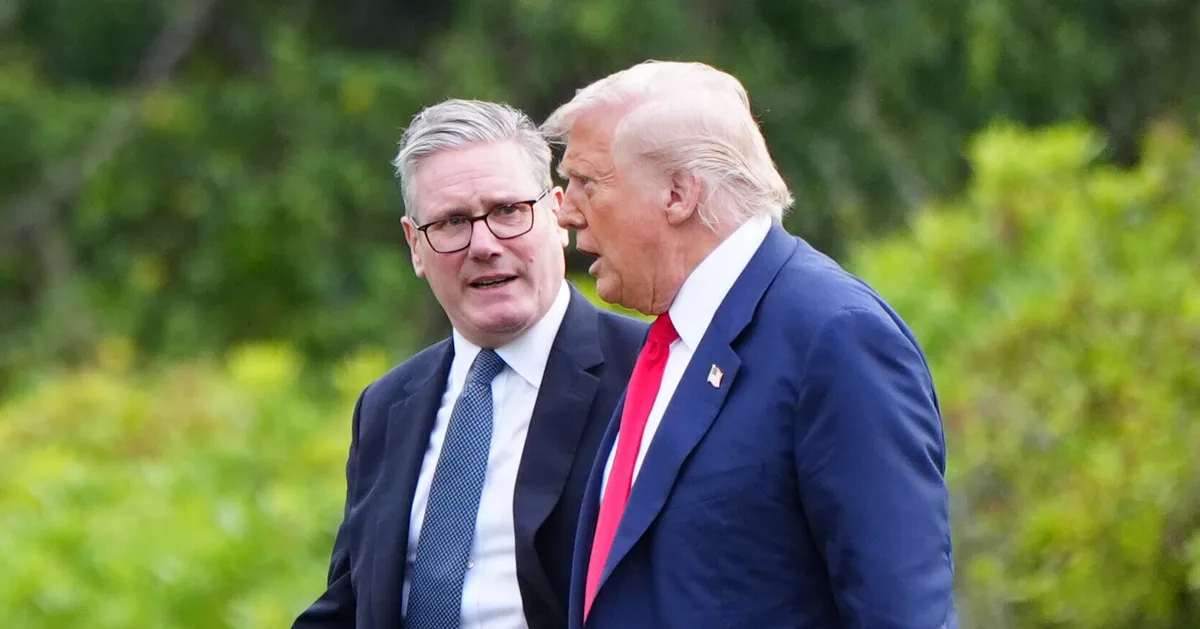
An ally of Donald Trump has blamed the US president for his ongoing spat with Keir Starmer over Britain’s role in the the Iran war.
Trump has repeatedly lashed out at the prime minister for initially refusing America’s request to use UK military bases to launch attacks on Iran.
Starmer has since granted the US permission after Iranians began bombing other Middle East countries, putting 300,000 British citizens in the region at risk.
However, the UK says American jets can only carry out “defensive” missions targeting missile launch sites from British bases.
Trump said last week that Starmer was “not Winston Churchill” and on Saturday night claimed Britain was trying to “join a war after we’ve already won”.
Despite this tension, the president’s friend Chris Ruddy insisted the “special relationship” between the UK and the US is still not “broken”.
The founder and chief executive of conservative media outlet Newsmax told the BBC the recent friction could be described as a “bump in the road”.
“The president has great respect for Britain and the prime minister,” he said, speaking to Radio 4′s Today programme. “I think there was probably some miscommunication early on but that’s been smoothed over.”
Starmer suggested last week that Trump’s war may be unlawful and that the president evidently had no clear objective for the war.
But Ruddy said that America usually engages its allies months ahead of time when it comes to operations like this.
He said: “In this case, as I understand it, the United States notified the British literally on the eve of the attack or as the attack on Iran was underway and said we would like to use your bases.
“Starmer’s response was not that he was not going to do it but that he was going to review it, get the buy-in of the cabinet.
“Within 24 hours he came back, and said it was approved.
“I don’t think it was a real effort to stymie the Americans on his part. Britain came behind the United States quicker than any other ally in Europe, was far better than the French, and stood very strong with us.”
French president Emmanuel Macron and Spanish prime minister Pedro Sanchez have both claimed the strikes are outside of international law.
“I believe the US did not engage early enough the allies,” Ruddy said. “We’re seeing poll numbers here where Americans do not fully support the Iran attack and the reason I believe is that the administration did not fully communicate the importance of this attack and why a strike on Iran on its nuclear facilities was critically important at this time.”
Ruddy added that every day the Iran war drags on, the worse it gets for the US.
“Over time, the public perception around the world becomes ‘Iran is the victim, not the perpetrator of heinous crimes over many decades’,” the Trump ally said.
He said he would suggest the president comes up with a clear marker of what he wants to achieve, and once that is reached, “declare victory”.


The band Franz Ferdinand has angrily hit back after the Israeli Defence Forces used their song Take Me Out in a propaganda video posted on social media.
Franz Ferdinand calls IDF ‘warmongering murderers’
The video shows fighter jets and explosions as Israeli soldiers celebrate Israel and the US’ recent attacks on Iran. The caption reads ‘Operation Roaring Lion – this is how it’s done.’
To reiterate, this was all happening while fucking Take Me Out played
Franz Ferdinand frontman Alex Kapranos took to his own Instagram stories to condemn the genocidal IDF:
These warmongering murderers are using our music without our consent. This makes us both nauseous and furious.
Kapronos also pointed out just how typical of the IDF this is:
Kind of typical though, isn’t it? To strut up and take what isn’t theirs with a vile arrogance…
With the British Media pumping out warmongering propaganda, it’s important that everyone with a voice does speak out against Israel.
History of speaking out
The band are no strangers to standing up for what’s right. In 2016 they released Demagogue as part of 30 Days, 30 Songs, protesting the election of Donald Trump. This was an independent campaign created by Artists for a Trump-free America.
The song included the lyric:
Those pussy grabbing fingers won’t let go of me now.
We can’t possibly ignore the fact that the band is named after Archduke Franz Ferdinand, whose assassination led to World War 1.
It’s absolutely bizarre that his namesake is fighting against true evil harder than the British government
If I had a nickel for every time Franz Ferdinand was involved in the precursor events of a world war, I’d have two nickels, which isn’t a lot, but it’s weird it happened twice https://t.co/feAbNuGJr8
— Adam Smith (@adamndsmith) March 8, 2026
Featured image via the Canary


Jeremy Corbyn joins demonstrators at Parliament Square protesting against US and Israeli airstrikes on Iran, February 2026 (Credit: Waldemar Sikora / Alamy Live News)

3 min read
Exclusive: Former Labour leader Jeremy Corbyn has officially become parliamentary leader of ‘Your Party’ after being elected to the role by the new party’s executive committee.
At a meeting of the party’s central executive committee (CEC) on Sunday afternoon, 14 members voted to appoint Corbyn parliamentary leader, with zero against. He will now lead the party’s cohort of four MPs in Westminster.
Your Party insiders hope the development will provide clear leadership after much turmoil, as the new initiative has been beset by persistent infighting since the start.
Two of the Independent Alliance MPs – Adnan Hussain and Iqbal Mohamed – who were co-founding Your Party quit the project over internal tensions, and just two – Shockat Adam and Ayoub Khan – are still involved.
Zarah Sultana, who quit the Labour Party to join Corbyn’s party last year, has now been effectively sidelined after recent internal elections saw her slate of candidates – ‘Grassroots Left’ – win only seven seats on the CEC. ‘The Many’, the Corbyn-linked slate, secured 14 seats, and independents won three.
A source close to Corbyn had warned during the voting period for the CEC that Your Party would not survive unless his supporters won power.
The Coventry South MP is the only Your Party MP so far according to Parliament’s listings, having self-declared as such some months ago, but PoliticsHome understands that Corbyn is set to follow suit.
Corbyn officially becoming a Your Party MP is a formality that needs to go through the necessary CEC and parliamentary procedures, a source close to him explained. It is understood that, as a YP MP, he will continue to work with the Independent Alliance group.
Members of Your Party voted narrowly for a ‘collective leadership’ over a ‘single leader’ model during its founding conference in November. They decided that the party as a whole would instead be led formally by a 16-member committee, including a chair and deputy chair who must be lay members.
Jennifer Forbes, a Corbyn ally, was elected chair of the party on Sunday. Members of Corbyn’s ‘The Many’ won all eight leadership positions up for grabs in the CEC’s first full meeting. Former Labour MP Laura Smith was elected as vice-chair, and Palestine campaigner and National Education Union activist Louise Regan as political officer.
Sources now say the focus of Your Party will turn to the May elections. During the founding conference, members voted to endorse independent council candidates in England who are politically aligned to Your Party, and to prioritise potential gains over number of candidates endorsed.
Insiders are confident they can help to defeat Labour candidates in urban areas previously considered safe for the governing party, such as in east London and Bradford.
Reacting to his new leadership role, Corbyn said: “It’s an honour to be elected the parliamentary leader of Your Party. From now on, everything we do must serve the people we seek to represent.
“That means campaigning fearlessly against poverty, racism and war. That means building power everywhere: in our workplaces, in our communities and in Parliament. That means taking the fight to Starmer and Farage with a message of hope.
“We have a precious opportunity to unite our movement around a bold alternative – and I’m looking forward to campaigning alongside all members to build the mass, community-based, socialist party this country needs.”
Forbes said: “I’m delighted and honoured to have been elected chair of Your Party. The Westminster political class are failing us, delivering nothing but more wars, higher bills and a country falling apart.
“Your Party will build a genuine alternative, organising our mass membership to campaign on the big issues, from the cost-of-living to opposing militarism. With Jeremy leading us in Parliament, Your Party will now be laser-focused on the people’s priorities.”
Politics
James Lawson: As the ‘Wealth of Nations’ turns 250, it’s time for the Tories to reclaim their inheritance

James Lawson, is chairman of the Adam Smith Institute.
Traditionally, the Conservative Party is the party of sound money and free enterprise.
From Pitt the Younger to Thatcher, its best leaders understood that prosperity stems not from state direction but from free individuals operating under the rule of law. When the party strays by embracing the mixed economy, accepting soft socialism, or losing the confidence to champion markets, the country suffers and the party loses.
The 250th anniversary of Adam Smith’s An Inquiry into the Nature and Causes of the Wealth of Nations, published on the 9th of March 1776, is the perfect moment to remember where these principles originated, and to ask if the party is ready to champion them again.
The Wealth of Nations was the first systematic work of economics. Smith showed specialisation is the engine of prosperity: ten workers in a pin factory, dividing tasks, produce forty-eight thousand pins a day; one alone barely manages a single pin. He demonstrated that self-interest serves the public better than government diktats: “It is not from the benevolence of the butcher, the brewer, or the baker, that we expect our dinner, but from their regard to their own interest.” Competition harnesses this motivation to deliver better, cheaper goods. Prices carry information no bureaucrat possesses; markets allocate resources more efficiently than any civil service committee.
The implications remain as relevant today as in 1776. Shun protectionism: a country refusing to buy from efficient foreign producers taxes its citizens for worse goods. Reject industrial planning: the enterprise of millions, not the wisdom of ministers, creates growth. And do not mistake money for wealth: what matters is what a nation produces, not what it hoards.
Conservatives grasped this first. Edmund Burke praised the book as “an excellent digest… with many valuable corrective observations.” In 1792, Pitt the Younger told the Commons that Smith’s research would “furnish the best solution to every question connected with the history of commerce” and proceeded to cut tariffs. Peel repealed the Corn Laws, quoting Smith’s observation that farmers are “of all people the least subject to the wretched spirit of monopoly.” Thatcher rolled back the frontier of the state and joked, when accused of ideological novelty: “You are totally wrong. I learned it from Adam Smith and he was a long time before me!”
But Smith did not just argue for free markets in theory. A recurring theme of The Wealth of Nations is his assault on entrenched interest groups: merchants lobbying for tariffs and guilds restricting entry to inflate prices. His warning is famous: “People of the same trade seldom meet together, even for merriment and diversion, but the conversation ends in a conspiracy against the public, or in some contrivance to raise prices.”
Here, the modern Conservative Party is weakest. Believing in free markets as a slogan is insufficient. You must confront the vested interests that distort them, even when they are your own voters.
Britain’s planning system, the developed world’s most restrictive, is a machine protecting incumbent homeowners’ property values at the direct expense of the young. The pension triple lock acts as a state-mandated wealth transfer from working-age taxpayers enduring stagnant wages to a largely insulated pensioner class. The net zero lobby has rebuilt mercantilism in green clothing. Billions in subsidies flow to politically connected firms, saddling consumers with Europe’s highest electricity prices, while we could instead have abundant nuclear power, revived North Sea oil, and American-style fracking. Smith would recognise every one of these as a conspiracy against the public.
The economic consequences are dire. In the eighteen years since the financial crisis, Britain’s real per capita income grew by roughly 2 per cent in total. In the eighteen years prior, it grew by nearly 50 per cent. Adjusted for purchasing power, average British living standards have slipped behind Mississippi, America’s poorest state. Strip out London’s outsized output, and our comparative decline is even starker.
The electoral consequences are predictably bleak. At the 2024 election, just 8 per cent of 18-to-24-year-olds voted Conservative. The median Tory voter is now 63. How can we expect younger generations to become conservatives without a stake in capitalism? Priced out of homeownership, unable to build, taxed to subsidise wealthier retirees, and squeezed by high energy bills, why would they vote for the party that presided over this settlement?
Yet there are reasons for optimism. As the then Trade Secretary, now Leader of the opposition, Kemi Badenoch spoke against “hosing industries down with subsidies or slapping tariffs on products from abroad.” That is the authentic voice of the Smithian tradition. But the wider party must follow.
The Wealth of Nations turns 250 today. For most of that time, the Conservative Party was its most effective champion. It can be again, but only if it challenges its own coalition’s vested interests with the same vigour Smith challenged the mercantilists. The party can either reclaim its free-market inheritance or continue managing the decline it recently presided over. Smith told us what works. The question is whether the party still has the courage to do it. Anything less is just nostalgia.

If your knees aren’t in Megan Thee Stallion shape, that’s OK; “Spanish squats”, which offload the strain of the movement to a resistance band, can help.
And if you’re struggling with back pain, which affects 80% of UK adults at some point in their lives, “goblet squats” might be helpful to add to your repertoire, too.
What are “goblet squats”?
They involve holding a weight, like a kettlebell or dumbbell, in front of you as you perform a squat.
If you’re using a dumbbell, you hold it at one end with both hands, so it stays vertical, like a “goblet”.
What are the benefits of goblet squats?
They target your glutes, hamstrings, and quads.
Healthline explained that squats are a “foundational exercise” for building strength, as they target so many muscle groups.
But back squats, which involve holding a weighted barbell on your shoulders as you squat, can place added strain on your lower back.
A goblet squat, however, “removes that tension while still targeting the quads and glutes, which are the major movers in the exercise”, Healthline added.
That’s partly because it’s a front-loaded exercise: all the weight is in front of you, which could help to reduce your risk of injury.
In a YouTube short, trainer Mike Foster said the move can be a “game-changer for individuals suffering from lower back pain”, and added they can help to “train your core properly” too.
Celeb trainer Mark Wildman added that “squatting low with load [added weight] tends to make the core fire better”. Not only that but “back pain tends to disappear”.
A stronger core can also help to keep your back pain-free in the long term.
How do I do a goblet squat?
Place your feet, toes straight ahead, a shoulder-width apart. Brace your core.
If you’re holding a kettlebell, grab both sides of its handle. If you’ve got a dumbbell, hold one end with both hands, keeping your palms underneath the top of the weight.
Whatever you’re holding, clasp it close to your chest with your back upright. Squeeze your shoulder blades together.
Lower into a squat with your chest up and back straight, hold it, and then push through your feet to return to a standing position.
Immediately stop any exercise that makes your back pain worse.

Jonathan Portes and John Springford share their new analysis that estimates how the number of foreign-born workers would have evolved had the UK remained in the EU. They argue that while leaving changed the composition of migration flows dramatically, it did not materially alter the underlying balance between labour demand, demographic pressures and political constraints.
When the UK voted to leave the EU, much of the economic debate focused on two channels: trade and migration. While there has been extensive work on Brexit’s effects on trade and GDP, its impact on immigration – particularly on the size and composition of the workforce – has been less systematically examined.
In a new analysis, we estimate how the number of foreign-born workers in the UK would have evolved had the country remained in the EU. The results suggest that ending free movement and introducing a new immigration system in 2021 led to a modest rise in the number of foreign born workers in the UK, but a dramatic shift in their countries of origin.
Before and immediately after the 2016 referendum, most forecasts suggested that Brexit would reduce overall immigration. The end of free movement was expected to cut EU inflows, only partially offset by a more liberal regime for non-EU workers. The Home Office, for example, estimated that the post-Brexit system would reduce work-related migration by around 40,000 per year.
What happened instead was more complex. Following the introduction of the new system in January 2021, net migration rose sharply, reaching record levels in 2023. That surge prompted successive Home Secretaries to tighten visa rules. Combined with a weakening labour market, this has led to a sharp fall in work visas issued, including dependants – from 541,100 in 2023 to 186,000 in 2025, with further declines in recent months.
The political debate has often treated these developments as clear evidence either of regained “control” or of policy failure. Our findings point to a more nuanced picture.
It is not possible simply to attribute post-2016 changes in migration to Brexit. The pandemic, post-pandemic labour shortages, the war in Ukraine and the visa route for Hong Kong British Nationals (Overseas) all influenced flows. To isolate the effect of Brexit, we apply a synthetic difference-in-differences approach. In essence, we construct a “counterfactual UK” using a weighted average of comparable EU-15 and EEA countries that closely matched UK trends in foreign-born employment before the referendum. This method improves on simply assuming existing trends continue, and avoids relying on a single comparator country such as Germany.
We focus on foreign-born employees rather than immigration flows. UK flow data have been repeatedly revised, and the Labour Force Survey has had well-documented sampling issues for migrants. Instead, we use HMRC data on non-national employees for the UK and Eurostat data on foreign-born employees for comparator countries. Concentrating on workers also reduces the influence of country-specific shocks to asylum and refugee numbers, which might distort the results.
We estimate effects separately for EU-origin and non-EU-origin workers. For EU workers, we treat the referendum in June 2016 as the start of the “treatment”, reflecting the immediate political and economic uncertainty, including sterling’s depreciation. For non-EU workers, we treat January 2021 – when the new system came into force – as the relevant break point. However, using either 2016 or 2021 for both does not hugely change results
For EU-origin workers, the divergence between the UK and its counterfactual is substantial. By 2024, the number of EU-origin workers in the UK had returned roughly to its 2016 level. In our counterfactual UK, it had risen by around 30 per cent. That implies that Brexit reduced the number of EU-origin employees by about 785,000 by 2024 – equivalent to roughly 2.6 per cent of the total UK workforce. Most of this effect had materialised by 2023, with both the actual and counterfactual series flattening thereafter.
This confirms that ending free movement had a substantial and lasting effect on EU labour supply to the UK.
The story for non-EU workers runs in the opposite direction. After 2021, non-EU employment rose sharply in the UK – far more than in the counterfactual. By the end of 2024, non-EU employment in the UK had reached about 225 per cent of its 2016 level, compared with about 150 per cent in the synthetic control. We estimate that Brexit increased the number of non-EU employees by around 992,000 in 2024. Unlike the EU effect, this divergence continued to grow through 2024, consistent with a sustained increase in work-related migration under the new system.
However, more recent data, not included in our analysis, suggests that this expansion appears to have peaked. Visa data indicate that work-related non-EU migration slowed sharply in 2025 as the government tightened rules and labour shortages eased. The additional boost to non-EU employment seen in 2024 is therefore unlikely to persist at the same pace.
Combining these two large but offsetting shifts, we estimate that the net effect of Brexit in 2024 was an increase of around 207,000 non-UK-origin employees – approximately 0.6 per cent of the total workforce. In other words, Brexit substantially reduced EU-origin employment and substantially increased non-EU-origin employment. But the overall number of foreign-born workers in the UK was only modestly, although significantly, higher than it would have been had the UK remained in the EU.
The broader political economy challenge remains. Across Europe, ageing populations are increasing demand for migrant labour, even as public and political pressures push governments to reduce immigration. The UK is not unique in facing this tension.
Our analysis suggests that leaving the EU did not resolve that dilemma. It changed the composition of migration flows dramatically, and it restored nominal “control” over the nature of those flows, but it did not materially alter the underlying balance between labour demand, demographic pressures and political constraints.
By Professor Jonathan Portes, Senior Fellow, UK in a Changing Europe and John Springford, Associate Fellow, Centre for European Reform.
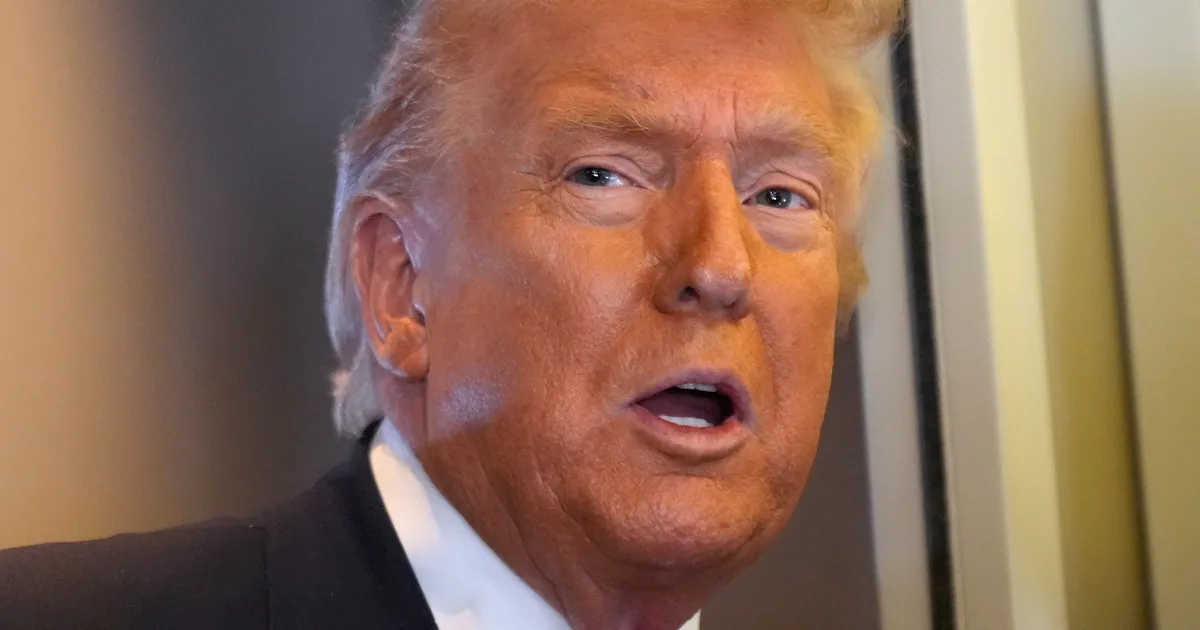
Donald Trump has been accused of purposefully winding up the British public by attacking the UK-US special relationship.
The president has repeatedly laid into Keir Starmer after the prime minister initially refused to let America use UK military bases to launch attacks on Iran.
After Iran began attacking other countries in the Middle East, putting 300,000 Brits in danger, Starmer granted the Americans access to British sites for “defensive” strikes on Iran.
But it was too little too late for Trump.
He said last week that Starmer was “not Winston Churchill” and on Saturday night claimed America’s “once great ally” Britain was now trying to “join a war after we’ve already won”.
Starmer has used up plenty of political capital trying to keep Trump on side over the last year but this latest spat has sparked speculation that the “special relationship” between the two countries is officially over.
However, Sky’s military analyst Michael Clarke said: “The special relationship, as depicted in the British press, between the UK and the US has been over for 40 years.”
He said everyone has a “sensitive” relationship with the US, while the UK has a “specialist relationship” where they co-operate with intelligence-sharing, military work and nuclear power.
But, Clarke claimed that this does not actually extend to those at the top.
“The Americans always play tough. The special relationship is a sentimental thing that we hold onto and they’ve long since forgotten about,” the analyst said.
“They only talk about the special relationship when they want to beat us up, which they do. Trump likes insulting his allies.
“Trump’s statements are better than they sound. They sound unhinged but he knows what he’s doing.
“There is a low cunning behind these statements he makes because he knows it winds us up.
“He knows he gets a reaction to the British press and he knows that gives him credit to require something else of us.”
At the weekend, Trump ranted on TruthSocial: “The United Kingdom, our once Great Ally, maybe the Greatest of them all, is finally giving serious thought to sending two aircraft carriers to the Middle East.
“That’s OK, Prime Minister Starmer, we don’t need them any longer — But we will remember. We don’t need people that join Wars after we’ve already won!”

Yes, too much caffeine can lead to jitters, a bad night’s sleep, and even high blood pressure.
But there’s a lot of evidence to suggest that moderate coffee consumption (roughly three cups or less a day, or 200-300 mg per day of caffeine) could actually be good for us.
It’s been linked to better heart health, increased longevity, and even better ageing.
A new study of over 130,000 participants has suggested it could slow brain ageing and reduce dementia risk, too.
Why might coffee consumption help brain age?
The paper, published in JAMA, involved 131,821 participants, who the researchers followed for 43 years.
The data came from the Nurses’ Health Study and the Health Professionals Follow-up Study. None of the participants had dementia, Parkinson’s, or cancer at the start of the study.
Every two to four years, the scientists asked participants to share their caffeine intake as part of dietary questionnaires.
The researchers compared these self-reports to health data across the years, including cognitive tests they asked people to complete throughout the study. In the decades of follow-up, just over 11,000 people developed dementia.
And once they’d compared the results, the researchers found that:“Greater consumption of caffeinated coffee and tea was associated with lower risk of dementia and modestly better cognitive function, with the most pronounced association at moderate intake levels”.
In this study, “moderate” caffeine consumption was about two to three cups of coffee a day, or one to two cups of tea daily.
Even in the “high” consumption bracket, though (up to five cups of coffee a day), dementia risk seemed to be 18% lower. And cognitive decline seemed slower n caffeinated coffee drinkers, too.
Does that mean drinking coffee will definitely lower my dementia risk?
This was an observational study, which only showed a link between coffee consumption and dementia.
Researchers couldn’t prove for sure that it was the coffee itself that made the difference; although they tried to account for things like diet quality, things like medications could have impacted the results.
Still, the results were not seen for those drinking decaffeinated coffee or tea, suggesting there might be something about caffeine that could help the brain.


1996, Tracey Emin: ‘Exorcism of the last painting I ever made’ | Image © Tracey Emin

4 min read
Full of contradictions and ambiguities, find the time to see this Tate Modern exhibition of the varied work of Margate’s most famous daughter
As I started to walk around the new Tracey Emin exhibition, Tracey Emin: A Second Life at Tate Modern, curiously my first thought (and one that kept coming back) was about framing.
Emin is an artist (and a very self-conscious one) who has mined her life and the things her life consists of, for art, as art. She will frame anything and everything if it fits into one of the many ‘stories’ that make up the totality of her work.

A trip to the dentist inspires her piece My Future (1993) in which she frames an old passport (a past identity), a tooth and the dentist’s card (both in the same frame) and separately a hand-written lyrical text that ends with the line “That’s the last dead thing that leaves my body” – a reference to her abortions.
Everything is framed, one way or another: the large, impressive and beautifully composed appliqué blankets are mounted in thick white frames. Even the famous My Bed is framed twice: by what is left out around the bed and the bedside rug, turning the bed into a lonely ‘oasis’ of being, as well as the line you as the viewer cannot cross. That and her studio installation feel, then, a little like crime scenes, though less perhaps about the crime, more about the potential loss of the fragile evidence.
But perhaps the most interesting framing is that of the paintings which, in an exhibition of varied media, are the dominant medium – and clearly the work Emin has most thrown herself into in recent years.
The newest largescale paintings have metal frames leaving just a slight gap between painting and frame. This interesting aesthetic choice adds to the sense of the severe physical limitation placed on the ideals and emotions you sense in the painting: freedom, ecstasy, joy and sexual desire in the face of anger and latterly the fight against death. The paintings that work best – such as Rape (2018) and You Keep Fucking Me (2024) – do so when the face-off between freedom and obstruction (or erasure) feels most acute.

Emin’s work is full of such contradictions and ambiguities. Her embroidered cotton Why (2009) contains the phrase “Why Be Afraid”, which may start out as consolation but, when persistently repeated, turns into a cry of fear itself – as well as the cold analysis of the fact.
 Her brilliant Super 8 film Why I Never Became a Dancer (1995), rightly given a room of its own, lingers nostalgically over a timeless Margate, with its beach and seaside attractions, even as her voiceover tells us the town is too small and it is time to leave.
She never became a dancer because she was called a “slag” on the dancefloor, but she also never became a dancer because she became an artist, even as much of the film is devoted to her dancing. The artist returned to Margate, but on her own terms.
This is a hugely emotional exhibition. If there is one fault, it is nothing to do with the artist but the stupid trigger warnings. They should all be gathered up, framed and put in a room by themselves. Almost Tracey Emin.
Earl of Clancarty is a Crossbench peer
Tracey Emin: A Second Life
Curated by: Maria Balshaw, Alvin Li and Jess Baxter
Venue: Tate Modern until 31 August 2026
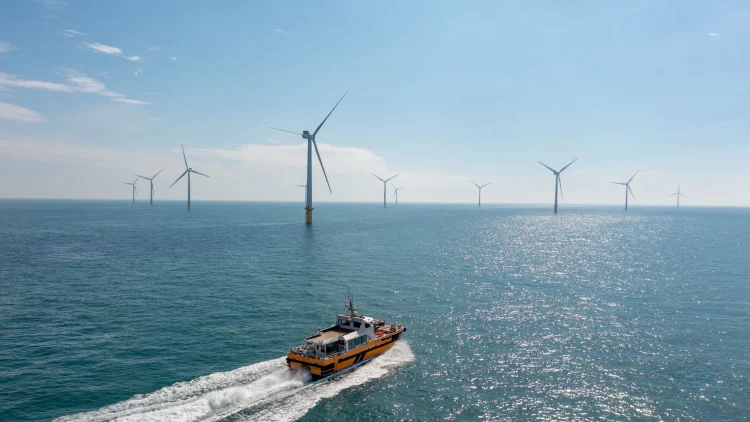
Credit: The Crown Estate/Ben Barden Photography Ltd
The Crown Estate sets out what offshore wind means for coastal communities – from jobs and bills to investment in ports – and invites parliamentary stakeholders to engage with its Marine Delivery Routemap
In just 25 years the United Kingdom has turned offshore wind from an idea into an industry – from a nascent technology into national infrastructure. It is already powering communities, cutting bills and supporting jobs in constituencies across the country. And it has the potential to deliver far more for jobs, growth and energy security.
The case for offshore wind is practical and measurable. Every additional gigawatt delivers an estimated £2-3bn boost to the economy.1 Between 2010 and 2023, UK consumers are estimated to have saved around £104bn2 as wind generation helped shield families from volatile gas prices. Today, the UK operates nearly 3,000 offshore wind turbines3 with a total capacity of 16.1GW – enough clean power for over 16 million homes.
“Offshore wind may be offshore – but its jobs, skills and supply chains are firmly onshore, in your coastal constituencies”
And the momentum continues. The latest Contracts for Difference auction backed a further 8GW of capacity – reinforcing the UK’s clean energy leadership and unlocking billions more in investment and thousands of new jobs across the country.
That scale translates directly to constituencies. Offshore wind already supports close to 40,000 jobs across the UK, and this could rise to 94,000 by 2030.4 Many of those roles – from component manufacturing to engineering to port services, are rooted onshore, well beyond the coast. Even where turbines cannot be seen – the impact is felt locally.
This is also a clear energy security test. The UK still imports around 42 per cent of its energy,5 leaving households and businesses exposed to global gas price shocks driven by geopolitics, supply disruption and extreme weather. Reducing reliance on imported fossil fuels is one of the most effective ways to protect families from future price spikes and strengthen national resilience.
A key reason the UK has made such progress is the strong institutional model underpinning offshore wind. At the centre is the stewardship of the seabed. Created by an Act of Parliament, The Crown Estate has a clear mandate to act independently and commercially to deliver long‑term value for the nation and returns all our profits to HM Treasury for the benefit of public spending.
This enables us to take a strategic approach: working with government and industry, investing in data and evidence to reduce risk, and running transparent leasing rounds that give developers the certainty to invest for decades.
Scaling back ambition now would be a profound mistake. It would jeopardise energy security, slow the clean energy transition, and limit economic opportunities for constituencies nationwide. Sustained growth depends on grid readiness, stable policy signals and long-term investment confidence – all areas where Parliament’s role is decisive.
Meeting the UK’s clean power and energy security ambitions requires a step change in deployment, supported by the right onshore conditions. Cutting-edge offshore wind needs larger ports, heavier-lift quaysides and strong pathways into secure, well-paid technical jobs.
We therefore ask parliamentarians to continue prioritising R&D investment and policy that supports innovation from research to deployment.
Government departments and devolved nations must work together on a co-ordinated strategy that gives communities, industry and investors the certainty required to deliver at pace.
The Crown Estate is committed to ensuring the seabed continues to drive investment for the benefit of people onshore. Through The Crown Estate Act 2025, Parliament granted us the flexibility to invest more widely across priority areas. We are already using these powers to support the next phase of offshore wind.
First, we will provide long-term visibility through a new Marine Delivery Routemap – or a “sat nav for the seabed” – a unique mapping and planning tool that can help identify how marine industries and nature can grow together. Our seabed is becoming increasingly crowded. Offshore wind must co-exist alongside cables and pipelines, shipping lanes, fisheries, defence activity and marine protected areas. As demands on our seabed grow, clear mapping is essential to support decision making, avoid conflict, protect nature and give investors confidence.
Second, we will stimulate growth through a £50m Supply Chain Accelerator to unlock early-stage projects where capacity is needed most.
Third, we will invest directly, committing an additional £350m through our Supply Chain Investment Programme to support offshore wind ports and supply chains, working alongside co-investors including Great British Energy.
Over time the Routemap will become a shared national resource – helping local communities and their representatives to engage with the seabed as a vital strategic asset.
To support that engagement, The Crown Estate will offer parliamentary stakeholders the opportunity to explore a working demonstration of the Marine Delivery Routemap following its operational launch.
Our aim is a common endeavour: long-term, cross-sector planning that strengthens the UK’s energy security and delivers lasting benefits for communities, nature and the nation.
Click here to find out more about The Crown Estate.
References
- https://www.renewableuk.com/media/rqvlqzu0/ offshore-wind-industrial-growth-plan.pdf, p.1
- https://www.ucl.ac.uk/news/2025/oct/ wind-power-delivers-ps104-billion-net-benefit-uk-consumers
- https://www.datocms-assets.com/136653/1747814298- osw-report-2024.pdf, p.8
- https://www.renewableuk.com/news-and-resources/ publications/wind-industry-skills-intelligence-report-2025/
- https://oeuk.org.uk/wp-content/uploads/ woocommerce_uploads/2025/09/Economic- Report-2025-OEUK-becfs5.pdf, p.16

I have terrible sleep, and have tried everything from reading before bed to drinking passionflower tea, and addressing my vitamin D deficiency to tackle my sleep maintenance insomnia.
Should I add magnesium to that list?
After all, I’ve heard it’s a science-backed way to help you get (and stay) asleep. Here’s what we know for sure, and what we’re a little foggier about:
Why do people think magnesium will help sleep?
Magnesium is somewhat helpful to the production of the sleep hormone melatonin, which helps to regulate your body clock.
It also helps with the balance of your brain’s neurotransmitters, or the “messengers” your body uses to keep your mind and body in contact.
And because these can either calm you down or race your thoughts up, the balancing effect magnesium can have on neurotransmitters means it could help to lower your risk of racing thoughts at night.
Does magnesium definitely help sleep?
In a systematic review of nine studies, magnesium appeared to help with sleep quality (specifically, it seemed to improve snoring, sleepiness, sleep duration, and reduce participants’ likelihood of falling asleep in the day).
But this was only the case in observational studies. That meant we couldn’t prove for sure that the magnesium itself was responsible for the connection; they only proved a correlation, and not causation.
However, in the randomised controlled trials – sometimes called the “gold standard” of effectiveness research, and are designed to tell whether the material researchers are studying directly creates an effect – the results were less impressive and less consistent.
This “uncertain association” has led the authors of the review to call for more randomised controlled trials with more participants and longer follow-up periods.
So, while some people have reported better sleep on an individual level, the science isn’t definitive yet.
Is magnesium right for me?
Whether you have sleep issues or not, all of us need magnesium to help turn our food into energy and maintain our bone health. But we can get enough from our food.
Some medications may interact with magnesium supplementation, including some antibiotics, some diabetes medications, and some blood pressure medications.
If you’re on any of these, it might be worth asking an expert whether magnesium is right for you.
People with kidney disorders, those with heart disease, and individuals with gastrointestinal disorders might be at higher risk of magnesium overdose, too.
That is sometimes the case because those with kidney issues often take medications which are already high in magnesium, like laxatives and/or antacids.
What is the right dose of magnesium?
Healthy adults, aged 19-64, should have:
- 300mg a day for men
- 270mg a day for women.
Per the NHS, taking over 4,000 mg of magnesium a day can lead to diarrhoea.
We don’t know what happens in the longer term.
And, the health service added, “You should be able to get all the magnesium you need by eating a varied and balanced diet”.
What are some natural sources of magnesium?
Magnesium is naturally present in lots of foods, including:
- spinach,
- nuts,
- wholemeal bread,
- green leafy vegetables,
- legumes,
- nuts,
- seeds,
- whole grains,
- enriched cereals.
Generally speaking, our bodies absorb about 30-40% of the magnesium available in food, the National Institutes of Health added.

Call the Midwife fans in tears as BBC show takes break

Chocolate made with cultured cocoa to launch this year

Here’s what may trigger the next crypto market rally


-

 Politics6 days ago
Alan Cumming Brands Baftas Ceremony A ‘Triggering S**tshow’
-
Business3 days ago
Form 8K Entergy Mississippi LLC For: 6 March
-

 Fashion3 days ago
Weekend Open Thread: Ann Taylor
-

 Tech4 days ago
Bitwarden adds support for passkey login on Windows 11
-
 Sports4 days ago
499 runs and 34 sixes later, India beat England to enter T20 World Cup final | Cricket News
-

 News Videos2 hours ago
10th Algebra | Financial Planning | Question Bank Solution | Board Exam 2026
-

 Sports2 days ago
Three share 2-shot lead entering final round in Hong Kong
-

 Sports1 day ago
Braveheart Lakshya downs Lai in epic battle to enter All England Open final | Other Sports News
-

 Tech7 days ago
Cynus Chess Robot: A Chess Board With A Robotic Arm
-

 Business6 days ago
Guthrie Disappearance Enters Fifth Week as Family Visits Memorial
-

 Crypto World7 days ago
Why Nexo Is Reentering the US After the 2023 Crypto Lending Crackdown
-

 NewsBeat4 days ago
Piccadilly Circus just unveiled ‘London’s newest tourist attraction’ and it only costs 80p to enter
-

 Business21 hours ago
Search for Nancy Guthrie Enters 37th Day as FBI Probes Wi-Fi Jammer Theory
-

 Entertainment2 days ago
Hailey Bieber Poses For Sexy Selfies In New Luscious Lip Thirst Traps
-

 Politics3 days ago
Top Mamdani aide takes progressive project to the UK
-
 NewsBeat7 days ago
Handcuffed presenter Jonathan Ross’ sweet admission about marriage to wife of 38 years
-
 Sports6 days ago
Jack Grealish posts new injury update as Man City star enters crucial period
-

 Crypto World5 days ago
New Crypto Mutuum Finance (MUTM) Reports V1 Protocol Progress as Roadmap Enters Phase 3
-

 Tech4 days ago
ACIP To Discuss COVID ‘Vaccine Injuries’ Next Month, Despite That Not Being In Its Purview
-
Entertainment5 days ago
Harry Styles Has ‘Struggled’ to Discuss Liam Payne’s Death