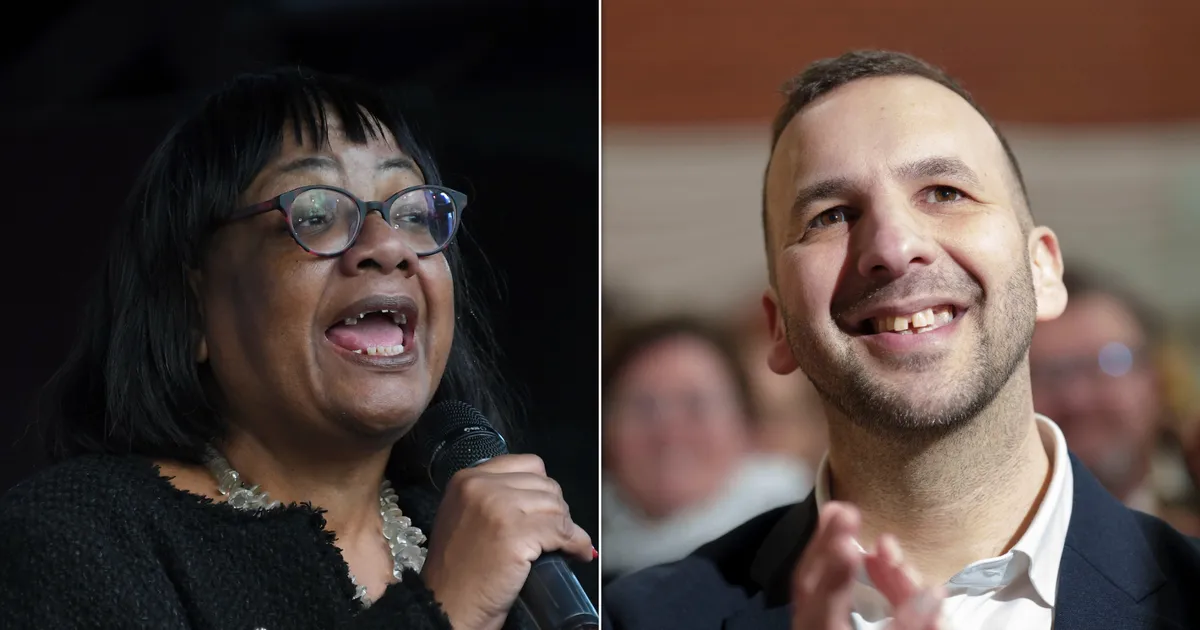
The Green Party leader has previously suggested he could stand in the Labour veteran’s Hackney North and Stoke Newington seat as he bids to become an MP for the first time.
He said he would consider running in Hackney, Tottenham and Walthamstow to capitalise in the “surge” in support for the Greens.
But speaking to HuffPost UK this week, Polanski appeared to backtrack on his previous comments and said that he would not want to challenge Abbott.
“I think Diane Abbott’s wonderful, and I’d be highly unlikely to run against her,” he told HuffPost UK.
He said he’s more likely to compete against David Lammy, the deputy prime minister and justice secretary who has been the Labour MP for Tottenham since 2000.
Polanski also said he would consider running against Stella Creasy, the Labour MP for Walthamstow.
Polanski also appeared to confirm that he will stand to be re-elected Green Party when his current term runs out.
Under the party’s rules, a leader’s term can only last for two years before members are given another vote on who should be in charge.
Polanski told HuffPost UK that he “imagines” he will be will run to be leader for a second term.
Advertisement
Polanski also insisted he was not in a “hurry” to be an MP any time soon.
Pointing to the Greens’ rapid increase in membership after it surged to 170,000 late last year, Polanski added: “A Green Party can be and will be successful, whether its leaders [are] inside parliament or outside.
“I want to represent a constituency because I also think that’s another set of skills I can bring to a party, but actually I see that as a separate role to being the leader of a party, which is actually to champion all the brilliant candidates we’ve got across the country.”
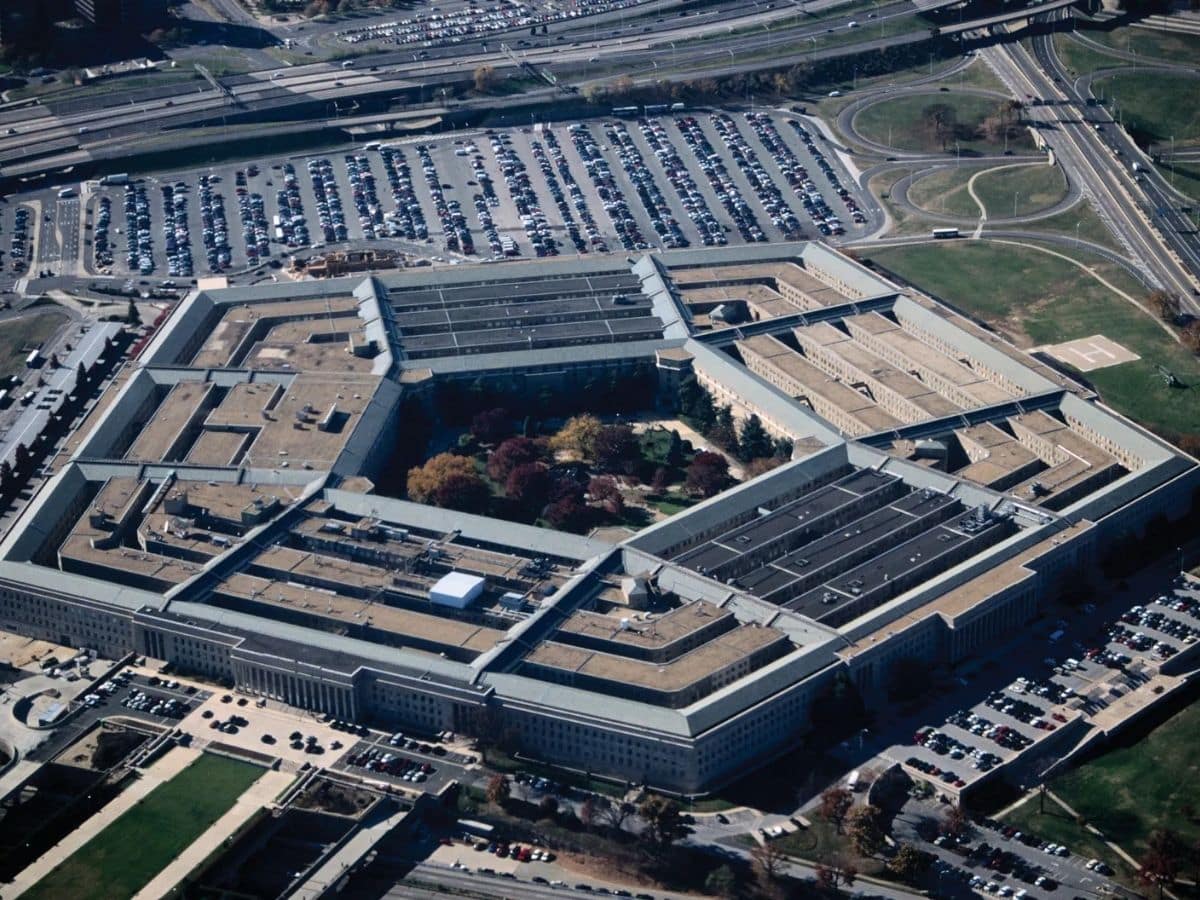
In this week’s dispatches from the American kleptocracy, a senior US ‘department of war’ official made up to a 4,800% return on a private investment in Elon Musk’s xAI. The official’s job, you ask? Why, overseeing the Pentagon’s use of AI, of course.
What a normal thing to write about a functioning and definitely-not-at-all corrupt democracy.
Emil Michael’s official title is ‘under secretary for research and engineering’ at the Pentagon. He manages negotiations with AI tech firms, and has recently been pushing for greater use of the technology in America’s wars.
Speaking at Elon Musk’s Stargate base, US secretary of war Pete Hegseth described Michael:
Advertisement
Our under secretary of war for research and engineering, Emil Michael, right here in the front row, is the war department’s single chief technology officer. One CTO for the entire enterprise.
That ‘one CTO’ bit makes the upcoming string of events all the more egregious.
Pentagon — The timeline
In March 2025, shortly before joining the war department, Michael declared a private investment in xAI worth between $500,000 and $1m. He reported that he owned the shares via the venture capital fund KQ Partners.
Over the next 10 months, the US war department made two deals with xAI. Likewise, in July the Pentagon named xAI’s ‘Grok’ chatbot as one of its four commercial providers to aid the department in the use of AI. Grok itself is more well known for the recent scandal in which it generated non-consensual nude images on Twitter.
However, on 18 December, the Office of Government Ethics (OGE) issued Michael a divestiture certificate. Essentially, this recognised his xAI stock as a conflict of interest, and told him to sell it off.
Advertisement
Early the next week, on 22 December, the Pentagon announced that:
Today, the War Department officially entered into an agreement with xAI, paving the way for the deployment of its advanced capabilities on GenAI.mil. This move builds on the rapid deployment of cutting‑edge AI across the Department’s 3 million military and civilian personnel.
According to the OGE, Michael then sold his xAI holdings on 9 January, for between $5m and $25m. Unfortunately, the OGE documents only provide rough valuations, rather than exact figures — or details where exactly the holdings ended up.
‘In full compliance’
Whilst enriching oneself through advocating a technology you have huge investment within government is a blatant example of corruption in and of itself, there’s a further kicker. As the Guardian pointed out:
xAI, which is the company behind Musk’s Grok chatbot, is not publicly traded, so it is unclear how Michael obtained his position, how it was priced or to whom he sold it.
Musk and Michael appeared to be on friendly terms, with Musk going so far as to give Michael his seal of approval as Trump’s potential transport secretary.
Advertisement
It should also be noted that federal law nominally forbids a US official from using their position for financial gain. Predictably, the Pentagon insisted that Michael was “in full compliance” with ethics laws, adding:
The Department of War maintains a rigorous, multi-layered ethics framework that includes financial disclosure reviews, divestitures where appropriate, and screening to prevent conflicts of interest.
In practice, of course, Trump himself has shown that politicians are free to ignore the stipulation against corruption as they see fit. The man did bean adverts out of the White House, for God’s sake. Likewise, as Forbes recently reported:
Trump added $1.4 billion over the past year, leveraging the presidency for profit. His cryptocurrency ventures, stalled out before the election, exploded after his victory, adding an estimated $1.8 billion to his fortune overall. Another $500 million came in court, where Trump’s legal team succeeded in eliminating a half-billion judgement against him. His once-dormant licensing business surged $400 million, as foreign developers clamored to do business with an American president.
It’s utterly unsurprising that, if you take a man with no morality, put him in the most powerful position on earth, and show him there will be no consequences for his actions, he’ll steal all that he can get his hands on.
Meanwhile, his ultra-rich underlings have also followed suit, using their newfound political power for personal gain. But sure, a $24m return on investment is probably just what “full compliance” looks like now.
The US is bringing in automatic draft registration for military-aged men. The move is cross-party and predates the paused illegal war on Iran. Yet it shows that the US political elite remains committed to warfare on a massive scale in the future.
Young, eligible men will be automatically registered for the military draft pool starting in December as part of a measure tucked into the annual defense policy bill Congress signed into law late last year.
Men ages 18 to 26 must already register for selective service in case a draft is required. The last time a draft was in effect was February 1973, during the Vietnam War.
US politicians passed the Selective Service System (SSS) bill in 2024. And a recent amendment means automatic registration will begin in December.
SSS is an independent Federal agency established to ensure the availability of personnel to support the United States in times of national emergency. The Agency’s mission is to provide manpower to DoD when conscription is authorized by Congress and the President and to operate a system of alternative service for conscientious objectors.
By maintaining a robust registration system and ensuring preparedness, SSS plays a critical role in supporting America’s national security needs.
US — Failure to register
Registering does not mean joining the military. But federal law requires:
all male citizens of the United States, and male immigrants residing in the country, ages 18-25, to register with SSS.
Failure to register can result on punishment by the American government:
Advertisement
such as ineligibility for employment in the Executive branch of the Federal government; Federally-funded job training; and state-based student aid and employment in many jurisdictions. Additionally, naturalization to become a U.S. citizen may be delayed up to five years if a person fails to register.
The US used the ‘draft’ — mandatory conscription to the military — in the World Wars and Vietnam. Both main US parties backed the SSS legislation, passing it with “bipartisan support”. The US military is currently an all-volunteer force, albeit one which relies on a so-called poverty draft. And the current US commander-in-chief has developed a taste for foreign wars, despite claiming otherwise.
Trump’s wars
US president Donald Trump, who came to power as an ‘anti-war’ candidate has entangled the US in an illegal war of choice war with Iran. His official foreign-military policy stance described in the 2025 National Security Strategy seemed to mark a degree of withdrawal from world affairs. Direct involvement in a war like Iran did not seem to be on the agenda.
To quote the NSS directly:
Advertisement
We want to prevent an adversarial power from dominating the Middle East, its oil and gas supplies, and the chokepoints through which they pass while avoiding the “forever wars” that bogged us down in that region at great cost.
US-Israel attacked Iran first on 28 February without provocation. Iran was offeringunprecedented concessions in negotiations at the time. The Pentagon has sincestated there was no imminent threat from Iran. And the UN’s atomic watchdog, the IAEA, has said there isno evidence Iran was developing a nuclear weapon.
The US has achieved none ofits original war aims. Iranpredictably closed the Strait of Hormuz, a vital oil channel, once attacked — creating a global energy crisis. Far from being defeated, Iran hassaid the war will continue until “the enemy’s inevitable and permanent humiliation, disgrace, regret, and surrender”. Trump came to power on an anti-war ‘America First’ ticket. He now faces worldwide humiliation.
This bill shows that a commitment to war is built into American politics across all major parties. Whoever is in power — imperialist liberals like Barack Obama or hard-right demagogues like Donald Trump — the US is still at its very core a violent imperial power.
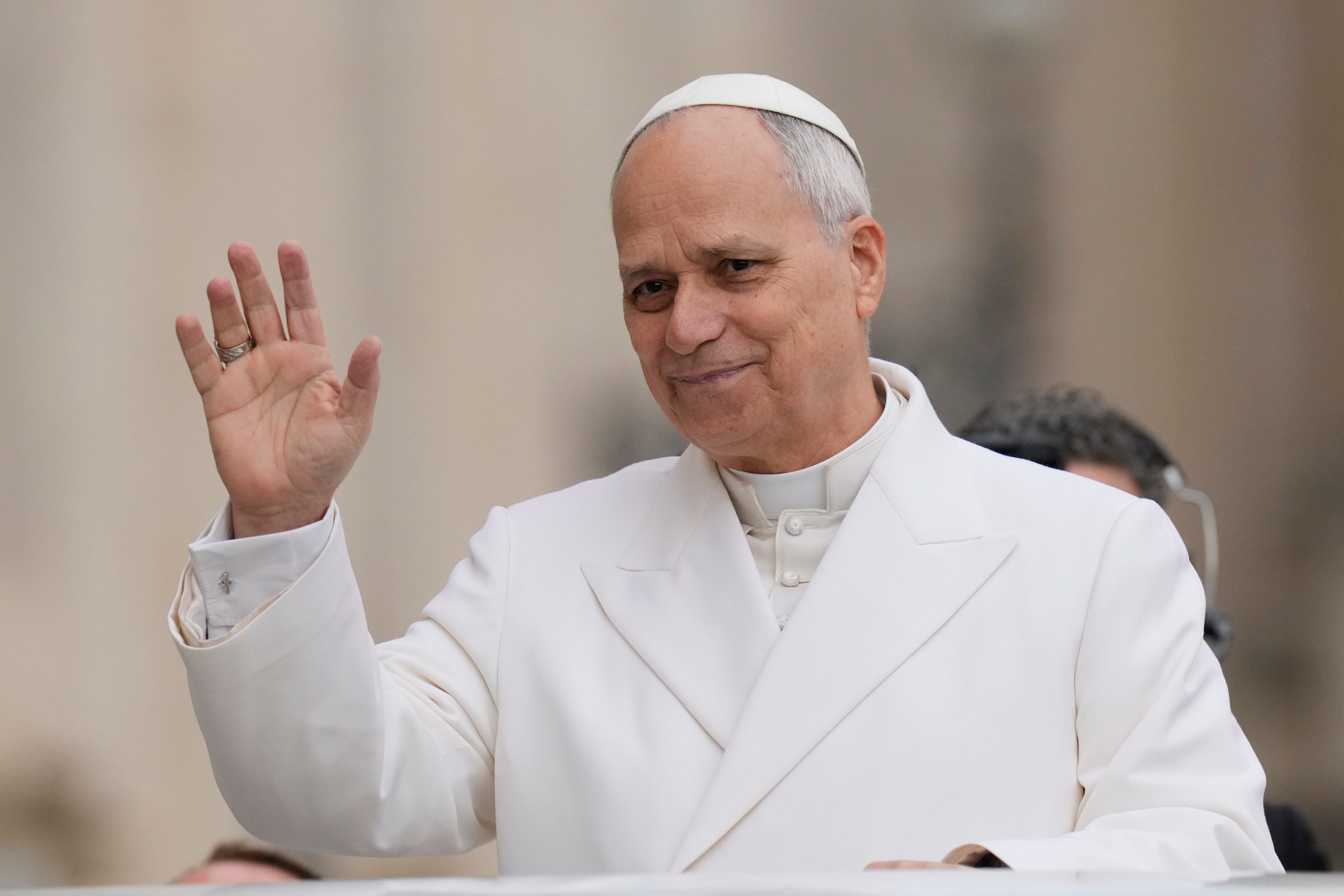
Pope Leo XIV on Friday issued a sweeping condemnation of war, continuing to reject the idea that military action can bring about peace or freedom as the Trump administration and other leaders use religion to justify the U.S.-Israel war in Iran.
“God does not bless any conflict,” Leo wrote on X. “Anyone who is a disciple of Christ, the Prince of Peace, is never on the side of those who once wielded the sword and today drop bombs.”
Military force, he added, will not result in peace or freedom — that “comes only from the patient promotion of coexistence and dialogue among peoples.” He did not mention President Donald Trump or other leaders by name in the post on X.
Trump, who describes himself as a Christian, but not Catholic, has invoked faith several times throughout his term as a means to justify his actions.
Advertisement
Trump on Monday told reporters at a White House press briefing that he believes God supports the Iran war “because God is good” and wants to “see people taken care of.”
Leo had previously condemned Trump’s threat from earlier this week to destroy Iranian civilization.
He called the threat “truly unacceptable” and urged that the conflict in the Middle East “is only provoking more hatred.”
At a Palm Sunday mass, Leo insisted that no one could use God to justify war, telling the tens of thousands of people gathered before him that God “does not listen to the prayers of those who wage war, but rejects them.”
Advertisement
Defense Secretary Pete Hegseth has framed the Iran war, which reached a temporary ceasefire Tuesday after six weeks of fighting, as divinely sanctioned — often turning to prayer and belief that God is on the side of the U.S. military.
At a Pentagon church service held weeks after the Iran war began, Hegseth, who is also a Christian, but not Catholic, read a prayer that called for violence against military enemies.
“Let every round find its mark against the enemies of righteousness and our great nation,” he prayed during the livestreamed service. “Give them wisdom in every decision, endurance for the trial ahead, unbreakable unity, and overwhelming violence of action against those who deserve no mercy.”
After the Democratic National Committee punted on two resolutions in August that highlighted the party’s deep divide on Israel, DNC Chair Ken Martin convened a task force “to have the conversation” and “bring solutions back to our party.”
Seven months later, the Middle East working group — meeting today in-person for the second time — still has work to do.
The group, composed of eight DNC members with backgrounds in Jewish and Palestinian advocacy, has struggled to meet consistently or coalesce around shared objectives. Part of that is due to the difficulties of coordinating across schedules and time zones, with at least one member actively running for office. But atop those hurdles come the challenges of productive discourse about one of the party’s most contentious debates among a cohort with sharp ideological divides.
“People aren’t comfortable with being uncomfortable,” Steph Newton, a DNC member from Oregon who’s part of the working group, told POLITICO. “These uncomfortable discussions are how we’re going to be able to move the party forward and find a solution.”
Advertisement
The working group met for the first time in December at the DNC’s winter meeting in Los Angeles, and convened virtually two more times, on March 1 and March 18. Those meetings mostly centered on figuring out what the group should be working on in the first place. “Most of the time, what we’ve talked about is, ‘What are we supposed to be doing?’” said James Zogby, another member from D.C.
The working group comes as divides over support for Israel remain a persistent liability for Democrats, and as AIPAC’s involvement in midterm primaries presents a new purity test for candidates. “No one gets anywhere by trying to shout the other side of the room — as a matter of fact, I think that would be harmful politics,” Andrew Lachman, another working group member from California, said.
A DNC spokesperson emphasized the group’s goal is to figure out how to talk to voters about the Middle East in a way that ultimately helps the party build coalitions and win elections.
The group’s inaction so far came into sharper focus yesterday at the DNC’s spring meeting in New Orleans, when the party’s resolutions committee considered one brought by Joe Salas, another member of the working group from California, to recognize Palestinian statehood.
Advertisement
“It is necessary for the Democratic National Committee to address the ongoing heinous and illegal acts against the Palestinian people. Some here may say that there is a working group. To that, I say that we are in a midterm year and they are yet to produce any results in a moment where anger has only grown amongst the American people,” said Cameron Landon, VP of the College Democrats of America, who spoke on behalf of Salas.
Salas, who wasn’t at the meeting, submitted the resolution without discussing it with the other members of the Middle East working group, according to Zogby and Newton, who said she was “surprised” to see it in the resolutions packet.
“I would assume that if we’re on a work group together discussing these issues, you say, ‘Hey, work group members, teammates, I want to submit a resolution on X, Y and Z. I know we’re working toward something like this together. Is this something that we can discuss?’” Newton said.
Deborah Cunningham-Skurnik, another member of the group from California, told the resolutions panel yesterday that there were “some parts of it I would like to go bit by bit over with” Salas.
Advertisement
Salas said in an interview ahead of the vote he wouldn’t attend the New Orleans meeting because “I’m just gonna let them have those words and reject them, accept them, modify them, whatever they want to do.” He didn’t respond to further requests for comment about why he didn’t tell the working group he submitted the resolution.
The panel ultimately referred those resolutions back to the working group — with a warning. “As a body, we recommend this going back to the task force,” said Ron Harris, the resolutions committee co-chair. “But then we can put some — I don’t want to say ‘constraints,’ but expectations that we hear back.”
John Verdejo, a DNC member from North Carolina, was more direct. “It can’t just be we have a task force and then the next time we have a DNC meeting, it just comes up again. No, we want to see your progress. You want to have a task force? You want to make the hard changes, have the hard discussions? Then do it,” he said.
Allison Minnerly, another working group member from Florida, said after the snafu that “so long as the party does not prioritize this conversation, you will see what happened today, which is that DNC resolutions committee members have many questions on the inaction and the results of the working group. It’s really clear that this issue will keep coming up at every subsequent DNC meeting until there’s a clear direction, solution, talking points.”
Advertisement
Now that the party has referred the resolutions to the working group, it finally has a clear, near-term objective for its meeting today.
“I actually am pleased that we will now have a very specific charge that we must accomplish in a defined period of time,” Zogby said. “We have not had a defined agenda, and it’s been difficult to get people together. Now we have to get this done, and there’s just no way we can duck it at this point.”
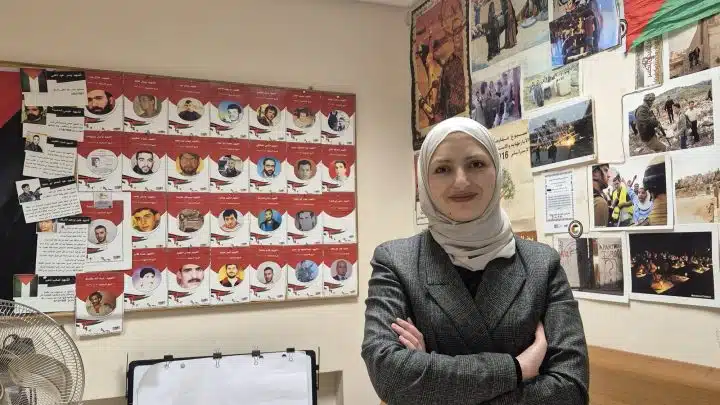
“In Palestine, as a student, you don’t live a normal life,” Sundos Hammad, coordinator of the Right to Education (R2E) campaign at Birzeit University in the occupied West Bank, told the Canary.
You go to university not knowing if there will be a raid of your campus, if you will be arrested or harassed at the checkpoint leading to your university, if one of your loved ones or friends will be imprisoned or killed.
The Israeli occupation has been systematically targeting education since the Nakba of 1948 because it plays an important role in helping Palestinians build their community and preserve their collective identity. This also means a strong student movement inside campuses, which helps resist the occupation.
Between 1972, when it was founded, and 1988, Birzeit University was closed 15 times by military orders. Many students and faculty members were imprisoned by the Israeli occupation during this time.
Birzeit University’s founder and first president, Dr Hanna Nasir, was expelled to Lebanon by the Israeli occupation in 1974, and then to Jordan with no charges. He was not permitted to return to Palestine until after the Oslo Agreement.
Advertisement
But Hammad stresses that, despite all the odds, Palestinians continue their education because it is their “tool of existence”, their way out of occupation and towards liberation.
Education in Palestine is fraught with risks
In the first uprising in 1988, all schools, universities and even nurseries were closed by military orders, and education was illegal for Palestinians.
When they went to school holding a book or backpack, they were threatened with being investigated or put in an Israeli occupation prison. But students and academics of Palestinian universities did not stop. Instead, they held an underground system of education, where they held classes in student houses, rented apartments, churches and mosques. There were even instances of lectures being held in cars.
During this time, Birzeit University campus was closed for 51 consecutive months.
Advertisement
During the Second Intifada, there was a checkpoint on the Birzeit Ramallah road, which meant students had to walk 14km to reach Birzeit campus. They endured the walk so they could continue their education.
‘What if one of our students got killed…?’
The R2E campaign emerged in 1988. Its main aim back then was to break the isolation of higher education institutions, and document and monitor violations against students, staff and faculty members of Birzeit University.
Crimes against students are rampant and Hammad is fearful for their safety.
Israel is an occupying force. They carried out a genocide in Gaza and no one stopped them. Even the International Court of Justice said it is a genocide in Gaza and they must stop, but they haven’t. No one is holding them accountable so they can come to our campus and invade it anytime.
It is the students’ right to be educated in safety and it makes me really sad to see that the students have to live with this fear of being on campus. I sometimes think, ‘What if one of our students got killed in an invasion by live ammunition?’ Things would then go really terrible.
Advertisement
It’s really dangerous. It’s only a matter of time.
Birzeit University became a ‘war zone’ in January 2026
Two people were seriously injured in the last raid on 6 January this year when more than 200 soldiers fired live ammunition at terrified students.
The Israeli occupation shot at students, threw stun grenades and sound bombs. About 8,000 students were on campus at the time — 40 were injured and 11 were hospitalised. Nine of them were shot with live ammunition.
Hammad said the university had been turned into a “war zone”.
Advertisement
Some of the soldiers stayed at the door of the university’s health clinic, so the medical team couldn’t come out and help the injured students. They also didn’t let ambulances come in for half an hour.
There were terrible injuries in the bodies of the students. One student had a bullet come out from his abdomen. He has had four surgeries so far. The other bullet exploded in his elbow and he had to have metal in his arm, so he could move it. He was about to graduate but has had to stop his studies until he recovers and is able to return.
Birzeit University campus has been raided 26 times since 2002 and five times since October 2023. These raids often happen in the middle of the night and involve the invasion of the buildings of the student council.
January’s raid was similar to the one in March 2018, in that it took place in the middle of the day when students were on campus. In 2018, special forces of the Israeli occupation infiltrated campuses disguised as student journalists.
Advertisement
They made their way to the student council room and kidnapped its president, who was then imprisoned for four-and-a-half years.
Aysar Safi: Shot in his neck then stood on until he died
There have been 40 martyrs from Birzeit University. The first was assassinated by an Israeli soldier in the old campus during a 1984 demonstration because he was holding a Palestinian flag.
In May 2024, during a demonstration on Nakba day, an occupation soldier shot 19-year-old student, Aysar Safi, in the neck. When his colleagues tried to take him to an ambulance, a soldier callously stood on his body until he died.
Remembering Safi, Hammad said:
Advertisement
He was always smiling and full of life, it was so sad for the university students. Aysar was also helping his mother as his father and brother, who was also a student, were both in prison. His mother was dreaming of his graduation.
Nearly 160 students from Birzeit University are currently being held in Israeli occupation prisons. More than 75 of those, including two female students and two academics, are being held under administrative detention, with no charge or trial — some for three or four years.
Before 7 October 2023, the average annual number of arrests would be about 55 or 60, but numbers have escalated considerably.
Just since yesterday until today we have had six students from Birzeit University imprisoned — four yesterday and two today — so far.
The R2E campaign documents student detention and imprisonment and provides students who have been arrested with a free lawyer.
Before the Gaza genocide began, Hammad said that when students were released from prison, they were very open to speaking out. The campaign documented the violations they experienced during their imprisonment and wrote reports that went to the UN Human Rights Council.
Advertisement
But now, most students refuse to speak about what happened to them. Not only do they not want to remember their time in prison, they are also afraid of speaking out and being re-arrested. They are traumatised from the abuse and neglect in the Israeli occupation’s prisons.
Unfortunately, this silence is what the occupation wants.
Students face threats of rearrest if they return to education
When these students leave prison, through the R2E campaign, the university helps them continue their education. They are able to return to their studies at the point they left off and sit any incomplete exams.
Although, since October 2023, there have been four instances of students who have wanted to continue their education but faced threats of being rearrested if they do. Afraid, those students are now trying to receive online teaching instead.
Advertisement
Hammad explained that everything is censored by the Israeli occupation.
Our phones, our social media, everything. There’s even an Israeli Army captain who monitors Birzeit university. Students get threatening messages from him, saying to stay away from any activism inside campus.
When the university campus is invaded, multiple times we have found [his] card stuck in the walls or the places that were invaded. It’s really terrible because we live under military rule. Every university has someone like [him].
Students affiliated to political parties inside campus are the most targeted by the occupation. This is because the Israeli occupation considers Palestinian student political parties to be illegal, terrorist groups.
Believe me, sometimes students do not know about their history because the school textbooks are really monitored. But we believe it’s our job to raise awareness about this, and the role of students in changing the status quo regarding the right to education, and what it means to have your full rights and access to education.
The R2E campaign empowers its student volunteers by providing them with training and workshops, and engaging them in many events, locally and internationally. This knowledge helps raise their awareness and empowers them to speak out about what is happening in Palestine and their own experiences living under occupation and settler colonialism.
Advertisement
They also speak about scholasticide, described by the UN as the “systemic obliteration of education through the arrest, detention or killing of teachers, students and staff, and the destruction of educational infrastructure”.
Activists globally give hope to students in Palestine
During the Campus Voices for Palestine events in both 2024 and 2025, organised by University and College Workers for Palestine (UCW4P) and the British Committee for the Universities of Palestine (BRICUP), Birzeit University’s Right to Education campaign delivered talks across the UK. These were a call to action for all British students and educators in solidarity with Palestine, to end the complicity of their universities in the oppression of Palestinians.
As a grassroots campaign, Hammad told us R2E believes change comes from the bottom up, so they work with the people to change the status quo. Although its work is driven by students, the impact is huge because the students believe in what they are doing.
Explaining the importance of the campaign and Palestinian education in general, she said:
Advertisement
“It’s so much easier to control ignorant people so education has become a tool for resisting the status quo, of resisting the occupation of our knowledge. It’s what keeps us on the land and enables us to persist on our right to exist, to return, to be liberated, and all human rights.
It is also the main tool to preserve our Palestinian identity and a form of resistance, to say to our occupier that we exist and we are not going anywhere. We will not be ignorant about our own history or our land. It is part of our resilience and existence as Palestinians, and it is also about self-determination.
How are we going to have our own sovereignty if we aren’t educated? For all these reasons, the occupation will not succeed in demolishing our education system, although they are really trying to. Education will continue against all the odds!
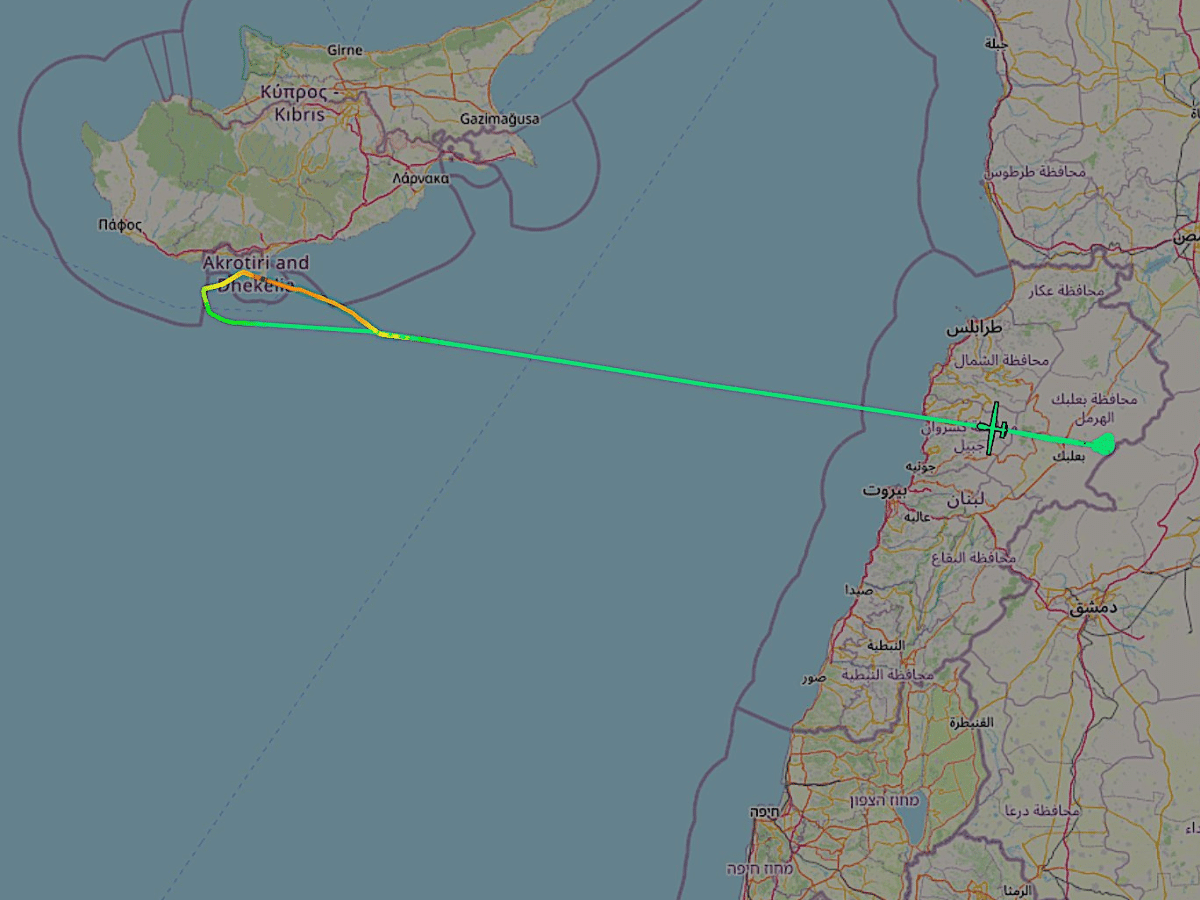
The UK military has told the Canary that British war drone circled Lebanon for 13 hours on 8 April 2026 was not there. This is despite is being visible on an aircraft tracking platform. The Cyprus-launched aircraft circled a key battlefield in Israel’s current air and ground assault on Lebanon. It was there despite the UK calling for a ceasefire.
Journalist Matt Kennard, who originally spotted the aircraft, reported that 18 people had been killed in Baalbek, in Lebanon’s east, at time of the flight:
🚨Keir Starmer sent a MQ-9 Reaper drone over Lebanon for 13 hours yesterday
Departing from RAF Akrotiri, it flew in circles near Baalbek. At same time, Israeli strikes killed 18 people in area
Starmer flew intel flights over Gaza for Israel. Is this part of same arrangement? pic.twitter.com/WShUvyvQ62
The Canary understands the aircraft may be Protector drone, which was meant to supersede the Royal Air Force’s Reaper drones. However UK NGO Drone Wars said in 2025 that Reaper’s lifespan had been extended.
The Reaper drone and Protector drone can carry lethal munitions. RAF Akrotiri is one of two UK colonial bases in Cyprus. The Canary recently reported on efforts by local anti-genocide activists to reclaim Cypriot sovereignty.
🚨Video of British MQ-9 Reaper drone flying over east Lebanon yesterday as Israeli strikes hit the area
The Canary asked the UK Ministry of Defence (MOD) for more details about why a British military aircraft was over Lebanon during the Israeli assault.
Advertisement
MOD communications officer Luc Wilson told us:
The aircraft in question was not conducting operations over Lebanon.
‘Operations’? It was a military drone out on annual leave, was it?
Israel is currently attempting to cut off southern Lebanon by force. Israel’s intention has long been to colonise the region entirely.
The UK flew crewed spy flights over Gaza throughout the first years of the genocide. These also originated in Cyprus. After those spy flights ended, it emerged that the UK government had decided to replace them with drone flights.
The Genocide-Free Cyprus (CFG) group has uncovered details of an extensive new mission involving the use of Reaper long-endurance drones – designated Protector RG1 for the RAF – that are already preparing for what is evidently a new surveillance mission over Gaza, with the drones already operating close to the Gaza coast.
Israeli is still hitting the region despite claiming to be on-board with ceasefire plans:
💢 Israeli warplanes and drones carried out a wave of strikes across southern Lebanon on Friday evening, hitting multiple towns and civilian areas, according to Lebanon’s state news agency and reporting from L’Orient Today.
In theory, Hezbollah breached a US-brokered ‘ceasefire’ with Israel in early March which had held up since their last war in 2024. In practice, the US gave Israel carte blanche to strike Lebanon, which it has done constantly since the deal was struck. During the intervening period, Israel attacked southern Lebanon about 15,400 times.
Far-right minister Bezalel Smotrich said on 23 March that the current war:
needs to end with a different reality entirely, both with the Hezbollah decision but also with the change of Israel’s borders.
I say here definitively…in every room and in every discussion, too: the new Israeli border must be the Litani.
Keir Starmer has questions to answer about why a British military asset is operating over Lebanon. The British tried to excuse their Gaza overflight as part of hostage search and rescue operations. No such explanation will hold water for these Lebanon excursions.
Trade unionists, families, and campaigners will gather on the Cornwall coast this June for Unite on the Hill. It’s a new festival that aims to combine culture, community, and class politics. Branch SW008 of the Unite union is organising the event.
It’ll take place from 19–21 June 2026 at Maker Heights (PL10 1LA) and bring together live music, food, and family activities. There’ll be a programme of political discussion addressing issues facing working people in Devon and Cornwall.
The festival comes at a time when the region is facing rising levels of insecure, low-paid work and some of the highest rates of child poverty in the UK. Alongside this, anger continues to grow over water privatisation and environmental damage affecting local communities.
Talks across the weekend will include:
Advertisement
Workplace organising.
The campaign to bring South West Water into public ownership.
Tackling child poverty.
Confronting the power of big tech monopolies.
John Whitcher, Chair of Unite SW008, said:
Our members are often isolated – both geographically and because they work in workplaces too small to have their own branch.
But the need for collective action has never been greater. This event is about bringing people together — replacing despair with hope, and showing what’s possible when we unite.
SW008 is one of the largest Unite branches in the South West. It represents workers in small and fragmented workplaces, many without formal union structures. The festival is part of a broader effort to rebuild grassroots trade unionism in areas often overlooked by national organising.
Building working class culture in Cornwall
At the same time, Unite on the Hill continues a growing tradition of socialist festivals in the region, following earlier events such as Kernow Transformed and Devon Transformed. Organisers hope it will help establish Devon and Cornwall as a key centre for working-class culture and political organisation.
Tickets are available now, with free entry for Unite members and their families (first come, first served), alongside a limited number of tickets for non-members:
In addition to political discussions, the festival will feature live bands and DJs, local food and drink, children’s activities, and opportunities to explore the surrounding coastline.
Organisers say the aim is simple: to create a space where working people can come together, share experiences, and build the confidence and organisation needed to challenge inequality – in Cornwall and beyond.
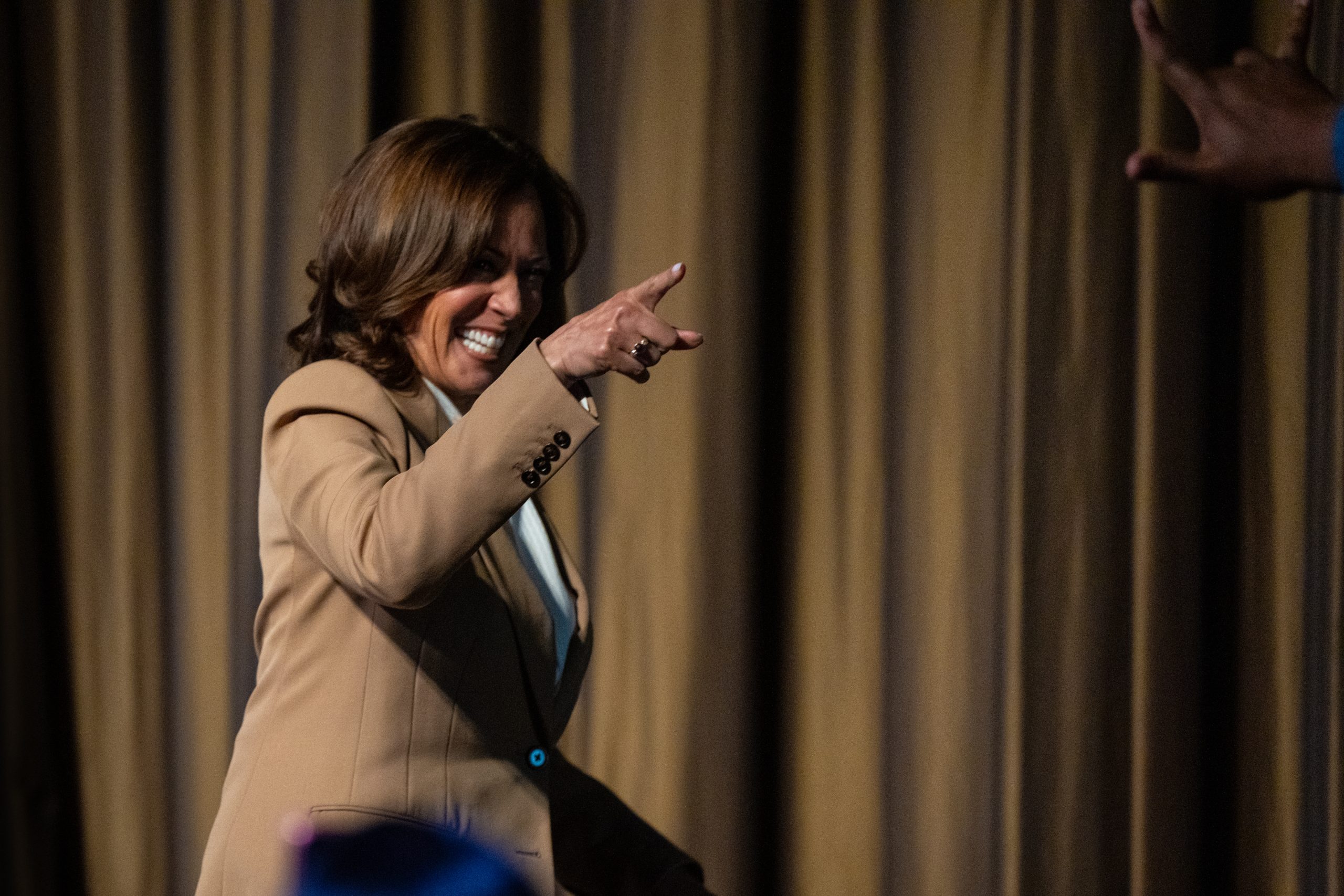
NEW YORK — Kamala Harris just gave the Democratic Party the most explicit sign yet she’ll run for president in 2028.
“Listen, I might, I might. I’m thinking about it,” Harris told the Rev. Al Sharpton at the National Action Network convention on Friday, when he asked her whether she will run again in 2028. “I’ll keep you posted,” she said as she walked off the stage, concluding a roughly 40-minute appearance that was peppered with cheers and a standing ovation from attendees.
The former vice president has toyed with the idea before, but her comments Friday took on a new meaning in front of an audience full of Black lawmakers, influential power brokers and voters at what amounted to the first major cattle-call for the potential 2028 Democratic field.
“I know what the job is and what it requires,” she told Sharpton on stage.
Advertisement
Harris was the sixth possible 2028 contender to take the stage at the conference for a fireside chat with Sharpton, a tacit acknowledgement that whether the hopefuls ultimately decide to run or not, they know they can’t skip this room. But Harris was received with the most enthusiasm from the audience compared to any of the Democrats who spoke earlier this week, including Pennsylvania Gov. Josh Shapiro, Illinois Gov. JB Pritzker and Rep. Ro Khanna (D-Calif.).
The crowd in the packed ballroom chanted, “Run again! Run again!”
At one point, the cheers for Harris grew to such a tenor, Sharpton jokingly admonished the crowd: “This is a convention, not a revival.”





















































You must be logged in to post a comment Login