Politics
Fact vs. Fiction: What Really Happened In Monster’s Lizzie Borden Story?

Ryan Murphy’s Monster anthology series has always taken artistic liberties when it comes to its central figures, but the Netflix show went even further with this than usual with The Lizzie Borden Story.
The fourth season is based on the infamous yet little-recorded tale of a 32-year-old woman in Massachusetts who, in 1982, was tried and acquitted for the gruesome axe murders of her father and stepmother.
Due to the era of the murders, and Lizzie’s conflicting statements, little is known about what really happened in the case that’s still being debated more than a century later.
What history didn’t record, creators Ryan Murphy and Ian Brennan took creative licence to fill in, connecting women through history by their rage at society.
Here’s a quick guide to what’s fact and fiction in Monster’s latest iteration…
Lizzie Borden did suffer from health issues, but Monster fabricated exactly what these were
In Monster, Ella Beatty’s Lizzie is seen experiencing immense period pain. There is no evidence that this was the case for Lizzie Borden in real life, although she did mention menstrual blood to the police following the killing.
When the authorities found bloody clothes in a bucket in the basement, Lizzie told them it was period blood.
A family doctor confirmed this would have lined up with the timings of Lizzie’s cycle, so authorities didn’t investigate the blood further.
The show also portrayed Lizzie as suffering from a rare imperforate hymen, a detail which was completely invented for the Netflix series.

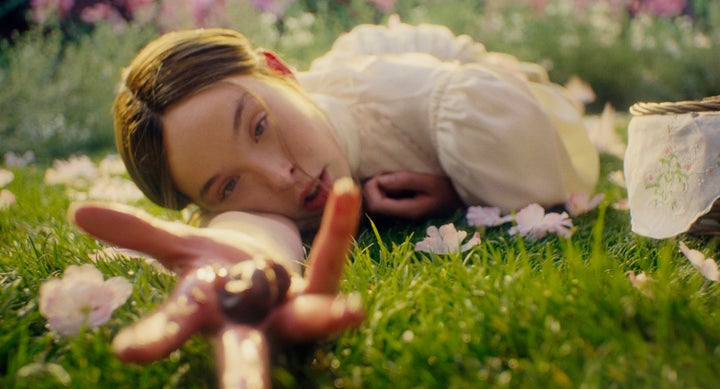
There is no evidence that Lizzie Borden and Bridget Sullivan were ever in a romantic relationship
Bridget Sullivan was a real person who worked as the Borden family maid for two years before Andrew and Abby were killed.
Historian Cara Robertson told Business Insider that the idea of a sexual relationship between Bridget and Lizzie can be traced back to fictional takes of the true crime case.
Other notable media to include this detail include Evan Hunter’s 1984 novel, Lizzie, and the 2018 movie of the same name, starring Chloë Sevigny and Kristen Stewart.
Meanwhile, it seems that the real-life Bridget was a world away from the version of the character created by Ryan Murphy and Ian Brennan.
Her grandniece, Dianna Porter, told The Herald News in 2012 that family members recall the former maid as being strict, mean and having “no sense of humour” – a far cry from the dyed-hair-sporting, sex-toy-enthusiast Bridget we see on the show.

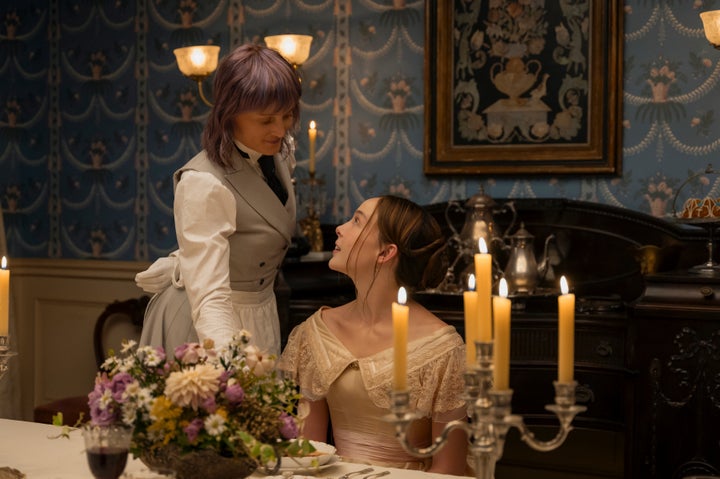
Apparently, it wasn’t Abby Borden who was responsible for Bridget being referred to as ‘Maggie’
Rebecca Hall’s character repeatedly refers to Bridget as “Maggie” in Monster, because it was the name of an old maid, and she didn’t wish to learn another.
In real life, it actually was Lizzie who didn’t have much concern for learning Bridget’s name.
“Lizzie never bothered to call her by her real name,” historian Cara told the BBC.
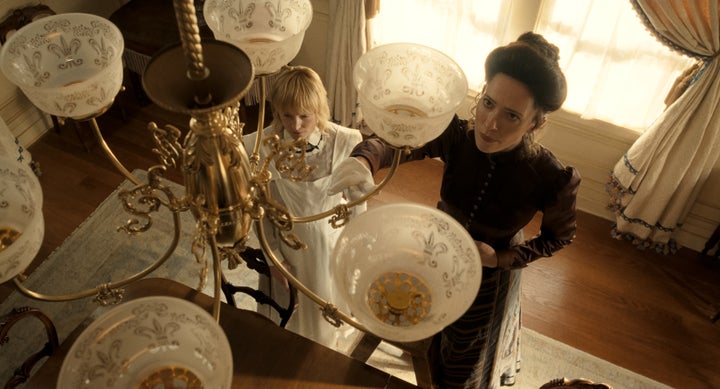
There is also no evidence that Lizzie Borden was sexually abused by her family
Lizzie Borden family as portrayed in Monster is deeply disturbed.
The show depicts a long-held theory that Lizzie was sexually abused by her father, which is part of why she killed him.
Although this is a popular theory, there is no actual evidence establishing that she was abused by her father in this way.
There is, however, evidence that Lizzie and her older sister, Emma, were both frustrated with their father’s frugality, and that neither were greatly fond of their stepmother.
The suggestion that Andrew and Abby had a miserable marriage and cheated on each other is also a work of fiction
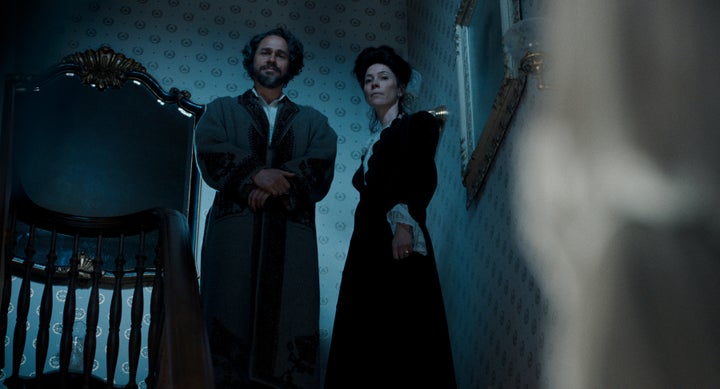
Monster argues that the real villains of the series are actually Andrew and Abby Borden, who are portrayed as an unhappily married couple who regularly cheat on each other.
During the middle of the season, Monster’s Abby has an affair with the brother of Andrew’s first wife, Sarah, while Andrew impregnates the family’s maid.
All of this was invented just for the show, with the Borden’s family physician, Dr. Seabury W. Bowen, testifiying that there was no sinister aspect to their marriage – and even if the relationship it was a transactional one, it wasn’t unfriendly.
“Mrs. Borden was a lovely woman, and I remained there because she wanted me to,” Sullivan said, per the 2015 book The Fall River Tragedy: A History Of The Borden Murder.
Andrew and Abby Borden were struck down with a stomach bug days before they were killed
In the Netflix show, before Andrew and Abby are axed to death, Lizzie first tries to poison them, serving her father and stepmother bad oysters, resulting in a gruesome projectile-vomitting sequence. This doesn’t kill the couple, instead just leaving them incapacitated for an evening.
The whole family, in reality – including both Lizzie and Bridget – were struck down with a stomach illness just days before the murders took place. Records suggest swordfish and mutton broth caused their illness.
A pharmacist did also claim that Lizzie tried to buy poison in the days leading up to the murders, but was not sold it.
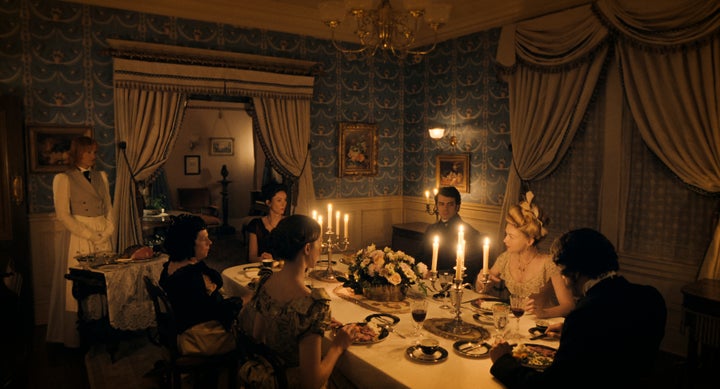
Lizzie and Bridget were not responsible for the murder of Bertha Manchester
Before Lizzie kills her parents, she and Bridget do a “trial run” on a family friend, Betha Manchester.
In the show, Bertha is seen physically abusing Bridget while she’s doing some work for her, resulting in Lizzie killing Bertha with an axe.
Bertha was a real life person who was murdered, but her death took place 10 months after the Bordens were killed.
Jose Correa de Mello, who worked for Bertha’s father, was charged with the crime.
While in the show, Bridget was involved in killing the Bordens, she was actually seen washing windows at the time of their murder
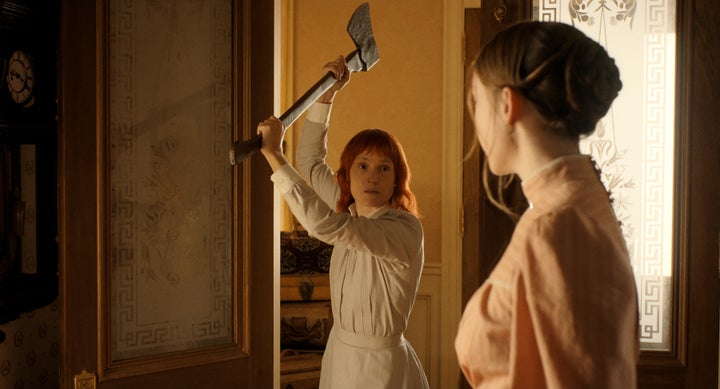
The Bordens’ maid Bridget plays a big role in Monster: The Lizzie Borden Story – but her place in history is a bit more complicated.
In Netflix’s version of events, Lizzie and Bridget are depicted killing Abby and Andrew with hatchets before covering for each other to the police.
However, the real Bridget claimed in her testimony that she was washing windows outside when Abby was killed in an upstairs guest room. She insisted that she didn’t hear any screams, but did hear Lizzie laughing upstairs.
There has never been any evidence that she was involved in Abby and Andrew Morden’s murder.
Lizzie Borden did, indeed, burn her dress after her family died
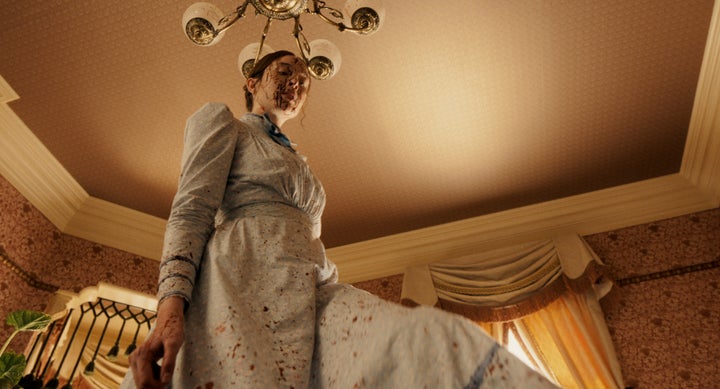
Monster includes a scene where Lizzie burns her dress shortly after killing her father and stepmother.
This did happen, according to family friend Alice Russell during the trial.
At the time, police couldn’t find a murder weapon or any blood-stained clothing, which is what stopped authorities from immediately arresting Lizzie.
In her testimony, Alice claimed she saw Lizzie standing near a stove holding her dress, telling her sister: “I am going to burn this old thing up. It is covered with paint.”
Her sister Emma later testified that it was an old dress, and Lizzie had brushed against wet paint the last time she wore it.
Lizzie Borden’s relationship with actor Nance O’Neill didn’t quite play out like it did in the show
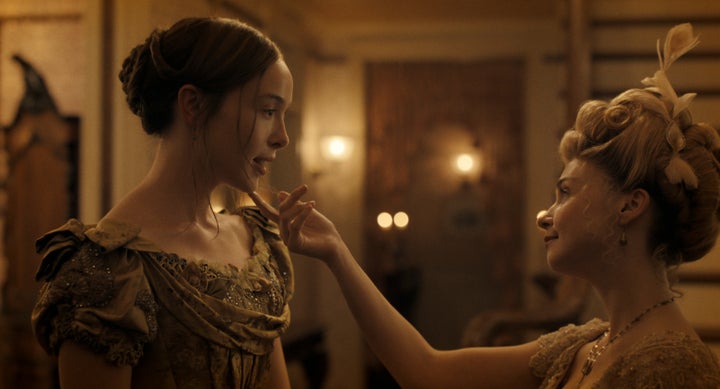
In Monster, Lizzie loves theatre, and forms a bond with the actor Nance O’Neil, who gives Lizzie advice on how to convince the jury she is innocent during her murder trial.
Nancy is a real person, and did have a bond with Lizzie, but this only came to be much later in her story.
The pair, in real life, met in 1904, 11 years after Lizzie was acquitted. Whether or not they were lovers is another mystery that the show embellishes.
Emma Borden supported Lizzie throughout her murder trial
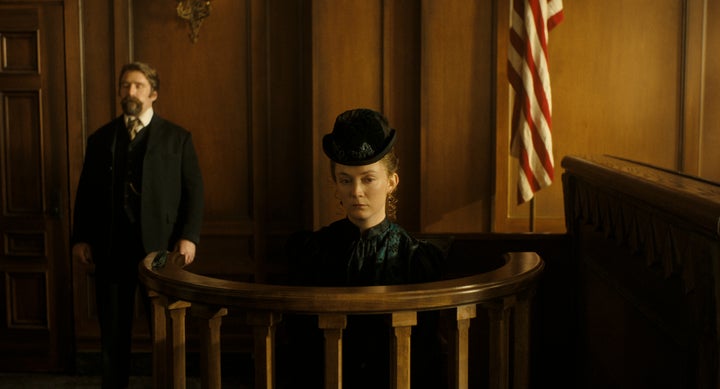
Monster portrays Lizzie’s relationship with older sister Emma as being cold and strained. Lizzie’s sister physically attacks her in the series, after blaming her for their father’s death – something there is no historical proof of.
In fact, Emma was apparently supportive of Lizzie, and stood by her side throughout the trial, according to Sarah Miller’s 2016 book The Borden Murders: Lizzie Borden And The Trial of the Century.
After the trial, Lizzie and Emma left their home in Fall River and moved to Maplecroft to “live quietly” together on an estate.
However, their relationship did sour after the trial. After 12 years living together, the pair fell out after Lizzie started throwing parties with the actor Nance O’Neil.
“The happenings at the French Street house that caused me to leave,” Emma told the Boston Sunday Herald in 1913, adding: “I did not go until conditions became absolutely unbearable.”
There is no evidence that Aileen Wuornos took inspiration from – or had any interest in – Lizzie Borden
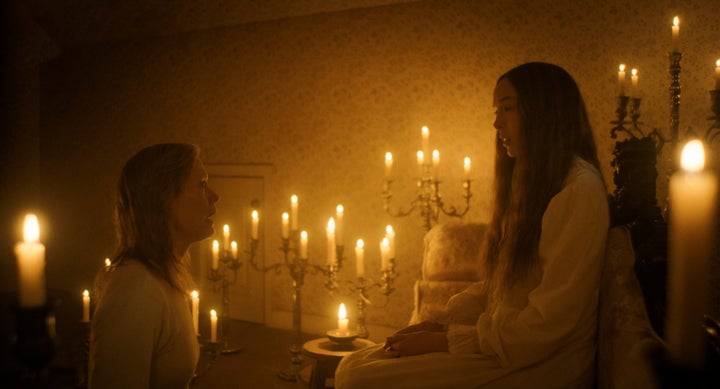
Monster connects Lizzie Borden to Aileen Wuornos, a real-life serial killer who murdered a string of men in Florida between 1989 and 1990.
The show portrays Aileen Wuornos as being obsessed with Lizzie’s story, though this detail is a complete fabrication by the writers of the show.
The show’s co-creator Ian Brennan has opened up to The Hollywood Reporter about incorporating the serial killer into the Borden story.
“It very quickly became that the story we were telling was about female rage,” he explained. “Then we were able to develop this triptych of Elizabeth Bathory, Aileen Wuornos and Lizzie Borden, which kept the show from seeming like a stuffy, diorama piece by going through these time periods of women who were each aware of the next,” Ian explained.
He added: “To have those three stories talk to one another made it feel much more contemporary and of the moment.”
As for Lizzie Borden becoming a suffragette after her acquittal, this was another invention of Monster
In the final episode of Monster, Lizzie becomes upset when she sees children dressing up as her.
Wanting to make the murders and her acquittal a political statement, she and Bridget decide to join the women’s suffrage movement.
The real Lizzie was never known to have been a suffragette, though. After her trial, she lived a private and isolated life, until her death in 1927.
The fate of the real-life Bridget remains a mystery

After the trial in Monster, Bridget is seen buying land in Montana and marrying an older man, before finally ending the marriage and moving in with Lizzie.
In actuality, Bridget testified in Lizzie’s trial in 1983 and then disappeared.
Documents list her as moving to Montana and marrying a man, but the pair stayed wed until her death in 1948. It is likely she never saw Lizzie again after the trial.
No one really knows what happened to Andrew and Abby Borden
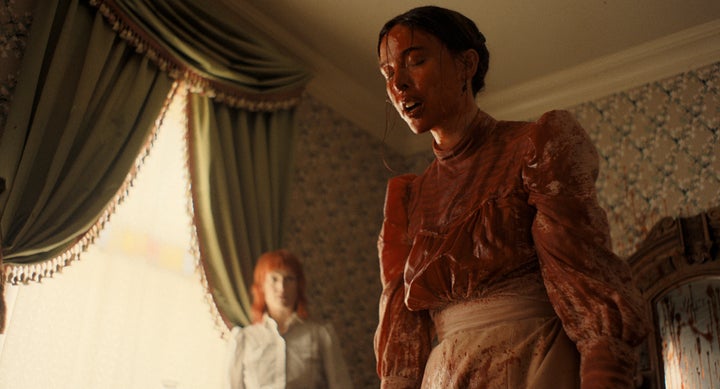
The big question of Monster: The Lizzie Borden Story is whether Lizzie actually killed Abby and Andrew.
Although Netflix depicts Lizzie as the killer, the case is still unsolved.
Lizzy was the primary suspect, stood trial for murder and was acquitted by a jury. The prosecution had no eyewitness to either murder, no confession and serious issues with the physical evidence.
One thing the show did get right was Lizzie’s police inquest testimony. She did claim she was preparing for a fishing trip, and was in the barn when her father was killed.
More than 130 years later, nobody can say with certainty who killed Andrew and Abby Borden, as much as Ryan Murphy and Ian Brennan want us to think that she did it…
All four seasons of Monster are now streaming on Netflix.
You must be logged in to post a comment Login