Politics
FIFA eases restrictions on bringing water into World Cup stadiums

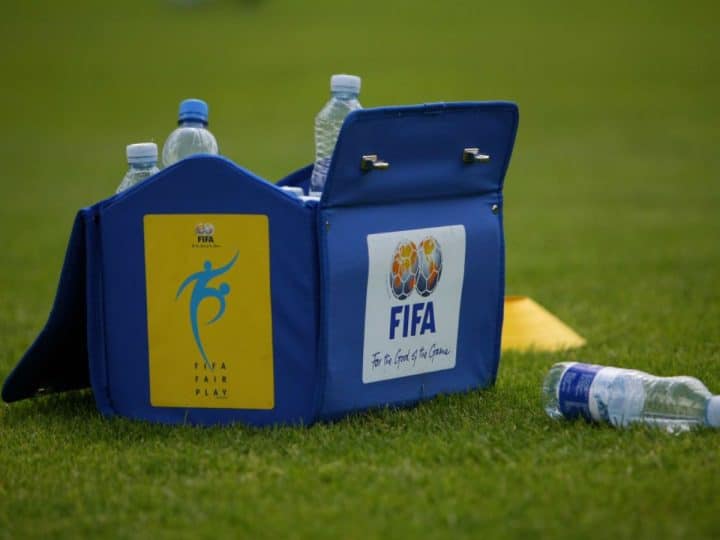

Following a widespread wave of criticism and objections from fan groups and health experts, FIFA was partially forced to backtrack on its controversial decision to ban water bottles in World Cup 2026 stadiums. It announced that spectators would be permitted to bring one soft, sealed plastic water bottle into matches held in the United States and Canada.
The new decision came just days after an amendment to the “Stadium Code of Conduct,” which FIFA had completely banned reusable bottles, justifying the move on security grounds related to the possibility of using bottles and solid objects as projectiles that could pose a danger to players or fans.
Under the new clarification, each fan will be allowed to bring in one soft, factory-sealed plastic water bottle with a capacity of up to 590 ml, while hard or reusable bottles will remain prohibited. Heimo Schirgi, Chief Operating Officer for World Cup 2026, affirmed that the decision is based on “safety and security considerations,” noting that concerns related to solid objects remain as reported by Reuters.
Widespread criticism due to heat
The original decision caused widespread anger among fan associations, particularly as the tournament will be held during the summer months in the United States, Canada, and Mexico, where some host cities are expected to experience high temperatures and harsh weather conditions.
Fan organizations warned that restricting access to water could increase the risks of dehydration and heat stress, especially in open-air stadiums. Critics also argued that the decision would have forced spectators to purchase water inside the venues, raising questions about the priority of fan health versus the commercial and organizational aspects of the tournament.
These concerns were compounded by climate reports indicating that a number of World Cup matches might be held in conditions where heat stress indices exceed safe limits, prompting experts to demand guaranteed easy access to water for fans throughout the matches and transit periods.
FIFA — Measures to combat hot weather
In an attempt to contain the criticism, FIFA confirmed that it is working in coordination with the host cities to provide drinking stations, cooling areas, fans, water mist, and dedicated tents to mitigate the impact of the heat around the stadiums. It also stressed that water prices inside the sports facilities will be similar to the prices adopted during other events hosted at those stadiums.
The controversy comes as the largest tournament in World Cup history is preparing to kick off, featuring 48 teams and 104 matches for the first time, which doubles the organizational, security, and health challenges facing FIFA and the local organizing committees.
Reversal under pressure
Despite FIFA initially adhering to the security justifications for imposing the ban, the swift amendment to the decision reflects the magnitude of the pressure it faced from fan groups, media, and health experts, in an issue that quickly became one of the most prominent points of contention ahead of the 2026 World Cup.
Featured image via Joern Pollex/Bongarts/Getty Images
By Alaa Shamali
You must be logged in to post a comment Login