
Politics
Former Army General Condemns Trumps Comments On Allies


A former US Army general has hit out at Donald Trump’s “repulsive” comments about America’s allies over the war in Iran.
The president is putting pressure on other countries, including the UK, to send ships to help keep the Strait of Hormuz open as the conflict goes on.
Speaking on Monday, he said: “They should be in here very happily helping us,” he said. “They should be jumping to help us because we’ve helped them for years.”
Lieutenant General Hodges, the former commander of the US Army in Europe, told Radio 4′s Today programme: “This is embarrassing for me as an American to hear any American president showing such disdain for any ally, and we are going to regret in the long run as … nations lose confidence in us, lose trust in us and start finding other ways to look after their strategic interests.”
Taking aim specifically at the prime minister, Trump said: “Keir Starmer yesterday told me, ‘I’m meeting with my team to make a determination’.
“I said, ‘you don’t need to meet your team, you’re the prime minister, you can make your own decision.’”
But Lt Gen Hodges said: “Many of the problems that we’re having in the United States right now are because the president has gotten rid of the normal national security staff and he’s put in place people who are sycophants.
“Any leader worth his or her salt depends on a team, so I find this repulsive to say the prime minister or the German chancellor or the president of any other country doesn’t need to speak to his or her team.”

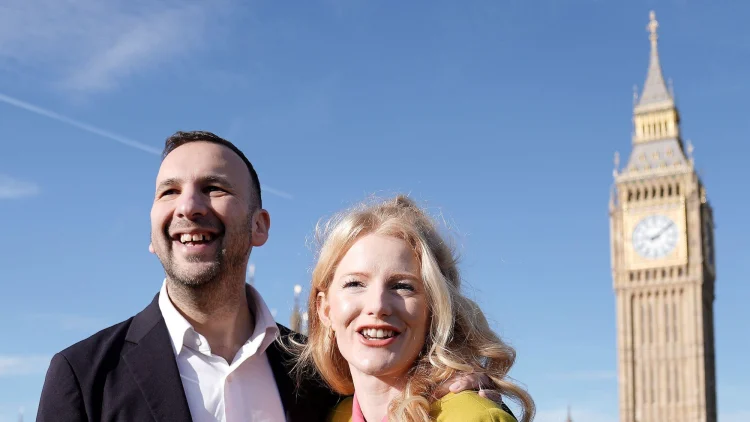

Zack Polanski and Hannah Spencer pose in front of Parliament after Spencer’s by-election victory in Gorton and Denton (Alamy)

5 min read
The Green Party has said a growing number of Labour councillors are joining its ranks ahead of the local elections. What does the data say?
Green sources told The Telegraph last week that around 50 Labour councillors had defected to their party in the past six months, claiming the pace had accelerated as Labour braces for what are expected to be a bruising set of local elections in May.
The sources said the party had been receiving two or three inquiries a week from local Labour politicians considering defecting.
“More and more councillors have been moving to the Greens in the past six months and, like our polling and membership surge, this momentum is increasing,” one source told the newspaper.
The Greens’ victory at last month’s Gorton and Denton by-election underlined the threat that Zack Polanski’s party poses to Labour. Candidate Hannah Spencer won 40 per cent of the vote in a constituency that had been controlled by Labour for over a century.
At the same time, the Greens are enjoying record highs in the national opinion polls.
The Greens certainly have momentum. But when it comes to councillor defections, what do the numbers tell us?
According to the Green Party’s own list of councillors who have joined the party, seen by PoliticsHome, 64 councillors have defected to the Greens since the July 2024 general election at the time of writing.
Of these, 48 defections have taken place since September 2025, shortly after Polanski became party leader on 2 September.
The vast majority of these switches have come from Labour. Fifty-four of the 64 councillors previously represented the Labour Party.
However, the picture is more complicated than a direct Labour-to-Green exodus. At least 10 of those councillors had already left Labour and were sitting as independents before joining the Greens. Several had either been expelled from Labour or deselected ahead of the upcoming council elections.
The Greens currently have more than 900 councillors across England and Wales, up from 859 councillors on 181 councils following the 2025 local elections, when the party made a net gain of 43 seats, its best-ever result.
The party hopes to build on that momentum in this year’s local elections, which are taking place in Scotland, Wales and councils across England.
In particular, the Greens are seen as a risk to Labour in London, where Polanski has suggested that he could stand to be an MP at the next general election.
The councillors who have joined the Greens up to now are spread across the country, from London and the South East to Yorkshire and Wales, according to the party’s list.
Tony Travers, professor in local government at the London School of Economics, said the defections to the Greens so far had been “modest in number”.
“They’re not evidence of an exodus from the Labour Party,” he told PoliticsHome.
Travers noted that councillors often defect when they are deselected or politically marginalised, particularly in the run-up to elections.
“They’ve got nothing to lose now by hopping to another party, particularly when that other party might well be more popular than the Labour Party,” he said.
Since the 2024 general election, more than 80 councillors have also defected from the Conservative Party to Reform UK, alongside a handful of defections to Reform from Labour.
“With all the many curiosities of contemporary British politics, one is the fact that Reform and the Greens have a significant amount in common because they’re challenger parties,” Travers said.
“The Greens face exactly the same problem as Reform, which is they’ve got a bit of momentum, but they need to sustain it.”
Polanski recently told The House magazine that his party was in conversation with a “handful” of Labour MPs considering defecting from Keir Starmer’s party.
“If you speak to some Labour MPs, some days it seems like it’s going to be their last day in the party, and other days they’ve seen a glimmer of light and think everything’s going to be OK,” he said.
Following Labour’s collapse in Gorton and Denton, many Labour MPs urged Starmer to be more progressive in a bid to stop bleeding support to Polanski’s party.
However, multiple Labour MPs told PoliticsHome they were not overly concerned about councillor defections in their own areas, noting that many councillors who joined the Greens had already left the party or been deselected.
Some expressed relief that Labour councillors from the left of the party – or as one MP put it, “troublemakers” – had quit Labour.
There is also concern within the Liberal Democrats that some of their MPs could defect to the Greens amid restlessness over the direction of the party.
A senior Liberal Democrat MP last week told PoliticsHome that at least two Lib Dem MPs — both representing traditionally Conservative constituencies in southern England captured during the party’s 2024 surge – could be tempted to switch to the Greens.
Travers said the Greens were increasingly positioning themselves as a vehicle for political protest.
“They are challenging the Liberal Democrats as a repository for protest,” he said.

The UK’s Chief of Defence Staff has publicly said that Cyprus is effectively Great Britain’s aircraft carrier – showing the true colonial colours of the very top of the UK’s armed forces.
Sir Richard Knighton rejected suggestions that the UK should deploy naval assets to the Middle East. He was also accused of leaving the country’s assets “underprepared”. He said:
We don’t need the carrier. We don’t need the Navy. We have an aircraft carrier – it’s called Cyprus.
Then, he pointed out that the UK’s Royal Air Force could launch F-35 jets from its Akrotiri air base in Cyprus. The UK stationed these there last month.
Cyprus: illegal occupation from the UK
The UK previously occupied and colonised the entire Island of Cyprus.
In 1960, Greece, Turkey, and the UK all signed an agreement that guaranteed the independence, territorial integrity, and security of Cyprus.
And the reality is that Cyprus is still not independent.
Turkey has occupied the northern third of the Island since the country invaded illegally in 1974.
To make matters worse, the UK still controls over 250 square kilometres of Cypriot territory. This constitutes two military “Sovereign Base Areas“, as well as a host of additional “British-retained sites”.
When Cyprus got its independence from Britain, the UK illegally cleaved off sections to keep for itself as sovereign bases
The Brits should end their illegal occupation https://t.co/cwORnQ29ww pic.twitter.com/zRms91ALFS
— Aidan Simardone (@AidanSimardone) March 1, 2026
These “crucial sites” – RAF Akitori and Dhekelia- include an Olympic-sized swimming pool and a sports field.
When Cyprus got its independence from Britain, the UK illegally cleaved off sections to keep for itself as sovereign bases
The Brits should end their illegal occupation https://t.co/cwORnQ29ww pic.twitter.com/zRms91ALFS
— Aidan Simardone (@AidanSimardone) March 1, 2026
The UK’s presence in Cyprus has become more controversial since October 7. The bases have been used to host US forces, along with providing equipment and logistical support to Israel.
It was also used as a base for UK air strikes against Houthi targets in Yemen.
Essentially, the UK is occupying land in a sovereign country to spy on and now bomb the Middle East.
US involvement
If things weren’t bad enough, top secret documents published by Edward Snowden revealed that every UK spy site on Cyprus is actually a joint UK-US base:
Top Secret (Strap1) document leaked by Edward Snowden
First time we knew the specifics of UK spy sites on its Cyprus colonies
First time we knew that every single one was a joint site with US spies
Snowden did the world a major service – a hero for the ages pic.twitter.com/oCqRzDlSal
— Matt Kennard (@kennardmatt) March 17, 2026
The document states that:
Cyprus hosts a wide range of UK and US intelligence facilities:
Importantly, the documents also reveal that the US’s National Security Agency (NSA) provides 50% of the funding for the SOUNDER Comsat facility. This is a top secret surveillance station located in Ayios Nikolaos, Cyprus, which is part of RAF Dhekelia.
We continue to sustain and strengthen our partnership with the US/NSA and with other 5-Eyes agencies. GCHQ’s Cyprus collection facilities are acknowledged by NSA as important assets that make a major contribution to UKUSA. Under the ECHELON Agreement, NSA provides 50% of the funding for the SOUNDER Comsat facility.
According to Al Jazeera:
Cyprus was – and still is – of substantial strategic interest to Washington, particularly in its role as an offshore intelligence facility for surveillance of the Middle East.
Declassified UK also revealed that:
129 US airmen are permanently deployed to RAF Akrotiri, which is a staging post for bombing campaigns across the Middle East. The US spy force, the 1st Expeditionary Reconnaissance Squadron, is also permanently deployed at Akrotiri.
The UK should not still be occupying Cyprus or sharing military bases, assets, or intelligence with the US regime, which started an illegal and unprovoked war on Iran, another sovereign nation.
Cyprus is a sovereign nation with over 1.2m inhabitants. Yet now, Sir Richard Knighton’s words suggest it is merely an “aircraft carrier” which would, in essence, make it a valid military target. Of course, this is bullshit.
His comments show that Britain’s overseas bases are nothing but another example of the UK’s colonial military overreach.
Featured image via TLDR News/YouTube

Thousands of people living and working in the UK could face up to 15 years before qualifying for permanent settlement. This could be the impact of major immigration reforms expected to take effect in April 2026.
The UK government plans to introduce a new “Earned Settlement” framework. It’ll replace the traditional five-year route to Indefinite Leave to Remain with a system that links settlement eligibility to economic contribution, income and integration.
Under the proposals, the standard settlement timeline for many arrivals will increase to 10 years. Although some individuals could qualify faster while others may wait significantly longer, depending on their circumstances.
Kadmos Immigration is a law firm that advises individuals and companies on immigration legislation. It says the reforms represent one of the most significant changes to the UK settlement system in decades.
Helena Sheizon, Immigration expert at Kadmos, explains:
This reform represents a fundamental shift from a time-based route to permanent residence, to one focused on earned contribution. It aims to reward economic contribution and integration, but it also means that thousands of people already on paths to settlement will face new qualifying conditions and longer waits if they do not meet newly introduced criteria.
What is the new ‘Earned Settlement’ system?
Under the current immigration framework, most people on routes such as the Skilled Worker visa or family visas can apply for permanent residence after five years of lawful residence.
The proposed reforms introduce a new points-based settlement model, meaning the amount of time required before applying for Indefinite Leave to Remain could vary depending on factors such as income, employment and immigration history.
The government’s proposals suggest:
- A 10-year baseline settlement route for most people coming to live in the UK.
- A reduced pathway of around three years for individuals with very high earnings or exceptional contribution.
- Extended timelines of up to 15 years or more for those with lower income levels or irregular employment history.
The new framework moves away from a purely time-based system towards one where settlement must effectively be “earned” through measurable contribution.
Sheizon adds:
What makes this system distinctive is the idea of earning settlement by measurable contribution. It will require people to demonstrate not just residence but economic engagement with the UK.
Key factors that could affect settlement timelines
Under the Earned Settlement model, the length of time required before applying for permanent residence may depend on several measurable factors. These include:
- Income levels: higher taxable earnings over time could reduce the settlement timeline.
- Public service employment: roles in sectors such as health or education may accelerate eligibility.
- English language proficiency: higher language ability could contribute positively.
- Immigration history: visa breaches, irregular entry or reliance on public funds may extend timelines.
In practice, this means two people arriving in the UK at the same time could reach settlement at very different points depending on their contribution profile.
Several reforms linked to the new system have already begun to take effect or are scheduled for early 2026. These include:
- A higher B2 English language requirement for key visa routes such as Skilled Worker, High Potential Individual and Scale-up visas.
- Increased minimum income thresholds tied to visa eligibility and settlement pathways.
- Expanded compliance and enforcement measures affecting sponsoring employers.
Who will be most affected?
The reforms could impact a wide range of people currently living and working in the UK. Groups likely to be most affected include:
- Skilled workers and their dependents, who may face longer waits for settlement unless they meet higher earnings criteria.
- Family visa holders, who could see settlement timelines extended and additional income tests introduced.
- Lower-paid workers, including those in sectors such as social care or middle-skilled roles, who could face the longest qualifying periods.
The proposed reforms follow a wider immigration strategy outlined in the government’s recent White Paper, and consultations carried out throughout late 2025. Developments leading up to April 2026 include:
- Higher English language requirements for work visa routes from January 2026.
- A reduction in Skilled Worker visa eligibility for some occupations since July 2025.
- A consultation on the Earned Settlement system which closed in February 2026.
There is due to be a formal Statement of Changes to the Immigration Rules in March 2026, ahead of the new system’s launch.
Sheizon explains:
The Immigration Reform expected from April 2026 marks a major turning point. The shift to an earned settlement model changes not only how long people must wait for permanent residence but what they must do.
For individuals and families planning long-term lives in the UK, this means greater complexity and new conditions. It also means that migrants cannot assume a simple five-year route to settlement will exist in the future, even if they entered under earlier expectations.
What individuals and employers should do now
With the new rules approaching, immigration law specialists say both visa holders and employers should review their settlement plans early.
Sheizon adds:
Employers and visa holders should review their settlement plans now and where possible schedule for early settlement, as this is in the interests of both the employers and employees.
Kadmos Immigration recommends:
- Reviewing current settlement timelines to identify whether earlier applications may be possible.
- Seeking legal advice for individuals approaching settlement eligibility.
- Monitoring government announcements following the upcoming Statement of Changes expected in March.
Featured image via the Canary

Sally-Ann Hart is the former MP for Hastings and Rye and a former Rother district councillor.
As a practising Roman Catholic and a Conservative, I am often asked how faith should sit alongside politics. How can someone be both Catholic and Conservative? Is this even a reasonable question? It is certainly one that deserves a serious answer, particularly at a time when religion is increasingly drawn into political conflict, both abroad and at home.
Across the world we can see the consequences of religion being politicised. In Iran, an extreme Islamist theocracy fuses religious authority with state power, suppressing dissent, restricting women’s freedoms and undermining democracy. In Russia, Vladimir Putin has repeatedly invoked the Russian Orthodox Church to lend spiritual legitimacy to his aggression and nationalism. In Afghanistan, the Taliban have used religion to coerce, control and instil fear. None of these examples shine a good light on religion. Instead, they demonstrate what happens when faith is used for extreme political ends, rather than shaping conscience. Faith should not become dogma or used as a political weapon but inform how we exercise power and not be used to legitimise power itself.
Britain’s tradition has been different. Whilst our institutions are not governed by scripture, centuries of Christian thought have profoundly shaped our laws, traditions and social norms. Ideas such as the dignity of the individual, the importance of family life, care for the vulnerable and the moral limits of power all have deep roots in Christian teaching. These are not imposed religious doctrines but principles that have informed our understanding of justice, responsibility and the public interest.
At a time of rapid social change and increasing political division, it is worth remembering why these values remain relevant, especially within Conservative politics.
Throughout my own public life as a solicitor, magistrate, school governor, councillor and Member of Parliament, my faith has never been a party badge or a political slogan. It has been something quieter but more important – a moral compass, my driving force.
Catholicism does not offer a political manifesto. It does not instruct believers how to vote. What it offers instead is a framework for thinking about human fallibility, human dignity, responsibility, and restraint. In that sense it sits naturally alongside the best traditions of British Conservatism. Both recognise that human beings do not flourish in chaos but within an ordered moral framework. Both understand that institutions, though imperfect, carry accumulated wisdom and provide stability across generations. Both recognise that compassion cannot endure without order and that rights must be balanced by responsibilities.
Modern politics often presents a false choice between rules and compassion, as though law and kindness were somehow incompatible. Catholic teaching rejects that. Rules are not the enemy of compassion but the recognition of human fallibility. Without law the weak suffer first. Without boundaries, power accrues to the loudest, the strongest or the most ruthless.
This balance is particularly visible in debates around immigration. Catholic teaching emphasises the dignity of every human person, including those fleeing poverty, persecution or conflict. But it also recognises the legitimacy of borders, the rule of law and the need for democratic consent. A system without rules is not compassionate. It is dysfunctional, and dysfunction harms the most vulnerable first, migrants and host communities alike. Catholics are used to holding these truths together. Conservatism, at its best, seeks to do the same.
Another similarity lies in our understanding of institutions. Catholicism is deeply institutional, believing in tradition, continuity and authority passed down through generations. This makes Catholics nervous about anything that might corrupt institutions from the inside or cause the whole system to collapse. Current populist politics attacks institutions as inherently corrupt or illegitimate. Theocratic politics, by contrast, seeks to capture them in the name of divine authority. Both paths are dangerous. Conservatives choose a different path, of reform rather than destruction, stewardship rather than domination, and authority exercised as service rather than theatrics.
Anger and hatred have sadly become a powerful force in modern politics. Reform UK and the Green Party thrive on grievance and division, drawing sharp distinctions between “the people” and “the system”, or between insiders and outsiders. Catholic moral teaching approaches such politics with caution. Whilst hatred can never be justified, anger can sometimes be – but it must be disciplined by reason, caution and responsibility. Politics driven primarily by grievance rarely produces stable outcomes.
Catholicism is conservative in the truest sense of the word. It seeks to preserve moral boundaries, the wisdom of tradition, and the understanding that not everything we can do is something we should do. Catholicism does not seek to impose belief by force or collapse the distinction between Church and state. Christianity is a moral tradition rooted in humility, responsibility and service, not politics. Faith loses its integrity when it becomes an instrument of the state, and politics loses legitimacy when it claims divine sanction. Faith in public life should elevate political debate rather than inflame it. It should encourage leaders to exercise power with conscience and restraint and remind us that politics exists to serve the public.
Catholic social teaching speaks to many current challenges. Its emphasis on subsidiarity – the principle that decisions should be taken as close as possible to those affected – reinforces the importance of local communities and civil society. Its understanding of stewardship is in line with the Conservative instinct to care for the environment and the resources we pass on to future generations. Its recognition of human dignity underpins the belief that every individual deserves opportunity, respect and protection under the law. These principles help guide political judgment rather than dictate policy.
I was recently elected President of Catholics in the Conservative Party, a group that encourages Catholics to engage thoughtfully in political life and public policy. Its purpose is not to campaign for specific outcomes, but to reflect on how Catholic social teaching – human dignity, subsidiarity, solidarity and the importance of family and community – can inform Conservative thinking. It also provides a space to consider public service as a vocation rooted in responsibility and charity, not power, and to consider the moral foundations of politics in today’s increasingly divisive culture.
Part of that task is rebuilding confidence among Catholic Conservatives that their faith-informed perspective has a legitimate place in political discussion. It also means reaffirming principles that lie at the heart of both Catholic social teaching and the best traditions of Conservatism – the inherent dignity of every person, the importance of family life, and the understanding that strong communities depend not only on government but on the institutions, relationships and responsibilities that exist between individuals and the state. Encouraging the next generation of Catholics to consider public service, whether in politics or the voluntary sector, will be equally important if these values are to continue shaping the character of our national life.
The balance between faith and politics is worth preserving. Voters need to understand not only what political parties propose to do, but why. Policies will evolve in response to changing circumstances, values should not.
At a time of growing division in politics, Catholicism offers a steady focus on responsibility, freedom and the common good. If these values continue to shape public life, our politics will be stronger for it.

We hope you love the products we recommend! All of them were independently selected by our editors. Just so you know, HuffPost UK may collect a share of sales or other compensation from the links on this page if you decide to shop from them. Oh, and FYI – prices are accurate and items in stock as of time of publication.
Capri pants are the trouser trend that everybody, from Bella Hadid to Ralph Lauren, seems able to agree on.
If, a couple of years ago, you feared they were a micro-trend destined to be nothing more than a flash in the fashion pan, you needn’t have worried.
Yes, they’ve officially gone the distance, since the trend is showing no signs of slowing down in 2026.
It’s little wonder why, when you think about it – they’re adorable, they’re timeless (cc. Audrey Hepburn), and they’re absolutely perfect for spring.
Convinced? Here are some of the best pairs on the high street to shop right now…

Campaigners are calling for real-time pollution monitoring in Lake Windermere after a recent spate of severe infections from contact with the sewage-contaminated water.
A seven-year-old boy nearly died after contracting a dangerous strain of E. coli from contaminated water at the popular tourist destination in Cumbria last summer.
Rex Early was hospitalised for six weeks and needed two operations when he fell violently ill after kayaking on Windermere.
Now his family have joined calls for real-time pollution alerts to better protect people on the lake, which despite the findings, has an ‘excellent’ bathing water classification from the Environment Agency (EA).
Matt Staniek, the founder of campaign group, Save Windermere, explained:
We are told Windermere’s water quality is ‘excellent’, but that label is dangerously misleading.
People are ending up in hospital. Sewage is being dumped into the lake, yet the government continues to allow England’s largest lake to be polluted by the water company without real-time public warnings.
The EA already operates real-time forecasting elsewhere; it must now bring it to Windermere. The government must end sewage pollution in Windermere and put people before profit.
Windermere’s water is not ‘excellent’
Rex became unwell shortly after kayaking near Brockhole Visitor Centre, which is outside of the lake’s designated testing sites. His symptoms began with severe stomach cramps and rectal bleeding.
His mother, Claire Early, told the Guardian:
I noticed the water was murky but I had checked the Environment Agency website and it came up as excellent water quality on Windermere, so I was reassured.

Lab testing revealed E. coli 0157 as the source of the infection — the same strain that killed nine-year-old Heather Preen in 1999, in Devon. Heather’s story recently featured in Channel 4 docu-drama Dirty Business.
Windermere has four designated bathing sites where the EA tests the water between May and September. However, rowers, paddle-boarders and other outdoor enthusiasts make use of wider areas of the lake, which are not tested for contamination.
In another case, in June last year, 42-year-old Graham Jackson was infected with E. coli after swimming in Lake Windermere.
Again, he began to feel unwell that same evening. A trip to the hospital turned into more than a week-long stay and he developed sepsis, a life-threatening condition.
Likewise, Kate Appleby also caught a severe infection after swimming in the lake over the summer. As a local, Kate swam in Windermere regularly for years. However, she was infected with cryptosporidium from the water, which led to severe vomiting and weeks of hospital visits.
United Utilities
In both Graham and Kate’s cases, they were infected during prolonged dry spells over high summer. However, English water companies claim that they only discharge sewage into water bodies during heavy rainfall.
As such, United Utilities — the regional water supplier for the north west of England — claimed that its activities were unlikely to be responsible for the infections.

Notably, United Utilities reported a 131% increase in profits in the six months leading to 30 September 2025. That follows Ofwat approving a five-year plan to raise people’s bills in the North West by 32%, starting last April.
Research from campaign group, Surfers Against Sewage, revealed that water monopolies dumped nearly 8,500 hours of sewage into 43 bathing sites in 2025 — specifically during dry spells. And, as in the Early’s case, these waters are mostly rated ‘excellent’ quality by the Environment Agency.
However, it’s not just sewage dumping causing issues, according to Save Windermere:
A few years ago, researchers at the University of Oxford’s Department of Biology investigated the impacts of treated sewage, agriculture and urban runoff on river systems. Studying four rivers above and below sewage treatment works, they found that treated sewage discharge was the strongest predictor of high nutrient levels, bottom-dwelling algae and sewage fungus, regardless of surrounding land use.
In Windermere’s case, United Utilities discharged 50 billion litres of treated sewage into the lake and its surrounding catchments between 2017 and 2024. This, according to Save Windermere, is in itself a cause for concern:
A drop of water takes, on average, nine months to travel from the top of the lake to the bottom, meaning much of what enters the lake remains there. Windermere is also naturally oligotrophic, meaning nutrient levels would typically be so low that algal blooms are rare or absent.
The vast quantities of treated effluent entering the lake, carrying the nutrients algae depend on, are pushing Windermere away from its natural state and making it increasingly productive.
These conditions are ideal for the growth of potentially toxic blue-green algae, which threaten both the ecological integrity of the lake and its recreational users.
We saw the consequences in the summer of 2022, when Windermere experienced what was likely the largest blue-green algal bloom on record. The entire North Basin turned vivid green, so striking that it was visible from space.
‘Only rainwater’
As such, in March last year, then-environment secretary, Steve Reed, voiced the government’s long-term ambition of only rainwater entering Windermere.
Likewise, the Only Rainwater coalition — including Save Windermere, Love Windermere, the Lake District National Park authority, United Utilities, the Environment Agency, Ofwat, and Westmorland and Furness Council — is conducting a feasibility study in the area.
The study will gauge the measures needed to eliminate sewage discharges into the lake. The report is due in July, and Save Windermere’s Staniek is pushing for the government to implement the findings immediately. However, this will be a long-term project by necessity.
Until that point, Windermere desperately needs real-time pollution monitoring. This would more accurately reflect United Utilities’ sewage dumping, along with other sources of infection. Further than that, it would help to prevent deaths and further cases of severe infection like Rex, Graham, and Kate’s.
Featured image via Pixabay/ Davesart

Downing Street has rejected Donald Trump’s latest claims about the UK’s involvement in the Iran war.
The US president said Keir Starmer had initially rejected his request for the Royal Navy to send two aircraft carriers to the region.
Trump said the prime minister later changed his mind, but he rebuffed him.
He said: “We requested two aircraft carriers which they had. And he didn’t want to do it.
“Then right after the war essentially ended, meaning they were obliterated, he said, ‘I would like to send the aircraft carriers’.
“I said, ‘I don’t need them after the war was ended and won. I need them before the war’.”
However, HuffPost UK has been told that the US has not made any request for aircraft carriers, and that the UK has not offered to send any to the region.
The row is yet more evidence of the breakdown in relations between the PM and the president.
Starmer has so far resisted Trump’s call for the UK and other countries to send warships to help re-open the Strait of Hormuz to allow oil tankers to once again travel safely through the area.
Speaking on Monday, the PM said: “We’re working with all of our allies, including our European partners, to bring together a viable collective plan that can restore freedom of navigation in the region as quickly as possible and ease the economic impacts.”
A Downing Street spokesman insisted relations between Starmer and Trump were good.
He said: “I’m not going to give a running commentary on everything the president says. As the pensions secretary said yesterday, underneath these comments there’s an enduring close relationship between the United Kingdom and the US.
“The prime minister and president speak regularly and have a good relationship. That doesn’t mean we have to agree with the US on everything or support every action they take.”
Politics
James Mahone: The British growth covenant – how you turn fiscal discipline into national renewal

James Mahone is a Conservative Party member, and Founder of the Horizon Centre for Public Innovation.
The Sound Money Act was the focus of my previous article, which outlined a blueprint as to how the British government can reduce the risk premium on government debt while reclaiming sovereignty from volatile bond markets.
Critics rightly noted that simply passing a law does not generate prosperity. They went on to ask a deeper question: discipline to what end? They were right to ask. This article answers that question and sets out that counterpart. Fiscal restraint must be combined with a credible framework for economic growth. This framework is named the British Growth Covenant.
The Covenant is not a blanket spending programme or a form of state intervention driven by political incentives rather than economic efficiency. Instead, it is the framework to translate the fiscal credibility obtained from the Sound Money Act into long-term national investment. It will be translated automatically, productively, and transparently. The Sound Money Act and British Growth Covenant work together. The result will be discipline that earns trust — and trust that funds renewal.
If markets view Britain’s public finances as sustainable, there will be a reduction in the risk premium. This means that paying existing debt will be cheaper. There will also be cheaper long-term borrowing costs. A consistent blunder by successive governments has been to allow savings to become absorbed in day-to-day consumption rather than invested in Britain’s productive capacity. The British Growth Covenant will correct this issue.
A Growth Dividend Lock will be at the heart of the Covenant. This will ensure that each year an independent organisation such as the OBR will look at yields on gilts and calculate savings due to reductions in interest payable on gilts. This will be measured against a rolling baseline. From these savings a fixed percentage would be transferred automatically into a ring-fenced UK Sovereign Growth Fund. This is important for three reasons:
First, this becomes self-funding. Investment does not need to be derived from higher taxes or looser borrowing.
Second, savings will not become absorbed into consumption. Rather, these savings become locked into capital formation.
Third, it is visible. These sound money principles would become a generator of tangible national renewal.
The mechanism is also fail-safe. This is a crucial point. If in any given year the growth dividend does not materialise for any reason, credibility is not gambled. Transfers pause automatically. There could be unforeseen circumstances such as domestic shocks or global rate movements. If this were to happen then the fiscal anchor is preserved.
Britain has not lacked ambition but has lacked credible capital allocation. There has been investment but weak scrutiny, politicised project selection, and no exit discipline. The Growth Covenant therefore separates strategy from selection.
Government sets the national priorities. Project selection would sit with a UK Strategic Investment Board. The Board would be independent and assigned by cross-party parliamentary scrutiny. They would serve fixed, non-renewable terms. Parliament via statutory instrument would set the strategic mandate. This ensures democratic direction without political micromanagement. The sole task here is to allocate Growth Fund capital. This capital would be allocated according to a published National Return on Investment framework. Projects would be assessed against four criteria: Productivity and output per hour; Strategic resilience (energy, infrastructure, supply chains); Regional economic rebalancing; Long-term fiscal return through tax base expansion, driven by an increase in economic activity and job creation.
Ministers would not pick projects. Rather, they would be accountable for the system within which projects are chosen. This is how the Golden Investment Rule becomes operational rather than rhetorical.
As stated at the start of this article, the Covenant is not a blanket spending programme, it is not a blank cheque. It is a sequenced programme. Projects that are economy-wide in impact and fast to deploy must have priority in early years. Things such as digital infrastructure, core science funding, or energy grid capacity. This lays the foundations to build momentum. More capital-intensive transformation would be supported in later phases. Frontier research institutions that anchor private-sector ecosystems, modern transit links, next-generation energy, all come to mind. Credibility compounds since early delivery reinforces confidence in later ambition. Thus, sequencing matters.
Regarding prosperity, building physical infrastructure is not enough. The Growth Covenant recognises this and therefore develops a local workforce alongside construction projects. There will be initiatives such as apprenticeships and technical training to train and upskill people in the community. This would be paired with every major investment programme. Economic growth must not simply benefit a few but provide widespread benefits to society. Otherwise, it weakens political support.
The Growth Covenant helps government enable markets, not replace them. It does this by crowding in capital and taking on risks that markets find difficult to price. This could be early-stage research, or planning, for example. Private investment can scale through co-investment structures, regulated asset base models, and long-duration investment vehicles suited to pension funds and insurers. This happens once the foundations have been laid via the Growth Covenant. The goal is to turn every pound of public credibility into multiple pounds of productive private investment.
The Growth Covenant is also designed to prevent delays or avoid being taken over by special interests. Funded projects would face a mid-term performance review which would be mandatory, with termination required if benchmarks are not met. The Covenant would expire after ten years at the programme level unless Parliament voted to renew it. This would be based on results which are independently verified. This becomes a results-driven intervention which is disciplined. This is not a permanent expansion of the state.
Credibility must be visible. The Covenant would be accompanied by a public digital dashboard showing debt-interest savings, transfers into the Growth Fund, projects approved, private capital leveraged and estimated fiscal returns. Citizens would be able to see, clearly and continuously, whether discipline is being honoured and growth delivered.
The Sound Money Act and the British Growth Covenant together form a new social contract for the 21st century. To markets, Britain offers discipline while earning cheaper capital in return. To its people, Britain offers not austerity, but ambition: a decade of national rebuilding funded by the credibility we choose to restore. This is the bargain: restraint where necessary, investment where it matters, and transparency at every stage.
First, we secure our finances. Then, we build our future.

Lush and Migrant’s Rights Network have launched a nationwide campaign on Monday 16 March 2026 to help to highlight and challenge the racism being used to divide our communities. This new initiative runs across 101 of Lush’s stores until Monday 30 March. And highlights how politicians and media outlets blame migrant workers for the sick failings of the state.
The campaign uses stunningly bold graphics created by migrant-led studio Migrants in Culture to transform store fronts into active sites of resistance. These graphics aim to expose how anti-migrant rhetoric distracts and scapegoats from issues that the white male-led government has created. At a time when our NHS is crumbling around our ears, wealth inequality is at an all-time extreme and people struggle to just survive, Lush is hoping to show the UK just where the real blame lies. With the rich, the powerful and the fucking elite.

Lush — challenging the fear
At a time when racism is being weaponised by incredibly weak white people as a shortcut to power, this campaign cannot come at a better time. Rats such as Tommy Robinson are prowling the streets and GBNews is poisoning the population’s minds. But Lush has found a way to speak to people. By stoking fear, leaders are avoiding all accountability for decades of underinvestment in social housing and public infrastructure. They would rather the public turn their gaze on the terrified immigrant fleeing war and riot in the streets than realise our biggest threat to a fairer world is those pointing the fucking finger.
MRN is a UK charity that advocates for the rights of all migrants by bridging the gap between grassroots organising and political policy change. This stunning organisation campaigns against the hostile environment which turns doctors and teachers into border guards. It focuses on empowering migrant-led leadership to dismantle the structures that cause harm to marginalised groups.
Fizza Qureshi, chief executive officer of MRN says:
“Across the UK, people are being encouraged to blame migrants for problems caused by political choices. This campaign challenges these lies. Racism harms all of us — it weakens our communities, undermines our rights and distracts from the real issues we face.”
Funding the fight for change
During the campaign, Lush is selling a Hand of Friendship bath bomb for £6.50 to raise funds for the cause. The company donates 75% of the sale price, minus tax, to MRN to support grassroots migrant-led organisations. These groups fight hard for transformational change rather than just providing temporary aid.

Stores are also distributing a free, abridged version of the Words Matter publication to help customers resist racist rhetoric. The campaign comes as 92% of people believe the way we talk about immigration has changed for the worse. This disgusting statistic highlights the urgent need to change the conversation around migration and human rights. And where better to do that than on one of the best smelling shops on the high street?
This fucking beautiful stance is familiar territory for Lush, which has a long history of disruptive activism. In 2018 the company launched its SpyCops campaign to highlight the undercover policing scandal where officers infiltrated and, in some cases, even had children, within activist groups. Lush’s #SOSSumatra campaign also raised over £125,000 to buy 50 hectares of palm oil plantation land to restore the native rainforest.
Confronting the real enemy
Andrew Butler, campaigns manager at Lush says:
“We believe that all people should enjoy freedom of movement across the world. This is a core part of who we are and what we stand for as a business. We are proud to partner with Migrants’ Rights Network to directly challenge the anti-immigration narratives.”
Look outside of your window. At a time when our streets are filled with rubbish, roads are fucked and older people can’t afford to eat, surely it’s time to wake the fuck up? Political choices have driven down living standards for decades. Meanwhile, war and climate breakdown continues to displace millions of people globally. This campaign serves as a reminder that migrants are not the threat to our society, but racism and inequality are. When communities stand together against these manufactured divisions, they become powerful enough to demand real change.
So, tell me. Who is the real threat to our society? The cocaine-soaked Tommy Robinson and his Israeli backers? Or the immigrant nurse who ran across half a world, fleeing terror, to help heal our sick within the NHS? Is it Nigel Farage and his legion of misogynistic pricks? Or the little girl and her family who crossed the sea in a tiny boat, just to try to feel safe again?
And will we continue to let scapegoating distract us from the real causes of our problems, or will we stand up and fight together against the real fucking enemy?
The rich and the powerful.
Featured image via author

The Unbound the Greyhound coalition is staging a rally at the Scottish parliament on Wednesday 18 March. Nine animal welfare organisations are working together to ban greyhound racing in Scotland.
And the rally comes ahead of the Stage 3 vote for the Greyhound Racing (Offences) (Scotland) Bill. In Wales, the Prohibition of Greyhound Racing (Wales) Bill is due to have its final vote on 17 March.
The groups will gather at 10.30-11.30am and will be joined by greyhounds rescued from the racing industry. Mark Ruskell MSP, who brought the Bill, will also be there, along with supportive members of the public, MSPs and organisations.
Coalition member group OneKind points to the industry’s own data. It recorded 2,751 deaths and 26,522 injuries in the UK between 2018-2023. OneKind suggests that greyhound racing is rife with mistreatment and bad practice. This ranges from “dank, dirty kennels” to the use of performance enhancing drugs, including cocaine. The charity claims the root of the problems is that:
These dogs aren’t valued as sentient beings, but rather are regarded as commodities to make trainers money.
Head of campaigns and media for OneKind, Eve Massie Bishop, speaking on behalf of the Unbound the Greyhound coalition, says:
For nearly three years, the Unbound the Greyhound coalition has worked tirelessly, alongside tens of thousands of compassionate members of the public, to shine a light on the suffering these gentle dogs have endured in the racing industry and to push for an end to this cruel and archaic industry in Scotland.
Our message has always been clear: greyhounds are not commodities to be exploited for financial gain. They are sensitive, affectionate, and gentle dogs who deserve to be safe and loved in homes where they are truly cared for. We are grateful to Mark Ruskell MSP for his unwavering commitment to ending greyhound racing in Scotland.
Our rally at Holyrood, joined by supporters from across Scotland and greyhounds rescued from the racing industry, will show the strength of public support behind this Bill. Scotland now has the chance to put this dying industry out of its misery. We hope every MSP will seize this opportunity and vote in favour of the Bill.
The Unbound the Greyhound coalition includes OneKind, GREY2K USA Worldwide, Say No To Greyhound Racing in Scotland, Scotland Against Greyhound Exploitation (SAGE), the League Against Cruel Sports, Hope Rescue, Edinburgh Dog and Cat Home, All-Party Parliamentary Dog Advisory Welfare Group (APDAWG) and Animal Concern.
Featured image via the Canary
“Summer House” midseason trailer shows Ciara and West's relationship implode, Kyle’s epic meltdown (exclusive)

Who Wore It Better? Angela Simmons vs DreamDoll in a Yankees Hat Corset Top by Haus of Debonair Designz

Thornaby dangerous driver loses his licence and Ford Mondeo


-
 Tech6 days ago
A 1,300-Pound NASA Spacecraft To Re-Enter Earth’s Atmosphere
-
 Crypto World3 days ago
HYPE Token Enters Net Deflation as HyperCore Buybacks Outpace Staking Rewards
-

 Business7 days ago
ExxonMobil seeks to move corporate registration from New Jersey to Texas
-

 Fashion4 days ago
Weekend Open Thread: Addict Lip Glow
-

 Tech7 days ago
ChatGPT will now generate interactive visuals to help you with math and science concepts
-
Sports3 days ago
Why Duke and Michigan Are Dead Even Entering Selection Sunday
-

 NewsBeat6 days ago
Residents reaction as Shildon murder probe enters second day
-

 Business2 days ago
Search for Savannah Guthrie’s Mother Enters Seventh Week with No Arrests
-

 Business6 days ago
Search Enters Sixth Week With New Leads in Tucson Abduction Case
-

 Business3 days ago
US Airports Launch Donation Drives for Unpaid TSA Workers as Partial Government Shutdown Enters Fifth Week
-

 Sports6 days ago
PWHL, Senators discussing plan to keep Charge in Ottawa
-
Crypto World3 days ago
Coinbase and Bybit in Investment Talks: Could Bybit Finally Enter the US Crypto Market?
-

 NewsBeat6 days ago
I Entered The Manosphere. Nothing Could Prepare Me For What I Found.
-

 Business3 days ago
Country star Brantley Gilbert enters growing non-alcoholic beer market
-

 Business1 day ago
Australian shares drop as Iran war enters third week
-

 Sports4 days ago
College Basketball Best Bets: Conference Tournament Semifinal Picks
-

 Crypto World1 day ago
Crypto Lender BlockFills Enters Chapter 11 with Up to $500M in Liabilities
-

 Tech7 days ago
Clarity as strategy
-

 Politics6 days ago
Trump Says Middle East Is ‘Very Lucky’ That He’s President
-
 Crypto World6 days ago
Three Binance Charts May Be Hinting at Bitcoin’s Next Move


You must be logged in to post a comment Login