

Politics
Hannah Campbell: AI, campaigning and how to win in the ‘Kemi Rap’ era


Hannah Campbell specialises in data, and AI workforce transformation. She was Parliamentary candidate for Telford in 2024 and is currently the Regional Deputy Chairman (Political) for the West Midlands.
The 2024 general election was widely billed as the first “AI election”. It was not. Artificial intelligence appeared largely at the margins: modest productivity gains, a handful of deepfakes, and limited use by Reform to generate TikTok content. Yet to dismiss 2024 as overhyped would be a mistake. The cultural and technological shift is now unmistakable.
When an AI-assisted video of Kemi Badenoch “rapping” in response to the Budget went viral, it marked a turning point. The clip was satirical, quickly consumed, and widely shared. It demonstrated that political culture has already changed. AI is no longer experimental. It is becoming part of the core infrastructure of campaigns.
The next election will not be defined by whether AI appears, but by who uses it well. This transition will be visible in the May 2026 local elections and, by the next general election, AI will be embedded in the operations of every serious campaign.
This is not optional. Campaigns are being asked to deliver more with fewer volunteers, tighter budgets, and an electorate whose attention has shifted decisively towards short-form video, satire and decentralised online creators. Those who use AI to scale operations, sharpen messaging and produce high-impact content will outperform those who do not. For the Conservative Party, failing to keep pace would be a strategic error.
How AI Has Already Entered UK Campaigning:
Despite the hype, AI’s most common uses in 2024 were practical rather than transformative. Campaigns used it to draft emails, leaflets and social media posts; generate multiple message variations in seconds; speed up rebuttal and opposition analysis; add subtitles and edit video; and improve back-office efficiency.
In effect, AI has already become a productivity engine. It allows local associations to match national-level production values and to respond at speed in a compressed media cycle.
This matters in an environment where timing often determines reach.
Academic assessments also confirm that AI-enabled disinformation surfaced in 2024. The scale was limited, but the direction of travel is clear. The tools are improving, misuse is becoming cheaper, and voters are increasingly uncertain about what to trust. Future campaigns will operate in an environment shaped by synthetic content, rapid iteration and narratives created outside formal party structures.
The Opportunities AI Brings:
AI enables campaigns to do more with less. Volunteer numbers are falling, digital expectations are rising, and budgets remain constrained. AI can generate targeted messaging, graphics, canvassing routes, donor communications and briefing packs in minutes, freeing scarce human time for strategy and persuasion.
It also sharpens political judgement. AI can analyse sentiment, test arguments, identify weak lines and surface emerging issues before a human team has convened. It does not replace political instinct, but it accelerates it.
Mobilisation and engagement can also improve. Chatbots and automated tools can help voters with registration, voter ID requirements and polling logistics, reducing friction and allowing campaign teams to focus on persuasion rather than administration.
Crucially, AI levels the playing field. Associations and candidates without professional creative teams can now produce high-quality content. Campaign capability is being democratised, but only if people are trained and confident enough to use the technology. That requires investment, support and leadership from the centre.
The most significant cultural shift, however, is the rise of AI-enabled video satire. Younger voters increasingly consume politics through humour, remix culture and short-form video rather than leaflets or long policy documents. AI is now the engine powering much of this ecosystem.
Groups such as Crewkerne Gazette illustrate this vividly, producing parody songs and videos using AI-enhanced voices or imagery of political figures. These are not official communications, yet they shape perceptions, embed narratives and reach audiences that formal campaigns struggle to access.
Political satire is not new, but access has changed. You no longer need a production studio to reach millions. AI-powered satire spreads quickly and cheaply, often outside formal campaign rules, and the boundary between parody and misinformation is increasingly blurred.
Risks to Democratic Integrity:
The risks are real. Deepfakes and engineered deception are becoming easier to produce, and misuse will increase. Even a small number of convincing falsehoods can erode public trust. When voters assume any clip might be fake, democratic accountability weakens.
Hyper-personalised persuasion also raises concerns. AI-driven interactions can be persuasive yet opaque, creating an uneven playing field. Microtargeted messages fragment public debate by delivering claims to audiences unseen by others, limiting scrutiny and challenge.
Independent creators may also cross ethical lines that political parties would avoid. Campaigns may benefit or suffer reputationally, but they cannot control the outcome.
Unlabelled synthetic content creates serious exposure. It can breach electoral law around imprints and misleading material, trigger defamation claims where individuals are falsely represented, and raise data protection issues where targeting lacks proper safeguards. Platforms may remove content at critical moments, and regulators may intervene. Most damaging of all, voters punish perceived manipulation. Once trust is lost, it is difficult to recover.
Using AI for Attacks – Legal Boundaries:
AI-assisted attacks must sit within clear legal limits. It is lawful to analyse opponents’ records, highlight genuine inconsistencies, and produce parody or satire, provided it is clearly labelled and would not reasonably be understood as fact.
However, AI-generated audio, video or imagery that fabricates words, actions or behaviour risks breaching electoral law, particularly the prohibition on false statements about a candidate’s character or conduct under the Representation of the People Act. Outsourcing such material to “independent” creators does not remove exposure where campaigns encourage, coordinate or knowingly benefit. The test is whether voters are misled, not who created the content.
What Conservatives Should Do Now:
The Conservative Party operates within a framework overseen by the Electoral Commission and cannot dictate the direction of regulation. What it can do is ensure its own practices are robust, credible and defensible.
That means setting clear internal standards now: no synthetic impersonation intended to mislead; consistent labelling of AI-generated content; and a presumption that campaign communications are traceable and attributable. These safeguards reflect existing law, public expectation and basic political common sense.
Regulation should remain targeted and proportionate, focused on deception, impersonation and covert interference rather than legitimate creativity or satire. Where work is already under way through regulators or Parliament, Conservatives should engage constructively. Shaping outcomes from within the system is more effective than objecting once rules are fixed.
Above all, the party should lead by example. If Conservatives use AI openly, responsibly and competently, that approach becomes the benchmark. In practice, regulators tend to codify behaviour that already works.
The Strategic Imperative:
The 2024 election was the AI election that was not. The next will be the opposite. As volunteer numbers decline, budgets tighten and video dominates political communication, AI will sit at the heart of campaign success.
AI will shape how future elections are fought, whether parties prepare for it or not. Those that embed it early, train their people and use it responsibly will define the terms of political competition. The rest will spend their time reacting to a campaign environment they no longer control.


The coast guard in Cuba have exchanged fire with what they say was a US infiltration force on 25 February. The shoot-out off the island’s north coast killed four and wounded six aboard the US-linked vessel. Survivors were arrested.
US Secretary of State Marco Rubio, an avid Cuba hawk, has been cautious in his comments so far. And the Cuban authorities maintain those on the speedboat fired first. Now the Cubans said those aboard planned:
an infiltration with terrorist aims.
A coast guard commander was also wounded. The BBC reported:
The Cuban authorities said they had established that all 10 of those on board the speedboat were Cuban nationals residing in the US.
They also identified an 11th person they said had been arrested and had confessed to being part of the alleged plot.
The Cuban authorities claims those captured had:
prior records involving criminal and violent activity.
The BBC said:
Handguns, assault rifles and improvised explosive devices were recovered from the speedboat, along with other tactical gear, according to the statement.
BBC Verify said it had been unable to pinpoint the ownership of the boat.
Cuba: Bay of Pigs 2.0?
The incident will recall the failed 1961 US invasion attempt in the Bay of Pigs. The US is currently sanctioning Cuba even more aggressively than usual in a bid to unseat the government. The situation is so dire that Mexico is shipping humanitarian aid into the island nation.
President Donald Trump is determined to reshape the hemisphere, by force where necessary. Case in point, the US attack of Venezuela in January, and subsequent kidnapping its president.
Marco Rubio, the hard-right scion of Cuban migrants, is know for his rabid views on the Cuban regime. But he seemed reserved in his public comments. Rubio, who is in the Caribbean for international talks, said he was waiting for verifications:
Rubio was less reserved in the hours after the 3 January bombing and special forces raid on Venezuela.
He told reporters then that Cuba was:
run by incompetent, senile men, and in some cases not seen now, but incompetent nonetheless.
Rubio said:
In some cases, one of the biggest problems Venezuelans have is they have to declare independence from Cuba.
Adding:
They tried to basically colonize it from a security standpoint. So, yeah, look, if I lived in Havana and I was in the government, I’d be concerned at least a little bit.
There is no doubt the US wants Cuba – once part of the US empire – back under its control. And American covert actions are hardly a rarity in Latin America. A similar-sounding operation was mounted against Venezuela in 2020. It also failed. Two former US special operations soldiers were among those jailed. Details are hazy, but the playbook seems eerily familiar.
Featured image via the Canary
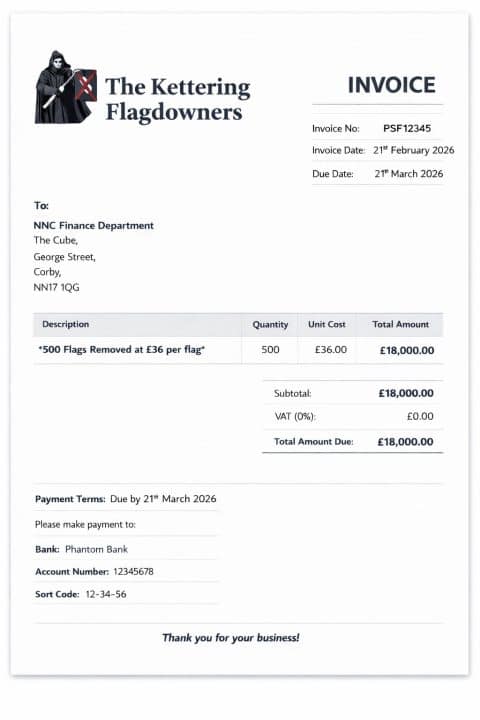
A group in Kettering has sent an invoice to North Northants council for £18,000. This is in respect of the removal of over 500 illegally displayed flags on lampposts, which the council itself declined to remove.
As the invoice shows, they’re charging £36 a pop:

As the invoice also shows, they’re probably not 100% serious. Unless those actually are their real bank details.
The war of the flags
For anyone who’s already forgotten, the summer of 2025 saw a new sport break out across the UK. Rival teams of DIY enthusiasts took it in turns to shin up lampposts and either attach or remove flags.
Generally the flaggers claimed they were expressing patriotism. Although their activities often centred on areas close to hotels where asylum seekers lived. And sometimes they defaced the flags with slogans such as “Stop The Boats”.
Those removing the flags occasionally pointed to the alleged illegality of hanging them on street furniture. Some felt they made the area look shabby, often being hung with no regard for formality or aesthetic impact. One council had a bit of a dilemma over whether to prioritise the flags or Christmas decorations.
Jamie Driscoll made the point in the Canary that flags, in themselves, are largely a tool of tribalism. This can be a relatively harmless phenomenon. But in the case of the flag wars it became damagingly divisive.
The Kettering Flagdowners say:
Flags for Kettering are hiding their nasty and divisive right wing agenda behind a cynical veneer of ‘patriotism’.
They add that many other local authorities across the country have been routinely removing such items. And in some cases those responsible for putting them up have themselves received invoices for the cost of removal.
The Flagdowners call upon North Northants council to take down all illegally displayed flags on street lights and to invoice Flags for Kettering (who have illegally been putting them up) for the costs of removal.
Featured image via the Canary

Pentagon-funded think tank RAND says ‘seeming victory’ could become a ‘decisive defeat’ in Gaza when global ‘public opinion’ finally catches up to Israel.
Of course, the military think tank never actually calls what is happening in Gaza a genocide, or that Israel is committing war crime after war crime. The concern it has is with the bad PR Israel’s “kinetic operations” are generating and their “strategic” impact on Israel.
Kinetic warfare is defined as the deliberate use of — or credible threat to use — physical violence and/or physically disruptive actions to undermine security, damage confidence in democratic governance, and/or destabilise democratic society.
RAND, which works directly for the U.S. Army, Air Force, and Department of Homeland Security, in its commentary seemingly condemns Israel’s lack of engagement with counterinsurgency models that the US used in the Malayan Emergency, Vietnam, Iraq, and Afghanistan. It says:
Unlike their U.S. counterparts, the Israeli security establishment never embraced the population-centric counterinsurgency model. Indeed, some Israeli analysts were openly disdainful of it, partly because they believed that trying to win hearts and minds among the Palestinian population was impossible.
Oct. 7 only reinforced this long-standing belief. Polls taken a couple months after the terrorist attack showed that more than seven in 10 Palestinians surveyed supported the Hamas attack. And so Israel tried a different, far more kinetic, method in Gaza.
In RAND’s words, could the IDF have “stemmed some of the loss of international support” by embracing the “‘hearts and minds’ side of counterinsurgency”
Here is what RAND never says: maybe Palestinians don’t want their “hearts and minds” won by a settler colony. People will always oppose colonialism. Colonialism cannot be wished away with military jargon like “mow the lawn” or managed with counterinsurgency manuals. People want their freedom. Full stop.
Before October 2023, Israel Called It ‘Mowing the Lawn’
“Mowing the Lawn” or “Mowing the Grass” emerged in Israeli political culture around the turn of the century, according to a study, as the military-political strategy defined as regularly targeting Palestinian leadership, facilities, and infrastructure to control their growth like a lawnmower controls grass growth.
Even the New York Times (more aptly, the New York Crimes) pointed out in 2014 that “critics say the use of such terminology is dehumanizing to Palestinians and tends to minimize the toll on civilians as well as militants,” as Israeli officials were open about their aims with such tactics.
Yoav Galant said in a radio interview in 2014:
This sort of maintenance needs to be carried out from time to time, perhaps even more often
In RAND’s analysis, October 7 proved that “mowing the grass” never worked as Hamas couldn’t be “deterred, nor contained, nor appeased.” Hence, came Israel’s carpet bombing and bulldozers.
Not featured in RAND’s analysis: the barbarity, illegality, and utter lack of morality baked into the “mowing the grass” approach from the start. RAND is worried about whether the strategy worked or not.
Normalising Counterinsurgency
Counterinsurgency theory, or COIN in Pentagon-speak, is the military doctrine of fighting insurgency by winning over the population with ” a series of economic and political inducements.”
It assumes the problem is insurgency against the occupation, not the occupation. Further, it assumes that this problem can be solved by “economic and political inducements,” i.e., corruption, bribery, and propaganda.
Of course, the USA has a rich history of COIN. It has practiced this theory against Americans themselves, too.
J. Edgar Hoover’s FBI called it COINTELPRO. In 1967, the FBI quietly unleashed the covert surveillance operation targeting “subversive” civil rights groups and Black leaders. The objective, according to an FBI memo: to “expose, disrupt, misdirect, discredit, or otherwise neutralise” the Black freedom movement.
The UK has its own practitioners. Morgan McSweeney, until recently a key figure in Keir Starmer’s inner circle, learned the playbook well.
As Paul Holden’s The Fraud, serialised by the Canary, reveals, McSweeney used Labour Together funding to infiltrate Corbyn-supporting Facebook groups, trawling for posts to weaponise. He then fed the most damaging examples to friendly journalists at the Sunday Times.
Morgan McSweeney also told his fellow saboteurs, “kill the Canary before the Canary kills us“.
This is the awful truth about RAND’s commentary: it normalises colonialism in sterile military jargon, reducing questions of life, death, and freedom to matters of tactical efficiency. It treats Palestinians as “the population” to be managed, not a people demanding liberation.
Featured image via Aljazeera

If this winter has felt particularly miserable and like an utter slog, it’s because we have been missing out on some crucial ‘apricity’; that feeling of the warmth of the winter sun beating down on us.
It makes sense, really. While we may be used to waking up and coming home in the dark during the colder months, we are often lifted by some bright, sunny days (even if it is freezing cold). But given that it hasn’t stopped raining for months, our days have been largely dark and dull.
Even for summer haters like myself, a lack of bright sunny days can certainly take its toll on wellbeing.
We need winter sun to keep us elevated
During winter in the UK, we are often deprived of sunlight. So much so that vitamin D supplements are recommended to all UK residents between April and October by the government because, of course, the body creates vitamin D from direct sunlight on the skin when outdoors.
Action Mental Health explains that when sunlight is in short supply during winter, “many experience a dip in vitamin D which leads them to feel sluggish, decreases mood and causes disruptions to their normal sleep schedule”.
As a result, it recommends that people find pockets of sunlight whenever possible, and step outside to take it in when the sun does show its face in winter.
What do we do when there is no sun?
Well… get your wellies on. Karen Clarke, of Natural Resources Wales, spoke to the BBC about embracing walking, even on damp days, and said: “You’ve got the sound, the sensation of [rain] hitting your face, it’s very relaxing…
“It’s the social aspect as well. If you’re out in your local community, your local green spaces or maybe a bit further afield, you get those social benefits of seeing other people, having a chat with them, saying hello.”
Well, it’s not like we don’t have raincoats…
Help and support:
- Mind, open Monday to Friday, 9am-6pm on 0300 123 3393.
- Samaritans offers a listening service which is open 24 hours a day, on 116 123 (UK and ROI – this number is FREE to call and will not appear on your phone bill).
- CALM (the Campaign Against Living Miserably) offer a helpline open 5pm-midnight, 365 days a year, on 0800 58 58 58, and a webchat service.
- The Mix is a free support service for people under 25. Call 0808 808 4994 or email help@themix.org.uk
- Rethink Mental Illness offers practical help through its advice line which can be reached on 0808 801 0525 (Monday to Friday 10am-4pm). More info can be found on rethink.org.

Ukraine has opened its first drone factory in the UK. The facility, near a US military base in Suffolk, will mass produce unmanned aerial vehicles (UAVs) for the war with Russia. Arm firm Ukrspecsystems will fulfill the contract.
Ukrspecsystems’ UK director Rory Chamberlain told the BBC:
The war has changed but this keeps soldiers safe and it keeps the nation fighting.
There is your chessboard and another piece has been added – another player has been added to the board that can do different things and that’s drones in modern warfare.
It’s changed how they have to defend themselves and it’s changed how they attack as well.
UK’s Minister for Defence Readiness Luke Pollard attended the opening. He told those assembled:
We’ve been supporting Ukraine with training of military personnel for quite a few years now, but for Ukraine to stay in the fight having more assured and resilient industrial production is essential.
That’s what this factory provides, so it is a really important step in the UK-Ukraine partnership, making sure we can keep Ukraine in the fight for longer as we get towards what I hope will be peace.
The UK is also building an arms manufacturing hub in Ukraine.
Ukraine arms base
The British government has said that a three-year fully funded deal has been struck between Ukraine and the UK.
Defence secretary John Healey said on 16 January:
An Armed Forces is only as strong as the industry that stands behind them.
Healy said the new deal ensured even small UK arms firms could get involved. This was all framed as “supporting Ukraine” “and securing peace”:
This new centre will supercharge that effort and ensure British companies, no matter how small, can support Ukraine in the fight today and help secure the peace we hope to see tomorrow.
The National Armaments Director Group will manage the centre. The current director is Rupert Pearce, appointed in October 2025.
The BBC said the new drone factory in Suffolk:
It is also close to Elmsett Airfield, near Ipswich, which will be used to train drone pilots and test out the machines before they are deployed to soldiers on the frontline.
The factory will make up to eight types of UAV to send on to Ukraine. Militarisation is accelerating across Europe. President Donald Trump’s demands that European nations stop relying on the US have compounded this. In the clamour to rearm, there is very little space to discuss what a more just and less war-like economy might look like.
Featured image via the Canary

Natalie Alzate is author of the best-selling Offline Humans (DK, October 2025).
We touch our phones 2,617 times a day on average. The endless swiping isn’t random, it’s the same brain loop that makes slot machines addictive. Scientists call it the ventral tegmental area, a dopamine hub that craves novelty.
Put simply: scrolling is the new gambling. And while the house always wins in Vegas, you can beat the odds with a simple 60-minute reset. The better news? You don’t need to move to a cabin or delete every app to feel better. In just one hour, you can reset your brain from doomscrolling to feeling in control of your focus.
As someone who spent a decade online as a creator, I’ve felt both the perks and pull of social media. Millennials were the first to grow up with phones and the last to remember life without them, which makes our attention feel especially precious. At some point I had to wonder: was I numbing myself with technology? I kept thinking, this cannot be good for my brain.
Eventually, my body made the point for me. It was shouting: stop scrolling. drink water. blink. move. So I ran an experiment – 24 hours offline.
The good news? You don’t need a full day to feel different. Start smaller. Here are a handful of quick resets you can plug into your evenings, then I’ll show you how to habit stack them into one hour that works every time.
Three Offline Resets To Try Today
Logging off often leaves us asking, now what? A dopamine menu solves that. It’s a pre-made list of offline things you genuinely enjoy, easy for moments you’d normally scroll. Spend 20 minutes drafting yours. Here are a few of mine:
- Solo karaoke
- Bath with substack read and tea
- Crisp early-morning workouts
- Late night baking just for fun
- Cozy TV in pyjamas with permission to rest
Having options at hand makes logging off feel less like deprivation and more like choice.
Try A Seasonal Curriculum
Brainrot thrives on passive scrolling…consuming without creating. Self-education flips that script. When you give your brain something to chew on, you trade endless novelty for focused curiosity. That’s why learning, on your own terms, can be an antidote to brainrot.
Each season, pick one theme to explore: a craft, a recipe, a topic that sparks you. I keep a commonplace book and jot down ideas as they pop up. This autumn my list looks like:
- how to make friends in your 30’s
- how to speak more eloquently
- how to actually stay still and pray.
The key is excitement. When learning isn’t forced on you, it feels like play, and that’s what makes it stick.
Clock Off Your Online 9-5
Most of us treat social media like an always-on shift. The notifications never end, the feed is bottomless, and before you know it you’ve worked a second job…for free.
What if you clocked out at 5pm, the way you would from a real office? Treating the internet like a job puts a clear boundary in place. Suddenly those evening hours belong to you again. You’ll notice how much you can get done, calling a friend, actually trying one of those restaurants you saved on instagram, or pulling out that half-finished project. Even boredom becomes productive when it has space to breathe.
Quick try: Scroll through your “saved” folder – look at all those cafes, recipes, day trips you never made time for, and make a real-life bucket list. Close your eyes, point to one, and make it happen tonight. (In my book, I break down how to turn these lists into seasonal challenges you’ll actually enjoy)
The One-Hour Log-Off Plan
We’ve covered quick resets but what if you stacked them into a single routine? Think of it as a mini digital detox, no cabin in the woods required. Here’s how to spend one hour offline and actually feel it.
0-10 minutes: make your phone hard to reach
Put it on charge in another room or in its “bed” as I like to say. Yes, my phone has a bedtime (10 pm sharp). Switch on Do Not Disturb and place it face down. If you need peace of mind, tell one person you’re offline for the next 60.
10-25 minutes: reset your space and body
Tidy one small zone: a desk, that chaotic bathroom sink, bedside table or even a junk drawer. Drink water, put the kettle on, crack a window. If you can, steep outside to a nearby park, a library, or cafe, what sociologists call a third space, a place beyond home or work that naturally slows you down.
25-45 minutes: pick an anchor ritual
Choose a single offline activity and sink into it.
- One sentence journal: one line about today, no pressure.
- Movement: stretch or a short walk.
- Craft or soak: bake something simple, run a bath, or do a puzzle.
45-60 minutes: prep tomorrow
Note three priorities for tomorrow, not ten. Lay out one thing you’ll need whether it’s a gym kit, a notebook, or a lunch). Do a quick 15-minute room reset so in the future you wake up to calm, not chaos
Many of us feel a little disembodied after years of living in our heads and on our phones. But one hour, repeated, can bring you back into your body and back to other people.

On BBC, Victoria Derbyshire interviewed a university graduate who shared his experience with lofty student finance repayments. Pointing out how much he has paid in ‘a few years’ of working, Derbyshire asked if comfort is found in the knowledge that the public fleecing ends after 30 years.
The privileged elder misses the point that 30 years of accumulating interest will drive repayments far beyond the original loan, generating a significant profit for the state.
This incident exposes how the establishment is perfectly willing to squeeze more money out of young people to boost public coffers, all while claiming that there are ‘too many options’ available to prospective students. At the same time, they refuse to consider measures like a wealth tax, arguing that the richest would simply leave.
When quality education leads to better jobs, stronger economic growth, and ultimately higher tax revenues, the double standard becomes clear. The state targets those trapped within the system for profit, while avoiding any serious effort to make the rich and powerful contribute more.
A country that does this to its smart, ambitious young people deserves to fail. It’s no deeper than that.
The grim truth is large parts of the political and media class have hated young people for a long time now. Generation PAYE-pig.
— Aaron Bastani (@AaronBastani) February 25, 2026
Captive students: Low-hanging fruit
Recently on Good Morning Britain, Martin Lewis successfully challenged Conservative leader Kemi Badenoch on her attempt to revise student loan repayment Plan 2 as a solution to the student debt crisis. The money-saving expert rightfully pointed out it would be easing things slightly for one group, whilst ignoring all others. This prompted widespread debate with graduates across the country supporting Lewis’ calls to wipe student debt that is creating a deadweight effect on workers in the economy.
A highly lucrative deadweight that was clearly pointed out by Max in the interview, which went as follows:
Victoria Derbyshire: Let me ask you then, Max, how much did you borrow in total?
Max: So, I borrowed £84,000 in total, and that’s about half tuition fee, and the rest maintenance loans that you need to live on and pay your rent whilst you’re there and so on.
Derbyshire: And how much have you paid back so far?
Max: I’ve paid back about £8,000 over the past few years that I’ve been working.
Derbyshire: And how much do you owe now?
Max: £110,000.
Derbyshire: Oh, my God.
Max: Yeah.
Derbyshire: What does that feel like?
Max: Well, I mean, it feels ridiculous because I know I’m never going to be able to pay that back. So for me, this is no longer a student loan. It’s a lifelong graduate tax.
Derbyshire: Right. Do you take any comfort in the fact that after 30 years, if you haven’t paid it back, it’s wiped out?
Max: Well, I feel like that’s a bit of a misconception because the fact that people end up not clearing their debt within 30 years actually means they end up paying for longer because the interest rates are so high and they’re often going to end up paying more than they actually borrowed. So you’re trapped.
Derbyshire: Right. That’s how it feels.
Max: Yeah.
Derbyshire appears to ignore the fact that if Max continues at his current repayment rate, without any future pay rises increasing his contributions, his repayment would be at least £88k. This shows he will still repay the full cost of his original loans and then some over 30 years. Therefore, the expiration date of this unavoidable “student tax” offers no comfort when it only signals the conclusion of exploitative interest charges.
After all, education is an investment in the future of the economy. Seeing it as a source of profit instead is counterproductive and just works to undervalue graduates.
Our youth are not the ‘magic money tree’
Since Lewis’ principled and informed intervention, others with specialised insight into university education have spoken out. Historian and former university head Sir Anthony Seldon even argued that Lewis should take on a four-week role to fix the mess former Labour and Conservative governments created.
We wrote:
Contrary to the Conservatives’ policy being dangled like a carrot to voters, historian Anthony Seldon has called for all student debt to be wiped. He went further, urging the government to accept that it must stop treating students as a source of profit. Instead, Seldon argued that they already contribute to the economy through the skills and expertise they develop at university.
Furthermore, Seldon emphasised that higher education is about far more than achieving high grades or obtaining a certificate. After all, it is a formative experience where young people develop vital life and social skills. Also, it’s essential for improving critical analysis skills with young people engaging in progressive, informed debate.
The neoliberal state will likely continue to insist there is ‘no magic money tree’ to address the scale of underfunding across society. Yet at the same time, the wealth of the richest has soared at record-breaking rates. Therefore, those who once benefited from free education now resist asking the wealthiest to contribute their fair share in taxes. Instead, they continue to target the easy pickings — students striving for opportunity and a better life.
The government have stated they will ‘look at ways to make it fairer’. Easy. Deploy wealth taxes to ease the burdens facing graduates and students across the country.
Featured image via Green Country

On Wednesday, one fan asked the Oasis frontman whether he’d be putting in an appearance at the Brits this weekend, to which he responded: “I’m not.”
Candid as ever, the singer remarked: “I can’t be around those ITV cunts.”
In more X posts, Liam claimed that he was “just not feeling this [Rock And Roll] hall of fame thing”, but conceded he would attend the ceremony all the same, mainly to “collect it”, “tell the panel of judges how lovely they all look”, “thank all the fans that voted for us” and then “wreck the gaff”.
In 2010, he even got on the wrong side of Peter Kay, when he accepted the award for Best British Album Of The Last 30 Years, completely snubbed his brother in his speech, then tossed his award into the crowd.
“What a knobhead,” the comedian – who was hosting the Brits that year – remarked.
Oasis certainly saw a chart resurgence in 2025 thanks to their much-hyped reunion, but Noel’s award has proved to be a controversial one given that he didn’t actually release any new music at any point in the last year.

Instagram has unveiled a new feature which will alert parents if their teenager repeatedly tries to search for terms related to suicide or self-harm.
The feature is being rolled out in the coming weeks and will provide caregivers with information to help support their teen and talk to them about it.
Currently, if someone tries to search for suicide and self-harm content on Instagram, the social media platform’s policy is to block these searches and direct them to resources and helplines that can offer support.
How will the new alert work?
Now, in addition to the blocked content feature, if someone using a Teen Account repeatedly tries to search for terms related to suicide or self-harm within a short period of time, their parent will receive a notification.
The alerts will be sent via email, text, or WhatsApp – depending on the contact information available – as well as through an in-app notification.
Tapping on the notification will open a full-screen message explaining that their teen has repeatedly tried to search Instagram for terms associated with suicide or self-harm within a short period of time.
Parents will also have the option to view expert resources designed to help them approach potentially sensitive conversations with their child.
Attempted searches that would prompt the alert include phrases promoting suicide or self-harm, phrases that suggest a teen wants to harm themselves, and the actual terms ‘suicide’ or ‘self-harm’.
These alerts will roll out to parents who use Instagram’s parental supervision tools in the US, UK, Australia, and Canada next week, and will become available in other regions later this year.
Why is it needed?
The rollout comes one week before the release of Channel 4 documentary Molly Vs The Machines, which revisits the death of 14-year-old Molly Russell, who took her own life in 2017 after months of seeing content relating to self-harm and suicide online.
The Standard notes that Molly had saved, liked and shared 16,300 pieces of content on Instagram in the six months leading to her death – of these, 2,100 were about self-harm, depression and suicide. She had also searched for similar content on Pinterest.
Both social media platforms now block this type of content from searches. In cases where content encourages suicide, self-injury or eating disorders, it is removed.
In 2023, The Online Safety Act came into force with a new set of laws to protect children and adults online. As part of the act, social media companies and search services have a duty to protect users – especially young people.
Platforms have to prevent children from accessing harmful and age-inappropriate content, and provide parents and children with clear and accessible ways to report problems when they do arise.
Companies which don’t meet these requirements can be fined up to £18 million or 10% of their qualifying worldwide revenue (whichever is greater).
Vicki Shotbolt, CEO of Parent Zone, said of the latest announcement: “It’s vital that parents have the information they need to support their teens.
“This is a really important step that should help give parents greater peace of mind – if their teen is actively trying to look for this type of harmful content on Instagram, they’ll know about it.”
Meta, which owns Instagram, said it is now working on building similar parental notifications for teens’ conversations with AI.
Help and support:
- Mind, open Monday to Friday, 9am-6pm on 0300 123 3393.
- Samaritans offers a listening service which is open 24 hours a day, on 116 123 (UK and ROI – this number is FREE to call and will not appear on your phone bill).
- CALM (the Campaign Against Living Miserably) offer a helpline open 5pm-midnight, 365 days a year, on 0800 58 58 58, and a webchat service.
- The Mix is a free support service for people under 25. Call 0808 808 4994 or email help@themix.org.uk
- Rethink Mental Illness offers practical help through its advice line which can be reached on 0808 801 0525 (Monday to Friday 10am-4pm). More info can be found on rethink.org.
Politics
Oliver Dean: Never mind the Davey stunts, it’s Daisy’s stunt that makes the Lib Dems an unserious party
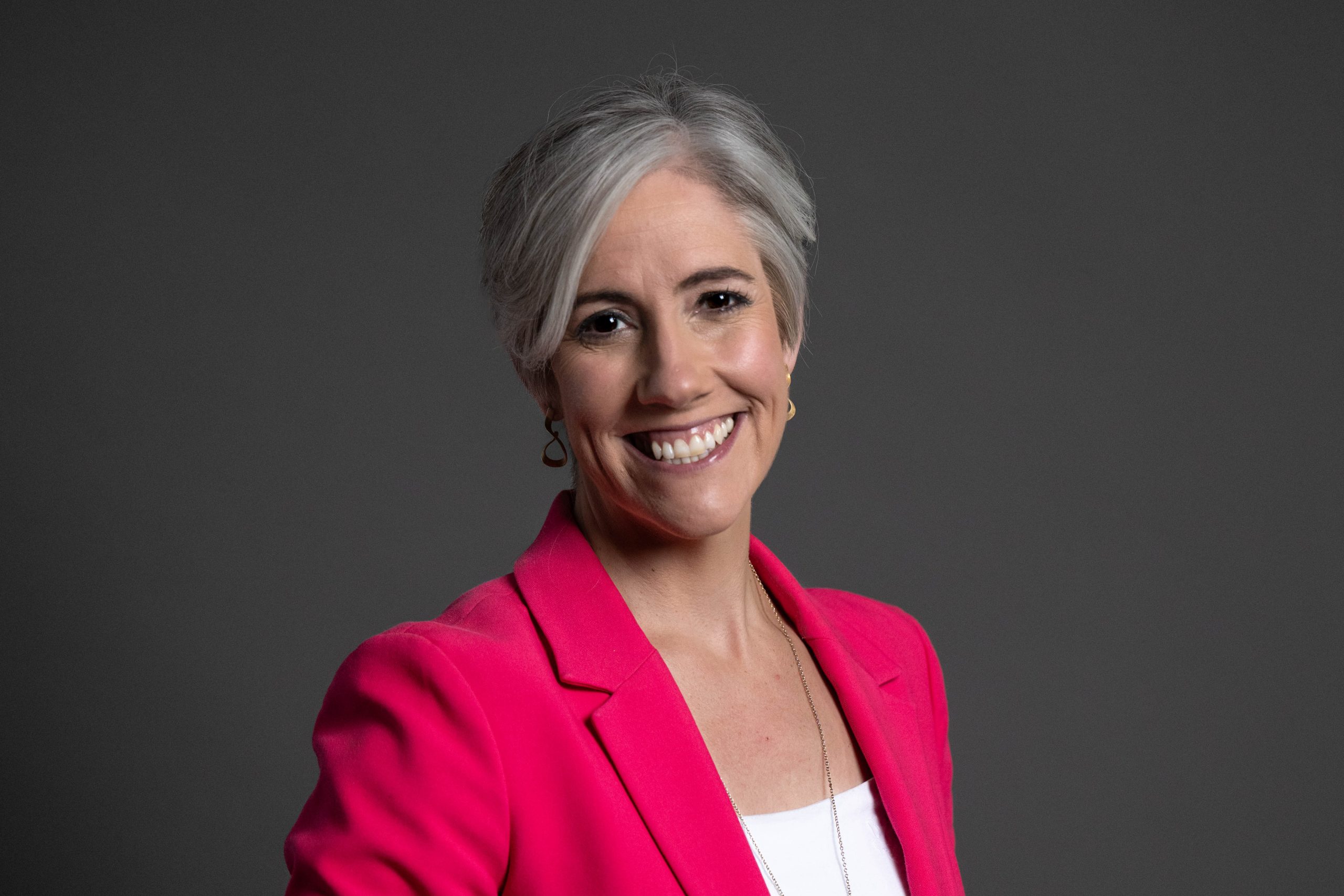
Oliver Dean is the digital editor of Mace Magazine and a political commentator with Young Voices. He studies History and Politics at the London School of Economics and Political Science (LSE).
Recently the Liberal Democrat economic spokesperson, Daisy Cooper, set out her party’s economic framework.
She did so at a press conference hosted by UK Finance, and the announcement marked the first major policy proposal the party has put forward since the 2024 election. But, whilst many Liberal Democrats were likely overjoyed by their party’s announcement, Cooper’s words left many scratching their heads and wondering how anyone could take her party seriously.
Perhaps the most peculiar announcement Cooper put forth was her idea to scrap the Treasury and, in its place, create a new Department for Growth. Her defence of such a radical idea came from the fact that, “in other countries” the bodies that cover “fiscal policy, economic policy and controlling government spending” are “split up.”
It may sound like a good idea on paper. After all, if other countries are doing it, why should Britain not join them?
But joking aside, such an idea is a prime example of a sweet nothing.
The evidence for this is overwhelming. For one, they would move this new Department to Birmingham. The reasoning behind this move is to reduce the inequality gap between London and the rest of the country. However, what no one seems to have told the Liberal Democrats is that simply moving a government building to a different city is not a means to produce economic growth. It is not as though the Treasury is some major economic force that drives up the country’s GDP. Moving this supposed ‘Department for Growth’ outside of London will not solve the countries’ economic issues in the way Cooper expects it to.
What is most telling, however, was the Party’s insistence that they “do not anticipate any cuts” to come with these new policies. True, the Liberal Democrat ethos appears to be spend, spend and spend some more and just hope that something works. At current rates, for instance, the government is expecting the welfare bill to rise by £20 billion more per year until the end of the Parliament. How, then, can the Liberal Democrats sit there with a straight face and not consider cutting any level of public spending? Total public spending is ballooning out of proportion, and yet Daisy Cooper and her allies appear to be blind to this economic reality. The truth is that if they are not to cut spending, they are left with just two options.
Either they would be forced to increase borrowing. Or, if they wished to take the other route, they would need to raise taxes. Both of these options would hinder the opportunities of future generations. The crux of the matter is that the Liberal Democrats are in a position to say such niceties – that cuts are not necessary, that they will mend the country’s woes – because they are, thankfully, never going to be near a position of power.
They can promise voters the world, and never be forced to deliver. They push policies in an attempt to grab headlines, and whilst it may work for a day or two, the votes they bleed as a result will far outweigh any positive media reception they may receive.
Indeed, such fiscally irresponsible nonsense comes at a time when their party leader is viewed by many as a joke. If he is not falling off a kayak, or partaking in some type of cringe-inducing photo opportunity, he is likely running his party’s credibility into the ground.
Daisy Cooper’s announcement has thus reinforced what many have known for a long time. That the Liberal Democrats are not a serious contender for government, and should not be allowed anywhere near the reins of power. The idea is radical, and unrealistic, but that is exactly what the Liberal Democrats can offer voters. They will never be held accountable for their undeliverable promises, and so do not care as to whether their plans are possible or not.
Perhaps we should all be thanking Daisy Cooper, for shining a light on the real Liberal Democrats.

Cuba coast guard seizes US vessel

Man United leave Arsenal and Chelsea in the dust as UEFA expose transfer spending

In Seattle protest, workers call on Uber and Lyft to stop adding new drivers to ‘flooded’ market


-

 Video7 days ago
XRP News: XRP Just Entered a New Phase (Almost Nobody Noticed)
-

 Politics5 days ago
Baftas 2026: Awards Nominations, Presenters And Performers
-

 Fashion6 days ago
Weekend Open Thread: Boden – Corporette.com
-

 Sports3 days ago
Women’s college basketball rankings: Iowa reenters top 10, Auriemma makes history
-

 Politics3 days ago
Nick Reiner Enters Plea In Deaths Of Parents Rob And Michele
-

 Business2 days ago
True Citrus debuts functional drink mix collection
-

 Crypto World3 days ago
XRP price enters “dead zone” as Binance leverage hits lows
-

 Business4 days ago
Mattel’s American Girl brand turns 40, dolls enter a new era
-

 Business4 days ago
Law enforcement kills armed man seeking to enter Trump’s Mar-a-Lago resort, officials say
-

 Tech2 days ago
Unsurprisingly, Apple's board gets what it wants in 2026 shareholder meeting
-

 NewsBeat19 hours ago
Cuba says its forces have killed four on US-registered speedboat | World News
-
 NewsBeat21 hours ago
Manchester Central Mosque issues statement as it imposes new measures ‘with immediate effect’ after armed men enter
-
 NewsBeat3 days ago
‘Hourly’ method from gastroenterologist ‘helps reduce air travel bloating’
-

 Tech4 days ago
Anthropic-Backed Group Enters NY-12 AI PAC Fight
-

 NewsBeat4 days ago
Armed man killed after entering secure perimeter of Mar-a-Lago, Secret Service says
-

 Politics4 days ago
Maine has a long track record of electing moderates. Enter Graham Platner.
-
 NewsBeat2 days ago
Police latest as search for missing woman enters day nine
-

 Business16 hours ago
Discord Pushes Implementation of Global Age Checks to Second Half of 2026
-

 Crypto World2 days ago
Entering new markets without increasing payment costs
-
 Sports3 days ago
2026 NFL mock draft: WRs fly off the board in first round entering combine week