Politics
Hilary Duff Remembers Lizzie McGuire Co-Star Robert Carradine
In a statement issued on Monday night, Robert’s family confirmed that he had taken his own life, following what they described as a “nearly two-decade battle with bipolar disorder”.
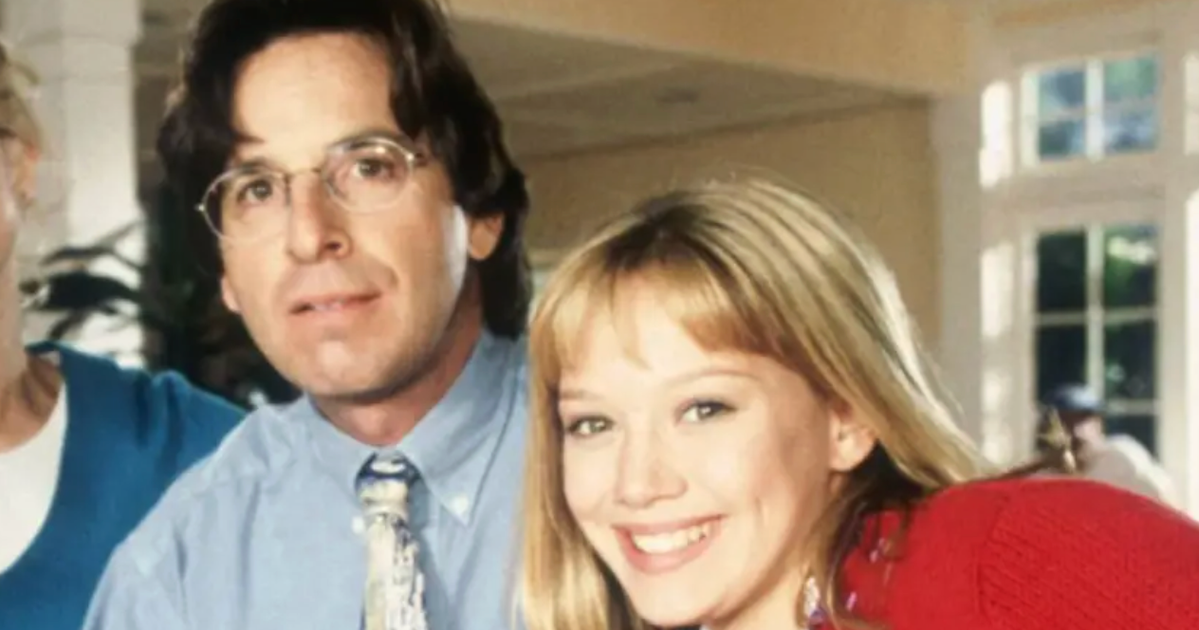
Hilary Duff, who played Robert’s on-screen daughter in the Disney show between 2001 and 2004, shared a tribute to her former co-star shortly after the announcement.
“This one hurts,” Hilary wrote on Instagram. “It’s really hard to face this reality about an old friend. There was so much warmth in the McGuire family and I always felt so cared for by my on-screen parents. I’ll be forever grateful for that.
“I’m deeply sad to learn Bobby was suffering. My heart aches for him, his family, and everyone who loved him,” she added, alongside a broken-hearted emoji.
Meanwhile, Jake Thomas, who played Lizzie’s little brother Matt, wrote on his Instagram: “I was fortunate to know Bobby for most of my life. And he was one of the coolest guys you could ever meet. Funny, pragmatic, sometimes cranky, always a little eccentric. He was a talented actor, musician and director. But more than anything, he was family.
“I have many fond memories of being with him and his family throughout my life. Good moments, challenging moments and lots of laughs in between.”
He continued: “I looked up to him growing up. And later, I came to realise he thought I was pretty neat, too. So I guess I was doing something right.”
Alongside playing Sam McGuire, Robert appeared in the 1984 cult classic Revenge Of The Nerds, as well as Escape From LA, The Long Riders and Django Unchained.
His most recent on-screen credit was in the 2024 Western thriller The Night They Came Home, although the actor has three films currently in production, which are set to be released posthumously.
Per Deadline, Robert is survived by “his children, grandchildren, brothers, nieces, nephews and anyone who had the honour of having him in their life”.
Help and support:
- Mind, open Monday to Friday, 9am-6pm on 0300 123 3393.
- Samaritans offers a listening service which is open 24 hours a day, on 116 123 (UK and ROI – this number is FREE to call and will not appear on your phone bill).
- CALM (the Campaign Against Living Miserably) offer a helpline open 5pm-midnight, 365 days a year, on 0800 58 58 58, and a webchat service.
- The Mix is a free support service for people under 25. Call 0808 808 4994 or email help@themix.org.uk
- Rethink Mental Illness offers practical help through its advice line which can be reached on 0808 801 0525 (Monday to Friday 10am-4pm). More info can be found on rethink.org.
Politics
Derbyshire Tears Into Minister Over ‘Outrageous’ Student Loan Repayments
Victoria Derbyshire tore into the school standards minister over the government’s “outrageous” approach to student loan repayments.
Chancellor Rachel Reeves froze the salary threshold at which graduates start to repay what they owe, meaning more of them are hit with charges earlier.
Interviewing education minister Georgia Gould on BBC Newsnight, Derbyshire said the changes are “outrageous”.
Gould replied: “This is a system that we’ve inherited.”
But the presenter cut in: “No no no, you didn’t inherit the freezing of the repayment threshold. You did that in the last Budget. That was a choice!”
“It’s not a perfect system, we really acknowledge that,” Gould replied. “We face huge pressures as a government, as I was talking about, the investments we’re making in supporting some of the vulnerable children that are really critically important, we have to make tough choices, because we inherited some difficult systems.”
“So it’s alright to change the terms of their loan unilaterally without consultation, without pre-warning because graduates are paying for other vulnerable groups?” Derbyshire asked.
Gould said the repayment system would be kept under review, noting: “I completely acknowledge that this is a group who have not been the focus of investment over years.”
She said that’s why the government was investing in housebuilding, private renters and childcare.
Derbyshire replied: “The interest charged on student loans is based on the RPI measure of inflation.
“As you know, the government doesn’t even use RPI [Retail Price Index] because you think it overrates inflation. Why is it not good enough, but good enough for students and graduates?”
“I acknowledge it’s not a perfect system,” the minister replied. “But we are in a time when there are so many challenges for our public services, we don’t have the resources to invest in absolutely everything. We have to make choices.”
Derbyshire said: “But you talk about fairness – that’s not fair is it? As a government, you don’t even use RPI.”
Watch the full exchange below:
Politics
PARC Against DARC accuses MOD of ‘sneaking through’ radar infrastructure
Campaigners from PARC Against DARC are accusing the Ministry of Defence of a series of potential moves to split out planning elements required for the DARC radar proposal without including them in the main planning application. They say legal precedents show this practice may be unlawful.
A PARC Against DARC spokesperson said:
We haven’t come across a single person who doesn’t think the whole story behind the RDF aircraft tracker relocation proposal that’s just been tabled, the inexplicably high-security landing cable station, the unanimously unpopular £60m Newgale bypass road and required power cable upgrades for miles just stinks to high heaven.
After 37 Senedd and Westminster politicians have come out against DARC, a petition of 18,000 signatures and public demonstrations that have gone viral online, the MOD seems to be looking for any way it can to ‘salami slice’ the massively unpopular DARC plans and try to ram them through planning against the local community’s will. We think that this would be both unlawful and wrong.
Follow the DARC Money
The spokesperson continued:
DARC admits to funding the new RDF aircraft tracker in the application. The MOD’s environmental screening document states clearly that relocating the RDF has been part of DARC’s plans, and the only reason it gives as to why it was excluded from them was because DARC were assured that its relocation would be completed prior to DARC’s construction.
It even goes as far as clearly implying DARC is paying off who it needs to to expedite the relocation of the RDF, using distracting language to hide these realities behind the operational separation between the two projects.
It just leaves you with the question: why does it appear as if money has been changing hands in order for this aircraft tracker to be done and dusted at all costs before DARC is potentially started, if not for the reason that the application is blatantly linked to DARC, and yet unjustifiably is not being considered part and parcel of it?
We strongly question whether the MOD’s attempts to escape reality would stand up in court, and we are disgusted with PCC for issuing a screening opinion that throws the Pembrokeshire people it’s meant to stand up for completely under the bus.
The MOD’s screening request for the upgraded aircraft tracker includes no environmental assessment for radiofrequency radiation impacts to local people and livestock, which means it fails to consider the cumulative impact of what would be that plus DARC’s radiation.
Considering we’ve found over 4,000 studies showing the type of radiation DARC would emit is linked with health impacts including cancer, and that the MOD has ignored nine whole freedom of information requests from us, the fact the MOD refuses to release a scrap of meaningful data on DARC’s huge potential radiation risks for our community leaves people here furious and disgusted.
All they can ever keep trotting out in response is the widely-criticised regulator ICNIRP and a tiny department of the WHO that’s completely riddled with telecoms and military lobbyists.
Suspicious ‘high-security’ undersea cable leads directly to DARC site
It gets even worse though, say campaigners:
There’s a strong public perception that the sea cable landing station they’re now building metres away from the gates of Cawdor Barracks, despite being said to be civilian, would actually be likely to supply DARC with data from overseas as well.
There’s an identical one proposed near Roch using the other one of the two new sea cables coming, but unlike that one, the Brawdy station features razor wire, security guards with on-site parking and CCTV cameras.
The MOD won’t explain why it could possibly need any of this, but if you consider that Brawdy was involved in the SOSUS programme which literally covered up the fact that the British military was concealing that its sea cables were for civilian use when in fact they were tracking submarines, you can see why locals are sceptical.
If they’re right, none of this was ever going to be included in DARC’s potential upcoming planning application, making that application seem less consequential than it would really be.
Newgale bypass with DARC links
The Newgale bypass road has recently suffered another 18 month delay due to a public consultation response that almost unanimously rejected the entire proposal. According to PARC Against DARC, nearly everyone they’ve spoken to believes that the road:
had to have been connected to DARC, because it was so implausible that they could construct and operate such a large-scale military site using tiny backroads that would cause traffic bottlenecks from all sides. This was not factored into DARC’s scoping report either.
Silence surrounds DARC Pylons
Campaigners add that on top of that, documented talks between the MOD and PCNPA show that the MOD has so far failed to include in any publicised planning materials what could be extensive pylon-based or underground network power upgrades it admits could be required for DARC:
It just seems to us like the MOD is dripping with the kind of perceptions of corrupt practice in the local community that the DARC fiasco has become so well-known for in the St Davids peninsula.
The MOD, from the start and throughout, has proven itself to be a government ministry that seems to do nothing but railroad communities, flouting both strongly held public opinion and potentially the law to get what it wants.
DARC opposition set to be ‘hot topic’ at the ballot box
With the Senedd election just ten weeks away and with two of the main contenders in Plaid Cymru and the Wales Green Party both having come out very firmly against DARC as party policy, campaigners say:
Labour locally risks destroying its voter base even further if they fail to recognise the huge levels of local opposition to the proposals and change course.
They add:
The Labour governments on both sides of the border that are presiding over DARC have been an utter shambles, and FM Eluned Morgan and MP Henry Tufnell have been as silent as the grave on DARC since day one.
With a move to proportional representation, voting for 16-18s and an increase from 60 to 96 MSs in the upcoming Senedd elections, it’s looking ever more likely that Labour will be completely wiped out and a progressive ‘Anti-DARC’ government will form the next administration in Wales, so we believe Labour has everything to lose on this key election issue if they fail to about turn.
Featured image (artist’s impression) via PARC Against DARC
Politics
WATCH: Badenoch Calls for Social Media Ban for Under-16s
Politics
The Valdo Calocane case confirms it: wokeness kills
There’s one surefire way to know if your belief system is a bad one: it endangers life. If your ideology imperils other people, on the foul grounds that your virtue counts for more than their safety, then it is a morally unfit one. We can now say this, beyond a shadow of a doubt, about wokeness. It prizes its own preening credo more highly than it does the life and limb of everyday citizens. Just consider the grim case of Valdo Calocane.
The media call him ‘the Nottingham killer’. On 13 June 2023 he committed a crime so dreadful that Nottingham still reels from it. In the feverish grip of psychosis, he knifed to death the 19-year-old students, Barnaby Webber and Grace O’Malley-Kumar, and 65-year-old school janitor Ian Coates. He severely injured three others, too. He was later found guilty of manslaughter on grounds of diminished responsibility and sentenced to indefinite confinement in a high-security hospital.
If you thought this case couldn’t get any worse, brace yourself. Yesterday we discovered a new and terrible truth: Calocane was once freed by mental-health workers because they feared being thought of as racist if they detained him. Convinced there were ‘too many young black men in custody’, they let him out, whereupon he committed more offences, eventually including the savage destruction of three precious lives. Clearly the inner virtue of these overlords of public health is more sacred than the welfare of the masses.
The details are chilling. They came out on the first day of a public inquiry exploring the ‘events, acts and omissions’ that led to Calocane being on the streets, free to kill. The inquiry was told that, in 2020, Calocane experienced the first pangs of psychosis. He became violent. Then a student at Nottingham University, he was found ‘repeatedly kicking and punching’ a fellow student’s dorm door. He was hauled off for an assessment and found to be psychotic.
Yet he was set free. One of the doctors was ‘leaning towards’ sectioning him. But a team of mental-health professionals had other ideas. In the words of the Guardian, they ‘considered research evidence that examined the over-representation of young black men in detention’, and they decided it would be better to treat Calocane in the community. The Mail nails it: they ‘feared [that] detaining him would be racist’, so they let loose on to the streets of Nottingham this dangerous, psychotic individual.
Now we know: the dispiriting woke creed of race obsession carries more moral weight than the security of ordinary people. Sacralising the performative virtue of ‘anti-racist’ officials is more important in 21st-century Britain than ensuring the safety of working men and women. To release into the community a known sufferer from violent psychosis, out of a terror of being thought of as racist, is to elevate the ideological needs of ruling-class narcissists over the most fundamental liberty of the people – the freedom to be safe.
Predictably, Mr Calocane swiftly committed more crimes. He booted in a neighbour’s door, which made her so frightened she leapt from a first-floor window and damaged her spine. He was briefly sectioned after that, then let out again. He committed more offences, and then in 2023 he carried out his apocalyptic slaughter of innocents in Nottingham. Last year a review by the Care Quality Commission found that a ‘series of errors and misjudgements’ by health officials led to the catastrophic mishandling of Calocane and ‘the risk he presented to the public’. Now we discover that the baleful creed of wokeness played a role in this reckless endangerment of the people of Nottingham in the service of the ideology of the elites.
There is no question: wokeness poses a dire threat to public safety. Officialdom’s debilitating dread of being thought of as ‘racist’ is particularly poisonous. The safety of Britons is frequently sacrificed at the altar of this elite terror of being tarred as unwoke. Consider the rape-gang scandal, when cops, councillors and politicians looked the other way as thousands of working-class girls were raped by gangs disproportionately made up of Muslim men. The reason for their deadly nonchalance in the face of such working-class suffering? They feared being thought of as ‘Islamophobic’ if they investigated the gangs too vigorously.
Or consider the 2017 Manchester Arena atrocity. The inquiry into that act of Islamist barbarism heard that a security guard had failed to approach the young man who was mumbling to himself and carrying an outsized backpack – the killer, Salman Abedi – because he feared being viewed as racist. The guard said he had a ‘bad feeling’ about this young man who was ‘fidgety and sweating’. But he held back because he was ‘scared of being… branded a racist’. He feared he would ‘have got into trouble’ if he was wrong about this nervous-looking non-white man. What a perfect and terrifying snapshot of how morally incapacitating the neo-Stalinist culture of race grievance can be, where a man dreads acting against a suspected suicide bomber in case HR should haul him for a reprimand and some racial re-education.
The gender wing of wokeness is lethal, too. Consider the placing of rapists in women’s jails, some of whom went on to sexually assault inmates. The dignity of womankind burnt as an offering to the sexist post-truth mantra of ‘Transwomen are women’. Meanwhile, in the US the woke insanity of ‘Defund the Police’, popularised by Black Lives Matter, led to a spike in crimes and even homicides in areas where cops were stood down. Michael Shellenberger, in his book San Fransicko, calls it ‘pathological altruism’, where ‘woke’ cities adopt policies that lead to more anti-social behaviour, more crime and more sorrow for working people.
We need answers on Nottingham. Death came to that city in 2023 – was it aided by the ideologues who stink up the corridors of power in modern Britain? Any ideology that prioritises virtuous posturing over public dignity must be urgently dismantled.
Politics
Reform finally suspend racist campaign manager
Earlier this month, Manchester’s the Mill published a story highlighting racist comments from a Reform campaigner. The man in question was Adam Mitula, and the party has finally suspended him. The question is what took them so long?
Reform have finally suspended Matt Goodwin’s interim campaign mgr Adam Mitula following complaints about his online activity. The posts included the denial of Holocaust death tolls & antisemitic slurs like “I wouldn’t touch a Jewish woman”#politicslive#GortonandDentonByElection pic.twitter.com/2HjinzZwRS
— Mike H (@mikoh123) February 24, 2026
Revolting Reform
The Mill noted that Goodwin has actually surrounded himself with far-right activists. They argue that this is at odds with how Nigel Farage has historically operated:
Nigel Farage has always been at pains to distance his party from known far-right groups. He’s been publicly critical of Tommy Robinson on many occasions, and as UKIP leader he banned ex-British National Party members from running for his party.
Farage is pretty far to the right, obviously, but there’s always a further right. Most recently this manifested with the creation of Rupert Lowe’s Restore Party.
According to the Mill, Adam Mitula was the most problematic of Goodwin’s team:
Mitula’s output, posted on social media, includes his suggestion that “60-70%” of transgender people are paedophiles, the fact he would “never touch a Jewish woman”, and his use of the n-word. Meanwhile, discussing the number of people who died in the Holocaust in July 2024, he appears to try and play down the statistics, writing: “6 million polish [sic] people including some Jews. They always use Poles to make up the number. And on top of it they claim Poles were killing. Just sick.”
The Mill also highlighted the following tweet:
The Mill noted that Goodwin may not have been aware of the above. This was ten days ago, however, so Reform have certainly known about it since then. Despite this, it seems it took them until now to get rid of Mitula.
Here’s what the Mill said on 23 February:
And Reform’s former campaign manager in Tameside, Adam Mitula, is reclining on a poolside sun-lounger as we speak, perhaps enjoying a daiquiri, after the party quietly suspended him following our reporting on his history of anti-semitic and racist tweets, in a piece which used research by Hope Not Hate.
And here’s what BBC North West said today:
One of Reform UK’s campaign team in the Gorton and Denton by-election has been suspended after racist comments made on social media.
Adam Mitula, the party’s interim campaign manager, used an inappropriate word on X, and appeared to suggest the Jewish community had inflated the number of Jewish people killed in the Holocaust.
He says his comments have been taken out of context and he claims he was defending the Jewish community.
‘Defending’, he says.
Sure, pal.
Just like we’re defending you now when we say “get wrecked, bozo”.
At odds
As we reported yesterday, Farage seems to have abandoned Matt Goodwin following a series of scandals. And when we say ‘abandoned’, we’re saying that quite literally, because big Nige is literally on the other side of the world:
Chagos is a restricted UK territory. Access is tightly controlled through permits because of the strategic military base on Diego Garcia. This isn’t a tourist island it’s a high-security defence asset.
So did Farage request a permit ?
Or is it another day another stunt https://t.co/ac0sWSJsGf
— Charlie (@CheckCharlieB) February 21, 2026
Farage is trying to create a Goldilocks political movement in which everyone is just racist enough. The problem is reactionary politics demands constant lurches to the right, and that’s going to make Reform impossible to hold together as a mainstream political project.
Featured image via The Mill
Politics
Fabulous Faux Fur Jackets To Bring Home This Spring
We hope you love the products we recommend! All of them were independently selected by our editors. Just so you know, HuffPost UK may collect a share of sales or other compensation from the links on this page if you decide to shop from them. Oh, and FYI – prices are accurate and items in stock as of time of publication.
Faux fur might not be the first thing that comes to mind when spring rolls around, yet here we are: winter’s nearly over, and I have suddenly started seeing these cuddly coats absolutely everywhere.
Pairing faux fur with denim and a baby tee is a classic combo for the coolest of girls. It says: “I’m not with the band, I’m in the band.”
Faux fur never really goes out of style, and with the UK’s classically unpredictable weather, you may well find you want a chic, warmer layer to rely on for longer than you think. Plus, opting for a shorter jacket instead of a longer coat helps make the garment a bit better suited to tricky transitional weather.
So, whether you want to channel your inner Carrie Bradshaw or you’re just looking for a fool-proof way to take your looks to the next level, here are some of the best buys on the high street right now.
Politics
Olivia Blake reviews movie-Marmite, “Wuthering Heights”

Jacob Elordi as Heathcliff and Margot Robbie as Catherine Earnshaw | Image courtesy of: Warner Bros. Pictures
4 min read
It’s not one for the purists but – if you suspend your expectations – Emerald Fennell’s latest film is an indulgent treat
As a Yorkshire lass, Wuthering Heights holds a visceral place in my heart. I chose to view this new 2026 film adaptation not as the book I love, however, but as a standalone vision by director Emerald Fennell. Absolute purists will not enjoy this disconnected fantasy; it is certainly not Emily Brontë’s Wuthering Heights. But if you suspend expectations, it is an indulgent treat.
From the opening frames – a medieval, Sweeney Todd-esque hanging scene – the viewer is plunged into a jarring crowd, introducing Cathy in this social context rather than on the isolated moors. This headlinegrabbing scene clearly tries to link sex with suffering in the viewer’s mind from the off.
There is a bizarre lack of actual nature. Compared to the raw realism of Andrea Arnold’s 2011 version, this feels like pure make-believe. The imagery is less Brontë and more Damien Hirst, presenting butchered pigs, fish in jelly and stuffed sheep that highlight the profound inauthenticity of the world on screen. Even the costumes reflect this; Cathy is cloaked in shiny, synthetic materials. Margot Robbie (Catherine Earnshaw) looks stunning throughout; she must have felt like a kid in a Gothic sweet shop.
Image courtesy of Warner Bros. Pictures
I found the auditory experience equally jarring. The Yorkshire accents lacked grit, but an ‘A for effort’ for Jacob Elordi as Heathcliff. The soundtrack, featuring Charli XCX, brings a dark, industrial synth-pop energy – more shadowy city than Pennine storm – though it is effective in adding to the film’s overall feel.
The younger cast is a triumph. Young Cathy (Charlotte Mellington) is sweetly acidic, while a fearful young Heathcliff is movingly portrayed by Adolescence’s Emmy-winning child star Owen Cooper. Martin Clunes shines as Cathy’s father, Earnshaw – having seemingly absorbed the book’s character of his son Hindley into a singular, monstrous caricature. The absence of Hindley fundamentally shifts the context, making the relationships less layered.
Emerald Fennell’s ‘make believe’ lacks the scent of windswept heather but possesses its own strange, man-made shine
Once the characters reach adulthood, the lead duo – Elordi and Robbie – possess a believable but shallow presence. This isn’t soul-shattering love; it is unquenchable lust. Their moments subvert the traditional male gaze but lack the heat expected from the hype – it’s certainly less shocking than Fennell’s 2023 film Saltburn. Cathy is the complete focus, unsympathetically presented even though her tragic end is foreshadowed by her crimson attire. Heathcliff appears almost an afterthought, merely a plaything for Cathy, leading me to conclude that Elordi is slightly wasted in this film, compared to his Oscar-nominated performance as Frankenstein’s monster in Guillermo del Toro’s 2025 film.
Down the hill at the Linton estate, the film shifts into an even more synthetic world, reminiscent of old Hollywood film sets. Alison Oliver’s Isabella Linton, whose creepy dolls house provides another dimension of sinister absurdity, is delightful. That Fennell’s Isabella later consents to Heathcliff’s cruelty (a drastic departure from the book) will possibly be the director’s most controversial interpretation.
The decor of Linton’s house is so over-the-top that Cathy does feel like a shrunken Alice here, as the the wild winds of the moors are swapped for a Grimms’ Fairy Tales aesthetic.
The strongest part of the film is undoubtedly the relationships of the women, with this dynamic replacing the generational trauma of the source material. From a rather more villainous Nelly (Hong Chau) to an obsessive Isabella, the tension between Cathy and these characters outweighs the drama with the men.
The verdict? Emerald Fennell’s ‘make believe’ lacks the scent of windswept heather but has its own strange, man-made shine. Shallow, yes; glossy, certainly. Is it worth a watch? Yes – as long as you don’t expect the earthy style, substance, or plot of the book.
3/5. (1/5 for the purists.)
Olivia Blake is Labour MP for Sheffield Hallam
“Wuthering Heights”
Directed by: Emerald Fennell
Venue: General cinema release
Politics
Judi Dench’s ‘Naughty’ Side Made Her Rosamund Pike’s Favourite Co-Star
Over the course of their numerous collaborations, Rosamund told Radio 2 that she discovered the Oscar winner is both a “delight” and a fan of creating her own fun behind the scenes.
“The best actress I’ve ever worked with is Judi Dench, who’s such a mischief maker,” the Gone Girl star enthused. “She’s so delightful. She’s so, so good.”
Rosamund added: “She’s just amazing and yet, when you’re doing a play with her, she’s so funny, she’s so naughty. Off stage, she’s completely out of character, laughing, playing a practical joke, and then she walks on and it’s all there.”
Elsewhere in her Radio 2 interview, Rosamund claimed that her favourite male co-star was Christian Bale, even if his Method acting technique meant she didn’t really get to know him very well.
“He’s another level,” the Saltburn actor said. “I can’t say I know him really, but it was just a pretty amazing experience to be around him in a film called Hostiles.
“But I don’t think I met Christian, I think I only met the character. He’s quite method. He’s very method.”

Politics
Lord Ashcroft: My latest focus groups “It wasn’t the original plan, was it, to be a load of failed Tories”
Lord Ashcroft KCMG PC is an international businessman, philanthropist, author and pollster. For more information on his work, visit lordashcroft.com
My latest focus groups took place among 2024 Tory-Labour switchers in Tamworth, Reform voters in Clacton, and Conservatives in Romford. The groups talked about local elections, social media, the fallout from the Mandelson saga, Reform’s new shadow cabinet, prospects for the Tories and what constitutes Peak Starmer.
“To stop us voting was the only way”
Our Essex participants were digesting the day’s news that their local elections were back on following the government’s latest reversal. They were sceptical, to say the least, about the reasons given for cancelling the elections in the first place: “They were supposedly moving borders around. Personally, I think it was because Labour knew they were going to lose a lot of areas, so to stop us voting was the only way;” with all the changes that happen in politics over the years, “I’ve never known elections to be cancelled like that.” Nor did they give ministers any praise for seeing the light: “They thought they were going to lose the case brought by Reform. That’s why they changed their mind;” “If Reform hadn’t pushed it, who would have done?” “I think they were running scared, more than that they deserve credit for doing it.”
“I don’t know how they can enforce it, but I agree with it”
Nearly everyone in our groups from all political backgrounds welcomed the prospect of a social media ban for under-16s. Several had doubts about enforcement, though this did not tend to put them off the policy: “I think it’s a good idea, but at the same time, there’s also things in place for kids under 18 not to drink alcohol, but they still do it. The kids will find a way round it;” “I don’t know how they can enforce it, but I agree with it. I’ve got two daughters and I’m scared out of my mind;” “If you can’t legally enforce it, you’ve got to culturally enforce it. You’ve got to have schools teach it, parents teach it. That’s the only way you’ll ever do it;” “If Australia can do it, we should follow suit.” A few thought an age limit missed the point, if the problem was the content that young people were able to access: “If there’s an issue with what they’re accessing, surely those people who are monitoring those systems should have something in place rather than ticking a button to say, ‘I’m over 18’.”
Most did not worry about censorship, given that there were already restrictions on what children could see and do. However, a few did suspect an authoritarian agenda: “We’re back to our personal IDs again. It’s another way of getting the IDs in. It’s just another way to put a blindfold over us.”
“It’s not as important to me as the way that they’re running the country”
The groups also reflected on the Mandelson-Epstein scandal and its implications (“there was Miss Whiplash and Edwina Currie and all the rest of it in the past. But this one really takes the biscuit, doesn’t it?”) While most were not very surprised (“I just feel like anyone in power is usually doing something really bad behind closed doors”), some Labour voters were disappointed: “When I came in, he was like ‘we’re going to get rid of all the sleaze. We’re going to be down the line’, and we’ve hit this already;” “You expect it from the Tories.”
However, there was also a widespread feeling that, while these events were serious and accountability was important, the story was getting disproportionate airtime: “I think it’s been made out to be a point of principle by the media. But like a lot of things, you can just substitute him for other politicians and other situations. The same things happen time and time again.” This was particularly true when set against things that affected them personally: “It’s not so much the stories or the scandals for me. It’s the fact that they got a huge majority based on change because everyone was fed up. And what have you got?” “It’s not as important to me as the way that they’re running the country.”
“He should go because he’s inept, not for this”
Accordingly, while many of them would be happy to see Keir Starmer resign, several thought that appointing Peter Mandelson as an ambassador would constitute a fairly minor reason: “For me, it’s not the decision that would make me think ‘oh God, you should go’. There’s lots of other things he’s done that make me think that, but that’s not one of them;” “Any excuse to get him out, to be honest. He needs to go;” “He should go because he’s inept. Not for this, but for the way he’s running the country.”
Even so, there was little appetite for any of the leading contenders for the job currently inside parliament. Angela Rayner? “Hypocrite;” “She got sacked for tax;” “If I fiddle my tax for 80 grand, I’m doing three months minimum;” “If she comes up with that line ‘I’m from a working-class background’ one more time…” Few had views on Wes Streeting: “Quite personable;” “Another one who should be sacked, but Starmer hasn’t got the cojones to do it.” Ed Miliband? “Oh God, no;” “He seemed a bit soft when he was around before;” “Quite weak really, but there’s something I like about him. I don’t know what it is.”
“He got caught out and sacked his communications team”
Participants debated what represented ‘Peak Starmer’ – the event or decision that was most characteristic of the prime minister: “The pensioners and the fuel. It’s ridiculous that he had to turn around on it but he shouldn’t have done it in the first place;” “Digital ID – the idea that he does something so monumentally obviously bad and unpopular, for silly reasons that this was going to stop illegal immigrants working, and then U-turns on it, is emblematic of where he stands at the moment;” “The appointment of Peter Mandelson as US ambassador. People told him not to do it, and he did it anyway, and then he got caught out and sacked his communications team;” “That thing with the French and the migrants, and they’ve sent more to us than we’ve sent to them.”
“She’s got a bit of bite about her”
Some of our former Conservative participants had been impressed with what they had recently seen of Kemi Badenoch: “Kemi comes across really well. She’s more straight-talking. I trust her to do what she says more than I would Keir Starmer. Not that I’m going to vote for her necessarily, but I think she far exceeds Starmer;” “She’s got a bit of bite about her;” “She’s holding him to account very well. She’s not scared to call him out;” “She was working at 16 in McDonald’s. And her work ethic… I’d rather hear about that than Keir Starmer going on about his working-class background. His parents owned the factory.”
However, this did not often extend to the Conservative party more widely: “I think she speaks well but I wouldn’t trust her as far as I could throw her. With the amount of people who are leaving the party, there’s obviously something that isn’t ringing home to them;” “She was in the Tory government, so if she came out and said, I’m sorry we got stuff wrong, I tried to change it… But unfortunately, I haven’t heard her apologise for the crap the country is in;” “Reform are organised. The Tories are still all over the shop. Kemi Badenoch aside, they are a mess, an absolute bloody mess.”
“We want to hear things that are going to make our lives easier… It’s a slog living in England.”
Former Tories who had switched to Reform or were considering doing so often said they had heard little from the Conservatives since the election (though they were also paying less attention to parties they felt had let them down): “It was that if you work hard, you might have a chance to have financial freedom and succeed in life. But I don’t think they’ve really got that aura about them anymore;” “There’s nothing that’s come from them that makes me want to go back to them. They seem completely aimless and they’re not communicating. I haven’t heard any policies;” “I think we want to hear things that are going to make our lives easier… It’s a slog living in England.”
For many, the defections to Reform were the most recent news they could remember about the Conservatives. A few took a positive view (“they’ve probably done them a favour. Get the rot out”) but more tended to think they were damaging, even if the defectors themselves had been motivated by ambition rather than principle: “Saying ‘I don’t want to be on that team anymore,’ what are you saying? It’s a big statement, isn’t it?” “I think Rosindell has only changed to Reform because he’s seen the writing on the wall as far as the polling is concerned in Havering. He’s jumping ship because he knows he’s not going to win if he’s a Conservative.”
“It wasn’t the original plan, was it, to be a load of failed Tories?”
Reform voters had mixed feelings about their former Tory recruits, and Farage’s new senior shadow team. Some were pragmatic: “The one criticism you can levy against Reform more than anything is that they don’t actually know how to run the country because there’s no-one with real political experience in there. So I think he needed to do it.” However, there was also a feeling among Reform voters that the Conservative influx risked watering down the party’s purpose and appeal: “It wasn’t the original plan, was it, to be a load of failed Tories? It seems to dilute it a bit;” “He’s got two ex-cabinet members from the Conservative Party in his shadow cabinet, when they claim the Conservatives broke the country and now, they want to fix it. Well hang on, you were part of that problem. You were in government and you didn’t help fix what you were paid to fix;” “Suella Braverman is up there screaming about immigration. She was Home Secretary twice!” “I also think it matters what Nigel Farage and other people in the party have said about these people. They’ve said they’re bad, they’re useless, and then he’s like ‘yeah, boys, let’s get them in’. That is hypocritical, obviously. And it speaks to the fact that it’s grift and trying to accumulate power rather than actually trying to run the country successfully.”
Farage’s Clacton constituents said their MP seemed less present and available than he once was: “Obviously I voted for Farage. Since then I’ve emailed him 15 times, and all I get is the parliamentary acknowledgement. Not once has he responded to any of my emails;” “I’ve looked and looked and I can’t find a meeting time or place or anything;” “He used to be here quite a lot. He hasn’t popped his head up recently. He should have what they call a surgery, shouldn’t he? He should be more accessible;” “When the big shop burnt down in Clacton, he was all over that like a rash. He helped the people get another shop and set it up. Now he’s gone quiet again. He’s got to wait for another something. It seems like he has to have a something;” “He’s up in London most of the time. We don’t hear much about him. It’s difficult because he’s leader of his party, so he probably has to be there. But he doesn’t have to be in America all the time.”
“He’s got as much gravitas as Noel Edmonds. Or Mr Blobby”
Finally, with the Oscars coming up, who would play the title role in Keir Starmer: The Movie? “Hugh Bonneville. He can play that sort of upper-class, middle-aged male;” “A Gremlin. He was a nice little teddy bear, then as soon as the water spilled… He’s a completely different person since the election;” “He’s got as much gravitas as Noel Edmonds. Or Mr Blobby;” “Jim Carrey in The Mask. Or Dumb and Dumber;” “Mr Bean;” “Forrest Gump;” “Humpty Dumpty falling off his wall.”
Who would play Nigel Farage? “Mel Gibson, because everyone despises him in the elite;” “Del Boy in Only Fools and Horses. Keir Starmer would be Rodney;” “Someone bolshie. The guy who plays Cain Dingle in Emmerdale;” “Gonzo from The Muppets;” “Kermit the Frog;” “Blakey, the guy from On the Buses with the little moustache. Stephen Lewis;” “Alan Partridge.”
What about Kemi Badenoch? “Angela Bassett;” “Meryl Streep. She played Maggie. She has that delivery about her. When she stands at the dispatch box she has that little bit of authority about her;” “Julia Roberts. She always seems quite committed in what she thinks and says.”
Zack Polanski? “Woody Harrelson;” “Matthew McConaughey;” “Mark Strong, the bloke who plays a lot of baddies;” “Alan Carr.”
And Ed Davey? “Casper the friendly ghost, because you never see him;” “Is he the funny one who does all the kids’ things so you can’t take him seriously?” “Harry Enfield;” Ricky Gervais;” “John Cleese in Fawlty Towers. Or Manuel.”
Politics
Alignment with EU law is easier said than done
Joël Reland outlines the key trends in UK-EU regulatory alignment and divergence over the last five years, as exlpored in our new report ‘UK-EU alignment and divergence: the road ahead‘.
After finalising the Trade and Cooperation Agreement on Christmas Eve 2020, Prime Minister Boris Johnson celebrated having “taken back control of every jot and tittle of our regulation”, promising to “set our own standards, to innovate in the way that we want”. Fast forward to early 2026, and Prime Minister Keir Starmer now argues that “if it’s in our national interest to have even closer alignment with the single market, then we should consider that.”
How to make sense of such a shift, from regulatory freedom to cleaving closer to the EU’s rulebook? Our new report seeks to answer that question by charting the UK’s regulatory journey over the past five years. It shows that – with the notable exceptions of financial services and AI – the UK has struggled to makes use of its “Brexit freedoms” to regulate differently.
On tech, early plans to radically reform data protection rules (GDPR) were dropped, while the UK has developed new rules on digital markets and online safety which greatly resemble EU acts introduced a couple of years earlier. On environmental, product and labour standards, EU-era legislation has barely been reformed, even though rules on habitats protections, vacuum power levels and working hours were major targets for Brexiters.
What explains this lack of divergence? Much is down to economics. Though the UK might be able to create ‘nimbler’ regulation than the EU, this nevertheless imposes new administrative costs on businesses which serve both Great Britain and the EU and/or Northern Ireland (which remains aligned to most EU goods law) – as they will need to conform with different rulebooks depending on which market they are dealing with.
Then there is the politics. Voters demonstrate little appetite for lower labour, social or environmental protections. The revealed preference of successive governments has been to strengthen regulation in those areas when given the chance – for instance banning single-use vapes, setting a 2030 phase-out date for petrol and diesel cars, and introducing stronger rights for trade unions and zero-hour contract workers. It has taken Brexit it to show us how European our regulatory instincts are.
But, while the UK has done little to diverge from the EU, the same is not true in reverse. The first von der Leyen Commission was a very active legislator – establishing swathes of new laws (in particular on climate, environmental and product standards) which were not replicated in Great Britain. The result of this ‘passive divergence’ is the gradual emergence of new technical barriers to GB-EU and GB-NI trade due to do differences in their respective rulebooks.
This is the backdrop against which the current government is now seeking greater ‘alignment’ with the EU – i.e. replicating EU rules in UK law in order to reduce trade barriers. As the Chancellor recently put it, “economic gravity is reality, and almost half of our trade is the EU”, promising to look at “what sectors we could have alignment in”, beyond the handful of agreements already in train (on ‘SPS’, electricity and carbon pricing).
But this alignment journey looks far from plain sailing. The report considers the challenges which Labour will face in delivering on its ambitions.
A first set are institutional. Despite the government giving itself new powers to voluntarily align with EU product regulations – in order to minimise new passive divergence – ministers are yet to use them, as Whitehall seems to lack the capacity to unilaterally replicate all but a miniscule proportion of relevant EU legislation.
Meanwhile, dynamic alignment (negotiated agreements where the UK is formally subject to EU law as it evolves) requires the UK to regularly transpose EU law onto its statute book. We are yet to see how the government plans to manage that process (a bill is forthcoming shortly), but the experience of Norway shows that this can be both practically challenging and politically controversial.
Then there are democratic issues. Under dynamic alignment, the UK will be subject to EU law over which it has no voting rights – so how will the government try and maximise its notional ‘decision-shaping’ powers to influence EU legislative processes?
It seems likely that government will try to implement as much alignment as possible via secondary legislation – to expedite processes and minimise parliamentary oversight. This means MPs will have very little power to scrutinise EU legislation being adopted, or to influence where the government chooses to align, especially as there is no longer a dedicated EU committee in the Commons. Post-Brexit control of lawmaking is being centralised not in Parliament, but in the hands of the executive.
The devolved governments, too, have little ability to shape Westminster’s decisions on alignment, even though much of it falls into their areas of competence (such as environment and agriculture). For the time being, they have made little fuss about this, mainly because they are in favour of closer EU alignment, but this could change should they feel systematically excluded from decision-making, or if there is political capital to be made from pushing Westminster to go further and faster.
Which brings us, finally, to the question of whether Labour will be successful in delivering further alignment with the EU, beyond the set of negotiations currently in train. The chief problem is that the EU will not allow the UK to continuously ‘cherry pick’ further privileged access to its single market unless it is willing to accept conditions like free movement of people and EU budget payments. Even then, the Commission might be reluctant to enter talks if it fears the next UK Prime Minister will rip up whatever is agreed.
If one clear conclusion can be drawn, it is that the UK’s relationship with the EU is far from settled – and nor is it likely to be any time soon. It took Switzerland half a century to reach the model of relationship which is today looked upon with such envy by many in the Labour Party. And, as Ulf Sverdrup and Nick Sitter write in their chapter on Norway’s EU relationship, ‘alignment with the EU is a continuous, demanding process of adaptation that requires constant political attention and administrative capacity’.
Ironically, Brexit means the UK has to spend more time thinking about EU regulation now than it did as a member state.
By Joël Reland, Senior Researcher, UK in a Changing Europe.
-
Video5 days agoXRP News: XRP Just Entered a New Phase (Almost Nobody Noticed)
-
Fashion4 days agoWeekend Open Thread: Boden – Corporette.com
-
Politics2 days agoBaftas 2026: Awards Nominations, Presenters And Performers
-
Sports20 hours agoWomen’s college basketball rankings: Iowa reenters top 10, Auriemma makes history
-
Business7 days agoInfosys Limited (INFY) Discusses Tech Transitions and the Unique Aspects of the AI Era Transcript
-
Entertainment6 days agoKunal Nayyar’s Secret Acts Of Kindness Sparks Online Discussion
-
Politics21 hours agoNick Reiner Enters Plea In Deaths Of Parents Rob And Michele
-
Tech6 days agoRetro Rover: LT6502 Laptop Packs 8-Bit Power On The Go
-
Sports5 days agoClearing the boundary, crossing into history: J&K end 67-year wait, enter maiden Ranji Trophy final | Cricket News
-
Business2 days agoMattel’s American Girl brand turns 40, dolls enter a new era
-
Crypto World7 hours agoXRP price enters “dead zone” as Binance leverage hits lows
-
Business2 days agoLaw enforcement kills armed man seeking to enter Trump’s Mar-a-Lago resort, officials say
-
Entertainment6 days agoDolores Catania Blasts Rob Rausch For Turning On ‘Housewives’ On ‘Traitors’
-
Business6 days agoTesla avoids California suspension after ending ‘autopilot’ marketing
-
NewsBeat1 day ago‘Hourly’ method from gastroenterologist ‘helps reduce air travel bloating’
-
Tech2 days agoAnthropic-Backed Group Enters NY-12 AI PAC Fight
-
NewsBeat2 days agoArmed man killed after entering secure perimeter of Mar-a-Lago, Secret Service says
-
Politics2 days agoMaine has a long track record of electing moderates. Enter Graham Platner.
-
Crypto World6 days agoWLFI Crypto Surges Toward $0.12 as Whale Buys $2.75M Before Trump-Linked Forum
-
Crypto World5 days ago83% of Altcoins Enter Bear Trend as Liquidity Crunch Tightens Grip on Crypto Market