
Politics
How Can I Heal From Childhood Trauma As An Adult?


Childhood trauma can have profound and lasting effects on our well-being.
Speaking to HuffPost UK, BACP-accredited integrative counsellor Nikki Howes said, “Research shows that when adversity occurs during childhood, it can shape the development of emotional regulation and threat-detection systems, leading to stress responses in adulthood that feel automatic and difficult to control”.
Other studies suggest that childhood trauma can keep people in a state of chronic stress, years after the direct threat from their youth has gone away.
BACP-accredited counsellor and author of Become The Parent You Needed, LJ Jones, added: “When difficult experiences happen early… the body and mind adapt in ways that once helped us survive; but those same patterns can later limit how safe, connected, or confident we feel as adults, and impair our mental wellness”.
Studies on adverse childhood experience (ACE) scores suggest that a childhood high in traumatic events could affect your mental and even physical health in adulthood.
But, Howes said, “I think ACE scores have often been communicated in ways that unintentionally make trauma feel inescapable.”
Here, the experts shared how to begin healing from childhood trauma, at any age.
Is it possible to heal from childhood trauma as an adult?
Although both experts noted that childhood trauma has a real impact on people’s adult lives, they also agreed that healing is possible at any age.
“Healing from childhood trauma as an adult is possible at any age because the brain and body can still learn new ways to regulate and process experiences,” Howes told us.
And, Jones said, though there is “no timeline to healing”, and while healing from trauma isn’t “linear”, “Healing from childhood trauma is possible at any age because the nervous system remains changeable throughout our lives.
“Childhood trauma can feel like a life sentence because it shapes how our nervous system learns to respond to the world… [but] high ACE scores don’t mean someone is broken or doomed.”
Though different events and experiences can trigger old wounds, she added, “the key is to have enough tools to know how to take care of ourselves”.
How can I begin to heal from childhood trauma as an adult?
“Healing isn’t about erasing the past,” Jones said, “but about owning our unique stories and helping people understand that their responses make sense and that new ways of relating to themselves and others are possible at any stage of life”.
“Trauma-informed approaches like EMDR, brainspotting, somatic therapy, and relational work help process distressing memories and build internal resources, but the trauma itself isn’t erased – we live with it differently, so it no longer drives automatic reactions and allows safety, choice, and resilience in the present.”
Jones shared that self-awareness can be a great start. Noticing “unhealthy patterns or self-sabotaging behaviours” can be a good clue as to how trauma might be showing up in our lives: “gently building new experiences of safety, regulation, and connection” can help, she said.
The pair also recommended therapy.
This can “offer a space where people feel seen and understood without judgement, sometimes for the first time,” Jones said.
“Through this process, individuals often recognise blind spots, learn to regulate overwhelming emotions, develop self-compassion, and rewrite deeply held beliefs formed in childhood, such as ‘I’m not enough’ or ‘I’m not safe.’”
The counsellor added that support, compassion, and care are key. And she highlighted “self-acceptance and empowerment within this process as they are often crucial elements which are stripped from those who suffered childhood adversities.
“Working on individual growth and celebrating small wins can help to eliminate feeling stagnant and tired of the ramifications of childhood trauma.”
Help and support:
- Mind, open Monday to Friday, 9am-6pm on 0300 123 3393.
- Samaritans offers a listening service which is open 24 hours a day, on 116 123 (UK and ROI – this number is FREE to call and will not appear on your phone bill).
- CALM (the Campaign Against Living Miserably) offer a helpline open 5pm-midnight, 365 days a year, on 0800 58 58 58, and a webchat service.
- The Mix is a free support service for people under 25. Call 0808 808 4994 or email help@themix.org.uk
- Rethink Mental Illness offers practical help through its advice line which can be reached on 0808 801 0525 (Monday to Friday 10am-4pm). More info can be found on rethink.org.


Trade unionists, families, and campaigners will gather on the Cornwall coast this June for Unite on the Hill. It’s a new festival that aims to combine culture, community, and class politics. Branch SW008 of the Unite union is organising the event.
It’ll take place from 19–21 June 2026 at Maker Heights (PL10 1LA) and bring together live music, food, and family activities. There’ll be a programme of political discussion addressing issues facing working people in Devon and Cornwall.
The festival comes at a time when the region is facing rising levels of insecure, low-paid work and some of the highest rates of child poverty in the UK. Alongside this, anger continues to grow over water privatisation and environmental damage affecting local communities.
Talks across the weekend will include:
- Workplace organising.
- The campaign to bring South West Water into public ownership.
- Tackling child poverty.
- Confronting the power of big tech monopolies.
John Whitcher, Chair of Unite SW008, said:
Our members are often isolated – both geographically and because they work in workplaces too small to have their own branch.
But the need for collective action has never been greater. This event is about bringing people together — replacing despair with hope, and showing what’s possible when we unite.
SW008 is one of the largest Unite branches in the South West. It represents workers in small and fragmented workplaces, many without formal union structures. The festival is part of a broader effort to rebuild grassroots trade unionism in areas often overlooked by national organising.
Building working class culture in Cornwall
At the same time, Unite on the Hill continues a growing tradition of socialist festivals in the region, following earlier events such as Kernow Transformed and Devon Transformed. Organisers hope it will help establish Devon and Cornwall as a key centre for working-class culture and political organisation.
Tickets are available now, with free entry for Unite members and their families (first come, first served), alongside a limited number of tickets for non-members:
🎟️ Free tickets for Unite members & their families (first come, first served)
🎟️ Guest tickets (for non-members)
In addition to political discussions, the festival will feature live bands and DJs, local food and drink, children’s activities, and opportunities to explore the surrounding coastline.
Organisers say the aim is simple: to create a space where working people can come together, share experiences, and build the confidence and organisation needed to challenge inequality – in Cornwall and beyond.
Featured image via Maker Heights
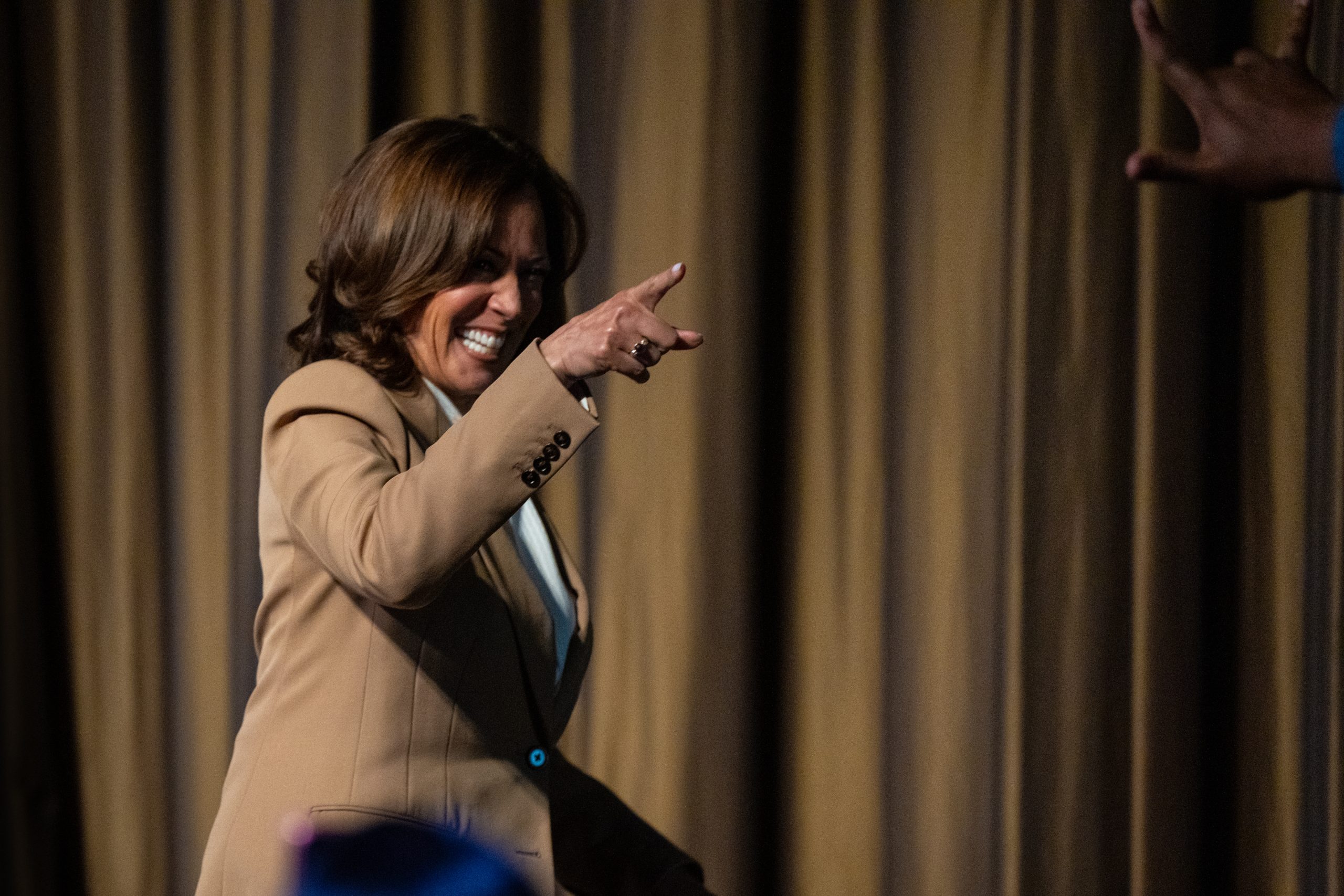

NEW YORK — Kamala Harris just gave the Democratic Party the most explicit sign yet she’ll run for president in 2028.
“Listen, I might, I might. I’m thinking about it,” Harris told the Rev. Al Sharpton at the National Action Network convention on Friday, when he asked her whether she will run again in 2028. “I’ll keep you posted,” she said as she walked off the stage, concluding a roughly 40-minute appearance that was peppered with cheers and a standing ovation from attendees.
The former vice president has toyed with the idea before, but her comments Friday took on a new meaning in front of an audience full of Black lawmakers, influential power brokers and voters at what amounted to the first major cattle-call for the potential 2028 Democratic field.
“I know what the job is and what it requires,” she told Sharpton on stage.
Harris was the sixth possible 2028 contender to take the stage at the conference for a fireside chat with Sharpton, a tacit acknowledgement that whether the hopefuls ultimately decide to run or not, they know they can’t skip this room. But Harris was received with the most enthusiasm from the audience compared to any of the Democrats who spoke earlier this week, including Pennsylvania Gov. Josh Shapiro, Illinois Gov. JB Pritzker and Rep. Ro Khanna (D-Calif.).
The crowd in the packed ballroom chanted, “Run again! Run again!”
At one point, the cheers for Harris grew to such a tenor, Sharpton jokingly admonished the crowd: “This is a convention, not a revival.”

!function(n){if(!window.cnx){window.cnx={},window.cnx.cmd=[];var t=n.createElement(‘iframe’);t.display=’none’,t.onload=function(){var n=t.contentWindow.document,c=n.createElement(‘script’);c.src=”//cd.connatix.com/connatix.player.js”,c.setAttribute(‘async’,’1′),c.setAttribute(‘type’,’text/javascript’),n.body.appendChild(c)},n.head.appendChild(t)}}(document);(new Image()).src=”https://capi.connatix.com/tr/si?token=19654b65-409c-4b38-90db-80cbdea02cf4″;cnx.cmd.push(function(){cnx({“playerId”:”19654b65-409c-4b38-90db-80cbdea02cf4″,”mediaId”:”26e0ae83-b283-4d9f-a6f7-fe67cdb6d0c3″}).render(“69d90605e4b00247ba9aeadd”);});

A social media post from Pakistan’s defence minister criticising Israel’s genocidal violence on Lebanon amid ceasefire negotiations has been removed following pressure from Zionists.
Khawaja Asif called Israel a “curse for humanity” for killing innocent civilians in Gaza, Iran and Lebanon. He also implied Israel was sabotaging the “peace talks”.
Pakistani Minister Quietly Scrubs Post Swiping At Israel
DM Asif branded the country a “curse for humanity” in a post that has now disappeared from social media after sparking a backlash.
“First Gaza, then Iran and now Lebanon – bloodletting continues unabated,” the message… pic.twitter.com/unAJtz5m1H
— RT_India (@RT_India_news) April 10, 2026
Rather than addressing or taking accountability for the deadly strikes on Lebanon that killed more than 300 people and wounded nearly 1,200, Israel’s prime minister, Benjamin Netanyahu, claimed Lebanon was not part of the ceasefire agreement. He also hit back at Asif, calling his comments “outrageous”.
Prime Minister Benjamin Netanyahu:
“Dear residents of the North, I am proud of you. You continue to stand firm.
I wish to inform you: There is no ceasefire in Lebanon. We are continuing to strike Hezbollah with full force, and we will not stop until we restore your security. pic.twitter.com/k2JeKXEMBQ
— Prime Minister of Israel (@IsraeliPM) April 9, 2026
Pakistan should remain a ‘neutral arbiter for peace’ apparently
The Prime Minister’s Office:
Pakistan Defence Minister’s call for Israel’s annihilation is outrageous. This is not a statement that can be tolerated from any government, especially not from one that claims to be a neutral arbiter for peace.
— Prime Minister of Israel (@IsraeliPM) April 9, 2026
Asif’s tweet was also attacked by Israel’s foreign minister, Gideon Sa’ar.
Israel views very gravely these blatant antisemitic blood libels from a government claiming to “mediate peace”.
Calling the Jewish state “cancerous” is effectively calling for its annihilation.
Israel will defend itself against terrorists who vow its destruction. https://t.co/CCMveNi9Qu— Gideon Sa’ar | גדעון סער (@gidonsaar) April 9, 2026
The deletion of one Pakistani minister’s tweet did not erase the 300 Lebanese dead, or the growing recognition across the Global South of Israel’s role as the wielder of western-backed violence in West Asia.
Featured image via Firstpost
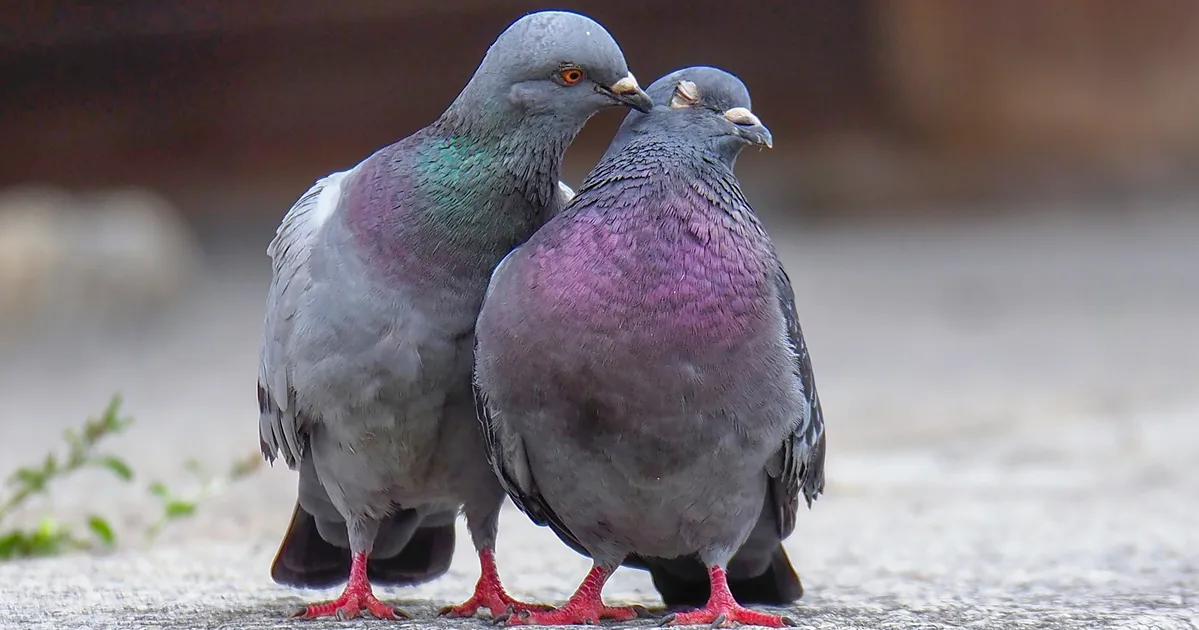
David Attenborough’s new Secret Garden documentaries, which focus on the wildlife in our very own backyard, show just how important unremarkable-seeming species like damselflies and urban foxes are to the natural world.
Speaking to HuffPost UK, an ecologist at ecological consultancy firm Arbtech said that it’s time to rethink the role of much-maligned feral pigeons, too.
“Feral pigeons have filled an ecological hole caused by the decline and absence of many other species that cannot survive in an urban environment,” they said.
Given our history of domesticating, then abandoning, the birds, the ecologist added, we owe them more than our current disdain.
We relied on pigeons for thousands of years
Pigeons “have been among the oldest domesticated species by humans, dating back thousands of years,” the spokesperson told us.
Feral species are descendants of the rock dove. That shows in their nesting habits: their wilder relatives “are cliff nesters, nesting in crevices, with poor nest construction, and the feral pigeon likes cities as the ledges and hiding places mimic those cliff top habitats their ancestors used”.
Historically, the ecologist continued, we’ve used pigeons for loads of tasks, including (famously) sending messages.
“Even the ancient Egyptians and Romans used pigeons for this, and we did use them in WW1 and WW2. This ended with 32 pigeons receiving the Dickin medal (like a Victorian cross for animals) for their efforts.
“I even knew a friend’s grandfather who worked at the hospital and sent blood
samples to the lab via pigeon in the 60s and 70s, as it was still faster than getting there in a car.”
But with email, text, and better tech, that demand dramatically decreased.
So, the spokesperson said, “While some still keep pigeons as pets, or more so now for pigeon racing, the majority were just abandoned and left to fend for themselves.
“Being a species domesticated by us for thousands of years, naturally, they still choose to be around humans, showing little fear of us.”
Now, they’re a key part of our urban ecosystem
Though they’re “not a favourite,” pigeons are uniquely adapted to urban environments. Because of their years of contact with us, humans don’t really bother them.
They “can assist partially as a clean-up crew, cleaning up our crumbs and mess in the cities that we leave behind,” the ecologist said.
“They also fit into the ecosystem as food sources, with the return of peregrine falcons, a bird of prey almost made extinct in the UK. Cities are a favourite site for this bird.
“One reason is the abundance of feral pigeons. They can also be a food source for hawks and even foxes, who are able to sneak up on them.”
That’s not to say they pose no risk to humans: think of “dropping build-up and
nesting material build-up carrying disease,” said the expert.
But the city isn’t always kind to its winged residents, either.
Problems “such as entanglement in nets, thin pieces wrapping around their legs,
eventually causing them to lose toes or feet,” which “can even be caused by something as thin as human hair,” are common.
“They can also receive infections due to the harsh urban environment, getting tiny scratches, which can lead to swollen or necrotic feet.”
How can I help pigeons?
The ecologist said the following steps can help:
- Remove all hazards that could entangle or cut pigeons. “Don’t put out human hair thinking it is a good nesting material; it’s a risk to all birds with
entanglement.” - Capture distressed pigeons with gloved hands, put them in a dark box, and bring them to a vet or wildlife centre. “If the bird has been caught by a cat, even if there are no physical injuries, you must still get it to a rescue, as cat saliva is very dangerous, with the bacteria it contains and can often lead to the bird’s death from just being in contact with a cat’s mouth.”
- Don’t put out too much food. This “will just encourage more pigeons to gather in one location, leading to more dropping and build up, which can lead to complaints and methods to remove or disperse birds”.
- Provide a clean water source. “A shallow dish of water can be a lifeline in a concrete city and can help the birds keep clean.”
- Keep cats indoors, especially during nesting season. “Cats are a non-native introduced predator that has a large impact on bird species. Recently fledged pigeons often don’t fly to begin with, and on the ground, they are very vulnerable.”

Humane World for Animals UK will take its campaign to ban farrowing crates across Scotland from 11-14 April. The charity will bring a life-size animatronic pig named Penny to towns and cities to highlight the harsh reality faced by tens of thousands of mother pigs on farms.
Penny will appear inside a metal crate like those which confine sows while they give birth and nurse their piglets. The striking installation aims to show the severe restriction which mother pigs endure in these systems.
The tour will visit Aberdeenshire, Perthshire, Glasgow and Edinburgh. Campaigners will meet members of the public and raise awareness about pig welfare. The event will culminate at the Edinburgh City Chambers. Humane World for Animals experts will meet with politicians to urge stronger action to end the caging of mother pigs.
As of 2025, Scotland was home to 25,600 sows. About half of these live in indoor pig farms that routinely keep sows in farrowing crates. Under current laws, they can be confined for up to five weeks in the narrow metal cages every time they give birth, typically two or three times a year.
The cages are so restrictive that the animals are unable to turn around. They have little opportunity to engage in natural behaviour such as nest-building or moving freely with their piglets. This badly compromises their physical and mental health.
Farrowing crates typically measure around 200cm in length and 45-65cm in width. Pigs have been selectively bred to be larger than ever, meaning that the relative space available to a sow is even more restricted than when crates were first introduced.
Scottish public rejects pig cages
Polling by the organisation revealed that 84% of the Scottish public rejects the use of farrowing crates for mother pigs. Over half of respondents (54%) stated they would be willing to pay more for meat produced from pigs kept in crate-free systems. This shows that farmers could benefit financially by embracing the highest welfare standards.
The UK government has indicated an intention to phase out conventional farrowing crates. But Humane World for Animals warns that some parts of the industry are shifting towards so-called “flexible” farrowing crates. The organisation says these systems still rely on confining mother pigs in cages and are the same kind of prison under another name.
Claire Bass, senior director of campaigns and public affairs at Humane World for Animals UK, says:
Many people are shocked that such extreme, prolonged confinement is still legal in Scotland. Farmers must end cruel caging, not replace old cages with new ones that would condemn millions more pregnant and lactating pigs to future decades of misery.
A cage is a cage, and the public is clear: mother pigs don’t belong behind bars.
With the Scottish election fast approaching, our tour is turning public compassion into political pressure. Voters across Scotland are demanding change and joining our call for the next Scottish Government to support farmers as part of the effort to put an end to pregnancy cage cruelty.
By touring Scotland with Penny the pig, campaigners hope to spark conversations about the lives of farmed animals. And they’ll encourage parliamentary candidates to support farming systems that allow pigs the space and freedom to express natural behaviour.
Featured image via Marcus Emmerson / Humane World for Animals UK
The Guardian, along with other ‘mainstream’ media, have reported that press and analysts are “baffled” by Melania Trump’s sudden, supposedly unauthorised, and deeply self-justifying statement denying a relationship with serial child-rapist Jeffrey Epstein.
ITV News even wondered, in all-caps, “WHY DID SHE DO THIS?”:
Any kind of examination reveals it may not really be all that baffling, but the Guardian and others completely ignore the plural ‘elephants in the room’. Let’s take a look at them.
The Wolff case
Melania Trump is being sued by writer Michael Wolff, himself no stranger to Epstein’s circle, who alleges that she threatened him with a $1bn lawsuit for his claims about her closeness to Epstein in an attempt to curtail his rights to free speech. Trump’s new denial speech boasts of her successes in using similar threats to force publishers and others to apologise.
This is an obvious parallel with the Wolff case. Yet she never followed through on her threat sue Wolff after he refused to back down. And she has been accused of hiding from Wolff’s attempts to serve her with notice of his own lawsuit – then tried to get the case thrown out because he hadn’t been able to ‘serve’ her at her guarded Mar a Lago residence in Florida.
But the Guardian’s article, despite the obvious lead-in, makes no mention of Wolff at all. Neither does ITV or other UK ‘msm’. Trump may have had notice that her attempt to kick out Wolff’s case will be rejected by the court and is trying to ‘get ahead’ of the fall-out and the fact that it will open the way for Wolff to ‘depose’ her and her husband and to demand full disclosures. Or another story about her and Epstein may be about to break and she wants to get her denials in early.
FBI files: “EPSTEIN introduced MELANIA TRUMP to DONALD TRUMP.”
In her speech yesterday, Trump referred to an email she sent to Epstein’s partner-in-paedophilia Ghislaine Maxwell – to whom Trump referred chummily as “dear G”. Trump denied the email, in which she gushed about ‘G’s appearance and how she couldn’t wait to go to Palm Beach – and asked ‘G’ to call her when she was in New York. Maxwell responds, calling Trump “Sweetpea” and regretting that she “sadly” probably wouldn’t see her on her current trip to New York:

Despite this cosiness, in her speech, Melania Trump denied knowing Maxwell well and claimed that the exchange was merely “polite” and “tribal” – presumably meaning ‘trivial’. The Guardian and ITV do refer to this email. But, inexcusably, they don’t refer to an even more significant email – one that is directly relevant to Trump’s denial that she was introduced to her husband by Epstein.
Among the entities Melania Trump boasted that she has forced to apologise to her is US news website the Daily Beast. The site had streamed an interview with Michael Wolff in which he made claims noted above about Trump’s closeness to Epstein. But while the threat of a $1bn lawsuit might have cowed the site into backing down over that interview, it has not deleted a separate article about FBI evidence about how she met Donald Trump.
In that article, published in February 2026, the Daily Beast notes that among the evidence gathered by FBI agents on Epstein is a sworn statement (download here) from one of his employees. In that evidence, the employee claims directly that:
EPSTEIN introduced MELANIA TRUMP to DONALD TRUMP.

As the Daily Beast article notes, it is a criminal offence in the US to lie to the FBI. The sworn statement directly relates to Melania Trump’s denial in her speech and the Daily Beast has not deleted this article, evidently because quoting an official law enforcement document could not be defamation. But none of the ‘mainstream’ publications or broadcasters have bothered to refer to it, while streaming or quoting Trump’s denial.
According to the Longman dictionary, the phrase “the elephant in the room” refers to “an important subject or problem that everyone knows about but no one mentions”. There are at least two in Melania Trump’s bizarre speech. Rather than address them, the UK ‘mainstream media’ prefer to wonder rhetorically what could possibly have prompted Trump to make her speech, while remaining conspicuously silent about obvious potential causes.
Featured image via the Canary

A Vatican official has stated that pope Leo may refuse to visit the US whilst Donald Trump remains in office. The news comes alongside reports of a widening divide between the Catholic church and US.
Pope Leo became the first pope to be born in the US after his appointment in 2025. Since then, he has been a vocal critic of Trump’s vicious warmongering and immigration policies. In particular, both his January and Easter addresses called for peace and criticized warlike states.
In response, the Trump administration has reportedly told the church that it has the military power to do “whatever it wants”. Reports also allege that one US official made reference to the use of force against the papacy itself.
Trump administration ‘the church had better take its side’
On 6 April, the Free Press broke a story on an unprecedented meeting between the Pentagon and a senior Vatican official. The US ‘department of war’ reportedly called for a meeting with Vatican diplomat cardinal Christophe Pierre, having taken offense at the pope’s calls for peace during a January address.
Speaking to the Vatican’s diplomatic corps in the new year, the pope criticised states “completely undermining” world peace. Breaking from tradition by giving the speech in English, rather than Italian or French, he added that:
A diplomacy that promotes dialogue and seeks consensus among all parties is being replaced by a diplomacy based on force, by either individuals or groups of allies.
In spite of Leo naming no individual countries, the Trump administration reportedly took this as a direct attack. In a first-of-a-kind occurrence, the Pentagon requested an audience with cardinal Pierre. Anonymous Vatican sources characterised the meeting as a:
bitter lecture warning that the United States has the military power to do whatever it wants — and that the Church had better take its side.
Avignon Papacy
Further even than this, the Free Press stated that:
one U.S. official went so far as to invoke the Avignon Papacy, the period in the 1300s when the French Crown leveraged its military power to dominate the papal authority.
The Avignon Papacy is sometimes referred to as the ‘Babylonian Captivity’ within Catholic circles. Following military and political threats from king Philip VI of France, pope Clement V moved the seat of the church from Rome to Avignon. It remained there between the years 1309 and 1377.
During that period, all seven elected popes were French. Likewise, 111 of the 134 new cardinals were also French. Although the level of Philip’s direct influence over the papacy during the Avignon residence is still hotly debated, critics hold that it was a time of unprecedented hegemony for the French crown.
As such, the force of this threat from a US official to the Vatican can hardly be underestimated. However, the Pentagon has flatly denied the Free Press’ characterisation of events. Instead, it issued a statement holding that:
In light of grossly false and distorted recent reporting, the Department of War repeats its statement: Recent reporting of the meeting is highly exaggerated and distorted. The meeting between Pentagon and Vatican officials was a respectful and reasonable discussion. We have nothing but the highest regard and welcome continued dialogue with the Holy See.
This take on the meeting is belied directly by a senior Vatican official, who told the Free Press that, following the meeting:
The Pope may well never visit the United States under this administration.
The pope has reportedly refused an invite from Trump to join him for the US 4 July celebrations. Instead, he will visit the Italian island of Lampedusa, a common entry point into Europe for North African asylum seekers.
‘Light the signal fire in Iran’
Beyond this direct clash with Vatican envoys, the US military has taken on increasingly apocalyptic evangelical Christian overtones under ‘secretary of war’ Pete Hegseth. The Washington Post described the situation:
Every month at the Pentagon, Hegseth hosts evangelical worship services that legal experts say are unprecedented. His social media profile and public comments routinely espouse his understanding of Christianity, which is one that would dominate American life and cast those who disagree with him as God’s enemies. He has brought clergy from his small Christian denomination to preach at the Pentagon, including a prominent pastor who says women shouldn’t have the right to vote.
By 4 March, the Military Religious Freedom Foundation (MRFF) had received over 200 complaints of increased sectarianism. One noncommissioned officer stated that their commander had:
urged us to tell our troops that this was ‘all part of God’s divine plan’ and he specifically referenced numerous citations out of the Book of Revelation referring to Armageddon and the imminent return of Jesus Christ. […]
He said that ‘President Trump has been anointed by Jesus to light the signal fire in Iran to cause Armageddon and mark his return to Earth’.
At a worship service held within the Pentagon on 25 March, Hegseth prayed for God to:
Give [US soldiers] wisdom in every decision, endurance for the trial ahead, unbreakable unity, and overwhelming violence of action against those who deserve no mercy. Preserve their lives, sharpen their resolve, and let justice be executed swiftly and without remorse that evil may be driven back and wicked souls delivered to the eternal damnation prepared for them….We ask these things with bold confidence in the mighty and powerful name of Jesus Christ, King over all kings and amen.
It’s hard to find something new to say in the face of such openly bloodthirsty rhetoric and actions. The US military is controlled by zealots who claim belief in waging a holy war. They’re spurred on by an apparently genuine desire to bring about the end of the earth.
These aren’t things that you’re trained to write about. There’s no reasoning with this cocktail of religious hatred, white supremacy, and naked greed. Not even direct condemnation from arguably the most senior Christian on earth has given them pause.
Featured image via the Canary

Lambeth council announced consultations on the potential closures of Effra, Triangle and Maytree nurseries in January. There had been no prior consultation with the nursery leadership, staff or parents.
Then in March, the Labour-run council announced it was withdrawing the consultations. It said this was due to new government proposals changing the “national policy and funding landscape”.
But local Greens say this is an “embarrassing u-turn” for Labour, even though it provides some respite for families and staff. They argue that continuing uncertainty over the future of the nurseries is leaving people “in limbo”.
Since the March announcement, nursery staff, green councillors and even a local Labour MP have tried and failed to engage with the council. So far it has refused meetings and blocked requests for information.
A petition launched by local parents calling for an end to the consultations had gained over 1,000 signatures. However, the Greens, along with other local campaigners, have criticised Labour. They say the ruling party is cynically putting off difficult decisions until after the May elections.
Lambeth Labour claims
Lambeth Labour claims the potential closures are due to a 38% drop in pupil numbers caused by falling birthrates and families leaving the borough, leading to a substantial budget deficit. However, there are still waiting lists for the nurseries, so these numbers do not reflect the full reality.
However, the Lambeth Nursery School Federation, which runs the three nurseries marked for closure, has said the council’s approach of three separate consultations on closures would not solve the issues facing the nurseries even if all three closed.
Senior nursery staff provided detailed proposals for restructures that could ease financial pressures back in November, but Labour ignored these. Parents are calling for a working group which includes staff, unions and parents to shape the future of the nurseries.
The Federation also highlighted that the council’s figures were different to its own. The council consultations stated the monthly deficit was £450,000 whereas its figures were far less at £101,000. The consultations conflated historic deficits and projected deficits, among other inconsistencies.
The decision to withdraw the consultations is a victory for local campaigners. But senior staff at the nurseries have said it is only a temporary one.
The Greens are demanding that, when decisions are made about the future of the nurseries, Lambeth Labour listens to parents, staff and nurseries, and “puts families first”.
Meanwhile, parents and staff remain in a state of anxiety and uncertainty about the future of the nurseries they rely on.
Paul Valentine, Green Party councillor for Herne Hill & Loughborough Junction, said:
This has been a shambles from the very start when Labour ambushed parents and staff by launching these consultations with no prior consultation. Labour have blocked all attempts at meaningful engagement from the nurseries, parents, unions and councillors.
Now, facing a furious backlash, they’ve been forced into an embarrassing u-turn. It’s a great relief to parents, but only a temporary reprieve. The future of the nurseries still isn’t clear and families remain in limbo while Labour prioritises doing damage control ahead of the elections in May.
These nurseries are loved by the community and provide irreplaceable specialist early years teaching. Yet Labour are treating them, along with the families who rely on them, with complete contempt. When it comes to deciding a way forward, Labour must learn from their mistakes and listen to the nurseries.
This mess perfectly sums up the defensive, unaccountable culture Labour have cultivated in Lambeth in the past 20 years. In May, Lambeth can vote Green and choose a new way of doing things.
Sarah Ahmed, a parent at Effra Nursery, said:
Effra, Triangle and Maytree nurseries are a lifeline for so many families. The experience and care of the staff, and the provision for SEND, are irreplaceable. We know the council stopped the consultation process because of parents and staff organising against it.
The consultations were inaccessible and full of misleading information. The council saw an opportunity to stop them using the new government’s additional funding for SEN as an excuse, but we know the real reason is they knew it would cost them seats at the local elections.
The community is determined to keep fighting against the closures. We know this is just a delay tactic and we want to make sure that whoever gets in will fight to keep those amazing nurseries and children centres open for the sake of our children and communities. We are sick and tired of Lambeth council and its cuts affecting the most disadvantaged in our communities.
The council should be fighting for us. We are grateful for the support we have received on this issue from Helen Hayes and from Green councillors. We will be approaching all prospective candidates ahead of the elections demanding that they commit to keeping the nurseries open and protecting the staff’s jobs and our children’s education.
Featured image via the Canary

!function(n){if(!window.cnx){window.cnx={},window.cnx.cmd=[];var t=n.createElement(‘iframe’);t.display=’none’,t.onload=function(){var n=t.contentWindow.document,c=n.createElement(‘script’);c.src=”//cd.connatix.com/connatix.player.js”,c.setAttribute(‘async’,’1′),c.setAttribute(‘type’,’text/javascript’),n.body.appendChild(c)},n.head.appendChild(t)}}(document);(new Image()).src=”https://capi.connatix.com/tr/si?token=19654b65-409c-4b38-90db-80cbdea02cf4″;cnx.cmd.push(function(){cnx({“playerId”:”19654b65-409c-4b38-90db-80cbdea02cf4″,”mediaId”:”4f977cde-102d-499d-af5f-36efff39e7ec”}).render(“69d8fd5be4b0ccb589ec7f35”);});

New festival brings workers’ struggle and solidarity to Cornwall coast

2026 WNBA free agency tracker, top 50 rankings: Nneka Ogwumike heading back to Sparks

LG G6 vs. C6 OLED TVs: What’s actually different, and which one should you buy?


-

 Fashion7 days ago
Weekend Open Thread: Spanx – Corporette.com
-

 Business5 days ago
Three Gulf funds agree to back Paramount’s $81 billion takeover of Warner, WSJ reports
-

 Sports6 days ago
India men’s 4x400m and mixed 4x100m relay teams register big progress | Other Sports News
-

 Business6 days ago
Expert Picks for Every Need
-

 Tech3 days ago
How Long Can You Drive With Expired Registration? What Florida Law Says
-

 Business5 days ago
No Jackpot Winner, Prize to Climb to $231 Million
-

 Fashion4 days ago
Massimo Dutti Offers Inspiration for Your Summer Mood Board
-

 Fashion3 days ago
Let’s Discuss: DEI in 2026
-

 Crypto World2 days ago
Bitcoin recovers as US and Iran Agree a Ceasefire Deal
-

 Business6 days ago
Akebia Therapeutics, Inc. (AKBA) Discusses Pipeline Progress and Strategic Focus on Kidney Disease Treatments at R&D Day – Slideshow
-

 Crypto World1 day ago
Canary Capital Files SEC Registration for PEPE ETF
-

 Politics6 days ago
The UK should not pay a penny in slavery reparations
-

 Tech4 days ago
Samsung just gave up on its own Messages app
-

 Tech4 days ago
Haier is betting big that your next TV purchase will be one of these
-
Sports7 days ago
A Kevin O’Connell Theory Can Now Be Retired
-

 NewsBeat7 days ago
Kemi Badenoch talks ‘spring cleaning’ Reform defections
-

 Tech4 days ago
Gamer Restores the Original PlayStation Portal From Two Decades Ago
-

 Business5 hours ago
OpenAI Halts Stargate UK Data Centre Project Over Energy Costs and Copyright Row
-

 Tech4 days ago
The Xiaomi 17 Ultra has some impressive add-ons that make snapping photos really fun
-

 Tech4 days ago
Italian court says Netflix must refund customers up to $576 over price hikes
You must be logged in to post a comment Login