
Politics
How Much Water Do Data Centres Actually Use?

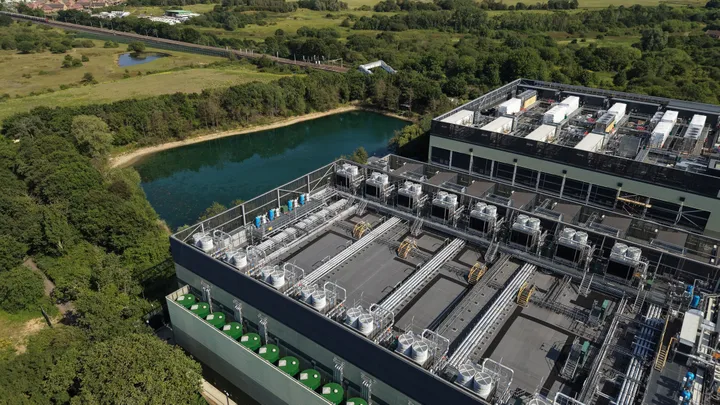
If the drought stretches on, further restrictions on water use might be put in place to preserve water supplies.
Per water regulator Ofwat, a non-essential use ban (NEUB) is a more serious step that water companies can take if dry conditions continue following a hosepipe ban.
Politics UK shared that ministers have been “told to prepare for a ban on car washes, window washing and refilling private swimming pools”, to which commenters unanimously aired concerns over data centres.
“Let’s ban data centres needlessly guzzling water,” read the top comment, which had garnered over 4,000 likes at the time of writing.
Another commenter chimed in: “I haven’t washed my car in 3 months because I feel bad about using the water. Meanwhile data centres are sucking it dry so people can make cartoon pictures of their dogs.”
What is a data centre?
Data centres are physical spaces which house the IT infrastructure (basically, a load of computer servers) that underpins modern life, from patient records and emails to product data and financial systems.
It’s thought there are around 555 data centres now in the UK – with this figure likely to jump by about 20% in the next five years.
The UK government has said that data centres are “critical to nearly all economic activity and public services, and were designated as critical national infrastructure in 2024”.
This puts data centres on an equal footing as water, energy and emergency services systems.

Tom Keeble via Getty Images
How much water do they use?
Concerns have been raised in recent times, as data centres require large energy and cooling capabilities – especially those supporting AI systems.
According to techUK, data centres either opt for air, refrigerant or water-based cooling systems “based on local climate, energy availability and water stress”.
It surveyed 80 data centre sites across England and, of the 73 responses, 51% of sites said they use waterless cooling systems, relying on air or refrigerants.
Almost two-thirds (64%) said they consume less than 10,000m³ of water annually, which is comparable to that of a leisure centre.
But water companies in areas where there are numerous data centres have shared concerns over usage.
Affinity Water serves Slough, which is home to a number of data centres (40 and counting), and said some individual facilities request supplies of up to 35 litres of water per second, equivalent to the peak water demand of 3,500 homes.
Roughly 40% of British-based data centres are within the M25 – an area which hasn’t seen any meaningful rainfall in some time.
Water UK, which represents water companies in the UK, has warned that the UK doesn’t have enough water for future data centres and estimates data centres in England are guzzling about 6.6 million litres of drinking water each day, which could rise to 19.8 million litres per day by 2030.
Per the Guardian, a briefing from the trade body said: “There appears to be an assumption that the country will always have enough water for its economic needs. Nothing could be further from the truth.”
At the time, the government said it was “looking at alternatives or ways to minimise impact on supplies and output of wastewater from data centres”, as well as “taking decisive measures to secure water supplies and meet higher demand”. This includes infrastructure investment and building nine new reservoirs.
Speaking to HuffPost UK about data centre water use, a government spokesperson said: “We want the UK to be a global leader in AI, but this must be done sustainably.”
They highlighted that many newer data centres are increasingly using advanced cooling systems that “significantly reduce water consumption”. The sector also operates under a Climate Change Agreement to encourage uptake of energy efficiency measures.
They ended: “Data centre water consumption amounts to 0.2% of non-household water usage in England. Our water resources and drought planning framework is kept under constant review to ensure that water is used efficiently and that essential services remain resilient during drought.”

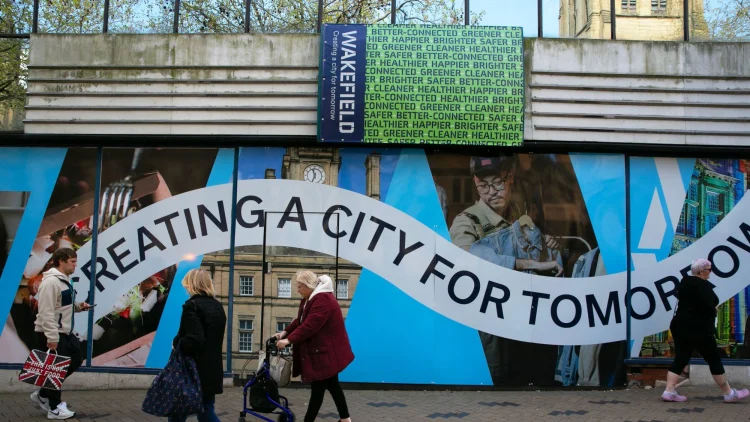

Wakefield town centre (Alamy)

3 min read
If you ask your average person on the street where I grew up what security means to them, you won’t get a lecture about defence policy or military strategy. You’ll hear something much simpler.
In my hometown of Wakefield, just as in towns up and down the land, security means being able to pay the bills, having a warm home and a secure job. It’s knowing your child will get a decent education and be able to see a GP when they’re ill. It’s feeling safe on the streets and knowing your elderly parents will get the care they need. It’s having confidence that when floods, fires or another crisis hits, your community will be protected.
That’s what security looks like to most people. But if you listen to much of our political debate, you’d think security means only one thing: spending more money on the military.
Every government has a duty to protect its citizens. The war in Ukraine reminds us all that Europe is not immune to conflict. The wars in the Middle East continue to cause devastating human suffering. None of us can ignore the dangers in the world.
However, we should not accept that we must spend increasing amounts of money preparing for war, whilst everyday security collapses.
At this year’s TUC Congress, the University and College Union (UCU) is asking the trade union movement to build on last year’s landmark ‘Wages Not Weapons’ policy by adopting a broader vision of what ‘security’ really means. Workers experience insecurity every single day, but it has nothing to do with foreign military threats.
It comes from wages that don’t keep up with prices, insecure work, unaffordable housing and public services stretched to breaking point. From climate change making our communities more vulnerable to flooding, heatwaves and extreme weather. From growing inequality that enriches a wealthy few and impoverishes millions of workers.
As general secretary of an education union, I see the consequences of insecurity every day.
Further education colleges teach the workers of the future who will keep our economy going. Yet FE staff in England are poorly paid for the vital work they do and earn less than others in the education sector. Colleges struggle to recruit and retain lecturers because committed professionals simply cannot afford to stay.
Our movement has always understood that security is about more than guns and bombs
In higher education, it’s estimated that universities have cut as many as 30,000 staff in the last three years. Those who still have a job have seen their workloads intensify. The funding crisis casts a dark shadow over our cash-starved universities, from which some may never escape.
How can politicians talk about ‘national resilience’ when the institutions that educate and train the skilled workforce our economy depends on are hitting breaking point?
The same applies across all of our public services. We cannot build a resilient country on the back of exhausted NHS staff, crumbling schools and near-bankrupt councils.
The new government is right to speak about changing the economic model that has failed too many communities.
But with the Budget fast approaching, they have choices to make. The military establishment across the West is demanding that governments devote a growing proportion of public money towards defence. If that comes at the expense of investment in things like health, education, housing, social care and climate resilience, then we risk making people’s lives far less secure.
Trade unions have a responsibility to point this out. Our movement has always understood that security is about more than guns and bombs. Security begins when ordinary people have the power and resources to live decent lives.
Neither should we abandon the belief that peace is possible. When you listen to today’s political debate, you would be forgiven for thinking that our leaders have given up on a peaceful world. As trade unionists, we cannot accept that. Internationalism has always been at the heart of our movement. We know that the working people of different nations have more in common with each other than with the corporate bosses profiting from war or driving down wages across global supply chains. Lasting peace depends on diplomacy, international cooperation, commitment to human rights and respect for international law.
We must also confront the fact that greater militarisation at a time when Donald Trump sits at the head of NATO, is extremely dangerous. Tying ourselves closer to an increasingly violent and unpredictable military agenda will not make Britain safer.
The new prime minister has powerful voices in his ear lobbying him to deliver unprecedented spending on defence, paid for by cutting other public services. It is crucial that trade unions make the argument for a clear alternative.
The trade union movement is always strongest when it reflects the aspirations of millions of working people. At this year’s TUC Congress we have an opportunity to reclaim the meaning of security and root it once again in social justice, solidarity and peace.
Jo Grady is general secretary of the University and College Union (UCU) and a senior lecturer in employment relations at The University of Sheffield

Before I start, let me make one thing clear: I do not enjoy a pointless “proper” extra step when it comes to my food.
For instance, I am alright eating chocolate digestives the “wrong way” (according to McVitie’s). I will go choccie-up like a non-industry normie, thanks very much.
But sometimes, much to my annoyance, the pros are onto something.
Brie, for instance, loses its unpleasant ammonia tang after being brought to room temperature. Leaving it out for half an hour actually is worth your while.
And even though I do think fridge-cold strawberries are beautiful as is, berry producers Driscoll’s said those should come out of their chilly home long before you eat them, too.
So, I tried the tip this afternoon – and I’m so sorry, but they’re completely right.

Anastasia Zhenina via Unsplash
How long should you leave strawberries out of the fridge before you eat them?
Per the berry company, you can refrigerate strawberries in their original container for up to five days if you keep them dry.
But they “taste best at room temperature, so remove them an hour or two before you plan on eating them,” the company claims.
You should also rinse them just before eating them to get rid of any germs without risking making them soggy.
I’ll be honest; I thought the advice was a little too fussy for my liking. But Driscoll’s isn’t alone in recommending the method.
Southern Living go by a 30-minute warm-up rule.
BBC Good Food, meanwhile, puts it at an hour.
Even Worcestershire County Council weighed in, suggesting we “remove them from the fridge and bring to room temperature before eating”.
So, I thought I’d bring my punnet of this year’s beautifully sweet harvest out of my fridge an hour before my usual post-lunch snack to see for myself.
It does make a difference
I get it; I have been diving straight into the fruit the second I remove it from the fridge all week.
But, sorry to say, the inconvenience of bringing them to room temperature really does transform their flavour (not least because that wonderful fragrance is so much more noticeable).
This may be because, as America’s Test Kitchen (ATK) shares, strawberries don’t actually have that much sugar; the smell is a big part of why we perceive them as sweet.
“Just a little bit of heat is enough to coax [the smell] out of the fruit and into the air,” Dan Souza shared in an ATK video, adding that cold temperatures suppress sweet flavours.
No wonder the ones I’d left out had more of that signature scent and mouth-wateringly sweet flavour, too – it was a night and day difference.
Personally, I’m never going back. And even if you don’t adopt the habit every single time you crave the berry, I recommend trying it at least once.

Now, it’s been revealed that the album’s accompanying visuals have led to her becoming the most-nominated artist at this year’s MTV Video Music Awards, which celebrate achievements in music visuals over the past 12 months.
Madonna, of course, has a long history with the VMAs, delivering a show-stopping rendition of Like A Virgin at the first ever ceremony in 2004, locking lips with Britney Spears during a performance two decades later and scooping Video Of The Year for Ray Of Light in the mid-90s.
This year, she’s up for some of the night’s top prizes thanks to her Confessions II short film and the Sabrina Carpenter collaboration Bring Your Love, which served as the album’s lead single.
Just behind on nine nominations is Taylor Swift, while Ariana Grande and Sabrina Carpenter each have seven.
Check out some of this year’s VMAs nominations below (and keep checking back as we’ll be updating our list as more are announced)…
Ariana Grande – Hate That I Made You Love Me
Bruno Mars – I Just Might
Madonna – Confessions II (The Film)
Sabrina Carpenter – Tears
Taylor Swift – The Fate Of Ophelia
Ella Langley – Choosin’ Texas
Madonna and Sabrina Carpenter – Bring Your Love
Olivia Dean – Man I Need
Raye – Where Is My Husband
Bebe Rexha and Faithless – New Religion
Harry Styles – Aperture
Lady Gaga and Doechii – Runway
Madonna – Confessions II (The Film)
PinkPantheress and Zara Larsson – Stateside
Tate McRae – Nobody’s Girl
The 2026 VMAs will take place in Los Angeles on Sunday 27 September.

4 min read
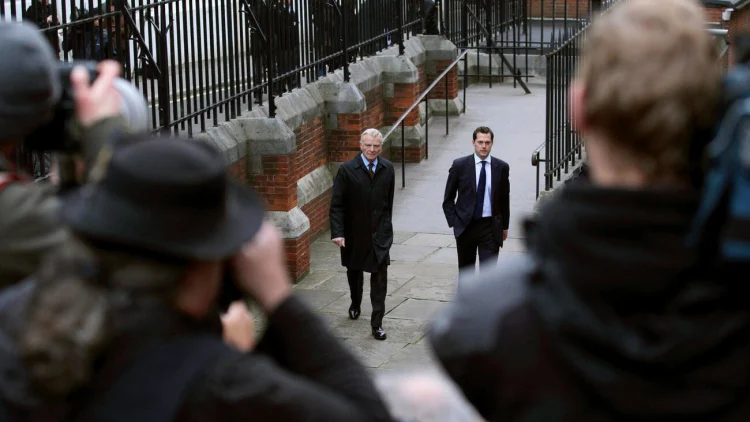
IPSO in its current form is not fit for purpose.
Citizens can only make good decisions if they have access to accurate information and honest debate. When powerful media organisations or social media platforms spread misinformation, distort facts, or promote one-sided narratives without accountability, democracy itself begins to weaken.
Today, a small number of wealthy individuals and corporations own much of the media. Social media platforms use algorithms that reward outrage and sensationalism. Falsehoods can reach millions within hours, while corrections receive a fraction of the attention.
Democracy depends on disagreement. But the danger is that many people are making important political decisions based on information that is incomplete, misleading or untrue.
Take the issue of the net number of migrants: a recent poll by British Future found that 49 per cent believe it has increased in the past year. In fact, it fell by half in the last 12 months.
On welfare spending, the prevailing media narrative is that there is such a large number of unemployed and disabled people that things have become unsustainable. However, in reality, around half of welfare expenditure is spent supporting pensioners through the state pension and related benefits. UK welfare spending is in line with most EU countries.
Perhaps the greatest concern is that many voters never hear about important government policies at all.
Polling conducted by Lord Ashcroft suggested that public awareness of several major government policies was surprisingly low. This all raises an important question: who holds the media itself accountable?
The Leveson Inquiry heard evidence over many months before recommending the creation of an independent regulatory system for the press. Although the recommendations received cross-party support, they were never fully implemented.
Instead, most national newspapers are members of a body created and controlled by the newspaper industry itself. The Independent Press Standards Organisation (IPSO) relies on a standards code written by newspaper editors. Its rules are set by a committee of newspaper executives, which has not fined a single newspaper in its entire existence.
As an ex-MP, I have first-hand experience of just how devastating this can be. One mother (Mandy Garner) described how footage of her 20-year-old daughter’s fatal road traffic collision was published online by Mail Online. The story was headlined ‘EXCLUSIVE’. The video would play automatically on mobile devices. She believed the publication was an intrusion into grief, and that the footage had been used as clickbait.
When she complained to IPSO, what followed was six months in which IPSO relayed her points to the Mail and the Mail defended what it had done. They even suggested she drop the case. After six months, IPSO ruled in the newspaper’s favour. Its reasons included that the footage wasn’t clear enough to identify her daughter and that it had been edited to end before the moment of impact. I can’t think of a better illustration of just how dysfunctional the current regulatory system is. IPSO is not fit for purpose and needs to be urgently replaced.
Public confidence depends upon people believing that complaints will be investigated fairly, independently and transparently.
This debate is not about restricting free speech. A free press is one of the foundations of any democracy. Journalists must remain free to investigate governments, expose corruption and challenge those in power.
However, freedom and accountability are not opposites. Doctors, lawyers, and MPs are all expected to meet independently administered professional standards. Given the influence of media organisations and social media companies, it is reasonable to ask whether similar independent accountability should exist for those who shape public opinion. The age of social media has only exacerbated the problem, with falsities spreading faster than facts.
If democracy is to remain healthy, citizens must be able to trust that public debate is rooted in evidence rather than manipulation. That means ensuring that those with the greatest power to influence public opinion are also subject to transparency and accountability.
Without reform, I fear the divide between perception and reality will continue to widen. Trust in our institutions will erode further, public debate will become increasingly polarised, and democracy itself will become weaker.
Lord Watts is a Labour peer and a former chair of the Parliamentary Labour Party

Blake Lively is calling for people to be more “kind” in the wake of the deaths of actors Hayden Panettiere and Michelle Trachtenberg.
On Monday evening, Blake posted a picture of the two late actors – who died in August 2026 and February 2025, respectively – on Instagram, showing them behind the scenes of the 2005 teen movie Ice Princess.
“Be. Kind,” the former Gossip Girl star urged her followers.
She added: “You never know what others are going through. Thank you to both these women for all the joy you brought so many.”

In the late 2000s, Blake and Michelle shared the screen in the later seasons of Gossip Girl.
Reacting to Michelle’s death last year, which the New York City medical examiner’s officer later said was from complications caused by diabetes, the A Simple Favour actor remembered her former co-star’s “electricity”.
“You knew when she entered a room because the vibration changed,” Blake recalled in her tribute.
“Everything she did, she did 200%. She laughed the fullest at someone’s joke, she faced authority head on when she felt something was wrong, she cared deeply about her work, she was proud to be a part of this community and industry as painful as it could be sometimes, she was fiercely loyal to her friends and brave for those she loved, she was big and bold and distinctly herself.”
In recent years, Hayden had spoken candidly about the issues she’d faced throughout her time in the spotlight. This included opening up about her past struggles with abuse, addiction and her mental health in her 2026 memoir, This Is Me: A Reckoning.
This week, Greenville Police shared that they’d been called to an apartment block in the South Carolina city on Sunday night, after an “acquaintance” of Hayden contacted emergency services.
“Upon arrival, medical assistance was administered; however, the individual, later identified as Hayden Panettiere, was pronounced deceased at the scene,” a police rep explained.
The statement went on to say: “The case is under investigation by the Greenville Police Department in conjunction with the Greenville County Coroner’s Office. The preliminary investigation has not indicated any signs of foul play or suspicious circumstances.”
A subsequent autopsy report also said that there had been “no signs” of any physical trauma that may have contributed to Hayden’s death.

With Mrs Brown’s Boys’ impromptu cancellation leaving two vacant spots in the BBC’s festive TV schedule this year, viewers reckon they’ve already come up with a solution.
“This decision has not been taken lightly and has been made on medical advice from my consultant,” he said in a statement, which also confirmed that several live performances would be unable to take place. “To say I am heartbroken is an absolute understatement.”
It then took fans of Diane Morgan’s comedy Ann Droid almost no time to suggest a Christmas special could be the ideal way to fill the gap…
Ann Droid features Sue Johnston and Diane Morgan as a grieving widow and the near-obsoletion robot that her son haphazardly buys to keep her company.
While at first, Sue’s character is resistant to her new companion, who she names Linda, the two eventually grow close, with critics having already praised both the humour and heart of the Philomena Cunk creator’s latest TV offering.
As well as critical acclaim, Ann Droid has also done well with viewers, with The Sun reporting earlier this month that more episodes are already in the works.
The tabloid claimed that Ann Droid “looks set to get a second series” after racking up around four million viewers in the space of a week, around half of whom were bingeing it on BBC iPlayer.
While the BBC is remaining tight-lipped for the time being, The Sun claimed that Diane’s production company is already developing a second run of episodes based around the unlikely duo.
All six episodes of Ann Droid are now streaming on BBC iPlayer.
Politics
Politics Home | New report measures Hinkley Point C’s positive impact on people and the environment

- £20 million of community grants to 385 local organisations
- 19,500 people trained in local “Centres of Excellence”
- 1,740 apprentices trained – beating a target of 1,000
- £5.4 billion spent with 1,500 businesses across the South West
- New factory opened in North Wales to support the project
- Suffolk youngsters learn skills to take home to Sizewell C
- 65,000 trees planted and 92 bird species identified around the HPC site
The scale of Hinkley Point C’s positive impact on people and the economy has been detailed in the Hinkley Point C Socio-economic and Environmental Impact Report 2026, which can be read here.
New figures show that the project’s three local training centres, operated in partnership with the UCS College Group, have given 19,500 people the skills they need to be part of the nuclear power project. Almost 70% of the 1,740 apprentices trained at Hinkley Point C are from the South West. Others include youngsters from Suffolk learning skills they can take to Sizewell C, our twin nuclear project in the East of England.
The report also maps grants provided by Hinkley Point C’s Community Fund of more than £20 million to 385 community projects. Stretching across Somerset, the benefits have been accessible to over 600,000 people. The grants are creating community benefit that will continue well beyond the construction of the new power station. The investment has also unlocked match funding of at least £8.4 million. Around 40% of grants support projects in rural areas of Somerset with the majority from areas of known social and economic deprivation.
£5.4 billion has now been spent with businesses across the South West with case studies highlighting the suppliers growing their capability and winning new work thanks to their experience at Hinkley Point C. Benefits are also felt across Britain, including a new factory in North Wales which has opened to support Hinkley Point C and future nuclear projects. This facility alone will employ 200 people.
The project continues to deliver environmental benefits. The report includes examples of the planting of seagrass in the Severn Estuary to benefit the marine environment and the £700 million of fish protection measures being delivered by the power station. Surveys show wildlife around the site is thriving with 92 bird species recorded in newly created landscape areas.
Hinkley Point C’s home-grown electricity will provide Britain energy security for decades to come, meeting around 10% of the country’s current electricity demand.
Stuart Crooks, Hinkley Point C’s CEO, said:
While most people living locally say that they feel the benefits of our project, we don’t take their support for granted. The Hinkley Point C Community Fund has supported many inspiring initiatives which show the vitality of communities and people around our site.As I prepare to move on from the project, I am proud to see what we have achieved, and I look forward to the completion of a power station that is helping to build a more secure, more prosperous and more sustainable Britain.
Minister for Nuclear, Lord Vallance said:
We are delivering a new golden age of nuclear and Hinkley Point C will play a key part in this, boosting Britain’s energy security with clean, homegrown power. Hinkley Point C is driving investment in Somerset, while supporting a new generation of skilled nuclear workers to power Britain and deliver our clean energy mission.
Andy Berry, CEO of University College Somerset said:
Our continued partnership with Hinkley Point C exemplifies the power of collaboration between industry and education, delivering lasting social and economic benefits to the region and the country as a whole. Our partnership not only supports the immediate development of skills and infrastructure but also lays the groundwork for a greener, more resilient economy in the future. Looking ahead, the South West stands out as a leader in nuclear and engineering excellence, perfectly poised to deliver future projects.
Justin Sargent, CEO of Somerset Community Foundation, said:
We know that hosting the construction of Hinkley Point C is a source of great pride for many people in the area and has created many opportunities for local residents and businesses, but a project of this size inevitably also brings many changes in peoples’ everyday lives. The Community Fund has provided an incredible boost to hundreds of organisations in local towns, villages and hamlets, building stronger and more resilient communities which, in many cases, will have lasting impact far into the future.

Andy Burnham has said he is “not embarrassed” over texting someone who was pretending to be Donald Trump’s chief of staff.
The prime minister was in contact with an impersonator claiming to be Susie Wiles, a top aide to the US president, before he became suspicious.
Asked by broadcasters if he was embarrassed by the error on Tuesday, Burnham said: “No I’m not, because there was a minimal exchange, nothing of consequence and actually quickly I realised this needed to be reported so I did so.
“I handled it in the right way. All politicians are receiving these pressures and these challenges but I did everything right.
“It was a minimal exchange of zero consequence and it was quickly reported.”
He said the “correct action” is being taken in the UK and the US in response to the incident.
After news outlet Politico revealed the error on Monday, the UK embassy in Washington raised the issue with the White House.
Wiles’s phone has been hacked in the past but, according to Politico, this matter was not related.
When asked about the incident, Trump appeared unperturbed, telling reporters he was sure Burnham “had a miscommunication”.
Burnham is not the only British politician to fall victim to prank calls.
Then foreign secretary David Cameron thought he was talking to ex-Ukrainian president Petro Poroshenko in 2024 but the Foreign Office later claimed it was an attempt from Russian imposters.
Tony Blair was also pranked while in office in 1998 by impressionist Jon Culshaw who posed as then-leader of the opposition Lord William Hague.
Listen to Commons People, the podcast that makes politics easy. Every week, Kevin Schofield and Kate Nicholson unpack the week’s biggest stories to keep you informed. Join us for straightforward analysis of what’s going on at Westminster.
On 12 May, EDF and Dalkia UK re-signed the Armed Forces Covenant during an event aboard HMS Belfast, bringing together colleagues, Armed Forces representatives and industry partners to recognise the contribution of service personnel, veterans and military families.
The event also marked the relaunch of EDF and Dalkia Forces Support Network, which supports veterans, reservists and their families across the organisation. The programme included welcome remarks, a networking lunch and the formal Covenant signing, alongside activities designed to encourage connection, understanding and shared experiences between industry and the Armed Forces community.
Dr Sarah Jackson, Chief Medical Officer at EDF UK and Executive Sponsor of the Forces Support Network, said: “People who have served bring exceptional leadership, resilience and teamwork into civilian careers. At EDF, we’re committed to creating an environment where those skills are recognised and where veterans, reservists and military families feel welcomed, valued and able to succeed.”
The Forces Support Network plays a key role in helping colleagues transition from military to civilian careers, offering guidance, peer support and a strong sense of community across both EDF and Dalkia.
Stan Webster, Hinkley Point C Site Security Manager and Chair of EDF’s Forces Support Network, who served 22 years in the British Army, added: “Moving from military life into a civilian career can be a big change. Having a community around you that understands that journey is incredibly important.”
The event also highlighted the importance of collaboration in supporting the Armed Forces community across organisations.
Stu Brown, Dalkia Forces Support Network Chair and Business Unit Director at Parliament, commented: “By working closely together across EDF and Dalkia, we can create more opportunities for people to transition successfully and feel part of a workplace that truly values their experience. It also increases diversity of thinking, brings fresh ideas and helps build an instant rapport and understanding when we work with the Defence sector. It’s part of our competitive edge, as well as the right thing to do.”
Veterans, reservists and members of the Armed Forces community interested in building their careers with EDF and Dalkia UK can find out more about current opportunities at https://careers.edfenergy.com/ and https://dalkia.co.uk/working-for-us/opportunities/.
EDF and the UK Government have signed the Heads of Terms for a Contract for Difference (CfD) agreement which will extend the life of Sizewell B in Suffolk, likely to secure safe and clean power generation and 900 jobs for longer.
Since its commissioning in 1995 the station has produced more than 270 Terrawatt hours (TWh) of low carbon electricity – that’s enough to meet the needs of every household in Suffolk and Norfolk for more than 100 years – but it had been due to stop generating in 2035. Now Heads of Terms have been signed on a CfD to extend the lifetime out to 2055, with EDF funding a major refurbishment of the nuclear power station during planned outages over the next fifteen years, costing around £800 million.
The proposal covers the period from 2035 to 2055 and includes a strike price of £70.50/MWh (2025 prices). Sizewell B produces baseload power, available 24/7 in all weather conditions. Extending the operational life of the station is a cost-effective way to increase the UK’s sovereign clean energy generation. UK Government and EDF are expected to finalise this CfD later this year.
EDF UK CEO Simone Rossi said: “Global events demonstrate time and again how vital it is for the UK to secure long term, low-carbon, homegrown electricity which protects British households and businesses from market volatility. Extending the life of the plants we already have alongside building new ones is central to EDF’s strategy.”
Energy Secretary Ed Miliband said: “Nuclear power is vital for our energy security, and this extension will help produce the clean power our country needs.”
Minister for Science, Innovation, Research and Nuclear Lord Vallance said: “This deal protects billpayers and boosts the country’s energy security by continuing to provide clean, secure power for millions of households. By backing Sizewell B, we are delivering a golden age of nuclear and maintaining 900 skilled jobs in Suffolk.”

Egg warning: Major salmonella outbreak leaves one dead and 200 sick – here’s how to tell if yours are safe
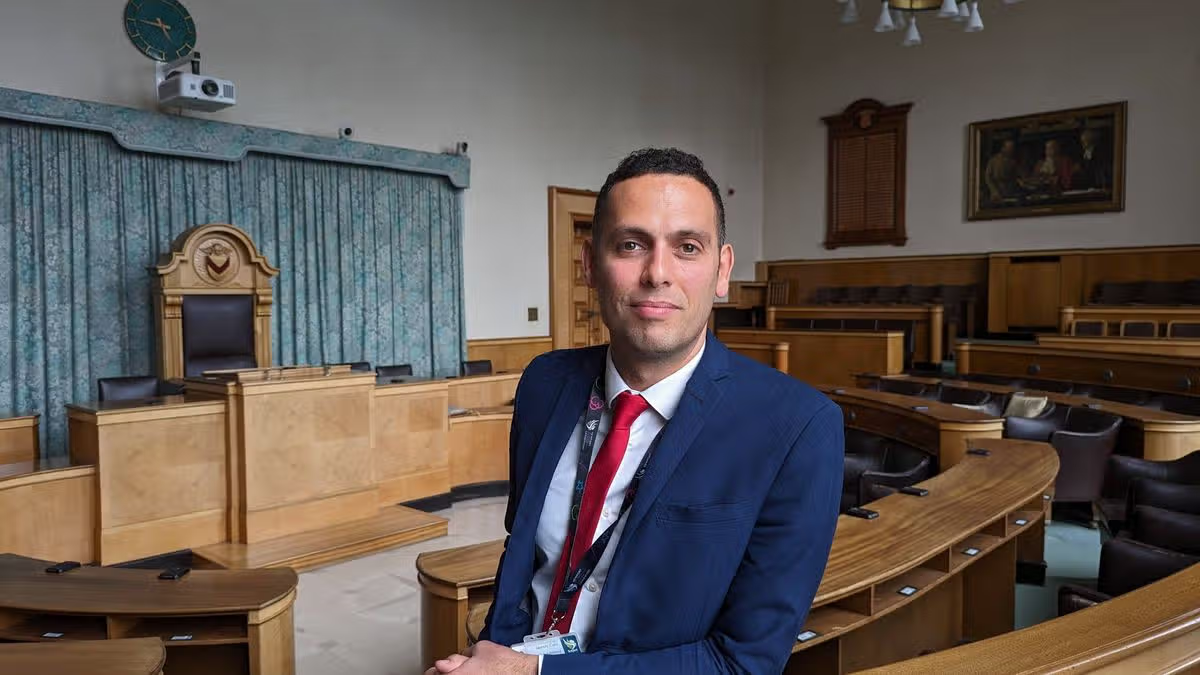
Leader of Newport Council on the M4 the city’s tech sector and a relocation of the ONS

Toyota Finance opens tokenized bonds to retail investors via mobile payment app

Weekend Open Thread – Corporette.com

Weekend Open Thread: Brooks Brothers

London Mayor Sadiq Khan handed a peerage by Keir Starmer alongside 15 other Labour figures… just days before the PM leaves No10

Trump Suffers MAJOR Humiliation As Truth Social Plummets After Financial Plan Backfires

How to Achieve Financial Freedom in 2025 | Simple Steps That Work

Pablo Escobar was earning 300 crores daily #facts #money #pabloescobar #druglord #mafia
-

 Fashion4 days ago
Weekend Open Thread: Ann Taylor
-
 NewsBeat7 days ago
Communication cards help banking customers access services or report scams
-
 Sports5 days ago
This U.S. Amateur is a glimpse into golf’s future in more ways than you think
-
 NewsBeat3 days ago
Myanmar says over 300,000 Rohingya refugees verified for repatriation as exodus enters ninth year
-

 Sports4 days ago
Birmingham 2026: Day 6 Timetable for Irish Athletes
-

 Politics3 days ago
SEQ Code: The Three Letter Boarding Pass Code That Could Give You The Worst Seat
-

 Tech4 days ago
11 Ways to Rank Your Videos
-
 Entertainment6 days ago
Keke Palmer Subtly Hints At Sean Evans Drama With Cryptic Post
-

 Fashion7 days ago
Coffee Break: The Fonteyn Jane Flat
-

 Tech7 days ago
Zoom Screen-Sharing Bug Let People Fully Take Over Other Devices On A Call
-

 Fashion7 days ago
Should you refinance your debt? Pros, cons, and real numbers
-

 Fashion7 days ago
Claire Life: Kicking Off MVAAFF With the C Suite Luncheon Featuring Phylicia Rashad, Letoya Luckett, and More!
-
 Crypto World6 days ago
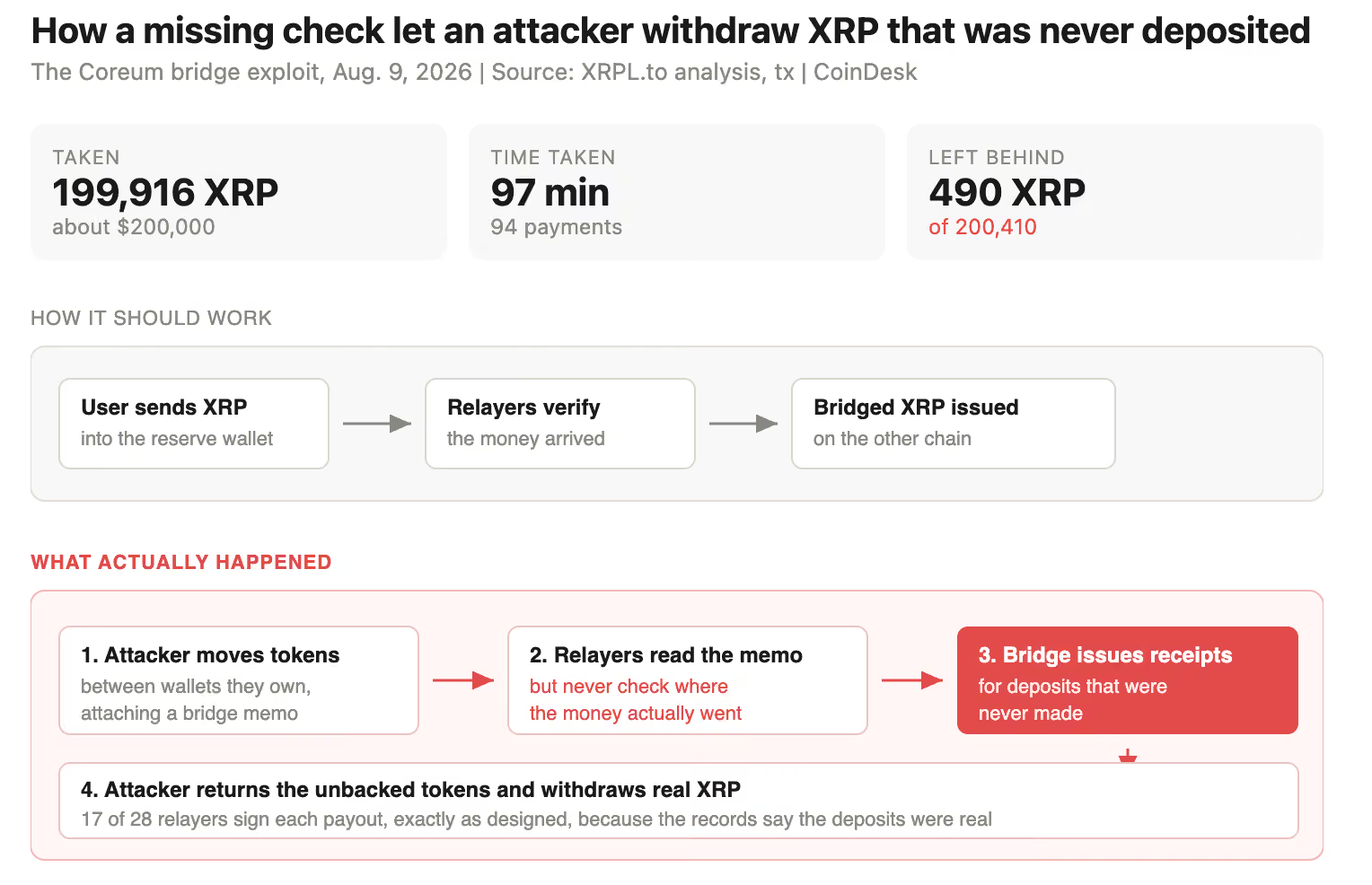
XRP bridge drained after software mistook fake deposits for real ones
-

 Sports6 days ago
DeQuan Jones in ‘high spirits’ after successful leg surgery
-

 Tech5 days ago
DeepSeek Harness launches as open source rival to Claude Code, alongside V4-Pro on API with higher prices
-
 Crypto World6 days ago
Perplexity AI Predicts an XRP Scenario Few Analysts Are Discussing
-

 Tech6 days ago
SpaceXAI’s Grok Bot turns agents into persistent digital coworkers that can operate your apps for $120-per-month
-
 Entertainment6 days ago
2026’s Most Ambitious Fantasy Movie Officially Scores Sequel Update
-

 Politics6 days ago
How Average Are You In The UK?
-

 Politics7 days ago
In the Chris Kaba case, the police watchdog capitulated to the mob
You must be logged in to post a comment Login