
Politics
How To Tell The Difference Between Vanity And A More Serious Mental Health Issue

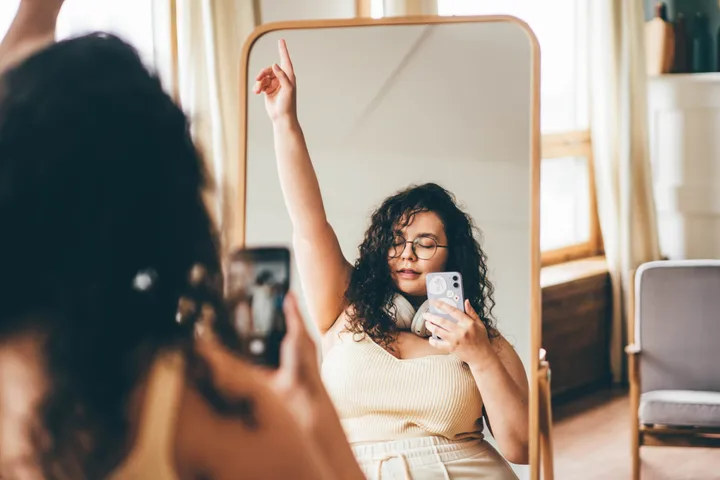
With trends like “looksmaxxing” and the ongoing rise in GLP-1s, there’s no wonder appearance is a growing concern for many people these days. Companies, celebrities and even your loved ones may place more focus on how they look, whether it’s their weight, makeup or style.
Looking “nice” isn’t necessarily a bad thing – it’s fun, it can be smart (helping you stick to the dress code for a job interview) and can even make you feel happier (we love “dopamine dressing”).
But if you’re taking endless selfies (with filters) and obsessing over every angle of your face and body, at what point is your attention to your looks actually a sign of a mental health concern?
According to experts, there is some reason to worry or at least to be mindful.
“[Those trends] open the door for competition and obsession because there’s always another tweak to chase or something to optimise,” said Golee Abrishami, a psychologist who specialises in eating and body image issues and serves as the vice president of clinical care at Octave.
“None of these trends on their own can necessarily cause a disorder, but they create more openings for everyday insecurities to turn into something bigger.”

Maria Korneeva via Getty Images
Yes, beauty and ‘wellness’ trends can mess with mental health
As mentioned, many current trends have us overly focused on our bodies in an insidious way. Social media and algorithms only exacerbate the problem.
“This leads us to believe that everyone is engaging in these behaviours, and if you aren’t, you will somehow be ‘less than,’” said Dr. Kaitlin Slaven, a psychiatrist with Eating Recovery Center. She points to studies that suggest the more we compare ourselves, the worse our body image becomes.
“Sadly, what these trends are doing is essentially hijacking our normal, human insecurities and weaponising them,” explained Dani Castro, a lead therapist and supervisor at Equip Health who specialises in eating disorders, OCD, body image, anxiety and depression. “The problem is that these trends suggest people’s bodies are projects to be optimised or shrunk.”
Add AI, and there’s no telling what’s actually real and realistic.
“When the standards we compare ourselves to are literally unattainable because they aren’t real, we set ourselves up for failure by striving for something that doesn’t exist,” she added.
Certain influencers aren’t helping, either. Abrishami discussed how they’re “normalising things that used to not be normal,” such as spending thousands of dollars on cosmetic procedures.
Some people turn to other technological advancements such as ChatGPT for style advice, which can also lead to further problems.
“Chatbots are designed to keep conversations going, so it can be really easy to get in prolonged conversations that help you obsess over your looks and insecurities,” Abrishami said.
This hyperfixation becomes culturally acceptable and “normal,” Castro continued, which creates an environment in which mental health concerns – such as body dysmorphia, generalised anxiety disorder and disordered eating – flourish.
At what point do appearance concerns signal body dysmorphia?
Worrying about how big your nose or stomach is, for example, can be a sign of clinical body dysmorphia when it affects three things, according to Abrishami: functioning, freedom of thought and emotional health.
“If focusing on how you look starts pulling time and energy away from other parts of your life, like relationships, work, school or just being present, that’s something worth paying attention to,” she said.
“If your mood swings depend on how you look that day, whether or not you worked out or what the scale says, those are signs the relationship with your appearance has become something different than just self-care.”
Similarly, Castro said it becomes a problem “when it turns into an obsession that consumes your daily thoughts.” She listed signs such as spending hours in front of the mirror, fixating on a perceived flaw or canceling plans because you can’t cover it up.
“When focus on looks takes up so much time that it interferes with other important aspects of your life, it may be time to seek help,” Slaven agreed.
“Body dysmorphia is characterised by preoccupation with flaws that are not observable to others, engagement in checking behaviors (mirror-checking, reassurance-seeking from others or excessive grooming) and clinically excessive distress or impairment.”
What therapists advise
The first step here may sound counterintuitive: avoid judging and shaming yourself.
“Shame will just feed that cycle,” Abrishami explained. “Name it in a neutral way, such as saying, ‘I think about this more than I want to.’”
Castro suggested aiming for body neutrality, or accepting your body rather than judging it. “You don’t have to love how you look every day, but you do need to stop treating your body like an object on display,” she said.
She encouraged setting a timer for mirror-checking, unfollowing toxic social media accounts, talking to a professional and spending time doing things you care about that don’t concern your body.
“Valuing experiences, hobbies or relationships and focusing more attention on those things than on the way the body looks is one of the most helpful ways to battle negative body image or body fixation,” she said.
Slaven added that finding a mental health professional or dietitian who specialises in disordered eating “can be really helpful.” She recommended reassessing your social media use as well (is this ever a bad idea?).
At what point do appearance concerns signal an anxiety disorder?
Your worries could be clinical anxiety if the behaviour – like putting on makeup before going to the gym – “stops being a choice and starts feeling like a shield,” according to Castro.
Abrishami agreed, saying, “Wanting to look good is different from believing certain things will be bad if you don’t.”
She encouraged looking out for “rules,” like “I have to do this routine, or the day is ruined.”
Don’t forget about the excessive preoccupation piece, either.
“Spending hours a day thinking about how you look, getting disproportionately upset if you don’t have time to do your full getting-ready routine … can signal an anxiety disorder may be present,” Slaven said.
“If these worries keep you up at night, make it hard for you to engage socially or cause physical symptoms, then you may be experiencing more than just ‘everyday worries.’”

Lourdes Balduque via Getty Images
What therapists advise
Can’t step out of the door without a full beauty routine? Challenge that. You can start small.
“Go to the corner store or the gym with one less product on, sit with the initial spike of anxiety and let your brain recognise that nothing catastrophic is happening,” Castro encouraged. “Exposure to the things that make us feel anxious is typically one of the most effective ways to cope with and improve anxiety.”
If that feels unmanageable or makes you feel panicky, a therapist can help.
“This can feel too big or scary by yourself, so don’t muscle through it alone,” Abrishami advised. “In fact, muscling through it can worsen your anxiety.”
At what point are your appearance concerns general insecurity or non-clinical anxiety?
To be clear, worrying about how you look or trying to change your appearance doesn’t always mean you have a mental health condition. Comparison is something that most (if not all) of us deal with, and according to Slaven, it’s “a part of human nature.” Sometimes, we can move on and maintain self-worth in those moments.
Whether it’s a diagnosable mental health condition, Castro said, comes down to flexibility and distress.
“General insecurity is uncomfortable, but it’s flexible: For example, you might feel self-conscious about an outfit, but you still go to the party and enjoy yourself,” she explained.
“A diagnosable disorder takes away that choice; it hijacks your thoughts for hours a day, dictates your schedule and leaves you feeling trapped by your own rules.”
With that said, make no mistake: Your “symptoms” not meeting the specific criteria for a diagnosable disorder doesn’t mean they aren’t serious and deserving of help or that they couldn’t get worse.
What therapists advise
Castro recommended practicing self-compassion, cultivating a healthy environment and not waiting until your problems worsen to see an evidence-based provider. She finds that the latter, especially, is “the best way to regain control over your life.”
Abrishami summed it up like this: “If all of your self-care routines are focused on what you look like on the outside instead of how you feel inside, then you need to make a change.”

Politics
Politics Home | Reform UK Divided Over How To Tackle Challenge Of Increasingly Split Right-Wing Vote
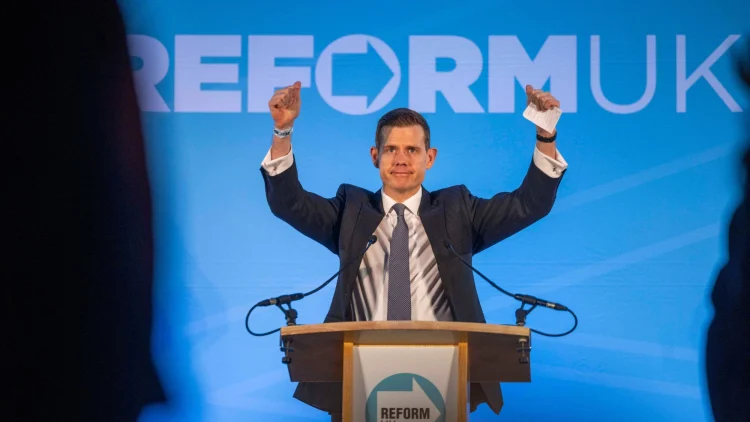

Reform’s Matthew Goodwin in January 2024 (Alamy)
6 min read
As Reform UK prepares for the next general election, the right-wing vote is splitting – and the party is divided over how to deal with the challenge.
When members and senior party figures gathered for Reform conference in Birmingham last year, the party was high in the polls and still riding the wave of council election victories in May.
But as new Prime Minister Andy Burnham enjoys a bounce in the polls, Reform’s 2026 gathering takes place during an apparent dip in its popularity, as well as amid allegations that it broke political donation rules.
Another electoral challenge has also been discussed at Reform’s conference: the problem of the right-wing vote becoming increasingly fragmented.
Research from More in Common has revealed that while Reform’s grip on right-wing voters had been far stronger than Labour’s grip on the left-wing vote in the year to March 2026, that picture has flipped in recent months.
Labour has been re-uniting the left – a trend that has only become more apparent since Burnham took over from Keir Starmer – at a time when Reform’s ability to bring the right together has declined. Reform’s share of the combined right vote was 63 per cent in September 2025, but it has now dropped to 50 per cent.
Reform’s struggle with a fractured right-wing bloc is playing out at the ballot box. In Dover last Thursday, a council by-election delivered a shock win for Green candidate Ingrid Dodd after the right-wing vote split three ways between Reform, Restore Britain and the Conservatives.
With the combined right-wing vote receiving a larger share than than the Green and Labour vote, Dover is a result that party figures – including commentator Matthew Goodwin, who was Reform’s unsuccessful Gorton and Denton candidate – have highlighted.
Speaking at a More in Common panel even at Reform conference on Friday, Goodwin warned that the council by-election showed “exactly what is going to happen at the next general election if people on the right don’t wake up”.
“Everybody on the right of politics, everybody who would describe themselves as being anti-establishment, has to understand what is happening today. The left have an inbuilt advantage going into the next general election because the left are much more willing than people on the right to vote tactically,” Goodwin said.
On the same panel, Luke Tryl, the executive director of More in Common, said: “One of the things for Reform to think about is that they will face tactical voting on the left.” He advised that voters are “becoming increasingly savvy about finding the best alternative to the party they want to stop Reform”.
In an interview with PoliticsHome on the eve of conference, senior Reform figure and leader of Kent county council Linden Kemkaran said some voters have “taken their eye off the ball” in being “enticed” by Restore Britain.
“Tactical voting today is helping the left, and it is hurting the right,” Goodwin told the Reform fringe event. He urged voters on the right to “forget about the individual leaders”, adding: “If the ordinary voters in this country don’t start to vote tactically, we will lose the next general election.”
While both Reform and the Conservatives have publicly rejected the idea of an electoral pact, Goodwin appeared to back the idea of informal alliances at a local level ahead of a general election.
“What I’m saying is, we are going to have to, ahead of the next general election, find some way of building an accommodation, an alliance of sorts among voters at the constituency level,” he said.
“Conservative-Reform voters finding unity locally is going to be absolutely critical to determining whether or not we actually win that next general election.”
Goodwin dismissed the long-term impact of Restore Britain, however, arguing that its vote would eventually be “squeezed”.
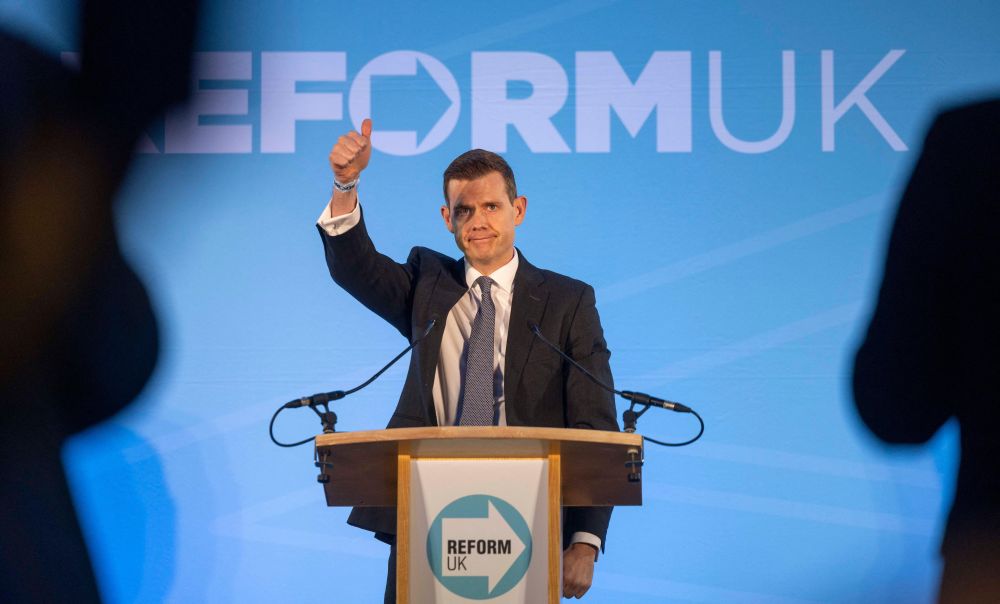
There is evidence to suggest that an explicit pact between Reform and either Restore Britain or the Conservatives could hurt the former’s electoral chances. Tryl said that in both cases “a pact would actually lower Reform’s likely voter pool”, as a pact with Restore would deter Conservative 2024 voters, while a pact with the Tories would deter 2024 Reform voters.
Like Goodwin, one senior party figure told PoliticsHome that they were convinced that Restore Britain “won’t be a question that needs answering”, predicting that Rupert Lowe’s party would soon collapse.
But the same source did not agree with Goodwin’s argument that Reform should build “an alliance of sorts” among voters at a local level ahead of the general election.
While they acknowledged that a hung Parliament may necessitate the need for conversations with other parties on the right, they dismissed the idea of a pre-election alliance. If they told their local branch that the party was doing a local deal with the Tories ahead of an election, they said, “half of them would walk out”.
Speaking to PoliticsHome on the condition of anonymity, a Reform councillor from the South East admitted that “on a local level, unofficially, pacts would have to be made”. They said it would be “very tough, because we don’t want to lose the idea of us being different”.
They also acknowledged the differences between the left and right bloc on this issue, pointing to Green-voting friends who would be willing to vote tactically for the Liberal Democrats. But referring to Reform voters, the councillor observed: “We are a lot more stubborn and won’t change [our] vote.”
A Reform member attending the conference voiced support for Restore Britain while speaking to PoliticsHome and said they would be open to a deal with the party. They said they would not be open to such an alliance with the Tories, however, as they had “stabbed Boris Johnson in the back”.
In a More in Common focus group recently, one voter voiced concern that Farage’s party had let in Tory defectors: “I’m not so sure that he now stands for what his party originally stood for… Rupert Lowe’s party that he’s bringing in is actually what Reform were when they first started.”
Speaking to PoliticsHome at an event on Friday, pollster John Curtice predicted that Reform would be engaged in an “existential fight until spring 2028”, but at that point the party would “have to work out where they are at, and whether or not they need to do a deal, and whether or not they can”.
Noting the difficulties around agreeing where the parties would stand down, Curtice warned: “The route to hell is paved with electoral pacts.”


5 min read
The Health Bill returning to Parliament this week is far more than an organisational restructuring.
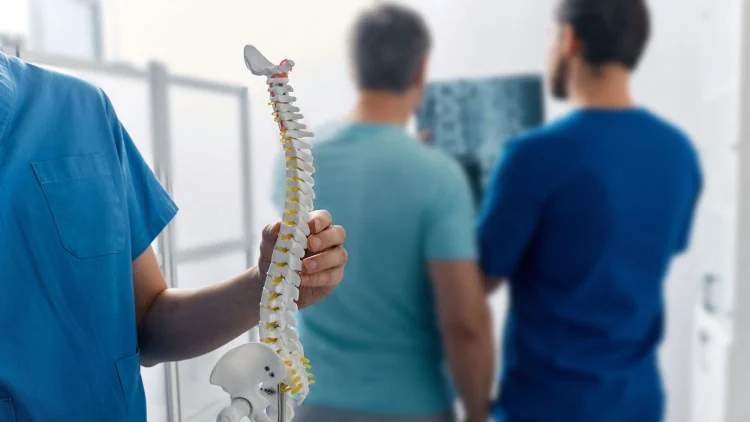
The decisions Parliament makes about specialised commissioning could affect people across England living with rare, complex, and lifelong conditions. I believe the Bill currently lacks the statutory safeguards needed to protect national consistency, accountability, and patient safety.
In my role as the Chair of the All-Party Parliamentary Group (APPG) on Spinal Cord Injury and representing the Golden Jubilee Regional Spinal Cord Injuries Centre, one of the United Kingdom’s 11 specialist spinal cord injury centres, within my constituency I know firsthand the incredibly positive impact that such specialist services have when someone is facing a long-term condition. When someone sustains a spinal cord injury, their life changes considerably. But with the support of relentless healthcare professionals across the country, people with a spinal cord injury are able to lead a fulfilled and dignified life.
Around 4,700 people sustain a spinal cord injury each year, contributing to a total population of over 105,000 people living with spinal cord injury across the UK. In England there are eight highly specialist spinal cord injury centres, providing essential acute care and rehabilitation support. Whilst there is no doubt of the dedication of the healthcare professionals working in spinal cord injury, the Officers of the APPG and I held an inquiry last year that exposed the challenges this system faces.
Our report included recommendations that sought to stabilise the system, build resilient infrastructure, and deliver long-term transformation through a National Spinal Cord Injury Strategy. I was shocked to discover the level of regional variation and the absence of meaningful national oversight and accountability.
Spinal cord injury centres serve population catchments that extended beyond local Integrated Care Board boundaries, and even NHS regional boundaries. An internal NHS England Service Review of Spinal Cord Injury Services in 2016 even noted that commissioning decisions ‘vary substantially’ with variations leading to ‘inequalities in access and care’, finding ‘it is evident that this national service would be better co-ordinated by a national commissioner who has the authority either to commission centrally or to direct and monitor delegated regional commissioners to commission according to an overall strategy’.
But this isn’t only about spinal cord injury services. The same fundamental question arises across specialised healthcare: how do we reform commissioning without fragmenting the services relied upon by people with complex and lifelong conditions?
Around 170 specialised services provide care that cannot simply be replicated in every hospital. They depend on specialist teams, concentrated expertise and coordinated pathways that often cross ICB and regional boundaries. What Parliament decides in this Bill therefore matters far beyond the spinal cord injury community. That is why I have tabled a package of amendments to the Health Bill.
Rather than seeking to block reform to our health system, the amendments I have tabled aim to ensure that, where commissioning is transferred from national responsibility, specialist services remain safe, equitable, nationally coordinated, and accountable. Together these amendments establish four critical safeguards:
1 – Before the transfer of a service from national commissioning, an assessment of the likely impact on patient safety, outcomes, equality of access, and geographical variation must be published.
2 – If a service is then transferred, a framework must be maintained that covers service standards, care pathways, workforce requirements, outcome data, and coordination between specialist, community, and neighbourhood services.
3 – Following any transfer of responsibility, the performance of Integrated Care Boards in relation to specialised services must be annually assessed including on patient outcomes, access, workforce capacity, service sustainability, and geographical variation, and the findings must be published.
4 – A report must be laid before Parliament on the commissioning and performance of specialised services commissioned by Integrated Care Boards so that Parliamentarians across both Houses can effectively scrutinise the functioning of these services.
These amendments have the support of the Spinal Injuries Association, the Neurological Alliance, and other organisations. Between them, the organisations within these alliances represent people across a very broad range of neurological, rare, and complex conditions. Their support underlines that this is not a concern confined to spinal cord injury, but one shared across the specialised healthcare sector. I encourage fellow Parliamentarians to support these amendments.
There is also an opportunity in this Bill to improve what happens after someone receives a life-changing diagnosis. I have tabled a further amendment to the Single Patient Record provisions so that, with a patient’s consent, they can be referred to an approved voluntary or charitable organisation providing condition-specific support. For people adjusting to a complex diagnosis or a catastrophic injury, early access to specialist advice, peer support, and practical help can make an enormous difference. The Single Patient Record should not simply improve how information moves through the NHS; it should help connect patients to the support they need.
Reorganisation of our health system is a costly business. My motivation is to ensure that the Health Bill is fit for the future, alongside an NHS that is. While I still have concerns that transferring the commissioning of services, like spinal cord injury, is not appropriate, I am committed to ensuring that if transfer occurs it is safe and accountable. Specialist services are a difficult area, and Sir David Carter found that previous decentralisation led to the devolution of services that were unsuitable, financially volatile and high risk. Parliament should learn from that experience rather than risk repeating it.
I thank the minister for her engagement with me on this, and it is encouraging that the Government has recently recognised that spinal cord injury services will continue to require national-level coordination between the centres, and continue to be defined as specialised services, subject to national service specifications, commissioning policies, and national standards. But administrative assurances are not the same as statutory safeguards. Protections for patients who depend on specialised services must be clear, durable, and enshrined in legislation, ensuring national consistency, accountability, and service sustainability.
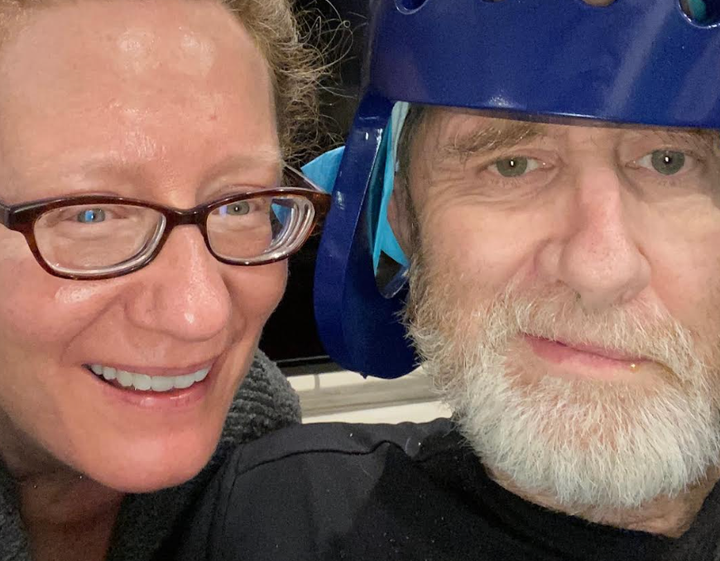
When my husband Tom had a massive stroke and died, I expected to feel devastated. I expected to feel a rollercoaster of emotions – joy for the 12 years we had together, despair over never seeing him again, full-body laughter remembering how he took up knife sharpening as a hobby after his stroke, seemingly unending tears over my imperfections as a caregiver.
I expected some friends to drift away while others would surprise me with their unwavering presence, showing up with lasagnes and placing late-night phone calls when I needed them most. I was warned quickly about the maddening paperwork.
But nobody mentioned the fire I would feel in my loins less than two months later.
I remember exactly when it happened. I’d spent most of the day curled up on the couch with my phone, scrolling through photos of Tom and me together and bawling my eyes out. And then, with tears still running down my cheeks, I felt a pulsing, urgent need that seemed wildly inappropriate given the circumstances. And yet there it was: desire, burning through me with an intensity that left me breathless.
That feeling stayed with me for nearly a year. For a year, I was horny. All. The. Time.
It was as though my body had suddenly remembered it was alive while my heart was still learning how to beat on its own. The contrast was jarring. I’d spend hours sobbing while sorting through his things and then take a break to masturbate.
I didn’t want anyone in particular; I wanted anyone at all. I wanted the raw physical intimacy of sex, the primal sensation of skin on skin, and the feel of someone’s body heat melding with mine as we crawled inside each other.
My first reaction was shame – profound, all-consuming shame. How could my body do this to me? How could I feel sexual desire when the love of my life was gone? I felt like I was betraying him somehow, as if by acknowledging my own sexuality, I was erasing our love, our history. As if my body had forgotten what my heart couldn’t.
I didn’t have a framework for understanding what was happening. Intense horniness was not mentioned in any of the support group meetings I went to.
Luckily, my dog walker connected me with a widow around my age, who told me about the widow groups on Facebook. I joined several and learned that what I was experiencing had a name: widow’s fire. I also discovered it’s normal – completely, utterly normal – and it can affect people of any gender or sexual orientation.
Some people feel it within months, like I did. Others feel it a year later. Others never feel it.

Courtesy of Elizabeth Kleinfeld
What’s even more shocking than the fact that it’s totally normal for widows to be insanely horny is the silence around it. When I finally worked up the courage to mention it to my grief counsellor, her matter-of-fact response stunned me: “Oh yes, that’s quite common. Many widows experience that.”
Common? Many? Then how come the Facebook widows were the only ones talking about it?
There are biological reasons for this surge. Grief and sexual desire activate similar areas of the brain. Both involve intense emotion and physical sensation. Both represent a form of connection and release. There’s a biological imperative for connection when we’ve lost our primary attachment figure. The body seeks oxytocin, the pleasure chemical, to soothe the pain of loss.
There’s something almost primeval about it in the face of death, the body rebels by emphasising life. Sex is, after all, life-affirming in the most fundamental way.
Since experiencing this, I’ve learned that widow’s fire ignites indiscriminately across intimate histories – women who had passionate, frequent sex with their partners can find themselves feeling nothing, while those whose relationships had been physically dormant for years suddenly experience an overwhelming awakening of desire that seems to come from nowhere.
And it has nothing to do with age. I was 52 when I experienced widow’s fire, but I’ve spoken to widows who were in their 70s when they encountered it.
For some widows, this heightened desire manifests as a specific craving for physical touch not necessarily sexual, but the fundamental human need for skin contact that previously was satisfied daily through casual touches, hugs, or simply sharing a bed. For others, it’s more explicitly sexual – a physiological response to trauma, to stress, to the body’s need for the endorphin release that sexual activity provides.
When you’ve been part of a couple for years or decades, sexuality may have been expressed exclusively through that relationship. Suddenly, that avenue is gone, but the fundamental human need remains.

Courtesy of Elizabeth Kleinfeld
My Journey Through The Fire
Two months after my husband’s death, I knew I had to do something to quell my craving, but I wasn’t ready to leave my house. Tom and I had always shared a sexually adventurous relationship, exploring various aspects of BDSM together throughout our marriage. I went to a kink website we had browsed and sometimes chatted with others about shared interests. Returning to it felt both comforting and strange, like revisiting a favourite restaurant but dining alone for the first time.
Eventually, I began exchanging messages with a man who lived three states away, someone who understood my need for both connection and distance. Our long-distance BDSM relationship became my first step into this new territory of grief and desire. The structured nature of it – the defined boundaries, the explicit communication, the psychological elements – provided a framework when everything else in my life felt structureless. The physical distance felt safe, allowing me to explore desire without the complication of actual physical intimacy before I was ready.
We talked on the phone and texted for several months. When I flew to meet him, I found him to be arrogant and unappealing in real life, and I ended things. However, my urge for touch continued, so I joined a dating app and began chatting with another man. Our weekend together still makes me smile, three days with someone who was absolutely, categorically wrong for me in every way except one: the chemistry was undeniable.
Our politics, temperaments, and what we wanted from life were diametrically opposed, but those 72 hours of passionate connection were profoundly healing. There was no pretense of a future, and no attempt to replace what I had lost. It was simply an affirmation that I was still capable of feeling, of desire, of pleasure – even in the midst of grief.
A few months later, when I felt open to something closer to an actual relationship, I knew my desperate lust might cloud my judgment about potential partners. A friend suggested I find a “friend with benefits” – someone I genuinely liked and respected, but with whom I shared no romantic future. This was unfamiliar territory for me, but again, the kink website delivered.
The arrangement was straightforward: companionship, physical connection, and no expectations beyond the present moment. It was exactly what I needed at that stage of my grief: a way to address my physical needs while giving myself the emotional space to navigate dating with greater clarity and presence.
I was selective about who I confided in during this period. My two closest friends knew everything, from my late-night loneliness to the details of my arrangements. They listened without judgment, occasionally checking in to ask if these encounters were helping or hurting my healing process. Two other friends, widows themselves, knew the broad strokes but not the specifics; I sensed they were uncomfortable with the idea of me seeking physical connection so soon after Tom’s death. Nobody else knew anything, but people regularly commented on my glow.

Courtesy of Elizabeth Kleinfeld
Navigating Without A Map
I didn’t have a roadmap for navigating this aspect of grief. Nobody had warned me, so I had to find my own way through research, through tentative conversations with other widows, through honest discussions with my therapist, and eventually, through my own experiences.
What I learned was that there’s no right way to handle widow’s fire. Some choose to channel that energy into physical activity or creative pursuits. Others explore self-pleasure as a way of reconnecting with their bodies. Some eventually pursue new relationships when they’re ready.
For all of us, though, it’s important to remember that grief isn’t linear. It can coexist with other feelings, even seemingly contradictory ones like desire. The heart is complex enough to hold both reverence for what’s lost and acknowledgment of continuing needs.
Grief and healing aren’t mutually exclusive. This was perhaps the most profound realisation in my journey that I could simultaneously miss my husband desperately and acknowledge my body’s continuing needs. But this understanding didn’t come easily.
For the first year after Tom died, I felt like I was cheating on him whenever I experienced desire, even though before his death, he had explicitly told me he wanted me to find love again and understood that would include physical intimacy. Despite his blessing, I felt ashamed, even slutty, for wanting to touch so soon, as if my physical longing dishonoured his memory.
The breakthrough came from an unexpected source. My friend with benefits, observing my internal conflict, simply said, “Of course, your body wants sex.” Those six words shifted something fundamental in my understanding. He wasn’t widowed, but somehow he grasped what I couldn’t yet see: my body’s needs weren’t in conflict with my grief, but existed alongside it, neither diminishing nor replacing my loss. My physical desires weren’t betraying my love for Tom; they were affirming that I was still alive, still human, still whole even while broken.
There’s something revolutionary about recognising that widowhood doesn’t require denying one’s sexuality, that honouring a lost love doesn’t mean living as if you too have died.
Each of my encounters taught me something different about the healing process. The long-distance relationship showed me I could be vulnerable again. My wild weekend reminded me that spontaneity and joy were still possible, and that passion was still available to me. The friend with benefits taught me that physical connection could exist without replacing the emotional bond I had with my husband.

Courtesy of Elizabeth Kleinfeld
Eventually, widow’s fire subsides, or at least becomes manageable. For me, it lasted about a year before settling into something less urgent and less all-consuming.
What remained was a recognition that I was still fully human with all the complex needs and desires that entail. I learned that healing includes reclaiming all parts of oneself, even those that seem at odds with grief. I discovered that there’s no contradiction in honouring what was lost while also honouring what remains: a body and spirit that continue to seek connection, pleasure, and life.
I write this now, years later, wishing someone had told me all of this then, wishing I hadn’t felt so alone, so confused, so ashamed of a perfectly natural response.
If you’re a new widow experiencing this, I want you to know you’re not alone. You’re not betraying your spouse. You’re not grieving “wrong.” Your body is responding to loss in one of the many complex ways humans respond to trauma and change.
And if you’re supporting someone through grief, understand that bereavement encompasses more than tears. It includes navigating identity, physicality, and yes, sexuality, in a new context.
Healing doesn’t mean forgetting or replacing. It means integrating the loss into a life that continues, a life that still contains joy, desire and connection.
Elizabeth Kleinfeld is a writer, professor, and end-of-life doula living in Denver, Colorado. She is writing a memoir about being her husband’s caregiver for the year before he died. Her work has been nominated for the Pushcart Prize, and she was named a best emerging writer by Masters Review. She blogs about grief and disability at https://elizabethkleinfeld.substack.com/.
This piece was previously published on HuffPost and is being shared again now as part of HuffPost Personal’s “Best Of” series.
Do you have a compelling personal story you’d like to see published on HuffPost? Find out what we’re looking for here and send us a pitch at pitch@huffpost.com.

With the autumn months approaching, we’re reaching that point of the year when some of our favourite shows, from Strictly Come Dancing and the Great British Bake Off to Drag Race UK, all start returning to our screens.
But September has some promising new and returning shows coming to Netflix, too.
After two years away, one of the biggest hits in recent years, The Gentlemen, is finally back for new episodes, while Ryan Murphy’s always-controversial Monster anthology series is taking a very different approach with its latest offering.
Then, there’s a new binge-worthy reality show to sink your teeth into, as well as a feature-length outing for one of the 2020s’ biggest TV comedies and, Netflix being Netflix, plenty of true crime to get streaming, too.
Here are just nine of the shows and films we’ll be streaming in the coming weeks…
Raygun: Breaking Badly (Streaming now)
Tell me more: Australian break dancer Rachael Gunn, better known to her followers as Raygun, accidentally became one of the 2020s’ most talked-about Olympians when she made her debut in Paris and went viral for all the wrong reasons.
Looking back two years on, this documentary gives Rachael the chance to tell the story of her rise to infamy in her own words, not just looking back at the lighter moments of her meme-worthy performance, but the more serious allegations, misinformation and outright abuse that followed it.
Netflix says: “Nobody, least of all Rachael Gunn, expected to be an Olympian. But as Raygun’s performance at the 2024 Paris Olympics went viral overnight, so did an avalanche of memes, misinformation and conspiracy theories questioning how she ever got there.”
The Gentlemen (Streaming now)
Tell me more: Netflix might have kept fans waiting two years for the next instalment in Guy Ritchie’s unhinged crime drama, but if the early reviews are anything to go by, it was worth the wait.
Once again, Theo James and Kaya Scodelario are leading the star-studded cast that includes returning faces like Vinnie Jones, Ray Winstone and Giancarlo Esposito, as well as some intriguing new additions including Love Island host Maya Jama and Downton Abbey’s Hugh Bonneville.
Excitingly, much of the action this time around takes place in Italy, as Eddie and Susan’s work takes them even deeper into the criminal underworld.
Netflix says: “It’s been one year since Eddie and Susie joined forces to work together in Bobby’s criminal empire overseas. As they drive to expand their enterprise, the decisions Bobby is making seem to be increasingly unsound.
“Now Eddie and Susie must decide whether to take action or risk losing it all, but unfettered ambition never ends well…”
Instadocs: The Decoy Plane (Streaming now)
Tell me more: Alright, remember a couple of weeks ago when Donald Trump ducked out of Air Force One in a catering truck to quietly board another plane, leaving behind the secret service, the plane’s crew and his own staff.
Well, this one-off documentary is looking into exactly what that was all about, and what actually went on…
Netflix says: “This July, while flying back from a NATO summit in Turkey, President Trump slipped off Air Force One in a catering truck and secretly boarded a different aircraft – leaving traveling reporters to fly on, unaware the president was no longer with them.
“Instadocs: The Decoy Plane unpacks the incident through firsthand accounts from members of the press corps who were aboard Air Force One as well as a former Secret Service agent and a former Air Force One crew member.”
Why Did I Get Married Again? (9 September)
Tell me more: The latest offering to come from Tyler Perry’s Netflix deal is a new instalment in his Why Did I Get Married? series.
Almost 20 years on from the original film, the gang are back together to prepare for one of the couple’s nuptials, which naturally begins to raise questions among them about relationships, marriage and how far an apple ever falls from the tree.
Joining Tyler in the film are returning faces like Jill Scott and Richard T Jones (though, sadly, pop superstar Janet Jackson does not appear due to a scheduling conflict).
Netflix says: “In Tyler Perry’s Why Did I Get Married Again?, the couples reunite in celebration as Marcus and Angela’s daughter prepares to tie the knot.
“After being apart for quite some time, they learn quickly that as much as things change, they stay the same. Realising their children have grown up to be so much like them, they must reflect on the examples they’ve set and ask themselves that age-old question, why did they get married… again?”
Call My Agent! The Movie (10 September)
Tell me more: Originally a hit among viewers in France, the French-language comedy Call My Agent! became an international hit when its final season premiered at a time when much of the world was in lockdown.
As the title suggests, the satirical showbiz series centres around a hapless pair of agents and their struggles to satisfy their many famous clients, with this new movie instalment picking up six years later.
This time around, the action takes us out of the agents’ offices and into the wider world, sending up the entire movie industry as Andréa takes a big leap into directing – which proves every bit as chaotic as fans might expect.
Netflix says: “Five years after the agency closed its doors, Andréa is finally ready to direct her first feature film.
“When her lead actor quits and she falls out with her producer, she joins forces with Noémie – now a reality TV producer – believing she can easily manipulate her. But as she faces a complete recasting, on-set disasters, and a legal battle threatening the custody of her daughter, everything begins to unravel.
“One by one, the former ASK colleagues converge on this high-tension film set. Each arrives with their own role, their ego, and a fair share of old grudges – little do they know what this reunion truly has in store for them.”
Monster: The Lizzie Borden Story (17 September)
Tell me more: OK, we’re going to be honest. Between the grisly and graphic violence and so many controversies casting such a long shadow over everything, Ryan Murphy’s Monster has never really been a project we’ve had much interest in sitting through – but with its latest iteration, he’s finally piqued our interest.
Much has already been made of the fact that season four centres around the “first female monster”, with Ella Beatty taking on the role of the acquitted axe murder suspect Lizzie Borden, but it’s also the first to take place so far in the past – with its period setting being one of the biggest draws.
Then, of course, there’s the cast, with Ella being joined by Rebecca Hall, Vicky Krieps and, in his return to Monster, Charlie Hunnam – and Sarah Paulson also set to appear as Aileen Wuornos in one of the show’s most intriguing casting decisions to date.
Netflix says: “Lizzie Borden took an axe… The first female monster from Ryan Murphy’s famed anthology series.”
Wonka’s The Golden Ticket (23 September)
Tell me more: One for fans of Squid Game: The Challenge, Netflix’s new competition series brings Willy Wonka’s factory to life, with contestants being put through a series of bizarre games and challenges befitting of the iconic chocolatier.
Although the show looks to be as much of a visual feast as you’d imagine, Wonka’s The Golden Ticket has already left something of a sour taste for some, over its use of an AI-generated rendering of the late Gene Wilder’s voice to “host” the games.
Netflix says: “Twelve lucky Golden Ticket winners, each with a partner of their choosing, will step through the gates of Wonka’s Chocolate Factory and into a world of pure imagination, delicious mischief, and unexpected challenges.
“Once inside, contestants must navigate a series of Wonka’s games, tests, and temptations designed to challenge them physically, mentally, and morally.
“In this high-stakes social experiment, players will journey through the factory’s wondrous and unpredictable landscape, adapting, strategizing, and withstanding the unknown while proving they have the instincts, resilience, and character to thrive in chaos. In the end, only one contestant will have what it takes to earn Wonka’s life-changing prize.”
Lego One Piece (29 September)
Tell me more: Just so we’ve got this clear… this is a Lego reimagining of a Netflix live-action series, inspired by the anime, which itself was adapted from the manga.
Convoluted though it may sound, anyone who has been gripped by the Straw Hats’ swashbuckling adventures will probably get a kick out of this two-part miniseries, which has rendered the story you already know in Lego form.
Netflix says: “Get ready to set sail! In this two-part animated Lego special, Usopp, the Straw Hats’ most reliably unreliable narrator, regales Chopper with the crew’s escapades across the East Blue and into the Grand Line, prior to him joining them in Drum Island. Usopp only tells the tallest of tales, and this action packed special is no different!”
The Widower: ’Til Death Do Us Part (30 September)
Tell me more: Over the last few years, Netflix has become synonymous with its true crime offerings, and whether you find them gripping, weirdly intriguing, distasteful or a complete turn-off, the service is ending the month with another one.
In this new offering, The Widower: ’Til Death Do Us Part, a detective and investigative journalist team up to get to the bottom of a story involving a Las Vegas man who has been married six times, four of which ended in his wife dying in mysterious circumstances.
Netflix says: “In this documentary, a journalist and a detective uncover the truth about a killer whose charm masked a trail of failed marriages and suspicious deaths.”
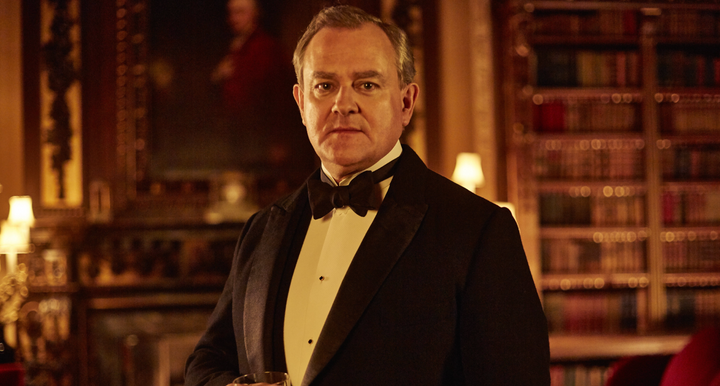
After a two-year absence from our screens, Netflix is inviting audiences back into the loud, brash and bloody world of The Gentlemen.
Inspired by the 2019 Guy Ritchie film of the same name, the well-received second season of The Gentlemen sees power players like Theo James’ Eddie, Kaya Scodelario’s Susie and Ray Winstone’s Bobby returning, alongside a host of new stars, as their criminal empire expands to Italy.
As well as recruiting some huge acting talent for season two, the casting team has cast a wide net, plucking some of the biggest talents from the world of sport, reality TV and beyond to play characters in the new run of episodes.
Here’s our guide to who has joined The Gentlemen this season – and where you may have seen these newbies before…
Hugh Bonneville

Hugh Bonneville is a new addition to the cast of The Gentlemen as Lord Hawthorne, a well-connected member of the House of Lords.
It’s an uncharacteristically evil role for an actor best known for playing the lovable Henry Brown in the Paddington movies and Robert Crawley, Earl of Grantham, in Downton Abbey.
You may also recognise Hugh from BBC comedies Twenty Twelve and W1A, in which he appeared as the haphazard Head of the Olympic Deliverance Commission – and later the Head of Values at the BBC – Ian Fletcher.
His other recent TV credits include the BBC crime drama The Gold, the Steven Moffat satire Douglas Is Cancelled and the Paramount+ spy thriller The Agency.
On film, one of Hugh’s early big-screen roles came when he played Bernie in Notting Hill, with other credits including playing a young John Bayley in Iris, starring in George Clooney’s The Monuments Men and the biopic Bank Of Dave.
Maya Jama

Jonathan Hordle/ITV/Shutterstock
Having originally shot to fame working for MTV and BBC Radio 1, Maya has previously hosted the Brit Awards, The Circle, Glow Up and Comic Relief, as well as serving as a judge on The Masked Singer.
The Gentlemen has repeatedly been mentioned in the press as Maya’s acting debut, but she previously played a role in Katherine Ryan’s ill-fated Netflix comedy The Duchess.
You can next see her joining the likes of Bella Ramsey, Miranda Hart and Richard E. Grant on the next season of The Celebrity Traitors.
Sergio Castellitto

As Eddie and Susie expand their operation into Northern Italy in season two, they encounter members of the mafia.
Within the show, the head of this Italian operation is Marco Maldini, played by Sergio Castellitto, best known for playing the iconic vaping Cardinal Tedesco in Conclave.
A prolific actor in Italy, Sergio reached international audiences after appearing in 2008’s The Chronicles Of Narnia: Prince Caspian as the villainous King Miraz.
His other film credits include the Italian-language My Mother’s Smile, Don’t Move and Twice Born.
Michele Morrone

Actor and model Michele Morrone plays another member of the mafia in The Gentlemen, and you’ll likely recognise him for playing Massimo Torricelli in the 2020 controversial erotic thriller 365 Days, and its sequels.
He also appeared in Another Simple Favor as Blake Lively’s character Emily’s fiancé, Dante, and last year co-starred with Amanda Seyfried and Sydney Sweeney in the hit thriller The Housemaid, playing groundskeeper Enzo.
Benedetta Porcaroli

F Berardinelli/Netflix/Kobal/Shutterstock
Benedetta Porcaroli plays orphaned Italian aristocrat Bella in the Netflix series, one of her many credits with the streamer.
She drew international attention for playing Chiara in the teen sex work drama Baby, before appearing in the platform’s period drama The Leopard.
Her most high-profile credit came in 2024, when she starred alongside Sydney Sweeney in the religious horror Immaculate.
Benedetta’s other credits include the Italian coming-of-age drama Amanda, the 2022 romance The Hummingbird and, more recently, The Kidnapping Of Arabella, which co-starred Chris Pine.
Benjamin Clementine

Cesare Veronesi/IPA/Shutterstock
Benjamin Clementine, who plays Charly’s partner Nanny, is best known as a celebrated singer-songwriter, rather than actor.
In 2015, his debut album At Least For Now won the Mercury Prize, and was also hailed by numerous critics as one of the best albums of the year.
Meanwhile, he’s performed his songs Cornerstone, Nemesis and God Save The Jungle on Later… With Jools Holland and The Tonight Show Starring Jimmy Fallon.
As an actor, he had a small, but memorable, role as Herald of the Change in Dune, delivering the decree which gave House Atreides control of Arrakis.
He later appeared in Steve McQueen’s Blitz as an air raid warden, and In The Hand of Dante, in which he also provided the music, as Mephistopheles.
Chris Eubank Jr.

Boxer Chris Eubank Jr. makes his acting debut in the series, playing Organ John.
His role as a “lethal boxer and an enforcer” isn’t too far from his day-to-day life as a middleweight and super-middleweight boxing champion.
The son of world champion boxer – and noted monocle-wearer – Chris Eubank, he has won 35 of the 39 professional fights he’s taken part in.
No stranger to the entertainment world, either, last year he starred in the documentary The Eubanks: Like Father, Like Son for the BBC, and appeared alongside his eccentric father on Celebrity Gogglebox.
Both seasons of The Gentlemen are now streaming on Netflix.

Wallace And Gromit is a true British institution, not to mention a family favourite in homes up and down the country.
More than 30 years after we were first introduced to the duo, it’s now hard to imagine the beloved claymation franchise being about anything other than an eccentric inventor and his trusty dog.
However, creator Nick Park has revealed that his original plans for the iconic duo were very different.
Speaking to the BBC on Aardman Studio’s 50th anniversary, Nick spilled some secrets about making the British staple – one surprising fact he dropped being that Gromit was not always a dog.
“I had this idea of an English guy who builds a rocket, in the basement of his house,” Nick recalled. “I was thinking he may have a pet, probably a cat.”
Ultimately, there was one key reason Gromit ultimately wasn’t a feline.
“I started modelling the cat, and it was just very difficult,” he admitted. “So, I thought I’d do a dog instead!”
But it’s not just Gromit, who started life looking and sounding very different.
Sean Clarke, Aardman’s managing director, also told the broadcaster that Shaun the Sheep almost had a very different characteristic.
The silent comedic character from Wallace And Gromit – not to mention his own spin-off – was nearly given a speaking voice.
“When we launched the Shaun the Sheep series, we were told to add voices,” Sean remembered.
The same argument resurfaced years later, when Shaun landed his own feature film in 2015.
“They said, ‘You can’t do 80 minutes without any dialogue,’” Sean explained, but insisted that he and his team stuck to their guns.
By doing so, they helped cement Shaun’s spot as one of Aardman’s most successful characters, with the legendary sheep later appearing in 170 countries.
“Wallace and Gromit built the house, but Shaun keeps the lights on,” Sean joked.
Aardman is celebrating five decades of making film and TV.
Back in 2023, the stop-motion studio found itself at the centre of a report in The Telegraph alleging that it was in crisis, after its favoured clay supplier had gone out of business.
Luckily, this report turned out to be inaccurate and “much like Wallace in his workshop”, they had “been tinkering away behind the scenes” to continue making their iconic characters from clay.

The post Zack Polanski: king of the crazies appeared first on spiked.
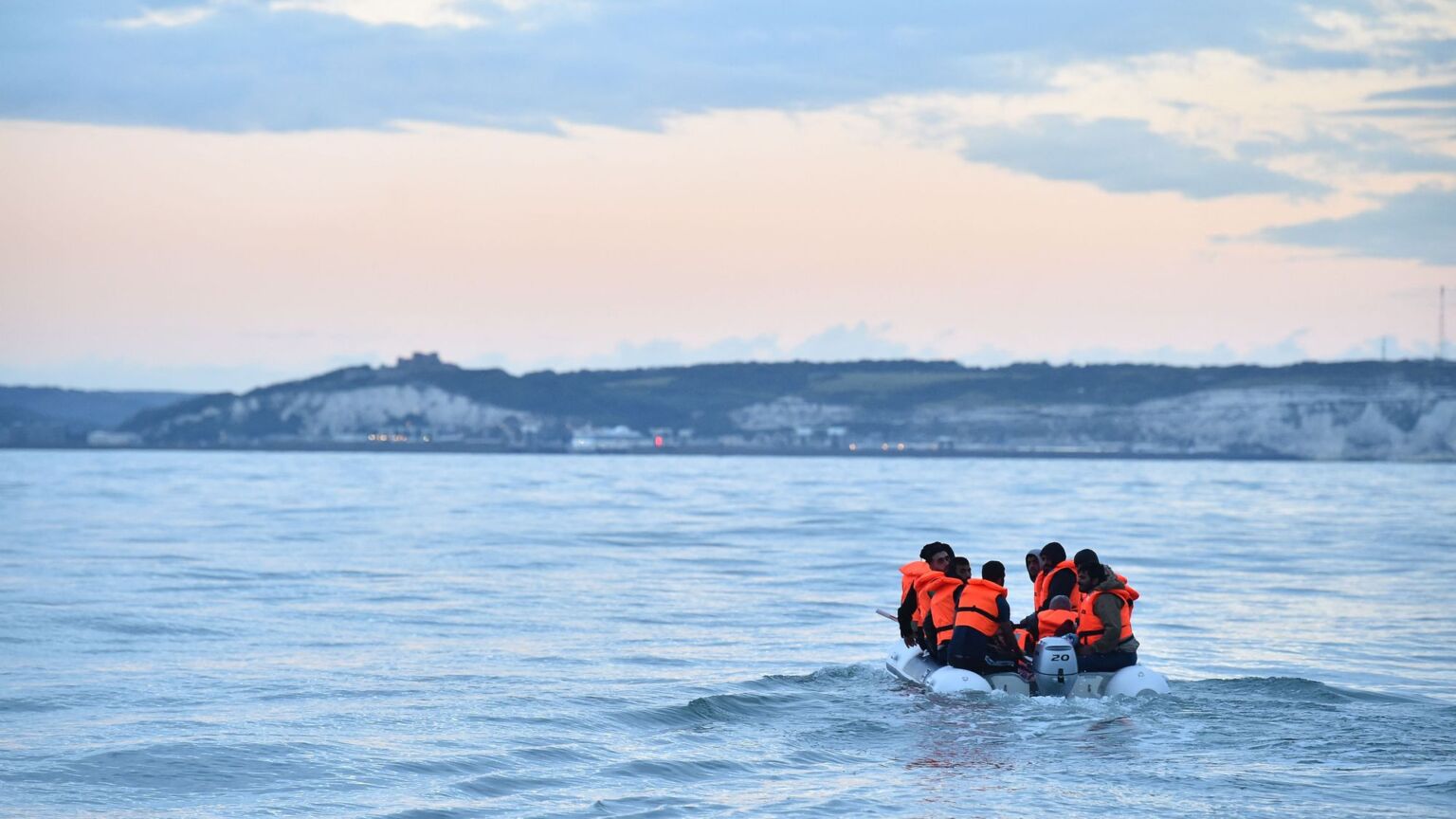
For at least the past 20 years, Britain’s political and cultural elites have claimed that immigration has been nothing but a blessing for the nation. They claim it grows the economy. That it makes Britain as a society less insular and more diverse. That it has moral as well as economic benefits.
Among vast swathes of the British public, however, a very different view has taken hold. They have experienced the reality of our increasingly porous borders. They have seen how the importation of cheap labour, far from growing the economy in real (per capita) terms, has merely suppressed wages. They have seen how immigration-fuelled population growth has put even more pressure on struggling public services. And they have witnessed what ‘diversity’ means in practice – the creation of religious and ethnic enclaves, riven with anti-Semitism and intolerance.
There is another reason for people’s concerns and anger over our immigration and asylum system, and it’s one that has come to the fore over the past two or three years. Many increasingly feel that some of those illegally entering Britain, mainly from the Middle East and Africa, pose a distinct threat to the safety of British citizens. It is a view that gains substance with every news report detailing a horrific violent incident or sex attack carried out by someone who shouldn’t have been here in the first place.
The grim cases themselves certainly seem to be mounting up. In May 2025, two Afghan 17-year-olds, Jan Jahanzeb and Israr Niazal, raped a 15-year-old girl in Leamington Spa, Warwickshire. The following month, in the nearby town of Nuneaton, another Afghan, 23-year-old Ahmad Mulakhil, raped a 12-year-old girl. He was living in a taxpayer-funded house in multiple occupation (HMO). Also last year, Khan Agah and Noorullah Ahmhdzai, both from Afghanistan, raped a woman at knifepoint in east London. All of these men had entered Britain illegally and had claimed asylum.
There have been many more reports of brutal attacks carried out by illegal immigrants over the past year or so, which are only now emerging as court trials conclude. One of the most high-profile cases involved three illegal immigrants living in a hotel repurposed for asylum seekers on the south coast. In October last year, Abdulla Ahmadi, Ibrahim Alshafe and Karin Al-Danasurt gang-raped a woman on Brighton beach as she was walking home from a nightclub. In November, three Afghan asylum seekers, Mehrab Safi, Awal Ahmadzai and Salman Habibkheli, groomed and raped a 17-year-old girl in Bristol after plying her with alcohol. Recently, the public learnt that a 33-year-old Eritrean asylum seeker, Bruke Desalagne, had been found guilty of raping an elderly man behind a church in Harrow, north London, in July 2025.
There are lots of other cases like this. And we are only able to read about them because reporting restrictions were lifted. There are likely similar cases progressing through the courts of which we are currently ignorant.
The bleak stories have kept coming. In May, seven Afghan asylum seekers were charged over effectively establishing a grooming gang in Norwich, the alleged victims of which were in their early-to-mid teens. Just last week, a 24-year-old Afghan asylum seeker was charged with raping a 17-year-old girl in Manchester’s Picadilly Gardens.
A seeming relationship between illegal immigration and sex offences is not in any way unique to Britain. Other European countries that have absorbed large numbers of illegal migrants and asylum seekers have endured similar waves of sex crimes. It happened in the German city of Cologne in 2016, when nearly 500 women were assaulted over a single night by roughly 1,000 men from Africa and the Middle East – men who had been granted asylum by Angela Merkel’s infamous ‘wir schaffen das’ invitation of 2015.
Right now, something similar is happening in the Spanish enclave of Ceuta in north Africa. In July, staggering footage of more than 70,000 immigrants flooding across the border from Morocco. Since then, most have either returned or travelled to mainland Spain. But at least 5,000 remain in Ceuta. Now, according to the BBC, prosecutors in Ceuta have recorded 23 sexual assaults since its border was breached – a rate of about one a day. Nine of the sexual assaults have occurred against children. One journalist recently described it as ‘the migrant crisis of 2015 on steroids’.
Britain’s ‘progressive’ elites continue to look the other way of course. They still morally decry the very idea of borders and insist on the right of illegal immigrants to live here. They also claim that any attempt to link the rise in asylum seekers to a seeming rise in sexual crimes is racist. This attitude was on full display last summer during the spate of protests outside ‘migrant hotels’ – hotels that have been given over to hosting asylum seekers. These protests reached their height in Epping, where in July a 14-year-old girl was sexually assaulted by Hadush Kebatu – a small-boat migrant from Ethiopia who had been in Britain for less than a week before carrying out his attack.
Right-thinking politicians attacked the protesters. They dismissed their concerns about the misogynistic cultures prevalent in the countries from which many of the illegal immigrants had come. ‘Which culture doesn’t have patriarchy and misogyny in it?’, asked then Labour frontbencher Jess Phillips at the height of the protests. ‘I’ll tell you the group of people that is most likely to abuse – that is men’, she said.
In September 2025, an open letter was signed by a group of prominent left-wing women, including singer Paloma Faith, and left-wing politicians Diane Abbott and Zarah Sultana. ‘There is no evidence that people seeking refuge are more likely to commit acts of sexual violence’, the letter stated. It said the protests were an attack on ‘refugees, Muslims and migrants’. The following month Green Party leader Zack Polanski claimed that ‘there is absolutely no evidence that the people who are sexually assaulting people are the people claiming asylum’.
The UK government, too, has seemed particularly keen to bury any connection between illegal immigration and crime, especially sex crime. In July, we learnt that the Ministry of Justice was taking legal action to prevent the release of data that might have shown such a link. The right-wing think tank, the Centre for Migration Control, had requested a breakdown on foreign offending in England and Wales from 2018 to 2024 – a request that was even approved by the Information Commissioner. But, citing the cost and the supposed risk of leaking suppressed identities, the state refused to release it. The families of victims of crimes carried out by illegal immigrants – including the relatives of Rhiannon Whyte and Wayne Broadhurst, both of whom were murdered by asylum seekers – have demanded the government publish what it knows.
There are other good reasons to suspect that the government is trying to conceal the truth. When reports first emerged that a young girl had been raped in Nuneaton, police secretly briefed councillors, instructing them not to reveal the suspect’s immigration status. Police media releases also try to regularly exclude the immigration status of perpetrators – as in the case of asylum seeker Sheraz Malik, who raped an 18-year-old in Nottinghamshire in June last year. When the immigration status of an offender happens to slip through the hands of the authorities, there is even evidence that they influence the statements of family members to paint migrants in a particularly positive light. In June, when Stephen Ogilvie was brutally stabbed in Belfast by Hadi Alodid, a 30-year-old asylum seeker from Sudan, the victim’s family praised immigrants for their ‘contribution’ to the UK’s healthcare and hospitality sectors. Looking at all of this together, we are right to suspect that the government is hiding something that it doesn’t want to admit, or to be known, about the cost of immigration and illegal immigration in particular.
Nevertheless, through freedom-of-information requests, some kind of picture is beginning to emerge of the true nature of the problem. The Centre for Migration Control was successful in getting data from police forces and the Home Office covering the first 10 months of 2024. These data, combined with information from the Office of National Statistics, show that foreign nationals were three times more likely to be arrested for sex offences than British citizens. Another freedom-of-information request from the Centre for Migration Control, this time using data from the Ministry of Justice between 2021 and 2023, found that foreigners were convicted of 23 per cent of sex crimes in England and Wales. Based on convictions for 10,000 of the population, Afghans and Eritreans were 20 times – or 2,000 per cent – more likely to be convicted of sexual offences than British citizens.
But getting an accurate picture of the relationship between illegal immigration and sex offences remains difficult, for the simple reason that immigration status is not generally recorded in convictions. As Madeleine Sumption, the director of Oxford University’s Migration Observatory, told the BBC last year: whether or not immigrants (and particularly asylum seekers) are more likely to commit sexual offences can only be inferred by the nationality of the offender. Nonetheless, Sumption said, there were ‘big variations’ in what nationalities were convicted of sexual crimes. ‘It is true that some of those nationalities where most people tend to come through the asylum system’ – she mentioned Afghans, Syrians and Iranians – ‘have the highest rates of convictions overall, and also for sexual offences specifically’.
Ironically, the clearest sign yet that the public is at a disproportionate risk from asylum seekers and illegal immigrants came from the Home Office itself – the very department that continues to fight, tooth and nail to prevent us from knowing the truth. In August, it emerged that the Home Office was handing out information guides to newly arrived asylum seekers. This ‘promotional material’ informed newcomers that ‘both people must say “yes” to sex’, adding that they must not have ‘sex or sexual contact with a child under 16’.
It was a humiliating admission from the government. But it is an admission that, had we connected the dots, or looked a bit closer at what was happening, should never have been necessary. For nearly a decade, the British state has been embarking on a strange and terrifying experiment – absorbing tens of thousands of overwhelmingly young men about whom it knows nothing, through our asylum system, from countries steeped in violence and often misogyny.
Here is what we do know. Since 2018, approximately 200,000 people have entered Britain via small boats. The vast majority – at least 75 per cent – are men over the age of 18. And we know that the vast majority of arrivals come from a small number of countries – in particular, Iran, Afghanistan and Eritrea.
These are countries where you do not want to be a woman. In Eritrea, there is a 90 per cent chance that you will be subjected to some form of female genital mutilation as a girl. In Iran, as we have witnessed in recent years, women’s ‘modesty’ is viciously ‘protected’ by the state – even by murder if necessary. And in Afghanistan, girls are routinely sold by their fathers, domestic violence is legal so long as it breaks no bones nor leaves any ‘visible’ injuries, and women are effectively confined to their homes. Obviously, all of these practices would be against the law in the UK. In a more general sense, we can also say that the culture that has informed such practices is sharply opposed to the equality and sexual freedom that women enjoy in Britain.
That young men from these backgrounds and with these experiences are disproportionately likely to commit sexual crimes is hardly a surprise. But there is another factor that amplifies the risk. Namely, the type of young man to whom a dangerous journey is likely to appeal, and what they might experience as they cross from Asia, through various European countries, before eventually arriving in Britain. On this point, recent evidence from the Leeds Crown Court is instructive.
In August, Ibrahim Albashir was convicted of the attempted murder of a 32-year-old woman at a bus stop in Leeds. The court heard that, in August 2024, Albashir had waited until the woman – who was going home after dinner with friends – was by herself, before attacking her repeatedly with a glass bottle. He was sentenced to 25 years in prison and an indefinite hospital order.
Albashir is a 34-year-old asylum seeker from Sudan. He left his home country when he was 25, first breaking into Libya and then heading to Italy. From Italy, he travelled to France. Then he started drinking alcohol and smoking cannabis. He began to experience bouts of madness and was institutionalised for six months. During his internment, Albashir was diagnosed with paranoid schizophrenia.
At some point, Albashir’s asylum claim was denied by France. But that didn’t matter to him – he proceeded to travel to Calais, and then to Britain. It isn’t clear what, if any, background checks were conducted on Albashir by the authorities when he arrived. We only know that he was sent to a migrant hostel in Birmingham with no supervision. At the hostel, he assaulted a female member of staff before heading to Leeds, where he committed the attempted murder.
This takes us close to an important point. Breaking into a country illegally after a long, dangerous journey through Europe demands a certain type of person. Those embracing this opportunity will be interacting with people smugglers and regularly breaking the law. And when many people like this – overwhelmingly young and male – find themselves living side by side, it is likely to reinforce their worst personality traits.
It isn’t ‘racist’ to state the facts clearly. It doesn’t put you in a league with the ‘far right’ to point out that illegal immigration clearly poses a threat to the public. It isn’t racist to point out that receiving tens of thousands of men, from societies whose values are alien to our own, is likely to cause severe social challenges and worse. Yet too few among our governing class are willing to acknowledge the reality staring so many in the face. Our immigration and especially our asylum system are not fit for purpose. Too many people are illegally entering and remaining in Britain who pose a clear and present danger, especially to women and girls. This can’t go on.
!function(n){if(!window.cnx){window.cnx={},window.cnx.cmd=[];var t=n.createElement(‘iframe’);t.display=’none’,t.onload=function(){var n=t.contentWindow.document,c=n.createElement(‘script’);c.src=”//cd.connatix.com/connatix.player.js”,c.setAttribute(‘async’,’1′),c.setAttribute(‘type’,’text/javascript’),n.body.appendChild(c)},n.head.appendChild(t)}}(document);(new Image()).src=”https://capi.connatix.com/tr/si?token=19654b65-409c-4b38-90db-80cbdea02cf4″;cnx.cmd.push(function(){cnx({“playerId”:”19654b65-409c-4b38-90db-80cbdea02cf4″,”mediaId”:”0fae0aa4-3917-4636-b6c5-551b6b14c917″}).render(“6a9b25c5e4b0e51a2d92e87d”);});

4 min read
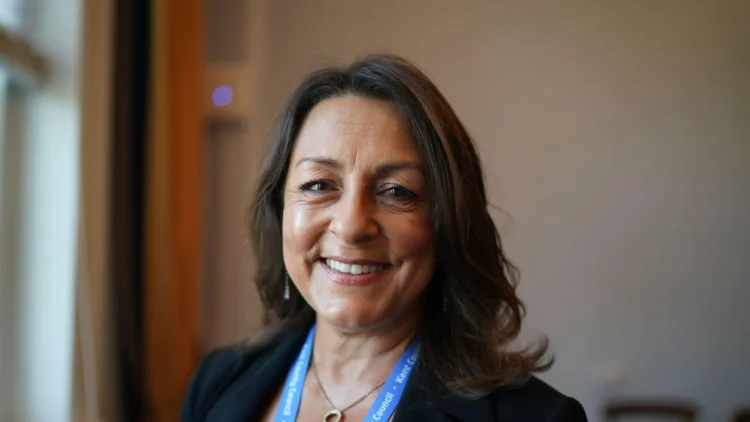
Linden Kemkaran, leader of one of Reform UK’s most high-profile councils, has said that some voters have “taken their eye off the ball” by being “enticed” by Restore Britain.
In an interview with PoliticsHome on the eve of the Reform conference in Birmingham, which started on Thursday, Kemkaran said that people who want a right-wing government will eventually realise that a vote for Restore Britain makes that outcome less likely.
Reform figures were initially dismissive about the threat posed by Rupert Lowe’s hard-right party. However, in recent months, there have been clear signs of Restore Britain hurting Farage by taking votes that otherwise probably would have gone to Reform.
For example, last Thursday, Green candidate Ingrid Dodd secured a surprise victory in a district by-election in Dover, thanks largely to the right-wing vote splitting three ways between Reform, Restore Britain, and the Conservatives. Reform finished second, just 34 votes behind.
At the Markefield by-election in June, Restore Britain got around 7 per cent of the vote. In the end, the scale of Andy Burnham’s victory rendered the combined right-wing vote academic. However, it was further evidence that Lowe’s party is capable of attracting significant levels of support, and prompted Farage to urge Restore Britain supporters to “think again”.
Kemkaran said the Dover result would end up being “very useful” for Reform, and “a very good case in point about what happens when you vote for a protest party, and you don’t vote for the party that’s actually going to do what you want them to do in that area”.
“It was a stark illustration of what happens if you take your eye off the ball and you stop realising that, actually, Reform is the only centre-right party that is in a position to form a centre-right government at this point in time,” she said.
“Restore can’t do it,” she added.
“Some people allowed themselves to be enticed to an alternative reality that they thought might be possible for whatever the things that Restore is promising.”
However, the council leader stressed: “You can never blame the electorate. You’ve always got to look internally as to what you might do differently next time.”
In an interview with The House magazine in the weeks leading up to Reform conference, party chairman Lee Anderson dismissed the threat of Restore Britain and insisted that “decent” people who had moved away from Reform to support Lowe’s party would come back once they realise that they risk making a Labour government more likely.
“Restore Britain just want to stop us from winning. It’s as simple as that,” Anderson said.
He also accused Restore Britain activists of “bullying” Reform campaigners at the recent Makerfield by-election, a claim which a Restore Britain spokesperson said was “nonsense”.
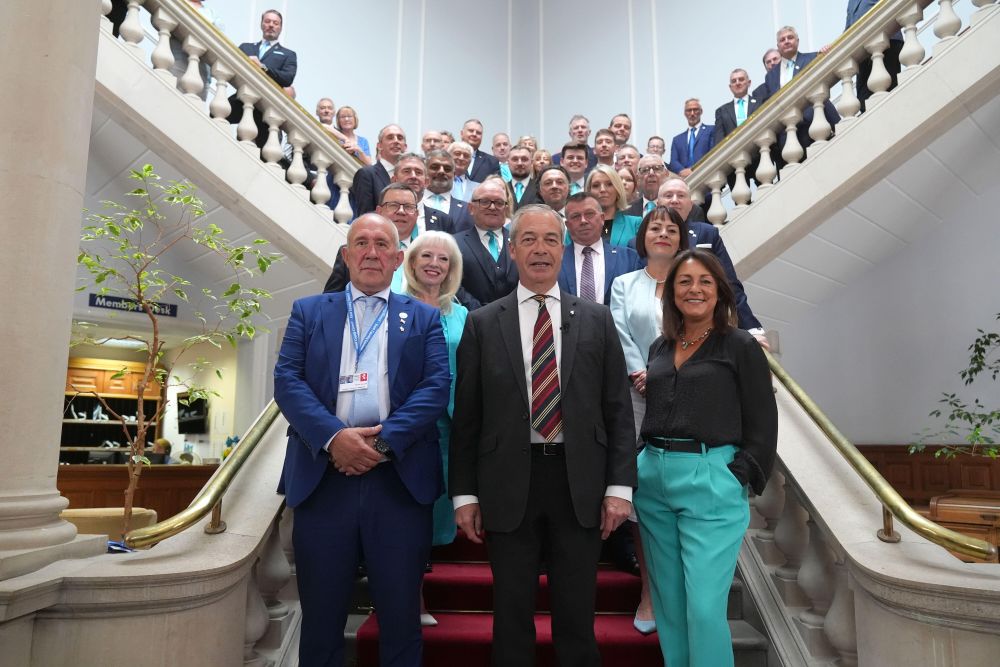
Reflecting on the 18 months she has been council leader in Kent, Kemkaran said she has realised “how difficult it can be to make things happen”.
She became leader having not previously served as a councillor, tasked with leading perhaps the most high-profile local authority won by Farage’s party. Kent was where Reform first piloted its programme of cutting what it describes as wasteful council spending, inspired by Elon Musk’s short-lived Department of Government Efficiency in the US, and Kemkaran has since set up her own version: Department of Local Government Efficiency. Reform’s bid to cut council spending has had to grapple with the financial pressures facing local government.
“I have made things happen,” the Kent leader told PoliticsHome, “but I’m unusually strong-minded and unusually tenacious in getting a grip of an issue very quickly and not being put off when people throw little obstacles in the way.”
Every Monday, Kemkaran joins a meeting with the party’s deputy leader Richard Tice and other Reform council leaders across the country. “It’s an incredibly useful time for us to be able to receive information, to share information, to alert each other to things we might need to be aware of. It’s a really it’s a good way to start the week,” she said.
On the national picture, Kemkaran insisted that Reform can regain momentum after a difficult few months, telling PoliticsHome that the “Burnham bounce” in the opinion polls is actually a “Burnham bubble” that she predicted will “pop any day now”.
“Once our manifesto is written, it’s going to be a huge selling point for the party. It’s going to convince an awful lot of people who are maybe Reform curious… because they’re going to see that we are the right party to fix the horrendous mess this country’s in.
“The other three magic ingredients are timing, luck, and judgment. If we can get those five to coalesce, that’s what we need to happen,” she said.
Kemkaran’s interview with PoliticsHome took place before an undercover investigation aired by Channel 4 on Thursday alleged that senior Reform officials arranged party donations that breached UK electoral rules.
—

Here’s why AIFF has preponed India vs Panama football match in Bengaluru | Football News

1 Month With the Noise REP Band: I Don’t Miss My Smartwatch

Money Heist vs Police 89 #moneyheist #parkour #police #escape #shorts #funchallenge00





-
 Crypto World22 hours ago
Bitcoin price stalls near $82K as key resistance holds
-

 Politics22 hours ago
Best Gaming Laptops, CPUs, TVs, And Keyboards To Upgrade Your Set Up For GTA VI
-
 Tech23 hours ago
The Birds Outside, Drawn For You Automatically
-

 Crypto World1 day ago
IMF Says El Salvador’s Post-Review Bitcoin Purchases Used No Public Funds
-
 Crypto World22 hours ago
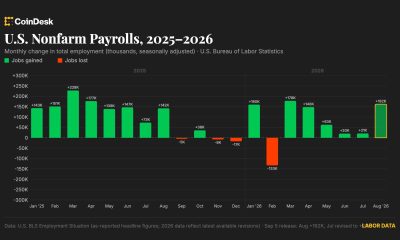
U.S. added stronger than expected 162,000 jobs in August as labor market bounced back
-
 Sports1 day ago
Alexandre Pato consortium’s Northampton Town investment approved
-

 Sports21 hours ago
Golden Eaglets Drawn in Group B for 2026 WAFU B U17 Championship
-

 Sports1 day ago
Commanders’ Chig Okonkwo is a top breakout fantasy football candidate
-
 Crypto World21 hours ago
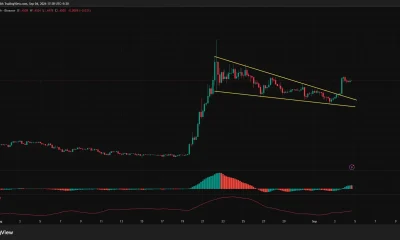
XRP price breaks falling channel as bulls target $1.53
-
 Politics1 day ago
A new European chapter for Gibraltar
-

 Politics24 hours ago
The House | Bin the lectures, bring gossip and be ready to banter: how the new PM should prepare for his Trump encounter
-

 Politics21 hours ago
How To Avoid Winter Colds: 4 Everyday Habits That Spread Germs, Says Pharmacist
-

 Crypto World21 hours ago
From warning to listing: UK’s largest retail investment platform opens access to crypto ETNs
-

 Tech23 hours ago
A Worthy Android Ereader, With Some Tradeoffs
-
 Crypto World22 hours ago
FinCEN flags $12.7B tied to Southeast Asia crypto investment scams
-
 Fashion17 hours ago
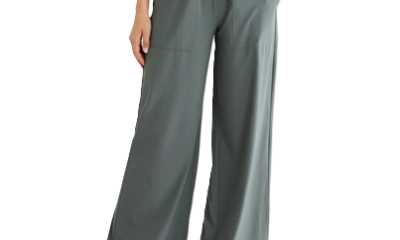
Weekend Open Thread: Beyond Yoga
-

 Crypto World21 hours ago
Trezor Data Breach Impacts 67,000 More US Customers
-
 Politics1 day ago
33 Cosy Autumn Home Decor Ideas: Blankets, Pumpkin Decorations, And Candles
-

 Sports1 day ago
Seven wickets in 21 balls: Sri Lanka’s Chamari Athapaththu scripts history with record-breaking spell
-

 Tech22 hours ago
How To Edit Claude’s Memory
You must be logged in to post a comment Login