Politics
“I’m Not Going To Lie. Is That A Problem?”


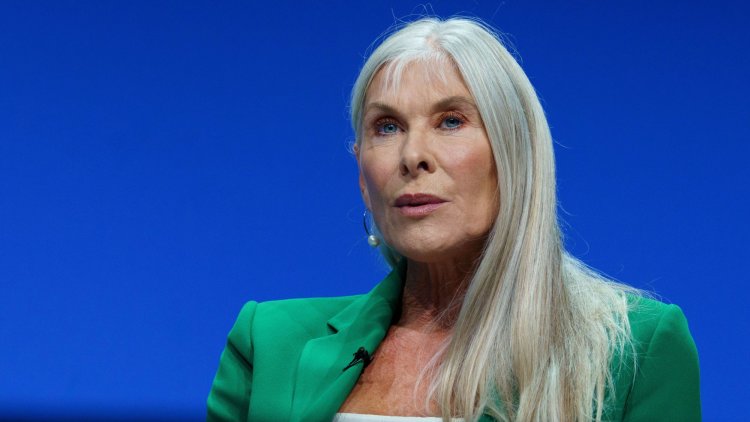
Sharron Davies, Conservative Party Conference in Manchester Central, October 2025 (Credit: Bridget Catterall/Alamy Live News)


11 min read
From racing doped East German swimmers to campaigning on women’s sport, Olympic medallist turned Conservative life peer Baroness Davies tells Sienna Rodgers that fairness will drive her work in the Lords
When Kemi Badenoch called Sharron Davies to ask her about joining the House of Lords, the outspoken former Olympian told the Tory leader she had two conditions.
“I said, ‘There are two things, Kemi, when I come in. The first one is, I’m not going to lie. Is that a problem?’ And she went, ‘No, that’s why I’m asking you,’ to her credit. And the second one, I said, ‘I have a grandma day, and I’m not prepared to give it up.’”
Baroness Davies of Devonport, 63, is a mother of three, all now adults, and grandmother of two little ones aged five and two. Although she relishes Mondays looking after her granddaughter Ariya, she has taken to her new role as a legislator with gusto and arrives with a definite agenda: women’s rights, children’s mental resilience and fitness for all.
Determined to spend two to three days a week in Westminster, she commutes from Bath for long days on the red benches: “I don’t think people realise how hard the people in the Lords actually work, and the amount of reading that’s required all the time.” And she must squeeze in the gym three or four times a week or she gets “cranky”.
Sitting in the peers’ guest room, Davies is immediately recognisable with her long white hair, piercing blue eyes and swimmer’s build. When she describes how, in an Olympic dining hall, you can easily guess each athlete’s sport from their body shape (“oh, there’s a gymnast, there’s a weightlifter, there’s a swimmer, there’s a high jumper”), The House can see exactly what she means.
Is it true, as has been reported, that she used to pee in the pool to put off competitors?
“That’s rubbish. It’s nonsense! I think it’s one of those stupid things where I went on a programme – I don’t know, They Think It’s All Over – in a jokey environment where you’ve got a comedian running the show, and somehow the whole thing goes to, ‘Who’s peed in a swimming pool?’, and I probably put my hand up.
“Bearing in mind I was spending six hours a day for 10 years of my life in the swimming pool, it’s really not unusual that I might have once peed in a swimming pool. I certainly didn’t do it to put competition off, and I certainly didn’t do it in a race. So, that’s garbage.”
“The psychological bashing was far worse than the physical bashing”
Davies talks tough and fast. Born in Plymouth to a big Navy family, she was coached in swimming from a young age. First by a professional who retired when she was about 10, and then by her ex-Navy father who learnt on the job, consulting books and personal trainers for advice.
She once broke both arms while tree-climbing. Her father sent her back in the pool with plastic bags over her casts.
“The thing is, though, elite sport is really hard. It’s not a walk in the park, and it’s not something where you can go, ‘Oh, I don’t feel like training today so I’m not going to go’. You’re not going to win if you have that attitude,” Davies explains.
“He got it in his head that one day missed was one day the opposition had against me. He didn’t really think that sometimes pushing when someone is very poorly… Funnily enough, the ‘two broken arms’ wasn’t the worst thing, because I wasn’t in pain once they were in plaster.”
What was the worst thing? “He trained me all the way through glandular fever.” He would motivate her by telling her she probably couldn’t do it. “And because I was bloody minded, I would do it.”
“The psychological bashing was far worse than the physical bashing, and it’s amazing, physically, what you can actually deal with. But mentally, that’s the bit that becomes much more delicate, really,” she continues.
“That happened in ‘79, ‘80, only six months before my Olympic Games where I won my medal. And that was really hard. On top of that, we had Mrs Thatcher trying to pull us all out of the Olympic Games. I’d been training for 10 years, and I was maybe not even going to get to go. Those six months leading up to that Olympics were mentally very, very tough.”
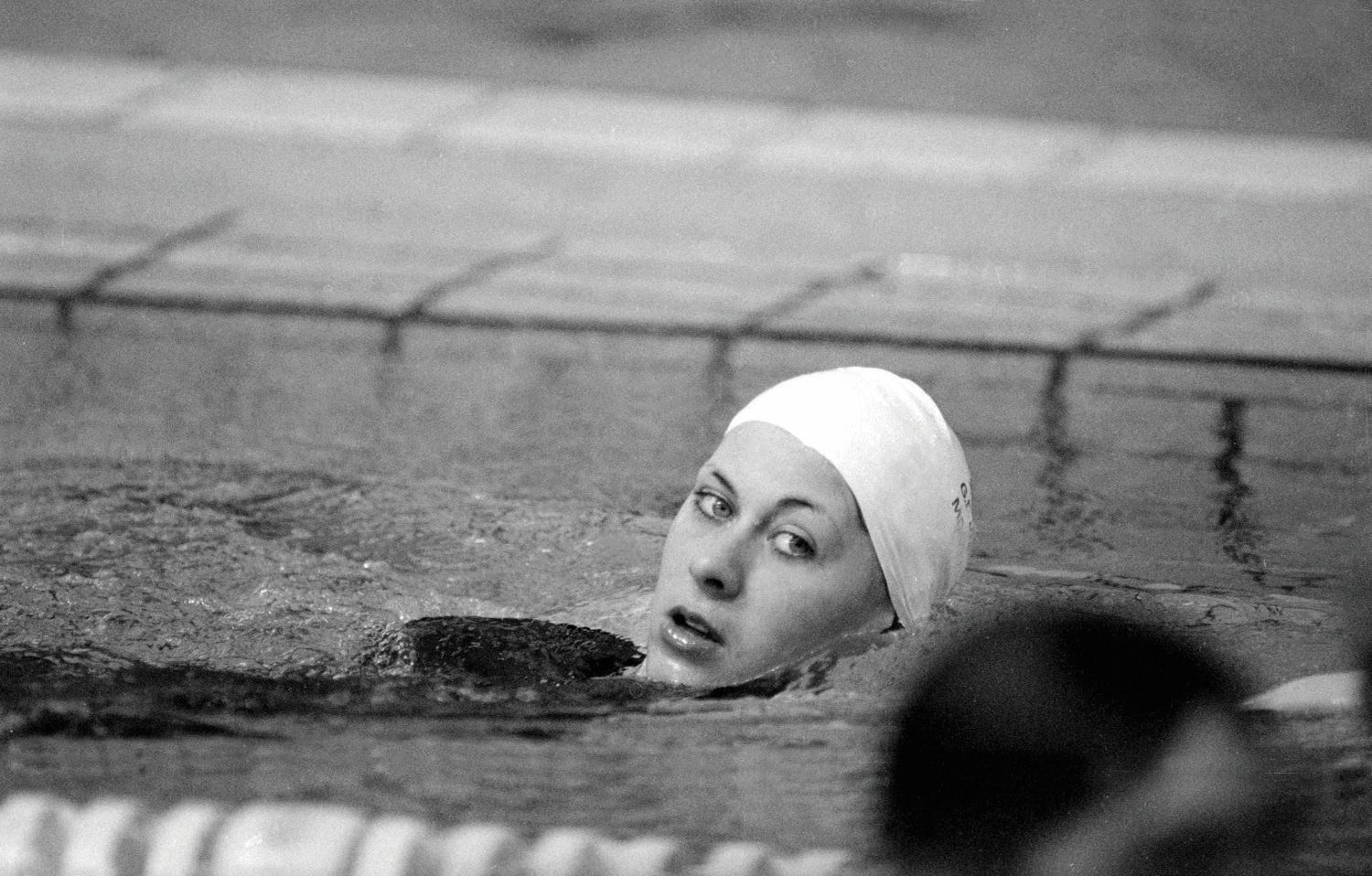

Aged 18, she won silver in the Moscow 1980 Olympics. Many countries boycotted the games, which took place during the Soviet-Afghan war, and the final medal tally was skewed amid widespread doping by East Germany and the Soviet Union.
German swimmer Petra Schneider took gold in Davies’ race, with a whopping 10-second gap, as well as setting five world records at the games. She later admitted to steroid use.
“These poor girls turned out with square jaws and five o’clock shadows. The gaps were massive. They would take 1, 2, 3 – no one had ever seen them before. That just doesn’t happen,” Davies says.
“All of them were ill, and many of them have died, and several of them have had disabled children – all because the state wanted to win medals in major internationals.
“I had that 20-year period where they were my nemesis. They were there all the time. All of my major medals were behind East Germans – every single one. I’d have been European champion at 14, had it not been for East Germans, as well as Olympic champion.”
At the time, Davies “didn’t really speak” to her doped rivals: they were surrounded by guards and always kept on separate buses. She remembers bringing them gifts from the capitalist West, however.
“I used to take tights and make-up and magazines for the East Germans and the Russians,” she says. “One Russian lady I used to swim against all the time, I got on really well with, and I’d take her stuff from the West, because they had nothing.”
While travelling behind the Iron Curtain racing as a girl, Davies says, she saw “extreme socialism”. The experience has clearly shaped her politics. Although never a paid-up party member until last year, she has almost always voted Tory (apart from once voting for Tony Blair’s Labour). As a “big believer” in common sense and ambition, she sees herself reflected in the Conservative Party ethos.
Davies had just had her second child when the Berlin wall came down and she went over to meet Schneider. Her former rival, who couldn’t have more children, was “besotted” with Davies’ daughter Gracie.
“She’d been told it was too dangerous to have any more kids. She had one daughter. She really wanted more kids. She literally tried to give me her medal, which is very sad. She’s very poorly. She takes all sorts of pills, for kidneys and heart and goodness knows what.”
She still feels the unfairness of East German victories against her and her friends keenly, but there is empathy there too.
“What Petra said to me, which was quite interesting, and also against the rules at the time: they were winning cars and flats for their parents,” she says. “Who am I to say I wouldn’t have done exactly the same thing in their position? So, I never had a problem with her as an individual. It was the state and it was the IOC I had the problem with, who let this happen and did nothing to stop it for such a long time.”
“We win races by hundredths of a second, and you’re saying we should potentially give away three-quarters of the length of the swimming pool”
For Davies, the lesson is straight-forward: fairness in sport can disappear quickly if governing bodies fail to act. “If you cut me down the middle, it would just say ‘fair’,” she says. The blatant injustices of the era in which she competed have made Davies vigilant about protecting women’s sport – and for her, the contemporary question of transgender inclusion is directly comparable to doping.
Over the last decade, prompted by the International Olympic Committee (IOC) removing its requirement for trans athletes to undergo sex reassignment surgery, she has campaigned against the inclusion of trans women in female categories, including in her 2023 book Unfair Play.
“Really, it’s never been my perspective wanting to keep anybody out of sport – the opposite. I want everyone to do sport, but I just believe that women and girls deserve their fair opportunities,” she argues.
“We get this tiny, tiny slither of the cake, and then we were told we can’t even have fair sport anymore. I just thought, I can’t sit and watch this happen to another generation of young women all over again.”
Davies is adamant that no peer-reviewed science shows it is possible to remove male physical advantage. (While research on performance advantages continues to be contested, and policies vary between sports, the IOC is thought to be moving towards her position on this same basis.) Tiny differences matter hugely, she points out: Michael Phelps, for example, was a swimming “superstar”, yet his world records have already been broken because the margins are so slim.
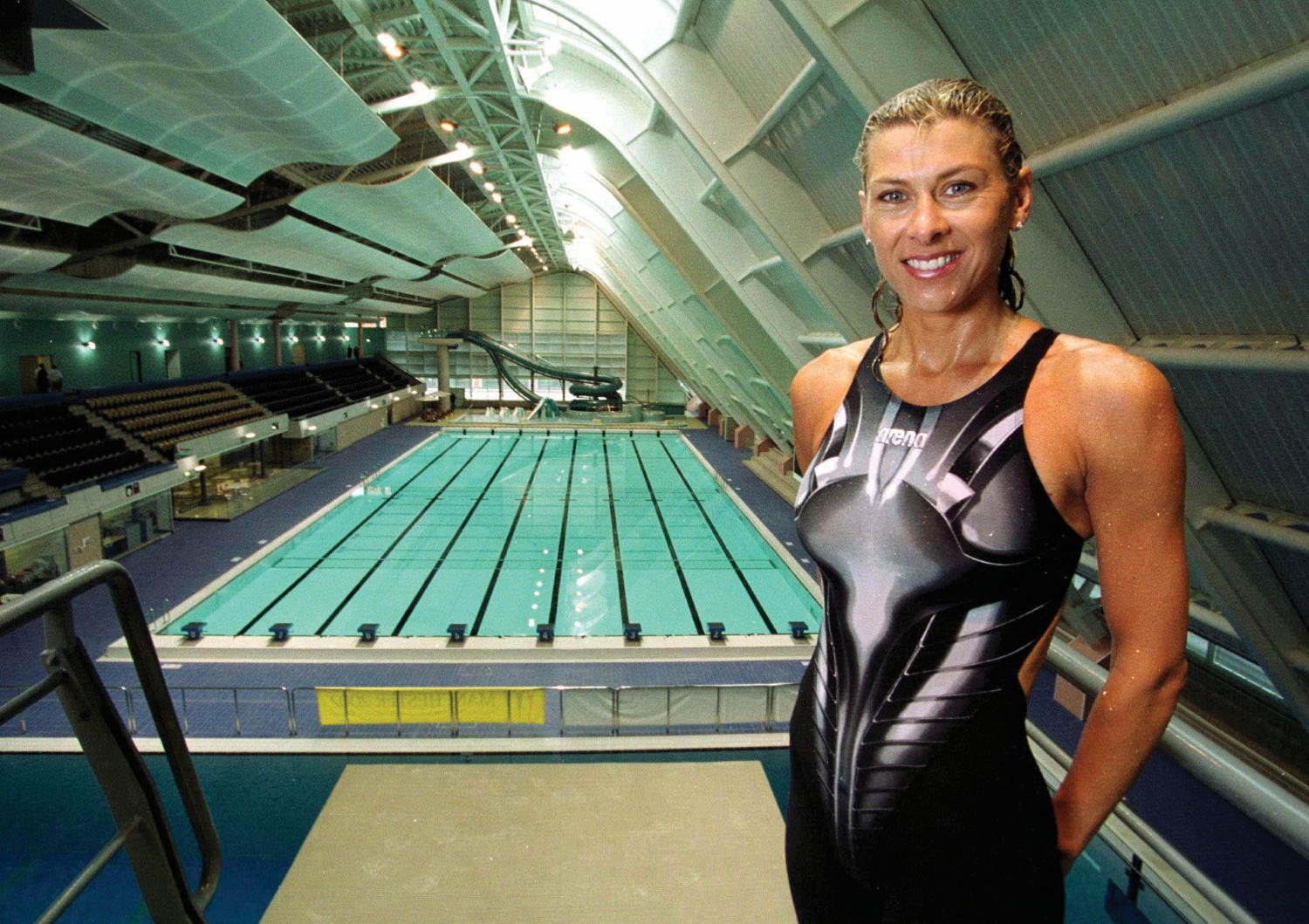

“At Olympic level, we’re talking between 10 and 30 per cent,” she says of the male advantage. “Even in swimming, which is the closest at 10 to 11 per cent, that’s nearly three-quarters of the length of the swimming pool. We win races by hundredths of a second, and you’re saying we should potentially give away three-quarters of the length of the swimming pool.”
The other side sometimes argues that elite sports already accept huge biological variation – wingspan in swimming, lung capacity in cycling – and those competing are already exceptional, so why should sex-linked advantages be different?
“That’s a rubbish argument,” Davies replies. “The category isn’t arm span; the category isn’t lung capacity; the category isn’t the size of your feet. The category is biological sex.”
Trans athletes have complained about the overly hostile nature of the debate and say there is too little understanding of the difficult situation they find themselves in. Not allowing them to compete in the category that matches their gender identity, they argue, is discriminatory and unfairly limits access to sport. What is her response?
“Why does the conversation always turn around to men in women’s sport, who we’re supposed to feel sorry for?” she shoots back. “Why is your first instinct to say, ‘but the poor men can’t be in the women’s races where they want to be’, rather than ‘the poor women are losing their medals and opportunities’? Why are women taught to put themselves second, third and fourth all the time?”
The solution she champions is two categories: one female category and another open and inclusive. Not all sports governing bodies agree: some still allow trans women to compete if they suppress testosterone for a period of time; others, as in rounders, are not considered sex-affected sports, which Davies rejects. “We already have legal precedence which shows that the pool is a sex-affected sport, so you can be damn sure hitting a ball with a bat is sex-affected.”
President Trump has reversed Biden-era rules around trans inclusion in sport, decreeing that schools which “let men take over women’s sports teams” risk their federal funding. Davies is highly supportive – but what does she make of Trump generally?
She hesitates for the first time. “He’s definitely a polarising character, isn’t he? There’s a lot of things about him I don’t like. But obviously, with regards to protecting women’s sport, he’s absolutely done the right thing.”
Davies is enthusiastically pro-Badenoch, having worked with her on these issues when the Tory leader was equalities minister: “I have great faith in Kemi. Kemi is probably the biggest reason why I said yes. I really like Kemi. I like her scruples. I like the way she thinks. I like her honesty. I think she’s a great leader. She would make a great prime minister.”
The campaigner enters the Lords with certain priorities – first, “to ring-fence women’s sport and create better opportunities for it”. She would like to bring in a British equivalent to the American ‘Title IX’ law, which requires equal provision for men and women in sporting facilities.
And, notwithstanding her own fondness for posting online, Davies urges girls to get off social media and into sport. “We used to lose girls from sport at about 14, 15, when they discovered boys and makeup… Now we lose girls at 11.” She wants to find new ways of engaging them. “If that means hair dryers and changing rooms and Zumba classes, then let’s think outside of the box.”
Davies may only just be settling into life in the Lords, but she is already considering the legacy she wants to leave there – and pursuing it with characteristic tenacity.

You must be logged in to post a comment Login