Politics
Is It OK To Eat A Sprouted Onion?

Turns out you don’t have to toss out all mouldy cheese. If it’s hard, like Parmesan, you can usually cut the damaged bit out and remain safe (though you should never do that with softer versions, like brie, cream cheese, and ricotta).
And given that they’re not soft and wrinkly, potatoes with small eyes are usually fine – though green ones are not.
Mouldy bread, on the other hand, is always a no-go.
But what about sprouting onions? I often find myself asking for, well, reasons like the one pictured below.

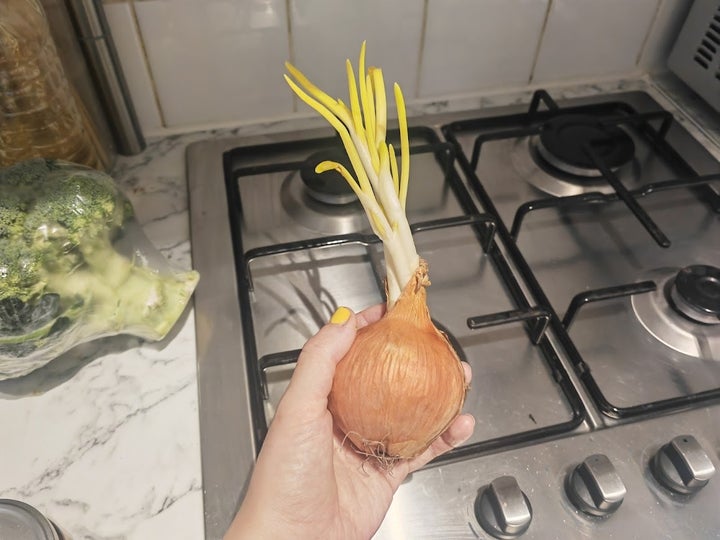
Are sprouted onions safe to eat?
The sprout that comes from the top of older onions is part of the plant they would have become, if only my kitchen knife let them.
This is a problem with potatoes, because the potato plant is toxic to humans thanks to a substance called solanine.
But onion plants are not toxic to us. So go ahead and use that sprouted bulb.
In fact, Delish reported, you can actually eat the green and white sprouts themselves if you want to.
They taste “pretty darn similar” to spring onions, the publication shared, “So feel free to chop them up and use them in your recipes”.
Do sprouted onions taste worse?
OK, so it doesn’t seem a green-clawed onion will hurt you much.
But what about the taste?
Unfortunately, that might be a little worse for wear after a green growth spurt.
“Since in your kitchen, I assume you don’t have soil, the sprouts need to pull the nutrients from somewhere,” Brittany Towers, also known online as The Black Food Scientist, said in a YouTube short.
And in the absence of sweet sweet Earth, “that ‘someone’ is the onion.
“The onion has nutrients and sugars that the sprouts are pulling from the onion, so once your onion’s sprouted, it likely won’t be as sweet, and it can be a little bitter,” she explained.
So, they’re much better cooked than raw.