Politics
It is in all our interests to get the Sustainable Development Goals back on track


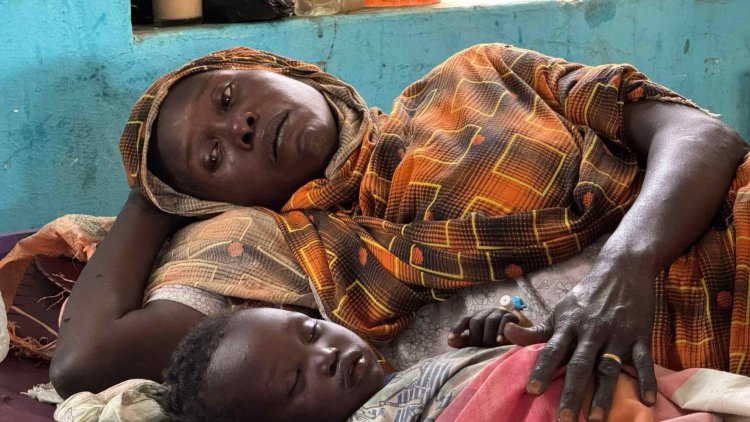
March 2025, Sudan: mother and child on a paediatric ward, White Nile State | Image by: Xinhua / Alamy


4 min read
Progress made across education, maternal and child health, and access to safe water and sanitation, shows what happens when ambition meets action
In 2015, the world came together with a bold ambition – to form a global partnership to tackle global poverty and inequality, combat climate change and protect our planet.
The result was the UN Sustainable Development Goals (SDGs): a call to action, in the form of 17 promises that provide the world with a roadmap to build a healthier, safer and more equal world by 2030.
Ten years on, however, progress towards achieving the SDGs is alarmingly off-track. Despite headway across many indicators, the world’s attention has waned over time, and the goals are at risk of becoming a cursory afterthought.
The goals reinforce the fundamental belief that everyone, no matter where they are born, is entitled to a life free from poverty and persecution. They represent a promise to the next generation: that the international community, including the private sector, is taking action to fix the challenges of climate change, conflict and inequality.
Progress made across education, maternal and child health, and access to safe water and sanitation, shows what happens when ambition meets action. Over 100 million more children are in school, and 16 per cent more children are surviving past the age of five than in 2015. New infections of HIV and malaria have plummeted as health systems have been strengthened. These gains were possible because funding and investment flowed, innovation scaled, and public and private institutions decided that ‘doing good’ and ‘doing well’ could go hand in hand.
However, amid increasing global challenges, this progress is under threat. The level of conflict has risen to its highest level since the end of the Second World War, with 59 active conflicts raging in over 35 countries. There are more people forcibly displaced than at any point since records began, and inequality is deepening worldwide.
Global challenges not only obstruct progress towards achieving the SDGs: they also act as brakes on economic growth and stability
In the face of these crises, the world has turned its back on its most marginalised communities. Historic partners in the fight against poverty and inequality, including the UK, have cut their Official Development Assistance budgets and retreated from international commitments – leaving more people in conflict zones without access to food and water, fewer reproductive health services available to women and girls, and defences against disease and climate change weakened.
The UN warns that the current pace of change is not enough to achieve the goals by the target, less than five years away. Nearly half of indicators are moving too slowly or making only marginal progress, while 18 per cent have regressed below 2015 levels.
These global challenges not only obstruct progress towards achieving the SDGs: they also act as brakes on economic growth and stability. Conflict, displacement and climate instability cause supply chains to fracture, food systems to crumble, and economies to shrink: damaging commercial interests while hindering progress towards a safer, healthier and more equal world for all.
To drive progress towards the SDGs and tackle the world’s challenges, our solutions must also be global – and rely on strong leadership, adequate funding and genuine cooperation to succeed. Governments must step up to fund humanitarian and development assistance and commit to ambitious reform of global economic systems. Businesses must channel investment and innovation to fuel sustainable growth, redress the impacts of climate change and facilitate development that uplifts the world’s most marginalised communities.
The past decade has shown that progress is possible when the world works together. A sustainable, resilient future is within reach, but the next five years will be decisive. Governments, donors and businesses must step up and deliver on the Sustainable Development Goals together. There are no opportunities, business or otherwise, on a dead planet.
Tracy Gilbert is Labour MP for Edinburgh North and Leith and co-chair of the United Nations Global Goals APPG
