
Politics
John Redwood: Whatever the failings of the state, it is ministers who are ultimately responsible

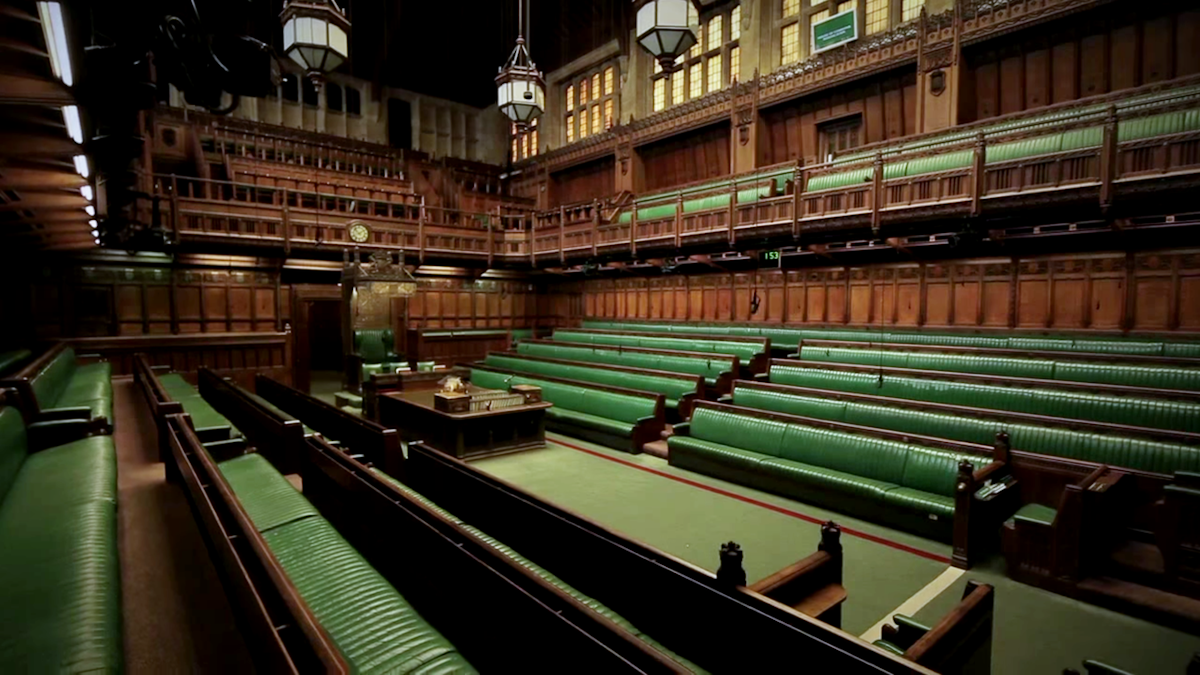
Sir John Redwood is a former MP for Wokingham and a former Secretary of State for Wales. He will soon join the House of Lords.
Many ministers are intelligent and well-intentioned people. When Rishi Sunak said “Stop the boats” he meant it. When Yvette Cooper said “smash the gangs”, she probably meant it. Yet illegal migration came down only a bit under Sunak, and shot up again under Labour. It was not stopped or drastically reduced as people want. It is going to take more changes of our laws and instructions to courts to deliver. The system seems to thwart the policy.
Conservative and Labour governments in recent years have put huge extra money into the NHS. Ministers have asked for more consultations and treatments to get waiting lists down. Instead, there has been a big collapse in productivity. Labour’s reduction in waiting lists is mainly an exercise in removing the dead, ending double-counting and dropping those who have recovered from the lists. Conservative ministers wanted the lists made accurate, but it did not happen. (The lists should always have been more accurate.)
Both Conservative and Labour have tipped ever more subsidy into the railways and have taken more government control over how they are run. As a reward, the fully-nationalised HS2 has run ever later behind schedule and presented taxpayers with ever bigger bills. Both governments agreed that the performance was so bad, and the costs so huge, the railway would no longer reach the North, its planned destination and main original purpose.
So why does nothing work? Sometimes it is politicians who let appearances triumph over reality. Labour ministers who say they want less illegal migration may want more legal migration and are looking at ways of switching people from illegal to legal. More normally, however, it is a worrying failure of public sector management. Ministers set targets and issue instructions. They vote through more money. But things do not work.
There may in some cases be ministers who expect too much and contribute too little. Regardless, they are ultimately responsible and have to take the blame. For example, Labour thought it could set a target of building 1.5 m homes and tried to get more planning permissions agreed; it did not understand its tax and economic policy meant people could not afford the homes so the builders cannot build them all.
Quite often, however, the fault lies in failure by senior executives and officials in the public sector. Targets and general policies are agreed, but they do not follow through, or do not design the detail in ways that can work.
Part of the answer can be ministers who do more of the detail and take more daily interest in the implementation and management of policy. Ministers can intervene in many ways, and demand good regular reports on outcomes.
It would help if they stayed longer in a job, and would improve chances of success if they had agreed with the prime minister (or their secretary of state) what their main tasks and objectives are, so they can concentrate on the differences they wish to make. The Conservative deployment of Nick Gibb as an schools minister to raise literacy standards shows how powerful this approach can be. He led the schools to use synthetic phonics to teach reading – and England’s reading standards rose well.
Part of the answer is to improve bonus and performance monitoring schemes for top officials. Some of the biggest disasters like HS2 and the Post Office have occurred where public sector CEOs are paid £500,000 or more, well over civil service norms. The CEOs also were often paid bonuses, yet their organisations were losing large sums, over-running budgets, and creating many problems. By all means pay some senior managers big money – but only if they beat budgets, deliver on time or sooner, show an ability to get better value for money, and drive higher productivity and quality. Pay no bonus if things are going wrong, or remove them promptly from the job if poor performance is likely to be endemic.
I have been drawing up a toolkit of methods used by good managers to align staff and service users interests, to demonstrate efficiency and quality are two sides of the same coin, to reduce the cash demands needed for the provision of good services. The public sector often keeps too much stock, part occupies too many buildings, has too many staff in roles that do not assist its main tasks, and uses too many expensive consultancies and agency staff for things it could get its own employees to do in house.
As I take up the privilege of becoming a peer in the House of Lords, I look forward to more opportunities to develop this debate on how ministers and managers in the public sector can work together better to achieve so much more for the service users. We also need to save taxpayers more of the costs of waste and failure, which are part of the cause of high taxes and excessive borrowing. If the UK public sector could recoup lost productivity since 2019 the largest part of the current deficit would disappear. If it could manage just a one per cent% annual productivity gain; but even that saves £13bn a year.


Megan Thee Stallion is in hospital after falling ill on stage in New York on Tuesday night.
The Grammy winner recently took over the role of Zidler in the Broadway production of the musical Moulin Rouge!.
During her latest performance, Megan was forced to leave the stage mid-show, and was subsequently rushed to hospital due to an undisclosed illness.
The Hot Girl Summer rapper’s representative told Variety: “During Tuesday night’s production, Megan started feeling very ill and was promptly transported to a local hospital, where her symptoms are currently being evaluated.
“We will share additional updates as more information becomes available.”
The Texas-born musician began performing as Zidler last week, taking over the role from RuPaul’s Drag Race winner Bob The Drag Queen.
She previously enthused: “Stepping onto the Broadway stage and joining the Moulin Rouge! The Musical team is an absolute honour.
“I’ve always believed in pushing myself creatively and theatre is definitely a new opportunity that I’m excited to embrace.
“Broadway demands a different level of discipline, preparation and storytelling, but I’m up for the challenge and can’t wait for the Hotties [Megan’s name for her fans] to see a new side of me.”
Megan’s breakthrough moment came in 2019 with the Nicki Minaj and Ty Dolla Sign collaboration Hot Girl Summer.
The following year, Beyoncé recorded a guest feature on her hit Savage, with Megan and Cardi B later teaming up on the hit WAP, which reached number one on both sides of the Atlantic and generated a lot of conversation due to the song’s sexually-charged lyrics and music video.
In 2021, Megan was awarded Best New Artist at the Grammys – beating stiff competition from the likes of Doja Cat and Phoebe Bridgers – as well as picking up Best Rap Song and Best Rap Performance for the Beyoncé mix of Savage.
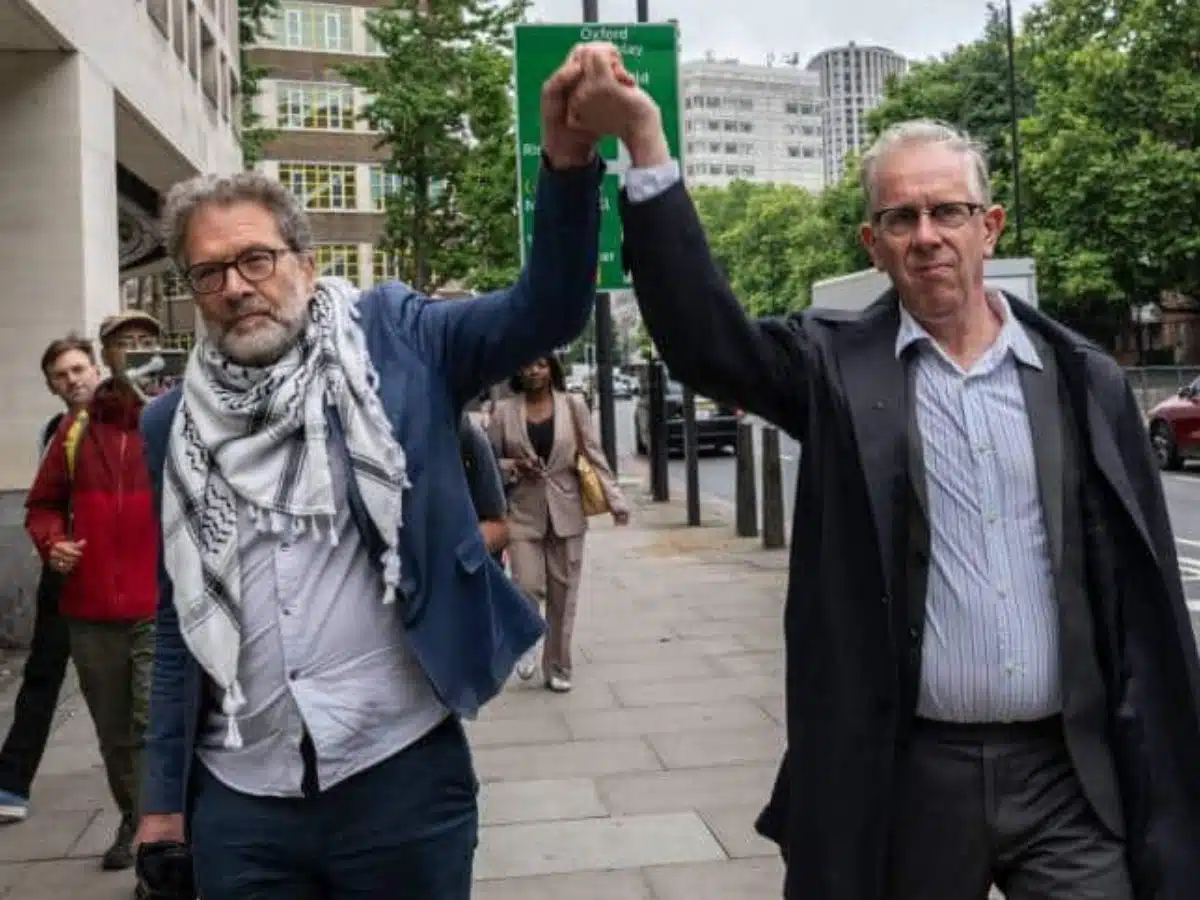
The Palestine Solidarity Campaign (PSC) and Stop the War (StW) formed a coalition in shared opposition to the genocide in Gaza. Since then, more than 20 national protests across the UK have demonstrated that the British public does not support the mass killing of Palestinians.
However, authorities convicted PSC director Ben Jamal and StW vice-chair Chris Nineham on two counts under the authoritarian Public Order Act introduced by Suella Braverman.
This ruling has sent shockwaves through the pro-Palestinian community, as repressive police powers actively undermine and curtail the ability to protest.
Refusing to be deterred, the PSC has published a statement on behalf of the coalition, condemning the verdicts as:
extraordinary and shocking and a huge setback for civil liberties.
We spoke to Chris Nineham following his conviction under this draconian law:
Stop the War and Palestine Solidarity Campaign activists Chris Nineham and Ben Jamal have been found guilty of “breaching protest conditions” – we spoke to Chris Nineham@STWuk pic.twitter.com/zDr6JxRDeJ
— Canary (@TheCanaryUK) April 1, 2026
“A seismic threat to democratic freedoms” say pro-Palestine coalition
In this statement, it is made clear that Nineham and Jamal intend to appeal their verdicts. Helping them with that appeal, they will have full support of the pro-Palestine coalition behind them. Undoubtedly, they will have support of the wider British public in which a majority oppose Israel’s bloodthirsty actions.
They then go further by highlighting “significant concerns” about how the six-day trial was conducted. These concerns will be subsequently raised in their imminent appeal.
Arguably pointing to a stitch up, the statement reads:
The substantive issues at the heart of the case were clear. From the stage that day, Ben Jamal explained that a delegation of leaders of the coalition, plus MPs, trade union leaders and members of the Jewish bloc, would walk peacefully in a symbolic protest towards the BBC to lay flowers to mark the Corporation’s failures to report the truth of genocide in Gaza.
Ben made clear that, if stopped by the police, the flowers would be laid at the police line. In the event, as copious video evidence shows, police officers invited the delegation to pass though.
They also argue that the claims of public disorder made by the police were categorically untrue.
In fact, they underscore the violence that they did see that day:
The only moment of violence was when Chis Nineham was brutally pulled to the ground and hauled away by police officers.
Contradicting Police Commander Adam Slonecki’s adamant insistence that the imposed late restrictions did not follow political pressure from pro-Israel groups, they added:
The logs of the Police Gold Commander Adam Slonecki reveal that enormous political pressure was placed on the police by pro-Israel groups to prevent a protest at the BBC.
Islington MP Jeremy Corbyn has condemned the judge’s verdict, saying he is “appalled”:
I am appalled by today’s verdict against Ben Jamal and Chris Nineham.
In January 2025, we held an entirely peaceful demonstration in support of Palestinian people. At all times, they — and we — followed all police instructions. We ended the demonstration by laying down flowers… https://t.co/A8bCsKOJ9X
— Jeremy Corbyn (@jeremycorbyn) April 1, 2026
Defending the actions of Jamal and Nineham at the protest, which Corbyn was also taking part in, he wrote:
In January 2025, we held an entirely peaceful demonstration in support of Palestinian people. At all times, they — and we — followed all police instructions. We ended the demonstration by laying down flowers at their feet to mourn the deaths of Palestinian children.
Today’s verdict is a dark day for civil liberties in this country — and is a disgraceful assault on the right to protest.
We wrote earlier today after the court’s judgement:
It is clear that the government are refusing to back down in its attempts to intimidate and bully British citizens into no longer standing by our Palestinian comrades. Heavily funded by the Israel Lobby, Starmer’s government have long ignored and diminished rising islamophobia, whilst unduly declaring anti-Zionist positions as antisemitic.
Crime and Policing Bill
The statement goes on to draw attention to the Crime and Policing Bill which is making its way through Parliament:
It confirms the view, widely held across civil society, that these proposed increased powers represent a seismic threat to democratic freedoms.
They raise alarm at the chilling impact this is clearly intended to have on people supporting Palestinians:
The unprecedented charging and now conviction of leaders of a movement that has brought millions to the streets in support of the people of Palestine is designed to chill ongoing opposition to genocide, apartheid and illegal occupation.
It finishes with a typical show of dogged resistance to state oppression and repression:
It will not succeed.
That it most certainly won’t, as a call to action is heard for the upcoming protest on the 16 May in London:
So, Ben Jamal and I have been convicted for organising a peaceful protest against genocide in a bizarre decision by one judge.
This is a big attack on civil liberties.
We will appeal. We call for a massive mobilisation in support of the Palestinian people for Nakba on 16 May. https://t.co/ftX7S069Bl
— Chris Nineham (@ChrisNineham) April 1, 2026
Featured image via the Canary
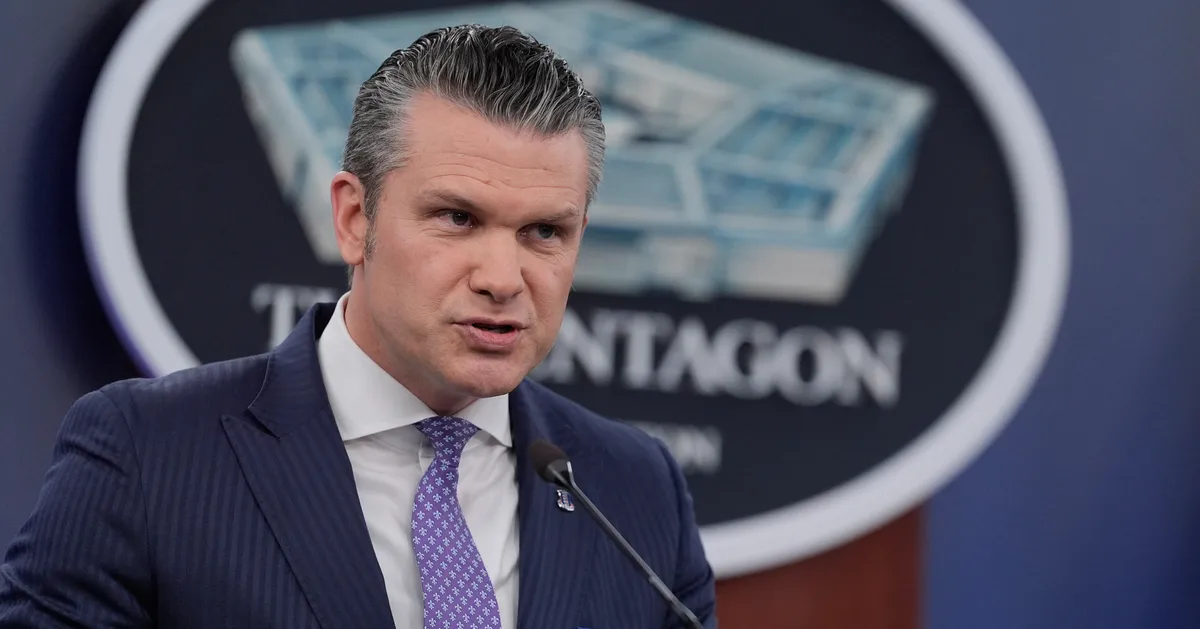
The US secretary of defence has mocked the “big, bad Royal Navy” for not joining America in its war against Iran.
Speaking from the Pentagon on Tuesday, Pete Hegseth said: “There are countries around the world who ought to be prepared to step up on this critical waterway as well.
“Last time I checked, there was supposed to be a big, bad Royal Navy that could be prepared to do things like that as well.”
He added: “This is an international waterway that we use less than most. In fact, dramatically less than most.
“The world ought to pay attention, be prepared to stand up.”
His remarks come after Keir Starmer’s government refused the US request’s to use British military bases for preemptive strikes on Iran last month.
The UK did allow American troops to use their sites for defensive and limited strikes, though Donald Trump has continued to attack Britain for its perceived lack of support.
He compared UK aircraft carriers to “toys” and told the prime minister “not to bother” sending ships to the Gulf.
On Tuesday, he told allies “you’ll have to start learning how to fight for yourself”, urging Britain to “go get your own oil” from the Strait of Hormuz as Iran continues its blockade.
Writing on TruthSocial, the president said the UK should either buy jet fuel from the US or “build up some delayed courage, go to the Strait and just TAKE IT”.
Meanwhile, the UK’s First Sea Lord has warned that the Royal Navy is not ready for war and that it “had work to do”.
Gen Sir Gwyn Jenkins told Swedish newspaper Svensky Dagbladet on Monday that the Navy could still fight with what it had and that “if we were told to go to war, of course we would”.
But he added: “Are we are ready as we should be? I don’t think are. We have work to do and I am completely dedicated to the mission.”
UK defence secretary John Healey also announced on Tuesday that the UK would be deploying dozens of troops and its most advanced air defence missile system to Saudi Arabia as the Middle East conflict continues to escalate.
Subscribe to Commons People, the podcast that makes politics easy. Every week, Kevin Schofield and Kate Nicholson unpack the week’s biggest stories to keep you informed. Join us for straightforward analysis of what’s going on at Westminster.
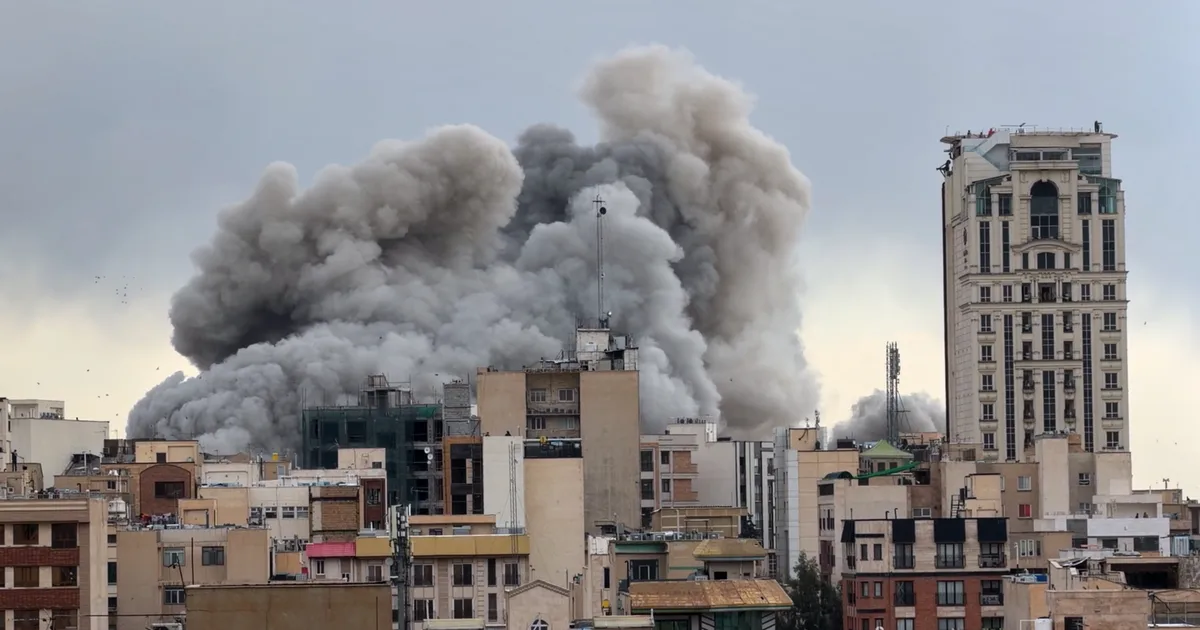
The Iranian ambassador to the UK has warned attacks on British bases are under consideration in an alarming intervention.
Seyed Ali Mousavi claimed that Keir Starmer’s decision to allow US forces to use British sites for defensive and limited strikes could end up putting a target on the UK’s military.
Speaking to Times Radio, he said: “The initial position made by the prime minister Starmer is very good.
“We do appreciate, we do welcome the non-involvement in this criminal act of the American side and the Israeli regime.
“But unfortunately, now we have realised that the British Fairford military base has been serving for the B-2 and B-1 jets of the American side to be equipped by the different weapons to use against the Iranian people.
“It’s very unfortunate.”
Asked if British bases and British military assets could be legitimate targets, he replied: “This is the very important matter we are considering. This is a very important matter for our self-defence.”
He claimed the military section of their “system” will decide depending on UK “activities”.
He added: “We are very careful and delicate how to defend ourselves.”
His remarks are especially alarming, considering Starmer has repeatedly insisted that the ongoing Middle East conflict is “not our war”.
Meanwhile, Labour MP and defence select committee member Calvin Bailey has warned there is a “real risk of escalation” in the region.
The former Wing Commander told Times Radio: “There’s always a risk of escalation and that’s why it’s never desirable to enter conflict without understanding what the goals of those operations are.
“That’s why the UK remained out and didn’t follow or support the US in starting the conflict that it’s now engaged with Iran. But dealing with the consequences of it is entirely legitimate and it’s reasonable.”
He warned Britain could be dragged further into the conflict too – as could other allies and partners in the Gulf region.
“The reason why we’ve got larger numbers of forces in the region is that they’re there to protect those allies and our people that exist within their country,” Bailey said.
“We just have to make sure that the assets are there to provide protection and assurances that they expect of us.”
Subscribe to Commons People, the podcast that makes politics easy. Every week, Kevin Schofield and Kate Nicholson unpack the week’s biggest stories to keep you informed. Join us for straightforward analysis of what’s going on at Westminster.
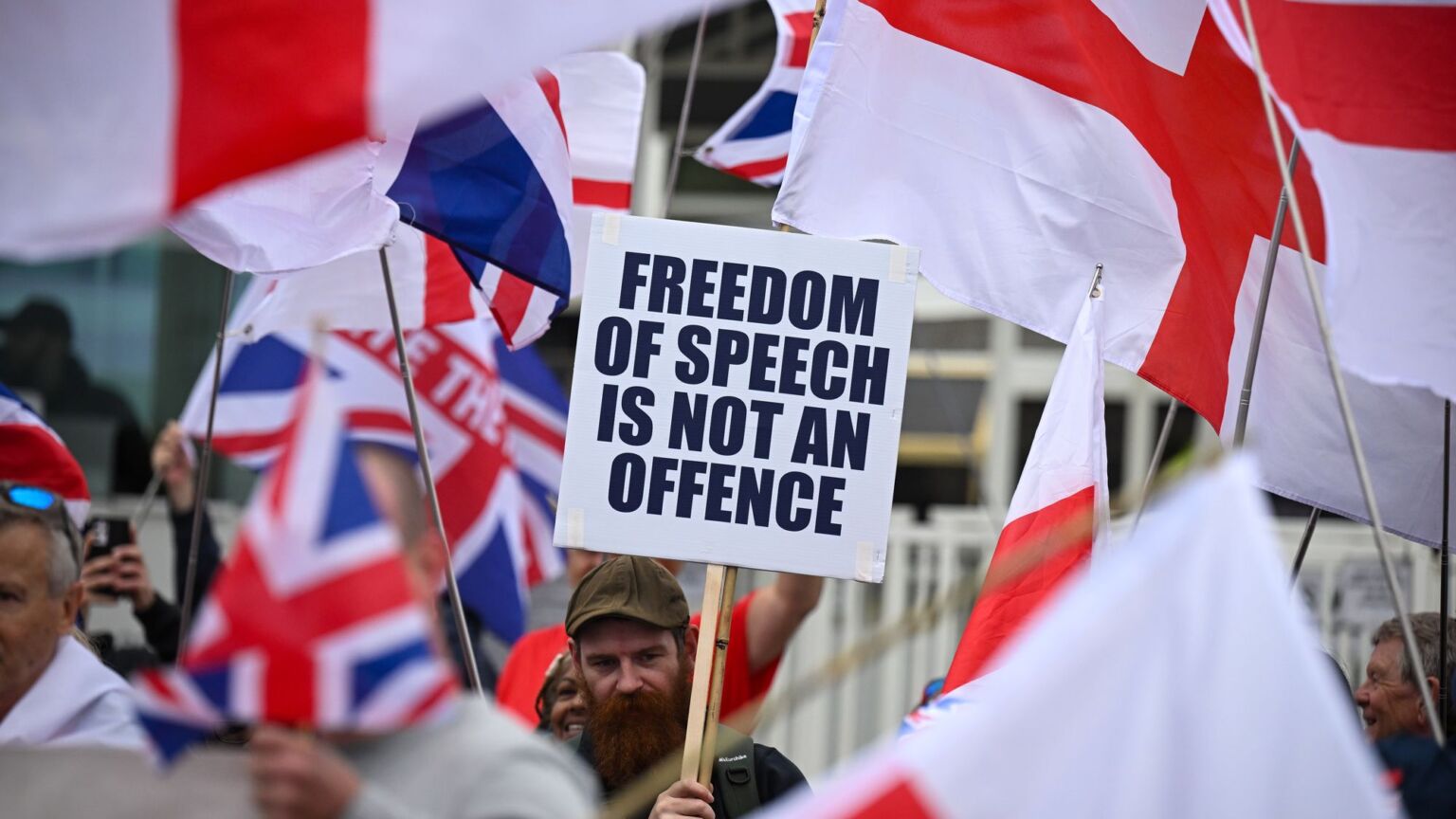
The Adam Smith Institute (ASI) has unveiled a proposed Free Speech Bill for the UK. It will infuriate almost the entire governing class – especially since American lawyers, with at least one eye on the First Amendment, had a large hand in drafting it.
The draft bill is short and strong. It gives a positive right to free speech – subject only to stated, narrow exceptions, such as incitement to crime. It says, explicitly, that speech may not be suppressed merely because it is ‘offensive, grossly offensive, insulting, abusive, shocking, blasphemous, indecent’ or causes ‘an emotional or intellectual impact’ on anyone, as the current law allows. The bill would also ban compelled speech. While most of what the bill sets out is directed at the state, it would also narrow the limits on an employer’s right to discipline employees for what they say off the job.
The laws and practices currently used to curtail our right to free expression are picked off one by one: it strips the Public Order Act of its power to enforce content-related restrictions on speech. The appalling section 127 of the Communications Act, which prohibits posting anything ‘grossly offensive’ on the net, would go. Non-crime hate incidents would be outlawed. No conditions relating to speech or opinion could be placed on public employment, licensing or any public benefit. Website owners would be spared liability as publishers of information.
Best yet, the bill would clip the wings of the European Convention on Human Rights. Liberals often forget that in many cases, the ECHR enforces significant limits on free speech.). Ironically, if the UK were to introduce a First Amendment tomorrow, the loudest yelps would come from human-rights lawyers lamenting the loss of authority over what we can and can’t say.
Obviously, the ASI’s initiative is intended to provoke an establishment that has become very comfortable with censorship. Nevertheless, it matters, mainly because it is the right approach. Vague commitments to free speech don’t work, unless we also get rid of the props that have supported censorship in the law for decades: Public Order offences, the Communications Act, ill-defined anti-harassment laws and so on.
The fact that the bill is American-inspired is important. A prime mover is the admirable American attorney, Preston Byrne, who is currently leading the fight against Ofcom’s campaign to dictate what US websites can and can’t publish. Forget the now-fashionable anti-Americanism in the progressive establishment – the fact that foreigners now view the UK as a free-speech disaster ought to be a source of shame to any government.
Until now, serious free-speech advocacy among the establishment class has been virtually non-existent. While plenty may claim to support it, the idea of relaxing controls on the internet still makes them blanch. This bill, expressed in proper legal form and outlining a clear, watertight case for speech protections, has a good chance of moving the Overton window in the right direction.
Of course, there is now an open goal waiting for any political party with the nous to line it up. Imagine a ticket stressing the right of anyone – from the tycoon to the keyboard warrior to the janitor – to say what they damn well please, without fear of threats from the state, police or employers. The attraction is enormous. It would shine an embarrassing spotlight on the ever-more authoritarian Labour Party – especially if Nigel Farage, Kemi Badenoch or both of them were to adopt it.
The Free Speech Bill has no chance of becoming law just yet. But if it pushes free speech to centre stage, its publication will have been an unalloyed good. Now, we need to keep advancing the ideas it contains – the same ones our American cousins laid out in their all-important First Amendment.
Andrew Tettenborn is a professor of commercial law and a former Cambridge admissions officer.
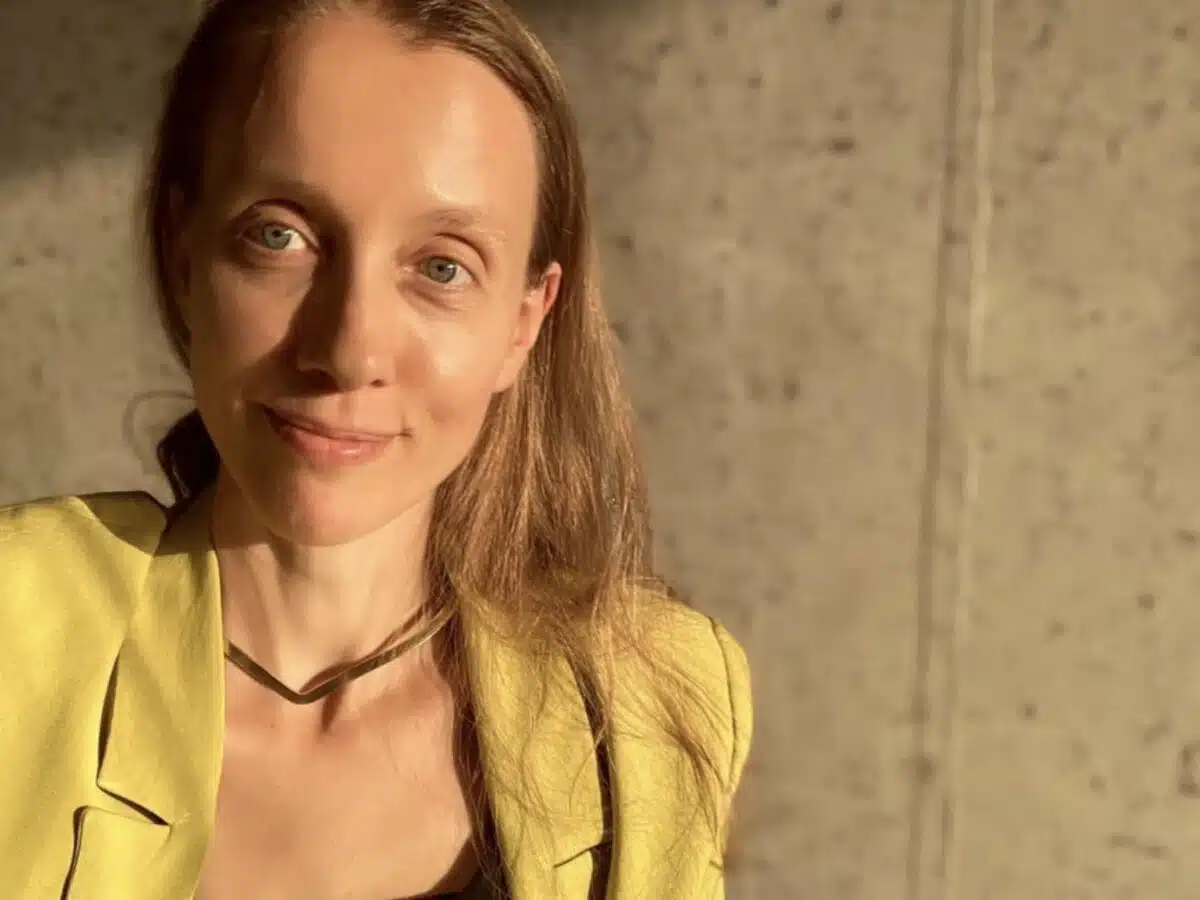
A journalist has been kidnapped in Iraq, and suddenly, the US government has decided it does, in fact, care about the safety of journalists. That is, as long as they’re white, and it’s not Israel killing or threatening them.
Iraq scene of kidnapping
Shelly Kittleson, an Italian-American journalist who contributes to Al-Monitor, was kidnapped in Baghdad on Tuesday. Reports suggest a suspected Iran-backed armed group was behind the abduction.
American freelance journalist Shelly Kittleson has been kidnapped in broad daylight in Baghdad.
Iraq’s interior ministry says authorities at the highest level are searching for the 49-year-old. pic.twitter.com/86ToXdVRiG
— Al Jazeera English (@AJEnglish) April 1, 2026
Videos circulating on social media show men capturing Kittleson on Saadoun Street in central Baghdad.
Middle East Eye has reported that authorities in Iraq had launched an operation to find the kidnappers, and:
they had intercepted a vehicle belonging to the kidnappers, which overturned as they attempted to flee.
Security forces were able to arrest one of the suspects and seize one of the vehicles used in the crime.
Dylan Johnson, US assistant secretary of state for Public Diplomacy, said on X that Iraqi authorities have arrested an individual linked to the Kataeb Hezbollah group.
Of course, we should take anything the US government says with a huge pinch of salt.
Murdering journalists
The US has stood blindly by whilst Israel has murdered journalists in both Gaza and Lebanon for the last two and a half years.
Back in 2022, Israel murdered Al Jazeera reporter Shireen Abu Akleh. The Israeli Occupation Forces (IOF) shot the Palestinian-American in the head while she was covering an Israeli army raid in Jenin in the occupied West Bank.
The US government claimed the death was unintentional – despite Israel’s long history of targeting journalists.
Since then, Israel has murdered over 300 journalists since October 7, 2023. It was responsible for two-thirds of all press killings in both 2025 and 2024.
Most of the media workers Israel killed were Palestinian. However, Israeli air strikes also killed 31 staff in newspaper offices in Yemen.
The IOF have committed more targeted killings of journalists than any other government’s military since records began.
Only last week, Israel murdered journalists Ali Shuaib (Al-Manar) and Fatima Ftouni (Al-Mayadeen), along with Fatima’s brother, camera operator Mohamad Ftouni. They join a long list of Lebanese journalists that Israel has murdered.
Israel has repeatedly labelled media outlets and journalists as ‘terrorists’. Obviously, Western media and governments have parroted these claims without any evidence to support them.
The Israeli military also posted a photograph of Shoaib dressed in a military uniform. However, when asked by Fox News to provide the image, a spokesperson said:
Unfortunately there isn’t really a picture of it, it was photoshopped.
It provided no evidence to support its claims that Shoaib and Ftouni were Hezbollah combatants.
Israel goes after journalists in an attempt to stop the world from witnessing its war crimes. If it kills all the journalists in Gaza, Lebanon, and even Iran, then the rest of the world will not know what it’s up to.
Suddenly, the US cares?
The US has stayed quiet while Israel murdered over 300 journalists – many of whom were brown, and often Muslim.
Now all of a sudden:
The FBI, National Security Council, state department, Delta Force and the Iraqi Counter-Terrorism Service were in contact about her abduction.
So, they can pay attention to attacks on journalists, after all. Of course, Kittleson is originally from rural Wisconsin.
So, whether it’s because Israel is not the perpetrator here or because Kittleson looks very white and is from a rural part of the US, the government suddenly decided it cares about journalists in the Middle East.
The US would not care if it were Israel that had kidnapped or even murdered Kittleson. Likewise, if a visibly brown, Black, or Muslim US citizen had been abducted, the US government would not care.
The hypocrisy is astounding – but what more should we expect from a government that Israel has so much influence over?
Featured image via Shelly Kittleson/Instagram

The reviews are out for the new Super Mario Bros. Movie and… it sounds like the film is anything but a level-up.
While we weren’t exactly expecting the follow-up to the animated video game adaptation to be the next Citizen Kane, it’s worth pointing out that the response to the first film was, at least, somewhat mixed, and it went on to gross more than a billion dollars at the global box office, making it the 20th biggest box office earner of all time at the time of writing.
Ahead of The Super Mario Galaxy Movie’s release at the end of this week, critics have been having their say, and they’ve certainly not been holding back, with a smattering of two- and one-star reviews (not to mention a zero-star take from one particularly unimpressed reviewer).
Here’s a selection of what’s been said so far about The Super Mario Galaxy Movie…
“Of course it’s intended for little kids, but it surely didn’t need to be such a visually dull screensaver of a movie, with even more of the cheesy, Euro-knockoff look of that first film. And, again, the paucity of funny lines is a real puzzle.”
“It’s a supremely vacuous anti-movie that climaxes with a sequence featuring full-screen Nintendo gameplay, as if to remind us of the levels of rancid commercial whoredom we’ve reached.
“The film is torturous to sit through and, for me, provoked periods of actual physical discomfort. I had to stab myself repeatedly in the hand with a pen to distract from the howling distress. It’s that bad, and that offensive.”

Nintendo/Illumination/Universal
“It’s testament to just how bad the original Super Mario Bros Movie was that this sequel can be a noticeable improvement in every respect – animation, storytelling, humour, vocal performances, you name it – while still comfortably qualifying as absolute rubbish.”
“The Super Mario Galaxy Movie” is frenetic in such an impersonal way that it feels like the entire film should be put on Ritalin […] The film treats its story as a threadbare adventure, a mere throwaway, because it’s so focused on those little pings of recognition for gamers. And that’s quite a comedown.”
“[The Super Mario Galaxy Movie] offers the adults a few pings of nostalgia, but otherwise it’s a humourless, hysterical trudge. […] The moments of fan service might keep the hardcore happy, but for everyone else over the age of five it’s just a succession of loud, bright things happening without any real point.”
“Relentlessly fast-paced and filled with hyperkinetic visuals, the sequel hits the sweet spot in terms of what its target audience wants, even if adult non-aficionados will find little of interest other than the starry vocal cast.”
“The Super Mario Galaxy Movie doubles down on its own blandness. There’s barely a plot here. Not a single memorable character. Not even another piano ditty for Jack Black to sing […] There is… one real, solid joke in this film? And it’s mostly just repeating a bit from Disney’s Zootopia.”

Nintendo/Illumination/Universal
“A movie like this will probably make a lot of money, because it doesn’t rock the boat. But a boat that never rocks is a boat that never goes anywhere. That’s how boats work. They’re supposed to take you on a journey.
“The Super Mario Galaxy Movie doesn’t take you anywhere you haven’t been before, and it’s not as fun, it’s not as exciting, and it’s not as challenging as literally any of the games it’s based on. This is not an adaptation of the Super Mario Bros., it’s just a reminder that the franchise exists.”
“A masterpiece of game design that provides endless levels of unique planets to roam and explore, 2007’s Super Mario Galaxy is filled with moments of pure euphoric joy […] yet somehow on screen, it all registers as flat, imagination packaged into the most cleanly corporate and focus-group approved form possible.”
“While it’s likely that retro gamers won’t find anything here that wasn’t in the first movie – Yoshi and one or two others aside – it’s no doubt got enough for kids to enjoy, which will surely come as a relief for parents looking to entertain their offspring over the Easter holidays.”
“This is not a movie to be scrutinised, but to allow beleaguered elder millennial dads to sit their tots down for a precious two hours (if you count the trailers) and get some much-needed rest. It’s cute, and breezy, and rock-stupid, and will probably make a billion dollars again. Such is the world in which we live.”
“This film is even more of a manic roller coaster ride compared to the first movie, with so many gaming references packed into every scene, it’s hard to keep up. There are also a lot more power-ups used this time around, and that results in some fun and interesting combat for Mario and Luigi.”
The Super Mario Galaxy Movie arrives in cinemas on Friday.
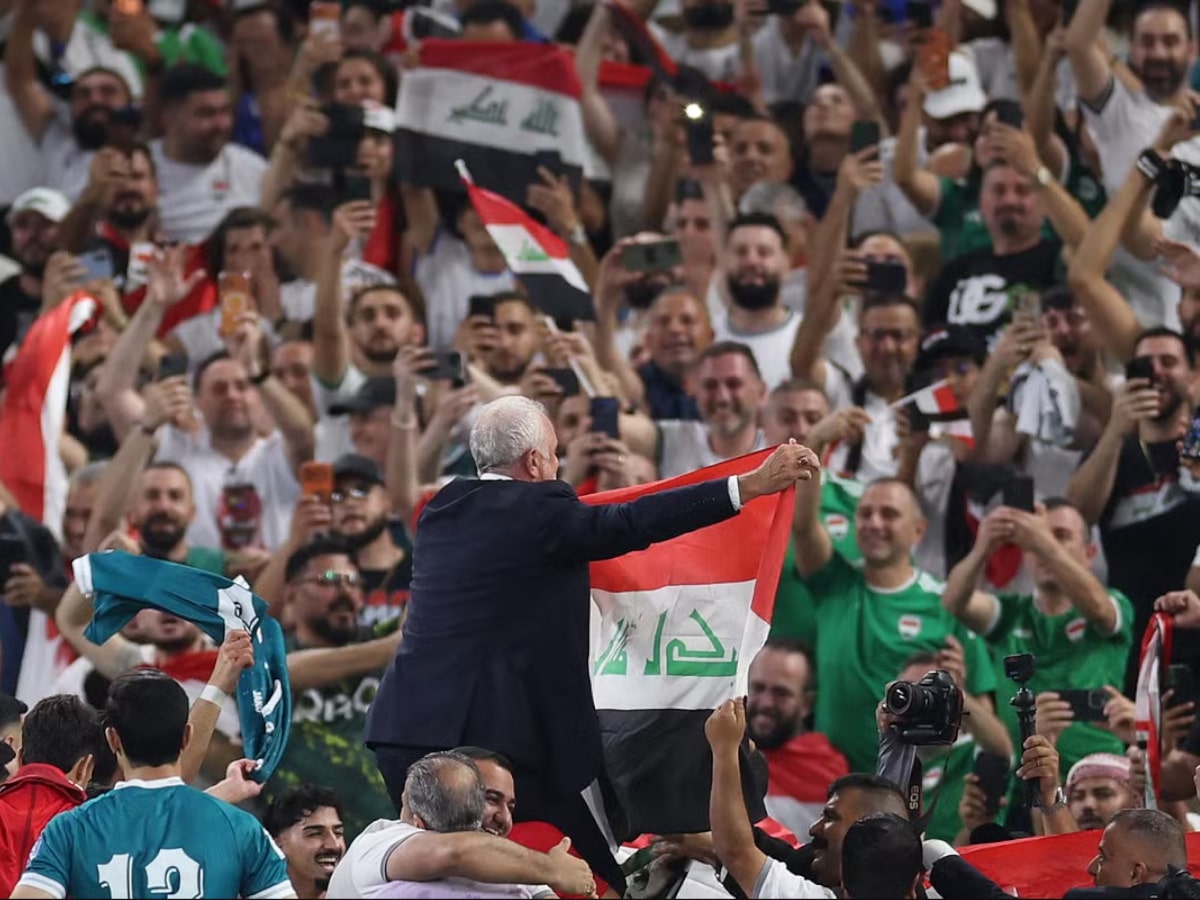
Iraq have achieved a long-awaited and historic milestone, securing their place in the 2026 World Cup finals after a thrilling 2-1 victory over Bolivia. The intercontinental play-off match was held at the BBVA Stadium in Monterrey.
The “Lions of Mesopotamia” return to the World Cup after a four-decade absence. Their last appearance was in the 1986 tournament.
The team’s achievement is already being considered one of the most significant milestones in Iraqi football history.
Iraq v Bolivia: a fiery start and an early goal
The Iraqi team entered the match with great enthusiasm and nearly opened the scoring early through Ibrahim Bayesh in the second minute.
They continued their attacking pressure and quickly translated their dominance into goals in the 10th minute. Ali Al-Hammadi rose to meet a corner kick taken by Amir Al-Ammari and headed it into the net.
There were massive celebrations from Iraqi fans, who had traveled from both inside and outside Mexico, particularly from the United States.
Despite Iraq’s dominance, Bolivia gradually worked their way back into the game and managed to equalize in the 38th minute through Moisés Paniagua, who capitalized on a rebound inside the penalty area. The first half ended 1-1.
Arnold seals the victory… and Ayman Hussein makes history
In the second half, coach Graham Arnold made early substitutions that gave the team an attacking boost.
Marco Faraj played a crucial role by setting up the second goal, scored by Ayman Hussein, securing Iraq’s qualification and igniting the stadium.
The Iraqi team maintained their defensive composure until the final whistle, clinching the victory and confirming their return to the world stage in a big way.
Joy sweeps across the Iraqi streets
As soon as the final whistle blew, celebrations erupted in the streets of Baghdad and various other Iraqi cities.
Thousands of fans poured into the streets to celebrate this historic achievement, which revived hope for an entire generation of Iraqi football enthusiasts and wrote a new chapter of footballing glory after a 40-year wait.
Thus, Iraq returned, not just as a qualified team, but as a story of resilience and victory, writing a new chapter in the history of Arab football.
Iraq will compete in the World Cup in a challenging group that includes France, Norway, and Senegal.
They will begin their campaign against Norway on 16 June 2026 at Boston Stadium in the United States.
Featured image via the Canary
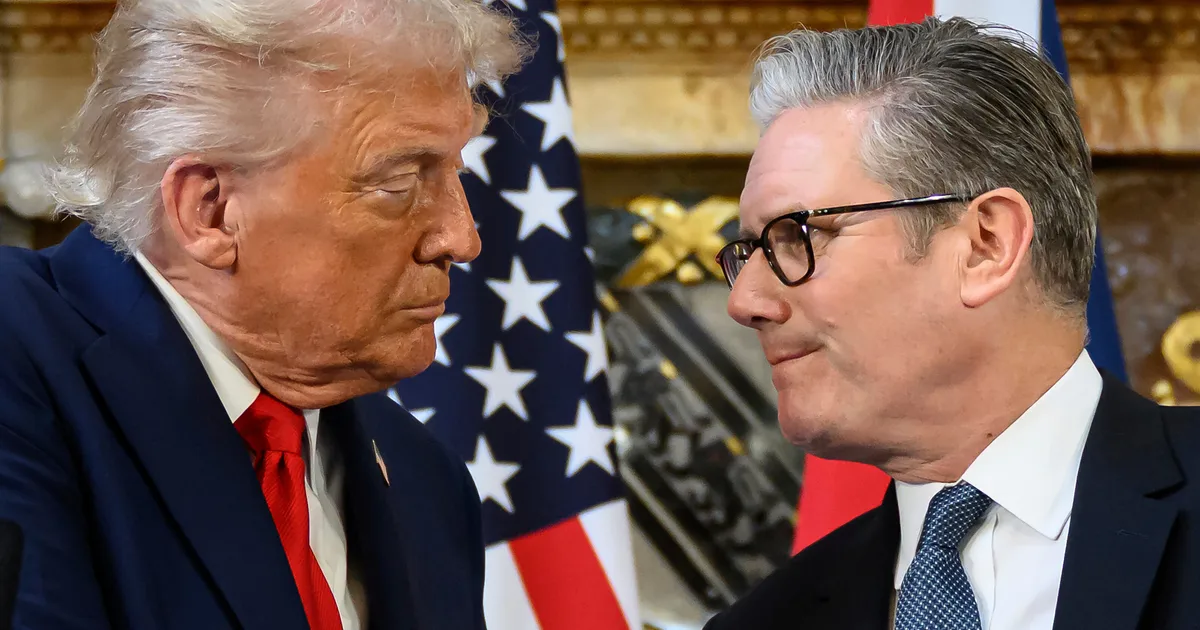
Britain’s “special relationship” with the US has finally been put to bed by the Iran war, according to former UK government adviser.
Donald Trump has slammed Britain repeatedly over the last month over Keir Starmer’s reluctance to get involved in the Middle East conflict.
The president called British aircraft carriers “toys” and told the UK to “go get your own oil” from the Strait of Hormuz on Tuesday, as the Iranians continue to blockade the major shipping lane.
Trump’s secretary of defence Pete Hegseth also mocked the “big, bad Royal Navy” in a press conference this week.
Peter Ricketts, who was the British government’s first National Security adviser between 2010 and 2012, said the US’s criticism is proof there is not a particularly exceptional bond between the two countries.
He told Times Radio: “I think it should really put to bed finally, once and for all the idea of a special relationship.
“Honestly, we’ve never had a special relationship with Americans. You know, we’ve had a transactional relationship with them. that’s normally been quite a warm one.”
However, he did say that there is still plenty of “operational cooperation” between the UK and their American counterparts, despite this friction between leaders.
Ricketts said: “I do think, though, that the operational cooperation between the defence staffs and the intelligence staffs and the foreign policy people is still proceeding pretty much as it does, very professionally.
“If you look at the fact that the Americans are using British bases, that’s an example of cooperation. British planes are flying in the Gulf in defence of Gulf countries. So I think it’s like an iceberg at the top.
“Above the waves, it’s very, very choppy. Down below, out of sight, I think the operational cooperation goes on.”
Technology secretary Peter Kyle also insisted that Trump’s latest attacks had not embarrassed the government.
He told ITV’s Good Morning Britain: “You’re only humiliated if you allow yourself to be humiliated in the way that you act and respond.”
He insisted Starmer has acted with “dignity” throughout his time in office, taking a “cool, calm” approach towards the Trump administration.
Politics
Low pay and ‘political climate’ contributing to safety fears for London nightlife performers
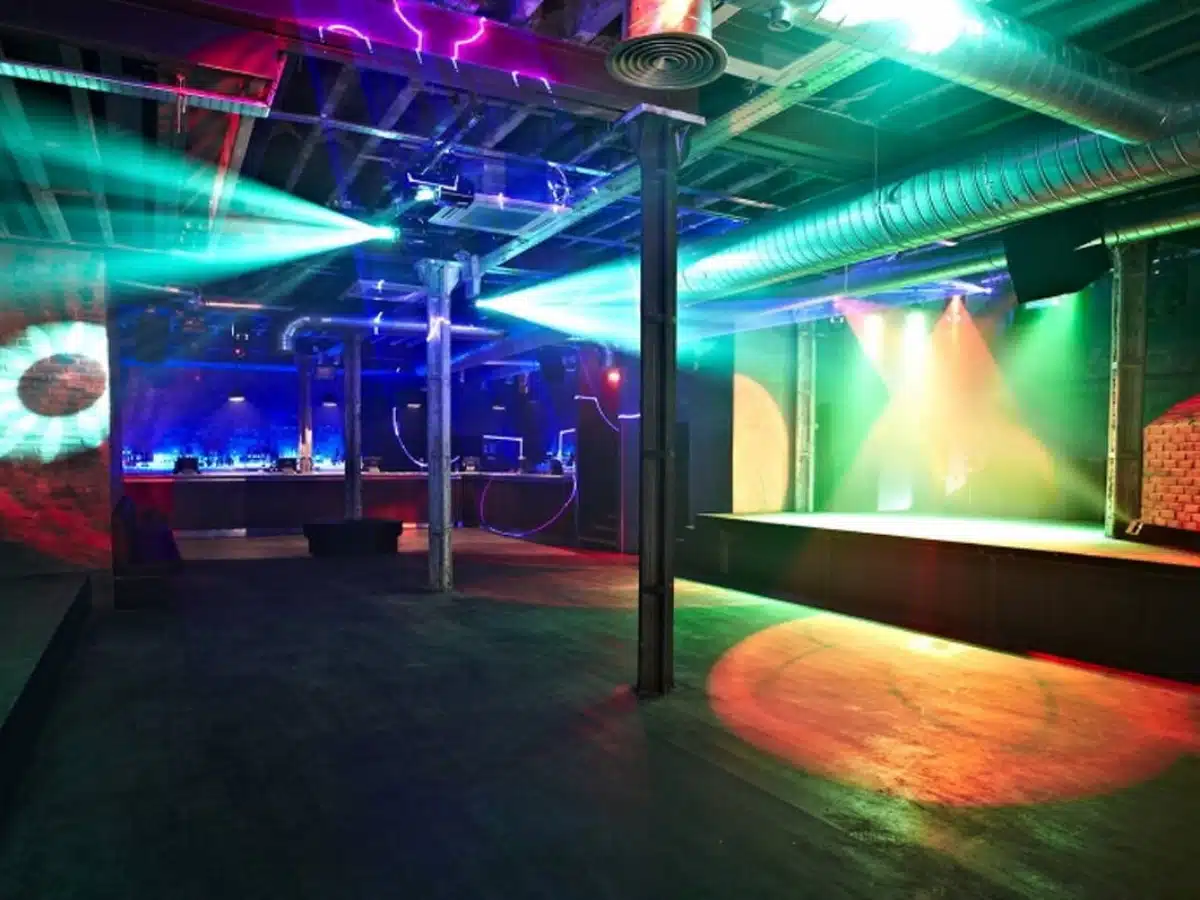
London nightlife performers earn an average of £12,411 a year from their performing work after expenses. And almost a third say an increase in transphobia, misogyny, homophobia, racism or far-right sentiment has led to them feeling less safe due to audience aggression and when travelling to and from gigs.
An overwhelming 98% say that their pay has not kept up with the cost of living.
These findings come from a survey which Equity, the performing arts and entertainment trade union, conducted. The survey covered gigging nightlife performers who work in London. Respondents work in professions including:
- Cabaret
- Burlesque
- Fire performance
- Circus
- Aerial
- Drag
- Club and pub singing
- Comedy
- DJing
- Pole
- Tribute acts
They work at private events, clubs, pubs, bars, festivals, and venue residencies, alongside other places.
The London Nightlife Network
Equity published the survey results ahead of the launch of its new London Nightlife Network. The Network will bring together Equity members who work in this sector so they can organise to improve their pay and conditions.
This includes lobbying the independent Nightlife Commission recently announced by London’s Mayor and campaigning on wider issues. Equity is engaging with the Greater London Authority regarding the lack of workforce representation on its recent Nightlife Taskforce. Almost all the participants were industry bosses. The union said this lack of worker voice showed in gaps in the report findings, which came out on 21 January, particularly around workforce safety, pay, and precarity.
Commenting on the results of Equity’s survey of London nightlife performers, the union’s variety organiser Nick Keegan said:
London’s nightlife culture is world-famous, but it’s being built on the backs of performers who are earning a fraction of a living wage. It is a disgrace that 98% of performers responding to our workforce survey say their pay is stagnating, while they worry about their safety.
Which is why Equity members are launching the London Nightlife Network, because performers care deeply about London’s nightlife and know that by coming together they can raise the standards of the industry for all.
Safety
Of the survey respondents, 33% said they feel less safe than previous years when travelling to and from a gig.
A similar number, 29%, feel less safe working with audiences than in previous years.
And 28% of respondents attributed safety fears to an increase in transphobia, misogyny, homophobia, racism and far-right sentiment. Incidents included experiencing regular instances of violence, aggression and inappropriate touching.
Comments on safety include:
-
There has been more racism and sexist heckling.
-
Some venues will make a point prior to the show regarding not touching performers / consent but some don’t.
-
The world we live in is more homophobic, transphobic and misogynistic, travelling on public transport in full drag makeup is terrifying.
-
The rise of the far right and my own personal experiences with events being protested.
-
Post-Covid drinking culture at gigs has changed an incredible amount… People are often drinking before the gig as they can’t afford the prices at the venue, venue security has decreased on the whole, and venues are dependent on bar sales to run the show – so drinking is more encouraged.
Pay
Only 2% of respondents said that the rates they’ve been receiving have risen in line with the cost of living, with an overwhelming 98% saying their rates have not.
The most common response to the question “On average how much do you earn for a gig in London?” was the range “£100-£199”.
The average number of gigs worked a week was 2.11.
The average amount spent on travel per month was £200. Meanwhile, the average amount spent on hair, make up and costume for an act per month was £162.
If we calculate the average pay for London nightlife performers by using £150 (which is the halfway point of the modal pay range £100-£199), and subtract average expenses for travel and hair, make up and costume, this suggests performers earn an average of £1,371.50 a month or £12,411 a year after expenses from their work in the industry.
This is well below the national median salary of £39,039, and even less than the London median salary of £49,692.
90% of respondents agree it would be helpful to them if Equity published a rate card of suggested minimum rates for nightlife performers in different working contexts.
Featured image via the Canary

Everything to Know About RHOSLC Alum Jen Shah’s Legal Drama

Werenoi – Money (Audio Officiel)

Emmerdale confirms return for ‘psychopathic’ Kev – with huge impact to come | Soaps


-

 News Videos7 days ago
Parliament publishes latest register of MPs’ financial interests
-

 Business6 days ago
Instagram, YouTube Found Responsible for Teen’s Mental Health Struggle in Historic Ruling
-
 Tech6 days ago
Intercom’s new post-trained Fin Apex 1.0 beats GPT-5.4 and Claude Sonnet 4.6 at customer service resolutions
-

 NewsBeat5 days ago
The Story hosts event on Durham’s historic registers
-

 Sports5 days ago
Sweet Sixteen Game Thread: Tide vs Michigan
-
Entertainment2 days ago
Fans slam 'heartbreaking' Barbie Dream Fest convention debacle with 'cardboard cutout' experience
-
 Entertainment4 days ago
Lana Del Rey Celebrates Her Husband’s 51st Birthday In New Post
-
Crypto World1 day ago
Dems press CFTC, ethics board on prediction-market insider trades
-

 Sports1 day ago
Tallest college basketball player ever, standing at 7-foot-9, entering transfer portal
-

 Tech3 days ago
The Pixel 10a doesn’t have a camera bump, and it’s great
-

 Entertainment7 days ago
HBO’s Harry Potter Series Will Definitely Fail For One Big Reason, And It’s Not J.K. Rowling Or Snape
-

 Tech1 day ago
EE TV is using AI to help you find something to watch
-

 Crypto World2 days ago
U.S. rule change may open trillions in 401(k) funds to crypto
-

 Tech1 day ago
How to back up your iPhone & iPad to your Mac before something goes wrong
-

 Fashion6 days ago
En Vogue in Brown Leather and Tailored Neutrals by Atelier Savoir, Styled by J Bolin
-

 Politics2 days ago
Should Trump Be Scared Strait?
-

 Tech2 days ago
Flipsnack and the shift toward motion-first business content with living visuals
-

 Fashion6 days ago
What Are Your Favorite T-Shirts for the Weekend?
-

 Fashion5 days ago
Weekly News Update, 3.27.26 – Corporette.com
-

 Tech2 days ago
Apple will hide your email address from apps and websites, but not cops
You must be logged in to post a comment Login