

Politics
Jonathan Guttentag: Extremism, pluralism and the need for moral red lines

Rabbi Jonathan Guttentag is a Manchester-based communal leader and International Liaison for the Coalition for Jewish Values UK.
Britain rightly prides itself on pluralism. But pluralism is not the same thing as passivity.
A liberal democracy cannot survive if it refuses to defend its own moral boundaries. Yet in confronting Islamist extremism, we have too often substituted hesitation for clarity and process for enforcement.
Recent commentary, including Paul Goodman’s article in The Times, reflects a growing recognition that the problem is not a lack of legislation, but a lack of consistent resolve.
This is not a question of Islam as a faith, nor of British Muslims as citizens. Islam is one of the great Abrahamic religions, and the overwhelming majority of British Muslims seek nothing more than peaceful participation in national life. The issue is not religion, but ideology — and the state’s reluctance to draw moral red lines.
For years, Britain has oscillated between alarm and avoidance. After atrocities, there is urgency, rhetoric and review. As public attention fades, so too does resolve. What follows is drift — selective engagement, bureaucratic caution, and a reluctance to confront ideological actors directly.
Yet a liberal democracy cannot endure without moral red lines.
Where sermons, educational settings, charities or public-sector spaces are used to promote antisemitism, glorify violence, endorse terrorist organisations or intimidate others, the response of the state must be firm, consistent and impartial. Tolerance of such behaviour is not pluralism; it is abdication.
Pluralism does not require neutrality between democracy and those who reject it. Nor does it oblige the state to subsidise or legitimise organisations that undermine constitutional norms while operating just within the letter of the law. A confident society does not apologise for enforcing its own standards.
Britain’s counter-extremism framework has too often been weakened by three recurring failures.
First, confusion between religious sensitivity and political timidity. There is a legitimate desire not to stigmatise communities. But that imperative has sometimes paralysed enforcement against clearly ideological actors who promote segregation, grievance narratives, hostility to Jews, and sympathy for proscribed groups. Avoiding discomfort is not the same as promoting cohesion.
Second, inconsistency. Islamist extremism, far-right extremism and far-left extremism are all incompatible with a free society. Addressing one does not excuse or minimise the others. Yet enforcement has at times appeared uneven — cautious in one direction, reactive in another. The rule of law cannot depend on electoral arithmetic or media pressure.
Third, an over-reliance on reviews rather than implementation. Britain does not lack legislation. We have laws addressing incitement, support for terrorism, harassment and discrimination. We have charity regulation. We have safeguarding duties. The question is not whether powers exist, but whether they are used consistently and without fear or favour.
From the perspective of Coalition for Jewish Values UK, several principles are essential if public confidence is to be restored.
Public institutions — schools, hospitals, prisons, universities and local authorities — must be neutral and safe spaces, free from intimidation and sectarian coercion. No pupil should feel unsafe because of their Jewish identity. No university campus should tolerate open endorsement of proscribed organisations. No publicly funded body should quietly outsource moral authority to groups that undermine democratic norms.
Charitable status, public funding and access to ministers are privileges, not entitlements. They must be contingent on basic standards of conduct. Where organisations repeatedly platform extremist rhetoric, promote antisemitic tropes or blur the line between activism and legitimisation of violence, consequences should follow — transparently and proportionately.
Clarity of language is also indispensable. Islamism is not synonymous with Islam. It is a political ideology that seeks to order society under a particular interpretation of religious authority, often hostile to pluralism and liberal democracy. Pretending this distinction is too delicate to articulate only strengthens those who exploit ambiguity.
A democratic state can respect religious liberty while rejecting theocratic political projects. Indeed, the defence of religious liberty depends upon that distinction. British Muslims who wish to practise their faith peacefully are ill-served when the state fails to confront ideological actors who claim to speak in their name.
The Jewish community’s experience is instructive. British Jews are deeply committed to pluralism and flourish in an open society. But when antisemitism is tolerated — whether on the far Right, within radical left movements, or in Islamist networks — it is rarely an isolated phenomenon. It is often a warning sign of democratic erosion. Historically, societies that struggle to defend Jews from ideological hostility struggle to defend liberal norms more broadly.
For Conservatives in particular, this should not be peripheral.
Ordered liberty depends on moral boundaries. A nation is not defined solely by markets or administrative competence, but by shared civic standards and the impartial rule of law. Where those standards are eroded incrementally — through intimidation, ideological capture of institutions or selective enforcement — the damage is cumulative.
What is required now is not another buried review, nor a temporary initiative designed to quiet headlines. It is a cross-cutting framework that restores confidence that Britain can be both pluralistic and serious.
Such a framework would include:
- Consistent enforcement of existing extremism and terrorism legislation.
- Clear conditionality for public funding and charitable status.
- Transparency in government engagement with community organisations.
- Protection of public institutions as ideologically neutral spaces.
- Equal application of standards across Islamist, far-right and far-left extremism alike.
None of this is radical. It is simply the application of equal standards.
Britain can be tolerant without being naive. It can defend religious freedom without indulging political extremism. It can welcome diversity while insisting on common civic norms.
But it cannot sustain those goods indefinitely without drawing clear moral red lines — and enforcing them.
A confident democracy enforces its standards not in spite of pluralism, but in order to preserve it.


!function(n){if(!window.cnx){window.cnx={},window.cnx.cmd=[];var t=n.createElement(‘iframe’);t.display=’none’,t.onload=function(){var n=t.contentWindow.document,c=n.createElement(‘script’);c.src=”//cd.connatix.com/connatix.player.js”,c.setAttribute(‘async’,’1′),c.setAttribute(‘type’,’text/javascript’),n.body.appendChild(c)},n.head.appendChild(t)}}(document);(new Image()).src=”https://capi.connatix.com/tr/si?token=19654b65-409c-4b38-90db-80cbdea02cf4″;cnx.cmd.push(function(){cnx({“playerId”:”19654b65-409c-4b38-90db-80cbdea02cf4″,”mediaId”:”48825565-2a70-4b1a-8988-9c2bd6fd43be”}).render(“69a1fa36e4b03f5cc1b3f854”);});
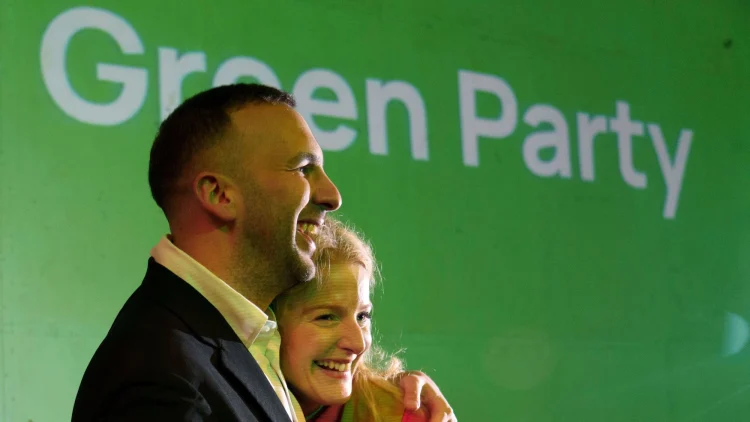
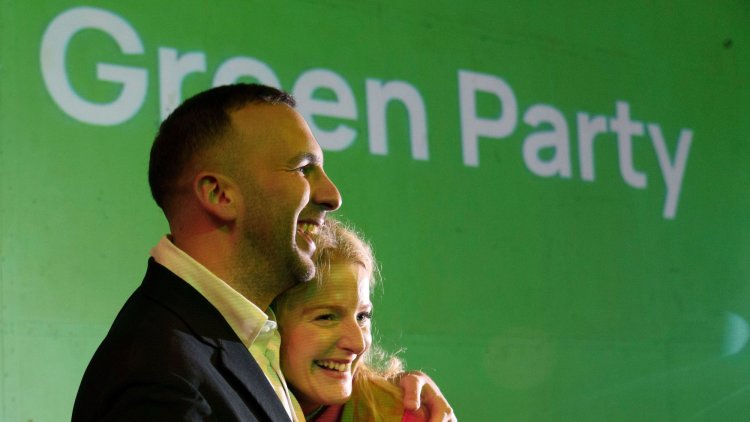
Green Party candidate Hannah Spencer celebrates with party leader Zack Polanski after winning the Gorton and Denton by-election, February 2026 (AP Photo / Jon Super / Alamy Live News)
5 min read
The Green Party’s historic by-election victory in Gorton and Denton sent shockwaves across British politics. Campaign insiders tell PoliticsHome how they pulled it off
The Labour Party had represented the Manchester Gorton area in Parliament since the days of Ramsay MacDonald.
Today, Keir Starmer’s party is reeling after its vote collapsed in the Gorton and Denton by-election, forcing the party into third place behind the Greens and Reform UK.
A by-election defeat of this kind – falling into third place in a Labour-held seat – has not happened since 1982. Green candidate Hannah Spencer, who won around 40 per cent of the vote, has clearly demonstrated the threat that Zack Polanski’s “eco-populist” party poses to Labour’s left flank.
Green insiders believe the party’s victory in Gorton and Denton came down to three crucial factors.
Burnham’s blocking
The first was the decision by Labour’s National Executive Committee (NEC) officers to block Andy Burnham from standing as the party’s candidate. Allowing Burnham to run as a parliamentary candidate would have triggered an expensive and risky contest for the Manchester mayoralty. He is also widely seen as a potential challenger to Starmer.
“When there was an announcement that he wasn’t going to stand, that just increased our confidence further,” a senior Green Party source told PoliticsHome.
Labour instead selected Angeliki Stogia, a local councillor who has lived in Whalley Range since 2004 and has strong links to the constituency but little media profile.
PoliticsHome also understands that the Muslim Vote – an organisation that encourages politicians to put Muslim issues, such as being pro-Gaza, at the forefront – was contemplating endorsing Labour if it had selected Burnham. Instead, it threw its weight behind the Greens after the news Burnham was blocked, even before Polanski’s party had selected a candidate.
The endorsement was instrumental in persuading George Galloway’s Workers Party of Britain to stand aside, which potentially freed up almost 4,000 votes on the left according to the party’s 2024 vote share. Jeremy Corbyn, whose slate won the Your Party elections this week, also backed the Greens in the by-election.
“People were also looking at who’s the best-placed [to defeat Reform]. Many people did believe that was the Green Party,” a senior Green campaign source told PoliticsHome.
“The Labour Party did try to muddy the waters hugely, making a fake tactical voting website, creating a bar chart where Labour were in first place, but just missing the Green bar entirely to look like it was only Reform and Labour… which was hilarious. But people didn’t buy that.”
The Green campaign
The Greens also won thanks to their industrious campaigning operation.
Miles Thorpe, who managed the party’s campaign, had been responsible for the successful election of Carla Denyer in Bristol Central, who beat Labour in 2024 with a 10,000 majority. Each week, Thorpe was spotted with hundreds of activists gathered around him in parks and car parks, instructing activists on canvassing strategy.
“He is very focused, good at prioritising, great at recruiting and motivating volunteers and creating a fun team spirit,” said a Green Party source who knows Thorpe well.
Thorpe was undoubtedly helped by thousands of activists who specifically targeted Burnage, Levenshulme and Longsight – three areas with young and diverse populations, broadly sympathetic to the Greens electorally.
On polling day, the party had 2,000 volunteers across the constituency to get the vote out. Labour MPs were resigned to the fact that they had even lost the “poster board” war across the constituency.
“We were by far the most active campaign,” Ellie Chowns, Green MP for North Herefordshire, told PoliticsHome. “We had huge numbers of people. We had so many volunteers… The scale and the scope of the campaign, I think, in and of itself helped persuade people.”
Green Party organisers urged activists to use Ecanvasser, an app that helps parties to record voter profiles and political tendencies. “We could see that during the campaign things were progressing well,” said a Green Party source. They were increasingly confused by Labour briefings that the seat was winnable for Starmer’s party.
Labour sources, meanwhile, have been confused by the result. A Labour MP said: “Were our 9,000 votes primarily Pakistani Muslims – or did they put Labour stakes in their gardens and then vote Green?” They added that the Greens “won the bar chart war” in the style of the Liberal Democrats.
“On the Gorton side, ordinary voters would clearly think the Greens were the ones to stop Reform because it was shown in people’s windows,” the MP concluded, referring to voters displaying Green posters. They attributed the Greens’ win to the party’s early success in ensuring support was clearly on display.
The Muslim vote
The third and perhaps most controversial reason for the Greens’ success was their ability to galvanise the Muslim vote.
Muslim voters have represented the backbone of Labour’s electoral base for decades. The UK constituencies with the largest Muslim populations have tended to return Labour MPs – until the notable exception of George Galloway’s 2024 Rochdale by-election win and Jonathan Ashworth’s Leicester South defeat at the general election. Since the 2023 Gaza war and Labour’s response to it, Muslim voters have felt increasingly apathetic towards the party.
Meanwhile, the Greens have become popular with Pakistani and Bangladeshi voters – who, according to the most recent data, are the predominant Muslim group in Gorton and Denton. A YouGov survey conducted in October found that more than half of this cohort (58 per cent) felt positive about the Greens, compared with 31 per cent who felt positive about Labour.
The Greens managed to lean on networks such as the Muslim Vote, who took Muslims from Madina Mosque in the constituency to go out and vote.
The party was also criticised for printing leaflets in Urdu, with literature claiming that Polanski’s party was the only outfit to stop Islamophobia and offer a strong voice for Muslims.
But Abubakr Nanabawa, head of media at the Muslim Vote, told PoliticsHome he believed it showed the Greens’ willingness to communicate with minority populations.
“It showed the Greens wanted to communicate with us,” he explained, referring to Muslim voters. “It showed that they want to represent us as well. It was a sign of respect. I don’t think it was the reading of the Urdu, it was just the existence of the Urdu.”
Ultimately the Greens believed their message of “hope” resonated with Muslims and that they represented the three key priorities of Muslim voters – the NHS, the cost of living and Gaza.
Additional reporting by Sienna Rodgers
The government was shamed in the House of Lords on Monday 23 February 2026 for only publishing its explosive nature and national security assessment after being forced to via a Freedom of Information (FOI) Act request, and urged by peers to release the unabridged version.
The assessment, titled Nature security assessment on global biodiversity loss, ecosystem collapse and national security, was published in January 2026 following an FOI request from the Green Alliance think tank.
It was originally scheduled for publication in Autumn 2025. The Times newspaper reported that publication of the report was stalled by 10 Downing Street because of fears that it was too negative. The paper said the full version “warned of mass migration and nuclear war”.
Labour asked to work with allies to address findings of assessment
Starting the debate, Liberal Democrat energy security and net zero spokesperson John Russell said:
A nature security assessment was initially withheld and then only partially released following an FOI (Freedom of Information) request.
Given the gravity of its findings for biodiversity loss, ecosystem collapse and our future national security, will the Government now publish the report in full? What policy responses are being developed as a result?
Will Ministers engage in open dialogue, both at home and with allies, that recognises the interlinked climate and nature emergencies as essential to our natural security strategy and future prosperity?
Responding, Department for Environment, Food and Rural Affairs (Defra) parliamentary under-secretary of state Sue Hayman implied that a longer version of the assessment was indeed withheld. She said:
It is important to note that this is a strategic tool and not a prediction of future possibilities. The idea behind it is to help government plan for future shocks that are credible enough to warrant preparation. The way it has been managed reflects standard national security planning for preparedness.
On policies, we are taking comprehensive action to strengthen resilience to environmental risks, both at home and aboard, through various ways. Tree planting in England is at its highest rate, and we are restoring peatlands, improving water quality and protecting pollinators. We have introduced landmark legislation to protect our oceans.
We are supporting food security with new technology and farming schemes that reward sustainable production, and we are also committed to providing international climate finance—I could go on.
Labour failing to meet its own environmental targets
Later in the debate, Green Party peer Jenny Jones said:
The government sound very good on all these policies, but, in fact, they are not meeting their targets. They are not meeting their targets on tree-planting, marine protected areas or flooding.
It is going to be a contest between which comes first – world war three or climate collapse. Do the government agree?
In response to Jones, Hayman said:
At least the noble Baroness thinks I sound good. The revised environmental improvement plan is designed to deliver everything the noble Baroness talked about. We are working very hard in Defra to ensure that it does.
Peer urges government to publish full report
Reflecting on the debate, Jones later told the Canary:
This government report explains how climate change is a threat to national security because of the disruption and scarcity it brings, so I don’t understand why the government themselves are playing it down.
Wars often begin with fights over resources, with access to food and water being two of the basics and disruption of established trading systems being another. We clearly need a plan to grow more of our own food and become more self reliant by taking care of our farmers.
War in an era of nuclear weapons always carries greater risk, so it’s a priority for the government to publish the full report, including a plan to deal with the consequences of climate changes and to keep our food supply safe.
The world is a far less stable place than it was before Trump and Russia failed to renew their landmark nuclear warhead limitation treaty. This is a bad sign ahead of the latest assessment of the Nuclear Non-Proliferation Treaty, which will indicate whether the world is going forwards or backwards on the potential for nuclear destruction.
Earlier in February 2026, the treaty to reduce strategic nuclear weapons stockpiles and build trust between the US and Russia – New START – expired.
Reacting soon after the treaty expired, the Campaign for Nuclear Disarmament told the Canary that:
Rather than sitting on the sidelines, the government could show leadership and use its diplomatic influence to push for the US and Russia to extend New START.
Politicians need to ‘face up to reality of environmental insecurity’ – conservation expert and
Wildlife and Countryside Link chief executive Richard Benwell told the Canary:
Any politician who thinks that environmental decline isn’t a security issue has their head in the recently-desertified sand. Conflict over resources is an age-old issue and we haven’t outgrown it.
Climate change is causing security headaches in the Arctic, pollinator decline, and water shortages. It threatens food security, as well as putting homes at risk from flood and fire. It’s time for all political parties to face up to the reality of environmental insecurity and restore nature.
Policymakers told to address drivers of biodiversity loss, not its consequences
Conflict and Environment Observatory director Doug Weir told the Canary:
Policymakers must avoid the mistakes made with climate security, where security risks were presented as inevitable and a justification for militarised responses rather than tackling emissions, adaptation and finance.
Address the drivers of biodiversity loss, not its consequences, and make sure that global biodiversity goals address the relationship between nature, peace and security, because right now they don’t.
Former intelligence official criticises ‘bungled rollout’ of assessment
Analysis from the Bulletin of the Atomic Scientists – the organisation which publishes the high-profile Doomsday Clock – also weighed in to criticise the UK government’s handling of the assessment’s publication.
The Bulletin published an article on 23 February 2026, written by the US National Security Archive’s Climate Change Transparency Project director Rachel Santarsiero, where she quoted former US intelligence official at the State Department’s Bureau of Intelligence and Research, Rod Schoonover.
Schoonover said:
The rigour of the Defra assessment doesn’t negate its bungled rollout, nor the public backlash that ensued. Any pull back from transparency is a mistake from any government.
He added:
I suspect that the intelligence community did not make the determination that this [report] should not go forward. It feels like [it came from] someone higher up.
Featured image via the Canary
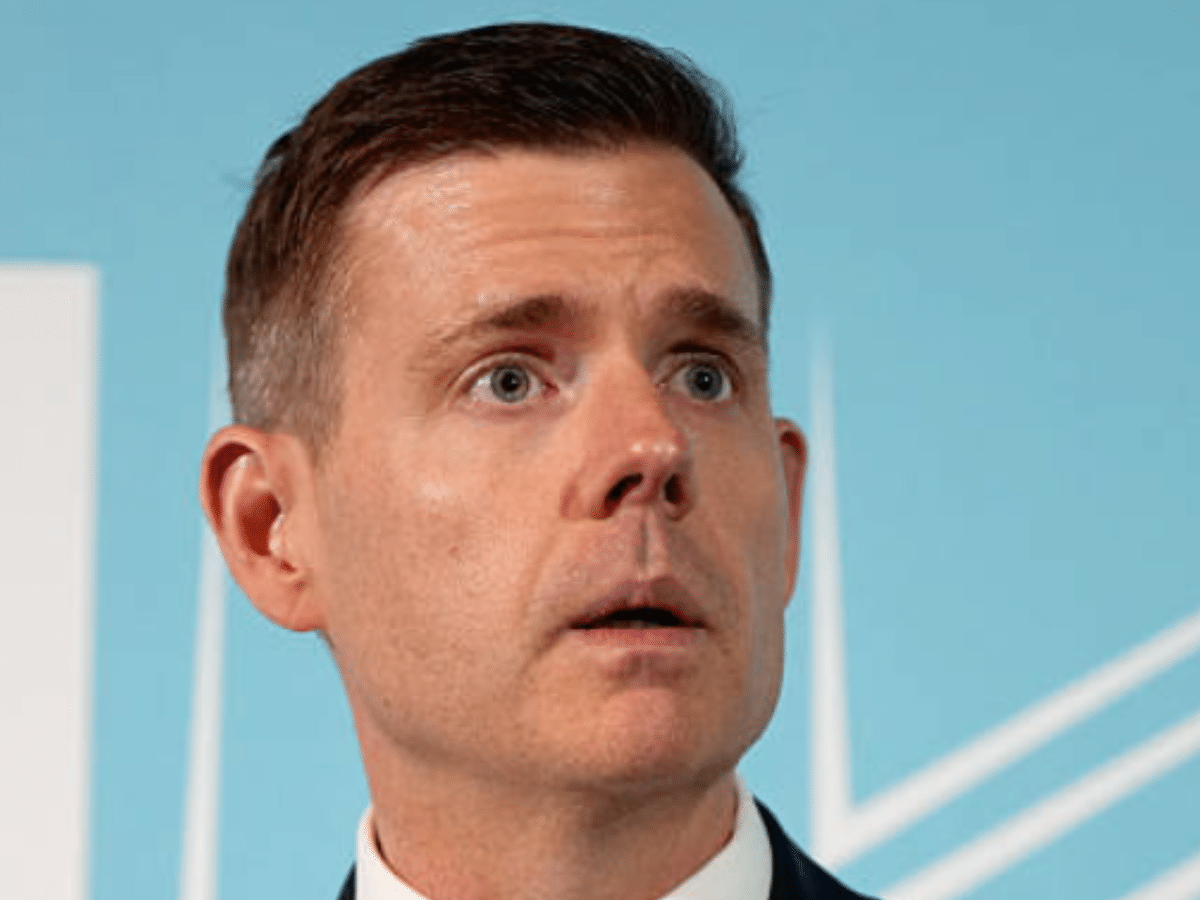
Matt Goodwin was Reform UK’s candidate in the Gorton & Denton. As we reported, he ran a campaign which was openly antagonistic towards the Muslim community in the constituency. This wasn’t surprising, of course, as his campaign team was stacked full of racists.
Now that Goodwin has lost, he’s blaming the Muslim voters he repeatedly attacked for refusing to vote for him. And as comedian Tez Ilyas points out:
Lost to a blonde woman whose party leader is a gay Jew.
Those darn Muslims 😤 https://t.co/QXE4SJMJzJ
— Tez (@tezilyas) February 27, 2026
Matt Goodwin: that’s politics
We’re sorry, but have Reform completely forgotten how politics works?
You have to offer voters something besides open disgust.
Forgetting about the Muslims who didn’t vote Reform, why did Goodwin think a majority of Manchester residents would respond positively to his message? Manchester is one of the most multicultural and progressive cities in the country; of course they wouldn’t warm to this robotic, dead-eyed Islamophobe.
This is Goodwin’s message in full:
Statement:
“We are losing our country. A dangerous Muslim sectarianism has emerged. We have only one general election left to save Britain. Vote Reform every chance you get. I will continue the fight. I will always fight for you. I will stand at the next general election. Matt.” pic.twitter.com/2jLMNv0ap6
— Matt Goodwin (@GoodwinMJ) February 27, 2026
For whatever reason, Goodwin chose to include an image of him looking at his phone. Maybe if he’d spent more time listening to local voters and less time hate-tweeting, things could have gone differently!
As Tez points out at the top, Goodwin’s message really exemplifies the hypocrisy of the right.
On the one hand, they want you to believe that Muslims are a hardline, antisemitic monolith who have failed to integrate; on the other, they want you to ignore that a considerable percentage of British Muslims just voted for an openly gay Jewish man.
So Farage wants us to believe that Muslim women were desperate to vote for Matt Goodwin but were coerced by their husbands into voting for a party led by a gay Jew instead?
Fucking hilarious.— Sarah (@kokeshimum) February 27, 2026
It’s not just Goodwin who’s crying today; his would-have-been-boss Farage is also having a moan.
this is straight out of the trump playbook. never been clearer how important it is for us to unite and reject reform and their hate. tonight clearly shows it’s greens that are in the position to do it. https://t.co/g7ck6TY65w
— Ben Smoke (@bencsmoke) February 27, 2026
To be fair to Goodwin and Farage, neither is quite as extreme as Telegraph contributor Jake Wallis Simons:
We’ve reached ‘the Greens winning Gorton and Denton is the 1979 Iranian Revolution’ levels of hysteria https://t.co/ATOWvJn0e0
— Shabbir Lakha (@ShabbirLakha) February 27, 2026
A positive sign
The truth about politics is that most people don’t choose a candidate because they think that person is wholly in line with them. For most, they think about their own self interests first and foremost, and they vote for the politician who most closely aligns with them.
In Gorton & Denton, the Greens convinced more voters than any other party that they best represented their interests. And they did so with a message that society can be about more than pure individualism.
That’s a positive sign for the future, and for what this country can become.
Featured image via the Canary
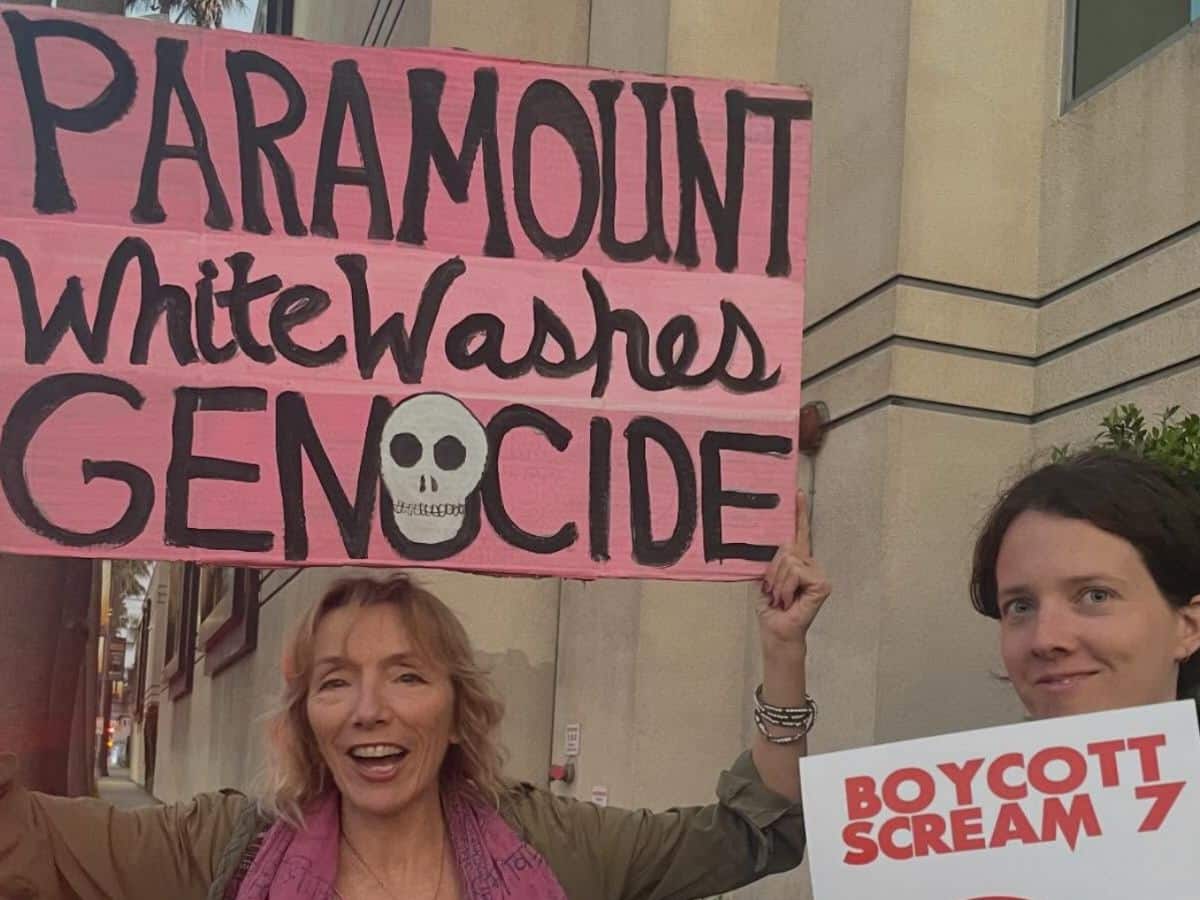
Tatiana Maslany has taken to her Instagram to urge her followers to ‘boycott Scream 7’. This call to action from the ‘Orphan Black’ star comes as a reminder that Melissa Barrera had been fired from Scream 7 due to her advocacy for Palestine. Since Israel began its genocide against Palestinians after October 7th, 2023, many activists and concerned citizens have faced repression from employers or public officials to deter solidarity with Palestinians.
Once again, speaking up against the mass murder of Palestinians has resulted in attempts by powerful people to destroy a woman’s career. Maslany in response has Barrera’s back and reminds people that as consumers, we have power.
🚨 Tatiana Maslany, known for her role in She-Hulk says that fans must boycott Scream 7, sharing a “Boycott Scream 7” message recently on her IG story.
Her statement came after Melissa Barrera was fired from the franchise in November 2023 over social media posts about the… pic.twitter.com/WNUb2S1kFo
— Movies Scenes 🎫 (@SceneinCinema) February 27, 2026
Scream 7 and repression tactics against Palestine solidarity
The recent ‘Scream 7’ premiere on 26th February in Los Angeles faced interruption from protesters. They were unhappy about the production company, Spyglass Media Group, sacking Barrera for sticking up for Palestinians. The Independent reported on the protest. It commented that Barrera addressed them on her socials saying ‘I see you’ to those who turned up to defend her rights.
‘She-Hulk’ star Maslany hit the nail on the head with her stories when she urged a boycott of those responsible for Barrera’s sacking. After all, the law protects political beliefs. And those who oppose what they describe as genocide and mass murder place themselves on the right side of history. Maslany and Barrera deserve to be deeply proud of their principled, courageous and compassionate stance taken. Reminding her fans of our innate power as consumers by using her public platform is exactly the right thing to do.
Spyglass Media Group fired Barrera in 2023 after the company deemed her posts antisemitic and labeled them ‘hate speech.’ This isn’t the first time powerful people have persecuted others for daring to oppose what they describe as the mass murder of Palestinian men, women, and children — and it likely won’t be the last.
In 2023, Melissa Barrera was fired from Scream 7 for making peace posts.
Her close friend Jenna Ortega stepped away in solidarity.
Now two years later, activists protest outside Paramount Studios at the premiere, calling for a boycott.
BOYCOTT Scream 7 ✊🏼 pic.twitter.com/iB0fDifu0Z
— ADAM (@AdameMedia) February 26, 2026
Maslany is renowned for her compassionate and heartfelt solidarity that she has consistently shown. She spoke powerfully in 2024 on how we must refuse to be complicit in mass murder. As the video below shows:
Tatiana Maslany speaks out for Palestine:
“We are witnessing the genocide of the Palestinian people at the hands of the Israeli settler-colonial state… Demand a ceasefire, stop funding the genocide, stop being complicit in it… Free Palestine!” pic.twitter.com/JLFr6u1bQE
— Daily Tatiana Maslany (@SestraHulk) June 26, 2024
‘We Are Dismayed’
Maslany recently joined over 80 famous film stars in an open letter titled “We Are Dismayed” to challenge Berlinale’s silence in the face of Israel’s brutal and illegal brutality on Palestine. On the joint letter, we wrote:
Hollywood actors Tilda Swinton, Javier Bardem and Brian Cox are among more than 80 leading film industry figures to sign an open letter, titled “We Are Dismayed”, condemning the silence of the Berlin Film Festival (Berlinale) on Israel’s genocide in Gaza and its censoring of artists who speak out.
The letter comes on the same day as Booker Prize winning author Arundhati Roy announced her withdrawal from the festival over the same issue amidst comments by German director Wim Wenders against artists bringing up Gaza.
The letter was a clear ‘fuck you’ to Berlinale organisers. It showed a clear red line when it comes to the blatant attempts to censor creative and public people. Towards the end, they said:
We fervently disagree with the statement made by Berlinale 2026 jury president Wim Wenders that filmmaking is “the opposite of politics”. You cannot separate one from the other. We are deeply concerned that the German state-funded Berlinale is helping put into practice what Irene Khan, the UN Special Rapporteur on Freedom of Expression and Opinion recently condemned as Germany’s misuse of draconian legislation “to restrict advocacy for Palestinian rights, chilling public participation and shrinking discourse in academia and the arts”. This is also what Ai Weiwei recently described as Germany “doing what they did in the 1930s” (agreeing with his interviewer who suggested to him that “it’s the same fascist impulse, just a different target”).
All of this at a time when we are learning horrifying new details about the 2,842 Palestinians “evaporated” by Israeli forces using internationally prohibited, U.S.-made thermal and thermobaric weapons. Despite abundant evidence of Israel’s genocidal intent, systematic atrocity crimes and ethnic cleansing, Germany continues to supply Israel with weapons used to exterminate Palestinians in Gaza.
Repression and professional sabotage
We wrote recently on the European Legal Service Centre’s (ELSC) ‘Repression Index’. The database they have formed catalogues the number of times that people have been attacked for antisemitism. This includes the relative scale to the rise of Nazi Germany. The ELSC is a Europe-based legal organisation that proudly supports advocacy for Palestinian rights. Its ‘Repression Index’ documents reported incidents in which individuals — academics, lawyers, students, NGOs — endured ‘lawfare’ facing disciplinary action, dismissal or investigation for their views.
We wrote:
British society is no longer blind to the fact that our freedom of speech faces institutional attack. Those same institutions answer to Keir Starmer who, as we’ve reported before, has chosen Israel at every turn.
Even the far right has long expressed concerns that free speech is being curtailed. But not to call out blatant attacks on universal civil liberty and the unspoken institutional veto against anyone opposing the murder of innocent men, women and children in Gaza.
As UK citizens, we need to ask ourselves ‘why are some people more outraged about limits on hateful speech than about our ability to object to mass murder’?
In response to Maslany’s call to boycott Scream 7, we will undoubtedly see attempts to sabotage Maslany’s professional career.
However, they’d do well to remember just how much love and respect is held amongst her fans:
A another rewatch of Orphan Black is complete & it’s a masterpiece I highly recommend to anyone who still hasn’t seen it, Tatiana Maslany is incredible & am still in complete of aura of her performance here as you forget the clones are all played by Tat she’s that good pic.twitter.com/MVOY9vO6H9
— Ryan 🎭⚽️🧬😇👑💻💅 (@SestrasUnite) February 26, 2026
Featured image via CodePink
The post ‘This was a nightmare for Labour’ appeared first on spiked.

In the UK, the clocks jump forward an hour at 1am on the last Sunday of every March.
This year (2026), that’ll happen on Sunday, 29 March.
That marks the start of British Summer Time, usually shortened to BST.
Why do the clocks go forward?
For a long time, the daylight – or lack of it – across seasons didn’t affect our clocks.
But BST, also sometimes called daylight saving time, came into force in 1916 (some, like Benjamin Franklin, had called for something in 1784).
This happened after a Kent builder called William Willett made the idea popular in the UK.
He wanted to change the clocks according to the season because he was frustrated by seeing curtains drawn in bright mornings during the summer – people were sleeping through morning sunshine, and he thought that was wasteful.
So, he self-funded a pamphlet called The Waste Of Daylight. He originally proposed 80-minute clock shifts implemented slowly across each season.
Because he advocated so strongly for the idea, he eventually caught the attention of MP Robert Pearce, who brought the concept to the House of Commons.
That first version didn’t take. But when Germany launched their own daylight savings time in 1916, the UK followed weeks after.
There have been some experiments in the UK since. For instance, during the Second World War, we gave “British Double Summer Time” (two hours ahead, rather than the usual one) a try.
And in the late ’60s and early ’70s, the government tried moving the clocks forward, but not back.
These didn’t stick, though.
Some experts want to get rid of BST
Daylight savings time, or BST, means an hour less sleep in the morning.
This does mean evenings feel longer, but the change to people’s sleep routines has been linked to increased car accidents and heart attacks.
For these reasons, the European Parliament has backed a proposal to get rid of daylight saving time. And The Royal Society for the Prevention of Accidents have asked for the same thing to happen in the UK multiple times, too.

The draw for the quarter-finals of the Champions League resulted in heavy-caliber confrontations, led by the renewed clash between Real Madrid and Manchester City, in a confrontation that has become a constant headline for recent seasons in the continental championship, while Barcelona breathed a sigh of relief after avoiding facing defending champions Paris Saint-Germain, colliding instead with Newcastle United.
The draw, conducted by UEFA in Nyon, Switzerland, saw former Croatian star Ivan Rakitic participate in the ball draw, and resulted in open paths to exciting possibilities until the final match.
Champions League draw: renewed summit between Real Madrid and City
European football fans will face a fiery confrontation between Real Madrid, the record holder for the number of titles, and Manchester City, the English champion, in an early test that may determine the features of the competition for the title.
Recent years have not been without decisive clashes between the two teams, giving this confrontation a high-level revenge and tactical character, especially in light of the technical rapprochement between them.
Barcelona avoids the Paris complex
On the other hand, Barcelona avoided facing Paris Saint-Germain, a team that formed a clear knot for the Catalan club in recent years, despite the historic “Remontada” night in 2017. Since that confrontation, the Parisian team has eliminated its Spanish counterpart twice, and also defeated it during the league stage this season.
Barcelona will face a different test against Newcastle United, which has been performing remarkably domestically and continentally this season. Despite the development of the English team, the numbers are in favor of the Catalan club, which has won four out of five matches that brought them together previously, the last of which was a victory in the league stage this season, which contributed to its direct qualification to the knockout rounds.
Barcelona will benefit from the advantage of playing the return match at its home stadium.
Full 16-final matches
The quarter-final matches were as follows (the first leg on the home soil of the first-mentioned teams):
• Atletico Madrid × Tottenham Hotspur
• Newcastle United × Barcelona
• Bodø/Glimt × Sporting Lisbon
• Bayer Leverkusen × Arsenal
• Galatasaray × Liverpool
• Paris Saint-Germain × Chelsea
• Real Madrid × Manchester City
• Atalanta × Bayern Munich
The first leg matches will be held on March 10 and 11, while the return matches will be played on the 17 and 18 of the same month.
Quarter and semi-final tracks
The draw has set possible paths for upcoming matches in the next rounds, as the winner of the Paris Saint-Germain and Chelsea match will meet the winner of the Galatasaray and Liverpool match. In the opposite path, the winner of the Real Madrid and Manchester City summit will face the winner of the Atalanta and Bayern Munich match.
The winner of the Newcastle-Barcelona match will clash with the winner of the Atletico Madrid-Tottenham match, while the final path will bring together the winner of the Bodø/Glimt-Sporting Lisbon match, and the winner of the Bayer Leverkusen-Arsenal clash.
In the semi-finals, one of the two teams in the semi-finals from Paris Saint-Germain, Chelsea, Galatasaray or Liverpool will face the winner from Real Madrid, Manchester City, Atalanta or Bayern Munich. While the other semi-final brings together the winner from the Barcelona, Newcastle, Atletico Madrid or Tottenham path, with the winner from the Bodø/Glimt path, Sporting Lisbon, Bayer Leverkusen or Arsenal.
A draw promises open matches for all possibilities, in an edition that seems likely to present one of the most exciting editions of the Champions League in recent years
Featured image via the Canary
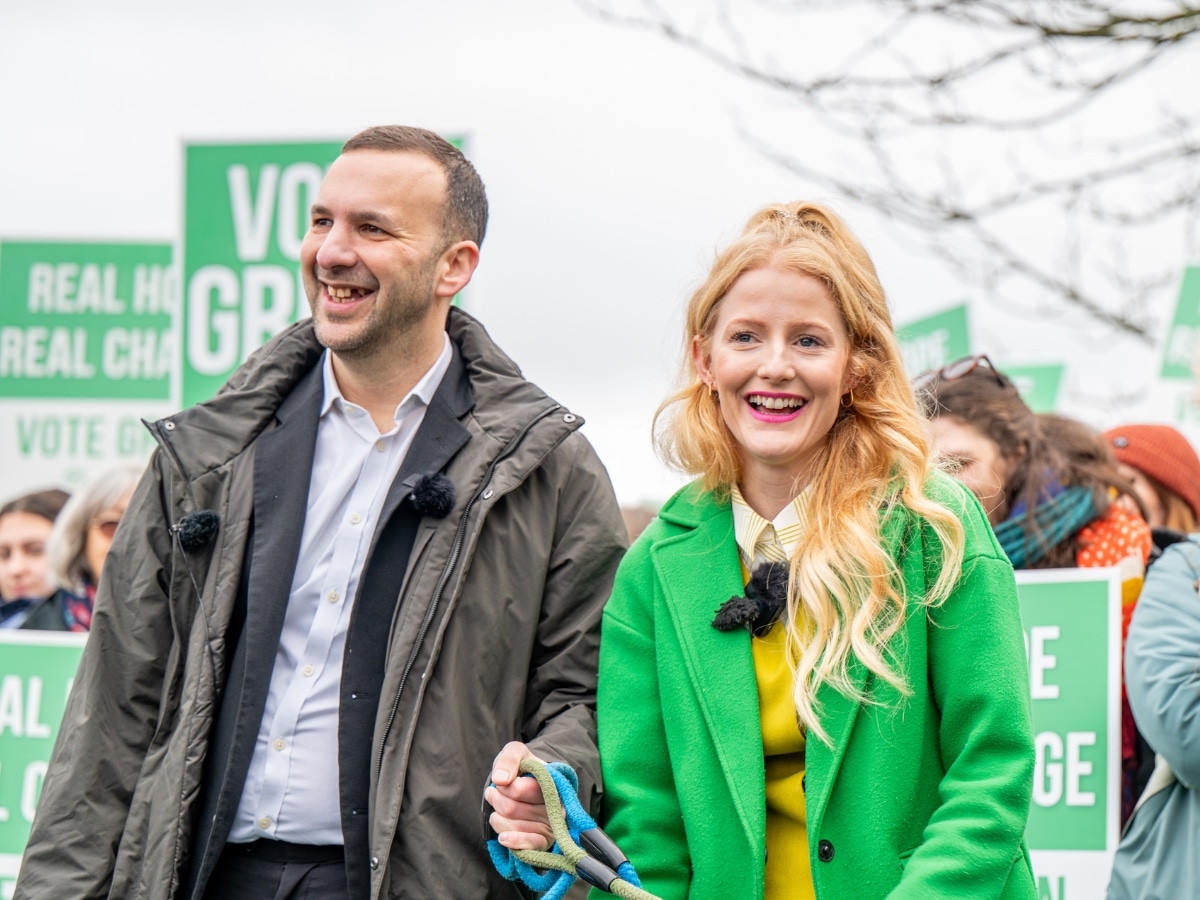
In the end, it wasn’t even close. Hannah Spencer stormed the Gorton and Denton by-election. This is the first parliamentary by-election the Green Party has won. It won’t be the last.
‘Urgh, Labour’
The day before the vote, a group of us from the North East were knocking on doors there. Speaking to voters who’d not yet been contacted – either always out at work, or maybe just back from their hols.
I quickly got to know the “urgh, Labour” face. Men, women, old, young, black, brown, white – whenever the subject of Labour came up they looked like they’d found a hair in their coffee. Not anger, more a bewildered disgust.
Some of it was about the local services. Fly tipping, rubbish. A bit about the poor quality of housing. From the state of the front door I could see some landlords were skimping on maintenance. Some spoke to me about Gaza.
Mostly, though, people raised the cost of living in one form or another. Energy bills. Rents. Food prices. Insecure work. Not a single person said anything remotely transphobic. That seems to be an obsession of online culture warriors. The working people of Gorton and Denton are more worried about their depleted bank accounts.
The future’s Green
Wednesday drive time I did a Times Radio interview on my phone. John Pienaar remarked how upbeat I sounded. I told him what people told me – the Green vote was strong. It wasn’t a scientific sample, but from what I’d seen Hannah Spencer was going to win.
So is anything less than a resounding victory a bad result for you, he asked. Isn’t it remarkable, I said, how this has been framed. This is an ultra-safe Labour seat. Whatever happens, Labour’s last remaining argument has been shredded. You don’t need to vote Labour to stop Reform.
Gorton and Denton was 127th on the Greens’ target list. In other words, if the Greens won by just 1 vote, they’d expect to win 127 seats in a general election. Political analysts Electoral Calculus looked at the demographics and said that, based on this result, we’d see only 33 Labour MPs elected at the next general selection. 10 Tories, 38 Lib Dems, and 254 Reform.
249 Green MPs would be elected, including all three Newcastle seats. I’ve been working on those already. Data from campaigning already shows that Greens will replace Labour in council seats across Newcastle this May. No more will people hold their nose and vote Labour to keep out Tories or Reform. People will vote Green to win.
Green Party positive, not divisive
John Pienaar put it to me that the Greens had run a divisive campaign by raising the issue of Gaza. I said that in a democracy people can and should choose their own voting criteria:
People like you and me, John, read the economic sections of the manifestos. Most people don’t. They see video of hospitals being bombed and civilians being gunned down while queuing for food. They want to see some compassion from their leaders. They look at the way their politicians respond to issues like Gaza and use that as an indicator of their character.
We were out again from 6am Thursday, delivering “get out the vote” reminders. Then door knocking in the rain until well after it was dark. Voters didn’t let the weather deter them. I guess they’re used to it in Manchester.
The establishment parties have been roundly thrashed, and Reform candidate Matt Goodwin blames the electorate, calling them “a coalition of Islamists and woke progressives.” We can expect to see them ramp up the dirty tricks. Not just fake polls, but nasty disinformation. But they’ve already been doing it.
The Green Party said loud and proud, we will tax billionaires. We will take utilities into public ownership. We’ll have a humane asylum system. We’ll introduce rent controls. We will treat drugs like a public health problem. And we will treat everyone with dignity and human rights, and stand against racism, sexism, homophobia and transphobia.
And it worked. The Great British public heard all the slurs and lies from Labour and Reform, and thought, you know what, I quite like the sound of a country where everyone works together. A tolerant Britain. A fair Britain. And they voted for a northern working class woman in a party led by a gay Jewish man.
Featured image via Barold / the Canary
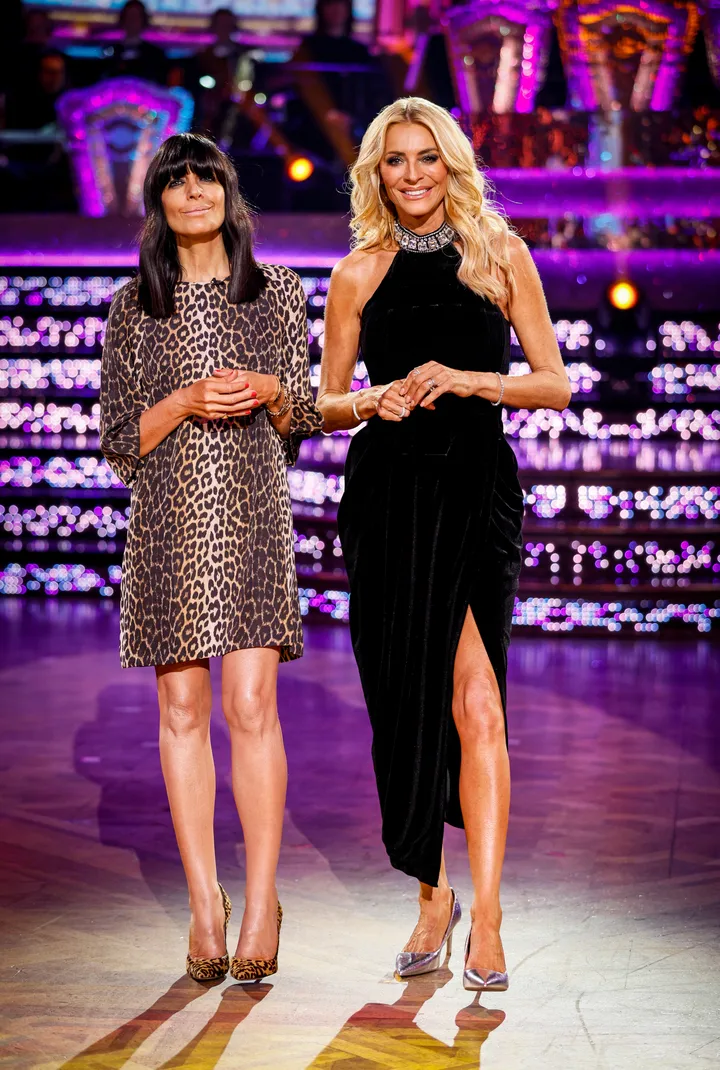
Claudia Winkleman has insisted that the various controversies surrounding Strictly Come Dancing were not behind her decision to leave the show.
In October 2025, Claudia and her co-host Tess Daly shocked Strictly fans when, in the middle of the most recent series, they announced they would be stepping down as its presenters at the end of the year.
During a new interview with the Daily Mail, the Traitors host was asked if the pair’s decision to leave came after “one scandal too many” for the long-running BBC dance show, to which she responded: “Absolutely not.”
“It is a genuinely beautiful show to be part of. Almost every single person who’s taken part is happy they did,” she responded. “So no, it wasn’t that.”
Claudia also claimed that she and Tess had decided the most recent season of Strictly would be their last “about a year before” they made their official announcement.

Guy LevyCREDIT LINEBBC/Guy Levy
She said at the time: “Strictly is a magical, glittery, fake tanned train and it’s been a privilege to be a tiny part of it. The extraordinary talent of the dancers, the band, the hair and makeup and costume teams, the unbelievable production crew and creatives – all utterly amazing.
“I’ve always believed it’s best to leave a party before you’re fully ready to go and I know the new hosts will be magnificent, I look forward to watching them take Strictly to new heights.
“As for Tess – I’m so so lucky I got to stand next to you. You’re funny, kind, whip smart and a true friend and I love you.”
Following her Strictly exit, Claudia is currently gearing up for the debut of her new BBC talk show, made by the same team as The Graham Norton Show.
The launch date for the seven-part series was confirmed earlier this week, as well as the line-up of celebrity guests who’ll be joining Claudia in her first episode.
Meanwhile, a host of celebrities have been rumoured to be in the running to replace Tess and Claudia on Strictly, ahead of the show’s return in the autumn.

The global RAM and SSD shortage crisis, explained

Proof that “boring” food can still make serious money.#dropshipping #shopify #sharktank #business

Best screen-free family break in Cumbria Lake District stay guide

Smart energy pays enters the US market, targeting scalable financial infrastructure

Why Israel is blocking foreign journalists from entering

Bitcoin: We’re Entering The Most Dangerous Phase
Proof that “boring” food can still make serious money.#dropshipping #shopify #sharktank #business

Bank related Financial Frauds Useful Tips || #bank #money #scam #cybercrime

Do these 5 things to become a millionaire..!! #finance #daveramsey #money
-

 Politics6 days ago
Baftas 2026: Awards Nominations, Presenters And Performers
-

 Sports4 days ago
Women’s college basketball rankings: Iowa reenters top 10, Auriemma makes history
-

 Politics4 days ago
Nick Reiner Enters Plea In Deaths Of Parents Rob And Michele
-

 Business3 days ago
True Citrus debuts functional drink mix collection
-

 Politics20 hours ago
ITV enters Gaza with IDF amid ongoing genocide
-

 Crypto World4 days ago
XRP price enters “dead zone” as Binance leverage hits lows
-

 Business5 days ago
Mattel’s American Girl brand turns 40, dolls enter a new era
-

 Business5 days ago
Law enforcement kills armed man seeking to enter Trump’s Mar-a-Lago resort, officials say
-
 NewsBeat2 days ago
Manchester Central Mosque issues statement as it imposes new measures ‘with immediate effect’ after armed men enter
-

 NewsBeat2 days ago
Cuba says its forces have killed four on US-registered speedboat | World News
-

 Tech3 days ago
Unsurprisingly, Apple's board gets what it wants in 2026 shareholder meeting
-
 NewsBeat4 days ago
‘Hourly’ method from gastroenterologist ‘helps reduce air travel bloating’
-

 Tech5 days ago
Anthropic-Backed Group Enters NY-12 AI PAC Fight
-

 NewsBeat5 days ago
Armed man killed after entering secure perimeter of Mar-a-Lago, Secret Service says
-

 Politics5 days ago
Maine has a long track record of electing moderates. Enter Graham Platner.
-

 Business2 days ago
Discord Pushes Implementation of Global Age Checks to Second Half of 2026
-
 NewsBeat3 days ago
Police latest as search for missing woman enters day nine
-
 Sports4 days ago
2026 NFL mock draft: WRs fly off the board in first round entering combine week
-

 Business23 hours ago
Only 4% of women globally reside in countries that offer almost complete legal equality
-

 Crypto World3 days ago
Entering new markets without increasing payment costs