Politics
Key Contests To Look Out For In The Wales, Scotland, And Local Council Elections


Labour has led every Welsh government since the start of devolution in 1999 (Alamy)


11 min read
Across England, Scotland and Wales, voters will go to the polls on 7 May in what could be one of the most fragmented and unpredictable local and devolved election cycles in recent British politics.
Elections across local councils in England, Holyrood in Scotland, and the Senedd in Wales are taking place on Thursday, 7 May 2026.
Approximately 4,992 councillors will be elected across 136 councils, as well as 6 local authority mayors. Two new councils are also being elected in East and West Surrey, and all 32 London boroughs are holding elections.
The Labour Party is defending more than 2,000 seats, the Conservatives are defending more than 1,000, the Lib Dems around 600, the Greens nearly 200, and Reform around 70 seats.
All seats in both Holyrood, the Scottish Parliament, and the Senedd, the Welsh Parliament, are also being contested.
The scale of these contests creates potential for huge political upheaval across all three nations.
The results are widely expected to further demonstrate the threat posed to the traditional two-party system, Labour and the Conservatives, by insurgent challengers.
Polling expert Lord Robert Hayward told reporters at a recent pre-elections briefing: “I have never known both major parties so uncertain about what they’re going to achieve anywhere in the country, because on one side, you’ve got the Conservatives being hit by Reform and a carryover from their unpopularity in 2024.
“On the Labour side, you’ve got a very unpopular government and an even more unpopular prime minister, and you’ve got the question of the Greens.”
There are suggestions that Keir Starmer’s position could come under renewed pressure if the Labour performance next month is as bad as many in the party fear.
With the elections just over a month away, what are the key contests to look out for?
WALES

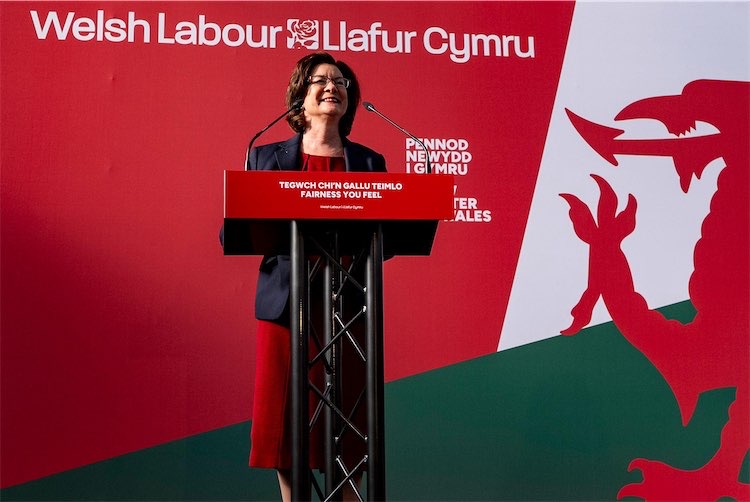
The Senedd elections are likely to be the most disruptive set of elections this May, with Welsh Labour at risk of falling out of government in Wales since the start of devolution in 1999.
The Welsh voting system has also been reformed, and the Senedd’s expansion from 60 to 96 members could make the results even more complex and unpredictable, according to Lord Hayward.
Welsh voters will now cast their ballots under a proportional representation system, including 16 large multi-member constituencies.
Pollsters expect the contest in Wales to be particularly volatile, with polling mostly showing nationalist party Plaid Cymru in the lead, and Reform looking competitive with Labour for the second-largest party.
If no party can form a majority, parties might enter negotiations for a coalition – but Plaid Cymru leader Rhun ap Iorwerth has said he would prefer to form a minority government than enter a coalition with another party.
Key areas to watch:
Senedd constituencies in the South Wales Valleys, such as Pontypridd or Merthyr Tydfil and Rhymney, are traditional Labour heartlands that are now threatened by both Plaid Cymru and Reform UK.
In North Wales, seats such as Fflint Wrecsam and the Vale of Clwyd currently have a mix of Labour, Conservative, and Plaid Cymru – and could be an interesting case study of how far both the Labour and Tory local vote collapses.
Plaid Cymru already performs strongly in constituencies in the west of Wales, but these elections will be an interesting indication of whether Plaid can translate strong polling leads into further domination in their strongest areas.
In Cardiff and other urban areas in the south-east of Wales, this election could signal to what extent the Greens can compete in the urban belt of the country, with some areas seeing a three-way fight between Labour, Plaid and the Greens.
SCOTLAND


In Scotland, the results are less likely to be as disruptive as in Wales, with the incumbent SNP government leading in the polls so far. While the SNP remains on course to emerge as the largest party, the key question is who will emerge as the main opposition, and how fragmented that opposition becomes between Labour, Reform, the Conservatives, and, to a more limited extent, the Green Party and the Lib Dems.
Reform UK is gaining strength in several areas across Scotland and will try to compete with Labour for second place overall.
Professor of politics at Queen Mary University of London, Tim Bale, told PoliticsHome: “The story there is the resilience of the SNP. We know Labour are going to do relatively badly.
“It’s the fact that a party that’s been in government there for so long and lost out quite badly in 2024 at the general election seems to have renewed itself under its new leader, and looks set to carry on governing Scotland. That really is quite a remarkable achievement. There aren’t many places in the world where a party is so predominant.”
In February, Scottish Labour leader Anas Sarwar called on Starmer to resign, in a bid to distance himself and Scottish Labour from the Westminster Labour government.
Like in Wales, the results in Scotland could be complicated by boundary changes and new constituencies and regions, which could produce surprising results and unexpectedly boost smaller parties like the Greens.
Key areas to watch:
The constituencies in the capital, Edinburgh, are largely multi-party marginal seats dominated by Labour, SNP and the Conservative Party. Some of these constituencies were decided by narrow margins in 2021 – in some cases under two percentage points – making them among the most competitive seats in Scotland. These seats could be a key test of where the urban middle-class vote will go in Scotland amid high levels of dissatisfaction with the Labour government in Westminster.
In areas in the North East of Scotland, such as in Aberdeen, the contests have historically been SNP versus the Conservatives. However, with Labour having gained strength and Reform emerging in the polls, there are now likely to be multi-party contests here, with the cost of living and industrial energy policies being the top issues for voters.
The west and central belt of Scotland, including Glasgow, is expected to see the traditional battle play out between the SNP and Labour.
ENGLISH LOCAL COUNCILS
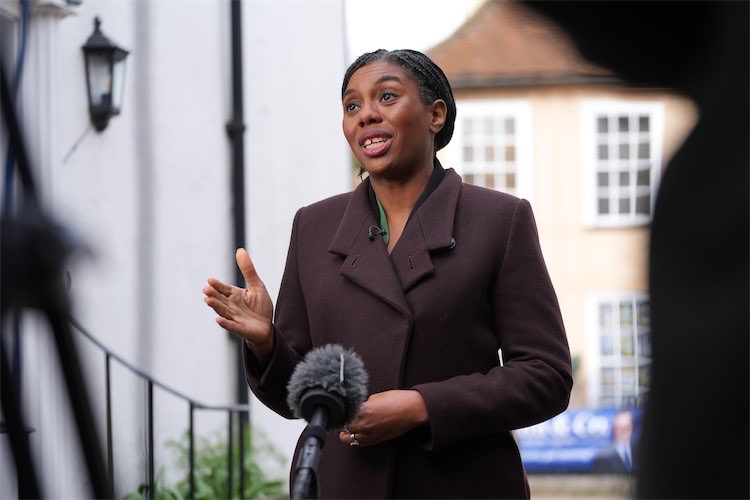
Across England, the council elections are likely to expose the continued fragmentation of party politics.
All five main parties – Labour, the Conservatives, Reform UK, the Liberal Democrats and the Greens – could secure between 10 and 25 per cent of the national vote, making outcomes highly unpredictable under first past the post. The key question will be how far Labour and the Conservatives fall, and whether Reform and the Greens can convert rising support into gains.
Labour has the most to lose, defending more than 2,000 seats, many of them won in 2022, making the incumbents vulnerable. The Local Government Information Unit has predicted a “high churn” from these elections, with a significant turnover of councillors expected.
Professor Bale said Labour is likely to fare the worst, while the Conservatives are also expected to suffer losses. “But they are likely to be able to hide behind what happens to Labour,” he added.
Reform is expected to make gains, but its ability to take control of councils is uncertain, with tactical voting likely to play a significant role. Hayward said voters are increasingly asking campaigners on the doorstep which party is best placed to defeat Reform, with all parties deploying “bar chart” messaging on their campaign material.
There were signs of anti-Reform voting at recent by-elections in Caerphilly and Gorton & Denton.
“If ever you thought that bar charts were a unique operation of primarily the Liberal Democrats until a few months ago, I can guarantee that everybody going will be producing bar charts to say that they are in the best position to defeat Reform,” Hayward said.
However, boundary changes and disrupted election timetables may make it harder for voters to identify leading challengers. Smaller parties, including the Greens and Liberal Democrats, are likely to benefit from vote fragmentation, though the Lib Dems may struggle to translate this into large numbers of new councils.
National issues, particularly the cost of living and migration, are also expected to shape voting behaviour, though their impact remains uncertain. For Reform, the elections will be a key test of whether its polling strength can translate into meaningful local power.
For Labour, there is some hope that Starmer’s approach to the Iran war and refusal to agree to Donald Trump’s demands will give the party a boost on polling day.
Key areas to watch:
The county council contests will be a key test for the Conservative Party, with Essex, Suffolk, Norfolk, Hampshire, and East and West Sussex all considered core Tory heartlands. The Conservatives face a Reform UK insurgency, as well as the Lib Dems in the south. In 2025, the Tory vote in local councils collapsed, and the party will be nervous not to continue the same trend in 2026.
Hampshire stands out as a bellwether council up for election, as it has been Tory-controlled since 1997, and now the Tories face a squeeze from both Reform and the Lib Dems.
The all-out election in Milton Keynes is set to be a full reset due to boundary changes. With Labour having only recently gained full control of the council in 2024, the party needs only to lose a few seats to lose control again, with this contest potentially testing Labour’s durability in towns and suburban areas.
Cambridge is an area where both the Greens and Lib Dems are competitive to challenge Labour’s very small majority on the council, making it likely it will flip to no overall control.
Councils in the north of England, such as Hartlepool, will act as the battleground over which Reform will try to win councils from Labour.
Multiple councils in the south-west of England are likely to be fragmented between Labour, Reform, the Lib Dems and the Green Party.
Lord Hayward said it could be “particularly difficult” for the Lib Dems if they face a squeeze from the Green Party as the alternative progressive party to Labour and the Conservatives.
Last month, PoliticsHome reported concern among Lib Dem figures that some MPs could switch to the Greens amid frustration with the party’s failure to capitalise on the success of the 2024 general election, when it returned a record number of MPs.
LONDON BOROUGHS

Labour could see its vote eroded in its traditional heartlands in the capital, with the insurgence of the Greens in inner London and Reform in the outer boroughs, while the Lib Dems are expected to hold onto their existing boroughs in south-west London.
Key areas to watch:
According to Lord Hayward, some of the key contests in London include:
- Reform target boroughs of Bexley, Bromley, Havering, Barking & Dagenham
- Conservative target boroughs of Barnet, Wandsworth and Westminster
- Harrow and Hillingdon, which are being defended by the Tories
- Newham, Redbridge, Waltham Forest and Tower Hamlets are all boroughs where Gaza and the war in Iran might impact voting along international issues in the local elections
- Camden, Islington, Hackney, and perhaps Lambeth and Southwark are boroughs where the Green Party is likely to be competitive with Labour.
- Kingston, Richmond, and Sutton are all boroughs which the Lib Dems are expected to hold
“Harrow is noticeable now, along with Westminster and Wandsworth, as being one of the very few places where it is purely Conservative versus Labour with a bit of others added on,” Lord Hayward said.
“They are very much the exception now as boroughs, in terms of competition.”
Camden would be a particularly symbolic victory for Zack Polanski’s Greens, as it contains Starmer’s constituency of Holborn and St Pancras.
In Redbridge, the pro-Gaza independents who nearly cost Health Secretary Wes Streeting his seat in the 2024 general election could also make inroads in the local elections. If Labour loses seats in Redbridge, it could cast doubt on Streeting’s suitability as a future leader if he is seen as unlikely to win his own seat at the next general election.
However, Hayward predicted Labour losses in the capital would not amount to a “wipeout”.
“The problem that the two legacy parties actually face is that they genuinely don’t know how many people are going to vote for them,” he said, explaining that smaller parties this time around might encourage people to vote who have not previously voted in local elections.
“Remember, the [Brexit] referendum in 2016 was effectively won by people who didn’t normally vote either.”
It is also possible that the Green Party and independent candidates could work together across London, as well as in other councils across the country – creating the potential for complex local coalitions in the aftermath of 7 May.

You must be logged in to post a comment Login