
Politics
Labour Minister Compares Reform UK To Far Right Germany Party


A Labour minister has compared Reform UK to a far-right German party which has just secured its biggest election victory.
The Alternative for German (AfD) is set to become by far the largest party in the German region of Saxany-Anhalt.
They will become the first far-right party to gain power in Germany at a state level since the Nazi era of World War 2.
The AfD has seen a surge in popularity thanks to its anti-immigration and anti-woke policies.
As well as being pro-Kremlin and wanting to see an end to international sanctions against Russia, the party also wants to see the German school curriculum overhauled to become more nationalistic.
Asked on Times Radio if the UK government would be willing to work with the AfD, Treasury minister Emma Reynolds said: “We will not be reaching out to a right-wing populist party.”
She added: “It reminds us that we’re not the only country where we have far-right populists like Reform. France has the same sort of problem too.”
Asked if she put the AfD “in the same bracket” as Reform UK, Reynolds said: “Yes.”
When McCann pointed out that the AfD’s policies were “quite a lot more extreme than what Reform is advocating for”, the minister replied: “I think they are both parties that try and feed on the grievances of people and don’t come up with solutions.
“And yes, I see them in the same political bracket. And it reminds us that as a government, we have the responsibility to drive change and to convince people that we can change the country for the better and that they don’t need to resort to voting for far-right politicians to express themselves.”
HuffPost UK has contacted Reform UK for comment.
Listen to Commons People, the podcast that makes politics easy. Every week, Kevin Schofield and Kate Nicholson unpack the week’s biggest stories to keep you informed. Join us for straightforward analysis of what’s going on at Westminster.

Politics
Politics Home | Boney M Singer Says UK Must Welcome Immigrants After Former Bandmate Performs At Reform Conference


PoliticsHome first revealed that the disco band was set to play at Reform UK conference (Alamy)
3 min read
Exclusive: Boney M’s original lead singer has criticised “fake reckless” band members for performing at Reform UK’s conference last week, saying that Nigel Farage’s party “has not embraced people who are in need”.
In a statement shared with PoliticsHome, Liz Mitchell, the disco act’s original singer, said it is “important that the UK continues to be a welcoming place for immigrants and those seeking asylum“, after her father came to the United Kingdom as part of the Windrush generation.
PoliticsHome revealed in the days leading up to last week’s Reform conference in Birmingham that Boney M was expected to perform at the afterparty.
However, there were question marks over which version of Boney M was booked to entertain conference attendees, with original lead singer Mitchell and dancer Maizie Williams having both recently performed under the name of Boney M.
In the end, it was Williams’ Boney M that performed on Friday night, with the conference agenda promising “a burst of disco” to Birmingham’s NEC.
On Monday, Mitchell told PoliticsHome she was “saddened” that “reckless fake people who have no idea how these songs were sung and the powerful meaning behind them could dare to pretend to be who they are not”.
Mitchell accused those performing on Friday of “selling their souls” and “their race”, “for money” at an event “that has not embraced people who are in need”.
She added that the songs that made Boney M famous decades ago, including Daddy Cool and Rasputin, “carried an energy of love and peace”.
“My father came to the UK as part of the Windrush generation, building a life here where he was very happy. I too came here from Jamaica and was awarded an MBE for my services to Music and Charity. It’s important that the UK continues to be a welcoming place for immigrants and those seeking asylum.”
Williams’ manager, Donavon Nelson, has denied any political affiliation with Reform since the Friday night performance, according to German media.
Nelson told the publication Stern that Williams and the other performers who appeared at the conference afterparty neither support a political party nor interfere in politics. He added that when they were first approached about performing, it wasn’t clear that it was a Reform event.
The Boney M saga is not the only music-related controversy to emerge from Reform conference. Kevin Rowland, lead singer of Birmingham band Dexys Midnight Runners, said he was “disgusted” to hear Come On Eileen used by Farage before his speech.
There’s truly nothing better than a clean house. But if I’m being really honest, I hate vacuuming so much, I rarely do it. Don’t even get me started on mopping.
Yes, mum, I know that’s really bad. Like loading and emptying the dishwasher, though, it seems to be a never-ending cycle.
Something about my flat means that huge dustballs akin to tumbleweeds start to develop every few days, even when I’m hoovering frequently. So obviously at some point I have to call it a day and give in to nature.
Luckily, technology means I no longer have to. Don’t ask me how, but scientists somewhere have created a tiny robot that sweeps over your floors and vacuums (and sometimes mops) them so you don’t have to.
It’s none of our business what that’s going to mean when the robot revolution arrives, we’re living in blissfully clean houses and not by our own doing.
If this sounds like a state of existence you want to partake in, keep reading for our round up of the best robot vacuums to shop now.
Best robot vacuums at a glance:
Best robot vacuums to shop now
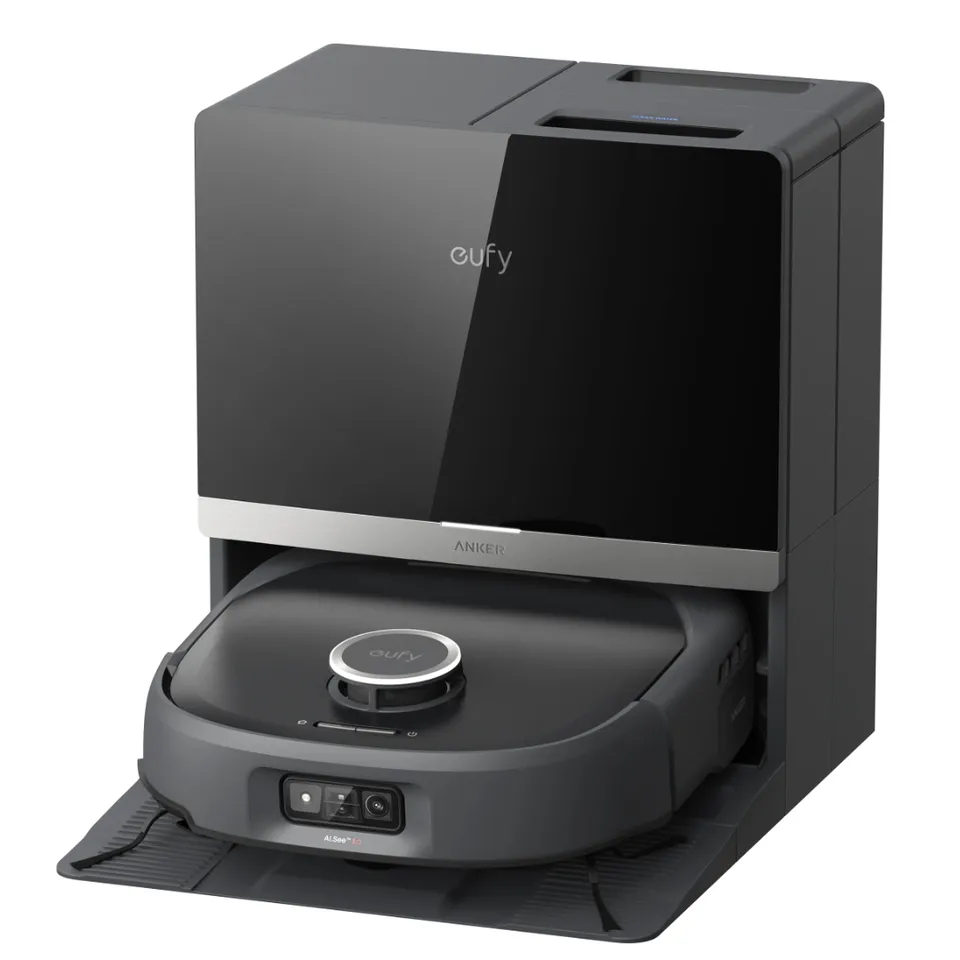
Anker eufy E35 Omni Robot Vacuum Cleaner with Mop

+ Easy to put together, although WiFi connectivity is dodgy
+ Intense suction power
+ Looks sleek
+ Can map and clean across multiple floors
– Quite loud
– Only works with the Eufy floor solution
In the box: Station, robot, cleaning solution, quick start guide, safety sheet, power card
Suction power: 35,000 Pa
Weight: 13.4kg
Battery life: 188 minutes
Warranty: 2 years
Dimensions: 36.6 × 48 × 46 cm.
Tested by: Honey Wyatt, Shopping Writer
As soon as I unboxed this robot vacuum, I could tell we’d be fast friends. Already, its 35,000 Pa claim was enticing to me. Visually, it looks much sleeker and smarter than any other I’ve seen thus far, and it was really easy to put together.
It did take me a while to connect the robot to the WiFi, but my top tip would be to make sure you’re as close to the router as possible.
Once that was done, though, mapping took a mere few minutes. Using the Eufy app, you can easily edit the floor plan and assign rooms or ‘zones’ that you think need extra attention.
As the name suggests, the Eufy robot can mop and vacuum, and you can use the app to choose whether you want one ‘cycle’ to do both at once, or separately, as well as to adjust the suction and mopping intensity.
Sadly, the mop function only works with the included floor solution (although admittedly I haven’t taken the risk of figuring out whether you can put another kind of cleaner in there).
Once the first clean was done, I was truly astounded by how clean my floor was. It managed to get every speck of dust and debris (of which there was, embarrassingly for me, a lot) and hair without tangling the roller.
While it was quite loud, it didn’t mind it, as I found that it didn’t get stuck dodging around chair legs as much as other models I’ve tried; apparently it can even do this in the dark, thanks to having an LED fill light and dual millimeter-precision line lasers.
You can set cleaning schedules through the app, as well as ‘common tasks’ for routines you want to repeat, so maybe I’ll test how true to form that is in the middle of the night. Stay tuned (and sorry to my neighbours x).
Shark PowerDetect UV Reveal 2-in-1 Vac And Mop Robot Vacuum

+ It sanitises and washes the mop pad so it’s clean every time it leaves the base
+ Shark Clean app is easy to use, although it’s basic
+ Doesn’t mop your carpet as it remembers where it is
+ Can adjust the intensity of the suction
+ Only have to empty the dust tank every 60 days as it empties itself
– Suction isn’t quite as strong as it could be
– WiFi connection can be temperamental.
In the box: PowerDetect UV Reveal Robot Vacuum, charging dock, anti-microbial mop pad, two side brushes, anti-odour technology cartridge, 355ml Shark VacMop Multi-Surface Floor Cleaner
Suction power: Not stated
Weight: 2kg
Battery life: 180 minutes
Warranty: 2 years
Dimensions: 46.1 x 36.32 x 44.45cm
There are some things you even you can’t see, so you’ll be able to rest assured that your house is cleaner than you could ever know with this Shark vacuum that uses UV detection to find hidden stains.
Shark has loaded this vacuum with UV Reveal Technology, which picks up on pet messes and sticky stains you might not have noticed, and can mop them up in seconds.
Two members of the HuffPost were keen to review it for that very reason.
Upon arrival, it took me longer than I expected to get it set up. Although the vacuum is app-controlled, so in theory it should be easy to connect to your WiFi, it kept disconnecting for a good half hour.
Naturally, I got quite frustrated, and that’s as a supposedly tech-savvy 26 year old, so this might not be the most practical thing for older generations to set up. Nevertheless, I persisted. Finally, the vacuum stayed connected to my WiFi, and it hasn’t disconnected since, even when my power went out.
Mapping my flat was a relatively painless process: it swivels around the entire floor, detecting where the carpet and any obstacles are, and creating a floor plan for your room.
Then, you have to fill the water tank and a separate tank with the included floor cleaner to get going.
Although pretty basic, the Shark Clean app lets you choose to either just vacuum or mop, or run a session with both. You can also adjust the mop and vacuum intensity and schedule cleaning sessions, so you really never have to think about it.
However, I don’t find it vacuums my house as thoroughly as I would like it to. Sometimes the Shark robot vacuum struggles to get into corners or edges, which need more vacuuming. The mopping function is really effective and leaves my house looking sparkling clean, so that’s a huge win for me.
Dayna McAlpine, HuffPost Head of Content:
I live in an old rickety Edinburgh flat with wooden floors throughout, and not having to mop them myself is borderline a gift from god – it saves me so much time.
When the Shark vacuum works, my flat is so much cleaner. With having a small permanently shedding dog I would normally have to hoover at least every other day to keep on top of it. Now I can just send my hoover out while I’m out walking said shedding dog each morning and come home to a hairless house!
However, this robovac regularly loses connection from my phone or the internet. It can take several attempts to reconnect it over DAYS; I’m currently disconnected and it will not find my WiFi for love nor money, and there’s no troubleshooting that works.
It’s also only compatible with Shark’s own cleaning solution for mopping, but it is possible to get a big bottle of it for £10 on Amazon that lasts for ages.

+ Comes with a three year warranty
+ Super customisable
+ Easy to set schedules
+ Set up doesn’t take long, and connectivity is good
– Doesn’t come with a spare side brush
– Battery doesn’t last for ages on higher powers, which isn’t ideal for bigger spaces
In the box: Robot vacuum, base station, ramp extension plate, user manual, auto solution dispenser mode dual compartment, dust bag, roller mop, side brush, washboard, main brush, dust box, dust box filter, scale inhibitor
Suction power: Minimum 28,000 Pa
Weight: 17kg
Battery life: Up to 210 minutes
Warranty: 3 years
Dimensions: 45.8 x 42 x 47cm
Tested by: Dayna McAlpine
This is the best robovac I’ve ever tested – it does individual rooms, areas and you can set up routines for it.
It comes with voice activation – you can set the hoovers voice to Croatian midfielder Luca Modrić for some reason.
Randomly, it’s also a spy hoover. You can connect to the app and see through its camera and drive it about – very useful when you think you’ve left the balcony door open or the oven on!
Unlike other vacuums we tested, it has a countdown for every replacement component or for maintenance. For instance, on the app I can see that it’s 100 days until I need to replace the roller and five days until I need to clean the sensors, which comes in handy when you need to order new parts that you don’t already have in.
Plus, the space is always left REALLY clean once it’s been used, especially after it’s mopped.
Dreame X60 Ultra Complete Smart Robot Vacuum

+ Can climb two 5cm stairs
+ Uses two rotating mops rather than one
+ Strong suction power, making it great for people with pets or dust allergies
+ Can charge 24% in 5.5 mins
+ Big water and dust tank so you don’t have to refill and empty too frequently
– Set up is complicated and takes a while.
In the box: Robot vacuum, base station, cleaning brush, two mop pad holders, ramp extension plate, quick start guide, user manual, cleaning solution, two dust bags,
Suction power: 42,000 Pa
Weight: 15.4kg
Battery life: Up to 242 minutes
Warranty: 2 years
Dimensions: 39 × 45.6 × 49.9 cm
Tested by: Hannah Ballantyne, HuffPost Optimisation Editor
With stronger suction power than most (at 42,000 Pa) this robot vacuum is ideal for people with dust allergies or hairy pets, or those who feel the need to vacuum every day.
In fact, the Dreame X60 is designed specifically for pet owners, as it can detect and avoid food bowls and litter boxes, or you can use the app to add extra cycles near pet areas.
Not to mention, the vacuum can take photos of pets while cleaning, and recommend cleaning tips based on their daily habits, which feels a little dystopian but comes in handy if you have an unreliable cat you want to check in on while you’re away.
Dreame can also be linked with your smart home devices like Alexa or Siri to control your cleaning with your voice, or the app is super easy and intuitive to use, as you can schedule your cleans, adjust your preferences and check in on the vacuum’s progress.
When it comes to the clean itself, the vacuum is effective at recognising rugs and obstacles, and getting into the corners thanks to the extendable mop arm, which can fit under tight spaces you wouldn’t normally be able to reach, for a room that feels genuinely clean and not just swept over.
Naturally, the vacuum self empties itself into its tank, which is pretty large compared to the other options, at 72L, so you only have to empty it very 100 days.
Ultenic T20 Pro Robot Vacuum Cleaner

+ It’s quite loud
+ Good at avoiding obstacles
+ Tank can last up to 10 weeks without emptying
+ Can set up to 15 no-go zones to protect delicate areas
– Can get tangled up with rugs that have tassels
In the box: Robot, charging dock, adapter, cleaning solution, mopping pad, side brushes, filter, multi-surface cleaning tool.
Suction power: 8000Pa
Weight: 5.7kg
Battery life: 180 minutes
Warranty: 2 years
Dimensions: 35 x 30 x 25cm.
Tested by: Natasha Hinde, Parents Editor
If nearly a grand sounds like too much to splash out on a robot vacuum, this one from Ultenic comes in at a sweet £200.
Admittedly, the suction is nowhere near as strong as other robot vacuums, but otherwise it has almost the same functionality.
It has 99.2% effective debris pick up, and can clean up to 200 square metres on a single cahrge.
After setting it up, it will roam your house to create a floorplan, which you can divide into rooms using the app.
Then, you can choose from either a vacuum-only setting, mop-only setting, or both in one cleaning session, before it sets off.
There are four different suction and mop levels to choose from, and you can set custom cleaning routines for each room.
It’s good at avoiding obstacles (and children and pets chasing after it, per Natasha’s original review) and you can even control it with your smart home.
Final verdict
While robot vacuums often come with a hefty price tag attached to them, the fact you don’t have to clean every day – or even every week – is a huge bonus.
Each vacuum varies in terms of its ability to clean into corners and avoid obstacles, which you’ll need to consider based on the needs of your house.
If you’re looking for a vacuum with strong suction power to get up stubborn dust balls, the Dreame X60 could be the one for you.
For a budget option, the Ultenic T20 will save you around £800 on other models, although it is quite loud and not as strong.
The Anker Eufy E35 is also great for multiple stories, as it can map different areas. You’ll just need to move it around.
How we tested the best robot vacuums

The HuffPost team took testing robot vacuums (read: not having to vacuum themselves) extremely seriously.
Each of us set up the vacuum ourselves to test how easy it was to connect to WiFi, and used the vacuum around our houses and flats for a number of weeks to make sure we fully knew all of its features.
We assessed each vacuum for factors such as suction power, battery life, how often we had to empty the dust tank and refill the water, app compatibility and whether it could be controlled via a smart device.
We also considered how well it met each of our needs, from dust allergies, to pet hair, children’s clutter, and avoiding obstacles like chair legs, as well as whether it could navigate multiple floors.

Rob Reiner was among the winners at the Creative Arts Emmys on Sunday evening.
The late actor and filmmaker, known for helming hit films like When Harry Met Sally, Misery, This Is Spinal Tap and The Princess Bride, was stabbed to death at the end of last year, alongside his wife, the photographer Michele Singer.
One of his final performances was a guest role in the final season of The Bear, for which he was nominated in the Outstanding Guest Actor In A Comedy Series category at this year’s Creative Arts Emmys.
While the main Emmys are still a week away, it was announced on Sunday that Rob had posthumously won his award, his third triumph in this category. and his first since 1978.
Following his win, Rob has set a new record for the longest distance between wins in an acting category at the Emmys, surpassing a previous record held, fittingly, by his dad, comedian and fellow actor Carl Reiner.
The announcement was met with a standing ovation from the studio audience, with Wendi McLendon-Covey, who accepted the award on behalf of Rob, telling the crowd: “It’s appropriate to stand for this one. I know we all wish Rob could be here tonight.”
Following the deaths of Rob Reiner and Michele Singer, their son, Nick, was indicted with two counts of first-degree murder.

Nick has pleaded not guilty to his parents’ murders, and the case continues.
Perhaps unsurprisingly, the Apple TV+ dark comedy Widow’s Bay was the big winner at the Creative Arts Emmys, having gone into this year’s television awards with a whopping 19 nominations.
However, The Pitt and Hacks remain the most recognised shows of the year, with 25 and 24 nods in total, respectively.
The Primetime Emmys will take place on Monday 14 September, with screen legend Mariska Hargitay on hosting duties.
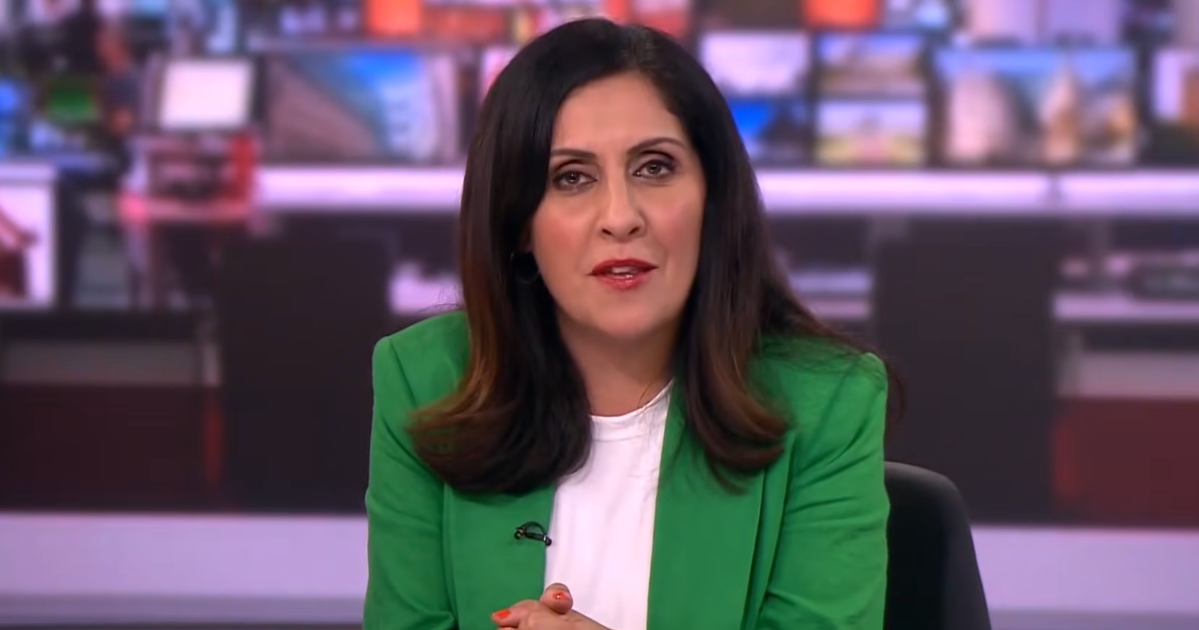
BBC presenter Maryam Moshiri has revealed she’s living with a form of incurable blood cancer.
In a new interview with the broadcaster, Maryam shared that in November 2024, she was told she had polycythaemia vera (PV), a rare yet treatable form of the disease.
“I was told by my consultant that I have this incurable blood cancer,” she recalled. “Mostly I had no symptoms and that’s one of the problems with this disease.
“The only reason mine was caught was because my GP was so fastidious in the way she did my routine blood tests and immediately sent them for further diagnosis.”
Two years after her diagnosis, the presenter said she feels like she’s “started to understand the disease a lot better and the way it affects my life”.
“I’ve got a handle on it to a degree now, so I felt it was really important to raise awareness,” she added.
Symptoms of polycythaemia vera (PV)
PV causes the body to make too many red blood cells and is typically diagnosed through a blood test.
It tends to develop slowly which means it can start out symptomless – as a result, Cancer Research UK said many people find out they have it when they have a blood test for something else.
As the illness progresses, it can cause symptoms such as:
-
headaches;
-
fatigue;
-
burning pain in the hands and feet;
-
blurred vision and other problems with your eyes, such as vision loss that comes and goes;
-
night sweats;
-
unusual bleeding – for example, nosebleeds;
-
bruising more easily;
-
itching, especially after a shower or bath;
-
pain or discomfort in the abdomen from an enlarged spleen;
-
high blood pressure;
-
gout, which can cause sudden, severe joint pain;
-
bleeding or blood clots, which can sometimes lead to stroke or heart problems;
-
bone pain;
-
reddening of the skin;
-
feeling dizzy;
-
chest pain.
How is it treated?
Maryam, who has been with the BBC since 2003, said while the cancer is incurable, it’s “manageable with the right treatment”.
She continued: “It’s just a question of finding the right treatment and making sure it works for you.”
Treatment can range from low dose aspirin (to reduce the risk of blood clotting) to venesection, where some blood is removed and the body then makes more blood, but produces red blood cells more slowly than the rest.
People with a high risk of blood clots might need treatment to control their red blood cell levels. This can be given in the form of chemotherapy or targeted cancer drugs.
Politics
The House | For electoral success, Burnham must ensure more Labour voters feel comfortably off


Andy Burnham delivers his first speech as Prime Minister (Xinhua/Alamy)

4 min read
Andy Burnham’s premiership is expected to mark a serious refocusing by the Labour government on the cost of living: doing whatever it takes to help people feel better off.
That responds to one of the biggest challenges Sir Keir Starmer’s government faced. But the voters who put Labour into office do not feel they have benefited greatly during its two years in power. Delivering serious economic change – and ensuring that its own voters actually feel the benefits – will therefore have to be at the heart of Burnham’s premiership.
One of the key benchmarks we track at Opinium is how people describe their own financial situation. This measure is fundamental to understanding the cost of living crisis: do people feel comfortably off, are they coping, or are they struggling financially? Before the crisis, more than half the public described themselves as comfortably off, with the figure reaching 57 per cent in one poll in 2021.
The spike in inflation was the catalyst for the crisis. But lower inflation does not reverse the damage or return prices to where they were. It is therefore no longer a particularly useful measure of whether the crisis is over. It is over when people feel it is over, and that is when people feel comfortable again.
The real nadir in our polling came in March 2023, when just 24 per cent said they were comfortably off. The story since then has been one of painfully slow improvement, leaving us nowhere near the days when most people felt things were going OK.
By August 2024, shortly after the general election, the proportion comfortably off had edged up to 29 per cent. In our latest polling, it has reached 36 per cent. But set against the 57 per cent recorded five years ago, it also means that roughly 10 million people who once felt they were doing OK no longer do.
The particular problem for Starmer’s government was that the improvement did not especially benefit its own voters. Economic performance is a key measure of government success, and most people experience ‘the economy’ through their own financial situation.
Just after the election, 32 per cent of Labour voters felt comfortably off. That has edged up to 37 per cent: an improvement of five points, but one that has not even kept pace with the national recovery, which is itself already slow.
Contrast that with other parts of the electorate. Among people who voted Conservative in 2024, 51 per cent now feel comfortably off, up 12 points since the election. Among Liberal Democrat voters, the figure is 48 per cent, up 13 points. Even 2024 Green voters – who started as the least comfortable group – have seen a 12-point rise, to 35 per cent.
Labour therefore ended up in a strange position: Conservative, Liberal Democrat and Green voters have seen faster improvements, while the Labour voters who put the government into office have seen much less progress, and have been leaving the party since the election.
Labour voters who put the government into office have seen much less progress
The only voters faring worse are those who voted Reform in 2024: just 35 per cent now feel comfortably off, down one point since the general election. This makes them the only group to have seen no improvement and reinforces Reform as a repository of anti-Labour sentiment.
That is the real challenge for Burnham. His pledge to deliver “good growth in every postcode and hope in every heart” suggests that he gets it. It is a political narrative that fits the scale of the problem and, crucially, recognises that national economic progress alone will not be enough.
The test is whether the government can turn that pledge into improvements in people’s disposable income. Voters will judge it through their wages, housing costs, energy bills, food prices, childcare and taxation – the things that determine what is actually left in their bank accounts at the end of each month. Growth may be part of the answer, but abstract economic growth (even regionally rebalanced) will mean very little politically if the households who put Labour into office continue to feel stuck.
Burnham will therefore be judged on whether he can do more than tell the right story. He will have to improve the day-to-day lives of the people who put Labour into office in the first place. The cost of living crisis will not be over because inflation has fallen or a national growth statistic says so. It will be over when those voters feel the recovery themselves.
James Crouch is head of policy and public affairs research at Opinium

Donald Trump has been branded “absolutely insane” over his latest bizarre AI-generated post online.
The White House’s official account on X posted the oath quoted by the fictitious comic book Green Lantern Corps to charge their rings and reaffirm their commitment to protecting the universe.
An accompanying video shows Trump wearing the ring and standing looking down on a city with the sign “American Manufacturing”.
Trump is then shown, still wearing the Green Lantern ring, with images of warships and fighter jets in the sky above him.
The response online was, predictably, withering.
One X user said: “It’s confirm [sic] … The president of the United States is absolutely INSANE.”
Another X user simply said: “This can’t be real life.”
Trump’s behaviour has become increasingly erratic in recent days, leading to some observers speculating about his mental health.
Just last week he posted an AI video of Canada geese with hairstyles like his and carrying machine guns to protect Lake Ontario, which Trump unilaterally renamed Lake America over his trade war with Canada.
He also declared “mission accomplished” in Iran, even though there is no end to the war in sight.
Listen to Commons People, the podcast that makes politics easy. Every week, Kevin Schofield and Kate Nicholson unpack the week’s biggest stories to keep you informed. Join us for straightforward analysis of what’s going on at Westminster.


9 min read
Andy Burnham says he’s prepared to spend political capital on social care reform. Matilda Martin reveals details of how he plans to go about it
Andy Burnham, say friends, runs towards problems, not away from them. In making social care reform a priority, the new Prime Minister is certainly doing that – he is charging straight at one of the most intractable issues in British politics.
Four previous efforts at reform in the last two decades have foundered. Public understanding of the issue is limited, indeed even experts can’t agree which of the series of interlocking problems is the most urgent. Is the main problem the ruinous consequences for some of having to pay catastrophically high care costs, usually in later life? Or that the creaking sector is a potentially fatal drag on the NHS? What about the huge skill shortages? Or the ever-increasing costs of caring for working-age disabled people now living long lives thanks to improved medicine?
The only point of agreement so far is that cutting this Gordian knot is going to require a very expensive knife. With no appetite for additional taxation, and borrowing levels already nudging the UK into the sights of bond vigilantes, it takes a bold leader to decide that this is the moment for another crack at social care reform.
Wes Streeting didn’t think it was worth an early fight. As health secretary he announced a National Care Service but then set a 10-year timeframe on defining what that meant.
Burnham has picked up the structure of that effort led by Louise Casey but wants to turbocharge the process.
Baroness Casey’s Independent Commission on Adult Social Care will now report a year earlier.
A ‘national conversation’ that seeks to engage voters has been launched, while at Westminster Burnham has initiated a fresh set of cross-party talks.
“There is a massive public job to be done to explain just how ungenerous and how unfair the current system is,” Sebastian Rees, a principal research fellow at the Institute For Public Policy Research, tells The House.
Rees believes this was a key barrier to Theresa May’s ill-fated proposals in 2017, branded as a “dementia tax”, which she was later forced to abandon. While Rees argues that May’s reforms were “relatively generous and relatively well thought through”, they ended up collapsing after her party failed to make the case to the public that the current approach was “disproportionate and unfair”.
“But if people don’t believe that to be true, then advocating for reform is very, very tricky.”
This plays out in the figures. Research by Ipsos published last year revealed that nearly one-third of the public mistakenly believe the NHS provides the majority of social care services for older people, with a similar figure incorrectly believing that social care is free at the point of need.
Labour MP Anna Dixon, who has spent the majority of her career so far working on the issue, agrees that the conversation needs to be approached from a different direction this time around: “This touches on so many people, and that’s the point that we keep failing to get across – that this is not something over there that affects a few people. Caring one way or another impacts us all, either at some point in our lives needing care, or giving care.”
Dixon tells The House that she hopes the groundwork being done now to build cross-party consensus will protect any progress that is made from party politics.
“I hope there will be a Labour government to see this through. But just making sure that there’s enough groundwork being done, enough consensus built, that if there were any change in government, that the progress wouldn’t be reversed and halted or put off as we’ve seen has happened before.”
Two sets of cross-party talks had already taken place with Casey under the Starmer administration. Liberal Democrat spokesperson Helen Morgan tells The House that while they were “broadly helpful”, she is not convinced that they moved the conversation forward, describing them as a “general talking shop”.
The House understands that there will now be quarterly cross-party talks for both health teams and leaders separately. The former will next meet after Parliament returns from conference recess in October, and party leaders will do so the following month. It is understood that Casey will attend the talks with the shadow health team, while Burnham will join the Baroness for the leader talks.
As Conservative health spokesperson at the time, Stuart Andrew attended the first cross-party talks on behalf of leader of the opposition Kemi Badenoch. Speaking to The House before he was shuffled out of his shadow cabinet role, Andrew – who almost lost his seat in 2017 over May’s “dementia tax” proposals – thought that the dual approach being taken would encourage real reflection, allowing leaders to bring key discussion points they have considered with their health teams between the meetings, sharpening the focus.
While the talks are well-intentioned, there will be concerns that leaks and briefings could lead to them quickly breaking down. Andrew insisted the wish of the health teams was that any talks would not be leaked, allowing them to take place without fear that ideas would appear in the headlines the following day.
Andrew argued that “outlandish ideas” can sometimes breed a feasible and workable solution.
But without the confidence to be frank and open in these discussions, he did not believe parties would be able to “really get into the weeds”.
There is a massive public job to be done to explain just how ungenerous and how unfair the current system is
The shadow health secretary was positive about Casey’s ability to manage the talks and move the dial, praising the peer for visiting the constituencies of each health spokesperson to talk about social care in their area. Andrew believed first principles for reform would be discussed once Casey returned to the health teams with more information gathered.
He said Casey was working with a big team, including many individuals she has worked with for years. While the peer has been visiting constituencies, Andrew said her people had been going further afield as part of their work on the commission.
Working closely with government on the talks could be seen as a real opportunity for the Liberal Democrats. But The House understands that there is concern within the party that people don’t see raising taxes as translating into better outcomes. Working in coalition with other parties has not, of course, ended well for the Lib Dems in the past.
Speaking to The House, Morgan says the party is open-minded but makes clear there are red lines. “We wouldn’t sign up to anything that we thought would be damaging in the future,” she says, clarifying that this would apply both to the party and the country.
Morgan says the Lib Dems will be approaching the talks with three tests: reforming the carers’ allowance; a universal safety net, including free personal care; and protection from catastrophic costs, so that people aren’t faced with having to sell their house to meet their care needs.
When the cross-party talks were announced in July, Reform UK was not included, and while the party voiced anger at its exclusion from the talks, arguably such a move by Burnham could suit it well.
While former MP and Tory defector Anne Marie Morris was brought onto Reform’s shadow team to carry out a social care review, she has now left her role. It is unclear how much progress, if any, was made on the area. The role of health spokesperson has also taken a back seat after David Bull took up a role at Talk TV and was made party chairman.
A source close to Reform tells The House that the party would be reluctant to touch the policy area due to the NHS attack line – one of the few levelled at the party that has stuck.
Louis O’Geran, external affairs manager at More in Common, also points to Reform tensions over the economy, an area over which the party’s voter base is split. He argues that the party “has to straddle this really awkward coalition when it comes to the economy, which is why on questions like this you tend to get split right down the middle on issues of taxation”.
Taxation is also a matter of contention for the Tories and one they made clear from the start.
Rees believes that cross-party talks can only take the country so far on the road to reform.
“The biggest barrier is some sort of consensus on the funding model and the approach to funding is ultimately the thing that always brings down social care reform, and it probably calls into question trying to do this through cross-party consensus,” he says.
“My retort, whenever I hear, ‘You need different parties on board for this’, is if you’d taken that approach with the foundation of the NHS, we never would have had an NHS because at some point it requires some political bravery.”
Another sticking point for Burnham is how this all fits with his ambitions for devolution, Rees argues. While the conversation around public services has been very much geared towards moving decision making out of Westminster, the tide when it comes to social care seems to be moving the other way.
“Where we’re going with social care reform looks quite centralising: we think it should be a universal entitlement, we think everyone should be supported more, and there should be some national standards. And it will be difficult to tease out how you negotiate some of those tensions and trade-offs.”
In his first major speech as Prime Minister, Burnham said the failure of past governments to grasp social care reform had been a “major dereliction of public duty”, adding that it was “shameful that politicians have put point-scoring before fixing this issue”.
Time will tell whether Burnham becomes yet another prime minister whose efforts to reform the system are resigned to a footnote in the history books.

Germany’s far-right party has just secured a clear victory in a regional election, sending a huge shockwave across Europe.
AfD (Alternative for Germany) fell short of an absolutely majority but, with 43.8% of the vote, it will now be the largest party in Saxony-Anhalt.
That means AfD is now the first far-right party to gain power in Germany at a state level since the Nazi era of World War 2.
Europe is stunned – and concerned about what comes next.
Here’s what you need to know.
What Is The AfD?
The AfD is anti-immigration and anti-woke. It advocates the idea of “Germany for Germans” and vows to “make Germany great again”, replicating much of Donald Trump’s MAGA messaging.
The AfD is also pro-Kremlin and wants to stop supporting Ukraine, even pushing to stop Ukrainians from getting refugee status.
That matters because the German government is the largest single donor to Ukraine right now.
The party wants to half sanctions against Moscow and start buying cheaper Russian energy again, too.
These messages have significant appeal in eastern Germany, which is still significantly poorer than the west, 37 years after the fall of the Berlin wall.
But the AfD evidently has some appeal across the rest of Germany, too, as they are currently leading the nationwide parliament polls on 28%.
Concerns around the party have been prevalent for some time, with the German authorities have labelling some elements of the AfD anti-democratic.
A number of its regional factions, including the one in Saxony-Anhalt, have been labelled far-right extremist.
Ulrich Siegmund, AfD’s lead candidate in the region, said his party’s regional win would “shake all of Germany”, insisting the party would “get our country back, and we are starting with Saxony-Anhalt”.
Beatrix von Storch, the AfD’s deputy leader, also told BBC Radio 4’s Today programme: “The conservative parties will disappear from the landscape, as happened in Italy, and is about to happen in the UK, as it might also happen in France with Marine Le Pen taking over the presidency.
“Calling our leader candidate the most dangerous man in Germany makes us laugh, and makes the people laugh, because they voted for him.
“That’s democracy. They are not afraid of him, they are afraid of the policy which is done by all the other parties in a huge coalition in the region and by Germany in the federal state.”

Was This Local Election Result Particularly Shocking?
The AfD is three seats short of complete control in Saxony-Anhalt, having won 39 seats in an 83-seat parliament.
One of the smallest of Germany’s 16 regions, it has a population of 1.7 million out of 59 million eligible voters across the country.
It is also Germany’s poorest region and many voters allegedly feel nostalgic for the stability they experienced under communist rule, before 1989.
Even so, there’s been a sudden boost in support for the AfD within Saxony-Anhalt, which has an ageing, dwindling population and is reliant on foreign workers.
The far-right party managed to more than doubled its vote from five years ago.
Meanwhile, the centre-right Christian Democratic Union – the party of Germany’s Chancellor Friedrich Merz – came in a sorry second place on 17.2% of the vote after losing half of their supporters.
He is deeply unpopular and has evidently failed on his promise to reduce AfD’s appeal to the general public.
The centre-left Social Democrats secured 9.3%, the Greens 8.9% and the Left party 8.6%, while the BSW party secured 5.3%.
The co-leader of the CDU’s coalition partner, the SPD, said “many people are scared” about exactly what might happen next.
How Has The Rest Of The World Responded?
There’s been a deeply divided response.
Poland prime minister Donald Tusk said: “In Poland, only idiots or traitors can rejoice at the triumph of the AfD in Germany.”
France’s Europe minister Benjamin Haddad said the win was a “serious moment in Europe” adding that “nationalism and xenophobia will never be a solution.”
“We must listen with humility to the anger, the concerns, the fears, and respond to them,” he added. “We cannot forget our history. That is the meaning behind the choices made by France and Germany.”
But Trump’s former ally Elon Musk has congratulated AfD on their win, writing “well done” on social media.
Siegmund thanked the world’s richest man for “your support and for your clear and highly important perspective on the political developments of our time”.
He added: “I would very much welcome the opportunity for strong and constructive cooperation.”
US president Donald Trump also shared a screenshot of the election projection on Truth Social but did not at a comment.
Russian presidential envoy Kirill Dmitriev copied Trump’s post, and labelled it a “historic win for the pragmatic AfD”.
Why Does This Matter?
The German Economic Institute has warned that AfD policies will ripple through the country, particulaly its “calamitous” immigration policy.
Germany is also a dominant force in the EU as Europe’s biggest single economy right now.
But the AfD is Eurosceptic and hostile to what it describes as the “failed project” of the EU.
It has also questioned Nato membership, at a time when western unity is being tested by Russian aggression, Donald Trump’s tariff threats and ongoing concerns over China’s economy.
What Happens Next?
The AfD’s national leaders say they want to form a coalition – but Siegmund wants to hold onto his party’s extreme policies at the same time.
Centrist German parties typically refuse to co-operate with the far-right in what they call a “firewall” principle.
The CDU has insisted it will still not work with “extremist parties” like the AfD, but von Storch remained confident they will collaborate as otherwise they cannot form a government.
There’s also the knock-on effect for the EU, as elections are expected in France, Italy, Spain and Poland in the coming months.
However, far-right parties across the continent do not all necessarily agree with each other in tone and messaging. Their main unifier is their anti-immigration message.
The UK government has already ruled out working with the party, and grouped it together with Nigel Farage’s right-wing Reform UK.
Emma Reynolds, chief secretary to the Treasury, told Times Radio: “We will not be reaching out to a far-right populist party. I consider them pretty far-right.”
She claimed that like Reform UK, AfD “feeds on the grievances of people and don’t come up with solutions”.
Listen to Commons People, the podcast that makes politics easy. Every week, Kevin Schofield and Kate Nicholson unpack the week’s biggest stories to keep you informed. Join us for straightforward analysis of what’s going on at Westminster.
Politics
Politics Home Article | MPs’ Staff “Struggling To Survive” With “Stagnating” Pay, Union Warns

(Jonathan Goldberg / Alamy)

4 min read
Parliamentary staffers are being squeezed by stagnating wages, damaging their mental health and forcing many to “cut back on essentials”, according to Unite.
A new survey by Unite’s Parliamentary Staff Branch found that 70 per cent of staff respondents reported having to dig into savings or use credit to cover everyday expenses in the last year. A total of 96 per cent said their financial situation was causing them stress and anxiety.
One MP’s staffer told Unite in their April 2026 survey that they “struggle to afford to eat, especially near the end of the month”, while others reported keeping their home heating switched off and taking cold showers to keep their bills down.
The Independent Parliamentary Standards Authority (IPSA), which allocates the budgets through which MPs pay their staff, insisted they “recognise the dedication” of staff and “continue to work closely with and respond positively to recommendations from unions”.
Unite’s survey was circulated to the office of every MP in Parliament, with 346 responses received from staff from every region and nation.
The survey found that staffers aged 18–24 have an estimated average salary of £32,229, compared with £39,676 among those aged 31–35. One staffer told Unite: “There is a complete lack of awareness of how difficult it is for younger people these days… little recognition of how low these salaries are in a time of high inflation and cost-of-living.”
Unite warned that low pay was having a “severe impact on work that staff are able to deliver”, and that there was also a “cost of high turnover to the public purse”, as MP employees seek better paid and less stressful jobs.
“Unpaid overtime is how offices keep going,” another staffer told the union. “We all do it, we do it because we care, but we do it because we have to as well, as so many of us are overwhelmed.”
According to Unite, an automatic pay uplift for MPs’ staff was successfully negotiated in 2021, but since then inflation when measured using RPI “has consistently outstripped the annual pay awards”. Unite claims that on average, MPs’ staff would now require a 10.57 per cent pay increase simply to restore the purchasing power of their salaries to 2021 levels.
Earlier this year, Unite’s Parliamentary Staff Branch overwhelmingly voted to reject a 3.5 per cent pay offer, but Ipsa refused to improve it. Ipsa points out that MPs employ their staff – not Ipsa – and Ipsa therefore does not have the power to set exactly how much they are paid.
Ipsa instead provides an automatic uplift to MPs’ staff pay, unless an MP opts out from it, though MPs can also choose to award higher increases if their staff budget – set by Ipsa – allows.
Staff were angry that MPs were themselves awarded a higher pay increase of five per cent, with one staffer telling Unite: “It is not the MP answering the phone to angry constituents, it’s not the MP sitting in the constituency office all day where people may drop round unannounced and it’s not the MP managing huge levels of casework and correspondence.
“Our pay is no longer reflective of the difficulties and pressures experienced by those of us in public facing roles.”
Fintan McDonnell, vice chair of the Unite Parliamentary Staff Branch, said the union’s survey “should shame Parliament into action”, adding: “Behind every constituency office and parliamentary office are workers who keep our democracy functioning and support constituents through some of the most difficult moments of their lives. Yet many of those workers are now struggling to survive themselves.”
Responding to Unite’s findings, an Ipsa spokesperson told PoliticsHome: “We recognise the dedication of MPs and their staff, and continue to work closely with and respond positively to recommendations from unions, the Wellness Working Group, and other staff representative bodies to ensure we understand how we can best-support the people who work in MPs’ offices.
“We have recently consulted on the framework for setting MPs’ budgets, seeking feedback on the principles which should guide our decisions. The feedback we have received will be considered as we put together MPs’ budgets for the next financial year.”
They added: “We have also received feedback from some offices about the impact of rising and increasingly complex casework, alongside safety and security concerns, on the wellbeing of MPs’ staff. In response we have introduced additional, dedicated funding to support those offices facing particular pressures, alongside a ring-fenced training and wellbeing budget.
“We also have a separate budget which funds workplace adjustments for MPs’ staff in constituencies, as well as for MPs, volunteers, job applicants, or constituents visiting offices or surgeries.
“Ipsa’s role is to balance the resources MPs and their staff need with public confidence in how those resources are used.”
Politics
The House | Our unwritten constitution leaves us vulnerable to a future authoritarian government



5 min read
The greatest chronicler of the British state, Lord Hennessy, warns of the need to bolster constitutional defences against a future authoritarian government
It is early 2011, a few months after I had joined the crossbenches in the House of Lords. The place? The grand staircase linking the cloakroom with the Principal Floor. The company? A pair of young naval officers who had come in for a cup of coffee and a chat.
The conversation ran like this.
Naval officer: “What makes the House of Lords run?”
PH: “I’m too new to answer that?”
At that moment Maurice Peston (old friend, Labour peer, distinguished economist, Robert’s dad) passes us in the opposite direction.
PH: “Ask Maurice. He’s been here for years.”
Maurice obliges without hesitation.
MP: “The House of Lords runs on gossip and the exchange of symptoms.”
Perfect. To the point, accurate, very Maurice.
I shall miss all that this autumn. I retired at the end of June. The Parkinson’s sapping and mining the old cognitive powers means I can no longer manage the reading and thinking required to do the job properly. The ‘symptoms’ have put paid to the ‘gossip’ – though I live in hope of the occasional weapons-grade morsel coming over the phone.
The job? Lawmaking plus scrutiny, plus running commentary on the government of the day.
Room for improvement? Certainly – one activity in particular. The Lords’ use of their select committees. The red benches are brimming with men and women who have been around the block a bit. It is vital for the country – never more so than in these anxious times – that the accumulated wisdom of the past is applied to the needs of the present and placed at the disposal of the future.
There are at least five previous political generations stockpiled in the Lords. That is a great deal of experience on which to draw. For a political historian of modern Britain, it was pretty close to heaven. You could even have lunch with your exhibits. On these fronts, not least as a provider of continuity and context, the Lords provides in some abundance, but rarely is there a flicker of it reflected in the media coverage of Westminster. The output brims with insight and utility, but what use is that if it is also shrouded in invisibility?
An institution that could be a very fine rolling think-tank for the nation, especially on the many knotty intractable problems and on scientific and technological matters in particular (we have many more experts here than in the House of Commons), the output is not, I fear, reaching those parts of policy, analysis and remedy that it could do. It’s as if the institution has become a slightly embarrassing relic of a past age. Alf Dubs warned me about this in, I think, my first week as a crossbencher. “Remember,” he said, “we’re all on a farewell tour in here.”
We have lived all our lives so far inside a comforting cocoon
There is nothing more irritating than hearing a retiree preaching to those he has just left behind. But I went one step further in my valedictory speech when I asked the members of the Constitution Committee on which I once sat to undertake a special inquiry into the vulnerable points of our unwritten constitution to a future authoritarian government uncaring of – or hostile to – the conventions that enable our constitution to work, day in day out.
Especially pertinent are those human ones that are not written down but together comprise a ‘good chaps theory of government’ (to quote the phrase minted by an old Cabinet Office friend, the late Clive Priestley). To my great relief and intense appreciation, the Constitution Committee is already at work on this under the leadership of Lord Strathclyde.
In my farewell speech, and in a BBC Radio 4 programme I subsequently made with Giles Edwards, I linked the work of the Constitution Committee with a ‘politics of decency’ which we need to succour as our great protection against any future creeping authoritarianism in our politics should, heaven forbid, a politics of pessimism deteriorate still further into a politics of despair.
I think such a descent into darkness is highly unlikely as the future course of our politics and our conduct of public life. But it could happen here. We have lived all our lives so far inside a comforting cocoon – a conviction that our host of often informal, usually unwritten conventions, took care of all this as it if were a state of nature that would see off any such threats that, for the first time in my life, I am not so sure.
We owe it to our children – and to that now gone early postwar British generation that gave my age group (born in 1947) such a splendid start in life – not to let it happen here through insouciance or indifference.
And that is why, in the end, I am optimistic. Most of the time, constitutional questions languish in a deep torpor in terms of public attention. Now is the moment for them to move into the front line of our concerns with the House of Lords and its Constitution Committee in the vanguard.
Lord Hennessy is a former Crossbench peer
Peter Hennessy, with Giles Edwards and Andrew Blick, The Politics Of Decency, Haus publishing (forthcoming)

Amal Clooney, the Queen of Venice! George’s wife just gave a masterclass in chic dressing at the film festival – after suffering THAT fashion mishap in ‘Flintstone’-inspired holiday getup

Avari Capital buys $15.6m Busselton Holiday Park

Citi, DBS test instant U.S.-Singapore payments





-

 Fashion3 days ago
Weekend Open Thread: Beyond Yoga
-

 Crypto World3 days ago
Bitcoin price stalls near $82K as key resistance holds
-

 Politics3 days ago
Best Gaming Laptops, CPUs, TVs, And Keyboards To Upgrade Your Set Up For GTA VI
-

 Tech3 days ago
The Birds Outside, Drawn For You Automatically
-

 Crypto World3 days ago
IMF Says El Salvador’s Post-Review Bitcoin Purchases Used No Public Funds
-
 Crypto World3 days ago
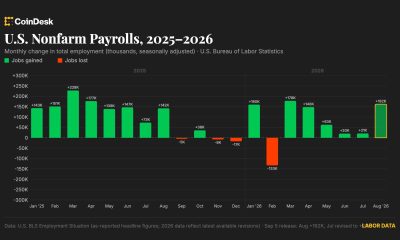
U.S. added stronger than expected 162,000 jobs in August as labor market bounced back
-

 Sports3 days ago
Alexandre Pato consortium’s Northampton Town investment approved
-

 Sports3 days ago
Commanders’ Chig Okonkwo is a top breakout fantasy football candidate
-

 Sports3 days ago
Golden Eaglets Drawn in Group B for 2026 WAFU B U17 Championship
-

 Crypto World3 days ago
XRP price breaks falling channel as bulls target $1.53
-

 Politics3 days ago
A new European chapter for Gibraltar
-

 Politics3 days ago
How To Avoid Winter Colds: 4 Everyday Habits That Spread Germs, Says Pharmacist
-

 Politics3 days ago
The House | Bin the lectures, bring gossip and be ready to banter: how the new PM should prepare for his Trump encounter
-

 Crypto World3 days ago
From warning to listing: UK’s largest retail investment platform opens access to crypto ETNs
-

 Crypto World3 days ago
FinCEN flags $12.7B tied to Southeast Asia crypto investment scams
-

 Tech3 days ago
A Worthy Android Ereader, With Some Tradeoffs
-

 Tech3 days ago
How To Edit Claude’s Memory
-

 Crypto World3 days ago
Trezor Data Breach Impacts 67,000 More US Customers
-

 Politics3 days ago
33 Cosy Autumn Home Decor Ideas: Blankets, Pumpkin Decorations, And Candles
-
 Tech3 days ago
beyerdynamic AVENTHO Y Debuts at IFA 2026 and Makes Wireless Headphones Less Disposable
You must be logged in to post a comment Login