Politics
Labour MPs Urged Andy Burnham Not To Call Early Election

What a difference a year makes.
Labour members will start gathering in Liverpool this weekend for their annual conference with a noticeable spring in their step.
The party now has a confirmed, if slight, lead in the opinion polls as Andy Burnham continues to enjoy a honeymoon period after replacing Keir Starmer as Labour leader and prime minister in July.
His optimistic talk of putting “hope in every heart” appears to have resonated with a beleaguered electorate weighed down by more than a decade of austerity, stagnant economic growth, rising prices and political turmoil.
The so-called “Burnham Bounce” has also coincided with a downturn in the fortunes of Reform UK, whose own poll numbers have fallen since May, when the party enjoyed election success in England, Scotland and Wales.
Investigations into the financial affairs of Nigel Farage and his party have cut through with a public who, just a few months ago, seemed to be preparing to elect a Reform government.
It is all a far cry from 12 months ago, when the Labour conference was a downbeat affair as Starmer’s government lurched from scandal to disaster.
Deputy PM Angela Rayner had been forced to quit just weeks before over her tax affairs, forcing Starmer into a clumsily-handled and deeply unpopular reshuffle.
That was swiftly followed by the sacking of Lord Mandelson as the UK’s ambassador to Washington over his friendship with the convicted paedophile, Jeffrey Epstein.
Ironically, the high point of last year’s conference for Starmer was his success in seeing off Burnham’s own failed attempt to seize the initiative.
The then mayor of Greater Manchester was relentlessly attacked by Starmer loyalists for saying in a pre-conference interview that the UK must “get beyond this thing of being in hock to the bond markets”.

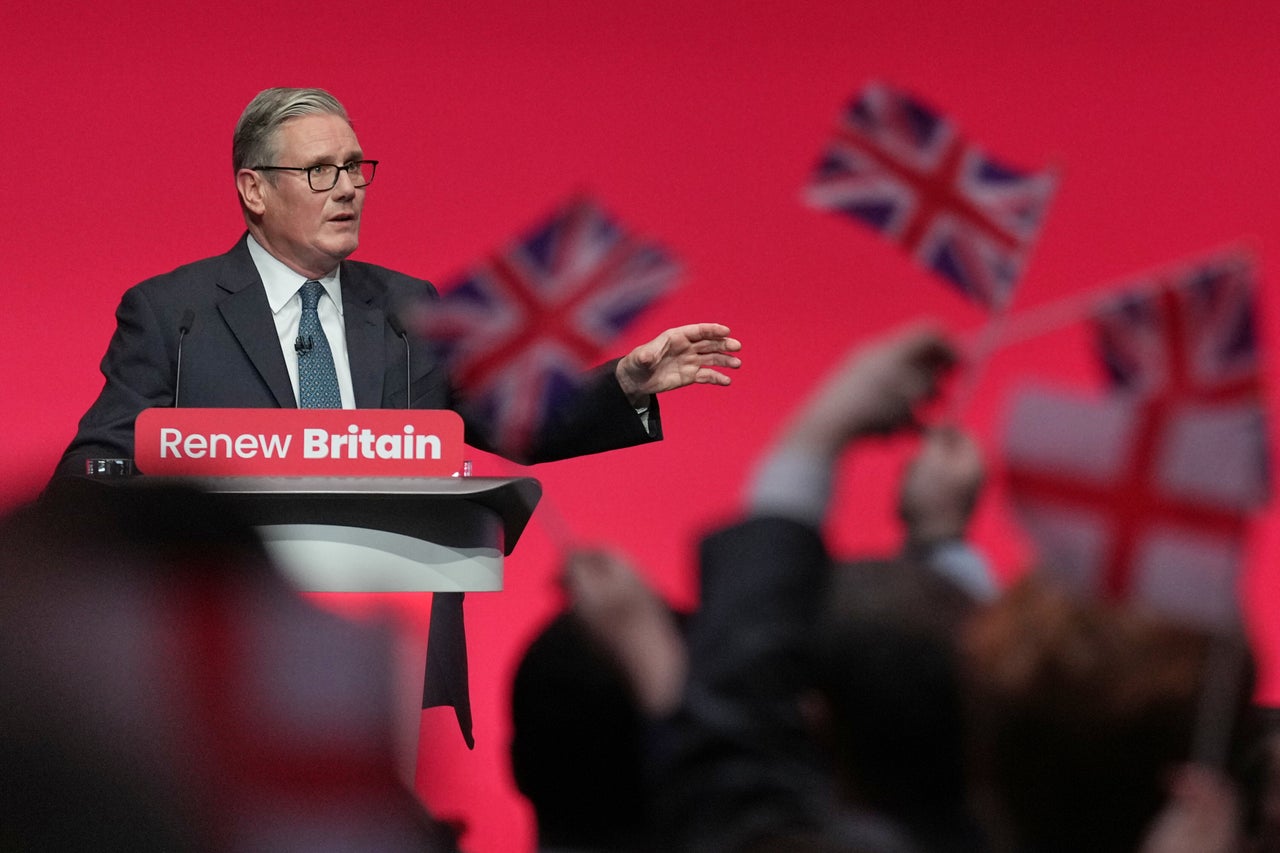
Although a chastened Burnham ended up leaving the conference early, just six months later he became MP for Makerfield and the PM-in-waiting.
Now, much of the talk going into this year’s event is not whether Burnham will become prime minister, but whether he would attempt to secure his own five-year mandate from the public by calling an early general election.
The PM sought to kill off the speculation by telling ITV Calendar on Friday that the next election will not be until 2029, the latest it can possibly be.
Nevertheless, that is unlikely to stop some from urging Burnham to go the country either next year or in 2028, should Labour’s poll lead grow.
According to the Telegraph, several of the PM’s No.10 advisers believe he should go to the country in the spring, but that was disputed by others in his inner circle.
“Utter bollocks,” said one senior Downing Street source when asked by HuffPost UK if an early election is on the cards.
“The PM is a man focused and determined to change the country. The only people raising the prospect of an early election are those conducting as a subtle-as-an-elephant Tory whispering campaign.”
Another No.10 source said reports of an early election were “worse than bollocks, it’s embarrassing clickbait”.
Those pushing an early election point to two mega-polls published in recent days which show Labour emerging from an early election as easily the largest party, ahead of the Tories and Reform.
However, in both scenarios, the party would lose its majority, leaving Burnham reliant on the support of the Lib Dems and other left-of-centre parties to get his programme through parliament.
Chris Hopkins, political research director at pollsters Savanta, told HuffPost UK: “Labour going for an early election based on these latest polls means two things: Labour loses hundreds of seats compared to 2024, and it’s an admission from Andy Burnham that he doesn’t think he can further improve Labour’s fortunes.”
Perhaps unsurprisingly, Labour MPs – many of whom have only been in the Commons for a little over two years – are less-than enthusiastic about the prospect of an snap election that would see at least 100 of them lose their seats.
One Cabinet minister said: “If I was Andy, I would be very reluctant to call an election because right now he’s got 400 Labour MPs.
“No matter that happens, if you wake up every morning and you’ve got 400 MPs and a big guaranteed majority, you’re in a good place.
“If you look at the sweep of Labour history being in this position doesn’t happen very often, so I’d be very careful about gambling with that.”
A Labour backbencher was equally clear in his opposition to an election now.
“I don’t want to hear him announce a general election,” the MP said. “I don’t think the country’s ready for it and voters certainly wouldn’t thank us for it.”
Another minister said: “The polls are simply too volatile right now to justify an early election.”
A Labour source added: “I can see why an early election would be tempting when you’re caught up in party conference.
“But the public don’t want one, and voters wouldn’t thank Andy for calling one.”
Burnham is still writing his conference speech, which he will deliver to the party faithful on Tuesday afternoon.
He has been writing it himself “in snatched moments on trains, planes and in his car,” according to one No.10 aide.
The conference slogan is ‘Hope Again’, and the PM plans to deliver a message of optimism to the country, explaining how he plans to get a solve long-standing problems like youth unemployment and the housing crisis.
“People know what the problems are facing the country, but they want to know what the government is going to do about it,” said one Downing Street insider.
“They want to be given hope about the way forward and this is the PM’s opportunity to set that out.”
But a senior Labour figure warned that the real challenges for Burnham will come when the political caravan has packed up for conference season and gone back to Westminster.
“There’s no doubt Andy will have a great conference,” he said. “It’s in Liverpool, it’s his first one as leader and he’ll make a good speech.
“But the real business will happen when he gets back to Westminster the week after. That’s when things will get real for him.
“There’s the Budget next month, defence spending, the growing threat from Russia, and his 10-year plan.
“His diagnosis of the country’s problems has been good, but voters will judge him on how he plans to fix them.
“The danger of conference is that the party gets too high on its own supply. They shouldn’t mistake the conference hall for the country, because there’s a world of a difference between the two.”
Listen to Commons People, the podcast that makes politics easy. Every week, Kevin Schofield and Kate Nicholson unpack the week’s biggest stories to keep you informed. Join us for straightforward analysis of what’s going on at Westminster.
You must be logged in to post a comment Login