

Politics
Labour “needs to deliver” for coastal communities


Polly Billington MP (Photography by Dinendra Haria)

9 min read
Polly Billington, chair of Labour’s coastal grouping of MPs, talks to Noah Vickers about how her party can deliver for the seaside, why Ed Miliband was ahead of his time as leader, and the need for a ‘national conversation’ about data centres
Polly Billington is something of a Westminster lifer – she spent several years as a BBC political reporter before becoming an adviser to Ed Miliband, including during his time as Labour leader.
But now, at the second time of asking, Billington is a player herself rather than a journalist or adviser. And since her election as Labour MP for East Thanet, the 58-year-old has positioned herself as a champion of coastal communities.
Psephologists may argue about why it was that Labour won so many coastal seats. Was it really down to ‘Whitby woman’ switching to Keir Starmer – or just the type of seat profile where the vote split evenly between Reform and Conservatives? If Labour wants to hold any of them, however, it had better deliver meaningful change to coastal voters.
It’s a message the former journalist is pushing hard, while also representing backbench concerns to the party’s leadership as a Parliamentary Labour Party (PLP) committee rep. But she is vocal too in her defence of her former boss. Miliband, she says, was right before his time on the key political questions of the day. And, as battle lines begin to be drawn up over AI and the environment, Billington is prepared to question just how much we should sacrifice to energy and water-hungry big tech.
We’ve now got more coastal Labour MPs than we’ve ever had
“I set up the Coastal PLP again for the first time since the New Labour government because we’ve now got more coastal Labour MPs than we’ve ever had, even in 1997 and especially in 1945 when Margate, Broadstairs and Ramsgate did not go Labour,” she says, name-checking the towns which make up her seat.
“So, we’re a considerable chunk of the PLP, and that gives us not only an electoral opportunity but also a policy obligation and a delivery obligation,” she adds. “Labour’s majority is partly rooted in those communities and we therefore need to deliver for them.”
Nine out of the top 10 areas in 2025’s English indices of multiple deprivation, she points out, are in coastal areas. Seven of those 10 alone are in Blackpool. Life expectancy can often be significantly lower, and public transport links poorer.
Billington insists the group is not simply playing “deprivation bingo”. Rather, she and her colleagues are arguing that their constituencies contain untapped economic potential and can make a key contribution to the government’s growth mission.
The MPs want to see the government produce a bespoke coastal strategy that recognises the nation’s seaside as a “strategic economic region” in its own right. In the absence of that strategy, less well-off coastal areas like Billington’s risk being lumped in with affluent parts of inland Kent.
“I’ve got more in common with Lowestoft, Scarborough, Blackpool, Worthing, Bournemouth, Truro, than I have with Tunbridge Wells and Sevenoaks,” she says. “That’s why we need to start seeing those places as having a specific economic strategy and approach.”
Billington also wants to see the creation of a coastal minister, though she refuses to say whether she is volunteering for this post herself.
“Listen, those decisions are absolutely ones for the Prime Minister, not me.”
Would any of her colleagues do a good job of it?
“I’m not going to name anybody, am I?” she replies, before adding: “I am pitching the role, but I think the discussions about personnel need to be done with the people making the decisions – not in The House magazine.”
The Coastal PLP has already secured some wins, she argues, as the recent schools white paper contained a ‘Mission Coastal’ commitment, while the National Cancer Plan pledged to “rebalance cancer and diagnostic medical training places to remote, rural, and coastal areas”. Changes to the Treasury Green Book are a further source of optimism.
Billington now wants to see ministers use “other economic levers” to generate growth on the coast, especially where funding has already been allocated or institutions already established.
“The National Wealth Fund, GB Energy, the British Business Bank. How can they, like the Green Book, be rewired in order to be able to prioritise growth in our coastal communities?”
The MP also hints at possible future tax changes that may benefit the hospitality sector on which many coastal economies depend. Currently, once a business’ taxable turnover exceeds £90,000 in any 12-month period, they are suddenly required to register for VAT. According to Billington, “ministers themselves will acknowledge” that this threshold “drives fraud and keeps businesses small”.
“I’m not expecting a massive VAT cut. We continue to talk about how the VAT regime, and particularly the VAT threshold, causes unintended consequences and perverse incentives. Ministers are not unalive to that.”
After 15 years as a BBC journalist, Billington left the corporation to become Miliband’s special adviser in Gordon Brown’s government, then worked on Miliband’s leadership campaign, and finally advised him on communications during his first 18 months as leader.
Ed [Miliband] was right, really early on, about the squeezed middle and intergenerational fairness
Despite his failure to win the 2015 election – and her own failure to win the marginal seat of Thurrock that year – she remains convinced that Miliband was ahead of his time in his diagnosis of the nation’s ills.
“Ed was right, really early on, about the squeezed middle and intergenerational fairness,” says Billington.
“I remember him doing a speech very early after he’d got elected as leader. He was talking about this anxiety that he had about the country, that people no longer had confidence that their children would have a better life than they did.
“Even some of his greatest supporters were scratching their heads and saying, ‘I don’t know really what you’re talking about’. That’s 16 years ago, and he saw then the big economic trends which were causing these levels of intergenerational unfairness…
“There’s the housing crisis, but not only the housing crisis. Pensions, social care and so forth – those things Ed saw a long time ago.”
Her time working for Miliband also taught her that “being right is not enough – especially in opposition”.
Now a member of the Energy Security and Net Zero Select Committee, Billington is tasked with scrutinising the man she used to advise – and the work of his department, which is trying to achieve its clean power target by 2030.
But concerns have been flagged over recent weeks about whether the government’s plans to rapidly grow the number of AI data centres across the country could put that target at risk. At a January select committee meeting, Billington pressed Miliband’s junior minister, Michael Shanks, on whether the government is open to data centres using gas power to get around grid connection delays. He suggested those discussions were ongoing.
“We’ve got to have a national conversation about this,” says Billington. “You can’t have a situation where you have data centres asking to be powered by gas, which is clearly counter to the government’s overall decarbonisation plan.”
She then raises a more fundamental issue with the UK’s race to become an AI superpower.
“We have to ask some questions about whether we want data centres which take up an enormous amount of water, and an enormous amount of electricity, and don’t create very many jobs.
“We can hurtle towards a data centre future, but is that overall in the best interests of the country? For the kind of jobs that we want, the kind of growth that we want and for our natural resources, like water and how we want to manage our energy supply?”

As well as holding Miliband’s department to account, Billington is also vice-chair of the PLP and sits as one of six Labour parliamentary committee reps, tasked with relaying concerns from the backbenches to the party’s leadership.
What does she make of complaints from longer-serving MPs that she and the other reps – most of whom were first elected in 2024 – are not being robust enough in passing on those complaints to the Chief Whip and the Prime Minister?
“I think anyone who were to be a witness to those meetings certainly wouldn’t come to that conclusion,” she replies. “We feed back, where we can, to the people who raise those questions.
“We have worked on a number of different ways of making sure that we have constructive feedback loops, but I think what is most important about that is that the first people to know about what happens in parliamentary committee are members of the PLP.
“We as backbench committee reps take it extremely seriously to ensure that it is our colleagues who are the first to know, not members of the press.” The now gamekeeper clearly feels the need to keep her former fellow poachers in their place.

Billington is also clear that, following Morgan McSweeney’s departure from No 10, more fundamental changes will be needed to overhaul what some have characterised as the “boys’ club” in Downing Street.
“Personnel is one thing,” she says, “but culture, and understanding about how misogyny works, is another.
“That’s why myself and many of my colleagues in the women’s PLP were delighted to hear Keir say that there was such a thing as structural misogyny.
“We look forward to, and continue to engage with No 10 about, seeing a plan to change things significantly, to challenge that structural misogyny.”
But she emphasises this will be “a lifetime-long battle”, adding: “You don’t smash misogyny by one sacking, one resignation… This is not something that happens quickly or easily, or simply with a few movements or reshuffles.
“This has to be a different way of exercising power, of conducting professional politics, because without that change, we will not have the kind of transformed, fairer, more respectful, equal society that those of who came into politics for the Labour Party actually want to see.”


The post ‘Islamists will exploit Labour’s “Islamophobia” ban’ appeared first on spiked.



Russell Dean, Deputy Divisional Manager (Living Environment Systems)
| Mitsubishi Electric
With the government backing a target of installing 450,000 heat pumps by 2030 – 70 per cent of which are to be manufactured in the UK – we must meet this ambition with action.
There is much to do. Mitsubishi Electric surveyed UK homeowners last year and found that just 5.5 per cent are currently heating their homes with a heat pump.1 In the commercial sector, heat pump adoption data hasn’t been tracked, meaning we don’t even know the true size of the challenge, let alone the decarbonisation opportunity it offers.
The targets which have been set out now give us something to aim for, but making sure heat pumps are being adopted at the pace needed will only happen if:
- homeowners and business owners know about them
- they make financial sense
- we can meet the demand for installing them
The opportunity to transform the UK’s building stock, boost its manufacturing base, and recruit and train renewable heating engineers cannot be underestimated.
Now is the time for a clear strategy for reaching these milestones.
1. Drive public awareness
Adoption cannot be boosted without people knowing about heat pumps.
We know there is an untapped market of homeowners open to new clean heating technology. When we asked those surveyed about the Boiler Upgrade Scheme, we found that 31 per cent of homeowners said they were unaware of it, but that it would make them more likely to switch.1
The new Warm Homes Agency has been tasked with improving awareness, and it must be treated as a priority objective. We’d like to see funding and resources committed to creating targeted awareness campaigns. And the same has to be done for businesses for us to see the necessary rise in demand.
With a quarter of people being influenced by negative news about heat pumps, it’s even more important that misconceptions are challenged.2 Without that, the public won’t be convinced of the opportunity of adopting a heat pump for their home or business.
2. Make heat pumps make financial sense
The billions in grants and loans available through the Warm Homes Plan will make heat pumps, solar panels and batteries a possibility for millions more households. This funding is ringfenced for its designated purpose, to provide the public with certainty that potential future decisions will be covered.
Beyond the upfront costs, we have to make the running costs of heat pumps cheaper.
Currently, UK electricity prices are typically linked to the cost of volatile gas prices, despite the majority of electricity coming from renewable sources, and electricity levies put a greater burden on consumers. The government’s moves on reducing the energy price cap are to be welcomed, but more is needed to further rebalance these levies and reduce the price of electricity compared to gas.
This would create a huge step change and make clean heat a truly economical option. There’s no better advertising than word of mouth, and money saved on bills would create conversation and stimulate demand.
3. Preparing installers to meet surging demand
Having enough installers to meet the scale of ambitions for installations is a challenge which must be addressed – but is also a huge opportunity to provide skilled renewable jobs across the UK.
The expansion of the Heat Training Grant funding will help make this possible, and government must follow through on its commitment to collaborate with industry to make training a success. A well-trained workforce will mean positive experiences for customers and create more goodwill for the sector.
Installers will also play a big role in raising awareness about heat pumps and supporting interested homeowners to invest. This means arming installers with the right information so that they can educate homeowners and guide them towards heat pumps as an option for their home.
Creating demand and making an impact
To truly accelerate the adoption of clean heat in the UK, we need more homeowners and businesses to know about the benefits, more people to be able to afford to buy and run them, and more people to install them.
Mitsubishi Electric is already supporting heat adoption in the UK by manufacturing low-carbon, highly efficient heat pumps at its Livingston plant and by training the workforce at its training sites across Britain. To achieve its targets, the government must work with us and the wider industry to drive action and deliver for the economy and the environment.
References
- An Opinion Matters survey of 2,000 homeowners in August 2025, commissioned by Mitsubishi Electric
- Opinion Matters, August 2025

The Spanish government has recalled Spain’s ambassador from Israel. The decision comes as Israel continues to smear the Sanchez government for opposing its genocide in Gaza and its wars of aggression on Iran and Lebanon.
Announcing the order, Spanish PM Pedro Sanchez said:
At the proposal of the Minister for Foreign Affairs, the European Union and Cooperation, and following deliberation by the Council of Ministers at its meeting on 10 March 2026, I hereby order the termination of Ms Ana María Sálomon Pérez’s appointment as Ambassador of Spain to the State of Israel.
Spanish citizens in Israel needing assistance will be directed to a “chargé d’affaires” who will remain at the embassy.
Featured image via the Canary
Politics
Terri Bloore: Starmer needs a lessons on managing international relations. He should ask Zelensky

Terri Bloore is the Conservative candidate for Mayor of Newham.
Keir Starmer is no Churchill, that is something Trump and I can agree on. In moments of international crisis, indeed war, national leadership needs to be strong and decisive. Certainly not dithering.
Starmer in the space of 48 hours managed to not just upset the President of the United States, our most important ally, but also Iran – a state not known for measured responses in relation to opposition. Over the course of a few days, his government first signalled that Britain would not back the United States in its escalating confrontation with Iran, only to reverse course within a day and allow the United States access to British military bases.
He is a joke, and making Britain – once known for our diplomacy, level-headed intelligence and insight – a joke with him.
Britain now appears hesitant at precisely the moment when clarity is needed. Allies question our reliability while adversaries see uncertainty. The damage is not simply reputational. It strikes at the heart of Britain’s long standing claim to be one of the West’s most dependable partners in matters of security and defence.
Churchill understood that alliances require visible commitment. When Britain stands with its allies, it must do so decisively. Hesitation only weakens collective resolve.
The irony is that recent history offers a powerful example of the very resilience Starmer now seems unable to demonstrate. Since the beginning of Russia’s full scale invasion, Ukraine under the leadership of Volodymyr Zelenskyy has shown extraordinary discipline in managing its relationships with Western partners.
Ukraine has endured immense frustration. Weapons deliveries have been delayed. Financial packages have been debated and watered down. Political winds in Western capitals have shifted repeatedly. Yet throughout this ordeal, the Ukrainian government has remained committed to its allies.
It has come to negotiations ready to compromise. It has accepted difficult realities. Above all, it has understood a fundamental strategic truth: survival requires patience. Ukraine knows it needs the West more than it needs pride.
Zelenskyy and his government are playing the long game. That approach has required immense restraint. Ukrainian leaders have learned that diplomacy often means absorbing disappointment while maintaining unity with those whose support is indispensable. They have demonstrated strength through consistency, not theatrical gestures. Starmer’s government should learn from that example.
Over the years working with Ukraine, dating back before annexation of Crimea, I have seen how hard Ukraine has worked to preserve relations with the West. Yes, it has been slow, yes faltering at times and yes, the power has sometimes been in the form of soft power – but support flowed from Europe and North America because Kyiv has proved itself a serious partner that can be trusted.
Today we stand in surreal reality where Ukraine has responded to the USA’s requests for help and “reacted immediately” sending interceptor drones and a team of drone experts to protect U.S. military bases in Jordan. “Of course, we will send our experts,” he said, that is a far cry from our indecisive leader.
Ukraine understands the strategic stakes. Compromises are painful but Ukraine has proved itself to be a trustworthy, brave partner. Trust that Starmer is now squandering. How can we be trusted as trusted partner when we cannot be trusted to make a decision one way or the other.
The emerging confrontation involving Israel, the United States and Iran presents difficult choices. No responsible government should treat them lightly. Yet the handling of such crises matters as much as the decision itself. By first signalling distance from Washington and then hurriedly opening British bases to American forces, Starmer has managed to offend almost everyone involved.
Yet today the image projected from Downing Street is not one of confidence or resolve. It is hesitant, it is indecisive and it is weak. Starmer has proved again that he would rather stare at his shoes than confront the consequences of leadership. That perception matters politically as well as strategically.

Look, I’ll be the first to admit that whenever there’s a clock change, it takes me an embarrassingly long time to figure out how exactly it’s going to impact my day-to-day life.
Am I waking up an hour earlier? Later? Is it pushing my kids’ bedtime back? Or technically bringing it forward? Am I losing sleep? Gaining sleep? It gets me in a muddle.
This next clock change, which happens on Sunday 29 March 2026, will see the clocks ‘spring forward’ – heralding the start of British Summer Time (BST).
What does this mean for my sleep?
In short: you will lose one hour of sleep, as 1am (which is when the clocks officially go back) becomes 2am.
This means if you naturally wake up at 7am BST, your body thinks it’s technically still 6am.
Basically, it’ll feel quite early and it may still be dark when you wake up – compared to now, when it’s typically light at 7am. (Although it won’t be too long until the new 7am wakeup time will begin in daylight.)
As for bedtime, if you hit the hay at 10pm, this is actually more like 9pm (old time).
Overall you might feel a bit more tired (because you’ve lost an hour of sleep), but over the course of the week, your body should adjust to the new schedule.
If you want to get a head start and help your body clock gradually get used to the new routine, you can shift your bedtime 10-15 minutes earlier each night for three or four nights before the clock change.
What does this mean for parents?
This clock change can feel particularly tricky for parents as kids typically get up earlier – so that 6am start is now more like 5am. Ouch.
That said, bedtime is earlier too, so that’s a small win. You might even feel like you’re getting more of your evenings back.
And it also means you get more light in the evenings, making that post-school park trip or dinner picnic in the garden a lot easier to say ‘yes’ to.
Due to the sleep disruption, kids might be a bit (or in some cases, a lot) crankier than usual, but within a week or so, you should find everyone settling into the new rhythm. (Here’s hoping, anyway.)
If they are struggling to drift off during the lighter evenings, blackout curtains might help to trick their brains into thinking it’s later than it is.
Any other thoughts?
If you take medication at a certain time of day, experts broadly suggest sticking to the same schedule. This means if you take medication at 7pm (GMT), you should continue to take medication at 7pm (BST).
Wing Tang, head of professional standards at the Royal Pharmaceutical Society, told Which? they wouldn’t typically expect the clocks going forward to have a great impact on people taking regular medicines. But if you’re worried, you can double check with your GP or pharmacist.
You’ll also need to change the clocks on some of your appliances manually – while smartphones, smart TVs, newer radios etc., can update themselves, your oven clock, car clock (if it’s an older car) and older central heating controls will need a tweak.

Ross Kempsell is joined by Ameer Kotecha, who recently resigned as a diplomat in the Foreign Office, to discuss where British foreign policy is going wrong and why he left Whitehall. Find out what he really thinks of David Lammy and Yvette Cooper…
Subscribe to Guido’s YouTube channel for all our latest videos by clicking here.
Become a Guido Member: www.order-order.com/membership
Facebook: https://www.facebook.com/fawkespage/
TikTok: https://www.tiktok.com/@_guidofawkes_

Home Secretary Shabana Mahmood has banned the planned Al Quds Day march in London for Sunday 15 March. Mahmood no doubt needed little persuading, rendering the Metropolitan Police’s decision to side with the UK Israel lobby little more than a pretext.
Mahmood caves to Israel lobby
In a statement, the Met claimed that:
The Al Quds march is uniquely contentious having originated in Iran and in London is organised by the Islamic Human Rights Commission, an organisation supportive of the Iranian regime… The threshold to ban a protest is high and we do not take this decision lightly; this is the first time we have used this power since 2012.
The Metropolitan Police routinely polices hundreds of protests which have counter protesters. Free speech and the right to protest are protected in law and we have a proven track record of upholding these values.
The Met appears to think opponents of genocide and imperialism have forgotten the traps it laid for an entirely peaceful anti-genocide march in January 2025. That entrapment, despite abundant footage of police inviting marchers through police lines, was used to charge and prosecute leading peace organisers. The state continues to insist peaceful demonstrators ‘forced’ their way through.
Organisers of the march, the Islamic Human Rights Commission, have strongly condemned the decision:
IHRC strongly condemns the desicion by the Metropolitan Police to ban the Al Quds Day March.
However, a static Al Quds Day protest will still go ahead.
We hope to see you on Sunday 15th March InshaAllah.
We are seeking legal advice and this decision will not go unchallenged.
And they made it clear that Shabana Mahmood has made a political decision:
If it was not clear already, the police have brazenly abandoned their sworn principle of policing without fear or favour, and have capitulated to the pressure of the Zionist lobby. The Metropolitan Police unashamedly regurgitate Zionist talking points about IHRC without a shred of evidence. They cannot present evidence because there is none – we are an independent NGO. In essence, this is a politically charged desicion; not one taken for the security of the people of London
What right to protest?
The force’s statement also invidiously linked the march to threats and terrorism – and to claim that Iran is “attacking British allies”, rather than retaliating after unprovoked attacks:
We must also consider that the security services have been publicly clear about the threats we are facing on UK soil from the Iranian regime. In the last year MI5 and Counter Terrorism Policing have foiled over 20 Iranian state-backed attacks on the UK. Last week counter-terrorism officers arrested four people under the National Security Act after they allegedly spied on Jewish communities for the Iranian regime and, separately, at the weekend a man was reportedly stabbed by someone who had opposing views on the Iranian regime.
No evidence has so far been provided to the public for any of these arrests or ‘foiled attacks’.
In typical Orwellian style, the Met then claimed that it protects the right to protest, while warning that those who protest this weekend will “crossover [sic] into criminality [and] will face the full force of the law” and that:
We urge the organisers to comply with our conditions or face arrest.
Right.
The UK regime is an enabler of rogue-state terrorism and is more than willing to subordinate the rights of its citizens to the interests of Israel and the US.
Featured image via the Canary
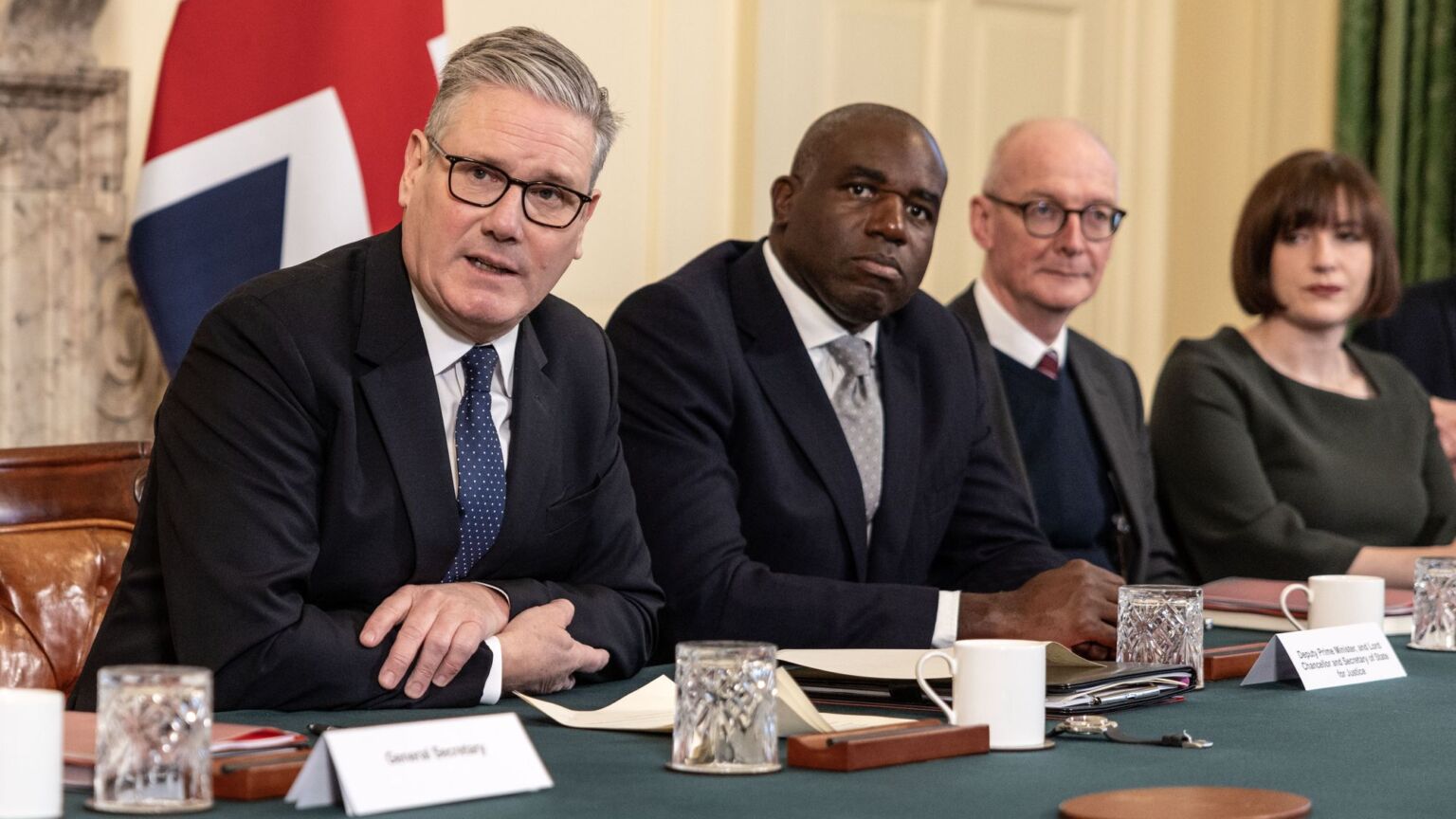
The Labour government is in the process of committing a profound act of constitutional vandalism. Yesterday, the House of Commons voted to pass the Courts and Tribunals Bill, a piece of legislation that will significantly limit the right to trial by jury in England and Wales.
The bill proposes removing a defendant’s right to insist on a jury trial for many mid-level ‘either-way’ offences, from cases of sexual assault and grievous bodily harm to burglary and theft. These are offences that can currently be tried either in the Magistrates’ Court, before a judge or bench of magistrates, or in the Crown Court, before a judge and jury. Under the proposals, defendants accused of these offences would no longer be able to elect a Crown Court jury trial.
The legislation would also increase the maximum sentencing powers of magistrates, from the current limit of 12 months in jail to, in some cases, up to two years. In addition, the new law would restrict the ability of defendants to appeal convictions from the Magistrates’ Court in the Crown Court. This reduces a convicted individual’s chances of challenging guilty verdicts delivered by a single judge or by magistrates.
The Labour government insists this is a necessary reform to reduce the massive backlog of cases in the courts. But critics see something else – the construction of a conviction machine, designed to remove procedural barriers that allow defendants to contest the case against them. The state gains in power, while an individual’s ability to challenge it shrinks.
The government’s justification for the reforms is well known. The Crown Court system is indeed under severe strain. The backlog of cases stands at roughly 80,000. Without intervention, it could exceed 100,000 by 2028. Trials are being listed years into the future, leaving victims and defendants alike waiting for justice.
Justice minister David Lammy argues that limiting jury trials will relieve pressure on the Crown Court system. The government claims that the new legislation will reduce demand on Crown Courts by 20 per cent within three years.
But such figures are highly speculative and uncertain. Magistrates may still decide to send cases to the Crown Court if they believe the offences to be sufficiently serious. In practice, it is unclear how courts are supposed to determine in advance whether a defendant should be entitled to a Crown Court trial.
Consider a typical ‘either-way’ offence. Many carry a wide sentencing range – from a community order to several years’ imprisonment. A court might face a case where the potential sentence could plausibly fall anywhere between, say, a community penalty and a four-year custodial sentence. Yet under the proposed new system, judges or magistrates may have to decide in advance whether the case is serious enough to justify a jury trial.
That requires courts to make an early assessment of particular cases before hearing all the evidence. The decision would inevitably involve speculation about facts that may only become clear during trial. Far from simplifying the system, this risks adding further procedural complexity and therefore increasing the workload within the system.
But practical concerns are not the main issue here. The deeper problem is that those advancing this legislation seem utterly indifferent to the threat it poses to justice and citizens’ rights. They talk about it entirely in managerial terms, as a logistical, bureaucratic measure. It is impossible to discern any political principle behind the bill. Prime minister Keir Starmer is supposed to be a human-rights lawyer, yet he is presiding over one of the most significant attacks on civil liberties in modern times.
Labour MPs rallying behind the bill claim it will provide ‘justice for victims’. But this is just cant. The criminal-justice system is not being crippled by too many jury trials. No, it’s suffering from years of underinvestment, court closures and staff shortages. The unthinking authoritarianism of this Labour government is no answer to this crisis.
Trial by jury is one of the oldest citizens’ protections in the British constitutional tradition. It reflects the principle that the state should not be able to imprison individuals without the judgement of their peers. In this way, juries have always been a vital curb on the worst excesses of the state. Restricting that right can only aid the worst excesses of the state.
All is not yet lost, of course. The bill must still pass through further stages of parliamentary scrutiny, including in the House of Lords, before it returns to the Commons for detailed committee examination. Some Labour MPs have expressed unease about the proposals, and there are rumours that more could rebel at later stages.
But I’m not convinced any rebellion will be enough. This Labour government and their MPs are largely of very low quality, even by recent parliamentary standards. Sadly, they are sufficiently unthinking and politically unprincipled to pass these measures without a care for the constitutional damage they are doing. If we are to protect the light that shows that freedom lives, we have an almighty fight on our hands.
Luke Gittos is a spiked columnist and author. His most recent book is Human Rights – Illusory Freedom: Why We Should Repeal the Human Rights Act, which is published by Zero Books. Order it here.

Women who survived Ireland’s mother and baby homes are now having their benefits cut by the Department for Work and Pensions (DWP) in Britain. Appallingly, the cuts are happening because these women accepted compensation from the Irish government for the horrific abuse and trauma they experienced.
DWP: Ireland’s historic abuse of unwed mothers
Mother and Baby Homes spread through Ireland in the 1900s, right up until 1990. They were seen as a “refuge” for unwed mothers and their babies. But they were actually church ran instutions that trapped women who were often sent there by their families, who had disowned them for getting pregnant. These included women who’d been abused or exploited. There were more than a dozen of them in Ireland. Three of them were “Magdalene laundries”, which were essentially workhouses.
The women in the ‘homes’ were forced into labour and experienced horrific abuse from the nuns. There was also a horrifically high death rate of babies in some institutions. In 2012, a mass grave was discovered on the site of a former home in Tuam. 796 children’s remains were found. Many children who survived were trafficked across the Irish border for adoption (from ROI to Northern Ireland), and documents were falsified to make it harder to reunite mother and baby.
Finally, after mass campaigning, the Irish government launched an inquiry. It detailed the horrendous experiences of 56,000 women and 57,000 children between 1922 and 1998. After this, the government set up the Mother and Baby Institutions Payment Scheme, which began awarding compensation in 2024.
DWP causing survivors even more harm
However, because the DWP is a completely barbaric institution, survivors are now suffering in a different way.
The Guardian reports that up to 13,000 survivors who now live in Britain could risk losing their means-tested benefits, such as Universal Credit, if they accept. This is because the compensation goes towards the amount of savings the claimant has.
Compensation ranges from €5,000 to €125,000 (£4,230 to £105,000) depending on the length of time someone spent there. Universal Credit claimants are only allowed a maximum of £6,000 in their bank accounts; after that, every £250 extra sees £4.35 reduced from the payment. There is no upper limit on Pension Credit; however, past £10,000 every £500 you have sees £1 reduced from your payment.
If a claimant has over £16,000 in the bank, they automatically lose their benefit. Not only that, but they will lose associated benefits such as Housing benefit. So a woman who went through the most horrific experience of her life, who now struggles to work, or is on pension credit, could see her benefits lost because she accepted compensation.
As this news has spread, some have been forced to turn down their compensation offers for fear they will lose their benefits. After six months, the Irish government counts this as a rejection.
Support Philomena’s Law
Labour MP Liam Conlon has introduced a bill to parliament calling for the government to introduce an ‘indefinite capital disregard’ for mother and baby payments. The bill is named Philomena’s Law, after Philomena Lee, a survivor who was portrayed by Judi Dench.
Conlon said:
What Whitehall often misses is the human-sized picture. In this case, that is thousands and thousands of survivors of these cruel institutions living in Britain today, who are being denied the compensation they’re entitled to
The campaign is backed from prominment Irish figures such as Siobhán McSweeney. However, due to the restraints of parliament, the bill is in danger of running out of time.
It’s absolutely cruel that the DWP is once again punishing these women who survived unimaginable abuse. You can write to your MP to ask them to support the campaign here
These women have already suffered so much; it’s absolutely horrific that the DWP won’t even allow them to accept compensation without the threat of losing their state support.
Featured image via the Canary

Keir Starmer accused Kemi Badenoch of “the mother of all U-turns” after she appeared to ditch her support for the war in Iran.
The prime minister also attacked Nigel Farage over Reform UK’s shifting stance on the conflict.
Both Badenoch and Farage last week condemned the PM for not allowing the US to use British bases to launch its attacks on Iran.
Since then, the conflict has sparked chaos across the Middle East, with the resulting spike in oil prices leading to fears of a global economic meltdown.
At prime minister’s questions, Badenoch pressed Starmer to ditch the planned increase in fuel duty, which is meant to happen in September.
The PM said the government was keeping that policy “under review” before attacking the Tory leader over the war.
He said: “As I said to the House last week, I took the decision that we should not join the initial US-Israeli offensive against Iran.
“The leader of the opposition attacked me for that decision relentlessly, she said that the UK should have joined the US and Israel in the initial offensive strikes, then yesterday, in the wake of the economic consequences, the leader of the opposition totally abandoned her position.”
He added: “That is the mother of all U-turns on the single most important decision the prime minister ever has to take – whether to commit the United Kingdom to war or not.”
Starmer also took aim at Reform, whose own position on the war has shifted after Farage said yesterday: “Let’s not get ourselves involved in another foreign war.”
The PM said: “After nine days of saying, ‘join the war, join the war, join the war’, yesterday, she says ‘I never said we should join, I haven’t said we should go in with the US’.
“I’ll tell you what’s happened, she and the Reform leader have been spooked, because they realise they have jumped into supporting a war without thinking through the consequences, and now she is furiously trying to backpedal.”
A Conservative spokesman said: “We have just seen a truly shameful display from the prime minister.
“Six times he was asked why he is raising fuel duty for families and businesses this year, six times he refused to answer, instead smearing the leader of the opposition and deliberately misrepresenting her position on Iran and our armed forces.
“Keir Starmer has shown he doesn’t care about drivers and doesn’t care about the cost of living. He has no answer on petrol prices, because he knows that raising fuel duty for the first time in 15 years is the clearest possible symbol of Labour’s total mismanagement of the economy.”

Churchill to be replaced by wildlife on Bank of England banknotes under new design plans

SlowMist Introduces Security Framework for Autonomous AI Agents in Crypto
How “Jury Duty Presents: Company Retreat” went 'much bigger in scope' for season 2 (exclusive)


-
Business5 days ago
Form 8K Entergy Mississippi LLC For: 6 March
-

 Tech6 days ago
Bitwarden adds support for passkey login on Windows 11
-

 News Videos2 days ago
10th Algebra | Financial Planning | Question Bank Solution | Board Exam 2026
-

 Fashion5 days ago
Weekend Open Thread: Ann Taylor
-

 Crypto World2 days ago
Paradigm, a16z, Winklevoss Capital, Balaji Srinivasan among investors in ZODL
-
 Tech7 hours ago
A 1,300-Pound NASA Spacecraft To Re-Enter Earth’s Atmosphere
-
 Sports6 days ago
499 runs and 34 sixes later, India beat England to enter T20 World Cup final | Cricket News
-

 Politics5 days ago
Top Mamdani aide takes progressive project to the UK
-

 Sports4 days ago
Three share 2-shot lead entering final round in Hong Kong
-

 Sports3 days ago
Braveheart Lakshya downs Lai in epic battle to enter All England Open final | Other Sports News
-

 Business22 hours ago
ExxonMobil seeks to move corporate registration from New Jersey to Texas
-

 NewsBeat6 days ago
Piccadilly Circus just unveiled ‘London’s newest tourist attraction’ and it only costs 80p to enter
-

 Entertainment5 days ago
Hailey Bieber Poses For Sexy Selfies In New Luscious Lip Thirst Traps
-

 Business3 days ago
Search for Nancy Guthrie Enters 37th Day as FBI Probes Wi-Fi Jammer Theory
-

 Business7 hours ago
Search Enters Sixth Week With New Leads in Tucson Abduction Case
-
 NewsBeat2 days ago
Pagazzi Lighting enters administration as 70 jobs lost and 11 stores close across Scotland
-

 Tech2 days ago
Despite challenges, Ireland sixth in EU for board gender diversity
-
Entertainment7 days ago
Harry Styles Has ‘Struggled’ to Discuss Liam Payne’s Death
-

 Crypto World7 days ago
New Crypto Mutuum Finance (MUTM) Reports V1 Protocol Progress as Roadmap Enters Phase 3
-

 Tech6 days ago
ACIP To Discuss COVID ‘Vaccine Injuries’ Next Month, Despite That Not Being In Its Purview