Politics
Life Lessons From A Parent Who Moved Abroad

When we landed in Spain, I thought I knew what the hard part would be: the paperwork, the language, finding a decent school for my kids. It turned out to be none of those.
One afternoon, not long after we arrived, I took my son to the beach. He spotted a group of dolphins close to shore and started shouting before I could even take it in. His excitement was pure: loud, physical, alive. I just stood there, half smiling, half stunned by the thought that somewhere along the line I had started believing that moments of pure wonder and awe weren’t really meant for me anymore.
That’s the thing no one says out loud about motherhood. You don’t stop wanting adventure; you just learn it’s no longer encouraged. You’re meant to provide stability now – the constant background hum that keeps everything running smoothly.
Before having children, I lived abroad and travelled widely. I had explored more than 50 countries and always thought of myself as someone who was comfortable with change.
But when I became a mother, something shifted. I started receiving the message, subtle but persistent, that the responsible thing to do now was to stay put. I didn’t stop wanting to explore; I just started to question whether I was allowed to.
For the first few years, we lived a fairly conventional city life in London – one of routines, work schedules, nursery runs and the unspoken expectation that fun and novelty had given way to stability. But my restlessness never fully disappeared.

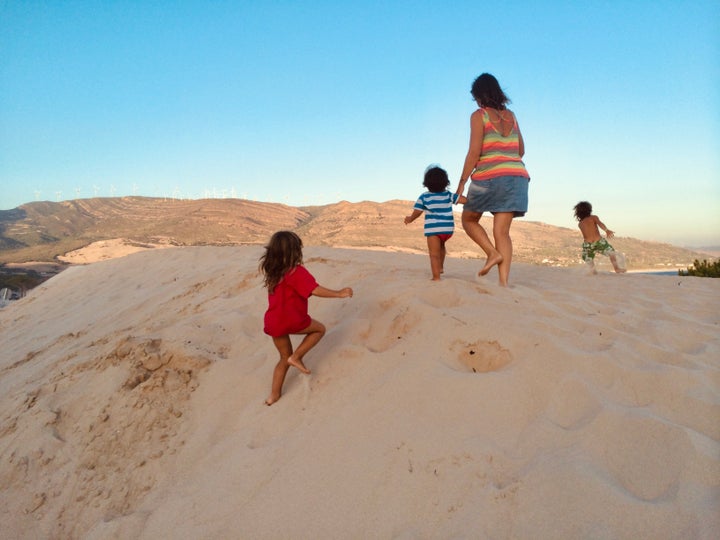
Photo Courtesy Of Doris Dario
When we made the decision to move to Spain, it was something of an experiment – a chance to see what life might look like somewhere different, while the children were still small enough to adapt easily.
That first move became a pattern. Over the years, we relocated eight times as a family: to Spain, Italy, Switzerland, Northern Ireland. Some moves were prompted by a desire for language learning, others just because we wanted to try out a different rhythm of life.
The children learned how to say quick hellos and long goodbyes. They picked up fragments of different languages, mixed up spellings, and made friends they still message in other time zones.
Underneath it all was a desire to teach our children that the world was larger than just one place, and to have them grow up feeling at home in more than one culture. But I still felt a quiet strain – the guilt that maybe we were uprooting too often, chasing something children were meant to be shielded from.
Relocation looks glamorous from a distance, but in reality, it is a series of small practical puzzles: finding a house with decent heating, translating school emails, explaining to the kids why lunch suddenly starts at 3pm and no one seems bothered by it.
And underneath the logistics lies the emotional work of starting over.

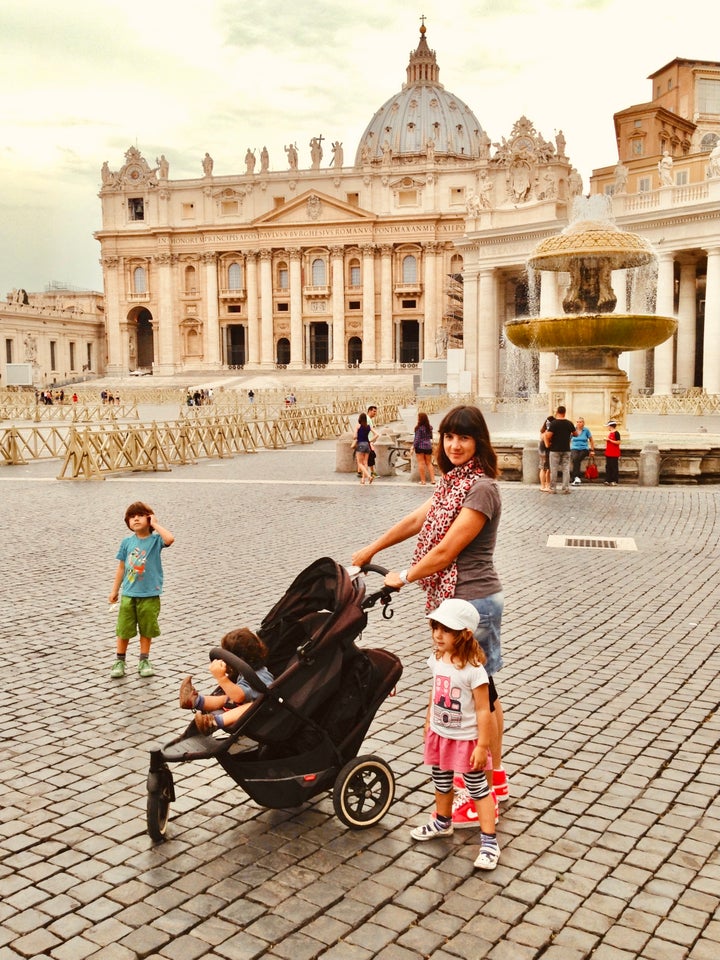
Photo Courtesy Of Doris Dario
When one of my children started acting out after a move, I brushed it off as normal settling-in stress. I kept telling myself it was temporary. But what I now recognise is that it was grief: the low-level kind that hides behind bad moods and exhaustion.
After that, we changed our approach. We’d been good at talking about the excitement of what was next, but not about what we were leaving behind. Before each move, we started talking about what would be lost as well as what might be found. The friends, the familiar streets, our local corner shop. It didn’t make goodbyes easier, but it made them more honest.
Watching my children adapt forced me to reconsider what stability actually means. For our family, that anchor became simple rituals: dinners where everyone could say what they missed and what they were excited about, sometimes in the same breath.
Children, it turns out, are often better at transition than adults. They throw themselves into new places; they make connections quickly. It’s the parents who cling to the structure of what’s familiar, who mistake routine for safety. Watching my kids adjust forced me to reconsider what stability actually means.
Stability isn’t about one postcode forever. Maybe it’s about feeling emotionally anchored, wherever you end up.
“Raising children is not about protecting them from change; my role is to show them how to move through it.”
I also began to see what my children were gaining. They became comfortable entering unfamiliar spaces. They learned early that people live differently in different parts of the world. They ask questions about culture and language, and they developed perspectives they might not have if their world had stayed smaller.
They understand that identity can stretch across places, languages and communities. That belonging does not have to be tied to one passport or geography. Those are not small lessons.
Slowly, I also began to understand what all these moves were teaching me about motherhood: raising children is not about protecting them from change, my role is to show them how to move through it.
For a long time, I thought motherhood narrowed my world. In reality, it rewired it. Adventure does not have to mean throwing yourself off cliffs. For us, it means moving towards a life that feels truer, even when it doesn’t match the script people expect you to follow.
That afternoon on the beach, watching my son shouting with delight at the dolphins, reminded me of what I’d forgotten: that adventure and awe aren’t owned by the young or the brave. They’re available to anyone willing to look up and pay attention.
And maybe that is the lesson I want my children to carry with them most – that their world is allowed to be big, changeable and full of beginnings.
Do you have a compelling personal story you’d like to see published on HuffPost? Find out what we’re looking for here and send us a pitch at pitch@huffpost.com.