

Politics
Andy Burnham and the meaning of Makerfield

The news that Andy Burnham would stand as the MP for Makerfield was received with some surprise. In the throes of Labour’s May 2026 crisis, following the disastrous local and devolved parliament elections, commentators questioned his choice of constituency.
Burnham’s ambition, of course, was never in doubt – nor was the national executive committee’s rapid capitulation. The Greater Manchester mayor was blocked ahead of the February 2026 Gorton and Denton by-election on the grounds that his selection would unleash a new wave of Westminster psychodrama. At the second time of asking, Starmer’s resistance – and his political capital – was spent.
But the circumstances that delivered Burnham’s Makerfield vacancy invited scrutiny. It was Josh Simons, the former director of Labour Together, who sailed to the rescue of Labour’s prince across the water. Simons’ abdication could well be rewarded with a central position in the Burnham court.
The second curiosity concerned the character of the Makerfield constituency. Simons’ 5,399-vote majority was the fifth lowest of the 27 Greater Manchester constituencies in 2024. The seat also carried a significant Reform presence. The party’s 2024 candidate, Robert Kenyon, polled 12,803 votes (31.8%), finishing second. Some two years later, in the weeks before Simons’ resignation, Reform secured 24 out of the 25 seats up for grabs on Wigan Borough Council.
MDU warns Chancellor clinical negligence system ‘not fit for purpose’

Northern Ireland RE curriculum is ‘indoctrination’ – Supreme Court
In truth, it was necessity – as opposed to calculation and strategy – that carved Burnham’s path to power. He was left with limited options as Greater Manchester Labour MPs successively ruled out imposing a by-election on their constituents. Political circumstance conspired to produce a proof-of-concept contest for the man many cast as Labour’s antidote to Reform.
Burnham’s victory this week was remarkable on two counts therefore: for its margin – a majority of 9,231 with 54.8% of the vote – and for its narrative power.
Burnham’s campaign in Makerfield was constructed around a series of familiar rallying cries. But it was their convergence on a single candidate that defined the by-election’s novel nature. Burnham was simultaneously the “change” candidate, the “stop Reform” candidate and the “Get Starmer out” candidate. This same succession of slogans powered the Green Party’s victory in Gorton and Denton. But in Makerfield, they formed the rhetorical reserve of the candidate with the red rosette – in a historically Labour-voting constituency.
Not every slogan was featured on Burnham’s “For Us” literature. But there could be no mistaking the subtext of Burnham’s “bring change to Westminster” message. In Makerfield, the electorate endorsed Burnham and the central, irresistible implication of his candidacy: regicide.
Against this backdrop, Burnham’s landslide conforms to recent electoral trends. Voters want change and do not expect Starmer to deliver it. Makerfield represented another opportunity for voters to send a version of the same message they have sent to Westminster for some years now.
For weeks, Makerfield was styled as a stepping stone on Burnham’s path to power. But Burnham’s campaign would be mistaken to see itself as the driver of events. Voters used him to send a message to Westminster – not the other way round.
Burnham still has considerable cause for optimism this weekend. Reform’s limited pool of candidates is continuing to cause problems; Robert Kenyon marked the party’s second candidate blunder in as many by-elections. Nigel Farage, meanwhile, appears increasingly uneasy in the role of permanent political actor; the prospect of becoming prime minister is weighing on British politics’ perennial outsider. Over the coming months, his fragmenting right flank will pose a series of tricky purity tests that risk pulling Reform’s centre of gravity further from the median voter.
Burnham will now reap the political spoils of his Makerfield conquest. His immediate achievement lies in injecting a popular element into what had hitherto been an elite-dominated power struggle. Burnham was endorsed as his party’s saviour in a Reform target seat by voters Labour must win to survive as a national force. A great deal was left unsaid during the campaign. But Burnham’s implicit message to Labour MPs was simple: if I can win Makerfield, I can win the country.
Politicians, of whatever rank or party affiliation, trade in stories. The original sin of the Starmer premiership was its almost dogmatic aversion to narrative. Burnham’s victory simultaneously strikes the heart of the story Starmer told Labour MPs in opposition: that ideological self-flagellation was a condition of victory. Burnham’s message is that Labour can be truer to its historic instincts (more left-wing) and still win the country.
Today, in the wake of Makerfield, Burnham’s principal problem is that all which was left unsaid during the campaign must now be articulated.
The mythical power of the prince across the water is derived from their perfect isolation. Burnham’s relative detachment in recent years has obscured his political outline. As such, leading figures from every Labour faction have projected their political aspirations onto the Greater Manchester mayor. Burnham’s power base is found among the soft left, and his emerging leadership operation is staffed by figures drawn from the upper reaches of the relaunched Tribune Group. But elements of the traditional Labour right, the Socialist Campaign Group, Blue Labour and the Red Wall Caucus have all found common cause with Burnham in recent months.
The rival claims on Burnham were thrown into sharp relief in the early hours of Friday morning. Both Josh Simons and John McDonnell celebrated when the returning officer declared Burnham’s victory. The former was situated by Burnham’s side at the Makerfield count; the latter shed a tear live on LBC Radio.
Labour MPs’ conceptions of what Andy Burnham means, politically, will now be pitted against each other. Every faction that rallied to Burnham’s ambiguous standard will want to see itself represented, ideologically at least, in the settlement that follows.
The extent to which Burnham’s factional coalition is a marriage of convenience – or of delusion – will soon be revealed.
The big strategic dilemma facing camp Burnham is whether they choose to define their man before or after challenging Starmer. The route of least resistance would be to land in Westminster on Monday with the roster of 81 regicides required under Labour’s leadership rules. A contest would begin in earnest, and Starmer and Wes Streeting could melt away. But this approach would store up problems for Burnham in Downing Street.
There is also the matter of unseating Starmer, whose public pronouncements indicate a stubborn resolution to remain in power. The prime minister is protected by Labour’s strict leadership election procedures, which do not provide for a simple “no-confidence” motion, and he senses that subjecting Labour’s saviour to finer scrutiny could see some of the sheen come off.
In any case, it is time for Labour MPs to reconcile themselves to the consequences of their rebellion and Burnham’s Makerfield victory. The demand for an “orderly” succession will soon reveal its oxymoronic character. There is no such thing as a bloodless coup in British politics. Even if a contest is avoided, Burnham will need to succeed where previous prime ministers have failed in constructing a sense of political order from the rubble of regicide.
If the real meaning of Makerfield lay in the campaign subtext, its fallout will be defined by the clarity Burnham can no longer defer.
And if he does not deliver, if chaos reigns, Labour’s latest MP will learn that the public’s patience is perilously thin.
Politics.co.uk is the UK’s leading digital-only political website. Subscribe to our daily newsletter for all the latest news and analysis.


spiked is funded by readers like you. Only 0.1% of regular readers currently support us. If just 1% did, we could grow our team and step up the fight for free speech and democracy.
Become a spiked supporter and enjoy unlimited, ad-free access, bonus content and exclusive events – while helping to keep independent journalism alive.
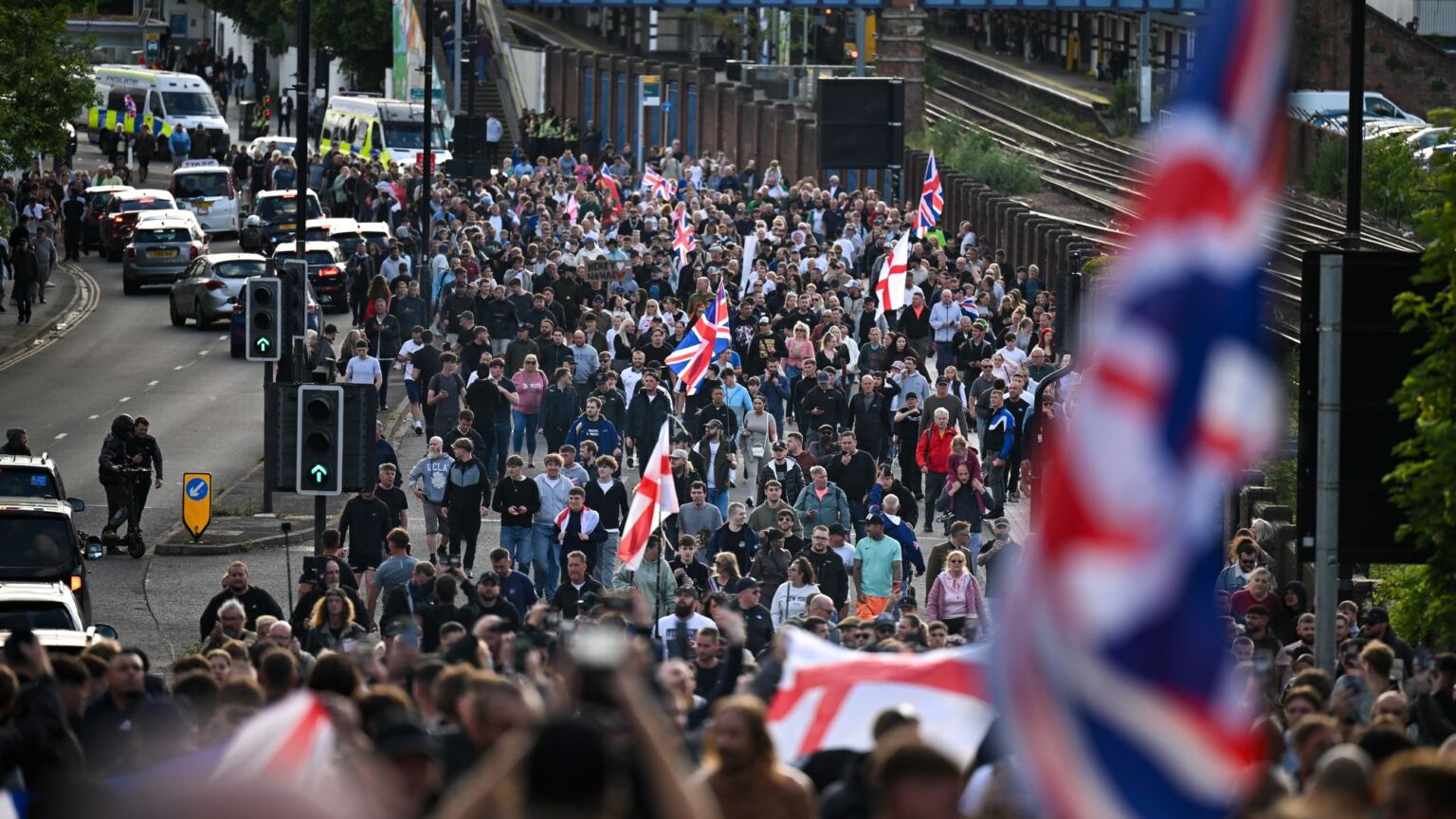
There is usually a very singular and overarching explanation from much of the British establishment when working-class communities express anger over such issues as immigration, crime or economic decline: they must have been manipulated into thinking that way. And when, after years of not having their voices heard, this anger bubbles up into rioting – never a good idea, never to be encouraged, but often understandable in its sentiment – the same explanation comes out again.
We’ve seen this over the past month or so, just as we’ve seen it repeatedly in recent years. When residents protested outside migrant hotels last year – in places as disparate as Epping, Rotherham, Falkirk and Norwich – there was plenty of commentary looking to explain away their concerns as the product of far-right agitation. Few people, it seems, want to ask why ordinary people were turning up in the first place – or, at least, they might have been asking why, but they certainly didn’t seem prepared to hear the answers.
The recent unrest in Belfast – or the outright unconscionable violence in Belfast, to be fair – and demonstrations a few days before that in Southampton have been repeatedly viewed by the left through the same lens: as outbreaks of manipulation, misinformation or extremism.
This explanation often feels both suspiciously convenient and spectacularly patronising. It allows politicians and commentators to focus on who is supposedly influencing people, rather than on the grievances those people are expressing. The possibility that thousands of citizens might have arrived at similar views independently through their own experiences and observations – or, at least, that they might have parsed the media’s output and come to similar conclusions – seems to escape them. Or so they say.
Modern Britain is full of people who speak reverently about the importance of lived experience. We are constantly being told that people understand their own lives better than distant observers ever could. Fair enough, I suppose. Yet this principle seems not to apply when working-class people reach conclusions that the chattering classes dislike. Suddenly, lived experience becomes ignorance. First-hand observation becomes prejudice. Political disagreement becomes evidence of manipulation – a manipulation their own supporters would never fall prey to, to hear the Zack Polanskis of the world tell it. They are presumably too well-educated and / or virtuous for all of that. Some people are just better – you could see it as a modern Calvinism by the back door.
In this way, working-class members of the British electorate are treated more like patients than citizens, suffering from a condition that requires diagnosis and correction, both readily offered.
Of course, politicians, journalists and campaigners influence public opinion. They always have. So they should. Yes, Nigel Farage calling for ‘pure, cold rage’ after Henry Nowak’s murder trial would have been a red flag to many a bull. And yes, the political temperature has been climbing for some time now. But it is absurd to suggest that millions of people have arrived at similar conclusions purely because they have been whipped into a frenzy by demagogues.
They live in their communities, see things they don’t like, consistently vote against those things, and have their views ignored – just as they have been ignored for decades. So it doesn’t take much to mobilise them into the only action that will get them noticed.
People do not need a tabloid headline to tell them that their wages have stagnated, that they or their children cannot find jobs, that it’s taking two people’s full-time wages to fund a household that used to enjoy greater purchasing power on one. They do not need a populist politician to inform them that housing has become harder to access. They do not need a social-media influencer to notice that public services are under strain, that their town centre has deteriorated or that the character of their neighbourhood has changed dramatically over the course of a generation.
These are observations drawn from daily life. All the commentariat can do is gaslight them (as most are doing) or tell them that yes, they’re on to something (these are the ones usually accused of whipping people up, obviously).
Immigration provides perhaps the clearest example. It’s certainly the most tangible one at the moment – it’s in the air. For decades, opinion polls have consistently shown substantial public concern about immigration levels. Election after election, voters have backed parties promising tougher controls. In 2016, immigration was one of the central issues driving support for Brexit. Yet throughout this period immigration levels continued to rise to historically revolutionary levels – all across the country. Not since the Angles, Saxons, Jutes and Frisians argued over ancient Britannia have we seen such radical change.
People have noticed, and most people are unhappy about it – they just happen not to be the ones in power.
One need not oppose immigration to recognise the democratic significance of this fact. Millions of voters have repeatedly expressed a preference. Governments of various political colours have repeatedly failed to act upon it. To suggest that concern about immigration persists only because newspapers keep inflaming the issue is to ignore the obvious. People are concerned because they remain unconvinced that their views are being heard.
The same pattern applies to a host of other issues. Whether the subject is crime, anti-social behaviour, deindustrialisation or economic insecurity, ordinary people are often told that the problem lies not with the conditions they describe but with the information they consume. The diagnosis is always the same. The public is wrong. The public has been misled. The public requires re-education. This reveals a profound distrust of democracy itself.
In a healthy democracy – which, I am told, we used to be – citizens are free to reach conclusions disliked by their elected representatives. Disliked by anyone, really. They are free to hold and espouse views that academics, journalists and politicians consider mistaken or morally questionable. The answer is to listen to them and either argue the toss or (preferably) switch course, not to simply shout them down as stupid bigots.
Yet, increasingly, sections of the British commentariat appear unable to accept that voters may have arrived at their opinions honestly. They search endlessly for malign influences, foreign actors and populist agitators – of which, admittedly, there are and always have been plenty. But they are not scapegoats and their existence doesn’t delegitimise a whole body of people and their opinions.
There is a long tradition on the left of criticising the upper classes for assuming they know what is best for ordinary people. Yet much contemporary commentary reproduces exactly this attitude. It assumes that working-class voters are incapable of understanding their own interests and must therefore be guided towards the correct conclusions by enlightened professionals. It’s class prejudice of the worst kind, and it’s bloody hypocritical to boot.
James Dixon is a Glasgow-based novelist, poet and playwright.
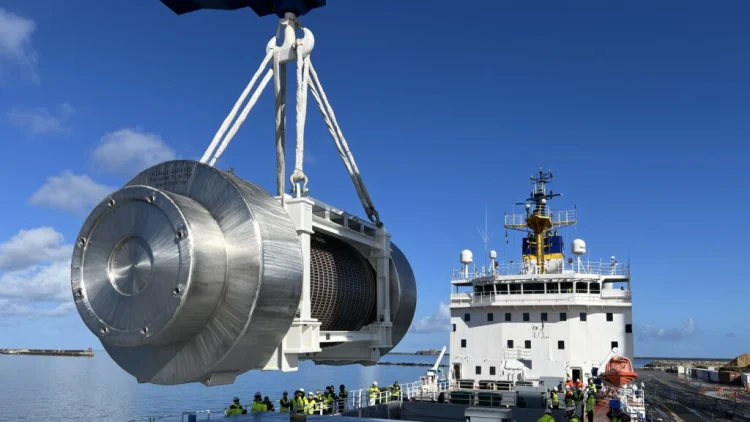

Nuclear Transport Solutions (NTS), the world’s leading nuclear transport specialists, has successfully evolved its shipping capability to transport a new nuclear flask, ensuring the safe and secure transportation of spent Mixed Oxide (MOX) fuel.
A new package was required to transport this material, and one of NTS’s specialist ships, Pacific Grebe, was the first in the fleet to be adapted to accommodate the new flask.
The engineering challenge of fitting the package, which is the largest ever transported by NTS, was undertaken by the organisation’s transport experts and specialist engineers.
An adapter plate was produced to ensure the cargo would securely fit within the ship’s hold. This required millimetre precision, along with the manufacture of a specialist tool to ensure the ship’s removable decks aligned perfectly with the new TN Eagle flask, which would carry the material.
Following initial trials at Barrow Marine Terminal, a full-scale test fitting took place in Cherbourg, France, using the specialist vessel operated by Pacific Nuclear Transport Limited (PNTL), NTS’s specialist shipping division.
The 150-tonne flask was successfully placed in the ship’s various holds to check compatibility, and the exercise proved an outstanding success.
Conner Love, NTS Director of Shipping, said: “This has been a fantastic collaborative effort between NTS and PNTL. It demonstrates the world-leading expertise we possess in nuclear shipping and engineering.
“We are proud to have worked on the successful completion of this project, but this is just the beginning as we embark on a series of vital spent fuel movements around the globe.”
Another of PNTL’s ships, Pacific Egret, will be adapted in the near future to transport the new flask.
Politics
Politics Home | NTS delivers landmark HALEU shipment, reinforcing global leadership in advanced nuclear fuels transport
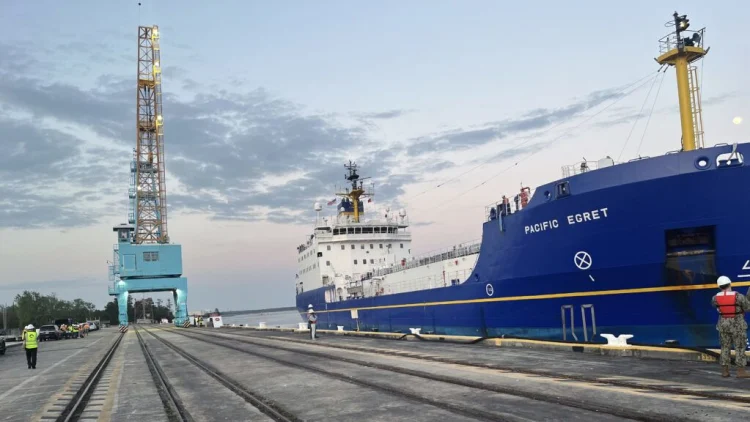

Nuclear Transport Solutions delivers landmark HALEU shipment, reinforcing global leadership in advanced nuclear fuels transport
Nuclear Transport Solutions (NTS) has successfully completed a major international shipment of high-assay low-enriched uranium (HALEU) fuel, supporting the safe, secure and reliable transfer of the material from Japan to the United States.
The operation was conducted in collaboration with the U.S. Department of Energy’s National Nuclear Security Administration (NNSA), Japan Atomic Energy Agency and the Japanese government – with 1.7 metric tons of HALEU transported, the largest single international shipment of uranium in NNSA’s history.
It demonstrates NTS’s unique expertise and capability in the transport of HALEU fuel, a material that is central to the deployment of advanced nuclear technologies and next-generation reactors.
The achievement also marks a significant step in NTS’s role in spearheading the UK’s HALEU transport capability, following its £10.5 million funding award from the UK government in 2024. By developing and delivering the specialist expertise required for HALEU movements, NTS is helping to position the UK as a critical international partner in enabling secure and resilient advanced nuclear fuel supply chains.
Ben Whittard, co‑CEO of Nuclear Transport Solutions, said:
“This operation clearly demonstrates NTS’s unique capability in the transport of HALEU fuel. We’ve brought together deep technical expertise, operational excellence and decades of global experience to deliver a highly complex shipment safely, securely and successfully.
“As HALEU becomes increasingly important to advanced nuclear programmes worldwide, NTS is proud to be at the forefront of providing the transport solutions that make this possible.”
Ciara Middlehurst, co‑CEO of Nuclear Transport Solutions, added:
“This is a powerful example of what can be achieved through strong international partnership. Working closely with our colleagues and partners in the United States and Japan, we’ve shown how trusted collaboration, shared standards and alignment of purpose can enable critical nuclear activities while upholding the highest security and non‑proliferation commitments.”
NTS’s growing collaboration and reputation across the international nuclear sector was highlighted earlier this year following the signing of a landmark Heads of Terms agreement with Westinghouse, at the British Embassy in Washington DC – reinforcing shared ambitions to support the emerging HALEU supply chain.
Politics
Politics Home | LLW Repository Environmental Safety Case submitted to the Environment Agency
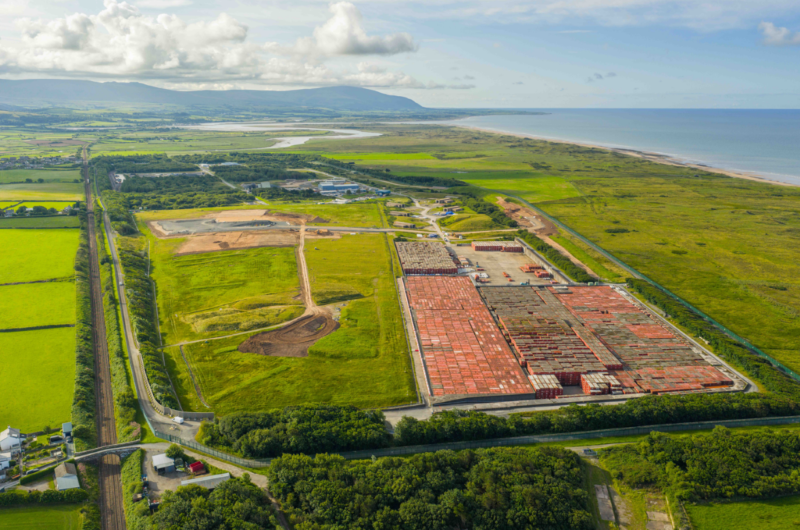
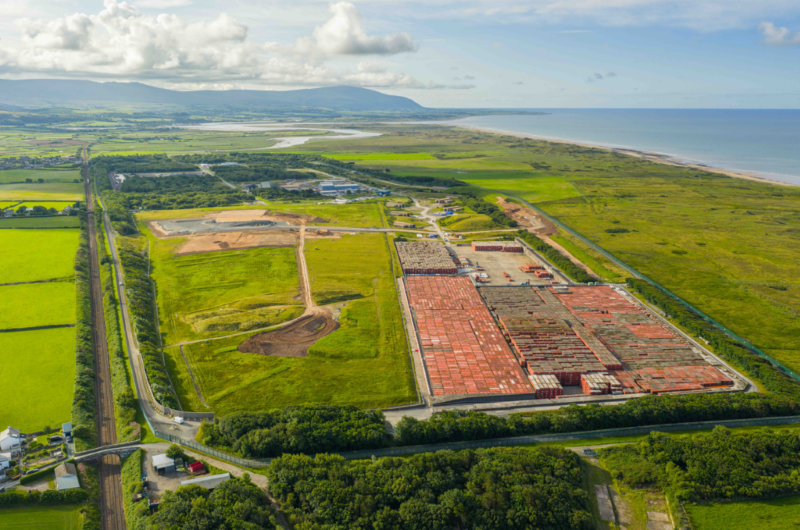
At the Low Level Waste (LLW) Repository, work is underpinned by a comprehensive and robust Environmental Safety Case (ESC); a rigorous set of reports which considers environmental safety now, and in the future at the LLW Repository.
After years of preparation, NWS submitted a major update to its ESC to the Environment Agency on 1 May 2026. The last major submission was 15 years ago and a lot has changed over that time, including operational experience, scientific understanding, regulatory feedback and our understanding of the waste inventory. The Environment Agency will now undertake an independent technical review of the 2026 ESC.
Sam Stead, NWS’ ESC Lead, said:
“We place a great deal of importance on the Environmental Safety Case. It requires rigour, transparency and a strong sense of responsibility, because it is fundamental to how we evidence safety and environmental protection over the long term at the Repository.”
The ESC is an essential part of how NWS shows it is meeting the highest standards of environmental protection at the Repository site. It demonstrates that the mitigations it has, and will, put in place do not detrimentally impact the area around the Repository site, including local water sources, air quality, wildlife, and the wellbeing of the community.
As the duty holder for the Repository site, and owner of the ESC, Mike Pigott, Executive Director of Sites and Operations, said:
“The ESC underpins our environmental permit and reinforces public and regulatory confidence, demonstrating how we are continuing to dispose of radioactive waste safely, both now and far into the future.”
You can read more about the ESC in our Guide to the Key Points

(Jeffrey Blackler / Alamy)
4 min read
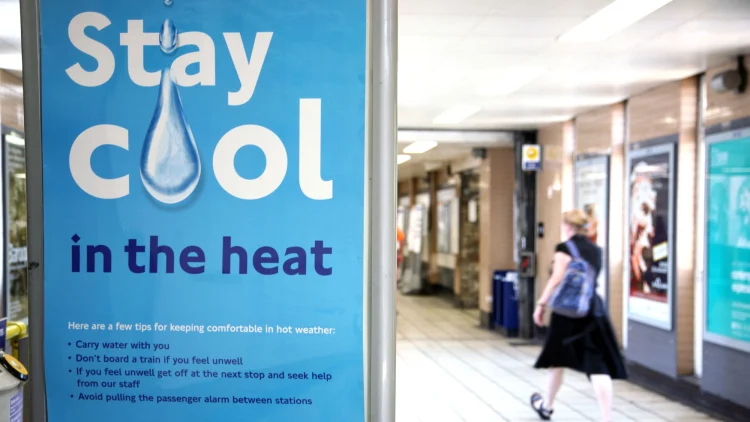
The UK is in the throes of our second significant heatwave of the year. It is still early summer. That fact alone ought to give us pause.
We are a country whose infrastructure, public services and daily rhythms were built for drizzle, not temperature spikes that strain hospitals, halt transport systems and leave elderly and vulnerable people at risk. And yet, these extremes are becoming familiar. The danger lies not only in the rising heat, but in the creeping normalisation that follows – the sense that this is simply our new weather, something to be endured rather than addressed.
This should not be the case. Moments like this should remind us that climate change is not an abstract, distant threat, but a reality shaping life here in Britain today. From parched fields in the East of England to overheating classrooms and overstretched water systems, the impacts are tangible and unevenly felt. Those with the least – poorly insulated homes, insecure work, fragile health – bear the brunt.
And yet, at precisely the moment when seriousness is most needed, there are growing calls to look the other way. To dilute commitments. To reframe climate policy as an optional extra rather than a central pillar of national resilience. This is simply not a grown-up response to a serious problem.
The role of government is not to chase the easiest argument or yield to the loudest pressure. It is to weigh evidence, act in the national interest, and take responsibility for the long term. Climate change tests all three of these duties. Because while it might sometimes be politically convenient to question the scale of the challenge, or to downplay the urgency of action, the consequences of doing so will not be distributed evenly – and they will not be undone easily.
There is a temptation, particularly in an overheated political environment, to frame climate action as a burden. That framing is as misleading as it is short-sighted. The real burden is the cost of inaction: the damage to infrastructure, the hit to productivity, the strain on public services, and, most importantly, the toll on human lives. There is no better example of this than our privatised water system. Successive governments have failed to grip the issue, trusting the market to take the reins and make long-term decisions for the benefit of the public. As a consequence, we are now dangerously exposed when it comes to water resilience and quality.
We need a government that understands that climate policy is economic policy, health policy, and security policy. That investing in the green transition is not simply a moral choice, but a practical one, shielding us from international shocks and creating jobs in communities that have too often been left behind.
This requires honesty. There will be trade-offs. There will be decisions that cannot please everyone. But leadership is about making those decisions anyway – with clarity, fairness and a sense of shared purpose.
We cannot afford any pretence that we can simply step back from climate commitments. Nor can we indulge the illusion that short-term political gain outweighs long-term national risk. Those urging such paths may offer simplicity, but it is a false simplicity: one that masks, rather than resolves, the challenges ahead.
People understand, instinctively, that the world is changing. They see it in the weather, in the news, and in their own lives. Last summer, the hottest on record, the country recorded more than 1,500 heat associated deaths. The public know they can’t ignore this. What they ask for, rightly, is a plan that matches the scale of the problem and distributes both the costs and benefits fairly.
This heatwave should serve as a reminder of what is at stake. A country that treats such warnings with complacency will find itself on the back foot, reacting to crises rather than preparing for them. A country that meets them with seriousness, however, has the opportunity not only to protect itself, but to lead.
Alistair Strathern is the Labour MP for Hitchin


Almost £2 million was invested by NRS last year in socio-economic initiatives, supporting good causes in communities local to its 14 decommissioning sites.
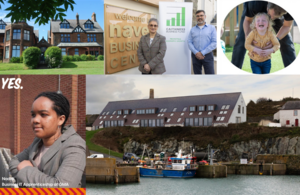
The NRS socio-economic scheme provided £1,979,721 during 2025-26 to enhance the social and economic wellbeing of communities located near NRS sites.
In addition to the positive social impact from the significant public investment made in decommissioning, each year NRS delivers a targeted socio-economic grant funding programme based on local needs which meets its obligation to support the creation of a positive social, economic and environmental legacy for communities close to sites as they look to the future.
NRS is part of the Nuclear Decommissioning Authority group which invests around £15 million each year in projects that enable permanent and sustainable change in its site communities.
This year, the NRS socio-economic scheme has supported a wide range of local initiatives, including projects focused on education, sport, wellbeing, sustainability and community development.
Some highlights from the year include:
Gympanzees, a Gloucestershire charity, received a £30,142 grant to support the development of its new purpose-built centre for disabled children and young people. The funding will help install state-of-the-art sensory equipment, creating inclusive, calming spaces that provide essential therapeutic and accessibility support for local families.
West Kilbride Community Initiative (WKCIL) is delivering a £73,000 expansion project at Craft Town Scotland, supported by £37,000 from NRS. The project will add two new craft studios, storage and decking, creating space for specialist makers, community workshops and training. Operating on an affordable rental model, the new facilities will support skills development, local jobs and creative businesses, helping strengthen the site’s long-term sustainability and benefits for the wider community.
The Youth Employment Service (YES) which supports 16–24‑year‑olds across East Suffolk to move into education, employment or training through personalised online and face-to-face support recently received a £95,000 grant. The grant will help expand the service’s reach, improving access for young people in rural areas, strengthening mental health and SEND support, and building stronger employer links. The funding will also support a more preventative approach and help secure the service’s long-term sustainability.
The FutureSkills Flexible Training Grant Scheme, delivered by Caithness Business Fund supported by £125,000 from NRS and the NDA can offer grants of between £2,500 and £10,000 to small and medium-sized enterprises operating within the Dounreay travel-to-work area. The scheme supports local businesses to invest in high-quality training that enables employees to upskill and reskill, helping to boost productivity, enhance workforce resilience, and support ongoing professional development.
Isle of Anglesey County Council received £351,000 of NDA funding managed by NRS, enabling accelerated delivery of the 2019 North Anglesey Economic Regeneration Plan. Flagship projects at Amlwch Port including refurbishing the marine terminal will provide high‑quality commercial space and improved welfare facilities, revitalising the waterfront, while ten new business units will support local services and help community‑facing enterprises grow. Crucially, the initial NDA/NRS investment has leveraged a further £8 million from the Ambition North Wales Growth Deal to deliver new commercial buildings, supporting a more diverse and self‑sustaining local economy and generating an estimated £20 million in wider economic and social value for the area.
David Calder, NRS Head of Socio Economics said:
Beyond the considerable economic impact of the decommissioning mission, NRS continues to make significant investment in the grant programme, and has this year supported 129 applications from around our sites the length and breadth of the UK. Local partnership working has been key in identifying and delivering projects which target local priorities, ensuring we align our support to deliver meaningful impact and create opportunities for people and communities to realise their potential.
Rob Fletcher, NRS CEO said:
NRS is proud to be a significant employer and make a positive contribution to communities in all parts of the UK from the north of Scotland to the southern tip of England. We take our commitment to socio-economic development seriously and the funding we provide plays a vital role in strengthening those communities, both now and looking to a future beyond our decommissioning programme. By investing in local causes, we can help create real, lasting opportunities supporting people, skills and wellbeing where it matters most.”
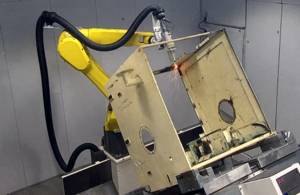
Sellafield has shown a new remote method to cut up contaminated gloveboxes, improving safety and making waste easier to store.
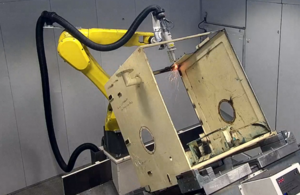
Sellafield Ltd is changing how it deals with legacy nuclear materials. It is doing this by using a new remote ‘flat pack’ approach to dismantle plutonium contaminated gloveboxes. This is improving safety and efficiency across the Sellafield site.
The idea is simple. Break large, complex items into smaller, easier-to-manage parts. This new method changes how bulky, contaminated equipment is handled and stored.
At Sellafield, this is not everyday flat packing. It uses robotics, laser cutting and equipment from older nuclear facilities.
Gloveboxes were used to safely handle radioactive materials. Many are still in older facilities across the site. Taking them apart safely is essential. Reducing their size before disposal is also important.
In the past, workers did this job by hand. They used tools while wearing specialist protective equipment (PPE). While this method works, it can be slow and limits productivity.
Earlier this year, the team achieved a world-first. They took a glovebox from installation through to full remote size reduction and safe packaging. This showed that a fully remote method can work at scale.
This work would not have been possible without the Alpha Active Demonstrator Programme. It has helped develop and prove new ways of working. Using robotics and laser cutting, the team has shown that contaminated gloveboxes can be size reduced remotely. This keeps people out of harm’s way.
The programme combines innovation with practical problem-solving. It supports the site’s long-term mission to reduce risk and deliver clean-up more effectively.
A second glovebox is now going through the programme, with more planned. The team is refining the process and developing a model that can be used across the site.
This approach is safer and more efficient. It could change how hundreds of gloveboxes are dealt with at Sellafield in the future.
Major milestone at Trawsfynydd as a 20-year decommissioning programme ends, completing work on the highest hazards and paving the way for the next phase.
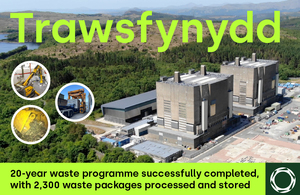
Trawsfynydd power station was built in the early 1960s and generated electricity for almost 30 years. It remains the only inland nuclear power station in the UK. Since generation stopped, the site has focused on safely managing the legacy left behind, with much of the effort centred on reducing risk and preparing the site for long term decommissioning.
After two decades of commitment, innovation and teamwork, the Higher Activity Waste (HAW) programme has now been successfully completed. This work focused on the safe management and storage of radioactive waste left behind from operations, a task that required sustained effort and careful delivery over many years.
The programme focused on the highest waste that remained on site, categorised as intermediate-level waste, a mid-range category of radioactive waste which is more active than everyday low-level waste, but not as hazardous as high-level waste.
It involved retrieving legacy material, processing it safely and placing it into secure long-term storage on site. In total, almost 2,300 individual waste packages were completed, representing a significant delivery achievement and the removal of the site’s hazards.
Rob Fletcher, CEO at Nuclear Restoration Services (NRS), said the completion of the programme marks a turning point for the site.
This is not just the end of a major programme, it is the end of an era.
Completing this work safely and successfully has allowed Trawsfynydd to move into its next phase of delivery, reducing the height of the reactors by almost half. This will create the most noticeable change to the landscape in decades.
Tom Williams, NRS Trawsfynydd Site Director added,
Bringing the HAW programme to a close is a remarkable achievement for everyone at Trawsfynydd. Its completion represents a key delivery milestone in our decommissioning mission; one we can look back on with pride whilst also looking forward with excitement to the start of our new major projects.
The final waste package has now been transferred into storage, bringing the long‑running campaign to a close. Along the way, teams developed practical and innovative ways of working to safely retrieve the waste. This included using a robotic arm to remove material from deep storage areas and specialist vacuum equipment to collect fine dust and small fragments.
Learning from this work was shared with other sites across the country, helping to improve efficiency, reduce costs and support delivery across the wider decommissioning programme.
As Trawsfynydd moves into this new phase, the end of the waste programme stands as a clear example of successful delivery, teamwork and long term commitment and a proud moment for everyone involved.
Clive Nixon, the NDA’s Chief Nuclear Strategy Officer, said:
This milestone demonstrates the significant progress we are making in delivering on our mission, set on behalf of government, to safely, securely and cost effectively clean up the UK’s earliest nuclear sites, prioritising the reduction of the highest hazards and risks while protecting people, communities and the environment.
We look forward to the next phase of work, which will see the height of the reactors reduced, taking a big step towards their dismantling, as we progressively deliver on our mission to decommission the site.
It was announced in October 2025 that Costain had been appointed as principal contractor to reduce the height of the reactor buildings from around 54m to 29m. The project, valued at up to £70 million, is expected to take up to four years to deliver. At its peak, Costain is expected to employ more than 100 people to deliver the programme, creating opportunities to boost regional skills development and make a lasting contribution to the local economy.

Madonna has opened up about a song that she and her eldest daughter Lourdes Leon worked on for her upcoming album.
The Queen Of Pop is currently gearing up for the release of her 15th studio album, which will serve as a spiritual successor to her chart-topping 2005 offering Confessions On A Dance Floor.
During a Q&A to promote her Confessions II short film, Madonna confirmed that one song towards the end of the new album, titled The Test, features her daughter Lourdes as a co-writer.
Speaking to Interview magazine about her creative process, the Bring Your Love singer explained: “It’s hard for me to write a song about nothing. I have to tell a story. So I wrote about a lot of family trauma, and then we started making dance music.
“I came back and forth a couple of times and then I said, ‘Okay, this is right. This feels good’.”
Madonna then agreed that Confessions II was “meant to be”, “now that I’ve gotten through it and so many very important things have happened to me along the way”.

“For instance,” she continued. “The song I wrote with my daughter, Lola. She approached me about writing a song together as a way to heal our relationship.
“It was a really important moment, and it solidified the idea that now is the time to make this record.”
She added: “All these symbolic things happened. My step-mother died, my brother was ill, my brother died, my daughter approached me…”
Madonna has included Lourdes – who has embarked on a new career as a singer-songwriter in recent years – in her work numerous times.
In 2009, she made a cameo in an online version of Madonna’s Celebration music video, recreating one of her mum’s most iconic looks.
She also contributed backing vocals to the 2012 album cut Superstar, and appeared on screen in a breathtaking video when Madonna performed Frozen live on her Madame X tour.
More recently, Lourdes was among the many famous figures who made cameos in the Grammy winner’s Confessions II film, released earlier this month.

During her own conversation in Interview magazine back in 2021, Lourdes opened up about her relationship with her famous mother.
“We don’t get any handouts in my family,” she explained. “Obviously, I grew up with extreme privilege. There’s no denying that. But I think my mum saw all these other kids of famous people, and she was like, ‘My kids are not going to be like this’.
“Also, I feel like if your parents pay for things, then it gives them leverage over you. My mum is such a control freak, and she has controlled me my whole life. I needed to be completely independent from her as soon as I graduated high school.”
Lourdes added: “My experience with my mum’s music has changed so much as I’ve gotten older, because I’m increasingly able to recognise how influential and amazing this woman is, and how empowering to other women and ahead of her time she has always been. I didn’t fully comprehend that until I realised the importance of empowerment and what it means to be a woman.
“She’s probably the hardest worker I’ve ever seen. I didn’t inherit that, unfortunately. I inherited her control issues, but not her work ethic.”
Earlier this month, Madonna described The Test as “beautiful”, explaining: “We wrote it in the studio at the same time, and it was sort of a healing moment between us.
“I’m really proud of her. She’s so immensely talented, way more talented than I am. I’m not saying that because I’m her mum.”
Confessions II is released on Friday 3 July.

Iran’s World Cup team has US travel restrictions eased
Form 8K MGE Energy Inc For: 23 June
Bitcoin Caught in Crossfire as Tech Stocks Unravel


-

 Fashion4 days ago
Weekend Open Thread: Miami – Corporette.com
-

 Entertainment3 days ago
Renter of Home in Anne Heche Crash Denies Settlement With Son
-

 Tech1 day ago
Microsoft accidentally kills epic Outlook email threads
-

 Business3 days ago
Soccer-U.S. defends Iran World Cup travel restrictions, says discussions ongoing
-

 Politics5 days ago
BBC Reporter Discusses Cross Party Criticism Of Trumps Iran Deal
-
 Business4 days ago
Wall Street Week Ahead: Investors see Micron earnings as pulse check of AI rally momentum
-

 Tech5 days ago
AWS enters the context layer race with a graph that learns from agents, not manual curation
-

 Crypto World4 days ago
HIVE shares jump as $220M AI deal speeds Bitcoin mining pivot
-
 Crypto World3 days ago
Can Charles Hoskinson Really Rescue Cardano?
-

 Crypto World3 days ago
Jake Chervinsky accuses CME of protecting derivatives monopoly
-

 Business5 days ago
Brexit cost 6% of UK economy, Bank of England company data suggests
-

 Tech1 day ago
Nearly 7,000 fake Amazon domains registered ahead of Prime Day 2026, researchers warn
-

 Sports5 days ago
FIFA World Cup 2026: Canada beat 9-men Qatar 6-0 to register first ever win | FIFA World Cup 2026
-
 Tech2 days ago
Signal’s Meredith Whittaker says AI chatbots ‘are not your friends’ and calls Copilot agents a backdoor
-

 NewsBeat4 days ago
Keir Starmer Allies Question His Chances For No 10
-

 Business3 days ago
MHP SE 2026 Q1 – Results – Earnings Call Presentation (OTCMKTS:MHPSY) 2026-06-20
-

 Entertainment4 days ago
Jose Alvarado Wants Taylor Swift at More Knicks Games
-
 Crypto World6 days ago
Anthropic’s Dario Amodei Urged AI Unity at G7, Even as US Banned His Models
-

 Entertainment6 hours ago
Karlissa Speaks On Chrisean And Blueface’s Co-Parenting Issues
-

 Tech5 days ago
Adobe adds its AI assistant to Premiere, Illustrator and InDesign
You must be logged in to post a comment Login