
Politics
Men’s Heart Attack Risk Rises In Their 30s

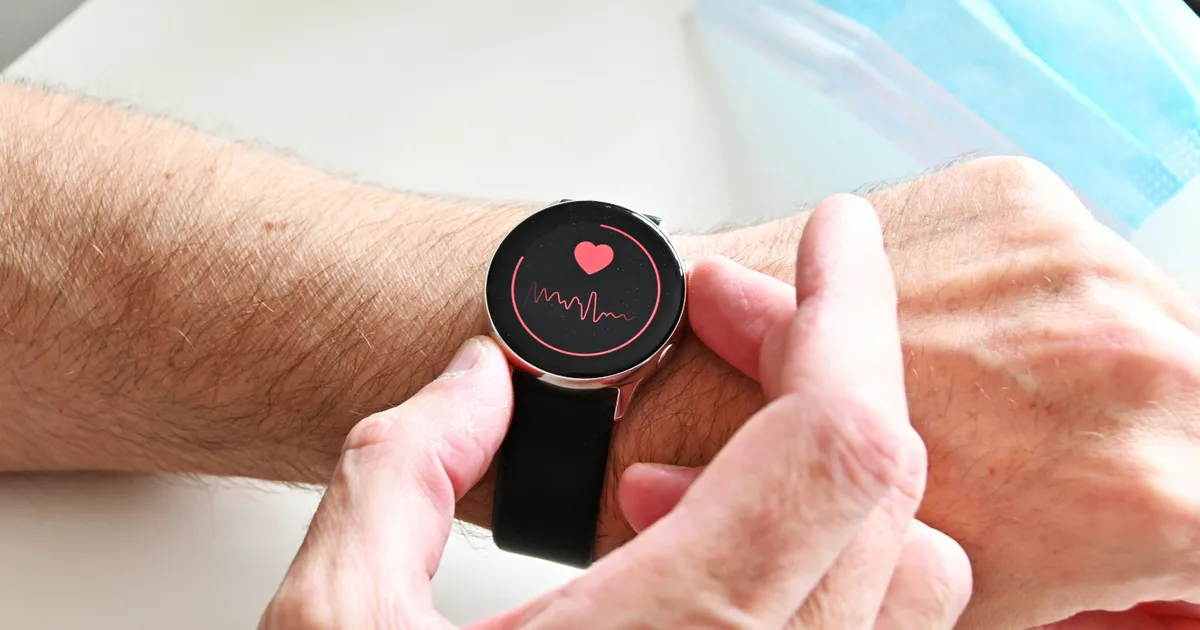
There is a heart attack gender gap, Harvard Health shared. Men tend to get their first heart attacks younger than women (65, on average, vs an average age of 72).
More men than women are diagnosed with heart disease, too, though some researchers think this could be partly down to underdiagnosis among women.
A new study, published in the Journal of the American Heart Association, has looked further into when heart attack risk begins to rise for men and women.
They found that men’s heart attack risk begins to climb in their 30s, and appears to do so much more rapidly than women’s.
35 may be a crucial age for men’s heart disease risk
In this study, researchers looked at data from the Coronary Artery Risk Development in Young Adults (CARDIA) study.
This involved over 5,100 participants who were aged between 18 and 30 in the mid-90s. They were followed until 2020; none had heart health issues at the start of the study.
They found that men reached 5% incidence of heart diseases and events like heart attack, stroke, and heart failure by age 50.5, seven years younger than the women in the study.
Meanwhile, men saw a 2% heart disease incidence a decade younger than women.
Additionally, something seemed to happen to men’s heart attack risk at 35. While women’s and men’s heart disease risk was about the same in their early 30s, men’s rose more rapidly starting at age 35 than women’s did.
“Sex differences in cardiovascular disease risk emerge by age 35, persist through midlife, and remain even after accounting for differences in cardiovascular health,” the paper reads.
The researchers think more young men should get screened for heart conditions
Speaking to Northwestern Now, a senior study author Alexa Freedman suggested it might be a good idea to start screening for health conditions earlier.
“Heart disease develops over decades, with early markers detectable in young adulthood,” she said.
“Our findings suggest that encouraging preventive care visits among young men could be an important opportunity to improve heart health and lower cardiovascular disease risk.”

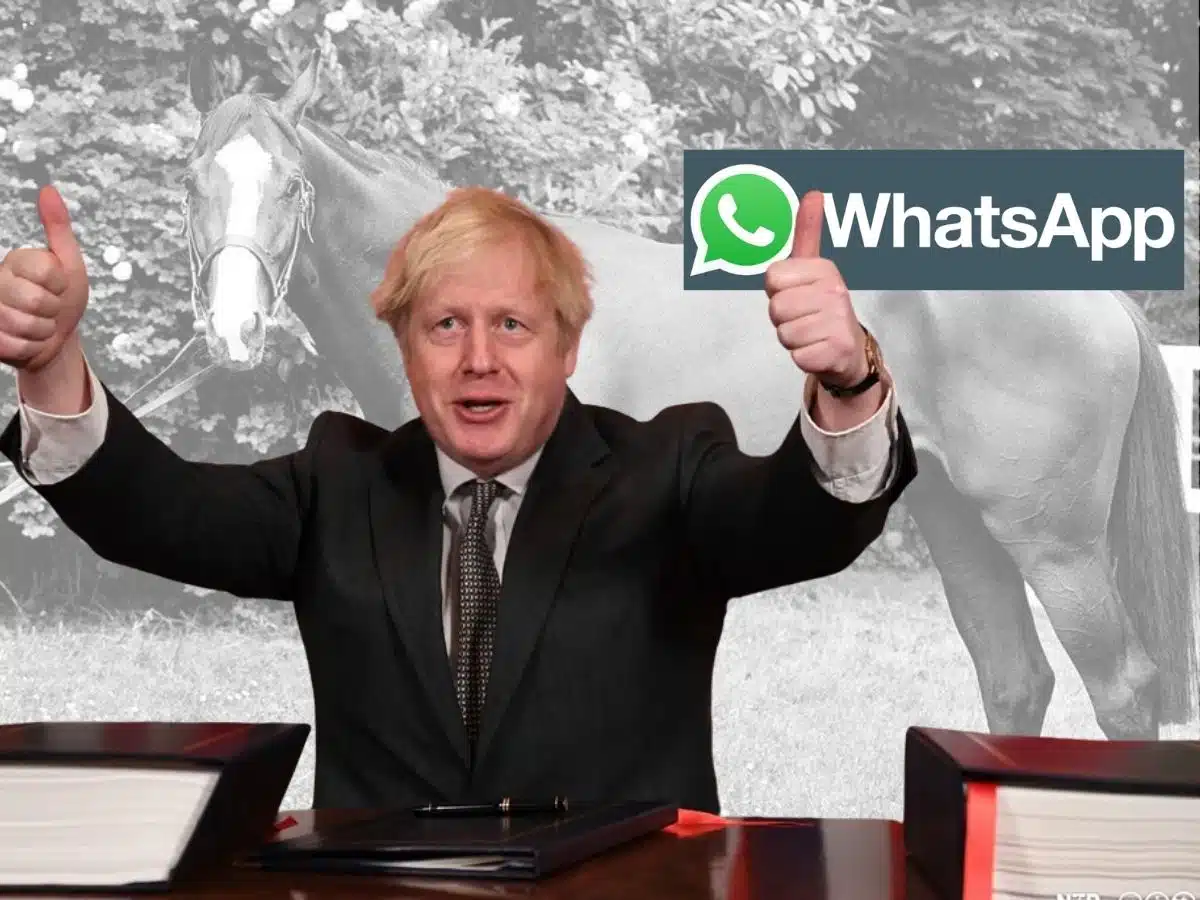
As we’ve covered, the Labour Party‘s latest scandal centred on the WhatsApp messages sent between the disgraced Peter Mandelson and the also-disgraced Morgan McSweeney. We’ve criticised both men for years, so we were in a pretty good position to cover this story. The same cannot be said of one Alexander Boris de Pfeffel Johnson:
girl… https://t.co/k9RvfUJ1NN pic.twitter.com/zz6RrKcKOe
— Ben Smoke (@bencsmoke) March 28, 2026
WTFApp
On 26 March, we covered that Keir Starmer’s former chief of staff Morgan McSweeney reported his phone stolen in October last year. Given that this happened after his mentor Peter Mandelson was sacked, people suspected McSweeney faked the theft to covertly delete some messages. Suspicions only heightened after it came out that McSweeney had given the police incorrect information while also failing to tell them he was a key government employee.
Later that same day, we learned that the people investigating Peter Mandelson weren’t asking to search his personal devices. This was despite them knowing Mandelson had used his personal devices for government business. This is all especially dodgy, because they’re investigating Mandelson as a result of him leaking secret government information to the notorious paedophile Jeffrey Epstein.
So yes, this is all very bad.
But still, look at the state of this cunt:
The greatest vanishing act since Shergar!https://t.co/7vu2BvoHWQ
— Boris Johnson (@BorisJohnson) March 28, 2026
If you don’t know, ‘Shergar‘ was some famous horse that got stolen — exactly the sort of reference you’d expect from Johnson.
This is what the Standard reported regarding Johnson’s own missing WhatsApps:
About 5,000 WhatsApp messages on Boris Johnson’s phone at the start of the Covid pandemic have gone missing, the inquiry into it was told on Wednesday.
They added:
About 5,000 WhatsApp messages on his phone from January 30, 2020 to June 2020 were unavailable to the inquiry. Pressed on this, Mr Johnson said: “I don’t know the exact reason, but it looks as though it’s something to do with the app going down and then coming up again, but somehow automatically erasing all the things between that date when it went down and the moment when it was last backed up.”
Inquiry counsel Hugo Keith KC said a technical report provided by Mr Johnson’s solicitors suggested there may have been a factory reset at the end of January 2020 followed by an attempt to reinstate the contents in June 2020, but the former prime minister denied knowledge of that. “I don’t remember any such thing,” he said.
We think he might remember such a thing, honestly.
We also suspect he might know what happened to that horse the way he keeps going on about it.
Boris Johnson — Liar liars
Boris Johnson is one of the worst prime minister’s we’ve ever had, and if he ever tries to return to office we should throw chairs at him until he runs away. At the same time, he does at least bullshit with some panache. Keir Starmer lies all the time too, but he acts like we’re the ones at fault for noticing:
A remarkable thing about Starmer is that, despite being the most prolific liar in British political history, he is a terrible liar. https://t.co/v2IfP2kIqs
— Karl Hansen (@karl_fh) March 26, 2026
It says a lot about this country that our options for PM have been ‘eccentric liar’ and ‘boring liar’.
Featured image via Wikimedia
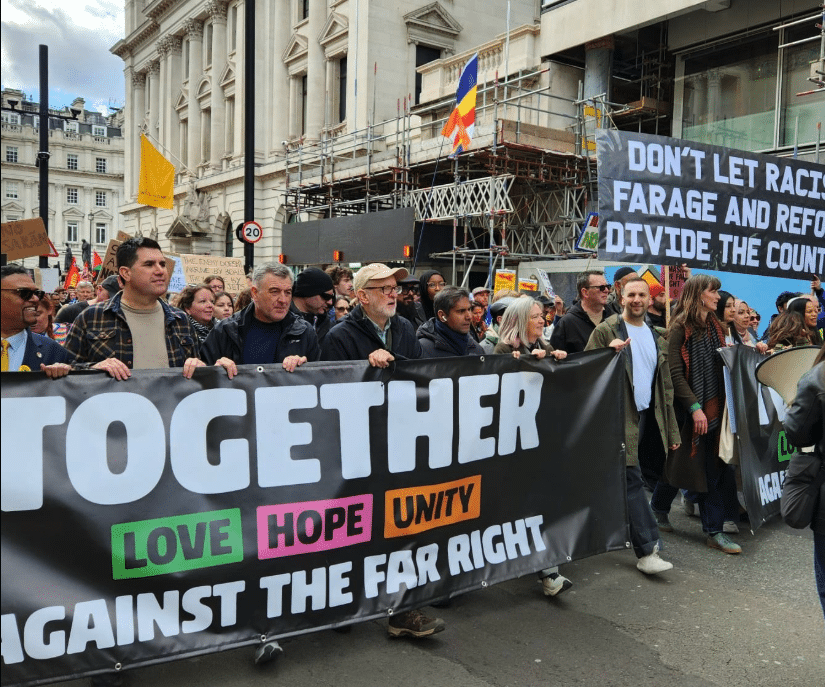
Saturday 28 March saw a significant anti-far right protest take place in London. According to Green Party leader Zack Polanski, however, you probably wouldn’t realise this if you’d been locked to the BBC:
How can the BBC justify how much coverage they give other marches which are significantly smaller in size?
The bias is so obviously blatant.https://t.co/vT67pvnoZh
— Zack Polanski (@ZackPolanski) March 29, 2026
Zack Polanski — Numbers
The Guardian piece Zack Polanski links to above notes:
Organisers say half a million are taking part – though police disagree
Getting an accurate picture of the number of people attending a march is always difficult, but today’s organisers say they believe half a million people have gathered in London.
Rally co-organiser Kevin Courtney, chairman of the Together Alliance coalition, told crowds gathered on Whitehall:
“Our estimate is now that there are half a million people on this demonstration – the biggest demonstration ever against the far right. And it gives us all confidence to carry on. Thank you very much.”
The Met Police say their initial estimate is more like 50,000 people. They concede, however, that it is hard to get an accurate number as marchers are so dispersed throughout central London.
Muslims, Jews, Christian’s, atheists
Gay, straight, trans
Public sector workers, private sector workers, students, retired people
Disabled people, older people, younger people
White, black, brown
All people marching TOGETHER against the far right
— Harry Eccles (@Heccles94) March 29, 2026
We’ve joined the short march at the Together Alliance demo in central London today – oh and the rave on Trafalgar Square is already popping off 💚 pic.twitter.com/aRVWsfBulm
— Canary (@TheCanaryUK) March 28, 2026
Polanski was a speaker at the protest:
“Look around. Look at the people around you. We are intergenerational. We are white, we are black, we are Asian, we are Muslim, Christian, Jewish, non-faiths. We are community”
“And together, we will win”
We WILL win. https://t.co/vzJZBLAQYD
— Anne Greensmith 💙 (@snowleopardess) March 29, 2026
Half a million people marched together today – in the biggest demonstration against the far-right in our history.
Our message to Farage and his allies was clear:
We will defeat your division with unity.
And we will challenge your hate with hope. pic.twitter.com/JfdWBiXiBC
— Richard Burgon MP (@RichardBurgon) March 28, 2026
While the BBC did cover the protest, it’s fair to say that other protests have received significantly more attention. A key example of this was the far-right ‘Unite the Kingdom’ protest, which saw about 150,000 people hit the streets of London. An example of the BBC’s extended coverage was this piece in which they interviewed attendees to understand why they attended the Tommy Robinson-linked event.
As we previously reported, Generation Remigration spoke at Robinson’s Unite the Kingdom. ‘Remigration’ is the plan to mass deport migrants and their descendants from European countries. And as we said at the time:
We’re not quite sure how that will work in Britain given the continuous influxes of populations we’ve experienced since the Roman Empire, except we are sure, obviously – they’re talking about deporting Black and brown people.
Attention economy
Beyond the BBC, the Unite the Kingdom rally sent shockwaves through the UK media. This was because it was the largest far-right rally in years. Despite this – as Polanski said – even larger rallies regularly fail to capture media attention. This is especially true when they’re linked to issues that the establishment opposes, such as the liberation of Palestine.
Polanski is right to fight for all the attention this movement can get, because lord knows the media won’t offer it from the goodness of their hearts.
Featured image via Richard Burgon

Responding to their aggressors, Iran has said that the war isn’t over until they say it’s over:
JUST IN: 🇮🇷 Iran says “as the victors, we will set the conditions for ending the war, and the enemies will be forced to accept them.”
— BRICS News (@BRICSinfo) March 27, 2026
The Iran quagmire
The message comes as Donald Trump has expressed his disinterest with continuing the war:
Just take a step back and think about the fact that he killed 200 children the very first day of the war and is now saying “that was fun but I’m bored.” He’s a true sociopath https://t.co/ncb9c7RmcA
— evan loves worf (@esjesjesj) March 27, 2026
As noted above, the US did indeed strike a school, killing hundreds of children. People disputed this at the time, and some even claimed that Iran had blown up the school itself. What’s gone less reported is all the carnage since then:
I can’t find a single headline from a mainstream Western outlet with this story.
Imagine the coverage if 26 Israelis had been killed, mostly women and children. https://t.co/XvfakobZ3S
— Assal Rad (@AssalRad) March 28, 2026
This continued assault has included more strikes on schools:
Terrifying reality check. In just 27 days of their illegal war, the US and Israel have demolished over 600 schools across Iran, martyring more than 1,000 students and teachers. They are systematically destroying civilian infrastructure with zero regard for humanity. pic.twitter.com/sB57A4kl0x
— Furkan Gözükara (@FurkanGozukara) March 27, 2026
Trump has now claimed the US will pause strikes on Iran for 10 days, as reported by the BBC:
Donald Trump’s decision to pause any attack on Iranian energy plants for a further 10 days could be a pivotal moment in a conflict that has now lasted almost four weeks.
The US president’s commitment to deadlines is fluid – this is his second extension of this particular threat – but he uses them nonetheless for a purpose: to send signals, to distract attention and to buy time.
Take this latest promise to hold off a threatened “obliteration” of Iran’s energy infrastructure, a massive escalation that could trigger both Iranian retaliation against similar Gulf facilities and damage chances of a sustainable peace and global economic recovery.
It may be Trump wanted again to calm international markets; it has not gone unnoticed this latest pause was announced minutes after trading closed on Wall Street.
The boys who cried negotiation
Because the US and Israel have repeatedly attacked the countries they’re supposedly holding peace talks with, there is no reason for Iran to trust Trump. At the same time, there’s clearly a good reason for them to make the global economy hurt, because doing so will force their enemies to think twice before launching another attack.
In other words, Iran may be speaking honestly when they say this ends when they say it does.
That is unless Trump becomes convinced that wrecking the global economy is a price worth paying for a victory that takes decades to achieve and provides no actual benefits.
Featured image via Amwaj

It’s been a bad month for Reform UK’s Matt Goodwin. First he lost the Gorton & Denton by-election, and then he lost what little remained of his credibility. Now, things, have gotten so bad that his right-wing colleagues at GB News are mocking him too:
Incredible scenes on @GBNEWS tonight, where they’re still mocking MattGPT, with the Pride of Wales @Caiwilsh labelling him the Triggered Tantrum of the week! @GoodwinMJ has lost his own channel 😭 pic.twitter.com/pvOnbMI1UG
— andy twelves (@andytwelves) March 28, 2026
Hostile workplace
Goodwin is a GB News contributor, as they state on their site at the top of this unsettling mosaic of Matts:


As we reported on 28 March, Goodwin went on GB News to defend himself against the accusation that he wrote his book Suicide of a Nation with the help of ChatGPT. This went incredibly poorly for Goodwin:
🇬🇧 Failed Reform UK candidate Matt Goodwin defends himself against accusations his book was written by ChatGPT by reading a statement written by ChatGPT.
Analysis of Goodwin’s new book, Suicide of a Nation, found that it invents numerous quotes by historical figures, uses false… pic.twitter.com/ywNgV2AEsw
— Europa.com (@europa) March 27, 2026
In the video at the top, a panel of five of Goodwin’s colleagues talk about the “many painful moments” from the debate — all of which were felt by Goodwin himself. The man inflicting that pain was journalist Andy Twelves, who has now said the following:
Are your colleagues mocking you in the workplace? Join a Union. https://t.co/v17tvHkw6C https://t.co/Xy8vr96gNt
— andy twelves (@andytwelves) March 29, 2026
Given his past commentary, we suspect Goodwin probably won’t be joining a union any time soon:
UK trade unions today are far more interested in upholding a broken model of mass immigration that undercuts British workers and serves globalist firms than representing the workers they were founded to represent. This is why Reform is now, by far, the party of the working class
— Matt Goodwin (@GoodwinMJ) October 10, 2025
It’s not just GB News who are going for Goodwin either. The allegedly unsavoury Dan Wootton called Goodwin out for his plastic Brexiteer credentials (the image is clipped, but it notes Goodwin backed Remain in the EU Referendum):
https://t.co/TZU892U4Pl pic.twitter.com/cBz17ykzSI
— Dan Wootton (@danwootton) March 29, 2026
And this is what Restore leader Rupert Lowe said in response to one of those patriot-bait nationalist accounts on Twitter:
Goodwin made unpleasant and quite sinister career threats to the young men backing Restore Britain.
I would heavily suggest he focuses on his own output, or at least upgrade his AI subscriptions.
— Rupert Lowe MP (@RupertLowe10) March 27, 2026
Reform — Good riddance
As we covered at the start of the Gorton & Denton by-election, Matt Goodwin is a longtime establishment insider pretending to be an outsider.
Or he was, anyway.
Now that he’s soiled his reputation, he’s actually on the outside of the media career he’d built for himself.
Featured image via GB News
As reported by Reform Exposed, Nigel Farage‘s party is struggling to attract women candidates:
Just 16 out of 74 in Scotland.#ScottishElections pic.twitter.com/wIEr4xSGWd
— Reform Party UK Exposed 🇬🇧 (@reformexposed) March 29, 2026
Given Reform’s politics, this is entirely unsurprising.
Reform’s Victorian mindset
On 25 February, we reported that Reform have been talking about ending no-fault divorce. This would mean people can only get divorced if they’re able to cross the right government tick box. Obviously this would leave many — mostly women — vulnerable to abusive partners.
This is what Andrew Marr said to Reform’s Richard Tice:
Danny Kruger, you’ll have seen his speech today, and he wants to find government measures to oblige women or persuade women to have more children. And he’s also interested in getting rid of no-fault divorces. A lot of female voters around the country will look at this and say, there’s a lot of kind of quite posh white men telling us what to do, and we won’t like it.
Tice failed to provide any sort of answer:
‘We need more prosperous families which lead to a more prosperous country.’
Reform’s Richard Tice dodges @AndrewMarr9‘s question over whether reversing no-fault divorces is his party’s policy. pic.twitter.com/9RpwHoFxU5
— LBC (@LBC) February 24, 2026
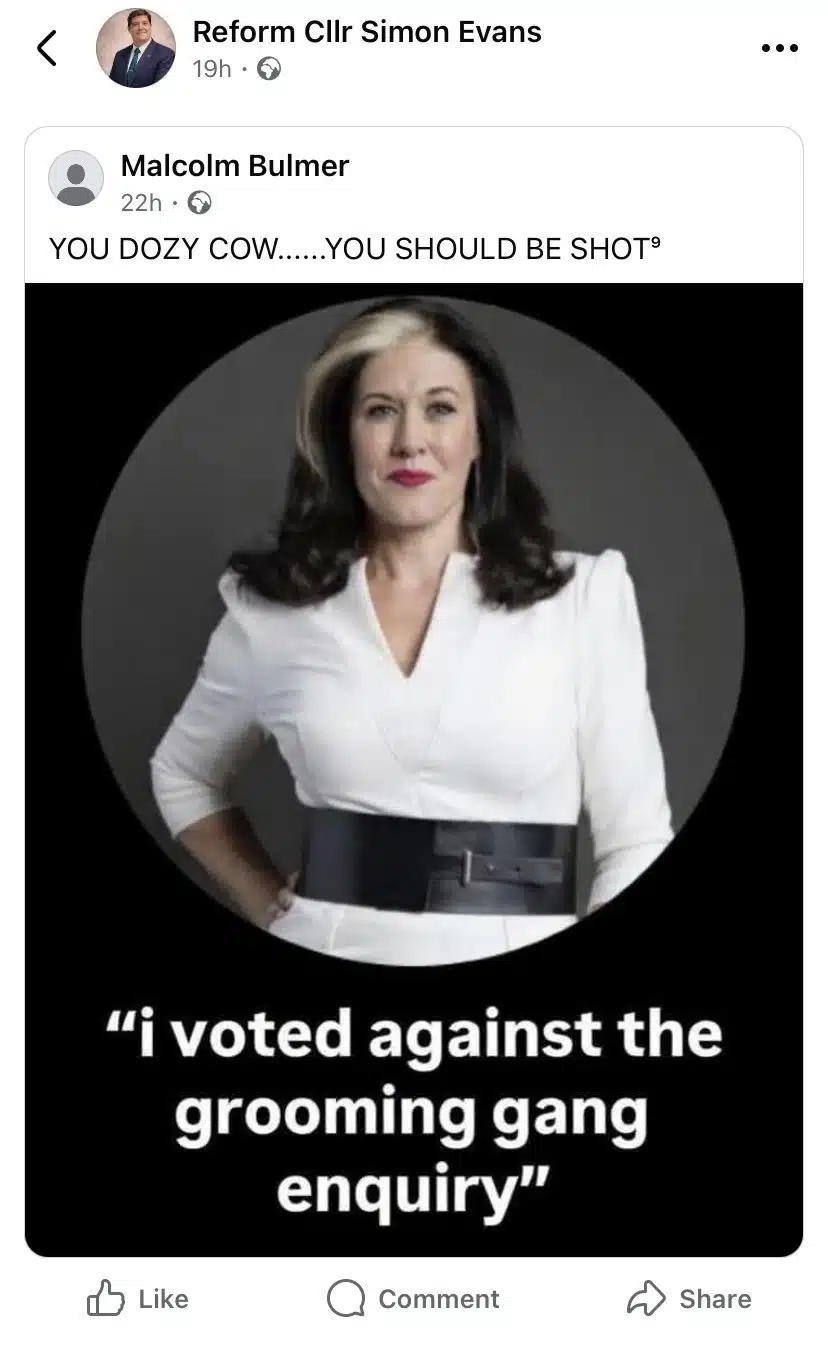
There was also the case of the councillor who reposted that a female Labour MP ‘should be shot’:

It’s additionally the case that Nigel Farage was accused of using grooming gang victims for political capital (accused by the victims themselves, in fact).
As we reported at the time:
On 28 October, we reported that Nigel Farage had inserted himself into the latest UK grooming gangs inquiry. In that piece, we covered that a former employee had accused him of opportunism. We also highlighted that Farage may not be the best person to speak out on this topic given his support for convicted rapist Donald Trump, or the fact that he refused to clearly condemn the alleged human trafficker Andrew Tate:
A man is judged by the company he keeps. pic.twitter.com/vOZLwzKTje
— Reform Party UK Exposed 🇬🇧 (@reformexposed) October 28, 2025
Since then, Farage’s involvement has further toxified the potential inquiry, with several abuse victims demanding an apology from the Reform leader:
EXCL: Five women have asked for an apology from Nigel Farage after he suggested they weren’t victims of grooming gangs.
They said that, while they had been abused by Asian men, they were “aware the inquiry is not just about us” and the comments were “degrading and humiliating”.
— Pippa Crerar (@PippaCrerar) October 29, 2025
Reporting on the party’s “problem with women”, Alexandra Topping wrote in the Guardian:
When Nigel Farage told a journalist this week she should “write some silly story … and we won’t bother to read it”, it provoked an instant – and divided – reaction. For some it was a “masterclass” in dealing with mainstream media, but for others it was “rude, dismissive, misogynistic, arrogant”.
Behind the scenes, Farage’s treatment of the Financial Times’s Anna Gross – which was met with mirth and applause among Reform diehards in the room – provoked disquiet and anger among lobby journalists across the political spectrum.
As the Reform UK leader was leaving the event, a Guardian political reporter suggested he had been rude and had upset the journalist. “Good,” Farage responded.
It is not the first time Farage has been accused of patronising a female journalist. When the former BBC Radio 4 Today presenter Mishal Husain asked him about the potential consequences of shooting down Russian planes last October, Farage responded: “Listen love, you’re trying ever so hard.” A month later he accused the Telegraph’s Camilla Tominey of playing a “silly little game” when she asked who his chancellor would be.
Unsurprising
Because of the above, it’s unsurprising to see Reform are doing significantly less well with women:

It’s also unsurprising to learn that they are struggling to attract female candidates.
Going forwards, it will be interesting to see if Reform try to appeal to women, or if they simply hope that legions of new, resentful men magically appear out of nowhere.
Featured image via Estitxcu Carton (Wikimedia)
The turnout at the “independence march and rally” yesterday was so abysmally poor that it seems almost unfair to pick on any of the scores of SNP elected representatives who didn’t bother to show up.
But dear old Cosy Feet Pete Wishart had the most chef’s-kiss excuse of all.

The reason he didn’t fancy getting his wee Billy Whizz quiff blown about a chilly Calton Hill was that he had important business “taking on the far right” – who were of course nowhere to be seen – with “half a million” (50,000) of his British besties, a convenient short Tube ride away from his London residence, at an event called… UK Together.
Now there’s some more irony you can’t buy.

Just like Mick McCann from Preacher guarding New York from the Kaiser in 1917, the MP for Perth and Kinross-shire has done a heroic job defending Britain from the far right and fighting for Scottish independence from the plush safety of the Palace Of Westminster for the last 25 years – even though we’re out of the EU, independence is nowhere in sight and Nigel Farage is set to be the next Prime Minister.
But time and tide waits for no man, and as Farage enters No.10 and Wishart walks off to retirement, (having handily reached the requisite age by the next election), Slippers will just have to wipe his tears over quarter of a century of total failure on his fat UK Parliament pension of around £50,000 a year for the rest of his life.
Thanks for your service, Pete.

Last night, John and I sat down to watch the Huw Edwards drama which Channel 5 showed last week. It was that or Virgin River or the Hotel Inspector.
Watching a drama about someone you vaguely know was bound to be a strange experience. What I wasn’t expecting, but should have, was that it was a profoundly uncomfortable viewing experience.
I had lunch with Huw Edwards back in 2021, when all this woeful saga was going on. I can’t quite remember how it came about, as I had never met him before, but I dutifully turned up at the Langham hotel, opposite Broadcasting House in Portland Place, looking forward to having a chat with the man who was Britain’s premier news broadcaster. In all honesty, I was flattered to be asked.
While I never suspected him of doing anything like the things he has been found guilty of, the whole lunch was a profoundly weird experience. He seemed to be on edge the whole time. I knew he had had depression, but he was acting very oddly. Admittedly, at times he was quite funny and entertaining, but kept obsessing about various of his BBC news colleagues and how incompetent or ghastly they were. Jeremy Vine copped it more than most. When I left the Langham, I remember thinking ‘well that was weird’.
When The Sun story broke about a famous BBC personality, I just somehow knew it was him. I have a terrible Gaydar, but I do remember wondering about his sexuality, despite knowing he had five children. I also had a number of younger gay friends who told me how attractive they found him, way before the scandal became public.
In some ways. Martin Clunes played a blinder. He looked far more like him than I expected him to, and got his voice quite well too. I thought at times he ventured a little into caricature, and played up to dramatic necessity to make him appear monster-like. We could certainly have done without the w*****g scene, but overall the drama stayed just the right side of the taste line and didn’t go too far into prurience.
When the scandal first broke, I will admit to having some sympathy with Huw, but that soon disappeared when it was revealed that he had accepted and scene nearly 400 images of underage children, some of whom were under ten.
Huw had lived the secret of being gay, or bi, for all his life. He’s not alone in that. He came from a small Welsh village and inevitably led a closeted existence. By the time he acted on his feelings, he was well into middle age. He’s not alone in that. He was also clearly flattered by the attention of young men. He’s not alone in that. However, what he has done is enabled people who have a stereotypical view of dirty old gay men to be reenforced, and that is unforgiveable. Some people still assume all gay men are happy to sleep with anyone else that has a penis, including those who are underage. It is simply untrue. Gay people are no more susceptible to paedophilia than straight people are, yet the myth still persists. And Huw Edwards is partly responsible for that.
So, it’s Virgin River on Netflix tonight…
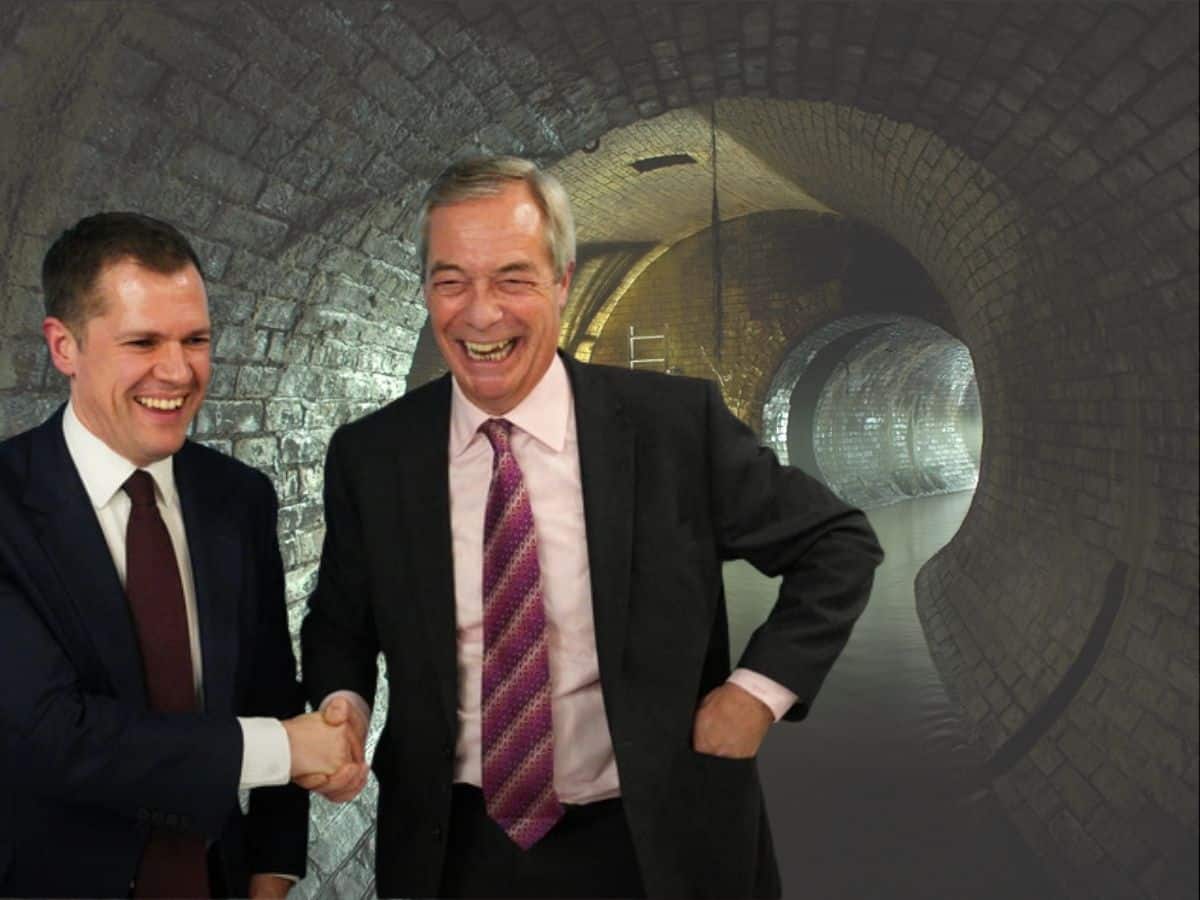
With the local elections fast approaching, Reform UK are gearing up for a fight. The problem is they keep punching themselves in the face — most notably by borrowing a Jimmy Saville catchphrase and by refusing to dismiss a would-be candidate who did a Nazi salute. Shockingly, however, it seems like things are even worse under the surface than they are on top:
Reform candidate for Swansea in the upcoming Welsh elections steps down.
Very strong statement.
“Politics is a dirty game, but Reform has sunk deep into the sewer when it should have been a beacon of decency.”
This tallies with what many long-term Reform members have been… pic.twitter.com/HKY9cgucTX
— Will Hayward (@WillHayCardiff) March 28, 2026
Sewer politics
The above message reads in full:
Having been an active member of Reform since it was founded, and the Brexit Party before that, it is with some sadness that I resign. In truth, Reform has left me.
The party I joined and helped build had a clear vision of how to solve our country’s problems: better politicians who care more about the people they serve than their careers. That’s how we fought the 2024 general election, winning 14.3% of the vote across the UK. In Swansea, I came in second, with 17.5% of the vote.
The “professionalisation” of the party has led it to take its members and candidates for granted. Communications that once began “Thank you” now more often start “You are required to…”. The party’s employees in Millbank forget that branch officers and candidates are unpaid volunteers.
Some will call my resignation petulance or sour grapes at my lowly placing on the list (fifth to an ex-Tory on the make and three novices). That rankles, but it has also confirmed to me what I feared; Reform is no longer open or honest. Politics is a dirty game, but Reform has sunk deep into the sewer when it should have been a beacon of decency.
Across Wales the candidate appointment does not reflect how people performed in the selection process; I know because I was there. In many constituencies those at the top of the list are not the best. Far too many are Tories – and the Reform vote will suffer.
Politics should be about openness, decency and serving the country, which it once was in Reform. Politics is (or should be) about people, not process. Principles, not opportunism. Passion, not career building.
The Reform Party has betrayed its early members’ vision, labour and achievements. I won’t be a party to that, so I resign.
As we’ve been saying for some time, Reform is morphing into the Conservative Party 2.0, and its early members can’t stomach it. The question is whether voters will realise this before or after they have the opportunity to vote in the 2029 election.
Candidate collapse
As reported by Reform Exposed, the above is just the tip of the iceberg when it comes to their candidate chaos.
In only a couple of weeks you’ve had 5 candidates suspended or quit! https://t.co/b406LfFNVA
— Reform Party UK Exposed 🇬🇧 (@reformexposed) March 28, 2026
David Barker is Reform UK’s candidate in the Sunderland local elections.
These allegations about him are quite concerning @ReformUKSun & @reformparty_uk.
He set up a website and Facebook page called The Masked Truth, which claims to help members with social services and family… pic.twitter.com/btnH5N1cxL
— Reform Party UK Exposed 🇬🇧 (@reformexposed) March 28, 2026
If anyone was on the fence about the Reform UK #Senedd candidate Corey Edwards, that did the Hitler salute and resigned.
Here’s a video he took of himself drinking whilst driving. pic.twitter.com/J7CRCCdn4q
— Reform Party UK Exposed 🇬🇧 (@reformexposed) March 28, 2026
There was also this mess:
🚨 REFORM CAN’T EVEN GET THE BASICS RIGHT 🚨
In a rush to push out candidates, Reform UK now has a new NHS worker candidate posting campaign material in uniform — clearly against National Health Service rules on uniform use.
Respect to the profession — absolutely. But dragging… pic.twitter.com/m3z9PmO0bZ
— Sly U (@SlyForTheRight) March 28, 2026
And they’re are struggling to hold on to sitting councillors too:
Reform UK councillor suspended by party after allegations she shared racist social media postshttps://t.co/00mUeojrn9
— Reform Party UK Exposed 🇬🇧 (@reformexposed) March 28, 2026
‘Reform Will Fix It’
When we said that Reform have borrowed a Jimmy Saville catchphrase, this is what we were talking about:
According to Nigel Farage, ‘Reform Will Fix It’. Now where the ‘paedo Jimmy Saville’ have we heard that before?
Via @willem_moore_uk https://t.co/bamdUWWV8r
— Canary (@TheCanaryUK) March 29, 2026
That’s right — ‘Reform Will Fix It’.
We’re not sure what the ‘It’ refers to, but Reform’s key fault is their inability to field a normal candidate.
Featured image via emap
As we’ve covered extensively, Keir Starmer appointed Peter Mandelson to be our ambassador to the US despite knowing that the man enjoyed a weird friendship with the dead paedophile Jeffrey Epstein. Further revelations led to Mandelson being sacked; they also led to Starmer’s chief of staff and Mandelson protege Morgan McSweeney resigning in disgrace.
All of this is known and on the record.
And yet Labour politicians want you to believe that people who speculate on the finer details are ‘conspiracy theorists’:
Phillipson: the wider coverage around McSweeneys phone is drifting into conspiracy theory
Because the PMs chief of staff ringing the police like any ordinary person, not identifying himself, giving false details, no apparent govt security protocols, thats all perfectly normal! pic.twitter.com/hXlOcoSaUQ
— Saul Staniforth (@SaulStaniforth) March 29, 2026
We’re sorry, but if you didn’t want conspiracy theories, maybe you shouldn’t have appointed the guy who was best pals with Jeffrey Epstein — the man at the centre of the 21st century’s most far-reaching conspiracy.
Morgan McSweeney — Conspiracy
We’ve covered the latest intricacies of the scandal here, but the TLDR is:
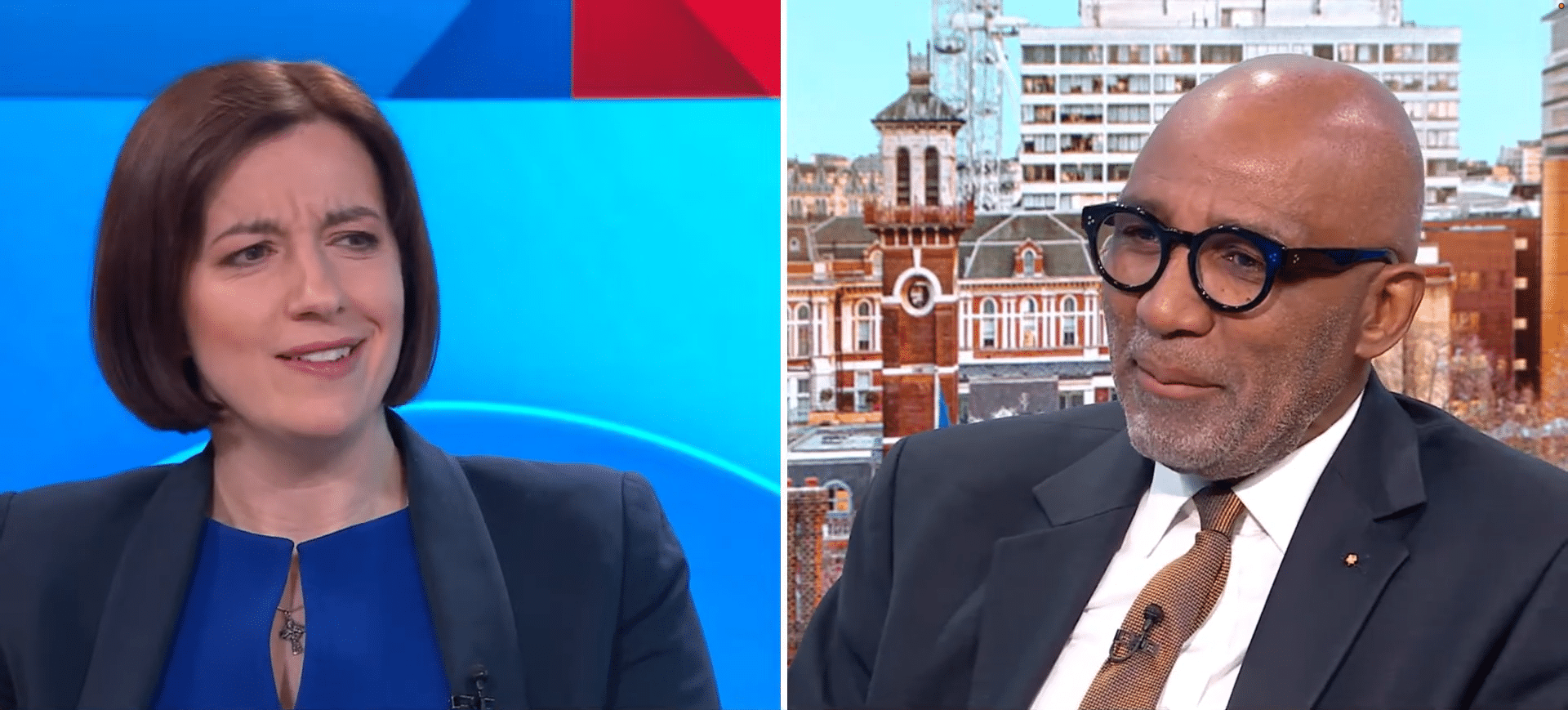
In the clip above, host Trevor Phillips said to Bridget Phillipson:
Let me ask you about the story of the week. Why is Morgan McSweeney the only person in the modern world who doesn’t have his messages automatically backed up to the cloud so that we can recover them and see what traffic there was between him and our former ambassador to the United States?
Smirking as ever, Phillipson responded:
I think your question’s a bit of a reach in terms of that.
When asked why, she said:
It’s hyperbole and you know it.
Oh, sorry — she’s right — some people don’t backup their messages. That’s the real issue here — somewhat exaggerated language.
After confirming that Phillipson’s messages were backed up in line with government guidelines, Phillips asked:
Why aren’t Morgan McSweeney’s?
Phillipson answered:
What happened here, which we all know, is that Morgan McSweeney was mugged
Oh yeah, we’re all 100% confident that the famously dishonest McSweeney was truthful about this ‘theft’ which happened at the maximum moment of benefit to himself.
She continued, noting that McSweeney:
reported that to the police, followed all of the processes that were asked of him.
“That were asked of him” — ignoring the fact that the police didn’t ask him to do more because they weren’t told he was the prime minister’s chief of staff.
Getting to the truly offensive part, Phillipson said:
And I do think some of this wider coverage is drifting into… conspiracy theory territory here.
Oh, is that right?
Do you think that’s because the official narrative is so full of holes that people need to use their imagination to make it make sense?
Phillipson got a similarly harsh response from Lewis Goodall on LBC:
‘He’s not some geezer down the pub – he’s the Prime Minister’s chief of staff!’
@Lewis_Goodall responds to Bridget Phillipson’s suggestion that coverage of Morgan McSweeney’s phone is ‘getting ridiculous’. pic.twitter.com/nkmluPxk7a— LBC (@LBC) March 29, 2026
A big club
Interestingly, Phillips would later turn the conspiracy logic on Kemi Badenoch:
Absolutely wild scenes here as Peter Mandelson’s best friend insists there’s nothing weird about Peter Mandelson’s protege misplacing his phone at the height of a very serious scandal about Peter Mandelson passing information to a foreign agent. And he is *the host of the show*. https://t.co/4jx9MRhmsa
— Flying_Rodent (@flying_rodent) March 29, 2026
By ‘best friend’, what Flying Rodent means is that Mandelson was the best man at Phillips’ wedding.
This isn’t a conspiracy; this is what it looks like when your political and media establishment are so firmly entwined that you can’t tell where one ends and the other begins.
Featured image via Sky
Josh Simons is the ex-cabinet minister who had to resign in disgrace because he’d been running a spying operation on UK journalists. Or, if you’re the BBC or in specific Laura Kuenssberg, he’s a naive young man who simply didn’t realise it was wrong to do blatantly bad things in secret:
‘I was naive,’ says minister who quit over Labour Together claims https://t.co/wRYLeZmJlW
— BBC News (UK) (@BBCNews) March 28, 2026
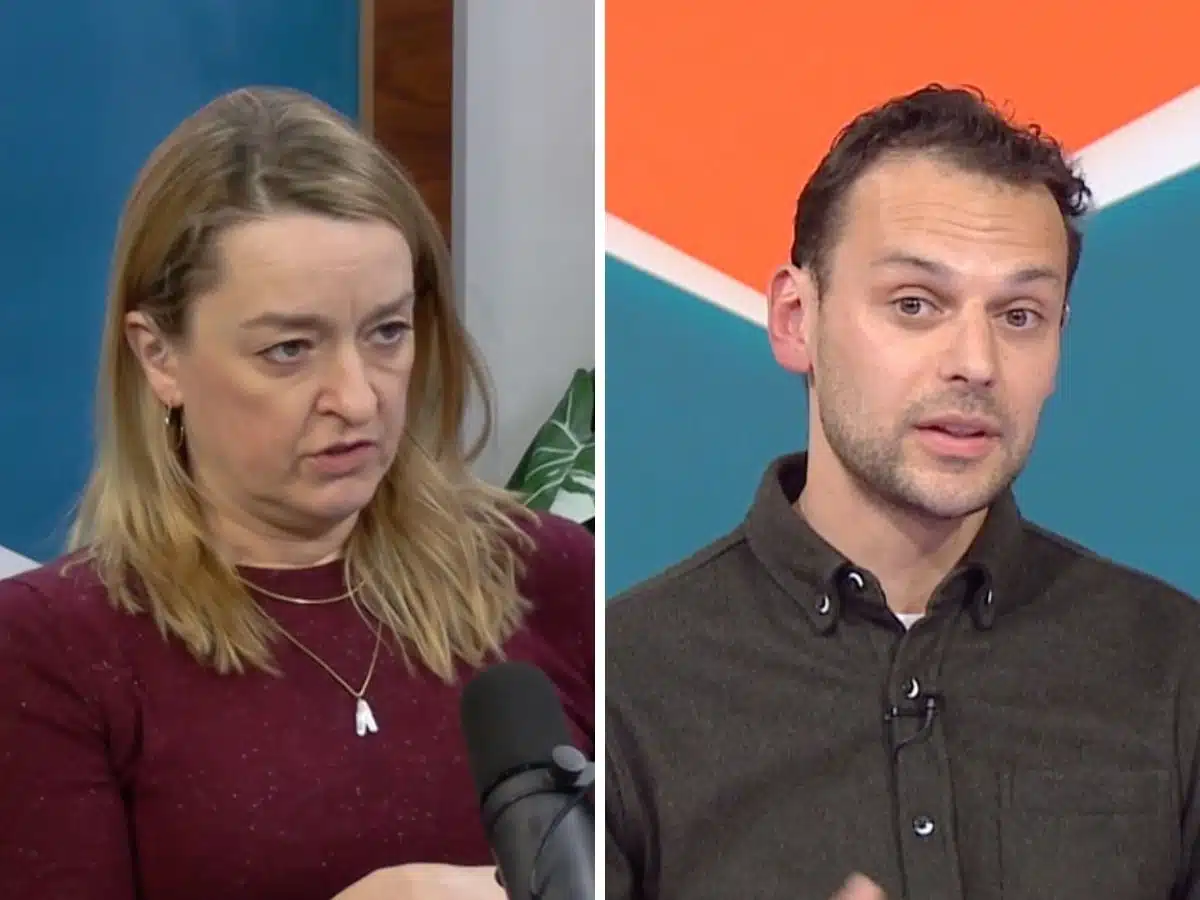
What the above headline doesn’t convey is that Laura Kuenssberg raised the idea that Simons was simply “naive” and “foolish”. And she suggested it in one of those wretched moments in which an establishment journalist provides an answer and then asks the interviewee if they’d like to claim it as their own.
Young, dumb, and full of shit
Simons resigned from the government on 28 February. As Skwawkbox reported for the Canary:
Just in case readers are unfamiliar with the case, or are tempted to take anything Simons says at face value, Labour Together were caught paying tens of thousands to a firm run by a fellow Labour right-winger’s wife to spy on independent journalists.
This has been known for months, but the ‘mainstream’ media only started to pay attention when two of MSM-aligned journalists were targeted.
Additionally:
From 2022 to 2024, Simons ran the sabotage outfit, Labour Togther. He took over after disgraced Morgan McSweeney moved on to become Keir Starmer’s (now former) chief of staff.
As we reported, the Canary was among those who Labour Together spied on.
The following is the clip in which Kuenssberg furnished Simons with his excuses.
I am trying to imagine a universe in which an actually left-wing politician would spy on journalists, report them to the security services, belatedly get called out for doing so, and then Laura Kuenssberg would sympathetically ask “were you just a bit naive?” pic.twitter.com/GK1RT3ivMy
— Nicholas Guyatt (@NicholasGuyatt) March 28, 2026
In the clip above, Kuenssberg says:
Do you now think that you were naive? Do you think you were foolish? You say you weren’t meaning to do anything wrong – it wasn’t what you intended for a journalist to be investigated. But, if you went to a PR firm saying, ‘please, can you find out about where this story came from?’ – surely, actually, it was inevitable they were going to look into what the journalists had been doing, if you’re asking where a story comes from.
So looking back now, do you think, were you naive? Were you foolish? Were you mistaken? How do you characterise it?
We’re going to write this in capitals so it’s clear:
THIS IS NOT HOW INTERVIEWS SHOULD WORK.
You can’t give someone a helpful answer and then ask if they want to claim it.
And of course he did want to claim it, because it presented him in the most flattering light possible.
This was how he answered:
Absolutely, I was naive. And there’s a lot I’ve learned from it. And there’s things that I would have done differently.
And this is how the BBC wrote it up:
A Labour MP who resigned as a Cabinet Office minister has said he was “naive” and “so sorry” in his first full interview since leaving his role.
This should read ‘Laura Kuenssberg suggested he was naive, and Simons agreed‘.
Abysmal stuff.
Kuenssberg — Form
As academic Nicholas Guyatt added, Kuenssberg has a history of laundering the reputation of Britain’s worst politicians:
Laura Kuenssberg is the GOAT of rehabilitating disgraced Labour right figures: she also threw a lifeline to Peter Mandelson back in January, hailing his “unique perspective” on Trump and giving him twenty minutes to pose as a geopolitical expert before even mentioning Epstein pic.twitter.com/dZG2BqsKxn
— Nicholas Guyatt (@NicholasGuyatt) March 28, 2026
20% off at the reputation laundry https://t.co/0Qm1lffMRB
— Flying_Rodent (@flying_rodent) March 28, 2026
Guyatt also provided further commentary:
I imagine that Paul Holden, author of The Fraud (@StarmertheFraud) and one of the journalists targeted by Josh Simons, will be looking very carefully at Simons’s remarks (transcript below); it’s quite the claim that you decided to investigate a journalist because of his publisher pic.twitter.com/80ndi9GgQO
— Nicholas Guyatt (@NicholasGuyatt) March 28, 2026
The Fraud
You can read a serialisation of the first chapter of Paul Holden’s The Fraud here. It covers the dirty tactics that Labour Together used to maneuver Keir Starmer into Downing Street — tactics they sorely needed because Starmer has all the political competence of a quiche.
To be absolutely fair, though, when they did all the bad stuff, many of these career politicians could simply have been a bit naive.
Featured image via BBC

Tongdao Liepin Group (TGDLF) Q4 2025 Earnings Call Transcript

MSTR may have paused it’s BTC accumulation last week

Boris Johnson just joked about missing WhatsApps


-
 NewsBeat4 days ago
Manchester United reach agreement with Casemiro over contract clause amid transfer speculation
-

 News Videos4 days ago
Parliament publishes latest register of MPs’ financial interests
-

 Sports6 days ago
Remo Stars and Kano Pillars Strengthen Survival Hopes in NPFL
-

 Sports6 days ago
Gary Kirsten Accuses Pakistan Cricket Board Of ‘Interference’, Mohsin Naqvi Responds
-

 Tech7 days ago
Give Your Phone a Huge (and Free) Upgrade by Switching to Another Keyboard
-

 Tech7 days ago
AI enters the chat: New Seattle dating app relies on tech to facilitate meaningful human connections
-

 Business3 days ago
Instagram, YouTube Found Responsible for Teen’s Mental Health Struggle in Historic Ruling
-

 News Videos6 days ago
Ch 9 Financial Management Part 1 | Detailed One Shot | Class 12 Business Studies Boards 2026
-

 NewsBeat2 days ago
The Story hosts event on Durham’s historic registers
-
 NewsBeat4 days ago
Tesco is selling new Cadbury Dairy Milk bar and people can’t wait to try it
-

 Tech6 days ago
Samsung will soon let you control smart home devices from your car’s dashboard
-

 Sports7 days ago
2026 Kentucky Derby horses, odds, futures, preview, date: Expert who hit 12 Derby-Oaks Doubles enters picks
-
 Entertainment21 hours ago
Lana Del Rey Celebrates Her Husband’s 51st Birthday In New Post
-
 Entertainment6 days ago
Cynthia Bailey Dishes on ‘RHOA’ Season 17, Discusses Kandi
-
 NewsBeat6 days ago
Colombian military plane with 110 soldiers onboard crashes following takeoff
-

 Fashion5 days ago
Does It Matter What You Wear When You’re Laid Off and Looking?
-

 Business5 days ago
More women enter wealth management, but few in advisory roles: study
-

 Business5 days ago
Late-paying firms face multimillion-pound fines under new crackdown
-

 Sports5 days ago
Fantasy Baseball Week 1 Preview: Top sleeper hitters for both five- and 12-day period led by Munetaka Murakami
-

 Politics6 days ago
How Media Platforms Balance Performance and Accessibility in Image Delivery
You must be logged in to post a comment Login